
Mounting Evidence Against the Long Spine Board in EMS
|
|
|
- Hortense Shepherd
- 9 years ago
- Views:
Transcription
1 Mounting Evidence Against the Long Spine Board in EMS Ryan C. Jacobsen MD, EMT-P Johnson County EMS System Medical Director Assistant Professor of Emergency Medicine Truman Medical Center/Children s Mercy Hospitals and Clinics

2 Disclosure This presentation was compiled from many gracious EMS Medical Directors throughout the U.S. and I take little credit for any of it.it is merely a synopsis/compilation of many others hard work, for which I am very grateful. Specific thanks to: Charles (Chuck) Cady MD Bryan Bledsoe MD Keith Wesley MD David Cone MD Michael Millin MD Steve Andrews MD Kevin Sirmons MD John Lyng MD

3 Objectives Understand current state of spinal care in EMS and associated dogma. Understand the historical perspectives on prehospital spinal care and immobilization in the U.S. Review of the evidence/literature surrounding prehospital spinal immobilization. Benefits of reducing the use of the long spine board as an immobilization device. Examples of various protocols being used throughout U.S. as well as internationally. Barriers to the implementation of protocols reducing long spine board use.

4 Divorce LSB from C-collars We re NOT talking about cervical spine clearance. There would be NO change in current c-spine clearance protocol. We re NOT talking about limiting cervical collar use in the field. This may actually increase the use of C-collars in the field! ****penetrating trauma

5 Scope Approximately 1 million spinal injuries in ED s every year. 2-3% have actual spine injury (of those only handful unstable).

6 Dogma regarding Spinal Immobilization Trauma=unstable spine injury=spinal cord injury=permanent neurological deficit=bad. Any additional movement of the neck/back may cause an injury that was not present immediately following the initial trauma or it may worsen an injury that was there prior to any subsequent medical intervention. Further injury is avoided by immobilizing the spine. Immobilization of the spine is safe. Medicolegal issues prevent us from changing.

7 History

8 History Geisler et al Retrospective study of trauma patients with delayed paralysis. failure to recognize the injury and protect the patient from the consequences of his unstable spine. regarding an MVC patient with skull fracture in 1955 who had delayed onset of paraplegia T4. the importance of proper first-aid (by EMS providers in field) was deduced from the fact that 29 patients [in their review] developed further paralysis through faulty handling. Geisler WO, Wynne-Jones M, Jousse AT. Early management of patients with trauma to the spinal cord. Med Serv J of Can. 1966;4:

9 The Dogma begins. Now the medical community believes that trauma patients should be immobilized on rigid devices to minimize the risk of delayed paralysis in the setting of occult spinal column injury.

10 History Continued Farrington,1968 Described the placement of a C-collar and a long or short backboard as necessary to keep the head and neck from sagging during extrication. The backboard was designed to assist in minimizing spinal movement during complex extrication maneuvers by freeing the hands of rescuers from actively holding spinal precautions. The backboard was not initially envisioned to be a long-term device to actually immobilize someone onto after they were extricated. Farrington DJ. Extrication of Victims. Journal of Trauma. 1968;8( )

11 The beginning of formal EMS 1971 American Academy of Orthopedic Surgeons (AAOS)published first guidelines for EMS. Emergency Care and Transportation of the Sick and Injured. Advocated use of spinal immobilization using a backboard and C-collar for trauma patients with signs and symptoms of spinal injury.

12 History Continued Bohlman, Linked delayed paraplegia, in 100 of 300 hospitalized cervical spine fracture patients, with concern that these injuries were being under-appreciated. Blamed EMS=inevitable knee jerk response Began applying spinal immobilization, using backboards and C-collars, based on mechanism of injury alone. Bohlman HH. Acute fractures and dislocations of the cervical spine. J Bone & Joint Surg. 1979;61A: Riggins RS, Kraus JF. The risk of neurologic damage with fractures of the vertebrae. J Trauma 1977;17: Soderstrom CA, Brumback RJ. Early care of the patient with cervical spine injury. Orthopedic Clinics of North America 1986;17:3-13. Burney RE, Waggoner R, Maynard FM. Stabilization of spinal injury for early transfer. J Trauma 1989;29:

13

14 Evidence NO randomized controlled studies ever done.

15 Evidence that Long Spine Boards cause HARM Respiratory compromise (reduces FVC, FEV1 in healthy patients strapped to a board) Effect on injured patients? Ptx, pulm contusions, rib fx etc.. Bauer D, Kowalski R. Effect of spinal immobilization devices on pulmonary function in the healthy, nonsmoking man. Ann Emerg Med. 1988;17:915-8 Walsh M, Grant T, Mickey S. Lung function compromised by spinal immobilization. Correspondence. Ann Emerg Med. 1990;19:615-6

16 Evidence for HARM Pressure sores/tissue hypoxia Good evidence that even short time periods on board cause tissue hypoxia on contact points as well as pressure wounds becomes worse with elderly and severely injured folks who can t readjust on board (aka spinal cord injured patient!) Linares HA, Mawson AR, Suarez E, Biundo JJ. Association between pressure sores and immobilization in the immediate post-injury period. Orthopedics. 1987;10: Sheerin F, de Frein R. The occipital and sacral pressures experienced by healthy volunteers under spinal immobilization: a trial of three surfaces. J Emerg Nurs. 2007;33: Cordell WH, Hollingsworth JC, Olinger ML, Stroman SJ, Nelson DR. Pain and tissue-interface pressures during spine-board immobilization. Ann Emerg Med. 1995;26: Berg G, Nyberg S, Harrison P, Baumchen J, Gurss E, Hennes E. Near-infrared spectroscopy measurement of sacral tissue oxygen saturation in healthy volunteers immobilized on rigid spine boards. Prehosp Emerg Care. 2010;14:

17 Evidence for HARM Increased pain Healthy subjects placed on boards developed numerous complaints when on boards for short times (headaches, back, neck pain, dizziness, nausea) Barney RN, Cordell WH, Miller E. Pain associated with immobilization on rigid spine boards. Ann Emerg Med. 1989;18:918. Lerner EB, Billittier AJ, Moscati RM. The effects of neutral positioning with and without padding on spinal immobilization of healthy subjects. Prehosp Emerg Care. 1998;2:112-6 Chan D, Goldberg R, Tascone A, Harmon S, Chan L. The effect of spinal immobilization on healthy volunteers. Ann Emerg Med. 1994;23:48-51

18 Evidence for HARM Increase in unnecessary radiologic imaging in ED (this is both a cost and radiation risk issue) March J, Ausband S, Brown L. Changes in physical examination caused by use of spinal immobilization. Prehosp Emerg Care. 2002;6:421-4 Berrington de González A, Mahesh M, Kim K, Bhargavan M, Lewis R, Mettler F, Land C. Projected Cancer Risks From Computed Tomographic Scans Performed in the United States in Arch Intern Med. 2009;169: Hall E, Brenner D. Cancer risks from diagnostic radiology. Br J Radiol May;81: Forley F, Pham J, Kirsch T. Use of advanced radiology during visits to US emergency departments for injury-related conditions, JAMA. 2010;304:

19 Evidence for Harm Hauswald et al Compared neurologic outcomes of spinal injury patients in New Mexico, where every EMS patient received full, spinal immobilization, to those of spinal injury patients in Malaysia, where none of the EMS patients received spinal immobilization. Hauswald M, Ong G, Tandberg D, Omar Z. Out-of-hospital spinal immobilization: its effect on neurologic injury. Acad Emerg Med. 1998;5:

20 Malaysia vs New Mexico

21 Malaysia versus New Mexico
22
23 RESULTS The Odds Ratio for disability was higher for patients in the United States (all with spinal immobilization) after adjustment for the effect of all other independent variables (2.03; 95% CI ; p = 0.04). The estimated probability of finding data as extreme as this if immobilization has an overall beneficial effect is only 2%. Thus, there is a 98% probability that immobilization is harmful or of no value. They repeated analysis using only the subset of patients with isolated cervical level deficits. They again failed to show a protective effect of spinal immobilization (OR 1.52; 95% CI ; p = 0.34).
24 Evidence for Harm Leonard et al Pediatric trauma patients (prospective cohort) spinal immobilization was associated with increased pain and radiographic usage and increased admission to the hospital. pain score (3 versus 2) cervical radiography (56.6% versus 13.4%) Admitted (41.6% versus 14.3%). Leonard J, Mao J Jaffe D. Potential adverse effects of spinal immobilization in children. Prehosp Emerg Care 2012;16:
25 Penetrating trauma and Spine Immobilization We should NOT be immobilizing penetrating trauma. Increases mortality and clear support from all parties involved (AANS, ACS-COT, NAEMSP, NAEMT, ATLS/PHTLS etc..)
26 Evidence for Harm in Penetrating Trauma Cornwell EE, et al BACKGROUND: Previous studies have suggested that patients transported by emergency medical services (EMS) following major trauma had a longer injury-to-treatment interval and a higher mortality rate than their non-ems-transported counterparts. HYPOTHESIS: There is little actual benefit of thoracolumbar immobilization for patients with torso gunshot wounds (GSW). DESIGN: Retrospective analysis of prospectively gathered data from the Maryland Institute for Emergency Medical Service Systems State Trauma Registry from July 1, 1995, through June 30, SETTINGS: All designated trauma centers in Maryland. PATIENTS: All patients with torso GSW. MAIN OUTCOME MEASURES: (1) A patient was considered to have benefited from immobilization if he or she had less than complete neurologic deficits in the presence of an unstable vertebral column, as shown by the need for operative stabilization of the vertebral column; (2) mortality. RESULTS: There were 1000 patients with torso GSW. Among them, 141 patients (14.1%) had vertebral column and/or spinal cord injuries. Two patients (0.2%) (95% confidence interval, % to 0.48%) required operative vertebral column stabilization, while 6 others required other spinal operations for decompression and/or foreign body removal. The presence of vertebral column injury was actually associated with lower mortality (7.1% vs 14.8%, P<.02). CONCLUSIONS: This study suggests that thoracolumbar immobilization is almost never beneficial in patients with torso GSW, and that a higher mortality rate existed among those GSW patients without vertebral column injury vs those with such injuries. The role of formal thoracolumbar immobilization for patients with torso GSW should be reexamined. Arch Surg Mar;136(3): Thoracolumbar immobilization for trauma patients with torso gunshot wounds: is it necessary? Cornwell EE 3rd,
27 Evidence for Harm in Penetrating Trauma Haut ER BACKGROUND: Previous studies have suggested that prehospital spine immobilization provides minimal benefit to penetrating trauma patients but takes valuable time, potentially delaying definitive trauma care. We hypothesized that penetrating trauma patients who are spine immobilized before transport have higher mortality than nonimmobilized patients. METHODS: We performed a retrospective analysis of penetrating trauma patients in the National Trauma Data Bank (version 6.2). Multiple logistic regression was used with mortality as the primary outcome measure. We compared patients with versus without prehospital spine immobilization, using patient demographics, mechanism (stab vs. gunshot), physiologic and anatomic injury severity, and other prehospital procedures as covariates. Subset analysis was performed based on Injury Severity Score category, mechanism, and blood pressure. We calculated a number needed to treat and number needed to harm for spine immobilization. RESULTS: In total, 45,284 penetrating trauma patients were studied; 4.3% of whom underwent spine immobilization. Overall mortality was 8.1%. Unadjusted mortality was twice as high in spine-immobilized patients (14.7% vs. 7.2%, p < 0.001). The odds ratio of death for spine-immobilized patients was 2.06 (95% CI: ) compared with nonimmobilized patients. Subset analysis showed consistent trends in all populations. Only 30 (0.01%) patients had incomplete spinal cord injury and underwent operative spine fixation. The number needed to treat with spine immobilization to potentially benefit one patient was 1,032. The number needed to harm with spine immobilization to potentially contribute to one death was 66. CONCLUSIONS: Prehospital spine immobilization is associated with higher mortality in penetrating trauma and should not be routinely used in every patient with penetrating trauma. Haut ER, Kalish BT, Efron DT, et al. Spine immobilization in penetrating trauma: more harm than good? J Trauma. 2010;68:115-20; discussion
28 Evidence for Harm in Penetrating Trauma Rhee P, et al ,523 trauma patients Evaluated by: Blunt assault Stab wounds Gunshot wounds Rhee P, et al. Cervical spine injury is highly dependent on the mechanism of injury following blunt and penetrating assault. J Trauma. 2006;61:
29 Evidence for Harm in Penetrating Trauma Rates for C-spine Fx: GSW (1.35%) Blunt Assault (0.41%) Stab Wound (0.12%). Rates of Spine Cord Inj: GSW (0.94%) Blunt Assault (0.14%) Stab Wound(0.11%) Rhee P, et al. Cervical spine injury is highly dependent on the mechanism of injury following blunt and penetrating assault. J Trauma. 2006;61: Surgical stabilization: GSW (26/158 [15.5%]) Blunt Aslt(6/19 [31.6%]) Stab Wnd (3/11 [27.8%]) No patient with penetrating SCI regained significant neurologic recovery.
30 Author s Conclusions Don t get shot in the spinal cord.. Neurologic deficits from penetrating assault were established and final at the time of presentation. Concern for protecting the neck should not hinder the evaluation process or life saving procedures. Don t waste time on scene packaging..just go.
31 Evidence for Harm in Penetrating Trauma Vanderlan WB, et al NOLA retrospective chart review: 847 charts 188 studied patients 35 (22.9%) died 27 immobilized 8 not immobilized GSW (94%) Stab wound (6%) C-spine immobilization in this study was associated with an increased risk of death (p = 0.016, odds ratio 2.77, 95% CI ). Vanderlan WB, Tew BE, McSwain NE. Increased risk of death with cervical spine immobilization in penetrating cervical trauma. Injury. 2009;40:
32 Evidence for Harm in Penetrating Trauma Kaups KL, et al Fresno study. 215 patients with GSW to head: DOA and c-spine injuries excluded. Cervical spine clearance was determined in 202 (93%). No patients had indirect c-spine injury. 3 patients had direct c- spine injury that was readily apparent. Kaups KL, Davis JW. Patients with gunshot wounds to the head do not require cervical spine immobilization and evaluation. J Trauma. 1998;44:
33 Author s Conclusions More intubation attempts occurred in patients with cervical collars: 49 attempts in 34 patients with c-collars 5 attempts in 4 patients without c-collars (p=0.008). Indirect spinal injury does not occur with GSWs to head. Kaups KL, Davis JW. Patients with gunshot wounds to the head do not require cervical spine immobilization and evaluation. J Trauma. 1998;44:
34 GSWs rarely cause spine injuries DuBose et al patients with GSW s to the head, neck, or torso 327 (7.8%) had spinal column injuries 173/327 had spinal cord injuries 2 (0.6%) patients required surgery None had unstable spinal injuries DuBose et al: The role of routine spinal imaging and immobilization in asymptomatic patients after gunshot wounds. Injury 2009;40:
35 American Academy of Neurological Surgeons (AANS) Position Theodore N et al Neurosurgery Spinal immobilization in patients with penetrating trauma is not recommended because of increased mortality from delayed resuscitation.
36 PHTLS Position There are no data to support routine spine immobilization in patients with penetrating trauma to the neck or torso. There are no data to support routine spinal mobilization in patients with isolated penetrating trauma to the cranium. Spine immobilization should never be done at the expense of accurate physical examination or identification and correction of life-threatening conditions in patients with penetrating trauma. Stuke LE, Pons PT, Guy JS, Chapleau WP, Butler FK, McSwain NE. Prehospital spine immobilization for penetrating trauma--review and recommendations from the Prehospital Trauma Life Support Executive Committee. J Trauma. 2011;71:763-9; discussion
37 Cochrane Review Unwarranted spinal immobilization can expose patients to the risks of iatrogenic pain, skin ulceration, aspiration and respiratory compromise, which in turn can lead to multiple radiographs, resulting in unnecessary radiation exposure, longer hospital stay and increased costs. The potential risks of aspiration and respiratory compromise are of concern because death from asphyxiation is one of the major causes of preventable death in trauma patients. Kwan I, Bunn F, Roberts I. Spinal immobilization for trauma patients. Cochrane Database of Systematic Reviews. 2009;1:1-15
38 U.S. Consortium of Metropolitan Medical Directors Position Statement aka: The Eagles Current best practices reflect that there are no randomized controlled trials to evaluate the benefits of spinal immobilization in out-of-hospital trauma patients. As a result, current EMS protocols are based principally on historical precedent, dogma and medico-legal concerns, and not on scientific evidence. This situation is further complicated by the reality that such studies will not likely be performed in the future, primarily as a result of perceived legal and ethical concerns. There is, however, a growing body of literature that points to the potential deleterious effects of spinal immobilization, whether or not this modality is applied in an appropriate fashion.
39 The Eagles Taking it one step further.(they apparently don t like c-collars that much either) We might therefore consider discontinuing the use of the cervical collar in alert, cooperative trauma patients, even with a suspected C-spine fracture, unless consciousness deteriorates or if the application of a collar might provide the patient with a degree more comfort. It is certainly also time for EMS systems to remove collars from their protocols for the management of patients with penetrating trauma.
40 Evidence for Benefit???
41 We have assumption that LSB s actually immobilize the spine..
42 3 points of contact for LSB Occiput T-spine Sacrum
43 We painted a student.
44 Then carefully laid them on a LSB
45 Then lifted the student off T-spine occiput sacrum
46
47 HOW WELL DO BOARDS IMMOBILIZE?
48 Spine boards as immobilization devices Mazolewski et al Study of different strapping techniques demonstrated that healthy, cooperative volunteers are still able to move when strapped to a backboard. Mazolewski P, Manix T. The effectiveness of strapping techniques in spinal immobilization. Ann Emerg Med. 1994;23:1290-5
49 Spine boards as immobilization device Silbergleit R et al During transport, once on a backboard, patients still subject to significant head to toe and side to side forces. (remember boards are slippery and we fix their head to them and allow body to move) Silbergleit R, Dedrick DK, Pape J, Burney RE. Forces acting during air and ground transport on patients stabilized by standard immobilization techniques. Ann Emerg Med 1991;20:
50 Spine boards as immobilization devices Peery et al A prospective observational study showed 70% of study patients had at least one backboard strap with 4 or more cm of slack, and 12% of study patients had 4 or more backboard straps with 4 or more cm of slack. Peery CA, Brice J, White WD. Prehospital spinal immobilization and the backboard quality assessment study. Prehosp Emerg Care. 2007;11:293-7.
51 Combative Patients We pin them down, onto a board, while they squirm and are held down at head. Likely increasing energy/forces transmitted to spine.
52 Uncooperative Patient
53 Combative patients We claim that we are forcefully pinning their head down and forcing them supine on a hard board in order toe protect their spine from themselves as they violently squirm under the straps. This technique likely increases forces/energy transmitted to the spine. Allowing them to have collar on and get into position of comfort likely less energy to spine.
54 Forced Immobilization.worse than no immobilization? Hauswald M Tightening the straps may restrict movement but not the forces generated by the patient on the spine in resistance to restraining efforts. Attempting to enforce immobilization of the uncooperative patient may result in more force transmission to the spine than before the struggle commenced Hauswald M. A re-conceptualisation of acute spinal care. Emerg Med J. 2012;00:1 4.
55 Spine board as immobilization device The clinical significance of strap tightness and patient movement while immobilized has not been established, but such movement cannot qualify as immobilization, the very purpose for which backboards continue to be used during transport.
56 Spine Boards as Immobilization Devices If patients are still able to move despite being strapped to a backboard, spinal immobilization is more a function of their cooperation than the due to the ability of the backboard and straps to assure spinal immobilization.
57 Limitations of Studies on Long Spine Boards Studies on the effectiveness of backboards as an immobilization device have only included cooperative patients, healthy volunteers, and cadaver models; no study has been done evaluating patient resistance and its effect on the spine.
58 What about Scoop Stretchers Del Rossi et al Scoop Stretchers and the lift and slide technique were able to restrict motion of the spine as well as the log-roll technique with long board. Del Rossi et al. Are Scoop Stretchers Suitable for use on spine-injured patients? American Journal of Emergency Medicine 2010.
59 What Extrication Technique Causes Least Spine Movement? Shafer et al West J Emerg Med May; 10(2): Cervical Spine Motion During Extrication. A Pilot Study They used motion capture video to look at motion of spine during different techniques of extrication from car.
60 Extrication techniques and Spine Motion 4 Different Techniques were compared 1. The patient was allowed to exit the vehicle on their own and lie on a backboard. 2. The patient was allowed to exit the vehicle on their own with a C-Collar in place and lie on a backboard. 3. The patient was extricated head first via standard technique by two paramedics with a C-Collar alone. (Standard technique involves turning the driver so that the legs are in the passenger s seat, allowing the driver to lie back and raising the right hip so a long board can be placed under the hip. A second paramedic who enters the front seat passenger s door helps slide the patient up on to the board.) 4. The patient was extricated head first via standard technique by the two paramedics with a C-Collar and a KED.
61 Author Conclusions? Ultimately, we documented the least movement of the cervical spine in subjects who had a cervical collar applied and were allowed to simply get out of the car and lie down on a stretcher.
62 Extrication techniques on Spine Movement Emerg Med J Jun 28. Dixon M, O'Halloran J, Cummins NM.. METHODS: A crew of two paramedics and four fire-fighter first responders extricated a simulated patient from a prepared motor vehicle using nine different extrication techniques. The patient was marked with biomechanical sensors and relative movement between the sensors was captured via high speed infrared motion analysis cameras. A 3D mathematical model was developed from the recorded movement. RESULTS: Control measurements were taken from the patient during self-extrication and movement was recorded of left of midline (LOM) to right of midline (ROM) resulting in a total movement of The least deviation recorded during equipment aided extrication was movement of LOM and ROM resulting in a total movement of The most deviation recorded during equipment aided extrication was movement of LOM and ROM resulting in a total movement of CONCLUSIONS: Conventional extrication techniques record up to four times more cervical spine movement during extrication than controlled self-extrication. This proof of concept study demonstrates the need for further evaluation of current rescue techniques and the requirement to investigate the clinical and operational significance of such movement.
63 Ambulance Cots are essentially Padded Long Spine Boards Once the patient is secured to the ambulance cot, the backboard becomes redundant, as the standard transport cot provides a flat surface to which the patient can be secured. Like the hospital bed, the ambulance cot and straps can provide spinal protection reducing spinal flexion, rotation, and lateral motion. In addition, the cot mattress can conform to the anatomic shape of the spine and the non-slick surface minimizes patient movement on the cot. Transport on a mattress is largely without the downside risks of the backboard.
64 Our EMS Cot
65 We re-painted our student.and laid him on our cot mattress
66 Comparison of points of contact showed likely increased points of contact and more comfortable than LSB
67 Using Logic as an argument to reduce LSB use in the field
68 We ve all met these elderly/kyphotic patients Risk>>>>benefit
69 Faulty Assumptions The time that the patient hits the ED door DOES NOT mean that their evaluation and/or care begins at that point in time. Patients who arrive immobilized may stay that way for significant periods of time until they are seen and removed from the board by someone authorized to do so.
70 Should I go to the hospital? We ve always instinctively known that these patients don t need a Long Spine Board. Minor falls Ambulatory patients Minor MVC s What does the ED do with walk-ins?
71 New Thoughts Hauswald: A Re-conceptualisation of Acute Spinal Care Injury caused by ENERGY (MVC, Fall, GSW), not motion. Energy at time of injury great Energy during EMS care/extrication is minimal Motion at uninjured segments different than injured segments and force may not equate to visible motion. Longboard: low friction surface, energy to anchor points (head/neck) isn t that worse?
72 Questioning long held beliefs that movement by field providers causes harm Hauswald The spine requires little energy to move within its normal ROM, and offers little resistance to motion within this range. Since the spinal components fail at similar force, spinal injuries are either minor, with no threat to the spinal cord, or are catastrophic, with multiple, irreversible failures that may irreparably damage the spinal cord so severely that they will be unaffected by prehospital emergency spinal care. If the force experienced to create the unstable fracture was not enough to injure the cord at that time, then forces experienced during patient movement by EMS are unlikely to injure the cord. If the force results in injury but not gross instability, additional forces applied by prudent rescuers during extrication and transport will be spread throughout the spine (as long as not outside normal ROM). Most spinal injuries are stable in the short term and those that are truly unstable and offer no resistance to motion are irrevocably damaged at the time of the event.
73 Questioning Long Held Beliefs Spinal column itself is very strong, requiring up to Newtons to fracture the cervical spine. (approx pounds of force!) A 4kg head hanging off of the bed only generates about 40N of force! Spinal motion during extrication by careful rescuers creates forces at most on the order of magnitude created by gravity, and are spread throughout the spinal column unless the column itself cord included had lost all structural integrity at that level. Thus, motions induced by rescuers do not achieve the forces needed to threaten spinal column integrity. High friction, comfortably firm surface (aka the cot or bed) is the ideal surface. Traditional low friction, hard/slipper surfaces that are uncomfortable (ie: can cause tissue hypoxia) are bad. Maiman D, Sances A, Myklebust J, Larson S, Houterman C, Chilbert M, El-Ghatit A. Compression injuries of the cervical spine: a biomechanical analysis. Neurosurgery 1983;13:
74
75
76 Evidence for Benefit of Long Spine Board????
77 Potential Benefits to NOT using LSB? Reduce amount of on-scene personnel. Reduce amount of patients lifted from ground on LSB who are already ambulatory. Reduce amount of awkward positions providers place themselves in to extricate otherwise well patients from vehicles. Reduce scene times by eliminating time spent immobilizing to board. (cot straps are quick!...lsb strapping is NOT quick)
78 Increases Ability for Providers to Expose Patients While Enroute to Hospital?
79 Virtually Impossible to Gain Access to patient when strapped to Long Spine Board If you do unstrap enroute you ll only have head secured as fixed point (that s bad!)
80 Benefits to reducing LSB use Decreased awkward extrication of stable patients who could self-extricate Less resources/manpower needed (two folks and a cot for most minor MVC s with neck pain). Less scene time when using cot straps and not securing head. More exposure/access to patient enroute. More comfort for patient. Saves patient from ED doc who leaves on board in hospital. Decrease radiological studies. Decreases cost. Decrease in resistance to placing a c-collar in elderly or borderline patient when not mandated to use LSB.
81 We re not alone in our efforts to minimize LSB use
82 Agencies/EMS Systems Minimizing LSB use North Memorial Ambulance & Aircare Minneapolis, MN HealthEast Medical Transportation St. Paul, MN Xenia Fire Department Xenia, OH Rio Rancho Fire Department New Mexico Albuquerque-Bernalillo County Medical Control Board New Mexico Bernalillo County Fire Department New Mexico SERTAC (Southeast Regional Trauma Advisory Council in WI) State of Connecticut (Department of Health) State of Maryland CentraCare Health Monticello, MN Kenosha Fire Department Kenosha, WI MedicWest Ambulance Nevada Norwalk Hospital Connecticut Eagle County Ambulance District Colorado Milwaukee EMS WI Outside of US Queensland Ambulance Service, Trauma clinical practice procedures: Use of an extrication board. 2012; edical/pdf/09_cpp_trauma_ p df
83 Example Protocol Wording in Wisconsin SERTAC (Southeast Regional Trauma Advisory Committee) Spinal immobilization consists of keeping the head, neck and spine inline. The neck can be immobilized with a well fitted cervical collar, head blocks, blanket rolls or other immobilization techniques. Patients who are already walking or standing should be laid directly on the ambulance stretcher and secured to the stretcher with seatbelts. Back boards and scoop stretchers are designed and should only be used to extricate patients. Once extricated, patients should be taken off the back board or scoop stretcher and be placed directly on the ambulance stretcher. Patients with penetrating traumatic injuries should only be immobilized if a focal neurologic deficit is noted on physical examination (although there is little evidence of benefit even in these cases)
84 Example Protocol Wording Yale/New Haven Sponsor Hospital EMS System Effective immediately, long backboards will no longer be utilized for spinal immobilization of ambulatory patients. Patient who are ambulatory at the scene, but who require cervical immobilization based on our selective spinal immobilization protocol, will be placed in the position of comfort, limiting movement of the neck during the process. This change in procedure is the first step toward eventually using long boards only when needed to facilitate extrication, and not during transport.
85 Queensland Ambulance
86 Queensland Ambulance
87 Protocol Wording If Spinal Immobilization is indicated, an appropriately sized cervical collar should be placed. Patients who are already ambulatory or standing should NOT be placed on a long spine board, but rather be laid directly on the ambulance cot and secured to the cot with seatbelts in a position of comfort. Back boards and scoop stretchers are designed for extrication and patient movement and should not be used for spinal immobilization. There is no role for the KED board in EMS. Once extricated, patients should be taken off the back board or scoop stretcher and be placed directly on the ambulance stretcher. Patients with penetrating traumatic injuries (including head, neck and torso) should only be immobilized if a focal neurologic deficit is noted on physical examination. Decisional patient s have the right to refuse any aspect of spinal immobilization.
88 Queensland Notice they do NOT allow transport on a LSB!
89 Parting Thoughts Despite the long-standing history and culture of spinal immobilization with a backboard and cervical collar, using the best evidence available, many abroad and in the US believe the risk-benefit analysis shows that the proven harm is much worse than the theoretical, but unproven, benefit of the backboard.

90 People don t like to change Note the conclusion in this article!
91 If Spine Boards were a Medication? If a medication had the same risk/benefit as the LSB, use of the drug would be stopped immediately by the FDA.
92 Barriers to Implementation Overcoming Dogma/Institutional Culture/Long Standing Traditions Buy-In from Hospital/Helicopter Agencies/Critical Care Transport Agencies Physicians Nursing Flight Crews Buy-in from EMS Providers Risk Management/Liability Issues Ensuring proper documentation/qa EMS Provider educational roll-out Equipment Issues (differences between agencies, budgetary issues) Logistics (actual procedures to be performed in field, ensuring they are quick/safe/effective) Appropriate wording of Protocol to ensure common understanding/intent by field providers Overcoming differences with State/National Curriculums and Standards
93 Johnson County EMS Proposed Language (see bolded print) Spinal Immobilization: Indications Blunt trauma patients that meet Step 1, 2 or 3 (See appendix B) or experience axial load; fall of >3 feet; rollover, ATV, cycle or pedestrian/vehicle accidents will be immobilized. Patients with penetrating traumatic injuries should NOT be immobilized unless a focal neurologic deficit is noted on physical examination. Spinal immobilization is indicated in trauma patients who sustain a mechanism of injury sufficient to cause a neck or back injury and who display at least one of the following criteria. Use caution for occult fracture in age >65 or <4 years old or history of osteoporosis, bone or vertebral disease. Unreliable physical exam, such as GCS < 15, inability to fully cooperate, evidence of intoxication or acute stress reaction Pain, deformity or tenderness to the neck or back A distracting painful injury Neurologic deficit Pain produced on unassisted rotation of the head 45 degrees in each direction Techniques Stabilize head and neck in neutral position unless movement causes pain, deformity, or resistance. If so, immobilize the head and neck in the position found. If the patient is ambulatory, place an appropriately sized cervical collar and position the patient directly on the ambulance cot in the position of comfort, limiting movement of the spine during the process. Patients that are stable, alert and without neurological deficits may be allowed to self-extricate to the ambulance cot after placement of a cervical collar. Limit movement of the spine during the process. If a Long Spine Board or Scoop Stretcher are used for extrication or patient movement, the patient should be taken off the long spine board or scoop stretcher and placed directly on the ambulance cot using an appropriate technique that minimizes movement of the spine.
94 Issues to deal with.. What to do with multiple boarded patients when we d typically put one on the bench seat in full package? Vomiting patient that is not on board. Gravid patient not on board (how to roll them off their IVC). Football players with helmets on. Swimming pools already packaged by lifeguards on arrival of EMS.
95 Pregnant patients, vomiters?
96 Seemed like a good idea at the time but
97 Spine Boards as Modern Art? Maybe their best use?
98 Best Picture EVER
99
100
101
Michael J. Reihart, MD Chair Medical Advisory Committee Pennsylvania Emergency Health Services Council
 Douglas F. Kupas, MD, EMT-P Commonwealth EMS Medical Director Bureau of Emergency Medical Services PA Department of Health Michael J. Reihart, MD Chair Medical Advisory Committee Pennsylvania Emergency
To C-Spine or Not to C-Spine. Kevin Parkes, M.D.
 To C-Spine or Not to C-Spine. Kevin Parkes, M.D. Disclosures: None! Warning! This one is tough Get ready to rethink your training!! Mechanism of Injury.. Remember CPR ABC Pediatric issues General spinal
Pain and tissue-interface pressures during spineboard immobilization.
 Ann Emerg Med. 1995 Jul;26(1):31-6. Links Pain and tissue-interface pressures during spineboard immobilization. Cordell WH, Hollingsworth JC, Olinger ML, Stroman SJ, elson DR. Emergency Medicine and Trauma
Maricopa Integrated Health System: Administrative Policy & Procedure
 Maricopa Integrated Health System: Administrative Policy & Procedure Effective Date: 03/05 Reviewed Dates: 09/05, 9/08 Revision Dates: Policy #: 64500 S Policy Title: Cervical & Total Spine Clearance and
1) Understand best practices of spinal immobilization. 3) Open the conversation with your local medical director
 April 23, 2016 1) Understand best practices of spinal immobilization 2) Updated indications for use of backboard and C- collar 3) Open the conversation with your local medical director Disclaimer: This
Field Evaluation of Cervical Spinal Injuries NCEMSF Conference 2010. Mark E. Pinchalk, MS, EMT-P Paramedic Crew Chief City of Pittsburgh EMS
 Field Evaluation of Cervical Spinal Injuries NCEMSF Conference 2010 Mark E. Pinchalk, MS, EMT-P Paramedic Crew Chief City of Pittsburgh EMS Cervical Spinal Immobilization Standard of care for patients
CHAPTER 32 QUIZ. Handout 32-1. Write the letter of the best answer in the space provided.
 Handout 32-1 QUIZ Write the letter of the best answer in the space provided. 1. All of the following are signs and symptoms in patients with spinal injuries except A. paralysis. C. hyperglycemia. B. priapism.
.org. Fractures of the Thoracic and Lumbar Spine. Cause. Description
 Fractures of the Thoracic and Lumbar Spine Page ( 1 ) Spinal fractures can vary widely in severity. While some fractures are very serious injuries that require emergency treatment, other fractures can
A partial list of references for spinal injury assessment and treatment. Is spine immobilization helpful?
 A partial list of references for spinal injury assessment and treatment Is spine immobilization helpful? Hauswald M, Ong G, Tandberg D, Omar Z. Out-of-hospital spinal immobilization: its effect on neurologic
Spinal immobilization of all trauma patients
 CHAPTER 2 TOPIC CHAPTER 2 Prehospital Cervical Spinal Immobilization After Trauma Nicholas Theodore, MD* Mark N. Hadley, MD Bizhan Aarabi, MD, FRCSC Sanjay S. Dhall, MD Daniel E. Gelb, MD# R. John Hurlbert,
Evaluation and Treatment of Spine Fractures. Lara C. Portmann, MSN, ACNP-BC
 Evaluation and Treatment of Spine Fractures Lara C. Portmann, MSN, ACNP-BC Nurse Practitioner, Neurosurgery, Trauma Services, Intermountain Medical Center; Salt Lake City, Utah Objectives: Identify the
Head & Spinal Trauma. Lesson Goal. Lesson Objectives 9/10/2012
 Head & Spinal Trauma Lesson Goal Learn assessment of patients with head or spinal injuries and how to treat those injuries Lesson Objectives State nervous system components List central nervous system
Cervical-Spine Injuries: Catastrophic Injury to Neck Sprain. Seth Cheatham, MD
 Cervical-Spine Injuries: Catastrophic Injury to Neck Sprain Seth Cheatham, MD 236 Seth A. Cheatham, MD VCU Sports Medicine I have no financial disclosures Contact sports, specifically football, places
GUIDELINES FOR ASSESSMENT OF SPINAL STABILITY THE CHRISTIE, GREATER MANCHESTER & CHESHIRE. CP57 Version: V3
 GUIDELINES FOR ASSESSMENT OF SPINAL STABILITY THE CHRISTIE, GREATER MANCHESTER & CHESHIRE Procedure Reference: Document Owner: CP57 Version: V3 Dr V. Misra Accountable Committee: Acute Oncology Group Network
NEW YORK STATE IN-HOSPITAL CERVICAL SPINE CLEARANCE GUIDELINES IN BLUNT TRAUMA
 Page 1 of 5 NEW YORK STATE IN-HOSPITAL CERVICAL SPINE CLEARANCE GUIDELINES IN BLUNT TRAUMA STAC Evaluation Subcommittee Authors: Jamie S. Ullman, MD FACS, Matthew Bank, MD, FACS, Nelson Rosen, MD, FACS,
Field Trauma Triage & Air Ambulance Utilization. SWORBHP Answers
 Field Trauma Triage & Air Ambulance Utilization SWORBHP Answers Presented by : Dr. Mike Lewell, Regional Medical Director Dr. Mike Peddle, Local Medical Director Introduction/History What s this all about?
Spinal Immobilization Scenarios
 Spinal Immobilization Scenarios Scenario 1: Medic 2 and 3112 arrive to find a 24 y/o male sitting on the sidewalk on Pacific Ave. Per witnesses he was punched in the head multiple times and fell down to
CERVICAL SPINE CLEARANCE
 DISCLAIMER: These guidelines were prepared by the Department of Surgical Education, Orlando Regional Medical Center. They are intended to serve as a general statement regarding appropriate patient care
Nursing. Management of Spinal Trauma. Content. Objectives. Objectives
 7 cervical vertebrae Content 12 thoracic vertebrae Nursing 5 sacral vertebrae Management of Spinal Trauma Kwai Fung Betty Siu Ward Manager O&T Dept TKOH Date : 22nd April 2007 5 lumbar vertebrae 4 coccygeal
EMS POLICIES AND PROCEDURES
 EMS POLICIES AND PROCEDURES POLICY #: 13 EFFECT DATE: xx/xx/05 PAGE: 1 of 4 *** DRAFT *** SUBJECT: TRIAGE OF TRAUMA PATIENTS *** DRAFT *** APPROVED BY: I. PURPOSE Art Lathrop, EMS Director Joseph A. Barger,
Instability concept. Symposium- Cervical Spine. Barcelona, February 2014
 Instability concept Guillem Saló Bru, MD, Phd AOSpine Principles Symposium- Cervical Spine Orthopaedic Depatment. Spine Unit. Hospital del Mar. Barcelona. Associated Professor UAB Barcelona, February 2014
Spine immobilization in trauma patients suspected of having
 REVIEW ARTICLE Prehospital Spine Immobilization for Penetrating Trauma Review and Recommendations From the Prehospital Trauma Life Support Executive Committee Lance E. Stuke, MD, MPH, Peter T. Pons, MD,
Spinal Cord Injury. North American Spine Society Public Education Series
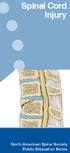 Spinal Cord Injury North American Spine Society Public Education Series What Is a Spinal Cord Injury? A spinal cord injury is a condition that results from damage or trauma to the nerve tissue of the spine.
If you or a loved one have suffered because of a negligent error during spinal surgery, you will be going through a difficult time.
 If you or a loved one have suffered because of a negligent error during spinal surgery, you will be going through a difficult time. You may be worried about your future, both in respect of finances and
Guideline for Emergency CT scanning Tony Bleetman Aidan Macnamara October 2008. June annually Emergency Department guidelines
 Meta Data Guideline Title: Guideline Author: Guideline Sponsor: Date of Ratification (CSC): Review Date: Related Policies/Topic/Driver Stored Centrally: Guideline for Emergency CT scanning Tony Bleetman
Spinal Cord Injury Education. An Overview for Patients, Families, and Caregivers
 Spinal Cord Injury Education An Overview for Patients, Families, and Caregivers Spinal Cord Anatomy A major component of the Central Nervous System (CNS) It is 15 to 16 inches long, and weighs 1 to 2 ounces
Whiplash: a review of a commonly misunderstood injury
 1 Whiplash: a review of a commonly misunderstood injury The American Journal of Medicine; Volume 110; 651-656; June 1, 2001 Jason C. Eck, Scott D. Hodges, S. Craig Humphreys This review article has 64
NICE guideline Published: 17 February 2016 nice.org.uk/guidance/ng41
 Spinal injury: assessment and initial management NICE guideline Published: 17 February 2016 nice.org.uk/guidance/ng41 NICE 2016. All rights reserved. Contents Recommendations... 3 1.1 Assessment and management
Neck Exercises for Car Accident Victims 3 Steps to a Healthier Neck
 Neck Exercises for Car Accident Victims 3 Steps to a Healthier Neck DR BARRY L. MARKS CHIROPRACTOR AUTHOR LECTURER Neck Exercises for Car Accident Victims 3 Steps to a Healthier Neck 2012 Dr. Barry L.
Return to same game if sx s resolve within 15 minutes. Return to next game if sx s resolve within one week Return to Competition
 Assessment Skills of the Spine on the Field and in the Clinic Ron Burke, MD Cervical Spine Injuries Sprains and strains Stingers Transient quadriparesis Cervical Spine Injuries Result in critical loss
COUNTY OF KERN EMERGENCY MEDICAL SERVICES DEPARTMENT
 COUNTY OF KERN EMERGENCY MEDICAL SERVICES DEPARTMENT AMBULANCE PATIENT TRANSPORT DESTINATION - HOSPITAL EMERGENCY DEPARTMENT STATUS POLICIES & PROCEDURES December 16, 1999 FRED DREW Director ROBERT BARNES,
RP0807 - PERFORM SPLINTING TECHNIQUES
 RP0807 - PERFORM SPLINTING TECHNIQUES TERMINAL LEARNING OBJECTIVE. 1. Without the aid of references, given a casualty and standard combat lifesaver medical equipment set, perform splinting techniques,
We ve got your back. Physical Therapy After Lumbar Fusion Surgery
 We ve got your back Physical Therapy After Lumbar Fusion Surgery Physical therapy is an extremely important part of you recovery after spinal surgery. This booklet, prepared by the therapists who specialize
Scenario 2 Is it ever safe enough?
 IRECA BLS Competition 2011 Scenario 2 Is it ever safe enough? Team Name Captain Name Judge 1 Judge 2 The Event: You are dispatched to a shooting for two injured at a local bar. Witnesses have told police
THE MANAGEMENT OF CONCUSSION IN AUSTRALIAN FOOTBALL
 THE MANAGEMENT OF CONCUSSION IN AUSTRALIAN FOOTBALL AFL Research board AFL MEDICAL OFFICERS' ASSOCIATION THE MANAGEMENT OF CONCUSSION IN AUSTRALIAN FOOTBALL This document has been published by the AFL
John E. O Toole, Marjorie C. Wang, and Michael G. Kaiser
 Hypothermia and Human Spinal Cord Injury: Updated Position Statement and Evidence Based Recommendations from the AANS/CNS Joint Sections on Disorders of the Spine & Peripheral Nerves and Neurotrauma &
Lifting & Moving Patients. Lesson Goal. Lesson Objectives 9/10/2012
 Lifting & Moving Patients Lesson Goal Learn the correct techniques, equipment, & positioning for moving patients safely and effectively in a variety of situations &locations Lesson Objectives Define body
DOCUMENTATION TEMPLATES. All patient care reports should include the following information in the narrative:
 DOCUMENTATION TEMPLATES All patient care reports should include the following information in the narrative: Patient Data: -Chief Complaint -Mechanism of injury/nature of illness -Associated signs and symptoms/pertinent
Clinical guidance for MRI referral
 MRI for cervical radiculopathy Referral by a medical practitioner (excluding a specialist or consultant physician) for a scan of spine for a patient 16 years or older for suspected: cervical radiculopathy
TRAUMA PATIENT TRANSPORT
 TRAUMA PATIENT TRANSPORT I. Region XI EMS uses a pre-hospital scoring system (see Attachment 1, Trauma Field Triage Criteria) to assist with the identification of injured adult and pediatric patients and
Pennsylvania Trauma Nursing Core Curriculum. Posted to PTSF Website: 10/30/2014
 Pennsylvania Trauma Nursing Core Curriculum Posted to PTSF Website: 10/30/2014 PREFACE Care of the trauma patient has evolved since 1985, when the Pennsylvania Trauma Systems Foundation (PTSF) Board of
(a) Glasgow coma scale less than or equal to thirteen; (b) Loss of consciousness greater than five minutes;
 ACTION: Original DATE: 09/11/2014 3:19 PM 4765-14-02 Determination of a trauma victim. Emergency medical service personnel shall use the criteria in this rule, consistent with their certification, to evaluate
III./8.4.2: Spinal trauma. III./8.4.2.1 Injury of the spinal cord
 III./8.4.2: Spinal trauma Introduction Causes: motor vehicle accidents, falls, sport injuries, industrial accidents The prevalence of spinal column trauma is 64/100,000, associated with neurological dysfunction
An Article Critique - Helmet Use and Associated Spinal Fractures in Motorcycle Crash Victims. Ashley Roberts. University of Cincinnati
 Epidemiology Article Critique 1 Running head: Epidemiology Article Critique An Article Critique - Helmet Use and Associated Spinal Fractures in Motorcycle Crash Victims Ashley Roberts University of Cincinnati
Pain Management in the Critically ill Patient
 Pain Management in the Critically ill Patient Jim Ducharme MD CM, FRCP President-Elect, IFEM Clinical Professor of Medicine, McMaster University Adjunct Professor of Family Medicine, Queens University
Information for the Patient About Surgical
 Information for the Patient About Surgical Decompression and Stabilization of the Spine Aging and the Spine Daily wear and tear, along with disc degeneration due to aging and injury, are common causes
Simulation Design Template
 Simulation Design Template Date: May 7, 2008 Discipline: Expected Simulation Run Time: 20 mins Location: hospital ER Admission Date: Today s Date: Brief Description of Client Name: Mr. Crash Gender: M
Posterior Cervical Decompression
 Posterior Cervical Decompression Spinal Unit Tel: 01473 702032 or 702097 Issue 2: January 2009 Following your recent MRI scan and consultation with your spinal surgeon, you have been diagnosed with a
COUNTY OF KERN EMERGENCY MEDCAL SERVICES DEPARTMENT. EMS Aircraft Dispatch-Response-Utilization Policies & Procedures
 COUNTY OF KERN EMERGENCY MEDCAL SERVICES DEPARTMENT Final - May 2, 2002 Russ Blind Interim Director Robert Barnes, M.D. Medical Director TABLE OF CONTENTS Section: Topic: Page #: I. Definitions 3-4 II.
X-ray (Radiography) - Bone
 Scan for mobile link. X-ray (Radiography) - Bone Bone x-ray uses a very small dose of ionizing radiation to produce pictures of any bone in the body. It is commonly used to diagnose fractured bones or
Whiplash injuries can be visible by functional magnetic resonance imaging. Pain Research and Management Autumn 2006; Vol. 11, No. 3, pp.
 Whiplash injuries can be visible by functional magnetic resonance imaging 1 Bengt H Johansson, MD FROM ABSTRACT: Pain Research and Management Autumn 2006; Vol. 11, No. 3, pp. 197-199 Whiplash trauma can
An Evaluation of Spinal Cord Injury (SCI) Associated with Motor Vehicle Crashes including Rollovers
 An Evaluation of Spinal Cord Injury (SCI) Associated with Motor Vehicle Crashes including Rollovers Eileen Bulger, MD Robert Kaufman, BS Chris Mack, MS Stephen Burns, MD University of Washington Traumatic
Thoracolumbar Spine Fractures. Outline. Outline. Holmes Criteria. Disclosure:
 Thoracolumbar Spine Fractures C. Craig Blackmore, MD, MPH Department of Radiology Virginia Mason Medical Center Affiliate Professor, University of Washington Disclosure: Book Royalties, Springer-Verlag
Patient Information. Posterior Cervical Surgery. Here to help. Respond Deliver & Enable
 Here to help Our Health Information Centre (HIC) provides advice and information on a wide range of health-related topics. We also offer: Services for people with disabilities. Information in large print,
Objectives. Spinal Fractures: Classification Diagnosis and Treatment. Level of Fracture. Neuro exam Muscle Grading
 Objectives Spinal Fractures: Classification Diagnosis and Treatment Johannes Bernbeck,, MD Review and apply the understanding of incidence and etiology of VCF. Examine conservative and operative management
Southern Stone County Fire Protection District Emergency Medical Protocols
 TITLE Pediatric Medical Assessment PM 2.4 Confirm scene safety Appropriate body substance isolation procedures Number of patients Nature of illness Evaluate the need for assistance B.L.S ABC s & LOC Focused
40,46 16,22 16,25. no fx thoracic sp. Fx lumbar spine. no fx lumbar. spine
 Spine injuries in motor vehicle accidents an analysis of 34188 injured front passengers with special consideration of injuries of the thoracolumbar in relation to injury mechanisms C. W. Müller, D. Otte,
Wellness & Lifestyles Australia
 Wellness & Lifestyles Australia MANUAL HANDLING IN AGED CARE AND THE HEALTH CARE INDUSTRY E-BOOK prepared by Wellness & Lifestyles Australia 2007,2008,2009 Table of Contents Page No. IMPORTANT NOTICE...
IF IN DOUBT, SIT THEM OUT.
 IF IN DOUBT, SIT THEM OUT. Scottish Sports Concussion Guidance: Grassroots sport and general public Modified from World Rugby s Guidelines on Concussion Management for the General Public Introduction The
Calcaneus (Heel Bone) Fractures
 Copyright 2010 American Academy of Orthopaedic Surgeons Calcaneus (Heel Bone) Fractures Fractures of the heel bone, or calcaneus, can be disabling injuries. They most often occur during high-energy collisions
STATE OF CONNECTICUT
 STATE OF CONNECTICUT DEPARTMENT OF PUBLIC HEALTH June 7, 2010 The Following Will Be Policy For Emergency Medical Service Care Providers: GUIDELINES FOR EMR, EMT, AEMT, and Paramedic DETERMINATION OF DEATH/DISCONTINUATION
Advances In Spine Care. James D. Bruffey M.D. Scripps Clinic Division of Orthopaedic Surgery Section of Spinal Surgery
 Advances In Spine Care James D. Bruffey M.D. Scripps Clinic Division of Orthopaedic Surgery Section of Spinal Surgery Introduction The Spine - A common source of problems Back pain is the #2 presenting
4.2 Spinal Cord Compression
 4.2 Spinal Cord Compression AO Protocol Name: Metastatic Spinal Cord Compression (MSCC) AO Type: Type I (New Cancer), Type III (Cancer Complication) Author: ST Introduction: MSCC can cause irreversible
Temple Physical Therapy
 Temple Physical Therapy A General Overview of Common Neck Injuries For current information on Temple Physical Therapy related news and for a healthy and safe return to work, sport and recreation Like Us
Emergency Action Plans
 Emergency Action Plans Clearly the most effective way to deal with an injury- emergency is to plan ahead and to practice the appropriate procedures. An emergency action plan is a written plan of action
Thoracolumbar Fratures R1: 胡 家 瑞 指 导 老 师 : 吴 轲 主 任
 Thoracolumbar Fratures R1: 胡 家 瑞 指 导 老 师 : 吴 轲 主 任 Patient Data Name: 苏 XX Gender: Female Age:47 years old Admission date: 2010.06.09 Chief complaint Fell down from 4-54 5 meter tree and lead to lumbosacral
TITLE 836 INDIANA EMERGENCY MEDICAL SERVICES COMMISSION. ARTICLE 1.5 Trauma Field Triage and Transport Destination Requirements
 TITLE 836 INDIANA EMERGENCY MEDICAL SERVICES COMMISSION ARTICLE 1.5 Trauma Field Triage and Transport Destination Requirements 836 IAC 1.5-1 Purpose Affected: [IC 10-14-3-12; IC 16-18; IC 16-21-2; IC 16-31-2-9;
Traumatic injuries SPINAL CORD. Causes of Traumatic SCI SYMPTOMS. Spinal Cord trauma can be caused by:
 Traumatic injuries SPINAL CORD Jennie Trkulja RN, BScN, ENC (c) Causes of Traumatic SCI Spinal Cord trauma can be caused by: MVC (most injuries) Gunshots Falls Stabbings Assaults Industrial accidents Sports
Cervical Spine Imaging
 March 20, 2006 Cervical Spine Imaging Johannes Kratz, Harvard Medical School Year IV 1 Overview Background Clinical Cases Diagnostic Tests and a Decision-Tree Algorithm Examples of Cervical Spine Evaluations
EMERGENCY MEDICINE PATIENT PRESENTATIONS: A How-To Guide For Medical Students
 EMERGENCY MEDICINE PATIENT PRESENTATIONS: A How-To Guide For Medical Students Kerry B. Broderick, MD David E. Manthey, MD Wendy C. Coates, MD For the SAEM Undergraduate Education Committee Patient presentation
National Registry of Emergency Medical Technicians Emergency Medical Technician Psychomotor Examination BLEEDING CONTROL/SHOCK MANAGEMENT
 BLEEDING CONTROL/SHOCK MANAGEMENT Candidate: Examiner: Date: Signature: Possible Applies direct pressure to the wound 1 NOTE: The examiner must now inform the candidate that the wound continues to bleed.
Spine Injury and Back Pain in Sports
 Spine Injury and Back Pain in Sports DAVID W. GRAY, MD 1 Back Pain Increases with Age Girls>Boys in Teenage years Anywhere from 15 to 80% of children and adolescents have back pain depending on the studies
National Registry Skill Sheets
 Bleeding Control/Shock Management BVM Ventilation of an Apneic Adult Patient Cardiac Arrest Management/AED Joint Immobilization Long Bone Immobilization Oxygen Administration By Non-Rebreather Mask Patient
Arrive Alive: Mock Crash Program
 Arrive Alive: Mock Crash Program The (student organization: SADD, FCA, Student Council, etc.) is presenting an event for High School in which two cars have collided in a simulated alcohol-related crash.
How To Be A Medical Flight Specialist
 Job Class Profile: Medical Flight Specialist Pay Level: CG-36 Point Band: 790-813 Accountability & Decision Making Development and Leadership Environmental Working Conditions Factor Knowledge Interpersonal
Handicap after acute whiplash injury A 1-year prospective study of risk factors
 1 Handicap after acute whiplash injury A 1-year prospective study of risk factors Neurology 2001;56:1637-1643 (June 26, 2001) Helge Kasch, MD, PhD; Flemming W Bach, MD, PhD; Troels S Jensen, MD, PhD From
404 Section 5 Shock and Resuscitation. Scene Size-up. Primary Assessment. History Taking
 404 Section 5 and Resuscitation Scene Size-up Scene Safety Mechanism of Injury (MOI)/ Nature of Illness (NOI) Ensure scene safety and address hazards. Standard precautions should include a minimum of gloves
SPINE SERVICE ROTATION ROTATION SPECIFIC OBJECTIVES (RSO) DEPT. OF ORTHOPEDICS AND PHYSICAL REHABILITATION UNIVERSITY OF MASSACHUSETTS
 SPINE SERVICE ROTATION ROTATION SPECIFIC OBJECTIVES (RSO) DEPT. OF ORTHOPEDICS AND PHYSICAL REHABILITATION UNIVERSITY OF MASSACHUSETTS The purpose of this RSO is to outline and clarify the objectives of
Ruchika D. Husa, MD, MS Assistant t Professor of Medicine in the Division of Cardiology The Ohio State University Wexner Medical Center
 Modified Early Warning Score (MEWS) Ruchika D. Husa, MD, MS Assistant t Professor of Medicine i in the Division of Cardiology The Ohio State University Wexner Medical Center MEWS Simple physiological scoring
TRAUMA IN SANTA CRUZ COUNTY 2009. Kent Benedict, MD, FACEP EMS Medical Director, Santa Cruz County EMS. November 1, 2010
 TRAUMA IN SANTA CRUZ COUNTY 2009 Kent Benedict, MD, FACEP EMS Medical Director, Santa Cruz County EMS November 1, 2010 The Santa Cruz County Emergency Medical Services (EMS) 2009 annual comprehensive review
Minimally Invasive Spine Surgery For Your Patients
 Minimally Invasive Spine Surgery For Your Patients Lukas P. Zebala, M.D. Assistant Professor Orthopaedic and Neurological Spine Surgery Department of Orthopaedic Surgery Washington University School of
TN Emergency Medical Services
 TN Emergency edical ODULES AND UNITS ES System ES Providers: ER and ET Safety and Wellness Body echanics System Communication Documentation Therapeutic Communication Legal and Ethical Issues Intro to Respiratory
Lumbar Spondylolisthesis or Anterolisthesis Patient Educational Information
 Lumbar Spondylolisthesis or Anterolisthesis Patient Educational Information What is a Spondylolisthesis or Anterolisthesis? Spondylolisthesis is a condition of the spine when one of the vertebra slips
Lifting, Moving and Positioning Patients From Brady s First Responder (8th Edition) 44 Questions
 Lifting, Moving and Positioning Patients From Brady s First Responder (8th Edition) 44 Questions 1. Approximately how much of the log roll will be complete before the rescuer at the patient's head will
CHAPTER 2 APPROACH TO THE INCIDENT
 CHAPTER 2 APPROACH TO THE INCIDENT Reassuring the casualty is very important in first aid and the best reassurance for both casualty and bystanders is a confident first aider taking decisive action. In
History Questionnaire
 History Questionnaire Today s Date Physician Patient Information Patient s Name Is this your legal name? Street Address Mr. Miss. Marital Status (circle one) Mrs. Ms. Single Mar Div Sep Wid If not, what
CHAPTER 6 HEAD INJURY AND UNCONSCIOUSNESS
 CHAPTER 6 HEAD INJURY AND UNCONSCIOUSNESS BRAIN INJURY Injury to the brain is one of the more serious outcomes that occur due to injury or illness. The first aider plays a major role in limiting damage
On Cervical Zygapophysial Joint Pain After Whiplash. Spine December 1, 2011; Volume 36, Number 25S, pp S194 S199
 On Cervical Zygapophysial Joint Pain After Whiplash 1 Spine December 1, 2011; Volume 36, Number 25S, pp S194 S199 Nikolai Bogduk, MD, PhD FROM ABSTRACT Objective To summarize the evidence that implicates
Upper Cervical Spine - Occult Injury and Trigger for CT Exam
 Upper Cervical Spine - Occult Injury and Trigger for CT Exam Bakman M, Chan K, Bang C, Basu A, Seo G, Monu JUV Department of Imaging Sciences University of Rochester Medical Center, Rochester, NY Introduction
Whiplash and Whiplash- Associated Disorders
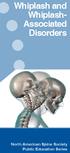 Whiplash and Whiplash- Associated Disorders North American Spine Society Public Education Series What Is Whiplash? The term whiplash might be confusing because it describes both a mechanism of injury and
Closed Automobile Insurance Third Party Liability Bodily Injury Claim Study in Ontario
 Page 1 Closed Automobile Insurance Third Party Liability Bodily Injury Claim Study in Ontario Injury Descriptions Developed from Newfoundland claim study injury definitions No injury Death Psychological
The Anatomy of Spinal Cord Injury (SCI)
 The Anatomy of Spinal Cord Injury (SCI) What is the Spinal Cord? The spinal cord is that part of your central nervous system that transmits messages between your brain and your body. The spinal cord has