
Terminal Automation For the Rest of Us
|
|
|
- Sherilyn Caitlin Burns
- 9 years ago
- Views:
Transcription
1 WHITEPAPER Terminal Automation For the Rest of Us Written by: Michael Dempsey IDENTEC SOLUTIONS VISIBILITY DELIVERED.
2 Table of Contents 1 Terminal Automation for the Rest of Us 3 The rest of us dilemma 3 2 Understanding the Technology 5 Identification 5 Positioning and locating 6 Sensing and telematics 7 3 Key Applications for Increased Performance 8 Gate 8 Yard 9 Quay 11 Rail 11 Port community 12 4 The Trend towards Terminal Asset Management 13 5 Getting Started - 10 Recommendations 14 2
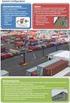
3 Terminal Automation for the Rest of Us Less than 2.5% of the world s container terminals are fully automated. While big automation projects with driverless equipment grab media headlines, building new terminals or converting existing ones to robotic handling is costly and requires a long planning and construction horizon. For most of us, a new fully automated facility may simply not be a viable option for the foreseeable future. Figure 1.0 Typical Automated Terminal Layout So what can the rest of us the vast majority of terminals using manned container handling do today to automate processes on a smaller, more affordable scale yet achieve the same benefits as a full automated operation? In this white paper we focus on process automation applications and technologies that you can adopt today for increased visibility and control across your terminal to drive increased operational reliability, productivity and efficiency. The rest of us dilemma Both shipping lines and terminal operators see the new breed of automated terminals serving their needs better through three core advantages; reliability, productivity and efficiency. Reliable in that terminal performance can be more accurately predicted and executed at the promised level - day in, day out. Productive in that advances in automated handling are addressing bottlenecks in conventional terminal logistics flows and enabling higher operational densities. Efficient in that these complex welldesigned facilities are intended to maximize asset utilization and operational performance, while reducing energy consumption and environmental impact. If we assume that automation addresses these objectives, all terminals may find automation a key enabler. From the rest of us viewpoint the automated terminal, or at least some degree of automation, may hold a further appeal dependent on the forces at work in their market: 3
4 Many terminals especially in southern hemisphere trade are starting to feel the cascade effect of larger vessels. The pressure will only increase to make their operations more efficient so that they can handle bigger ships and higher volume calls. Many of the markets where rest of us terminals operate are growing much more dramatically than those regions where large scale automation is already occurring.dealing with increased volume will be difficult without more automation. Many rest of us terminals are physically constrained. Getting more space is often not viable. Automation provides a path to higher productivity on the same footprint. Even in low cost markets, the ability to keep throwing bodies and equipment at the problem is neither possible nor efficient. The law of diminishing returns comes into play. To deal with these issues, rest of us terminals will have to be smarter and more agile Automation, at least selected process automation, will part be the answer, yielding several key benefits: Optimization of asset utilization Terminals have a substantial investment in container handling equipment. Extending the life of the equipment means deferred investment in new equipment, reduced maintenance costs and better asset deployment Increased productivity Increases of 15-20% in throughput through process automation will have a dramatic bottom line impact. Enhanced personnel safety Safety is the most critical element of the terminal. Process automation works to reduce staff on the ground while also minimizing the chance for accidents through alerting systems, operational safety checks and personnel tracking Improved security Controlling access to equipment and authorization of operations will enable the highest levels of security to be implemented. 4
5 Understanding the Technology Figure 2.0 RFID reader Looking at the various areas of the terminal where automation can be applied we can create a framework to analyze what is available and its potential impact on operations. Any analysis however should begin with an understanding of the technologies available. Later in this paper we will evaluate the applications themselves built on these technologies. The underlying objective of automation remains consistent: the use of technology to improve processes while optimizing productivity and enhancing safety and security. There are three core technologies for process automation. These can be roughly grouped into identification, locating or positioning and sensing or telematics. Identification Terminals need to seamlessly and efficiently identify containers, personnel and equipment to drive their business processes. The automated capture of ID data in terminals currently relies on three main technologies: OCR and imaging systems Optical Character Recognition is the core technology for container identification. Based on a common standard for container identification across the industry, OCR allows an optical read of the alpha numeric identification on the sides and top of a container and converts this to usable digital data. This data can then be fed to a TOS or automated gate system. Similarly, OCR can be used to capture street truck license plate data (termed license plate recognition or LPR ). Furthermore, OCR can also be used to capture chassis and genset information. Closely tied to OCR are imaging systems using camera data to evaluate damage, seal presence, placarding and door direction. Radio frequency identification (RFID) Radio frequency identification (RFID) is a pervasive technology which consists of a chip encoded with an ID of the asset or person being identified. The chip is typically encased in a protective housing which is commonly an ID card for personnel or a purpose built tag for assets such as trucks. The RFID card or tag may be passive or active referring to the source of energy to power the tag. The difference between both is that passive RFID requires energy from a reader to power up the tag and allow it to send the encoded data. This requirement tends to limit the read range of passive tags to less than 10 meters. On the other hand, active tags have an internal battery and can be read from up to 500 meters. 5
6 Figure 3.0 Straddle with GPS Other technologies Bar code is still used in terminals for identification. Several OCR vendors are in fact using 3D bar codes rather than RFID to identify terminal tractors at quay cranes. In addition, many sensor technologies can now transmit data via ranging radio, laser, infrared etc. Positioning and locating GPS/inertial Satellite-based Geospatial Positioning Systems (GPS) are the backbone of most tracking and locating applications in the port and terminal industry today. Because of the outdoor nature of the operations, GPS is a cost effective technology for locating equipment and personnel. The concept is simple. A GPS receiver is mounted on an asset and tied to a processor and communications device. As the asset moves, the GPS receiver receives positional data from multiple satellites, processes this information and sends it to a server running a business software application. In terminals today, Wi- Fi is the most common backhaul medium, although narrowband is also still used. A device called a base station may send a land-based correctional signal to mitigate atmospheric interference and improve the accuracy of the receiver. GPS systems can provide accuracy up to 2.5 cm. This level of accuracy is generally only used for RTG steering applications. In general, GPS for equipment tracking requires 1-3 meter accuracy. For container positioning sub- meter accuracy is required. Where GPS technology cannot be used successfully in terminal environment is in deep stacks and under large steel structures such as ship-to-shore (STS) cranes where the satellite signals are blocked or obstructed. In these situations, GPS may be augmented by inertial guidance systems or RTLS (see below). Inertial systems rely heavily on additional sensing and measuring technologies such as gyroscopes and counters to extend the tracking capability of GPS. Real time locating systems (RTLS) Real time locating systems (RTLS) are technically RFID-based systems using triangulation to locate an asset. An RTLS tag is combined with special locating infrastructure and positioning software to determine the location of an asset. The tagged asset communicates with readers or other positioning devices and the time of flight (ToF) between the tag and the positioning devices is measured. This data is then processed by an RTLS server, which determines the location of the asset. 6
7 The benefit of these systems is the low cost per asset for tracking and the ability to track where GPS-based systems are ineffective, such as under STS cranes. Today, the term RTLS has taken on a broader context. The term is generally used to mean any non-gps based positioning system which results in an asset location. These include ranging radio, laser and infrared. Sensing and telematics A large number of activities on the terminal involve data capture for measurement of equipment performance metrics such as tire pressure, fuel levels and battery life. Through both wired and wireless sensing technologies, large amounts of real-time data are now automatically that previously required manual collection. This means that the terminal now has the ability to capture asset information at a very low cost and use this data to extend the life of its assets and/or keep assets functioning at a higher level of utilization. 7
8 Key Applications for Increased Performance Figure 4.0 RTLS Positioning As we look into deploying process automation technologies, we need to understand the range of applications available across the terminal. It is helpful to view these through the major areas of operation, which will typically include gate, yard, quay, rail and port community -depending of course on the precise make-up of the terminal s business. Gate Unless you are heavily transhipment focused, the pace of your terminal depends upon a fast and efficient truck gate. The gate also tends to be one of the most labor intensive areas in the terminal. Operators must collect driver and truck ID, container ID, genset ID, seal number etc. as part of the typical gate transaction. Automated gate systems (AGS) or gate operating systems (GOS) These have now emerged as a core application to help terminals improve gate efficiency, throughput and safety. Most AGS/ GOS offer several core capabilities: Identify the driver via a security card scan or biometrics Identify the container using OCR Identify truck, chassis and genset Identify container weight Damage imaging Read hazard placards This core data can be augmented by additional data from the TOS. The key benefit of investing in a GOS is reduced gate time, driving higher throughput. Processing time is typically 60 seconds or less per lane versus minutes in a traditional manual process. RFID-enabled automated truck identification RFID-based street truck identification can perform a variety of functions at the gate, inside the terminal and in the wider port community. Once a street truck is tagged and uniquely defined in a database, this information can be used for: Automated truck gating, either in conjunction with a GOS or directly with a TOS. If tied to a pre-advice system, the truck tag read at a gate becomes the key to the truck visit. The tag is read and the data is displayed to a clerk who can then process the truck or push to a kiosk for self- service processing by the driver. Most critical is that the tag can then act as the key for additional processes inside the yard such as job stepping 8
9 Figure 6.0 Pooling Figure 5.0 RFID based access control device Traffic mitigation: Truck traffic control is essential to many port communities especially at specific times of the day. More advanced port communities may also use holding yards to control flow into the port Crane optimization pre-advice:identification of the truck at a port gate may allow advance optimization of equipment usage within the yard Path adherence: The tag offers the ability to track the paths taking by trucks and take corrective action or impose penalties Automated straddle carrier exchange grid management: In straddle operations, the exchange of containers between the street trucks and the straddles shares the same constraints as the gate itself. Today, this process is generally manual or semi- automated, with truck drivers punching in a BAT Number or scanning their ID on a kiosk or similar device. Where the transfer grid is small (few lanes), efficient use of the grid becomes critical. Through the use of RFID on trucks, the automation of this process is possible. As a truck arrives at the grid, it is automatically identified and the TOS notified, allowing a faster task release. When cleared of the lane it immediately becomes available. Yard Access control The ability to automatically identify a driver and control access to a vehicle is essential to operational safety. This process may be accomplished using RFID-based ID cards like TWIC or ISPS, or through biometrics. Furthermore, as the log on establishes the operator s identity, access control systems can also be used to support performancebased compensation programs. Container position determination (PDS) Accurate container inventory by location is a fundamental requirement to efficient and secure operations. Knowing the exact location of containers to be handled eliminates lost and misidentified boxes, removes the need for manual inventory checks and improves safety by taking clerks off the tarmac. Container position determination (PDS) is the main application for tracking box location, specifically GPS-based tracking. The PDS application captures the location of the container at the time of the twistlock open/ close event. This is achieved by integrating the equipment control signals with a PDS application. In environments where chain of custody is critical, PDS can also serve as a security application, preventing twist lock open/close unless the position is validated. 9
10 Figure 7.0 RID based Job Stepping and Promotion Terminal tractor tracking and optimization One of the fastest growing yard applications is terminal tractor tracking. This is less for the purpose of visibility (although this is itself effective for enhanced accountability) but more for yard crane optimization. If a terminal tractor or street truck can be identified as on the way to a yard crane or other piece of container handling equipment (CHE), then equipment task assignments can be preoptimized. In the same vein, pooling logic in the TOS is growing in popularity. The premise of pooling is that rather than assign tractors to a specific crane during load/ discharge, the terminal tractors can be pooled and any tractor can serve any crane best on optimized assignment logic. Fundamental to this concept is location. The pooling system must know the exact location of the tractor to make a decision on its next best job. In practice tractor visibility for crane optimization or pooling may increase productivity by as much as 20%. Automated job stepping and promotion The process of container transfer between a terminal tractor or a street truck and a crane or other piece of yard handling equipment can be time consuming and dangerous. As a truck arrives, the CHE operator must identify the truck (via a truck ID painted on the truck, a BAT number or a license plate) from a list of tasks on a mobile display in his cab. He must then select it and initiate the lift/drop process. This process can take seconds. Automated job stepping and promotion supports the automatic identification of the truck. This is typically achieved using RFID tags on the truck or tractor. Once identified the information is sent to the TOS. The TOS will then promote the task - generally reducing the list on the equipment operator s in-cab display to the one immediate task at hand for simplicity. If the terminal tractor has a display, then his/her job may be stepped. This application reduces the transfer time and eliminates the need for the operator to manually check truck/tractor ID. Productivity increases of 15% can be achieved. 10
11 Figure 9.0 Automated handoff under STS cranes Reefer monitoring Reefer traffic plays a key and growing role for many terminals. Refrigerated containers require significant attention by the terminal, but building a reputation for good reefer management represents a unique opportunity to increase revenue and to differentiate the terminal in order to attract new business. The technology for remote reefer monitoring on the terminals is today fairly archaic, depending upon powerline monitoring (PLM) using modems. In this case data is modulated over the power line powering the reefer unit. However, new wireless technologies using RFID, bluetooth and GSM are now appearing, eliminating the need for PLM. Fleet management and telemetrics Telemetric technologies to capture data such as tire pressures, fuel levels and battery life can help to prevent equipment breakdowns, reduce maintenance cost and improve the utilization and lifecycle of assets. By combining telemetrics with fleet scheduling and availability applications, terminals can now ensure that accurate equipment status data is shared between maintenance, operations and engineering for more coordinated fleet planning and management. Quay Crane OCR Automating vessel operations relies heavily on crane OCR. Similar to the gate, the container number is automatically scanned as it is brought to the front or back reach of the STS crane. Crane OCR may include other image processes integrated with the container ID, including seal presence detection, damage imaging and door direction determination. New logic in vision systems is also allowing for hazard placard scanning. The OCR scanning process can significantly reduce crew size and increase the safety of the quay area. Automated container handoff Identification of the straddle or terminal tractor retrieving or delivering a container to the quay can also be automated. Today, inertial, RTLS, infrared and vision based systems are all being used. These systems provide asset ID and may additionally automate recognition of the position of the container on the chassis. This application virtually eliminates staff from under the crane (excluding pinning/depinning). Where gang sizes may be as high as 4-6 people, this represents significant labor savings and workforce safety benefits. 11
12 Rail Rail OCR Adoption of rail OCR is in its early stages but gaining momentum. The application here has been cautiously adopted due to the complexity of the OCR process, with up to four boxes in a car well which must be combined with railcar recognition and distance measurements to create a complete picture of the train. Chassis and cassette PDS Many rail operations, especially where cantilever rail cranes are used, are turning to cassette or chassis based exchange systems. This application is very similar to container PDS, with association of a cassette with a container and a terminal tractor. Port Community Port access control systems Port access control systems (PACS) essentially provide a port-wide GOS, allowing multiple terminals/businesses to share gates, checkpoints, etc. Terminals can make use of port-wide data collection to enhance their own processes. Container security/eseals In many ports, the movement of boxes outside the terminal to off- site bonded warehouses or within a secured free trade zone requires stricter container security. In these situations, RFID-based electronic seals (or eseals ) may be used, as well as more advanced GPS/GSM-based seals. RFID eseals provide point-to-point visibility of the container. If tampered with, the eseal will indicate this when scanned. If real time over the road visibility is required then a similar device equipped with GSM communications can be used. In this case, the tag can report anywhere using cell phone technology, thus allowing operators to pinpoint the place of intrusion during a journey. Truck tracking/ traffic management As discussed earlier, the use of RFID or GPS on trucks allows port communities to understand traffic patterns better and create traffic mitigation programs accordingly. The PierPass program in the Los Angeles/ Long Beach port complex and the Port of Sydney PBLIS initiatives are two real world examples. 12
13 Trend to Terminal Asset Management When we discuss terminal technology, most operators will easily identify with terminal operating systems and references to the TOS. They are the core of all operations today within the four walls of the terminal and into the extended port community. Terminal operating systems have been deployed for over 20 years and remain the essential application. Similarly, automated gate systems/gate operating systems are now moving toward essential status. What is the next big thing? In recent years a new genre of application is emerging which brings together all of the process automation technologies and applications discussed so far in this white paper. Simply put, terminal asset management systems - or TAMS - manage the mobile assets of a terminal in real time. Mobile assets in this context can be defined as container handling equipment (CHE), containers and workforce. When we speak about TAMS, we need to differentiate this automation focused application from the more traditional asset management systems that track terminal equipment for financial and/or maintenance purposes. TAMS applications bring together identification, locating and sensing technologies under a cohesive unified central system. From an application standpoint, TAMS systems include functionality for: Container, equipment and workforce monitoring and control Process automation Fleet management Safety and security Just as the TOS is responsible for the planning of terminal operations, the TAMS will automatically manage the real time events driving terminal business processes. As a software category, the TAMS concept is now gaining momentum. In the past, multiple applications may have been required to address the same unified functionality found in TAMS. Today, some leading software and hardware suppliers have endorsed the concept and commercial off-the-shelf packages are increasingly available. 13
14 Getting Started - 10 Recommendations to Improve Productivity with Process Automation So how and where do you start on the road to process automation? Here are ten top recommendations Identify your weak points A critical eye and solid data is the first step towards automating selected processes in your terminal. Start by identifying your weak spots. If trucks are backed up at the gate for 1-2 hours, an AGS/GOS may be logical. If turn times in the yard are over one hour, job stepping may be the focus. Operators should evaluate each of the areas discussed and select the right applications for the areas that most need automation. The downside to this technique is that automating specific areas may apply unexpected pressure on others. 2. Create a master plan for competitive advantage In analyzing weak points, a further consideration must be competitive advantage. Automating certain processes may only put you in an even position with other terminals. Getting real competitive advantage may require a total long term plan. It is recommended that you develop a Master Plan with clear long term goals and technology roll out matched to this Plan. 3. Get the fundamentals installed Certain process automation applications are fundamental. Today the Big 3 are automated gates, PDS and automated job stepping/ promotion. Together, these three applications will raise the bar on terminal efficiency. 4. Look to next level automation opportunities After the core process automation applications are installed, terminals should look to next level applications. Two which shows strong ROI are crane OCR and automated handoff under quay cranes. 5. Combine advanced applications with process automation With the advent of advanced assignment solutions and pooling technologies for mobile equipment serving quay and yard cranes, advance real-time notice of terminal tractor positions is critical. GPS or other locating technologies on terminal tractors allow these software applications to truly optimize the decision engine. 6. Measure the non-direct activities Reefer monitoring is a necessary pain in many terminals. It produces minimal revenue, but the ability to effectively manage reefers may differentiate your terminal from others, both with your shipping line customers and also with end-user shippers. 14
15 Getting Started - 10 Recommendations to Improve Productivity with process automation 7. Integrate with the port community Terminals are increasingly obliged to participate in the overall port community. Port-wide initiatives such as truck tagging and traffic mitigation are now common. A solid understanding of the technologies and applications available are necessary to protect and maintain a terminal s position in the port. 8. Leverage information across applications Look for opportunities to extend your investment across multiple applications. For instance, extend street truck tagging for gate automation to develop automated job stepping and promotion in the yard. 9. Get the right staff and training in place Think about the new skill sets and roles needed in your operations control team to realize the full benefits of your technology investment. The focus should be not just on IT literacy, but equally on process management, exception resolution, KPI analysis and technology fine-tuning. Your technology vendors should be able to advise and/or support you with staff and team training. 10. Light a fire at C-level Getting terminal managers excited about process automation is not hard. Most operators know the industry and what is being done. The trick is to have solid references with demonstrated performance figures to support your claims. With so many competing pressures for budget and management time, solid references and demonstrated performance figures are vital to support your claims and engage C-level attention. Your vendors should be able to direct you to relevant reference sites and case studies. 15
16 Contact Us IDENTEC SOLUTIONS AG Millennium Park Lustenau Austria Tel Fax [email protected] IDENTEC SOLUTIONS Deutschland GmbH AURUM 05 / Ost Goldbeckstraße Hirschberg Germany Tel.: Fax: IDENTEC SOLUTIONS, Inc. Liberty Plaza II, Suite Keller Springs Rd, Addison, Texas USA Tel Fax IDENTEC SOLUTIONS AS Kartheia Kristiansand Norway Tel Fax IDENTEC SOLUTIONS VISIBILITY DELIVERED. IDENTEC SOLUTIONS Australia and New Zealand P/L Riverview Business Park 72 Maribyrnong St, Footscray VIC, 3011 Australia Tel Fax identecsolutions.com
Marine Terminal Management Training Program
 Marine Terminal Management Training Program The Positive and Pervasive Role of IT Enhancing Management and Operational Efficiencies Technology Options Steve Bushey TransTech Partners, LLC Mountainside,
Implementation of Gate and Crane OCR Systems for Container Terminal Automation and Security
 Implementation of Gate and Crane OCR Systems for Container Terminal Automation and Security Phil Elovic, Hi-Tech Solutions Presented at TOC 2003 Asia, Hong Kong, Feb. 26, 2003 1. Introduction Container
Changing Metrics and Mindsets in the Warehouse Part Two: Optimizing the ROI of Forklift Fleet Management Through Phased Implementation
 Crown Connectivity Series Changing Metrics and Mindsets in the Warehouse Part Two: Optimizing the ROI of Forklift Fleet Management Through Phased Implementation Introduction Crown has been providing forklift
Efficient Asset Tracking: From Manual to Automated
 White Paper Efficient Asset Tracking: From Manual to Automated Asset Tracking Overview: Asset Tracking Basics: The Fixed Asset Register Managing a Fixed Asset Register Asset Identification Technologies
NEXT GENERATION MOBILITY IN MANUFACTURING
 NEXT GENERATION MOBILITY IN MANUFACTURING NEXT GENERATION MOBILITY IN MANUFACTURING KEEPING PACE WITH DEMANDS The manufacturing sector is a demanding business. Globalisation has increased competition exponentially.
Evolving Bar Codes. Y398 Internship. William Holmes
 Evolving Bar Codes Y398 Internship By William Holmes Table of contents Introduction: What is RFID? Types of Tags: Advantages of Tags: RFID applications Conclusion: Introduction: Bar codes have evolved
Fleet Optimization with IBM Maximo for Transportation
 Efficiencies, savings and new opportunities for fleet Fleet Optimization with IBM Maximo for Transportation Highlights Integrates IBM Maximo for Transportation with IBM Fleet Optimization solutions Offers
Active RFID Solutions for Asset Tracking and Inventory Management
 Active RFID Solutions for Asset Tracking and Inventory Management Introduction RFID (Radio Frequency Identification) technology is fast replacing ScanCode technology for asset tracking and inventory management.
Determining The Right Lift Truck Navigation System. For Your Very Narrow Aisle (VNA) Warehouse
 Determining The Right Lift Truck Navigation System For Your Very Narrow Aisle (VNA) Warehouse Determining The Right Lift Truck Navigation System For Your Very Narrow Aisle (VNA) Warehouse Today s pressures
Radio Frequency Identification (RFID) An Overview
 Radio Frequency Identification (RFID) An Overview How RFID Is Changing the Business Environment Today Radio frequency identification (RFID) technology has been in use for several decades to track and identify
Fleet Management Solutions for your business.
 Fleet Management Solutions for your business. 2 rushtruckcenters.com Helping you effectively manage your fleet is our highest priority. Keeping your fleet operating at peak efficiency is critical to the
WLAN-Based Location-Aware Applications for Hospitals
 WLAN-Based Location-Aware Applications for Hospitals PanGo Networks, Inc. January 2005 2005 PanGo Networks, Inc. All Rights Reserved Introduction Hospital environments inherently involve mobility. The
THE FUTURE OF WAREHOUSE EFFICIENCY
 THE FUTURE OF WAREHOUSE EFFICIENCY RAPID GROWTH OF DATA COLLECTION TECHNOLOGIES White Paper DELIVERING RELIABLE DATA COLLECTION SOLUTIONS What Does the Future of Warehousing Look Like? In the next several
EXECUTIVE SUMMARY. Warehouse Management Systems. Technology for Global Supply Chain Performance. Authored By: Carla Reed. ChainLink Technology Series
 EXECUTIVE SUMMARY ChainLink Technology Series Warehouse Management Systems Technology for Global Supply Chain Performance Copyright ChainLink Research 2007 Authored By: Carla Reed June, 2007 About ChainLink
RTLS 101 What It Is and Why You Need It
 RTLS 101 What It Is and Why You Need It RTLS 101 WHAT IT IS AND WHY YOU NEED IT In business, knowledge is power, and with it comes efficiency, productivity, safety, and profits. Real Time Locating Systems
QUICK GUIDE. How to Select an Effective Mobile Workforce Management Solution. How to Select an Effective Mobile Workforce Management Solution
 QUICK GUIDE How to Select an Effective Mobile Workforce Management Solution 1 How to Select an Effective Mobile Workforce Management Solution This Quick Guide will cover: What a comprehensive Mobile Workforce
Cisco Context-Aware Mobility Solution: Put Your Assets in Motion
 Cisco Context-Aware Mobility Solution: Put Your Assets in Motion How Contextual Information Can Drastically Change Your Business Mobility and Allow You to Achieve Unprecedented Efficiency What You Will
CFCFA Logistics Management Training Supply Chain Management Technology
 Your Logo Here CFCFA Logistics Management Training Supply Chain Management Technology Supply Chain Management Technology Supply Chain Management Location Tracking Technologies Satellite-based Positioning
Enabling Supply Chain Visibility Through Mobile Computing
 Driver Communications Fleet Management Warehouse Operations Cross Dock Operations Yard Management Fleet Maintenance Time and Attendance Enabling Supply Chain Visibility Through Mobile Computing Helping
Practices for Using Passive, Low-Cost RFID for Improved Asset Tracking
 RFID Technology Review Practices for Using Passive, Low-Cost RFID for Improved Asset Tracking Sponsored by: Presented by: Shane Snyder President 2014 MHI Copyright claimed as to audiovisual works of seminar
AAPA & nawe Marine Terminal Management Training Program. Information Technology and Terminal Operations
 AAPA & nawe Marine Terminal Management Training Program Information Technology and Terminal Operations Steve Bushey TransTech Partners, LLC Mountainside, NJ 07092 Steve Bushey Over 35 years (1973) experience
Real-time Visibility. RFID-enabled Applications for Supply Chain & Logistics Operations. Reference Guide. 2009 OATSystems
 Real-time Visibility RFID-enabled Applications for Supply Chain & Logistics Operations Reference Guide 2009 OATSystems Real-time Visibility Across the Value Chain By adding real-time visibility to business
Technology you just use Globe Tracker Smart Container Tracking and it s Impact on Global Ocean Freight
 Technology you just use Globe Tracker Smart Container Tracking and it s Impact on Global Ocean Freight 1 Technology you just use Globe Tracker International ApS Jim Davis, Founder, CEO Distinguished IBM,
Improving Supply Chain Traceability Using RFID Technology
 Said A. Elshayeb 1, Khalid Bin Hasnan 2 and Chua Yik Yen 3 1 UTHM, [email protected] 2 UTHM, [email protected] 3 UTHM, [email protected] Abstract One of the major issues in the supply chain
Best Practices in. Best IT Asset Management through Smart RFID-Enabled Software. Art Barton, Director of RFID Strategies, RFTrail
 Best Practices in RFID-Enabled Asset Management Best IT Asset Management through Smart RFID-Enabled Software Art Barton, Director of RFID Strategies, RFTrail Chief Information Officers, finance managers,
Finding the KPIs for Yard Management
 Finding the KPIs for Yard Management 2 EXECUTIVE SUMMARY Yard management is a critical linkage in logistics management practices, and has a significant impact on the overall efficiency of the supply chain.
RFID BASED VEHICLE TRACKING SYSTEM
 RFID BASED VEHICLE TRACKING SYSTEM Operating a managed, busy parking lot can pose significant challenges, especially to a government organization that also owns some of the vehicles in the lot. The parking
CHAPTER 3 AVI TRAVEL TIME DATA COLLECTION
 CHAPTER 3 AVI TRAVEL TIME DATA COLLECTION 3.1 - Introduction Travel time information is becoming more important for applications ranging from congestion measurement to real-time travel information. Several
Infinite Integration: Unlocking the Value of Enterprise Asset Management through Technology Integration May 2010
 Infinite Integration: Unlocking the Value of Enterprise Asset Management through Technology Integration May 2010 RFID, GPS, sensor, and other auto-id technologies promise to revolutionize enterprise asset
Automated Receiving. Saving Money at the Dock Door. Page 8
 Automated Receiving Saving Money at the Dock Door Page 8 Today s warehouse management and automated sortation systems are far easier to integrate than in the past. As a result, distribution centers are
EXPANDING THE ROLE OF THE MOBILE NETWORK OPERATOR IN M2M
 EXPANDING THE ROLE OF THE MOBILE NETWORK OPERATOR IN M2M STRATEGIC WHITE PAPER INTRODUCTION Machine-to-machine (M2M) communications is on the rise. Most mobile network operators (MNOs) are turning to M2M
Selecting the Correct Automatic Identification & Data Collection Technologies for your Retail Distribution Center Application
 Selecting the Correct Automatic Identification & Data Collection Technologies for your Retail Distribution Center Application Have camera/image-based code readers replaced traditional laser scanners? Has
Using Hybrid RFID for Improved Asset Tracking
 Using Hybrid RFID for Improved Asset Tracking Sponsored by: Presented by: Tom O Boyle Director of RFID, Barcoding, Inc. 2015 MHI Copyright claimed for audiovisual works and sound recordings of seminar
TECHNOLOGY BRIEF. Business Benefits from Radio Frequency Identification (RFID)
 TECHNOLOGY BRIEF Business Benefits from Radio Frequency Identification (RFID) Executive summary Today the largest government and business enterprises in the world are developing plans to deploy electronic
Interpreting the Numbers: From Data to Design. William Elenbark, Consultant Gross & Associates 732-636-2666; belenbark@grossassociates.
 Interpreting the Numbers: From Data to Design William Elenbark, Consultant Gross & Associates 732-636-2666; [email protected] Robert Muller, Industrial Engineer Gross & Associates 732-636-2666;
RFID for Mining. Safety: Real time visibility of the accurate location and status of employees is paramount at all times,
 RFID for Mining Mining is a perfect example of an industry with a strong need for real time location that had not been realized until the advent of Wi Fi based active RFID systems. Mining operations around
Iknaia Asset and Personnel Tracking Management System for the Healthcare Industry
 Iknaia Asset and Personnel Tracking Management System for the Healthcare Industry July 2014 Introduction Trying to find your way around a large hospital or locating a high-value medical device such as
SOUTHERN CALIFORNIA GAS COMPANY ADVANCED METERING INFRASTRUCTURE CHAPTER IV
 Application No.: A.0-0-0 Exhibit No.: SCG Date: March, 00 Witness: Christopher R. Olmsted SOUTHERN CALIFORNIA GAS COMPANY ADVANCED METERING INFRASTRUCTURE CHAPTER IV INFORMATION SYSTEMS, APPLICATION DEVELOPMENT
When to Leverage Video as a Platform A Guide to Optimizing the Retail Environment
 When to Leverage Video as a Platform A Guide to Optimizing the Retail Environment Contents S1 An Industry in Transition Over the past few years, retail has seen seismic changes in how the customer shops.
Any Time, Any Place MONITOR & TRACK YOUR REEFER
 Any Time, Any Place MONITOR & TRACK YOUR REEFER Utilizing RFID, GPRS & GPS, WAM takes control with remote wireless management of reefers in ports, depots, rail ramps even on vessels. WAM watches & reports
Next generation Managed Print Services.
 WHITEPAPER Next generation Managed Print Services. Managed Print Services (MPS) are evolving from focusing on printers to people and workfl ows. Beyond expectation. www.azzurricommunications.co.uk What
Cloud Based Asset Management Case Study
 Cloud Based Asset Management Case Study Presenter: Henry Popplewell, SVP and GM, SkyBitz Kate Gardner, Director of Information Technology, Taylor Truck Line, Inc. Presenters Henry Popplewell, Senior Vice
Totally Wireless Video Security
 Traditional Video Surveillance ($50,000+) vs. Event-Based Videofied Solution ($2,500) Executive Summary: Totally Wireless Video Security has been effective but cost and complexity has limited deployment
Growth through partnerships and licensing technologies
 Growth through partnerships and licensing technologies Standards support Innovation Jens N. Albers, CEO AIM-D board member International Conference on Standardization and Innovation @ CERN, Geneva Overview
Vehicle Tracking Solution
 Vehicle Tracking Solution Business Challenges KeyTone Benefits Inbound/outbound trailer tracking process is manual, error prone and time consuming Not knowing where a given vehicle/trailer is result in
SAMA Tracking Solutions
 SAMA Tracking Solutions Vehicle Tracking System VTS SAMA Telecom 1 About SAMA Telecom SAMA TELECOM, is a leading company in telecommunication services, software application and system implementation. We
Global Asset Tracking & Identification System
 ` Global Asset Tracking & Identification System 2 About GATIS Solutions Global Asset Tracking & Identification Systems GATIS is a robust, secure and comprehensive Auto-ID system, with a logistic and asset
a new solution Discover Key Features IDPod offers you flexible, personable software solutions for your proof of delivery needs Ease of use
 Discover a new solution IDPod offers you flexible, personable software solutions for your proof of delivery needs Key Features Ease of use Dynamic Scheduling Back-end System Integration Tools Barcode scanning
GPS Device Installation and Tracking Solutions GPS LIVE TRACKING FLEET COMPANY RENTAL PERSONAL. www.trackghana.com
 GPS Device Installation and Tracking Solutions GPS LIVE TRACKING Locate Anywhere Anytime FLEET COMPANY RENTAL PERSONAL www.trackghana.com COMPANY SUMMARY What We Do Who We Are Track Ghana is a global provider
CHOOSING A WIRELESS IMPLEMENTATION STRATEGY AND APPLICATIONS
 WHITE PAPER CHOOSING A WIRELESS IMPLEMENTATION STRATEGY AND APPLICATIONS Sachin Gupta, Sr. Wireless Consultant WHAT S INSIDE: 1. Introduction 2 2. Key Considerations before Selecting a Wireless Solution
Motorola AirDefense Network Assurance Solution. Improve WLAN reliability and reduce management cost
 Motorola AirDefense Network Assurance Solution Improve WLAN reliability and reduce management cost The challenge: Ensuring wireless network performance and availability Wireless LANs help organizations
Truck Automation for the Ready Mixed Concrete Industry. Michael J. Hoagland (205) 879-3282 ext. 1164 [email protected]
 Truck Automation for the Ready Mixed Concrete Industry Michael J. Hoagland (205) 879-3282 ext. 1164 [email protected] Session Agenda What is GPS and How does it work? Auto Signaling Explained
What is our purpose?
 Who we are? Since 1995 we have become one of the largest suppliers of electronic automotive accessories and telemetry devices in the Baltic States. Baltic Car Equipment is investing extensively into R&D
EAM RFID SOLUTIONS INTERNAL USE CASE A COMPLETE SOLUTION. ENHANCING EFFICIENCY + CUSTOMER SATISFACTION. THE CHALLENGE: PROCESS + PRODUCT THE COMPANY
 INTERNAL USE CASE EAM RFID SOLUTIONS A COMPLETE SOLUTION. ENHANCING EFFICIENCY + CUSTOMER SATISFACTION. THE COMPANY EAM Worldwide, an OEM of aviation life vests and life rafts, operates a 56,000 square
WWW.WIPRO.COM THE INTERNET OF THINGS. HARMONIZING IoT FOR RETAIL. Kuru Subramaniam
 WWW.WIPRO.COM THE INTERNET OF THINGS HARMONIZING IoT FOR RETAIL Kuru Subramaniam Table of contents 01 Abstract 01 Introduction 02 Where Are We Headed? 02 What Does IoT Mean for Retailers? 03 Getting the
Can I Cost-Effectively Monitor Critical Remote Locations?
 WHITE PAPER Can I Cost-Effectively Monitor Critical Remote Locations? The Technical and Business Cases for Solar-Powered, Wireless Remote Video Surveillance 2015 MicroPower Technologies, Inc. Introduction
The Benefits of PLM-based CAPA Software
 For manufacturers in industries that produce some of the world s most complex products, effective quality management continues to be a competitive advantage. Whether in automotive, aerospace and defense,
Mobility JSV ]SYV IJßGMIRG]
![Mobility JSV ]SYV IJßGMIRG]](/thumbs/39/20393674.jpg "Mobility JSV ]SYV IJßGMIRG]") Mobility 2 Mobility 3 Mobility 4 Work Order Management 5 Warehouse Management 6 Spare Part Management 3 Mobility enabling any company to integrate Warehouse Management, Spare Part Management, Field Services
Mobility 2 Mobility 3 Mobility 4 Work Order Management 5 Warehouse Management 6 Spare Part Management 3 Mobility enabling any company to integrate Warehouse Management, Spare Part Management, Field Services
Intermodal Handling TOP PERFORMANCE WITH SMART SOLUTIONS
 Intermodal Handling TOP PERFORMANCE WITH SMART SOLUTIONS Intelligent intermodal solutions ensure safe and sustainable transport of goods International trade is constantly changing its ways and requirements
Improving production and operation systems with RFID. Taking manufacturing to the next level: RFID Work-in-Process solutions from IBM
 Improving production and operation systems with RFID Taking manufacturing to the next level: RFID Work-in-Process solutions from IBM RFID: A proven technology changing the factory floor Today the most
Philips remote monitoring and control systems
 Philips remote monitoring and control systems Intelligent management of your road and street lighting Energy cost savings Maintenance efficiencies Reduced CO 2 emissions Improved safety Minimized light
Iknaia Asset and Personnel Tracking Management System for the Construction Industry
 Iknaia Asset and Personnel Tracking Management System for the Construction Industry Introduction The UK construction industry accounts for over 7%* of the UK s Gross Domestic Product and employs over two
Seven Easy Steps to Reduce the Environmental Impact of Today s Supply Chains
 GREENLIGHTING EFFICIENCY Seven Easy Steps to Reduce the Environmental Impact of Today s Supply Chains 2 TABLE OF CONTENTS Introduction 3 The Seven Steps 4 1. Optimize Your Routing 4 and Consolidation 2.
INTERLOCK PALLET RACKING SYSTEM. The complete range of Pallet Racking Solutions
 INTERLOCK PALLET RACKING SYSTEM The complete range of Pallet Racking Solutions The SCHAEFER Group Since its inception in 1937 by Mr. Fritz Schaefer, SSI SCHAEFER has been one of the world's leading suppliers
Choosing the Right ERP Solution:
 Choosing the Right ERP Solution: 3 CRITERIA FOR SUCCESS Table of Contents 1 2 Who We Are 3 The Key to Better Business Performance 4 ERP as the Focal Point of Your Business 5 Why Some ERP Solutions Fail
entigral whitepaper Understanding RFID and Barcode Differences www.entigral.com 877.822.0200
 entigral whitepaper Understanding RFID and Barcode Differences www.entigral.com 877.822.0200 Understanding RFID and Barcode Differences Don t misuse RFID with applications built for Barcodes Radio Frequency
Time & Access System An RFID based technology
 Time & Access System An RFID based technology OpenWorks TIME Technical Specification V1.0.2 M. I. Suhile Ahamed KCP Technologies Limited 2, Dr. P. V. Cherian Crescent, Egmore, Chennai - 600 008, INDIA.
QUICK REFERENCE GUIDE MOBILE HUMAN MACHINE INTERFACE (HMI): INNOVATION THAT EMPOWERS THE MOBILE OPERATOR
 MOBILE HUMAN MACHINE INTERFACE (HMI): INNOVATION THAT EMPOWERS THE MOBILE OPERATOR Mobile operators are critical to ensuring the overall efficiency and uptime of the production line and play a critical
Other 555 based and 8051 based projects...
 Dear Engineer, We at ARK Technosolutions try to bring out the Innovative side in budding engineers by providing them workshops, which emphasise on Practical Knowledge which they do not seek in their daily
Global Machine to Machine Smart Services
 Global Machine to Machine Smart Services Connecting people, devices and systems vodacom.co.za/business M2M communications helping to reduce costs and improving efficiency and service to customers 2 Global
Yard Management Systems
 Yard Management Systems A guide to better understanding the market, the software and the benefits WHITE PAPER Marc Wulfraat President MWPVL International Inc. & Gregory Braun Senior Vice-President C3 Solutions
GPS Tracking Product Guide
 GPS Tracking Product Guide Contents Introduction to GOTRACK... 2 What is GPS Tracking... 3 How Does GPS Tracking Work... 4 GOTRACK Guardian... 5 GOTRACK Guardian Pro... 6 GOTRACK My Fleet Lite... 7 GOTRACK
SMART TRANSPORT KEEPING STUDENTS CONNECTED AND SAFE WITH THE SMART SCHOOL BUS
 Practical thinking for a connected world. SMART TRANSPORT KEEPING STUDENTS CONNECTED AND SAFE WITH THE SMART SCHOOL BUS PRACTICAL THINKING FOR A TRULY CONNECTED WORLD We have an unprecedented opportunity
3.4 SCS Technologies for Container Integrity: Track/Trace or Positioning technologies
 3.4 SCS Technologies for Container Integrity: Track/Trace or Positioning technologies It seems evident that if authorities are concerned about the potential misuse of containers by criminals or terrorists,
Bar Coding ROI in Mail Order Fulfillment and Distribution Centers APPLICATION WHITE PAPER
 Bar Coding ROI in Mail Order Fulfillment and Distribution Centers APPLICATION WHITE PAPER Copyrights 2005 ZebraLink and all product names and numbers including QL 420 are Zebra trademarks, and Zebra is
How To Combine Active And Passive Rdi For A More Complete Solution
 Evigia RFID Technology Overview: Introduction to Active and Passive RFID Technologies Active RFID and Passive RFID technologies, while often considered and evaluated together, are fundamentally distinct
Technology White Paper Capacity Constrained Smart Grid Design
 Capacity Constrained Smart Grid Design Smart Devices Smart Networks Smart Planning EDX Wireless Tel: +1-541-345-0019 I Fax: +1-541-345-8145 I [email protected] I www.edx.com Mark Chapman and Greg Leon EDX Wireless
Cat Detect. for Surface Mining Applications
 Cat Detect for Surface Mining Applications Enhance Your Site s Safety through Increased Operator Awareness Configurable to suit your operation s needs, Cat MineStar System is the industry s broadest suite
White Paper. Choosing a Wireless Implementation Strategy and Applications. What s Inside:
 White Paper Choosing a Wireless Implementation Strategy and Applications Author: Sachin Gupta, Sr. Wireless Consultant What s Inside: 1. Introduction 2. Key Considerations before Selecting a Wireless Solution
Integrated Physical Security and Incident Management
 IT Enterprise Services Integrated Physical Security and Incident Management Every organisation needs to be confident about its physical security and its ability to respond to unexpected incidents. Protecting
Enterprise Release Management
 Enterprise Release Management Plutora helps organizations manage complex IT Feature Pipeline, IT Releases and IT Test Environments in a simple and transparent manner. Enterprise Releases Transparency and
RFID 101: Using RFID to Manage School Assets and Achieve Huge Savings
 RFID 101: Using RFID to Manage School Assets and Achieve Huge Savings Are You Missing Out On Huge Savings through Better Asset Management? Many schools around the country have implemented wireless networking
SOURCE ID RFID Technologies and Data Capture Solutions
 SOURCE ID RFID Technologies and Data Capture Solutions RFID - a vital link for streamlining in-store inventory and supply chain management Source ID believes that worldwide demand for RFID based technology
Commercial Motor Vehicle Safety and Security Systems Technology Wireless Mobile Communications
 Commercial Motor Vehicle Safety and Security Systems Technology Wireless Mobile Communications Objective Satellite- and cellular-based mobile two-way communication tracking systems for commercial motor
Improving SCADA Operations Using Wireless Instrumentation
 Improving SCADA Operations Using Wireless Instrumentation April 2010 / White paper by Hany Fouda Make the most of your energy Summary Executive Summary... p 2 Introduction... p 3 The Evolution of Wireless...
Envera Security Solution for Via Sol CDD Community. www.enverasystems.com
 Envera Security Solution for Via Sol CDD Community www.enverasystems.com Presenter Bill Ford 36 plus years in the security industry Owned and operated his own security company in Orlando Currently a Security
Smart Grid Different Flavors for Different Tastes
 By Jeff Buxton, Executive Consultant, and Mehrdod Mohseni, Senior Vice President and General Manager of Smart Grid Practice, Black & Veatch Published in Intelligent Utility Magazine, May/June 2010 Smart
Unified Asset Visibility Solutions for Healthcare
 Unified Asset Visibility Solutions for Healthcare Real-time location, status and condition of assets, patients and staff throughout your hospital Leverage standard Wi-Fi networks for: Asset Management