
Lead Understanding Lead Exposure
|
|
|
- Melvin Lee
- 9 years ago
- Views:
Transcription
1 Lead Understanding Lead Exposure School officials and child care providers need to know whether the students, teachers and staff consume elevated levels of lead when drinking water in their facility, because exposure to lead can cause serious health problems, particularly for young children. Lead in drinking water is primarily from materials and components associated with service lines and facility plumbing. Your municipal water supplier is responsible for providing high quality drinking water, but cannot control the variety of materials contained in the plumbing components used within your facility. Health Effects of Lead Lead can cause serious health problems if too much enters your body from drinking water or other sources. Some facts about lead exposure include: Infants, young children and pregnant women are at greatest risk to lead exposure; Increased lead levels have been shown to cause damage to the brain and kidneys; Increased lead levels interfere with the production of red blood cells that carry oxygen to all parts of your body; Scientists have linked the effects of lead on the brain with lowered intelligence quotient (IQ) in children; Adults with kidney problems and high blood pressure can be affected by lower levels of lead more than healthy adults; Lead is stored in the bones and it can be released later in life; and During pregnancy, the fetus receives lead from the mother's bones which may affect brain development. How Lead Gets into Drinking Water Soft water has a low ph, which is corrosive. Other factors however also contribute to the corrosion potential of the water and include water velocity, temperature, alkalinity, the type of disinfectant, the age and condition of plumbing and the amount of time water is in contact with plumbing. Of note, recent construction work on your facility's plumbing system (e.g., pipe replacement and utility lead service line replacement with copper components) may result in corrosion of remaining lead pipes or disturbance of settled debris within larger pipes in the system which may create new sources of contamination. The occurrence and rate of corrosion depend on the complex interaction between a number of these and other chemical, physical and biological factors. Municipal water systems take steps to reduce the corrosiveness of the water. However if the plumbing in your facility is made of lead or contains lead parts, corrosion may occur as the water moves through your facility's plumbing. 1

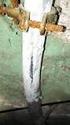
2 Example of lead pipes in a plumbing system. Potential Sources of Lead in Drinking Water Lead pipes in plumbing: o Dull gray in color and will appear shiny when scratched o Banned since 1986 and not widely used since the 1930s Copper pipes joined by lead solder: o Solder will be dull gray in color and will appear shiny when scratched o Banned since 1986 and many communities banned prior to 1986 Brass pipes faucets fittings and valves: o May contain alloys of lead Sediments in screens on faucets: o Debris from plumbing can collect on screens and may contain lead Water service line to facility is made of lead: o Pipes that carry water from the municipal water system main to the facility may contain lead Water fountains in the facility may contain lead parts: o Specific brands of water fountains contain lead parts or have lead lined water tanks o Since 1988 it has been mandated that water fountains be lead free but older facilities may have outdated models Voluntary Testing of Lead in Drinking Water You cannot see, taste or smell lead in your drinking water. As such, testing the facility's water is the only sure way to know if there are elevated levels of lead in the water. 2

3 Test the Facility's Drinking Water for Lead It is important to test all of the drinking water outlets in your facility, especially those that provide water for drinking, cooking and preparing juice and infant formula. Lead in drinking water can be a very localized problem and can vary from tap to tap. Just because there is lead getting into your water from one outlet does not mean that all your taps are vulnerable or contaminated. At the same time, just because one tap sample is free from lead does not mean that all your taps are clear. It is a good idea to test ALL outlets including drinking fountains and water faucets where water will be used for drinking or cooking. Unusual sources of drinking water, such as locker room shower heads and other non drinking water taps used to fill water jugs and carboys, should also be included when tested for lead. If your sink has separate hot and cold water knobs then samples should be collected from cold water as hot tap water is not recommended for food preparation or direct consumption. If you have one lever, be sure to turn it on to the cold water side. The concentration of lead in your drinking water samples will be reported in metric form, such as milligrams per liter (mg/l) or micrograms per liter (ug/l), or as parts per million (ppm) or parts per billion (ppb). EPA recommends that schools and child care facilities take action if samples from any drinking water outlets show lead levels greater than 15 parts per billion. Routine Measures for Reducing Lead Exposure Whether you have tested your water or not, or even if you have and your water has shown low levels of lead, there are best practices that will further reduce the potential for lead exposure at your facility as well as reduce sediment in your water. Develop a flushing plan Determine how water enters and flows through your facility by developing a plumbing profile. Consult with your maintenance personnel, licensed plumber or local water service provider to develop a plumbing profile; Locate all water outlets that are used for consumption; Identify the drinking water outlet(s) farthest from the main water service line (Note: If your facility has multiple wings there will be more than one outlet farthest from the main service line); Determine the best order to open and flush drinking water outlets, starting with those farthest from the main service line; Identify options for collection and non potable re-use of flushed water (e.g., plant watering); and Develop a system for accountability, including identifying one person who is in charge and developing a record keeping system. 3

4 Flush all water outlets used for drinking or food preparation At the start of each day, before using any water for drinking or cooking, flush the cold water faucet by allowing the water to run for a period of time. Contact your municipal water system to find out what the recommended flushing time is for your facility based on your system size and piping. This should be done for all water outlets used for drinking or food preparation. Flushing, or opening up a tap and letting the water run, replaces the stagnant water that may have been in contact with lead containing plumbing fixtures overnight or over the weekend. The longer water is exposed to lead pipes or solder the greater the likelihood of lead contamination. Flushing times vary depending on your buildings pipes and outlets, refrigerated water fountains can take as long as 15 minutes to properly flush out the reservoir. If many taps need flushing, the tap farthest from the main pipe should be opened for approximately 10 minutes to flush out the main pipe. Then, individual drinking water taps should be flushed to rid stagnant water from the pipes. Keep in mind that if your facility has more than one wing there may be more than one tap that is furthest from the water line. Use only cold water to prepare food and drinks Hot water dissolves lead more quickly than cold water and is therefore more likely to have greater amounts of lead. If hot water is needed, water should be drawn from the cold tap and heated. Use only thoroughly flushed water from the cold water tap for drinking and when making mixed baby formula, juices or foods. Clean debris out of all outlet screens or aerators on a regular basis Small screens on the end of a faucet can trap sediments containing lead. Note: Aerators are often used to regulate flow, reduce splash and conserve water. Check to see if your faucets have aerators, since not all faucets have them. Faucet Aerators Many taps that are used to provide water for human consumption have an aerator as part of the faucet assembly. Aerators serve to introduce air into the water flow which makes it feel as if a larger water flow is coming out of the tap. The use of aerators is a common water conservation practice. Screens are not intended to remove contaminants in the water, but may trap sediment or debris as water passes through the faucet. Lead bearing sediment may end up in drinking water from physical corrosion of leaded solder and can build up in the aerator over time. 4

5 by Municipal Water Systems, EPA 816-B , April 2013 Faucet Aerators Cleaning Procedures Remove the aerator by twisting off with hands or pliers; One or more parts are contained within the aerator. Note the order and orientation of the parts as you remove them; Rinse the pieces with water and brush off the debris. For deposits that are difficult to remove, soak the parts in water for a few minutes and scrub with a new toothbrush. Backwashing aerator components is also an effective cleaning method for many aerator types. Hold removed aerator upside down under flowing water to backwash screens and mesh filters; If any parts are cracked or broken, replace them. If the washer has hardened it should be replaced; and Reassemble the aerator by screwing it back onto the faucet and hand-tighten. 5

6 by Municipal Water Systems, EPA 816-B , April 2013 It is not recommended that aerators be removed from faucets immediately before sampling for lead as the sample will fail to identify the typical available contribution of particulate lead from that tap and thus additional actions needed to reduce exposure to lead in drinking water will fail to be taken. However, if the results from the initial sample are above the action level, you can consider taking a second sample to determine whether particulate matter is the source of lead. For this sample, the aerator would be cleaned or removed prior to sampling so that the two samples could be compared. 7 It is advised that a regular cleaning schedule be established for aerators. The frequency of cleaning depends on how quickly the debris builds up on the inside walls of the aerator. Generally, the aerator should be cleaned at least quarterly. If blockages from scale or particulate accumulation are noticed, the frequency should be increased to monthly. Flow pattern changes are an indication of buildup. 7 EPA, Oct Memorandum: Management of Aerators during Collection of Tap Samples to Comply with the Lead and Copper Rule. Available at: regs/rulesregs/sdwa/ lcr/upload/2006 _10_27_lcrmr_memo_tapsamples aerators_l pd f. Follow-up lead monitoring Water quality changes over time and it is important to make sure that the water in your facility remains free of lead. Periodic retesting of fixtures is recommended. Respond to Elevated Lead Levels EPA recommends that schools and child care facilities take action if samples from drinking water outlets show lead levels greater than 15 ppb. Any outlet with test results above this level should not be used until the source of the contamination is found and the lead levels are reduced to 15 ppb or less. If you are going to stop using an outlet due to high lead levels you should place a physical barrier, such as tape or an illustrative sign over the faucet so that everyone knows it should not be used until it is fixed. In addition, you should encourage parents to have their children's blood tested for lead if high lead levels are detected in the water. Facilities should develop Standard Operating Procedures (SOPs) for responding to elevated lead levels and administrators or directors should be encouraged to communicate this information to parents (or the teachers) so they can protect their children. The following remedies can be used to respond to elevated lead levels: Provide an alternative "lead-free" drinking water Bottled water can be used as a temporary measure; and Make sure the bottled water distributor meets federal and state bottled water quality standards (which are different than tap water) and their filtration technology is National Sanitation Foundation International (NSF) certified for lead reduction (info.nsf.org). Remove sources of lead in the plumbing system These remedies are most appropriate for localized contamination problems and are best handled by a licensed plumber: Replace solder joints with lead-free joints; Replace the outlet or fixture/faucet with "lead-free" materials (according to NSF/ American National Standards Institute (ANSI) Standards 61 and 372; or Replace piping with "lead-free" materials (according to NSF/ANSI Standards 61 and 372). You can search for NSF Drinking Water System Components here: info.nsf.org/certified/ pwscomponents. 6

7 by Municipal Water Systems, EPA 816-B , April 2013 Prior to replacing fixtures when elevated lead levels are determined, be sure to test the new fixtures to ensure the fixtures are "lead free." If you are purchasing a large volume of faucets ask the manufacturer or vender to test the faucets with your local tap water to make sure no lead is leached out of the faucets. If you are only purchasing a few faucets make sure the fixtures are certified as lead-free according to NSF/ANSI Standard 61 for lead content. Install point-of-use treatment devices A point-of-use (POU) device is a filtration system that can be installed directly on a drinking water outlet. Use a device that is certified by NSF International to remove lead. 8 Maintaining POU treatment devices is very important. Refer to the manufacturer's instructions for maintenance procedures. If not maintained properly, some treatment devices may increase lead and other contaminant levels. If using a POU device you should do follow up testing to make sure the water is still below the action level. With the use of a POU device, flushing is not necessary. If using POU devices on some faucets, but not all, make sure that faucets without a POU device are clearly labeled that they are not for drinking or cooking water. Communicate with Your Community about the Voluntary Lead Testing Program It is important to communicate early and often about your testing plans, results and next steps. Telling parents and staff about your voluntary lead testing program will demonstrate your proactive commitment to protecting the health of your students and staff and build confidence in your facility's ability to provide a safe and healthy environment, whether or not elevated lead levels are found in your facility. 8 The Lead and Copper Rule: Quick Reference Guide for Schools and Child Care Facilities that are Regulated Under the Safe Drinking Water Act, available at: /upload/ 2006_1_1l_schools_ lead_sqrg_lcr_schools.pdf. 7

Healthy Drinking Waters
 Healthy Drinking Waters for M A S S A C H U S E T T S S a f e a n d h e a l t h y l i v e s i n s a f e a n d h e a l t h y c o m m u n i t i e s Copper in Private Drinking Water Wells Private well owners
Corrosivity of Water Supplies
 WD-DWGB-3-4 2009 Corrosivity of Water Supplies What is meant by Corrosivity? Corrosive water can be defined as a condition of water quality which will dissolve metals from metallic plumbing at an excessive
Communicating About Lead Service Lines: A Guide for Water Systems Addressing Service Line Repair and Replacement
 Communicating About Lead Service Lines: A Guide for Water Systems Addressing Service Line Repair and Replacement Copyright 2014 by the American Water Works Association. All rights reserved. No part of
DC Water. household water quality guide. dcwater.com district of columbia water and sewer authority. George S. Hawkins, General Manager
 DC Water household water quality guide dcwater.com district of columbia water and sewer authority George S. Hawkins, General Manager Ensuring quality tap water is a shared responsibility of DC Water and
Glenview School District 34 - Lead in Drinking Water FAQ
 Glenview School District 34 - Lead in Drinking Water FAQ Why did the district conduct testing? Following recent national news, Glenview District 34 engaged an environmental engineering firm to conduct
Parts per million (ppm) or Milligrams per liter (mg/l): one part by weight of analyte to 1 million parts by weight of the water sample.
 2015 Annual Drinking Water Quality Report St. Johns County Utility CR 214 Mainland We're pleased to present to you this year's Annual Water Quality Report. This report is designed to inform you about the
Lead and Copper Corrosion Control in New Construction [Project #4164]
![Lead and Copper Corrosion Control in New Construction [Project #4164]](/thumbs/39/20397527.jpg "Lead and Copper Corrosion Control in New Construction [Project #4164]") Lead and Copper Corrosion Control in New Construction [Project #4164] ORDER NUMBER: 4164 DATE AVAILABLE: March 2011 PRINCIPAL INVESTIGATORS: Marc Edwards, Jeffrey Parks, Allian Griffin, Meredith Raetz,
Lead and Copper Corrosion Control in New Construction [Project #4164] ORDER NUMBER: 4164 DATE AVAILABLE: March 2011 PRINCIPAL INVESTIGATORS: Marc Edwards, Jeffrey Parks, Allian Griffin, Meredith Raetz,
Response to Standard Exceedances of Lead in Drinking Water Supplies under O.Reg.170/03
 Response to Standard Exceedances of Lead in Drinking Water Supplies under O.Reg.170/03 Public Health Division Ministry of Health and Long-Term Care December 2008 Table of Contents 1. PURPOSE.. 2 2. BACKGROUND.
How To Reduce Lead Content In Plumbing
 An Overview of Regulations for Lead Levels in Drinking Water System Components An Overview of Regulations for Lead Levels in Drinking Water System Components Since the establishment of the federal Safe
Treatment options for hydrogen sulfide. Testing for hydrogen sulfide
 Sometimes hot water will have a sour smell, similar to that of an old damp rag. This smell often develops when the thermostat has been lowered to save energy or reduce the potential for scalding. Odor-causing
FACT SHEET. Users That Must Take Particular Precautions During A Boil Advisory
 FACT SHEET Users That Must Take Particular Precautions During A Boil Advisory a) Commercial Establishments (Restaurants, Hotels, Convenience Stores, etc.) - All water that is to be provided directly to
DC WASA Lead Service Line Replacement Program
 DC WASA Lead Service Line Replacement Program Program Review and Future Direction February 5, 2008 Jerry N. Johnson General Manager 1 Meeting format Introductions Purpose Presentation (WASA staff) Question
Emergency Guideline for Food Facilities during Boil Water Advisory or Other Public Notices
 Emergency Guideline for Food Facilities during Boil Water Advisory or Other Public Notices Water supply warnings are generally required when water suppliers need to provide consumers with immediate and
Frequently Asked Questions Lead
 Frequently Asked Questions Lead 1. What is a lead water service connection? A water service connection is the small-diameter pipe (usually less than 2 inches) that connects the water supply system located
Greater Cincinnati Water Works Filter Distribution Program. Dawn Webb, Chemist
 Greater Cincinnati Water Works Filter Distribution Program Dawn Webb, Chemist Why? American Pediatrics Association Letter EPA Science Advisory Board GCWW Data Lead causes brain damage to children and pregnant
Installation Instructions 4508 4508S
 SYMPHONY Spread Lavatory Faucet with Speed Connect Drain Congratulations on purchasing your American Standard faucet with Speed Connect drain, a feature found only on American Standard faucets. Speed Connect
FACTS Private Well Testing
 FACTS Private Well Testing Introduction 3 Why Should You Test Your Well Water? 4 What Are the Most Common Sources of Well Water Contamination? 6 What Health Effects Are Associated with Well Water Contaminants?
8 plumbing. plumbing. 2010 PulteGroup, Inc. All Rights Reserved.
 8 90 2010 PulteGroup, Inc. All Rights Reserved. drains All the water you use leaves the home through a drain. Maintaining drains prevents clogging, overflows, water damage, and other problems. care and
Iron and manganese are two similar elements
 L-5451 2-04 Drinking Water Problems: Iron and Manganese Mark L. McFarland, Associate Professor and Extension Soil Fertility Specialist Monty C. Dozier, Assistant Professor and Extension Water Resources
EMERGENCY ACTION PLAN CONTAMINATED WATER SUPPLY (BIOLOGICAL)
 NEW HAMPSHIRE DEPARTMENT OF HEALTH AND HUMAN SERVICES DIVISION OF PUBLIC HEALTH SERVICES FOOD PROTECTION SECTION EMERGENCY ACTION PLAN CONTAMINATED WATER SUPPLY (BIOLOGICAL) For the purpose of this Emergency
5 Easy Plumbing Fixes
 5 Easy Plumbing Fixes HOW TO SAVE BY DOING BASIC REPAIRS YOURSELF As a homeowner, there are all sorts of maintenance you will need to perform to keep the many systems in your home in working order. Many
How to Prepare Powdered Infant Formula in Care Settings
 How to Prepare Powdered Infant Formula in Care Settings This booklet contains new information to help you prepare powdered infant formula for bottle-feeding and cup-feeding as safely as possible. Powdered
2010 Annual Drinking Water Quality Report Collier County Water Department
 Annual Drinking Water Quality Report Collier County Water Department The Collier County Water Department is pleased to present this annual water quality report. We trust that you will read this report
Never use a spa or hot tub alone. Do not allow children to use a spa without supervision.
 ASK THE EXPERT: SPA MAINTENANCE GUIDE By: All Seasons Spas & Fireplaces http://www.all4seasons.com Introduction Soaking in a hot tub or spa can be uniquely soothing and relaxing, but the hot water environment
How To Write A Public Education Program
 Implementing the Lead Public Education Provision of the Lead and Copper Rule: A Guide For Non-Transient Non-Community Water Systems (Original Document: Lead in Drinking Water Regulation: Public Education
Iron Air Charge 2510-SXT Installation & Start-Up Guide
 Iron Air Charge 2510-SXT Installation & Start-Up Guide Thank you for purchasing a Clean Water System! With proper installation and a little routine maintenance your system will be providing iron free water
Boil Water Advisory. For Commercial/Public Facilities. Boil Water Advisory Factsheet #3
 Boil Water Advisory Factsheet #3 Boil Water Advisory For Commercial/Public Facilities How to operate a commercial/ public facility under a boil water advisory Boil water advisories are issued when a municipal,
Installation Instructions 4662.003
 Installation Instructions.00 SINGLE CONTROL KITCHEN FAUCET Thank you for selecting American-Standard...the benchmark of fine quality for over 00 years. To ensure that your installation proceeds smoothly--please
Stenner Pump Chlorinator Installation & Start Up Guide
 Clean Water Made Easy www.cleanwaterstore.com Stenner Pump Chlorinator Installation & Start Up Guide Thank you for purchasing a Clean Water System! With proper installation and a little routine maintenance
Iron and Manganese BACTERIA AND IRON AND MANGANESE
 Iron and Manganese Iron and manganese control is the most common type of municipal water treatment in Minnesota. Iron and manganese occur naturally in groundwater. Neither element causes adverse heath
Water Treatment & Purification Chemicals
 Lime-Out Extra Water Treatment Cleaning Chemicals Dissolves tough lime, calcium & rust stains Non-abrasive thick jelly like liquid clings to vertical surfaces Cleans tubs, sinks, shower doors, dishwashers
AMX300 DirectConnect Mixing Valve Kits
 AMX300 DirectConnect Mixing Valve Kits INSTALLATION INSTRUCTIONS Tools needed (not supplied) 1. Wrench 2. Pliers Safety Definitions These safety terms identify information you must read. CAUTION Indicates
FAUCET SPECIFICATIONS. Vessel Bathroom Faucet Model VG03023 MODEL VG03023
 FAUCET SECIFICATIONS Vessel Bathroom Faucet Model VG03023 MODEL VG03023 FEATURES Solid brass construction Single hole construction Ceramic disk cartridge Single lever faucet Standard plumbing connections
Water Heater Dip Tubes-Why all the Fuss?
 Water Heater Dip Tubes-Why all the Fuss? ************************************************************************************************************************ Re-printed from Opflow magazine, distributed
3M Water Filtration Products. CFS01 Series, CFS02 Series, CFS11 Series, and CFS12 Series Housings. Installation and Instruction Manual For:
 3M Water Filtration Products Installation and Instruction Manual For: CFS01 Series, CFS02 Series, CFS11 Series, and CFS12 Series Housings Installer: Please leave this manual with owner/operator. Owner/Operator:
A Guide to Trouble-Free Cooling Towers
 A Guide to Trouble-Free Cooling Towers A basic understanding of cooling tower operation and maintenance will help keep a cooling water system running in top condition, year after year By David M. Suptic
Guide to Common Water Quality Concerns
 Guide to Common Water Quality Concerns The City of Corpus Christi Water Department's Water Quality Team understands the importance of safe drinking water for the health and well-being of our customers
How to Use Water Safely in Your Food Establishment During a Boil Water Advisory
 How to Use Water Safely in Your Food Establishment During a Boil Water Advisory Food service establishments are allowed to operate during the boil water advisory as long as the conditions outlined below
A Do-It-Yourself Home Water Audit
 A Do-It-Yourself Home Water Audit This page is left blank intentionally. Please use the double-sided printer setting when printing. Your new Home Water Savings Kit can help you conduct a do-it-yourself
water quality 2007 annual report Huntington District Our Customer Charter Dear West Virginia American Water Customer,
 Dear West Virginia American Water Customer, 2007 annual water quality report You are our top priority. And delivering reliable, high-quality water to you all day, every day is our mission. We deliver at
UNIT 7: PLUMBING KEY CONCEPTS. 1. Identify tools for plumbing. 2. Location of shutoff valves for the main and individual fixtures
 KEY CONCEPTS 1. Identify tools for plumbing 2. Location of shutoff valves for the main and individual fixtures 3. How water is supplied to your home 4. How waste water is removed and treated 5. Common
2015 Annual Drinking Water Quality Report Water System Number: 04-07-010
 2015 Annual Drinking Quality Report System Number: 04-07-010 We are pleased to present to you this year's Annual Drinking Quality Report. This report is a snapshot of last year s water quality. Included
MA Department of Public Health
 Emergency Guideline for Food Establishments During Boil Water Order What food establishments are affected? As of 5/1/10, all food establishments including restaurants, supermarkets, caterers, food service
Public Water System. Consumer Confidence Report Template
 Public Water System Consumer Confidence Report Template Ohio Environmental Protection Agency Division of Drinking and Ground Waters www.epa.ohio.gov/ddagw Updated March 2015 Section 1: Title {Water System
Dissolved Mineral Radioactivity in Drinking Water
 WD-WSEB-3-11 2004 Dissolved Mineral Radioactivity in Drinking Water General New Hampshire's bedrock contains naturally occurring radioactivity. A few examples with health importance include radon, radium
Managing the Risk of Legionnaires Disease in Vehicle Wash Systems
 Managing the Risk of Legionnaires Disease in Vehicle Wash Systems Guidance produced by a Water Management Society Working Party First published June 2008 Working Party members: John Alvey, David Bebbington,
New or Remodeled Food Service Establishment Checklist**
 ToTo Protect and Promote the Health and the Environment of the People of Kittitas County New or Remodeled Food Service Establishment Checklist** **Some items may not be required for limited food service
15430 SAFETY SHOWERS AND EYEWASHES
 15430 SAFETY SHOWERS AND EYEWASHES PART 1: GENERAL 1.01 RELATED SECTIONS 01005 - ENVIRONMENTAL HEALTH 11600 LABORATORY EQUIPMENT 15020 - LABORATORIES 15130 - PIPING SPECIALITES 15400 - PLUMBING 15420 -
FREQUENTLY ASKED QUESTIONS: National Response to I-131 from Japan Nuclear Power Plant March 27, 2011. Environmental Protection Agency (EPA)
 FREQUENTLY ASKED QUESTIONS: National Response to I-131 from Japan Nuclear Power Plant March 27, 2011 Environmental Protection Agency (EPA) Are the levels we re seeing in precipitation likely to lead to
What To Do When Your Well is Flooded. Common Sense Steps To Take If Your Well Is Covered by Flood Water
 What To Do When Your Well is Flooded Common Sense Steps To Take If Your Well Is Covered by Flood Water Courtesy of CleanWaterStore.com 2016 Contents 1. What To Do If Your Well Is Covered by Flood Water...
BOIL WATER NOTICE FREQUENTLY ASKED QUESTIONS
 Nick Fish, Commissioner David G. Shaff, Administrator 1120 SW 5 th Avenue, Room 600 Portland, Oregon 97204-1926 Information: 503-823-7404 www.portlandoregon.gov/water About the Event: BOIL WATER NOTICE
PRIVATE WATER SUPPLY - WATER SAFETY MAINTENANCE PLAN
 PRIVATE WATER SUPPLY - WATER SAFETY MAINTENANCE PLAN WHY ROUTINE MAINTENANCE? Compared to the public water supply, private water supplies are more likely to be contaminated with bacteria, protozoa, viruses
CARING FOR YOUR WATER HEATER
 http://waterheatertimer.org/troubleshoot-rheem-tankless-water-heater.html Water Heater Inspections CARING FOR YOUR WATER HEATER Venting System (Direct Vent Only) The venting system should be inspected
NITRATE. is found in the Honolulu Board of Water Supply REGION 3 (Ewa-Waianae-Waipahu System). Here are the EPA s Health Effects for this contaminant,
 NITRATE is found in the Honolulu Board of Water Supply REGION 3 (Ewa-Waianae-Waipahu System). Here are the EPA s Health Effects for this contaminant, as reported in the EPA Reports, & Honolulu Board of
Disinfecting Your Private Well
 TCEQ GENERAL INFORMATION Water Supply Division GI-432 August 2013 Disinfecting Your Private Well Is Your Well Flooded? Disinfect It Before You Drink It! If your private well is flooded, do not use water
To many people, a home s plumbing system is perceived as being extremely
 Chapter 1 Understanding Plumbing In This Chapter Knowing what you re getting yourself into Touring residential plumbing systems To many people, a home s plumbing system is perceived as being extremely
Indiana Department of Environmental Management. Well Disinfection
 Indiana Department of Environmental Management www.in.gov/idem Well Disinfection Why Disinfect? Well disinfection can eliminate or reduce many different kinds harmful bacteria and viruses as well as harmless
PHOENIX TAPWARE. Gloss. Shower/Wall Mixer RRP: $264.00. Product Code: Available Finishes: GS780. Chrome MATCH WITH...
 PHOENIX TAPWARE RRP: $264.00 Stylish Premium Chrome Finish Entire Range Available Phoenix Gloss Shower/Wall Mixer Product Code: Available Finishes: GS780 Chrome MATCH WITH... Click here to download HIGH
8 Chemicals from water treatment and distribution
 8 Chemicals from water treatment and distribution 8.1 Introduction Chemicals from water treatment and distribution reach drinking-water by the most direct route. They fall into three broad categories:
Water Storage Tanks. (Cisterns) Drinking water and your health. Water Hauling. Rainwater Collection. Construction Material
 Drinking water and your health Water Storage Tanks (Cisterns) This fact sheet is intended to be a general reference for cistern users. For detailed information on cistern construction and material standards,
Plumbing Identification and Damage Assessment Guide
 Plumbing Identification and Damage Assessment Guide *Please note that not all systems will be represented exactly by these diagrams and photos. As a vendor, it is required that you familiar yourself with
6. Principles of effective plumbing systems
 6. Principles of effective plumbing systems This chapter summarizes the aims and objectives of a good local plumbing system that is, the drinking-water supply that serves a building and the system for
Drinking Water Problems: Corrosion
 Drinking Water Problems: Corrosion Mark L. McFarland, Professor and Extension Water Quality Coordinator Tony L. Provin, Professor and Extension Water Testing Laboratory Director Diane E. Boellstorff, Assistant
Healthcare Water System Repair Following Disruption of Water Supply
 Healthcare Water System Repair Following Disruption of Water Supply Excerpted from the Guidelines for Environmental Infection Control in Health-Care Facilities, 2003 Recommendations of CDC and the Healthcare
Precautionary Boil Water Notices: Frequently Asked Questions
 Precautionary Boil Water Notices: Frequently Asked Questions QUICK TIPS: Boil Water For: Drinking Brushing Teeth Washing fruits & vegetables Preparing food Mixing baby formula Making ice Giving water to
Water Coolers and Dispensing Machines:
 Water Coolers and Dispensing Machines: Please note this guidance has mainly been superseded by the introduction of the new Drinking Water policy by the Estates and Buildings Department in 2009 which only
INSTALLATION INSTRUCTIONS MK-8704
 INSTALLATION INSTRUCTIONS MK-8704 EXPOSED MACKINTOSH THERMOSTATIC MIXING VALVE WITH RISER KIT, HANDSET, LEVER DIVERTER, 8 ROSE AND ADJUSTABLE RISER PIPE BRACKET. Dimensions in Inches (& Millimetres) 1
WATER SOFTENER SYSTEMS
 INSTALLATION MANUAL WATER SOFTENER SYSTEMS HousePure Models HP-Soft-2 HP-Soft-4 736-0137 Water, Inc. 1044 East Del Amo Blvd., Carson, CA 90746 www.waterinc.com 310-885-4400 P/N 41482 Rev A 06/04 Table
4.0 EXPERIMENT ON DETERMINATION OF CHLORIDES
 4.0 EXPERIMENT ON DETERMINATION OF CHLORIDES Sl. No. Contents Preamble 4.1 Aim 4.2 Introduction 4.2.1 Environmental Significance 4.3 Principle 4.4 Materials Required 4.4.1 Apparatus Required 4.4.2 Chemicals
Lead in Drinking Water An Investigation of Arizona Schools
 Lead in Drinking Water An Investigation of Arizona Schools ARIZONA DEPARTMENT OF HEALTH SERVICES Bureau of Epidemiology and Disease Control Services Office of Environmental Health 150 N. 18 th Avenue Phoenix,
Whole House Water Treatment System. Installation, Operation and Maintenance Manual. Multi-Pure Model TO15000
 Multi-Pure Whole House Water Treatment System Installation, Operation and Maintenance Manual Multi-Pure Model TO15000 Warning Please read manual carefully before proceeding with installation. It is recommended
To Repair or Replace?
 U- Fix It Workshop To Repair or Replace? How old are the fixtures you are repairing? Will cost or risk of repair outweigh the cost of replacing the fixture/appliance? New water saving fixtures may be best
Annual. Quality. Report. for Courthouse Bay Water Treatment System. USMC Camp Lejeune - Courthouse Bay PWS ID#: NC0467047
 2007 Water Annual Quality Report for Courthouse Bay Water Treatment System USMC Camp Lejeune - Courthouse Bay PWS ID#: NC0467047 Meeting the Challenge M A arine Corps Base (MCB) Camp s Lejeune is committed
Where does my water come from? Harrisonburg 2013 Hardness Levels
 Definitions AL (Action Level): The concentration of a contaminant which, if exceeded, triggers treatment or other requirements which a water system must follow. MCL (Maximum Contaminant Level): The highest
Emergency Eyewash. The Importance of Eye Flushing Systems
 Emergency Eyewash world leaders in emergency eye care The Importance of Eye Flushing Systems Experts agree that eyes utilize more than 65 percent of the pathways to the brain, contributing nearly 85 percent
Town of New Castle Utility Department Introduction
 Town of New Castle Utility Department Introduction Town of New Castle Utility Department Mission Statement Our commitment is to ensure that our customers receive high quality water and wastewater treatment
A build-up of dirt and decaing organic matter is undesirable in koi ponds.
 Hydrogen Sulphide in Koi Ponds A build-up of dirt and decaing organic matter is undesirable in koi ponds. KOISA No. 33 June 010 Hydrogen Sulphide Gas (HS) and Koi Ponds A build up of dirt and decaying
Installation and Operating Instructions Installation Instructions for SS EPE-316L Series
 INSTR3010 0406 Installation and Operating Instructions Installation Instructions for SS EPE-316L Series Congratulations on your purchase of this Aqua-Pure high flow, single housing filtration system. This