
Chapter 7--Removable Prosthodontics
|
|
|
- Ashley Fisher
- 9 years ago
- Views:
Transcription
1 --Removable Prosthodontics This chapter provides IHS dentists with an overview of some of the more common principles and procedures in removable prosthodontics. It is not intended to rival other removable prosthodontics texts, but rather reinforce some of the important basic concepts. This chapter discusses certain techniques that are preferred by the authors; however, many techniques exist that will provide quality prosthodontics. This chapter will cover the following topics: Section Topic Page A Considerations in Removable Prosthodontics 7-3 Prevention 7-3 Case Selection Criteria 7-4 B Guidelines for Case Submission to Dental Laboratories 7-5 Standard Laboratory Work Authorization Form 7-5 Dentist's Responsibilities When Submitting Laboratory Cases 7-9 C Complete Denture Services 7-13 Performing the Initial Examination 7-13 Fabricating the Custom Final Impression Trays 7-14 Making the Final Impressions 7-16 Boxing the Final Impressions 7-21 Evaluating the Master Casts 7-23 Determining Maxillo-Mandibular Relations and Tooth Selection 7-24 Performing the Clinical Wax Try-In 7-28 Delivering the Dentures 7-29 Recalling Patients 7-29 Relining and Rebasing Dentures 7-30 Fabricating Immediate Dentures 7-31 Processed Resilient Denture Liners 7-32 Evaluating Denture Patient Complaints 7-32 D Partial Denture Services 7-36 Performing the Initial Examination 7-36 Surveying the Teeth 7-37 Direct Approach to Designing Partial Dentures 7-38 Locating the Rest Position 7-38 Determining the Path of Insertion and Removal 7-39 Locating Retentive Areas 7-41 Connecting the Parts 7-42 Preparing the Mouth (Phase I)

2 Preparing the Mouth (Phase II) 7-43 Determining Undercuts 7-50 Making the Master Cast 7-52 Troubleshooting and Adjusting the Framework 7-53 Determining Maxillo-Mandibular Relations and Tooth Selection 7-55 Performing the Clinical Wax Try-In 7-55 Delivering the Dentures 7-56 Recalling Patients 7-57 Using the Altered Cast Technique 7-59 Constructing Temporary RPD (Flippers)

3 Overview Section A--Considerations in Removable Prosthodontics This section will provide the dentist with prevention considerations and criteria for case selection. Prevention It is far more important to preserve what remains in the oral cavity than to replace what is missing. Therefore, serious thought should always precede the construction of any prosthesis. Planning The treatment plan should be evaluated as to the expected function, aesthetics, and phonetics, but of greater significance is prevention. The dentist should ask, "Have I designed the case with prevention as the paramount consideration?" Components of Prevention Prevention in prosthetic service then includes-- proper design of the entire oral prosthesis massage of the remaining mucosa proper diet recall for periodic checkups and treatment occlusal adjustments excellent oral hygiene for the prosthesis and the oral cavity removing removable appliances at least 6 hours every day proper education of the patient Evaluation Prevention is rarely the final product of compromised standards or rushed cases. It is anticipated that every tooth that is to receive a crown, or will support and approximate a removable 7-3

4 prosthesis will be properly evaluated by radiographs and periodontal probing. In addition, its occlusal alignment-mobility status should be evaluated prior to the construction effort. Case Selection Criteria IHS prosthodontists have developed and encourage the use of case selection criteria. These criteria will enable IHS dentist to provide a more uniform standard of care for patients at the various sites. Selection Criteria It is also anticipated that the following considerations will be basic to the selection of patients to be treated and the general prognosis of the case: A fixed prosthesis, if possible to construct, has a better prognosis than a removable one for the same amount of effort. The fewer the missing teeth requiring replacement, the better the prognosis of the prosthesis. Long-range usefulness of a prosthesis decreases as the patient's age increases (if all other considerations are equal). No prostheses should be constructed prior to the completion of other acceptable preventive and corrective services. The patient should demonstrate genuine concern for proper hygiene and maintenance of a prosthesis before one is constructed. 7-4

5 Section B--Guidelines for Case Submission to Dental Laboratories Overview Prosthodontic standards of practice have been established by years of research and experience. Cardinal rules for the construction of any prosthesis are based upon a number of items including- the type of materials utilized condition of the oral cavity sound mechanical principles of design functional and/or aesthetic requirements of the specific appliance It is suggested that IHS dentists frequently take advantage of the experience and training of dental laboratory personnel, dental specialists, and other dentists by consultation whenever necessary (prior to or during case fabrication). You also can communicate with the dental technician through the standard laboratory work authorization form. Dental Technicians The dental technician is normally the silent, unseen partner of the dental team. You should visit the laboratory and talk with the technicians in order to establish a cooperative professional relationship. Also, give the technicians your best and they will give you their best in return. Never ask the laboratory technician to "fake it" or "fudge a little" because the lesson learned about you is more significant than the request itself. Standard Laboratory Work Authorization Form The three Cs for completing a work authorization are-- clear concise complete 7-5

6 Completion of a Standard Laboratory Work Authorization Form When completing the standard laboratory authorization form, you must observe the basic instructions on the sheet. This form can save you extensive writing by placing checks or numbers appropriately in the spaces (tooth #, shade #, etc.). Use the Special Written Directions (right side) area only for anything special or unusual. You may indicate that the case was disinfected in this area of the form. (Samples A and B on the following pages.) 7-6

7 7-7

8 7-8

9 Dentist's Responsibilities When Submitting Laboratory Cases You must answer questions on the following topics prior to submitting laboratory cases to the dental laboratory. Removable Partial Denture (RPD) Framework Construction Maxillary and Mandibular Full-Denture Master Casts F/F Maxillo-Mandibular Relations - RPD and F/F Process RPD and F/F Reline/Rebase Temporary RPD (Flipper) Specific questions for each of these topics follow. Answering these questions will help prevent some of the more frequently observed discrepancies that require telephone calls or return of cases to the facility. RPD Framework Construction The following questions pertaining to RPD framework construction should be answered: Has the case been properly disinfected and indicated on the prescription? Are casts free of imperfections? Is the case properly designed? Are the instructions clear and complete for each abutment as to clasps, rests, etc.? Is the type of major connector specified? - Is your case tripoded for technician reference? - Is the jaw relation stable, accurate, and reproducible? Are the preparations for rests and embrasures sufficient so as to allow fabrication of strong clasp assemblies? 7-9

10 Is there sufficient interocclusal or interridge space to allow for metal, acrylic, and artificial teeth? Does your occlusal plane need modification by extraction, occlusal adjustment, or overlay? Do you have sufficient undercut for the clasp you are using, or do you need to modify the abutment? Is your master cast poured with die stone? Are there any special instructions to include on the prescription? Maxillary and Mandibular Full-Denture Master Casts F/F The following questions pertaining to maxillary and mandibular full denture master casts F/F should be answered: Has the case been properly disinfected and indicated on the prescription? Are the casts free of imperfections? Is there a clearly defined peripheral roll and land area? Is there full extension in the retromylohyoid area? Are the casts extended to include the retromolar pad and hamular notch? Are all frenum attachments recorded on the cast? Are there any special instructions for the laboratory? Maxillo-Mandibular Relations - RPD and F/F The following questions pertaining to maxillo-mandibular relations - RPD and F/F should be answered: Has the case been properly disinfected and indicated on the prescription? Are the wax rims neat so the technician knows where to place the teeth? Does the prescription state "set teeth" in Class I, II, III, edge to edge, or x-bite, etc.? 7-10

11 Is the relation record stable, accurate, and reproducible? Do you want the lower teeth set according to the lower rim or set over the ridge regardless of where the wax rim is? Did you mark the midline? Are the shade and mould of anterior teeth and the degree of posterior teeth indicated on the prescription? Are there any special instructions for the laboratory? Process RPD and F/F The following questions pertaining to processing the RPD and the F/F should be answered: Has the case been properly disinfected and indicated on the prescription? Is there a post dam already on the cast? Do you want the full peripheral roll thickness on the cast or do you want it thinner in places? Did you check anatomic or smooth palate? Are there any special instructions for the laboratory? Reline/Rebase The following questions pertaining to the reline/rebase to should be answered: Has the case been properly disinfected and indicated on the prescription? Did you indicate whether you want a reline or rebase? Is there a post dam already on the cast? Did you remove all undercuts from the appliance before making the impression? Note: Do not remove the impression from the cast after pouring. Send it intact to the laboratory. 7-11

12 Temporary RPD (Flipper) The following questions pertaining to the temporary RPD (flipper) should be answered: Has the case been properly disinfected and indicated on the prescription? Are casts free of imperfections? Are you including an opposing cast? Have you indicated the location and type of clasps? Have you indicated the posterior extension? Is this really a transitional or temporary appliance? 7-12

13 Overview Section C--Complete Denture Services This section provides information on diagnosis, treatment planning, and the fabrication of complete dentures. Illustrations are provided to assist you in performing these tasks Performing the Initial Examination Prior to fabricating complete dentures, you must ensure that the tissues are in a relative state of health with no inflammatory or pathologic changes and that no other problems exist. To do this you must first perform a thorough diagnosis consisting of the following: review of the patient's medical and dental history physical examination radiographic examination Common Problems Problems that contraindicate fabrication of dentures are-- inflammatory papillary hyperplasia (IPH) redundant tissues in the form of epuli fibrous mobile ridges Warning: Impressions should never be made over abused, hypertrophic, fibrotic, edematous, red, and/or sore tissue. Removal of the cause is indicated first. Tissue conditioning procedures (Coe-Comfort, Coe-Soft, Lynal, Tissuedyne, etc.) inside of existing dentures or removal of the dentures for 2 to 3 days helps alleviate problems. There must be adequate room in the heels for the denture bases so that the bases will not need to be shortened or the vertical dimension increased. Alveoloplasty may be necessary to correct inadequate room; however, it is alright to have some lumps and bumps (and even slight undercuts in areas) if the prosthesis can be successfully rotated to place. 7-13

14 Procedures for Performing the Initial Examination The following procedure is recommended for performing the initial examination: Step Action 1 Complete the intraoral examination, recording your observations on the 42-1 and 42-2 forms. Pay particular attention to the reasons the patient is seeking care. 2 Observe the current and appropriate radiographs 3 Review the medical history, paying particular attention to information that could affect the end result. 4 Provide appropriate therapy if the patient exhibits an adverse tissue response to the dentures currently being worn. 5 Make preliminary alginate impressions in stock metal edentulous trays (COEperforated, full-denture trays) using soft wax (utility wax strips 3/16-inch diameter) on the borders. 6 Provide the patient with specific home-care instructions regarding his/her next clinical appointment with you (final impressions). Rinse mouth with warm salt water for 2 minutes, three or more times a day. Massage oral mucosa with a soft toothbrush or finger for 2 minutes, three or more times a day. Remove old dentures 1 to 2 days prior to making final impressions. Fabricating the Custom Final Impression Trays The next task in fabricating the complete dentures is the fabrication of custom final impression trays. The preliminary casts should be outlined for tray extensions, relief areas, stops, and wax spacer areas (Figures 9-1A and 9-1B): 7-14

15 Figure 9-1A figure 9-1B 7-15

16 Procedures for Fabricating Custom Final Impression Trays The following procedure is recommended for fabricating custom final impression trays: Step Action 1 Outline tray extensions 2 to 3 mm short of where you think the final denture will end. Note: This line should cross the palate beyond or distal to where the final denture will end. 2 Mark the outline of the palatal and ridge crest stops (maxillary only). 3 Block out undercuts and position wax spacers (one-sheet thickness of baseplate wax). 4 Apply tinfoil substitute to cast and wax, mix acrylic resin tray material, and adapt it to the cast. 5 Construct handles (either metal or resin). 6 Contour borders, remove sharp areas, and disinfect trays. Note: Do not remove wax spacers at this time. Making the Final Impressions The maxillary impression should fill the vestibule and the buccal/labial spaces. It will go behind the tuberosity and through the hamular notch and then become continuous with the post palatal seal. There should be no anterior-posterior shifting or rocking (either of which may indicate the impression moved during the setting and will subsequently have an air space underneath when processed). Most lower denture movement is caused by a combination of an overextension, shortness in the retromolar pad area, and shortness in the anterior floor of the mouth. When this occurs, the denture will not have a seal and will continually lift. Use the retromolar pads as a landmark for extensions on both the buccal shelf and the retromylohyoid regions. The denture base should fill the space in the anterior floor of the mouth between the sublingual fold and the alveolus. The next most common problem is trapping alveolar mucosa under the borders and thinking that it is the external oblique ridge. Procedures for Making the Final Impressions The following procedures are recommended for making the final impressions: 7-16

17 Step Evaluation 1 Evaluate oral tissues. Action Note: Ensure that your patient has not worn dentures during the last 24 to 48 hours prior to making final impressions. 2 Evaluate the extensions of the impression trays in the patient's mouth. Note: Trays should be 2 mm underextended in all areas except the maxillary posterior. In this area, the trays should extend through the hamular notch and to the vibrating line of the soft palate. If the tray is underextended more than 4 mm, the extension should be increased by adding low-fusing stick compound (Greenstick Compound). Molding the Borders of the Impression Tray 3 Apply polyether adhesive with a cotton tip applicator along the borders and onto the internal and external surfaces (approximately 6 mm from the border and let dry). 4 Mix the polyether impression material (Impregum F, Medium Consistency) approximately 30 seconds and apply the material to the entire tray border with a C & B spatula 5 Leave spacer wax in place while border molding is being done. 6 7 Note: Any deficiency in the border molded areas may be easily corrected by a second addition of polyether since it can be added to itself without adhesive. Have the patient repeatedly complete the border molding movements as follows for the maxillary (see Figure 9-2A): Substep Action (Maxillary) a b (area 1) Instruct the patient to pucker the lips. (area 2) Instruct the patient to move his/her mandible from side to side, avoiding extreme movements ensuring that the mandible is elevated sufficiently to allow lateral movement. c (area 3) Have the patient close forcefully on two fingers to mold the tray border adjacent to the anterior border of the medial pterygoid muscle. d (area 4) Do not adjust the posterior border since it was previously adjusted to the correct extension and does not require further adjustment. e Slowly repeat the sequence until the material has stopped flowing (approximately 4 to 6 minutes). Have the patient repeatedly complete the border molding movements as follows for the mandibular (see Figure 9-2B): Substep Action (Mandibular) a (area 1) Instruct the patient to pucker the lips. 7-17

18 b c d e (area 2) Have the patient wet the upper and lower lips with the tongue from commissure to commissure. (area 3) Have the patient swallow to activate the mylohyoid muscle which raises the floor of the mouth. (area 4) Have the patient open and close mouth to activate the masseter muscle which trims in this area. (area 5) After areas 1 to 4 are complete, have the patient close his/her mouth and relax. f Note: This movement relaxes and shapes the retromolar pad. Slowly repeat this sequence until the material stops flowing (approximately 4 to 6 minutes). (area 6) Overextension is common due to the difficulty of effective border molding. This area often needs arbitrary recontouring 8 Remove any polyether covering the spacer wax with a knife (Bard Parker Knife - blade #25). 9 Remove spacer wax with a wax spatula (#7). 10 Trim the polyether periphery approximately 1/2 mm with an abrasive band (Arbor band); the frena areas are opened with an acrylic bur (Braessler E cutters). 11 Adjust undercut areas and areas where the tray is showing through the polyether Final Impressions 12 Apply polyether adhesive sparingly to tray and let dry. Note: The polyether impression material Impregum F, Medium Consistency, may be used for a firm, well-healed ridge as the final impression material. The polyether impression material Permadyne, Light Consistency, should be used for a hyperplastic or knife-edged ridge as the final impression material. 13 Prior to making impressions remove excess saliva from the patient's mouth with a moist gauze. 14 Evenly load impression tray. 15 Insert the tray into the patient's mouth 16 Repeat Steps 6 and 7 (Figure 9-2A and 9-2B). 17 Remove the impression from the patient's mouth when material has set (approximately 6 to 8 minutes). 18 Use the following physiologic wax technique to establish the most accurate posterior palatal seal. Note: If you do not use the physiologic wax technique, you should define the depth, length, and width of an arbitrary post dam scrape on the master cast. The post dam is not a dental laboratory procedure, but rather a clinical procedure. 7-18

19 Substep a b c d e f Action Mark the vibrating line with a sanitary marker between and including the hamular notches. Place the impression back into the mouth to transfer sanitary mark to the impression surface. Remove the impression. Trim to sanitary mark. Note: This should correspond to the previously established acrylic tray extension. Apply melted Iowa wax (Impression Wax Sticks) from the wax reservoir cup in the water bath (150 F) with a sable brush to the posterior aspect of the impression in the typical bra-shape. Note: Correct small impression defects with the Iowa wax. Insert the impression in the mouth again with pressure for 2 minutes to mold the wax to the palate. Note: During this time, have the patient open wide for 10 seconds to clear for the pterygomandibular raphe. Repeat as necessary. g Remove the impression from the mouth. h Chill the wax in cold water. i Trim (with a Bard Parker Knife-blade #25) excess wax that has flowed beyond the posterior border of the impression (Figure 9-3). 19 Carefully evaluate the following on the completed final impressions: extension stability support retention Note: The completed dentures will not fit any better than your final impression. 7-19

20 Figure 9-2A Figure 9-2B 7-20

21 Figure 9-3 Boxing the Final Impressions Final impressions should be boxed before pouring to-- obtain a dense cast preserve the peripheral roll determine a 1/2-inch thick base develop a flasking ledge eliminate distortion Procedures for Boxing the Final Impressions 7-21
22 There are many techniques for boxing, but the following technique provides high quality master casts: Step Action 1 Disinfect the impression. 2 Make a stiff mix of half plaster and half pumice. 3 Make a mound of plaster/pumice on a slab. 4 Partially embed final impression so that there is 3 mm of total peripheral extension. 5 Flatten, level, and smooth land area using a C & B cement spatula. 6 Let impression set until completely firm. 7 Trim land area to approximately 1/4-inch wide on a model trimmer. 8 Wrap plaster with boxing wax and rubber band. 9 Apply liquid soap or petroleum jelly on the plaster using a cotton tip applicator. Note: The soap or petroleum jelly serves as a separating medium. 10 Pour in yellow stone/buff stone and separate after completely set (approximately 1 hour). 11 Refine master cast land area as necessary (Figures 9-4A and 9-4B). Figure 9-4A 7-22
23 Evaluating the Master Casts Figure 9-4B The laboratory technician should not be expected to reduce bubbles, blebs, invaginations, etc. from the master casts, its borders, or inner denture surfaces. Final impressions and casts should indicate accurate detail and extension. This is the responsibility of the dentist. Maxillary Detail Requirements Maxillary casts should include-- both hamular notches posterior denture extension and post dam undistorted peripheral roll with proper length and width uncompressed rugae frena incisive papillae a proper 1/4-inch land area (flasking zone) 7-23
24 Mandibular Detail Requirements Mandibular casts should-- be properly extended into the disto-lingual (retromylohyoid) vestibular area show that the retromolar pad has been completely captured without distortion or compression impress the entire buccal shelf have 1/2-inch thick bases to prevent fracture in the mail or during various laboratory procedures To preserve the detail of each impression, it is recommended that they be boxed before pour-up. Determining Maxillo-Mandibular Relations and Tooth Selection Any technique which provides jaw-relationship records may be used to determine the various maxillo-mandibular relationships. The technique must employ a rigid, stable record base and occlusion rim. A temporary base plate may be lined with Lynal or acrylic to improve its fit and stability. To minimize incidents of the occlusion rim separating from the record base it may be sealed to the base with sticky wax. Determining Vertical Dimension Occlusion (VDO) There are many guides and techniques to establish the proper vertical dimension of occlusion (VDO), but the most useful is a combination of esthetics and phonetics. Generally, a small amount of the incisal edge of the maxillary teeth should be seen below the lip line in most patients, regardless of age. This position is not necessarily where they truly should be to reproduce their original position, but it is more of a societal expectation. Usually, this is a good starting point for the upper occlusion rim, and it should be made parallel to the lower lip. The upper rim should be roughly parallel to the lower ridge, but even more important, it should be balanced in the lower face. The mandibular occlusal plane is usually parallel to the lower lip and about level with the lip (except where the commissures turn up). The lower occlusal plane usually extends through the retromolar pads at some level. Occlusion rims that are adjusted independently like this are surprisingly parallel and also are usually at the proper VDO. Also the facial surfaces of both the upper and lower occlusal rims should be contoured to indicate the desired lip plumping positions of the artificial teeth. 7-24
25 Other Guides to Determining Vertical Dimension Occlusion (VDO) Other guides to establishing the proper VDO are listed below, and most of them should result in agreement. None of them require much more than simple observation, a ruler, and tongue blade. aesthetically, use the amount of tooth exposure just described and also examining the facial contour to see if the patient appears "closed-down" or "stretched" ask the patient if the VDO seems to be about the same as they remembered their natural teeth to be (they can accurately remember after many years) have the patient speak and make "s" sounds, being sure that there is 1 to 1.5 mm clearance in the premolar region for those sounds have the patient make a prolonged "mmmmm" sound and ensuring that there is freeway space at the end of the sound measure against-- - preextraction records - old dentures - the occlusion rims at rest vertical dimension (VDR) and VDO Determining Centric Relation There are specific words and head positions that will greatly simplify the recording of centric relation. If the head is tipped back slightly so that the infrahyoid muscles are stretched, the mandible is retruded naturally. The operator must be relaxed himself so this feeling may be conveyed to the patient. The fingers are carefully placed to lightly stabilize the lower base and the patient is talked into centric relation. The specific words that should be used are-- - "Ok, now just let your jaw go real loose." - "Now just let your teeth feather touch together, just barely touch." - "Open just a tiny bit, and let your teeth feather touch again." Words that should never be used because they will cause the patient to close too rapidly and forcefully are
26 - "Close your teeth." - "Bite your teeth together." The recording medium is optional, but Aluwax is generally preferred because you can take and check the record numerous times in the mouth. Materials that set hard usually allow one trial, and you loose the feel of whether it is an accurate record or not. Some laboratories prefer a hard record for ease in mailing. Determining the Facebow Transfer The facebow is used to position the maxillary cast in the same relation to the condylar mechanism on the articulator as exists between the patient's maxillary arch and TMJ. The mandibular cast is subsequently related to the maxillary cast. This allows changes of the vertical dimension on the articulator. Arbitrary opening or closing of an articulator more than 1.5 mm is contraindicated unless the case was mounted with a facebow. (This task is optional.) Determining the Protrusive Balance The protrusive balance is the least important record and should be considered optional except in rare cases where there is a very poor maxillary anterior ridge or there is a shallow, hard palate with little tissue for forming an adequate postpalatal seal. In these cases protrusive balance should be considered to maintain upper denture stability. Aesthetics and Phonetics in Anterior Tooth Selection The most important thing in obtaining adequate aesthetics is to have the teeth balanced in the lower face and orifice so that there is the same amount of tooth displayed on the right side as on the left side. Teeth should be seen in conversation, but large amounts of gingival acrylic should be avoided. Phonetics can greatly aid tooth positioning through the use of "F," "V," "J," "S," "M," and "TH" sounds. The average patient will have an archlength of 50 mm for the maxillary six anteriors, and this corresponds to the F/X mould in the Trubyte system. Knowing this, size selection can usually be narrowed to three choices: smaller than average average larger than average Shape is somewhat an arbitrary decision, and color selection can be simplified to selecting three shades that are approximately right and letting the patient make a selection. Again, the most 7-26
27 important point is obtaining a believable balance in tooth position. Determining the Type of Posterior Teeth You must determine the type of posterior teeth to use in the dentures. The following are some guidelines to assist you in the selection: Nonanatomic teeth. With monoplane, flat, occlusal-plane teeth, a simple hinge articulator is adequate. This articulator is not the most appropriate, but it will work for monoplane teeth with an accurate vertical dimension and centric relation record from the dentist. Plastic, zero-degree teeth set to a perfectly linear flat plane generally are recommended because of their ease of equilibration, setup, the cushion effect on the ridges, and fracture resistance. However, the laboratory can provide you with any request which is reasonable. Anatomic teeth. When cusped teeth, (12, 20, 30, etc.), or monoplane teeth with a ramp or compensating curve setup is requested, a semiadjustable articulator should be selected. The dentist should provide the-- - vertical dimension - centric relation - the facebow and protrusive guidance settings for the laboratory technician (if possible) Procedures for Determining Relations and Selecting Teeth The following recommendations will assist you in providing a better looking and fitting set of dentures: Step Action 1 Carefully evaluate the fit and extension of the occlusion rims. 2 Contour the maxillary occlusion rims using available guides (e.g., old denture, speech, facial contours, etc.). 3 Determine correct VDR and VDO. 4 Take facebow transfer before centric relation record and mount upper cast on articulator (optional). 5 Record centric relation position and relate lower cast to upper on the articulator. Note: Ensure that there is no interference in the posterior between stone casts or baseplates when centric relation record is taken and/or the casts are mounted on the articulator. 7-27
28 6 Mark midline, high lip line, and commissure areas on maxillary bite rim 7 Select anterior teeth in the following sequence of criteria: material (generally plastic) shade mould 8 Select posterior teeth. Note: Remember to match the size of anterior teeth. Use the paper mould guide and old dentures as aids in selecting the posterior teeth. 9 Tell patient that the next appointment will allow him or her to see the teeth positioned in wax. They may bring their spouse or friend to view the teeth at the try-in appointment. Performing the Clinical Wax Try-In The clinical wax try-in is characteristically a short appointment, but it should not be. There are four things that need to be checked in sequence: 1) first, the vertical dimension 2) second, the centric relation 3) third, the protrusive relationship (if used) 4) finally, aesthetics The incorrect sequence usually begins with moving teeth and eventually finding out that the centric relationship or vertical dimension were incorrect, then everything has to be redone after wasting much time. Procedures for Performing a Clinical Try-In The following procedures will assist you in performing the try-in in an orderly, step-by-step manner: Step 1 Evaluate the fit of the trial dentures. 2 Evaluate the vertical dimension. Action 7-28
29 Note: If the vertical dimension of occlusion is incorrect, alter it at the same time you are evaluating the centric relation record. 3 Verify your centric relation recording. 4 Evaluate (or obtain) the protrusive record (optional). 5 Evaluate the aesthetics with the help of a third party. 6 If major changes are made, have your patient scheduled for an additional try-in appointment since the next step will be preparation of the trial dentures for processing. Delivering the Dentures When you receive the dentures, you should check them visually and digitally for sharp areas or other imperfections and adjust the denture base. You should have bilateral occlusal contact in centric and eccentric relations. This can usually be done intraorally; however, if there are large discrepancies, a remount procedure should be considered because it will ultimately save time. Procedures for Delivering the Dentures The following procedures will assist you in performing essential steps when delivering the dentures: Step Action 1 Receive and evaluate dentures from the laboratory. 2 Adjust each denture base with pressure indicating paste (zinc oxide ointment works well) to eliminate pressure areas, midline rocking, and to distribute forces to the load bearing areas. 3 Adjust the occlusion to achieve bilateral balanced occlusion in centric and eccentric movements. 4 Deliver the polished dentures to the patient. 5 Provide written and oral instructions to the patient on how to use and care for the dentures. 6 Arrange a postinsertion adjustment appointment. Recalling Patients Most patients should be recalled yearly for
30 an examination adjustment with pressure indicating paste cleaning and polishing of the dentures minor occlusal adjustments (sometimes) Purpose of Recall Visits These minimal services will-- greatly extend the life of the prosthesis eliminate a considerable number of relines allow you to monitor the health of the patient Relining and Rebasing Dentures Before you perform a repair, reline, or rebase, be certain that the condition of the prosthesis merits such care. A remake is the best treatment plan if the denture teeth are badly worn, chipped, discolored, etc. To repair fractured dentures, positive repositioning of the parts is essential. Complete dentures often require a plaster or stone matrix to hold the broken parts in accurate relation. A reline is acceptable if the denture base and the teeth are in good condition, other than poor stability on the ridge. A rebase should be done for denture bases that are cracked, stained, or broken. Preparation Before making the impression for relining or rebasing, all of the undercuts must be removed from the tissue surface of the denture base. This should permit separation of the denture from the cast during the laboratory procedures (to prevent fracture of denture, or cast, or both). Procedures for Relining/Rebasing Dentures 7-30
31 The following procedures will assist you in performing essential steps for relining/rebasing dentures: Step Action 1 Check occlusion and vertical dimension. 2 Reduce flange 2 mm (except posterior extension of maxillary denture). 3 Reduce undercuts on tissue side. 4 Stabilize the denture in the desired position with tissue stops using a tripod with selfcure acrylic or polyether 5 Border mold with a polyether. (See Steps 3 through 11 of Procedures for Making the Final Impressions) 6 Check posterior extension of maxillary denture. 7 Relieve inner acrylic as necessary. 8 Reduce border molded periphery by 1/2 mm. 9 Place holes in palate of denture as necessary. 10 Use polyether impression material (Permadyne-light consistency) as wash impression. 11 Have patient close lightly in centric relation. 12 Border mold as with polyether. Repeat Steps 6 and 7 (Figures 9-2A and 9-2B). 13 Check centric relation and vertical dimension carefully maintaining the same overjet and overbite. 14 Use physiologic wax technique for establishing the post dam. (See Step 18 of Procedures for Making the Final Impressions) 15 Remove excess impression material within 1/8 inch of the border externally (laterally). 16 Box the denture. 17 Pour the cast. Note: Do not separate the cast from the denture. 18 Mail the cast and denture to the laboratory. Note: The case will be keyed before separating the cast from the denture. Fabricating Immediate Dentures Often the patient will need the dentures immediately. To obtain immediate dentures, you must also provide the dental laboratory with additional information and materials to those discussed earlier in this section. Dental Laboratory Requirements 7-31
32 To construct immediate dentures, the dental laboratory must receive the following items in addition to the master casts and accurate jaw relation records: a duplicate or diagnostic cast of the anterior portion of each arch for which multiple, anterior teeth are to be replaced specific instructions (either to duplicate or modify the existing tooth form or arrangement) requests for clear resin surgical templates (if they are desired) identification of the teeth to be extracted with a red "X" on both the cast and the work authorization form when an immediate removable partial denture is to be constructed Processed Resilient Denture Liners Many potential problems can develop with a resilient liner; therefore it is wise to use them only in situations where patients have demonstrated major problems with wearing a conventional hard resin denture base. Indications The following is a list of indications for wearing a resilient liner (e.g., Molloplast B, LuciSof, BioSoft). chronic bruxing or clenching with dentures presence of bony undercuts on the ridge when surgical elimination is not indicated a very thin, spiny ridge where surgery is not indicated the presence of nonresilient ridge mucosa with a patient history of chronic soreness lack of adequate saliva an upper natural dentition opposing a lower complete denture patients who have had head and neck radiation therapy Evaluating Denture Patient Complaints 7-32
33 People resist dentures because they perceive a loss of masculinity or femininity from using a crutch or artificial substitute. If your patient has complaints about wearing dentures, you should consider what those complaints could mean. Often there is an answer to the problem. Problem Statements and Recommendations The following table lists some of the more common denture wearer problem statements and provides recommended actions and responses to those statements. Patient Statement I can't stop whistling. My ear is aching. I can't swallow anything. Food sticks under my dentures. Saliva gets under my top plate. I can't taste my food anymore. Everything tastes funny (or odd). Considerations Too much air escaping at midline. Treatment: Adding papilla; move centrals palatally; thinning behind laterals and canines. (Lisping is just the opposite.) Temporomandibular joint pain actually from increased vertical; premature occlusion. Upper posterior seal too long or too thick; increased vertical; xerostomia; over extended lower lingual flange (especially retromylohyoid zone). Some is normal; adaptation problems; short borders; unilateral tooth contact; poor posterior seal; unilateral premature occlusion. Probably space due to resorption or rebound of resilient tissues. Treatment: Adjust with pressure indicating paste (PIP) to decrease film thickness. Treatment: Flavor their food better: atrophy of taste buds with age is normal; lack of heat transfer (consider metal) to palate. Worry, menopause, nervous patient; poor oral hygiene; porous chairside liners; fusospirochetosis; metallic taste; salty drainage of cyst; hemorrhage. My plates come out when I sneeze. Teeth too far buccally; over extended hamular-notch; poor posterior extension or seal; teach patient to cover mouth with hanky (polite and less embarrassing).! 7-33
34 When I drink, my dentures fall out. Normal to loosen at first; poor peripheral seal; poor occlusion. Water drools out of the corners of my mouth. The plates are sharp and cut me. My teeth are getting dull. I bite my cheeks and tongue with these damn things. My wife (husband) and friends say I have bad breath. My mouth is always dry. My teeth are noisy. These things gag me. I'm throwing up. My lower lip tingles. My mouth burns all over. I can't chew on either side. Pregnancy has been indicated. Treatment: If vertical is correct then, add resin on lower in modiolus area. Increase or decrease vertical; afraid to swallow or spit; poor neuromuscular control; excessive salivation (new). Xerostomia; sharp borders or bubbles; elderly and debilitated (try soft liners); chipped teeth; resorption causing epulis fissuratum. Hardy's need sharpening; closed vertical due to resorption; lacks neuromuscular skill; teeth worn. Poor occlusion, decreased vertical; edge to edge horizontal set; poor neuromuscular control, insufficient buccal corridor. Poor hygiene; not soaking at night; systemic or oral disease. Cholera, nephritis, high fever diseases; psychotic; drugs; age and health; severe home stresses; xerostomia treated with sialogogue (lifesaver, lozenges, etc); radiation; vitamin A deficiency; diabetes. Loose prosthesis; increased vertical; poor neuromuscular skill; porcelain teeth used; over extended flanges pushing dentures away from seal. Long posterior seal; poor seal or retention; increased vertical; mental health problem; insufficient pressure at post dam. Pressure on mental foramina. Treatment: 1) relieve base; 2) soft liner; 3) surgery. Treatment: Large doses of vitamins or liver extract. Soft liners; poor hygiene; true monomer allergy; nerve pressure; avitaminosis; menopause; endocrine imbalance. Normal habit (teach to eat on both sides simultaneously); poor retention; poor occlusion; 20 to 25 percent efficiency 7-34
35 only but patients expect more; poor neuromuscular control. My teeth are staining and getting uglier. My friends say I look horrible. Poor hygiene; old forms of plastic teeth. Class II; poor selection or arrangement of teeth. When I smile, my uppers fall down. Overextended labial flange; reline needed. My tongue won't move. flange). These teeth don't meet together. I can't wear the bottoms (lowers). I have to use powder to make them stick. My nose and chin are coming together, and the corners of my mouth are folding down. I can't see my front teeth anymore. Why didn't you make me a set as good as Mrs. Jones? You didn't get rid of my wrinkles. I'm not going to be able to wear these. I can't talk with these teeth. These things are too big (long). My jaws are tired. Crowded; fear of tripping denture (under-cut lingual Decreased vertical; poor occlusion. Typical; short lingual flange; short of retromolar pad; resorption; poor occlusion. Resorption; habit from previous experience; incorrect extensions. Closed vertical originally; resorption. Resorption; fracture or wear of teeth. Class II; poor tooth selection; poor patient education. Class II or III. Class II. Increased vertical; poorly positioned teeth. May be true; poor patient education. Increased vertical dimension; poor masticating alignment. 7-35
36 Section D--Partial Denture Services!! "#$%#&$'!!!"#$%$&'(#)*%+,)-#.&$%#*/),01(#)*%)*%.#12*)$#$3%(,&1(0&*(%+41**#*23%1*.%("&%/15,#'1(#)*%)/% +1,(#14%.&*(6,&$7%%8446$(,1(#)*$%1,&%+,)-#.&.%()%1$$#$(%9)6%#*%+&,/),0#*2%("&$&%(1$:$7%!!"#$%$&'(#)*%;#44%')-&,%("&%/)44);#*2%()+#'$<%! Performing the Initial Examination The first step in treating a partially edentulous patient is conducting a comprehensive examination. During this appointment you will need to-- review the medical and dental history (reviewing previous denture experiences) take appropriate radiographs examine the mouth (completing the intraoral examination forms including charting of caries and periodontal condition (Forms 42-1 and 42-2) provide appropriate oral hygiene instructions Considerations The first decision that needs to be made is whether or not a removable partial denture should be made: Would the prosthesis help function and esthetics, or might the oral health be harmed? Are the teeth, alveolar ridges, and periodontal structures healthy? Would a fixed partial denture be a better choice? Is the oral hygiene and caries under control? If the decision remains to construct a removable partial denture, then study models should be obtained. 7-36
37 Surveying the Teeth Surveying is a diagnostic procedure that determines whether the contours of the natural teeth and soft tissues are acceptable for fabrication of a removable partial denture (RPD). The survey serves to-- Determine the best path of insertion/removal for the RPD Locate proximal tooth surfaces that are or can be made parallel to act as guiding surfaces Locate undercuts for mechanical retention Identify areas of potential hard and soft tissue interferences Determine a path of insertion/removal considering aesthetics Determine restorative procedures Establish a formal RPD design Procedures for Surveying The following procedure is recommended for surveying the teeth for the diagnostic cast: Step Action 1 Position the diagnostic cast onto the surveyor table so the occlusal plane is parallel to the base of the surveyor stand. Note: Use the middle of the retromolar pad as a substitute for the occlusal plane when posterior teeth are missing. 2 Adjust the antero-posterior tilt of the cast by placing the analyzing rod against the proximal tooth surfaces adjacent to the edentulous spaces. Note: Change the tilt of the surveyor table until maximum parallelism of the proximal surfaces has been attained. 3 Vary the lateral tilt of the cast (without altering the antero-posterior tilt) until the recesses of the abutment teeth that are to receive the clasp tips are approximately equal. 4 Continue by evaluating the hard and soft tissue prominences and corresponding recesses that may interfere with insertion or removal of rigid portions of the metal framework or acrylic resin denture flanges. 7-37
38 5 Consider the aesthetic requirements, particularly if anterior replacement teeth are necessary 6 After the orientation is established, mark the height of hard and soft tissue contours on the casts with a carbon marker. 7 Tripod the diagnostic cast which allows one to replace the cast on the surveyor in the same position at any subsequent time. 8 Draw the formal design of the RPD framework on the diagnostic cast. Note: This clearly marked and prepared cast will now be a valuable reference for mouth preparations. Direct Approach to Designing Partial Dentures The dentist should have an orderly procedure for designing removable partial dentures. This procedure may include the dentist's preferences for various components and design philosophies. If the following approach is followed, the designing of a removable partial denture will be direct and a matter of common sense. Elements of the Direct Approach The direct approach includes-- locating the rest positions determining the path of insertion and removal locating retentive areas connecting the parts Each of these are described in detail on the following pages. Locating the Position of Rests The first element to be determined in the Direct Approach is the preferred location of the rest seats for the framework. By its very nature, a removable partial denture is an appliance which fits into an array of teeth and spaces. The general goal should be to support each end of an edentulous space with a rest if there is a suitable tooth to use there. 7-38
39 Choices With a tooth at the end of a space, there are relatively few choices where to place the rest: Adjacent or close to the edentulous space. This choice is the preferred choice for tooth-born prostheses. Away from the space. This is the preferred choice for distal extension partial denture designs. Bypass the tooth in special circumstances. Occasionally there is a weaker tooth that must not be rested, a lingual plate that spans the edentulous space, or an anterior tooth that is merely plated in conjunction with a more positive rest seat on a premolar. These situations indicate bypassing the tooth. Indirect retention is normally accomplished through the use of auxiliary rests and, if it is to be a part of the design, it should be considered at this stage. There are always personal preferences and exceptions to these choices, but rest placement is the first element that should be determined in any particular school of design. Determining the Path of Insertion and Removal The second step in the Direct Approach is to establish the path of insertion and removal. The most important function of a guide plane is not to serve in guiding the partial denture to place, but to guarantee retention. Illustration of Concept To best illustrate this concept, if we were to survey a cone, we would find no undercut and know that there could be no retention (Figure 9-5A). If we were to then tip the cone at an angle, it would appear that we had created an undercut with a retentive area (Figure 9-5B). However, nothing has really changed from the first example; the framework would merely come off at an oblique angle because there was nothing to oppose the undercut. There must be something built into the components that determines the path of removal of a framework and thus guarantees that there will be retention. To use the illustration of the cone again, the side opposite the undercut would have to be either notched (recontoured) or built up (restored) (Figures 9-5C and 9-5D) to guarantee the path of removal. 7-39
40 Figure 9-5A Figure 9-5B Figure 9-5C Figure 9-5D Clinical Example of Determining the Path of Insertion and Removal A common clinical example in which choosing a path of insertion seems to be a problem is the patient who has only six anterior teeth remaining in an arch and the distal surfaces do not lie in the same plane (Figure 9-6). To have retention in this situation, the cast must be oriented so that the distal surface which is most inclined anteriorly (left canine here) is parallel to the path of insertion and removal. If there is still undercut on that tooth and on the contralateral, or right canine, then it is an easy matter to recontour the right canine to conform to the path of insertion. If usable undercut does not exist at that inclination, then the teeth must be recontoured or restored to correct the deficiencies. On the other hand, if we initially chose a path of insertion parallel to the right canine, we would provide retention on that tooth and find that the clasp assembly could rotate off the left canine in a forward direction, as illustrated in the cone in Figure 9-5B. 7-40
41 Figure 9-6 Locating Retentive Areas The third step in the Direct Approach that must be done is to locate the retentive undercuts that will be used. This, unfortunately, is usually the first thing that is attempted and it causes problems in constructing a cleanly designed removable partial denture. Often retentive areas are found without consideration of the path of insertion and do not function because the guide planes allow the framework to dislodge in some other direction, or unrealistic blockout would be required which would cause food traps and unesthetic embrasures. When to Look for Retentive Areas Only after locating the rests and path of insertion should the dentist look for retentive undercuts. By the time that rests and path of insertion are determined, the dentist should have in mind where it would be desirable to have undercut areas, and then look to see if they are present. If undercut areas are not found where desired, then recontouring or alternate locations must be considered. Soft tissue and aesthetics must also be considered. A tooth may have the proper undercut for an I-bar, for instance, but have soft tissue undercuts that would cause the clasp arm to be too far out 7-41
42 into the vestibule. Aesthetic considerations may require that teeth be recontoured to allow clasps to lie in more discrete locations. After the retentive clasps are designed, reciprocation for them is considered. In some instances the guide planes and minor connectors will be ample reciprocation. In other instances, a major connector (lingual plate) can be utilized, or finally, an additional reciprocating clasp may need to be added. Connecting the Parts The final step in the Direct Approach that needs to be done is to connect the parts with major connectors. By saving this step until last, much of the thought process has already been done and the placement of the major connectors and denture bases will become obvious. The real purpose of a major connector is to unite the individual components of the framework into a rigid structure. It should not in any way dictate the placement of these components. Choices The types of decisions at this point involve choices between a lingual plate and a lingual bar, or a palatal strap and an anterior-posterior bar, or mesh retention and nailhead retention. The major connectors and acrylic resin retention mechanisms are best considered together when designing a removable partial denture. Factors to be considered are the contour of the metalacrylic resin junctions, the type of pontics that will be used, and the possibility of future relines. The final appliance should have smooth contours and be serviceable for a long period of time. Additional Information In addition, it is recommended that each dentist have access to the following book: An Atlas of Removable Partial Denture Design by Stratton and Wiebelt (1988 by Quintessence Publishing Co., Inc., Chicago). The atlas will provide a baseline from which the design process can be expanded. Partially edentulous arches are arranged in chapters according to the Kennedy classification. At the beginning of each chapter is a key that further subdivides the classification according to specific characteristics. At the end of the smallest subdivision is a case number that represents the location of design information relating to the specific (or a very similar) partially edentulous arch. Sequence of Events Each case begins with an illustration of the partially edentulous arch and an "ideal" framework design. These are followed by a discussion of design concepts and possible variations. 7-42
43 Referencing between cases is used to decrease repetition and thereby increase the number of cases that can be considered. The selection of cases was based initially on an analysis of over 5,000 partially edentulous arches for which RPDs were fabricated. Preparing the Mouth (Phase I) There are many procedures which must be considered prior to fabrication of the RPD. These procedures are essential for the success of any RPD. Preparation Procedures Among the most common are-- performing extractions modification of the existing occlusal scheme definitive periodontal therapy endodontics operative dentistry fixed prosthodontics Preparing the Mouth (Phase II) The success of removable partial dentures depends upon many factors, but perhaps the most overlooked one is the actual preparation of the abutment teeth. Planning is done to have abutments that are periodontally sound and adequately restored; thought is placed into the design of the partial denture, but the preparation of the teeth usually goes no further than the preparation of rest seats. This is true whether the dentist is preparing natural teeth or the dental technician is constructing surveyed crowns. Guidelines for Preparation of Abutment Tooth The usual abutment tooth for clasp-retained, removable partial dentures should conform to the following guidelines: 7-43
44 A guide plane should be present that conforms to the chosen path of insertion on the other abutment teeth. A rest should be prepared so that it will allow enough bulk for the partial denture framework to resist occlusal forces. The rest should also be shaped so the framework and tooth cannot slip away from each other. The height of the contour should allow all components of the partial denture to remain relatively low on the tooth. All contours should be smoothly rounded. All natural or restored surfaces should be polished to facilitate adapting and finishing the removable partial denture framework. If possible, the tooth should be contoured to allow placement of several types of retentive clasps. Mouth Preparation Tasks Mouth preparation for removable partial dentures necessitates the following sequence of preparations, many of which can only be appreciated by analysis of the diagnostic casts with a dental surveyor. (Post Phase I): guide planes rests undercuts Details of each of these are found on this and the following pages. Function of Guide Planes The main function of guide planes is to guarantee retention for a partial denture framework. We have always been taught that they are to guide the frame into place, but the fact is, frames will usually rotate to place in a multitude of directions, sometimes intentionally. The guide plane ensures that the retentive clasps will have to go over a bulge or undercut before they disengage the tooth. Determining Guide Planes Guide planes are determined by the contours of the tooth and not the partial framework. Usually the longest and strongest teeth are chosen for the primary guide planes, and other teeth are 7-44
45 modified to match them. These surfaces are chosen by surveying the study cast and when aspects of the removable partial denture are planned. It is a great help to both the dentist and technician when doing surveyed crowns to begin preparing guide planes on the uncrowned abutments so that the surveyed crown can be made to align with those other abutments. The guide planes do not have to be completed and polished; they just need to be established. If that is not done, the technician has to guess the best way to make the crown, and the dentist will be faced with having to prepare teeth in the mouth to match the crown. There is controversy over the length of guide planes. Some individuals like to keep the prepared surface on the teeth relatively short (2 mm); others like to carry them all the way to the gingiva. The first case provides unnecessary dead space which collects food between the frame and the tooth, and carrying the surface to the gingiva causes some mechanical irritation to the gingiva and possible increased torquing if the frame is not properly relieved to allow for movement. Generally, tooth guide planes should be prepared about two-thirds the length of the guiding surface, with 1 to 1.5 mm left free at the gingival end. The framework guide plane should be carried the full length to the gingival tissue and then adjusted to allow for base movement where necessary. This procedure-- decreases the amount of dead space aids finishing metal and resin makes it easier for the patient to clean Function of Rests Rests are the primary elements of the removable partial denture frame that transmit occlusal forces to the abutment teeth. To do so, they need to have enough bulk to resist breakage under occlusal loads and metal fatigue. Determining the Thickness of Rests The minimum thickness required is at least 1.0 mm, but to achieve that, it is usually best to strive for over 1.0 mm when possible. There are always things like opposing occlusion, adjustments, incomplete seating, and stress concentration points that reduce the functional thickness of rests. Occlusal Rests Occlusal rests typically approach from a guide plane area, cross a marginal ridge, and end in a fossa on the occlusal surface. They fit into a prepared area on the tooth that is approximately 7-45
46 one-third the width between the buccal and lingual cusp tips of premolars (one-fourth that of molars). The marginal ridge should be reduced at least 0.5 mm for the rest to cross, and the center of the rest should be even deeper to prevent its sliding off over the marginal ridge. All surfaces leading into the rest seat should be rounded and flared to aid finishing and prevent stress concentration areas. (See Figures 9-7A through 9-7E.) Figure 9-7A 7-46
47 Figure 9-7B Figure 9-7C 7-47
48 Figure 9-7D Figure 9-7E Cingulum Rests Cingulum rests are utilized on most maxillary canines (and sometimes on mandibular canines) when occlusion, tooth bulk, and shape permit. The preparation should follow the outline of the cingulum mesio-distally (chevron design), and the floor should be slightly inclined toward the center of the tooth. (See Figure 9-8.) 7-48
49 Figure 9-8 A much easier cingulum rest to prepare is a single ledge that slopes down gingivally as it moves away from the guide plane. The slope serves to pull the guide plane of the partial to the tooth and prevent the partial frame from slipping away from the tooth. The floor of the rest seat needs to be approximately three-quarters of a millimeter wide and be sloped into the center axis of the tooth so the framework cannot slip off the tooth lingually. Incisal Rests Incisal rests (Figure 9-9) are generally utilized on mandibular canines (and sometimes maxillary canines) with the floor basically at right angles to the long axis of the tooth and a slight deepening towards its center. The preparation (saddle-shaped) should have adequate depth and width to provide a proper bulk of metal in occluding relations. 7-49
50 Anterior Rest Seats Determining Undercuts The main things to consider when determining undercut is where, how much, and how abrupt should it be. There are some rough guidelines that may be used, but they are dependent on the particular metal being used for the framework, the finishing skills of the technician and dentist, and the ability of the dentist to adjust the completed clasp assembly. Guidelines for Undercuts The following is a rough guideline to start from when determining the undercuts: 7-50
51 Type of Clasp Tooth Amount in Undercut Undercut(inch) Cast Akers Canine, premolar Terminal 1/ Molars Terminal 1/ Wrought PGP Canine, premolar Terminal 1/ Molars Terminal 1/ Cast I-Bar, L-Bar, Canine Tip T-Bar, etc. Molars Tip Determining the Location for Cast Akers Clasp The ideal location for an Akers or circumferential type of clasp is to leave the guide plane area midway occluso-gingivally, go straight around the tooth, and end up in the appropriate undercut. This tooth contour-- facilitates constructing the clasp (either cast or wrought) keeps the clasp low on the tooth to minimize torque keeps the clasp free of opposing occlusion helps aesthetically Determining the Location for Infrabulge- type Clasp The ideal contour for an infrabulge or I-Bar-type clasp is to have the clasp approach the undercut from the gingiva and terminate in the appropriate area on the mid-buccal surface of the tooth. The height of the contour should be just high enough to allow the contacting pad of the clasp to fully engage the desired undercut and have 1 mm of clearance between the clasp tip and the gingival margin. If L-bars or T-bars are to be used, their undercut areas will be at the mesial or distal line angles instead of mid-buccal, but all other principles apply. The ideal shape of tooth allows either kind of clasp to be placed on the tooth. This is important to remember when preparing either natural teeth or surveyed crowns. The repair for a broken infrabulge clasp is often a wrought Akers clasp, and it is helpful if the contour has been anticipated. Other Considerations There are some contours on natural teeth that should be removed in preparation for a partial denture framework. The biggest offender is the residual of the developmental mammelon that forms the mesial or distal line angle of teeth. Other unwanted contours are areas on the tooth that will cause food traps between the frame and tooth: 7-51
52 Example 1. The lingual surfaces of lower teeth, which naturally tend to tip lingually some, should be reduced to allow the frame to freely pass, or to have a lingual plate that does not have to stand far away from the surface of the tooth. Example 2. Proximal bulges also cause food impaction and should be reduced to prepare better guide planes. Making the Master Cast When the final impression is finished, it should be appropriately disinfected and poured with a hard artificial stone using the manufacturer's recommended water-to-powder ratio. When it is impractical to box an impression, there should be an initial pour of stone that covers the peripheral roll. Caution: Inverting the impression or placing it on the work bench while the stone is setting can cause a distortion. The tray should be supported free, in a horizontal position by its handle only. Paper clips or rough nodules should be placed on the surface to engage and retain the base portion, which will be poured as a second step. After the preliminary pouring has set, the impression may be inverted or boxed to complete the base. Never "cowpile" pour a master cast. Requirements for Casts The following are requirements for casts: Casts must be accurate, neatly trimmed, dense, have a hard surface, and be free of voids and blebs. Correction of minor voids and blebs in noncritical areas is the clinician's responsibility. Imperfections in critical locations constitute consideration for a new cast. Casts for distal extension partials should be properly extended to include all of the area available for denture retention and support. - Maxillary casts should indicate a definite posterior border for the appliance and display the hamular notches and the entire tuberosity. - Mandibular casts should include all of the retromolar pads and retromylohyoid fossa. The base of maxillary casts (at the deepest part of the palate) should be 1/2 inch thick. The lingual area of mandibular casts should also be 1/2 inch thick and be trimmed flat 7-52
53 and smooth, yet maintain and preserve the lingual peripheral roll. The peripheral roll should not exceed 1/8 inch in depth. It must be fully preserved and protected by a land or edge extending outward 1/8 inch from the roll (width). Particular care must be taken in washing, brushing, or soaking casts in water. Water will leach the surface of casts. If casts must be wet for any reason, a slurry (stone powder and water from the rotary cast grinder) of set artificial stone should be used. If a posterior palatal seal is not included in the impression technique, the dentist must modify the cast by scraping its surface to establish a posterior seal. This is a clinical, not a laboratory procedure. The dentist must critically evaluate and approve the casts and all records prior to sending them to the dental laboratory. Procedures for Surveying the Cast The following procedures are recommended for surveying for the cast: Step Action 1 Repeat the basic surveying and tripoding procedure to position the cast according to the path of insertion for which the mouth has been prepared. 2 Determine if all factors related to the path of insertion have been modified by mouth preparation. Note: If not, then additional mouth preparation must be accomplished and a new cast made. Prior to Sending the Master Cast to the Dental Laboratory 3 Indicate the limit of the posterior extension of the maxillary appliance by a sharp, wax pencil drawn across the palate. 4 Mark the limit of the lower border of the major connector on the mandibular cast with a sharp wax pencil line. Note: Do not draw any part of the design on the master cast; to do so interferes with dental laboratory procedures. If desired, the design may be drawn on the diagnostic or a duplicate cast and sent to the dental laboratory with the case. Troubleshooting and Adjusting the Framework It is best to wait until the framework is fabricated and adjusted intraorally before securing jawrelation records. Expect frameworks to require selective grinding along guiding planes and clasp 7-53
54 shoulders before seating. Teeth do drift. If every frame fit without adjustments, you can be almost certain the laboratory is overblocking your cases with what becomes serious food trap zones. We recommend disclosing agents (chloroform-rouge or Occlude) to identify prematurities. Also, be certain that there is no opposing occlusion on the framework itself, not even on the rests. If further reduction of the framework may weaken the metal too much, then the opposing tooth enamel should be reduced and polished as necessary. Bending clasps is not recommended, but when necessary, a three-prong plier should be used. Common Metal Framework Problems The following are common metal framework problems and possible solutions: Frame fits cast but not the oral cavity - Distorted master impression. Remake case. - Abutment teeth have drifted. Place self-cure resin blocks into the mesh area for temporary occlusion and have the patient wear the frame for several days. Hope for orthodontic-like positional movement. Frame pops up before a complete insertion is accomplished - Too much retention. Reduce height of contour on teeth. - Inflexible retentive clasps. Thin and taper the clasp toward the tip. - Rigid parts of the framework, i.e., major connector, bracing clasp, or guide plate are in harsh premature contact with teeth. Reduce frame thickness and/or height of contour of teeth. Also, check the cast for signs of abrasion and adjust the framework accordingly. Teeter-totter of framework - Locate the fulcrum point with rouge-chloroform and reduce frame and/or tooth. - Distal extensions only. Expect a slight posterior downward rock on a distal extension frame. Essentially, you are usually observing mucosal compression under the small tissue stop. If your impression was accurate, the resin saddle will not allow this rocking after processing. If the posterior downward rock persists at delivery, then consider a reline. If the downward rock at framework try-in is gross, make an altered cast impression. Bent major connector 7-54
55 - Section the major connector (usually a lingual bar) at the bend. Replace each part into the oral cavity properly and make a full arch over impression. Pour a stone cast and send to the laboratory for a weld repair. - Distorted master impression. Remake case. Broken cast-type clasp - Place clasp part and framework correctly in the mouth. Dura-lay the parts together. Take a full arch impression pulling the framework with it. Pour cast and send it to the laboratory for weld. - Consider the above except have the laboratory place a retentive wrought clasp into the adjacent resin base or weld the wrought clasp to the framework. - Remake the case if the above fail. Determining Maxillo-Mandibular Relations and Tooth Selection The occlusion rim is now attached to the well-fitting framework. The rim is made entirely of wax since an acrylic baseplate would require extra work to remove from the framework later on. In general, the procedures for recording jaw relations for removable partial dentures are similar to those described for complete dentures. If the casts can be related to each other in unmistakable centric occlusion by means of the remaining teeth, then vertical, connecting lines may be drawn across the facial surfaces of occluding teeth at widely separated points. When insufficient or improperly related natural teeth do not make accurate cast relationship possible, the use of wax occlusion rims with a recording material (polyvinylsiloxane or Aluwax) must be used. After the casts have been related to each other with the registration, this relationship should be checked clinically against the patient's natural occlusion. To make this comparison, it is necessary to trim the registration so that only the indentations of the tips of the opposing cusps remain. Choosing the Teeth The choice of tooth form (anatomic vs. nonanatomic), tooth material (plastic vs. porcelain), and occlusal arrangement (centric relation/centric occlusion and eccentric movements) depends primarily on the type of opposing dentition and partial denture support. Performing the Clinical Wax Try-In 7-55
56 The fabrication of partial dentures requires a clinical wax try-in to check for the following: vertical dimension centric relation/centric occlusion eccentric records aesthetics speech Performing a Clinical Wax Try-In It is recommended to have the patients sign in the chart that they have been given the opportunity to look at the final arrangement of the artificial teeth in wax and that they are satisfied with the general appearance of the partial dentures (size, shape, shade, and position of teeth). Delivering the Partial Dentures It is important that the partial denture be carefully adjusted before it is sent home with the patient. Discomfort of the patient should be kept at a minimum. This will result in a satisfied patient with decreased chair time needed for postinsertion care. Problems should be anticipated and appropriate adjustments made rather than waiting for difficulties to occur. Procedures for Delivering the Dentures The following procedures will assist you in performing essential steps when delivering the partial dentures: Step Action 1 Adjust partial denture base for irregularities, undercuts, flash, pressure areas and border extensions. Note: The metal adjustment should consist of checking the framework and adjusting the clasp arms. 2 Refine the occlusion so that tooth contacts are even and solid and so that there is no tripping in excursive movements. 3 Provide the patient with oral and written instructions on how to use and care for their partial dentures. 4 Arrange a postinsertion adjustment appointment 7-56
57 Recalling Patients Most patients should be recalled yearly for a thorough examination. Purpose The examination should include the following procedures: adjustment with pressure indicating paste adjustment of clasps cleaning and polishing of the partial dentures minor occlusal adjustments Using the Altered Cast Technique When edentulous ridge anatomy is not captured correctly on distal extension cases, but the natural teeth were impressed accurately, consider the altered cast (corrected cast) technique after the framework has been constructed. The statement "corrected or altered cast technique" on the work authorization will alert the dental technician to your future management of the case. Responsibilities When the work authorization is appropriately marked, the dental technician will-- cut the edentulous areas off the cast score the cast base construct a resin tray over the framework for your corrective impression, including your border molding (Impregum F/Permadyne). The dentist is responsible for boxing and pouring the corrected portion of the cast before returning the case to the laboratory. 7-57
58 Constructing Temporary RPD (Flippers) Temporary partial dentures (flippers) are indicated for a short duration and limited basis. Indications Indications for temporary removable dentures (flippers) are as follows: A youth who desires anterior aesthetic replacement until pulp size allows tooth preparation for a more permanent bridge A temporary surgical stent to promote healing A temporary obturator for congenital or surgical defects A short-term appliance to evaluate the capability of the abutment teeth or ridges to survive a prosthesis prior to fabrication of a definitive prosthesis To evaluate patient attitude for care of a prosthesis Concerns During Use Temporary partial dentures should not be used for more than a year because they may harm the oral tissues. Tissue damage occurs due to the lack of occlusal rests and the flexible "major connector." Replacing only the posterior teeth to temporarily improve chewing ability is rarely done for this reason. There is a tendency for patients to use the temporary partial for too long because-- it looks good is relatively inexpensive there is no pain associated with the periodontal destruction The gingival tissues should be kept uncovered wherever possible to help prevent-- gingivitis periodontal pocket formation 7-58
59 cervical decalcification or caries The teeth replaced should be taken out of interfering occlusion in all mandibular movements (Figures 9-10A and 9-10B). Figure 9-10A Figure 9-10B 7-59
60 Patient Instructions The patient should be taught to remove the appliance whenever possible, especially during sleep. Of course, good oral hygiene should be taught and followed. The dentist should follow with a proper replacement as soon as possible, and the patient should be advised of the dangers involved with more than short-term usage. 7-60
Denture Trouble Shooting Guide
 Denture Trouble Shooting Guide Comfort Sore spot in vestibuleupper or lower denture 1. Overextended borders 2. Rough spot in base 1. Shorten borders and polish. 2. Refinish borders. Sore spot in upper
Page 1 of 10 BDS FINAL PROFESSIONAL EXAMINATION 2007 Prosthodontics (MCQs) Model Paper SECTION I
 Page 1 of 10 COMPLETE DENTURES ANATOMICAL LANDMARKS SECTION I 1. There are many landmarks in the oral cavity which helps in designing complete dentures. One of the important landmarks is fovea palatini.
PREPARATION OF MOUTH FOR REMOVABLE PARTIAL DENTURES Dr. Mazen kanout
 PREPARATION OF MOUTH FOR REMOVABLE PARTIAL DENTURES Dr. Mazen kanout Mouth preparation includes procedures in four categories: 1. Oral Surgical Preparation. 2. Conditioning of Abused and Irritated Tissue.
CHAPTER 10 RESTS AND PREPARATIONS. 4. Serve as a reference point for evaluating the fit of the framework to the teeth.
 CHAPTER 10 RESTS AND DEFINITIONS A REST is any rigid part of an RPD framework which contacts a properly prepared surface of a tooth. A REST PREPARATION or REST SEAT is any portion of a tooth or restoration
Impression Technique for complete dentures
 Impression Technique for complete dentures Dr. M A Abdullah M.D.S. Associate Professor of Prosthodontics, College of Dentistry, King Saud University. Saudi Arabia. References. Heartwell C M, Rahn A O,Text
!Financial agreement COST / RISK / BENEFIT
 COMPLETE DENTURES 1 2 Oral Examination, Diagnosis and Treatment Planning Initial Appointment! Get to know your patient! Personally, experiences, expectations! Past medical history! Past dental history!
Another Implant Option for Missing Teeth with Challenging Symmetry Patrick Gannon, DDS and Luke Kahng, CDT
 Another Implant Option for Missing Teeth with Challenging Symmetry Patrick Gannon, DDS and Luke Kahng, CDT Introduction A 58 year old male had been missing teeth #7=12 for approximately 28 years. During
Implant Bar Overdenture Utilizing Locator Attachments
 Utilizing Locator Attachments Step-by-Step Restorative Protocol Implant Bar Overdentures offer a removable implant solution for edentulous patients desiring a stable and esthetic prosthesis that improves
Removable Partial Dentures 101 Back to the Basics. Luther A. Ison, CDT University of Minnesota School of Dentistry
 Removable Partial Dentures 101 Back to the Basics Luther A. Ison, CDT University of Minnesota School of Dentistry Anterior-Posterior Palatal Strap Major connector Lingual Bar Major Connector, Kennedy Class
There When You Need Them: 10 Principles of Successful RPD Treatment
 There When You Need Them: 10 Principles of Successful RPD Treatment Jeff Scott, DMD [email protected] 239 2 nd Ave South Suite 100 St. Petersburg, FL 33701 The West Coast District Dental
CHAPTER 12 SURVEY LINES. portion of the tooth is undercut to the path of placement of the denture. DEFINITIONS
 CHAPTER 12 portion of the tooth is undercut to the path of placement of the denture. SURVEY LINES DEFINITIONS A SURVEY LINE is a line produced on a cast by a surveyor or scribe marking the greatest prominence
Tooth preparation J. C. Davenport, 1 R. M. Basker, 2 J. R. Heath, 3 J. P. Ralph, 4 P-O. Glantz, 5 and P. Hammond, 6
 12 5 Tooth preparation J. C. Davenport, 1 R. M. Basker, 2 J. R. Heath, 3 J. P. Ralph, 4 P-O. Glantz, 5 and P. Hammond, 6 This final article in the series describes the modification of teeth to improve
Understanding Dental Implants
 Understanding Dental Implants Comfort and Confidence Again A new smile It s no fun when you re missing teeth. You may not feel comfortable eating or speaking. You might even avoid smiling in public. Fortunately,
Full Crown Module: Learner Level 1
 Full Crown Module Restoration / Tooth # Full Gold Crown (FGC) / 30 Extensions: Porcelain Fused to Metal (PFM) / 12 All Ceramic / 8 Learner Level 1 Mastery of Tooth Preparation Estimated Set Up Time: 30
IMPLANT DENTISTRY EXAM BANK
 IMPLANT DENTISTRY EXAM BANK 1. Define osseointegration. (4 points, 1/4 2. What are the critical components of an acceptable clinical trial? (10 points) 3. Compare the masticatory performance of individuals
Implants in your Laboratory: Abutment Design
 1/2 point CDT documented scientific credit. See Page 41. Implants in your Laboratory: Abutment Design By Leon Hermanides, CDT A patient s anatomical limitations have the greatest predictive value for successful
Nobel Clinician - Quick Guide
 1220 E. Birch St. #201 Brea, CA 92821 (800)750-5004 Haupt Dental Lab Inc. Nobel Clinician - Quick Guide Step #1 - Diagnostics Make impressions of both the upper and lower arches using custom trays. Care
What Dental Implants Can Do For You!
 What Dental Implants Can Do For You! Putting Smiles into Motion About Implants 01. What if a Tooth is Lost and the Area is Left Untreated? 02. Do You Want to Restore Confidence in Your Appearance? 03.
HEALTH SERVICES POLICY & PROCEDURE MANUAL. SUBJECT: Types of Dental Treatments Provided EFFECTIVE DATE: July 2014 SUPERCEDES DATE: January 2014
 PAGE 1 of 5 References Related ACA Standards 4 th Edition Standards for Adult Correctional Institutions 4-4369, 4-4375 PURPOSE To provide guidelines for determining appropriate levels of care and types
porcelain fused to metal crown
 Lectur.5 Dr.Adel F.Ibraheem porcelain fused to metal crown the most widely used fixed restoration,it is full metal crown having facial surface (or all surfaces) covered by ceramic material. It consist
The Attractive Glass Abutment System (ZX-27) HANDOUT
 The Attractive Glass Abutment System () HANDOUT! " " # $ % $ # & ' ( ) FAQs New Solutions Pharmaceuticals Tel.: +971 6 7460661 Fax : +971 6 7460771 P.O.Box. 18161 Ajman - UAE e-mail : [email protected]
Phonetics Related to Prosthodontics
 Middle-East Journal of Scientific Research 12 (1): 31-35, 2012 ISSN 1990-9233 IDOSI Publications, 2012 DOI: 10.5829/idosi.mejsr.2012.12.1.988 Phonetics Related to Prosthodontics 1 2 Abdul-Aziz Abdullah
PATIENT INFORM CONSENT for IMPLANT RESTORATION Rev 04.2012
 PATIENT INFORM CONSENT for IMPLANT RESTORATION Rev 04.2012 Implant placement and restoration involves two major stages: surgical placement of the implant(s) followed by the restoration of the implant after
Dentalworkers JOB DESCRIPTIONS Great Team Members make your Office function!
 Dentalworkers JOB DESCRIPTIONS Great Team Members make your Office function! Dental Assistant Registered Dental Assistant with Expanded Function: RDAEF Sterilization Assistant Dental Hygienist General
Attachments And Their Use In Removable Partial Denture Fabrication
 Unless otherwise noted, the content of this course material is licensed under a Creative Commons Attribution - Non-Commercial - Share Alike 3.0 License. Copyright 2008, Dr. Jeff Shotwell. The following
Flexible dentures an alternate for rigid dentures? Volume 1 Issue 1
 Flexible dentures an alternate for rigid dentures? Dr. Sunitha N Shamnur 1, Dr. Jagadeesh KN 1, Dr. Kalavathi SD 1, Dr. Kashinath KR 2 1 Senior Lecturer, 2 Professor & Head, Department of Prosthodontics,
Complete Denture Processing Luther A. Ison, CDT
 Complete Denture Processing Luther A. Ison, CDT Festooning and preparation for processing Flasking Boilout procedures Packing acrylic Recover and divesting Cut wax at an obtuse angle leaving
In Class IV arch: Fulcrum line passes through two abutments adjacent to single edentulous space.
 It is that part of removable partial denture which assists the direct retainers in preventing displacement of distal extension denture bases by resisting lever action from the opposite side of the fulcrum
The Complete Denture Prosthesis: Clinical and Laboratory Applications - The Patient Analog, Part 1: Final Impressions
 The Complete Denture Prosthesis: Clinical and Laboratory Applications - The Patient Analog, Part 1: Final Impressions Kenneth Shay, DDS, MS; Joseph E. Grasso, DDS, MS; Kenneth S. Barrack, DDS Continuing
Perkins Statewide Articulation Agreement. Documentation item: Secondary Competency Task List Coversheet
 Perkins Statewide Articulation Agreement Documentation item: Secondary Task List Coversheet The Secondary School agrees to: A. Implement the approved PDE Program(s) of Study. B. Provide assessment of student
The Lower Free End Saddle (distal extension saddle)
 Giles Perryer 1997 I The Lower Free End Saddle (distal extension saddle) Free end saddle dentures move Excessive movement of the denture can cause pain, tissue damage, and complaints of instability and
CLASSIFICATION OF REMOVABLE PARTIAL DENTURES
 Unless otherwise noted, the content of this course material is licensed under a Creative Commons Attribution - Non-Commercial - Share Alike 3.0 License. Copyright 2008, Dr. Jeff Shotwell. The following
Dental Office Visit #1 Preliminary Impressions. Dental Lab Step #1 Pouring Models from Preliminary Impression and Pouring Models
 Dental Office Visit #1 Preliminary Impressions The first procedure is to make preliminary impressions. Preliminary impressions, as related to the Trubyte E.P.F. Technique should be very slightly over-extended
USE AND CARE INSTRUCTIONS for your Invisalign aligners
 USE AND CARE INSTRUCTIONS for your Invisalign aligners WEARING AND USING YOURINVISALIGN ALIGNERS - ENGLISH Here are some tips to help ensure proper use and avoid damaging your aligners. Always Remember
Implant Assisted Removable Prosthodontics
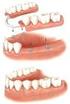 Implant Assisted Removable Prosthodontics M. Nader Sharifi, D.D.S., M.S. Cincinnati Dental Society Cincinnati, OH Friday May 7, 2014 I. Course Synopsis A. Different Types of Overdentures B. Implants with
Full Crown Module: Learner Level 3
 Full Crown Module Restoration / Tooth # Full Gold Crown (FGC) / mesially tilted 30 Extensions: Porcelain Fused to Metal (PFM) / lingually 21 All Ceramic / rotated 12 Learner Level 3 Preparation of Malpositioned
Removable Partial Denture Manual. Robert W. Loney, DMD, MS 2011
 Removable Partial Denture Manual Robert W. Loney, DMD, MS 2011 Removable Partial Denture Manual Robert W. Loney, DMD, MS 2011 Table of Contents - i Table of Contents Introduction to Removable Partial Dentures...
The Most Frequently Asked Questions About Dental Implants... A Consumer s Guide to Understanding Implant Treatment
 Number 3 $1.25 The Most Frequently Asked Questions About Dental Implants... A Consumer s Guide to Understanding Implant Treatment If you are like most people considering dental implants, you probably have
portion of the tooth such as 3/4 Crown, 7/8Crown.
 Lecture.1 Dr.Adel F.Ibraheem Crown and Bridge: It s a branch of dental science that deals with restoration of damaged teeth with artificial crown replacing the missing natural teeth by a cast prosthesis
Resorptive Changes of Maxillary and Mandibular Bone Structures in Removable Denture Wearers
 Resorptive Changes of Maxillary and Mandibular Bone Structures in Removable Denture Wearers Dubravka KnezoviÊ-ZlatariÊ Asja»elebiÊ Biserka LaziÊ Department of Prosthodontics School of Dental Medicine University
stone model bonding tray improve the accuracy
 indirectbonding Bonding brackets to the patient s stone model and transferring the bonding tray to the patient s mouth Developed to improve the accuracy of bracket placement (especially premolars) advantagesdisadvantages
[PAGE HEADLINE] Improve your Health and Change Your Smile with Complete Dental Services in One [CITYNAME] Location
![[PAGE HEADLINE] Improve your Health and Change Your Smile with Complete Dental Services in One [CITYNAME] Location](/thumbs/31/14971568.jpg "[PAGE HEADLINE] Improve your Health and Change Your Smile with Complete Dental Services in One [CITYNAME] Location") Eddie Stephens//Copywriter Sample: Website copy/internal Dental Services Pages [PAGE HEADLINE] Improve your Health and Change Your Smile with Complete Dental Services in One [CITYNAME] Location [LEAD SENTENCE/PARAGRAPH]
Eddie Stephens//Copywriter Sample: Website copy/internal Dental Services Pages [PAGE HEADLINE] Improve your Health and Change Your Smile with Complete Dental Services in One [CITYNAME] Location [LEAD SENTENCE/PARAGRAPH]
Dentures. Dental Implants. Look Younger. Chew Better
 Dentures & Dental Implants That Will Help You Look Younger & Chew Better Herbert Dental Copyright 2013 by Herbert Dental All rights reserved. Published by Herbert Dental No part of this publication may
Tooth Replacement Options
 Dr. Jordan Johnson Johnson Dental Associates http://www.beta.mydentalhub.com/ada/test/ (800) 947-4746 Tooth Replacement Options If you re missing one or more teeth, you may be all too aware of their importance
Principles of Partial Denture Design
 Principles of Partial Denture Design 1. Keep the RPD design as simple as possible Simple those design elements which promote function, esthetics, comfort, ease of fabrication, and ease of maintenance,
A New Beginning with Dental Implants. A Guide to Understanding Your Treatment Options
 A New Beginning with Dental Implants A Guide to Understanding Your Treatment Options Why Should I Replace My Missing Teeth? Usually, when you lose a tooth, it is best for your oral health to have it replaced.
Telescopic Denture A Treatment Modality for Minimizing the Conventional Removable Complete Denture Problems: A Case Report
 Dentistry Section Case Report ID: JCDR/2012/3886:2351 Telescopic Denture A Treatment Modality for Minimizing the Conventional Removable Complete Denture Problems: A Case Report Kunwarjeet Singh, Nidhi
SCD Case Study. Treatment Considerations for Implant Rehabilitation
 SCD Case Study Treatment Considerations for Implant Rehabilitation Multiple surgical and restorative factors play a role in the treatment planning of implant restorations for the edentulous patient (Ali
A collection of pus. Usually forms because of infection. A tooth or tooth structure which is responsible for the anchorage of a bridge or a denture.
 Abscess A collection of pus. Usually forms because of infection. Abutment A tooth or tooth structure which is responsible for the anchorage of a bridge or a denture. Amalgam A silver filling material.
Job Ready Assessment Blueprint. Dental Assisting. Test Code: 4026 / Version: 01
 Job Ready Assessment Blueprint Dental Assisting Test Code: 4026 / Version: 01 Measuring What Matters Specific Competencies and Skills Tested in this Assessment: Introduction to the Dental Assisting Profession
Lateral pterygoid muscle Medial pterygoid muscle
 PATIENT INFORMATION BOOKLET Trismus Normal Jaw Function The jaw is a pair of bones that form the framework of the mouth and teeth. The upper jaw is called the maxilla. The lower jaw is called the mandible.
Contents. Cement retained restoration. Screw retained restoration. Overdenture retained restoration. TS Implant System. 70 ComOcta Gold Abutment
 Contents TS Implant System Cement retained restoration Screw retained restoration 06 Cement-retained bridges with the Solid abutment system (non- 72 Screw retained crown with the ComOcta Gold abutment
Identification of complete denture problems: a summary J. F. McCord, 1 and A. A. Grant, 2
 10 1* Head of the Unit of Prosthodontics, 2 Emeritus Professor of Restorative Dentistry, University Dental Hospital of Manchester, Higher Cambridge Street, Manchester M15 6FH *Correspondence to: Prof.
Improving Esthetics with Sequential Treatment Planning and Implant-Retained Dentures
 Improving Esthetics with Sequential Treatment Planning and Implant-Retained Dentures by Timothy F. Kosinski, DDS, MAGD While oral function is the primary concern for most patients, the importance of esthetics
ABSTRACT INTRODUCTION. Facial Esthetics. Dental Esthetics
 ABSTRACT The FACE philosophy is characterized by clearly defined treatment goals. This increases diagnostic ability and improves the quality and stability of the end result. The objective is to establish
Classification of Malocclusion
 Classification of Malocclusion What s going on here? How would you describe this? Dr. Robert Gallois REFERENCE: Where Do We Begin? ESSENTIALS FOR ORTHODONTIC PRACTICE By Riolo and Avery Chapter 6 pages
IMPRESSION TECHNIQUE AND MATERIALS
 IMPRESSION TECHNIQUE AND MATERIALS DR ZURYATI AB GHANI BDS (WALES), Grad Dip Clin Dent (Adelaide), Doctor in Clinical Dentistry (prosthodontics( prosthodontics), Adelaide, FRACDS (Australia). 24.06.07
Removable appliances II. Functional jaw orthopedics
 Removable appliances II. Functional jaw orthopedics Melinda Madléna DMD, PhD Associate professor Department of Pedodontics and Orthodontics Faculty of Dentistry Semmelweis University Budapest Classification
THE VOICE OF TECHNO-CLINICAL DENTISTRY
 May 2009 Vol. 3, No. 2 THE VOICE OF TECHNO-CLINICAL DENTISTRY The Enhanced Restoration of Removables Jim Collis, CDT Patients with existing full or partial dentures often report that they would like to
Molar Uprighting Dr. Margherita Santoro Division of Orthodontics School of Dental and Oral surgery. Consequences of tooth loss.
 Molar Uprighting Dr. Margherita Santoro Division of Orthodontics School of Dental and Oral surgery Molars The wide occlusal surface is designed for food grinding. The surface needs to be aligned with the
The Mandibular Two-Implant Overdenture First-Choice. Standard of Care for the Edentulous Denture Patient
 The Mandibular Two-Implant Overdenture First-Choice Standard of Care for the Edentulous Denture Patient Joseph R. Carpentieri, DDS Dennis P. Tarnow, DDS ii Preface Preface The prosthetic management of
IMPLANT CONSENT FORM WHAT ARE DENTAL IMPLANTS?
 IMPLANT CONSENT FORM WHAT ARE DENTAL IMPLANTS? Dental implants are a very successful and accepted treatment option to replace lost or missing teeth. A dental implant is essentially an artificial tooth
Projecting a new smile from a facial photograph:
 I special _ digital smile design Projecting a new smile from a facial photograph: A new way to plan multidisciplinarydental treatments Authors_ Drs Marco Del Corso, Italy, & Alain Méthot, Canada without
Humana Health Plans of Florida. Important:
 Humana Health Plans of Florida Important: Dental discount membership in Florida is determined by viewing the member s ID card and verifying that the Humana Logo and Medicare name is listed with an effective
Managing worn teeth with composites
 6 Managing worn teeth with composites Clinical details A 50-year-old man presents to you complaining about his worn teeth and would like the appearance improved (Fig. 6.1). He complains of regurgitation
DENTURE CARE AND MAINTENANCE
 D DEEN NTTU UR REESS When a patient no longer has any natural teeth, complete dentures are the traditional method to restore function and appearance. Many patients experience difficulty wearing conventional
Cone Beam Implant Planning Manual
 Cone Beam Implant Planning Manual (Everything you want to know about CBCT planning) Page 2 Overview & Guide Selection Criteria Page 3 Scan Appliance basics When are they required? Page 4 Scan Appliance
Section 16 Dental Laboratories
 Section 16 Dental Laboratories TABLE OF CONTENTS Policies and Procedures for Central Dental Laboratory Services 1 Purpose 1 Scope 1 Laboratory Hours and Information 1 Procedures 1 Patient Accounts 2 Selection
Replacement of the upper left central incisor with a Straumann Bone Level Implant and a Straumann Customized Ceramic Abutment
 Replacement of the upper left central incisor with a Straumann Bone Level Implant and a Straumann Customized Ceramic Abutment by Dr. Ronald Jung and Master Dental Technician Xavier Zahno Initial situation
Treatment planning for the class 0, 1A, 1B dental arches
 Treatment planning for the class 0, 1A, 1B dental arches Dr.. Peter Hermann Dr Reminder: Torquing movement on tooth supported denture : no movement Class 1 movement in one direction (depression) Class
 Step-by-Step Virtual Implant Planning MIS Corporation. All Rights Reserved. MIS Warranty: MIS exercises great care and effort in maintaining the superior quality of its products. All MIS products are guaranteed
How to Achieve Shade Harmony With Different Restorations
 Procera Alumina vs. Feldspathic Porcelain How to Achieve Shade Harmony With Different Restorations Luke S. Kahng, CDT Key Words: Stump shade, Feldspathic Porcelain, Zirconia, Alumina, LSK Treatment Plan
Renaissance of One-Piece Implants
 2 EDI Minimally invasive and patient-friendly treatment concepts using one-piece implants Renaissance of One-Piece Implants Hannes Thurm-Meyer, dentist, Bremen, Germany, Thomas Horn, master dental technician,
Prosthodontist s Perspective
 Unless otherwise noted, the content of this course material is licensed under a Creative Commons Attribution - Non-Commercial - Share Alike 3.0 License. Copyright 2008, Dr. Jeff Shotwell. The following
American Academy of Cosmetic Dentistry. Laboratory Technician Clinical Case Type II. One or Two Indirect Restorations
 American Academy of Cosmetic Dentistry Laboratory Technician Clinical Case Type II One or Two Indirect Restorations AACD Member ID # 00000 EXAMPLE REPORT Treatment List #8, #9 All Ceramic Crowns Restorative
Dental Services. Dental Centre. HKSH Healthcare Medical Centre Dental Centre. For enquiries and appointments, please contact us
 Dental Services For enquiries and appointments, please contact us HKSH Healthcare Medical Centre Dental Centre Level 22, One Pacific Place 88 Queensway, Hong Kong (852) 2855 6666 (852) 2892 7589 [email protected]
How to Fill a Cavity WHEN NOT TO PLACE A FILLING CHAPTER10
 143 How to Fill a Cavity CHAPTER10 When someone s tooth hurts, you do not always need to take it out. There may be a way to treat it and keep it. Always ask yourself whether a bad tooth really needs to
Clinical Practice Guideline For Orthodontics
 Clinical Practice Guideline For Orthodontics MOH- Oral Health CSN -Orthodontics -2010 Page 1 of 15 Orthodontic Management Guidelines 1. Definitions: Orthodontics is the branch of dentistry concerned with
What is a dental implant?
 What is a dental implant? Today, the preferred method of tooth replacement is a dental implant. They replace missing tooth roots and form a stable foundation for replacement teeth that look, feel and function
Dental Care and Chronic Conditions. Respiratory Disease Cardiovascular Disease Diabetes
 Dental Care and Chronic Conditions Respiratory Disease Cardiovascular Disease Diabetes Shape Up Your Smile and Avoid Some Complications of Chronic Diseases When you take good care of your oral health,
Bitewing Radiography B.E. DIXON. B.D.S., M.Sc., D.P.D.S.
 Bitewing Radiography B.E. DIXON B.D.S., M.Sc., D.P.D.S. Main Indications Detection of Dental Caries Monitoring progression of caries Assessment of existing restorations Assessment of Periodontal status
Removing fixed prostheses using the ATD automatic crown and bridge remover
 Removing fixed prostheses using the ATD automatic crown and bridge remover By Dr. Ian E. Shuman, Baltimore, MD. Information provided by J. Morita USA When removing cemented provisionals and final fixed
Introduction of Removable Partial Denture - Design and Retention
 Introduction of Removable Partial Denture - Design and Retention By : Dr Zaihan Ariffin BDS(Malaya), GDCDent (Adelaide), Doctor of Clinical Dentistry (Adelaide), FRACDS (Australia) Type of denture Full
Waxing up. Waxing up. Crown and bridgework. Friedrich Jetter Christian Pilz. Ideas for dental technology
 Waxing up Waxing up Crown and bridgework Friedrich Jetter Christian Pilz Ideas for dental technology Waxing-up units Waxing-up units Waxlectric II The Waxlectric II is an electrically regulated sculpting
Chart 1. Chart 2. How to Use the Following Charts. Be sure to follow the legal requirements to perform dental radiographic procedures.
 These data are presented for informational purposes only and are not intended as a legal opinion regarding dental practice in any state. DANB confers with each state s dental board at least annually regarding
Composite artistry- speedy mock up
 Case Report: Composite artistry- speedy mock up Dr.Shikha Kanodia*, Dr.Manjit Kaur**, Dr.Girish J. Parmar*** * Asst. Professor, **Post Graduate Part 3, ***Head and Dean, Department of Conservative Dentistry
forrest avenue d e n t a l c e n t r e
 Implant Treatment FAQ IMPLANT TREATMENT: FREQUENTLY ASKED QUESTIONS WHAT ARE DENTAL IMPLANTS? Dental implants are titanium rods that are surgically placed in your jaw bone which will subsequently support
ORTHODONTIC TREATMENT
 ORTHODONTIC TREATMENT Informed Consent for the Orthodontic Patient As a general rule, positive orthodontic results can be achieved by informed and cooperative patients. Thus, the following information
In 1999, more than 1 million people in
 Clinical SHOWCASE Slip-and-Fall Injuries Causing Dental Trauma Morley S. Rubinoff, DDS, Cert Prosth Clinical Showcase is a series of pictorial essays that focus on the technical art of clinical dentistry.
Schedule B Indemnity plan People First Plan Code #4084
 : Calendar year deductible Waived for Type I preventive dental services Calendar year maximum Type I, II, III Waiting period Type I, II, III $50 individual $150 family (3 per family) $1,000 per covered
Restorative Manual Impression Transfer System
 Restorative Manual Impression Transfer System Indirect (closed-tray) transfer technique Implant-level indirect transfers for closed-tray, transfer impression technique Designed to transfer the soft tissue
SURGICAL MANUAL. Step By Step Techniques
 SURGICAL MANUAL Step By Step Techniques TABLE OF CONTENTS PRE-SURGICAL 1 8 MEASUREMENT OF BONE.......................... 2 BONE CLASSIFICATION........................... 3 IMPLANT SIZE SELECTION.........................
Ridge Reconstruction for Implant Placement
 Volume 1, No. 5 July/August 2009 The Journal of Implant & Advanced Clinical Dentistry Ridge Reconstruction for Implant Placement 2 Hours of CE Credit Oral Implications of Cancer Chemotherapy Immediate
4-1-2005. Dental Clinical Criteria and Documentation Requirements
 4-1-2005 Dental Clinical Criteria and Documentation Requirements Table of Contents Dental Clinical Criteria Cast Restorations and Veneer Procedures... Pages 1-3 Crown Repair... Page 3 Endodontic Procedures...
Managing a Case of Sensitive Abutment Situations through Use of a Fixed Movable Prosthesis A Clinical Report
 www.jmscr.igmpublication.org Managing a Case of Sensitive Abutment Situations through Use of a Fixed Movable Prosthesis A Clinical Report Authors Khurshid A. Mattoo 1, Shailesh Jain 2 1 Assistant Professor,
Clinical and Laboratory Procedures for Fixed Margin Implant Abutments
 Clinical and Laboratory Procedures for Fixed Margin Implant Abutments Dr. Carl Drago DDS, MS, American Board of Prosthodontics Director, Dental Research BIOMET 3i, Adjunct Faculty Department of Prosthodontics,
DENTAL FOR EVERYONE SUMMARY OF BENEFITS, LIMITATIONS AND EXCLUSIONS
 DENTAL FOR EVERYONE SUMMARY OF BENEFITS, LIMITATIONS AND EXCLUSIONS DEDUCTIBLE The dental plan features a deductible. This is an amount the Enrollee must pay out-of-pocket before Benefits are paid. The
ANGEL DENTAL CARE Implant Consent
 This information is to help you make an informed decision about having implant treatment. You should take as much time as you wish to make the decision in relation to signing the following consent form.
Dental Updates. Excerpted Article e-mail: [email protected]. Why Implant Screws Loosen Part 1. Richard Erickson, MS, DDS
 ¼ ½ ¾ µ mw/cm 2 Volume 17; 2007 Dental Updates "CUTTING EDGE INFORMATION FOR THE DENTAL PROFESSIONAL " 200 SEMINARS AND 30 JOURNALS REVIEWED YEARLY FOR THE LATEST, CUTTING EDGE INFORMATION Excerpted Article
Dental Bridges. What are they? What are the parts of a typical dental bridge (fixed)? When are dental bridges needed?
 Dental Bridges What are they? Dental bridges are false teeth anchored on neighbouring teeth in order to replace one or more missing teeth. The false tooth is known as a pontic and is fused in between two