
10 of the WORST-SITED WIND ENERGY PROJECTS FOR BIRDS
|
|
|
- Angela Montgomery
- 9 years ago
- Views:
Transcription
1 10 of the WORST-SITED WIND ENERGY PROJECTS FOR BIRDS J. Marjis, Shutterstock March 24, 2016 abcbirds.org

2 INTRODUCTION American Bird Conservancy (ABC) has identified 10 of the worst-sited wind energy projects for birds in the United States, both existing and proposed, with the intention of educating the public and key decisionmakers about bird impacts from wind development. Many individuals and organizations have embraced wind energy without addressing the difficult questions about its potential impact on our nation s wildlife. As a result, many wind development projects are causing significant bird mortality at a scale that is now becoming a major source of concern for bird conservationists. Bildagentur Zoonar, Shutterstock Hundreds of thousands of protected birds, including some Endangered species, are already being killed annually in collisions with wind turbines and associated power lines. The number of turbines is set to grow significantly as wind industry build-out continues across the landscape, likely causing a major increase in this already serious problem. Some prosecutions have already taken place due to these mortality events, because the killing of migratory birds without a permit is a violation of federal law. Unfortunately, no permit system currently exists to address such migratory bird deaths yet such a system could safeguard birds and industry as wind development expands. This wind-power-related bird mortality adds to the many other threats that birds face that act cumulatively to impact populations, yet it is likely among the most easily reduced through better siting and mitigation. We are still in the early stages of wind energy development and have time to get it right. Without careful planning, however, we could reach the point where some bird populations continue to decline toward extinction due to the accumulation of threats they face. The 10 projects listed here are merely illustrative of a much broader problem, and have been selected to illustrate a range of wind development-related threats to birds in various regions and habitats that are unfortunately widespread in the wind industry. The listed wind projects are all found within red or orange elevated risk areas on ABC s Wind Risk Assessment Map. Many or all of these projects could undoubtedly be improved through re-siting; Hundreds of thousands of protected birds, including some Endangered species, are already being killed annually in collisions with wind turbines and associated power lines. the deployment of effective mitigation such as periodic shutdowns; and/or the identification and removal of the highest-risk turbines. ABC is pro Bird-Smart wind energy. It is not ABC s intention to criticize wind development in general or the developers of the specific projects indicated below. Rather, this list is intended to demonstrate that under the present voluntary federal guidelines, there is an inadequate system of checks and balances to protect America s ecologically important migratory and resident birds from poorly sited wind energy development. ABC continues to seek wind developers willing to voluntarily conduct their operations using the standard mitigation and compensation hierarchy advocated by ABC s Bird-Smart Wind Energy Campaign, which is in line with the recent presidential memorandum on development mitigation to protect natural resources. To this end, we have entered into discussions with companies using, testing, or promoting effective mitigation strategies and alternate bird-friendly turbine technologies. We continue to welcome engagement with those who are seeking to avoid avian mortality and habitat impacts. ABC believes that a mandatory permitting system is the best means to create a level playing field for all wind operators. Those trying to do the right thing should not be placed at a competitive disadvantage if they incur costs (or have reduced income) when implementing proper siting and bird mitigation. Let s take the opportunity to do this right while we still can. 2

3 10 of the Worst-sited Wind Energy Projects in the United States EXISTING and APPROVED PROJECTS Note: All projects are listed in alphabetical order. 1. CHOKECHERRY AND SIERRA-MADRE Location: Carbon County, Wyoming (Power Company of Wyoming LLC) Why listed: Located in key breeding and foraging habitat for Greater Sage-Grouse and Golden Eagle This is a huge, up to 1,000-turbine development, that could eventually become the largest wind energy facility in the U.S. The project has been approved, and the first phase may begin soon. The site sits in sensitive Greater Sage-Grouse breeding habitat as well as vital Golden Eagle habitat. Sage-grouse are known to be displaced by turbines and associated power lines and towers. Bureau of Land Management biologists have estimated that Golden Eagles could be killed here annually. The developer has disputed those findings and will apply for an Incidental Take Permit from the U.S. Fish and Wildlife Service (FWS). To date only one such permit has been granted (to Shiloh IV in CA), although hundreds of eagles have been killed by wind energy facilities across the country. 3 Two prosecutions have taken place so far for eagle and other bird deaths (Pacificorp and Duke Energy); without a permit, any take of a Bald or Golden Eagle is illegal under federal law. 2. GULF WIND Location: Kenedy County, Texas (Babcock & Brown, now owned by Pattern Energy) Why listed: Located in a critical migratory pathway for songbirds; many raptor species are present; impacts habitat for declining grassland birds This wind energy project, on the Kenedy Ranch in southern Texas, is located inside the Gulf Coast and Lower Rio Grande bird migration corridors. Many Greater Sage-Grouse by Tom Reichner, Shutterstock

4 Nēnēs by Jack Jeffrey sensitive grassland species, such as Sprague s Pipit, Savannah Sparrow, Horned Lark, Grasshopper Sparrow, and Long-billed Curlew, also use the area and could be harmed through collisions or displacement. The area is also used by several resident raptor species, including White-tailed Hawk, Crested Caracara, and Harris s Hawk. This region was recognized in the top 500 Important Bird Areas in the United States by ABC in To the developer s credit, radar units have been deployed to detect and shut down the turbines when large numbers of birds are present, but insufficient information is yet available to prove their effectiveness in preventing bird deaths at this location. 3. KAHEAWA Location: Lahaina District, Maui, Hawaii (First Wind, now part of SunEdison) Why listed: One of the top known killers of Endangered birds To the state of Hawaii s credit, the project developers were required to complete an Environmental Impact Statement. Furthermore, following consultation under the Endangered Species Act (ESA), a Habitat Conservation Plan (HCP) that includes compensatory mitigation was also completed and is in force. In spite of that, as of February 2015, Kaheawa Phase I had killed at least 22 Nēnē (Hawaiian Goose) and seven Hawaiian Petrels, both Endangered species that have already been decimated by introduced predators, such as rats and feral cats, and habitat loss. The incidental take permit issued by FWS allows the developer to take up to 38 petrels and 60 Nēnē over the life of the permit, which ABC considers excessive. This project illustrates the shortcomings of preconstruction risk assessments, HCPs, and incidental take permitting as currently practiced. Wind project impact is often assessed project-by-project instead of considering the cumulative impact of several projects, and other factors affecting bird mortality are seldom incorporated. No wind project in the country is known to have killed more Endangered birds than the Kaheawa facilities. However, Hawaii is the only state in which postconstruction mortality data are collected by thirdparty, independent experts and made available to the public on request, so Kaheawa is also one of the only projects in the country where Endangered species take can be reliably assessed. 4. LAUREL MOUNTAIN Location: Laurel Mountain, West Virginia (AES Energy Storage) Why listed: Site of one of the largest single songbird mortality events ever recorded in North America This project illustrates risks that occur not just from turbines but also from other associated infrastructure, including power lines, communication towers, and battery storage facilities. Neotropical migratory birds, some of conservation concern, move through or nest in this area every spring and/or fall. These include Wood Thrush; Scarlet Tanager; and Black-throated Blue, Golden-winged, Worm-eating, and Connecticut Warblers. In 2011, nearly 500 birds representing at least 30 species including many Blackpoll Warblers and a number of Connecticut Warblers were killed within a few hours when colliding at night under foggy conditions with lighted energy-storage units and communication towers near the turbines. To its credit, the company reported the incident, pled guilty to violations of the Migratory Bird Treaty Act, and was subsequently fined $30,000 for the violations. Blackpoll Warbler by Dan Behm 4

5 Golden Eagle by Martin Mecnarowski 5. SUMMIT REPOWERING (AT ALTAMONT PASS) Location: Alameda County, California (Altamont Winds, Inc.) Why listed: Poses an ongoing threat to Golden Eagles and other birds as a result of poor siting The nearly 5,000 turbines operated by four different developers in the Altamont Wind Resource Area in California are known to be among the top killers of birds in North America, with more than 2,000 Golden Eagles being lost since 1998 when the facilities started keeping track. Thousands of other birds of more than 70 species have been killed by wind turbines in the region as well. Of all of these, the poorly-sited Summit Repowering Project (formerly the Altamont Winds Wind Energy Project) has long been one of the worst killers of eagles and other raptors. Now, the developer has applied for a permit to replace a portion of its array of older, lattice-style turbines with 33 much taller, modern monopole turbines. Summit Repowering has still not properly compensated for its huge volume of unlawful bird kills but now seeks permission from Alameda County to repower, without proper public review of its siting plan. Unfortunately, given the facility s legacy of bird mortality, it is inconceivable that it will be able to avoid killing eagles and other raptors on terrain inhabited by one of the hemisphere s densest concentrations of Golden Eagles. PROPOSED PROJECTS 6. CAPE WIND Location: Nantucket Sound, Massachusetts (Cape Wind Associates) Why listed: Proposed location in area with one of the largest concentrations of migratory birds in the world; high risk of catastrophic mortality events Spread over a 24-square-mile area on Horseshoe Shoal in Nantucket Sound, this proposed project would be located offshore in an area that hosts one of the largest concentrations of migratory birds in the world. As many as six million birds move through this area in spring and fall, creating the potential for catastrophic mortality events, especially during bad weather. Endangered Piping Plovers and Roseate Terns use the area and could be threatened by the project. As many as a half-million sea ducks, including large numbers of Long-tailed Ducks and Common Eiders, also winter in the Nantucket Sound and could be displaced or killed in collisions. Portions of Nantucket Sound including Bird Island, where Roseate Terns breed have been recognized as an Important Bird Area by ABC. The project was approved, is currently on hold following a series of legal challenges, but is still expected to seek approval for construction. FWS biologists had a negative view of the project s original Environmental Impact Statement, suggesting that the poor quality of the report made it impossible to accurately assess the potential impact on birds. Piping Michael Stubblefield 5

6 7. LIGHTHOUSE Location: Niagara County, New York near the town of Somerset (Apex Clean Energy) Why listed: Vast numbers of migratory songbirds and numbers of raptors rely on this area; close to breeding habitat for declining grassland birds This proposed location on the southern shore of Lake Ontario boasts one of the greatest bird migrations in North America. Up to 71 turbines are planned for an area along the south shore of Lake Ontario. These 570-foot-tall turbines will extend 4.5 miles inland from the lake along a 12-mile stretch. Vast numbers of songbirds and raptors concentrate within six miles of the shoreline during spring and fall of each year. This area also has pockets of key habitat for sensitive grassland birds, which could be displaced by the wind turbines. Federally protected Bald Eagles from a nearby wildlife refuge are also at risk. FWS has expressed serious concern about this project, warning the developer that this is an area of extremely high avian use. However, the developer appears to be going ahead with its plans, conducting its own studies, disputing previous work done by other researchers, and ignoring the concerns of local residents. 8. MERRICOURT Location: McIntosh and Dickey Counties, North Dakota (EDF Renewable Energy) Why listed: Threat to the Endangered Whooping Crane and other federally protected birds This highly controversial project, which could involve the first incidental take permit for the Endangered Whooping Crane and which has already drawn the concern of conservation organizations, lies within the Whooping Crane migratory corridor and could also impact other federally protected birds including Piping Plovers, Sprague s Pipits, and Bald and Golden Eagles. The project would also be located in a key migratory corridor for vast numbers of waterbirds in North Dakota s sensitive Prairie Potholes region. ABC and the International Crane Foundation expressed serious concerns to FWS about the revival of this project in November 2014, citing it as another potential example of the failure of the current voluntary guidelines to protect our native bird species. 9. NINNESCAH Location: Pratt County, Kansas (NextEra Energy Resources, LLC) Why listed: Poses a high risk to Endangered Whooping Cranes through infrastructure development Building this facility will require the construction of a 66-mile-long powerline and numerous 135-foot-tall supporting towers that would traverse the Whooping Crane migratory corridor and connect this to other wind energy projects, Flat Ridge I and II (existing) and III (proposed). The Quivira Wildlife Refuge, listed as Critical Habitat for migrating Whooping Cranes, is about 30 miles due north of the site, with several other wildlife refuges nearby. While the turbines themselves could pose a risk, collisions with power lines and towers are a leading cause of mortality for adult Whooping Cranes. ABC and the International Crane Foundation have written to FWS expressing serious concern about the potential cumulative impact of the many wind facilities and power lines in the area on this Endangered species. Whooping Crane by Laura Rowan Bald Eagle by Mike Parr, ABC 6

7 10. ROCK CREEK Location: Atchison County, Missouri (TradeWind Energy) Why listed: Poses a high risk to migratory birds and Bald Eagles moving in and out of the Squaw Creek Wildlife Refuge This already-controversial project would place turbines in the migratory corridor used by vast numbers of birds on their way to and from Iowa to the Squaw Creek Wildlife Refuge in northwest Missouri. Migratory waterfowl, including Trumpeter and Tundra Swans, over a million Snow Geese, and a wide variety of duck species, also visit this area, which has been designated an Important Bird Area by ABC. Bald Eagles migrate into the Squaw Creek refuge and surrounding areas. By late fall and early winter, as many as 300 immature and adult Bald Eagles and an occasional Golden Eagle can be seen at the migration s peak. A 2001 survey recorded a record 476 Bald Eagles in the area. FWS, Missouri s Department of Natural Resources, and ABC have expressed serious concerns about the siting of this project. A similar project, Mill Creek, was to be located near the refuge, but was canceled and moved due to opposition by ABC and local partners. Tundra Swans by Delmas Lehman, Shutterstock Existing and Proposed Wind Developments Posing Elevated Risks to Birds Due to Siting Red dots indicate locations of existing and proposed wind developments considered to pose elevated risk to birds due to siting. Source: American Bird Conservancy Wind Risk Assessment Map, FAA and USGS databases (as of August 2014). See ABC s Press Release for related statistics: abcbirds.org 7

Standardized Environmental Survey Protocols
 14 Best Practices for Sustainable Wind Energy Development in the Great Lakes Region Great Lakes Wind Collaborative Best Practice #14 Standard environmental survey protocols should be developed by federal
Recommended Land Use Guidelines for Protection of Selected Wildlife Species and Habitat within Grassland and Parkland Natural Regions of Alberta
 Fish and Wildlife Division Sustainable Resource Development Recommended Land Use Guidelines for Protection of Selected Wildlife Species and Habitat within Grassland and Parkland Natural Regions of Alberta
Position Statement regarding Offshore Wind Proposals on Lake Huron. Lake Huron Centre for Coastal Conservation
 Position Statement regarding Offshore Wind Proposals on Lake Huron Lake Huron Centre for Coastal Conservation June 2010 Lake Huron Centre for Coastal Conservation (LHCCC) Corporate Position related to:
Patterns of Bat Fatality at Wind Development Facilities. Edward B. Arnett, Bat Conservation International
 Patterns of Bat Fatality at Wind Development Facilities Edward B. Arnett, Bat Conservation International Biological Diversity: over 1,100 species identified >one-quarter of the world s mammals Broad and
U.S. Fish & Wildlife Service West Virginia Ecological Services Field Office
 Slide 1 West Virginia Ecological Services Field Office Liz Stout Fish and Wildlife Biologist 694 Beverly Pike Elkins, West Virginia 26241 [email protected] 304-636-6586 x 15 Slide 2 Today s Goals
The importance of Lebanon for the migratory soaring birds & the flyway. April 2012. Bassima Khatib SPNL Assistant Director General
 The importance of Lebanon for the migratory soaring birds & the flyway April 2012 Bassima Khatib SPNL Assistant Director General Outline Who is SPNL? IBA programme Importance of Lebanon for migratory soaring
U.S. Fish & Wildlife Service. Getting HIP Your Role In Conserving Migratory Birds Through the Harvest Information Program
 U.S. Fish & Wildlife Service Getting HIP Your Role In Conserving Migratory Birds Through the Harvest Information Program USFWS/F. Eugene Hester If you re planning on hunting any kind of migratory bird
These Maps Are For The Birds
 These Maps Are For The Birds Students will study New York State Breeding Bird Atlas maps to learn where different bird species nest and how their distributions have changed over time. Objectives: Students
Northern Long-eared Bat - Interim Final 4(d) Rule Questions and Answers
 Northern Long-eared Bat - Interim Final 4(d) Rule Questions and Answers 1. What action is the Service taking? On January 15, 2015, the Service published a proposed rule under section 4(d) of the Endangered
Department of the Interior. Departmental Manual
 Page 1 of 10 Department of the Interior Departmental Manual Effective Date: 10/23/2015 Series: Public Lands Part 600: Public Land Policy Chapter 6: Implementing Mitigation at the Landscape-scale Originating
Effects of offshore wind farms on birds
 AARHUS VERSITY DEPARTMENT OF BIOSCIENCE 11. OCTOBER 2012 Effects of offshore wind farms on birds Ib Krag Petersen, Anthony D. Fox, Mark Desholm, Johnny Kahlert and Thomas K. Christensen Department of Bioscience
2015 Monarch Butterfly Conservation Fund Grant Slate
 2015 Monarch Butterfly Conservation Fund Grant Slate NFWF CONTACT Teal Edelen, Manager Central Regional Office [email protected] or 202-857-0166 Monarch caterpillar on milkweed ABOUT NFWF The National
CHAPTER 2: APPROACH AND METHODS APPROACH
 CHAPTER 2: APPROACH AND METHODS APPROACH Given Hawaii s biological uniqueness on a global scale, the Comprehensive Wildlife Conservation Strategy (CWCS) recognizes the importance of protecting all native
U.S. Fish and Wildlife Service will invest $15 million for post-sandy cleanup and marsh restoration on Long Island
 For Immediate Release: Wednesday, November 6, 2013 For further information: Michelle Potter, refuge manager, 631/286-0485 ext. 2112, [email protected] Tom Sturm, public affairs specialist, 413/253-8339,
Sullivan s Island Bird Banding and Environmental Education Program. Sarah Harper Díaz, MA and Jennifer Tyrrell, MS
 Sullivan s Island Bird Banding and Environmental Education Program Sarah Harper Díaz, MA and Jennifer Tyrrell, MS I. Introduction The Sullivan s Island Bird Banding and Environmental Education Program
STANDARDS FOR RANGELAND HEALTH ASSESSMENT FOR SAGEHEN ALLOTMENT #0208
 STANDARDS FOR RANGELAND HEALTH ASSESSMENT FOR SAGEHEN ALLOTMENT #0208 RANGELAND HEALTH STANDARDS - ASSESSMENT SAGEHEN ALLOTMENT #0208 STANDARD 1 - UPLAND WATERSHED This standard is being met on the allotment.
Post-Construction Bat and Bird Mortality Survey Guidelines for Wind Farm Development in New Brunswick Fish and Wildlife October 2011
 Post-Construction Bat and Bird Mortality Survey Guidelines for Wind Farm Development in New Brunswick Fish and Wildlife October 2011 (Note: This guideline is adapted from guidelines of other Canadian jurisdictions
Non-consumptive use of wildlife. Non-consumptive Use. Non-consumptive Use
 Non-consumptive use of wildlife Non-consumptive Use Any non-hunting or non-extractive use Examples: wildlife feeding & photography, bird watching, whale watching Non-consumptive Use Sources of information
Burrowing Owls in the Pacific Northwest
 Burrowing Owls in the Pacific Northwest Athene cunicularia ESRM 350 Autumn 2014 Laurel Peelle Overview 1) Introducing the Oddball Owl 2) Burrowing Owl Population Status 3) Why the Decline? 4) Conservation
Chapter 3. Alternatives
 Chapter 3. Alternatives 3.1 Introduction Alternatives are different approaches designed to achieve the refuge purpose(s), vision, and the goals identified in the CCP while helping to fulfill the System
BEECH MAST RESPONSE 2014
 BEECH MAST RESPONSE 2014 Heavy seeding in our native forests this year will drive high rodent and stoat numbers that prey on endangered birds. Battle for our Birds is a predator control response to protect
Transmission Planning. Scheduled Discussion Items
 Wind Energy and Transmission Subcommittee Report Meeting of March 17, 2011 Keith Sexson (KS), Chair Russ Mason (MI), Vice Chair The meeting convened during 8:00am 12:00pm, chaired by Keith Sexson. 48 participants
Living with Foxes and Skunks Goose Hunting: CWS
 Ministry of Natural Resources and Forestry Living with Foxes and Skunks Goose Hunting: CWS November 19 th, 2015 Town of Tecumseh Kathryn Markham, A/Management Biologist Steven Rowswell, A/Wildlife Technician
How Do Oceans Affect Weather and Climate?
 How Do Oceans Affect Weather and Climate? In Learning Set 2, you explored how water heats up more slowly than land and also cools off more slowly than land. Weather is caused by events in the atmosphere.
Bird watching is organized by Alecturist Mr. Tomaz Remzgar
 Bird watching is organized by Alecturist Mr. Tomaz Remzgar Bird watching trip 1: Birds of alpine forests DURATION: 6-8 hours HABITATS: coniferous forest, mixed forest, rock cliffs PRICE: 180 A trip into
San Francisco Bay Area Wetlands Restoration Program Design Review Group. Project Summary Outline
 San Francisco Bay Area Wetlands Restoration Program Design Review Group Project Summary Outline The project proponent desiring to have a project considered by the Design Review Group (DRG) shall provide
Grassland Food Webs: Teacher Notes
 Grassland Food Webs: Teacher Notes Alan Henderson ecosystem Objectives After completing this activity students will be able to: Create a food web and identify producers and consumers. Assign organisms
Michigan Wetlands. Department of Environmental Quality
 Department of Environmental Quality Wetlands are a significant component of Michigan s landscape, covering roughly 5.5 million acres, or 15 percent of the land area of the state. This represents about
Date Species Species_2 Gender # Road Milepost or Specific Location Comments 4/10/2013 Red Fox Fox, Red 1 Tank Farm 5/25/2013 Emperor Goose Goose,
 Date Species Species_2 Gender # Road Milepost or Specific Location Comments 4/10/2013 Red Fox Fox, Red 1 Tank Farm 5/25/2013 Emperor Goose Goose, Emperor 4 Nome River Bridge Norton Sound Side 5/28/2013
Monitoring the Critically Endangered Bird Species (White-shouldered Ibis) in Western Siem Pang Important Bird and Biodiversity Area (IBA)
 Monitoring the Critically Endangered Bird Species (White-shouldered Ibis) in Western Siem Pang Important Bird and Biodiversity Area (IBA) Transboundary Biodiversity Landscapes (TBLs) Knowledge Meeting
The Nature Conservancy Offering Protected Lands for Sale in the Adirondacks Sustainable Forestry to Continue
 News release For immediate release August 21, 2008 Contact: Connie Prickett, (518) 576-2082 x162, [email protected] The Nature Conservancy Offering Protected Lands for Sale in the Adirondacks Sustainable
Resources, Publications, Tools, Input from AWCC
 A comprehensive review of Farm Bill contributions to wildlife conservation A comprehensive review was made of scientific literature to determine wildlife responses to conservation programs undertake as
Eldorado-Ivanpah Transmission Project WELCOME To Southern California Edison Company s Eldorado-Ivanpah Transmission Project OPEN HOUSE
 WELCOME To Southern California Edison Company s Eldorado-Ivanpah Transmission Project OPEN HOUSE 1 1 Welcome to The Eldorado-Ivanpah Transmission Project Open House How is the open house organized? This
U.S. Fish and Wildlife Service Bird Fatality/Injury Reporting Program Filer Instructions
 U.S. Fish and Wildlife Service Bird Fatality/Injury Reporting Program The U.S. Fish and Wildlife Service (USFWS) Bird Fatality/Injury Reporting Program (Bird Report program) was designed by the USFWS and
2013 Presidential Migratory Bird Stewardship Award Submittal to the Council on the Conservation of Migratory Birds
 LLNL-TR-600212 2013 Presidential Migratory Bird Stewardship Award Submittal to the Council on the Conservation of Migratory Birds J. S. Woollett November 9, 2012 Disclaimer This document was prepared as
Fish and Wildlife. Service. FWS Funding
 Fish and Wildlife Service Mission The mission of the Fish and Wildlife Service is to work with others to conserve, protect, and enhance fish, wildlife, plants, and their habitats for the continuing benefit
Moving in Texas A Case Study in Cooperation. Keeping Wind Turbines. Inside The Wire
 News from SWCA Environmental Consultants Volume 12, No. 2, Summer 2012 Keeping Wind Turbines Moving in Texas A Case Study in Cooperation By Dustin Jones Does it surprise you that Texas has the country
ASSESSING SIGNIFICANCE OF IMPACTS FROM ONSHORE WINDFARMS ON BIRDS OUTWITH DESIGNATED AREAS July 2006
 Guidance ASSESSING SIGNIFICANCE OF IMPACTS FROM ONSHORE WINDFARMS ON BIRDS OUTWITH DESIGNATED AREAS July 2006 Paragraph 1 Scope and purpose 7 Introduction and background 11 Species priorities Table 1a
Ecology 1 Star. 1. Missing from the diagram of this ecosystem are the
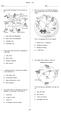 Name: ate: 1. Missing from the diagram of this ecosystem are the 5. ase your answer(s) to the following question(s) on the diagram below and on your knowledge of biology.. biotic factors and decomposers.
Designing Complete Environments
 Hart Howerton is a team of architects, planners, landscape architects, and interior designers. Our Firm s practice is designing complete environments exceptional places, communities, buildings, and landscapes
CHAPTER I: INTRODUCTION. Background
 CHAPTER I: INTRODUCTION Background California State Law requires each county to adopt a General Plan for the physical development of the county and any land outside its boundaries which bears relation
Lesson Overview. Biodiversity. Lesson Overview. 6.3 Biodiversity
 Lesson Overview 6.3 6.3 Objectives Define biodiversity and explain its value. Identify current threats to biodiversity. Describe how biodiversity can be preserved. THINK ABOUT IT From multicolored coral
The Leader in Wind Energy
 The Leader in Wind Energy About the Cover: The 102-megawatt Red Mesa Wind Energy Center in New Mexico is capable of generating enough electricity to power more than 30,000 homes. NextEra Energy Resources
Comanche Trail Pipeline Project. September 2015
 Comanche Trail Pipeline Project September 2015 2 Comanche Trail Pipeline Project The Comanche Trail Pipeline is a Texas intrastate pipeline (1) designed to transport 1.1 billion cubic feet per day of clean-burning
There s power in wind: fact sheet
 There s power in wind: fact sheet Why do we need clean energy? Australia s clean energy future The climate is changing. The majority of climate scientists from around the world confirm greenhouse gases
Arkansas River Corridor Vision & Master Plan
 A r k a n s a s R I v e r C o r r I d o r P l a n Arkansas River Corridor Vision & Master Plan July 2005 Indian Nations Council of Governments A r k a n s a s R I v e r C o r r I d o r P l a n Partnership
Kacy Blackham Fall, 2002. Introductory Lesson: Grade Level: 10 th
 Kacy Blackham Fall, 2002 Introductory Lesson: The Interdependence of Birds and the Great Salt Lake Ecosystem Abstract: Students will participate in the Checks and Balances game. This game will allow the
Subactivity: Habitat Conservation Program Element: National Wetlands Inventory
 HABITAT CONSERVATION FY 29 BUDGET JUSTIFICATION Subactivity: Habitat Conservation Program Element: National Wetlands Inventory National Wetlands Inventory ($) FTE 27 4,7 2 28 Enacted 5,255 2 Fixed Costs
3.1 Measuring Biodiversity
 3.1 Measuring Biodiversity Every year, a news headline reads, New species discovered in. For example, in 2006, scientists discovered 36 new species of fish, corals, and shrimp in the warm ocean waters
Resource Management Accomplishments FY 2014
 Resource Management Accomplishments FY 2014 Sea turtle nest protection - Over 3,700 sea turtle nests were covered with wire mesh screens to protect them from being predated. Data on each sea turtle activity
2012 City of Thornton Comprehensive Plan - Hazard Mitigation
 A Appendix A Hazard Identification and Mitigation Table of Contents Page A.0 Introduction... A.2 A.1 Requirements and Scope of Appendix... A.3 A.2 State Requirements... A.4 A.3 DRCOG 2010 Natural Hazards
Grade Level Content Expectations addressed: Activities: Schedule of Field Trip Activities at the Detroit Zoo 8:15 am Board Bus at School
 Title: Comparing and Contrasting Ecosystem Biodiversity Submitted by: Tracy Ortiz Email: [email protected] School: Coffey K-8 Educational Learning Community Date: May 12, 2010 Target Grade: 6 Duration:
Blacks Creek BIRD RESERVE A COMMUNITY VISION FOR BLACKS CREEK RESERVOIR
 Blacks Creek BIRD RESERVE A COMMUNITY VISION FOR BLACKS CREEK RESERVOIR 1 This document was prepared by the Golden Eagle Audubon Society and the Land Trust of the Treasure Valley with support and input
An Introduction to the Sea Turtles of Virginia. Amber Knowles CBNERR-VA July 22, 2008
 An Introduction to the Sea Turtles of Virginia Amber Knowles CBNERR-VA July 22, 2008 Overview Introduction to species of sea turtles Focus on Loggerhead and Kemp s ridley sea turtles Importance of the
Station #1 Interpreting Infographs
 Energy Resources Stations Activity Page # 1 Station #1 Interpreting Infographs 1. Identify and explain each of the energy sources (5) illustrated in the infograph. 2. What do the white and black circles
Welcome To San Diego Audubon
 S P E C I A L I N T R O D U C T O R Y E D I T I O N Welcome To San Diego Audubon A Strong Advocate For San Diego s Wildlife Welcome! Welcome to the San Diego Audubon Society. If you re a new member, thank
Background Information: The Mamquam River Floodplain Restoration Project
 Background Information: The Mamquam River Floodplain Restoration Project The Mamquam River Floodplain Restoration project is being undertaken in partnership with the Squamish River Watershed Society, Fisheries
Using Aerial Photography to Measure Habitat Changes. Method
 Then and Now Using Aerial Photography to Measure Habitat Changes Method Subject Areas: environmental education, science, social studies Conceptual Framework Topic References: HIIIB, HIIIB1, HIIIB2, HIIIB3,
Chapter Four Resource Management Plan
 Chapter Four Resource Management Plan 4.1 Overview of Resource Management Plan Sensitive resources identified within the Plan area include biological, agricultural, and cultural resources. This section
Did You Know? Neha Rao
 Did You Know? 1. Tigers now occupy 7 percent of their historical range, and in the past decade, the area occupied by tigers has decreased by as much as 41 percent, according to some estimates (Dinerstein
Chapter 4 Public Perspective: Economic, Environmental and Social Concerns
 Chapter 4 Public Perspective: Economic, Environmental and Social Concerns All Federal agencies proposing legislation and other major actions significantly affecting the quality of the human environment
Previous Stocking. Rainbow Trout Cutbow Trout. Brown Trout. Rainbow Trout. Rainbow Trout Snakeriver Cutthroat Trout Cutbow Trout.
 FISH SURVEY AND MANAGEMENT DATA (Salida) [email protected] / 719-530-5525 General Information: Turquoise Reservoir, a 1789 acre impoundment, offers good fishing for brown, rainbow, cutthroat and
Using Nighttime Falconry for Roosting Blackbird Abatement at Dallas/Fort Worth International Airport
 University of Nebraska - Lincoln DigitalCommons@University of Nebraska - Lincoln 2011 Bird Strike North America Conference, Niagara Falls Bird Strike Committee Proceedings 9-1-2011 Using Nighttime Falconry
1 Overview introducing global issues and legal tools through local case studies. 2 Importance of legal protections for natural areas
 Warren G. Lavey [email protected] University of Illinois (USA) Online Course 2015 Environmental Policy: Legal Protections for Overview of 16 Lessons Lesson Topic Three key messages Sources of case studies
I. U.S. Fish and Wildlife Service Environmental Action Statement
 Appendix I: Environmental Action Statement I. U.S. Fish and Wildlife Service Environmental Action Statement Laguna Atascosa National Wildlife Refuge Comprehensive Conservation Plan I-1 Appendix J: Finding
Treasure Valley Electric Plan - Community Advisory Committee
 Treasure Valley Electric Plan - Community Advisory Committee What is a transmission line and why are they necessary? A transmission line is used to conduct electricity between two points. Without high
Management Plan Template For Conservation Easements Held by CPW
 Management Plan Template For Conservation Easements Held by CPW The following template provides guidelines for developing a management plan for a property that will have a Conservation Easement held by
Human Impacts on the World Ocean
 This website would like to remind you: Your browser (Safari 7) is out of date. Update your browser for more security, comfort and the best experience on this site. lesson Human Impacts on the World Ocean
Translating ecological research results into wind farm practice The Danish experience. Niels-Erik Clausen. 2 Risø DTU
 Translating ecological research results into wind farm practice The Danish experience Niels-Erik Clausen We@Sea Conference, Den Helder Holland 12-13 February 2009 Outline The Danish offshore monitoring
Before the House of Representatives Committee on Science, Space, and Technology
 Testimony of Katie Dykes Deputy Commissioner for Energy, Connecticut Department for Energy and Environmental Protection Chair, Regional Greenhouse Gas Initiative, Inc. Board of Directors November 18, 2015
EEB 2208: LECTURE TOPIC 6 EXTINCTION PATTERNS. 1. How can you tell if something is extinct? Reading for this lecture Primack: Chapter 8
 Reading for this lecture Primack: Chapter 8 EEB 2208: LECTURE TOPIC 6 EXTINCTION PATTERNS 1. How can you tell if something is extinct? A) UNFORTUNATELY, ONE CAN T VERY EASILY (AT LEAST NOT FOR CERTAIN)
APPENDIX B: COMMON AND SCIENTIFIC NAMES OF IDAHO SPECIES OF GREATEST CONSERVATION NEED.
 APPENDIX B: COMMON AND SCIENTIFIC NAMES OF IDAHO SPECIES OF GREATEST CONSERVATION NEED. How to Read the Lists. Within these lists, species are listed phylogenetically by class. In cases where phylogeny
NEW YORK SEASCAPE PROGRAM A COMMITMENT TO OCEAN CONSERVATION
 NEW YORK SEASCAPE PROGRAM A COMMITMENT TO OCEAN CONSERVATION JULY 2012 1 Wildlife Conservation Society The Wildlife Conservation Society (WCS) saves wildlife and wild places worldwide. We do so through
Land Protection Planning for the National Wildlife Refuge System
 March 2012 Planning Information Brochure 1 Land Protection Planning for the National Wildlife Refuge System The following questions are often asked when the U.S. Fish and Wildlife Service (Service) begins
Use: Cooperative farming as a habitat management tool to enhance and restore refuge grasslands
 Compatibility Determination Use: Cooperative farming as a habitat management tool to enhance and restore refuge grasslands District Name: Minnesota Valley Wetland Management District Establishing and Acquisition
WIND POWER SITING, INCENTIVES, AND WILDLIFE GUIDELINES IN THE UNITED STATES. Wind Farm Sherman County, OR
 WIND POWER SITING, INCENTIVES, AND WILDLIFE GUIDELINES IN THE UNITED STATES Wind Farm Sherman County, OR October 2007 Research Conducted by: Acknowledgments: Funding for this report provided by the U.S.