
SUPERHEATED STEAM: ITS NOT JUST ABOUT DRYING
|
|
|
- Blaze Daniel
- 9 years ago
- Views:
Transcription
1 SUPERHEATED STEAM: ITS NOT JUST ABOUT DRYING Paper No C. Pronyk Department of Biosystems Engineering, University of Manitoba, Winnipeg, MB, Canada, R3T 5V6. S. Cenkowski W.E. Muir Department of Biosystems Engineering, University of Manitoba, Winnipeg, MB, Canada, R3T 5V6 Department of Biosystems Engineering, University of Manitoba, Winnipeg, MB, Canada, R3T 5V6 Written for presentation at the CSAE/SCGR 2005 Meeting Winnipeg, Manitoba June 26-29, 2005 Abstract Superheated steam has been known as a drying medium for over 100 years. From the beginning acceptance of the technology has occurred because of the properties of superheated steam that make it attractive for drying as well as processing applications. Our research program in the Department of Biosystems Engineering at the University of Manitoba and others have looked to the processing benefits of superheated steam to create snack food products (instant noodles, tortilla chips, potato chips, pork bundles), affect changes in product quality and performance, and sterilize grains (bacteria and mycotoxins). Superheated steam has proven itself to be beneficial not only as a drying medium, but also as a processing medium. Papers presented before CSAE/SCGR meetings are considered the property of the Society. In general, the Society reserves the right of first publication of such papers, in complete form; however, CSAE/SCGR has no objections to publication, in condensed form, with credit to the Society and the author, in other publications prior to use in Society publications. Permission to publish a paper in full may be requested from the CSAE/SCGR Secretary, PO Box 316, Mansonville, QC J0E 1X0. Tel/FAX The Society is not responsible for statements or opinions advanced in papers or discussions at its meetings.

2 1 INTRODUCTION The knowledge and practice of drying in superheated steam has been known for over a hundred years (Hausbrand 1912). Even from its early beginnings, superheated steam was being utilised for the alternative benefits it provides in addition to its abilities to act as a drying medium. There are many inherent properties of superheated steam that make it attractive for not only drying, but for many processing applications as well. In order to make a superheated steam system economical, the exhaust steam is often collected and either used elsewhere, or the latent heat is recovered by condensing the steam. By condensing and collecting the exhaust steam, dust and expensive or toxic compounds may be collected instead of releasing them into the environment Kudra and Mujumdar 2002). Drying with superheated steam produces an oxygen free environment, which eliminates the possibility of fire or explosions in the system and can lead to improved product quality by eliminating scorching. The lack of oxygen can also eliminate oxidative reactions from occurring within the product. Processing in superheated steam allows for concurrent blanching, pasteurization, sterilization, and deodorization of products in addition to any drying that is occurring (Deventer and Heijmans 2001). Food products can also become partially cooked with potentially beneficial changes in textural properties. Often before industry will accept a new technology it must present benefits greater than what is currently provided by the accepted technology. Superheated steam has continually provided these benefits through superior drying

3 2 characteristics but through its use as a processing medium to improve product quality. This paper will explore some of those benefits in greater detail. EARLY USE OF SUPERHEATED STEAM AS A PROCESSING MEDIUM One of the first industrial uses of superheated steam drying was to dry brown coal. In Austria the Fleissner process was developed in the late 1920s to provide a dry coal from a low-grade highmoisture content (55-65%) coal (Potter and Beeby 1994). Some work was also accomplished in the USA for the drying of lignite using the Fleissner process (Lavine et al. 1930; Cooley and Lavine 1933). In the Fleissner process, a large portion of the liquid leaves the product in a physico-chemical process within a vessel filled with saturated steam under high pressure. The pressure is reduced and a portion of the remaining moisture flashes to superheated steam and leaves the product. The high moisture content of brown coal reduces its usefulness by increasing transportation costs and hindering combustion and gasification. Conventional drying at rapid rates in hot air would dry the outer surface before the centre causing the outer surface to shrink prematurely, crack, and cause the lump to disintegrate (Bainbridge and Satchwell 1947). Drying by the Fleissner process reduces the amount of disintegration, produces better weathering properties than raw or air-dried coal, and steam drying does not increase the reactivity of the coal to oxygen, thus reducing the risk of spontaneous combustion (Lavine et al. 1930; Bainbridge and Satchwell 1947). Use of superheated steam for drying brown coal produced benefits in addition to drying that were not available to hot air dried coal. Another early use of superheated steam was seen in the lumber industry were it still maintains a large acceptance by industry. Kauman (1956) reported that there were superheated steam kilns

4 3 for the drying of lumber operating on the West Coast of the United States as early as In addition a man named Tiemann developed a high velocity, low superheat kiln during the First World War. These early kilns did not gain widespread acceptance due to inefficiencies in the systems design. After the Second World War, kilns that run with superheated steam or airsuperheated steam mixtures gained industrial acceptance in Germany and later spread outside of the country (Kollmann 1961). Today, besides for the increased drying rates, drying of lumber in superheated steam at sub-atmospheric to high pressures may provide additional benefits. These include: removal of resins (high pressure) or minimal removal of resins (low pressure), reduced internal stresses, stabilised dimensions, improved permeability, no oxidative discoloration (oak and beech), splits and checks can be avoided, staining and mould are eliminated (Ishikawa et al. 2004; Kollmann 1961; Kudra and Mujumdar 2002). SNACK FOODS Instant noodles Since our program in the Department of Biosystems Engineering at the University of Manitoba began, a variety of food products have been dried and processed in our laboratory including potatoes (Tang and Cenkowski 2000), sugar-beet pulp (Tang et al. 2000), noodles (Markowski et al. 2003), and distillers and brewers spent grain (Pronyk et al. 2004c; Tang and Cenkowski 2001; Tang et al. 2004). From the beginning, quality of the dried products was seen as an inseparable issue in drying and processing and as such was incorporated into our program.

5 4 In Asia a large part of wheat consumption is in the form of noodles (Miskelly 1993). Instant noodles were introduced in 1958 and have found a large market in North America with Canadian sales of M$71/year (Bailey 2002). A potential method for drying noodles is with superheated steam at temperatures between 100 and 150ºC. With high temperature processing using superheated steam, Asian noodles become partially cooked, creating an instant noodle and eliminating the necessity of additional cooking in oil (Markowski et al. 2003). There are health concerns in North American society over the fat content in foods and particularly the presence of trans fatty acids from partially hydrogenated and hydrogenated oils used in the frying process. Trans fatty acids have been associated with an increased risk of coronary heart disease in epidemiologic studies (Willett and Ascherio 1994). By eliminating the oil incorporated during frying from the noodles, a healthier product would be created that would be desirable to consumers. Early results from Markowski et al. (2003) showed that breaking strength is adversely affected by an increase in processing temperature (Fig. 1) and noodles brown at temperatures above 130ºC. A study of the starch by differential scanning calorimetry also showed that starch is being modified which affects its ability to swell when cooked. When noodles were processed at 110ºC and 120ºC in superheated steam textural parameters of recovery, adhesiveness, and gumminess were improved. However, these improvements are overwhelmed by deleterious effects on the key textural parameters of maximum cutting stress, resistance to compression, and surface firmness. These results meant that a noodle with a soft, mushy texture is produced that would not be accepted by consumers even though the drying characteristics are favourable. However, they did not compare their processed noodles to commercially available instant noodles or control samples to see if these results were similar to properties of other instant noodle products. The scope of the

6 5 project was limited to the study of dried noodles and not to instant noodles which would be expected to exhibit different textural properties. The potential to create commercially acceptable instant noodles with superheated steam is plausible as studies of impingement drying of potato chips using superheated steam showed that the textural characteristics of superheated steam processed samples were more similar to the commercial oil fried chips than those dried with hot air (Caixeta et al. 2002). Fig. 1. Breaking strength of noodles dried in steam at 110, 120, 130, and 140ºC and exposed to various residence times. Data points are mean values of five tests and vertical bars indicate standard deviations. Straight lines show trends in breaking strength changes when noodles were exposed to same steam temperature but for a different residence time. Tortilla chips Li et al. (1999) processed tortilla chips in impinging jets of superheated steam and hot air at temperatures of 115, 130, and 145ºC and with convective heat transfer coefficients of 100, 130 and 160 W/(m ºC). The effect of superheated steam processing on product quality was evaluated

7 6 based on parameters such as shrinkage, crispness, starch gelatinization, and microstructure. Higher steam temperatures caused less shrinkage and a higher modulus of deformation (crispness). However, at higher steam temperatures there was less starch gelatinization and the pasting properties showed that the tortilla chips had an increased ability to absorb water. Analysis of the microstructure of the superheated steam processed tortilla chips revealed that higher steam temperatures resulted in more pores and a coarser appearance. When compared to hot air, superheated steam processing resulted in higher drying rates and more starch gelatinization at equivalent temperatures and convective heat transfer coefficients. Potato chips Caixeta et al. (2002) processed potato chips in impinging jets of superheated steam and hot air at temperatures of 115, 130, and 145ºC and with convective heat transfer coefficients of 100 and 160 W/(m ºC). The purpose of the study was to test the feasibility of producing low-fat potato chips with the desired texture and flavour characteristics. In general potato chips dried at the higher temperatures and convective heat transfer coefficients in superheated steam showed less shrinkage, lower bulk density, higher porosity, and darker color. When compared to the air-dried samples superheated steam processed potato chips had more shrinkage, higher bulk density, lower porosity, and lighter color at the same conditions. Superheated steam processed potato chips also retained more vitamin C and were closer in texture to the commercial potato chips than the air dried samples.

8 7 Zousoon (pork bundles) Zousoon is a pan fried pork product of intermediate moisture (2-12%) found in Taiwan and China (Huang et al. 2004). A study conducted by Huang et al. (2004) looked into using superheated steam as a way to process pork bundles in an oxygen free environment to inhibit lipid oxidation. Samples were pan-fried or processed in superheated steam at 150ºC then packaged in cans and stored for 1 y. Trained panellists evaluated the stored sample after 1 y for off odours and found that the pan-fried samples generated an strong odour whereas the superheated steam processed samples developed only a slight odour. Lipid analysis showed that superheated steam was found to be effective in suppressing lipid oxidation and had greater stability compared to pan-fried zousoon. CHANGES IN MATERIAL PROPERTIES Oat groat viscosity Heat treatment is vital part of oat processing, wherein oats are exposed to an elevated temperature for a period of time so that the oats are made suitable for incorporation in food systems. The main goals are to extend shelf life by inactivating enzymes which cause rancidity, reduce bacterial counts to acceptable levels, and to produce a desirable toasted aroma and flavour in the oats. Heat treatment of oats also causes the starch to gelatinize, a physiochemical process wherein starch

9 8 granules that are subjected to sufficiently high temperatures imbibe water and swell, thus forming a gel of increased viscosity. Our group at the University of Manitoba in conjunction with Can-Oat Milling in Portage la Prairie, MB, have been investigating conditioning methods that will modify the viscosity of whole oat flour to provide a better cook out in the extrusion of oat flour containing products, such as Cheerio-like hoop breakfast cereals. Preliminary work with superheated steam produced favourable viscosities compared to the current kiln conditioning system (Kesler 2005). Unconditioned oat groats were obtained from Can-Oat Milling and tempered in the lab to the desired moisture content of 14%. The groats were processed in superheated steam at 120ºC with a velocity of 0.35 m/s for 5, 7.5, and 10 min. Processed samples were analysed for viscosity by Rapid Visco Analyzer (RVA) test and inactivation of the enzyme peroxidase. The enzyme peroxidase was used as an indicator for successful heat treatment as it is the most heat stable enzyme within the oat. Results showed that superheated steam processing increased the viscosity of the groats and inactivated enzymes at a processing time of 7.5 min or greater (Table 1). Differences in viscosities between each processing time were found to be not statistically significant (P > 0.05). The increase in viscosity was not as great as the kiln dried groat probably due to incomplete gelatinization seen by the higher moisture contents.

10 9 Table 1. Peroxidase test results, moisture content, and viscosity of oats processed under various conditions Processing Conditions Peroxidase Test Results Moisture Content (% wb) Viscosity (cp) Mean S.D. Unprocessed Control Positive min Positive min Negative min Negative Kiln Dried Negative Miscellaneous improvements In addition to the product improvements in coal and lumber dried in superheated steam there are many other products that have benefited from processing in superheated steam. When dried in superheated steam, paper can see increases in the burst index, TEA index, elastic modulus, and up to 30% in tensile strength (Kiiskinen and Edelmann 2002). Foods may become more porous due to the increased heat transfer rates in superheated steam causing the moisture in a product to flash into steam creating many pores (Yoshida and Hyodo 1966, Kudra and Mujumdar 2002). Synthetic fibres spun in superheated steam produced a stronger and finer fibre (Yoshida and Hyodo 1963). Products may have odours removed, as with distillers spent grain where acetic acid can be stripped away by the superheated steam, thus giving the spent grain an aroma like baked goods instead of a sour smell (Tang and Cenkowski 2001).

11 10 FOOD SAFETY Currently, our research is looking into decontamination of food products with superheated steam in addition to drying. Food products can often be contaminated with spores and mycotoxins, many of which are resistant to heat. To ensure the safety of our food supply they must be reduced or eliminated from the final product through processing procedures. It is hypothesised that the high heat capacity of a superheated steam environment in processing may be successful in reducing or eliminating spores and mycotoxins in food products. Spores Studies on eliminating Bacillus stearothermophilus, a thermophilic, spore-forming microorganism associated with flat sour spoilage of low acid canned foods stored at elevated temperatures, have been initiated by our group (Zmidzinska et al. 2004). Spores of this bacterium are very heat resistant and are often used to monitor sterilisation processes of moist heat (Brown 1994, Spicher et al. 1999). The spores were mixed with fine sand (105 to 212 µm in diameter) and were exposed to superheated steam at temperatures of 105, 130, 145, 160, and 175ºC and a steam velocity of 0.35 m/s. D-values (time required to destroy 90% of initial population) calculated from the experiments of treating spores in sand have shown that spores at a lower concentration level of approximately 10 3 cfu g -1 were easier to eliminate at lower superheated steam temperatures (105 and 130ºC) than the spores at a higher concentration level of approximately10 6 cfu g -1 (Table 2). Higher operating temperatures (145, 160, and 175ºC) caused faster elimination of the spores at the higher inoculum level. The first 5 min of processing were

12 11 most effective for most processing temperatures for reducing levels and if an intermittent cooling period was allowed the killing effect was improved compared with continuous processing. Table 5. D-values of Bacillus stearothermophilus treated in superheated steam Temperature (ºC) D-value (min) for 10 3 (cfu g -1 ) inoculum level D-value (min) for 10 6 (cfu g -1 ) inoculum level [a] [a] D-values at 105 and 130ºC could not be calculated even after 80 min of processing ºC DON Concentration (ppm) ºC 185ºC 135ºC Processing Time (min) Fig. 2. DON concentration in wheat kernels processed in superheated steam at various temperatures. Mycotoxins Spent grains from alcohol production can be contaminated with mycotoxins from Fusarium moulds. The most common mycotoxin in Canada, deoxynivalenol (DON), is stable through

13 12 fermentation so must be reduced to low levels if contaminated spent grains are to be used as animal feed (Bennett and Richard 1996). Our study looked at the application of superheated steam to reduce or eliminate the level of DON in naturally contaminated whole kernels of wheat (Pronyk et al. 2004a, 2004b). Wheat kernels were processed in superheated steam at temperatures of 110, 135, 160, and 185ºC at a velocity of 0.65 m/s for periods of 2 to 15 min. Results showed that the greatest reduction of DON occurred at the highest steam temperatures and longest processing times (Fig. 2). Significant reductions occurred at 160 and 185ºC (P < 0.05) when compare with control samples. When compared with results of processing whole barley kernels in hot air (Yumbe-Guevara et al. 2003) the reduction in DON levels was greater and occurred at lower temperatures in superheated steam. Levels of DON were reduced by 52% at 185ºC and 6 min of processing. Further experimentation with saturated steam has shown that only thermal degradation is taking place and not any solubilisation as had been hypothesised. SUMMARY Superheated steam is a versatile processing medium that may create desirable changes in a product, in addition to any drying that may occur. New applications in the snack food industry to produce healthier low fat products and to ensure the microbial safety of our food supply are being studied by various researchers. These benefits may speed industrial acceptance of superheated steam drying and processing.

14 13 REFERENCES Bailey, M Canada market development reports: Asian appeal. GAIN Report #CA2024. Washington, DC; USDA Foreign Agricultural Service. Bainbridge, J.R. and K. Satchwell Experiments in Fleissner drying Victorian brown coal. Fuel 26(2): Bennett, G.A. and J.L. Richard Influence of processing on Fusarium mycotoxins in contaminated grains. Food Technology 50: Brown, K.L Spore resistance and ultra heat treatment processes. Journal of Applied Bacteriology Symposium Supplement 76: 67S-80S. Caixeta, A.T., R. Moreira and M. E. Castell-Perez Impingement drying of potato chips. Journal of Food Process Engineering 25: Cooley, A.M. and I. Lavine Development of Dakota lignite VIII. Oil-steam atmosphere for dehydrating Dakota lignite. Industrial and Engineering Chemistry 25(2): Deventer, H.C. van, and R.M.H. Heijmans Drying with superheated steam. Drying Technology 19(8): Hausbrand, E Drying by Means of Air and Steam; (Translated from German by A.C. Wright). London, England: Scott, Greenwood & Son. Huang, T., C. Ho and H. Fu Inhibition of lipid oxidation in pork bundles processing by superheated steam frying. Journal of Agricultural and FoodChemistry 52: Ishikawa, A., N. Kuroda and A. Kato In situ measurement of wood moisture content in high-temperature steam. Journal of Wood Science 50: Kauman, W.G Equilibrium moisture content relations and drying control in superheated steam drying. Forest Products Journal 6: Kesler, N The effect of superheated steam treatment on viscosity, temperature, and moisture content of oats. Unpublished B.Sc. thesis. Winnipeg, MB: Department of Biosystems Engineering, University of Manitoba. Kiiskinen, H.T. and K.E. Edelmann Superheated steam drying of paper web. Developments in Chemical Engineering & Mineral Processing 10(3/4): Kollmann, F.F.P High temperature drying. Forest Products Journal 11:

15 14 Kudra, T. and A.S. Mujumdar Advanced Drying Technologies. New York, NY: Marcel Dekker, Inc. Lavine, I., A.W. Gauger and C.A. Mann Studies in the development of Dakota lignite III. Drying of lignite without disintegration. Industrial and Engineering Chemistry 22(12): Li, Y.B., J. Seyed-Yagoobi, R.G. Moreira and R. Yamsaengsung Superheated steam impingement drying of tortilla chips. Drying Technology 17(1&2): Markowski, M., S. Cenkowski, D.W. Hatcher, J.E. Dexter and N.M. Edwards The effect of superheated-steam dehydration kinetics on textural properties of Asian noodles. Transactions of the ASAE 46(2): Miskelly, D.M Noodles a new look at an old food. Food Australia 45(10): Potter, O.E. and C. Beeby Scale-up of steam-drying. Drying Technology 12(1&2): Pronyk, C., S. Cenkowski and D. Abramson. 2004a. Use of superheated steam to reduce levels of deoxynivalenol (DON) in naturally contaminated wheat kernels. ASAE Paper No. MB St. Joseph, MI:ASAE. Pronyk, C., S. Cenkowski and D. Abramson. 2004b. Superheated steam treatment of deoxynivalenol (DON) in wheat kernels naturally contaminated with Fusarium. Final Report. Winnipeg, MB: Energy Development Initiative Agriculture and Food, Manitoba Department of Energy, Science & Technology. Pronyk, C., S. Cenkowski and W.E. Muir. 2004c. Drying foodstuffs with superheated steam. Drying Technology 22(5): Spicher, G., J. Peters and U. Borchers Microbiological efficacy of superheated steam. I. Communication: Results with spores of Bacillus subtilis and Bacillus stearothermophilus and with spore earth. Zentralblatt für Hygiene und Umweltmedizin 201: Tang, Z. and S. Cenkowski Dehydration dynamics of potatoes in superheated steam and hot air. Canadian Agricultural Engineering 42(1): Tang, Z. and S. Cenkowski Equilibrium moisture content of spent grains in superheated steam under atmospheric pressure. Transactions of the ASAE 44(5): Tang, Z., S. Cenkowski and W.E. Muir Dehydration of sugar-beet pulp in superheated steam and hot air. Transactions of the ASAE 43(3): Tang, Z., S. Cenkowski and W.E. Muir Modelling the superheated-steam drying of a fixed bed of brewers spent grain. Biosystems Engineering 87(1):

16 15 Willett, W.C. and A. Ascherio Trans fatty acids: Are the effects only marginal? American Journal of Public Health 84: Yoshida, T. and T. Hyodo Superheated vapour as a drying agent in spinning fiber. I&EC Process Design and Development 2(1): Yoshida, T. and T. Hyodo Superheated vapor speeds drying of foods. Food Engineering 38(1): Yumbe-Guevara, B.E., T. Imoto and T. Yoshizawa Effects of heating procedures on deoxynivalenol, nivalenol and zearalenone levels in naturally contaminated barley and wheat. Food Additives and Contaminants 20: Zmidzinska, D., S. Cenkowski and G. Blank Superheated steam treatment of Bacillus stearothermophilus spores. ASAE Paper No. MB St. Joseph, MI:ASAE.

Superheated steam drying and processing?
 Superheated steam drying and processing? Stefan Cenkowski Department of Biosystems Engineering University of Manitoba Nov. 17, 2014 Overview History of SS drying What is superheated steam drying? How does
Superheated Steam Drying of Foods and Biomaterials
 Superheated Steam Drying of Foods and Biomaterials Sakamon Devahastin Department of Food Engineering King Mongkut's University of Technology Thonburi (KMUTT) Bangkok, Thailand International Workshop on
Drying Parawood with Superheated Steam
 Drying Parawood with Superheated Steam Surachai Bovornsethanan and Somchai Wongwises Department of Mechanical Engineering, King Mongkut s University of Technology Thonburi (KMUTT) Bangmod, Bangkok 10160,
Superheated Steam Drying
 Superheated Steam Drying An Emerging Drying Technology Arun S Mujumdar, National University of Singapore and Sakamon Devahastin KMUTT, Bangkok, Thailand 2008 OUTLINE Introduction to Superheated Steam Drying
Brewer s Spent Grain (BSG) is the granular byproduct from beer brewing. It mainly consists of barley as this is the major raw material used in the
 Evaluation of Pilot Scale Drying of Brewer s Spent Grain in a Keith Rotary Superheated Steam Dryer - a Preliminary Investigation Lise-Lott Ström Department of Chemical Engineering, Lund Institute of Technology,
CONTENTS. ZVU Engineering a.s., Member of ZVU Group, WASTE HEAT BOILERS Page 2
 WASTE HEAT BOILERS CONTENTS 1 INTRODUCTION... 3 2 CONCEPTION OF WASTE HEAT BOILERS... 4 2.1 Complex Solution...4 2.2 Kind of Heat Exchange...5 2.3 Heat Recovery Units and Their Usage...5 2.4 Materials
Yeast bread outline. Yeast. Functions of other yeast bread ingredients Yeast bread cookery Spoilage of baked goods. Compressed Dry active
 Yeast breads Food Guide Pyramid Yeast bread outline Yeast Compressed Dry active Functions of other yeast bread ingredients Yeast bread cookery Spoilage of baked goods Microbial Staling Prevention and unstaling
Syllabus M.Tech. Food Technology DSC- FT- 1 A: FUNDAMENTALS OF FOOD SCIENCE AND TECHNOLOGY PART I
 Syllabus M.Tech. Food Technology DSC- FT- 1 A: FUNDAMENTALS OF FOOD SCIENCE AND TECHNOLOGY PART I Unit 1 Introduction to Food Science and Technology Definition, scope and current trends in food science
Modelling the Drying of Porous Coal Particles in Superheated Steam
 B. A. OLUFEMI and I. F. UDEFIAGBON, Modelling the Drying of Porous Coal, Chem. Biochem. Eng. Q. 24 (1) 29 34 (2010) 29 Modelling the Drying of Porous Coal Particles in Superheated Steam B. A. Olufemi *
Continuous flow direct water heating for potable hot water
 Continuous flow direct water heating for potable hot water An independently produced White Paper for Rinnai UK 2013 www.rinnaiuk.com In the 35 years since direct hot water systems entered the UK commercial
Passion for Progress
 Fluidized-bed drying with superheated steam Jochen Gaßmann, Mirko Löhn, Hartmut Hafemann BMA Braunschweigische Maschinenbauanstalt AG Braunschweig, Germany ifood 2013, Hannover Without verbal explanation
CHAPTER 7 THE DEHYDRATION AND SWEETENING OF NATURAL GAS
 CHAPTER 7 THE DEHYDRATION AND SWEETENING OF NATURAL GAS Natural gases either from natural production or storage reservoirs contain water, which condense and form solid gas hydrates to block pipeline flow
Pasta Technology. Introduction to Pasta Technology. Bühler AG Ali Kocak Process Engineer
 Pasta Technology Introduction to Pasta Technology Bühler AG Ali Kocak Process Engineer Definition of the term pasta Pasta is a product of any kind of shape which is made from ground grain products with
dryon Processing Technology Drying / cooling in outstanding quality we process the future
 dryon Drying / cooling in outstanding quality we process the future Processing Technology task The basic process of drying is a necessary step in all sectors of industry. Drying has to be performed for
How To Gasify Wood And Agriculture Biomass
 Gasification: An Old Technology for a New Use Sponsored by: Joel Tallaksen, Biomass Coordinator West Central Research & Outreach Center, University of Minnesota Fueling the Future: The Role of Woody and
SIX REASONS TO DRY BIOGAS To A LOW DEWPOINT BEFORE COMBUSTION IN A CHP ENGINE STEVEN SCOTT MARKET DEVELOPMENT MANAGER ALTERNATIVE ENERGIES
 SIX REASONS TO DRY BIOGAS To A LOW DEWPOINT BEFORE COMBUSTION IN A CHP ENGINE STEVEN SCOTT MARKET DEVELOPMENT MANAGER ALTERNATIVE ENERGIES Filippo Turra Product Manager Cooling Technology INTRODUCTION
3039878000or8009926372
 3039878000or8009926372 bi s a l e s @me s a l a bs. c om Regulatory officials and sterilization experts have voiced concerns regarding the appropriateness of using a Biological Indicator (BI) Ampoule interchangeably
FHT Flour Heat Treatment.
 FHT Flour Heat Treatment. Flour Heat Treatment. Modification of grain product properties. Definition of FHT Flour Heat Treatment is a process designed to modify the properties of flour, germ, and bran.
Olive polyphenols (encapsulated in maltodextrin) derive from olive fruits by physical treatments only.
 Fast-fermented dry sausage without chemical additives/preservatives enriched with natural extracts of antioxidant and antimicrobial olive polyphenols Brief Presentation of the Product This is a research
STERILIZATION AND DISINFECTION
 STERILIZATION AND DISINFECTION Importance of hand washing shown by Semmelweis STERILIZATION A physical or chemical process that destroys or eliminates all forms of microbial life, including spores. A satisfactory
Experimental Study on Super-heated Steam Drying of Lignite
 Advanced Materials Research Vols. 347-353 (2012) pp 3077-3082 Online available since 2011/Oct/07 at www.scientific.net (2012) Trans Tech Publications, Switzerland doi:10.4028/www.scientific.net/amr.347-353.3077
Haldor Topsøe Catalysing Your Business
 Haldor Topsøe Catalysing Your Business Haldor Topsøe A/S Established: 1940 Ownership: Haldor Topsøe Holding A/S (100%) Annual turnover: ~ 700 MM EUR Number of employees: ~ 2,050 Offices worldwide Copenhagen
ENGINEERED QUARTZ STONE
 ENGINEERED 2 QUARTZ STONE 18 GOOD INDUSTRY PRACTICES 2 ENGINEERED QUARTZ STONE Natural stones, especially granite, have been used for flooring and countertop material in high-end homes for its beauty and
CORN BY-PRODUCTS IN DAIRY COW RATIONS
 CORN BY-PRODUCTS IN DAIRY COW RATIONS Dennis Lunn, Ruminant Nutritionist Shur-Gain, Nutreco Canada Inc. CORN BY-PRODUCTS IN DAIRY COW RATIONS Dennis Lunn, Ruminant Nutritionist Shur-Gain, Nutreco Canada
Let s Talk Oils and Fats!
 Lesson Overview Lesson Participants: School Nutrition Assistants/Technicians, School Nutrition Managers, Child and Adult Care Food Program Staff, Teachers Type of Lesson: Short, face-to-face training session
Course Curriculum for Master Degree in Food Science and Technology/ Department of Nutrition and Food Technology
 Course Curriculum for Master Degree in Food Science and Technology/ Department of Nutrition and Food Technology The Master Degree in Food Science and Technology / Department of Nutrition and Food Technology,
HEAT RECOVERY OPTIONS FOR DRYERS AND OXIDIZERS
 HEAT RECOVERY OPTIONS FOR DRYERS AND OXIDIZERS William K. Scullion, Application Engineering Leader, MEGTEC Systems, De Pere, WI Introduction Competitive pressures continuously motivate us to examine our
The soot and scale problems
 Dr. Albrecht Kaupp Page 1 The soot and scale problems Issue Soot and scale do not only increase energy consumption but are as well a major cause of tube failure. Learning Objectives Understanding the implications
Coal-To-Gas & Coal-To-Liquids
 Located in the Energy Center at Discovery Park, Purdue University Coal-To-Gas & Coal-To-Liquids CCTR Basic Facts File #3 Brian H. Bowen, Marty W. Irwin The Energy Center at Discovery Park Purdue University
Drying of Woody Biomass. Process Engineering / GEA Barr-Rosin
 Drying of Woody Biomass BioPro Expo & Marketplace / Atlanta, GA / March 14-16, 2011 Drying of Woody Biomass Conventional Direct Fired Dryer Technology Proprietary work of the Copyright Owner Issues with
Introduction to GRINDOX Antioxidants TM 16-4e
 Introduction to GRINDOX Antioxidants TM 16-4e Why use GRINDOX Antioxidants? GRINDOX Antioxidants used in foods improve product quality and shelf life considerably by delaying lipid oxidation and rancidity.
From solid fuels to substitute natural gas (SNG) using TREMP
 From solid fuels to substitute natural gas (SNG) using TREMP Topsøe Recycle Energy-efficient Methanation Process Introduction Natural gas is a clean, environmentally friendly energy source and is expected
Unit 3: States of Matter Practice Exam
 Page 1 Unit 3: States of Matter Practice Exam Multiple Choice. Identify the choice that best completes the statement or answers the question. 1. Two gases with unequal masses are injected into opposite
Improving Energy Efficiency through Biomass Drying
 Improving Energy Efficiency through Biomass Drying Gilbert McCoy, Senior Energy Systems Engineer Northwest CHP Technical Assistance Partnership International District Energy Association Woody Biomass CHP
Dehydration. Dehydration UNIT. operations. bioprocess plants
 Dehydration Dehydration UNIT operations bioprocess plants VOGELBUSCH MOLECULAR SIEVE DEHYDRATION PRESSURE SWING ADSORPTION PROCESS By merging specialized process know-how with existing technology Vogelbusch
DOWEX Resins as Organic Solvent Desiccants
 Product Information DOWEX Resins as Organic Solvent Desiccants DOWEX* ion exchange resins can be used as desiccants for organic solvents, after having been dried to a low moisture level, in a manner similar
Processi della Tecnologia Alimentare - Prof. Davide Barbanti. The frying process
 The frying process 1 Frying is a unit operation which is mainly used to alter the eating quality of a food. A secondary consideration is the preservative effect that results from thermal destruction of
Margarine versus Trans Fat-Free Margarine in Chocolate Chip Cookies. Brandy Boen FN 453 Formal Project
 Margarine versus Trans Fat-Free Margarine in Chocolate Chip Cookies Brandy Boen FN 453 Formal Project Abstract Trans fatty acids can be very problematic to many who consume excessive amounts. The fatty
Pelleting Process. Pelleting Process
 Evolution of fish feeds: Pelleting Process Moist feeds; beef liver, spleen 1960 Powder mixture Semi moist feeds; trash fish and powder 1970 Dry pelleted feeds with lots of fines 1980 Extruded feeds 1990
SAMPLE CHAPTERS UNESCO EOLSS
 STEAM TURBINE OPERATIONAL ASPECTS R.A. Chaplin Department of Chemical Engineering, University of New Brunswick, Canada Keywords: Steam Turbines, Operation, Supersaturation, Moisture, Back Pressure, Governing
Coal Properties, Sampling & Ash Characteristics by Rod Hatt Coal Combustion, Inc. Versailles, KY 859-873-0188
 Coal Properties, Sampling & Ash Characteristics by Rod Hatt Coal Combustion, Inc. Versailles, KY 859-873-0188 Introduction The Powder River Coal is classified as sub-bituminous ranked coal. Coal rank is
PHYSICAL AND CHEMICAL PROPERTIES AND CHANGES
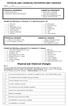 PHYSICAL AND CHEMICAL PROPERTIES AND CHANGES Name Key PHYSICAL PROPERTY CHEMICAL PROPERTY 1. observed with senses 1. indicates how a substance 2. determined without destroying matter reacts with something
Development of Coal Gasification System for Producing Chemical Synthesis Source Gas
 27 Development of Coal Gasification System for Producing Chemical Synthesis Source Gas TAKAO HASHIMOTO *1 KOICHI SAKAMOTO *1 KATSUHIRO OTA *2 TAKASHI IWAHASHI *3 YUUICHIROU KITAGAWA *4 KATSUHIKO YOKOHAMA
What is Cement? History Overview of the Cement Manufacturing Process Brief Overview of Kiln Operations Why Burn Wastes?
 What is Cement? History Overview of the Cement Manufacturing Process Brief Overview of Kiln Operations Why Burn Wastes? A hydraulic cement made by finely pulverizing the clinker produced by calcining to
POPCORN 2005, 2004, 1997 by David A. Katz. All rights reserved. Reproduction permitted for education use provided original copyright is included.
 POPCORN 2005, 2004, 1997 by David A. Katz. All rights reserved. Reproduction permitted for education use provided original copyright is included. According to The Popcorn Board, Americans today consume
THE BASICS OF STERILIZATION
 THE BASICS OF STERILIZATION Objectives: State the importance of sterilization to patient care Review three key essentials of the sterilization process Describe sterilization methods used, application,
HIGH FIBER DIET. (Article - Web Site) August 20, 2003
 HIGH FIBER DIET (Article - Web Site) August 20, 2003 Dietary fiber, found mainly in fruits, vegetables, whole grains and legumes, is probably best known for its ability to prevent or relieve constipation.
1.3 Properties of Coal
 1.3 Properties of Classification is classified into three major types namely anthracite, bituminous, and lignite. However there is no clear demarcation between them and coal is also further classified
TECHNICAL DATA SHEET GRILON BG-15 S
 TECHNICAL DATA SHEET GRILON BG-1 S Grilon BG-1 S is a heat stabilised PA6 injection moulding grade with 1% glass fibres. Grilon BG-1 S has the following important properties: Excellent surface finish Easy
North American Stainless
 North American Stainless Flat Products Stainless Steel Grade Sheet 310S (S31008)/ EN 1.4845 Introduction: SS310 is a highly alloyed austenitic stainless steel designed for elevated-temperature service.
Zero Emission Engine. An Economic and Environmental Benefit
 Zero Emission Engine An Economic and Environmental Benefit Saskia Scherfling Registration number: 731805 Department: VIII Course of studies: Process and Environmental Engineering September 2007 Table of
1.5 Concrete (Part I)
 1.5 Concrete (Part I) This section covers the following topics. Constituents of Concrete Properties of Hardened Concrete (Part I) 1.5.1 Constituents of Concrete Introduction Concrete is a composite material
Nutrients: Carbohydrates, Proteins, and Fats. Chapter 5 Lesson 2
 Nutrients: Carbohydrates, Proteins, and Fats Chapter 5 Lesson 2 Carbohydrates Definition- the starches and sugars found in foods. Carbohydrates are the body s preferred source of energy providing four
Super Heated Steam Drying of Wood on Industrial Scale
 Super Heated Steam Drying of Wood on Industrial Scale Wolfgang F. Gard Delft University of Technology Timber Structures & Wood Technology Delft / 1 Introduction Drying process Drying schedule Drying quality
Thermochemistry. r2 d:\files\courses\1110-20\99heat&thermorans.doc. Ron Robertson
 Thermochemistry r2 d:\files\courses\1110-20\99heat&thermorans.doc Ron Robertson I. What is Energy? A. Energy is a property of matter that allows work to be done B. Potential and Kinetic Potential energy
SHOUT TRIPLE-ACTING LAUNDRY STAIN REMOVER
 1. PRODUCT AND COMPANY IDENTIFICATION Product information Trade name : Use of the : Spot & Stain Remover Substance/Mixture Company : S.C. Johnson & Son, Inc. 1525 Howe Street Racine WI 53403-2236 Emergency
Development and Operating Results of Low SO2 to SO3 Conversion Rate Catalyst for DeNOx Application
 Development and Operating Results of Low SO2 to SO3 Conversion Rate Catalyst for DeNOx Application By Isato Morita Yoshinori Nagai Dr. Yasuyoshi Kato Babcock-Hitachi K.K., Japan Dr.Howard N. Franklin Hitachi
Biological Indicators and
 & and BIs play an important role in the monitoring of sterilizers, along with physical and chemical indicators. However, only BIs contain live spores that directly measure the lethality of a sterilization
SECOND GRADE 1 WEEK LESSON PLANS AND ACTIVITIES
 SECOND GRADE 1 WEEK LESSON PLANS AND ACTIVITIES WATER CYCLE OVERVIEW OF SECOND GRADE WATER WEEK 1. PRE: Exploring the properties of water. LAB: Experimenting with different soap mixtures. POST: Analyzing
UNIT 6a TEST REVIEW. 1. A weather instrument is shown below.
 UNIT 6a TEST REVIEW 1. A weather instrument is shown below. Which weather variable is measured by this instrument? 1) wind speed 3) cloud cover 2) precipitation 4) air pressure 2. Which weather station
Laboratory 5: Properties of Enzymes
 Laboratory 5: Properties of Enzymes Technical Objectives 1. Accurately measure and transfer solutions with pipettes 2. Use a Spectrophotometer to study enzyme action. 3. Properly graph a set of data. Knowledge
Issue. September 2012
 September 2012 Issue In a future world of 8.5 billion people in 2035, the Energy Information Administration s (EIA) projected 50% increase in energy consumption will require true all of the above energy
Use of Substitute Fuels in Large Combustion Plants (LCPs)
 Use of Substitute Fuels in Large Combustion Plants (LCPs) By Pat Swords Content of the Presentation What are substitute fuels What is the experience to date with these fuels What are the regulatory implications
Performance of the Boiler and To Improving the Boiler Efficiency Using Cfd Modeling
 IOSR Journal of Mechanical and Civil Engineering (IOSR-JMCE) e-issn: 2278-1684,p-ISSN: 2320-334X, Volume 8, Issue 6 (Sep. - Oct. 2013), PP 25-29 Performance of the Boiler and To Improving the Boiler Efficiency
Strength of Concrete
 Strength of Concrete In concrete design and quality control, strength is the property generally specified. This is because, compared to most other properties, testing strength is relatively easy. Furthermore,
Lecture 35: Atmosphere in Furnaces
 Lecture 35: Atmosphere in Furnaces Contents: Selection of atmosphere: Gases and their behavior: Prepared atmospheres Protective atmospheres applications Atmosphere volume requirements Atmosphere sensors
Laboratory- and sterilisation equipment HMC EUROPE
 Laboratory- and sterilisation equipment HMC PROFILE HMC Laboratory- and sterilisation equipment Consistent marketing of technologies and the conversion of new ideas create product ranges, that are tailor-made
Phase Out Artificial Trans Fat In King County Food Service Establishments
 The Regulation to Phase Out Artificial Trans Fat In King County Food Service Establishments (Chapter 5.10 of the Code of the King County Board of Health) How to Comply: What Restaurants, Delis, Bakeries,
Product Code: CP54PB HEAT TREATED GROUND BLACK PEPPER SPECIFICATION.
 Product Code: CP54PB HEAT TREATED GROUND BLACK PEPPER SPECIFICATION. 1. Description: Whole Black Peppercorns (Piper nigrum L.) ground into a powder, which has undergone no fumigation or irradiation treatment.
North American Stainless
 North American Stainless Long Products Stainless Steel Grade Sheet AISI 304 UNS S30400 EN 1.4301 AISI 304L UNS S30430 EN 1.4307 INTRODUCTION: Types 304 and 304L are the most versatile and widely used of
North American Stainless
 Introduction: North American Stainless Flat Products Stainless Steel Grade Sheet 309S (S30908)/ EN1.4833 SS309 is a highly alloyed austenitic stainless steel used for its excellent oxidation resistance,
Brewing Beer efficient and sustainable technologies in regard to energy and raw material input
 Brewing Beer efficient and sustainable technologies in regard to energy and raw material input ERSCP workshop, Bregenz, 3 May 2012 Dr. Ludwig Scheller, Dr. Rudolf Michel Huppmann Tuchenhagen Agenda Efficient
Half the cost Half the carbon
 Half the cost Half the carbon the world s most efficient micro-chp What is BlueGEN? The most efficient small-scale electricity generator BlueGEN uses natural gas from the grid to generate electricity within
Oxivir Tb and Accelerated Hydrogen Peroxide (AHP) Frequently Asked Questions
 Oxivir Tb and Accelerated Hydrogen Peroxide (AHP) Frequently Asked Questions What is Accelerated Hydrogen Peroxide (AHP)? AHP is a patented synergistic blend of commonly used, safe ingredients that when
Overview of Integrated Coal Gasification Combined-cycle Technology Using Low-rank Coal
 19 Overview of Integrated Coal Gasification Combined-cycle Technology Using Low-rank Coal TAKAO HASHIMOTO *1 KOICHI SAKAMOTO *2 YOSHIKI YAMAGUCHI *3 KOJI OURA *4 KENICHI ARIMA *5 TAKESHI SUZUKI *6 Mitsubishi
COKE PRODUCTION FOR BLAST FURNACE IRONMAKING
 COKE PRODUCTION FOR BLAST FURNACE IRONMAKING By Hardarshan S. Valia, Scientist, Ispat Inland Inc INTRODUCTION A world class blast furnace operation demands the highest quality of raw materials, operation,
FEED MANUFACTURING TECHNOLOGY - ISSUES AND CHALLENGES
 FEED MANUFACTURING TECHNOLOGY - ISSUES AND CHALLENGES DENNIS FORTE SUMMARY The handling of Feed Pellets during storage at the Mill, transport and transfer to bins on the farm has a direct impact upon the
Sugars, Starches, and Fibers Are All Carbohydrates
 Sugars, Starches, and Fibers Are All Carbohydrates What are carbohydrates? Today's food advertisements call them carbs, but they are not all the same. They are a group of compounds that have some similarities
North American Stainless
 North American Stainless Long Products Stainless Steel Grade Sheet 2205 UNS S2205 EN 1.4462 2304 UNS S2304 EN 1.4362 INTRODUCTION Types 2205 and 2304 are duplex stainless steel grades with a microstructure,
How To Power A Power Plant With Waste Heat
 Power Generation Siemens Organic Rankine Cycle Waste Heat Recovery with ORC Answers for energy. Table of Contents Requirements of the Future Power Supply without extra Fuel Siemens ORC-Module Typical Applications
Fact Sheet Technology. Bergius-Pier Process (1)
 tec Energy Technology Projects Subject: Bergius 1: 1924 1945 Rev: April 2006 Fact Sheet Technology The information included in this document is property of. Use and reproduction of this document, without
Thermal processing for drying, heating and cooling
 Komline-Sanderson Paddle Dryer/Cooler Thermal processing for drying, heating and cooling Komline - Sanderson Thermal processing with the K-S Paddle Dryer/Cooler With the K-S Paddle Dryer/Cooler, powdered,
VALIDATION, MODELING, AND SCALE-UP OF CHEMICAL LOOPING COMBUSTION WITH OXYGEN UNCOUPLING
 VALIDATION, MODELING, AND SCALE-UP OF CHEMICAL LOOPING COMBUSTION WITH OXYGEN UNCOUPLING A research program funded by the University of Wyoming School of Energy Resources Executive Summary Principal Investigator:
Chapter Two Types of Cement The properties of cement during hydration vary according to:
 Chapter Two Types of Cement The properties of cement during hydration vary according to: Chemical composition Degree of fineness It is possible to manufacture different types of cement by changing the
Food Cooking Process. Numerical Simulation of the Transport Phenomena.
 Food Cooking Process. Numerical Simulation of the Transport Phenomena. B. Bisceglia *, A. Brasiello, R. Pappacena, R. Vietri Department of Industrial Engineering, University of Salerno, Via Giovanni Paolo
Introduction. The Function of Packaging
 21) PACKAGING: FUNCTIONS Introduction Packaging fresh fruits and vegetables is one of the more important steps in the long and complicated journey from grower to consumer. Bags, crates, hampers, baskets,
AISI O1 Cold work tool steel
 T OOL STEEL FACTS AISI O1 Cold work tool steel Great Tooling Starts Here! This information is based on our present state of knowledge and is intended to provide general notes on our products and their
POSSIBILITY FOR MECHANICAL VAPOR RE-COMPRESSRION FOR STEAM BASED DRYING PROCESSES
 POSSIBILITY FOR MECHANICAL VAPOR RE-COMPRESSRION FOR STEAM BASED DRYING PROCESSES M. Bantle 1, I. Tolstorebrov, T. M. Eikevik 2 1 Department of Energy Efficiency, SINTEF Energy Research, Trondheim, Norway,
Humidity, Condensation, Clouds, and Fog. Water in the Atmosphere
 Humidity, Condensation, Clouds, and Fog or Water in the Atmosphere The Hydrologic Cycle Where the Water Exists on Earth Evaporation From the Oceans and Land The Source of Water Vapor for the Atmosphere
Critical Point Drying Principles
 Critical Point Drying Principles What is Critical Point Drying? Critical Point Drying is so named as it includes, as part of its process, the occurrence known as the continuity of state for which there
Assignment 8: Comparison of gasification, pyrolysis and combustion
 AALTO UNIVERSITY SCHOOL OF CHEMICAL TECHNOLOGY KE-40.4120 Introduction to biorefineries and biofuels Assignment 8: Comparison of gasification, pyrolysis and combustion Aino Siirala 309141 Assignment submitted
COMBUSTION. In order to operate a heat engine we need a hot source together with a cold sink
 COMBUSTION In order to operate a heat engine we need a hot source together with a cold sink Occasionally these occur together in nature eg:- geothermal sites or solar powered engines, but usually the heat
Choosing The Proper Short Cut Fiber for Your Nonwoven Web
 Choosing The Proper Short Cut Fiber for Your Nonwoven Web ABSTRACT You have decided that your web needs a synthetic fiber. There are three important factors that have to be considered: generic type, diameter,
Owner s Guide to Understanding Checks in Glued Laminated Timber
 Owner s Guide to Understanding Checks in Glued Laminated Timber ENGINEERED WOOD SYSTEMS Checking In Glued Laminated Timber Glued laminated timber (glulam) is an engineered wood product that is used in
GRADATION OF AGGREGATE FOR CONCRETE BLOCK
 GRADATION OF AGGREGATE FOR CONCRETE BLOCK Although numerous papers have been written concerning the proper gradation for concrete mixes, they have generally dealt with plastic mixes, and very little published
Soils, Foundations & Moisture Control
 Soils, Foundations & Moisture Control Soil The top loose layer mineral and/or organic material on the surface of the Earth that serves as a natural medium for the growth of plants and support for the foundations
Specimen Paper. Chemistry 1F. Time allowed! 60 minutes
 Centre Number Surname Candidate Number Specimen Paper For Examiner s Use Other Names Candidate Signature Examiner s Initials General Certificate of Secondary Education Foundation Tier Question 1 Mark Science
MATERIAL SAFETY DATA SHEET
 MATERIAL SAFETY DATA SHEET 1. IDENTIFICATION: Commercial name: Natural Vitamin E Oil Botanical Nomenclature: INCI name: a-tocopherol CAS number: 8006-95-9 EINECS CAS number: 273-313-5 Supplier Details:
TEACHER BACKGROUND INFORMATION THERMAL ENERGY
 TEACHER BACKGROUND INFORMATION THERMAL ENERGY In general, when an object performs work on another object, it does not transfer all of its energy to that object. Some of the energy is lost as heat due to