
The Price of Oil Risk
|
|
|
- Marcus Moore
- 9 years ago
- Views:
Transcription
1 The Price of Oil Risk Steven D. Baker, Bryan R. Routledge, September, 2011 [September 6, 2014] Abstract We solve a Pareto risk-sharing problem with heterogeneous agents with recursive utility over multiple goods. We use this optimal consumption allocation to derive a pricing kernel and the price of oil and related futures contracts. This gives us insight into the dynamics of risk premia in commodity markets for oil. As an example, in a calibrated version of our model we show how rising oil prices and falling oil risk premium are an outcome of the dynamic properties of the optimal risk sharing solution. We also compute portfolios that implement the optimal consumption policies and demonstrate that large and variable open interest is a property of optimal risk sharing. McIntire School of Commerce, University of Virginia; [email protected]. Tepper School of Business, Carnegie Mellon University; [email protected].

2 1 Introduction The spot price of crude oil, and commodities in general, experienced a dramatic price increase in the summer of For oil, the spot price peaked in early July 2008 at $ per barrel (see Figure 1). In real-terms, this price spike exceeded both of the OPEC price shocks of 1970 s and has lasted much longer than the price spike at the time of the Iraq invasion of Kuwait in the summer of This run-up in the price of oil begins around Büyükşahin et. al. (2010) and Hamilton and Wu (2011) document a structural break in the behavior of oil prices around This 2004 to 2008 time period also coincides with a large increase trading activity in commodities by hedge funds and other financial firms as well as a growing popularity of commodity index funds (best documented in Büyükşahin et. al. (2010)). In fact, there is much in the popular press that lays the blame for higher commodity prices, food in particular, on the financialization of commodities. 1 Others point out that since these new traders in futures do not end up consuming any of the spot commodity, the trading can have little (if any) effect on spot prices. 2 Resolving this debate requires modeling the equilibrium relationship between spot and futures prices. How do spot and futures prices respond to a change in, say, speculative demand from a hedge fund as opposed to the hedging demand of a firm in the oil market? To address this question, however, we need a clearer understanding of hedging and speculation. To do this, we look directly at the risk-sharing Pareto problem in an economy with heterogenous agents and multiple goods and solve for equilibrium risk premia. Our intuition about the use and pricing of commodity futures contracts is often expressed with hedgers and speculators. This dates back to Keynes (1936) and his discussion of normal backwardation in commodity markets. The term backwardation is used in two closely related contexts. Often it is used to refer to a negatively sloped futures curve (where the one-year futures price is below the current spot price). 3 Here, Keynes use of the term 1 See for example The food bubble:how Wall Street starved millions and got away with it by Frederick Kaufman, Harpers July The clearest argument along this lines is by James Hamilton sp.html. See also Hamilton (2009) and Wright (2011) 3 Often, backwardation refers to the contemporaneous slope of the futures curve. In oil markets we focus entirely on crude oil in this paper the forward price is typically below the spot price. In our data, of 1990 through 2010, the 12 month forward is smaller than the 1 month forward (as a proxy for the spot price), a negatively sloped forward curve called backwardation, 61% of the time. This fact is an important input to many derivative-pricing models in commodities. Typically, the slope of the forward curve is a (exogenous) stochastic factor capturing the connivence yield to owning the physical good over a financial contract (see Schwartz (1997)). Alternatively, the dynamics of storage or production can be modeled directly to capture the contemporaneous relationship between spot and futures price (Routledge, Seppi, and Spatt (2000), (2001), Titman (2011), and others).

3 normal backwardation (or natural ) refers to the situation where the current one-year futures price is below the expected spot price in one-year. This you will recognize as a risk premium for bearing the commodity price risk. This relation is normal if there are more hedgers than there are speculators. Speculators earn the risk premium and hedgers benefit from off-loading the commodity price risk. First, there is no reason to assume that hedgers are only on one side of the market. Both oil producers (Exxon) and oil consumers (Southwest Air) might hedge oil. It happens to turn out that in oil markets in the 2004 to 2008 period there was a large increase on the long-side by speculators suggesting the net commercial or hedging demand was on the short side. This is documented in Büyükşahin et. al. (2010) who use proprietary data from the CFTC that identifies individual traders. For many reasons it is interesting to see who is trading what. Second, if we are interested in risk premia in equilibrium we need to look past the corporate form of who is trading. We own a portfolio that includes Exxon, Southwest Air, and a commodity hedge fund and consume goods that, to varying degrees, depend on oil. Are we hedgers or speculators? It is hard to look at risk premium directly. However, it is easy to look at realized excess returns to get a sense of things. Figure 2 plots the one-month holding period expected excess returns. Hamilton and Wu (2011) estimate a structural break around 2004, so we split the data into pre-2004 and post-2004 samples. In the top panel we see changes in the term structure of excess returns, which are downward sloping pre-2004 but upward sloping to flat post Realized excess returns on the nearest to maturity contracts, which are the most heavily traded, decline after This change is linked to a more frequently upward sloping futures curve after In the bottom panel we also condition on a positively or negatively sloping futures curve. The figure suggests substantial time-variation in the risk premium across all contract maturities, coinciding with changes to the slope of the futures curve. In addition the post-2004 sample has higher average excess returns for all contracts after conditioning on the slope of th futures curve. Of course, time variation in risk premia is not surprising in modern asset pricing. We see it in equity returns (Campbell and Cochrane (1999), Bansal and Yaron (2005), Routledge and Zin (2010)) and bond returns Cochrane and Piazzesi (2005)). Equilibrium risk premia properties depend on preferences, endowments, technologies, and financial markets. In this model we focus on complete and frictionless financial markets. We also leave aside production for the moment. Both of these are important aspects to consider in future research. In this paper we look at an endowment economy with two goods, one of which we calibrate to capture the salient properties of oil the other we think of as composite good akin to consumption in the macro data. We consider two agents 2

4 with heterogenous preferences over the two goods as well as with different time and risk aggregators. Preference heterogeneity is a natural explanation for portfolio heterogeneity we see in commodity markets. Here we start with complete and frictionless markets, focus on perfect risk sharing, and solve for the Pareto optimal consumption allocations. From this solution, we can infer the representative agent marginal rates of substitution and calculate asset prices and the implied risk premia. It is important in our model, to allow for a rich preference structure and so we start with the recursive preference structure of Epstein and Zin (1989) and Kreps and Porteus (1978). Preference heterogeneity can be over the time aggregator, the risk aggregator,and the goods aggregator that modulates the trade off between oil and the numeraire consumption good. This is important for several reasons. First, as we know from recent research into the equity premium, recursive preferences are a necessary component to generating the observed dynamics properties of the equity premium. For example, in Bansal and Yaron (2005) the long-run risk component and the stochastic volatility of the consumption growth process are not sufficient to generate a realistic equity premium. The recursive preference structure is need to generate a non-zero price impact of these components. Second, and more directly related to our interests here, we are interested in understanding the role of commodity futures prices to manage risk and their related risk premium. To get at this issue carefully, since this is a multi-good economy, we need to be careful with our intuition about risk aversion (e.g., Kihlstrom and Mirman (1974)). An oil futures contract might hedge direct future oil consumption, future consumption in general, or future continuationutility. Since portfolio choice is fundamentally a decision about intertemporal multi-good consumption lotteries, all of these characteristics are important. The bulk of the paper explores our a calibration of model that we solve numerically. The example demonstrates how dynamic risk sharing between agents with different preferences generates wide variation in prices, return volatility, risk premia, and open interest over time. Each agent holds a pareto-optimal portfolio, but realized returns may increase the wealth of one agent versus the other. Although shocks to oil consumption may cause transitory changes to the oil futures curve, gradual shifts in the wealth distribution produce long-run changes in the typical behavior of futures markets. Because they also occur endogenously, changes in the wealth distribution also provide an alternative (or complementary) explanation for persistent changes in oil futures markets that does not rely upon exogenously imposed structural breaks, such as permanent alterations to the consumption growth process, or the changing access to financial markets. Depending on the endogenous wealth distribution in our model, the annualized risk 3

5 premium to the long side of the nearest futures contract varies from 2% to over 8%, the spot price of oil averages the equivalent of under $50 per barrel or over $90 per barrel, quarterly futures return volatility goes from 10% to 13%, and open interest in oil futures contracts may be negligable or many times the value of total oil consumption. The impact of the wealth distribution is not limited to the oil market, rather changes in futures risk premia coincide with changes in the equity premium and interest rates. Therefore changes in the wealth distribution can have a large impact upon both the goods (spot) market and asset prices, without any changes in aggregate consumption dynamics. In fact a sufficiently volatile wealth distribution, with sufficiently diverse preferences, could account for all of the recently observed changes in oil market dynamics. A natural question is whether such changes in the wealth distribution could occur rapidly enough, in a model with sensible parameters, to match the fluctuations observed in oil markets over the last decade. We demonstrate that endogenous evolution of the wealth distribution leads to rising spot prices, futures return volatility, and open interest, and declining risk premium to the long side of the nearest futures contract. However in our calibration the wealth distribution shifts too slowly to account for the variation observed in the data. Open interest in oil futures is very sensitive to the wealth distribution, but wealth-driven trends in asset prices are slow moving. A more plausible explanation for rapid changes in the spot price or the risk premium is a change in the relative aggregate consumption growth of oil, which can swiftly double the spot price or futures risk premium in our model. There are many related papers to mention. We mentioned some of the oil and commodity papers above. We also build on many papers that look at risk sharing and models with heterogenous agents. We are most closely building on on Backus, Routledge, and Zin (2009) and (2008). Foundational work in risk sharing with recursive preferences includes Lucas and Stokey (1984), Kan (1995), and more recently Anderson (2005). There are also several recent papers that are related, such as Croce and Colacito (2010) and Gârleanu and Panageas (2010). In our model, we focus on a risk sharing problem in an endowment setting. This sets aside the many interesting properties of oil production and prices that come from modeling the extraction problem. Interesting examples includes Carlson, Khokher, and Titman (2007), Casassus, Collin-Dufresne, and Routledge (2007), and Kogan, Livdan, and Yaron (2009). These papers all document and model important properties of commodity prices; particularly the volatility structure of futures prices. 4

6 2 Facts We are interested in the empirical properties of the time variation in the expected excess returns to holding a long position in oil futures. Since a futures contract is a zero-wealth position, we define the return as the fully collateralized return as follows. Define F t,n as the futures price at date t for delivery at date t + n, with the usual boundary condition that the n = 0 contract is the spot price of oil; F t,0 = P t. The fully collateralized return involves purchasing F t,n of a one-month bond and entering into the t + h futures contract with agreed price F t,n at date t. Cash-flows at date t + 1 come from the risk-free rate and the change in futures prices F t+1,n 1 F t,n. So, ( rt+1 n Ft+1,n 1 F t,n + (F t,n (exp r f t+1 = log )) ) We are interested in risk premiums, so will look at the return in excess of the risk-free rate log r f t+1 Note the dating convention: that is the return earned from date t to date t + 1. For the risk-free rate, this is a constant known at date t. Defining things this way means that excess returns are approximately equal to the log-change in futures prices. F t,n r n t+1 r f t+1 log F t+1,n 1 log F t,n (2) The futures prices we use are for the one-month to the sixty-month contracts for lightsweet crude oil traded at NYMEX. 4 To generate monthly data, we use the price on the last trading day of each month. The liquidity and trading volume is higher in near-term contracts. However, oil has a reasonably liquid market even at the longer horizons, such as out to the 60 month contract. All of the production-based or storage-based models of oil point to the slope of the futures curve as an important (endogenous) state variable (e.g., Carlson, Khokher, and Titman (2007), Casassus, Collin-Dufresne, and Routledge (2007), and Kogan, Livdan, and Yaron (2009) Routledge, Seppi, and Spatt (2000)). Table 1 highlights that, indeed, this state variable is an important component to the dynamic properties of the the risk premium associated with a long position in oil. Across all the various sub-samples and contracts, when the slope of the futures curve at date t is negative, the expected excess returns to a long position in oil is higher. We can see two changes across the sub-periods, slitting the sample at First, the frequency of a negatively slopped forward curve is much less in 4 Data was aggregated by Barcharts Inc. All the contract details are at trading/energy/crude-oil/light-sweet-crude_contract_specifications.html (1) 5

7 the post-2004 period. Backwardation occurs 68% of the time pre-2004 and only 41% of the months 2004 and beyond (the full sample has a 60% frequency of backwardation). Despite this change, excess returns are higher post-2004 on all but the nearest to maturity contract. Returns on all maturities are higher post-2004 when we condition on the sign of the slope of the oil futures curve. 5 The fact that oil seems to command a risk premium suggests its price is correlated with economic activity (or, by definition, the pricing kernel). Of course, oil is an important commodity directly to economic activity. Hamilton (2008) documents that nine out of ten of the U.S. recessions since World War II were preceded by a spike up in oil prices with the oil-shocks of the 1970 s as the most dramatic examples. Even the most recent recession follows the dramatic spike in oil prices. The NBER dates the recession as December 2007 to June The peak oil price was the summer of 2008 right before the collapse of Lehman Brothers. However, by December of 2007, the WTI spot price was $91.73 per barrel. Table 2 looks at the one-month excess returns on holding US Treasury bonds over the same time-frame and conditioning information as Table 1. Notice in the upper-left hand panel the familiar pattern that excess returns on bonds are increasing in maturity. As you would expect from Cochrane and Piazzesi (2005), the evidence suggests that bond risk premia are time varying (again, subject to the caveat we are measuring these with ex-post realized returns). Over the time-subsamples we use here, there is little variation in the excess returns. What is an interesting characteristic (and perhaps even new), is that the risk-premia depend on the slope of the oil futures curve. When the oil curve is negatively sloped, excess returns on bonds are larger. The effect is strongest for longer-horizon bonds. Unconditionally, however, the correlations of the excess returns across the bonds and oil futures are small (slightly negative). The classic empirical method to explore risk premiums is by way of a forecasting regression of Fama and French (1987) (and many related papers in non-commodities). To remind us of the basic idea, write define φ t,n as φ t,n = E t [P t+n ] F t,n. Predictable movement in prices reflect risk premium and just a bit of algebra formally relates the φ t,n to the covariance with the pricing kernel. 6 We can run the following regression P t+n P t = a + b (F t,n P t ) + ɛ t+n = a n + b n (E t [P t+n P t ] φ t,n ) + ɛ t+n 5 Casassus and Collin-Dufresne (2005) use the closely retated fact that the negative slope is highly correlated to a high spot price of oil. 6 It is easiest to describe this with futures price and the future spot price (using F t+n,0 = P t+n). However, implementing this empirically we use a near-term contract with φ t,n,k = E t[f t+n k,k ] F t,n with n < k. In Table 3, k = 1 and we also transform things by log. 6

8 And note that if φ t,n is a constant, then b n should be one. Table 3 shows that the coefficient b n is broadly decreasing in maturity, and is significantly less than one for long-dated contracts. This suggests more variation in the risk premium associated with the longer-dated oil futures contracts. There is certainly more work to do here, but we think we have established an interesting fact worth pursing: The risk premium in oil is time varying with interesting connections to economic activity. So, perhaps, if we want to understand the oil markets in the 2004 to 2008 period and the increased financialization of commodity markets, getting a handle on the source of the time variation is a good place to start. 3 Exchange Economy - Two Goods and Two Agents We model an exchange or endowment economy as in (Lucas 1978). We specify a stochastic process for the endowment growth. Specifically, we will have one good x t we think of as the numeraire or composite commodity good. Our second good, which we calibrate to be oil, we denote y t. This is the usual tree structure where here we have two trees, each with it s own type of fruit. We use the short-hand notation subscript-t to indicate conditional on the history to date t. Similarly, we use E t and µ t to indicate expectations and certainty equivalents conditional on information to date-t. Heterogeneity in our set-up will be entirely driven by preference parameters. Beliefs across all agents are common. We are interested in the Pareto optimal allocation or perfect risk sharing solution. So with complete and frictionless markets, we focus on the social planner s Pareto problem. This means, for now, we need not specify the initial ownership of the endowment; we treat x t and y t as resource constraints. However, we can use this solution to characterize portfolio policies that implement the optimal consumption policies allowing us to investigate open interest in oil futures contracts. The preferences, which we allow to differ across our two agents, are recursive as in Epstein and Zin (1989) and Kreps and Porteus (1978). They are characterized by three aggregators (see Backus, Routledge, and Zin (2005)) First, a goods aggregator determines the tradeoff between our two goods. This is, of course, a simplification since oil is not directly consumed. But the heterogeneity across our two agents will capture that some of us are more reliant on or more flexible with respect to the consumption of energy-intensive products. The other two aggregators are the usual time aggregator and risk aggregator that determine intertemporal substitution and risk aversion. Finally, the familiar time-additive expected utility preferences are a special case of this set up. 7

9 3.1 Single Agent, Two Goods To get started, consider a single-agent economy with two goods. In this representative agent setting, optimal consumption is simply to consume the endowment x t and y t each period. We model utility from consumption of the aggregated good with a constant elasticity of substitution (CES) aggregator: A(x t, y t ) = ((1 γ)x η t + γyη t )1/η with γ [0, 1] and η 1. Intertemporal preferences over the aggregate good are represented with an Epstein-Zin recursive preference structure W t = W (x t, y t, W t+1 ) = [(1 β)a(x t, y t ) ρ + βµ t (W t+1 ) ρ ] 1/ρ, [ ] µ t (W t+1 ) = E t W α 1/α t+1, The endowment of (x t, y t ) follows a finite-state Markov process such that both the growth rates of the goods and the ratio of their levels (y t /x t ) is stationary. Combined with the CES aggregator, this ensures that the price of good y t in units of numeraire x t will be stationary. Denote the current state of the Markov process s t, with the probability of transitioning to next period state s t+1 given by π(s t, s t+1 ), for s t, s t+1 S with S finite. Growth in the numeraire good is g t+1 = g(s t+1 ) = x t+1 /x t, and the goods ratio is h t+1 = h(s t+1 ) = y t+1 /x t+1 > 0. With a little algebra, we can write intertemporal marginal rate of substitution, written here as a pricing kernel or stochastic discount factor. m t+1 = W t/ x t+1 (π t+1 ) 1 = β W t / x t ( xt+1 x t ) η 1 ( At+1 Note this is denominated in terms of the numeraire good (x). A t ) ρ η ( ) α ρ Wt+1. (3) µ t (W t+1 ) So we can use m t+1 to compute the price at t of arbitrary numeraire-denominated contingent claims that pay-off at t + 1. Claims to oil good y at t are converted to contemporaneous numeraire values using the spot price of oil, P t = W t/ y t W t / x t = γ 1 γ hη 1 t. (4) The pricing kernel and spot price can be used in combination to price arbitrary contingent claims to either good. We scale utility by current consumption of the numeraire, x t, similar to Hansen, Heaton, and Li (2008). This normalized utility process is stationary, due to the assumed stationarity 8
![We model utility from consumption of the aggregated good with a constant elasticity of substitution (CES) aggregator: A(x t, y t ) = ((1 γ)x η t + γyη t )1/η with γ [0, 1] and η 1.](/docs-images/48/19241585/images/page_9.jpg "Intertemporal preferences over the aggregate good are represented with an Epstein-Zin recursive preference structure W t = W (x t, y t, W t+1 ) = [(1 β)a(x t, y t ) ρ + βµ t (W t+1 ) ρ ] 1/ρ, [ ] µ t")
10 of y t /x t and homogeneity of the time and state aggregators. Define, Ŵ t = W t /x t and  t = A t /x t : Ŵ t = Ŵ (s t) = [(1 β)âρ t + β ( µ t (Ŵt+1g t+1 )) ρ ] 1/ρ (5)  t = Â(s t) = ((1 γ) + γ (h t ) η ) 1/η. (6) Substituting Ŵt and Ât into the pricing kernel, we have ( ) ρ η ( ) α ρ m t+1 = β (g t+1 ) η 1  t+1 g t+1 Ŵ t+1 g t+1  t µ t (g t+1 Ŵ t+1 ) ) ρ η ( ) α ρ (7) (Ât+1 = β (g t+1 ) α 1 Ŵ t+1  t µ t (g t+1 Ŵ t+1 ) The pricing kernel depends on the current state s t, and on next period state s t+1. The price of oil depends on the relative levels of the two goods (h t ), and on share parameter γ and elasticity of substitution parameter η. Changes in the price of oil only depend upon η and changes in the goods ratio: ( ) P η 1 t+1 ht+1 =. P t h t Therefore a single parameter η influences the volatility of the price of oil, but any timevariation in its dynamics flows directly from the goods ratio h t, which follows an exogenous Markov process s t. The advantages and limitations of a single agent single good representative agent model are quite well known. For example, with a thoughtfully chosen consumption growth process one can capture many salient feature of equity and bond markets (Bansal and Yaron (2005)). Alternatively, one can look at more sophisticated aggregators or risk to match return moments (Routledge and Zin (2010)). Presumably, one could take a similar approach to extend to a two-good case to look at oil prices and risk premia (see Ready (2010) as a nice example). It would require some work in our specific set up, since dynamics of the oil spot price (and all derivatives) will simply depend on the current growth state s t. Instead, we extend this model to a second (but similar) agent. The dynamics of the risk sharing problem we discuss next will provide us a new and endogenous state variable, to generate realistic time variation in the oil risk premium. This also lets us look at the portfolios and trades the two agents choose to make. Lastly, note that the single agent case in this section corresponds to the boundary cases in the two-agent economy where one agent receives zero Pareto weight or has no wealth. 9

11 3.2 Two Agents, Two Goods Next we consider our model with two agents. The two-good endowment process and recursive preference structure are unchanged. What is new is we allow the two agents to have differing parameters for their goods, risk, and time aggregators. Denote the two agents 1 and 2 (these subscripts will denote the preference heterogenity and the endogenous goods allocations). The risk sharing or Pareto problem for the two agents is to allocate consumption of the two goods across the two agents, such that c x 1,t + cx 2,t = x t and c y 1,t + cy 2,t = y t. Agent one derives utility from consumption of the aggregated good A 1 (c x 1,t, cy 1,t ) = ((1 γ 1 )(c x 1,t )η 1 + γ 1 (c y 1,t )η 1) 1/η1. The utility from the stochastic stream of this aggregated good has the same recursive form as previously: [ W t = W (c x 1,t, c y 1,t, W t+1) = (1 β)a 1 (c x 1,t, c y 1,t )ρ 1 + βµ 1,t (W t+1 ) 1] ρ 1/ρ1, [ µ 1,t (W t+1 ) = E t W α 1 1/α1 t+1]. ) Agent 2 has similar preference structure with A 2 (c x 2,t, cy 2,t ((1 ) = γ 2 )(c x 2,t )η 2 + γ 2 (c y 1/η2 2,t )η 2 and recursive preferences V t = V (c x 2,t, c y 2,t, V t+1) = [ (1 β)a 2 (c x 2,t, c y 2,t )ρ 2 + βµ 2,t (V t+1 ) ρ 2] 1/ρ2, µ 2,t (V t+1 ) = E t [ V α 2 t+1] 1/α2. The idea is that the two agents can differ about the relative importance of the oil good, willingness to substitute non-oil for oil, risk aversion over the utility lotteries, or the inter-temporal smoothing. Recall that with recursive preferences all of these parameters will determine the evaluation of a lifetime consumption bundle. Oil risk does not just depend on the γ and η parameters since it involves an inter-temporal, risky consumption lottery. Note we give the two agents common rate of time preference β. 7 The two-agent Pareto problem is a sequence of consumption allocations for each agent {c x 1,t, cy 1,t, cx 2,t, cy 2,t } that maximizes the weighted average of date-0 utilities subject to the aggregate resource constraint which binds at each date and state: max {c x 1,t,cy 1,t,cx 2,t,cy 2,t } λw 0 + (1 λ)v 0 s.t. c x 1,t + c x 2,t = x t and c y 1,t + cy 2,t = y t for all s t 7 Differing β s are easy to accommodate, but seem an unnecessary added complexity. Heterogeneous time discount factors often lead to less interesting dynamics, since the agent with the larger β quickly dominates the optimal allocation (see e.g., Yan (2010)). (8) (9) 10

12 where λ determines the relative importance (or date-0 wealth) of the two agents. Note that even though each agent has recursive utility, the objective function of the social planner is not recursive (except in the case of time-additive expected utility). We can rewrite this as a recursive optimization problem following, Lucas and Stokey (1984), and Kan (1995): [ ] J(x t, y t, V t ) = max (1 β)a 1 (c x 1,t, c y c x 1,t,cy 1,t,V 1,t )ρ 1 + βµ 1,t (J(x t+1, y t+1, V t+1 )) ρ 1/ρ1 1 t+1 (10) s.t. V (x t c x 1,t, y t c y 1,t, V t+1) V t. The optimal policy involves choosing agent one s date-t consumption, c x 1,t, cy 1,t and the resource constraint pins down agent two s date-t bundle. In addition, at date-t, we solve for a vector of date-t + 1 promised utility for agent two. Making good on these promises at date t + 1 means that V t+1 is an endogenous state variable we need to track. 8 That is, optimal consumption at date t depends on the aggregate supply of goods x t and y t and the previously promised utility V t. Finally, note that the solution to this problem is perfect or optimal risk sharing. Since we consider complete and frictionless markets, there is no need to specify the individual endowment process. Preferences are monotonic, so the utility-promise constraint will bind. Therefore with optimized values, we have W t = W (c x 1,t, cy 1,t, W t+1) = J(x t, y t, V t ) and V t = V (x t c x 1,t, y t c y 1,t, V t+1). The first order and envelope conditions for the maximization problem with date-t-dependent Lagrange multiplier λ t 9 are W x (c x 1,t, c y 1,t, W t+1) = λ t V x (x t c x 1,t, y t c y 1,t, V t+1) (11) W y (c x 1,t, c y 1,t, W t+1) = λ t V y (x t c x 1,t, y t c y 1,t, V t+1) (12) W V (c x 1,t, c y 1,t, W t+1) = λ t V V (x t c x 1,t, y t c y 1,t, V t+1) (13) J V (x t, y t, V t ) = λ t, (14) Rearranging these optimality conditions implies, not surprisingly, that the marginal utilities of agent 1 and agent 2 are aligned across goods and inter-temporally. These equations imply that m t+1 = β = β ( ) c x η1 1 ( ) ρ1 η 1 ( 1,t+1 A1,t+1 Wt+1 ) α1 ρ 1 µ 1,t (W t+1 ) c x 1,t A 1,t ( ) c x η2 1 ( 2,t+1 A2,t+1 c x 2,t A 2,t ) ρ2 η 2 ( ) α2 ρ 2 Vt+1. µ 2,t (V t+1 ) (15) 8 In practise it is convenient to track an alternative state variable that maps monotonically to normalized ˆV t. 9 Many papers directly characterize the stochastic Pareto weight process. E.g, Basak and Cuoco (1998), Basak (2005), Dumas, Kurshev, and Uppal (2009). 11
![We can rewrite this as a recursive optimization problem following, Lucas and Stokey (1984), and Kan (1995): [ ] J(x t, y t, V t ) = max (1 β)a 1 (c x 1,t, c y c x 1,t,cy 1,t,V 1,t )ρ 1 + βµ 1,t (J(x](/docs-images/48/19241585/images/page_12.jpg "t+1, y t+1, V t+1 )) ρ 1/ρ1 1 t+1 (10) s.t. V (x t c x 1,t, y t c y 1,t, V t+1) V t.")
13 Recall that beliefs are common across the two agents so probabilities drop out. Note that we can use this marginal-utility process as a pricing kernel. Optimality implies agents agree on the price of any asset. Similarly, the first-order conditions imply agreement about the intra-temporal trade of the numeraire good for the oil good. Hence the spot price of oil: P t = γ 1 1 γ 1 ( ) c y η1 1 ( ) 1,t c x = γ 2 c y η2 1 2,t 1,t 1 γ 2 c x. (16) 2,t As in the single agent model, it is helpful to use the homogeneity to scale things to be stationary. Here is the analogous scaling in the two-agent setting. Define ĉ x 1,t = cx 1,t x t, ĉ y 2,t = cx 2,t x t = 1 ĉ x 1,t ĉ y 1,t = cy 1,t y t, ĉ y 2,t = cy 2,t y t = 1 ĉ y 1,t The ĉ s are consumption shares of the two goods. supply of good x: Scale utility values by the aggregate Ŵ t = W t x t, ˆVt = V t x t. Notice we scale the utilities by the total supply of good x, and not just the agent s share. This has the advantage of being robust if one agent happens to (optimally) get a declining share of consumption over time. Plugging these into the equation (15), and we can state the pricing kernel as m t+1 = βg α 1 1 t+1 (ĉx ) η1 1 1,t+1 (Â1,t+1 ĉ x 1,t  1,t ) ρ1 η 1 ( ) α1 ρ 1 Ŵ t+1. (17) µ t (g t+1 Ŵ t+1 ) (or equivalently from the perspective of agent 2). In the one-agent case, the pricing kernel depends on the current growth state s t and the future growth state s t+1. In the two agent case, the pricing kernel depends on both the growth state and the (scaled) level of utility of agent 2, (s t, ˆV t ), and their date-t + 1 values (s t+1, ˆV t+1 ). The new state variable ˆV t, which has endogenous dynamics determined by the optimality conditions, is analogous to the wealth share of agent 2. Because ˆV t affects the consumption sharing rule (ĉ x 1,t, ĉy 1,t ), the current spot price is also a function of s t and ˆV t : P t = γ 1 1 γ 1 (ĉy 1,t ĉ x 1,t h t ) η1 1. (18) 12

14 3.3 Financial Prices As is standard in an exchange economy, we can now use the pricing kernel to price assets and calculate their returns. To start, we can look at the value of the agents consumption streams. Note it is easier here to use the kernel defined in equation (15) for discounting. Define the cum-dividend price of a claim to agent 1 s optimal consumption streams (i.e., agent 1 s wealth inclusive current period consumption): ( ) c C 1,t = c x 1,t + P t c y x η1 1 ( ) ρ1 η 1 ( ) α1 ρ 1 1,t + βe 1,t+1 A1,t+1 Wt+1 t C 1,t+1 c x. (19) 1,t A 1,t µ t (W t+1 ) To derive an expression for wealth in terms of date t variables, a slightly different normalization of aggregated consumption will be useful: ( A1 (c x 1,t Ĥ 1,t =, cy 1,t ) ) η1 ( ) c y η1 1,t c x = 1 γ 1 + γ 1 1,t c x. (20) 1,t Guess that agent 1 wealth is and verify the guess: C 1,t = c x 1,t + P t c y 1,t + βe t = (1 γ 1)c x 1,t 1 γ 1 + γ 1c x 1,t 1 γ 1 C 1,t = cx 1,t+1Ĥ1,t+1W ρ 1 t+1 (1 β)(1 γ 1 )A ρ 1 1,t+1 ( c y 1,t c x 1,t = cx 1,tĤ1,t 1 γ 1 + βcx 1,tĤ1,tµ t (W t+1 ) ρ1 (1 β)(1 γ 1 )A ρ 1 1,t = (1 β)cx 1,tĤ1,tA ρ 1 1,t + βcx 1,tĤ1,tµ t (W t+1 ) ρ 1 (1 β)(1 γ 1 )A ρ 1 1,t = c x 1,tĤ1,tW ρ 1 t (1 β)(1 γ 1 )A ρ. 1 1,t c x 1,tĤ1,tW ρ 1 t (1 β)(1 γ 1 )A ρ, (21) 1 1,t ( ) c x η1 1 ( ) ρ1 η 1 ( ) α1 ρ 1 1,t+1 A1,t+1 Wt+1 c x 1,t A 1,t µ t (W t+1 ) ] ) η1 + βcx 1,tĤ1,tµ t (W t+1 ) ρ 1 α 1 E t [ W α 1 t+1 (1 β)(1 γ 1 )A ρ 1 1,t The analogous series of derivations yield agent 2 s wealth: C 2,t = (22) c x 2,tĤ2,tV ρ 2 t (1 β)(1 γ 2 )A ρ. (23) 2 2,t 13

15 The price of the stock, or aggregate wealth, is simply C t = C 1,t + C 2,t. (24) Given these processes for wealth, we can calculate the return to a claim on these assets. The return to aggregate wealth is rt+1 C = log C t+1 log(c t x t P t ) In comparing to the the data, we map the above return on aggregate wealth to the return on (unlevered) equity. Bond (and the risk-free rate) all follow from the pricing kernel in the usual way. Define the price of a zero-coupon bond recursively as B t,n = E t [m t+1 B t+1,n 1 ], (25) where B t,n is the price of a bond at t paying a unit of the numeraire good at period t + n with the usual boundary condition that B t,0 = 1. Rates follow as rt+1 n = n 1 log(b t,n ) (with n = 1 as the risk-free rate used to compute excess returns). Define the futures price of the oil good, y, is defined as follows. F t,n is the price agreed to in period t for delivery n period hence. Futures prices satisfy 0 = E t [m t+1 (F t+1,n 1 F t,n )] F t,n = (B t,1 ) 1 E t [m t+1 F t+1,n 1 ], log F t,n = log B t,1 + log E t [exp {log m t+1 + log F t+1,n 1 }], (26) with the boundary condition F t,0 = P t. Recall, from our discussion of futures returns earlier we focus on the fully collateralized one-period holding period returns. In particular, r n t+1 rf t+1 log F t+1,n 1 log F t,n. 3.4 Portfolios and open interest One interesting feature of a multi-agent model is we can look directly at the role of financial markets in implementing the optimal allocations. We are solving for Pareto allocation of the two resources, so implementing this in a decentralized economy generally requires complete markets. In particular, we are interested in how oil futures can be used to implement the 14

16 optimal consumptions. We defer that specific question to our numerical calibration of the model since we lack analytical expressions for futures prices. However, under one simplifying assumption we can look analytically at how equity claims can implement the optimal allocations. Let η 1 = η 2 0, such that each agent has Cobb-Douglas consumption aggregator A i (c x i,t, cy i,t ) = (cx i,t )1 γ i (c y i,t )γ i, i 1, 2. Under this assumption convenient expressions are available for separate claims to numeraire (good x) and oil (good y) consumption. Agent 1 s claim to numeraire consumption good x has value C1,t x = cx 1,t W ρ 1 t (1 β)a ρ, (27) 1 1,t and similarly agent 2 s numeraire consumption has value C2,t x = cx 2,t V ρ 2 t (1 β)a ρ. (28) 2 2,t Claims to each agent s oil consumption streams are priced proportionally to the prices of non-oil consumption: C y 1,t = γ 1C x 1,t 1 γ 1, (29) C y 2,t = γ 2C x 2,t 1 γ 2. (30) Just as aggregate wealth can serve as a proxy for a broad equity index, claims to aggregate consumption streams of goods x and y can proxy for non-oil sector and oil sector equity, respectively. shares have price and for the oil sector, (31) Normalizing outstanding shares for each sector to 1, non-oil equity C x t = C x 1,t + C x 2,t, (32) C y t = γ 1C x 1,t 1 γ 1 + γ 2C x 2,t 1 γ 2. (33) Suppose agent 1 has portfolio of φ x 1,t shares numeraire and φy 1,t shares in oil. It turns out that these two assets are sufficient for agent 1 (and, in similar fashion, agent 2) to implement his optimal wealth/consumption process. In fact the optimal portfolio consists of a constant number of shares in each asset, φ x 1,t = γ 2 γ 1 γ 2 φ y 1,t = 1 γ 2 γ 1 γ (34)

17 Portfolios for agent 2 are straightforward to derive via market clearing. As we will see in the numerical section in a moment, optimal consumption for the two agents in this setting and the implied prices and asset returns have many interesting dynamic properties. However, the homogeneity of the preference structure means portfolio policies are buy and hold. This deceptively simple allocation of shares follows because each agent holds a constant proportion of his wealth in each sector. This is a similar result to the portfolio separation results with single good and time-additive CRRA utility. While this result is interesting, perhaps, it might not be all that practical. Most of the aggregate consumption of oil is not captured in an easily traded claim. There is a large production in state-owned enterprises (e.g., Saudi Aramco, PDVSA, and indirect state claims from oil royalties and well-head taxes). In the numerical section, next, we look at portfolio policies that implement the optimal consumption using oil futures contracts. This also gives us a perspective on open-interest dynamics. 4 Calibrated Numerical Example The recursive Pareto problem is hard to characterize analytically, so we look at a numerical example. The first ingredient is a reasonable process for the supply of the two goods. We estimate a vector autoregression (VAR) in logs for g t (growth in good x) and h t (the goods ratio y t /x t ), [ ] [ ] log gt log gt 1 = M + Λ + Σ log h t log h t 1 where ɛ g,t and ɛ h,t are standard normal. We fit the model at a quarterly frequency. From the BEA NIPA tables, we use growth in real, non-durable personal consumption expenditures less energy consumption as a measure of g t. Since we treat oil as a final consumption good in our model, we also use personal energy consumption data as a proxy for consumption of oil-derived products, rather than using more direct alternatives (e.g., total crude oil supplied to the US market, from the EIA). Following Ready (2010), the NIPA data corresponds more closely to movements in the price oil than does data on crude oil supply from the EIA, particularly when adjusted to account for changes in fuel economy. Therefore we also scale real personal energy consumption expenditures to reflect changes in fleet fuel economy, as estimated by the EIA. We estimate h t using the ratio of adjusted real personal energy consumption to real non-durable consumption less energy. [ ɛg,t ɛ h,t ] (35) 16

18 Results of the estimation are in Table 4. We make some simplifying assumptions prior to discretizing the VAR for our model solution. Estimates of the conditional covariance terms Σ 1,2 = Σ 2,1 are small, although statistically significant at the 10% level; we treat innovations to g t and h t are uncorrelated. The cross-correlation term Λ 2,1 for g t 1 as a predictor of h t is not statistically significant, and is also set to zero. Autocorrelation terms are positive and significant for both g t (Λ 1,1 ) and h t (Λ 2,2 ). In fact h t has close to unit root. For the spot price process to be stationary (indeed bounded), h t cannot have unit root. Whether the spot price process is or, from a theoretical standpoint, ought to be stationary for an exhaustible resource such as oil is a matter of debate, which depends upon a variety of assumptions. For our purposes it is convenient to enforce stationarity. The estimated parameter Λ 2,1 is positive and significant at the 5% level, implying that relatively high oil consumption (and low spot price of oil) would coincide with strong numeraire growth in the model. However the high persistence of h t and sensitivity to corrections for fuel economy complicate estimation of the relationship between the relative level of oil consumption and the growth rate of non-oil consumption g t. Historically positive excess returns to the long side of futures contracts (even short dated contracts) imply that spot prices are negatively correlated with the pricing kernel. This suggests that relatively high oil consumption (low spot price) coincides with low growth. Given our focus on futures returns, we choose slightly negative Λ 2,1 = in our model implementation, which allows for a range of futures risk premia depending upon preferences parameters. To solve the model, we discretize the VAR process using the method of Gospodinov and Lkhagvasuren (2013), with 25 states (5 unique states for each of g t and h t ). Our objective is a simple growth process that preserves numerical tractability, yet allows for comparisons with asset prices observed from 1990 through In particular, since our main aim is to study the time-variation in risk-premia that occurs endogenously through dynamic risk-sharing, we wish to avoid divergent growth trends or structural breaks that would amount to exogenously imposed trends or shifts in risk premia. In this context our stationary growth process seems reasonable. We choose preference parameters to capture a few key characteristics of asset prices. Numerical values for each parameter are given in Table 5. Historically, oil consumption has represented around 4% of US GDP (Hamilton (2008)), whereas personal energy consumption expenditures are around 7% of the value of personal nondurables and services consumption. In our model this characteristic is governed chiefly by the choice of goods aggregation parameters, which we set to value oil consumption in the 4 7% range, conditional on the distribution of wealth among agents. Choices for γ i affect the mean value of oil 17

19 consumption relative to numeraire consumption, whereas values of η i affect the mean price of oil and especially its volatility. In Table 1 we see that the volatility of futures returns (which relates to spot price volatility) is higher in the post-2004 period, when the real spot price was also higher on average. We set γ 1 = γ 2 but η 1 > η 2. Heterogeneous values of η i allow for endogenous stochastic mean and volatility of spot and futures prices: both will tend to rise if agent 2 becomes more wealthy.the dynamic properties of the risk-sharing model will generate the variation. For oil risk premium, our goal is to generate variation consistent with what we infer from the data. Hamilton and Wu (2011), for example, suggests a lower oil-risk premium in recent years. Figure 2 also suggests a different term structure of risk premia, with mean excess returns rising or flat with time to delivery in the post 2004 sample, but falling with time to delivery in the pre 2004 sample. We set α 1 > α 2, yielding a generally higher risk premium to the long side of the futures contract when agent 1 is wealthy. However we also set ρ 1 > ρ 2, which results in higher risk premia on long dated contracts relative to short dated contracts when agent 2 is wealthy. We aim to match the large level of the equity premium, although with our definition of equity as aggregate wealth, expected excess returns average % annually, depending upon the wealth distribution. Redefining equity as a leveraged consumption claim (similar to Bansal and Yaron (2005)) would increase the equity premium. Finally, we set the common time-preference parameter, β such that the average risk-free rate is around 3%. Because we assume infinitely lived agents and a Markov process for aggregate consumption dynamics, the state of our economy at any point in time is fully characterized by output level for numeraire x t, the Markov state s t, and the wealth and consumption distribution, captured by promised agent 2 utility V t in our derivations. In our numerical analysis we substitute for V t a more convenient state variable, agent 2 s numeraire consumption share ĉ x 2,t, which has domain [0, 1]. We drop time subscripts and describe the economy as a function of the state variables. As a standing assumption we set x t = 1; as our model is homogeneous in x most results are invariant to its level. We further focus our analysis on the key state variable ĉ x 2,t, by taking expectations over growth states s t according to their stationary distribution where necessary. Section 4.1 shows how ĉ x 2,t governs wealth and consumption sharing between agents. Section 4.2 demonstrates the importance of shifts in wealth for asset prices and risk premia, whereas Section 4.3 relates these effects to trade in financial markets. Section 4.4 discusses the models dynamics, and suggests that endogenous changes in ĉ x 2,t in response to growth shocks offer a possible explanation for observed changes in price levels, volatility, risk premia, and open interest. 18

20 4.1 Wealth and consumption The key of our model is the presence of two agents with different preferences, who interact to determine prices in competitive markets. This interaction is governed by the distribution of wealth and consumption among the two agents. Fortunately these are monotonically related, so we select a single state variable, agent 2 s numeraire consumption share ĉ x 2, to summarize the distribution of consumption and wealth. This state variable is analogous to the consumption share state variable used in heterogeneous agent models with only one good (see e.g. Baker, Hollifield, and Osambela (2014) or Collin-Dufresne, Johannes, and Lochstoer (2014)). The numeraire consumption share suffices as a state variable because of the complementarity of the two goods: in equilibrium, agent 2 s share oil consumption (and wealth) increases if and only if his share of numeraire consumption increases. Numeraire consumption share is more convenient than the wealth share because the divisor (aggregate numeraire consumption x t ) is a single exogenous state variable, whereas aggregate wealth is a function of x t, s t, and the wealth distribution itself. Monotonicity suffices for ĉ x 2 to serve as a state variable. However the relationship between numeraire consumption, oil consumption, and wealth shares is nonlinear. Figure 3 illustrates the relationship, plotting oil consumption share (top), wealth share (middle) and utility (bottom) for each agent versus our state variable ĉ x 2. The plots show averages over growth state s t computed using its stationary distribution. Conditional on relatively low availability of oil (low h t ), agent 2 receives a higher share of oil consumption, due to his lower elasticity of substitution over goods (η 2 < η 1 ). The opposite occurs in states where oil is relatively abundant. Hence oil and consumption shares are approximately linearly related unconditional of the growth state. By contrast, the wealth share and utility of each agent is markedly nonlinear in relation to consumption shares. What is shown unconditional of the growth state in the plots generally holds for individual growth states also. When agent 2 consumes half of the numeraire, his net worth is less than 40% of aggregate wealth. Although aggregate consumption is exogenous, each agent still faces an individual consumption-saving decision. Agent 2 consumes relatively more out of his wealth than agent 1, chiefly because of his lower elasticity of intertemporal substitution (ρ 2 < ρ 1 ). So the wealth distribution and the consumption distribution are related, but distinct. Utility, up to scale, is closely tied to wealth share. By contrast the spot price of oil is a direct function of the consumption distribution. Given the importance of spot price dynamics to our analysis, ĉ x 2 seems an appropriate state variable. Finally, note that ĉ x 2 = cx 2 (the consumption share is equivalent to the consumption level) 19

21 under standing assumption x = Prices and risk premia Changes in the consumption distribution impact asset prices and the goods market. We first study these effects unconditional of the growth state s. Figure 4 summarizes the model response to the consumption distribution, showing the risk-free rate, the spot price of oil, the equity premium, and the risk premium to a long position in the nearest futures contract. Consistent with our choice of preference parameters, a larger agent 2 consumption share corresponds to a higher average spot price and a lower risk premium. An economy dominated by agent 2 would spend over 50% more on oil than an economy dominated by agent 1, and excess returns on oil futures would be only 0.5% per quarter, versus over 2% per quarter under agent 1. Although our focus is on the oil market, the channels that drive risk aversion in the futures market also manifest in the equity premium and risk free rate. Specifically, the lower risk aversion coefficient α 2 of agent 2 implies a lower equity premium coincides with a lower futures premium. Although the range of futures risk premium corresponds reasonably well to the data, the equity premium is low. Equity is defined as an unlevered claim to aggregate consumption, so the volatility of dividends is also lower than observed in the data. Adding 4.5 fold leverage along the lines of Bansal and Yaron (2005) would yield a reasonable annualized equity premium of over 6% under agent 1, but an economy where agent 2 has a substatial consumption share would still have an equity premium below the historical mean even with leverage. This reflects the difficulty of disentangling variation in the futures risk premium from variation in the equity premium. The risk-free rate also increases as consumption share varies from agent 1 to agent 2. This change relates to agent 2 s lower elasticity of intertemporal substitution, which is also seen in the term structure of futures prices and returns. For oil futures, Figure 5 shows (from top to bottom) prices, the risk premium to the long position, and the volatility of returns for contracts of increasing maturity. Results are shown conditional on three values of the consumption distribution. The consumption distribution affects the price curve mainly through the mean spot price: the curve shifts upward when agent 2 has a higher consumption share. However the term structure of the futures risk premium also flattens as agent 2 gains consumption share, in addition to shifting downward. The term structure of return volatility is downward sloping, but the curve shifts upward and flattens somewhat when agent 2 s consumption share increases. 20
22 We have in mind agent 1 as the dominant agent pre-2004, with a higher agent 2 consumption share post Overall the statistics in Figure 5 compare reasonably well with those in Table 1, except that the level of the risk premium under agent 2 is too low for most maturities. Replicating the steeply upward sloping term structure of risk premia for near to maturity contracts seen after 2004 is difficult in the model. We match the flatter term structure of long horizon returns, with the level of the risk premia closer to those of the heavily trade near-horizon contracts. Averaging results over Markov state s understates the range of outcomes that is possible in the model, therefore Figure 6 shows oil futures prices, risk premia, and return volatility conditional on one of three states s. Each state corresponds to a different goods ratio h(s), but the same aggregate growth rate g(s). 10 We focus on the 1-year futures contract, and vary agent 2 consumption share along the x axis. The risk premium varies substantially with s, but far more when agent 1 has a large consumption share. In contrast the volatility of returns is little affected by s, but is greatly affected by the consumption share. Therefore variation in the risk premium over states s is not driven merely by the conditional volatility of returns; in fact return volatility and the risk premium are inversely related in this calibration. The results for volatility also highlight variation in the consumption share (driven by risk-sharing in financial markets) as an endogenous source of persistent changes in volatility that are in some sense decoupled from consumption volatility. Another way of indirectly conditioning on the Markov state is to condition on the slope of the futures curve, which facilitates comparison with the data. Table 6 shows futures return moments conditional on the slope of the futures curve and the consumption distribution. Model results are similar to the data in Table 1 along some dimensions, with higher excess futures returns conditional on a downward slope for example, and volatility decreasing with maturity. (Note that the model table is at a quarterly, rather than monthly, frequency.) For completeness, Figure 7 shows the term structure of zero coupon bond yields, the maturity or bond risk premium, and bond return volatility. Results are conditional on one of three consumption share values. Similar statistics are compiled conditional on the slope of the futures curve in Table 7. Comparing these results with Table 2, the model does not match the data very well, except for the increase in return volatility with maturity. Gallmeyer, Hollifield, Palomino, and Zin (2007) analyze the term structure of interest rates in a model with Epstein-Zin preferences, and suggest that the interaction of monetary policy with the short rate is important for matching the (nominal) term structure. It would 10 The aggregate growth rate g(s) has comparatively minor impact on oil futures moments. 21
23 be difficult to generate an upward sloping real term structure of interest rates without implausible assumptions regarding the growth process. 4.3 Portfolios and open interest A key advantage of modeling multiple agents is the ability to show portfolios and trade. Since the model has 25 states of nature, we would require 25 non-redundant assets to complete markets. The resultant portfolios would be difficult to visualize, so instead we project the optimal wealth process of each agent onto a limited space of four assets: equity, a 1-period bond, and the first two futures contracts. This allows us to focus on portfolios for interesting and (in the data) heavily traded assets. In fact it is possible to replicate wealth dynamics fairly well with only these four assets. Adding (for example) bonds and futures of increasing maturity to complete the market does not dramatically alter trade in the four assets chosen for study. For each agent, Figure 8 shows the numeraire value of investments in each asset conditional on the consumption share and unconditional of the Markov state s. Results conditional on s show a similar pattern. The supply of equity nets to one share outstanding, whereas other assets are in zero net supply. Combined with the monotonic relationship between consumption share and wealth share, this implies that if either agent has 100% of the consumption share, then he holds all outstanding equity and there is no trade in other assets. However equity holdings are remarkably nonmonotonic in the interior of ĉ x 2. Also noteworthy is the fact that agents straddle futures contract maturities: it is not the case that agent 2, who is less flexible as regards oil consumption than agent 1, insures himself by taking a long futures position generally. Nor does the more risk tolerant agent (also agent 2, if measured by parameter α 2 ) always take a long futures position to earn the risk premium. Some intuition comes from the result, under the simplifying assumption of Cobb-Douglas goods aggregators, that portfolios would be constant if separate claims to oil and non-oil consumption streams were traded. Even with Cobb-Douglas preferences, portfolios are similar to those shown in Figure 8 if markets are instead completed with futures contracts and bonds. Therefore the futures positions likely reflect a dynamic replication strategy for a claim to the (untraded) oil consumption stream. Nevertheless much is made of changes to open interest in oil futures, so we highlight this in Figure 9, computed as the absolute value of agent 1 s futures contracts. If we instead plotted the number of contracts outstanding (rather than their value), the results would remain similar in shape: what we see is not merely a reflection of changes in the 22
24 value of contracts, rather it reflects changes in the number of outstanding contracts. Open interest differs dramatically depending upon the consumption share, and may be negligible, or orders of magnitude larger than the total value of oil consumed in the economy. It is also non-monotonic, peaking around ĉ x 2 = 0.7. For comparison, the right panel of Figure 9 shows the impact of ĉ x 2 on the spot price of oil, which is monotonic, peaking when agent 2 is dominant in the economy (ĉ x 2 1), reflecting his lower elasticity of substitution over goods. Open interest is not a sufficient statistic to determine the price of oil, even if we know the current growth state. Directional change in open interest does not unambiguously relate to spot prices, neither does it reflect an increase in speculation on the part of the agents in the economy. Nevertheless increased open interest will coincide with an increased spot price for much of the domain of ĉ x 2. As we show in the next section, so long as ĉx 2 is sufficiently low initially the model would produce decades of data suggesting positive correlation between spot prices and open interest, despite the lack of a robust relationship in the long term. 4.4 Dynamics The value of ĉ x 2 has a strong impact upon spot prices, risk premia, and open interest. As the economy evolves, so does ĉ x 2, reflecting changes in the consumption distribution brought about by realizations of the exogenous growth process. This section examines how ĉ x 2 and key economic variables change over time. We show that the economy will tend toward higher spot prices, higher open interest, higher future return volatility, and a lower futures risk premium. To illustrate the range of possible outcomes in our economy, we have thus far allowed for three widely dispersed values of ĉ x 2. Rather than consider the possible paths of our economy from each of three starting points, we select one initial value to roughly match historical data. That data suggests lower spot prices and open interest in the past. Although risk premia are difficult to estimate with precision, at least one study Hamilton and Wu (2011) suggests that futures risk premia were larger in the past. These facts recommend ĉ x 2,0 = 0.1, a state in which most economic wealth belongs to agent 1, as a reasonable starting value for ĉ x 2 in our economy. Figure 10 shows how the probability density of ĉx 2 evolves, conditional on our chosen starting value. Over time, the possible values of ĉ x 2 become dispersed, allowing for a good deal of variation over time in the economic variables driven by ĉ x 2. The second feature is the drift; ĉ x 2 tends to increase over time. However it is extremely unlikely that either agent will have a dominant position in the terminal period. To directly relate changes in ĉ x 2 over time to economic outcomes, we turn to the mean 23
25 path of the economy. Figure 11 shows the average 50-year path of the economy, computed using Monte Carlo simulation. As before, we choose ĉ x 2,0 = 0.1. The initial growth state, s 0, is chosen from the stationary distribution. In the top panel, we see that ĉ x 2 is expected to increase from 0.1 to about 0.15 over 50 years. In expectation this coincides with an increased spot price, decreased risk premium, and increased volatility. However the magnitude of the expected increases is small. An exception is open interest, which is sufficiently sensitive to the consumption share that doubling of open interest is expected. 5 Conclusions We have focused on heterogeneous exposure to oil risk as an important driver of oil-risk premium dynamics, volatility, and trade evident in the data. To attack this question, we look at the optimal Pareto consumption sharing problem with two agents with different attitudes towards consumption risk and, specifically, the oil-component of consumption. The solution lets us look at consumption and wealth paths and the implications for risk premia. In one calibrated example, we can generate rising oil prices, decreasing risk premia, increasing futures volatility, and increasing open interest. However the calibrated example suggests that consumption or wealth share dynamics are unlikely to account for rapid variation oil futures market dynamics, except perhaps for open interest. 24
26 References Anderson, E. W. (2005): The dynamics of risk-sensitive allocations, Journal of Economic Theory, 125(2), Backus, D. K., B. R. Routledge, and S. E. Zin (2005): Exotic Preferences for Macroeconomists, in NBER Macroeconomics Annual 2004, ed. by M. Gertler, and K. Rogoff, vol. 19, pp MIT Press, Cambridge, MA. (2008): Recursive Risk Sharing: Microfoundations for Representative-Agent Asset Pricing, Carnegie Mellon Working Paper. (2009): Who Holds Risky Assets?, Carnegie Mellon Working Paper. Baker, S. D., B. Hollifield, and E. Osambela (2014): Disagreement, Speculation, and Aggregate Investment, Discussion paper, University of Virginia and Carnegie Mellon University. Bansal, R., and A. Yaron (2005): Risks For the Long Run: A Potential Resolution of Asset Pricing Puzzles, Journal of Finance (forthcoming), Wharton Working Paper. Basak, S. (2005): Asset pricing with heterogeneous beliefs, Journal of Banking and Finance, 29(11), Basak, S., and D. Cuoco (1998): An Equilibrium Model with Restricted Stock Market Participation, The Review of Financial Studies, 11(2), pp Campbell, J. Y., and J. H. Cochrane (1999): By Force of Habit: A Consumption-Based Explanation of Aggregate Stock Market Behavior, Journal of Political Economy, 107, Carlson, M., Z. Khokher, and S. Titman (2007): Equilibrium Exhaustible Resource Price Dynamics, Journal of Finance, 62(4), Casassus, J., and P. Collin-Dufresne (2005): Stochastic Convenience Yield Implied from Commodity Futures and Interest Rates, Journal of Finance, 60(5), Casassus, J., P. Collin-Dufresne, and B. Routledge (2007): Equilibrium Commodity Prices with Irreversible Investment and Non-linear Technologies, Hass Working Paper. Cochrane, J. H., and M. Piazzesi (2005): Review, 95(1), pp Bond Risk Premia, The American Economic Collin-Dufresne, P., M. Johannes, and L. A. Lochstoer (2014): A Robust Numerical Method for Solving Risk-Sharing Problems with Recursive Preferences, Discussion paper, Columbia Business School. Dumas, B., A. Kurshev, and R. Uppal (2009): Equilibrium Portfolio Strategies in the Presence of Sentiment Risk and Excess Volatility, The Journal of Finance, 64(2), Epstein, L. G., and S. E. Zin (1989): Substitution, Risk Aversion, and the Temporal Behavior of Consumption and Asset Returns: A Theoretical Framework, Econometrica, 57(4), Fama, E. F., and K. R. French (1987): Commodity Futures Prices: Some Evivedence on Forecast Power, Premiums and the Theory of Storage, Journal of Business, 60(1), Gallmeyer, M. F., B. Hollifield, F. J. Palomino, and S. E. Zin (2007): Arbitrage-Free Bond Pricing with Dynamic Macroeconomic Models, Federal Reserve Bank of St. Louis Review, 89(4),
27 Gârleanu, N., and S. Panageas (2010): Young, old, conservative and bold: The implications of heterogeneity and finite lives for asset pricing, Unpublished Manuscript, Haas School of Business, University of California at Berkeley. Gospodinov, N., and D. Lkhagvasuren (2013): A Moment-Matching Method for Approximating Vector Autoregressive Processes by Finite-State Markov Chains, Journal of Applied Econometrics. Hamilton, J. (2009): Causes and Consequences of the Oil Shock of , NBER Working Paper. Hamilton, J., and J. Wu (2011): Risk Premia in Crude Oil Futures Prices, Working Paper. Hamilton, J. D. (2008): Oil and the Macroeconomy, in The New Palgrave Dictionary of Economics, ed. by S. N. Durlauf, and L. E. Blume. Palgrave Macmillan. Hansen, L., J. Heaton, and N. Li (2008): Consumption Strikes Back? Measuring Long-Run Risk, Journal of Political Economy, 116(2), Kan, R. (1995): Structure of Pareto Optima When Agents Have Stochastic Recursive Preferences, Journal of Economic Theory, 66(2), Keynes, J. M. (1936): The general theory of employment, interest and money. Macmillan and Co., London. Kihlstrom, R. E., and L. J. Mirman (1974): Risk aversion with many commodities, Journal of Economic Theory, 8(3), Kogan, L., D. Livdan, and A. Yaron (2009): Futures Prices in a Production Economy with Investment Constraints, Journal of Finance, 64, , The Wharton School, University of Pennsylvania, Working Paper. Kreps, D. M., and E. L. Porteus (1978): Temporal Resolution of Uncertainty, Econometrica, 46, Lucas, R. E., and N. L. Stokey (1984): Optimal Growth with Many Consumers, Journal of Economic Theory, 32(1), Lucas, Jr., R. E. (1978): Asset Prices in an Exchange Economy, Econometrica, 46, Ready, R. (2010): Oil Prices and Long-Run Risk, SSRN elibrary. Routledge, B. R., D. J. Seppi, and C. S. Spatt (2000): Equilibrium Forward Curves for Commodities, Journal of Finance, 60, (2001): The Spark Spread: An Equilibrium Model of Cross-Commodity Price Relationships in Electricity, Carnegie Mellon University Working Paper. Routledge, B. R., and S. E. Zin (2010): Generalized Disappointment Aversion and Asset Prices, Journal of Finance, 65. Schwartz, E. S. (1997): The Stochastic Behavior of Commodity Prices: Implications for Valuation and Hedging, Journal of Finance, 52, Wright, B. D. (2011): The Economics of Grain Price Volatility, Applied Economic Perspectives and Policy, 33, Yan, H. (2010): Natural selection in financial markets: Does it work?, Management Science, 54(11),
28 Table 1: Monthly Excess returns on oil futures contracts ALL Pre 2004 Post 2004 Horizon Obs Mean St. Dev. Obs Mean St. Dev. Obs Mean St. Dev ALL Horizon Obs Mean St. Dev. Obs Mean St. Dev. Obs Mean St. Dev Slope Horizon Obs Mean St. Dev. Obs Mean St. Dev. Obs Mean St. Dev Slope Holding period returns are monthly (shown as percent per month) on fully collateralized futures position in oil. The Slope+ and Slope- correspond to the sign of F t,18 F t,1 (the 18 month futures contract price less the one month price) at the date the position is initiated (i.e., date t + 1 return conditional on date t slope). The pre 2004 is the period The post 2004 is 2004 to
29 Table 2: Monthly Excess returns on US Treasury Bonds ALL Pre 2004 Post 2004 Horizon Obs Mean St. Dev. Obs Mean St. Dev. Obs Mean St. Dev ALL > Horizon Obs Mean St. Dev. Obs Mean St. Dev. Obs Mean St. Dev Slope > Horizon Obs Mean St. Dev. Obs Mean St. Dev. Obs Mean St. Dev Slope > The data is the Fama Bond Portfolio s from CRSP. These are the one-month holding period return of an equally weighted portfolio of bonds of similar maturity. For example, horizon 18 is bonds of maturity months, the 120 is bonds from months and >120 is all bonds of a longer horizon that 121 months or more. All returns are excess of the one-month risk-free rate. The Slope+ and Slope- is from the oil futures process. It correspond to the sign of F t,18 F t,1 (the 18 month futures contract price less the one month price) at the date the position is initiated (i.e., date t + 1 return conditional on date t slope). The pre 2004 is the period The post 2004 is 2004 to
30 Table 3: Predictive regression for crude oil a b Horizon (n) a. t (a = 0) b t (b = 1) R 2 nobs Crude oil futures data for Regression of: log F t+n,1 log F t,1 = a + b (log F t,n log F t,1) + ɛ t+n Note the t-stat shown for a is for a different from zero and for b is the t-stat reflects b different from one. 29
31 Table 4: Aggregate Consumption Growth Process [ ] [ ] log gt log gt 1 = M + Λ + Σ log h t log h t 1 [ ɛg,t ɛ h,t ] (36) Parameter Estimate Implementation M Λ 10 3 Σ Growth process characteristics. M(1) matches the sample estimate of unconditional mean non-energy consumption growth, which is 0.72 % per quarter. Without loss of generality, since the relative importance of oil as part of consumption bundles is determined by preference preference parameters, log h t is normalized to mean 0, hence M(2) = 0. Remaining parameters for the de-meaned process are estimated by maximum likelihood. Autocorrelation terms Λ(1, 1) and Λ(2, 2) are statistically significant at the 1% level, Λ(1, 2) at the 5% level, whereas Λ(2, 1) is not statisically significant. Table 5: Parameters Parameter Value Description α 1-20 risk aversion, agent 1 α 2-10 risk aversion, agent 2 ρ intertemporal substitution, agent 1 ρ intertemporal substitution, agent 2 γ oil preference, agent 1 γ oil preference, agent 2 η 1-4 oil preference, agent 1 η 2-6 oil preference, agent 2 β impatience, agents 1,2 Preference parameters used in numerical examples. 30
32 Table 6: Model-implied expected excess returns on oil futures contracts (%) c x 2 = 0.10 cx 2 = 0.50 cx 2 = 0.90 Horizon (Q) Mean St. Dev. Mean St. Dev. Mean St. Dev All Horizon (Q) Mean St. Dev. Mean St. Dev. Mean St. Dev Slope Horizon (Q) Mean St. Dev. Mean St. Dev. Mean St. Dev Slope Quarterly holding period mean and standard deviation of returns on fully collateralized oil futures in excess of the 1-period bond rate, in percent. Results are shown for different horizons to maturity and values of state variable c x 2. Increasing values of c x 2 correspond to an increasing consumption and wealth share for the agent with lower risk aversion and lower elasticity of substitution over goods. Slope is defined as the difference between the 1 quarter and 6 quarter futures contracts. 31
33 Table 7: Model-implied expected excess returns on bonds (%) Horizon (Q) c x 2 = 0.10 cx 2 = 0.50 cx 2 = 0.90 Horizon (Q) Mean St. Dev. Mean St. Dev. Mean St. Dev All Horizon (Q) Mean St. Dev. Mean St. Dev. Mean St. Dev Slope Horizon (Q) Mean St. Dev. Mean St. Dev. Mean St. Dev Slope Annual returns on zero-coupon bonds in excess of the 1-period bond rate, in percent. Results are shown for different horizons to maturity and values of state variable ĉ x 2. Increasing values of ĉ x 2 correspond to an increasing wealth share for the agent with lower risk aversion and higher preference for oil consumption. Slope is defined as the difference between the spot price and the 18-month futures price. 32
34 Figure 1: Time series, crude oil spot and futures prices 4.5 log of real spot price log of futures prices n=1 n=3 n=12 n=24 n= Crude oil spot price is from St. Louis Fed, deflated by chain-weighted price index (indexed at 2001/01). Futures prices are nominal NYMEX WTI crude oil futures prices. 33
35 Figure 2: Term structure of excess returns, crude oil futures excess return, %/mo pre-2004 post Contract month 5 excess return, %/mo pre-2004: + pre-2004: - post-2004: + post-2004: Contract month One month expected holding excess returns on a long fully-collateralized futures position. The excess return is calculated as the mean excess return realized in sample. The bottom panel shows averages conditional on the sign of the slope of the futures curve, defined as the difference between the 18 month and the 1 month contract prices. 34
36 Figure 3: Wealth and consumption shares Oil consumption share Agent 2 numeraire consumption share (c 2 x ) Agent 1 Agent 2 1 Wealth share Agent 2 numeraire consumption share (c 2 x ) 6 Utility Agent 2 numeraire consumption share (c 2 x ) Wealth and consumption shares of each agent, relative to state variable c x 2. Results are averages over the stationary distribution of growth states (s). However results conditional on a particular s are generally similar to the mean. 35
37 1 Figure 4: Prices, returns and the consumption distribution 90 Riskless rate (%/Q) Spot price, oil Equity premium (%/Q) Futures premium (%/Q) x x Agent 2 numeraire consumption share (c 2 ) Agent 2 numeraire consumption share (c 2 ) The above figure summarizes the model response to the consumption distribution, showing the risk-free rate, the spot price of oil, the equity premium, and the risk premium to a long position in the nearest futures contract. All values are expectations taken over the stationary distribution of growth states s. Rates and returns are quarterly. Spot prices are rescaled to dollar-per-barrel equivalents in the figure. 36
38 Figure 5: Futures characteristics versus maturity Futures price c 2 x =0.9 c 2 x =0.5 c 2 x = Expiration (years) Futures risk premium (%/Q) Expiration (years) Futures return volatility (%/Q) Expiration (years) The figure shows prices, the quarterly risk premium and volatility of returns to a long oil futures position, averaged over the stationary distribution of growth states. Results are shown for increasing time until expiration of the futures contract (x-axis), and for varying consumption distribution. 37
39 Figure 6: Futures characteristics versus consumption share and growth state Futures price Agent 2 numeraire consumption share (c 2 x ) s=12 s=13 s=14 Futures risk premium (%/Q) x Agent 2 numeraire consumption share (c 2 ) Futures return volatility (%/Q) x Agent 2 numeraire consumption share (c 2 ) Prices, risk premium, and volatility on 1-year oil futures, shown for each of three growth states. The selected states have the same aggregate growth rate g(s) but different goods consumption ratios h(s). 38
40 Figure 7: Zero-coupon bond characteristics versus maturity Yield to maturity (%/Q) x c 2 =0.9 x c 2 =0.5 x c 2 = Maturity (years) Bond risk premium (%/Q) Maturity (years) Bond return volatility (%/Q) Maturity (years) Yields to maturity, risk premium, and volatility of quarterly returns on zero coupon bonds, averaged over the stationary distribution of growth states. 39
41 Figure 8: Portfolios C x B 1 F 1 F 2 Agent 1 0 Agent x x Agent 2 numeraire consumption share (c 2 ) Agent 2 numeraire consumption share (c 2 ) Portfolios for each agent, in terms of numeraire value of investment in each asset, versus c x 2. Plots are averages over growth states using the stationary distribution. 40
42 Figure 9: Open interest in oil futures and spot prices F 1 F open interest spot price Agent 2 numeraire consumption share (c 2 x ) Agent 2 numeraire consumption share (c 2 x ) The left panel shows open interest in 3 and 6 month oil futures contracts, expressed as the numeraire value of the contracts, versus consumption distribution c x 2. The right panel shows spot price of oil versus c x 2. Results are averaged over the stationary distribution of growth states s. 41
43 Figure 10: Probability density of c x 2,t T = 10 T = 25 T = 50 T = pdf The probability density of c x 2,t is plotted at increasing horizons, of 10, 25, 50, and 100 years, conditional on initial value c x 2,0 = 0.1. Although c x 2,t has a discrete distribution conditional on c x 2,0, we plot a continuous analog to the probability mass function for ease of visualization. The resulting plot has two main features: (1) c x 2,t exhibits an upward drift, such that values c x 2,t > c x 2,0 become very likely at longer horizons and (2) the probability mass becomes more dispersed, such that the range of probable values for c x 2,t becomes much wider for larger t. Results are computed using Monte Carlo simulation with paths. c 2 x 42
44 Figure 11: Evolution over time 0.14 c 2 x spot price risk premium volatility open interest The plots illustrate the average path of the economy over a 50-year period, conditional initial c x 2,0 = 0.1. The initial growth state is selected independently for each path according to the stationary distribution. From top to bottom, the panels show c x 2,t, the oil spot price, risk premium to the long side of the nearest (3-month) oil futures contract, volatility of returns to the nearest oil futures contract, and open interest in the nearest futures contract. Over time, the economy is likely to exhibit a rising spot price, increasing open interest, decreasing futures risk premium, and increasing oil price volatility. Results are computed using Monte Carlo simulation with paths. 43
Oil Prices and Long-Run Risk
 Oil Prices and Long-Run Risk Robert C. Ready First Version: November 15, 2010 This Version: May 10, 2012 ABSTRACT I add an oil good endowment to the Long-Run Risk model of Bansal and Yaron (2004) to study
ECON20310 LECTURE SYNOPSIS REAL BUSINESS CYCLE
 ECON20310 LECTURE SYNOPSIS REAL BUSINESS CYCLE YUAN TIAN This synopsis is designed merely for keep a record of the materials covered in lectures. Please refer to your own lecture notes for all proofs.
Financial Development and Macroeconomic Stability
 Financial Development and Macroeconomic Stability Vincenzo Quadrini University of Southern California Urban Jermann Wharton School of the University of Pennsylvania January 31, 2005 VERY PRELIMINARY AND
Chapter 3: Commodity Forwards and Futures
 Chapter 3: Commodity Forwards and Futures In the previous chapter we study financial forward and futures contracts and we concluded that are all alike. Each commodity forward, however, has some unique
3 The Standard Real Business Cycle (RBC) Model. Optimal growth model + Labor decisions
 Franck Portier TSE Macro II 29-21 Chapter 3 Real Business Cycles 36 3 The Standard Real Business Cycle (RBC) Model Perfectly competitive economy Optimal growth model + Labor decisions 2 types of agents
Lecture 1: Asset pricing and the equity premium puzzle
 Lecture 1: Asset pricing and the equity premium puzzle Simon Gilchrist Boston Univerity and NBER EC 745 Fall, 2013 Overview Some basic facts. Study the asset pricing implications of household portfolio
Sovereign Defaults. Iskander Karibzhanov. October 14, 2014
 Sovereign Defaults Iskander Karibzhanov October 14, 214 1 Motivation Two recent papers advance frontiers of sovereign default modeling. First, Aguiar and Gopinath (26) highlight the importance of fluctuations
VI. Real Business Cycles Models
 VI. Real Business Cycles Models Introduction Business cycle research studies the causes and consequences of the recurrent expansions and contractions in aggregate economic activity that occur in most industrialized
Pricing Forwards and Futures
 Pricing Forwards and Futures Peter Ritchken Peter Ritchken Forwards and Futures Prices 1 You will learn Objectives how to price a forward contract how to price a futures contract the relationship between
C(t) (1 + y) 4. t=1. For the 4 year bond considered above, assume that the price today is 900$. The yield to maturity will then be the y that solves
 Economics 7344, Spring 2013 Bent E. Sørensen INTEREST RATE THEORY We will cover fixed income securities. The major categories of long-term fixed income securities are federal government bonds, corporate
Graduate Macro Theory II: The Real Business Cycle Model
 Graduate Macro Theory II: The Real Business Cycle Model Eric Sims University of Notre Dame Spring 2011 1 Introduction This note describes the canonical real business cycle model. A couple of classic references
How Much Equity Does the Government Hold?
 How Much Equity Does the Government Hold? Alan J. Auerbach University of California, Berkeley and NBER January 2004 This paper was presented at the 2004 Meetings of the American Economic Association. I
Do Commodity Price Spikes Cause Long-Term Inflation?
 No. 11-1 Do Commodity Price Spikes Cause Long-Term Inflation? Geoffrey M.B. Tootell Abstract: This public policy brief examines the relationship between trend inflation and commodity price increases and
Chapter 1. Vector autoregressions. 1.1 VARs and the identi cation problem
 Chapter Vector autoregressions We begin by taking a look at the data of macroeconomics. A way to summarize the dynamics of macroeconomic data is to make use of vector autoregressions. VAR models have become
Chapter 2 Mean Reversion in Commodity Prices
 Chapter 2 Mean Reversion in Commodity Prices 2.1 Sources of Mean Reversion In this chapter, we discuss the sources, empirical evidence and implications of mean reversion in asset prices. As for the sources
Current Accounts in Open Economies Obstfeld and Rogoff, Chapter 2
 Current Accounts in Open Economies Obstfeld and Rogoff, Chapter 2 1 Consumption with many periods 1.1 Finite horizon of T Optimization problem maximize U t = u (c t ) + β (c t+1 ) + β 2 u (c t+2 ) +...
A Classical Monetary Model - Money in the Utility Function
 A Classical Monetary Model - Money in the Utility Function Jarek Hurnik Department of Economics Lecture III Jarek Hurnik (Department of Economics) Monetary Economics 2012 1 / 24 Basic Facts So far, the
6. Budget Deficits and Fiscal Policy
 Prof. Dr. Thomas Steger Advanced Macroeconomics II Lecture SS 2012 6. Budget Deficits and Fiscal Policy Introduction Ricardian equivalence Distorting taxes Debt crises Introduction (1) Ricardian equivalence
Money and Capital in an OLG Model
 Money and Capital in an OLG Model D. Andolfatto June 2011 Environment Time is discrete and the horizon is infinite ( =1 2 ) At the beginning of time, there is an initial old population that lives (participates)
Margin Regulation and Volatility
 Margin Regulation and Volatility Johannes Brumm 1 Michael Grill 2 Felix Kubler 3 Karl Schmedders 3 1 University of Zurich 2 Deutsche Bundesbank 3 University of Zurich and Swiss Finance Institute Workshop:
Dynamics of Small Open Economies
 Dynamics of Small Open Economies Lecture 2, ECON 4330 Tord Krogh January 22, 2013 Tord Krogh () ECON 4330 January 22, 2013 1 / 68 Last lecture The models we have looked at so far are characterized by:
Stock Price Dynamics, Dividends and Option Prices with Volatility Feedback
 Stock Price Dynamics, Dividends and Option Prices with Volatility Feedback Juho Kanniainen Tampere University of Technology New Thinking in Finance 12 Feb. 2014, London Based on J. Kanniainen and R. Piche,
CAPM, Arbitrage, and Linear Factor Models
 CAPM, Arbitrage, and Linear Factor Models CAPM, Arbitrage, Linear Factor Models 1/ 41 Introduction We now assume all investors actually choose mean-variance e cient portfolios. By equating these investors
Prep. Course Macroeconomics
 Prep. Course Macroeconomics Intertemporal consumption and saving decision; Ramsey model Tom-Reiel Heggedal [email protected] BI 2014 Heggedal (BI) Savings & Ramsey 2014 1 / 30 Overview this lecture
2. Real Business Cycle Theory (June 25, 2013)
 Prof. Dr. Thomas Steger Advanced Macroeconomics II Lecture SS 13 2. Real Business Cycle Theory (June 25, 2013) Introduction Simplistic RBC Model Simple stochastic growth model Baseline RBC model Introduction
Real Business Cycles. Federal Reserve Bank of Minneapolis Research Department Staff Report 370. February 2006. Ellen R. McGrattan
 Federal Reserve Bank of Minneapolis Research Department Staff Report 370 February 2006 Real Business Cycles Ellen R. McGrattan Federal Reserve Bank of Minneapolis and University of Minnesota Abstract:
Real Business Cycle Theory. Marco Di Pietro Advanced () Monetary Economics and Policy 1 / 35
 Real Business Cycle Theory Marco Di Pietro Advanced () Monetary Economics and Policy 1 / 35 Introduction to DSGE models Dynamic Stochastic General Equilibrium (DSGE) models have become the main tool for
Intermediate Macroeconomics: The Real Business Cycle Model
 Intermediate Macroeconomics: The Real Business Cycle Model Eric Sims University of Notre Dame Fall 2012 1 Introduction Having developed an operational model of the economy, we want to ask ourselves the
Article from: Risk Management. June 2009 Issue 16
 Article from: Risk Management June 2009 Issue 16 CHAIRSPERSON S Risk quantification CORNER Structural Credit Risk Modeling: Merton and Beyond By Yu Wang The past two years have seen global financial markets
The Effect of Housing on Portfolio Choice. July 2009
 The Effect of Housing on Portfolio Choice Raj Chetty Harvard Univ. Adam Szeidl UC-Berkeley July 2009 Introduction How does homeownership affect financial portfolios? Linkages between housing and financial
1 Portfolio mean and variance
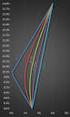 Copyright c 2005 by Karl Sigman Portfolio mean and variance Here we study the performance of a one-period investment X 0 > 0 (dollars) shared among several different assets. Our criterion for measuring
Momentum Traders in the Housing Market: Survey Evidence and a Search Model
 Federal Reserve Bank of Minneapolis Research Department Staff Report 422 March 2009 Momentum Traders in the Housing Market: Survey Evidence and a Search Model Monika Piazzesi Stanford University and National
Lecture notes: single-agent dynamics 1
 Lecture notes: single-agent dynamics 1 Single-agent dynamic optimization models In these lecture notes we consider specification and estimation of dynamic optimization models. Focus on single-agent models.
Stock market booms and real economic activity: Is this time different?
 International Review of Economics and Finance 9 (2000) 387 415 Stock market booms and real economic activity: Is this time different? Mathias Binswanger* Institute for Economics and the Environment, University
Inflation. Chapter 8. 8.1 Money Supply and Demand
 Chapter 8 Inflation This chapter examines the causes and consequences of inflation. Sections 8.1 and 8.2 relate inflation to money supply and demand. Although the presentation differs somewhat from that
Chapter 9. The IS-LM/AD-AS Model: A General Framework for Macroeconomic Analysis. 2008 Pearson Addison-Wesley. All rights reserved
 Chapter 9 The IS-LM/AD-AS Model: A General Framework for Macroeconomic Analysis Chapter Outline The FE Line: Equilibrium in the Labor Market The IS Curve: Equilibrium in the Goods Market The LM Curve:
The cyclical component of US asset returns
 The cyclical component of US asset returns David K. Backus, Bryan R. Routledge, and Stanley E. Zin (December 2008) April 6, 2010 Preliminary (yes, still) Abstract We show that equity returns, the term
11.2 Monetary Policy and the Term Structure of Interest Rates
 518 Chapter 11 INFLATION AND MONETARY POLICY Thus, the monetary policy that is consistent with a permanent drop in inflation is a sudden upward jump in the money supply, followed by low growth. And, in
Practice Set #4 and Solutions.
 FIN-469 Investments Analysis Professor Michel A. Robe Practice Set #4 and Solutions. What to do with this practice set? To help students prepare for the assignment and the exams, practice sets with solutions
Agenda. Business Cycles. What Is a Business Cycle? What Is a Business Cycle? What is a Business Cycle? Business Cycle Facts.
 Agenda What is a Business Cycle? Business Cycles.. 11-1 11-2 Business cycles are the short-run fluctuations in aggregate economic activity around its long-run growth path. Y Time 11-3 11-4 1 Components
Assumptions: No transaction cost, same rate for borrowing/lending, no default/counterparty risk
 Derivatives Why? Allow easier methods to short sell a stock without a broker lending it. Facilitates hedging easily Allows the ability to take long/short position on less available commodities (Rice, Cotton,
Topic 5: Stochastic Growth and Real Business Cycles
 Topic 5: Stochastic Growth and Real Business Cycles Yulei Luo SEF of HKU October 1, 2015 Luo, Y. (SEF of HKU) Macro Theory October 1, 2015 1 / 45 Lag Operators The lag operator (L) is de ned as Similar
Lecture 3: Growth with Overlapping Generations (Acemoglu 2009, Chapter 9, adapted from Zilibotti)
 Lecture 3: Growth with Overlapping Generations (Acemoglu 2009, Chapter 9, adapted from Zilibotti) Kjetil Storesletten September 10, 2013 Kjetil Storesletten () Lecture 3 September 10, 2013 1 / 44 Growth
The Real Business Cycle Model
 The Real Business Cycle Model Ester Faia Goethe University Frankfurt Nov 2015 Ester Faia (Goethe University Frankfurt) RBC Nov 2015 1 / 27 Introduction The RBC model explains the co-movements in the uctuations
Macroeconomic Effects of Financial Shocks Online Appendix
 Macroeconomic Effects of Financial Shocks Online Appendix By Urban Jermann and Vincenzo Quadrini Data sources Financial data is from the Flow of Funds Accounts of the Federal Reserve Board. We report the
Review of Basic Options Concepts and Terminology
 Review of Basic Options Concepts and Terminology March 24, 2005 1 Introduction The purchase of an options contract gives the buyer the right to buy call options contract or sell put options contract some
P r. Notes on the Intrinsic Valuation Models and B-K-M Chapter 18. Roger Craine 9/2005. Overview on Intrinsic Asset Valuation
 Notes on the Intrinsic Valuation Models and B-K-M Chapter 8 Roger Craine 9/5 Overview on Intrinsic Asset Valuation An asset is a promise to a stream of future payoffs. Unlike a commodity that you consume,
Chapter 9. The Valuation of Common Stock. 1.The Expected Return (Copied from Unit02, slide 36)
 Readings Chapters 9 and 10 Chapter 9. The Valuation of Common Stock 1. The investor s expected return 2. Valuation as the Present Value (PV) of dividends and the growth of dividends 3. The investor s required
Momentum traders in the housing market: survey evidence and a search model. Monika Piazzesi and Martin Schneider
 Momentum traders in the housing market: survey evidence and a search model Monika Piazzesi and Martin Schneider This paper studies household beliefs during the recent US housing boom. The first part presents
380.760: Corporate Finance. Financial Decision Making
 380.760: Corporate Finance Lecture 2: Time Value of Money and Net Present Value Gordon Bodnar, 2009 Professor Gordon Bodnar 2009 Financial Decision Making Finance decision making is about evaluating costs
Expected default frequency
 KM Model Expected default frequency Expected default frequency (EDF) is a forward-looking measure of actual probability of default. EDF is firm specific. KM model is based on the structural approach to
Likewise, the payoff of the better-of-two note may be decomposed as follows: Price of gold (US$/oz) 375 400 425 450 475 500 525 550 575 600 Oil price
 Exchange Options Consider the Double Index Bull (DIB) note, which is suited to investors who believe that two indices will rally over a given term. The note typically pays no coupons and has a redemption
12.1 Introduction. 12.2 The MP Curve: Monetary Policy and the Interest Rates 1/24/2013. Monetary Policy and the Phillips Curve
 Chapter 12 Monetary Policy and the Phillips Curve By Charles I. Jones Media Slides Created By Dave Brown Penn State University The short-run model summary: Through the MP curve the nominal interest rate
A Theory of Capital Controls As Dynamic Terms of Trade Manipulation
 A Theory of Capital Controls As Dynamic Terms of Trade Manipulation Arnaud Costinot Guido Lorenzoni Iván Werning Central Bank of Chile, November 2013 Tariffs and capital controls Tariffs: Intratemporal
Testing for Granger causality between stock prices and economic growth
 MPRA Munich Personal RePEc Archive Testing for Granger causality between stock prices and economic growth Pasquale Foresti 2006 Online at http://mpra.ub.uni-muenchen.de/2962/ MPRA Paper No. 2962, posted
1. a. (iv) b. (ii) [6.75/(1.34) = 10.2] c. (i) Writing a call entails unlimited potential losses as the stock price rises.
![1. a. (iv) b. (ii) [6.75/(1.34) = 10.2] c. (i) Writing a call entails unlimited potential losses as the stock price rises.](/thumbs/39/20115486.jpg "1. a. (iv) b. (ii) [6.75/(1.34) = 10.2] c. (i) Writing a call entails unlimited potential losses as the stock price rises.") 1. Solutions to PS 1: 1. a. (iv) b. (ii) [6.75/(1.34) = 10.2] c. (i) Writing a call entails unlimited potential losses as the stock price rises. 7. The bill has a maturity of one-half year, and an annualized
1. Solutions to PS 1: 1. a. (iv) b. (ii) [6.75/(1.34) = 10.2] c. (i) Writing a call entails unlimited potential losses as the stock price rises. 7. The bill has a maturity of one-half year, and an annualized
Volatility, Productivity Correlations and Measures of. International Consumption Risk Sharing.
 Volatility, Productivity Correlations and Measures of International Consumption Risk Sharing. Ergys Islamaj June 2014 Abstract This paper investigates how output volatility and productivity correlations
The Tangent or Efficient Portfolio
 The Tangent or Efficient Portfolio 1 2 Identifying the Tangent Portfolio Sharpe Ratio: Measures the ratio of reward-to-volatility provided by a portfolio Sharpe Ratio Portfolio Excess Return E[ RP ] r
9 Hedging the Risk of an Energy Futures Portfolio UNCORRECTED PROOFS. Carol Alexander 9.1 MAPPING PORTFOLIOS TO CONSTANT MATURITY FUTURES 12 T 1)
 Helyette Geman c0.tex V - 0//0 :00 P.M. Page Hedging the Risk of an Energy Futures Portfolio Carol Alexander This chapter considers a hedging problem for a trader in futures on crude oil, heating oil and
Life Cycle Asset Allocation A Suitable Approach for Defined Contribution Pension Plans
 Life Cycle Asset Allocation A Suitable Approach for Defined Contribution Pension Plans Challenges for defined contribution plans While Eastern Europe is a prominent example of the importance of defined
Asymmetry and the Cost of Capital
 Asymmetry and the Cost of Capital Javier García Sánchez, IAE Business School Lorenzo Preve, IAE Business School Virginia Sarria Allende, IAE Business School Abstract The expected cost of capital is a crucial
Lecture 14 More on Real Business Cycles. Noah Williams
 Lecture 14 More on Real Business Cycles Noah Williams University of Wisconsin - Madison Economics 312 Optimality Conditions Euler equation under uncertainty: u C (C t, 1 N t) = βe t [u C (C t+1, 1 N t+1)
Optimal Consumption with Stochastic Income: Deviations from Certainty Equivalence
 Optimal Consumption with Stochastic Income: Deviations from Certainty Equivalence Zeldes, QJE 1989 Background (Not in Paper) Income Uncertainty dates back to even earlier years, with the seminal work of
On the Efficiency of Competitive Stock Markets Where Traders Have Diverse Information
 Finance 400 A. Penati - G. Pennacchi Notes on On the Efficiency of Competitive Stock Markets Where Traders Have Diverse Information by Sanford Grossman This model shows how the heterogeneous information
One Period Binomial Model
 FIN-40008 FINANCIAL INSTRUMENTS SPRING 2008 One Period Binomial Model These notes consider the one period binomial model to exactly price an option. We will consider three different methods of pricing
Chapter 4 Online Appendix: The Mathematics of Utility Functions
 Chapter 4 Online Appendix: The Mathematics of Utility Functions We saw in the text that utility functions and indifference curves are different ways to represent a consumer s preferences. Calculus can
U = x 1 2. 1 x 1 4. 2 x 1 4. What are the equilibrium relative prices of the three goods? traders has members who are best off?
 Chapter 7 General Equilibrium Exercise 7. Suppose there are 00 traders in a market all of whom behave as price takers. Suppose there are three goods and the traders own initially the following quantities:
welfare costs of business cycles
 welfare costs of business cycles Ayse Imrohoroglu From The New Palgrave Dictionary of Economics, Second Edition, 2008 Edited by Steven N. Durlauf and Lawrence E. Blume Abstract The welfare cost of business
Review of Fundamental Mathematics
 Review of Fundamental Mathematics As explained in the Preface and in Chapter 1 of your textbook, managerial economics applies microeconomic theory to business decision making. The decision-making tools
Solution: The optimal position for an investor with a coefficient of risk aversion A = 5 in the risky asset is y*:
 Problem 1. Consider a risky asset. Suppose the expected rate of return on the risky asset is 15%, the standard deviation of the asset return is 22%, and the risk-free rate is 6%. What is your optimal position
Chapter 13 Composition of the Market Portfolio 1. Capital markets in Flatland exhibit trade in four securities, the stocks X, Y and Z,
 Chapter 13 Composition of the arket Portfolio 1. Capital markets in Flatland exhibit trade in four securities, the stocks X, Y and Z, and a riskless government security. Evaluated at current prices in
Graduate Macro Theory II: Notes on Investment
 Graduate Macro Theory II: Notes on Investment Eric Sims University of Notre Dame Spring 2011 1 Introduction These notes introduce and discuss modern theories of firm investment. While much of this is done
Chapter 5. Conditional CAPM. 5.1 Conditional CAPM: Theory. 5.1.1 Risk According to the CAPM. The CAPM is not a perfect model of expected returns.
 Chapter 5 Conditional CAPM 5.1 Conditional CAPM: Theory 5.1.1 Risk According to the CAPM The CAPM is not a perfect model of expected returns. In the 40+ years of its history, many systematic deviations
Moreover, under the risk neutral measure, it must be the case that (5) r t = µ t.
 LECTURE 7: BLACK SCHOLES THEORY 1. Introduction: The Black Scholes Model In 1973 Fisher Black and Myron Scholes ushered in the modern era of derivative securities with a seminal paper 1 on the pricing
Margin Requirements and Equilibrium Asset Prices
 Margin Requirements and Equilibrium Asset Prices Daniele Coen-Pirani Graduate School of Industrial Administration, Carnegie Mellon University, Pittsburgh, PA 15213-3890, USA Abstract This paper studies
Comments on \Do We Really Know that Oil Caused the Great Stag ation? A Monetary Alternative", by Robert Barsky and Lutz Kilian
 Comments on \Do We Really Know that Oil Caused the Great Stag ation? A Monetary Alternative", by Robert Barsky and Lutz Kilian Olivier Blanchard July 2001 Revisionist history is always fun. But it is not
INDIRECT INFERENCE (prepared for: The New Palgrave Dictionary of Economics, Second Edition)
 INDIRECT INFERENCE (prepared for: The New Palgrave Dictionary of Economics, Second Edition) Abstract Indirect inference is a simulation-based method for estimating the parameters of economic models. Its
t = 1 2 3 1. Calculate the implied interest rates and graph the term structure of interest rates. t = 1 2 3 X t = 100 100 100 t = 1 2 3
 MØA 155 PROBLEM SET: Summarizing Exercise 1. Present Value [3] You are given the following prices P t today for receiving risk free payments t periods from now. t = 1 2 3 P t = 0.95 0.9 0.85 1. Calculate
Money and Public Finance
 Money and Public Finance By Mr. Letlet August 1 In this anxious market environment, people lose their rationality with some even spreading false information to create trading opportunities. The tales about
Schooling, Political Participation, and the Economy. (Online Supplementary Appendix: Not for Publication)
 Schooling, Political Participation, and the Economy Online Supplementary Appendix: Not for Publication) Filipe R. Campante Davin Chor July 200 Abstract In this online appendix, we present the proofs for
A systemic approach to home loans: Continuous workouts vs. fixed rate contracts (Shiller et al., 2014)
 A systemic approach to home loans: Continuous workouts vs. fixed rate contracts (Shiller et al., 2014) Discussion Cristian Badarinza EFA Meeting, Lugano, August 2014 Summary 1. Unexpected house price declines
ON THE RISK ADJUSTED DISCOUNT RATE FOR DETERMINING LIFE OFFICE APPRAISAL VALUES BY M. SHERRIS B.A., M.B.A., F.I.A., F.I.A.A. 1.
 ON THE RISK ADJUSTED DISCOUNT RATE FOR DETERMINING LIFE OFFICE APPRAISAL VALUES BY M. SHERRIS B.A., M.B.A., F.I.A., F.I.A.A. 1. INTRODUCTION 1.1 A number of papers have been written in recent years that
MONETARY AND FISCAL POLICY IN THE VERY SHORT RUN
 C H A P T E R12 MONETARY AND FISCAL POLICY IN THE VERY SHORT RUN LEARNING OBJECTIVES After reading and studying this chapter, you should be able to: Understand that both fiscal and monetary policy can
Discussion of Capital Injection, Monetary Policy, and Financial Accelerators
 Discussion of Capital Injection, Monetary Policy, and Financial Accelerators Karl Walentin Sveriges Riksbank 1. Background This paper is part of the large literature that takes as its starting point the