
Carcharhinus leucas (Valenciennes,1839) CARCH Carch 6
|
|
|
- Noreen Nicholson
- 9 years ago
- Views:
Transcription
1 click for previous page Geographical Distribution : Western Atlantic: North Carolina and exceptionally New York to Florida, Cuba, Gulf of Mexico; southern Brazil.? Eastern Atlantic: Senegal and Guinea-Bissau. Habitat and Biology : A little-known grey shark of the tropical Atlantic, generally present close inshore. Thought to move northward along the east coast of the USA in summer. Forms large schools. Viviparous, with a yolk-sac placenta; number of young 1 to 6 per litter. Probably a predator on small bony fishes and cephalopods. Size: Maximum about 189 cm and possibly to 200 cm, males maturing at about 140 cm and reaching at least 158 cm, females maturing at about 150 cm and reaching at least 165 cm; size at birth 51 to 64 cm. Interest to Fisheries: In the western Atlantic caught incidentally throughout its range but relatively unimportant; caught with floating longlines inshore and presumably eaten fresh and dried salted. Literature: Bigelow & Schroeder (1948); Baughman & Springer (1950); Clark & von Schmidt (1965); Compagno & Vergara (1978); Cadenat & Blache (1981). Remarks : Old records of this species from tropical West Africa have not been confirmed, and it is possible that these were based on some other species, particularly C. brevipinna. Carcharhinus leucas (Valenciennes,1839) CARCH Carch 6 Carcharias (Prionodon) leucas Valenciennes, in Müller & Henle, 1839, Syst.Beschr.Plagiost., (2):42. Syntypes: Of four syntypes in the Museum National d'histoire Naturelle, Paris, two stuffed specimens are still in existence: MNHN A9650,1600 mm adult male, and MNHN A9652,1869 mm female. Type Locality: Antilles. Synonymy : Carcharias (Prionodon) zambezensis Peters, 1852; Squalus platyodon Poey, 1861; Squalus obtusus Poey, 1861; Eulamia nicaraquensis Gill & Bransford, 1877; Carcharias azureus Gilbert & Starks, 1904; Carcharias spenceri Ogilby, 1911; Galeolamna (Bogimba) bogimba Whitley, 1943; Galeolamna greyi mckaili Whitley, 1945; Carcharhinus vanrooyeni Smith, Other Scientific Names Recently in Use: Carcharhinus zambezensis (Peters, 1852); Carcharhinus nicaraquensis (Gill & Bransford, 1877); Carcharhinus azureus Gilbert & Starks, 1904). FAO Names: En - Bull shark; Fr - Requin bouledogue; Sp - Tiburón sarda. Field Marks: A large, stout grey, shark with very short, bluntly rounded snout, small eyes, broadly triangular serrated teeth in upper jaw, heavy but narrower cusped teeth with arched roots in lower jaw, upper teeth without cusplets, usually 13/12 rows of anteroposterior teeth, no interdorsal ridge, large angular pectoral fins, a large triangular first dorsal with a short rear tip and a moderately large second dorsal with a short rear tip, fins with dusky tips but not strikingly marked.

2 Diagnostic Features: A stocky to very heavybodied species (stoutest as adults; up to about 3.4 m). Snout very short and bluntly and broadly rounded; internarial width 0.7 to 1 times in preoral length; eyes circular and small, their length 0.8 to 1.8% of total length; anterior nasal flaps expanded or broad-based triangular lobes; upper labial furrows short and inconspicuous; hyomandibular line of pores just behind mouth corners not conspicuously enlarged; gill slits moderately long, the third 3.1 to 4.1% of total length, but less than a third of first dorsal base; usually 13/12 rows of anteroposterior teeth in each jaw half, but varying from 12 to 14/12 to 13; upper teeth with very broad, triangular, strongly serrated, erect to slightly oblique cusps, that merge smoothly with the coarsely serrated crown feet, but with no cusplets; lower teeth with erect to semioblique, broad serrated cusps and arched roots. No underside of head upper and lower tooth interdorsal ridge. First dorsal fin large and broadly triangular to somewhat falcate, with a pointed or sharply rounded apex and posterior margin curving ventrally or posteroventrally from fin apex; origin of first dorsal fin usually over or just behind pectoral insertions, but exceptionally nearer their free rear tips; inner margin of first dorsal short, less than a third of dorsal base or slightly less; second dorsal fin large and high, its height 3.2 to 4.5% of total length, its inner margin short and 0.7 to 1.1 times its height; origin of second dorsal anterior to anal origin; pectoral fins large and broad, triangular to semifalcate, with narrow, pointed apices, length of anterior margins about 18 to 21% of total length; 198 to 227 total vertebral centra, 101 to 123 precaudal centra. Fin tips dusky, especially in young, but not strikingly marked; an inconspicuous white band on flank. Geographical Distribution : Widespread along the continental coasts of all tropical and subtropical seas and travelling far up warm rivers and into freshwater lakes. Western Atlantic: Massachusetts to southern Brazil, including Gulf of Mexico, Caribbean Sea, and Bahamas; found in Mississippi and Atchafalaya Rivers (southern USA), Lake Nicaragua and San Juan River (Nicaragua), Lake Ysabel (Guatemala), Patula River (Honduras), Panama Canal (Panama), Amazon River (to Peru). Eastern Atlantic: Morocco, Senegal to Angola; found in Gambia River (Gambia) and Ogooue River (Gabon). Western Indian Ocean: South Africa (including Zambezi and Limpopo Rivers), Zimbabwe (Ruenwa River), Kenya, Iraq (Tigris River and Shatt-el Arab), India, including Bombay, Cochin and the Hooghly River, where it occurs along with Glyphis gangeticus; Bass, D'Aubrey & Kistnasamy (1973) give a detailed listing of freshwater localities of the species in southern and southeastern Africa. Western Pacific: Thailand (Gulf of Thailand), Viet Nam, Borneo, New Guinea (including Lake Jamoer), Australia (western and northern Australia, Queensland, New South Wales; including Lake Macquarie and Swan, Brisbane, Herbert, and E. Alligator Rivers), New Caledonia, Fiji, Rangiroa Atoll (Tuamotu Archipelago), The Philippines. Eastern Pacific: Southern Baja California and Gulf of California to Ecuador and possibly Peru. Habitat and Biology : A coastal, estuarine, riverine and lacustrine shark usually found close inshore in marine habitats, in water less than 30 m deep and occasionally less than a metre deep, but ranging into deeper water close to shore down to at least 152 m depth. In marine habitats it commonly occurs in hyposaline and hypersaline lagoons and bays, river mouths, passages between islands, close to wharves and right off the surf line. It is often found in muddy areas with few other shark competitors. It is the only wide-ranging shark that penetrates far into fresh water and apparently is able to exist there at length in tropical lakes and rivers, to 3700 km from the sea in the Peruvian Amazon, although it may not be able to maintain its entire life cycle in fresh water and does not have landlocked populations there. A population of this shark in Lake Nicaragua was once thought to be landlocked (and a separate species), but members of this population have access to the sea and readily utilize it, although these sharks can and occasionally do breed in the lake (but to a minor extent compared to their use of brackish coastal waters, in estuaries and river mouths). Apparently even newborn bull sharks are euryhaline, and juveniles commonly migrate into fresh water. In South Africa the bull shark is found in the variably hypersaline St. Lucia lake system and can tolerate salinities of up to 53, but tends to move out of the lake when salinities exceed 50 ; unlike bull sharks in freshwater lakes, sharks caught there are in poor condition despite adequate food and ability to feed, which suggests that hypersaline water is suboptimal for them.

3 This shark is deceptively heavy and slow-swimming when cruising about, usually near the bottom but rarely near the surface except when lured there by offal. When attacking prey it is surprisingly agile and quick in its movements, and readily runs down small sharks and bony fishes. Young individuals are often seen spinning out of the water, possibly to dislodge parasites or for feeding, but larger ones are apparently not prone to jump out of the water. In the western Atlantic, there is a northward movement of individuals along the US Atlantic coast during the summer from its tropical stronghold, and a southward retreat when the water cools. Off Florida, young and juveniles are found inshore in coastal lagoons, but subadults and adults more to deeper coastal waters; adult females return to lagoons to drop their young. Viviparous, with a yolk-sac placenta; number of young per litter 1 to 13. Estuaries and river mouths are normally used for pupping grounds; some females may give birth to young in freshwater lakes such as Lake Nicaragua, but this is probably exceptional. In the western North Atlantic off Florida and the Gulf of Mexico, and off South Africa, young are born in late spring or early summer; off Nicaragua females may have young throughout the year, with a peak in spring and early summer. Off South Africa, sexual maturity is attained at an age of about 6 years and 250 cm, with a maximum age of at least 14 years in the wild. In Lake Nicaragua, females may attain a greater age than males as a result of the greater size they attain, 16 years versus 12 years for males. In the western Atlantic mating occurs in the late spring and summer (June and July). An estimated gestation period is 10 to 11 months. Females are often with courtship scars, but males rarely have fighting scars. The bull shark is hardy and lives readily in captivity, and has been kept in aquaria for over 15 years. This shark is a versatile and opportunistic feeder, with a very broad food spectrum; its diet was thought by Bigelow & Schroeder (1948) to be "perhaps no less varied than that of the tiger shark". Favoured food includes bony fishes and elasmobranchs, with adults taking more elasmobranch prey than young, probably because of their size and habitat. In Lake Nicaragua, the young eat a more strictly fish diet than the adults, which also take tougher prey such as turtles and mammals. In South Africa, bull sharks from lakes and rivers are almost all immatures and have relatively few prey species available to them, but the more wide-ranging adults can utilize a broader prey spectrum. Bony fishes that are eaten include garfish (Lepisosteus), tarpon, ten-pounders, freshwater eels, snake eels, shad, menhaden and sardines, anchovies, lizardfish, milkfish, gonorhynchids, characins, sea catfish, needlefish, mullet, mackerel and spanish mackerel, tuna, sea bass, perch and striped bass, cichlids, snappers, bluefish, jacks, snook, grunts, snappers, porgies, croakers, spadefish, eleotrid gobies, parrotfish, soles and flounders, gurnards, flatheads, toadfish, and boxfish. This shark is an important predator on other elasmobranchs, particularly on young sharks in inshore nursery grounds and stingrays, and takes bramble sharks, spiny dogfish (Squalus), grey sharks (Carcharhinus, mostly other species, but occasionally cannibalizing young bull sharks), sharpnosed sharks (Rhizoprionodon), hammerheads, guitarfish, sawfish, skates, stingrays; butterfly rays, eagle rays, and devil rays (Mobula). Sea turtles, birds, dolphins, whale offal, and terrestrial mammals in whole and part such as antelope, cattle, people, tree sloths, dogs and rats have also been recorded. Invertebrate prey includes marine crabs and freshwater land crabs, shrimp, hermit crabs, mantis shrimp, squid, sea snails, and sea urchins. Slaughterhouse offal and fish and other animals scavaged from fishing gear is readily taken; however, this shark, is far less prone to swallow inedible garbage than the tigre shark, although such things are occasionally eaten. In estuarine, riverine and lacustrine situations the bull shark may habitually have to rely on other senses than sight to find its prey because of local turbidity; the eyes of this shark are very small and may be of lesser importance than in some other members of its genus with large eyes. Pregnant females about to give birth have been thought to be inhibited in their feeding, but this may not be the case. This may be the most dangerous species of tropical shark, and is certainly one of the three most dangerous sharks by numbers of attacks recorded on people (the other two being the great white and tiger sharks). As it is less distinctive than either of the other species, and as its genus, Carcharhinus, was until recently a taxonomic disaster, its contribution to the roster of shark attacks may be underemphasized in comparison to the great white and tiger sharks. It would not surprise the writer if this species turned out to be the most dangerous living shark, because of its large size, massive jaws and proportionately very large teeth, abundance in the tropics (off Natal, South Africa, it is caught four times as often as either the great white or tiger sharks in anti-shark nets that protect the bathing beaches), indiscriminate appetite and propensity to take largish prey, and close proximity to human activities in both fresh and salt water. It is well known for its attacks on people (and dogs) in Lake Nicaragua, although the extent of its depredations there are apparently exaggerated. Size : Maximum about 340 cm, males maturing at 157 to 226 cm and reaching at least 299 cm; females maturing between 180 and 230 cm and reaching at least 324 cm; size at birth between 56 and 81 cm. Interest to Fisheries : An important fisheries species, because of its abundance and ready availability to inshore artisanal and commercial fisheries (including those in some freshwater lakes such as Lake Nicaragua). It is caught mainly with longlines and hook-and-line gear and utilized fresh, fresh-frozen or smoked for human consumption; its hide is used for leather, its fins for shark-fin soup, and its liver for oil, which is extracted for vitamins (liver oil of this species is high in vitamin content); carcasses are also rendered for fishmeal.

4 This species is a popular game fish in certain areas, particularly the southeastern Atlantic and Gulf of Mexico coasts of the USA, and off South Africa. It is caught with rod and reel from shore near river mouths, or from breakwaters and piers, and huge individuals, over 200 kg weight, have been subdued after much trevail and scrambling. It is, however, not recognized as a big-game fish by the International Game Fishing Association. Literature : Bigelow & Schroeder (1948); Cadenat (1957); Springer (1960, 1963); Garrick & Schultz (1963); D'Aubrey (1964, 1971); Boeseman (1964); Clark & von Schmidt (1965); Thorson, Watson & Cowan (1966); Thorson (1971, 1976); Bass, D'Aubrey & Kistnasamy (1973); Tuma (1976); Jensen (1976); Compagno & Vergara (1978); Johnson (1978); Compagno (1979, 1981a); Cadenat & Blache (1981); Van der Elst (1981); Garrick (1982); Thorson & Lacy (1982); Snelson, Mulligan & Williams (1984). Remarks : This species has been often confused with two other less wide-ranging sympatric species, the pigeye or Java shark, Carcharhinus amboinensis, and the rare, elusive Ganges shark, Glyphis gangeticus. All of these species combine short, rounded preoral snouts with triangular, serrated upper teeth and no interdorsal ridges. From the former, the bull shark differs in its higher, more erect second dorsal fin (ratio of first: second dorsal heights 3:1 or less, but over 3:1 in amboinensis), with a more concave posterior margin, broader angle of the notched posterior anal margin (nearly a right angle, but more acute in amboinensis), higher precaudal vertebral counts (101 to 123, versus 89 to 95), narrower lower tooth cusps, and slightly greater lower anteroposterior tooth counts (usually 12 to 13, versus usually 11). Most Indo-Pacific. records of the Ganges shark in which specimens or adequate descriptive information is available have proved to be based on the bull shark (Boeseman, 1964; Bass, D'Aubrey & Kistnasamy, 1973; Garrick, 1982). Some writers have gone so far as to consider the Ganges shark a synonym of this species (Lineaweaver & Backus, 1970; Ellis, 1975, 1983), although Garrick (1967, 1982) and Garrick & Schultz (1963) have recognized the species. In 1982 the writer was able to independently confirm the validity of the Ganges shark and directly compare it to C. leucas, which occurs in Indian waters. The writer saw specimens of leucas at Cochin, in Kerala, and examined a specimen of this species (Zoological Survey of India, ZSI 2234, 445 mm fetal male) from Bombay, which Day (1878, pl. 187, fig. 1) had described and illustrated as "Carcharias gangeticus". More interesting is a specimen of C. leucas (ZSI 10250, 650 mm term fetus or newborn male) collected in the Hooghly River (part of the Ganges system, and the type locality of Glyphis gangeticus) in West Bengal on 4 April 1867 by Dr J. Anderson and misidentified as 'Squalus gangeticus'. This specimen was collected on the same day and possibly the same place in the Hooghly as a true Ganges shark (see the account of Glyphis gangeticus below), which was misidentified as 'Carcharhinus temmincki'. By comparison of these specimens and the original account of gangeticus (Müller & Henle, 1839) with various accounts of the bull shark this species can be distinguished from the Ganges shark by its shorter preorbital snout (about 6% of total length in young leucas but decreasing in adults, versus 7.2% in young gangeticus), lower second dorsal fin (up to 2/4 of first dorsal height, versus 1/2 or more in gangeticus), a more abruptly vertical posterior margin on the first dorsal fin (sloping more gradually posteroventrally in the Ganges shark), a different type of upper precaudal pit (transverse and crescentic, versus longitudinal and fossate in the Ganges shark), a larger eye (about 1.8% of total length in young leucas, but 1% in young gangeticus), a different eye position (lateral in the bull shark, dorsolateral and tilted upward in the Ganges shark), slightly different gill arrangement (increasing in size from first to third slits and then decreasing to the fifth in the bull shark, but decreasing from first to fifth in the Ganges shark), less numerous anteroposterior teeth, (usually 13 upper rows versus at least 15 rows in the larger shark) much lower and more obtusely triangular upper teeth, and strikingly different lower anterior teeth (low and with broad, thick, straight cusps, no lateral cusplets, and coarse serrations in the bull shark versus high and with long, slender, hooked cusps, low lateral cusplets, and smooth edges in the Ganges shark) that do not protrude when the mouth is closed. The presence of two species of 'Ganges' sharks in fresh water in the Hooghly, and by implication the Ganges, suggests that the horrific reputation accorded the true Ganges shark may be at least a collective effect of it and the bull shark, or mainly due to the more powerfully armed, omnivorous bull shark. Carcharhinus limbatus (Valenciennes, 1839) CARCH Carch 7 Carcharias (Prionodon) limbatus Valenciennes, in Muller & Henle, 1839, Syst.Beschr.Plagiost., (2):49, pl. 19 (teeth only). Holotype: Type series (2 specimens) in Museum National d'histoire Naturelle, both lost? Type Locality: Martinique. Synonymy : Carcharias microps Lowe, 1840; Carcharias (Prionodon) pleurotaenia Bleeker, 1852; Carcharias (Prionodon) muelleri Steindachner, 1867 (not Carcharias Physodon muelleri Valenciennes, in Muller & Henle, 1839 = Scoliodon laticaudus);?carcharias maculipinna Günther, 1868 not Isogomphodon maculipinnis Poey, 1865 = Carcharhinus brevipinna); Carcharias ehrenbergi Klunzinger, 1871; Carcharias aethlorus Jordan & Gilbert, 1882; Gymnorhinus or Gymnorrhinus abbreviatus Hemprich & Ehrenberg, 1899; Carcharias phorcys Jordan & Gilbert, 1903; Carcharhinus natator Meek & Hildebrand, 1923; Galeolamna pleurotaenia tilsoni Whitley, FAO Names: En - Blacktip shark; Fr - Requin bordé; Sp - Tiburón macuira.

5 Field Marks : A large fairly stout grey shark with a long pointed snout, small eyes, narrow, mostly erect- and narrow-cusped serrated upper anterolateral teeth without cusplets, long gill slits, lower teeth with narrow, usually serrated cusps, usually 15/14 to 15 rows of anterolateral teeth, no interdorsal ridge, moderately large pectoral fins, a large first dorsal with a short rear tip and a moderately large second dorsal with a short rear tip, and usually black tips on most fins in juveniles to adults. Diagnostic Features: A fairly stocky species (up to about 2.6 m). Snout moderately long and moderately pointed; internarial width 1.3 to 1.7 times in preoral length; eyes circular and moderately large, their length upper and lower tooth 1.2 to 2.2% of total length; anterior nasal flaps low, triangular, and not elongated; upper labial furrows short underside of head and inconspicuous; hyomandibular line of pores just behind mouth corners not conspicuously enlarged; gill slits long, the third 3.8 to 4.9% of total length but less than half of first dorsal base; usually 15/14 to 15 rows of anteroposterior teeth in each jaw half but varying from 14 to 16/13 to 16; upper teeth with narrow, strongly serrated, erect to slightly oblique high cusps, and crown feet with slightly coarser serrations but no cusplets; lower teeth with erect, narrow, serrated high cusps and transverse roots. No interdorsal ridge. First dorsal fin large and falcate, with a pointed or narrowly rounded apex and posterior margin curving ventrally from fin apex; origin of first dorsal fin usually over or slightly posterior to pectoral insertion, but exceptionally near the pectoral free rear tip; inner margin of first dorsal short, about a third of dorsal base; second dorsal fin large and high, its height 2.5 to 3.6% of total length, its inner margin short and 1.1 to 1.6 times its height; origin of second dorsal over or slightly anterior to anal origin; pectoral fins moderately large, falcate, with narrowly rounded or pointed apices, length of anterior margins about 18 to 20% of total length in individuals above 1 m long; 174 to 203 total vertebral centra, 88 to 102 precaudal centra. Colour grey or grey-brown above, white below; black tips usually present on pectorals, second dorsal, and ventral caudal lobe, and sometimes on pelvic and anal fins (anal usually plain), and black edges usually present on first dorsal apex and dorsal caudal lobe; adults in some areas may have plain or virtually plain fins. A conspicuous white band on flanks. Geographical Distribution : Widespread in all tropical and subtropical continental waters. Western Atlantic: Massachusetts to southern Brazil, including Gulf of Mexico and Caribbean. Eastern Atlantic: Madeira, Mediterranean, Canary Islands, Senegal to Zaire. Indo-West Pacific: South Africa, Madagascar, and Red Sea to India, Sri Lanka, Pakistan, Thailand, China, including Taiwan Island, The Philippines, Java, Borneo, Australia (Queensland, Western Australia, Northern Territory), New Guinea, New Caledonia. Central Pacific: Tahiti, Marquesas, Hawaiian Islands. Eastern Pacific: Southern Baja California (exceptionally to San Diego, California) to Peru, Revillagigedo and Galapagos Islands.

6 Habitat and Biology : A common tropical and warm-temperate, inshore and offshore pelagic shark, found on or adjacent to the continental and insular shelves but not truly oceanic. Commonly occurs close inshore, off river mouths and in estuaries, in shallow muddy bays, in the more saline parts of mangrove swamps, in island lagoons and along dropoffs on coral reefs as well as far offshore; rarely found deeper than 30 m. It can tolerate reduced salinities in estuaries and off river mouths, but does not penetrate far into fresh water. Off Natal, South Africa, there is evidence of segregation of the local population. Sharks resident there consist mostly of adult males and non-pregnant females, with the addition of few young and adolescent individuals and periodic influxes of pregnant females during the spring; pregnant females mostly do not pup there but apparently migrate elsewhere, possibly to southern Mozambique where nursery grounds may occur. Off Florida these sharks are seasonally migratory and are absent during winter months. This is a very active, fast-swimming shark that often occurs in large schools at the surface. It leaps out of the water, and like the related spinner shark (C. brevipinna), may rotate up to three times around its axis before dropping back into the sea. It is a less common spinner and leaper than its relative, however. This leaping spinning behaviour is thought to be used by the sharks while feeding on small schooling fishes; the sharks launch themselves vertically through the schools, spinning and snapping in all directions, and then breach the surface after their feeding run. Viviparous, with a yolk-sac placenta; number of young 1 to 10 per litter, commonly 4 to 7. The gestation period is 10 to 12 months, with young being born in late spring or early summer off South Africa, Madagascar, India and in the North Atlantic (April to June) and mating and early growth of embryos occurring soon after this. Pregnant females move inshore to drop their young in nursery and pupping grounds, Maturity in South African waters occurs at an age of four years and a length of about 180 cm, with a maximum age of at least 12 years. Females are thought to produce young only in alternate years. Primarily a fish-eater, with some cephalopods and crustaceans taken. Food includes a wide variety of bony fishes, including sardines, menhaden, herring and other clupeids, anchovies, ten-pounders (Elopidae), sea catfish, coronetfish, tongue-soles, threadfins, mullet, spanish mackeral, jacks, groupers, snook, porgies, mojarras, emperors (Lethrinidae), grunts, slipjaws, butterfish, croakers, soles, tilapia, triggerfish, boxfish and porcupine fish, as well as small sharks such as smooth-hounds (Mustelus), sharpnose sharks (Rhizoprionodon), the young of larger sharks (including dusky sharks), guitarfish, skates, butterfly rays, stingrays, eagle rays, squid, cuttlefish, octopi, crabs and lobsters. The high activity of this shark (aided perhaps by its relatively long gill slits) and its social behaviour makes it subject to feeding frenzies when a highly concentrated food source, like the fish bycatch of a shrimp trawler being dumped overboard, is competed for by. numbers of these sharks. Very few attacks on people have been attributed to this species, and it is likely that without a food stimulus or other special circumstances (like feeding stimuli provided by people that dangle their limbs in the water) that this species is of little hazard to people. Small individuals of this shark have approached divers, apparently out of 'curiosity', but circled them at a distance without closing, and appeared far more timid than Galapagos sharks (C. galapagensis) or silvertips (C. albimarginatus), which dominated them in contests for food. However, the blacktip commonly appears around spearfishing divers and has harassed them; and can get very aggressive and actively belligerent when contending a speared catch with a diver. Hence it should be treated with respect in baited circumstances, as with many other large sharks. Its speed may make the blacktip a difficult opponent when it becomes aggressive, particularly when several sharks are about and they become hyperstimulated. Size : Maximum 255 cm, males maturing at about 135 to 180 cm and reaching 226 to possibly 255 cm, females maturing at about 120 to 190 cm and reaching 255 cm; size at birth 38 to 72 cm. Interest to Fisheries : A common fisheries species, taken with floating Ionglines, hook-and-line, fixed bottom nets, and bottom trawls (especially shrimp trawls). Utilized fresh, fresh-frozen, or dried salted for human consumption; hides for leather; liver oil for vitamins (oil high in vitamin content); and carcasses for fishmeal. Commonly taken by anglers trolling bait or stillfishing offshore in Florida and South African tropical waters. It may give an active, fast, spirited fight and even leap out of the water when hooked, like a low-powered mako, but sometimes is more dogged and loglike in its struggle. It is not recognized as a game fish by the International Game Fish Association. Literature : Fowler (1941); Bigelow & Schroeder (1948); Setna & Sarangdhar (1949a); Cadenat (1957); Springer (1960, 1963); Garrick & Schultz (1963); Limbaugh (1963); Randall (1963); Clark & von Schmidt (1965); Garrick (1967, 1982); Bass, D'Aubrey & Kistnasamy (1973); Johnson (1978); Van der Elst (1981); Cadenat & Blache (1981).

7 Carcharhinus longimanus (Poey, 1861) CARCH Carch 8 Squalus longimanus Poey, 1861, Memorias, 2:338, pl. 19, figs Placed on the Official List of Specific Names in Zoology by the International Commission on Zoological Nomenclature (Opinion 723.4e, 1965, Name no. 2059). Holotype: Male of 1640 mm, extant? Type Locality: Cuba. Synonymy : Squalus (Carcharias) maou Lesson, 1830; Carcharias (Prionodon) obtusus Garman, 1881 (not Squalus or Prionodon obtusus Poey, 1861 = Carcharhinus leucas); Carcharias insularum Snyder, 1904; Pterolamiops magnipinnis Smith, 1958; Pterolamiops budkeri Fourmanoir, 1961). Other Scientific Names Recently in Use : Carcharhinus maou (Lesson, 1830); Pterolamiops longimanus (Poey, 1861). FAO Names : En - Oceanic whitetip shark; Fr - Requin océanique; Sp - Tiburón oceánico. Field Marks : An unmistakable requiem shark, with stocky build, short blunt snout, and long, broad, paddleshaped pectoral fins and a high first dorsal fin, plus white tips and sometimes black markings on fins. Diagnostic Features: A large, stocky species (up to about 3 m or more). Snout short and broadly rounded; internarial width 1 to 1.1 times in preoral length; eyes circular and small, their length 0.9 to 2.5% of total length; anterior nasal flaps low and broadly angular, not expanded; upper labial furrows short and inconspicuous; hyomandibular line of pores just behind mouth corners not conspicuously enlarged; gill slits moderately long, third 3.1 to 4.1% of total length and less than a third of first upper and lower tooth dorsal base; usually 14/14 rows of anteroposterior teeth in each jaw half but varying from 13 to 14/13 to 15; upper underside of head teeth with very broad, triangular, strongly serrated, erect to slightly oblique cusps that merge into crown feet with slightly coarser serrations but no cusplets; lower teeth with erect to slightly oblique, stout serrated cusps and transverse or moderately arched roots. A low interdorsal ridge usually present. First dorsal fin very large and distally expanded, not falcate, with a broadly rounded apex and posterior margin curving anteroventrally and posteroventrally from fin apex; origin of first dorsal fin just anterior to the pectoral free rear tips; inner margin of first dorsal moderately long, half dorsal base or somewhat less; second dorsal fin large and high, its height 2.7 to 3.9% of total length, its inner margin short and 1 to 1.1 times its height; origin of second dorsal over or slightly anterior to anal origin; pectoral fins very large, elongated, nearly straight and distally expanded, with broadly rounded apices, length of anterior margins about 19 to 29% of total length; 228 to 244 total vertebral centra, 123 to 131 precaudal centra. Colour grey-bronze above, white below; white mottling usually present on fins, particularly pectorals, first dorsal, pelvics, and caudal tips; but young additionally with black blotches or tips on most fins, especially the pelvic, second dorsal, anal, and ventral caudal lobe, as well as black saddles at second dorsal insertion, upper caudal origin, and sometimes between the dorsal fins, that fade in adults; an inconspicuous white band on flank.

8 Geographical Distribution : Primarily oceanic in tropical and warm-temperate waters. Western Atlantic: Maine to Argentina, including Caribbean and Gulf of Mexico. Central Atlantic. Eastern Atlantic: Madeira, Portugal south to the Gulf of Guinea, possibly Mediterranean Sea. Western Indian Ocean: South Africa, Madagascar, Mozambique, Mauritius and Seychelles, Red Sea, India. Western Pacific: China (including Taiwan Island), the Philippines, New Caledonia, Australia (southern Australian coast). Central Pacific: Hawaiian Islands south to Samoa Islands, Tahiti and Tuamotu Archipelago and west to Galapagos Islands. Eastern Pacific: Southern California to Peru, including Gulf of California and Clipperton Island. Habitat and Biology : A common, oceanic-epipelagic, but occasionally coastal, tropical and warmtemperate shark, usually found far offshore in the open sea. It sometimes occurs in water as shallow as 37 m inshore, particularly off oceanic islands or in continental areas where the shelf is very narrow, but is generally found in water with the bottom below 184 m, from the surface to at least 152 m deep. Temperatures of waters in which it regularly occurs are 18 to 28 C and normally prefers water above 20 C, although one was caught in water of 15 C; it tends to withdraw from waters that are cooling below this, as in the Gulf of Mexico in winter. Population dynamics and structure are little-known. Apparently size and sexual segregation occurs in this shark as in many other species. Longline catches in the Central Pacific show it definitely increases in abundance as a function of increasing distance from land, and, unlike the silky shark (Carcharhinus falciformis) but as in the blue shark (Prionace glauca), it does not congregate around land masses. The oceanic whitetip is most abundant in the tropics from 20 N to 20 S, but with appropriate movements of warm-water masses can occur far beyond its normal range. At the time of writing (November, 1983), a warm-water incursion along the California coast in the USA has, among other species, brought the oceanic whitetip far north, to off of Catalina Island in southern California and possibly to northern California (B. Lea, pers. comm.). This is one of the three most abundant oceanic sharks (the other two being the silky and blue sharks), and one of the more abundant of large marine organisms. It apparently does not form polarized schools, though it may aggregate in numbers around a food source. This shark is slow-moving but quite active and apparently equally so at daytime or night. It often cruises slowly at or near the surface with its huge pectoral fins conspicuously outspread, but can suddenly dash far a short distance when greatly disturbed. It is much more leisured in its movements than the silky shark (which is often found along with it), but compensates for it by being far more aggressive, especially when competing for food with silky sharks. Similar-sized whitetips generally dominate silky sharks when the two are closely contesting the same piece of food, but if the food drifts much beyond the reach of the whitetip the silky shark generally grabs it and flees because of its greater speed and agility. The oceanic whitetip is cautious in investigating hooked baits but very bold and incredibly persistant in attending potential sources of food. Viviparous, with a yolk-sac placenta; litter sizes 1 to 15, with larger females having larger litters. This shark apparently mates and gives birth in the early summer in the western North Atlantic and southwestern Indian Ocean, and has a gestation period of about a year. In the central Pacific, females with small embryos have been found throughout the years, suggesting a less tight seasonality of birth (and presumably mating) than the western Atlantic. Also, non-breeding adult females have been found to outnumber gravid females in the equatorial central Pacific. Feeds primarily on oceanic bony fishes and cephalopods, including lancetfish, oarfish, threadfins, barracuda, jacks, dolphinfish, tuna, skipjack and other scombrids, marlin, squid and occasionally stingrays (probably Dasyatis violacea, the unique pelagic stingray), sea birds, turtles, marine gastropods, crustaceans, carrion from marine mammals, and garbage. It was seen feeding on a tight school of threadfins like a person eating an apple, by slowly taking bites out of the school. Whitetips have been observed feeding in a remarkable way on dense schools of small tuna that were in turn frenziedly feeding on sardines at the surface. Quite a number of whitetip cruised erratically at the surface in the middle of the tuna with mouths wide open; they did not attempt to snap or chase any of the tunas during the course of a half hour's observation. As several of the whitetips captured had these tuna in their stomachs, it was suggested that the sharks merely wait for the tuna to dash into their open mouths before biting them! The oceanic whitetip is a pest to longline fisheries for tuna and other pelagic fishes because it persistantly accompanies the boats and damages or totally devours the catches. When warm-water whale fisheries were operated, such as the sperm-whale fishery out of Durban, South Africa, this shark was often responsible for most of the damage to floating carcasses. They have powerful jaws and large teeth, albeit less so than the bull and pigeye sharks (C. leucas and C. amboinensis). Divers have filmed them removing huge chunks out of dead whales and dolphins, which they readily do by biting and shaking to drive the teeth through the meat.

9 This is a dangerous species, responsible for a few verified and unverified attacks on swimmers and boats. Divers have encountered it in the open ocean, and it has shown extreme persistence in investigating and circling them both in baited and unbaited situations, possibly as a prelude to an attack. The whitetips were fended off before they might bite; however, they often would return to circle and approach again. Various actions to frighten off these sharks usually have limited or no effects, unlike many other species, including the great white, that often flee when aggressively confronted. In the film 'Blue water, white death' these sharks were filmed feeding on a sperm whale carcass off Durban, South Africa. Few sharks were actively feeding although many were present and seemed bloated from previous meals; but the diving team involved were slowly but persistently approached by apparently sated whitetips, and had to deter them from approaching too close and possibly attacking by bumping them on the snout. This shark was thought by Bass, D'Aubrey & Kistnasamy (1973) to have been chiefly responsible for the deaths of many people in the water after the ship "Nova Scotia" was torpedoed and sunk by a German submarine during the second world war off northern Natal, South Africa. Because of its opportunistic feeding habits, heavy build, strong jaws and teeth, and stubborn aggressiveness, this shark should be treated with extreme care. Fortunately some potential attacks on divers have been averted by prompt action on their part and by the slowness of the approaching whitetips. Size : Maximum possibly 350 to 395 cm for gigantic individuals, but most are below 300 cm; males maturing at 175 to 198 cm and reaching at least 245 cm, females maturing at about 180 to 200 cm and reaching at least 270 cm; size at birth 60 to 65 cm. A length-weight curve for Cuban sharks is: WT = x 10-4 TL (Guitart Manday, 1975). Interest to Fisheries : This is a wide-ranging, common oceanic shark that is regularly caught with pelagic longlines, also handlines and occasionally pelagic and even bottom trawls. It is utilized fresh, smoked and dried salted for human consumption, for hides, for fins (processed into the ingredients for shark-fin soup), and for liver oil (extracted for vitamins) and fishmeal. Literature : Bigelow & Schroeder (1948); Springer (1950); Backus, Springer & Arnold (1956); Smith (1958); Strasberg (1958); Fourmanoir (1961); Garrick & Schultz (1963); Randall (1963); Gohar & Mazhar (1964); Garrick (1967, 1982); Lineaweaver & Backus (1970); Costeau & Costeau (1970); Bass, D'Aubrey & Kistnasamy (1973); Guitart Monday (1975); Compagno & Vergara (1978); Compagno (1981a); Cadenat & Blache (1981). Remarks : The earliest available name for this species is apparently Squalus (Carcharias) maou Lesson, 1830, but due to the wider usage and placement on the Official List of Specific Names in Zoology of Squalus longimanus Poey, 1861 Garrick (1982) decided to use it instead of S. maou; this action is followed here. Carcharhinus macloti (Müller & Henle, 1839) CARCH Carch 22 Carcharias (Hypoprion) macloti Müller & Henle, 1839, Syst.Beschr.Plagiost., (2):34, pl. 10. Holotype: Rijksmuseum van Natuurlijke Historie, Leiden, adult male. Type Locality: New Guinea. Synonymy : None. Other Scientific Names Recently in Use : Hypoprion macloti (Müller & Henle, 1839). FAO Names : En - Hardnose shark; Fr - Requin a nez rude; Sp - Tiburón trompudo. click for next page

- 435 - Family Hemigalei or Hemigaleus Hasse, 1879, Natürl.Syst.Elasmobranch., pt. 1:4, 53.
 click for previous page - 435-9.6 FAMILY HEMIGALEIDAE Hasse, 1879 HEMIG Family Hemigalei or Hemigaleus Hasse, 1879, Natürl.Syst.Elasmobranch., pt. 1:4, 53. Synonymy : Subfamily Hemipristinae Fowler, 1941
Longfin Mako Shark. Isurus paucus NE ATL LMA. Lateral View ( ) Ventral View ( ) APPEARANCE Longfin Mako Shark, Petit Taupe (Fr), Marrajo Carite (Es).
 Lateral View ( ) Ventral View ( ) COMMON NAMES APPEARANCE, Petit Taupe (Fr), Marrajo Carite (Es). Moderately long, conical snout with relatively large eyes. Pectoral fins at least as long as head with
Pennsylvania Fish & Boat Commission Biologist Report. Delaware Estuary. Delaware and Philadelphia Counties. 2012 Striped Bass Survey
 Delaware Estuary Delaware and Philadelphia Counties 2012 Striped Bass Survey The Pennsylvania Fish and Boat Commission (PFBC) assessed the striped bass spawning stock in the Delaware Estuary between May
Fishy Adaptations. Adapted from: Fashion a Fish in Project Wild Aquatic Education Activity Guide. The Council for Environmental Education, 1992
 Fishy Adaptations Adapted from: Fashion a Fish in Project Wild Aquatic Education Activity Guide. The Council for Environmental Education, 1992 Physical Structure Grade Level: Basic Duration: 45 minutes
South Atlantic. - East Florida - Georgia - North Carolina - South Carolina
 South Atlantic - East Florida - Georgia - North Carolina - South Carolina Regional Summary South Atlantic Management Context The South Atlantic Region is comprised of North Carolina, South Carolina, Georgia
Research Advice on the Proposed Shark Mitigation Strategy using drum lines for January to April 2014. Research Division - January 2014
 Research Advice on the Proposed Shark Mitigation Strategy using drum lines for January to April 2014 File No 2475/13 Background Research Division - January 2014 In direct response to the unprecedented
Nephrupsis rosea Bate, 1888 Fig. 78 NEPH Nephps 10
 click for previous page 44 Geographical Distribution : Eastern Pacific from Baja California, Mexico (27ºN) to Valparaiso, Chile (ca. 32ºS) (Fig. 77). As Manning (1970:868) pointed out, the records from
Sea Turtles of Maryland
 Sea Turtles of Maryland Green Sea Turtle Hawksbill Sea Turtle Kemp's Ridley Sea Turtle Leatherback Sea Turtle Loggerhead Sea Turtle Olive Ridley Sea Turtle To report a sea turtle sighting, stranding or
CBI Trade Statistics: Fish and Seafood
 CBI Trade Statistics: Fish and Seafood Introduction Seafood consumption and production in Europe is relatively stable. The largest seafood consumers live in France, Spain and Italy: the Southern part of
The concepts developed in this standard include the following: Oceans cover about 70% of the surface of the Earth.
 Name Date Grade 5 SOL 5.6 Review Oceans Made by SOLpass - www.solpass.org [email protected] Reproduction is permitted for SOLpass subscribers only. The concepts developed in this standard include
Right Whale. The Kids Times: Volume II, Issue 6. NOAA s National Marine Fisheries Service, Office of Protected Resources
 NOAA s National Marine Fisheries Service, Office of Protected Resources The Kids Times: Volume II, Issue 6 Right Whale Right whales have no dorsal fin on their backs. How did the right whale get its name?
www.irishseedsavers.ie Natural surface water on earth includes lakes, ponds, streams, rivers, estuaries, seas and oceans.
 www.irishseedsavers.ie POND LIFE FACT SHEET Natural surface water on earth includes lakes, ponds, streams, rivers, estuaries, seas and oceans. A pond is a small body of fresh water shallow enough for sunlight
DUNGENESS CRAB REPORT
 DUNGENESS CRAB REPORT Dungeness crabs range from the eastern Aleutian Islands, Alaska, to perhaps Santa Barbara; however, the species is considered rare south of Point Conception. Temperature apparently
An Introduction to the Sea Turtles of Virginia. Amber Knowles CBNERR-VA July 22, 2008
 An Introduction to the Sea Turtles of Virginia Amber Knowles CBNERR-VA July 22, 2008 Overview Introduction to species of sea turtles Focus on Loggerhead and Kemp s ridley sea turtles Importance of the
COUNTRY REPORT ON FISHERIES AND AQUACULTURE
 COUNTRY REPORT ON FISHERIES AND AQUACULTURE Hayri DENİZ National Coordinator Ministry of Food Agriculture and Livestock FAO and EUROFISH Regional Workshop on WTO and Fisheries: An update on WTO and Market
Animals and Adaptation
 Animals and Adaptation From: http://www.learninghaven.com/science/articles/animals_and_adaptation.htm In order for animals to survive, they need to be able to adapt. In this lesson we will look at the
These pages build on Units 2B & C and introduce predator-prey relationships and food chains.
 Unit 4B Habitats Teaching Notes These pages build on Units 2B & C and introduce predator-prey relationships and food chains. Curriculum, resource and other links Sc1 & Sc2 Resources Associated with this
THE FISHERIES REQUIREMENTS FOR AREA IN RELATION TO SEISMIC ACTIVITIES THE FISHERIES
 THE FISHERIES REQUIREMENTS FOR AREA IN RELATION TO SEISMIC ACTIVITIES THE FISHERIES The fish stocks in the Norwegian sector can be divided into two separate categories: The pelagic species comprise herring,
To Report a Recapture:
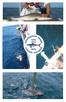 To Report a Recapture: Call Toll Free 877-826-2612 Email: [email protected] Use our online reporting form: www.nefsc.noaa.gov/sharktagreport Cooperative Shark Tagging Program NOAA s National Marine Fisheries
Satellite Pursuit: Tracking Marine Mammals
 : Tracking Marine Mammals Material adapted from: Monterey Bay Research Institute, EARTH: Satellite Tracking OPB NOVA Teachers: Ocean Animal Emergency Teach Engineering: Marine Animal Tracking Introduction:
IMPORTS AND EXPORTS OF FISHERY PRODUCTS ANNUAL SUMMARY, 2012
 CURRENT FISHERY STATISTICS NO. 2012-2 IMPORTS AND EXPORTS OF FISHERY PRODUCTS ANNUAL SUMMARY, 2012 Effective in 2012 substantial changes were made to the fishery product sections of the Harmonized Tariff
World Oceans Day at ZSL Whipsnade Zoo
 World Oceans Day at ZSL Whipsnade Zoo Teachers notes KS 1 & KS 2 This booklet will help you to focus your self guided trail on ocean animals, looking at the adaptations of the species and focusing in on
The Facts About Right Whales
 The Facts About Right Whales Where have all the right whales gone? Hunters killed almost all the North Atlantic right whales by the early 20th century. It has been against the law to hunt them for more
Gray Whales on the Move
 Gray Whales on the Move Students trace the migration route of a gray whale and discover the gray whale s natural history. Subjects Science GRADE LEVEL Grades 6 8 TIME 60 minutes OBJECTIVES Students will
Geography affects climate.
 KEY CONCEPT Climate is a long-term weather pattern. BEFORE, you learned The Sun s energy heats Earth s surface unevenly The atmosphere s temperature changes with altitude Oceans affect wind flow NOW, you
3.1 Measuring Biodiversity
 3.1 Measuring Biodiversity Every year, a news headline reads, New species discovered in. For example, in 2006, scientists discovered 36 new species of fish, corals, and shrimp in the warm ocean waters
AQUATIC ECOSYSTEMS & BIOMES
 AQUATIC ECOSYSTEMS & BIOMES A) Name three general types of aquatic ecosystems and describe the salinity for each. Give an example for each. 1) 2) 3) B) MATCHING In the space provided, write the letter
Title. Euphausia superba. Author. Sophia Erb
 Title Using geometric probability to compare the random and actual mating success of Atlantic Krill, Euphausia superba Author Sophia Erb Abstract Currently the most abundant species on Earth, Atlantic
Chapter 3 Communities, Biomes, and Ecosystems
 Communities, Biomes, and Ecosystems Section 1: Community Ecology Section 2: Terrestrial Biomes Section 3: Aquatic Ecosystems Click on a lesson name to select. 3.1 Community Ecology Communities A biological
Bony Fish Anatomy Worksheet
 Educational Material Bony Fish Anatomy Worksheet Teacher Information This activity is designed to be team-taught by the classroom and art teacher. Use this guide in conjunction with fish-related art to
When Is an Elephant Not an Elephant? When It's a Seal, Of Course! By Mikki Sadil
 Everyone knows that elephants have trunks. But did you know there is a kind of seal that also has a trunk? This is the elephant seal, which gets its name from the extra large proboscis, or nose, on the
Identification of rearing areas for blacktip sharks Carcharhinus limbatus in the mangrove stands of coastal San Cristóbal Island
 Photo: Elizabeth Knight Identification of rearing areas for blacktip s Carcharhinus limbatus in the mangrove stands of coastal San Cristóbal Island Galapagos National Park Sharks fill a vital ecological
A Method of Population Estimation: Mark & Recapture
 Biology 103 A Method of Population Estimation: Mark & Recapture Objectives: 1. Learn one method used by wildlife biologists to estimate population size of wild animals. 2. Learn how sampling size effects
Study suggests the Mediterranean Sea may be losing large predatory sharks.
 research series april 2008 Study suggests the Mediterranean may be losing large predatory sharks. SHARK DECLINES IN THE MEDITERRANEAN SEA A Summary of New Scientific Analysis: Ferretti, F., Myers, R.A.,
NOTE TO TEACHER: It is appropriate to introduce the mitochondria (where energy is made) as a major structure common to all cells.
 5.2.1 Recall the cell as the smallest unit of life and identify its major structures (including cell membrane, cytoplasm, nucleus, and vacuole). Taxonomy level: 1.1 and 1.2-A Remember Factual Knowledge
Shark Traveling Trunk. Cape Lookout National Seashore
 Shark Traveling Trunk Cape Lookout National Seashore HOW TO USE THIS TRUNK: This traveling trunk is designed to be used in the classroom to introduce students to sharks. It is intended to be used for grades
Unique reproductive strategies have developed to ensure maximum reproductive success.
 Animal Reproductive Strategies The ultimate goal of each species is to produce the maximum number of surviving offspring using the least amount of energy. This is called the reproductive effort. Asexual
Task 3 Reading into Writing: Endangered Animals
 At a glance Level: ISE II Task 3 Reading into Writing: Endangered Animals Focus: Task 3 Reading into writing Aims: To read information about endangered animals, to answer questions about the information
Pond Vocabulary Words and Meanings
 Pond Vocabulary Words and Meanings Adapt: to adjust to a use or situation Aquatic: from or in the water Bacteria: tiny organisms, too small to be seen with the naked eye Carnivore: an animal that eats
A new species of deep-sea catshark (Scyliorhinidae: Bythaelurus) from the southwestern Indian Ocean
 A new species of deep-sea catshark (Scyliorhinidae: Bythaelurus) from the southwestern Indian Ocean DAVID A. EBERT Pacific Shark Research Center, Moss Landing Marine Laboratories, Moss Landing, CA 95039,
Haputhantri, S.S.K. and H.A.C.C. Perera. Marine Biological Resources Division, National Aquatic Resources Research and Development Agency (NARA)
 Estimation of length-weight relationship and some morphometric relationships of Indo- Pacific Sailfish (Istiophorus platypterus) using biological data of gillnet fishery and longline fishery in Sri Lanka
7.1 How and why are some eco-systems threatened with destruction?
 Topic 7: Oceans on the Edge 7.1 How and why are some eco-systems threatened with destruction? How are human activities degrading and destroying marine ecosystems on a global scale? Mangrove removal- over
Introducing SEA LIFE centre Children s Activity Packs
 Introducing SEA LIFE centre Children s Activity Packs Great news, you re visiting a SEA LIFE centre and we ll do everything possible to make sure you have a wonderful day out. Whether you are a Scout,
Week 1. Week 2. Week 3
 Week 1 1. What US city has the largest population? 2. Where is Aachen? 3. What is the capitol of Florida? 4. What is the longest mountain range in Spain? 5. What countries border Equador? Week 2 1. What
2016 Outlook and Management -Pre-season outlook / expectations and early indications - General overview of in-season management approach
 Salmon Briefing 2016 Outlook and Management -Pre-season outlook / expectations and early indications - General overview of in-season management approach Pacific Salmon Species Size and age at return varies
Therefore, this is a very important question, which encourages consideration of the current management of the resource.
 Aalisarnermut, Piniarnermut Nunalerinermullu Naalakkersuisoqarfik Department of Fisheries, Hunting and Agriculture Finn's speech to NAFMC Climate change in the North Atlantic has become a reality which
4-H Marine Biology and Oceanography Proficiency Program A Member s Guide
 4-H Marine Biology and Oceanography Proficiency Program A Member s Guide OVERVIEW The 4 H Marine Biology and Oceanography Proficiency program helps you learn what you need to know about your 4 H project.
Chapter 18 Introduction to. A f r i c a
 Chapter 18 Introduction to A f r i c a Ch. 18:1 Landforms & Resources 1. Africa s shape & landforms are the result of its location in the southern part of the ancient supercontinent of. Pangaea Over thousands
MPAs: Now and Then Section A) Kapus in Hawaii: Environmental Protection in the Ocean Before MPAs
 s: Now and Then Section A) Kapus in Hawaii: Environmental Protection in the Ocean Before s Defining Environment When we talk about protecting the environment, what do we mean? What exactly is our environment?
FRESHWATER ELASMOBRANCHS FROM THE BATANG HARI BASIN OF CENTRAL SUMATRA, INDONESIA
 THE RAFFLES BULLETIN OF ZOOLOGY 1998 46(2): 425-429 National University of Singapore FRESHWATER ELASMOBRANCHS FROM THE BATANG HARI BASIN OF CENTRAL SUMATRA, INDONESIA H. H. Tan and Kelvin K. P. Lirn Department
Module 11: The Cruise Ship Sector. Destination #3
 Module 11: The Cruise Ship Sector Destination #3 Cruise Destinations Welcome to your third destination. Use the following resource article to learn about the different oceans and time zones. Seen from
Behaviour. Age 6-11 years. Contents
 SEA LIFE for schools Behaviour Age 6-11 years Self-guided learning This guide provides you with information linked to key displays throughout SEA LIFE Loch Lomond which can be used to explore the key behaviour
Can You Tell a 'Gator From a Croc? by Guy Belleranti
 Can You Tell a 'Gator From a Croc? Look closely at the reptiles pictured below. Can you tell which one is the crocodile and which is the alligator? Many people confuse crocodiles and alligators, and it's
ES 106 Laboratory # 3 INTRODUCTION TO OCEANOGRAPHY. Introduction The global ocean covers nearly 75% of Earth s surface and plays a vital role in
 ES 106 Laboratory # 3 INTRODUCTION TO OCEANOGRAPHY 3-1 Introduction The global ocean covers nearly 75% of Earth s surface and plays a vital role in the physical environment of Earth. For these reasons,
Name Class Date. Adapting to the Environment Adaptations and Survival
 CHAPTER 3 4 SECTIN Adapting to the Environment Adaptations and Survival EFRE YU READ After you read this section, you should be able to answer these questions: What adaptations help animals survive? What
RESTORATION AND ENHANCEMENT OF SOUTHERN CALIFORNIA LAGOONS
 RESTORATION AND ENHANCEMENT OF SOUTHERN CALIFORNIA LAGOONS by Hany Elwany, Ph.D. Scripps Institution of Oceanography Headwaters to Oceans Conference 25 October 2003 CE Ref #03-22 San Diego County Lagoons
TIDES. 1. Tides are the regular rise and fall of sea level that occurs either once a day (every 24.8 hours) or twice a day (every 12.4 hours).
 TIDES What causes tides? How are tides predicted? 1. Tides are the regular rise and fall of sea level that occurs either once a day (every 24.8 hours) or twice a day (every 12.4 hours). Tides are waves
LIFE UNDER THE SEA. (Lesson Plans) Salvador Rodríguez Almendros
 (Lesson Plans) January - March 2009 (Types of marine life: real facts on sea flora and fauna ) 1 1 and 2 - To express opinions and give account of experiences Methodological skills: (Information handling)
A guide to living with Urban Coyotes
 A guide to living with Urban Coyotes Living with coyotes ThinkStock Coyotes are found throughout Florida. This adaptable animal belongs to the dog family and resembles a small German shepherd. In Florida,
How Did These Ocean Features and Continental Margins Form?
 298 10.14 INVESTIGATION How Did These Ocean Features and Continental Margins Form? The terrain below contains various features on the seafloor, as well as parts of three continents. Some general observations
Seafood Report By Jennifer MacKay and Stefan Friedman-Gerlicz Department of Research AmCham Chile August 2008
 Seafood Report By Jennifer MacKay and Stefan Friedman-Gerlicz Department of Research AmCham Chile August 2008 U.S. Global Seafood Imports In 2007, the U.S.A. imported a total of US$10.6 billion (US$10,660,426,824)
Region of Georgia : Mountains
 Region of Georgia : Mountains Northern most region of GA Cold weather in the winter Brasstown Bald is the highest point in Georgia Lots of creeks and streams High above sea level Poor soil for farming
Lesson 6: Fisheries Management in the Open Ocean. Open Ocean
 !!! Open Ocean Concepts How does fishing equipment affect the amount of fish and bycatch caught in a fishery? How can we change the way we fish to use the ocean better? Standards Addressed HCPS 5. & 5.2
Storm tide is the water level rise during a storm due to the combination of storm surge and the astronomical tide.
 INTRODUCTION TO STORM SURGE Introduction to Storm Surge BOLIVAR PENINSULA IN TEXAS AFTER HURRICANE IKE (2008) What is Storm Surge? Inland Extent Storm surge can penetrate well inland from the coastline.
SITE INVESTIGATIONS OF THE BEACH EROSION PROBLEM AT MAHO BEACH, ST. MAARTEN
 SITE INVESTIGATIONS OF THE BEACH EROSION PROBLEM AT MAHO BEACH, ST. MAARTEN Performed February 2003 Performed by: Dr. Lee E. Harris, Ph.D., P.E. Associate Professor of Ocean Engineering & Oceanography
What Causes Climate? Use Target Reading Skills
 Climate and Climate Change Name Date Class Climate and Climate Change Guided Reading and Study What Causes Climate? This section describes factors that determine climate, or the average weather conditions
Global Outlook for Shrimp Markets and Demand. Felix Dent Fishery Industry Officer Fish Products, Trade & Marketing Branch (FIPM)
 Global Outlook for Shrimp Markets and Demand Felix Dent Fishery Industry Officer Fish Products, Trade & Marketing Branch (FIPM) FAO? What is... Food and Agriculture Organization of the United Nations Established
BANGLADESH. CURRENT LIMITATIONS National waters
 BANGLADESH Source: FAO Fishstat dataset: Global Capture Production Bangladesh reports to FAO data on "Sharks, rays, skates, etc. nei" production starting from 2008 with an average of about 4,000 tonnes/year.
Storm tide is the water level rise during a storm due to the combination of storm surge and the astronomical tide.
 INTRODUCTION TO STORM SURGE Introduction to Storm Surge National Hurricane Center Storm Surge Unit BOLIVAR PENINSULA IN TEXAS AFTER HURRICANE IKE (2008) What is Storm Surge? Inland Extent Storm surge can
WEATHER, CLIMATE AND ADAPTATIONS OF ANIMALS TO CLIMATE
 7 WEATHER, CLIMATE AND ADAPTATIONS OF ANIMALS TO CLIMATE TEXTBOOK QUESTIONS AND ANSWERS Q.1. Why weather changes so frequently? Ans. All changes in the weather are caused by the sun. The movement of the
Dear Teachers: Welcome to dynamic science
 Educator s Resource Guide GRADES 6 8 Dear Teachers: Welcome to dynamic science activities inspired by the IMAX film. These materials, created by Scholastic Inc., IMAX Corporation, and Warner Bros. Pictures,
THE ECOSYSTEM - Biomes
 Biomes The Ecosystem - Biomes Side 2 THE ECOSYSTEM - Biomes By the end of this topic you should be able to:- SYLLABUS STATEMENT ASSESSMENT STATEMENT CHECK NOTES 2.4 BIOMES 2.4.1 Define the term biome.
SAMOA MARINE WILDLIFE PROTECTION REGULATIONS 2009
 S.R. 2009/18 SAMOA MARINE WILDLIFE PROTECTION REGULATIONS 2009 Arrangement of Provisions PART I PRELIMINARY 1. Short title and commencement 2. Interpretation 3. Application in the Exclusive Economic Zone
The Everglades & Northern Estuaries; St. Lucie River Estuary, Indian River Lagoon & Caloosahatchee Estuary. Water Flows & Current Issues
 The Everglades & Northern Estuaries; St. Lucie River Estuary, Indian River Lagoon & Caloosahatchee Estuary Water Flows & Current Issues Florida Governor Rick Scott August 20, 2013 Upper Chain of Lakes
Seagrasses. What are seagrasses? Why seagrass isn t seaweed!
 Seagrasses What are seagrasses? Seagrasses are plants that grow underwater but they are not the same as seaweeds (algae). Some species of seagrass look very much like terrestrial (land) grass, with straplike
Global Water Resources
 Global Water Resources Highlights from assessment activities over the past two decades, which are used to establish present and future water trends, reveal that: 1. Freshwater resources are unevenly distributed,
Tides and Water Levels
 Tides and Water Levels What are Tides? Tides are one of the most reliable phenomena in the world. As the sun rises in the east and the stars come out at night, we are confident that the ocean waters will
Shark, Skate and Ray Conservation Plan
 Shark, Skate and Ray Conservation Plan Introduction Sharks, skates and rays, collectively known as elasmobranchs are caught in fisheries worldwide, including in EU and UK waters. Many have been depleted
Merluccius Rafinesque, 1810
 click for previous page 327 Local Names : AUSTRALIA: Blue grenadier; GERMANY: Langschwanz-Seehecht; ITALY : Nasello azzurro; JAPAN : Hoki; NEW ZEALAND : Blue hake, Hoki, Whiptail; SPAIN : Merluza azul;
ON A NEW SPECIES OF DENISONIA (REPTILIA, SERPENTES) FROM NEW GUINEA
 ON A NEW SPECIES OF DENISONIA (REPTILIA, SERPENTES) FROM NEW GUINEA by L. D. BRONGERSMA and M. S. KNAAP-VAN MEEUWEN Until now the Elapid genus Denisonia had not been recorded from New Guinea, and this
COMMERCIAL LANDINGS STATISTICS RED SNAPPER IN THE GULF OF MEXICO. John Poffenberger 1
 SEDAR 7-DW-23 COMMERCIAL LANDINGS STATISTICS RED SNAPPER IN THE GULF OF MEXICO John Poffenberger 1 I. Introduction Data on the quantity and value of seafood products have been collected in varying forms
Transforming wasted resources. for a sustainable future. The sustainable management of bycatch in Latin America and Caribbean trawl fisheries
 Transforming wasted resources for a sustainable future The sustainable management of bycatch in Latin America and Caribbean trawl fisheries REBYC-II LAC Shrimp trawling and other types of bottom trawling
Coral Reefs Lecture Notes
 Coral Reefs Lecture Notes (Topic 10D) page 1 Coral Reefs Lecture Notes Corals Polyps & Zooxanthellae Coral Polyps Are coral polyps algae or animals? Description (What do coral polyps look like? Make a
Adventure Activity Sample Itinerary. I - Itinerary Full Day Adventure Everglades Safari Park
 Adventure Activity Sample Itinerary I - Itinerary Everglades Safari Park The most complete attraction in the Everglades! Fun for the entire family, including exciting airboat eco-adventure tours and alligator
Key Idea 2: Ecosystems
 Key Idea 2: Ecosystems Ecosystems An ecosystem is a living community of plants and animals sharing an environment with non-living elements such as climate and soil. An example of a small scale ecosystem
Lesson 3: Fish Life Cycle
 Lesson 3: Fish Life Cycle Activity: Diagram fish life cycle. Grade level: 4-8 Subjects: Science, social studies Setting: Classroom Duration: 50 minutes Key Terms: Fry, life cycle, life history, spawn,
Caves 1. What immense cave is found in Mexico and how deep is it? Answer: The Cave of Swallows that is 400m deep?
 Caves Caves 1 What immense cave is found in Mexico and how deep is it? Answer: The Cave of Swallows that is 400m deep? About how many feet is 400m? Answer: 1200 FT What famous building would fit into this
Electronic tagging of marine animals
 1 Electronic tagging of marine animals The tagging of marine animals with electronic sensors is increasingly being undertaken by scientists worldwide to track their movements. Electronic tags such as archival,
A Most Colorful Mammal by Guy Belleranti
 Name: In the tropical rainforests of western Africa lives a mammal with a most colorful face and rump. This mammal is the mandrill, the world's largest monkey. The skin on a male mandrill's face has a
Chapter Overview. Bathymetry. Measuring Bathymetry. Echo Sounding Record. Measuring Bathymetry. CHAPTER 3 Marine Provinces
 Chapter Overview CHAPTER 3 Marine Provinces The study of bathymetry charts ocean depths and ocean floor topography. Echo sounding and satellites are efficient bathymetric tools. Most ocean floor features