
Restructuring and Recovery in Railway Services
|
|
|
- Franklin Quinn
- 9 years ago
- Views:
Transcription
1 CHAPTER 10: Restructuring and Recovery in Railway Services 10.1 OVERVIEW OF THE SECTOR The Setting Although continental rail master plans have existed for more than a century, most of the African railway network remains disconnected, operating within a single country, or linking a port and its immediate regional hinterland. The only significant international network is centered in South Africa and stretches north to Zimbabwe, Zambia, and the Democratic Republic of Congo (DRC) (See Map 10.1). As a result, the national railway of Zimbabwe has been critical to the growth of the country s domestic, regional, and international trade as it connects all major economic centers and provides transport for bulk raw materials, finished goods, and passengers. As in most other African countries, the Zimbabwean railway system served as a primary conduit for agricultural and other natural resources and this largely accounts for the standards and routing that were adopted. Map 10.1: Railway Network for the Southern Africa Region Within Zimbabwe, the railway network connects all major mines and heavy industrial plants, as well as major collection points for farms. The system has three well connected hubs, Bulawayo, Gweru, and Harare (See Map 10.2). The railway is at the centre of the international rail routes linking the DRC and Zambia to Botswana, Mozambique and its ports of Beira and Maputo, and South Africa and its ports of Durban, Richards Bay, and Port Elizabeth. It is also at the centre of shorter and cost-effective railroad links between Malawi and South Africa through Bulawayo, the port of Beira through Harare, and Lusaka and the port of Durban through Bulawayo. The line from Zambia through Victoria Falls, the line from Botswana through Plumtree, the line from South Africa through Beitbridge, and Restructuring and Recovery in Railway Services Zimbabwe Report 1

2 the line to the central parts of Zimbabwe through Gweru meet at Bulawayo, where the headquarters of the National Railways of Zimbabwe (NRZ) is located. The north-south main line from South Africa into Zimbabwe joins the network at Gweru while the line from Mozambique through Mutare joins the network in Harare. Little expansion has taken place since these lines were constructed in mid-twentieth century. Map Existing Railway Network in Zimbabwe 2 Zimbabwe Report Restructuring and Recovery in Railway Services

3 In the past decade, the capacity of the railway network to provide services has been severely eroded. The deterioration in track infrastructure, signaling, and telecommunication system is due to lack of regular repairs and maintenance resulting from financial constraints on the NRZ. Rehabilitation of the network and rebuilding the services offered by the rail network are therefore major priorities for the country Institutional Arrangements and Policy Issues Currently, the only institutions that have a role to play in the railway sector are NRZ, the Bulawayo-Beitbridge concessionaire, and the Ministry of Transport, Communications, and Infrastructural Development (Figure 10.1). Institutional reform initiatives in the railway sector so far have included internal restructuring of NRZ so as to make it operate more efficiently, regulating the industry in a meaningful way so as to protect and enhance the interests of the customers, and use of concessions followed by privatization of the freight and passenger operations. Most of the emphasis has been on the internal restructuring of NRZ. There is no separate regulator for the railway sector and the only recourse for the customers against unfair trade practice or monopoly behavior by NRZ is to appeal to the Competition Commission. Through most of the 1990s, organizational, operational, financial, and human resource restructuring was undertaken, though to a limited extent, to improve the performance of the railways: Organizational restructuring comprised separation of road services department from the railways leaving NRZ to focus on railways, signing of performance contracts between the Government and the general manager of NRZ, and setting performance targets for department heads and making them more accountable for performance; Operations restructuring comprised introduction of a flexi system for the allocation of drivers, increasing the number of block and customer-dedicated trains, increasing the minimum chargeable load to correspond to the capacity of wagons, setting stiff targets for availability, utilization, and reliability of locomotives and rolling stock, using cost-benefit analysis as the basis Restructuring and Recovery in Railway Services Zimbabwe Report 3

4 for investment decisions, introduction of commodity-based tariffs, and moving away from general tariffs to customer contracts; Financial restructuring comprised debt restructuring to maintain NRZ s responsibility for servicing debt pertaining to active revenue-generating assets only, and stricter expenditure control.; Human resource restructuring focused on staff reduction so as to lower human resource expenditure from close to 70 percent of revenues to less than 40 percent. These measures helped to bring down the overall deficit, reduce the rate of fresh investment, and enhance management capacity, but the goal of complete financial self-sufficiency has yet to be achieved. However, there is substantial government involvement in the operational policies of the NRZ, which is not free to take action without specific government approval towards closure of branch lines and stations, setting of passenger tariffs, and changing frequency and timings of passenger services or their closure. These are long-standing issues. The World Bank (2006) identified several critical areas in the railway policy domain, namely, absence of a policy regarding third party operations and determination of track access charges, absence of a policy regarding contracts for public service obligations (PSO), and lack of parity between the road and rail services with respect to financing arrangements for maintenance of the infrastructure. Provision of seamless services. Zimbabwe is one of the 14 member states that are signatories to the SADC Protocol on Transport Communications and Meteorology. The protocol recognizes that transport is key in promoting economic growth and development in the region and calls for increasing private sector involvement in railway investment with a view to improving railway work and service standards and lowering unit costs. Chapter 7 of the protocol deals specifically with railways and Article 7.1 states that: Member States shall facilitate the provision of a seamless, effi cient, predictable, costeffective, safe and environmentally friendly railway service which is responsive to market needs and provides access to major centers of population and economic activity. The view of the World Bank (2010) is that seamless travel is essential for the railways to compete effectively with the trucking sector. Agreements between the respective railways are designed to provide the member states with seamless operations (that is, no change in locomotives) at border crossings. For example, Botswana Railways has operated from Plumtree into Bulawayo, Trans Africa trains from South Africa to Zambia and Tanzania transit Zimbabwe over NRZ lines, and luxury passenger trains such as Spoornet s Blue Train and Rovos Rail safari trains operate on the northern line to Victoria Falls. However, if the railways in the region are to realize the desired goal of seamless operations as articulated in the SADC protocol and as agreed by most countries, further action is required by governments in the Southern Africa region. Treatment of public service obligation contracts. For many years, the Government has set passenger tariffs at levels that are well below operating costs for passenger services. It is clear from the analysis later in this Chapter that NRZ continues to incur significant losses on passenger services, particularly the commuter trains. Even though there is provision in the Railway Act for compensation for services provided as PSOs, no such contracts have been signed. PSO contracts are essential whether the services are performed by NRZ or by concessionaires at a later stage. Absence of a clear policy and associated contracts results in reduced accountability and distorted evaluation of the railway s performance. The NRZ needs to be compensated for these losses. If the Government were to sign public service obligation contracts with the railways and agree to compensate NRZ for the losses incurred in operating loss-making passenger services, stations, and lines on Government- 4 Zimbabwe Report Restructuring and Recovery in Railway Services

5 determined terms, the financial position of the NRZ would improve significantly. Lack of parity between rail and road services with respect to funding for maintenance costs. The World Bank (2006) noted that policy was not clearly stated with regard to financing of the rail infrastructure at par with that for road infrastructure. Like many railways around the world, NRZ has been making a case for the Government to assume responsibility for the maintenance of rail infrastructure at par with that for road infrastructure. In its view, that would have put rail and road modes on a level playing field and enabled NRZ to increase substantially its share of the freight traffic, thus benefiting the economy through lower transport costs, lower pollution, reduced congestion on the roads, and fewer accidents FREIGHT AND PASSENGER SERVICES Freight Services and Prices Freight services. The main commodities transported by rail are coal, fertilizer, chrome ore, ferro alloys, granite, raw sugar, maize, and wheat. The reduced economic activity over the past decade has had a substantial impact on the utilization of the freight services provided by the railways. In 1990, the total amount of freight carried by rail was 14.3 million tons, which translated into a capacity utilization rate of about 80 percent. During most of the 1990s, NRZ faced many challenges. As a result of the liberalization of the economy in general and the transport sector in particular, the trucking sector emerged as a strong alternative mode of transport in direct competition with the railways. NRZ s traffic was further adversely affected by a number of developments beyond NRZ s control, such as the commissioning of an oil products pipe line between Mutare and Harare, discovery of iron ore deposits closer to the steel plant than the original iron ore mines served by the railways, production problems at the steel plant, slow growth of the economy, the closure of the local ferro-chrome industry for a considerable time, and the worsening of the economies of Zaire (now DRC) and Zambia with a consequent reduction in long-haul transit traffic. As a result, freight volumes declined to 9.4 million tons by 2000 (Figure 10.2).The decline in freight has continued in the past decade with about 3.8 million tons being carried in 2008 and only 2.7 million tons in 2009, equivalent to about 15 percent of the original design capacity of 18 million tons. Coal and other mining products account for about 40 percent of the freight being carried, with agricultural supplies and products accounting for about one- Restructuring and Recovery in Railway Services Zimbabwe Report 5

6 third of total freight and transport of various manufactures accounting for about 15 percent of traffic. Transit freight across Zimbabwe is relatively unimportant at this stage, accounting for less than 10 percent of the freight carried. Part of the decline in freight, and hence revenues of NRZ, stemmed from the downturn in the economy, but an important part of the decline was due to the railway not being able to carry all the traffic on offer. Revenue generation from freight services was further adversely affected by the fact that the average haul also declined from 391 kilometers in 1990 to 279 kilometers in 2004, a 30 percent decline. As a result, the revenue generating net ton kilometers in 2004 were only 25 percent of those in Part of the reason for the decline in the average haul was the introduction of the new route from Bulawayo to Beitbridge under a concession agreement, the new route being 200 km shorter. However, the average had recovered to 308 km by 2009, largely because of a recovery in export and import traffic. Freight rates. The NRZ freight rates are based on recovery of full cost plus a modest mark-up. Factors such as the type of commodity, its loadability, type of wagon used, and distance travelled have a bearing on the freight cost. As a result, rates for rail freight vary according to the commodity carried, in contrast to road haulers who maintain a flat rate per vehicle per km, regardless of the commodity carried. As Table 10.1 indicates, shorter distances typically have substantially higher charges per ton km for rail freight. Medium-distance freight must typically be transported by road to and from railheads, thus adding to the cost of moving such goods and reducing the attractiveness of rail freight services for shorter distances. The average railway tariff is about 6.3 US cents per ton km, which compares with an average of 9 US cents per ton km charged by the Beitbridge Bulawayo Rail concession. The average speed for the freight hauls reported in Table 10.1 is about 35 km per hour. The World Bank (2010) reports that for rail to be competitive with road freight services, average commercial speeds must be in the range of km per hour, which suggests that freight services can compete with the road freight industry, especially in bulk cargo movement. In general, NRZ s tariffs compare well with those of railway concessions in Sub-Saharan Africa. As Table 10.2 indicates, however, there is considerable variation among corridors with respect to the margin between road and rail freight rates. 1 1 The NRZ reports that the current average rates for the CFM and CCFM concessions in Mozambique are 6.9 and 9.0 US cents respectively. 6 Zimbabwe Report Restructuring and Recovery in Railway Services

7 Nonetheless, road freight rates put a limit on the rates that can be charged for rail freight. It is widely accepted that for distances over 500 km, railways continue to offer the most economical solution to transporting non-time sensitive bulk freight Passenger Services and Costs NRZ provides suburban commuter services in Harare and Bulawayo, both introduced in 2001, and inter-city services. NRZ operates the following mainline passenger services: inter-city services operate between Bulawayo to Harare, Victoria falls, and Chiredzi and between Harare to Mutare, daily each way. Passenger traffic was boosted by the introduction of suburban services in Harare and Bulawayo in Most of the increase in traffic resulted from introduction of new commuter trains around Harare. However, the expansion of these services caused shortages of locomotives for the freight traffic. From a peak passenger traffic of 17.4 million in 2007, the number of passengers declined to about 2 million in The large subsidies provided for rail services notwithstanding, the decline in passenger traffic has stemmed from a combination of unreliable passenger services and strong competition from buses and shared taxis in terms of price and service frequency. Bus fares may be typically up to 50 percent higher than an economy rail fare, but on many routes they are faster and more frequent despite delays, breakdowns, and overcrowding. The commuter traffic has generally been a loss-making activity for NRZ because tariffs fixed by the Government are very low and cover only a fraction of the operating cost, ticketless travel is rampant, and utilization of resources is also low. As a result, the sixfold increase in passenger traffic in 2004 compared to 1990 did not translate into a substantially improved revenue position for NRZ MAJOR CHALLENGES IN REBUILDING THE RAILWAY NETWORK The Setting The technical, operational, and financial performance of NRZ has been adversely affected by the macroeconomic instability of the past decade and, in particular, the critical shortage of foreign exchange. As noted above, these problems were exacerbated by the imposition of public service obligations on NRZ, without compensation for these losses. With the sharply diminished financial capacities of NRZ, there has been a major deterioration in railway infrastructure and assets as a result of lack of maintenance and periodic rehabilitation of the track. The deteriorating state of the railways infrastructure has, in turn, resulted in accidents and derailments. Restructuring and Recovery in Railway Services Zimbabwe Report 7

8 The MTP identifies a number of key obstacles to the full recovery of the railway network. These include: the dilapidated rail infrastructure and obsolete equipment and locomotives, coaches and wagons; ineffective safety programs; and theft and vandalism of equipment and signalling and telecommunications systems. The absence of a regulatory agency with responsibility for oversight of railway services is seen as an increasingly important shortcoming in the sector. The NRZ has also been affected by a substantial flight in key personnel and skills. In 2000, the total staff of NRZ stood at about 9,420; by 2009, it had declined to about 8,680. However, this modest decline does not reflect the fact that over the past few years NRZ has been hard hit by the exodus of critical skills. A substantial number of engineers, artisans, and train drivers have left the country to join other railway bodies in the region Dilapidated Condition of Infrastructure and Assets Besides the country s economic performance, which had a significant effect on railways, low availability of locomotives and other rolling stock and the old and poorly maintained track have been among the main causes of the decline in service levels of the railway. The substantial deterioration in locomotives, wagons, and coaches over the past decade was the result of inadequate maintenance and non-replacement of obsolete assets that, in turn, stemmed from the weak financial position of the NRZ. Track: The NRZ-operated railways in Zimbabwe have a route length of 2,759 km, comprising 1,881 km of mainline and 878 km of branch lines. Some 313 km of the route length, from Dabuka to Harare, is electrified. This line has been vandalized and is no longer in operation. In addition, there is 385 km of track operated by the Bulawayo Beitbridge Railway concession. The total track length is 4,313 km. The Zimbabwe railway gauge of 1,067 mm is the same as in all southern African countries. It supports an axle load of 18.5 tons on the main line and most branch lines, this being more than or equal to the axle load in all other countries except South Africa. Zimbabwe also had a well developed signaling and communication system prior to the deterioration of the past decade. 8 Zimbabwe Report Restructuring and Recovery in Railway Services

9 There has been continued deterioration in the condition of the track over the past decade (Table 10.3). The percentage of the route length with speed restrictions increased steadily from about 4 percent in 2000 to 21 percent in 2007, and has since declined as a result of rehabilitation efforts. At end 2009, up to 98 sections, a combined distance of 451 km, or about 16 percent of the entire mainline, was under speed restrictions. These are, on average, 5 km long sections where the operating speeds vary between 10 and 20 kilometers per hour. The worst affected is the line from Gweru to Masvingo. With the sharply reduced traffic flows at present, these speed restrictions are probably not having a major effect on operations. However, when traffic starts increasing again, the risk is that these speed restrictions could become a serious capacity constraint and could erode the competitiveness of rail services relative to road transport. In the absence of timely action, removing the speed restrictions will also become increasingly costly. To eliminate these restrictions, a total of about 658,000 concrete sleepers need to be replaced on the total affected track. According to NRZ, the estimated cost of this replacement is about $70 million. Locomotives: Locomotive availability and utilization are the most critical areas in operations. The locomotive fleet of 168 includes 61 that are in service, 85 mainline locomotives, 28 of which are in service, 73 shunt locomotives, 33 of which are in service, and 10 steam locomotives, none of which is in service (Table 10.4). At the end of 2004, NRZ s locomotive fleet size was 213, comprising 149 diesels, 30 electric and 34 steam locomotives. At that time, locomotive availability was 67 percent, but it had dropped to 38 percent by Analysis of locomotive availabilities indicates that in 2004 the railways could provide only 67 percent of the total locomotive requirement: in other words, the railways could have carried 50 percent more traffic if adequate numbers of locomotives had been available. The most crippling constraint to carrying all the traffic on offer has been the poor availability of locomotives. Moreover, the utilization of locomotives was between 60 and 80 percent of the peak utilization achieved earlier. The World Bank (2006) estimated that by restoring utilization to previous levels and with the same availability, NRZ could have carried close to 7 million tons in 2004 and 8 million tons in Low reliability of locomotives is one of the main causes of poor utilization and this continues to be of serious concern. Locomotive reliability has significantly deteriorated from its peak figure, i.e., from 57,000 kilometers between failures to just 16,000 between failures. Even the peak figure achieved in the past was not a satisfactory achievement as the normal target of reliability in an efficiently run railway should be more than 100,000 kilometers between failures. Wagon productivity: The wagon productivity indicators continue to be low; in fact, the best ever achieved were still much lower than those of the best-run railways in the world. NRZ s entire wagon fleet is older than its 40- year design life. The wagon fleet in 2000 was 10,529, but the availability has deteriorated significantly in the past decade, declining from 91 percent in 2000 to 59 percent in Restructuring and Recovery in Railway Services Zimbabwe Report 9

10 Currently, the total fleet size has shrunk to 8,752 and availability stands at 53 percent. Wagon utilization declined from 36 kilometers per wagon per day in 2000 to 21 in 2005 for high-sided wagons and from 49 kilometers/ wagon/day to 23 for other types of wagons. This deterioration has been a matter of concern for NRZ. The 2009 utilization rates are not available, but owing to poorer locomotive turnaround times, it is likely to be lower than 33 percent. Some clients, especially those in mining for whom there are no good transport alternatives, have assisted NRZ overcome some of its logistical and service limitations. Such interventions by the private sector included funding for the repair of wagons on condition that such wagons would be set aside for use by the entities providing the funding. In more recent years, poor reliability of NRZ services has affected some of these working relationships between NRZ and its clients. 2 Signaling, telecommunication, and overhead electrification cabling. Much of the Zimbabwe railway network uses a centralized traffic control (CTC) signaling system, but much of the CTC is inoperative. Old copper wire communications and electrification networks have been vandalized, and the microwave backbone radio network is obsolete or inoperative Financial Constraints of NRZ A brief history. The financial problems of the NRZ are one of the major constraints on efforts to rebuild the railway services of Zimbabwe. These difficulties are not new. The NRZ has a long history of operating losses. Until 1990, in spite of holding a virtual monopoly over the freight and passenger traffic in the country, NRZ incurred a net deficit of close to US$100 million equivalent per year, this being about 65 percent of NRZ s gross revenue and 3.5 percent of Zimbabwe s GDP. The huge deficit was caused by lower revenues due to transport by rail of less than the freight traffic on offer, a rigid and inefficient tariff structure, higher costs due to the heavy interest accruing on uneconomic investments made in the past, and excess staff at all levels, poor utilization of assets, and inefficient operations in general. During , supported by the Railways II Project (co-financed principally by the World Bank and USAID), NRZ was able to improve its financial and operational performance. The net deficit declined to about US$20 million for the financial year This was achieved through a combination of tariff rationalization and significant improvements in operating efficiency and operating costs, including a reduction in staff from 17,000 in 1990 to about 10,000 at the end of Responding to the declining traffic, the NRZ management also decided to cancel/defer many of the investment proposals, such as acquisition of new locomotives, wagons, workshop equipment, and extension of electrification. At the same time, there was a substantial improvement in NRZ s institutional capability, mainly as a result of performance contracts between NRZ and GoZ, training of NRZ s top and middle management through secondment to foreign railways, the use of foreign technical experts, and installation of more advanced computers and software for analytical work. However, these improvements could not be sustained. Traffic has declined continuously 2 Under these arrangements, a customer (partner) pays for spares for supplies required to refurbish either locomotives or wagons and NRZ provides the labor. The refurbished resources are then dedicated exclusively to the customer s traffic or business, while at the same time offering NRZ a loan advance against rail age for the traffic moved by refurbished resources over the agreed period of time. Since the inception of the program, 12 locomotives, 33 tankers, and over 1,000 wagons have been brought back into service. More recently, declining traffic volumes have forced some partners to abandon the program. Partners are also refusing to commit themselves for long periods of time for fear of losses. 10 Zimbabwe Report Restructuring and Recovery in Railway Services

11 in the past decade, in part because of a sharp decline in production in the economy, hyperinflation, and an acute shortage of foreign exchange. There were further reductions in the staff strength of NRZ to about 9,000 personnel in recent years. NRZ also took a number of steps to improve operational and financial performance, including encouraging customers to invest in locomotive and rolling stock overhaul and buy their own fuel, proposing to the Government to agree to exporters paying in foreign exchange, hiring additional locomotives, reintroducing the caboose system, and frequently adjusting tariffs in line with inflation. However, the progressive decline in the availability and utilization of locomotives and wagons and resulting inability to meet demand for rail freight services, have had a severe impact on the profitability of NRZ operations. As Table 10.5 indicates, NRZ continued to experience operating losses through Even with substantial reductions in staff numbers, personnel costs still account for almost 60 percent of operating expenses. To cover these continuing losses, NRZ has resorted to commercial borrowings and bank overdrafts. The NRZ projects a sharp improvement in its financial position in If the earliermentioned recovery in freight services is realized, NRZ projects an operating surplus of some $8.8 million in 2010, the first such surplus in many years. After allowing for interest payments on the increasing amount of debt held by NRZ, net income for 2010 is projected to be about $8 million, while Earnings Before Interest, Taxes, Depreciation, and Amortization (EBITDA) would rise to $26 million, thereby giving NRZ a significant improvement in its cash flow. Passenger services. In contrast to freight services, passenger services have generated operating losses for the past decade. The World Bank (2006) review of passenger services concluded that operating losses for passenger services jumped to US$10 million equivalent in 2004 from US$1.65 million in 2003 because expenditures kept pace with inflation while the Government did not allow commuter tariffs to be adjusted for inflation. Even if the overhead costs for management and maintenance of buildings, tracks, and signaling were allocated entirely to the freight business, passenger services still operated at a loss in that period, albeit at lower levels. With continued government controls on passenger tariffs, only a small increase in passenger revenues is projected for 2010, despite an increase of more than 50 percent in projected number of passengers to be carried. Revenue per passenger is projected to decline from $1.68 in 2009 to $1.34 in 2010/11. With no change in government policy regarding passenger tariffs, the operating cost of the service is projected to increase to about $24 million, which would result in an operating Restructuring and Recovery in Railway Services Zimbabwe Report 11

12 loss of about $20 million in 2010, compared with $9 million in The Railway Act provides for Public Service Obligations (PSO) in terms of uneconomic branch lines and passenger services. The extent of Government support for these lossmaking activities is unclear, but it appears to have been minimal. In the absence of correct computations and PSO contracts, the adequacy of the support cannot be verified. The absence of PSO contracts also leads to incorrect appreciation of the cost of operating passenger services and dilution of accountability for performance by NRZ. Freight services. Transport of freight at various times in the past has been a profitable business for NRZ, but the deterioration in recent years has undermined the business. There was a $2.9 million net operating loss from transport of freight in 2009 (Figure 10.4). As noted earlier, NRZ projects a sharp recovery in the amount of freight carried in 2010 (from 2.7 million tons in 2009 to 6 million tons in 2010) as a result of improved availability and utilization of rolling stock and progress in improving track conditions. Average revenues per ton are projected to rise from $22 to $26, with total freight revenues increasing to $158 million, compared with $59 million in If the large recovery in freight traffic is realized, net income from freight services would be about $29 million in The implication is that net income from freight would be almost $5 per ton in 2010, compared with a loss of $1 a ton in It is the prospect of a profitable freight traffic service that may attract private investment to the concession arrangements discussed below Role of Private Concessions Until the 1980s, almost all African railway companies were publicly owned corporations, with varying degrees of financial and management autonomy. In many cases, attempts at commercialization while retaining public ownership were unsuccessful. As a result, concessions were introduced in many countries in the 1990s. Under the most common forms of concessions the state remains the owner of all or some of the existing assets, typically the infrastructure, and transfers the other assets (usually the rolling stock) and the responsibility to operate and maintain the railway to a concessionaire. 3 Evolution of policy in Zimbabwe. In accordance with the SADC protocol, GOZ s stated policy since mid-1990s has been to privatize (concession) the railways. The process for the privatization of NRZ was first launched in the latter part of the 1990s 3 For a detailed assessment of the experience of a selected group of railway concessions in Sub-Saharan Africa, see World Bank (2006), Review of Selected Railway Concessions in Sub-Saharan Africa. World Bank, Washington DC, June Zimbabwe Report Restructuring and Recovery in Railway Services

13 with the support of the World Bank. The Railways Act was modified in 1997 to allow for a concession for the railway. Consultants to support the process carried out several studies, funded by the World Bank. The Government granted a Build, Operate, and Transfer (BOT) type concession for the Bulawayo- Beitbridge line in the late 1990s. 4 In 1998, the Government sought to privatize the railways based on a vertical-separation strategy, the key features of which were unbundling of NRZ and incorporation of three new companies to manage three main railway functions infrastructure provision, equipment supply and maintenance, and operations, transferring of assets and staff from NRZ to the new companies and the eventual winding up of NRZ after retrenching excess labor and disposing non-core activities, concessioning of infrastructure, private sector participation in the other two companies, licensing of more private service providers to introduce intra-rail competition, and setting up a regulatory body to ensure smooth operation of various parts of the new structure. This proposal called for radical reform in the railway sector. Not only would the private sector manage the infrastructure and operations, but there would also be open access leading to active competition on rail road service and improvement in the provision of services to customers as envisaged in the SADC protocol. In late 1998, the Government issued a request for proposals for the concession of the infrastructure based on the foregoing design. There was considerable interest in the concession and more than ten potential bidders bought the bidding documents. However, in December 1999, while the bids were under evaluation, the Government decided not to pursue the concession process. As a result, and because of the political situation, the World Bank withdrew its support for the railways privatization project in Zimbabwe. The Government subsequently came out with another privatization option. Instead of the vertical separation model proposed earlier, it opted for one passenger concession and two vertically integrated freight concessions; one for the eastern region and the other for the southern regions. The Government held workshops in December 2000 and January 2001 in order to have extensive consultation with all stakeholders, explore other possible options, and reach a consensus among stakeholders on the way forward. No firm consensus/decision on the privatization option was reached. One paper did recommend the earlier option based on vertical separation, but with the difference that the infrastructure, freight operations, and passenger services were to be offered for privatization simultaneously instead of one after the other. The National Economic Development Priority Program issued in March 2006 listed NRZ as a candidate for a concession. Later that year the MoTC finalized a proposal to restructure NRZ along business lines. The proposal included establishment of NRZ as a holding company with four autonomous subsidiary companies to manage freight, passenger, infrastructure, and other miscellaneous businesses respectively. The proposed restructuring was aimed at bringing a renewed focus on different businesses within NRZ and at improving performance. However, the proposal was not cleared by the cabinet. It was not clear whether the proposed restructuring was in lieu of a concession or a prior action to enable subsequent privatization 4 The Bulawayo-Beitbridge Railway (BBR) was built between 1996 and It connected Beitbridge to the industrial heartland of Zimbabwe, Bulawayo, direct through West Nicholson where the NRZ line ended. The BOT concession to build the 385 km railway line was awarded to New Limpopo Project Investments, a company registered in Mauritius. The company laid the tracks, provided an additional 10 locomotives, and serviced the route through this PPP program. The Government took a 15 percent stake in the partnership. The concessionaire received a number of incentives, including duty exemptions on imported rail equipment and spares, discounted tariffs and priority service for investors in rolling stock, and tax holidays. Restructuring and Recovery in Railway Services Zimbabwe Report 13

14 of the different businesses. Although a consensus to create a railway concession had been reached through extensive discussions over the past ten years or so with stakeholders, a similar consensus had not been reached on the proposed organizational structure. Attempts to proceed with the creation of concessions were abandoned under heavy criticism from the unions who complained about the lack of transparency and their non-involvement in the processes. As a result, no further action has been taken on privatization. Slow progress in implementing railway concessions is seen as a major obstacle for recovery in the sector. Given the experience of the past decade, there are serious doubts whether the NRZ in its present form, constrained as it is by internal rules and procedures, heavy government involvement in operational matters, and a weak financial base, will be able to operate the railways at the peak of efficiency and productivity. Private sector participation in the management and operation of the railways remains as justified as before in order for the railways to realize its full potential. According to the World Bank, a privately managed revitalized railway network working on commercial principles would not only support economic recovery in Zimbabwe, but it would also strengthen the regional rail corridor and help regional integration. The lack of progress on concession arrangements also means that Zimbabwe is failing to meet its obligations under the SADC Protocol on Transport, Communications, and Meteorology. As noted earlier, the protocol specifies that member states should facilitate the provision of a seamless, efficient, costeffective, safe, and environmentally friendly railway service. The protocol also encourages governments to grant autonomy to the railways so that they can achieve full commercialization, increase private sector participation, and 14 Zimbabwe Report Restructuring and Recovery in Railway Services

15 enhance operational synergies amongst railway service providers, promote fair competition, and strengthen the government regulatory function. The deteriorating railway service and infrastructure has had an impact on interregional trade flows, which of necessity must pass through Zimbabwe. Its impact is already being felt and will affect ongoing attempts to establish the Limpopo concession in Mozambique, as well as efforts to concession the Beira line. The value of the Zambia concession is diminished, and NRZ arrangements with BBR have diminished the value of any future concession in Botswana. International flows from the copper belt will be determined by NRZ s ability to move traffic in a timely manner. Without further action to strengthen rail services in Zimbabwe, prospects for improvement in interregional traffic flows are bleak. Creating a larger role for private concessions. Given the heightening inter-modal and interroute competition, it will be difficult for the railways to sustain progress within the existing public sector framework. The current financial outlook for NRZ suggests that, even with quite optimistic assumptions about the growth in freight and its profitability, rebuilding the railway infrastructure and asset base is well beyond the financial resources of NRZ. Some combination of increased government support for the railways, together with the use of additional concession agreements appears to offer the best prospect for rebuilding these services. Experience from the increasing number of concessions in Africa suggests that they can improve operations and efficiency with improved labor and asset productivity. The fundamental issue now is whether the deterioration in the assets of the railway network over the past decade is approaching a point where it will be difficult to attract qualified concessionaires. A number of African countries with dilapidated networks have had difficulty in attracting more than a few bidders. Responsibility for the ongoing rehabilitation and maintenance of track has been a major issue for some concession agreements. In some cases, the financial resources of bidders have not been sufficient to finance the major investments required. Even in those circumstances where the State has provided guarantees for the investments, mobilization of the funding has been slow. Other challenges that have arisen include a lack of enthusiasm among concessionaires for operation of passenger services that do not generate revenues comparable to that from freight services, lack of agreement about the payment of government compensation for unprofitable services, differences regarding the level of concession fees and the duration of the concession, and arrangements for, and the cost of, redundant staff. 5 Experience from other concession arrangements in Africa points to several policy issues for the GoZ that have an important bearing on financing and management arrangements for the proposed program: Major track renewal and rehabilitation. Most concessionaires operating in Africa take the view that track rehabilitation and, especially, track renewal should be financed by governments. The 40 to 50 year life expectancy of these assets often precludes operators from being able to mobilize and pay for the private capital required to finance track rehabilitation and renewal. This is particularly the case when the ratio of initial track investment over revenues is considered too high to mobilize sufficient private financing. This is the situation that applies to Zimbabwe. In these 5 The high cost of compensating redundant staff was one of the reasons for the failure of the 1999 initiative to award a concession for the railways in Zimbabwe. This cost was estimated at $75 million. The plan called for World Bank funds to be used to finance the retrenchment, but as noted earlier, the Bank withdrew from the program. Without donor funding of retrenchment, the prospects for a successful concession were very doubtful. Restructuring and Recovery in Railway Services Zimbabwe Report 15

16 circumstances, governments may agree to fund the initial five-year investment plan, often by mobilizing loans from international financial institutions and on-lending the proceeds to the concessionaires. 6 Given the current challenging environment for rail services in Zimbabwe, the working assumption used in this Report is that the Government retains responsibility for track rehabilitation and renewal, but that concessionaires would be responsible for funding track maintenance. Financing of passenger services. Passenger services in Zimbabwe have been operating at a loss for many years because the Government sets passenger tariffs at levels well below the cost of providing the service. Recent studies of Sub-Saharan Africa railway performance suggest that the prospects for profitable non-urban rail passenger services are poor. According to Amos and Bullock (2007), rail services start competing with road services for passengers at speeds higher than 70 km per hour. The average speed for passenger traffic in Zimbabwe is substantially lower than 70 km per hour. The cost of maintaining track and signaling systems that would enable these commercial speeds is much more than the cost of maintaining the 30- to 40-km per hour commercial speed needed for a freight railway. The implication is that if existing passenger services are to be maintained, operating losses will continue. If the Government wants concessionaires to operate passenger services, concessionaires will expect to be compensated for the losses that stem from such pricing policies. The concession agreements will require clear compensation arrangements that can be monitored and timely payments by the Government. Seamless operations for freight movements in the region. The SADC Protocol on Transport, Communications, and Meteorology calls for seamless operations among member countries. Open or limited access is a prerequisite for seamless operations. Progress on implementation of the protocol has been slow. It is often the case that concessionaires are awarded exclusive rights for provision of services for a number of years following start-up of the concession. The GoZ will need to reconcile such incentives to attract concessionaires with these wider obligations associated with the unimpeded movement of freight on the regional networks that pass through Zimbabwe. This may require entry into reciprocal arrangements with other railway networks for operating seamless services AN ACTION PLAN FOR THE RAILWAYS SECTOR Rebuilding Railway Freight and Passenger Services NRZ has fixed a freight target of 6 million tons for Achieving this target requires action on refurbishment of an adequate number of locomotives and wagons, but if that would take time, lease of locomotives and wagons on appropriate terms or in consultation with the Government, suspension of some passenger services, and improved utilization of locomotives to at least the highest level achieved in the past. Availability of the necessary foreign exchange and fuel would also be important and would require close monitoring. For the decade ahead, the objective is to build freight services to the original design capacity of the rail network of 18 million tons 6 In some cases, for example, Zambia Railways and the Tanzanian Railways Corporation (TRC), governments do not finance initial track renewal but commit to compensate concessionaires for their investment by the end of the concession. In these cases, the initial amount to be invested is relatively small in relation to expected revenues, and as a result, it is expected that concessionaires will be able to secure private financing based on the business merits of the concession. 16 Zimbabwe Report Restructuring and Recovery in Railway Services

17 (Figure 10.5). There is a broad consensus that an efficient railway system will address the bulk transport needs in agriculture, mining, and manufacturing and to a less extent the electric power sector. 7 The target of 18 million tons of freight implies an average growth in traffic of almost 20 percent a year during , which is much higher than the projected growth in GDP. The underlying assumption is that as service capacity and quality improve, the railways will be able to attract freight from the road transport industry because of lower freight rates. The target for passenger traffic is equally ambitious. It is projected to rise to 24 million passengers by 2020, an average growth rate of 26 percent a year. In the event that fares continue to be set well below the cost of service provision, the operating losses of NRZ from passenger services would rise steadily in the decade ahead in the absence of subsidies from the National Government Proposed Action Plan The MTP calls for sustained improvement in the performance of the railways. To rebuild the Zimbabwe railway network and services to its original freight capacity and to expand substantially passenger services, actions will be required on a number of fronts. According to the MTP, these include rehabilitation of the existing rail track infrastructure, signalling and telecommunications systems, and reduction of track cautions, increasing the availability of locomotives, coaches, and wagons, review of the regulatory framework governing railway transport and establishment of a Regulatory Authority, establishment of a PPP framework to facilitate private sector participation, and formation of strategic partnerships that involve one or more concessions for sections of the track, establishment of a separate body to own/ operate infrastructure while rail services are opened up to a number of private concessions for a fee, introduction of a national rail safety program with safety and security regulations, and adoption of environmental best practice for rail construction and maintenance, including environmental impact certification by the Environment Management Agency before commencement of projects. The proposed program set out in this Report expands on these proposals and sets out a detailed Action Plan for their implementation in the decade ahead. The proposed program is one in which the restructuring of the railways is based on vertical separation. In this scenario, the management and ownership of the infrastructure facilities is separated from the provision of rail services. The key features of the proposed new institutional arrangements are as follows: The Government would continue to own the track and related infrastructure such as signaling, communications, and electrification. A new public entity would be established and would be responsible for the management and upkeep of this basic infrastructure. For the purposes of this 7 There are only four coal power generation plants (Hwange, Bulawayo, Harare and Munyati). The largest one at Hwange (installed capacity of 920 MW) is located on the coal mine and the other three are low capacity generation plans (with total installed capacity of 290 MW). Owing to the age of these plants, in addition to other operational inefficiencies, improved rail transportation will likely yield only marginal benefits for power generation. Restructuring and Recovery in Railway Services Zimbabwe Report 17

18 Report, this new state enterprise is called the Railway Infrastructure Company of Zimbabwe (RICZ). Concessions would be granted for private operation of rail services on the entire network. There would be open access for freight concessions on the entire network of some 2,760 km of the national route. The 385 km of the Beitbridge Bulawayo concession would be excluded from these arrangements because it has exclusive rights to operate on this line for the 30 year life of the concession. The existing NRZ would be restructured to become a provider of freight and passenger services. Private equity would be brought into the company at the time of its restructuring. As a commercial company, the restructured NRZ would operate on strictly commercial principles comparable to those of other concessionaires. For the purposes of this Report, the restructured NRZ is called the Zimbabwe Railway Services Company (ZRSC). In the case of passenger traffic, the ZRSC would continue to provide existing commuter and passenger services. The concession agreement between the ZRSC and the Government would provide for payment of subsidies for operating losses incurred in the event that passenger tariffs continued to be set by the Government. ZRSC and other concessionaires would be able to operate high-end passenger services catering to the tourism industry and luxury travel on the entire 2,760 km network. One of the important advantages of this approach is that such vertical unbundling puts rail transport in a situation that is similar to road transport. Separating infrastructure from services facilitates the entry of more than one operator on a single route. Direct competition among operators offers the possibility of improvements in efficiency and lower costs. In the case of Zimbabwe, a possible source of competition is rail services offered by neighboring countries in an environment in which Zimbabwe implements the seamless travel policies of SADC and sets competitive access fees Management of Railways Infrastructure Ownership of the railways infrastructure. The working assumption in this Report is that the Government would retain ownership of the track and related facilities and would therefore be responsible for the design, funding, and implementation of rehabilitation and maintenance programs. As proposed in the MTP, the Action Plan calls for creation of a separate government agency, referred to in this Report as the Railway Infrastructure Company of Zimbabwe (RICZ) that would be responsible for the maintenance and operation of the railway infrastructure. Rehabilitation of the track. Under normal operating conditions with regular maintenance, the track network would have an average life of at least years, given the relatively low traffic volumes of Zimbabwe. A substantial portion of the track is approaching the end of its economic life. The cost of periodic reconstruction is currently estimated at about $350,000 per km, so the annual cost of periodic rehabilitation is about $8,000 per km. The proposed program would rehabilitate the total route length of some 2,759 km over a 20-year period. The total cost of the program is estimated at about $1.14 billion at 2009 constant prices. 18 Zimbabwe Report Restructuring and Recovery in Railway Services

19 The immediate priority is to remove the speed restrictions on some 420 km of track at a cost of about $70 million, and to begin the rehabilitation of the track, including signaling and communications and electrification infrastructure (Table 10.7). The rehabilitation program for the CTC would involve a shift to some combination of fiber optic cables and wireless communications. The line between Harare and Mutare would be a priority, as would the section between Harare and Gweru and Gweru to Beitbridge. Other low cost interventions like stabilization of electric power supply and signaling could also be funded on a priority basis. The proposed rehabilitation program is based on the assumption that the entire network of 2,759 km of track and related facilities would be replaced over a 15-year period, The proposed program would start in 2011 or 2012 following a detailed assessment of priorities for rehabilitation based on traffic forecasts and track condition. In the first five years ( ), the program calls for capital outlays of about $370 million on rehabilitation of the infrastructure. In the following 10 years ( ), a total of about $770 million would be spent on the rehabilitation of the remainder of the track and related facilities. There is one important qualification to the proposed expenditure program for rehabilitation of the track and related facilities. More work is needed to determine whether, in fact, the rehabilitation and upgrade of the entire rail network is economically justified. The first priority would be to allocate the available capital to the rehabilitation and upgrade of the mainline network. About 70 percent of the total route length of 2,759 km is accounted for by the mainline network, most of which serves domestic and regional rail transport needs. There is little doubt about the justification for periodic rehabilitation of this portion of the network, given its pivotal role in the regional rail network of Southern Africa. However, the economic justification for rehabilitation and upgrade of the entire domestic branch line network of some 878 km does need further evaluation to determine whether any of these lines have low traffic volumes and short hauls that will not be competitive with road freight services. To reinstate relatively short spurs that will have difficulty in competing with road transport may be very expensive. Low traffic densities on these spurs may not generate sufficient revenue to cover operating costs and, in addition, generate sufficient revenue to justify the above-mentioned cost of periodic rehabilitation. Expansion of the existing network. There are a number of proposals for expansion of the rail infrastructure network, including construction of new links to provide shorter routes to/from the seaports to develop Zimbabwe into a viable and efficient regional hub (See Map 10.2). Figure 10.6 lists the various proposed extensions. These seven Restructuring and Recovery in Railway Services Zimbabwe Report 19

20 extensions would add about 1,340 km to the existing network of 2,759 km. The highest priority is the development of the Lion s Den-Chirundu rail link with an extension to Kafue in Zambia, a distance of approximately 260 km. 8 A key issue that will require further careful investigation is the financial and economic viability of these various extensions. The provisional estimate for the Chitungwiza commuter line is $400 million. According to the World Bank (2010), the cost of new construction of a single-track, non-electrified railway on relatively flat terrain is at least $1.5 million per km, increasing to about $5 million per km in more rugged country. The total cost of these extensions, including the new commuter line, is therefore in the range of $2.5 to $6 billion at 2009 constant prices, depending on the type of terrain. Some of the extensions will provide bulk transport for mineral products and may therefore be economically viable investments. But others will compete with existing road routes where freight rates may be constrained by competition to perhaps 6 US cents per ton km. The proposed program includes funding for detailed studies of the economic justification for these extensions, but does not include funding for their construction. 8 The Government is reported to have signed a memorandum of understanding with Espol Africa Consortium in September 2010 for the construction of a line from Lion s Den to Chirundu. The Espol Africa Consortium reportedly comprises Zimbabwean and Chinese firms, and the China ExIm Bank. The project would be constructed on a BOT basis. At an average construction cost of say, $5 million per km, the capital cost of the track could be in the range of $1.3 billion. After allowing for investment in rolling stock and other facilities, the total cost of the project could be in the range of $1.5 to $2 billion. 20 Zimbabwe Report Restructuring and Recovery in Railway Services

21 Map Proposed Expansion of Railway Routes in Zimbabwe Restructuring and Recovery in Railway Services Zimbabwe Report 21
22 Routine maintenance of track infrastructure. The current value of the track, signaling, electrification, and related assets are estimated to be about $685 million at end Total spending on routine maintenance on track and related facilities is estimated at about $2 million for 2009 equivalent to about 0.3 percent of the capital stock. As Table 10.8 indicates, NRZ is proposing a major stepup in spending on routine maintenance of track and related assets in 2010 to about $16 million, equal to about 2 percent of the capital stock. The proposed Action Plan calls for a steady increase in maintenance outlays in the decade ahead, relative to the value of the capital stock. As Table 10.8 indicates, implementation of the rehabilitation program in the decade ahead would mean that the capital value of the track and related assets would be about $1.45 billion by 2020 (at 2009 constant prices). For the medium and longer term, a reasonable target for routine maintenance may be about 4 percent of the capital stock. Successful implementation of the rehabilitation program would imply that outlays on routine maintenance would rise to about $60 million a year by A total of about $400 million (at 2009 constant prices) would be required for routine maintenance of the rehabilitated rail infrastructure in the decade ahead. Table 10.8 provides a summary of the proposed capital and routine maintenance expenditures for the railway track and related facilities that would become the responsibility of the RICZ from 2013 onwards. Total spending on capital works is put at about $740 million at 2009 prices for the decade ahead, while total spending on maintenance rises steadily to about $60 million a year by 2020, and totals about $400 million for the decade as a whole Restructuring of NRZ and Creation of RICZ Financial constraints on NRZ. What is quite clear is that the funding requirements for the improvement of railway services are well beyond the projected financial capabilities of NRZ. As the foregoing consideration indicates, the total cost of rehabilitation and increased emphasis on routine maintenance of the railway infrastructure alone comes to about $1.15 billion in the decade ahead; as the subsequent analysis indicates, the estimated cost of replacement of the rolling stock is estimated at about $870 million (all at 2009 constant prices). Mobilization of the required $2 billion in the decade ahead is well beyond the financial capacities of the NRZ even under the optimistic assumptions about the future growth in traffic set out in Table 10.9 above. If NRZ is able to rebuild the freight business to close to the original design capacity of the rail network as per Table 10.9, NRZ projects continued operating surpluses for the enterprise. Operating income would rise to almost $30 million a year by 2020 (Table 10.9). For the decade as a whole, the EBITDA would be about $700 million. The implication is that NRZ would have to raise an additional $1.3 billion for rehabilitation of the railway infrastructure and its routine maintenance, in addition to servicing the current long-term debt of almost $180 million. In the unlikely event that the government made payments to NRZ to cover the projected losses on passenger services, these would total about $150 million for the decade as a whole, in which case the new funding required by NRZ would be about $1.3 billion. 9 This estimate is at historical cost. In the case of the track itself, the current value is put at $288 million. Given the age of the track, these low values are to be expected. The replacement cost of the track, however, is much higher. At a cost of $350,000 per km, the replacement cost is estimated to be about $960 million. 22 Zimbabwe Report Restructuring and Recovery in Railway Services
23 In the face of these realities, the Government announced in the MTP its intention to proceed with the restructuring of NRZ. The restructuring of NRZ would result in formation of two new companies: the Railway Infrastructure Company of Zimbabwe (RICZ) and the Zimbabwe Railway Services Company (ZRSC). The RICZ would own the railway infrastructure (other than that of the Beitbridge-Bulawayo concession that operates under a 30-year BOT arrangement). It would be responsible for rehabilitation and maintenance of the railway infrastructure. The proposed new ZRCZ would be privatized and would operate as a freight and passenger service concessionaire on the entire national network, other than the Beitbridge- Bulawayo concession, in competition with other concessions. The details of the proposed technical and financial restructuring of NRZ are discussed in Chapter An Expanded Role for Private Concessions in Zimbabwe PPP framework and role of concessions. The Medium-Term Plan of the Government implicitly recognizes these severe financial constraints on the NRZ. It calls for the award of concessions for railways services and proposes actions on: Establishment of a PPP framework to facilitate private sector participation; Pursuit of strategic partnerships by awarding concessions for sections of the track. The immediate priority is to put in place a legal framework for the use of PPP arrangements in Zimbabwe. The requirements for this framework are discussed at some length in Chapter 5. The Government will have to decide on a range of important policy issues in the design of the PPP framework and within that the treatment of concessions. Useful insights can be gained from the experience of other railway concessions in Sub-Saharan Africa (see Box 10.1 below). International experience with such concessions suggests a number of key issues need to be considered in the design of an appropriate railway concession: (i) the choice of the potential concessionaires; (ii) passenger service requirements; (iii) arrangements for financing track rehabilitation and maintenance, (iv) the level of concession fees; (v) the financial structure of the concessions; and (vi) reporting obligations of the concessions. Restructuring and Recovery in Railway Services Zimbabwe Report 23
24 A simple model was used to facilitate evaluation of these various options. (See Annex 6 for details.) Ten simulations were run with the model to examine the financial impact of different assumptions about the policy regarding subsidies for passenger fares, the concession fee, the debt ratio of the concessions, and the interest rate on liabilities of concessions. A summary of the key assumptions used in the simulations, along with key outcomes, is presented in Figure Box 10.1: Experience from Railway Concessions in Sub-Saharan Africa Since 1992, 16 rail concessions have been established in Sub-Saharan Africa, of which two have been canceled and six have operated for five years or more. According to the World Bank (2010), the creation and operation of these concessions has not been problem free. In many cases, attracting more than a few bidders has been difficult, and in several cases, bidders financial resources have been insufficient to finance the major investments required. In a number of cases, the State has had to guarantee these private investments or to fund them. Concessionaires have shown little enthusiasm for running passenger services which do not generate the same revenues as freight, and there have been delays and disputes about the payment of compensation by governments for unprofitable services. Problems have also arisen over the level of concession fees, the duration of the concession, and arrangements for redundant staff. Financial projections produced during the concession bidding process often overstated revenues and understated costs, and as a result some concessionaires found themselves in a liquidity trap. In some cases, the latter required a complete restructuring of the concessions. In reviewing these experiences, the conclusion of the World Bank is that despite these difficulties, the results to date are encouraging. The key characteristics for eight concessions in Sub-Saharan Africa, most of which began operations in the past decade, are set out in table above. The length of these concessions has been 20 or 25 years. The start-up capital contribution by the concessionaires ranged from $5 million to $20 million, with an average of $12 million for the group as a whole. The share of equity held by governments at start-up ranged up to 49 percent; however, the equity of these governments typically involved in-kind contributions (e.g., rolling stock, spare parts, or buildings), most of which had a very limited cash value. In a number of cases, Sub-Saharan governments entered into negotiations with potential concessionaires with a railway service that had a high ratio of initial track investment compared with revenues. This is likely to be the case for Zimbabwe. Experience has shown that in these circumstances concessions are unlikely to be able to mobilize sufficient private financing for the program. Governments in this situation have opted to finance initial track rehabilitation and renewal costs, typically by securing loans from international financial institutions. These loans are then on-lent to private operators. Under these arrangements, the most common practice has been to cover only the first five years of funding for infrastructure renewal, in the hope that the investment will lead to higher traffic levels that, in turn, generate additional revenues that concessionaires can then apply to infrastructure renewal. Governments have usually agreed to purchase at the end of their concessions the nonamortized portion of any infrastructure investment that concessionaires have financed. In some cases, governments have been able to obtain partial risk guarantees from international financial institutions to ensure payments to concessionaires. 24 Zimbabwe Report Restructuring and Recovery in Railway Services
25 Choice of potential concessionaires. There are several options available for contracting with the private sector for concession services. The first option, and the one advocated in this Report, would be to tender the proposed concessions under international competitive bidding procedures that included the Zimbabwe Railway Services Company (ZRSC) as a prequalified bidder. In the event that international railway operators/investors are not interested in bidding independently, or in partnership with ZRSC on the concession, another possibility might be a bilateral deal involving an extension of BBR rights to operate on the entire 2,760 km of the grid in competition with ZRSC. A third possibility is that a Spoornet subsidiary might have interest in extending the Spoornet reach into Zimbabwe, again in competition with ZRSC. Investments by concessionaires. The primary capital outlay for the successful concessionaires will be on locomotives, rolling stock and related facilities. For the purposes of this Report, the NRZ has estimated the locomotive and rolling stock that would be needed to meet the projected growth in freight and passenger traffic during (Figure 10.7). These costs are put at about $870 million for the decade ahead, with the bulk of the outlays on locomotives. As noted earlier, the NRZ is currently unable to meet current demand for services because of problems with the availability and utilization of locomotives and wagons. In order to meet the present traffic demand and to build additional capacity, a high priority should be given to improving the availability of locomotives and rolling stock in the near term. Prior to the proposed restructuring in 2013, NRZ would therefore continue the Restructuring and Recovery in Railway Services Zimbabwe Report 25
26 actions it has already initiated to increase locomotive availability and utilization. The Government has already made certain contractual commitments towards acquisition of ten mainline locomotives. Technology has evolved and the new acquisitions will enable NRZ operate more efficient modern equipment. Because the in-house capacity for the rehabilitation of locomotives and wagons is quite limited, the allocation of resources for this work would be spread over a three-year period. As Table indicates, to rebuild freight and passengers services consistent with the projected growth in demand (Table 10.9), capital expenditures by NRZ would need to be in the range of $160 million during For , when the concession arrangements would apply, capital outlays on locomotives, rolling stock and related facilities are put at $875.5 million at 2009 constant prices. A prudent debt ratio of 70 percent implies that the concession arrangements would require about $260 million of equity and $615 million of debt. If, on the other hand, the concession agreements were based on a debt ratio of 80 percent, about $175 million of equity would be required, along with $700 million of debt. The proposed restructuring of the NRZ into a concessionaire with a private equity partner will require close attention to ensure that an adequate amount of the equity injected into the company is in the form of cash-equivalent instruments. This issue is closely related to decisions about the amount of equity in ZRSC that will be held by the government and the extent to which it will take the form of existing equipment. Track rehabilitation and maintenance. The general experience with concessions in Africa is that few, if any, generate sufficient profits to fund long-term rehabilitation and renewal of track and related facilities. The issue, therefore, is whether the concession is designed in a way that boosts the profits of the concessionaire in return for which, the concession then contributes to track renewal, or whether the Government assumes responsibility for track renewal. The working assumption in the indicative program set out in this Report is that the Government assumes responsibility for the $1.14 billion required for track rehabilitation over the next 15 years, but the concessionaires would be responsible for the full cost of routine maintenance. Under the indicative program outlined here, the concessionaires would be required to cover the annual cost of routine maintenance on the 2,760 km of the network 26 Zimbabwe Report Restructuring and Recovery in Railway Services
27 that would be operated under competitive concession arrangements. The levy would be paid to the RICZ who, in turn, would contract out (to concessionaires or other entities) for the maintenance of the track and related facilities. (See Table 10.8 for details on rehabilitation and maintenance costs for ) Concession fees. Concession fees are a key element of the financial arrangements for concessions. Usually, the level of these fees is set to represent the cost to the concessioning authority of providing assets (rolling stock, track and related facilities, and equipment) to enable a concessionaire to operate its railway service. Fees are usually set as a percentage of net revenues. Among the nine concessions included in Box 10.1 above, concession fees range up to almost 14 percent of revenues. Concession fees need to be set in a manner that will ensure the profitability of the concession. Some of the Sub-Saharan Africa concessions with high fees have found that the profitability of their operations has been severely eroded. An unduly high concession fee will further constrain the ability of concessionaires to contribute to track maintenance and renewal. For this reason, consideration must also be given to other forms of payments to government that may be required of the concessionaire (income and other taxes and fees). In the particular case of Zimbabwe, simulation of the various scenarios indicates that a concession fee of 13 percent would be required to cover the operating costs of the RICZ. This puts Zimbabwe at the high end of the range of concession fees charged in other Sub-Saharan Africa concessions. Concession fees of 15 percent or more enlarge the financial surplus of the RICZ and hence its ability to fund rehabilitation of the rail network, but as Table indicates, the cash flow of the concessions is adversely affected and as a result, the return on investor equity declines. Provision of passenger services. The concessionaire model was used to evaluate two options regarding the policy for passenger tariffs. In Scenario A, passenger tariffs continue to be set by government at levels that are substantially below the operating cost of service provision, but the government compensates concessionaires for these losses. In Scenario B, passenger tariffs are raised steadily each year during to the point where they cover the operating cost of service provision by The results of the simulations show that with a concession fee of 13 percent the RICZ can cover the full cost of its operations during ; however, in a number of the simulations for Scenario A, the net income of the concessionaires is negative, and in all but one case (Scenario A.4), the return on investor equity is low or negative. In Scenario B where the subsidy is phased out, the cash surpluses of RICZ are substantially higher than in Scenario A, and with one exception (Scenario B.5), the net income of concessions is positive. The working assumption used in this Report is that the ZRSC will be the sole provider of commuter services and inter-city passenger services. Under the concession agreement with the ZRSC it is essential that there are clear compensation arrangements in place and that these can be monitored. In these circumstances, the concessionaire should be able to retain passenger revenues and benefit from a Government funded compensation program to cover operating losses. In the absence of a clear contractual arrangement with the government on the issue of compensation for losses, the risk is that ZRSC would not be compensated. Uncertainty on this point would almost certainly deter potential investors from a partnership with ZRSC. Without the necessary injection of investor funds, the financial position of ZRSC would very likely be one in which there was a continual risk of liquidity problems and an inability to make the necessary investments in new locomotives and rolling stock. This would put ZRSC at a substantial disadvantage vis-à-vis other concessions that provided only freight services on the network. Financial structure of the concessions. Prudent financial management suggests that Restructuring and Recovery in Railway Services Zimbabwe Report 27
28 during the design and negotiation phase, close attention be given to debt-equity ratios to reduce the risk of severe liquidity problems once the concessions are operational. The World Bank (2006) reported that six of the nine concessions reported in Box 10.1 above had actual or projected debt-to-equity ratios greater than 80:20 from the start of their operations. A debt ratio of 80 percent is typically regarded as the higher end of what is desirable for any financial venture. These high debt ratios had an adverse effect on the share of the investments that were privately financed. In some cases, the weak cash positions of concessions were compounded by government equity contributions in kind. Those concessions with liquidity problems have then been vulnerable to delays or nonpayment of government subsidies associated with passenger service obligations. Comparable issues are evident in the case of the proposed concession arrangements for Zimbabwe. As Table indicates, at debt ratios of 70 percent, the most attractive outcomes are Scenarios B.1 in which the concession fee is set at 13 percent and B.2 in which the fee is raised to 15 percent. The latter scenario also has the lowest level of financial support required from the government. The problem with these two scenarios is that the returns to equity investors are at best marginal. By 2020, the return on equity is only 14 percent for B.1 and 12 percent for B.2. With debt ratios of 80 percent, the outcomes are very sensitive to the interest rate on the debt. Scenario B.3, with a debt ratio of 80 percent and an interest rate of 6 percent, has a return to equity of 19 percent by The scenario that offers the most attractive return on equity is B.4. In this scenario, the concession has access to loans from government at a below market rate of 3 percent and the resulting return on equity is 28 percent by If, on the other hand, the interest rate is set at 8 percent, the return on equity drops to 13 percent by 2020 and the cash position of the concessions is very weak, suggesting the potential for liquidity problems in the concession arrangements. As a practical matter, it is very likely that potential investors will look for returns on equity in excess of 20 percent after the initial start-up phase of the concession arrangements Institutional Improvements and Capacity Building Strengthening the regulatory framework. As noted earlier, no one agency is responsible for regulation and oversight of railway services in Zimbabwe. At the present time, the only recourse for the customers against unfair trade practice or monopoly behavior by NRZ is to appeal to the Competition Commission. The justification for strengthening these regulation and oversight functions will be even greater in the event that private concessions provide a large part of the passenger and freight services in the decade ahead. Prior to the proposed restructuring of the railways, Zimbabwe will need to create an appropriate regulatory capacity. As the discussion in Chapter 4 indicates, this Report proposes the creation of a single entity that would be responsible for regulation of the entire transport sector. The design of the regulatory framework will need to be aligned with the form of restructuring adopted by the Government. 10 The guiding principle should be that regulation of the railways services is not complex and has the flexibility to protect the railway s share of transportation markets. The regulatory framework should therefore provide a stable legal and institutional framework and should foster competition and market mechanisms. The main responsibilities of the regulator would include regulating quality 10 For a more detailed consideration of the choice of appropriate regulatory systems, see Estache, Antonio, and Ginés de Rus (2000), Privatization and Regulation of Transport Infrastructure: Guidelines for Policymakers and Regulators. World Bank Institute, Washington, DC, WBI Development Studies, Zimbabwe Report Restructuring and Recovery in Railway Services
29 (service levels, safety, and environmental and technical standards), controlling monopolistic behavior, and determining the overall characteristics of the sector s functions consistent with established competition rules, and with antitrust and commercial legislation. Such an entity would need to have a capacity to impose annual independent financial and operational audits as part of concession contracts. The regulatory body should have the necessary political and technical powers to coordinate and oversee government actions towards private rail operators. Experience from railway concessions in other African countries is relevant here. These concessions typically have a long list of requirements for the concessionaire to meet. According to the World Bank (2010), many concessions in Sub-Saharan Africa ignore most or all of their reporting obligations under concession agreements. In some cases this stems from intransigence on the part of the operators, and in other cases it stems from capacity limitations within governments. Careful consideration will need to be given to the rights and obligations of concessionaires and the RICZ and the related reporting requirements. These obligations should include financial and operational information required for independent annual calculations of concession fees and government subsidies, if necessary, as well as technical matters such as price policy and controls under the contract, arrangements for quality control, and access to infrastructure. Improving safety and security and strengthening environmental safeguards. Safety is an important part of operational performance of the railways. Rail travel is safer than road travel, but the rail safety record in Zimbabwe is worse than comparable railways elsewhere in the world. The inadequate safety record stems from obsolete track infrastructure, poorly maintained rolling stock, and lack of operational discipline. An important responsibility of the proposed regulatory authority would be the formulation and oversight of a range of regulations related to safety and environmental concerns. A range of issues arise in the case of environmental concerns, including, for example, engine pollution, noise, and transport of hazardous materials. Similarly, a range of issues arises with respect to regulation and safety. The definition and enforcement of safety procedures includes a system of operational and technical standards to ensure safety and safe operation throughout the network. In the event that the Government opts for an open access system for provision of rail services, there must be suitable arrangements for a rail track controller to ensure safe coordination among different operators using the same tracks or stations. Capacity building and technical studies. A key set of activities is the various technical studies that will be required in the first phase of the Action Plan, including a Master Plan for the restructuring NRZ and further development of the sector, a business plan for the award of concessions, and a detailed assessment of freight and passenger traffic by route. The analysis of existing and projected traffic flows will provide insight about those branches that will be profitable and those that may be loss-makers because of a combination of short distances and competition from the road freight industry. The design work will need to address the profitability of passenger and freight services on these routes. The lossmaking branches may not attract the services of concessionaires in the absence of specific agreements in the concession agreements, including in particular the nature of the PSO contracts for the provision of passenger services. Other aspects of these studies would include arrangements for the technical and financial restructuring of NRZ, including injection of capital to bring the assets to acceptable and agreed standards, arrangements for funding staff retrenchment, establishment of a framework for track access charges that is consistent with the longer term objectives for seamless operations in the region, licensing of operators, safety and economic regulation, and inter-firm pricing for use of locomotives Restructuring and Recovery in Railway Services Zimbabwe Report 29
30 and other services. In addition, the various proposals in Table for some 1,340 km of extensions to the network will all need detailed technical, economic, and financial evaluations. With these various studies and training programs in place during 2011, the key policy and institutional changes could be undertaken during These include the creation of the transport regulatory authority, restructuring of NRZ into two separate companies, and the formulation of the policy framework required for the award of the concessions for freight and passenger services. With the policy and institutional framework in place during 2012, the Government would then be able to launch the contract award process for concessions. The target would be to complete the award and negotiation of these concessions during 2012, with mobilization by the concessionaires in Implementation of the Action Plan Table sets out an indicative set of timelines for implementation of the proposed Railways Action Plan. The program proposes an early start on expanded programs of staff training to build the internal capacities required for effective implementation of the proposed Action Plan. In the first two years of the program, the emphasis would be on the various technical studies and capacity building initiatives outlined in the foregoing consideration. The rehabilitation of the track, beginning with programs to upgrade track and remove speed restrictions, would begin in 2010 and would be completed over a 15-year period in The program for track rehabilitation would have to be coordinated closely with the proposed program for attracting concessionaires to operate rail services in Zimbabwe. A key issue that may emerge in negotiations with concessionaires is the amount of track to be rehabilitated prior to the grant of a concession agreement. The proposed 30 Zimbabwe Report Restructuring and Recovery in Railway Services
31 program set out in Table 10.8 calls for the Government to complete the rehabilitation of about 400 km of track during There may be important implications for the amount and timing of rehabilitation of the additional track to be used by the concessionaires. The possible options for these arrangements are discussed in the section below on risks and uncertainties CAPITAL EXPENDITURE AND MAINTENANCE PROGRAMS Capital Expenditure Programs The proposed development expenditure program for the railway network amounts to about $1.6 billion for (at 2009 constant prices). It includes about $740 million for rehabilitation and replacement of track, signaling, and communications facilities and upgrade of the electrification network, $490 million for replacement of locomotives, about $355 million for wagons and passenger cars, and $9 million for capacity building, technical studies, and support for policy and institutional reforms in the railways sector. A notional amount of $30 million is included for renovation of buildings, rail stations, and other facilities (Figure 10.8). Implementation of this program would improve availability of locomotives and wagons that, along with improved utilization of rolling stock, would provide the railway with the capacity required to meet the projected demand for freight and passenger services. As noted earlier, a high priority is attached to track repairs that remove the current speed restrictions and on a start on repairing and replacing locomotives and wagons. In its recent assessment of high priority capital expenditures for the 2010 national budget, the World Bank (2009) identified some $40 million for repair and replacement of rolling stock and track infrastructure. The priority interventions for 2010 in Figure 10.8 are consistent with those proposed by the World Bank Maintenance Programs As Table indicates, the cost of the railway infrastructure and related assets was put at about $1billion at end Total spending on routine maintenance by NRZ was about $5.5 million, equivalent to about 0.5 percent of the capital stock. The NRZ is proposing a major step-up in spending on routine maintenance in 2010 to about $40 million, equal to about 3 percent of the capital stock. The proposed Action Plan calls for a steady increase in Restructuring and Recovery in Railway Services Zimbabwe Report 31
32 maintenance outlays in the decade ahead. For the medium and longer term, a reasonable target for routine maintenance may be in the range of 4 percent of the capital stock. Full implementation of the rehabilitation program in the decade ahead would mean that the total assets of the railway network would be about $2.66 billion by 2020 (at 2009 constant prices). Successful implementation of the rehabilitation program would imply that outlays on routine maintenance would exceed $100 million a year by A total of about $750 million (at 2009 constant prices) would be required for routine maintenance of the rehabilitated rail network in the decade ahead. The working assumption for this Report is that NRZ would be responsible for all outlays on routine maintenance during From 2013 onwards, RICZ would be responsible for maintenance of the railway infrastructure, while the ZRSC and other concessionaires would be responsible for maintenance of rolling stock and related facilities. As noted earlier, concession fees would be paid to the RICZ for the upkeep of the network FINANCING ARRANGEMENTS FOR RAILWAYS Funding for the Development Expenditure Programs Implementation of the proposed railways program calls for the mobilization of about $1.63 billion of funding for track rehabilitation and repair and replacement of rolling stock and other equipment and facilities in the decade ahead, as well as for capacity building and studies. There are four potential sources of funding for the railways program: the National Government; National Railways of Zimbabwe and its successor entities, the Railway Infrastructure Company of Zimbabwe, and the Zimbabwe Railway Services Company; private concessionaires and commercial banks; and the international donor community. Table sets out an illustrative financing strategy for the proposed $1.63 billion program. There is of course, a range of possible outcomes with respect to the amounts of funding that may be available from each of these sources. The working assumption that underpins the scenario set out below is that one or more concessions would be granted by 2013, and that the Government of Zimbabwe would have entered into arrangements with the international financial community regarding clearance of its arrears, thereby opening the way for donor support for the railway rehabilitation program. Funding arrangements for rehabilitation of rail infrastructure. The total cost of the rehabilitation program for is about 32 Zimbabwe Report Restructuring and Recovery in Railway Services
33 $740 million at 2009 constant prices. As Table indicates, the funding requirement of $100 million for would have to come from NRZ. The proposed program includes $100 million of donor funding, equivalent to 13.5 percent of the cost of the program the rehabilitation of the railway infrastructure managed by RICZ. The balance of the funding would have to come from RICZ. The timing of access to such donor support is uncertain at this time, because it will be affected by the pace at which the Government enters into agreements with the international financial community with respect to an arrears clearance process. The working assumption used in this Report is that such a process would be in place by end 2011 and that the Government would then begin to access donor funding for railway rehabilitation in Table sets out a projected income statement for RICZ for based on a concession fee of 13 percent of total revenues of the concessionaires. Receipts are sufficient to generate a modest surplus on the EBITDA account, thus providing some funding for the capital expenditure program. It is assumed that RICZ will begin operations in 2013 with a clean balance sheet that has physical assets of some $825 million as of end 2012 and no liabilities. (As the consideration in Chapter 5 indicates, it is assumed that the liabilities of NRZ would have been transferred to a special purpose vehicle managed by the National Government.) With a modest positive cash flow and substantial fixed assets, the RICZ will very likely be able to take on some commercial debt to finance part of the rehabilitation program. If $100 million of donor funding can be mobilized as proposed, consideration could be given to a package that included access to commercial markets and the donor funding. Depending on terms and conditions, RICZ may be able to mobilize $ million of commercial loans at start-up to accelerate the rehabilitation of the rail infrastructure. This would leave an unfinanced balance of about $400 million, which may have to be met from allocations from the National Budget of $50 million a year during Funding for the railway concessions. During , the NRZ would continue to be responsible for the rehabilitation and upgrade of the fleet. The Action Plan calls for outlays by NRZ of $135 million for this purpose. From 2013 onwards, the concessionaires would be responsible for funding a proposed outlay of some $740 million. Table provides an Restructuring and Recovery in Railway Services Zimbabwe Report 33
34 indicative financing plan along the following lines: At end 2012, the capital cost of assets transferred from NRZ to ZRSC would be about $470 million. The value of these assets may be written down to approximate the cost of new purchases of $135 million by NRZ during Equity investment by private investors would amount to $10 million at start-up, bringing the total value of equity to $145 million; Commercial debt of $155 million would be mobilized to fund the purchase of additional locomotives and rolling stock in 2013; At end 2013, the concessions would hold $300 million of assets, with a debt ratio of a little over 50 percent; By 2020, total equity would be about $200 million, with long-term liabilities of about $680 million, equivalent to a little under 80 percent of total fixed assets Funding for Routine Maintenance As Annex Table 6.3 indicates, spending on routine maintenance for the railways network would rise steadily from $5.5 million in 2009, equivalent to about 0.5 percent of the asset value of the network, to about $106 million in 2020 (at 2009 constant prices). At that time maintenance outlays would be about 4 percent of the value of the network assets. As Table indicates, maintenance outlays on the track infrastructure would be financed from the fees paid by concessionaires from 2013 onwards. Concessionaires would also be responsible for maintenance of their fleets and related assets MANAGING RISK AND UNCERTAINTY IN THE RAILWAYS SECTOR A number of major uncertainties are associated with the proposed program for rehabilitation and restructuring of the railways sector, and implementation of the Action Plan must contend with a number of risks. As with the road transport program, the risks and uncertainties of greatest interest at this stage relate to the design, funding, and implementation of the 34 Zimbabwe Report Restructuring and Recovery in Railway Services
35 proposed program. Of particular importance are the arrangements for restructuring the railways sector, the prospects for growth in demand for rail and passenger traffic, the design of concession arrangements and their attractiveness to potential investors, and mobilization of the large amounts of public funding that will be required for rehabilitation of the infrastructure Restructuring the Railways Sector The proposed major restructuring of the railways sector during involves splitting the NRZ into two separate entities: the Railways Infrastructure Company of Zimbabwe (RICZ) and the Zimbabwe Railway Services Company (ZRSC). Moreover, as noted in Chapter 4, a regulatory authority for the entire transport sector is proposed to oversee the provision of transport services, including those provided by the RICZ and concessionaires such as the ZRSC. The Government has stated clearly in its Medium-Term Plan (MTP) that it intends to restructure the industry along these lines. However, as the discussion elsewhere in this chapter indicates, there have been a number of attempts at restructuring the railways sector since the mid-1990s. At the time, there was opposition from a number of quarters, including political interests and labor unions, and as a result none of these attempts was successful. In the light of these past endeavors, the Government will first need to develop fully the details of the proposed program and then, through consultations with the various interest groups, build a consensus for moving forward. In developing the details for the program, attention will have to be given to particular concerns among these interest groups, including, for example, the extent of staff redundancies in the restructuring process and the manner in which these would be handled. The second important point about the proposed restructuring program concerns its timing. Slow progress on institutional reform Restructuring and Recovery in Railway Services Zimbabwe Report 35
36 will inevitably translate into slow progress in mobilizing private concessions for provision of railway services. A credible action program must be prepared for mobilization of the $740 million of private capital required for a successful transition to a concession-based railway service. Until there is clear evidence of progress in implementing a program of institutional reform and restructuring in the sector in which the roles and responsibilities of the new entities are clearly defined, the business community and potential private investors will very likely defer decisions about possible partnership arrangements with these new entities Growth in Demand for Rail Services The proposed program calls for the development of a capacity to carry 18 million tons of freight a year by It is clear that current demand for railway freight services exceeds the capacity of NRZ to meet this demand. Some informal estimates put the total demand for rail freight services at 8-9 million tons a year at the present time. The NRZ is aiming for a recovery in freight traffic to 6 million tons in 2010, compared with the 2.7 million tons carried in The current unmet demand can only be satisfied if there is substantial investment in rehabilitation of the railway infrastructure and replacement and upgrade of locomotives and rolling stock in the near term. If, over the medium term, the economy grows by about 5 percent a year in real terms, growth in demand for transport services will grow by 6-7 percent a year in real terms. This suggests demand in the range of at least 15 million tons within 10 years. The position taken in this Report is that in a recovering economy, demand for railways services will continue to outstrip service capacity unless and until there is substantial investment in rebuilding this capacity. Slow progress on rail services will add significantly to challenges associated with rehabilitating the primary roads network of the country, and will undermine efforts to reduce transport costs and promote domestic and international competitiveness Design of Concession Arrangements Experience with concessions elsewhere in Africa and the analysis of options for the design of the Zimbabwe concession agreements in this chapter (see Table 10.11) all point to the importance of ensuring an appropriate balance between the roles and responsibilities of government and concessionaires. Elsewhere in Africa, problems have arisen over such matters as the level of concession fees, the duration of concessions, compensation by government for unprofitable passenger services, arrangements for redundant staff, and unduly heavy dependence on debt financing by concessionaires and the attendant risks of liquidity problems. The analysis done for this Report suggests that these issues may arise in the case of Zimbabwe as well. In the event that the Government maintains its current policy of setting low tariffs for passenger traffic and not providing compensation for the resulting losses, it is clear that private concessions will have no interest in this portion of the rail services. The implication is that it would be very difficult for the newly constituted ZRSC to create a partnership with a potential private equity investor. Lack of access to private capital on the part of ZRSC will undermine its ability to expand rail services in competition with other potential concessionaires who would concentrate on the more profitable business of freight traffic, leaving the loss-making passenger services to ZRSC. The position taken in this Report is that to ensure a successful role for the ZRSC as a provider of passenger and freight services, passenger tariffs should be gradually adjusted to at least cover the operating costs of service provision. In these circumstances there is the possibility of attractive rates of return on private equity investment in the ZRSC. 36 Zimbabwe Report Restructuring and Recovery in Railway Services
37 The other major concern that emerges from the analysis is the importance of the level of debt taken on by the concessionaires. It would appear from the analysis earlier in this Chapter that relatively high ratios of debt to equity will be needed to generate sufficiently attractive investment returns for equity investors; but the concessions are then exposed to the risk of liquidity problems if revenue growth is impaired for any length of time. A key issue here then is the extent to which the government may be able to on-lend funds to concessionaires at below-market rates and in that way boost returns on private equity while avoiding excessively high debt ratios. Several African governments have been able to mobilize donor funding for such arrangements. Another key issue for the move towards concession-based provision of freight and passenger services relates to competition policy in the provision of these services. The position taken in this Report is that the entire rail network (except for the 385 km currently under a 30-year concession with exclusive access rights) should be open to concessionaires who can then compete for freight traffic and high-end passenger traffic. (Private entry into the provision of commuter services will depend very much on government policy regarding tariffs.) In these circumstances, users of freight services will benefit from competitively based freight rates, perhaps in the range of 4 to 5 US cents per ton km. Opposition to this open competition approach could perhaps result in series of monopolistic arrangements in which one or more concessionaires each get exclusive rights for service provision on specific sections of the network. The obvious risk here is that freight rates would be higher than they would be under a competitive arrangement for concessions. In the case of the Beitbridge- Bulawayo monopoly arrangement, for example, freight rates are reported to be as much as US 9 cents a ton km Public Funding for the Railways Sector As noted earlier, the proposed program for the sector calls for a total of $1.63 billion of development expenditures in the decade ahead. Even if there is strong interest among concessionaires and good prospects for raising the proposed $740 million of private equity and commercial loan funding, the remaining challenge will be to mobilize the almost $900 million of public funding required for the program. The immediate concern is that NRZ will require about $235 million over the next three years to address the most urgent problems related to the rail infrastructure (for, example, removal of speed restrictions on some 16 percent of the track), and expand locomotive and rolling stock capacities. If the actions already underway do translate into increased freight income in the near term, some of the funding required could come from retained earnings of NRZ, but much depends on the government s policy regarding passenger tariffs. With no adjustments in these fares, much of the profit from freight services will continue to be eaten up by losses on passenger services and will not be available for urgently needed rehabilitation. Assuming that the RICZ comes into being in 2013 as proposed in this Report, it will have to mobilize about $640 million of funding for continued rehabilitation of the rail infrastructure. With concession fees set at 13 percent, there is sufficient revenue to cover the operating costs of the agency, including maintenance costs for the network, but there would be only very modest surpluses available for capital investment. The RICZ may be able to raise $100 million or so in commercial debt markets on the basis of its balance sheet, but it will still face the problem of mobilizing the remaining $500 million or more from other sources. The financing plan proposed in this Report includes about $100 million of donor support for the RICZ. At this stage it is not Restructuring and Recovery in Railway Services Zimbabwe Report 37
38 clear whether such funding would be available from donors, given the status of arrangements for arrears clearance by Zimbabwe, and competing demands from other sectors for donor support. The implication could be that the RICZ will need support from the National Budget in the range of $ million during , if the network is to be fully rehabilitated. Failure to move forward with the infrastructure rehabilitation work would add to the uncertainty associated with efforts to mobilize private investment for concessions. 38 Zimbabwe Report Restructuring and Recovery in Railway Services
Railway Reform in South East Europe and Turkey: On the Right Track?
 KOSOVO RAILWAYS 329. Kosovo Railways (Hekurudhat e Kosovës; KR) is a joint stock company created in December 25 and previously known as UNMIK Railways. It was originally formed as the United Nations Interim
MOZAMBIQUE PORTS AND RAILWAYS, E.P. Fact Sheet. Corporate Restructuring
 MOZAMBIQUE PORTS AND RAILWAYS, E.P. Fact Sheet Corporate Restructuring April/2006 SADC RAILWAY NETWORK POINTE NOIRE CONGO BRAZAVILLE KINSHASA HEBO DRC KINBU KABALO KIGOMA TABORA TANZANIA KENYA MOMBASA
Economic and trade policy overview by Taku Fundira, tralac Researcher
 South Africa has a population of over 45 million people and an estimated GDP (PPP) of US$ 524 billion in 2010 (CIA, 2011). The country employs a mixed economy to address the legacies of apartheid, with
PPP Basics and Principles of a PPP Framework
 Note 1 May 2012 PPP Basics and Principles of a PPP Framework This note is the first in a series of notes on developing a comprehensive policy, legal, and institution framework for public-private partnership
Port of Beira. 22/06/12, Pretoria. Félix Machado Sales & Marketing Manager
 Cornelder de Moçambique Port of Beira 22/06/12, Pretoria Félix Machado Sales & Marketing Manager Why Choose the Beira Corridor? Reason 1: Location & Costs Reason 1: Location & Costs Beira Corridor Reason
Railway Reform: Toolkit for Improving Rail Sector Performance. Chapter 11: Creating Commercial Railway Structures
 11 Railway Reform: Toolkit for Improving Rail Sector Performance Chapter 11: Creating Commercial Railway Structures 1 11 Creating Commercial Railway Structures 11.1 Introduction This section discusses
Infrastructure Development Funding and Financing
 Infrastructure Development Funding and Financing 09 December 2013 2 Presentation outline 1. Role of infrastructure development 2. Public sector infrastructure investment 3. Funding options i. Recent airport
SECTOR ASSESSMENT (SUMMARY): ENERGY 1. 1. Sector Performance, Problems, and Opportunities
 Country Partnership Strategy: Bangladesh, 2011 SECTOR ASSESSMENT (SUMMARY): ENERGY 1 Sector Road Map 1. Sector Performance, Problems, and Opportunities 1. Power generation gap. Bangladesh endures long
TRENDS IN IRISH TOURISM. A report for Dublin Port Company Limited
 TRENDS IN IRISH TOURISM A report for Dublin Port Company Limited February 2011 SECTION 1 RECENT TRENDS IN IRISH TOURISM Economic Significance of Tourism Since 2007 the growth dynamic of the Irish economy
AID FOR TRADE CASE STORY: ZIMBABWE
 AID FOR TRADE: CASE STORY ZIMBABWE Date of submission : 31 January 2011 Region : Southern Africa Country : Zimbabwe Type : Project Author : Ministry of Industry and Commerce CHIRUNDU ONE STOP BORDER POST:
Road Transport Services and Infrastructure
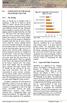 CHAPTER 9: Road Transport Services and Infrastructure 9.1 OVERVIEW OF THE ROAD TRANSPORT SECTOR 9.1.1 The Setting There are 88,100 km of classified roads in Zimbabwe, 17,400 km of which are paved (Table
main type of locomotive in use, but over half of those had surpassed their durable lifespan. China Afghanistan Project Sites Nepal
 Pakistan Diesel Electric Locomotives Rehabilitation Project (1) and Diesel Electric Locomotives Production Project (2) External Evaluator: Hajime Sonoda Field Survey: September 2004 1 Project Profile and
Canadian Manufacturers and Exporters
 Standing Committee on Finance (FINA) Pre-budget consultations 2012 Canadian Manufacturers and Exporters 1. Economic Recovery and Growth Responses Given the current climate of federal and global fiscal
Central African Republic Country Profile 2011
 Central African Republic Country Profile 2011 Public Disclosure Authorized Public Disclosure Authorized Public Disclosure Authorized Public Disclosure Authorized Region: Sub-Saharan Africa Income Group:
THE USE OF OUTSIDE CONTRACTORS FOR PORT MAINTENANCE. John R. Lethbridge
 Page 1 of 5 TRANSPORTATION, WATER AND URBAN DEVELOPMENT DEPARTMENT THE WORLD BANK November 1990 Transport No. PS-2 THE USE OF OUTSIDE CONTRACTORS FOR PORT MAINTENANCE John R. Lethbridge The use of outside
Domestic steel market overview
 Domestic steel market overview Chifipa Mhango Chief Economist: ArcelorMittal South Africa Investor Session: Cape Town & Johannesburg September 2011 The Economy in a nutshell Global overview Advanced economies
Now, I ll turn the conference over to Mr. Bernardo Hees, who will start the presentation. Mr. Hees, you may begin the conference
 Operator: Good morning ladies and gentlemen. At this time we would like to welcome everyone to América Latina Logística () s 2Q06 results conference call. Today with us we have Bernardo Hees the CEO; and
2.1 THE SETTING. 2.1.1 Background. 2.1.2 What is Infrastructure? 2.1.3 The Impact of Infrastructure on Growth
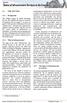 CHAPTER 2: Status of Infrastructure Services in the Economy 2.1 THE SETTING 2.1.1 Background This Chapter begins by briefly discussing the role that infrastructure plays in economic development and the
Food Commodity Trade The Need for a Regional Approach to Stimulate Agricultural Growth and Enhance Food Security
 Food Commodity Trade The Need for a Regional Approach to Stimulate Agricultural Growth and Enhance Food Security Introduction Economic growth and poverty reduction can only be achieved by developing the
Project LINK Meeting New York, 20-22 October 2010. Country Report: Australia
 Project LINK Meeting New York, - October 1 Country Report: Australia Prepared by Peter Brain: National Institute of Economic and Industry Research, and Duncan Ironmonger: Department of Economics, University
MADISON GENERAL INSURANCE COMPANY (Z) LIMITED (MGen) EXPORTING INSURANCE SERVICES TO TANZANIA: EXPERIENCE AND CHALLENGES
 MADISON GENERAL INSURANCE COMPANY (Z) LIMITED (MGen) EXPORTING INSURANCE SERVICES TO TANZANIA: EXPERIENCE AND CHALLENGES INTRODUCTION Zambia is a landlocked country in Southern Africa. The neighboring
Chairperson of the Board; Chief Executive Officer of PRASA, Mr Montana; Board Members; Acting Director General; Management Team from PRASA;
 SPEECH BY THE MINISTER OF TRANSPORT, MS DIPUO PETERS, MP, ON THE ANNUAL GENERAL MEETING OF THE PASSENGER RAIL AGENCY OF SOUTH AFRICA (PRASA) ON 29 SEPTEMBER 2014 AT HATFIELD, PRETORIA Chairperson of the
ECONOMIC ANALYSIS (Republic of the Marshall Islands: Public Sector Program)
 Public Sector Program (RRP RMI 43321-1) A. Summary ECONOMIC ANALYSIS (Republic of the Marshall Islands: Public Sector Program) 1. The Republic of the Marshall Islands (RMI) gross domestic product (GDP)
TAXATION AND AID FOR DOMESTIC RESOURCE MOBILIZATION (D.R.M.) AID: HELPING OR HARMING DOMESTIC RESOURCE MOBILIZATION IN AFRICA
 TAXATION AND AID FOR DOMESTIC RESOURCE MOBILIZATION (D.R.M.) AID: HELPING OR HARMING DOMESTIC RESOURCE MOBILIZATION IN AFRICA My presentation deals with i. Definition and Importance of Domestic Resource
Caucasus and Central Asia: Oil Price Decline and Regional Spillovers Darken the Outlook
 Caucasus and Central Asia: Oil Price Decline and Regional Spillovers Darken the Outlook Economic activity in the Caucasus and Central Asia (CCA) will continue to decelerate in 215 mainly as a consequence
Announcement of Financial Results 1999. for. Den Danske Bank Group
 Announcement of Financial Results 1999 for Den Danske Bank Group 2 Den Danske Bank Group Highlights Core earnings and net profit for the year (DKr million) 1999 1998 1997 1996 1995 Net interest income,
Cost and Financial Analysis
 Chapter 19: Cost and Financial Analysis A. INTRODUCTION The purpose of this chapter is to present examples of financial resources available to the Metropolitan Transportation Authority (MTA), which may
Market Efficient Public Transport? An analysis of developments in Oslo, Bergen, Trondheim, Kristiansand, and Tromsø
 TØI report 428/1999 Authors: Bård Norheim and Erik Carlquist Oslo 1999, 63 pages Norwegian language Summary: Market Efficient Public Transport? An analysis of developments in Oslo, Bergen, Trondheim, Kristiansand,
HAMBURGER HAFEN UND LOGISTIK AG
 HAMBURGER HAFEN UND LOGISTIK AG ANALYST CONFERENCE ON 2013 FINANCIAL YEAR RESULTS Hamburg, 27 March 2014 Hamburger Hafen und Logistik AG Agenda Chairman of the Executive Board Annual Financial Statements
FY 2012 SECOND QUARTER (CUMULATIVE) CONSOLIDATED FINANCIAL RESULTS (April 1, 2012 to September 30, 2012)
 FY 2012 SECOND QUARTER (CUMULATIVE) CONSOLIDATED FINANCIAL RESULTS (April 1, 2012 to September 30, 2012) 1.Company Name : SANKEN ELECTRIC CO., LTD. 2.Code NO : 6707 3.Headquarters : 363 Kitano, Niizashi,
Rehabilitation and Recovery in the Power Sector
 CHAPTER 8: Rehabilitation and Recovery in the Power Sector 8.1 THE SETTING The power supply in Zimbabwe is sourced from local generation and imports. The domestic generation comes from Kariba Hydropower,
Railway Reform in Europe: from endangered species to sustainable systems?
 Railway Reform in Europe: from endangered species to sustainable systems? International workshop on railway reform Ankara, 8 October 2009 Paul Guitink 09 July 2009 1 Content of this presentation representing
Chapter 12 Special Industries: Banks, Utilities, Oil and Gas, Transportation, Insurance, Real Estate Companies
 Chapter 12 Special Industries: Banks, Utilities, Oil and Gas, Transportation, Insurance, Real Estate Companies TO THE NET 1. a. Item 1 Business Market Area Competition The bank contends with considerable
FRANKLIN ELECTRIC REPORTS RECORD SECOND QUARTER 2013 SALES AND EARNINGS
 For Immediate Release For Further Information Refer to: John J. Haines 260-824-2900 FRANKLIN ELECTRIC REPORTS RECORD SECOND QUARTER 2013 SALES AND EARNINGS Bluffton, Indiana July 30, 2013 - Franklin Electric
On the Public Transport Spine Study
 On the Public Transport Spine Study Submission of the Wellington City Youth Council to Greater Wellington Regional Council The Wellington City Youth Council would also like to make an oral submission.
CENTURY ENERGY LTD. FORM 51-102F1 MANAGEMENT DISCUSSION AND ANALYSIS FOR THE YEAR ENDED AUGUST 31, 2014
 CENTURY ENERGY LTD. FORM 51-102F1 MANAGEMENT DISCUSSION AND ANALYSIS FOR THE YEAR ENDED AUGUST 31, 2014 The following management s discussion and analysis ( MD&A ), prepared as of December 11, 2014, should
SECTOR ASSESSMENT (SUMMARY): ENERGY 1
 Country Partnership Strategy: Kazakhstan 2012 2016 SECTOR ASSESSMENT (SUMMARY): ENERGY 1 Sector Road Map 1. Sector Performance, Problems, and Opportunities 1. Overview. Oil accounts for about a quarter
Doing More with the Same: How the Trinity Railway Express Increased Service without Increasing Costs
 Doing More with the Same: How the Trinity Railway Express Increased Service without Increasing Costs W. T. "Bill" Farquhar Trinity Railway Express Irving, TX Abstract The Trinity Railway Express (TRE)
Why build the Silvertown Tunnel?
 Why build the Silvertown Tunnel? Over the last 30 years east London has changed with the redevelopment of former industrial areas into major commercial and residential districts. The development of Canary
China s experiences in domestic agricultural support. Tian Weiming China Agricultural University
 China s experiences in domestic agricultural support Tian Weiming China Agricultural University Contents Background The policy system Major measures and their implementation Empirical assessment of the
SECTOR ASSESSMENT (SUMMARY): TRANSPORT, and INFORMATION AND COMMUNICATION TECHNOLOGY (ROAD TRANSPORT SUBSECTOR) 1
 Country Partnership Strategy: Kazakhstan 2012 2016 SECTOR ASSESSMENT (SUMMARY): TRANSPORT, and INFORMATION AND COMMUNICATION TECHNOLOGY (ROAD TRANSPORT SUBSECTOR) 1 1. Sector Performance, Problems, and
COST ANALYSIS OF FOUR ALTERNATIVES FOR HAULING COAL FROM THE PROPOSED OTHELLO MINE
 COST ANALYSIS OF FOUR ALTERNATIVES FOR HAULING COAL FROM THE PROPOSED OTHELLO MINE For the Jackson Mining Company Grand Forks, British Columbia Prepared by MMT Consulting Kelowna, British Columbia Submitted:
China Railways Development, Financing and Challenges
 China Railways Development, Financing and Challenges Zhang, Jianping Depart. of Development & Planning Ministry of Railway, P. R. China March 31, 2006 Transport Forum, World Bank 1. Current Situation of
Competitive Advantage of Libyan Business Environment
 Economics World, ISSN 23287144 May 2014, Vol. 2, No. 5, 325332 D DAVID PUBLISHING Competitive Advantage of Libyan Business Environment Salem Abdulla Azzaytuna University, Tripoli, Libya The economic development
Chief Financial Officer s report
 12 / British Airways 2008/09 Annual Report and Accounts Chief Financial Officer s report Last year we said that record profitability had put us in a good position to weather economic slowdown. That has
Opportunities. Railway Transportation (Engineering and Operations) Areas of Study. University of Kentucky
 Opportunities Railway Transportation (Engineering and Operations) Areas of Study University of Kentucky Introduction Railway Engineering and Operations, a branch of civil engineering, has a 180-year history
ADAPTATION OF FY2004 FINANCIAL STATEMENTS TO INTERNATIONAL FINANCIAL REPORTING STANDARDS (IFRS) April 5th, 2005
 ADAPTATION OF FY2004 FINANCIAL STATEMENTS TO INTERNATIONAL FINANCIAL REPORTING STANDARDS (IFRS) April 5th, 2005 1 Contents 1.General considerations 2.The effect of applying IFRS on financial statements
Greece. 1. Economic situation
 2. COUNTRY NOTES: GREECE 119 1. Economic situation The Greek economy is in a recession in the wake of the economic and sovereign debt crisis, exacerbated by the impact that austerity measures are having
VRE SYSTEM PLAN SUMMARY
 VRE System Plan Summary January 2014 VRE SYSTEM PLAN SUMMARY VRE A Cost-Effective Contributor to Regional Mobility During the last decade, VRE has demonstrated its ability to accommodate a rapid and substantial
Meeting Urban Development Challenges
 Discussion Draft Meeting Urban Development Challenges Its importance for both growth and poverty calls for a coherent national framework toward urbanization. The objective of such a framework should be
IMPLICATIONS OF OVERLAPPING MEMBERSHIP ON THE EXPECTED GAINS FROM ACCELERATED PROGRAM FOR ECONOMIC INTEGRATION (APEI)
 IMPLICATIONS OF OVERLAPPING MEMBERSHIP ON THE EXPECTED GAINS FROM ACCELERATED PROGRAM FOR ECONOMIC INTEGRATION (APEI) ABSTRACT In September 2012, five like-minded and reform oriented countries namely Malawi,
(April 1, 2015 June 30, 2015)
 Financial Results Summary of Consolidated Financial Results For the Three-month Period Ended June 30, 2015 (IFRS basis) (April 1, 2015 June 30, 2015) *This document is an English translation of materials
Case Story. The use of the WCO Time Release Study to measure border performance in a landlocked developing country (Uganda)
 Case Story The use of the WCO Time Release Study to measure border performance in a landlocked developing country (Uganda) Executive Summary (1) A Time Release study (TRS) is a unique tool 1 and method
Monthly Report PERFORMANCE OF THE ECONOMY. April 2016 MACROECONOMIC POLICY DEPARTMENT MINISTRY OF FINANCE, PLANNING AND ECONOMIC DEVELOPMENT
 Monthly Report PERFORMANCE OF THE ECONOMY April 2016 MACROECONOMIC POLICY DEPARTMENT MINISTRY OF FINANCE, PLANNING AND ECONOMIC DEVELOPMENT www.finance.go.ug Contents ACRONYMS... 2 HIGHLIGHTS... 3 REAL
In recent years, fiscal policy in China has been prudent. Fiscal deficits
 1 Fiscal Policy in China STEVEN DUNAWAY AND ANNALISA FEDELINO* In recent years, fiscal policy in China has been prudent. Fiscal deficits have been lower than budgeted, because revenue overperformances
Management Discussion and Analysis of Financial Position and Operating Results
 Management Discussion and Analysis of Financial Position and Operating Results The purpose of this analysis is to provide the reader with an overview of how the financial position of Héroux-Devtek Inc.
Fifty years of Australia s trade
 Fifty years of Australia s trade Introduction This edition of Australia s Composition of Trade marks the publication s 50th anniversary. In recognition of this milestone, this article analyses changes
Capital Gains Taxes: An Overview
 Order Code 96-769 Updated January 24, 2007 Summary Capital Gains Taxes: An Overview Jane G. Gravelle Senior Specialist in Economic Policy Government and Finance Division Tax legislation in 1997 reduced
The history of the Bank of Russia s exchange rate policy
 The history of the Bank of Russia s exchange rate policy Central Bank of the Russian Federation Abstract During the post-soviet period of 1992 98, the monetary policy of the Bank of Russia was essentially
PPP Models. Ownership of capital assets Responsibility for investment Assumption of risks, and Duration of contract.
 PPP Models The PPP models vary from short-term simple management contracts (with or without investment requirements) to long-term and very complex BOT form, to divestiture. These models vary mainly by:
Thailand s Logistics
 Thailand s Logistics Over the past fourteen years, overall international trade with Thailand has grown 340% and manufacturing trade 370%; this growth, aided in part by the nation s bilateral trade agreements
Income tax is levied on the income of households and businesses.
 Fiscal Policy: Taxing and Spending Simply stated, fiscal policy consists of taxing and spending the taxes being necessary to finance the spending. This section reviews the purposes of public spending,
STRENGTHENING HEALTH SERVICES & THEIR COORDINATION THROUGH A PPP IN TETE PROVINCE
 STRENGTHENING HEALTH SERVICES & THEIR COORDINATION THROUGH A PPP IN TETE PROVINCE Concept note 28/02/2013 Proposition: Rehabilitate and upgrade the Provincial hospital, as well as key aspects of district
SNCF 2014 ANNUAL RESULTS
 PRESS RELEASE NO. 07 PARIS, 12 FEBRUARY 2015 SNCF 2014 ANNUAL RESULTS Note: This press release comes amid the implementation of French legislation the Act of 4 August 2014 introducing rail reform and creating
PARASTATAL SECTOR REFORM AND PRIVATISATION IN TANZANIA
 PARASTATAL SECTOR REFORM AND PRIVATISATION IN TANZANIA George Mbowe Introduction A dramatic change has taken place in Tanzania since the mid-1980s. It is observed that the cumulative process of the country's
FINANCIAL PERFORMANCE AND PROJECTIONS
 Samarkand Solar Power Project (RRP UZB 45120) FINANCIAL PERFORMANCE AND PROJECTIONS A. Introduction 1. An analysis of the historical financial performance and financial statements projection of the State
Chapter 12: Gross Domestic Product and Growth Section 1
 Chapter 12: Gross Domestic Product and Growth Section 1 Key Terms national income accounting: a system economists use to collect and organize macroeconomic statistics on production, income, investment,
Financial Analysis, Traffic Forecast and Analysis of Railway Payment
 FIXED LINK ACROSS FEHMARNBELT Trafikministeriet, København Bundesministerium für Verkehr, Bau- und Wohnungswesen, Berlin Financial Analysis, Traffic Forecast and Analysis of Railway Payment Summary Report
6. Economic Outlook. The International Economy. Graph 6.2 Terms of Trade Log scale, 2012/13 average = 100
 6. Economic Outlook The International Economy Growth of Australia s major trading partners is expected to be around its long-run average in 015 and 016 (Graph 6.1). Forecasts for 015 have been revised
2012 King County Metro Transit Peer Agency Comparison on Performance Measures
 2012 Peer Agency Comparison on Performance Measures Department of Transportation Metro Transit Division King Street Center, KSC-TR-0415 201 S. Jackson St Seattle, WA 98104 206-553-3000 TTY Relay: 711 www.kingcounty.gov/metro
Financing Capital Requirements
 Of the independent growers, a typical one produces about four batches of I o thousand birds a year. His capital assets are about as follows: Land, buildings, and equipment, 30 thousand dollars; feed, 4,500
Transit in the United States 3. Operating Costs and Performance Measures 13. Quality of Transit Service 19. ADA Compliance Bus 28
 1999 National Transit Summaries and Trends Introduction 1 Introduces the transit modes discussed throughout the NTST. Transit in the United States 3 National statistics and trends in ridership, miles of
China Clean Energy Announces Third Quarter 2011 Financial Results
 China Clean Energy Inc. ccontact: China Clean Energy Inc. William Chen, CFO Email: [email protected] Website: http://www.chinacleanenergyinc.com CCG Investor Relations Inc. David Rudnick,
WORLD BANK WORLD BANK
 XV. Financial Planning Public Transport Planning and Reform: An Introduction Public Transport Financial Planning Systematic approach that helps produce a financially sustainable program for implementing
How To Understand And Understand The Trucking Industry
 Freight Factoring: Pros and Cons for Trucking Companies Table of Contents Introduction 2 The Trucking Industry 2 Trucking Industry: The Key Issue 4 Credit periods 4 Operating during the credit periods
Raymond James Global Airline and Transportation Conference
 Raymond James Global Airline and Transportation Conference United Continental Holdings, Inc. November 6, 2014 Jim Compton Vice Chairman and Chief Revenue Officer Safe Harbor Statement Certain statements
Contact: Ken Bond Deborah Hellinger Oracle Investor Relations Oracle Corporate Communications 1.650.607.0349 1.212.508.7935
 For Immediate Release Contact: Ken Bond Deborah Hellinger Oracle Investor Relations Oracle Corporate Communications 1.650.607.0349 1.212.508.7935 [email protected] [email protected] CLOUD
Condensed Interim Consolidated Financial Statements
 Condensed Interim Consolidated Financial Statements Unaudited (Expressed in Canadian dollars) NOTICE TO READER: These condensed interim consolidated financial statements have not been reviewed by the Company's
FISCAL POLICY* Chapter. Key Concepts
 Chapter 11 FISCAL POLICY* Key Concepts The Federal Budget The federal budget is an annual statement of the government s expenditures and tax revenues. Using the federal budget to achieve macroeconomic
Turkey Railway Infrastructure and Rolling Stock Summit
 Turkey Railway Infrastructure and Rolling Stock Summit 24-25 October İstanbul Where is Turkey in railways reform? Dr. Göktuğ KARA ([email protected]) Sector Manager for Transport Policy EU Delegation
Countermeasures Taken by China Railway in the Competition oftransportation M arket
 Countermeasures Taken by China Railway in the Competition oftransportation M arket Yu Yan Vice Chief-Editor Railway Economics Research Economicand PlanningResearch Institute (EPRI) ofthe M inistry ofrailways
West Bank and Gaza: Labor Market Trends, Growth and Unemployment 1
 West Bank and Gaza: Labor Market Trends, Growth and Unemployment 1 Labor market developments in the West Bank and Gaza (WBG) since the 1994 Oslo accords have reflected relatively sluggish growth performance.
Surface Transport in India
 Brochure More information from http://www.researchandmarkets.com/reports/845404/ Surface Transport in India Description: Spending on logistics in India is estimated to be around 13% of GDP, which amounts
INDIA CONSTRUCTION INTRODUCTION IMPORTANCE OF INFRASTRUCTURE CONSTRUCTION IN INDIA
 IMPORTANCE OF INFRASTRUCTURE CONSTRUCTION IN INDIA INTRODUCTION 1 5 M A R C H 2 0 0 9 Infrastructure development and maintenance is a major input to economic development and sustained growth in an economy.
Results of Electricity Sector Restructuring in Chile
 Case Study From 1 Chile is a leader of the privatization movement in South America. In 1986, to meet the growing demand for energy, Chile began restructuring of the state-owned power sector. Before selling
MEDIA RELEASE SIKA WITH STRONG GROWTH IN EMERGING MARKETS
 DATUM 1 / 6 Zugerstrasse 50 6341 Baar, Switzerland www.sika.com CONTACT TELEPHONE E MAIL Dominik Slappnig Corporate Communications & Investor Relations +41 58 436 68 21 [email protected] SIKA
General Certificate of Education Advanced Level Examination June 2013
 General Certificate of Education Advanced Level Examination June 2013 Economics ECON4 Unit 4 The National and International Economy Tuesday 11 June 2013 9.00 am to 11.00 am For this paper you must have:
Agents summary of business conditions
 Agents summary of business conditions February Consumer demand had continued to grow at a moderate pace. Housing market activity had remained subdued relative to levels in H. Investment intentions for
Consolidated Earnings Report for the Second Quarter of Fiscal 2011 [Japanese GAAP]
![Consolidated Earnings Report for the Second Quarter of Fiscal 2011 [Japanese GAAP]](/thumbs/39/20260573.jpg "Consolidated Earnings Report for the Second Quarter of Fiscal 2011 [Japanese GAAP]") Consolidated Earnings Report for the Second Quarter of Fiscal 2011 [Japanese GAAP] October 27, 2010 Company Name: KOITO MANUFACTURING CO., LTD. Stock Listing: First Section, Tokyo Stock Exchange Code Number:
Consolidated Earnings Report for the Second Quarter of Fiscal 2011 [Japanese GAAP] October 27, 2010 Company Name: KOITO MANUFACTURING CO., LTD. Stock Listing: First Section, Tokyo Stock Exchange Code Number:
Impact of Global Financial Crisis on South Asia
 Impact of Global Financial Crisis on South Asia February 17, 2009 - The global financial crisis hit South Asia at a time when it had barely recovered from severe terms of trade shock resulting from the