
Plantar Heel Pain. Papers. Shazia Ali, FY2 Davinder Paul Singh Baghla
|
|
|
- Avice Watts
- 9 years ago
- Views:
Transcription
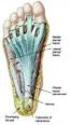
1 Shazia Ali, FY2 Davinder Paul Singh Baghla Abstract Plantar Heel pain is one of the most commonly encountered problems of foot pain in active adults over the age of 40. One in ten people will experience heel pain, and for many the problem will have a significant impact upon their daily activities. This article focuses on the differential diagnosis, investigations and management of plantar heel pain in primary care. An evidenced based approach is presented for the treatment of plantar fasciitis, especially considering the multitude of treatment modalities available. Keywords Heel pain, Planter fasciitis, Heel spur, Tarsal tunnel syndrome Introduction The foot is a beautifully engineered structure, being highly adaptive to the functions it delivers. It behaves as a flexible linkage during early stance phase (heel strike) permitting force dissipation, whilst being rigid in late stance (toe off) allowing it be a rigid lever to allow propulsion. The compartmentalised plantar heel fat pad further enhances shock absorption, whilst the static plantar fascia provides an energy efficient mechanism for standing and walking. The bony anatomy of the foot is formed from articulations of the calcaneus (heel bone) proximally to tarsals, metatarsals and phalanges distally, constituting the medial longitudinal and transverse arches. The plantar fascia originates from the medial tubercle of the calcaneus and fans out across the superficial plantar surface of the foot to insert beyond the MTP joints onto the proximal phalanges. Passive MTP extension thus tightens this static structure and elevates the medial arch, promoting energy efficient propulsion called the Windlass mechanism. Sandwiched between the fascia and bones are the long flexor tendons, terminal branches of the posterior tibial nerve and posterior tibial vessels, which all transit behind the medial malleolus. The small intrinsic muscles of the foot are the final contents of the plantar foot compartment. Achilles tendon Figure 1 Plantar fascia Causes of Plantar Heel pain The most common cause of plantar heel pain in the adult population is proximal plantar fasciitis. However there are multiple differential diagnoses (Table 1), most of which can be excluded following a comprehensive history and physical examination. A history of trauma, neurological symptoms, night pain, and systemic constitutional symptoms should alert the physician to atypical aetiologies. The patient should also be directly questioned about Local Proximal plantar fasciitis Tarsal tunnel syndrome Compression of the first branch of lateral plantar nerve Fat pad atrophy Plantar fascia rupture Stress fracture of calcaneus Bone tumour or bone cyst Osteomyelitis Regional Spinal stenosis Prolapsed intervertebral disc (S1 or L5 nerve root) Systemic Rheumatoid arthritis Seronegative spondyloarthropathies Drug induced tendonopathy Hypovitaminosis D Table 1: Differential Diagnosis of plantar foot pain Shazia Ali, FY2, Orthopaedics, Ealing Hospital Davinder Paul Singh Baghla, Consultant Foot and Ankle Surgeon, Ealing Hospital/ Associate Clinical Professor Correspondence address: Ealing Hospital, Uxbridge Rd, Southall, Middlesex UB1 3HW 30

2 their medication history as prolonged Statins and quinolone antibiotics have been associated with tendonopathy 1. In targeted risk groups, vitamin D deficiency should also be excluded. Plantar Fasciitis Characteristic features Occupation history involving prolonged standing/ ambulation. Pain is often unilateral, but can manifest bilaterally Insidious onset of pain without antecedent trauma. Patients may relate the onset with increased exercise activity, or weight gain. Pain is localised to the plantar and medial aspects of the heel. It is worse typically with the first few steps in the morning, or after a period of rest. The pain improves with walking and stretching, but is aggravated by prolonged ambulation and standing. Plantar Fasciitis Pathophysiology Excessive or unaccustomed overuse causes repetitive microtears to the plantar fascia, leading to collagen degeneration. This is followed by an inflammatory response and reparative process which can double the thickness of the plantar fascia (normally approximately 3 mm). Biopsy specimens reveal collagen necrosis, fibroblastic proliferation, angiogenesis, and calcification; all in keeping with chronic inflammation. Biomechanically, a contracture in the gastrocnemiussoleus complex, a pes cavus (high arch), or a pes planus (flat foot) deformity can all increase the traction force at the origin of the plantar fascia during weight-bearing activities. Work Up Clinical Diagnosis Plantar fasciitis is a clinical diagnosis, confirmed by typical plantar medial heel tenderness. The weight bearing plantar fascia Windlass or Jack s test (Figure 1) is only positive in 30% of cases 2. The presence of significant Achilles tightness should be sought by assessing ankle dorsiflexion, as well as isolated gastrocnemius contracture by Silfverskiold s test (differential reduced ankle dorsiflexion with knee extension v flexion) (Figure 2). Laboratory Studies Laboratory studies are rarely indicated. However heel pain (especially bilateral), can be a rare primary presenting sign of systemic inflammatory disorders. In the presence of systemic symptoms, a full blood screen is recommended including inflammatory markers, such as the erythrocyte sedimentation rate (ESR), rheumatoid factor (RF), antinuclear antibodies (ANA), and human leukocyte antigen (HLA)-B27. Checking Vitamin D status in high risk groups is also advisable. Imaging Studies Plain lateral radiographs can show calcaneal spurs in approximately 50% of patients with plantar fasciitis, but it is also noted in 19% of asymptomatic individuals 3. As the presence of a calcaneal spur does not alter the treatment, a diagnostic x-ray is not recommended. In atypical presentations, plain lateral view radiographs of the calcaneus can be useful in detecting a stress fracture, bony infections or tumours. Ultrasonographic examination of the plantar heel can confirm a thickened plantar fascia, with associated hyperaemia. The role of ultrasound can be extended to undertake targeted injections, and hence can be requested following a failure of conservative management. MRI scanning is reserved for identifying atypical causes of plantar heel pain. It can reliably confirm a stress fracture prior to it being detectable with plain radiographs. MRI is also very useful to investigate for soft-tissue or bone tumours in the foot, as well as any space-occupying lesions in the tarsal tunnel, causing tarsal tunnel syndrome. Treatment 90% of all patients with a diagnosis of plantar fasciitis can be effectively treated non-invasively, and therefore it is a prime example of a condition that can be effectively managed in the primary care setting. Although most patients automatically modify their footwear to soft flat shoes, a small minority continue to wear excessively high heels. This shoewear should be actively discouraged as it promotes Achilles tightness, thereby being counterproductive to the essential stretching exercise programme. Non-Invasive Therapy: The following modalities have been have been stratified according to their effectiveness/ evidence base from high to low. Stretching/ Physical therapy programme Physical therapy remains the gold standard treatment for plantar fasciitis symptoms. It involves stretching of the calf and foot with the knee in both the extended and flexed positions. A calf stretch is performed with the patient standing with staggered legs facing towards a wall, with both hands stretched out. The patient then leans towards the wall maintaining a stretch for seconds, before alternating limbs. These stretches should be conducted first thing in the morning and during the day, especially after prolonged recumbency (Figure 3). More recently a specific plantar fascia stretch programme has been advocated. This involves the patient crossing the affected foot over the contralateral leg, grasping the toes and pulling them towards the shin until a stretch in the arch is felt. The stretch is held for 10 31

3 Papers seconds and repeated 10 times. Three sets of 10 repetitions are performed daily (Figure 4). In a prospective RCT that compared calf stretching versus the plantar fascia specific stretch, both approaches were found to be effective in decreasing pain, with the specific plantar fascia stretch being more efficacious 4. Whether the combination of the two techniques produces additive benefit is still unknown. Foot Rolling is a recommended form of local physical therapy aimed directly at the plantar fascia (Figure 5). It involves using either a hard ball, or cylindrical object (tin can, bottle, rolling pin) to massage the plantar aspect of the foot. Although there is limited evidence for its individual effectiveness, foot rolling is usually combined with other manual therapies. Figure 3 Orthotics Shoe inserts have been shown to be effective in managing the symptoms of plantar fasciitis. Numerous types of orthoses are available from prefabricated to custom made, soft to firm material, and full length to heel only. A RCT has shown no long term difference between prefabricated or custom made orthoses, and no added benefit from magnet-embedded insoles. Silicone prefabricated heal inserts, which are widely available, offers an excellent balance of effectiveness with low cost. Importantly, it has however been shown that stretching combined with insole use is significantly more effective than orthotics alone. Anti-inflammatory medication The use of NSAIDs may not be beneficial to the physiologic processes of soft-tissue healing, however they have been found to be efficacious in controlling pain. Anti-inflammatories are a useful adjunct in allowing more rapid progress with a physical therapy programme. The disadvantages of these medications are many, including the risk of gastrointestinal bleeding, gastric ulceration, renal damage, and cardiovascular events. Cautious prescribing is therefore advised, although topical NSAIDs combine benefits of physical application along with mild analgesic effects, and a reduced side effect profile. Figure 4 Figure 5 Night splints Most people naturally sleep with their feet in a plantarflexed position, which causes the plantar fascia to contract at night, thereby opposing the benefits of daytime stretching. Night splints are designed to maintain the ankle in a neutral position during sleep, passively stretching the calf and the plantar fascia for a prolonged period. Although evidence suggests that 80% of patients benefit from nocturnal splinatge 5, their discomfort and poor compliance limits their use, and is reserved resistant cases with symptoms of plantar fasciitis for greater than 6 months. They are worn for up to 3 months, whilst continuing with a standard stretching programme. 32

4 Strapping/ Taping Arch taping is a technique provided by physiotherapists which allows the plantar fascia to stretch continuously. As taping is difficult for patients to apply correctly, there is little perceived benefit over the use of standard orthoses. No studies have evaluated the effectiveness of taping or strapping alone for managing plantar fasciitis. Invasive Therapy A minority of patients with plantar fasciitis (<10%), may continue to be symptomatic despite adequate conservative treatment. For such resistant cases the history and examination should be revisited to explore for any signs suggestive of an atypical cause for plantar heel pain (Table 1). There is good evidence for the efficacy of invasive procedures, but this is offset by the additional risks. Corticosteroid injections therapy Results of a Cochrane review 6 show that corticosteroid injections are very effective in providing short term symptoms relief of plantar fasciitis, however this is not maintained beyond six months when compared with control groups. A corticosteroid injection may be given through a plantar or a medial approach, with or without ultrasound guidance. Studies have reported a reduced rate of recurrence with the use of ultrasound targeting, however concerns remain regarding the potential risks which include plantar fascia rupture in up to 10%, and fat pad atrophy. In the presence of plantar fascia rupture, clinical results are universally poor even beyond 2 years. Surgical Plantar fascia release Surgical intervention involves partial resection of the medial plantar fascia from its bony attachment at the calcaneus. Traditionally this is achieved with a standard medial incision, however percutaneous methods involving ultrasound guidance as well as endoscopy have been developed. Large cohort 10 year follow up case series indicate 70% of patients show improvement following surgery, but only 50% of patients display complete satisfaction 7. There remains significant impairment of function in 27%, and therefore full counselling regarding the risks and benefits must be provided before embarking on surgery. Following complete division of the plantar fascia, the development of pes planus and secondary hallux valgus/ hammer toes is expected, and therefore orthotics are required lifelong post-operatively. Although partial release limits these risks, the likelihood of continuing pain remains high. Future Treatments Autologous blood/ Platelet injections There is a substantially growing enthusiasm for the use of growth factor containing harvested blood/ platelet concentrate which unlike steroids can stimulate the reparative process. Blood is harvested and either injected whole, or centrifuged to remove the platelet rich plasma (PRP), before injecting it into the site of abnormality under ultrasound guidance. Its action is to stimulate an acute inflammatory reaction that leads to initiation of the healing process, and has shown early promising results in a number of chronic inflammatory musculotendinous conditions 8. Extracorporeal Shock Wave Therapy (ESWT) This involves the use of low energy sound waves (c.f. lithotripsy) to be administered non-invasively, directly over the plantar heal. The energy imparted causes localised microtrauma that generates an inflammatory response, with angiogenesis and potential repair. This out-patient procedure takes about 30 minutes and can be performed under general or local anaesthesia. Side effects include bruising, pain, numbness, tingling and swelling. Patients who are anti-coagulated or have a bleeding tendency, are contraindicated to receive ESWT. There has been a number of RCT s examining the efficacy of ESWT for plantar fasciitis, with mixed results being published. NICE have appreciated that although there is no concrete evidence to support ESWT, in view of its non-invasive modality and the potential to offer significant pain relief in select patients, its use is supported with adequate audit of its use 9. Conclusion Plantar fasciitis is common problem confronting the primary care physician. Its diagnosis is primarily clinical, but care has to be taken to avoid missing unusual causes of plantar heel pain. The vast majority of patients are successfully managed with a combination of stretching exercises, heel orthoses and topical or oral NSAID use. In general, the longer the duration of symptoms, the longer it takes for the patient to obtain complete pain relief. Based on long-term follow-up data, the clinical course for most patients is positive, with 80% reporting resolution of symptoms within a 12-month period 10. Refractory plantar fasciitis should alert the physician to the possibility of atypical causes, and initiate referral for imaging and consideration for invasive treatment modalities. Exciting future therapies including ESWT and PRP injections remain experimental, but offer hope to the 10% of patients who develop long term symptom chronicity. Key points Nearly all patients with a diagnosis of plantar fasciitis can be managed effectively with a combination of stretching exercises, heel orthoses and NSAIDs X-ray imaging to confirm calcaneal spurs are unnecessary. Ultrasound guided injections allow the diagnosis to be confirmed, as well as accurate targeting. Blind injections are to be discouraged. Be alert to heel pain in elderly patients or atypical presentations, which should be referred for an orthopaedic opinion. 33

5 Papers References 1. Marie I, Delafenêtre H, Massy N, Thuillez C, Noblet C. Tendinous disorders attributed to statins: a study on ninety-six spontaneous reports in the period and review of the literature. Arthritis Rheum. Mar 2008:15;59(3): De Garceau D, Dean D, Requejo SM, Thordarson DB. The association between diagnosis of plantar fasciitis and Windlass test results. 3UU. TQRK 6T, 9 GY2003;24(3): DiMarcangelo MT, Yu TC. Diagnostic imaging of heel pain and plantar fasciitis. 0ROT?UJOG Y9 KJ BaYM. 1997;14: DiGiovanni BF, Nawoczenski DA, Lintal ME, et al. Tissue-specific plantar fascia-stretching exercise enhances outcomes in patients with chronic heel pain. A prospective, randomized study. J Bone Joint Surg Am. Jul 2003;85-A(7): Berlet GC, Anderson RB, Davis H, Kiebzak GM. A prospective trial of night splinting in the treatment of recalcitrant plantar fasciitis: Orthopedics. Nov 2002;25(11): Crawford F, Thomson C. Interventions for treating plantar heel pain. Cochrane Database Syst Rev. 2003;(3):CD Vohra PK, Giorgini RJ, Sobel E, Japour CJ, Villalba MA, Rostkowski T. Long-term follow-up of heel spur surgery. A 10-year retrospective study. J Am Podiatr Med Assoc. 1999;89: Lee TG, Ahmad TS. Intralesional autologous blood injection compared to corticosteroid injection for treatment of chronic plantar fasciitis. A prospective, randomized, controlled trial. Foot Ankle Int. Sep 2007;28(9): Cambell B Wolgin M, Cook C, Graham C, Mauldin D. Conservative treatment of plantar heel pain: long-term follow-up. Foot Ankle Int. 1994;15:

.org. Plantar Fasciitis and Bone Spurs. Anatomy. Cause
 Plantar Fasciitis and Bone Spurs Page ( 1 ) Plantar fasciitis (fashee-eye-tiss) is the most common cause of pain on the bottom of the heel. Approximately 2 million patients are treated for this condition
Page 2 of 6 plantar fascia. This is called the windlass mechanism. Later, we'll discuss how this mechanism is used to treat plantar fasciitis with str
 Page 1 of 6 Plantar Fasciitis (Heel Pain) Plantar fasciitis is a painful condition affecting the bottom of the foot. It is a common cause of heel pain and is sometimes called a heel spur. Plantar fasciitis
Objectives Learn the anatomy of the foot. Identify key terms associated with plantar fasciitis. Determine the causes of plantar fasciitis and understa
 Plantar Fasciitis Objectives Learn the anatomy of the foot. Identify key terms associated with plantar fasciitis. Determine the causes of plantar fasciitis and understand why it occurs. Recognize the injury
Plantar fascia. Plantar Fasciitis (pain in the heel of the foot)
 ! Plantar fascia Plantar Fasciitis (pain in the heel of the foot) Plantar Fasciitis is the most common foot problem seen in runners and is often associated with an increase in running mileage. Typically
Plantar Fasciitis. Plantar Fascia
 Plantar Fasciitis Introduction Plantar fasciitis is an inflammation of the thick band of tissue that connects your heel bone to your toes. This thick band of tissue is called the plantar fascia. Plantar
A Patient s Guide to Plantar Fasciitis. Foot and Ankle Center of Massachusetts, P.C.
 A Patient s Guide to Plantar Fasciitis Welcome to Foot and Ankle Center of Massachusetts, where we believe in accelerating your learning curve with educational materials that are clearly written and professionally
PODIATRIC SURGERY INFORMATION GUIDE: MANAGEMENT OF PLANTAR FASCIITIS/HEEL PAIN
 PODIATRIC SURGERY INFORMATION GUIDE: MANAGEMENT OF PLANTAR FASCIITIS/HEEL PAIN What is Plantar Fasciitis? Plantar fasciitis is pain in the heel and arch area of the foot. The plantar fascia is a strong
Heel Pain: Heal! Amie C. Scantlin, DPM, MS, FACFAS Glencoe Regional Health Services (320) 864-3121 ext. 1933
 Heel Pain: Heal! Amie C. Scantlin, DPM, MS, FACFAS Glencoe Regional Health Services (320) 864-3121 ext. 1933 www.grhsonline.org Important Notice The information contained in this document is for informational
.org. Achilles Tendinitis. Description. Cause. Achilles tendinitis is a common condition that causes pain along the back of the leg near the heel.
 Achilles Tendinitis Page ( 1 ) Achilles tendinitis is a common condition that causes pain along the back of the leg near the heel. The Achilles tendon is the largest tendon in the body. It connects your
How To Treat Heel Pain
 Plantar Fasciitis, Heel Spurs, Heel Pain The Plantar Fasciitis Organization is dedicated to the understanding of Plantar Fasciitis, Heel Spurs, and all other forms of Heel Pain. Welcome to the Plantar
Lower Back Spinal Fusion & Exercise
 & Exercise with Rick Kaselj, MS More FREE Information on Exercise & Injuries $299 Fitness Education Returning the Shoulder Back to Optimal Function Seminar Exercise Modification for the Sensitive Shoulder
Common Foot & Ankle Sports Injuries
 Common Foot & Ankle Sports Injuries Symptoms Related to Abnormal Foot Biomechanics & their Differential Diagnosis Daniel Pang BSc (Hon) P&O, Cped Certified Pedorthist (USA) Only 10% of foot having structure
Predislocation syndrome
 Predislocation syndrome Sky Ridge Medical Center, Aspen Building Pre-dislocation syndrome, capsulitis, and metatarsalgia are all similar problems usually at the ball of the foot near the second and third
Outline. The Agony of the Foot: Disclosure. Plantar Fasciitis. Top 5 Foot and Ankle Problems in Primary Care. Daniel Thuillier, M.D.
 The Agony of the Foot: Top 5 Foot and Ankle Problems in Primary Care Daniel Thuillier, M.D. Assistant Professor of Clinical Orthopaedics University of California San Francisco Plantar Fasciitis Achilles
Heel pain and Plantar fasciitis
 A patient s guide Heel pain and Plantar fasciitis Fred Robinson BSc FRCS FRCS(orth) Consultant Trauma & Orthopaedic Surgeon Alex Wee BSc FRCS(orth) Consultant Trauma & Orthopaedic Surgeon. What causes
PLANTAR FASCITIS (Heel Spur Syndrome)
 PLANTAR FASCITIS (Heel Spur Syndrome) R. Amadeus Mason MD Description Plantar fascitis is characterized by stiffness and inflammation of the main fascia (fibrous connective [ligament-like] tissue) on the
Plantar Fascia Release
 Plantar Fascia Release Introduction Plantar fasciitis is a common condition that causes pain around the heel. It may be severe enough to affect regular activities. If other treatments are unsuccessful,
A Guide to Heel Pain
 The Society of Chiropodists and Podiatrists A Guide to Heel Pain The Society of Chiropodists and Podiatrists Heel pain may be caused by a number of different problems; for effective treatment you need
Plantar Fasciitis Information Leaflet. Maneesh Bhatia. Consultant Orthopaedic Surgeon
 Plantar Fasciitis Information Leaflet Maneesh Bhatia Consultant Orthopaedic Surgeon What is plantar fasciitis? The plantar fascia is a strong band of tissue that stretches from the heel to the toes. It
Clinical Analysis of Foot Problems
 Clinical Analysis of Foot Problems by Karen S. Seale, M.D. Introduction Orthotists are vital members of the foot care team. Their expertise and special interests in materials and biomechanics add a unique
Heel Pain Syndromes DELLON INSTITUTES FOR PERIPHERAL NERVE SURGERY
 Heel Pain s 5 3333 N CALVERT ST, SUITE 370, BALTIMORE, MD 21218 T410 467 5400 F410 366 9826 delloninstitutes.com your complaints are Pain, numbness or burning in your heel. The timing of this pain and
The Diagnosis and Management of Heel Pain in Active People
 The Diagnosis and Management of Heel Pain in Active People Perry Julien, D.P.M. Past President, American Academy of Podiatric Sports Medicine Podiatry Coordinator, 1996 Summer Olympic Games Atlanta Georgia
Chapter 140 Heel Pain
 Chapter 140 Heel Pain David R. Richardson, MD E. Greer Richardson, MD I. Overview and Epidemiology A. General characteristics Heel pain (subcalcaneal pain syndrome) is the most common foot-related symptom
.org. Posterior Tibial Tendon Dysfunction. Anatomy. Cause. Symptoms
 Posterior Tibial Tendon Dysfunction Page ( 1 ) Posterior tibial tendon dysfunction is one of the most common problems of the foot and ankle. It occurs when the posterior tibial tendon becomes inflamed
Endoscopic Plantar Fasciotomy
 Endoscopic Plantar Fasciotomy Introduction Plantar fasciitis is a common condition that causes pain centralized around the heel. It may be severe enough to affect regular activities. Health care providers
Podo Pediatrics Identifying Biomechanical Pathologies
 Podo Pediatrics Identifying Biomechanical Pathologies David Lee, D.P.M., D. A.B.P.S. Purpose Identification of mechanical foot and ankle conditions Base treatments Knowing when to refer to a podiatrist
CLINICAL PRACTICE GUIDELINES FOR MANAGEMENT OF LOW BACK PAIN
 CLINICAL PRACTICE GUIDELINES FOR MANAGEMENT OF LOW BACK PAIN Low back pain is very common, up to 90+% of people are affected by back pain at some time in their lives. Most often back pain is benign and
GET A HANDLE ON YOUR HEEL PAIN GUIDE
 GET A HANDLE ON YOUR HEEL PAIN GUIDE American Podiatric Medical Association www.apma.org/heelpain Take a Moment to Focus in on Your Feet. Does one (or even both) of your heels hurt? If so, you aren t alone.
HEEL PAIN. Differential diagnosis. 1. Insertional Plantar fascitis. 2. Enthesis. 3. Heel pad atrophy. 4. Tarsal tunnel syndrome
 HEEL PAIN Differential diagnosis 1. Insertional Plantar fascitis 2. Enthesis 3. Heel pad atrophy 4. Tarsal tunnel syndrome 5. Calcaneal stress fracture 6. Haglund s syndrome 7. Posterior ankle impingement
Plantar fasciitis is a common foot problem that occurs in 10%
 Review Article Plantar Fasciitis Heel Pain: Part 1 a Practical Management Plantar fasciitis is a common foot problem that occurs in 10% of the population. 1,2 The most involved age group is 40-50 3,4 Actually,
Plantar Heel Pain. By: Kevin Kleiner, M.B.S. New York College of Podiatric Medicine
 Plantar Heel Pain By: Kevin Kleiner, M.B.S. New York College of Podiatric Medicine Plantar Heel Pain: - Many Etiologies but few solutions Plantar heel pain more specifically: Heel pain felt in ones rear-foot
.org. Cervical Spondylosis (Arthritis of the Neck) Anatomy. Cause
 Cervical Spondylosis (Arthritis of the Neck) Page ( 1 ) Neck pain can be caused by many things but is most often related to getting older. Like the rest of the body, the disks and joints in the neck (cervical
RUNNING INJURIES: PREVENTION AND REHABILITATION
 RUNNING INJURIES: PREVENTION AND REHABILITATION Topics of Tonight s s Lecture Common Injuries and Treatments Causes of Common Injuries Measures to Avoid Injury Most Common Running Injuries Plantar Fascitis
Adult Advisor: Plantar Fasciitis. Plantar Fasciitis
 Adult Advisor: Plantar Fasciitis Page 1 of 3 Plantar Fasciitis What is plantar fasciitis? Plantar fasciitis is a painful inflammation of the bottom of the foot between the ball of the foot and the heel.
A Patient s Guide to Arthritis of the Big Toe (Hallux Rigidus) With Discussion on Cheilectomy and Fusion
 A Patient s Guide to Arthritis of the Big Toe (Hallux Rigidus) With Discussion on Cheilectomy and Fusion The foot and ankle unit at the Royal National Orthopaedic Hospital (RNOH) is a multi-disciplinary
Treatment of Recalcitrant Intermetatarsal Neuroma With 4% Sclerosing Alcohol Injection: A Pilot Study
 Treatment of Recalcitrant Intermetatarsal Neuroma With 4% Sclerosing Alcohol Injection: A Pilot Study Christopher F. Hyer, DPM,' Lynette R. Mehl, DPM,2 Alan J. Block, DPM, MS, FACFAS,3 and Robert B. Vancourt,
Understanding. Heel Pain
 Understanding Heel Pain What Causes Heel Pain? Heel pain is a common problem that occurs when the heel is placed under too much stress. Heel pain is most often caused by walking in ways that irritate tissues
Most Common Running Injuries
 Most Common Running Injuries 1. Achilles Tendonitis 2. Chrondomalacia Runner s Knee 3. Iliotibial Band (ITB) syndrome 4. Plantar Fasciitis 5. Shin Splints Achilles Tendonitis inflammation of the Achilles
.org. Herniated Disk in the Lower Back. Anatomy. Description
 Herniated Disk in the Lower Back Page ( 1 ) Sometimes called a slipped or ruptured disk, a herniated disk most often occurs in your lower back. It is one of the most common causes of low back pain, as
.org. Tennis Elbow (Lateral Epicondylitis) Anatomy. Cause
 Tennis Elbow (Lateral Epicondylitis) Page ( 1 ) Tennis elbow, or lateral epicondylitis, is a painful condition of the elbow caused by overuse. Not surprisingly, playing tennis or other racquet sports can
PHYSICAL EXAMINATION OF THE FOOT AND ANKLE
 PHYSICAL EXAMINATION OF THE FOOT AND ANKLE Presenter Dr. Richard Coughlin AOFAS Lecture Series OBJECTIVES 1. ASSESS 2. DIAGNOSE 3. TREAT HISTORY TAKING Take a HISTORY What is the patient s chief complaint?
Calcaneus (Heel Bone) Fractures
 Copyright 2010 American Academy of Orthopaedic Surgeons Calcaneus (Heel Bone) Fractures Fractures of the heel bone, or calcaneus, can be disabling injuries. They most often occur during high-energy collisions
DIFFERENTIAL DIAGNOSIS OF LOW BACK PAIN. Arnold J. Weil, M.D., M.B.A. Non-Surgical Orthopaedics, P.C. Atlanta, GA
 DIFFERENTIAL DIAGNOSIS OF LOW BACK PAIN Arnold J. Weil, M.D., M.B.A. Non-Surgical Orthopaedics, P.C. Atlanta, GA MEDICAL ALGORITHM OF REALITY LOWER BACK PAIN Yes Patient will never get better until case
Temple Physical Therapy
 Temple Physical Therapy A General Overview of Common Neck Injuries For current information on Temple Physical Therapy related news and for a healthy and safe return to work, sport and recreation Like Us
Chapter 5. Objectives. Normal Ankle Range of Motion. Lateral Ankle Sprains. Lateral Ankle Sprains. Assessment of Lateral Ankle Sprains
 Objectives Chapter 5 Assessment of Ankle & Lower Leg Injuries Review the following components of injury assessment related to the ankle and lower leg Stress tests Special tests Normal Ankle Range of Motion
The Land of Os: Accessory Ossicles of the Foot
 The Land of Os: Accessory Ossicles of the Foot Susan Cross, Anshul Rastogi, Rosy Jalan; Dept of Radiology, Barts Health NHS Trust, London, UK Contact: [email protected] Pictorial review Abstract
Rheumatoid Arthritis of the Foot and Ankle
 Copyright 2011 American Academy of Orthopaedic Surgeons Rheumatoid Arthritis of the Foot and Ankle Rheumatoid arthritis is a chronic disease that attacks multiple joints throughout the body. It most often
Runner's Injury Prevention
 JEN DAVIS DPT Runner's Injury Prevention Jen Davis DPT Orthopedic Physical Therapy Foot Traffic 7718 SE 13th Ave Portland, OR 97202 (503) 482-7232 [email protected] www.runfastpt.com!1 THE AMAZING RUNNER
ILIOTIBIAL BAND SYNDROME
 ILIOTIBIAL BAND SYNDROME Description The iliotibial band is the tendon attachment of hip muscles into the upper leg (tibia) just below the knee to the outer side of the front of the leg. Where the tendon
Physician Labeling. ( Clinical Application of the Duolith SD1 will be added to Operating Manuals upon PMA Approval.)
 Physician Labeling ( Clinical Application of the Duolith SD1 will be added to Operating Manuals upon PMA Approval.) CAUTION: Federal law restricts this device to sale by or on the order of a physician.
ORIGINAL ARTICLE. EXCISION OF RETROCALCANEAL SPUR BY A LATERAL APPROACH FOR RELIEF OF HEEL PAIN. Nandivada V.S. Kiran Kumar
 EXCISION OF RETROCALCANEAL SPUR BY A LATERAL APPROACH FOR RELIEF OF HEEL PAIN. Nandivada V.S. Kiran Kumar 1. Assistant Professor. Department of Orthopaedics, King George Hospital. Visakhapatnam. CORRESPONDING
.org. Lisfranc (Midfoot) Injury. Anatomy. Description
 Lisfranc (Midfoot) Injury Page ( 1 ) Lisfranc (midfoot) injuries result if bones in the midfoot are broken or ligaments that support the midfoot are torn. The severity of the injury can vary from simple
Mini Medical School: Focus on Orthopaedics
 from The Cleveland Clinic Mini Medical School: Focus on Orthopaedics Common Disorders of the Hand and Wrist Jeffrey Lawton, MD Associate Staff, Department of Orthopaedic The Cleveland Clinic Appointments:
Sports Injuries of the Foot and Ankle. Dr. Travis Kieckbusch August 7, 2014
 Sports Injuries of the Foot and Ankle Dr. Travis Kieckbusch August 7, 2014 Foot and Ankle Injuries in Athletes Lateral ankle sprains Syndesmosis sprains high ankle sprain Achilles tendon injuries Lisfranc
This is caused by muscle strain to the Achilles tendon in the heel of the foot.
 Foot Facts Our feet were designed to move across uneven earthy surfaces. The hard, inflexible surfaces that we regularly walk on today, such as concrete, tile or wood, leave our feet wanting in terms of
Dr Rick Robinson, DPM Director of Podiatric Services USPHS Hospital at Whiteriver, AZ 2015 IHS National Combined Council Winter Meeting Friday,
 Dr Rick Robinson, DPM Director of Podiatric Services USPHS Hospital at Whiteriver, AZ 2015 IHS National Combined Council Winter Meeting Friday, January 30, 2015 1 We are all athletes, the difference is
Osteoarthritis progresses slowly and the pain and stiffness it causes worsens over time.
 Arthritis of the Foot and Ankle Arthritis is the leading cause of disability in the United States. It can occur at any age, and literally means "pain within a joint." As a result, arthritis is a term used
Therapeutic shoes (for individuals with diabetes) and foot (in-shoe) orthotics are reimbursable under Plans administered by QualCare, Inc.
 Subject: Foot Orthotics and Diabetic Shoes* Effective Date: October 1, 1999 Department(s): Utilization Management Policy: Objective: Procedure: Therapeutic shoes (for individuals with diabetes) and foot
Informed Patient Tutorial Copyright 2012 by the American Academy of Orthopaedic Surgeons
 Informed Patient Tutorial Copyright 2012 by the American Academy of Orthopaedic Surgeons Informed Patient - Carpal Tunnel Release Surgery Introduction Welcome to the American Academy of Orthopaedic Surgeons'
FEET and PSORIATIC ARTHRITIS. Louise Skipp Podiatrist, Sirona Care and Health, Bath
 FEET and PSORIATIC ARTHRITIS Louise Skipp Podiatrist, Sirona Care and Health, Bath What would you like to know? Common problems Practical tips What you can do to help yourself When to seek help and from
Foot and Ankle Complaints
 Foot and Ankle Complaints INTRODUCTION Anatomy and Function Foot Ankle Common complaints Common diagnoses FOOT AND ANKLE ANATOMY 26 bones and 2 sesamoids Forefoot Metatarsals phalanges Midfoot 5 tarsals
CAPPAGH NATIONAL ORTHOPAEDIC HOSPITAL, FINGLAS, DUBLIN 11. The Sisters of Mercy. Plantar Fascitis
 1.0 Policy Statement... 2 2.0 Purpose... 2 3.0 Scope... 2 4.0 Health & Safety... 2 5.0 Responsibilities... 2 6.0 Definitions and Abbreviations... 2 7.0 Guideline... 3 7.1 Assessment... 3 7.2 Treatment...
Ms. Ruth Delaney ROTATOR CUFF DISEASE Orthopaedic Surgeon, Shoulder Specialist
 WHAT DOES THE ROTATOR CUFF DO? WHAT DOES THE ROTATOR CUFF DO? WHO GETS ROTATOR CUFF TEARS? HOW DO I CLINICALLY DIAGNOSE A CUFF TEAR? WHO NEEDS AN MRI? DOES EVERY CUFF TEAR NEED TO BE FIXED? WHAT DOES ROTATOR
Elbow Injuries and Disorders
 Elbow Injuries and Disorders Introduction Your elbow joint is made up of bone, cartilage, ligaments and fluid. Muscles and tendons help the elbow joint move. There are many injuries and disorders that
Trochanteric Bursitis Self Management for Patients
 Trochanteric Bursitis Self Management for Patients Updated May 2010 What is the Trochanteric Bursa? The trochanteric bursa is a fluid-filled sac that functions as a gliding surface to reduce friction between
Rheumatoid Arthritis www.arthritis.org.nz
 Rheumatoid Arthritis www.arthritis.org.nz Did you know? RA is the second most common form of arthritis Approximately 40,000 New Zealanders have RA RA can occur at any age, but most often appears between
Posttraumatic medial ankle instability
 Posttraumatic medial ankle instability Alexej Barg, Markus Knupp, Beat Hintermann Orthopaedic Department University Hospital of Basel, Switzerland Clinic of Orthopaedic Surgery, Kantonsspital Baselland
Y O U R S U R G E O N S. choice of. implants F O R Y O U R S U R G E R Y
 Y O U R S U R G E O N S choice of implants F O R Y O U R S U R G E R Y Y O U R S U R G E O N S choice of implants F O R Y O U R S U R G E R Y Your Surgeon Has Chosen the C 2 a-taper Acetabular System The
CONSENT FOR STEROID INJECTION
 CONSENT FOR STEROID INJECTION What is Cortisone? Cortisone is the name used to describe a group of drugs correctly known as corticosteroids. Cortisone is used to treat pain in various parts of the body
SPINAL STENOSIS Information for Patients WHAT IS SPINAL STENOSIS?
 SPINAL STENOSIS Information for Patients WHAT IS SPINAL STENOSIS? The spinal canal is best imagined as a bony tube through which nerve fibres pass. The tube is interrupted between each pair of adjacent
Herniated Cervical Disc
 Herniated Cervical Disc North American Spine Society Public Education Series What Is a Herniated Disc? The backbone, or spine, is composed of a series of connected bones called vertebrae. The vertebrae
Achilles Tendon Repair Surgery Post-operative Instructions Phase One: The First Week After Surgery
 Amon T. Ferry, MD Orthopedic Surgery Sports Medicine Achilles Tendon Repair Surgery Post-operative Instructions Phase One: The First Week After Surgery Amon T. Ferry, MD Orthopedic Surgery / Sports Medicine
Treatment of Spastic Foot Deformities
 Penn Comprehensive Neuroscience Center Treatment of Spastic Foot Deformities Penn Neuro-Orthopaedics Service 1 Table of Contents Overview Overview 1 Treatment 2 Procedures 4 Achilles Tendon Lengthening
Ankle Sports injuries. Ben Yates
 Ankle Sports injuries Ben Yates Common Extra-articular Conditions Lateral collateral ligament sprains (grades 1,2,3) Functional instability Mechanical instability Achilles tendonopathy (Achillodynia) superficial
Patient Guide. Sacroiliac Joint Pain
 Patient Guide Sacroiliac Joint Pain Anatomy Where is the Sacroiliac Joint? The sacroiliac joint (SIJ) is located at the bottom end of your spine, where the "tailbone" (sacrum) joins the pelvis (ilium).
Herniated Disk in the Lower Back
 Nader M. Hebela, MD Fellow of the American Academy of Orthopaedic Surgeons http://orthodoc.aaos.org/hebela Cleveland Clinic Abu Dhabi Cleveland Clinic Abu Dhabi Neurological Institute Al Maryah Island
The Five Most Common Pathomechanical Foot Types (Rearfoot varus, forefoot varus, equinus, plantarflexed first ray, forefoot valgus)
 The Five Most Common Pathomechanical Foot Types (Rearfoot varus, forefoot varus, equinus, plantarflexed first ray, forefoot valgus) Pathomechanical foot types usually refer to structural deformities that
Common Foot Pathologies
 Common Foot Pathologies Chondromalacia Patella (patellofemoral pain syndrome) Chondromalacia Patella (patellofemoral pain syndrome) What is it? Chondromalacia (of Greek origin meaning softening of the
Heel Steroid Injection
 Heel Steroid Injection Evidence of effectiveness 2 systematic reviews (2 included) ~/ ~ 2 experimental studies (2 included) ~/ -/~ 1 observational (1 included) 2.5/3 Evidence of safety and harm Generic
Podiatric Medicine. What is a Podiatrist?
 Page 3 Podiatric Medicine Podiatric Medicine is the profession that strives to improve the overall health and wellbeing of patients by focusing on preventing, diagnosing, and treating conditions associated
Sciatica Yuliya Mutsa PTA 236
 Sciatica Yuliya Mutsa PTA 236 Sciatica is a common type of pain affecting the sciatic nerve, which extends from the lower back all the way through the back of the thigh and down through the leg. Depending
Acute Low Back Pain. North American Spine Society Public Education Series
 Acute Low Back Pain North American Spine Society Public Education Series What Is Acute Low Back Pain? Acute low back pain (LBP) is defined as low back pain present for up to six weeks. It may be experienced
.org. Cervical Radiculopathy (Pinched Nerve) Anatomy. Cause
 Cervical Radiculopathy (Pinched Nerve) Page ( 1 ) Cervical radiculopathy, commonly called a pinched nerve occurs when a nerve in the neck is compressed or irritated where it branches away from the spinal
Lumbar Spinal Stenosis
 Lumbar Spinal Stenosis North American Spine Society Public Education Series What Is Lumbar Spinal Stenosis? The vertebrae are the bones that make up the lumbar spine (low back). The spinal canal runs through
July 2012 Exercise Away Your Knee Pain It seems counterintuitive, but when it hurts to move
 Exercise Away Your Knee Pain It seems counterintuitive, but when it hurts to move your knee, the best thing you can do is move your knee. A 2009 study in the British Medical Journal found that supervised
Most active and intricate part of the upper extremity Especially vulnerable to injury Do not respond well to serious trauma. Magee, 2008. pg.
 PTA 216 Most active and intricate part of the upper extremity Especially vulnerable to injury Do not respond well to serious trauma Magee, 2008. pg. 396 28 bones Numerous articulations 19 intrinsic muscles
Low Back Pain Protocols
 Low Back Pain Protocols Introduction: Diagnostic Triage And 1. Patient Group Adults aged 18 years and over with routine low back problems. Patients who have had recent surgery should be referred directly
.org. Arthritis of the Hand. Description
 Arthritis of the Hand Page ( 1 ) The hand and wrist have multiple small joints that work together to produce motion, including the fine motion needed to thread a needle or tie a shoelace. When the joints
A Patient s Guide to Diffuse Idiopathic Skeletal Hyperostosis (DISH)
 A Patient s Guide to Diffuse Idiopathic Skeletal Hyperostosis (DISH) Introduction Diffuse Idiopathic Skeletal Hyperostosis (DISH) is a phenomenon that more commonly affects older males. It is associated