
SYMBIOSIS INTERNATIONAL UNIVERSITY
|
|
|
- Juliana Allen
- 9 years ago
- Views:
Transcription
1 SYMBIOSIS INTERNATIONAL UNIVERSITY (Established under Section 3 of the UGC Act, 1956 vide notification No.F 9-12/2001-U 3 of the Government of India) Re-accredited by NAAC with A grade Undergraduate Studies

2 Vision Ÿ Promoting international understanding through quality education Mission Ÿ to inculcate the spirit of 'Vasudhaiva Kutumbakam' (the world is one family) Ÿ to contribute towards knowledge generation and dissemination Ÿ to promote ethical and value-based learning Ÿ to foster the spirit of national development Ÿ to inculcate cross cultural sensitization Ÿ to develop global competencies amongst students Ÿ to nurture creativity and encourage entrepreneurship Ÿ to enhance employability and contribute to human resource development Ÿ to promote health and wellness amongst students, staff and the community Ÿ to instill sensitivity amongst the youth towards the community and environment Ÿ to produce thought provoking leaders for the society

3 Symbiosis International University (SIU)

4 Contents A Foreign Affair that founded Symbiosis... Chancellor's Message... Principal Director's Message... Vice Chancellor's Message... Symbiosis Family... Managing Committee, Symbiosis and Board of Management... Planning and Monitoring Board and Academic Council... Finance Committee & Board of University Development... Indian and International Students at SIU... Global Representation at Symbiosis... The University... w Academic Programs of the University... w Symbiosis Institute of Research and Innovation... w Symbiosis Teaching Learning Resource Centre... w Learning Resources... w Symbiosis Centre for International Education... w Examination and Evaluation Pattern of the University... w Student Affairs... Ø Scholarships... Ø Code of Conduct... Ø Anti Ragging Measures at Symbiosis International University... w Health Care, Recreation and Sports... w Symbiosis Hostels... Admission Process for Indian Students... Admission Process for International Students... Refund Rules of the University... Institutes of Symbiosis International University conducting Under Graduate Programmes Symbiosis Law School, Pune (SLS,Pune)... Symbiosis Law School, NOIDA (SLS, NOIDA)... Symbiosis Law School, Hyderabad (SLS, Hyderabad)... Symbiosis Centre for Management Studies, Pune (SCMS, Pune)... Symbiosis Centre for Management Studies, NOIDA (SCMS, NOIDA)... Symbiosis Institute of Computer Studies and Research (SICSR)... Symbiosis Institute of Health Sciences (SIHS)... Symbiosis College of Nursing (SCON)... Symbiosis Institute of Design (SID)... Symbiosis Centre for Media and Communication (SCMC)... Symbiosis School of Photography (SSP)... Symbiosis School of Economics (SSE)... Symbiosis School for Liberal Arts (SSLA)... Symbiosis School of Culinary Arts (SSCA)... Symbiosis Institute of Technology (SIT)...

5 003 A Foreign Affair that Founded Symbiosis The journey of a thousand miles begins with a single step. But, it is the first step that involves deliberation and much hesitation. The Symbiosis journey however began with a surge of enthusiasm spurred on by an incident that, in itself, makes a poignant tale. It was an afternoon on a hot day. I was standing near the window of my house overlooking the first hostel block, of which I was the rector. A strange thing happened. A girl walked up to the window of the boys' hostel room, quickly handed over something and disappeared. My curiosity was aroused and I kept watching the girl walking up to the window day after day and suspected, like any other rector would, that an affair was afoot. So one day, I made up my mind and walked up to the door and knocked. When the door opened, I saw a Mauritian student lying in bed. His face was pale and his eyes seemed to have sunken low. I was puzzled. When I turned to the boy for an explanation, he said, ' Sir, I have an attack of jaundice & I'm feeling extremely weak. I cannot stand up, nor walk a few steps. A girl from my country brings me food. However, since ladies are not allowed to enter the boys' hostel, she hands over the tiffin box through the window.' I was stunned. After all, it wasn't the type of 'affair' I had expected. I was very much pained & decided something had to be done about this. That was the instance, the golden moment that Symbiosis was born. Symbiosis is a term in life science, meaning 'living together of two different organisms, for the benefit of each other'. Dr. Mujumdar, himself a professor of botany, thought this name apt for the institution. Thus the institution was founded to alleviate the problems faced by foreign students coming to India. At the time, these problems included - accommodation, meals, medical care, guidance, coaching, information about the city, etc. Symbiosis has come a long way since then. Today it is home to students from more than 85 different countries. These students are offered the best learning resources, industry exposure, a strong international students' alumni network, a global recognition, and above all, a truly enriching Indian experience.

6 Chancellor's Message I am delighted to welcome you to the Symbiosis International University. The University, founded on the guiding ideal of international understanding and excellence in education, is a proud member of the larger Symbiosis family. I have no doubt that as you become more familiar with the University, you will find yourself presented with an abundance of possibilities in academics and more. The University is firm in its belief that academics is but one segment of education. You will discover the most progressive choices in teaching-learning, extra-curricular activities, wellness-recreation facilities, and all round infrastructural support. We take tremendous pride in our talented teaching staff, many members of which are academics of international standing. I am confident that as you begin to settle down, you will find your experience at Symbiosis to be rewarding and to be equal to the expectations you might have of an international institution. Our end goal is to meet and exceed your higher education goals, of course, but also to prepare you to be leaders as you join the workforce, and, most importantly, to be responsible members of global citizenry. As you embark on your journey of higher education at Symbiosis, you will find yourself in the company of students from over eighty-five countries and from all over India. I do hope that your association with Symbiosis will provide you with endless opportunities to harness your capabilities and put them to good use. May God bless you! 004 Padma Bhushan Dr. S. B. Mujumdar Chancellor

7 005 Principal Director's Message It is my delight to welcome you to the new academic year at the Symbiosis International University. We, at Symbiosis, are confident that you will find all that you are looking for in an institution. You will discover a world of opportunities, both academic and otherwise, at Symbiosis. I have not the least doubt that, as a student, you will be amazed with our offerings within the classroom and also outside: library, sports grounds, recreational facilities, and an endless variety of extra-curricular activities. You will benefit from all this at your institute and beyond: At Symbiosis, we are a big family indeed, and we encourage cross-exchange of ideas. Of particular significance are our achievements related to internationalization. The University's commitment to internationalization is an institutional mission. The institution owes its origin to the guiding ideal of Vasudhaiv Kutumbakam the world is one family. Internationalization is an organizational focus across the length and breadth of our pursuits. Part of this obligation is our pledge to prepare graduates to succeed as members of the global workforce. We believe that higher education must contribute to the human resource base by arming students with career-preparedness capabilities. At Symbiosis, we offer every leading-edge possibility to strengthen the academe-industry interface, which we consider to be the cornerstone of job-readiness skills. The successful track record of our alumni speaks to our efforts towards aligning classroom knowledge with industry-oriented skills training. Above all of this we hold our responsibility to foster the values of global citizenship, social responsibility, and volunteerism. As members of the Symbiosis family, you will learn to see yourself as responsible contributors to the civic life on the global platform. I welcome you to the University, and wish you every success in your endeavors! Dr. Vidya Yeravdekar Principal Director, Symbiosis Society Executive Director, Centre for International Education Symbiosis International University

8 Vice Chancellor's Message Dear Students, Symbiosis International University (SIU) is one of the most sought - after destinations for Indian and international students, which has gained reputation for commitment to high quality learning and teaching. The beautiful sprawling 300 acres campus at Lavale, several campuses in Pune and other cities attract students from different regions, ethnicity and cultures and provide a vibrant and symbiotic ecosystem. The University is forward looking & globally competitive. It is rated as the 6th best University in India (India Today dated July 2, 2015 At Symbiosis International University, enquiry, investigation and innovation are encouraged and nurtured. The academic programmes at SIU aim at imparting interdisciplinary knowledge with a broader vision, compassion, value systems and critical awareness of national and global issues. With collaborative networks of several Universities from different parts of the world, SIU provides very conducive, interactive, inspiring environment to create true global citizens who are ready to contribute to their respective countries and humankind. SIU offers high quality academic programmes in contemporary disciplines of Management, Law, Computer Studies, Humanities and Social Sciences, Media, Communication and Design, Health Sciences and Engineering. I invite you to experience, explore, learn, play, work and get motivated to meet the challenges to shape your career and future. I hope you will take full advantage to meet the challenges of the new exciting world. Welcome to the Symbiosis family! 006 Dr. Rajani Gupte Vice Chancellor

9 007 Constituents / Departments of Symbiosis International University Faculty of Law 1 Symbiosis Law School, Pune (SLS, Pune) 2 Symbiosis Law School, NOIDA (SLS, NOIDA) 3 Symbiosis Law School, Hyderabad (SLS, Hyderabad) Faculty of Management 1 Symbiosis Institute of Business Management, Pune (SIBM, Pune) 2 Symbiosis Institute of International Business (SIIB) 3 Symbiosis Centre for Management and Human Resource Development (SCMHRD) 4 Symbiosis Institute of Management Studies (SIMS) 5 Symbiosis Institute of Telecom Management (SITM) 6 Symbiosis Centre for Management Studies, Pune (SCMS, Pune) 7 Symbiosis Institute of Operations Management, Nashik (SIOM, Nashik) 8 Symbiosis Institute of Business Management, Bengaluru (SIBM - Bengaluru) 9 Symbiosis School of Banking and Finance (SSBF) 10 Symbiosis Centre for Management Studies, NOIDA (SCMS, NOIDA) 11 Symbiosis Institute of Business Management, Hyderabad (SIBM, Hyderabad) Faculty of Computer Studies 1 Symbiosis Institute of Computer Studies and Research (SICSR) 2 Symbiosis Centre for Information Technology (SCIT) Faculty of Health & Biomedical Sciences 1 Symbiosis Institute of Health Sciences (SIHS) 2 Symbiosis College of Nursing (SCON) 3 Symbiosis School of Biomedical Sciences (SSBS) Faculty of Media, Communication & Design 1 Symbiosis Institute of Media and Communication (SIMC) 2 Symbiosis Institute of Design (SID) 3 Symbiosis School of Media and Communication, Bengaluru (SSMC - B) 4 Symbiosis Centre for Media and Communication (SCMC) 5 Symbiosis School of Photography (SSP) Faculty of Humanities & Social Sciences 1 Symbiosis School of Economics (SSE) 2 Symbiosis School for Liberal Arts (SSLA) 3 Symbiosis School of International Studies (SSIS) 4 Symbiosis School of Culinary Arts (SSCA) Faculty of Engineering 1 Symbiosis Institute of Technology (SIT) 2 Symbiosis Institute of Geoinformatics (SIG) Support Departments of Symbiosis International University 1 Symbiosis Centre for Research and Innovation (SCRI) 2 English Language Teaching Institute of Symbiosis (ELTIS) 3 Symbiosis Institute of Foreign and Indian Languages (SIFIL) 4 Symbiosis Centre for Corporation Education (SCCE) 5 Symbiosis Centre for International Education (SCIE) 6 Symbiosis Teaching Learning Resource Centre (STLRC) 7 Symbiosis Centre for Entrepreneurship and Innovation (SCEI) 8 Symbiosis Centre for Waste Management and Sustainability (SCWMS) 9 Symbiosis Centre for Health Skills (SCHS)

10 Authorities Symbiosis Managing Committee Ÿ Dr. S. B. Mujumdar Founder and President Ÿ Dr. A. V. Sangamnerkar Vice President Ÿ Dr. Vidya Yeravdekar Principal Director Ÿ Mrs. S. S. Mujumdar Founder Member Ÿ Dr. Swati Mujumdar Member Ÿ Dr. Satish Ghali Member Ÿ Dr. C. R. Patil Member Ÿ Dr. Nitin Unkule Member Ÿ Mr. Abhijit V. Walimbe Member Ÿ Dr. Rajiv Yeravdekar Member Board of Management Ÿ Dr. Rajani Gupte, Vice Chancellor - Chairperson Ÿ Dr. Vidya Yeravdekar, Principal Director, Symbiosis - Member Ÿ Dr. Dileep Padgaonkar, Eminent Journalist - Member Ÿ Prof. Krishna N. Ganesh, Professor & Director, Indian Institute of Science Education & Research, Pune. - Member Ÿ Dr. Rajiv Yeravdekar, Director, SIHS - Member Ÿ Dr. Swati Mujumdar, Director, SCDL, Pune - Member Ÿ Dr. T. P. Singh, Dean, Faculty of Engineering - Member Ÿ Dr. Shashikala Gurpur, Dean, Faculty of Law - Member Ÿ Dr. R. Raman, Dean Faculty of Management - Member Ÿ Col. (Dr.) Jayalakshmi N (Retd.), Professor, SCON - Member Ÿ Dr. Vijaykumar Bharati, Associate Professor, SCIT - Member Ÿ Ms. Ruchi Jaggi, Assistant Professor, SIMC - Member Ÿ Dr. Abhijit Deshpande, Officiating Registrar - Non Member Secretary 008

11 009 Academic Council Ÿ Dr. Rajani Gupte, Vice Chancellor - Chairperson Ÿ Dr. Bharat Bhushan, Dean (Academic), YASHADA, Pune - Member Ÿ Dr. D. N. Reddy, Chairman, RAC, DRDO, New Delhi - Member Ÿ Dr. Chandrakant Rajdhar Patil, Former Principal, Arts, Science & commerce College, CIDCO, Nashik - Member Ÿ Dr. S. P. Thyagarajan, Former Vice Chancellor, University of Madras. - Member Ÿ Lt. Gen. (Retd.) Dr. M. A. Tutakne, Former Vice Chancellor, SIU. - Member Ÿ Dr. S. V. Bhave, Senior Vice President (HRD/ Industrial Relations & Admin.) Bharat Forge Ltd., Pune - Member Ÿ Dr. Shashikala Gurpur, Dean, Faculty of Law - Member Ÿ Dr. R. Raman, Dean, Faculty of Management - Member Ÿ Dr. Dhanya Pramod, Dean, Faculty of Computer Studies - Member Ÿ Dr. Rajiv Yeravdekar, Dean, Faculty of Health & Biomedical Sciences - Member Ÿ Mr. Anupam Siddharth, Acting Dean, Faculty of Media, Communication & Design - Member Ÿ Dr. Jyoti Chandiramani, Dean, Faculty of Humanities & Social Sciences - Member Ÿ Dr. T. P. Singh, Dean, Faculty of Engineering - Member Ÿ Dr. Ravi Kulkarni, Professor, SCMHRD - Member Ÿ Dr. Vinay Kumar Rale, Professor, SSBS - Member Ÿ Dr. Kanchan Chandrashekhar Khare, Professor, SIT - Member Ÿ Dr. Md. Salim, Associate Professor, SLS-NOIDA - Member Ÿ Dr. Asmita Chitnis, Associate Professor, SIIB - Member Ÿ Dr. Pravin Metkewar, Associate Professor, SICSR - Member Ÿ Dr. Navendu Chaudhary, Associate Professor, SIG - Member Ÿ Dr. Shweta Deshpande, Assistant Professor, SSLA - Member Ÿ Dr. Giri Hallur, Assistant Professor, SITM - Member Ÿ Mrs. Seeta Devi, Assistant Professor, SCON - Member Ÿ Dr. Abhijit Deshpande, Officiating Registrar - Non Member Secretary

12 Finance Committee Ÿ Dr. Rajani Gupte, Vice Chancellor - Chairperson Ÿ Dr. Vidya Yeravdekar, Principal Director, Symbiosis - Member Ÿ Dr. R Raman, Member, Board of Management - Member Ÿ Mr. Sunil Shirole, MD & CEO, Yen Capital Advisors Pvt. Ltd., Mumbai - Member Ÿ Ms. Aakanksha Deshpande, Finance Officer SIU - Secretary Planning & Monitoring Board Ÿ Dr. Rajani Gupte, Vice Chancellor - Chairperson Ÿ Dr. Vidya Yeravdekar, Principal Director, Symbiosis - Member Ÿ Dr. Bhama Venkatramani, Dean - Academics and Administration, - Member Symbiosis Ÿ Dr. Shashikala Gurpur, Dean, Faculty of Law - Member Ÿ Dr. R. Raman, Dean Faculty of Management - Member Ÿ Dr. Dhanya Pramod, Dean, Faculty of Computer Studies -Member Ÿ Dr. Rajiv Yeravdekar, Dean, Faculty of Health and Biomedical Sciences - Member Ÿ Dr. T. P. Singh, Dean, Faculty of Engineering - Member Ÿ Dr. M. A. Tutakne, Former Vice Chancellor, SIU - Member Ÿ Mr. Pradeep Bhargava, Managing Director, Cummins Generator Technologies India Ltd., Pune Member Ÿ Dr. Abhijit Deshpande, Officiating Registrar, SIU Secretary 010

13 011

14 Global Representation at Symbiosis Afghanistan Angola Aruba Australia Austria Bahrain Bangladesh Belgium Eritrea Ethiopia Fiji Island Finland France Gabon Germany Ghana Italy Ivory Coast Jamaica Japan Kazakhstan Kenya Kingdom of Spain Korea Nepal Netherlands New Zealand Niger Nigeria Oman Pakistan Palestine South Africa South Korea Sri Lanka Sudan South Sudan Syria Tanzania Thailand Yemen Zimbabwe Zambia 012

15 013 Bhutan Burundi Canada Congo China Djibouti DR Congo Egypt The Gambia Guinea Hong Kong Indonesia Iran Iraq Ireland Israel Kuwait Libya Malaysia Mauritius Mexico Mongolia Mozambique Myanmar Peru Philippines Qatar Russia Rwanda Saudi Arabia Seychelles Singapore Turkmenistan Turkey UAE Uganda UK USA Uzbekistan Vietnam

16 The University Padma Bhushan Dr. S. B. Mujumdar established Symbiosis in 1971 on the principles of the Vedic thought of Vasudhaiva Kuttumbakam, i.e. the world is one family. Symbiosis International University was given Deemed to be University status by the Ministry of Human Resource Development in The University has been accredited by NAAC with Grade 'A' and CGPA of 3.35 in 2009 and Re-accredited by NAAC with Grade 'A' and CGPA of 3.58 in Symbiosis International University is ranked 3rd among the Top 50 deemed Universities in India by the Today Group-Nielsen survey of India's best universities for the year It is the proud winner of the FICCI Federation of Indian Chambers of Commerce & Industry) higher Education Awards in the category of Internationalization of Higher education declared at the 2nd Annual Higher Education Excellence Awards 2015 held at Delhi. Today, the University has 30 Institutes / Departments distributed in campuses at Pune, Nasik, Bengaluru, NOIDA and Hyderabad. Symbiosis has a rich heritage of cutting-edge innovation and enterprise, and of quality through pursuit of Educational excellence. The University offers various programmes at Doctoral, Postgraduate, Under graduate and Diploma levels under the faculties of Law, Management, Computer Studies, Health and Biomedical Sciences, Media, Communication and Design, Humanities and Social Sciences and Engineering. Access to several learning resources via the library, availability of housing facilities on several campuses, scholarship programmes to promote academic excellence, a health centre to promote preventive and curative care and events organised by the University Sports Board have facilitated well rounded overall development of students. Symbiosis has academic collaborations with reputed foreign universities like Nanyang Technological University in Singapore, University of Houston in USA, Berlin School of Economics and Law in Germany and others. The Symbiosis Centre for International Education (SCIE) promotes internationalization and invites international students to the University for a Semester Abroad Programme. The University is actively i n v o l v e d w i t h s t u d e n t a n d f a c u l t y exc h a n g e programmes and has also introduced the Scholar-in- Residence Programme. SCIE conducts intensive 'Study India' programme for the benefit of international students from over 85 countries that study here. A variety of activities are organised where international students of Pune city are able to meet on a common platform and display their many talents. Health and wellness are vital issues relevant to the academic success of students at Symbiosis. Symbiosis Centre of Health Care (SCHC), the in houses health care centre for the entire Symbiosis family makes conscientious efforts for the overall development of its staff &students by providing preventive, curative and health promotion programs to enhance optimal health, reduce risk of disease and injury and promote healthy lifestyle choices. In addition to this, Symbiosis Centre for Research and Innovation (SCRI) at the University is promoting high quality research and encouraging the faculty to undertake more research activities. In tune with Institutional Social Responsibility (ISR), students of various Institutes of Symbiosis International University have been providing education and some related resources like school fees, uniforms and books to the underprivileged children around their campuses. 014

17 The University has the following Professor Emeritus and Chair Professors in various Faculties: Professor Emeritus Shri Amitabh Bachchan Faculty of Media, Communication & Design Advocate Ram Jethmalani Chair Professor for the Faculty of Law Chair Professor Dr. Aravind Chinchure Faculty of Management Dr. Dileep Padgaonkar Journalism Shri R. K. Laxman Chair collaborates creativity and scholarly efforts and recognises the contribution of renowned cartoonist R. K. Laxman. Shri Sudhir Devare International Studies Ram Sathe Chair in International Studies in honour of Shri Ram Sathe, a Foreign Secretary with the Government of India. Dr. Indira Parikh Chair Professor for Liberal Arts Faculty of Humanities and Social Sciences Master Chef Sanjeev Kapoor Chair Professor for Culinary Arts Faculty of Humanities and Social Sciences 015 Symbiosis is an inclusive Institution, staying true to its vision of being the preferred destination for all who aspire to excel. Academic Programmes of the University The University offers academic programmes in seven faculties at both undergraduate and postgraduate levels. The programmes are conducted in 30 Institutes / Departments across campuses at Pune, Nasik, Bengaluru and NOIDA. The doctoral programme is offered in all the faculties. The medium of instruction for all programmes is English. The undergraduate and postgraduate programmes conducted by the University are given in the table: Faculty Institute/ Department Post Graduate Under Graduate Law Symbiosis Law School, Pune (SLS, Pune) Master of Laws# Bachelor of Arts and Bachelor of Laws (Honors) Bachelor of Business Administration and Bachelor of Laws (Honors) Bachelor of Laws* Symbiosis Law School, NOIDA (SLS, NOIDA) Symbiosis Law School, Hyderabad (SLS, Hyderabad) - Bachelor of Arts and Bachelor of Laws Bachelor of Business Administration and Bachelor of Laws - Bachelor of Arts and Bachelor of Laws Bachelor of Business Administration and Bachelor of Laws

18 Faculty Institute/ Department Post Graduate Under Graduate Management Symbiosis Institute of Business Master of Business Administration - Management, Pune (SIBM, Pune) Master of Business Administration (Innovation and Entrepreneurship) Computer Studies Health & Biomedical Sciences Symbiosis Centre for Management Studies, Pune (SCMS, Pune) Symbiosis Centre for Management and Human Resource Development (SCMHRD) Symbiosis Institute of International Business (SIIB) Symbiosis Institute of Telecom Management (SITM) Symbiosis Institute of Management Studies (SIMS) - Bachelor of Business Administration Master of Business Administration - Master of Business Administration (Infrastructure Management) Master of Business Administration (International Business) Master of Business Administration - (Agri Business) Master of Business Administration - (Energy and Environment) Master of Business Administration - (Telecom Management) Master of Business Administration - Symbiosis Institute of Operations Master of Business Administration - Management (SIOM) (Operations Management) Symbiosis Institute of Business Master of Business Administration - Management, Bengaluru (SIBM, Bengaluru) Symbiosis School of Banking and Master of Business Administration - Finance (SSBF) (Banking & Finance) Symbiosis Centre for Management Studies, NOIDA (SCMS, NOIDA) - Bachelor of Business Administration Symbiosis Institute of Business Management, Hyderabad (SIBM, Hyderabad) Symbiosis Institute of Computer Studies and Research (SICSR) Symbiosis Centre for Information Technology (SCIT) Symbiosis Institute of Health Sciences (SIHS) Master of Business Administration - Master of Business Administration (Information Technology)# Master of Science (Computer Applications)# Master of Business Administration (Information Technology Business Management) Master of Business Administration (Hospital and Healthcare Management) Master of Science (Medical Technology)# - - Bachelor of Business Administration (Information Technology) Bachelor of Computer Applications - Bachelor of Science (Medical Technology)* - 016

19 017 Faculty Institute/ Department Post Graduate Under Graduate Symbiosis College of Nursing (SCON) Symbiosis School of Biomedical Sciences (SSBS) Media, Symbiosis Institute of Media Communication & Communication (SIMC) & Design Humanities & Social Sciences Symbiosis Institute of Design (SID) Symbiosis Centre for Media & Communication (SCMC) Symbiosis School of Media & Communication, Bengaluru (SSMC, Bengaluru) Symbiosis School of Photography (SSP) Symbiosis School of Economics (SSE) Symbiosis School for Liberal Arts (SSLA) Symbiosis School of International Studies Master of Science (Nursing)# Bachelor of Science (Nursing)* - Post Basic Bachelor of Science (Nursing)* Master of Science - (Biotechnology)# Master of Science (Nutrition & - Dietetics)# Master of Business Administration (Communication Management) Master of Arts (Mass - Communication)# - Bachelor of Design - Bachelor of Arts (Mass Communication) Master of Business - Administration (Communication Management) - Bachelor of Arts (Visual Arts & Photography)* Master of Science (Economics)# Bachelor of Science (Economics) Honours - Bachelor of Science/ Bachelor of Arts (Liberal Arts) Master of Arts (International Studies)# - Engineering Symbiosis School of Culinary Arts (SSCA) Symbiosis Institute of Technology (SIT) Symbiosis Institute of Geoinformatics (SIG) - Bachelor of Science (Culinary Arts)* Master of Technology (Computer Aided Design and Manufacture)# Master of Technology (Computer Science and Engineering)# Master of Technology (Electronics and Tele - Communication Engineering)# Master of Technology (Geoinformatics and Surveying Technology)# Bachelor of Technology (Civil Engineering) Bachelor of Technology (Computer Science and Engineering) Bachelor of Technology (Electronics and Tele - Communication Engineering) Bachelor of Technology (Information Technology) - Bachelor of Technology (Mechanical Engineering) Master of Science (Geoinformatics)# - # SNAP not applicable/ mandatory * SET not applicable/ mandatory

20 Symbiosis Centre for Research and Innovation Symbiosis Centre for Research and Innovation Established in 2009, the Symbiosis Centre for Research and Innovation (SCRI) aims to foster a culture of research in the University. Its foundation lies on the firm belief that fundamental responsibility of any organization is to stay connected with the community by the way of understanding its major issues and problems and suggest means to resolve them. Realizing the significance of quality research, SIU gives prime importance to promote, enhance and facilitate high impact research and related scholarly activities. The Main core areas of actions are to raise an intellectual culture, to encourage scholarship and upgrade the quality of research for making meaningful contributions to dialogue around development of policies that impact the society. SIU conducts research programmes in various faculties namely Law, Management, Computer Studies, Health and Biomedical Sciences, Media, Communication and Design, Humanities and Social Sciences and Engineering. Some research centres of national repute are also recognized as SIU's recognized research centres for research collaborations. Included are the Indian Council for Medical Research (ICMR), Larsen and Toubro Management Centre, Vaikunth Mehta National Institute of Co-operative Management, Chest Research Foundation, National Aids Research Institute among others. To encourage research culture, a number of Junior Research Fellowships are awarded to brilliant full time research scholars in all faculties. Main focus of SCRI Development of institutional research agenda and formulation of policy to reflect a conscious effort for creating a congenial climate to nurture a research culture in the University. Setting up a systematic procedure for administration of research programmes. Research capacity building and mentoring to translate our efforts into high quality research outcome. 018 Symbiosis Teaching Learning Resource Centre The Symbiosis Teaching Learning Resource Centre (STLRC) of the University is a catalyst to inspire and mentor the faculty in their roles as teachers, researchers and more so as educational parents. STLRC strives to complement the academic mission of the University by improving the teaching effectiveness and enhancing research ability of the faculty. It contributes towards the enhancement of faculty members in the areas of teaching and learning, research and evaluation. The prime agenda of the center includes taking care of all the faculty development initiatives that advance educational excellence. STLRC in a way is a strategic support system working dedicatedly for all the faculty members of the University. The spectrum of programmes offered by STLRC includes workshops, seminars, focused group discussions, panel discussions and others. STLRC also offers an innovative programme namely the Masters Diploma in Higher Education Andragogy which equips a teacher with adult psychology, evaluation, research and thus helps him/ her to be an effective Reflective practioner in the field of Education. Research, Innovations in Teaching - Learning, Integrity and the use of Technology remain the driving forces of STLRC, and attaining excellence is the ultimate goal. Learning Resources Symbiosis International University is one of the country's Premier University and an educational hub of 30 institutions spread over different campus, imparting quality higher education in different areas like Management, Information Technology, Bio-Medical science, Engineering, Liberal Art, Health science and legal education. All these institutions are having their own library, serving and catering to the need of students, faculty members, as a creative and innovative partner for supporting teaching, learning, scholarship and research activities of the University. With the changing scenario e- resources are emerging rapidly and these libraries are well equipped with the state of art facilities to adapt these new technologies. Along with this, the collection in the form of books, journals / periodicals is increased and all the libraries are trying to fulfil the information need through these resources, to the entire Symbiosis community. KOHA integrated library software installed in all the constituents' libraries. OPAC (Online Public Access Catalogue) consists of a l l t h e b o o k s ( ( h t t p : / / s y m b i o s i s - koha.informindia.co.in) and the same are accessible along with other reading material from any location. SIU Central Library is housed in a newly constructed

21 019 independent spacious state of art building with high quality amenities and facilities located at Lavale campus. The ambience of the building is beautiful landscape around the building. The pleasant environment and well-furnished area inspire the student to learn, conduct research and enhance their knowledge. Central library has adapted the emerging new technologies for information retrieval. SIU Central library subscribes to a number of online databases for faculty members, students and researchers. Some of them are EBSCO, Emerald, Scopus, JSTOR, Frost and Sullivan Kluwer etc. The Central Library is a member of the INFLIBNET Centre and has a active part in submitting the research thesis to shodhganga and also member of DELNET. Symbiosis International University Library: total book collection 3,08,060 Central Library 's Book collection and P.HD Thesis 85 Print journals in Central Library 40 national and 17 International, 56 Magazines E-journals in Library member more than Symbiosis International University Library total CDs/DVDs The Library portal provides access to its e-resource for all. ( Internal Quality Assurance Cell Internal Quality Assurance Cell (IQAC) was established in The Cell has been functioning as an integral part of Academic and Administrative activities across Institutes and Departments of University. The IQAC plays an important role in sensitizing the faculty and staff about the importance of ensuring quality in all the academic and administrative processes. IQAC helps in improvement of documentation and record keeping, identifying areas of concern, finding solutions and drawing a strategy towards futuristic planning of the institute. The IQAC also helps in institutionalizing academic planning. The institutes regularly submit their IQAC reports which in turn are compiled into the AQAR report submitted annually to NAAC. Objectives of IQAC To ensure continuous improvement in entire operations of the University To ensure stakeholders are connected with the university To promote measures to help internalize the quality culture and best practices To develop a system for conscious, consistent and c a t a l y t i c a c t i o n t o i m p r o v e a c a d e m i c a n d administrative performance
22 Symbiosis Centre for International Education The Symbiosis Centre for International Education (SCIE) is an integral part of the University, providing leadership and support to internationalize the campus and the curricula. International students from over 85 c o u n t r i e s p u r s u e t h e i r u n d e r g r a d u a t e a n d postgraduate studies at Symbiosis. Students and faculty are provided with opportunities to pursue their international academic interests to the fullest, be it through academic exchanges, or exposure to international conferences, seminars, workshops and other resources. Internationalization at Symbiosis works on multiple tracks, for which the Symbiosis Centre for International Education has three departments: Ÿ Ÿ Ÿ International Student Admissions & Student Events International Initiatives and Collaborations International Promotions and International Student Relations International Student Admissions & Student Events International Student Admissions Admissions of international students are centralized for all the constituent institutes of Symbiosis International University and routed through the SCIE. The procedure for applying for admissions at SCIE is designed taking into consideration the requirements and difficulties faced by international students. The online admission procedure has made it accessible to each and every student to apply from different parts of the world and in the comfort of their homes. The student needs to come to India only when the applicant is shortlisted for a particular program chosen by the student. Software has been tailor-made to suit the admission procedure. The admission procedure is simplified in easy steps starting from the basic eligibility, checking of important documents to be submitted until the final payment, and confirming the admission. Through the system of online admissions, students are also able to make all their payments online and check the admission status online. International Student Events Apart from all admission related activities, SCIE organizes a variety of activities where international students of Pune city are able to meet on a common platform and display their many talents. As a part of enriching students' international experience, SCIE organizes the Food Festival, the Flag Hoisting Ceremony, NGO visits, Blood Donation Camps, Tree Plantation ceremonies, Iftar Party, Christmas Party, Diwali Party, Dance Competition and Sports activities like football tournament and many more. SCIE also organizes the International Students' Convocation Ceremony. The convocation ceremony is an important landmark in a student's life. It is normally organized by universities in India during the month of December. But since most foreign students have already left India by this time, they are deprived of this wonderful memory. SCIE aims to fulfil a students' dream of walking down the aisle with a robe and cap by organizing the International Students Convocation Ceremony. SCIE strives to provide international students' with assistance, support and guidance to solve all their problems and make their international experience a fruitful one. SCIE is assisted in such activities by the International Students' Council. The International Students' Council is an elected body for the smooth functioning of the activities and events of international students. The International Students' Council consists of the posts like President, Vice President, General Secretary, Sports C o o r d i n a t o r, C u l t u ra l C o o r d i n a t o r, F i n a n c e Coordinator, Public Relations Coordinator, Student Care Coordinator and Administrative Coordinator. 020
23 021 International Initiatives and Collaborations Symbiosis International University (SIU) has partnered with International Universities to promote various forms of academic Collaborations. The University has collaborations with Universities in France, Germany, UK, USA, Canada, Japan, Spain, Portugal, South Africa, Singapore, Australia, and New Zealand. At Symbiosis International University, our every endeavor is to look at ways to promote international understanding through quality education, which is why we have designed a series of unique programs of interest to our international partners. Some of these programs include: Student Programs Study India Program: SCIE offers two to four weeks customized program imparting international students and NRI/PIO children an unparalleled opportunity to experience a combination of academics with diverse cultural activities. S e m e s t e r A b r o a d P r o g r a m : T h e S y m b i o s i s International University students have the opportunity to study at the host university with mutual recognition of the credit hours arising there from. The University follows the Cumulative Grade Point system which gives flexibility for transfer of credits. Global Immersion Program: Under this initiative the SIU students get an opportunity to study abroad for a semester at the University of their Choice. The students are encouraged to study abroad for a semester, attend summer schools, internships, Credit Transfer Agreements with our international partners. SIU also has semester exchange program with international partners. The students from these collaborating universities come to attend a semester at Symbiosis and students from Symbiosis go to these universities for attending a semester under this program. Summer Schools: The SIU students attend summer schools which usually last for two to four weeks in duration and are normally held in spring or summer. The program facilitate visits by students and faculty to learn about the business environment, meetings with business executives, global issues, any other topics, understand the culture of the respective countries and visits to various industrial and business establishments in the host country. Internships: Symbiosis also gives internships to foreign students ranging from 4 6 weeks, at our campus. This gives the students an opportunity to understand the work culture, inter - cultural communication. In today's globalized world, this gives leverage and an advantage in terms of wider choices of employment opportunities. Faculty Programs Scholar-In-Residence: This program was developed to share best academic practices, developing in house global competencies and international links. Some of the activities that could be undertaken could be conducting Guest lecturers / workshops / Symposia, Participation in teaching, review and internationalizing the Curriculum, Development and evaluation of research, Faculty d e v e l o p m e n t p r o g r a m / f a c u l t y S e m i n a r, Conceptualizing contributing and editing research journals, joint paper presentations in international conferences are some of the activities envisaged under this program. Distinguished Visiting Professor: This is an initiative t a ke n t o a t t ra c t d i s t i n g u i s h e d a c a d e m i c i a n s / personalities to Symbiosis International University for short term period to teach course in their area of expertise, Foster multiculturalism, diversity and academic excellence. They are also expected to undertake: development and evaluation of research, faculty development program / Seminar, conducting special course / expert workshops, developing grant projects. Faculty Exchange: SIU is actively involved in sending Faculty to foreign Universities on short term. This encourages the Faculty to get an opportunity to teach or conduct joint research, conducting lectures, focusing on the Indian or comparative perspective. Lecture Series: SCIE organizes lectures by eminent faculties of International repute at different institutes of Symbiosis.
24 International Promotions and International Student Relations International Promotions This department has the dual goal of ensuring student comfort while at Symbiosis International University and also communicating with foreign students in their home countries. SCIE has undertaken the exercise of planning promotional campaigns in Africa and Asia. This includes participating in Educational Exhibitions / fairs and also visiting schools and educational counsellors. International Student Relations Understanding the importance of ensuring a fulfilling experience, both academic and social, this department will focus totally on assisting foreign students to adapt to their new home. The students are encouraged to contact this department when faced with problems academic, administrative, and even issues that are not directly related to the University, such as dealing with formalities at the Foreigners' Registration Office (FRO). The department has initiated the buddy system, which refers to the practice of assigning a mentor to each international student. The buddy will be a domestic Indian student, who is familiar with the city of Pune. The buddy will be encouraged to help the student overcome challenges big and small that are related to the institute and the University, as well as everyday problems related to settling down in India. The department will conduct periodic meetings with international students in their individual institutes. The informal meetings are aimed at providing an opportunity to the students to share their experiences, both good and bad, giving an opportunity to solve these by initiating changes either in policy or regular activities. Foreigners' Registration Office Please find below the relevant rules and regulations regarding Foreigners Registration in India. This i n f o r m a t i o n h a s b e e n i s s u e d b y t h e P o l i c e Commissioner's Office, Pune. General Instructions Every foreigner coming to India must have valid a Passport and Visa to enter and to continue his /her stay in India. The foreigner should always carry identification documents, namely: 1. Passport with an endorsed visa 2. Certificate of Residence issued by the concerned Police Station 3. Residential Permit issued by FRRO/FRO The foreigner is under obligation to produce the above documents to any Police Officer on demand for inspection. Registration of Foreigners Foreigners entering India on a long term visa i.e. for a period more than 180 days, on a Student Visa, Employment Visa, Research Visa, Medical Visa and 022 Missionary Visa are required to get themselves registered within 14 days of their arrival with the concerned FRRO/FRO. Students arriving on short term Provisional Student Visa (Valid for 180 days or less) must also register and confirm their admission within the stipulated visa period to avoid deportation. Upon confirmation of admissions, the students on short term Provisional Student Visa should approach the concerned FRRO/FRO for registration and extension. The above rules will not be applicable to Pakistani, Bangladeshi and Afghani nationals. Pakistani Nationals must report within 24 hours of their arrival Afghan Nationals must report within 7 days of their arrival Bangladesh Nationals on Student Visa must report within 7 days of their arrival, and within 24 hours of their arrival for other visas Documents Required for Registration Form A Passport copy and Visa copy along with the arrival stamp page Proof of Residence (Leave & License agreement/ C Form from the owner is required to be submitted within 24 hours to FRO 'C' window Bonafide Certificate and Letter of Provisional Admission from the University/ College/ Institution in case of a Student Visa.
25 023 Extension of Student Visa Extension of a Student Visa is done locally by the FRO. As long as the foreigner is a bonafide student and is studying in a recognized University / Institute, extension is provided up to five years or for the duration of the programme, whichever is less on a year to year basis. Documents Required for Visa Extension: Application Form containing Telephone/Mobile numbers Passport Copy Visa Copy Residential Permit Copy Bonafide Certificate from the College/Institute (Year to Year) Address Proof Bank Statement (Showing Financial Transactions) All Mark Sheets Students with failing grades are allowed an extension until the University/College/Institute allows them, provided a Bonafide certificate states their intention to continue their studies Return Visa Return Visa is a facility to be granted to foreign nationals who have completed a one year stay and are likely to be permitted to continue their stay for another year in India. It is not to be granted in a routine manner or while their stay is under consideration. Return visas are Granted to a student to visit his/her country Granted once in a year (In an emergency, a second return visa may be granted) Granted up to 90 days (Subject to the validity of the passport and visa) Not granted for tourism Return Visa Fees are as per Government Circulars Return Visa is not issued on a Provisional Visa Documents required for Return Visa Application Form Passport copy Visa copy and Residential Permit copy Bonafide Certificate No Objection Certificate issued by the University/ Institute/ College on an official letter head For more details, visit
26 Examination and Evaluation Pattern of the University The University has both, a semester as well as an annual pattern of examination. The assessment is based on the relative performance of students in the class via which their Cumulative Grade Point Average (CGPA) is calculated. General Terms and Definitions Programme: A programme means a set of pre-defined courses selected from the Course Catalogue and approved by the Academic Council of the University, successful completion of which will lead to the award of a Degree or Diploma e.g. Master of Business Administration. The programmes conducted by the University follow semester/annual pattern. Course: A course means individual subject that would be included from the Course catalogue to become part of the pre-defined courses of a programme e.g. Marketing Management Term: A term in semester pattern means one semester and in annual pattern means one year. Semester: A semester consists of a minimum of 90 days of teaching-learning and requires about six months to complete. Any programme of 2 years duration will have 4 semesters, any programme of 3 years duration will have 6 semesters, any programme of 4 years duration will have 8 semesters and the programme of 5 years duration will have 10 semesters. Evaluation: The evaluation includes continuous and term-end evaluation. Continuous evaluation in general, is formative while the term-end evaluation is summative in nature. For all courses having term-end examination, the continuous assessment will be for 40% and term-end assessment will be for 60% except for Design, Photography and Liberal Arts programme. A maximum of 10% of the total credits (unless specified otherwise) will be evaluated entirely through continuous assessment by the concerned institute except for Design, Photography and Liberal Arts programme. Term-End Evaluation: At the end of every term the University shall conduct 'Term-End' Examination. Evaluation is done under the supervision and jurisdiction of University. Continuous Evaluation: The University has adopted the policy of continuous evaluation, which shall be carried out by the respective Institute/Department in accordance with the rules and regulations of the University. Continuous evaluation aims at multi-level 024 assessment and may include components like class room / online test, open book test, research essay, assignments, quizzes, case studies, practical, presentations, viva and others as approved by the Board of Studies of the respective Faculty. All the components of evaluation should be spread across the term. Award of marks for attendance, surprise tests and class participation should be strictly avoided. Following table is indicative of marks and corresponding minimum number of components: Marks for Internal Evaluation Components for Internal Evaluation Less than to to 5 Above to 9 Completion of the programme means passing all the prescribed examinations conducted by the University and fulfilling other prescribed requirements of the programme. Time slot for University Examinations: External Marks Duration of Compensatory Time Examination in case of Writer upto 40 1 hour 20 minutes 40 to less than 60 1 hour and 30 minutes 30 minutes 60 to less than 80 2 hour and 30 minutes 50 minutes 80 3 hours 60 minutes There is no provision to appear in exam to improve marks or grade. Marking system for Symbiosis College of Nursing: As per the requirement of Nursing Council, the following rules shall apply I. A student must have minimum of 80% attendance (irrespective of the kind of absence) in theory and practical in each course for appearing University examination. II. A student must have 100% attendance in each of the practical areas before award of degree. III. A student has to pass in theory and practical examination separately in each of the paper. IV. If a student fails in either theory or practical paper he/she has to re-appear for both the papers (theory and practical). V. A candidate can take any number of attempts with a condition that the student completes the course within the maximum period allowed. VI. The candidate, in spite of failing in more than two courses he/she can be promoted to next year. VII. Student shall not be admitted to the subsequent higher examination unless the candidate has passed the previous examination. VIII. The maximum period to complete the programme successfully should not exceed 8 years for 4 years programme and 4 years for 2 years programme.
27 025 IX. Maximum number of students for practical examination should not exceed 20 per day. X. All practical examinations must be held in the respective clinical areas. XI. Internal and External assessment ratio is 25:75. XII. Transcript in the format prescribed by the Nursing Council shall be provided by the Institute. Credit Point System for Under Graduate Programmes I. UG Programmes will be conducted on semester / annual pattern over a period of three / four / five years consisting of six / eight / ten semesters. II. Credits for UG Programme shall not exceed a total of 50 per year. Choice Based Credit System (CBCS): Cumulative Grade Point Average (CGPA) System for Academic Programmes All programmes of University shall follow the total credits as recommended by Board of Studies and approved by the Academic Council and will adhere to the distribution of continuous evaluation and term end examination prescribed in the approved programme structure. Over and above, mandatory 1 credit is allotted to Integrated Disaster Management course which is evaluated but not included in calculation of GPA. Credit: A credit is defined as 15 contact hours or 30 hours of lab work or project. Each credit is assessed for 50 marks at the Post Graduate level and 25 marks for Under Graduate Programmes unless otherwise explicitly mentioned by the respective statutory councils. Calculation of Grade point The grading system will allocate grades from the top down. Letter Grade Proportion Grade Point O (Outstanding) Top 3% 10 A+ (Excellent) 12% 9 A (Very Good) 21% 8 B+ (Good) 28% 7 B (Above Average) 21% 6 C (Average) 12% 5 P (Pass) Bottom 3% 4 F (Fail) 0 AB (Absent) 0 a) Relative grading: The grading of students will be done based on the relative performance of the students compared to the class. b) Continuous Assessment, Term-end examination and Practical (if any) will be separate heads of passing. c) Passing in a course means securing 40% of absolute marks in each of the heads. d) Separate grade points will be calculated for continuous and term-end examinations and the weighted average of both will be the grade point for the course. f) Re-evaluation: In case of re-evaluation, the scores obtained will be fitted as per original range of marks of the grades. g) Backlog Examinations: In case of students appearing for Backlog examination, the marks secured in the subsequent attempt will be fitted back into the earlier distribution i.e. Original range of marks of the grades. h) Calculation of GPA for Semester and Overall CGPA: The Grade Point Average for the semester will be calculated by taking the weighted average of the course Grade points. The weights will be defined as per the credit points they carry. Similarly the CGPA for the programme will be calculated by taking the weighted average of the semester grade points where the total credit for the semester will act as the weight. The formula is as below: CGPA = { (GPA of Sem. I) (Credit Points of Sem. I) + (GPA of Sem. II) (Credit Points of Sem. II) + (GPA of Sem. III) (Credit Points of Sem. III) + (GPA of Sem. IV) (Credit Points of Sem. IV) ) + (GPA of Sem. V) (Credit Points of Sem. V) + (GPA of Sem. VI) (Credit Points of Sem. VI) } / { Total Credit Points } CGPA will be calculated up to two decimal points Conversion of CGPA to percentage marks: Percentage = CGPA / 10 * 100 i) Standard of passing: A student has to pass both internal and external examination separately i.e. obtains minimum GP of A GP less than 4.00 will be treated as grade F (fail). A student will be awarded the degree only if he/she has a CGPA of minimum 4.00 on the completion of programme and has cleared Integrated Disaster Management Programme. The university will award degree to the student who as achieved a minimum CGPA of 4.00 out of maximum of for the programme.
28 Credit equivalence policy: SCIE will convert the grades of a foreign University as detailed below: US British ECTS SIU Grade Grade Grade Grade Grade Point A O 10 A A A+ 9 B B A 8 B C B+ 7 C D B 6 C E C 5 D+ P 4 D F 0-39 F,FX NTU Grade SIU Grade SIU GP A+ A O 10 A- A+ 9 B+ A 8 B B+ 7 B- B+ 7 C+ B 6 C C 5 D+ P 4 Allowed To Keep Terms (ATKT) Rules: A student will attend classes of all the years with his / her batch. The following rule will be applicable as per the total number of semesters in a programme: He/she cannot appear for end Semester-5 exams if he / she has CGPA less than 4.00 up to Semester-2 irrespective of number of backlogs in Semester - I. He/she cannot appear for end Semester-6 exams if he/she has CGPA less than 4.00 up to Semester-3 irrespective of number of backlogs up to Semester - II. He/she cannot appear for end Semester-7 exams if he/she has CGPA less than 4.00 up to Semester-4 irrespective of number of backlogs up to Semester - III. He/she cannot appear for end Semester-8 exams if he/she has CGPA less than 4.00 up to Semester-5 irrespective of number of backlogs up to Semester - IV. He/she cannot appear for end Semester-9 exams if he/she has CGPA less than 4.00 up to Semester-6 irrespective of number of backlogs up to Semester - V. He / she cannot appear for end Semester - 10 exams if he / she has CGPA less than 4.00 up to Semester-7 irrespective of number of backlogs up to Semester - VI. Validity of Terms for Under Graduate Degree programmes: The students admitted to all the under graduate programmes of the University will be allowed to keep terms for a period of Two year from the date of admission beyond the normal period of the programme, i.e. the students joining the three years programme must complete the programme in five years from the date of admission. Expiry of Validity The students who are not able to complete the programme within the stipulated period will have to take fresh admission to the programme as per the prevalent rules and his / her performance at the examinations and the terms earlier kept will be treated as null and void. Term Not Granted / Course Not Granted (TNG / CNG) *Institute/Department shall declare attendance every month. *Institutes/Department shall declare a list of students as Terms Not Granted / Course Not Granted (TNG/CNG) to those who do not fulfill minimum attendance requirement. Institutes/Department should announce the cut-off date for calculation of the attendance of students well in advance and should communicate TNG/CNG list to the University at least one week prior to the commencement of term-end examination. *All those students who are granted TNG/CNG will be appearing the examinations in next season as a backlog. However, the candidate will not have to pay backlog examination fees for the immediate subsequent attempt. Course Not Granted (CNG): Minimum 75% attendance is mandatory for a student to be eligible to appear for the term-end examination of a particular course. If the course attendance is below 75% then the student will not be granted the permission to appear for the examination of the concerned course. If cumulative attendance for all courses of the semester is more than 75%, CNG should not be given. Term Not Granted (TNG): Minimum 75% attendance in aggregate is mandatory for all the students to be eligible to appear for the external examination of all courses of the term. If the aggregate attendance is below 75% then the student will not be granted the permission to appear for the term-end examination. 026
29 Code of Conduct Article I: PREAMBLE The student code of conduct [Code] is established to foster and protect the core missions of the Symbiosis International University, Pune, to foster the scholarly and civic development of the University's students in a safe and secure learning environment, and to protect the people, properties and processes that support the University and its missions. However, the establishment and maintenance of a community where there is freedom to teach and to learn is dependent on maintaining an appropriate sense of order that allows for the pursuit of these objectives in an environment that is both safe and free of invidious disruption. Rules and regulations are necessary to mark the boundaries of this needed order. Article 2: APPLICABILITY The Code is applicable to all students, which includes all persons taking programmes at various constituent institutes /departments of the University, either fulltime or part-time, pursuing undergraduate, graduate, professional studies. Persons who withdraw after allegedly violating the Code, who are not officially enrolled for a particular semester or term, but have a continuing relationship with the University, or who have been notified of their acceptance for admission are considered as "students". The Code applies to all locations of the University. Article 3: JURISDICTION The Code applies to the on-campus conduct of all students at all the location / campus of the University. The code also applies to the off-campus conduct of students in direct connection with: A. Academic course requirements or any creditbearing experiences, such as internships, field trips, study abroad / student exchange; B. Any activity supporting pursuit of a degree, such as research at another institution or a professional practice assignment; C. Any activity sponsored, conducted, or authorized by t h e u n i v e r s i t y o r b y r e g i s t e r e d s t u d e n t organizations; D. Any activity that causes substantial destruction of property belonging to the university or members of the university community or causes serious harm to the health or safety of members of the university community; or E. Any activity in which a police report has been filed, a summons or indictment has been issued, or an arrest has occurred for any act or omission. Students continue to be subject to the laws of the land while at the University, and violations of those laws may also constitute violations of the code. In such instances, the University may proceed with University disciplinary action under the code independently of any criminal proceeding involving the same conduct and may impose sanctions for violation of the code even if such criminal proceeding is not yet resolved. Article 4: RESPONSIBILITIES OF STUDENTS Students are members of the University community and citizens of the state. As citizens, students are responsible to the community of which they are a part, 027 and, as students, they are responsible to the academic community of the University. Admission to the university carries with it the presumption that students will conduct themselves as responsible members of the academic community. As a condition of enrollment, all students assume responsibility to observe standards of conduct that will contribute to the pursuit of academic goals and to the welfare of the academic community. They are expected to practice high standards of academic and professional honesty and integrity and also to respect the rights, privileges, and property of other members of the academic community and the Society. They should refrain from any conduct that would interfere with university functions or endanger the health, welfare, or safety of other persons. As a citizen of State, a student should not discriminate on the basis of race, color, creed, age, religion, gender, national or ethnic origin, marital status, sexual preference, physical disability, or any other legally protected status. They should at all times conduct themselves in a manner, which is not prejudicial to any law of the land. Their conduct should aim to achieve the meaning, mandate and manifestation as enshrined in the Constitution of India. Article 5: DISCIPLINARY MISCONDUCT Any student found to have committed or to have attempted to commit the following misconduct is subject to appropriate disciplinary action under this Code. The instances of misconduct are not to be interpreted as all-inclusive of situations in which disciplinary action will be invoked. These instances are illustrative, and the University reserves the right to take disciplinary action in appropriate circumstances not set out in this article. The illustrative list of misconduct is as follows (Not exhaustive): DMC 1: Academic Misconduct- Academic Misconduct means plagiarizing; cheating on assignments or examinations. DMC IF al: Cheating: The act of obtaining or attempting to obtain credit for work by use of dishonest, deceptive, or fraudulent means. DMC 1[111: Plagiarism: The act of taking ideas, words, or specific substances of another and offering them as one's own. D M C 2 : D i s r u p t i ve C o n d u c t - C o n d u c t t h a t intentionally and substantially obstructs or disrupts teaching or freedom of movement or other lawful activities on university premises or in connection with any university-sponsored event or activity; DMC 3: Discrimination - Engaging in verbal or physical behavior directed at an individual or group based on origin, race, creed, gender, religious beliefs, or sexual orientation that, according to a person of reasonable
30 sensibilities, is likely to create an intimidating or demeaning environment that impedes the access of other students, faculty and staff to the educational benefits available to them. It also includes wearing a r t i c l e s o f c l o t h i n g w i t h d e r o g a t o r y, ra c i s t, discriminatory, patently offensive, profane, sexually explicit, or graphic messages either in words or pictures, which demonstrate bias or discrimination against any individual or group within the University. DMC. 4: Falsification - Falsification means willfully providing University offices or officials with false, misleading, or incomplete information; forging or altering official University records or documents or conspiring with or inducing others to forge or alter University records or documents. DMC 5: Refusal to Identify - Refusal to identify or falsely identifying one's self when requested by an authorized University official. DMC 6: Illegal or Unauthorized Possession or Use of Weapons - Illegal or unauthorized possession or use of weapons means possessing or using weapons or articles or substances usable as weapons, including, but not limited to, firearms, incendiary devices, explosives, and dangerous biological or chemical agents. DMC 7: Illegal or Unauthorized Possession or Use of Drugs or Alcohol, Smoking - Symbiosis strongly supports the goals of "Drug / Alcohol / Smoking Free Campuses". It is policy of Symbiosis that no student shall distribute, possess, or use illegal drugs, a controlled substance, on its premises. Possession of paraphernalia associated with the illegal use, possession, or manufacture of a controlled substance is also prohibited. It is also the Policy of University that smoking is prohibited in all the campuses of Symbiosis. A student should not indulge in abetting, aiding, instigating or causing any of acts of commission / omission related to illegal use, possession, delivery or manufacture of a controlled substance. A student shall not also enter the Symbiosis Campus, under influence of alcohol or any prohibited substance. DMC 8: Unauthorized Access and Use of property & facilities - Unauthorized access means accessing without authorization University property, facilities, services, or information systems, or obtaining or providing to another person the means of such unauthorized access, including, but not limited to, using or providing without authorization keys, access cards, or access codes. DMC 9: Act of Violence, Threatening, Harassing, or Assaultive Conduct - Act of Violence, Threatening, harassing, or assaultive conduct means engaging in conduct that has caused injury to other residents of the campus, endangers or threatens to endanger the health, safety, or welfare of another person, including, but not limited to, threatening, harassing, or assaultive behavior. 028 DMC 10: Theft, Property Damage, and Vandalism - Theft, property damage, and vandalism include theft or embezzlement of, damage to, destruction of, unauthorized possession of, or wrongful sale or gift of property. DMC 11: Recording of Images without Knowledge - Using electronic or other means to make a video or photographic record of any person in a location where there is a reasonable expectation of privacy without the person's prior knowledge, when such a recording is likely to cause injury, distress, or damage to reputation. This includes, but is not limited to, taking video or photographic images in shower/locker rooms, residence hall rooms, and restrooms. The storing, sharing, and/ or distributing of such unauthorized records by any means is also prohibited. DMC 12: Causing Disrepute to other students - Engaging or inciting other students to engage by any means whatsoever and performing or attempting to perform an act, which bring disrepute to other students / faculty of the University. DMC 13: Failure to comply with university or any other authority - Failure to comply with legitimate directives of authorized university officials, law enforcement agency in the performance of their duties or violation of the terms of a disciplinary sanction. DMC 14: Ragging - Any act which amounts to ragging in any form as defined under the Maharashtra Prohibition of Ragging Act, 1999 and also under the UGC Prohibition of Ragging Regulations, DMC 15: Illegal Contracts - Students are prohibited from entering into verbal or written agreements or contracts that purport to bind, obligate, or create liability of any kind for University. The University will hold all such students individually liable for any financial or legal consequences or damages that may result from such unauthorized actions. DMC 16: Abuse of Electronic Communication - Using University or personal telecommunications, data communication networks for illegal or improper purposes or in violation of University regulations and policies, or related laws. DMC 17 : Media Contact - Students are expressly prohibited from speaking on behalf of, or for, University with any media organization or publication, or from inviting the same to any University-owned or operated property, facility, or event without the express written permission of the Office of University Communications. DMC 18: Organization and Event Registration - A Student or group of Students shall not form any organization, society or organize any event or collect any fund or subscription without the specific written permission of the University. DMC 18: Presenting False Testimony - Knowingly making false statements regarding a disciplinary matter before, during or after the disciplinary adjudication process. DMC 19: Violation of University rules - Violation of other published university regulations, policies, or rules, or violations of law. These university regulations, policies, or rules include, but are not limited to, those rules, which regulate dress code, which regulate s u b m i s s i o n o f a s s i g n m e n t s, w h i c h r e g u l a t e examinations, which prohibit the misuse of library, misuse of computing resources, miscues of laboratory,
31 which regulate acts which amounts to sexual harassment, rules for student and hostel rules and regulations. Article 5 (a): Grievance Redressal Committee of Institute: Every Institute/Department shall constitute a Grievance Redressal Committee to address grievances of students. The students should be informed about the existence of such a committee, the members and the procedure of submitting grievances. Constitution of Grievance Redressal Committee: The committee shall be constituted by the Vice Chancellor and shall have following members: i. Professor / Associate Professor-Chairperson ii. Three Senior Faculty members on rotation basis nominated by Vice Chancellor -Member iii. A student representing the college nominated based on the academic merit- Special Invitee iv. Administrative Officer / Office Superintendent (Convener of the meetings) Procedure: The aggrieved student would submit in writing his/her grievance to the Administrative Officer/ Office Superintendent. The Administrative Officer/ Office Superintendent would convene a meeting of members within five days of receiving the complaint. The report of the committee must be submitted to the Director within 2 working days of the meeting. The decision taken would be communicated to the student within further 3 days working days. Further if the student is aggrieved by the decision of the Grievance Redressal Committee he/she may appeal to the Ombudsman within 6 working days. The details of the same are uploaded on the website of the university. Procedure in redressal of grievances by Ombudsman and Grievance Redressal Committee:- 1) Each institution shall establish a registry, headed by Administrative Officer / Office Superintendent where any aggrieved student may make an application seeking redressal of grievance. 2) The address of the registry shall be published on the notice board and placed on the website of the Institute/Department. 3) On receipt of an application by the registry, Administrative Officer / Office Superintendent shall inform the Ombudsman or the Grievance Redressal Committee, and shall immediately provide a copy of application to the institute for providing reply to the aggrieved student within seven days. 4) The Ombudsman or the Grievance Redressal Committee shall fix a date for hearing the complaint which shall be communicated to the institute and the aggrieved student either in writing or electronically. 5) An aggrieved student may appear in person. 6) The Ombudsman or the Grievance Redressal Committee shall ensure disposal of every application as early as possible as and not later than a month of receipt of the grievance. 7) T h e i n s t i t u t i o n s h a l l c o - o p e ra t e w i t h t h e O m b u d s m a n o r t h e G r i e v a n c e R e d r e s s a l Committee, in redressal of grievances ) On the conclusion of proceedings, the Ombudsman or the Grievance Redressal Committee shall pass order, with reasons for order, to redress the grievance. 9) Every order shall be provided to the aggrieved student and the institute shall be placed on the website of the institute. 10) The institute shall comply with the order of the O m b u d s m a n o r t h e G r i e v a n c e R e d r e s s a l Committee In case of any false or frivolous complaint, the ombudsman may order appropriate action against the complainant/student. Article 6: HEARING AND APPEALS Any student charged with violation of the Code shall have the opportunity to receive a fair hearing. To safeguard the rights of students, the Vice Chancellor shall ensure that there is an appeal procedure to govern the alleged violations of this policy. The appeals procedure shall provide both substantive and procedural fairness for the student alleged to have violated the Code and shall provide for resolution of cases within a reasonable period of time. Composition; The Vice - Chancellor-Chairman The Associate Dean - Student affairs The Registrar The Faculty Member (Female) Other than the institute from where the students submit's grievance. The Campus Administrator - Lavale Campus. Article 7: PUNISHMENT AND PENALTIES One or more of the following punishments may be taken when a student has been found to have violated the student code of conduct: 1. Warning: A written letter of reprimand resulting from a student's misconduct. 2. Suspension: Suspension is a sanction that terminates the student's enrollment at the university for a specified period of time. 3. Monetary Fines: Monetary Fines is a sanction in which a student is required to deposit amount as penalty or any amount deposited by him is forfeited or adjusted, resulting from misconduct. It also i n c l u d e s R e s t i t u t i o n w h i c h m e a n s m a k i n g compensation for loss, injury, or damage. 4. Confiscation. Confiscation means confiscation of goods used or possessed in violation of University regulations. 5. Restriction of Privileges - Restriction of privileges means the denial or restriction of specified privileges, including, but not limited to, access to a student facilities, placement programmes, university events for a defined period of time. 6. Withholding of Diploma or Degree. Withholding of diploma or degree means the withholding of diploma
32 or degree otherwise earned for a defined period of time or until the completion of assigned sanctions. 7. Rusticate: Rustication is a sanction which permanently separates a student from the university without opportunity to re-enroll in the future. Other sanctions: Other appropriate sanctions may be imposed by the Competent Authority of the University singularly or in combination with any of the above-listed sanctions. Anti-Ragging Measures at Symbiosis International University I. Any conduct by any student or students whether by words spoken or written or by act which has the effect of teasing, treating or handling with rudeness a fresher or any other student II. Indulging in rowdy or indiscipline activities by any student or students which causes or is likely to cause annoyance, hardship, physical or psychological harm or to raise fear or apprehension thereof in any fresher or any other student III. Asking any student to do any act which such student will not in the ordinary course do and which has the effect of causing or generating a sense of shame, or torment or embarrassment so as to adversely affect the physique or psyche of such fresher or any other student IV. Any act by senior student that prevents, disrupts or disturbs the regular academic activity of any other student or a fresher V. Exploiting the service of a fresher or any other student for completing the academic tasks assigned to an individual or a group of students VI. Any act of financial extortion or forceful expenditure burden put on a fresher or any other student by students VII. Any act of physical abuse including all variants of it: sexual abuse, homosexual assaults, stripping, forcing obscene and lewd acts, gestures, causing bodily harm or any other danger to health or person VIII. Any act or abuse by spoken words, , post, public insults which would also include deriving perverted pleasure, vicarious or sadistic thrill from activity or passively participating in the discomfiture to fresher or any other student IX. Any act that affects the mental health and selfconfidence of a fresher or any other student with or without an intent to derive a sadistic pleasure or showing off power, authority or superiority by a student over any fresher or any other student. Symbiosis International University ensures that a congenial and welcoming environment is given to the freshers in its all constituent institutes. To achieve this objective following committees have been formed by the University as per UGC Regulation 2009: 1. University Anti Ragging Committee 2. Anti-Ragging Squad at Institute level 3. University Monitoring Cell 4. Mentoring Cells are constituted by all the constituent Institutes of the University at the end of each academic year. The Anti-Ragging Committee may punish a student found guilty of ragging one or more of the following punishments: 1. Suspension from attending classes and academic privileges 2. Withholding/withdrawing scholarship/fellowship and other benefits 3. Debarring from appearing in any test/examination or other evaluation process 4. Withholding results 5. Debarring from representing the institution in any regional, national or international meet, tournament, youth festival, etc. 6. Suspension/expulsion from the hostel 7. Cancellation of admission 8. Rustication from the institution for period ranging from one to four semesters 9. Expulsion from the institution and consequent debarring from admission to any other institution for a specified period Provided that where the persons committing or abetting the act of ragging are not identified, the institution shall resort to collective punishment. A n t i - R a g g i n g H e l p l i n e o f t h e U n i v e r s i t y : Extension Activity Apart from this, to promote social sensitivity and civic responsibility amongst students, the University has set up the Symbiosis Community Outreach Programme and Extension (SCOPE) Activities. - Under SCOPE, Service Learning is one of the components offered to under graduate students under Floating Credits Program. The course is of 4 credits and students have to put in 60 hours for community service r e l a t e d t o t h e i r d i s c i p l i n e i n v a r i o u s N G O s / Organizations. It enriches the learning experience, teaches civic responsibility, encourages lifelong civic engagement and strengthens community for the common good. - At the post graduate level, the department monitors and keeps a record of the various Institute Social Responsibility activities undertaken by various institutes such as conducting workshops and camps on financial literacy, computer literacy, legal literacy and counselling and health education (Family Doctor Clinic and Mobile Medical Unit). - Future plans include aims such as health and education related guidance, counselling and services in the area surrounding the University campus at Lavale. 030
33 031 Health Care, Recreation and Sports Symbiosis is committed to provide comprehensive health care to its student community as well to its faculty. This encompasses Health Care, Recreation & Wellness and Sports which are assigned to the following centers respectively. 1. Health Care Centre 2. Recreation & Wellness Centre 3. University Sports Board Health Care Centre The following primary health care services are provided by the Symbiosis Centre of Health Care (SCHC): 1. Out Patient Department (OPD) Services: As the primary Health Care Centre on campus, SCHC offers OPD services at all campuses of Symbiosis. Additionally, dental services, eye care services, dietetic clinic & physiotherapy clinic is operational at SCHC, first floor, Senapati Bapat Road campus, Pune with prior appointment. To make an appointment contact Campus Incharge Medical Officer, SB (Ext. 117)/ from am to 8.00 pm. 2. Annual Health Checkup: Annual health check-up (AHC) of the students of Symbiosis is conducted and a detailed record is maintained electronically. Consultants/ Specialists from different disciplines (Physician, Ophthalmologist, ENT specialist & Dentist) conduct the Annual Health Check-up including Lab investigations (Haemogram & Urine examination). 3. Medical Insurance: Every student and staff member at Symbiosis is covered under a unique group medical insurance scheme with the National Insurance Company (NIC) for hospitalization upto Rs.50, 000/- in case of non-accidental emergencies (as per the Mediclaim Insurance Policy) & Rs.1,00,000/- in case of Rail / Road traffic accidents. Details of the policy are available with MO, Insurance cell / 4. HIV testing Policy: All international students coming to India for studies, need to go through a medical test for AIDS. The Foreigner's Regional Registration Office (FRRO) requires this test as a pre-requisite for obtaining the residence permit form. We undertake pre-test counselling for HIV test for all foreign students and also take the necessary informed consent for the conduct of the test. 5. Admission under Differently Abled Category: SCHC authenticates admission of all students admitted under the above category. Any admission is liable for cancellation under the said category, should the case not be authenticated by the SCHC. 6. Health education is an integral part of the SCHC activities. The health education programmes are implemented by SCHC at the school, graduate and post-graduate levels. 7. Online Health Counselling Online health counseling is available to students between 1:00 pm to 3:00 pm on all working days at symbiosis.health on Skype software. N u t r i t i o n a d v i c e i s a v a i l a b l e o n [email protected] 8. Campus Health Advisory Committee: Campus Health Advisory Committees (CHAC) have been constituted at all campuses to look into diverse health aspects of students and to review the students' communication strategy on health matters. It advises management on health requirements of the students. 9. Directives for Medical Leave Authentication for Symbiosis students 1. Any sickness absenteeism has to be notified by the student to Campus medical officer SCHC, on the first day of the illness by Phone, SMS, , Fax or in person/parent/guardian. 2. SCHC will not retrospectively authenticate any sickness absenteeism of which it has not been notified prior. 3. Campus Medical Officer is authorized to sanction medical leave for only up to 3 days of sickness absenteeism which has been notified. 4. Any sickness absenteeism beyond 3 days will have to be authenticated by Dy. Director, SCHC/ Medical Superintendent, SCHC. 5. No back dated medical leave will be granted to the student on any grounds what so ever. 6. SCHC (should it so deem necessary) will be the sole authority to conduct a medical audit of a sickness absenteeism. 7. Sickness absenteeism will only be medically authenticated by SCHC. For details please contact: Medical Superintendent, SCHC Tel: ID: [email protected]
34 Recreation and Wellness Center Recreation & Wellness Centres play an important role in fostering a Wellness mindset in the minds & hearts of the Staff and students of Symbiosis. Recreation & Wellness Infrastructure All campuses of Symbiosis have an ultra-modern, state of-the-art recreation & wellness facilities which includes a Gymnasium, Aerobics studio, yogshala with meditation hall and swimming pool, managed by the qualified & certified Fitness trainers. Designed by wellness experts, the innovative fitness programmes, blend the finest of Eastern and Western techniques provided on campus. RWC offers the following services: General training Personal training Dietitian Wellness Events Outbound activities Whom to Contact : Exe.Officer, Recreation & Wellness Center, Tel : / [email protected] For feedback : [email protected] University Sports Board Every human being has a fundamental right of access to physical education and sports, which are essential for the full development of his/her personality. The freedom to develop physical, intellectual and moral powers through physical education and sports must be guaranteed both within the educational system and in other aspects of social life. Symbiosis today is already known for its excellence in education and we aim to transform the same in sports. The University Sports Board (USB) is the principal sports promotion body for development of sports infrastructure, participation in sports at grass-root level as well as excelling at national/ International Sports Tournaments. Sports and Fitness Infrastructure All Symbiosis campuses epitomize the Symbiosis motto, Promoting International Understanding through Quality Education and are a beehive of international students from all across the globe, being privy to Indian culture and hospitality. Many of these campuses are fully residential and recreational facilities include gymnasiums, indoor games, yoga, swimming pools amphitheatres and other facilities. Sports and Games are essential components of human resource development, helping to promote good health, comradeship and spirit of healthy competition, which in turn have a positive impact on the holistic development of personality of the youth who is a potential source of energy, enthusiasm and inspiration for the development, progress and prosperity of a nation. With this in view, Symbiosis International University has developed its Sports Policy. Its mission is One Student One Sport. The mission propagates that each student should participate in health promotional, fitness, recreational and sporting activities and the elite s p o r t s m e n s h o u l d t a ke p a r t i n N a t i o n a l a n d International sports competitions. Vision. Think sport. Think Symbiosis One student At least One Sport Infrastructure and Facilities The University Sports Board has developed state of the art Sports and Recreation infrastructure and facilities at SIU. Campus facilities include indoor wooden flooring badminton hall (2 courts), a squash court with wooden flooring, a basketball court, and swimming pool and a scenic multipurpose football and cricket ground. Every Campus of Symbiosis has state of the art recreation facilities which include a fully equipped gymnasium with cardio sections managed by qualified fitness trainers. For details please contact: Dr. Nayana Nimkar Advisor - University Sports Board Symbiosis International University Tel: Telefax: [email protected] 032
35 033 Symbiosis Hostels It is mandatory for students admitted to the residential programmes to stay in the campus hostels. However, most of the institutes of Symbiosis offer hostel facilities to the students admitted to non-residential programmes as well. Kindly note that hostel accommodation for these students is not guaranteed. It is only available against vacancies, wherein the decision of the Director/ Principal of the institute is final and binding. All Symbiosis campuses are 'No Smoking' Campuses. Students shall not bring, take and/or drink any alcohol/intoxicating drink/drug or any similar thing of any kind whatsoever and/or smoke in the room and/or any part of the premises; the same shall apply to visitors as well. In case of default, strict disciplinary action, even amounting to rustication from the hostel/institute, will be taken as per the rules and the code of conduct. Hostel Facility at Vishwabhavan and Model Colony Symbiosis Vishwabhavan Girls and Boys Hostel are located at the Symbiosis Society Campus, Senapati Bapat Road, Pune. The capacity of the Vishwabhavan Boys' Hostel is 110 and Vishwabhavan Girls' hostel is 120. The Vishwabhavan hostel facility is available to students who have applied to the Symbiosis Institute of Health Sciences, the Symbiosis College of Arts and Commerce, the Symbiosis School of Economics and the Symbiosis College of Nursing only. Symbiosis has another girls' hostel situated at Model Colony next to Atur Centre, Gokhale Cross Road, Pune. This is one and a half kilometer away from the Symbiosis Society Campus at Senapati Bapat Road, Pune. The capacity of this hostel is 132. The Symbiosis Hostel at Model Colony is available to students who have applied to the English Language Teaching Institute of Symbiosis, the Symbiosis Institute of Computer Studies and Research, the Symbiosis Institute of Geoinformatics, Symbiosis Institute of Health Sciences and the Symbiosis College of Arts and Commerce only. For details regarding the Symbiosis Vishwabhavan Hostel, write to: [email protected] Tel: (Extn. 270) Senapati Bapat Road Hostel Fee Academic Year Room Fee for each Occupant (INR) Security Deposit for each Occupant (INR) Double Occupancy [2] Only for Boys 80,000 15,000 Triple Occupancy [3] 57,000 15,000 Mess Fee for Senapati Bapat Road Hostel Academic Year Model Colony Hostel Fee Academic Year Room Fee for each Occupant (INR) Security Deposit for each Occupant (INR) Triple Occupancy [3] 57,000 15,000 Mess Fee for Model Colony Hostel Academic Year Vegetarian Type of Diet Non- Vegetarian Fee Per Student (INR) 45,000 Vegetarian Type of Diet Non- Vegetarian Fee Per Student (INR) 45,000
36 Hostel Facility at Viman Nagar Symbiosis has three Girls hostels at Viman Nagar Campus with a total capacity to accommodate 980 girls. The Symbiosis Viman Nagar Hostel facility is available to students who have applied to Symbiosis Centre for Management Studies (SCMS), Symbiosis Institute of Design (SID), Symbiosis Institute of Media and Communication (Undergraduate) (SIMC (UG)), Symbiosis Law School (SLS), Symbiosis School for Liberal Arts (SSLA) only. Separate quotas of hostel vacancies in the three Girls hostels have been worked out for each i n s t i t u t e w i t h i n t h e t o t a l c a p a c i t y. S o m e P G accommodation is available in the close vicinity of the campus for day scholars as well as boys. Each room of the Symbiosis hostel is equipped with a bed, a mattress, a table, a chair, a book rack and a cupboard with an attached bathroom and toilet. For details regarding the Symbiosis Viman Nagar Campus, please contact: Col C. V. Mohan (Retd.), Senior Administrator Viman Nagar Campus, New Airport Road, Pune Tel: , , [email protected] Telefax: Sakore Nagar (Boys) Hostel Fee - Academic Year Room Double Occupancy [2] Non - AC Fee for each Occupant (INR) Rohan Mithila (Girls) Hostel Fee - Academic Year Room Security Deposit for each Occupant (INR) 82,000 15,000 Fee for each Occupant (INR) Security Deposit for each Occupant (INR) MHADA (Girls) Hostel Fee - Academic Year Room Triple Occupancy [3] Non - AC Fee for each Occupant (INR) Mess Fee - Academic Year Type of Diet Vegetarian and Non- Vegetarian NOTE Security Deposit for each Occupant (INR) 68,000 15,000 Fee Per Student (INR) 45, Hostel and Mess Fees must be paid in one lump sum at the time of hostel admission. 2. Preference will be given for First Year Girls in hostel allotment. Re allotment during subsequent years will be subject to availability as well as other laid down criteria of SIU. 3. Shuttle bus facility on payment may be made available for girls to commute between hostel and Main SVC. 4. Payment facility of hostel and mess fees through NEFT/RTGS is available. Hostel Facility at Lavale Hill Base Campus Symbiosis Campus at Lavale Hill Base is a nonresidential campus. There are 7 hostels with each hostel having 32 spacious rooms. Each room is a tripartite occupancy room. There are a total of 224 rooms in 7 hostels. Depending on the admissions of boys and girls and the number of students applying for hostel accommodation, two hostels are used to accommodate female students and for the remaining five hostels are used for male students. Hostel Facility at Lavale Hill Base Campus is available for students of Symbiosis Institute of Technology and Symbiosis School of Biomedical Sciences (Post Graduate). Double Occupancy [2] Non - AC Triple Occupancy [3] Non - AC 88,000 15,000 75,000 15,000 There are no single occupancy rooms at Lavale Hill Base campus. No four wheelers are permitted in the parking area of the hostels. Wearing a helmet is compulsory when riding on two wheelers. 034
37 035 Lavale Hill Base Hostel Fee - Academic Year Room Triple Occupancy [3] Non - AC Fee for each Occupant (INR) Mess Fee for Lavale Hill Base Hostel - Academic Year Type of Diet Vegetarian and Non- Vegetarian Security Deposit for each Occupant (INR) 70,000 15,000 Fee Per Student (INR) 45,000 For all details regarding the Symbiosis Lavale Hill Base Campus, please contact: Campus Administrator Tel: / [email protected] Hostel Facility at Lavale Hill Top Campus Symbiosis has a residential campus at Symbiosis Knowledge Village located at Lavale, Pune. The hostel has 256 spacious, semi furnished rooms for girls as well as 345 similar rooms for boys; where 616 girls and 919 boys can be accommodated. Hostel facility at the Lavale Hill Top campus is available to students who are admitted to Post Graduate programmes at the Symbiosis Institutes of Business Management, Pune, the Symbiosis Institute of Telecom Management, the Symbiosis Institute of Media and Communication, Pune, The Symbiosis School of Banking & Finance and needy students of Symbiosis School of Photography (Under Graduate). The hostel room is furnished with a bed, a mattress, a table and a wardrobe per student. Washrooms are attached to each room. Internet wired connectivity is also provided at the table of each student. Please note that single occupancy rooms are allotted to deserving differently abled students only. For details regarding the Symbiosis Lavale Hill Top Hostel, please contact: Col S Atholi (Retd.) Campus Administrator, Lavale Hill Top Tel: [email protected] Lavale Hill Top Hostel Fee - Academic Year Rooms (Non AC) Single Occupancy [1] [only for differently abled] Fee for each Occupant (INR) Security Deposit for each Occupant (INR) 75,000 15,000 Double Occupancy [2] 75,000 15,000 Triple Occupancy [3] 65,000 15,000 Quadruple Occupancy [4] 50,000 15,000 Dormitory 38,000 15,000 Mess Fee for Lavale Hill Top Hostel - Academic Year Type of Diet Fee Per Student (INR) Vegetarian and Non- Vegetarian 45,000 Hostel Facility at NOIDA Campus, Please contact: Lt. Col. Vijay Kumar (Retd.) Campus Administrator NOIDA Campus, Plot No. 47/48, Block 'A', Sector 62, NOIDA Uttar Pradesh, India Tel: [email protected] NOIDA Hostel Fee Academic Year Room Mess Fee for NOIDA Hostel Academic Year Type of Diet Fee for each Occupant (INR) Security Deposit for each Occupant (INR) Triple Occupancy [3] 69,000 15,000 Fee Per Student (INR) Vegetarian and Non- Vegetarian 64,000
38 Admission Process for Indian Students Symbiosis Entrance Test (SET) for Symbiosis Undergraduate Programmes Overview The Symbiosis Entrance Test (SET) is a common written test for the admission processes at the undergraduate institutes of Symbiosis International University established as under Section 3 of the UGC Act 1956 vide notification No.F.9.12/2001 U.3 of the Govt. of India. In the year 2002 there were 3 constituent institutes of SIU. Subsequently ten more iinstitutes of Symbiosis have been brought under the ambit of the Symbiosis International University vide notification No.F.9.12/2006-U.3 (A). This is a mandatory written test for the admission process for the undergraduate programmes at the following Symbiosis institutes: 1. Symbiosis Law School-[SLS] - Pune 2. Symbiosis Law School-[SLS] NOIDA 3. Symbiosis Institute of Computers Studies and Research-[SICSR] 4. Symbiosis Centre for Management Studies-[SCMS] Pune 5. Symbiosis Centre for Media & Communication- [SCMC] 6. Symbiosis School of Economics-[SSE] 7. Symbiosis Centre for Management Studies- [SCMS]-NOIDA 8. Symbiosis Institute of Design-[SID] 9. Symbiosis School of Liberal Arts- [SSLA] 10. Symbiosis Law School [SLS] - Hyderabad The Symbiosis Institute of Technology (SIT) also admits students through JEE Main conducted at the national level & MHT CET. However, SET is not mandatory for the following: 1) Symbiosis institute of Technology (SIT). 2) Symbiosis Institute of Health Sciences (SIHS). 3) Symbiosis College of Nursing (SCON). 4) Symbiosis School of Photography (SSP). 5) Symbiosis School for Liberal Arts (SSLA):- (For International Baccalaureate (IB) students are exempt from SET) 6) Symbiosis School of Culinary Arts (SSCA) Note: Candidates who are applying to Symbiosis Institute of Technology (SIT) and Symbiosis Institute of Health Sciences (SIHS), Symbiosis School of Nursing (SCON), Symbiosis School for Liberal Arts (SSLA) [for IB students only], Symbiosis School of Photography (SSP) and Symbiosis School of Culinary Arts (SSCA) should visit their websites for further details. Candidate should note that SET is only the first step. Each Symbiosis institute has its independent selection process. The SET-2016 has 5 different papers:- General, Design, Law, Engineering and Health Sciences. The test will be conducted in two sessions, morning and afternoon. A candidate may take more than one paper. However, he will have to choose one paper from the morning session and one paper from the afternoon session. Session Paper and Time Morning Session 9.30 am to noon Afternoon Session 2.30 pm to 5.00 pm Law Design General Institutes Symbiosis Law School [SLS] - Pune Symbiosis Law School [SLS] -Noida Symbiosis Law School [SLS]- Hyderabad Symbiosis Institute of Design [SID] Symbiosis Institute of Computers Studies and Research [SICSR] Symbiosis Centre for Management Studies [SCMS] - Pune Symbiosis Center for Media & Communication [SCMC] Symbiosis School of Economics [SSE] Symbiosis Centre for Management Studies [SCMS]-Noida Symbiosis School for Liberal Arts [SSLA] Engineering Symbiosis Institute of Technology [SIT] Health Sciences Symbiosis Institute of Health Sciences [SIHS] Symbiosis College of Nursing [SCON] 036
39 037 Following table shows the details of various sessions and paper: a. Duration: The duration for SET is 150 minutes. b. The SET is an objective test. c. Papers: The SET is conducted in two sessions for a total of FIVE question papers. A candidate may choose to apply for one paper in each session. d. Institutes: The constituent institutes use scores of the following details for admission. The SET is an aptitude test and is objective in nature (for all the papers). Each question presents four options as answers. There is no negative marking for wrong answers. All sections are mandatory. Session Morning Session Afternoon Session SET Paper No. of Sections Applicable to Institute Programme Offered Law 5 SLS: Symbiosis Law School - Pune B.A.LL.B (Hons.) SLS: Symbiosis Law School- Noida B.B.A.LL (Hons.) SLS: Symbiosis Law School- Hyderabad Design 1 SID: Symbiosis Institute of Design B. Des. Communication Design / Product Design / Fashion Communication / Fashion Design. General 4 SICSR: Symbiosis Institute of BCA Computer Studies & Research BBA (IT) SCMS - P: Symbiosis Centre for BBA Management Studies- Pune SCMS N: Symbiosis Centre for Management Studies-Noida SCMC: Symbiosis Center for Media & B.A. (M.C) Communication SSE: Symbiosis School of Economics B.Sc.(Economics) Honours SSLA : Symbiosis School for Liberal Arts Bachelor of Arts (B.A) Liberal Arts Batchelor of Science (B. Sc)- Liberal Arts Engineering 3 SIT: Symbiosis Institute of Technology B. Tech. Computer Science / Electronics and Telecommunications / Information Technology / Mechanical / Civil Health Sciences 3 SIHS: Symbiosis Institute of Health Sciences SCON: Symbiosis College of Nursing B.Sc. (Medical Technology) Cardiac Care / Dialysis / Respiratory Therapy / Imaging Science / Clinical Lab / Operation Theatre and Anesthesia Technology / B.Sc. (Nursing)
40 SET Structure of Law [Timing: 9.30 AM to noon] 038 Sr. No Section Number of Questions 1. Logical Reasoning Legal Reasoning Analytical Reasoning Reading Comprehension General Knowledge Total Marks Total SET Structure of Design [Timing: 9.30 AM to noon] Sr. No Section Number of Questions Total Marks 1. Design Aptitude Total SET Structure of General [Timing: 2.30 PM to 5.00 PM] Sr. No Section Number of Questions 1. General English Quantitative General Awareness Analytical & Logical Reasoning Total Marks Total SET Structure of Engineering [Timing: 2.30 PM to 5.00 PM] Sr. No Section Number of Questions 1. Physics Chemistry Total Marks 3. Mathematics Total SET Structure of Health Sciences [Timing: 2.30 PM to 5.00 PM] Sr. No Section Number of Questions 1. Physics Chemistry How to Register For SET 2016? Step 1 A candidate can register for one paper from the morning session;viz,law or Design and one paper from the afternoon session; viz, General or Engineering or Health Sciences Register at will generate your SET ID. For Engineering and Health Sciences, a candidate need not register for SET if he / she wishes to offer scores of entrance tests other than SET such as JEE(Main) and MHT CET Such candidates may apply directly to the preferred institute. You must to upload your latest scanned photograph (in the required format and size) at the time of online registration. Step 2. Pay a non-refundable fee of Rs. 1500/- towards the test fee Candidates have the option of paying through any one of the following five (5) payment methods: 1. ONLINE PAYMENT THROUGH CREDIT CARD: Ø You may pay directly through either Master or Visa card online. Follow the instructions given on the SET Website.. 2. ONLINE PAYMENT THROUGH NET BANKING: Ø You may transfer your SET test fee to Symbiosis Test Secretariat account using Net Banking option. 3. ONLINE PAYMENT THROUGH INDIAN BANK NET BANKING: Ø You may pay your SET test fee to Symbiosis Test Secretariat account. You can also pay the application fee for various institutes through Indian Bank Internet Banking option. 4. CASH: Ø This 'Payment Advice' form is presented in three parts. Pay Rs. 1500/- in cash at Axis Bank or Indian Bank branches in your city. Refer to the list of branches on the Website. The bank will return two parts of the 'payment advice' form to you. The 'student copy' is your receipt. Ø Sign the Symbiosis copy of the 'Payment Slip' form stamped by Axis Bank or Indian Bank and send it to:- Symbiosis Test Secretariat Symbiosis International University Gram: Lavale, Tal: Mulshi, Dist: Pune Total Marks 3. Biology Total
41 5. DEMAND DRAFT: Get a demand draft from any Nationalized Bank in favour of "Symbiosis Test Secretariat" payable at Pune. Choose the mode of Payment as 'DD Payment' in "Make Payment" Tab. Take a print of the payment advice form, fill in the DD Details, sign and send it along with the DD to the Symbiosis Test Secretariat only at, Symbiosis International University Symbiosis Test Secretariat, Gram : Lavale, Tal : Mulshi, Dist: Pune Phone: / 27 The Symbiosis Test Secretariat will authenticate the payment details and will send you an confirming the payment. Only after the payment is authenticated, would you be able to view your Admit card. Note: Please note that Symbiosis Test Secretariat will not be responsible for non-delivery on any delay on the part of courier / postal services. It is also mandatory to complete institute payment process of desired institute for desired programme before the closing date of payment of the respective institute. The SET website allows a facility for payment towards online application for the institutes along with SET 2016 payment. The institutes are as follows: Symbiosis Law School [SLS] - Pune Symbiosis Institute of Computer Studies and Research [SICSR] Symbiosis Centre for Management Studies [SCMS] - Pune Symbiosis Institute of Health Sciences. [SIHS] Symbiosis Institute of Design [SID] Symbiosis Center for Media & Communication [SCMC] Symbiosis College of Nursing [SCON] Symbiosis School of Economics [SSE] Symbiosis Institute of Technology [SIT] Symbiosis Law School [SLS] - NOIDA Symbiosis Centre for Management Studies [SCMS] Noida Symbiosis School for Liberal Arts [SSLA] Symbiosis Law School [SLS]- Hyderabad Step 3. : Important instructions regarding Admit Card 1. The SET Test Admit Card should be printed from the SET Website[ which will be available from, Saturday, 23 April 2016 until Saturday, 7 May Admit Card, along with Photo Identity proof, should be brought to the Test Centre at the time of the test. An acceptable photo identity is any one of the following; Passport Driving license College/ Institute Identity Card Credit card with photograph Voter ID Card Pan Card AADHAR Card (UID) 3. Please ensure that your latest passport-sized coloured photograph is pasted on the Admit Card at the appropriate place before appearing for the test. 4. A n a u t h o r i z e d p e r s o n f r o m t h e S y m b i o s i s International University or invigilator will verify and authenticate your Admit Card against the photo-id on the test day. Please preserve this authenticated Admit Card for further PI-WAT processes. 5. Candidates should note that an authenticated Admit Card is an important document without which the candidate will not be permitted to appear for further selection processes at SIU. If the Admit card is lost, a duplicate Admit Card will not be issued. It should be retained till the admission process is over. Important The SET registration fee is non-refundable. Please note that claims for refund of the SET registration fee will not be entertained on any account. At the time of filling the online application form or while appearing for the SET test, any attempt to impersonate or indulge in any other malpractice would automatically disqualify the candidate from admission processes at all under graduate institutes of Symbiosis International University and make the student liable to legal prosecution as per the laws of country. Every student is urged to note that no donation or capitation fee is required to be paid for admission to any of the Symbiosis institutes. Students are cautioned against falling prey to any such assurance/offer by any individual or outside agency.
42 Test Cities SET test is conducted in 19 cities. A candidate may choose any one city. The centre and its address will be informed to the candidate on the admit card. 1. Ahmedabad 2. Bengaluru 3. Bhubaneshwar 4. Chandigarh 5. Chennai 6. Delhi 7. Hyderabad 8. Indore 9. Jaipur 10. Kochi Guidelines 11. Kolhapur 12. Kolkata 13. Kota 14. Lucknow 15. Mumbai 16. Nagpur 17. Nashik 18. NOIDA 19. Pune *Symbiosis Test Secretariat reserves the right to change or allot a city other than the one requested by the candidate in the event of the requested city is not being available for any reason. 1. For Morning Session,(Law and Design Test) reach the test centre latest by 8.45 a.m. The test will start at 9.30 a.m. 2. For Afternoon Session (General, Engineering and Health Sciences Test) reach the test centre latest by 1:45 p.m. The test procedure will start at 2:30 p.m. 3. Bring the following to the Test Centre: a. The SET 2016 admit card: Candidates will not be allowed to appear for the test without the admit card. b. Photo identity: Bring any one of the following: Ø Passport Ø Driving license Ø College/Institute identity card Ø Credit card with photograph Ø Voters ID card Ø AADHAR Card (UID Card) c. Blue/Black ballpoint pen. 4. Cell phones, calculators, watch calculators, alarm clocks, digital watches with built in calculators/ memory and any other electronic gadgets will not be allowed in the examination hall. 5. Occupy the seat allotted to you by verifying the seat number written on the desk and indicated on your admit card. 6. The Test Invigilator will check your admit card. 7. The test invigilators will instruct you to open the seals of the test booklet 15 minutes before the start of the test. 8. Check immediately to ensure that all the pages of the booklet are in order. In the rare event of the test booklet being defective, bring it to the notice of the invigilator, who will arrange for replacement of test booklet if required. 9. You are not allowed to leave the hall until the test is over and the invigilator collects the Answer Sheets and Test Booklets. You will be allowed to leave the hall only after the Answer Sheets and Test Booklets of all the candidates in your hall have been collected and accounted for. 10. Candidates found using any unfair means will forfeit their chance of being considered for admission and will be debarred from receiving SET scores. 11. Invigilator will stamp and authenticate your admit card during the test. *You are required to preserve this authenticated admit card for further selection processes at individual institutes. Duplicate admit card will not be issued in case original is lost by the candidate. Undergraduate Institutes of Symbiosis International University Symbiosis is known for quality education and offers an array of undergraduate programmes in Law, Management, Computer Studies, Health Sciences, Design, Media & Communication, Economics, Engineering and Liberal Arts, Culinary Arts. The constituent institutes are as follows: Sr. No Institute 1. Symbiosis Law School. [SLS] Pune 2. Symbiosis Institute of Computer Studies and Research [SICSR] Programme Bachelor of Arts & Bachelor of Laws(B.A, LL.B.) Bachelor of Business Administration & Bachelor of Laws(B.B.A, LL.B.) Bachelor of Computer Applications(BCA) Bachelor of Business Administration Information Technology (BBA - IT) 040
43 041 Sr. No Institute 3. Symbiosis Centre for Management Studies [SCMS] Pune 4. Symbiosis Institute of Health Sciences [SIHS] 5. Symbiosis Institute of Design [SID] 6. Symbiosis Centre for Media & Communication [SCMC] 7. Symbiosis College of Nursing [SCON] 8. Symbiosis School of Economics [SSE] 9. Symbiosis Institute of Technology [SIT] Symbiosis Law School [SLS]-Noida Symbiosis Centre for Management Studies- [SCMS]-Noida Symbiosis School for Liberal Arts [SSLA] Symbiosis Law School- Hyderabad [SLS]-Hyderabad Symbiosis School of Culinary Arts - [SSCA] Programme Bachelor of Business Administration (BBA) Bachelor of Science (Medical Technology) Bachelor of Design (B. Des.) Bachelor of Arts (Media Communication) Bachelor of Science (Nursing) Bachelor of Science (Economics) Hons. Bachelor of Technology (B. Tech.) Bachelor of Arts & Bachelor of Laws (B.A. LL.B.) Bachelor of Business Administration & Bachelor of Laws (B.B.A. LL.B.) Bachelor of Business Administration (B.B.A. ) Bachelor of Arts (Liberal Arts) Bachelor of Science (Liberal Arts) Bachelor of Arts & Bachelor of Laws (B.A. LL.B.) Bachelor of Business Administration & Bachelor of Laws (B.B.A. LL.B.) Bachelor of Science (Culinary Arts ) How to apply to Undergraduate Institutes of Symbiosis International University You may apply online for admission to an undergraduate institute of the University. The application fee is Rs. 1000/- per institute, except for SICSR. (The application fee for SICSR is Rs. 1000/- for one programme and Rs.2000/- for two programmes.) There are two options for applying for admission to an institute: 1. Through the SET Website. While paying SET fees online, a candidate may also pay the application fee for admission to the preferred institute. Even after closing of the payment for SET, a candidate may still apply through SET website. SET registration and appearance for the test is mandatory. It is important to see that a candidate appears for the appropriate SET paper to seek admission. An institute may offer more than one programme. A candidate should ensure that the preferred programme is selected. You cannot apply to an institute that does not accept the score of the test that you choose to give. For example, if you choose to give the General test only, you cannot apply to SLS. Similarly, if you choose to give the Law test only, you cannot apply to SSE or SCMS or SICSR. You may give both tests and apply to all the four institutes. Similarly, you may give the Design test and the Engineering/ Health Sciences test and also apply to SID,
44 SIT, SIHS and SCON. After declaration of the SET result, the institute to which you have applied will conduct further selection processes for short-listed candidates. The schedule for the same will be published on the Websites of the institutes. SET Result and Score Card a. The SET result shall be declared on Friday, May 20, b. The Score published by Symbiosis Test Secretariat shall be final and shall not be subject to any appeal or re-evaluation. The SET score card will be available on the SET website for a period of one month from the date of the declaration of the results i.e. upto Tuesday, June 21, Further Selection Process of the chosen Institute (s) Each institute has its own cutoff as mentioned in the Prospectus. The institute will announce short listed candidates for attending the further selection process. The individual institute as per its admission schedule w i l l a n n o u n c e t h e s u c c e s s f u l s h o r t - l i s t e d candidates and the wait-listed condition. Fo r d e t a i l s o f t h e s e l e c t i o n p r o c e s s a n d schedules,please refer to the website of the respective institute(s). Following is the weighting for the SET 2016 and PIWAT/ STUDIO TEST Sr. no. Institute 1 SLS P (BA LLB & BBA LLB) SET Test score scaled to 50 marks PI-WAT (50 marks) PI WAT GT Academic Total (Group profile Test) _ SLS-Hyd _ SLS-NOIDA SCMS-Pune SCMS-NOIDA SSE SSLA SICSR BBA IT & BCA Sr. Institute No. SET Test Score scaled down to 40 marks PI Studio Test Total Sr. no. Institute SET Test score scaled to 50 marks Reservation Policy As per the UGC guideline 2006, the reservation policy for all the institutes under the University is as follows: Within the sanctioned intake SC - 15 % ST % Differently Abled - 3 % PI-WAT (50 marks) PI WAT GT (Group Test) Academic profile Total 11 SCMC Sr. No. Institute Group Exercise (GE) Writing Ability Test (WAT) Personal Interaction (PI) Total 12 SSCA Disclaimer: It is mandatory to attend all components / tests of Respective Institute to be eligible for admission to any UG programmes. Only candidate who attend all components / tests of selection process shall be considered as eligible for generation of merit / wait / reject list.candidates who remain absent for any one of the component / test will be considered as ineligible for selection process of any of the UG degree programme of SIU. Over and above the intake Kashmir Migrants 2 seats per programme International Students 15 % Defence Quota 5 % for SLS-PUNE and SICSR, SCMS- Pune. Note: Candidate applying for the above mentioned categories will be required to submit the supporting documents at the time of PI-WAT. # Differently Abled candidate means a candidate having any of the disabilities defined in Persons with Disabilities Act 1995, suffering from not less than forty per cent of the disability as certified by a competent government medical authority. T h e c a n d i d a t e w i l l h ave t o g e t t h e d i s a b i l i t y authenticated from Symbiosis Centre of Health Care (SCHC), the admission may be considered as regularized only after due authentication by SCHC. 10 SID Symbiosis has tied up with M/s Credila for Educational Loans to students seeking admissions to the undergraduate courses at Symbiosis". For details: call / or visit
45 043 Admission Process for International Students Online Application Process Post Application Process Reporting formalities Online Application Process To assist students with their application to Symbiosis International University (SIU), a detailed stepwise procedure is available on the official website To assist students with their application to Symbiosis International University, a detailed stepwise procedure is available on the official website at where students can avail the user friendly online application software. Your application will be considered and authenticated only after SCIE receives full payment towards application fee. Fees remitted must be exclusive of bank charges. Category Foreign National (FN): A student is eligible to apply as a Foreign National (FN) if he/she is a citizen of any country other than India and holds a foreign passport. Overseas Citizenship of India (OCI): A student is eligible to apply as OCI if he/she is granted with Overseas Citizenship of India and has an OCI card. Person of Indian Origin (PIO): A student is eligible to apply as a Person of Indian Origin (PIO) if he/she has a PIO card, and is a citizen of a country other than India. [As per the Government of India Notification dated 9th January 2015, all the existing Persons of Indian Origin card holder registered as such shall be deemed to be Overseas Citizens of India card holders (OCI).] English Proficiency Test is mandatory for the foreign nationals / OCI / PIO students. Student has an option to either appear for IELTS (c o n d u c t e d by B r i t i s h C o u n c i l ) o r I E L A (conducted by Symbiosis). The minimum score required for IELTS is band 6 and for IELA band 4. Non Resident Indian (NRI): A student is eligible to apply as a Non Resident Indian (NRI) if he/she has appeared for either 10th or 10+2 (equivalent to the Indian 10th or 12th) examination outside India. It is mandatory for one of the two qualifying examinations to be given outside India. It is mandatory for NRI students who have appeared for their 10th std exam outside India and 12th in India to appear for the SET test. Kindly refer for details on SET Registration.
46 Recognition of Board and University Admissions are in conformity with the guidelines set by the Association of Indian Universities and the Statutory Bodies of India like the Indian Nursing Council, All India Council for Technical Education, Bar Council of India, etc. Only candidates who have the requisite qualification from foreign universities or Boards of Higher Education accredited and recognized by the Association of Indian Universities (AIU), Govt. of India, New Delhi are eligible to apply at Symbiosis institutes for admission. If required, candidates will be asked to obtain the 'eligibility certificate/equivalency certificate' from the Equivalence branch, Association of Indian Universities (AIU), New Delhi on the given below address. Association of Indian Universities AIU House, 16 Kotla Marg, New Delhi Tel No: Fax No: Website: Eligibility Candidates expecting their 10+2 or equivalent examination results may also apply. Their admission will be provisional and subject to furnishing proof (a copy of 10+2 final mark sheet) of securing a minimum of 50% aggregate marks or equivalent grades latest by 31st August. The following is a list of 10+2 level qualifications and their nomenclatures recognized in Symbiosis International University International Baccalaureate (IB): In order to receive the IB diploma, students must complete examinations in six subject areas (3 at HL and 3 at SL) and successfully complete the core requirements including an Extended Essay (EE) of minimum 4000 words, Creativity Action Service (CAS) and Theory of Knowledge (TOK). Successful IB diploma candidates receive an IB Diploma and the transcript with Diploma Results stating Diploma Awarded listing the total IB diploma points score, the subject grades, the completion of all CAS requirements and individual grades for the combination of TOK and the EE. GCE/IGCSE/GCSE examinations of the approved British Examination Bodies, with Minimum 5/4 subjects in A, B, C Grades including English at ORDINARY( O ) Level and 2/3 subjects at ADVANCED ( A )LEVEL has been equated with +2 stage qualification. Candidates intending to join Professional courses are required to have passed t h e s u b j e c t s o f P h y s i c s, C h e m i s t r y, Biology/Mathematics in ADVANCED LEVEL & English at AS LEVEL. Candidate having passed Ontario Secondary School Diploma of the Ministry of Education, Ontario should have acquired minimum 6 U/M (University Preparatory Courses). Note: Students having backlogs / fail in their final results are not eligible for admission Each program has specific eligibility criteria; please check the respective institute information for the same. The admission to the program is subject to fulfillment of the specific eligibility criteria. It is the responsibility of the student to ascertain whether they possess the requisite qualifications for admission. Having been completed the application and paid the application fee does not mean acceptance of eligibility. Final eligibility for admission will be decided by Symbiosis International University after submission of all the required documents. 044
47 045 Documents to upload at the time of online application 10th std. or equivalent Final Mark sheet 10+2 or equivalent Final Mark sheet Predicted Score or Pre Board Marks (If awaiting for 12th Final results) 12th Hall Ticket (If waiting for 12th final results) Photocopy of Valid Passport Statement of Purpose 2 Letters of Recommendations in original English Proficiency Test (Not applicable to NRI students) Payment Proof of Application Fee (If you are paying fee by SWIFT/NEFT/RTGS Transfer, Upload scan copy transaction.) Documents Verification & Evaluation When online application reaches SCIE along with the payment of Application fee and all the required documents; SCIE will verify uploaded documents and check the requisite qualifications for admission. Application will be forwarded to the Admission Committee for Evaluation. The Admission Committee will shortlist the applications based on the previous academic track record, SNAP score (if applicable), English Proficiency Test (if applicable), Statement of Purpose, Letters of Recommendation, work experience and achievements (if any). Merit List After evaluation by Admission Committee, SCIE will send an informing about the status of your admission. You will receive an offer letter through depending on evaluations done on your application. Administrative and Part Payment of Academic Fee If you receive an offer letter through , you need to confirm your intention of joining the said program by making a payment of administrative fee and part payment of annual academic fee within stipulated period mentioned in the offer letter. Administrative & Part Payment of Annual Academic Fee = USD equivalent to INR 1,05,000 The break-up of USD equivalent to INR 1,05,000 is mentioned below: 1. U S D e q u i v a l e n t t o I N R 4 0, t o w a r d s administrative fee (Non-refundable). This includes eligibility, medical, insurance, admin and processing charges. 2. USD equivalent to INR 65,000 towards part payment of annual academic fee. This includes pre induction charges (non-refundable) and institute deposit (refundable) (if any) To make this payment, you will have to log in to your 'Online Application' with your 'SCIE ID' and 'Password'. Then follow Payment instructions mentioned on the link. Kindly ensure that this payment is to be made within the stipulated date mentioned in the offer letter. The balance payment of annual academic fee is to be paid on or before the date of reporting. Applicants who fail to make the payment within stipulated date will not be able to secure a provisional admission to 'Symbiosis International University' and their seat will be offered to the next applicant in the Waitlist. Provisional Admission Letter SCIE will issue a Provisional Admission Letter to the foreign national students who require the Student Visa, only after receipt of administrative and part payment of academic fee. Applicant can use this letter as a supporting document while applying for his/her student visa. Note: The Visa should be student Visa and should mention the name of "Symbiosis International University". Any other type of visa is invalid and final admission will not be granted to students who do not have a valid visa. For the interview at the Indian Embassy make sure that you carry relevant documents to prove how you intend to finance your education in India.
48 Reporting Mail On confirmation of the receipt of USD equivalent to INR 1,05,000/-, applicant will be considered as 'Provisionally Admitted' to Symbiosis International University. Subsequently, SCIE will send you the letter regarding the formalities to be completed at the time of reporting. The student provisionally admitted to Pune campus have to report to SCIE and the student provisionally admitted to out of Pune campus will have to report to their respective institutes on the dates mentioned in the prospectus to complete the reporting formalities. Kindly check your respective institute information in the prospectus or SCIE website for specific reporting date to SCIE and the respective institute. Reporting Formalities 1. Medical Test International students will have to undergo a medical examination. Medical check-up will be conducted at Symbiosis Centre for Health Care (SCHC) within the Campus. Collect the Medical Test Form for Medical Check-up. After undergoing medical test submit the counterfoil of the Medical Test form. 2. Accounts Department Take the confirmation of Fee details from Accounts Department. Pay the balance amount or short fall if any. 3. Eligibility Formalities The clearance of the Eligibility is an essential factor for admission to any program of Symbiosis International University (SIU). The admission will be provisional till the clearance of the same. The student is liable to fill the online Eligibility form and submit all the necessary documents mentioned above as per the category. Few documents which were not possible to be submitted at the time of reporting must reach at SCIE latest by 31st August. Students who fail to submit the documents within the stipulated date will not be allowed to appear for the semester I examination. They may have to forfeit the academic fee and may lose an academic year. 4. Submission & Verification of all the required documents with Originals The students are advised to carry all original d o c u m e n t s a l o n g w i t h 2 s e t s o f a t t e s t e d photocopies. Documents required from Foreign Nationals/ PIO/ OCI: 10th std. or equivalent Final Mark sheet 10+2 or equivalent Final Mark sheet Passing Certificate, Provisional Certificate English Proficiency Test Result Gap certificate (applicable for students with the gap of one year or more) Migration certificate in Original (in case graduation from an Indian Board) Transfer certificate in Original (in case graduation from an Indian Board) Anti-Ragging Affidavit (Students & Parents) Indemnification/Healthcare, Recreation and Sports Undertaking (Students & Parents) Experience Certificate (if applicable) Certificate of change in name (if applicable) Passport PIO card (only for PIO students) OCI Card (only for OCI students) Citizenship card (only in case of Nepali nationals) Valid VISA (not applicable for Nepal & Bhutan students) Valid Residential Permit (not applicable for Nepal & Bhutan students) Documents required from NRI: 10th std. or equivalent Final Mark sheet 10+2 or equivalent Final Mark sheet Passing Certificate, Provisional Certificate Gap certificate (applicable for students with the gap of one year or more) Migration certificate in Original (in case graduation from an Indian Board) Transfer certificate in Original (in case graduation from an Indian Board) 046
49 047 Anti-Ragging Affidavit (Students & Parents) Indemnification/Healthcare, Recreation and Sports Undertaking (Students & Parents) Experience Certificate (if applicable) Certificate of change in name (if applicable) Passport Please ensure you carry all original documents for verification including passport Joining Letter to respective institutes (Applicable to Pune Campus) Before you proceed to your respective institutes ensure that you have collected the Joining Letter duly signed and stamped. Submit your 'Joining Letter' to the International Students Coordinator of your respective institute and complete the remaining formalities at institute like payment of hostel fee, mess fee, uniform fee, etc. which are not included in annual academic fee. Except Students from Nepal and Bhutan it is mandatory for all the students to make all the transactions in USD currency. The payment has to be made in USD equivalent of the amount published in INR value. Authentication of all the payments will be made by t h e a c c o u n t a n t a t S C I E. Pa y m e n t w i l l b e authenticated only after its realization in SIU account. Incomplete payments (either through telegraphic transfer/cash) will not be entertained. Kindly note that currency exchange rate for all the transactions will be at actual and student will have to bear all applicable transaction charges or card payment charges. Update the SWIFT/NEFT/RTGS Transfer details in SWIFT/NEFT/RTGS Transfer windows and send scan of the transaction on [email protected] For More information, you can contact us on or (Ext. 266). Application Fee US Dollars equivalent to INR 9,000/- (Non Refundable) Students applying to Symbiosis International University will have to pay an 'Application fee' along with their application. Once you complete your Online Application; system will prompt you to make a payment of your 'Application Fee'. International English Language Assessment (IELA) Examination US Dollars equivalent to INR 3,575/- (Non Refundable) Students enrolling for the 'International English Language Assessment' exam will have to pay the 'IELA examination fee'. During the Online Application, the system will prompt you about IELA details and accordingly, at the time of payment this fee will be added along with your 'Application fee'. Note - Your application will be considered and authenticated only after SCIE receives full payment. Administrative and part payment of Academic fee US Dollars equivalent to INR 1,05,000/- These charges include INR 40,000/- towards the Administrative fees and INR 65,000/- towards the Part Payment of Annual Academic fee which includes pre induction charges (non-refundable) and institute deposit (refundable) (if any). After assessing and evaluating the application, SCIE will send an offer letter to selected candidates. Once the candidate receives the offer letter, he/she will need to confirm his/her intention of joining the said program by making a payment of USD equivalent to INR 1,05,000. In case of Foreign National/PIO/OCI students, SCIE will issue a Provisional Admission Letter (PAL) only after receiving this payment to enable candidates to apply for a Visa. Note Pre-Induction Charges (If any) and USD equivalent to INR 40,000 towards 'Administrative fee' are non- refundable
50 Modes of payment Once you complete your Online Application, the system will prompt you to select the mode of payment and accordingly it will guide you through the procedure. Online Payment You can make your payment by using an International Credit / Debit Card. Offline Payment Cash payment at Axis Bank: (Only for Nepalese and Bhutanese Students) You can deposit cash at Axis Bank with the help of a Pay in Slip. After payment, the student must mention the Axis Bank's branch name and date of payment on the Pay in Slip (Challan Copy) and then submit the copy of the Pay in Slip copy to SCIE Office by hand or by Courier. NEFT/RTGS Transfer: (Only For Nepalese and Bhutanese Students) Students who wish to make any of their payments through NEFT/RTGS transfer must approach a bank and request for a NEFT/RTGS transfer. Please mention Your Name and SCIE ID while making the transaction. Details for transaction are mentioned below: For NEFT/ RTGS Transfer Account Number: Account Name: Bank Name: IFSC Code: Swift Code: Swift Transfer Symbiosis International University - International Office (SIU-NB) AXIS Bank Ltd. Sai Capital, S. B. Road Branch, Pune India UTIB AXISINBB315 (Applicable to All Students, Except Nepalese and Bhutanese) Students who wish to make any of their payments through Swift transfer must approach a bank in their home country and request for a Swift transfer. Please mention Your Name and SCIE ID while making the transaction. Details for transaction are mentioned below: To ensure credits favouring Axis Bank Limited are correctly & promptly credited to the accounts held with Chase Manhattan Bank, we recommend that remitters route funds electronically in the following formats: For Swift Transfer Beneficiary Name & Address: Symbiosis International University S.B. Road, Pune, Post Box No Beneficiary Bank Name & Address: Axis Bank Ltd., Mumbai, India Beneficiary Bank Account No Beneficiary Bank Swift Code AXISINBB315 Intermediary Bank Name & Address J. P. MORGAN Chase Bank New York Intermediary Bank Account No Intermediary Bank Swift Code CHASUS33 IBAN No. FED ABA For admissions of International Students and Events: write to [email protected] For Student Exchange and Semester Abroad: write to [email protected] For International Student Support: write to [email protected] For payment query: write to [email protected] 048
51 049 Eligibility A candidate should have passed Standard XII (10+2) or equivalent examination from any recognized Board with a minimum of 50% marks (45% for S.C./ S.T.). A candidate who has appeared for his/ her Standard XII (10+2) or equivalent examination can apply. However, his/ her admission will be subject to obtaining a minimum of 50% marks (45% for S.C./ S.T.). The last date for submission of mark/grade sheet will be on or before 30th September, A candidate who has completed XII (10+2) or equivalent examination from any Foreign Board must obtain an equivalence certificate from the Association of Indian Universities (AIU). All foreign qualifications need to be verified from Association of Indian Universities (AIU) by the candidate before seeking provisional admission to any programme of Symbiosis International University (SIU). Evaluation Division of the Association of Indian Universities (AIU) issues equivalence certificate for foreign qualification. The contact details are as below: Association of Indian Universities AIU House, 16 Comrade Indrajit Gupta Marg (Kotla Marg), Landmark: Opposite National Bal Bhawan, Near I.T.O., New Delhi , India Tel. No ; ; Fax No [email protected] Website: Eligibility criteria of following programmes, please refer institute specific page. Institute Programme 1. SLS, Pune - B.A. LL.B. (Honours) 2. SLS, Pune - B.B.A. LL.B. (Honours) 3. SLS, Pune - LL.B. 4. SLS, NOIDA - B.A. LL.B. 5. SLS, NOIDA - B.B.A. LL.B. 6. SLS, Hyderabad - B.A. LL.B. 7. SLS, Hyderabad - B.B.A. LL.B 8. SIHS, Pune - B.Sc. (Medical Technology) 9. SCON, Pune - B.Sc. (Nursing) 10. SCON, Pune - Post Basic B.Sc. (Nursing) 11. SSP, Pune - B.A. (Visual Arts & Photography) 12. SIT - B.Tech. Note: It is the responsibility of the candidate to ascertain whether he/ she possesses the requisite qualification(s)/ eligibility for admission. Having been admitted provisionally does not mean acceptance of eligibility. Final eligibility of admission will be decided by Symbiosis International University.
52 Refund Rules of the University PART A A If admission is cancelled before commencement of the academic programme Deduct Rs. 1000/- and refund the balance academic / tuition fees paid by the student B C If the admission is cancelled after joining the programme and if the seat consequently falling vacant has been filled by another candidate by the last date of admission (i.e. one month from the date of commencement of the programme) If the admission is cancelled after joining the programme and if the seat consequently falling vacant has not been filled by another candidate by the last date of admission (i.e. one month from the date of commencement of the programme) i) Deposit ii) Academic, Hostel & Mess Fees i) Deposit ii) Academic, Hostel & Mess Fees To be refunded I00% To be refunded after prorata deductions a) To be refunded I00% b) No Refund D If the admission is cancelled by the students after 30 days of the commencement of the programme No Refund of Fees PART B - Refundable in case of non-fulfillment of eligibility criteria a. 10% of the Academic fees (excluding deposit) will be deducted as administrative charges. b. Proportionate / pro-rata amount will be deducted from Academic fees for period from admission till the cancellation of admission. After deducting the above amount (a & b), remaining amount will be refunded to the students. PART C - Non-refundable Fee a. Application Fee b. Pre Induction/Foundation Module/Bridge Course Fee c. Medical Insurance Fee d. IELA Fee (Applicable to Foreign Nationals only) e. Administrative Fee (Applicable to International Students) 050
53 Symbiosis Law School, Pune (SLS, Pune) SLS, Pune
54 Contact Details Symbiosis Law School, Pune Survey No. 227, Plot-11, Opposite Pune International Airport New Airport Road, Viman Nagar, Pune , Maharashtra, India Tel: / 4 / 7 [email protected] Website:
55 053 Dr. (Mrs.) Shashikala Gurpur, Fulbright Scholar B.Sc., LL.B., LL.M., NET, Ph.D., PG Diploma in German, RBP (Hindi), CTM (Competent Toastmaster) Director, Symbiosis Law School, Pune Dean, Faculty of Law, Symbiosis International University Director Profile: Dr. (Mrs.) Shashikala Gurpur is a distinguished academician and orator. She has an outstanding career with wide range of experience in teaching, research and industry. Currently she is a member on Curriculum Development Committee, Bar Council of India and Academic Council of National Judicial Academy, Bhopal. She is the advisory and Ph.D referee of several National Law Schools and Universities across the India including Jawaharlal Nehru University, Mangalore University, Delhi University, Mumbai University, Nagpur University, NLS Jodhpur University, Bijapur Women's University, BPS Women's University, Goa University and Saurashtra University, Gujarat. Dr. Gurpur holds a Ph.D. in International Law from Mysore University. She was the topper and Gold medalist in LL.M. Besides working as Co- Director in NGO for 2 years, and also as HR Manager & Administration in MNC Abu Dhabi, UAE from the year 2004 to 2007, she has more than 20 years of teaching experience which include NLSIU, Bangalore, SDM Law College, Mangalore, Manipal Institute of Communication, MAHE, Manipal and University College Cork, Ireland. Her teaching and research interests include Jurisprudence, Media Laws, International Law, Teaching and Research Methodology, Feminist Legal Studies, Biotechnology Law, Law and Social Transformation besides guiding around sixty Masters and twelve Ph.D students. She has 48 articles/research papers, a co-authored book and five book chapters to her credit. Dr. Gurpur has been a recipient of Fulbright-Nehru International Education Scholarship Moreover, she has been honoured with Legal Education Innovation Award 2011, conferred by SILF and MILAT. She is a recipient of the Award for Excellence in Legal Sector by Vijay Foundation at Akluj, District - Solapur, Maharashtra along with the special contribution towards empowerment of women & children. She has also been awarded a Certificate of Recognition-- "My Choice for Equality" by the Global Ethics Forum, Geneva in association with IIM Bangalore in the Global Ethics Forum 2014 Conference, at IIM Bangalore among 10 nominees from 50 countries for taking action towards establishing a more equal, impartial and fair world. Institute Profile: Symbiosis Law School, Pune stands for excellence in legal education and is nestled in the city of Pune (popularly described as the Oxford of the East, with the glorious heritage of being the capital of the Peshwas). Symbiosis Law School (SLS) Pune, piloted and enriched by the vision of Padma Bhushan Dr. S.B. Mujumdar, was established in 1977 under the illustrious banner of Symbiosis Society. Since 2002, it has been a constituent of Symbiosis International University, which is accredited by 'NAAC' with 'A' grade. SLS Pune has been continuously ranked amongst top 10 Law Schools in India by the India Today-Nielsen and The Week survey. It was conferred with the prestigious Gold Star Award by the Bar Council of India in February. This stature is attained through its various programmes. It offers 5- year integrated Undergraduate Programmes like Bachelor of Arts and Bachelor of Laws [B.A., LL.B ( Hons)] and Bachelor of Business Administration and Bachelor of Laws [B.B.A., LL.B (Hons)], B.A/B.B.A LLB, 3 year LL.B and One year LL.M Programme. SLS, Pune also successfully administers 8 different Diploma Programmes and 19 Certificate Programmes.
56 The curriculum and pedagogy are designed around the latest quality initiatives in legal education in India & the world including the recommendations of the Carnegie Report, USA combining skill, knowledge and values. These are imparted through multitalented, qualified, competent and enthusiastic faculty. Those efforts are reciprocated by the participation of all the stakeholders including the members of the Bar and Bench, corporate sector and international experts. Impressive international collaborations across UK, US and Europe have brought in the membership of International Association of Law Schools, USA and the Asian Law Institute, Singapore. SLS, Pune is the only Indian partner with the Erasmus Mundus Global Consortium of Law Schools. Since 2008, DAAD, Germany has been funding faculty and students of SLS Pune for research and exchange programs through the 'New Passage to India' Programme with Leibniz University, Hanover, Brunswick European Law School, Ostfalia University of Applied Sciences, Wolfenbuttel, Germany and Berlin School of Economics and Law, Germany Since 2012, Symbiosis Law School, Pune has also been a part of Ontario Maharashtra Goa (OMG) Exchange Programme. SLS, Pune has rendered all-round contributions to the betterment in the field of Law, to create world class professionals, to produce committed academicians and law reformers, to train justice dispensers, to invigorate community crusaders and to create a strong watershed of new and upcoming expertise in law relating to business and corporate context. Students can avail scholarships such as the SC/ST Top Class Education Scholarships, Ministry of Social Welfare, Govt. of India, State Merit Scholarship, Symbiosis Foundation Scholarships and 8 other scholarships. They obtain support, attention and motivation through the mentor system. SLS, Pune secured the 11th place in the Mooting Premier League (MPL), sponsored by Herbert Smith Freehills, ahead of GNLU, Gandhinagar, NUSRL Ranchi, RGNUL Patiala, NUALS Kochi, Christ University, Bangalore. SLS, Pune has obtained Top 4th place in global VIS Moot and received special invite to H. Smith. SLS, Pune also hosts various national and international competitions to improve comprehensive legal skills of students. I n t a k e B.A. LL.B. (Hons.): 180 B.B.A. LL.B. (Hons.): 120 Programme Profile: Name of the Programme B.A. LL.B (Hons.) B.B.A. LL.B. (Hons.) LL.B. Duration 5 Years 5 Years 3 Years LL.B.: Eligibility - B.A. LL.B. (Hons.) & B.B.A. LL.B. (Hons.) A candidate should have passed Standard XII (10+2) or equivalent examination from any recognized Board with a minimum of 45% marks (40% for S.C./ S.T.). A candidate who has appeared for his/ her Standard XII (10+2) or equivalent examination can apply. However, his/ her admission will be subject to obtaining a minimum of 45% marks (40% for S.C./ S.T.). The last date for submission of mark/grade sheet will be on or before 30th September of prevailing academic year. LL.B. A candidate should be a graduate from any recognized / statutory University or Institution of National Importance with a minimum of 45% marks (40% for SC/ST) at graduation. A candidate who has appeared for his/ her final year of graduation examination can apply. However, his/ her admission will be subject to obtaining a minimum of 45% marks (40% for S.C./ S.T.) at graduation. The last date for submission of mark/grade sheet will be on or before 30th September, Note: It is the responsibility of the candidate to ascertain whether he/ she possesses the requisite qualification(s)/ eligibility for admission. Having been admitted provisionally does not mean acceptance of eligibility. Final eligibility of admission will be decided by Symbiosis International University, subject to successful fulfilment of specified admission norms. Reservation of Seats: As per University norms.
57 055 Fee Structure Programme Fees of B.A. LL.B. and B.B.A. LL.B. (Hons.) for Indian Student Amount In INR for 1st Year Academic Fees (Per Annum) 2,35, Institute Deposit (Refundable) 10, Discretionary Quota Fees: Few Seats are reserved as Discretionary Quota Seats. Only students with high academic record and with good entrance test scores are considered for Discretionary Quota Seats. The fees for Discretionary Quota Seats will be double the Academic fees of open category (Indian Students) to be paid to the Institute. Programme Fees of B.A. LL.B. and B.B.A. LL.B. (Hons.) for International Student USD Equivalent to INR for 1st Year Academic Fees (Per Annum) 3,55, Administrative Fees (Non Refundable) 40, Institute Deposit (Refundable) 10, **Hostel and Mess Fees for Indian & International Students. (Subject to change campus and accomodation type wise, e.g. Single Sharing, Twin Sharing, Triple Sharing, Four Sharing, Dormitory) Amount In INR (For Indian Students) for 1st year USD Equivalent to INR (For International Students) for 1st year Mess Fees (Per Annum) 45, , Hostel Deposit (Refundable) 15, , Hostel Fees (Different, Subject to Sharing, Per Annum) **Twin Sharing A Wing 82, , **Three Sharing B Wing 68, , **Twin Sharing C Wing 88, , **Three Sharing C Wing 75, , Fees to be paid For B.A. LL.B. & B.B.A. LL.B. (Hons.) (Indian Student & International Students) Amount In INR for 1st Year (Indian Student) USD Equivalent to INR for 1st Year (International Student) Due Date of Payment As per the date given by Institute At the time of Acceptance of offer Letter USD Equivalent to INR At the time of Reporting to SCIE Administrative Fees (Non Refundable) 40, Academic Fees (Per Annum) 2,35, , ,00, Institute Deposit (Refundable) 10, , Hostel Deposit (Refundable) 15, , **Hostel Fees (Per Annum) **Three Sharing (Rohan) 75, , **Mess Fees (Per Annum) 45, , Total 3,80, ,05, ,35, NOTE :- Academic Fees and Hostel/ Mess Fees could increase by, upto10% during the period of the programme.
58 Fee Structure Programme Fees of LL.B. for Indian Student Amount In INR for 1st Year Academic Fees (Per Annum) 1,70, Institute Deposit (Refundable) 10, Discretionary Quota Fees: Few Seats are reserved as Discretionary Quota Seats. Only students with high academic record and with good entrance test scores are considered for Discretionary Quota Seats. The fees for Discretionary Quota Seats will be double the Academic fees of open category (Indian Students) to be paid to the Institute. Programme Fees of LL.B. for International Student USD Equivalent to INR for 1st Year Academic Fees (Per Annum) 2,55, Administrative Fees (Non Refundable) 40, Institute Deposit (Refundable) 10, **Hostel and Mess Fees for Indian & International Students. (Subject to change campus and accomodation type wise, e.g. Single Sharing, Twin Sharing, Triple Sharing, Four Sharing, Dormitory) Amount In INR (For Indian Students) for 1st year USD Equivalent to INR (For International Students) for 1st year Mess Fees (Per Annum) 45, , Hostel Deposit (Refundable) 15, , Hostel Fees (Different, Subject to Sharing, Per Annum) **Twin Sharing A Wing 82, , **Three Sharing B Wing 68, , **Twin Sharing C Wing 88, , **Three Sharing C Wing 75, , Fees to be paid For LL.B. (Indian Student & International Students) Amount In INR for 1st Year (Indian Student) USD Equivalent to INR for 1st Year (International Student) Due Date of Payment As per the date given by Institute At the time of Acceptance of offer Letter USD Equivalent to INR At the time of Reporting to SCIE Administrative Fees (Non Refundable) 40, Academic Fees (Per Annum) 1,70, , ,00, Institute Deposit (Refundable) 10, , Hostel Deposit (Refundable) 15, , **Hostel Fees (Per Annum) **Three Sharing (Rohan) 75, , **Mess Fees (Per Annum) 45, , Total 3,15, ,05, ,35, NOTE :- Academic Fees and Hostel/ Mess Fees could increase upto 10% during the period of the programme. 056
59 057 Important Dates The drama contingent of ECC, SLS, Pune after winning the first position in National Level drama competition at NLSIU, Bangalore For Indian Students as well as International Students Important Dates: B.A. LL.B. (Hons.) & B.B.A. LL.B. (Hons.) Activity Registration Starts 3rd February, 2016 Registration Closes 14th April, 2016 Payment Closes 18th April, 2016 Admit Card will be live 23rd April, 2016 SET Examination Date 7th May, 2016 SET Result 20th May, 2016 SLS, Pune Online Registration Starts 5th February, 2016 Date SLS, Pune Online Registration Closes 13th May, 2016 SLS, Pune Payment via Internet Banking/Credit Card Closes on 13th May, 2016 SLS, Pune Shortlist for Personal Interaction & Writing Ability Test 23rd May, 2016 (5 PM) (PI-WAT) (Only if the candidate has paid & applied to SLS, Pune) PI-WAT for SLS Pune at SLS, Pune Campus 27th to 30th May, 2016 Declaration of 1st Merit List 7th June 2016 (5 p.m.) Last date of Payment of 1st merit list 14th June 2016 (5 p.m.) Commencement the Programme 4th July, 2016 Important Dates: LL.B. Activity Online Registration Starts 08th April, 2016 Institute online Registration Closes 21st May, 2016 Last date of Payment- Cash Payment Closes 21st April, 2016 Payment mode - DD Demand Draft after 13 May 2016 will not be entertained. (Scanned or soft copy of the D.D. should reach SLS, Pune by on - [email protected] by 14 May And the original demand draft should reach to SLS, Pune office on or before 21 May 2016) 13th May, 2016 Date List of candidates shortlised for PI-WS 26th May, 2016 (5 p.m.) Personal Interview and Writing Sample 08th June, st Merit List 2nd Merit List 3rd Merit List (if required) 16th June 2016 (5:00pm) 27th June 2016 (5:00 pm) 07th Jul,y 2016 (5:00 pm) Commencement of classes 06th July, 2016 Disclaimer: These dates are tentative and subject to change. Any changes in important dates will be reflected to institute website:
60 Orientation and Pedagogy The orientation and Pedagogy followed in Symbiosis Law School, Pune includes lectures method, socratic method, field visits, seminars, group discussions, simulations, case studies, moot courts, mock trials, review of documentaries and films, quiz, presentation, role play, clinical legal learning (skills-training such as drafting), ICT-enabled training and co-curricular, extra-curricular activities and communication skills by international guest faculty and guest sessions by the stalwarts in the field. It ensures all-round development of the students at SLS, Pune. Programme Structure SLS, Pune offers two programmes: Bachelor of Arts and Bachelor of Laws Honours (B.A, LL.B Hons.) and Bachelor of Business Administration and Bachelor of Laws - Honours (B.B.A, LL.B Hons.) Bachelor of Arts and Bachelor of Laws Honours (B.A, LL.B Hons.) Semester I English Law of Torts including MV Accident and Consumer Protection Laws I Jurisprudence (Legal Method, Indian Legal System, and Basic Theory of Law) History I (History of Law & Legal Institutions in Ancient & Medieval India) Sociology Fundamentals of IT Foundations of Ethics Semester II Law of Contract Law of Tort including MV Accident and Consumer Protection Laws II English (Advanced) History II History of Law & Legal Institutions in Medieval & Modern India) Political Science I Legal Database Philosophy of life and lifestyle Integrated Disaster Management* Semester III Elective Courses: Choose Any One Basic Sanskrit I Basic German I Basic French I 058 Basic Spanish I Basic Hindi I Basic Marathi I Compulsory Courses Special Contract Constitutional Law I Family Law I Economics Political Science II Concept of Wealth and Prosperity Legal Reasoning Skills Semester IV Elective Course: Choose Second Part of elective selected in Semester III Illustration: If one chose German I in Semester III, then he/she must choose German II in Semester IV. Basic Sanskrit II Basic German II Basic French II Basic Spanish II Basic Hindi II Basic Marathi II Compulsory Courses Law of Crimes Paper I: Penal Code Constitutional Law II Family Law II Effective Communication Skills Political Science III Legal Reasoning and Logic Case Studies: Interlinking and Hyper linking Semester V Compulsory Courses Law of Crimes Paper II: Criminal Procedure Code I Property Law Company Law I Administrative Law Environmental Law Interpretation of Statutes Public Policy and Governance in India Issues in World Politics Liberal Arts I Liberal Arts II Semester VI Compulsory Courses Law of Crimes Paper III: Criminal Procedure Code II Company Law II Philosophy of Law and Ethics Public Administration Public International Law Public Administration and Management India's Foreign Policy Inter Institute Credit Transfer I Inter Institute Credit Transfer II Internship Global Immersion Programme Semester VII Compulsory Courses Civil Procedure Code and Limitation Act I Principles of Taxation Law Elective: Choose Any Five Human Rights Law and Practice Gender Justice and Feminist Jurisprudence Humanitarian and Refugee Law Merger and Acquisitions International Trade and Economics Banking Law Insurance Law Intellectual Property Law Competition Law
61 Semester VIII Compulsory Courses Law of Evidence Civil Procedure Code and Limitation Act II Forensic Science Elective: Choose Any Four International Criminal Law Penology and Victimology Media Law Information Technology Law International Banking and Finance Trade in Intellectual Property General Agreement on Tariff and Trade International Organization Energy Law Entertainment Law Semester IX Compulsory Courses Labour and Industrial Law Drafting, Pleading and Conveyance (Clinical Course I) Alternative Dispute Resolution (Clinical Course II) Elective: Choose Any Three Comparative Criminal Procedure Comparative Constitution Investment Law Trade and Services in Emigration Semester X Compulsory Courses Professional Ethics and Professional Accounting System 6 (Clinical Course III) Moot Court Exercise and 7 Internship (Clinical Course IV) Projects and Presentation Elective: Choose Any One Financial and Systemic FraudUNCITRAL Model Codes Bachelor of Business Administration and Bachelor of Laws - Honours (B.B.A, LL.B. Hons.) Semester I English Law of Torts including MV Accident and Consumer Protection Laws I Jurisprudence (Legal Method, Indian Legal System, and Basic Theory of Law) Introduction to Business Studies Business Accounting Fundamentals of IT Foundations of Ethics Semester II Law of Contract Law of Tort including MV Accident and Consumer Protection Laws II Managerial Economics Fundamentals of Marketing Corporate Accounting Legal Database Philosophy of life and lifestyle *Integrated Disaster Management Programme *Integrated Disaster Management Programme will be offered once in the life cycle of a student which may not necessarily be in Semester II and is mandatory for the award of degree. Semester III Elective Course: Choose Any One of the following: Basic Sanskrit I Basic German I Basic French I Basic Spanish I Basic Hindi I Basic Marathi I Compulsory Courses: Special Contract Constitutional Law I Family Law I Business and Managerial Communication Business Statistics Concept of Wealth and Prosperity Legal Reasoning Skills Semester IV Elective Course: Choose Second Part of elective selected in Semester III Illustration: If one chose German I in Semester III, then he/she must choose German II in Semester IV. Sanskrit II Basic German II Basic French II Basic Spanish II Basic Hindi II Basic Marathi II Compulsory Courses Law of Crimes Paper I: Penal Code Constitutional Law II Family Law II Human Resources and Total Quality Management Organizational Behaviour Legal Reasoning and Logic Case Studies: Interlinking and Hyper linking 059 Semester V Law of Crimes Paper II: Criminal Procedure Code I Property Law Company Law I Administrative Law Environmental Law Interpretation of Statutes Cross Cultural Management Advertising and Public Relations Advanced Financial Management Liberal Arts I Liberal Arts II Semester VI Law of Crimes Paper III: Criminal Procedure Code II Company Law II E-Business Technology Corporate Governance & Finance Public International Law International Financial Management Emotional Intelligence for Personal Growth Coaching, Counselling and Mentoring Basics of International Marketing Basics of Retail Marketing Inter Institute Credit Transfer I Inter Institute Credit Transfer II Internship Global Immersion Programme Semester VII Compulsory Courses: Civil Procedure Code and Limitation Act I Principles of Taxation Law
62 Elective: Choose Any Five Human Rights Law and Practice Gender Justice and Feminist Jurisprudence Humanitarian and Refugee Law Merger and Acquisitions International Trade and Economics Banking Law Insurance Law Intellectual Property Law Competition Law Semester VIII Compulsory Courses: Law of Evidence Civil Procedure Code and Limitation Act II Forensic Science Elective: Choose Any Four International Criminal Law Penology and Victimology Media Law Information Technology Law International Banking and Finance Trade in Intellectual Property General Agreement on Tariff and Trade International Organization Energy Law Semester IX Compulsory Courses Labour and Industrial Law Drafting, Pleading and Conveyance (Clinical Course I)¹ Alternative Dispute Resolution 11 (Clinical Course II) Elective: Choose Any three Comparative Criminal Procedure Comparative Constitution Investment Law Trade and Services in Emigration Semester X Compulsory Courses Professional Ethics and Professional Accounting System 13 (Clinical Course III) Moot Court Exercise and Internship (Clinical Course IV) Projects and Presentation Elective: Choose Any One Financial and Systemic Fraud UNCITRAL Model Codes Bachelor of Laws (LL.B.) Semester I Jurisprudence (Legal Method, Indian Legal System, and Basic Theory of Law) Law of Torts including MV Accident and Consumer Protection Laws Law of Contract Constitutional Law I Law of Crimes Paper I: Penal Code Electives: Choose Any One Gender Justice and Feminist Jurisprudence Media Law Intellectual Property Law Semester II Special Contract Family Law I Constitutional Law II Law of Crimes Paper II: Criminal Procedure Code I Property Law Electives: Choose Any One International Criminal Law Penology and Victimology Human Rights Law and Practice Integrated Disaster management Semester III Law of Evidence Company Law Family Law II Forensic Science Public International Law Electives: Choose Any One Insurance Law Banking Law Information Technology Law Comparative Constitution Semester IV Principles of Taxation Law Administrative Law Civil Procedure Code and Limitation Act Environmental Law 14 Electives: Choose Any One Corporate Governance & Finance Merger and Acquisitions Humanitarian and Refugee Law Semester V Labour and Industrial Law Drafting, Pleading and Conveyance (Clinical Course I) Alternative Dispute Resolution (Clinical Course II) Electives: Choose Any One International Banking and Finance International Trade and Economics Trade and Services in Emigration Comparative Criminal Procedure Semester VI Professional Ethics and Professional Accounting System (Clinical Course III) Moot Court Exercise and Internship (Clinical Course IV) Electives: Choose Any One Financial and Systemic Fraud UNCITRAL Model Codes Investment Law Please visit for information related to: Ÿ Teaching Faculty including educational qualification(s) and teaching experience Ÿ Learning Resources Ÿ Physical and Academic Infrastructure Facilities Ÿ Co-Curricular and Extra Curricular Activates Ÿ Hostel Accommodation Ÿ Health Care Services Ÿ Training and Placements
63 Symbiosis Law School, NOIDA (SLS, NOIDA) SLS, NOIDA
64 Contact Details Symbiosis Law School, NOIDA Opposite Nokia Siemens Building, Block A 47/48, Sector-62, NOIDA (UP-India) Phone Number: +91 (0) /2/3 Mobile: +91 (0) Fax: +91 (0) E mail: [email protected] Website:
65 063 Dr. Chandrashekhar Jayvantrao Rawandale Director Director Profile: Dr. Chandrashekhar Jayvantrao Rawandale graduated from the University of Pune with LL.B degree, moving on to complete LL.M in International Law & Human Rights from Dept. of Law, University of Pune, (1997); LL.M. in Commercial Law from Cardiff Law School, Cardiff University (UK) (2003) and Ph.D. in 'Computer Programs: Copyright and Patent Paradigms- A Study' from Symbiosis International University, Pune (2010). Dr. Chandrashekhar has worked as research associate at I.L.S. Law College for a year where he also taught Law of Torts. He then worked with Bharati Vidyapeeth's New Law College for two years as a lecturer, before moving to Symbiosis Law School, Pune in During his stay at Cardiff, he also worked for Welsh Joint Education Board, Wales and Crossroad Solicitors. During December 2003 and October-December 2008, he was a Visiting Fellow at Cardiff Law School, Cardiff and Leibniz University Hannover respectively. Dr. Chandrashekhar is a member of 'Project Review and Steering Group (PRSG)' constituted by Department of Information Technology, Government of India for the project Cyber Crime related Capacity Development and ICT Training for the Judiciary in States of Assam, Manipur, Meghalaya, Tripura, Nagaland, Arunachal Pradesh, Mizoram & Sikkim by CDAC, Kolkata under Cyber Security Grant-in-Aid Programme. He also is the Member of Thomson Reuters Council for Legal Information and Innovation. Dr. Chandrasekhar's research interests lie in the Company Law, Intellectual Property Law, Information Technology & Telecommunications Law and International Law. He has authored books including: Dr. C J Rawandale & Mr. B P Bhargava, 'New Company Law: An Insight', Corporate Law Advisor: 2013; Dr. C J Rawandale & Dr. Pushpa Negi, 'Corporate Social Responsibility', Thomson Reuters (Westlaw India): 2014 and 'An Introduction to Environmental Law' (1998). Moreover, he has published number of articles on Information Technology & Intellectual Property Laws, Environmental Laws. His recent publications/presentations include: Corporate Governance, Earnings and Earning Management: Evidence From Public and Private Sector Banks in India (Co-author) in International Management Accounting Conference (IMAC) on Managing Innovation and Sustaining Excellence organised by School of Accounting, Faculty of Economics and Management, Universiti Kebangsaan, Kuala Lumpur- Malaysia on March 26 & 27, 2012; Impact of IFRS Adoption on Stock Market Volatility (Co-author) in 'India Finance Conference, 2011' jointly organized by Indian Institute of Management (IIM), Bangalore, and Indian Institute of Management (IIM), Calcutta at Indian Institute of Management (IIM), Bangalore between December 21 23, 2011 and ICT method v/s Traditional Method: A study of Law Students (Co-author) in the National Conference on Excellence in Higher Education organized by Department of Commerce and Management, Indian Institute of Technology (IIT), Delhi, during April 1-3, He has also chaired and addressed several National and International Conferences/Seminars. Institute Profile: Symbiosis Law School, NOIDA in just Sixth year of its inception has carved a niche for itself in the academic circuits. It has become a celebrated name amongst the aspirants of professional legal education. SLS-NOIDA is strategically located in the industrial hub of NCR thereby opening up a plethora of opportunities for the budding lawyers.
66 SLS-NOIDA, in its effort to holistically develop the personality of its learners, has formulated various cells including Research & Publication Cell, Moot Court Society, Legal Aid Center, Training & Placement Cell, Environmental and Social Welfare Cell, Cultural Cell, Sports Cell, Debate Society, Literary Society and International Law Students Association (ILSA) Chapter & Enactus Chapter. These cells not only groom student-leadership but also provide wider opportunities for their overall development in curricular, co-curricular and extra-curricular activities. SLS-NOIDA believes in orienting the student' s intellect towards the attainment of their goals by creating assiduous environment of innovative learning and inter-disciplinary knowledge. The pedagogy is designed to haul out the best in each student. To add to the experience of the students and the faculty, theoretical learning coupled with practical exposure provides the right blend of success to the learners at SLS-NOIDA. SLS-NOIDA organizes weekly lectures under the banner of 'Extension Lecture Series' delivered by multi-disciplinary academicians, legal luminaries and corporate honchos. These lectures are extremely instrumental in providing the students with the challenges awaiting them in their career (To know more visit SLS-NOIDA's strive for 'International Understanding through Quality Education' is proven by conduct of in house workshops/seminars/conference/moot court with academic and professional partners of National and International repute which includes: Panel Discussion on 'Emerging Trends in International Arbitration': November 02, 2015: In association with International Chamber of Commerce - Young Arbitrators Forum (ICCYAF); International Conference on 'Changing Dynamics of International Arbitration in India': October 31, 2015: In association with the Indian International and Domestic Arbitration Centre (IIDAC) and supported by The Three Crowns LLP, London and Shardul Amarchand Mangaldas as Gold partner along with A. K. Singh & Co. Advocates, Solicitors and Consultants, New Delhi, India as the 'Knowledge Partner' support the Conference. Other supporting partners of the Conference included UNCITRAL Regional Centre for Asia and the Pacific, Oxford University Press, UNCC India, UNCITRAL National Co-ordination Committee India, Singapore International Arbitration Center (SIAC), The Kuala Lumpur Regional Centre for Arbitration (KLRCA), London Court of International Arbitration (LCIA) India, Indian Arbitration Forum, Indian National Bar Association (INBA); Workshop on 'Mediation - Alternative Dispute Resolution' by Kim Wright is author of the ABA best-selling book, 'Lawyers as Peacemakers, Practicing Holistic, Problem-Solving Law' [ABA Publishing, April, 2010]: October 23, 2015: In association with Adab Singh Kapoor Associates and Sai Centre for Socio Legal Action; Teaching Session on Competition Law-Intellectual Property Law Interface: Does it Affect Development? : January 15, 2015: In association with University of Bristol Law School, UK by Dr. Sujitha Subramanian, Lecturer in Law, University of Bristol Law School, UK; Workshop on Cross Border Legal Work and US Laws: January 20, 2015: Organised in association with Rainmaker by Dean Ken Randall, CEO/President of ilawventures, LLB and Former Dean, the University of Alabama School of Law, USA; Teaching Session on 'Mooting' and 'Corporate Crimes and Finance': January 20, 2015: Organised in association with Bangor University Law School, Wales, UK: Speakers - Mr. Aled Griffiths, Deputy Dean, Bangor University Law School, Wales-UK and Mr. Stephen Clear, Mooting Skills Coordinator & Part-time Lecturer, Bangor University Law School, Wales-UK. In addition, it has established mutual cooperation including faculty and student exchange with Institutes/Universities of international repute including Michigan State University School of Law USA, Northumbria University School of Law- UK, Berlin School of Law and Economics Germany and Osgoode Hall Law School, York University, Canada (in the pipeline). It also has instituted International Law Student Association (ILSA) Chapter in 2013; and Enactus Chapter in Enactus Symbiosis Law School, NOIDA is proudly associated with Enactus Macquarie University, Sydney in their project 'Asha Ki Kiran' which aims at empowering the female acid attack victims by improving their livelihood. SLS-NOIDA strives to inculcate research aptitude in learners by constantly acquainting them with historical judgments, Case analysis/discussions and legal web bases. The learners at SLS-NOIDA are adept at courtroom etiquettes and advocacy skills through courtroom and related exercises such as Moot Court, Mock Trials, Drafting of Pleadings and Client Counseling. (To know more about the achievements, visit Mooters have, as a result, won several accolades for the Law School including Mr. Prayank Jain and Mr. Shreyas Edupuganti, Fourth Year Learners, Symbiosis Law School, NOIDA won the 'Best Memorial' award at 'World Rounds' of The 7th Nelson Mandela World Human Rights Moot Court Competition held at Office of High Commission of Human Rights (OHCHR) headquarters (UN) in Geneva, Switzerland, in collaboration with the Regional Office of the High Commissioner for Human Rights in Southern Africa (ROSA) from December 8-10, SLS-Noida also makes ample use of technology for the benefit of its learners. Called The Curiosity Project, it is the first of its kind where online systems have been used for meaningful administrative automation and improved learning methodologies.
67 065 Release of Interim Report on 'Empirical Study of Implementation of Wildlife Laws in India' August 22, 2015: Dr. C J Rawandale, Director, SLS NOIDA; Hon'ble Justice Sanjiv Sachdeva, Judge, High Court of Delhi and Dr. Madhuker Sharma, Project Coordinator Programme Profile: Name of the Programme B.A. LL.B. B.B.A. LL.B. Duration 5 Years 5 Years I n t a k e B.A. LL.B.: 60 Eligibility - B.A. LL.B. & B.B.A. LL.B. A candidate should have passed Standard XII (10+2) or equivalent examination from any recognized Board with a minimum of 45% marks (40% for S.C./ S.T.). A candidate who has appeared for his/ her Standard XII (10+2) or equivalent examination can apply. However, his/ her admission will be subject to obtaining a minimum of 45% marks (40% for S.C./ S.T.). The last date for submission of mark/grade sheet will be on or before 30th September of prevailing academic year. Note: It is the responsibility of the candidate to ascertain whether he/ she possesses the requisite qualification(s)/ eligibility for admission. Having been admitted provisionally does not mean acceptance of eligibility. Final eligibility of admission will be decided by Symbiosis International University, subject to successful fulfilment of specified admission norms. Reservation of Seats: As per university norms. Teaching Session on 'Mooting' and 'Corporate Governance and Crimes' - January 20, Mr. Aled Griffiths, Deputy Dean, Bangor University Law School, Wales-UK B.B.A. LL.B.: 120 International Conference on 'Changing Dynamics of International Arbitration in India' in association with Indian International and Domestic Arbitration Centre (IIDAC) - October 31, 2015: Adv. Fali Nariman, Senior Advocate, Supreme Court of India releasing Book Redfern and Hunter on International Arbitration (6th Edition, 2015: Oxford University Press, UK). Also seen Prof. Martin Hunter, Barrister & International Arbitrator, Essex Court Chambers (London)
68 Fee Structure Programme Fees of B.A. LL.B. & B.B.A. LL.B. for Indian Student Amount In INR for 1st Year Academic Fees (Per Annum) 2,05, Institute Deposit (Refundable) 5, Discretionary Quota Fees: Few Seats are reserved as Discretionary Quota Seats. Only students with high academic record and with good entrance test scores are considered for Discretionary Quota Seats. The fees for Discretionary Quota Seats will be double the Academic fees of open category (Indian Students) to be paid to the Institute. Programme Fees of B.A. LL.B. & B.B.A. LL.B. for International Student) USD Equivalent to INR for 1st Year Academic Fees (Per Annum) 3,10, Administrative Fees (Non Refundable) 40, Institute Deposit (Refundable) 5, **Hostel and Mess Fees for Indian & International Students. (Subject to change campus and accomodation type wise, e.g. Single Sharing, Twin Sharing, Triple Sharing, Four Sharing, Dormitory) Amount In INR (For Indian Students) for 1st year USD Equivalent to INR (For International Students) for 1st year Mess Fees (Per Annum) 64, , Hostel Deposit (Refundable) 15, , Hostel Fees (Different, Subject to Sharing, Per Annum) **Single **Twin Sharing **Three Sharing 69, , ** Four Sharing Fees to be paid For B.A. LL.B. & B.B.A. LL.B. (Indian Student & International Students) Due Date of Payment Amount In INR for 1st Year (Indian Student) As per the date given by Institute USD Equivalent to INR for 1st Year (International Student) At the time of Acceptance of offer Letter USD Equivalent to INR Administrative Fees (Non Refundable) 40, At the time of Reporting to SCIE Academic Fees (Per Annum) 2,05, , ,50, Institute Deposit (Refundable) 5, , Hostel Deposit (Refundable) 15, , **Hostel Fees (Per Annum) **Three Sharing 69, , **Mess Fees (Per Annum) 64, , Total 3,58, ,05, ,98, NOTE :- Academic Fees and Hostel/ Mess Fees could increase upto 10% during the period of the programme. 066
69 067 Important Dates Description Status Date SLS-NOIDA Payment (Online/Offline) Begins: February 03, 2016 List of candidates short listed for Personal Interaction and Written Ability Test (PI-WAT) Personal Interaction and Written Ability Test (PI-WAT) Announcement of Merit List on NOTE: SLS-NOIDA will remain open on Sundays for Admission Purpose only. Closes: May 19, 2016 To be published: May 24, 2016, (6:00 pm) SLS-NOIDA (at Noida Campus) May 27-31, 2016 SLS-NOIDA (at Pune Campus) May 31- June 01, 2016 SLS-NOIDA (at Bangalore Campus) First Merit List Opens Closes Second Merit List Opens: Closes: Third Merit List Opens Closes: Fourth Merit List (If required) Opens Closes Commencement of Classes of Semester I July 01, 2016 June 03, 2016 June 07, 2016 (6:00pm) June 11, 2016 (5:00pm) June 12, 2016 (6:00pm) June 16, 2016 (5:00pm) June 17, 2016 (6:00pm) June 20, 2016 (5:00pm) June 21, 2016 (06:00pm) June 24, 2016 (05:00pm) Disclaimer: These dates are tentative and subject to change. Any changes will be reflected on institute website: Orientation and Pedagogy SLS, Noida is introducing a new era of innovative learning, inter-disciplinary knowledge and industrious environment with unique orientation and methodology of legal pedagogy in place. Classes are highly interactive, delivered not only by the best academicians but also by the legal luminaries of the field. It strongly believes that law students should stick not only to theoretical teaching but also inculcate and improve the court room etiquettes (environment), research experience and advocacy skills through court room and related exercises such as moot court, mock trials, trial advocacy, pre-trial preparation, drafting of pleadings and client counseling. Research is an integral part of studies including interdisciplinary research involving collaboration between academic fraternity, students, and industry. SLS, Noida's efforts are shared by the contribution of members of the bar and bench, corporate sector and international experts (agencies). SLS-NOIDA also makes ample use of technology to entertain and benefit natural curiosities of its learners. Called The Curiosity Project, it is the first of its kind where online systems have been used for meaningful administrative automation and improved learning methodologies. It includes The Library, an application where learners including teachers and parents can share and access teaching plans, session plans, class notes, presentations, sample question papers and interesting online videos or articles for further study under each of their subjects; The Banyan Tree, an application that employs the Flipped Classroom concept regularly where doubts, questions for general debate, and polls are posed on; The Amphitheatre, an application that tracks official notices and events at the campus; Attendance and Evaluations, an application that assists learners and parents to keep close track of their performance in attendance and tests to keep improving.
70 The Cumulative Grade Point Assessment (CGPA) method of assessment is followed. In addition to the constant internal assessments, external examination is conducted at the end of each semester. Internal evaluation is characterized by one project and minimum two of the above (following): Tutorial, Case Analysis, Cases and Open problems, Essays, Seminar Presentations, Viva-Voce, Quiz, Drafting, Moot Court, Mock Trial, Learning Logs/Diaries, Computer Based Assessment, Simulated Interviews, and Objective Structured Clinical Examinations. Regular surprise tests will also be conducted starting from the academic year using Curiosity, where the students have to complete automated quizzes to test and brush up their theoretical and applied knowledge. Programme Structure B.A. LL.B. Semester I English Law of Torts including MV Accident and Consumer Protection Laws I Jurisprudence (Legal Method, Indian Legal System, and Basic Theory of Law) History I (History of Law and Legal Institutions in Ancient and Medieval India) Sociology Legal Database Foundations of Ethics Semester II Law of Contract Law of Torts including MV Accident and Consumer Protection Laws II English (Advanced) History II (History of Law and Legal Institutions in Medieval and Modern India) Political Science I Fundamentals of IT Philosophy of Life and Lifestyle Semester III Elective Course: Choose Any One Basic Sanskrit I Basic German I Basic French I Basic Spanish I Basic Hindi I Basic Marathi I Compulsory Courses Special Contract Constitutional Law I Family Law I Effective Communication Skills Political Science II Concept of Wealth and 068 Prosperity Legal Reasoning Skills Integrated Disaster Management Semester IV Elective Course: Choose Second Part of elective selected in Semester III Illustration Basic Sanskrit II Basic German II Basic French II Basic Spanish II Basic Hindi II Basic Marathi II Compulsory Courses Law of Crimes Paper I: Penal Code Constitutional Law II Family Law II Economics Political Science III Legal Reasoning and Logic Case Studies: Interlinking and Hyper Linking Semester V Law of Crimes Paper II: Criminal Procedure Code I Property Law Company Law I Administrative Law Public Administration Interpretation of Statutes Semester VI Law of Crimes Paper III: Criminal Procedure Code II Environmental Law Company Law II Principles of Taxation Law Philosophy of Law and Ethics Inter Institute Courses Culture and Communication Creative Writing Semester VII Public International Law Civil Procedure Code and Limitation Act I Liberal Arts Courses Basic Psychology Contemporary India and the World Elective: Choose Any Two Merger and Acquisitions General Agreement on Tariff and Trade Banking Law Insurance Law Human Rights Law and Practice Gender Justice and Feminist Jurisprudence Humanitarian and Refugee Law Intellectual Property Law Competition Law Semester VIII Law of Evidence Civil Procedure Code and Limitation Act II Forensic Science Internship Elective: Choose Any Two Information Technology Law International Banking and Finance Trade in Intellectual Property International Trade and Economics International Criminal Law Penology and Victimology Media Law International Organization Energy Laws Entertainment Law
71 069 Semester IX Compulsory Courses Labour and Industrial Law Drafting, Pleading and Conveyance (Clinical Course I) Alternative Dispute Resolution (Clinical Course II) Elective: Choose Any One Investment Law Trade and Services in Emigration Comparative Criminal Procedure Comparative Constitution Semester X Professional Ethics and Professional Accounting System (Clinical Course III) Moot Court Exercise and Internship (Clinical Course IV) Projects and Presentation Elective: Choose Any One Financial and Systemic Fraud UNCITRAL Model Codes B.B.A. LL.B. Semester I English Law of Torts including MV Accident and Consumer Protection Laws I Jurisprudence (Legal Method, Indian Legal System, and Basic Theory of Law) Introduction to Business Studies Business Accounting Legal Database Foundations of Ethics Semester II Law of Contract Law of Tort including MV Accident and Consumer Protection Laws II Managerial Economics Fundamentals of Marketing Corporate Accounting Fundamentals of IT Philosophy of Life and Lifestyle Semester III Elective Course: Choose Any One Basic Sanskrit I Basic German I Basic French I Basic Spanish I Basic Hindi I Basic Marathi I Compulsory Courses Special Contract Constitutional Law I Family Law I Business and Managerial Communication Business Statistics Concept of Wealth and Prosperity Legal Reasoning Skills Integrated Disaster Management Semester IV Elective Course: Choose Second Part of elective selected in Semester III Illustration Basic Sanskrit II Basic German II Basic French II Basic Spanish II Basic Hindi II Basic Marathi II Compulsory Courses Law of Crimes Paper I: Penal Code Constitutional Law II Family Law II Human Resources and Total Quality Management Organizational Behaviour Legal Reasoning and Logic Case Studies: Interlinking and Hyper Linking Semester V Law of Crimes Paper II: Criminal Procedure Code I Property Law Company Law I Administrative Law Corporate Governance and Finance Interpretation of Statutes Semester VI Law of Crimes Paper III: Criminal Procedure Code II Environmental Law Company Law II Principles of Taxation Law E-Business Technology Inter Institute Course Culture and Communication Creative Writing Semester VII Public International Law Civil Procedure Code and Limitation Act I Liberal Arts Courses Basic Psychology Contemporary India and the World Elective: Choose Any Two Merger and Acquisitions General Agreement on Tariff and Trade Banking Law Insurance Law Human Rights Law and Practice Gender Justice and Feminist Jurisprudence Humanitarian and Refugee Law Intellectual Property Law Competition Laws
72 Semester VIII Law of Evidence Civil Procedure Code and Limitation Act II Forensic Science Internship Elective: Choose Any Two Information Technology Law International Banking and Finance Trade in Intellectual Property International Trade and Economics International Criminal Law Penology and Victimology Media Law International Organization Energy Laws Entertainment Law Semester IX Compulsory Courses Labor and Industrial Law Drafting, Pleading and Conveyance (Clinical Course I) Alternative Dispute Resolution (Clinical Course II) Elective: Choose Any One Investment Law Trade and Services in Emigration Comparative Criminal Procedure Comparative Constitution Semester X Professional Ethics and Professional Accounting System (Clinical Course III) Moot Court Exercise and Internship (Clinical Course IV) Projects and Presentation Elective: Choose Any One Financial and Systemic Fraud UNCITRAL Model Codes Please visit for information related to: Ÿ Teaching Faculty including educational qualification(s) and teaching experience Ÿ Learning Resources Ÿ Physical and Academic Infrastructure Facilities Ÿ Co-Curricular and Extra Curricular Activates Ÿ Hostel Accommodation Ÿ Health Care Services Ÿ Training and Placements International Conference on 'Changing Dynamics of International Arbitration in India' in association with Indian International and Domestic Arbitration Centre (IIDAC) - October 31, 2015: Mr. Christophe Bondy, Partner, Volterra & Fietta; Hon'ble Mr. Justice A P Shah, Former Chief Justice, High Court of Delhi and Former Chairman, Law Commission of India; Adv. Gourab Banerji, Senior Advocate, Supreme Court of India and Overseas Associate, Essex Court Chambers (London) 070 The 7th Nelson Mandela World Human Rights Moot Court Competition, Office of High Commission of Human Rights (OHCHR) headquarters (UN), Geneva, Switzerland - February 03-07, 2016: Best Memorial Award at World Round being presented by Mr. Robert Roth, Director, Geneva Academy of International Law to Mr. E. Shreyas and Mr. Prayank Jain, Fourth Year Learners, Symbiosis Law School, NOIDA
73 SLS, Hyderabad Symbiosis Law School, Hyderabad (SLS, Hyderabad)
74 Contact Details Symbiosis Law School, Hyderabad Survey Number 292, Off Bangalore Highway, KothurMandal, Village: Mamidipalli, District: Mahboobnagar, Hyderabad, (Telangana) , India. Contact Details: /41/42 For Admission: Telephone Number: / 41 / 42 Website:
75 073 Dr. M. I. Baig Director and Professor Director Profile: Dr. M. I. Baig is a distinguished academician with a vast experience of 32 years in both Academics (teaching & research) and Industry in various academic, administrative, and managerial positions. Prior to joining Symbiosis Law School, Hyderabad, he worked as a Director, PG studies in Law at Dr. Ambedkar College of Law, Aurangabad, affiliated to Dr. Babasaheb Ambedkar Marathwada University, Aurangabad, Maharashtra, wherein he served as Chairman/Member of Statutory bodies like Board of Studies, Pre-Affiliation & Affiliation Committees, Syllabus Committees, and Research Progress Committee. He served as a Director- CAS at Dr. BAMU. He has presented several papers in National and International Seminars, Conferences wherein he was invited to chair sessions. He was a Resource Person for many workshops in the domain of Law. He has a number of articles published in indexed Law Journals. He has participated in several UGC Sponsored Orientation / Refresher Courses. Dr. Baig is a recognized guide for Ph.D. in Law in four different universities. Twelve Scholars have been awarded Ph.D in Law under his guidance by three Universities so far, and at present, eight scholars are pursuing their research in Law under his guidance. Institute Profile: The idea of 'Symbiosis' is nurtured by Padma Bhushan Dr. S. B. Mujumdar on the principles of vedic thought 'Vasudhaiva Kutumbakam' which means 'World is one Family'. Symbiosis Law School (SLS), Hyderabad campus, a constituent of Symbiosis International University, Pune, was established in 2014 inheriting the splendid novelty, dynamism and excellence in education of Symbiosis International University, Pune. Symbiosis Law School Hyderabad is founded on pillars of Expertise, Justice and Service and is committed to impart quality legal education confirming to acclaimed International standards. SLS, Hyderabad is cocooned in the upcoming educational zone with state of art infrastructure catering to the impending needs of student community, with a motto to impart social justice and aims to create socially sensitized lawyers with a noble commitment to enrich the quality of Bar &Bench. SLS Hyderabad is located in the Mamidapalli village of Mahabubnagar district of Telangana State, (near Hyderabad); just 45 minutes away from the Rajiv Gandhi International airport, Shamshabad, Hyderabad. It shares expertise in imparting quality legal education through competent and well qualified teaching staff, technodriven research culture, Internationalization, centers of excellence, training and skill enhancement programmes, moot courts and the like. It is committed to contribute to the justice mission of the State by initiating pro-bono activities to help poor and marginalized people though community lawyering, legal aid camps, and permanent legal aid clinics. Further, it endeavors to create value conscious skilled lawyers with par excellence serving dynamic needs of the community through Bar and Bench. SLS, Hyderabad offers five years integrated undergraduate programmes like Bachelor of Arts and Bachelor of Laws (BA LL.B) and Bachelor of Business Administration and Bachelor of Laws (BBA LL. B) to cater to varied needs of the profession. The curricular richness is ensured through scholastic discussions with Judges, eminent lawyers, International jurists, industry experts, eminent academicians and researchers, thus imbibing best practices in
76 Intake B.A. LL.B. : 120 B.B.A. LL.B. : 120 teaching-learning pedagogy. SLS, Hyderabad believes in holistic development of nascent legal minds and ensures learning beyond classroom by planning field visits and workshops in collaboration with various stake holder and NGOs. It provides conducive and competitive learning environment by encouraging students to take part in national and International competitions. Symbiosis Law School Hyderabad is committed to hone professional skills of students to be recruited in leading law firms, corporate houses, Judiciary, Civil Services, banks, insurance companies, NGO's and the like. It seeks internship & placement opportunities for students through the strong and well-connected alumni network of SLS Pune. The value of Symbiosis Law School lies in its legacy, quality, and excellence with well-defined personal care and strategy for progress. Programme Profile: Name of the Programme Duration B.A. LL.B. 5 Years B.B.A. LL.B. 5 Years Eligibility : A candidate should have passed Standard XII (10+2) or equivalent examination from any recognized Board with a minimum of 45% marks (40% for S.C./ S.T.). A candidate who has appeared for his/ her Standard XII (10+2) or equivalent examination can apply. However, his/ her admission will be subject to obtaining a minimum of 45% marks (40% for S.C./ S.T.). The last date for submission of mark/grade sheet will be on or before 30th September of prevailing academic year. Note: It is the responsibility of the candidate to ascertain whether he/ she possesses the requisite qualification(s)/ eligibility for admission. Having been admitted provisionally does not mean acceptance of eligibility. Final eligibility of admission will be decided by Symbiosis International University, subject to successful fulfilment of specified admission norms. Reservation of Seats: As per university norms. SWACHH BHARAT ABHIYAN: Social Initiative Digital Aid Centre : Inauguration by Dr. T.K. Shridevi, Collector of Mehboobnagar District, Hyderabad 074 DR. TONYA KOWALSKI, Professor of Law, Washburn Univerisity, USA addressing students and faculty Guest Lecutre by Dr. Harold D Costa, CEO Intellgence Quotient Security Systems, Mumbai
77 075 Fee Structure Amount In INR for 1st Year ` 2,25, ` 10, Programme Fees of B.A. LL.B. & B.B.A. LL.B. for Indian Student Academic Fees (Per Annum) Institute Deposit (Refundable) Discretionary Quota Fees: Few Seats are reserved as Discretionary Quota Seats. Only students with high academic record and with good entrance test scores are considered for Discretionary Quota Seats. The fees for Discretionary Quota Seats will be double the Academic fees of open category (Indian Students) to be paid to the Institute. Programme Fees of B.A. LL.B. & B.B.A. LL.B. for International Student) USD Equivalent to INR for 1st Year ` 3,40, Academic Fees (Per Annum) Administrative Fees (Non Refundable) Institute Deposit (Refundable) ` 40, ` 10, **Hostel and Mess Fees for Indian & International Students. (Subject to change campus and accomodation type wise, e.g. Single Sharing, Twin Sharing, Triple Sharing, Four Sharing, Dormitory) Amount In INR (For Indian Students) for 1st year USD Equivalent to INR (For International Students) for 1st year Mess Fees (Per Annum) Hostel Deposit (Refundable) Hostel Fees (Different, Subject to Sharing, Per Annum) **Single **Single Sharing **Twin Sharing ` 60, ` 60, ` 15, ` 15, **Three Sharing ` 72, ` 72, Program Fees For B.A. LL.B. & B.B.A. LL.B. (Indian Student & International Students) Due Date of Payment 1st Year (Indian Student) At the time of At the time of Acceptance of Reporting to offer Letter USD SCIE 1st Installment 2nd Installment Equivalent to INR As per the date given by Institute Administrative Fees (Non Refundable) Academic Fees (Per Annum) 1st Year (International Student) ` 40, ` 1,45, ` 80, ` 55, ` 2,85, Institute Deposit (Refundable) ` 10, Hostel Deposit (Refundable) ` 15, ` 15, **Hostel Fees (Per Annum) **Three Sharing ` 72, ` 72, **Mess Fees (Per Annum) ` 60, ` 60, Total ` 3,02, ` 10, ` 80, ` 1,05, ` 4,32, NOTE : Academic Fees since Hostel/ Mess Fees could increase by over 10% during the course period.
78 Important Dates Symbiosis Entrance Test (SET) Registration Starts Symbiosis Entrance Test (SET) Registration Closes Symbiosis Entrance Test (SET) Payment Closes on SLS Hyderabad Payment Closes on SET Examination SET Result 3rd February th April th April th May th May, th May, 2016 SLS Hyderabad Shortlist for Personal Interaction & Writing Ability Test (PI-WAT) [Only if the candidate has paid & applied to SLS Hyderabad] 22nd May 2016 [5 PM] PI-WAT for SLS Hyderabad at SLS Hyderabad Campus PI-WAT for SLS Hyderabad at SCMS Viman Nagar, Pune Campus PI-WAT for SLS Hyderabad at SLS NOIDA Campus Announcement of final merit list [based on SET score (50%weightage) & PI-WAT (50%)] First Merit list: Last date for admission: Second Merit list: Last date for admission: Third Merit List: Last date for admission: Fourth Merit List: (if required) Last date for admission: 25th & 26th May th & 30thMay st & 2nd June 2016 Commencement of Programme 4th July th June 2016 [5 PM] 12th June 2016 [5 PM] 13th June 2016 [5 PM] 19th June 2015 [5 PM] 20th June 2016 [5 PM] 26th June 2016 [5 PM] 27th June 2016 [5 PM] 02nd July 2016 [5 PM] Disclaimer: These dates are tentative and subject to change. Any changes will be reflected on institute website: Orientation & Pedagogy: The methodology is essentially learner centric, encouraging the students in reflective and critical thinking skills along with value-orientation. Modern teaching methods are used in a convergent manner, along with the lecture method. These include the Class Room Presentations, Group Discussions, Seminars, Case Studies, Socratic Method, Project Based Method, Computer Assisted Learning and Experiential Learning. The curriculum and pedagogy are designed around the latest quality initiatives in legal education. These efforts are reciprocated by the participation of all the stakeholders including the members of the bar and bench, corporate sector and international experts. JUSTICE SURYANARAYAN MURTHY: Inauguation of Legal Aid Centre LEGAL AID CAMP : at Mamidipalli 076 JUSTICE M.S. SHRIVASTAV of C.G. High Court at an Orientation Programme ADV. SHRI RAM JETHMALANI : Induction Programme for Batch
79 Programme Structure B.A. LL.B. Semester I English Law of Torts including MV Accident and Consumer Protection Laws I Jurisprudence (Legal Method, Indian Legal System, and Basic Theory of Law) History I (History of Law & Legal Institutions in ancient & Medieval India) Sociology Fundamentals of IT Foundations of Ethics Semester II Law of Contract Law of Tort including MV Accident and Consumer Protection Laws II English (Advanced) History II History of Law & Legal Institutions in acient & Medieval india) Political Science I Legal Database Philosophy of life and lifestyle Integrated Disaster Management Programme * Semester III Elective Course: Choose Any One Basic Sanskrit I Basic German I Basic French I Basic Spanish I Basic Hindi I Basic Marathi I Compulsory Courses Special Contract Constitutional Law I Family Law I Economics Political Science II Concept of Wealth and Prosperity Legal Reasoning Skills Semester IV Elective Course: Choose Second Part Compulsory Courses Law of Crimes Paper I: Penal Code Constitutional Law II Family Law II Effective Communication Skills Political Science III Legal Reasoning and Logic Case Studies: Interlinking and Hyper linking Semester V Law of Crimes Paper II: Criminal Procedure Code I Property Law Company Law I Administrative Law Liberal Arts I Liberal Arts II Environmental Law Interpretation of Statutes Semester VI Law of Crimes Paper III: Criminal Procedure Code II Company Law II Philosophy of Law and Ethics Public Administration Inter Institute Credit Transfer I Inter Institute Credit Transfer II Internship Global Immersion Program Public International Law Semester VII Civil Procedure Code and Limitation Act I Principles of Taxation Law Elective: Choose Any Two Human Rights Law and Practice Gender Justice and Feminist Jurisprudence Humanitarian and Refugee Law Merger and Acquisitions International Trade and Economics Banking Law Insurance Law Intellectual Property Law Competition Law of elective selected in Semester III Basic Sanskrit II Basic German II Basic French II Basic Spanish II Basic Hindi II Basic Marathi II Semester VIII Law of Evidence Civil Procedure Code and Limitation Act II Forensic Science Elective: Choose Any Two International Criminal Law Penology and Victim ology 077 Media Law Information Technology Law International Banking and Finance Trade in Intellectual Property General Agreement on Tariff and Trade International Organization Energy law Entertainment Law Semester IX Compulsory Courses Labor and Industrial Law Drafting, Pleading and Conveyance (Clinical Course I) Alternative Dispute Resolution (Clinical Course II) Elective: Choose Any One Comparative Criminal Procedure Comparative Constitution Investment Law Trade and Services in Emigration Semester X Professional Ethics and Professional Accounting System (Clinical Course III) Moot Court Exercise and Internship (Clinical Course IV) Projects and Presentation Elective: Choose Any One Financial and Systemic Fraud UNCITRAL Model Codes B.B.A. LL.B. Semester I English Law of Torts including MV Accident and Consumer Protection Laws I Jurisprudence (Legal Method, Indian Legal System, and Basic Theory of Law) Introduction to Business Studies Business Accounting Fundamentals of IT Foundations of Ethics
80 Semester II Law of Contract Law of Tort including MV Accident and Consumer Protection Laws II Managerial Economics Fundamentals of Marketing Corporate Accounting Legal Database Philosophy of Life and Lifestyle Integrated Disaster Management Programme * Semester III Elective Course: Choose Any One Basic Sanskrit I Basic German I Basic French I Basic Spanish I Basic Hindi I Basic Marathi I Compulsory Courses Special Contract Constitutional Law I Family Law I Business and Managerial Communication Business Statistics Concept of Wealth and Prosperity Legal Reasoning Skills Semester IV Elective Course: Choose Second Part of elective selected in Semester III Basic Sanskrit II Basic German II Basic French II Basic Spanish II Basic Hindi II Basic Marathi II Compulsory Courses Law of Crimes Paper I: Penal Code Constitutional Law II Family Law II Human Resources and Total Quality Management Organizational Behaviour Legal Reasoning and Logic Case Studies: Interlinking and Hyper linking 078 Semester V Law of Crimes Paper II: Criminal Procedure Code I Property Law Company Law I Administrative Law Liberal Arts I Liberal Arts II Environmental Law Interpretation of Statutes Semester VI Law of Crimes Paper III: Criminal Procedure Code II Company Law II E- Business Technology Corporate Governance and Finance Inter Institute Credit Transfer I Inter Institute Credit Transfer II Internship Global Immersion Program Public International Law Semester VII Civil Procedure Code and Limitation Act I Principles of Taxation Law Elective: Choose Any Two Human Rights Law and Practice Gender Justice and Feminist Jurisprudence Humanitarian and Refugee Law Merger and Acquisitions International Trade and Economics Banking Law Insurance Law Intellectual Property Law Competition Law Semester VIII Law of Evidence Civil Procedure Code and Limitation Act II Forensic Science Elective: Choose Any Two International Criminal Law Penology and Victimology Media Law Information Technology Law International Banking and Finance Trade in Intellectual Property General Agreement on Tariff and Trade International Organization Energy law Entertainment Law Semester IX Compulsory Courses Labour and Industrial Law Drafting, Pleading and Conveyance (Clinical Course I) Alternative Dispute Resolution (Clinical Course II) Elective: Choose Any One Comparative Criminal Procedure Comparative Constitution Investment Law Trade and Services in Emigration Semester X Compulsory Courses Professional Ethics and Professional Accounting System (Clinical Course III) Moot Court Exercise and Internship (Clinical Course IV) Projects and Presentation Elective: Choose Any One Financial and Systemic Fraud UNCITRAL Model Codes Please visit for information related to: Ÿ Teaching Faculty including educational qualification(s) and teaching experience Ÿ Learning Resources Ÿ Physical and Academic Infrastructure Facilities Ÿ Co-Curricular and Extra Curricular Activates Ÿ Hostel Accommodation Ÿ Health Care Services Ÿ Training and Placements
81 SCMS, Pune Symbiosis Centre for Management Studies, Pune (SCMS, Pune)
82 Contact Details Symbiosis Centre for Management Studies, Pune Survey # 231, Viman Nagar, Pune Phone Number: /33/34 Fax: (For Admission Related Queries): [email protected] Website:
83 081 Dr. Adya Sharma Director Director Profile: Dr. Adya Sharma has more than 20 years of professional experience. She is a PhD, NET qualified, double Post Graduate and an alumni of St Stephens College. She worked with a leading trade house of India for more than 10 years as Senior Marketing Manager before joining academia. She has now been associated with Symbiosis for almost a decade. She was Head- Department of Marketing at Symbiosis Institute of International Business before joining Symbiosis Centre for Management Studies as Deputy Director. She is also a corporate trainer and has conducted training sessions/ modules for Corporates such as Goldman Sachs, Women Entrepreneurship Program, Amdocs, Godrej, McDonalds, Tata Motors Development Centre among others. She has various case studies to her credit and some of them are available at the European Case Clearing Centre now known as Case Centre. She has also written research papers in reputed journals including Scopus indexed journals. Dr. Sharma has been the second supervisor for Master thesis of students conducted under Berlin School of Economics and Law, Germany. Her areas of research include Consumer Behaviour, Sales Management and Services Marketing. Dr. Adya brings with her the great alchemy between profound academics and Joy de vivre. Her continuing focus on providing holistic education innovatively has ensured that the Institute has been ranked as the Second Best BBA College in India two times in a row. Institute Profile: Symbiosis Centre for Management Studies, Pune, was set up in the year 2004 and is a Department of Symbiosis International University. The Institute offers a unique course curriculum which provides a stimulating academic environment and offers the student the luxury of choosing subjects from across disciplines. Over the past years, the Institute has attracted students not only from different parts of India but also from other countries. As of now, there are students from 25 different countries on campus. The rich diversity provides an extremely varied, multi cultural exposure to all students. The learning experience is further enriched by a multitude of clubs which are run by the students themselves and cater to the collective need for individual expression of creativity and well being and also organically prepare students to take on bigger roles and responsibilities for the future. The Institute also provides opportunities for International Exposure through the University's Global Immersion Programme. Students during the course of the six semesters at SCMS can also choose to undertake courses for twelve credits in any one of the University's partner Universities abroad.
84 Programme Profile: Intake Name of the Programme Duration Bachelor of Business Administration (B.B.A.) 3 Years 240 Specializations a) Human Resource Management b) Marketing Management c) Accounting & Finance d) International Business e) Environmental Management f) Entrepreneurship Eligibility A candidate should have passed Standard XII (10+2) or equivalent examination from any recognized Board with a minimum of 50% marks (45% for S.C./ S.T.). A candidate who has appeared for his/ her Standard XII (10+2) or equivalent examination can apply. However, his/ her admission will be subject to obtaining a minimum of 50% marks (45% for S.C./ S.T.). The last date for submission of mark/grade sheet will be on or before 30th September of prevailing academic year. Note: It is the responsibility of the candidate to ascertain whether he/ she possesses the requisite qualification(s)/ eligibility for admission. Having been admitted provisionally does not mean acceptance of eligibility. Final eligibility of admission will be decided by Symbiosis International University, subject to successful fulfilment of specified admission norms. Reservation of seats: As per University norms. 082
85 083 Fee Structure Program Fees For BBA (Indian Student) Amount In INR for 1st Year Academic Fees (Per Annum) 2,10, Institute Deposit (Refundable) 10, Discretionary Quota Fees: Few Seats are reserved as Discretionary Quota Seats. Only students with high academic record and with good entrance test scores are considered for Discretionary Quota Seats. The fees for Discretionary Quota Seats will be double the Academic fees of open category (Indian Students) to be paid to the Institute. USD Equivalent to INR for 1st Year Program Fees For BBA (International Student) Academic Fees (Per Annum) 3,15, Administrative Fees (Non Refundable) 40, Institute Deposit (Refundable) 10, **Hostel and Mess Fees for Indian & International Students. (Subject to change campus and accomodation type wise, e.g. Single Sharing, Twin Sharing, Triple Sharing, Four Sharing, Dormitory) Amount In INR (For Indian Students) for 1st year USD Equivalent to INR (For International Students) for 1st year Mess Fees (Per Annum) 45, , Hostel Deposit (Refundable) 15, , **Twin Sharing A Wing 82, , **Three Sharing B Wing 68, , **Twin Sharing C Wing 88, , **Three Sharing C Wing 75, , Hostel Fees (Different, Subject to Sharing, Per Annum) Fees to be paid For BBA (Indian Student & International Students) Amount In INR for 1st Year (Indian Student) Due Date of Payment As per the date given by Institute Administrative Fees (Non Refundable) Academic Fees (Per Annum) USD Equivalent to INR for 1st Year(International Student) At the time of Acceptance of offer Letter USD Equivalent to INR At the time of Reporting to SCIE 40, ,10, , Institute Deposit (Refundable) 10, , Hostel Deposit (Refundable) 15, , **Hostel Fees (Per Annum) **Three Sharing 68, , **Mess Fees (Per Annum) 45, , Total 3,48, ,05, ,60, ,88, NOTE :- Academic Fees and Hostel/ Mess Fees could increase upto 10% during the period of the programme.
86 Important Dates Dates for Symbiosis Centre for Management Studies, Pune Activity Online Payment closes Last date to send application fees (Rs 1000/- for BBA Regular by DD in favour of Symbiosis Test Secretariat payable at Pune. Friday, May 20, 2016 Monday, May 16, 2016 Symbiosis Entrance Test (SET) SET Results Declaration of SCMS shortlist candidates for Personal Interaction and Writing Ability Test (PI-WAT) Saturday, May 23, 2016 Personal Interaction and Writing Ability Test (PI-WAT) (In Pune for SCMS Pune Students) Thursday, May 26, 2016, to Saturday May 28, 2016 Personal Interaction and Writing Ability Test (PI-WAT) (In Noida for SCMS Pune Students) Monday, May 30, 2016, to Thursday, June 2, 2016 First merit list of candidates for admission to SCMS, Pune Tuesday, June 7, 2016 Last date for payment of fees of First merit list of candidates Friday, June 10, 2016 Second merit list of candidates for admission to SCMS, Pune Saturday, June 11, 2016 Last date for payment of fees of Second merit list of candidates Reporting to SCMS, Pune Commencement of Program Tuesday, June 14, 2016 Saturday, June 18, 2016 Monday June 20, 2016 Disclaimer - These dates are tentative and subject to change. Any changes in important dates will be reflected on institute website: Orientation and Pedagogy Learning at SCMS happens both inside and outside the classroom. The medium of instruction for all the courses (except foreign languages) is English. The curriculum is designed to ensure that classroom learning is interspersed with Case Studies, Project work, Role Plays, Simulation, Presentation, Article Reviews, Assignments, Business Games, and field trips, wherever necessary. The Institute regularly organizes Guest Lectures so that by the end of the course the students get a strong theoretical base and the ability to link theoretical concepts with prevalent Management Practices. 084
87 085 Program Structure BBA SEMESTER I Introduction tobusiness Studies Business Accounting Principles of Microeconomics Business Communication BusinessMathematics Business Entrepreneurship Elements of IT Organizational Behaviour SEMESTER II Management Accounting Macroeconomic Theory Corporate Governance and Ethics Human Resource Management Business Statistics Fundamentals of Marketing Core Environmental Studies Integrated Disaster Management SEMESTER III Operations Research Business Laws Managerial Competencies and Career Development Industrial Relations Basics of Consumer Behaviour Fundamentals of Services Marketing Post Liberalization Indian Economy Banking Corporate Accounting Financial Management Global Environmental Challenges Introduction to Sustainable Development MSME and Family Managed Business Social Entrepreneurship Training and Development Fundamentals of Market Research Export Import Management Indirect Tax Business and Environmental Management Creativity and Innovation SEMESTER IV Global Business Environment Workforce Planning Fundamentals of Brand Management International Economics : Theory and Practice Company Law Renewable Energy Sources Marketing Strategies for Entrepreneurs Floating credit courses* Service Learning IICT (i) Basic German I Basic French I Basic Spanish I Basic German II Basic French II Basic Spanish II IICT (ii) Basics of Sketching and Drawing Introduction to Socio-Cultural Studies Basics of Textiles Basics of Packaging Graphics Design Thinking and Problem Solving Fundamentals of Animation Liberal Arts Communication Skills Foundation Course Self Management- I International Relations Psychology Information Technology Law Rhetorical and Critical Writing Skills Global Immersion Program SEMESTER V Fundamentals of Quality Management Research Methodology Cross Cultural Management Emotional Intelligence for Personal Growth Fundamentals of Rural Marketing Fundamentals of B2B Marketing
88 India's Foreign Trade International Commercial Laws Special Topics in Accounts Mergers and Acquisitions Field Project Introduction to Environmental Pollution Group Entrepreneurship and Self Help Groups Technological Entrepreneurship Industrial Laws Fundamentals of Sales and Distribution Management Introduction to International Business Auditing Environment Impact Assessment Entrepreneurial Project Management Corporate internship SEMESTER VI Basics of Management Information Systems Introduction to Contemporary Business Practices Compensation Management HRD Instruments Promotions and Marketing Communication Elementary Retail Marketing Basics of International Marketing Public Finance : Theory and Practice Advanced Topics in Accounts Direct taxation Wild Life Conservation and Management Introduction to Coastal Zone Management Risk Management Entrepreneurship Corporate Entrepreneurship Social Entrepreneurship Performance Management System Introduction to Digital Marketing International Relations and Strategy Financial Reporting and Standards Environmental Risk Management Funding for Entrepreneurs *Floating credit program courses mentioned herein are tentative and subject to change. Please visit for information related to: Ÿ Teaching Faculty including educational qualification(s) and teaching experience Ÿ Learning Resources Ÿ Physical and Academic Infrastructure Facilities Ÿ Co-Curricular and Extra Curricular Activates Ÿ Hostel Accommodation Ÿ Health Care Services Ÿ Training and Placements 086
89 SCMS, NOIDA Symbiosis Centre for Management Studies, NOIDA (SCMS, NOIDA)
90 Contact Details Symbiosis Centre for Management Studies, NOIDA Block A, Plot No , Sector 62, NOIDA , Uttar Pradesh Phone Number: / 67 Fax: [email protected] Website:
91 089 Dr. Shrirang Altekar Director Director Profile: Dr. Shrirang Altekar holds a Ph.D. in Consumer Behavior. He obtained his Master's in Business Administration from SIBM Pune, with Marketing as his area of specialization. He has extensive knowledge of technical and non-technical areas of business and has been involved in running businesses at the strategic level. He comes with an industry background of 23 years. He has worked in a consulting, advisory and training capacity with several corporates in the FMCG, Insurance, Manufacturing, Chemical, Pharmaceutical and Aviation Sectors. His love for academics and a desire to give back to his Alma Mater coincided with a planned shift to academics in Dr. Altekar also holds a degree in Law, and was the Chairman of the Curriculum Evaluation Committee of the Symbiosis International University for 2 years. He is the Editor in Chief of the Journal of General Management Research. He has also been nominated on the Post Membership Academic Committee of the Institute of Company Secretaries of India. Institute Profile: With long standing demand of students from Central and North India, in 2010, Symbiosis International University set up an Off Centre Campus in Noida to cater particularly to the students of North, East and Central India to pursue Management subjects at the graduate level in the National Capital Region. Symbiosis Centre for Management Studies, ( SCMS ) NOIDA, an off campus Institute of Symbiosis International University, Pune began its operations in Based in the National Capital Region, it facilitates imparting of quality management education at the graduate level and aims to be one of the best Management Education Providers in the region, providing relevant, contemporary and practical experiences along with core conceptual inputs. Since commencing operations, it has made a name for itself in offering a very contemporary, progressive program structure, leading to a real time professional degree, the Bachelor of Business Administration. The Institute focuses on the 3 R s of Business Education : Relevance, Research, and Re- Invention, and has found wide acceptance in industry and academia for its commitment to professional education. The Institute has several firsts to its credit, in teaching / learning and innovative pedagogy, and lays great stress on internships and industry connect, with a strong belief in application based education. The Institute encourages student participation in research and other allied activities and believes in producing relevant, skill - equipped graduates, with a social conscience. The Institute believes in holistic education and in producing students with an all - round personality, ready to take up the challenges of the real world on passing out. In fact the Institute believes its objective is to produce employable graduates with a social conscience. Institute identified by the Institute of Company Secretaries of India as academic partner for their Management Skills Orientation Program Collaboration on anvil with Arizona State University, USA for multiple parameters Advanced Diploma in Business Management will be launched for working professionals in April 2016.
92 Intake 150 Programme Profile: Name of the Programme Duration Bachelor of Business Administration (B.B.A.) 3 Years Specializations a) Marketing Management b) Human Resource Management c) Financial Management Eligibility A candidate should have passed Standard XII (10+2) or equivalent examination from any recognized Board with a minimum of 50% marks (45% for S.C./ S.T.). A candidate who has appeared for his/ her Standard XII (10+2) or equivalent examination can apply. However, his/ her admission will be subject to obtaining a minimum of 50% marks (45% for S.C./ S.T.). The last date for submission of mark/grade sheet will be on or before 30th September of prevailing academic year. Note: It is the responsibility of the candidate to ascertain whether he/ she possesses the requisite qualification(s)/ eligibility for admission. Having been admitted provisionally does not mean acceptance of eligibility. Final eligibility of admission will be decided by Symbiosis International University, subject to successful fulfilment of specified admission norms. Reservation of seats: As per University norms. Mr. Arun Sehgal, Executive Vice President, ( HR ) GSK Consumercare, and Mr. Manish Tiwari, Executive Director, Hindustan Unilever Ltd., on campus. 090
93 091 Fee Structure Program Fees For BBA (Indian Student) Amount In INR for 1st Year Academic Fees (Per Annum) 2,00, Institute Deposit (Refundable) 10, Discretionary Quota Fees: Few Seats are reserved as Discretionary Quota Seats. Only students with high academic record and with good entrance test scores are considered for Discretionary Quota Seats. The fees for Discretionary Quota Seats will be double the Academic fees of open category (Indian Students) to be paid to the Institute. USD Equivalent to INR for 1st Year Program Fees For BBA (International Student) Academic Fees (Per Annum) 3,00, Administrative Fees (Non Refundable) 40, Institute Deposit (Refundable) 10, **Hostel and Mess Fees for Indian & International Students. (Subject to change campus and accomodation type wise, e.g. Single Sharing, Twin Sharing, Triple Sharing, Four Sharing, Dormitory) Amount In INR USD Equivalent to INR (For Indian Students) (For International for 1st year Students) for 1st year Mess Fees (Per Annum) 64, , Hostel Deposit (Refundable) 15, , , , Hostel Fees (Different, Subject to Sharing, Per Annum) **Single **Twin Sharing **Three Sharing ** Four Sharing Program Fees For BBA (Indian Student & International Students) Amount In INR for 1st Year (Indian Student) Due Date of Payment As per the date given by Institute Administrative Fees (Non Refundable) Academic Fees (Per Annum) Institute Deposit (Refundable) USD Equivalent to INR for 1st Year (International Student) At the time of Acceptance of offer Letter USD Equivalent to INR At the time of Reporting to SCIE 40, ,00, , , ,45, , Hostel Deposit (Refundable) 15, , **Hostel Fees (Per Annum) **Three Sharing 69, , **Mess Fees (Per Annum) 64, , ,58, ,05, ,93, Total NOTE : Academic Fees and Hostel/ Mess Fees could increase upto 10% during the period of the programme.
94 Important Dates 3rd February 2016 SET registration Starts 14th April 2016 SET Registration Closes 18th April rd April th May th May th May th May nd May midnight 2016 SET Payment Closes Admit card will be live SET Examination SCMS NOIDA Registration Closes SCMS NOIDA Payment Closes SET Results Announcement SCMS NOIDA Cut Off List Announcement 24th May to 29th May PI WAT Process at NOIDA nd June night 2016 Merit List Announcement 7th June th June th June th June th June th July 2016 Last day for Payment of Fees Second Merit List Last day for payment of fees Third Merit List Last day for payment of fees Programme Commences Disclaimer: These dates are tentative and subject to change. Any changes in important dates will be reflected on institute website Orientation and Pedagogy SCMS NOIDA has a strong faculty base with a unique blend of experienced and youthful faculty. It also has a very good faculty to student ratio. Using a variety of adult learning based pedagogy, SCMS NOIDA utilizes a learning rather than teaching approach. A dynamic, continuous evaluation system ensures that students are kept abreast of relevant contemporary happenings in the market, as well as in line with the syllabus. Projects, assignments, live projects, market research are part of the normal academics. The Institute regularly organizes Seminars and Research Conferences to bring the best of the professional and academic world to students. Cultural activities and evenings are a regular feature of the Institute. Students can choose between 3 specialization verticals: Marketing, Human Resource, & Financial Management,. A minimum of 25 students are required to offer the specialization vertical. Specializations commence from the second year in Semester III, to allow students sufficient time to understand their aptitude for a stream and choose specializations accordingly. They also will be given advice by industry speakers, on career paths available in the corporates for each of these verticals, so also they will be counselled to find out their suitability for the same. The Institute offers floating credits as per University norms, and this year has offered international exchange programs for students. Mr. Radu Octavin Dobre, Head of Mission, Romania, Dr. Anwar Hossain, Vice Chancellor, South East University, Dhaka, Bangladesh, and Mr. R. Earnest, High Commissioner, Rwanda, at our International Conference
95 093 One Assembly in our Model United Nations 2015 on campus which attracted registrations from almost 70 institutions. Street Play by Drama Group Programme Structure Year I Semester 1 Fundamentals of Marketing Business Mathematics Principles of Micro- Economics Basics of Business Communication Financial Statement Analysis Human Resource Management Introduction to Business Studies Business International Studies Laws of Contract Research Methodology Understanding Cinema International Economics Theories and Practices Company Law Service Learning Elective -Marketing Management Fundamentals of Sales and Distribution Management Basics of Consumer Behaviour Fundamentals of Rural Marketing Elective - Marketing Management Promotions and Marketing Communication Elementary of Marketing Research Fundamentals of Services Marketing Semester 2 Customer Relationship Management Project - Customer Relationship Management Business Statistics Principles of Macroeconomics Organizational Behaviour Introduction to Costing Core Environmental Studies French A-1 - Paper 1 German A1-paper 1 Elective - Financial Management Management Accounting Introduction to Financial Markets and Institutions Financial Regulatory Environment Elective - Financial Management Direct Taxation Advanced Financial Management Corporate Governance and Finance Elective -Human Resource Management Human Resource Planning Industrial Relations Training and Development Elective- Human Resource Management Industrial Laws Industrial Psychology Performance Management System Year II Semester 3 Fundamentals of Business Environment Introduction to International Semester 4 Basics of Corporate Governance and Ethics Fundamentals of Quality Management Tug of War in Symperia our Sports Fest Fun Times!
96 Year III Semester 5 International Relation and Strategy Operations Research Business Entrepreneurship Project I Project II Elective- Marketing Management Advertising and Public Relations Introduction to Digital Marketing Fundamentals of Brand Management Elective- Financial Management Indirect Tax Introduction of Financial Services Portfolio Management Elective- Human Resource Management Organizational Development and Change HRD Instruments Compensation Management Globel Immersion Programme Semester 6 Introduction to Contemporary Business Practices MSME and Family Managed Business Basics of Management Information Systems Fundamentals of B2B Marketing Elective- Financial Management Mergers and Acquisitions Project Finance and Infrastructure Financing Working Capital Management Elective-Human Resource Management Cross Cultural Management Managerial Competences and Career Development Emotional Intelligence for Personal Growth Elective- Marketing Management Elementary Retail Marketing Project-Retail Marketing Basics of International Marketing Please visit for information related to: Ÿ Teaching Faculty including educational qualification(s) and teaching experience Ÿ Learning Resources Ÿ Physical and Academic Infrastructure Facilities Ÿ Co-Curricular and Extra Curricular Activates Ÿ Hostel Accommodation Ÿ Health Care Services Ÿ Training and Placements Swasth Bharat, Sashakt Bharat - Mini Marathon Run organized in Lucknow 094
97 SICSR Symbiosis Institute of Computer Studies & Research (SICSR)
98 Contact Details Symbiosis Institute of Computer Studies and Research Atur Centre, Gokhale Cross Road, Model Colony, Pune Phone Number: (+91) / 02 Extension 103 Fax: (+91) E mail: [email protected] Website:
99 097 Dr. Lalit S. Kathpalia Director Director Profile: Dr. Lalit S Kathpalia is an Educator, Technologist and Management professional with 27 years of experience both in India and abroad in software development, education, training, program management and project management over varied platforms and diverse software. He is a recipient of the prestigious IBM Faculty Award of Dr. Lalit has done his Ph. D in the area of Developing a System Dynamics Simulation Model for the Indian IT Industry under the Faculty of Computer Studies, Symbiosis International University. Lalit has done his Masters in Business Studies (MBS) from Pune University and a Post-Graduate Diploma in Operations Research for Management from the Bombay University. He has done his Bachelor's in Electronics Engineering from Bombay University. He started his career in the IT industry with Bennett Coleman and Co. Ltd in Mumbai and then worked in several companies including Infosys Technologies, Cambridge Technology Partners (CTP), Larsen & Toubro Ltd, HSBC Global Technology Centre and Computer Horizons. Lalit is on the board of the System Dynamics Society, India Chapter. Lalit has Internal Technical Certifications on Java/J2EE, Quality and Internet at companies worked namely Infosys Technologies and Cambridge Technology Partners. Lalit is also a Certified Six Sigma Yellow Belt and a member of the International Institute of Business Analysts. Lalit has a proven track record of program and project experience, client engagement and leading organizations in accomplishing mission objectives. Lalit has a strong background in client engagement and account development, project management, software development methodologies, technical knowledge, large-scale systems/applications development and integration supported by an excellent educational background, and relationship building skills. Before joining Symbiosis, Lalit Kathpalia was the Chief Delivery Officer for CELTEM Knowledge Solutions and Delivery Anchor for the Banking Unit, APAC of Infosys Technologies. His primary objectives of joining SICSR are to enhance its relationship with the Industry, and to utilize his passion for teaching to help students. Institute Profile: SICSR established on 6th July Symbiosis Institute of Computer Studies and Research (SICSR) aims at building future leaders for the IT industry worldwide by imparting world class IT education to them. We offer state-of-art information technology education for building leading-edge and innovative IT applications. The fundamental principles on which we lean on are to use IT in all that we do so that our students are technology savvy and are practicing what they learn namely the use of IT to solve business problems. Information Technology (IT) is a rapidly changing field where new concepts and technologies are constantly emerging and are leading to the development of new products and innovative applications. Information Technology also plays a vital role in development of next generation technologies in other disciplines. IT has become a critical tool for economic, business and social development and will play a pivotal and catalytic role in a Nation's progress. SICSR is located in the heart of Pune City, and we use the city as both a classroom and a laboratory for learning. Our location, our broad portfolio of academic programmes, our talented and diverse student body, and our dedicated faculty members work together to create an
100 Intake B.B.A.(IT): 90 B.C.A.: 60 educational experience that is relevant, enriching, and uniquely Symbiosis. We offer a complete portfolio of IT education programmes; including undergraduate programmes Bachelor of Business Administration (Information Technology) and Bachelor of Computer Application, full-time post-graduate programmes; Master of Business Administration (Information Technology) and Master of Science (Computer Application) programme that meet the particular needs of working professionals. If you are considering IT education, we invite you to explore Symbiosis Institute of Computer Studies and Research (SICSR). SICSR has been ranked #3 by India Today for the 2015 ranking for BCA. Ritsumeikan University, Japan has declared to offer internship to 3 of our MSc (CA) students from this year. Programme Profile: Name of the Programme Duration Bachelor of Business Administration (Information Technology) 3 Years Bachelor of Computer Applications 3 Years Eligibility: A candidate should have passed Standard XII (10+2) or equivalent examination from any recognized Board with a minimum of 50% marks (45% for S.C./ S.T.). A candidate who has appeared for his/ her Standard XII (10+2) or equivalent examination can apply. However, his/ her admission will be subject to obtaining a minimum of 50% marks (45% for S.C./ S.T.). The last date for submission of mark/grade sheet will be on or before 30th September of prevailing academic year. Note: It is the responsibility of the candidate to ascertain whether he/ she possesses the requisite qualification(s)/ eligibility for admission. Having been admitted provisionally does not mean acceptance of eligibility. Final eligibility of admission will be decided by Symbiosis International University, subject to successful fulfilment of specified admission norms. Reservation of Seats: As per university norms. 098
101 Fee Structure Program Fees For BBA IT (Indian Student) Amount In INR for 1st Year Academic Fees (Per Annum) 1,44, Institute Deposit (Refundable) 10, Program Fees For BCA (Indian Student) 099 Amount In INR for 1st Year Academic Fees (Per Annum) 1,35, Institute Deposit (Refundable) 10, Discretionary Quota Fees: Few Seats are reserved as Discretionary Quota Seats. Only students with high academic record and with good entrance test scores are considered for Discretionary Quota Seats. The fees for Discretionary Quota Seats will be double the Academic fees of open category (Indian Students) to be paid to the Institute. USD Equivalent to INR for 1st Year Program Fees For BBA IT (International Student) Academic Fees (Per Annum) 2,20, Administrative Fees (Non Refundable) 40, Institute Deposit (Refundable) 10, USD Equivalent to INR for 1st Year Program Fees For BCA (International Student) Academic Fees (Per Annum) 2,05, Administrative Fees (Non Refundable) 40, Institute Deposit (Refundable) 10, Amount In INR (For Indian Students) for 1st year USD Equivalent to INR (For International Students) for 1st year Mess Fees (Per Annum) 45, , Hostel Deposit (Refundable) 15, , , , **Hostel and Mess Fees for Indian & International Students. (Subject to change campus and accomodation type wise, e.g. Single Sharing, Twin Sharing, Triple Sharing, Four Sharing, Dormitory) Hostel Fees (Different, Subject to Sharing, Per Annum) **Single **Twin Sharing **Three Sharing **Four Sharing Program Fees For BBA IT (Indian Student & International Students) Amount In INR for 1st Year (Indian Student) Due Date of Payment As per the date given by Institute Administrative Fees (Non Refundable) Academic Fees (Per Annum) Institute Deposit (Refundable) Hostel Deposit (Refundable) 1,44, , , USD Equivalent to INR for 1st Year (International Student) At the time of Acceptance of offer Letter USD Equivalent to INR 40, , , At the time of Reporting to SCIE 1,65, , **Hostel Fees (Per Annum) **Three Sharing 57, , **Mess Fees (Per Annum) 45, , Total 2,71, ,05, ,82,000.00
102 Program Fees For BCA (Indian Student & International Students) Amount In INR for 1st Year (Indian Student) Due Date of Payment As per the date given by Institute USD Equivalent to INR for 1st Year (International Student) At the time of Acceptance of offer Letter USD Equivalent to INR Administrative Fees (Non Refundable) At the time of Reporting to SCIE 40, Academic Fees (Per Annum) 1,35, , ,50, Institute Deposit (Refundable) Hostel Deposit (Refundable) **Hostel Fees (Per Annum) **Three Sharing 10, , , , , , **Mess Fees (Per Annum) 45, , Total 2,62, ,05, ,67, NOTE :-Academic Fees and Hostel/ Mess Fees could increase upto 10% during the period of the programme. Important Dates Activity Date For SET Date for SICSR Registration Begins February 3, 2016 Wednesday Online Payment Begins Registration closes April 14, 2016 Thursday May 14, 2016 Saturday Payment Closure Date April 18, 2016 Monday SET Test May 07, 2016 Saturday ---- Test Result May 20, 2016 Friday May 14, 2016 Saturday ---- SubmSubmission of online registration form ---- During GE-PIWAT (Mandatory) Schedule for GE-PIWAT for the short listed ---candidates to be displayed on May 23,2016 Monday GE-PIWAT will be conducted at Pune & NOIDA on ---- Display of the first merit list ---- May 28 & 29,2016 Saturday & Sunday (Pune) June 1 & 2,2016 Wednesday & Thursday (NOIDA) June 10,2016 Friday Last date for the payment of fees for the first merit list Display of the second merit list ---- June 20,2016 Monday ---- June 21,2016 Tuesday Last date for the payment of fees for the second merit list Programme commencement: ---- June 28,2016 Tuesday ---- BBA(IT) & BCA : July 4, 2016 Monday Disclaimer: These dates are tentative and subject to change. Any changes in important dates will be reflected to institute website: 100
103 101 Orientation & Pedagogy: SICSR's approach to teaching includes a combination of lectures, class discussion, group work, self study and has developed e-learning portal using Moodle, for blended learning evaluation and continuous evaluation of students. Programme Structure: BBA-IT Semester I Core Introduction to Business Studies Business Accounting Principles of Economics Introduction to Operating System Computer Fundamentals IT Tools for Statistics-I Logic Development and Programming Concepts Business Automation Tools Business Communication Integrated Disaster Management Semester II Core Organizational Behavior Network Essentials Introduction to Costing Foundation Web Technology Fundamentals of Marketing Introduction to Python IT Tools for Statistics-II Electives: Select ONE Course from OPT-1 and OPT-2 German A-1 - Paper 1 OPT-1 French A-1 - Paper 1 OPT-2 Semester III Core Introduction to IT Business Process Relational Database Management System Software Engineering & Practices Client Side Web Technology Human Resource Management Banking Fundamental of Operations Research Semester IV Core Enterprise Resource Planning Object Oriented Programming Server Side Web Technology Research methodology Information Security Electives: Select ONE Course from OPT-1 to OPT- 9 from the courses offered under Liberal Arts An Overview of World Literature OPT-1 Understanding Cinema OPT2 Appreciating Cinema OPT-3 Music in Media I OPT-4 Introduction to Theatre OPT-5 Basic Psychology OPT-6 Basic Sociology OPT-7 Foundations of Ethics OPT-8 Creative Writing OPT-9 Service Learning Core Current Trends and Practices in IT Mini Project Semester V Core Advanced Financial Management Verification and Validation Techniques Dissertation Information Technology and Regulatory Compliance Web Development using CMS IT Tools and Techniques for Business IT Applications for Business Verticals Electives: Select Any Two Courses from OPT-1 to OPT-4 Introduction to Android programming OPT-1 Introduction to Entrepreneurship OPT-2 Services marketing OPT-3 Introduction to E-Business OPT-4 Semester VI Core Software Project Practices Fundamentals of Quality Management Project Electives: Select Any Two Courses from OPT-1 to OPT-4 Advance Android Programming OPT-1 Business Modeling and Business Plan OPT2 Digital Marketing OPT3 Retail Marketing OPT-3 E Customer Relationship Management OPT-4 E supply Chain Management OPT-4
104 BCA Semester I Digital Electronics Introduction to Operating System Foundation Web Technology Introduction to Python Logic Development and Programming Concepts Computer Fundamentals IT Tools for Statistics-I Business Automation Tools Business Communication Elements of Mathematics Letter Grade Integrated Disaster Management Semester II Basics of Microprocessors Advanced Programming in Python Data Structures Network Essentials Operating System Internals Client Side Web Technology Introduction to Database Management System Introduction to Object Oriented Design Foundation_ COMPULSORY IT Tools for Statistics-II Electives: Select ONE Course from OPT-1 and OPT-2 German A-1-Paper 1 OPT-1 French A-1 - Paper 1 OPT-2 Semester III Computer Organization Programming in C Design and Implementation of Algorithms Server Side Web Technology Optimization Techniques in IT SQL Programming Object Oriented Modelling 102 Software Engineering & Practices Semester IV Core Advance processor Architecture Advanced Programming in C Object Oriented Programming Web Development using CMS Introduction to Design Patterns Introduction to E-business Service Learning Current Trends and Practices in IT Mini Project Select any 1 course offered under Liberal Arts for Floating Credits Programme An Overview of World Literature Understanding Cinema Appreciating Cinema Music in Media I Introduction to Theatre Basic Psychology Basic Sociology Foundations of Ethics Creative Writing Semester V Core Introduction to Software Projects Introduction to Best Programming Practices Introduction to Java Enterprise Framework Information Security Verification and Validation Techniques Human Computer Interaction Foundations of Data Ware housing and Data Mining Dissertation Select any TWO Course from OPT1 to OPT6 Introduction to Android program OPT-1 Introduction to Java MEOPT-2 Distributed SystemOPT-3 Network Planning and designopt-4 Introduction to Dot Net FrameworkOPT-5 Introduction to EntrepreneurshipOPT-6 Semester VI Core Social Issues in Computing Enterprise Application Development using Java EE Information Technology and Regulatory Compliance Project Electives: Select any TWO Course from OPT-1 to OPT-6 Advance Android Programming OPT-1 Computer game design OPT-2 Introduction to Cloud Computing OPT-3 Introduction to Vulnerability Assessment Penetration Testing OPT-4 Dot net Programming with C#OPT-5 Business Modelling and Business PlanOPT6 Please visit for information related to: Ÿ Teaching Faculty including educational qualification(s) and teaching experience Ÿ Learning Resources Ÿ Physical and Academic Infrastructure Facilities Ÿ Co-Curricular and Extra Curricular Activates Ÿ Hostel Accommodation Ÿ Health Care Services Ÿ Training and Placements
105 SIHS Symbiosis Institute of Health Sciences (SIHS)
106 Contact Details Symbiosis Institute of Health Sciences (SIHS) Senapati Bapat Road, Pune Ph. No. : Mobile No E mail ID : [email protected] Web :
107 105 Dr. Rajiv Yeravdekar Director, SIHS Dean, Faculty of Health & Biomedical Sciences Director Profile: Dr. Rajiv Yeravdekar graduated from the prestigious B. J. Medical College, Pune in 1985, securing top honors in General Surgery & Obstetrics & Gynaecology. He completed his Masters in Obstetrics & Gynaecology in 1989 & was awarded the Gold Medal by Pune University for his outstanding academic performance. He has been awarded PhD under the Faculty of Management by University of Pune. Dr. Rajiv topped the list of successful candidates of the Maharashtra Public Service Commission and joined the B. J. Medical College, Pune. His total teaching experience, to date, is 30 years. He was invited by the Ministry of Health, Sultanate of Oman from , where his work was highly appreciated. On completion of this assignment, Dr. Rajiv conceptualized & established the Faculty of Health and Biomedical Sciences at the Symbiosis International University (SIU), Pune which provides on campus health care services, offers academic programs pertinent to the health care sector & undertakes community oriented health care research projects. Dr. Rajiv is a Member of various Governmental bodies: Ex. Member, Board of Governors, Medical Council of India, Government of India Member, Consultancy Development Centre (CDC), DSIR, Ministry of Science & Technology Member, Central Supervisory Board PCPNDT, Government of India Member, National Inspection & Monitoring Committee (NIMC) -PC & PNDT, Government of India Member, Maharashtra Medical Council (MMC), Government of Maharashtra Member, Maharashtra Nursing Council (MNC), Govt. of Maharashtra and various professional bodies like the Federation of Obstetric & Gynecological Societies of India (FOGSI); Indian Society for Critical Care Medicine (ISCCM); Society for Emergency Medicine in India (SEMI); Indian Medical Association (IMA), Indian Healthcare Quality Forum (IHCQF), Mahratta Chamber of Commerce Industries & Agriculture & non-governmental organizations like FICCI, CII etc. & also a Member, Managing Committee, Symbiosis Society & Board of Management, Symbiosis International University. Currently the Dean of Faculty of Health and Biomedical Sciences, SIU, Dr. Rajiv has contributed a number of articles on various subjects in many of the leading publications. He has presented a number of original research articles both at the National & International level. Extensively travelled to the Middle East, South East Asia, USA and Europe, he is proficient in English, Hindi, Marathi, German & Arabic.
108 Institute Profile: The Symbiosis Institute of Health Sciences (SIHS) is a constituent of the prestigious Symbiosis International University (SIU). SIHS has conceptualized & implemented a group of professional up-gradation programmes meant to equip the healthcare professional with the appropriate tools in order to survive this age of fierce competition and specialization. SIHS encourages a symbiosis of thought, word & action of all such professionals who would address the all-important issue of health in its totality. Through its unique, innovative, career oriented programmes, SIHS plans to raise a cadre of professionals who would ensure delivery of optimum health care services. Achievements of Institute: Symbiosis Institute of Health Sciences has gained many laurels during the past years. To quote a few: The Post Graduate Diploma in Emergency Medical Services (PGDEMS) programme is recognized by the Los Angeles Paramedic Training Institute and Department of Transportation USA. Recently the PGDEMS program of Symbiosis Institute of Health Sciences (SIHS) has been recognized by the Saudi Commission for Health Specialties. The American Heart Association (AHA), USA has conferred upon the institute, the coveted title of an International Training Center (ITC). It is also a recognized Chapter of the International Trauma Life Support (ITLS) Organization, USA. This is recognized by the American College of Emergency Physicians (ACEP), USA. SIHS is recognized as an approved site for conducting - Advanced Trauma Life Support (ATLS ), Course of American College of Surgeons - India Program. SIHS is beneficiary of the various MOUs signed between SIU & national and international academic institutions, the Public Health Foundation of India (PHFI), the Georgia State University (GSU), USA, Global Health Strategy, Philips Health Care Private Limited, DCDC Health Services Pvt Ltd, Deenanath Mangeshkar Hospital and Research Centre (DMHRC), WIPRO GE Healthcare Private Limited, Nephrocare Health Services Pvt Ltd., Apex Kidney Care Pvt. Ltd. and Army Medical Corps Centre and School to promulgate co-operation between the institutes to promote education, research, intercultural competence and understanding. Maharashtra Emergency Medical Services (MEMS), a project of the Government of Maharashtra to provide free emergency Medical Service to the entire population in the state of Maharashtra through '108' number, operating through state of the art 937 ambulances across Maharashtra capable to provide competent care for the sick or injured in emergency medical settings are manned by Emergency Medical Professional's (EMP's) trained in Emergency care. SIHS in academic partnership with BVG India Ltd. has imparted training to all professionals working for MEMS. Maharashtra Medical Council (MMC) has accredited SIHS to conduct CME programs/ workshops/ seminars etc. By virtue of this coveted status, faculty and delegates participating in workshops organized by SIHS will be honored by credits hours from MMC. Symbiosis Centre for Health Skills (SCHS) SCHS was established the broad objective to align with the National Agenda of Skill Development to create robust and vibrant eco system for quality education and skill development in the healthcare sector in the country. This simulation based training is centre an integral part of education and training centre in Medical Technology and helps students to acquire the technical competencies. Left to Right : Dr. Rajiv Yeravdekar, Dean, Faculty of Health & Biomedical Sciences, SIU, Guest Honour : Mr. Aseem Garg, CEO, Deep Chand Dialysis Center & Kidney Care, Guest Honour : Mr. Sameer Garde, President-Philips Healthcare South Asia, Dr. Vidya Yeravdekar, Principal Director, Symbiosis Society, Guest Honour : Brig. ( Mrs. ) Indira Diwan Rai, Brig. Incharge Administration, Head Quarters, Southern Command, Dr. Rajani Gupte, Vice Chancellor,Symbiosis International University (SIU), Col.N.Jayalakshmi(Retd), Director, SCON 106 Induction Program 2015 B.Sc. Medical Technology Program
109 107 Lighting the torch The Future of SIHS: Health care and its management is one of the fastest growing sectors both in India and globally. The future of SIHS is closely linked to the future of the health care sector in India. We therefore share the vision of burgeoning growth in the near future. Similarly, the need for world class academic institutions is growing to keep pace with the demands of the expanding economies of the country. With its pioneering approach to meeting society's demands, The Symbiosis International University has shifted to a new 350-acre campus at Lavale on the outskirts of Pune City. SIHS is in the process of developing a Centre for Health Skill Development, Health Sciences & Technology Park (HSTP), Multi-specialty Tertiary Care Hospital, National Paramedic Training Institute, a School for Traditional, Alternative and Complementary Therapy, a Centre for Sports Sciences, a Clinical Research Organization (CRO) etc. all contributing to a complete new world of healthcare. PROGRAMME PROFILE Bachelor of Science Medical Technology Objective: The Medical Technology industry, today is witnessing a tremendous growth in terms of volume and sophistication. With increasing advances and super specialization, the scope for tomorrow's technologists does not remain limited to just routine tests. As technology advances and better investigative and treatment options are introduced, the need for professionals equipped to handle newer diagnostic modalities are on the rise. The ever changing & ever expanding horizon of the health care sector demands formal training programmes in all its allied areas. MARKET NEED & CAREER POTENTIAL: Well trained technocrats with a strong scientific foundation make Medical Technology a challenging and rewarding career. The demand for professionals who can provide diagnostic and therapeutic service has been growing at a much faster pace than the number being trained every year. Students can pick up global careers in hospitals, healthcare & diagnostic sectors, research and as application specialists in equipment organizations from the very day they complete the programme successfully. SPECIALIZATIONS The programme offers specializations in the following areas:1. Cardiac Care Technology: The Cardiac Care Technologist is responsible for direct and indirect patient care, haemo-dynamic monitoring, equipment set up and operation. They assist the physician during cardiac procedures and assume responsibility for completion of other cardiac lab functions. 2. Respiratory Therapy: The Respiratory Therapist is a key member of the medical team, specializing in diagnostics, treatments and procedures in the care of patients with respiratory problems. They evaluate, treat, and care for patients with breathing disorders. 3. Dialysis Technology: Dialysis Technologists operate machines that remove waste and excess fluids from the blood of patients whose kidneys can no longer carry out those functions satisfactorily. The programme is designed to provide competencies & technical skills necessary in the field of dialysis.
110 4. Imaging Sciences Technology: Imaging Sciences Technologists are health professionals who facilitate diagnosis and management through the creation of medical images using modalities like X-ray, Ultrasound, Magnetic Resonance and Computed Tomography. Intake B.Sc. (MT) Clinical Lab. Technology: Clinical Lab. Technology is concerned with the analysis of biological specimens to support diagnosis and treatment of disease. Laboratory Technologists perform a full range of laboratory tests, the information of which influences the medical treatment a patient will receive. 6. Operation Theatre and Anaesthesia Technology: The Operation Theatre and Anaesthesia Technologist is responsible for direct and indirect patient care, equipment set up, Pre, Intra & Post operative procedures. DURATION: 3 years fulltime Eligibility - Std. XII Pass with any two of the following subjects: Physics, Chemistry, Biology, Botany, Zoology, Biochemistry, Microbiology, Mathematics OR equivalent as decided by competent authority. Working Professionals: For the candidates who have educational qualification and work experience in above mentioned specializations, admissions will be given directly to 2nd year, subject to approval of the SIU. Selection Procedure: Based on marks in XII Std. Science / Equivalent examination followed by personal interview. Symbiosis Entrance Test Examination (SET) score is preferred. Fee Structure Reservation of Seats: As per University norms. Program Fees For B. Sc (Medical Technology) (Indian Student) Academic Fees (Per Annum) Amount In INR For 1st year ` 1,05, Institute Deposit (Refundable) ` 10, Discretionary Quota Fees: Few Seats are reserved as Discretionary Quota Seats. Only students with high academic record and with good entrance test scores are considered for Discretionary Quota Seats. The fees for Discretionary Quota Seats will be double the Academic fees of open category (Indian Students) to be paid to the Institute. Program Fees For B. Sc (Medical Technology) (International Student) Academic Fees (Per Annum) USD Equivalent to INR for 1st year ` 1,60, Administrative Fees (Non Refundable) ` 40, Institute Deposit (Refundable) ` 10, Campus to corporate workshop for medical technology students th Convocation
111 109 **Hostel and Mess Fees for Indian & International Students. (Subject to change campus and accomodation type wise, e.g. Single Sharing, Twin Sharing, Triple Sharing, Four Sharing, Dormitory) Amount In INR (For Indian Students) for 1st year USD Equivalent To INR (For International Students) for 1st year Mess Fees (Per Annum) ` 45, ` 45, Hostel Deposit (Refundable) ` 15, ` 15, **Twin Sharing ` 80, ` 80, **Three Sharing ` 57, ` 57, Hostel Fees (Different, Subject to Sharing, Per Annum) **Single ** Four Sharing Program Fees For B. Sc (Medical Technology) (Indian Student & International Students) Due Date of Payment Amount In INR for 1st Year (Indian Student) USD Equivalent to INR for 1st Year (International Student) As per the date given by Institute At the time of At the time of Reporting to Acceptance of offer Letter USD SCIE Equivalent to INR 1st 2nd Installment Installment Administrative Fees (Non Refundable) ` 40, Academic Fees (Per Annum) ` 80,000 Institute Deposit (Refundable) ` 10,000 Hostel Deposit (Refundable) **Hostel Fees (Per Annum) **Three Sharing **Mess Fees (Per Annum) ` 15,000 ` 15, ` 57,000 ` 57, ` 45,000 ` 45, Total ` 2,07,000 ` 25,000 ` 55, ` 1,05, ` 10, ` 25,000 ` 105, ` 2,22, NOTE :- Academic Fees and Hostel/ Mess Fees could increase upto 10% during the period of the programme. Important Dates Sr. Activity No. 1 SET Registration Closes Date for the Institute 2 Payment Closes 18th April Admit Card will be live 26th April SET Exam Date 7th May SET Result 20th May PI-WAT process 9th June Programme commencement 11th August' th April 2016 *These are tentative dates, subject to change. For regular updates, please log on
112 Orientation and Peadogogy: The program is formatted such that apart from the classroom didactic lectures, students spend a substantial amount of their learning time in various tertiary care hospitals related to their specialization where they are exposed to actual hands on practical training. Various Academic visits will be organized related to the specialization. Project has been included as an integral part of curriculum to foster the research activity & teaching methodology. The students will participate actively in number of co curricular & extra-curricular activities in developing self-confidence and ability to realize his/her full potential. Eminent guest faculty further enriches the course content. Innovative teaching methods and sessions contribute to all round personality development in addition to academic excellence and practical competences. SIHS Learning Wheel Simulation Based Traning Manikin, Virtual Case Scenario, Role Play, Devices & Equipments Extracurricular activities: Jagruti Outbound Activities, Grooming Personality Development Training, Cultural Event, Fitness for Freedom Run, Sports, and many more LEARNING WHEEL Hands on Practical Training: Tertiary & Quateruary Hospitals, Dialysis Centers, Imaging Centers, Diagnostic Centers, Pathology Laboratory, Blood Bank, Cath Lab On Job Training: Medical Technology Industry, Medical Equipment Industry, Home Care, Healthcare IT Sector, Hospital, etc Co-curricular activities: Soft skills, Liberal Arts, Inter Institute Credit Transfer Program, Conference, Workshop, ClinicoTechnological Correlation Seminar, Classroom Training: Experienced faculty, Clinical & technical experts, Industry experts Academic, Training and Placement Associates of SIHS: Kokilaben Dhirubhai Ambani Hospital, PHILIPS Health care Pvt.Ltd, Genworks, Star Imaging & Research Centre, Aditya Birla Memorial Hospital, Anandpur Charitable Trust's Diagnostic Centre, Apollo Jehangir Hospital, Armed Forces Medical College, Chest Research Foundation, Columbia Asia Hospital, Pune; Deenanath Mangeshkar Hospital, Georgia State University, USA; Hinduja Health Surgical, Mumbai; Janakalyan Blood Bank, KEM Hospital, Mumbai; Lilavati Hospital & Research Centre, Macquet Medical India Pvt. Ltd., Madhavbaug Ayurvedic Cardiac Rehabilitation Centre, Mumbai; Metropolis Laboratories (I) Pvt. Ltd., Millenium Specialty Pathology Laboratory, Pune; MJM Hospial, MMF Ratna & Joshi Hospitals, National AIDS Research Institute, NM Wadia Hospital; Oyster & Pearl Hospital, Poona Hospital & Research Centre, Ruby Hall Clinic, Seven Hills Hospital, Mumbai; Siemans Ltd. (Medical Solutions Division), Trivitron Healthcare Pvt. Ltd., and many others Cultural Activity 110 Hands on FOR ELECTROCARDIOGRAPY technique
113 111 Hands on for airway management Hands on for Image Interpretation Program Structure: Electives Semester I & II Semester III & IV Semester V & VI Cardiac Care Basic Sciences Anatomy Physiology Pathology, Basic Microbiology & Parasitology Basic Pharmacology Basic Biochemistry Hospital Practices & Patient Care Clinical Introduction to Specialization, Laboratory Nutrition, Medical Terminology, Behavioural Sciences, Medical Ethics & Legal Aspects, Biomedical Waste Management, Phlebotomy, Personality Development. Applied Clinical Sciences (Cardiac Care) Basic Patient Assessment Cardiac Pharmacology Cardiovascular Diseases Electro Cardiography Introduction to Medical Devices and Instruments (Cardiac Care) Echocardiography Cardiac Catheterisation Basic Nuclear Medicine Technology Basic Life Support (BLS) & Advanced Cardiac Life Support (ACLS) General & Clinical Pathology Hematology Bacteriology Diagnostic Parasitology Diagnostic Microbiology -Basic General Biochemistry Introduction to Equipment & Instruments (Clinical Laboratory) Clinical Biochemistry Basic Enzymology & Advanced Techniques Basics of Diagnostic Immunology Histopathology & Cytology Virology & Mycology - Basic Blood Banking -Basic Dialysis Applied Clinical Sciences (Dialysis) Basic Patient Assessment Theory & Principles of Dialysis Principles of Dialysis Techniques - I Renal Diseases, Disease Management & Pharmacology Introduction to Medical Devices and Instruments (Dialysis) Principles of Peritoneal Dialysis & other Procedures Water Treatment Common Investigations in Dialysis Practice Safety Practices & Patient Care in Dialysis Quality Assurance in Dialysis Basic Life Support (BLS) & Advanced Cardiac Life Support (ACLS)
114 Electives Semester I & II Semester III & IV Semester V & VI Imaging Sciences Applied Clinical Sciences & Image Interpretation Radiation Physics & Protection -Basic Fundamentals of Medical Image processing Conventional Radiographic Techniques and Procedures Principles of Ultrasound & Doppler Introduction to Equipment & Instruments (Imaging Sciences) Physics of Imaging Modalities (CT, MRI) Operations of Imaging Modalities (CT, MRI) Interventional Radiology Nuclear Medicine Technology Image Interpretation Latest Developments in Imaging Operation Theatre and Anaesthesia Applied Clinical Sciences (Operation Theatre & Anaesthesia) Basic Patient Assessment Fundamental Concepts and Procedures related to Operation Theatre Pre operative preparation & Anesthetic Management of Surgical procedures Instrument Trays for Surgical Procedure Procedures Prior & During Anesthesia Introduction to Medical Devices & Instruments (Operation Theatre and Anaesthesia) Advanced Sterilization Technique Infection Control in OT Preparation and Assistance in Peri Operative Complications Post operative care Assistance in Specialty Surgical Procedures Basic Life Support (BLS) & Advanced Cardiac Life Support (ACLS) Respiratory Therapy Applied Clinical Sciences (Respiratory Therapy) Basic Patient Assessment Cardio-Pulmonary PharmacologyBasic Cardio-Pulmonary Diseases -Basic Respiratory Therapy Technology Introduction to Medical Devices and Instruments (Respiratory Therapy) Common to all Specialization Integrated Disaster Management Program, Global Immersion Program / Liberal Arts, Inter Institute Credit Transfer, Service Learning Mechanical Ventilation- I Mechanical Ventilation -II Neonatal and Pediatric Respiratory Care -Basic Pulmonary Rehabilitation & Home Care Infection Control in RT Basic Life Support (BLS) & Advanced Cardiac Life Support (ACLS) Common to all Specialization Introduction to Management Project Research Methodology Please visit for information related to: Ÿ Teaching Faculty including educational qualification(s) and teaching experience Ÿ Learning Resources Ÿ Physical and Academic Infrastructure Facilities Ÿ Co-Curricular and Extra Curricular Activates Ÿ Hostel Accommodation Ÿ Health Care Services Ÿ Training and Placements 112
115 113 Hands on for microscopy If APPLICATION DIRECTLY TO SIHS (after closure of SET registration) The Prospectus is available at SIHS on payment of Rs.500 by cash or Rs.600/- by post. Registration Fees for SIHS is Rs. 1000/-. Payment to be made in CASH or by Demand Draft. DD to be drawn in favor of 'Symbiosis Institute of Health Sciences (SIHS)', payable at Pune. Kindly mention in capital, your complete name, postal address (with salient landmark) & pin code on reverse of DD & post it to Symbiosis Institute of Health Sciences (SIHS), Senapati Bapat Road, Pune Fill in the form and submit the completed form along with all requisite certificates & documents (as applicable). Candidates should submit the prescribed application form duly completed along with attested photocopies of requisite documents. Documents required at the time of Admission: 1. Certificate of passing the qualifying examination (10th & 12th Science) 2. Mark list ( 10 & 12th Science) 3. Transfer Certificate or Leaving Certificate in original 4. Migration Certificate in original 5. Character Certificate / No Dues Certificate 6. Requisite caste certificate issued by the competent authority, if admission is against reserved category 7. Gap Certificate, if applicable 8. Certificate of change of name, if applicable supported by documentary evidence like Government Gazette NOTE: Every student is urged to note that no donation or capitation fee is required to be paid for admission to any of the Institutes of Symbiosis. Students are cautioned against falling prey to any such assurance / offer by any individual or agency. Last date for admission: All admissions will be closed one month after the commencement of the programme. There after admissions will be done only with the permission of the Vice Chancellor.
116 Admission rules: It is the responsibility of the candidates to ascertain whether they possess the requisite qualifications for admission. Having been admitted provisionally does not mean acceptance of eligibility. Final eligibility for admission will be decided by Symbiosis International University. Admission will be confirmed only after payment of prescribed fees. For the subsequent years, students are required to register again as per the schedule declared from time to time by paying the prescribed fees. In case of failure to pay the prescribed fees before the stipulated date, a late fee of Rs. 100/- per week will be charged. The fees will be accepted only by cash or demand draft. The DD should be drawn in favor of 'Symbiosis Institute of Health Sciences (SIHS)', payable at Pune. Please ensure the particulars of the student are mentioned on the reverse side of the DD. For payment of fees Bank Challans should be collected from SIHS office. The institute will not give separate receipt for fees payment. The copy of bank challan will be considered as receipt. Fees paid by the students towards medical insurance will not be refunded in case of cancellation of admission. Admission will be cancelled in case of : 1. Not submitting the required documents in time. 2. Submission of fake or incorrect documents. 3. If it is found that the admission is taken by resorting to fraudulent means and illegal gratification for admission. 4. Failing to fulfill required eligibility criteria of the respective course. Sports Activity 114
117 SCON Symbiosis College of Nursing (SCON)
118 Contact Details Symbiosis College of Nursing (SCON) Senapati Bapat Road, Pune , Maharashtra (INDIA) Tel. : , (Ext.186) Mobile Number: , [email protected] [email protected] Website:
119 117 Col (Ms.) Jayalakshmi Namasivayam Pillai (Retd) Director Director Profile: Col (Dr) Jayalakshmi Namasivayam Pillai (Retd), an honours degree holder in Nursing from Rajkumari Amrit Kaur College of Nursing, University of Delhi and a Post graduate from the same University with specialization in Psychiatric Nursing is presently heading the Department of Nursing at Symbiosis. An Ex-Army officer, a post graduate diploma holder in Hospital and Health Care management from Symbiosis International University has headed College of Nursing, Armed Forces Medical College, Pune, for 4 years, and School of Nursing at Army Hospital Research and Referral, Delhi Cantonment for 3 years. Colonel is with Symbiosis College of Nursing from the time of its inception. She has been awarded Ph.D from Symbiosis International University in the year Institute Profile: Symbiosis College of Nursing (SCON) was established in the year 2007 with an aim to create leaders in the nursing profession by providing unique, innovative programmes that are responsive to the market needs. SCON is recognized by Indian Nursing Council, New Delhi and Maharashtra Nursing Council, Mumbai. The programme offered by SCON ensures numerous career avenues for a graduate and post graduate nurse in the healthcare industry across the world. SCON is associated with major hospitals of Pune city to provide necessary 'hands-on' clinical and para-clinical experience necessary for the students pursuing hospital based academic programmes. Symbiosis College of Nursing thus aims to create a benchmark in nursing education in India. The overall aim of nursing programme is to prepare a graduate Nurse to work as frontline worker in the clinical and community field and educational arena.
120 Intake B.Sc. Nursing 50 Post Basic B.Sc. Nursing 60 Advanced Certificate Course in Critical Care Nursing 60 Programme Profile: Name of the Programme Duration Bachelor of Science (Nursing ) 4 Years Post Basic B.Sc. (Nursing) 2 Years Eligibility Bachelor of Science (Nursing ) The minimum age for admission shall be 17 years on 31st December of the year in which admission is sought. Minimum education: Standard XII (10+2) passed with Science (PCB) & English Core/English Elective with aggregate of 45% marks from recognized board under AISSCE/ CBSE/ICSE/SSCE/HSCE or other equivalent Board. Student shall be medically fit. Post Basic B.Sc. (Nursing) Passed the Higher Secondary or Senior Secondary or Intermediate or 10+2 or an equivalent examination recognized by the university for this purpose. Those who have done 10+1 in or before 1986, will be eligible for admission. Obtained a certificate in General Nursing and Midwifery and registered as R.N.R.M. with the State Nurses Registration Council. A male nurse, trained before the implementation of the new integrated course besides being registered as a nurse with State Nurses Registration Council, shall produce evidence of training approved by Indian Nursing Council for a similar duration in lieu of midwifery in any one of the following areas: Ÿ O.T. Techniques Ÿ Ophthalmic Nursing Ÿ Leprosy Nursing Ÿ TB Nursing Ÿ Psychiatric Nursing Ÿ Neurological and Neuro surgical Nursing Ÿ Community Health Nursing Ÿ Cancer Nursing Ÿ Orthopedic Nursing Candidates shall be medically fit. Note: It is the responsibility of the candidate to ascertain whether he/ she possesses the requisite qualification(s)/ eligibility for admission. Having been admitted provisionally does not mean acceptance of eligibility. Final eligibility of admission will be decided by Symbiosis International University, subject to successful fulfilment of specified admission norms. Reservation of Seats: As per University norms. ONAM Celebration Induction 2015
121 119 Fee Structure Program Fees For B. SC (Nursing) (Indian Student) Academic Fees (Per Annum) Institute Deposit (Refundable) Amount In INR for 1st year 80, , Program Fees For Post Basic B. SC (Nursing) (Indian Student) Amount In INR for 1st year Academic Fees (Per Annum) Institute Deposit (Refundable) 65, , Discretionary Quota Fees: Few Seats are reserved as Discretionary Quota Seats. Only students with high academic record and with good entrance test scores are considered for Discretionary Quota Seats. The fees for Discretionary Quota Seats will be double the Academic fees of open category (Indian Students) to be paid to the Institute. Program Fees For B. SC (Nursing) (International Student) USD Equivalent to INR for 1st year Academic Fees (Per Annum) Administrative Fees (Non Refundable) Institute Deposit (Refundable) 1,20, , , Program Fees For Post Basic B.Sc. (Nursing) (International Student) USD Equivalent to INR for 1st year Academic Fees (Per Annum) Administrative Fees (Non Refundable) Institute Deposit (Refundable) 97, , , **Hostel and Mess Fees for Indian & International Students. (Subject to change campus and accomodation type wise, e.g. Single Sharing, Twin Sharing, Triple Sharing, Four Sharing, Dormitory) Amount In INR USD Equivalent To INR (For Indian Students) (For International for 1st year Students) for 1st year Mess Fees (Per Annum) Hostel Deposit (Refundable) Hostel Fees (Different, Subject to Sharing, Per Annum) **Twin Sharing **Three Sharing Program Fees For B. SC (Nursing) (Indian Student & International Students) Due Date of Payment 45, , , , , , , , Amount In INR for 1st Year (Indian Student) As per the date given by Institute USD Equivalent to INR for 1st Year (International Student) At the time of Shortlisted Letter 1st Installment 2nd Installment 3rd Installment Administrative Fees (Non Refundable) Academic Fees (Per Annum) Institute Deposit (Refundable) 1st Installment 40, , , , , , , , Hostel Deposit (Refundable) 15, , **Hostel Fees (Per Annum) **Three Sharing 57, , **Mess Fees (Per Annum) 45, , Total 1,45, , , ,05, ,73,500.00
122 Program Fees For Post Basic B. SC (Nursing) (Indian Student & International Students) Amount In INR for 1st Year (Indian Student) As per the date given by Institute Due Date of Payment 1st Installment 2nd Installment USD Equivalent to INR for 1st Year (International Student) At the time of Acceptance of offer Letter USD Equivalent to INR 3rd Installment Administrative Fees (Non Refundable) At the time of Reporting to SCIE 1st Installment 40, Academic Fees (Per Annum) Institute Deposit (Refundable) 22, , Hostel Deposit (Refundable) 15, **Hostel Fees (Per Annum) **Three Sharing 57, , **Mess Fees (Per Annum) 45, , ,05, ,51, Total 1,41, , , , , , , , , NOTE :- Academic Fees and Hostel/ Mess Fees could increase upto 10% during the period of the programme. Important Dates For Indian Students as well as International Students Activity Date for SET Sale of Prospectus Date for the Institute including date of Commencement of the Programme April, 2016 SET Test 07 May, 2016 Last date of submission of application form 11 Jun 2016 Entrance exam for B. Sc. Nursing& P.B.B.Sc. Nursing 16 Jun 2016 Interview for Selected Candidates Jun, 2016 Declaration of Merit list Jun, 2016 Commencement of programme 01 Aug, 2016 Payment of 1st Instalment On admission (01 Aug, 2016) Payment of 2nd Instalment 31 Oct 2016 Payment of 3rd Instalment 31 Jan 2017 Carol Singing by International Student Christmas celebration
123 121 OBG Quiz Winners Oxfam 2015 Orientation and Pedagogy Orientation to the programme is offered in Induction programme for a period of two days. The programme is divided into theory and clinical blocks Theory Block The student is expected to attend the classes in the college or clinical campus as per the course structure. Lectures, lecture cum demonstration, seminars, discussions, panel discussion, field visits, programme instructions etc. are used in providing teaching learning experience. Clinical Block Students are posted to the various hospital settings and community set up as approved by the council and supervised clinical practice is implemented as designed in the curriculum. Students are expected to write patient oriented assignments as outlined in the programme structure. Programme Structure (Only the name of the courses per semester) Year I English Anatomy Physiology Nutrition Biochemistry Nursing Foundations Psychology Microbiology Introduction to Computers **Hindi/ Regional Language Library hours and Self Study Co-curricular activities Year II Sociology Pharmacology Pathology and Genetics Medical Surgical Nursing I Community Health Nursing I Communication and Educational technology Library hours and self-study Co-curricular activities Liberal Arts (SSLA) Creative Writing Film Appreciation Inter-Institute Credit Transfer (SLS) Human Rights Skill development (SICSR) Web Designing IT awareness Year III Medical Surgical Nursing II Child Health Nursing Mental Health Nursing Nursing Research and Statistics Library / self-study Co curricular activities Integrated Disaster Management Inter-Institute Credit Transfer (RWC) Service Learning Year IV Midwifery and Obstetric Nursing I Community health nursing II Management of Nursing Services and education *Project work to be carried out during internship Internship [ integrated practice] Midwifery and Obstetrical Nursing Community Health Nursing Medical Surgical Nursing Child Health Mental Health Research Project Please visit for information related to: Ÿ Teaching Faculty including educational qualification(s) and teaching experience Ÿ Learning Resources Ÿ Physical and Academic Infrastructure Facilities Ÿ Co-Curricular and Extra Curricular Activates Ÿ Hostel Accommodation Ÿ Health Care Services Ÿ Training and Placements
124 Note Hindi / Local language as per the need of the institution Additional Modules will be made available to the students over and above the prescribed syllabus as follows: Communication Skills and Personality Development. Principles and Practices of Management and Medico-legal issues offered to graduate students during the four/ two year programmes. American Heart Association (AHA) recognized Basic Life Support (BLS) and Advanced Cardiac Life Support (ACLS) courses. Advanced Trauma Course of the International Trauma Life Support Organization, USA. Integrated Disaster Management. convocation
125 SID Symbiosis Institute of Design (SID)
126 Contact Details Symbiosis Institute of Design S. No. 231/3A-4, Viman Nagar, Pune Phone Number: Admissions / 70 Phone Number: (EPABX): Fax: E mail: Admissions [email protected] Director - [email protected] Administrative Officer - [email protected] Website:
127 125 Vinay M. Mundada Director Director Profile: Mr. Vinay M Mundada is the Director associated with Symbiosis Institute of Design since 14th August He is a graduate in Production Engineering from VJTI, Mumbai and M. Des in Industrial Design from Industrial Design Center, IIT-Bombay, Mumbai. He has a total experience of 27 years (18 years in the field of teaching & consultancy and 9 years in the field of administration of design school). Being a true visionary and a man of determination Mr. Vinay Mundada aims at setting the highest standards of education that would groom and shape young talents to be the global leaders in their professional fields. His dedication and perseverance has won him the respect of a true leader who has always been a pillar of support for those who have given their best to this institution. A wellspring of emotional wisdom, Mr. Mundada strives to create a positive atmosphere that encourages innovative ideas from all the members associated with the institution and also appreciates the dedicated effort of the highly qualified teaching staff that is relentless in pursuit of excellence. Institute Profile: Symbiosis Institute of Design creates an alcove to germinate your design thoughts to unleash your design skills on a prosperous dais. This dais aims at creating experts who can with their creative impulse get intoxicated within the ecstasy of design finally to participate and contribute to the most vibrant and the competitive race of design. The work ambience enables one to explore the authentic conventional skills and the ethnic non-conventional skills, with no compromise to lead ahead the rooted traditions of art to grow with the contemporary world of design. Programme Profile Name of the Programme Duration Bachelor of Design (B.Des) 4 Years Specializations: Communication Design Ÿ Graphic Design (GD) Ÿ User Experience Design (UED) Ÿ Animation Film Design (AFD) Ÿ Video Film Design (VFD) Industrial Design Ÿ Product Design (PD) Ÿ Interior Space Design (ISD) Fashion Design Ÿ Fashion Communication (FC) Ÿ Fashion Design (FD) The programme is aimed at creating professionals who can contribute to the highly dynamic and competitive world of design. The approach here is entirely project based. The institute puts high emphasis on evaluating the students on the basis of continuous performance and projects.
128 Intake Eligibility: B.Des Bachelor of Design (B.Des.) 230 A candidate should have passed Standard XII (10+2) or equivalent examination from any recognized Board with a minimum of 50% marks (45% for S.C./ S.T.). A candidate who has appeared for his/ her Standard XII (10+2) or equivalent examination can apply. However, his/ her admission will be subject to obtaining a minimum of 50% marks (45% for S.C./ S.T.). The last date for submission of mark/grade sheet will be on or before 30th September of prevailing academic year. Note: It is the responsibility of the candidate to ascertain whether he/ she possesses the requisite qualification(s)/ eligibility for admission. Having been admitted provisionally does not mean acceptance of eligibility. Final eligibility of admission will be decided by Symbiosis International University, subject to successful fulfilment of specified admission norms. Desirable: The candidate should possess Creative Aptitude & Skills necessary to pursue Design Education as well as adoptability to the situations, which the profession demands. Candidates with the relevant portfolio would be preferred. Reservation of Seats: As per University norms. Video Film Design Students of SID won Best sound Design award at Viacom18 126
129 127 Fee Structure Program Fees For Bachelor of Design (B Des) (Indian Student) Academic Fees (Per Annum) Institute Deposit (Refundable) Amount In INR for 1st year 3,10, , Discretionary Quota Fees: Few Seats are reserved as Discretionary Quota Seats. Only students with high academic record and with good entrance test scores are considered for Discretionary Quota Seats. The fees for Discretionary Quota Seats will be double the Academic fees of open category (Indian Students) to be paid to the Institute. Program Fees For Bachelor of Design (B Des) (International Student) Academic Fees (Per Annum) Administrative Fees (Non Refundable) Institute Deposit (Refundable) **Hostel and Mess Fees for Indian & International Students. (Subject to change campus and accomodation type wise, e.g. Single Sharing, Twin Sharing, Triple Sharing, Four Sharing, Dormitory) Mess Fees (Per Annum) Hostel Deposit (Refundable) Hostel Fees (Different, Subject to Sharing, Per Annum) **Twin Sharing A Wing **Three Sharing B Wing **Twin Sharing C Wing **Three Sharing C Wing USD Equivalent to INR Amount In INR (For International (For Indian Students) Students) for 1st year for 1st year 45, , , , , , , , Program Fees For Bachelor of Design Amount In INR for 1st Year (B Des) (Indian Student & (Indian Student) International Students) As per the date given by Institute Due Date of Payment 1st Installment USD Equivalent to INR for 1st Year 4,65, , , , , , , USD Equivalent to INR for 1st Year (International Student) At the time of Acceptance of offer Letter USD Equivalent to INR At the time of Reporting to SCIE As per the date given by Institute 2nd Installment Administrative Fees (Non Refundable) 40, Academic Fees (Per Annum) 2,06, ,04, , ,10, ,10, Institute Deposit (Refundable) 20, , Hostel Deposit (Refundable) 15, , **Hostel Fees (Per Annum) **Three Sharing 68, , **Mess Fees (Per Annum) 45, , Total 3,54, , ,05, ,38, ,10, NOTE :- Academic Fees and Hostel/ Mess Fees could increase upto 10% during the period of the programme.
130 Important Dates Sr. Activity No. Date for SET Date for SID 1. Online Registration Feb 03, 2016 Feb 08, Last date for online application April 14, 2016 May 16, Last date of payment April 18, 2016 May 18, SET Test May 7, 2016 Not applicable 5. Last date for receipt of application money by DD along with payment advice at STS Not applicable May 15, Declaration of result May 20, 2016 May 24, Studio Test and Personal Interview at SID, Pune - June 1 to June 5, Declaration of First Merit List - June 08, Registration period for the First Merit List Candidates - June 9 to June 14, Last date for Registration to the Programme - June 30, Commencement of the Programme - July 04, 2016 Disclaimer: These dates are tentative and subject to change. Any changes will be reflected on institute website: Orientation & Pedagogy Design is an intuition, an outcome of a subconscious thought that leads us to a deeper sense of knowing and offering four major disciplines viz. Communication Design, Industrial Design, Fashion Design, and Fashion Communication in the form of four years Graduate Degree programme comprising of eight (8) Semesters. Intuition is akin to an elongated insight that tells us we are on to something dynamic to face the competitive world of design. Design also involves reason that assesses the problem and analyzes the possibilities for solution. It is the analytical process that relies on method and logic to assess, refine, and verify its various hypotheses. At SID, it reflects the same by evaluating the student's project based assignments on the basis of daily performances. Award winning collection of Fashion Design Students during Design Showcase 2015 Degree Project Award Winning students of Final Year 128
131 Programme Structure Bachelor of Design (B. Des) Orientation Programme FOUNDATION PROGRAMME* Semester 1* Sketching and Drawing - 1 Design Fundamentals - 1 History of Art and Design Craft Design Studies - 1 Cultural Design Studies Perception and Presentation Semester 2* Sketching and Drawing - 2 Design Fundamentals - 2 Visualization Techniques Society, Environment and Design Craft Design Studies - 2 Semester 4* Group A : Graphic Design and User Experience Design Digital Design Tools - Visual Media Visual Identity Design Information Systems Design Typography and Publication Design Visual Ergonomics Sketching and Drawing - 3 Craft Documentation* (12 days) Semester 4** Group B : Video Film Design and Animation Film Design Digital Design Tools - Film Media Sketching and Drawing - 3 Pre-Visualization Techniques Story Telling for Visual Media *Foundation Program comprising of Semester 1 & 2 Common for all Fundamentals of Camera, Sound and Lighting disciplines of B. Des Programme Appreciating Cinema Basics of Classical Animation Bachelor of Design (B. Des) Basics of Video Film Making in Communication Design (any one) Semester 3# Information Collection and Craft Documentation* (12 days) Analysis 1. #Semester 3 above is common Design Processes and Thinking for all students of Introduction to Photography Communication Design. Introduction to Graphic Design 2. Semester 4 above has two Introduction to User Experience groups to choose from. Design *Group A - For students opting to Introduction to Design for choose specialization in Graphic Moving Images Design or User Experience Design Sem 5 onwards. 129 **Group B - For students opting to choose specialization in Video Film Design or Animation Film Design Sem 5 onwards. 3. Semester 5 onwards students would opt for any one of the following specializations depending on the Group chosen at Sem 4. A. GRAPHIC DESIGN B. VIDEO FILM DESIGN C. ANIMATION FILM DESIGN D. USER EXPERIENCE DESIGN 4. Specializations would consist of Semester 5, 6, 7 & 8. Detailed curriculum of these specializations is as given below. Specialization 'A': GRAPHIC DESIGN (GD) Semester 5 User Interface Graphics Brand Communication Design Advanced Illustration Techniques Advertising Design Graphic Design Project - 1 Inter Discipline Elective 1 Integrated Disaster Management The appreciation coin won by Rigved Sathe & Payal Jagwani at Behance Portfolio Review Shashank Nimkar Animation student of SID won the prestigious Dada Saheb Phalke award 1
132 Semester 6 Packaging Design and Printing Technology Environmental Graphic Design Graphic Design Project - 2 Graphic Design Project - 3 Portfolio Making Inter Discipline Elective - 2 Industry Internship (4-6 weeks) Semester 7 Design Management Design Internship Presentation Graphic Design Project - 4 Graphic Design Project - 5 Degree Project Proposal Study Semester 8 Degree Project - GD Floating Credit Courses OR Global Immersion Program Specialization 'B': VIDEO FILM DESIGN (VFD) Semester 5 Pre-production Design for Video Film Pre-visualization Techniques for Video Film Production Art Design for Video Film Video Film Production : Continuity Video Film Project - 1 Inter Discipline Elective - 1 Integrated Disaster Management Semester 6 Video Film Production : Dialogue Post Production for Video Film Video Film Project - 2 Video Film Project - 3 Portfolio Making Inter Discipline Elective - 2 Industry Internship (4-6 weeks) Semester 7 Design Management Design Internship Presentation Video Film Project - 4 Video Film Project - 5 Degree Project Proposal Study Semester 8 Degree Project - VFD Floating Credit Courses OR Global Immersion Program Specialization 'D': USER EXPERIENCE DESIGN (UED) Semester 5 User Interface Graphics User Studies and Design Research Information Architecture for UX Interaction Design UED Project - 1 Inter Discipline Elective 1 Integrated Disaster Management Specialization 'C': Animation Semester 6 Usability Testing Film Design (AFD) Semester 5 Pre-production Design for Animation Classical Animation Techniques Pre-visualization Techniques for Animation Production Art Design for Animation Animation Film Production : 3D Inter Discipline Elective - 1 Integrated Disaster Management Semester 6 Animation Film Production : Stop Motion Post Production for Animation Animation Film Project - 1 Animation Film Project - 2 Portfolio Making Inter Discipline Elective - 2 Industry Internship (4-6 weeks) Semester 7 Design Management Design Internship Presentation Animation Film Project - 3 Animation Film Project - 4 Degree Project Proposal Study Semester 8 Degree Project - AFD Floating Credit Courses OR Global Immersion Program Prototyping Techniques for UX UED Project - 2 UED Project - 3 Portfolio Making Inter Discipline Elective - 2 Industry Internship (4-6 weeks) Semester 7 Design Management Design Internship Presentation Contemporary Trend in User Experience Design UED Project - 4 UED Project - 5 Degree Project Proposal Study Semester 8 Degree Project - UED Floating Credit Courses OR Global Immersion Program Bachelor of Design (B. Des) in Industrial Design Industrial Design program at Symbiosis has two specializations under it: A. Product Design B. Interior Space Design Specialization 'A': PRODUCT DESIGN (PD) Semester 3 Information Collection and Analysis Design Processes and Thinking 130 Lakshya - 24 hour Sketching and Drawing Marathon
133 Introduction to Photography Introduction to Product Design Materials and Processes for Industrial Design 1 Product Engineering Drawing Semester 4 Product Analysis and Functional Design Product Rendering and Illustration Product Ergonomics 1 Materials and Processes for Industrial Design 2 Product Design Project - 1 Craft Documentation* (12 days) Semester 5 Computer Aided Industrial Design - 1 Product Ergonomics 2 Studies in Form Materials and Processes for Industrial Design 3 Product Design Project - 2 Inter Discipline Elective - 1 Integrated Disaster Management Interior Design Materials and Methods - 1 Spatial Perception and Representation Techniques Semester 4 History of Interior Design Interior Space Planning and Layout Drafting and Design Ergonomics for Space Design Space and Form Studies ISD Project - 1 Craft Documentation* (12 days) Semester 5 Computer Aided Interior Design Color Harmony and Surface Finishes Interior Design Materials and Methods - 2 Lighting Design ISD Project - 2 Inter Discipline Elective - 1 Integrated Disaster Management Semester 6 Computer Aided Industrial Design - 2 Product Detailing Product Design Project - 3 Portfolio Making Inter Discipline Elective - 2 Industry Internship (4-6 weeks) Semester 6 Representation Techniques Garden and Landscape Design Professional Practice and Business of Interior Design ISD Project - 3 Portfolio Making Inter Discipline Elective - 2 Industry Internship (4-6 weeks) Semester 7 Design Internship Presentation Research and Design Research Design Management Product Packaging Design Product Design Project - 4 Product Design Project - 5 Degree Project Proposal Study Semester 7 Design Management Design Internship Presentation Interior Design Support Services Graphic Design in Interiors ISD Project - 4 ISD Project - 5 Degree Project Proposal Study Semester 8 Degree Project - PD Floating Credit Courses OR Global Immersion Program Semester 8 Degree Project - ISD Floating Credit Courses OR Global Immersion Program Specialization 'B': INTERIOR SPACE DESIGN (ISD) Semester 3 Information Collection and Analysis Design Processes and Thinking Introduction to Photography Introduction to Interior Design Bachelor of Design (B. Des) in Fashion Communication Semester 3 Information Collection and Analysis Design Processes and Thinking Introduction to Photography Fashion Studies Visual Merchandising for 131 Fashion Retail Introduction to Graphic Design Semester 4 Digital Design Tools - Visual Media Visual Identity Design Pattern Sense and Draping Materials and Processes for Fashion Retail Media and Advertising for Fashion Fashion Styling Typography and Publication Design Craft Documentation* (12 days) Semester 5 Craft Documentation Presentation Fashion Branding Fashion Appreciation Basics of Event Design and Planning FC Project - 1 Inter Discipline Elective - 1 Integrated Disaster Management Semester 6 Fashion Merchandising, Marketing and Retailing Advanced Event Design and Planning FC Project - 2 Portfolio Making Inter Discipline Elective - 2 Industry Internship (4-6 weeks) Semester 7 Design Management Design Internship Presentation Fashion Forecasting Recent Developments in Fashion Communication FC Project - 3 Degree Project Proposal Study Semester 8 Degree Project - FC Floating Credit Courses OR Global Immersion Program
134 Bachelor of Design (B. Des) in Fashion Design Semester 3 Information Collection and Analysis Design Processes and Thinking Introduction to Photography Elements of Fashion and Illustration Socio-Psycho Aspects of Clothing Pattern Making and Garment Construction 1 Fabric Study - 1 Semester 4 Fashion Rendering and Illustration Pattern Making and Garment Construction 2 Apparel Manufacturing and Merchandising Fabric Study - 2 Textiles and Surface Craft Craft Documentation* (12 days) Semester 5 Craft Documentation Presentation Styling and Advanced Illustration FD Project - 1 Draped Design Advanced Garment Finishing Techniques Inter Discipline Elective 1 Integrated Disaster Management Semester 6 Advanced Garment Construction History of World Costume FD Project - 2 Portfolio Making Inter Discipline Elective - 2 Industry Internship (4-6 weeks) Semester 7 Design Management Design Internship Presentation Fashion Forecasting Recent Development in Apparel Industry FD Project - 3 Degree Project Proposal Study Semester 8 Degree Project - FD Floating Credit Courses OR Global Immersion Program Please visit or information related to: Ÿ Teaching Faculty including educational qualification(s) and teaching experience Ÿ Learning Resources Ÿ Physical and Academic Infrastructure Facilities Ÿ Co-Curricular and Extra Curricular Activates Ÿ Hostel Accommodation Ÿ Health Care Services Ÿ Training and Placements 132 Animeet 2016 Typoday 2016 Shilpkatha 2016 Chhap 2016
135 SCMC Symbiosis Centre for Media & Communication (SCMC)
136 Contact Details Symbiosis Centre for Media and Communication formerly Symbiosis Institute of Media & Communication - Under Graduate (SIMC - UG) Survey No. 231, Viman Nagar, Pune , Maharashtra Phone Number: /12/13/14; Fax: E mail: [email protected] Web site:
137 135 Anupam Siddhartha Director Director Profile: Anupam Siddhartha holds a Master's Degree in Literature in English with a specialisation in Linguistics. He has also studied films at the National Film Archive of India (NFAI) and is currently pursuing doctoral studies at the Symbiosis International University (SIU). He has eight years of experience in the print medium, three years in the electronic media and 21 years in education, including 16 years with Symbiosis. Apart from teaching, 22 batches here, he has delivered guest lectures at the best media schools in the country including Film & Television Institute of India (FTII), Pune. He is also a resource person for the Film Appreciation Courses offered by the NFAI. Institute Profile: Ranked as India's Best Mass Communication College by the annual surveys for India Today & Nielsen Company in 2013, 2014 &2015, Symbiosis Centre for Media & Communication (SCMC), has been successful in carving a niche for itself in the field of Media and Communication education since its inception in The definition of media has undergone a radical change in recent times. The shift is not merely technological but that of perception of society about media and the awareness of the potential that lies in the active participation in the creation of media. The potential to transform society by challenging and changing the norms constantly, by resorting to the voice that is present within us, to express what is felt and it is this active expression which makes us human. At SCMC, we cohere ideas together and give it a powerful voice and shape. This crystal ball of consciousness has the ability to not only see, but also bring a positive change in the future through its continuous evolution. Armed with the technology and brewing creativity of relentless contemplation, we pride ourselves to be the leader in media education. Thus, striving to transcend the apogee reached by us every step of the way. Through our programme, Bachelor of Arts (Mass Communication), we offer a comprehensive experience through traditional academic learning & research with cyber & experiential learning. Programme Profile: Name of the Programme Duration Bachelor of Arts (Mass Communication) 3 Years The full-time programme is spread over a period of three years, and spaced out over six semesters of six months each, incorporating theoretical lectures, hands-on practical sessions, tutorials, classroom presentations, take-home assignments, sporting and cultural events, field trips, study tours, projects, internships.
138 Intake B.A. (MC) 120 Specialisations Journalism in Print, Electronic and Cyber Media Audio-Visual Production including Radio and Television Production, Advertising and Documentary Film-making and Film Studies Advertising including Client Servicing, Account Planning, Media and Creative Copy and Visual Public Relations including Corporate Communication and Event Management Eligibility: A candidate should have passed Standard XII (10+2) or equivalent examination from any recognized Board with a minimum of 50% marks (45% for S.C./ S.T.). A candidate who has appeared for his/ her Standard XII (10+2) or equivalent examination can apply. However, his/ her admission will be subject to obtaining a minimum of 50% marks (45% for S.C./ S.T.). The last date for submission of mark/grade sheet will be on or before 30th September prevailing academic year. Note: It is the responsibility of the candidate to ascertain whether he/ she possesses the requisite qualification(s)/ eligibility for admission. Having been admitted provisionally does not mean acceptance of eligibility. Final eligibility of admission will be decided by Symbiosis International University, subject to successful fulfilment of specified admission norms. Reservation of Seats: As per University norms. Admission procedure: The admission procedure consists of two rounds: First Round You will have to appear for the Symbiosis Entrance Test (SET). SET is a common, objective, written test which is held at several cities across India on the first Saturday of May every year. You will be shortlisted for the second round on the basis of your SET score. For more details visit Second Round If shortlisted, you will have to be present at the Centre for a duration of three-four hours for the same. In this round you will have to take a writing ability test, have certain documents verified and participate in a studio test as well as a personal interaction. Attending the second round at Pune has the additional benefit of having a guided tour of the campus, hostel, etc. prior to your (possible) admission. To get regular updates & reminders like 136
139 137 Fee Structure Program Fees For Bachelor of Media Studies (BMS) (Indian Student) Amount In INR for 1st Year Academic Fees (Per Annum) 2,10, , Institute Deposit (Refundable) Discretionary Quota Fees: Few Seats are reserved as Discretionary Quota Seats. Only students with high academic record and with good entrance test scores are considered for Discretionary Quota Seats. The fees for Discretionary Quota Seats will be double the Academic fees of open category (Indian Students) to be paid to the Institute. Program Fees For Bachelor of Media Studies (BMS) (International Student) USD Equivalent to INR for 1st Year Academic Fees (Per Annum) 3,15, Administrative Fees (Non Refundable) 40, Institute Deposit (Refundable) 20, Amount In INR (For Indian Students) for 1st year USD Equivalent to INR (For International Students) for 1st year Mess Fees (Per Annum) 45, , Hostel Deposit (Refundable) 15, , **Twin Sharing A Wing **Three Sharing B Wing 82, , , , **Twin Sharing C Wing 88, , **Three Sharing C Wing 75, , **Hostel and Mess Fees for Indian & International Students. (Subject to change campus and accomodation type wise, e.g. Single Sharing, Twin Sharing, Triple Sharing, Four Sharing, Dormitory) Hostel Fees (Different, Subject to Sharing, Per Annum) Program Fees For Bachelor of Media Studies (BMS) (Indian Student & International Students) Amount In INR for 1st Year (Indian Student) USD Equivalent to INR for 1st Year (International Student) Due Date of Payment As per the date given by Institute At the time of At the time of Acceptance of offer Letter USD Reporting to SCIE Equivalent to INR Administrative Fees (Non Refundable) Academic Fees (Per Annum) Institute Deposit (Refundable) 40, ,10, , , , ,70, Hostel Deposit (Refundable) 15, , **Hostel Fees (Per Annum) **Three Sharing 68, , **Mess Fees (Per Annum) 45, , Total 3,58, ,05, ,98, NOTE :- Academic Fees and Hostel/ Mess Fees could increase upto 10% during the period of the programme.
140 Important Dates Online Application for SET commences February 3, 2016 Online Application for SCMC commences February 8, 2016 Online Application for SET concludes April 14, 2016 Last date for Payment of SET Application fee April 18, 2016 SET Examination May 7, 2016 Online Application for SCMC concludes May 15, 2016 Last date for Payment of SCMC Application fee May 15, 2016 SET Result May 20, 2016 Short-listing for Second Round (PI / WAT) * May 24, 2016 Second Round (only in Pune) June 03-07, 2016 First Merit List June 13, 2016 Last date for payment of Tuition fee (1st Merit List) June 17, 2016 Second Merit List June 20, 2016 Last date for payment of Tuition fee (2nd Merit List) June 24, 2016 Third Merit List June 27, 2016 Last date for payment of Tuition fee (3rd Merit List) July 1, 2016 Reporting to the Institute July 04-07, 2016 Orientation (Compulsory for student and Recommended for parents) July 9, 2016 Programme commencement July 11, 2016 * Personal Interaction / Writing Ability Test / Studio Test / Document Verification Disclaimer: These dates are tentative and subject to change. Any changes will be reflected on institute website: Orientation and Pedagogy SCMC is driven by its commitment to providing the industry with skilled and trained media professionals adept in all fields of communication. SCMC's method of instructing its students in both the theoretical and practical aspects of mass communication and communication management has produced students who not only excel academically but also respond swiftly to professional challenges. Though the medium of instruction is English, certain case studies used by individual resource persons may be in other languages (primarily Hindi). 138
141 139 Programme Structure Bachelor of Arts Semester I - Foundation Basic Communication Theories Introduction to Better Language Skills Introduction to Aesthetics and Visual Communication Foundation of Photography Introduction to Media Business Studies Fundamentals of Marketing Business Automation Tools Milestones in the World Civilisations - Egyptian Civilisation to the World Wars Basic Sociology Basics of Microeconomics Theories and Concepts in Politics Media Content Review I Semester II - Foundation Introduction to Social Change Communication Introduction to Business Communication Introduction to News Media Introduction to Audio-Visual Communication Introduction to Broadcast and Unconventional Media Introduction to Advertising Introduction to Public Relations Design Tools I Glimpses of India - Pre-history to the formation of India Media Economics Media Content Review II Projects I Semester III - Mass Communication Culture and Communication Basic News Reporting Tools and Techniques of Editing Introduction to Camera and Lighting Introduction to Audio-Visual Post Production Introduction to Audiography and Music Milestones in the World Civilisations - The Post-war World Basic Psychology Introduction to Theatre An Overview of World Literature Media Content Review III (MC) Projects II Integrated Disaster Management Programme Semester III - Communication Management Culture and Communication Business Mathematics Marketing Management Fundamentals of CSR Consumer Behaviour Fundamentals of Advertising Management Design Tools II Fundamentals of Public Relations Milestones in the World Civilisations - The Post-war World Basic Psychology Media Content Review III (CM) Projects II Integrated Disaster Management Programme Semester IV - Mass Communication Fundamentals of Media Research Methodology Fundamentals of Feature Writing Introduction to Television News Fundamentals of Camera and Lighting Fundamentals of Audio-Visual Post Production Fundamentals of Audiography and Music Design Tools III Glimpses of India - Post Independence Introduction to Literary Criticism Creative Writing Media Content Review IV (MC) Projects III Semester IV - Communication Management Fundamentals of Media Research Methodology Business Statistics Essentials of Brand Management Digital Marketing Fundamentals of Integrated Marketing Communication Overview of Media Industry & Planning Fundamentals of Advertising Creative and Copywriting Fundamentals of Event Management Glimpses of India - Post Independence Creative Writing Media Content Review IV (CM) Projects III Semester V - Journalism International Relations Theory and Contemporary World Order Fundamentals of Development Communication Specialised Reporting: Print and Online Fundamentals of Business Journalism Layout and Design for Print Publications Journalism in Hindi Television News Production Overview of Non-fiction Filmmaking Fundamentals of Broadcast and Unconventional Media Electronic Media Production
142 Media Content Review V (Jr) Projects IV Semester V - Film & Television Introduction to Storytelling Introduction to Scenic Design Introduction to Production Management Overview of Non-fiction Filmmaking Introduction to Advertising Filmmaking Fundamentals of Broadcast and Unconventional Media Electronic Media Production History of World Cinema Understanding Cinema Introduction to Animation Media Content Review V (FT) Projects IV Semester V - Advertising Introduction to Entrepreneurship Human Resource Management Elementary Marketing Research Services Marketing Elementary Rural Marketing Elementary Sales and Distribution Management Introduction to Advertising Strategy Introduction to Advertising Filmmaking Fundamentals of Social Media Communication Design Tools IV Media Content Review V (AD) Projects IV Semester V - Public Relations Introduction to Entrepreneurship Human Resource Management Elementary Marketing Research Services Marketing Elementary Rural Marketing 140 Elementary Sales and Distribution Management Introduction to Advertising Strategy Fundamentals of Social Media Communication Introduction to Corporate Communication Practices Design Tools IV Media Content Review V (PR) Projects IV Semester VI - Journalism Contemporary India and the World International Communication and Global Media Systems Media Laws and Ethics Trends in News Agency and Magazine Reporting Development and Civic Journalism News Room Production Cyber Media Introduction to Television Channel Management and Programming Evolving Media Technologies Dissertation Media Content Review VI (Jr) Projects V Semester VI - Film & Television Fundamentals of Scripting Introduction to Direction Fundamentals of Scenic Design Graduate Film History of Indian Cinema Appreciating Cinema Introduction to Television Channel Management and Programming Fundamentals of Animation Evolving Media Technologies Dissertation Media Content Review VI (FT) Projects V Semester VI - Advertising Business Policy and Corporate Strategy Organizational Behaviour Global Environmental Challenges Introduction to International Business Corporate Governance and Ethics Management Accounting Customer Relationship Management Basics of Retail Marketing Introduction to Web Design Dissertation Media Content Review VI (AD) Projects V Semester VI - Public Relations Business Policy and Corporate Strategy Organizational Behaviour Global Environmental Challenges Introduction to International Business Corporate Governance and Ethics Management Accounting Customer Relationship Management Basics of Retail Marketing Introduction to Web Design Dissertation Media Content Review VI (PR) Projects V Please visit or information related to: Ÿ Teaching Faculty including educational qualification(s) and teaching experience Ÿ Learning Resources Ÿ Physical and Academic Infrastructure Facilities Ÿ Co-Curricular and Extra Curricular Activates Ÿ Hostel Accommodation Ÿ Health Care Services Ÿ Training and Placements
143 SSP Symbiosis School of Photography (SSP)
144 Contact Details Symbiosis School of Photography Department Symbiosis International University, Under the faculty of Media Communication and Design. Symbiosis Knowledge Village, At post Lavale, Tal: Mulshi, Pune: Phone No: , 23 Fax No: Web site:
145 143 Vishal Bhende Director Director Profile: Vishal Bhende has over 25 years of experience in photography and printing. He is also the first Indian who is Adobe Certified Expert and Instructor, He graduated from Indian Institute of Technology, Powai. Later he got his Masters at University of Florida, USA. He worked with Tata Consultancy Services as a software engineer His family business of movie production and commercial photography prompted him to enter the field of Photography and Imaging Softwares. In 1982 he established a professional photography studio in Mumbai, India, Vishal Bhende successfully catered to the needs of Advertising agencies, Corporates and media in the field of Commercial and Industrial Photography. With state of art expertise in art and technology his training and workshops in Color Management,Archival printing, Digital photography and Image Retouching for Canon, Epson, Adobe, X-rite, Nokia, Mazda, SRK Labs, DGFlick, pxlsoft, Monarch, photo quip, TCS,NCPA, Mahindra & Mahindra etc. in India and abroad have earned him a title of a good reputed teacher. He has also been a visiting faculty to Sir J.J. School of applied art, Shari Academy, IIT Mumbai and Sophiya Polytechnics Institute Profile: Photography is a multi-disciplinary skill. One that calls upon the practitioner to exercise creativity, science and art. The new millennium has given us the digital camera, which makes photography accessible to all. Globally, there are more images being shot every day than at any time in the history of photography. It is no longer an art form in the hands of a few well-equipped photographers. Hence under the auspices of Symbiosis International University, a first-of-its-kind venture has taken shape in the form of the Symbiosis School of Photography. A venture as unique as it is bold; the Symbiosis School of Photography is formed with the intent to cultivate talent in this art form and to infuse a passion for photography. The Symbiosis School of Photography is situated at the picturesque Lavale hilltop in Pune, overlooking a sensational valley, with a spacious indoor studio equipped with advanced equipment, library and a digital post production lab. The Symbiosis School of photography has won the 2nd Best Photography School (National) at the Edutainment Awards 2015
146 Programme Profile: Name of the Programme Duration Bachelor of Arts (Visual Arts and Photography) 3 Years Intake Eligibility - B.A. (VA&P) 50 A candidate should have passed Standard XII (10+2) or equivalent examination from any recognized Board. A candidate who has appeared for his/ her Standard XII (10+2) or equivalent examination can apply. However, his/ her admission will be subject to submission of mark/grade sheet will be on or before 30th September of prevailing academic year. Note: It is the responsibility of the candidate to ascertain whether he/ she possesses the requisite qualification(s)/ eligibility for admission. Having been admitted provisionally does not mean acceptance of eligibility. Final eligibility of admission will be decided by Symbiosis International University, subject to successful fulfilment of specified admission norms. Reservation of Seats: As per University norms. Fees Structure Program Fees For Bachelor of Arts (Visual Arts & Photography) (Indian Student) Amount In INR for 1st year Academic Fees (Per Annum) 4,00, Institute Deposit (Refundable) 30, Discretionary Quota Fees: Few Seats are reserved as Discretionary Quota Seats. Only students with high academic record and with good entrance test scores are considered for Discretionary Quota Seats. The fees for Discretionary Quota Seats will be double the Academic fees of open category (Indian Students) to be paid to the Institute. Program Fees For Bachelor of Arts (Visual Arts & Photography) (International Student) Academic Fees (Per Annum) Administrative Fees (Non Refundable) Institute Deposit (Refundable) **Hostel and Mess Fees for Indian & International Students. (Subject to change campus and accomodation type wise, e.g. Single Sharing, Twin Sharing, Triple Sharing, Four Sharing, Dormitory) Mess Fees (Per Annum) Hostel Deposit (Refundable) Hostel Fees (Different, Subject to Sharing, Per Annum) **Single **Twin Sharing **Three Sharing ** Four Sharing **Dormitory 144 USD Equivalent to INR for 1st Year 6,00, , , Amount In INR USD Equivalent to INR (For Indian Students) (For International for 1st year Students) for 1st year 45, , , , , , , , , , , , , ,000.00
147 145 Installments of Fees For Bachelor of Arts (Visual Arts & Photography) Amount In INR for 1st Year USD Equivalent to INR for 1st Year (Indian Student & International (Indian Student) (International Student) Students) As per the date given by At the time At the time of As per the Due Date of Payment Institute Reporting to date given by of SCIE Institute Acceptance of offer 1st 2nd Letter USD Installment Installment Equivalent to INR Administrative Fees (Non 40, Refundable) Academic Fees (Per Annum) 2,00, ,00, , ,82, ,82, Institute Deposit (Refundable) 30, , Hostel Deposit (Refundable) 15, , **Hostel Fees (Per Annum) **Three Sharing 65, , **Mess Fees (Per Annum) 45, , Total 3,55, ,00, ,05, ,07, ,82, NOTE :- Academic Fees and Hostel/ Mess Fees could increase upto 10% during the period of the programme. Important Dates: 15/02/2016 Online Registration 31/05/2016 Last date for on line registration 1/06/2016 Shortlisted candidates for Interview announced 2/06/2016 and 3/06/2016 Interviews and Portfolio presentation begin for short listed candidates 07/06/2016 First Merit list 15/06/2016 Last date for payment of fees 16/06/2016 Second Merit list 25/06/2016 Last date for payment of fees 27/06/2016 Commencement of program: Induction/ Orientation Program Disclaimer: These dates are tentative and subject to change. Any changes will be reflected on institute website: Orientation and Pedagogy The Symbiosis School of Photography aims to train and guide the students in all the major disciplines of photography. An under graduate program, the Bachelor Arts (Visual Arts and Photography) has been designed to create a holistic and educated Photographers. The three year program covers the basics of design, liberal arts, communication skills, film making, editing and feature writing, advanced photography, industry internship and finally a strong Portfolio that will be the ultimate passport to step into the professional world of photography. The teaching method includes theory as well as practical, since this is a specific programme more emphasis is on practical sessions and study tour.
148 Program Structure Semester I History of Photography Basic of Digital Photography Fundamentals of People and Portrait Photography Digital Photography Applications Social Documentary and Photojournalism Basic Art and Visualization Basic Post Production Communication Theories *Integrated Disaster Management Semester II Basic Table Top Photography Creative Application of People and Portrait Photography Basics of Fashion and Glamour Photography Sports Photography Visualization in Photography Advance Post Production Fine Art Photography Service Learning Semester III Art Design Interior and Architectural Photography Travel and Landscape Photography Wild Life and Nature Photography Conceptual Photography Advanced Fashion and Glamour Photography Advance Table Top Photography Food Photography Semester IV Automobile (Car and Bike) Photography Factory and Corporate Photography Digital Printing Designing Software and Exhibition Displays Application of Live View of DSLR Photo Appreciation and Archiving Introduction to culture & India Creative Writing Project - Art Design Global Immersion Programme Semester V Specialisation- I Specialisation- I Techniques of Creative Imaging Creative Colour Concepts Curation and Review Semester VI Applications of Creative Imaging Internship Portfolio Making Photography Promotion Learning and Creating Exhibition Display Please visit for information related to: Ÿ Teaching Faculty including educational qualification(s) and teaching experience Ÿ Learning Resources Ÿ Physical and Academic Infrastructure Facilities Ÿ Co-Curricular and Extra Curricular Activates Ÿ Hostel Accommodation Ÿ Health Care Services Ÿ Training and Placements *Integrated Disaster Management is Mandatory for the award of the Degree. Exhibition at Balgandharva Inaugurated by Mr. Mahesh Aney eminent Cinematographer and Photographer. Exhibition at Balgandharva Inaugurated by Mr. Mahesh Aney eminent Cinematographer and Photographer. 146
149 SSE Symbiosis School of Economics (SSE)
150 Contact Details Symbiosis School of Economics 3rd Floor SCHC Building, Senapati Bapat Rd., Pune Phone Number: / TeleFax: E mail: [email protected] (For Admission Related Queries) Website:
151 149 Dr. Jyoti Chandiramani Director Dean, Faculty of Humanities and Social Sciences Director Profile: Prof. Jyoti Chandiramani has over 30 years of experience in Teaching, Institution Building, Administration and Research. Presently, she teaches - International Trade Policy, International Organization and Regional Cooperation and Urban Economic Development at the Masters level. Prof Jyoti conducted more than 50 Management Development Programs for corporates, such as WIPRO, AZTEC, HP, Intel, Godrej, Zensar Technologies, WNS, Cognizant, EXL, Deloitte, Deutsche Bank, Continum Solutions, Dr. Reddy's etc. Prof Jyoti, has been a founder core member of the Symbiosis Centre for Liberal Arts. In 2007, she was awarded a short-term scholarship at the University of DePauw, Indianapolis - to study Liberal Arts Education. In 2013, she was a part of the Indian delegation to Pakistan for the Tenth South Asian Economic Students Meet (SAESM) at Lahore University of Management Sciences, and in 2015, she has been conferred with the icongo instituted Gold Karmaveer Chakra and Rex Karmaveer Global Fellowship in Delhi, for her contributions to the field of education. Prof Jyoti Chandiramani's research interest lies in urban economic development and international economic cooperation. She has steered and focussed the activities at the Symbiosis School of Economics in this direction. To this effect a course on Urban Economic Development has been introduced in the Masters Programme since 2014 (Specialisation: Development Studies). Besides writing a couple of text books, she has jointly edited a book with Ramanath Jha on 'Perspectives in Urban Development: Issues in Infrastructure, Planning and Governance.' Her areas of research interest in urban includes: Urban Infrastructure, Urban Transport, Urban Poverty and is presently working on Pune centric cases. She keenly studies and follows trends in International Development Cooperation from the MDGs to the SDGs. Institute Profile: Founded in 2008, Symbiosis School of Economics is a young, vibrant and rapidly growing institution, with a demonstrable record of success. SSE is a niche institute seeking to develop intellectual discipline, critical and analytical assessment which will result in rational thinking along with an understanding of the need for constrained optimization and a strong urge to strive towards achieving equilibrium. We at SSE, achieve these goals in an educational environment committed to excellence and academic freedom. Higher education is critical to successful economic development and quality of life. SSE offers graduate and postgraduate programs in Economics within which students develop the intellectual and professional competencies for successful life and work leadership. The course content is rigorous and the approach is descriptive as well as investigative; it connects the students with every aspect of economic life through various facets the micro, the macro and the global setups. It is our endeavor to create a class of students who will be capable of including innovations and pragmatism into problem solving in these very spheres. With its interdisciplinary flavour, the curricula prepare students for careers in banks, financial institutions, media and communication, Government, academia and so on. Despite the demanding environment, there is ample scope for creativity, originality and student initiatives. It is a journey of academic pursuits, which will be ever evolving including different perspectives from varied stakeholders, making our courses increasingly relevant and meaningful.
152 Programme Profile: Intake B. Sc. (Economics) 130 Name of the Programme Duration Bachelor of Science (Economics) Honours 3 Years Eligibility A candidate should have passed Standard XII (10+2) or equivalent examination from any recognized Board with a minimum of 50% marks (45% for S.C./ S.T.). A candidate who has appeared for his/ her Standard XII (10+2) or equivalent examination can apply. However, his/ her admission will be subject to obtaining a minimum of 50% marks (45% for S.C./ S.T.). The last date for submission of mark/grade sheet will be on or before 30th September of prevailing academic year. Note: It is the responsibility of the candidate to ascertain whether he/ she possesses the requisite qualification(s)/ eligibility for admission. Having been admitted provisionally does not mean acceptance of eligibility. Final eligibility of admission will be decided by Symbiosis International University, subject to successful fulfilment of specified admission norms. Fee Structure Reservation of Seats: As per University norms. Program Fees For B. Sc Economics (Indian Student) Amount In INR for 1st Year Academic Fees (Per Annum) 1,45, Institute Deposit (Refundable) 10, Discretionary Quota Fees: Few Seats are reserved as Discretionary Quota Seats. Only students with high academic record and with good entrance test scores are considered for Discretionary Quota Seats. The fees for Discretionary Quota Seats will be double the Academic fees of open category (Indian Students) to be paid to the Institute. Program Fees For B. Sc Economics (International Student) USD Equivalent to INR for 1st Year Academic Fees (Per Annum) Administrative Fees (Non Refundable) Institute Deposit (Refundable) **Hostel and Mess Fees for Indian & International Students. (Subject to change campus and accomodation type wise, e.g. Single Sharing, Twin Sharing, Triple Sharing, Four Sharing, Dormitory) Mess Fees (Per Annum) Hostel Deposit (Refundable) Hostel Fees (Different, Subject to Sharing, Per Annum) **Twin Sharing **Three Sharing 150 2,20, , , Amount In INR (For Indian Students) for 1st year USD Equivalent to INR (For International Students) for 1st year 45, , , , , , , ,000.00
153 151 Program Fees For B. Sc Economics (Indian Student & International Students) Amount In INR for 1st Year (Indian Student) Due Date of Payment As per the date given by Institute Administrative Fees (Non Refundable) Academic Fees (Per Annum) Institute Deposit (Refundable) Hostel Deposit (Refundable) **Hostel Fees (Per Annum) **Three Sharing **Mess Fees (Per Annum) Total USD Equivalent to INR for 1st Year (International Student) At the time of Acceptance of offer Letter USD Equivalent to INR At the time of Reporting to SCIE 40, , , ,65, ,45, , , , , ,72, ,05, , , , ,82, NOTE :- Academic Fees and Hostel/ Mess Fees could increase upto 10% during the period of the programme. Important Dates : Particulars SIU Online Registration for SET starts Online Registration for SET closes Wednesday, February 3, 2016,11:30 am Thursday, April 14, 2016, 12:00 Midnight SET Payment closure Monday, April 18, 2016, 12:00 Midnight Admit Card will be live Saturday, April 23, 2016, 11:30 am SET Exam Saturday, May 7, 2016, Morning Session: 9:30 am to 12 noon Afternoon Session: 2:30 pm to 5:00pm SET Result Friday, May 20, 2016, 11:30 am SSE Online Registration for SSE starts Wednesday, February 10, 2016, 11:30 am Online Registration for SSE ends Last date for SSE application fee Monday, May 16, 2016, 12:00 Midnight Wednesday, May 18, 2016, 12:00 Midnight Announcement of shortlisted candidates for PI-WAT Tuesday, May 24, 2016, 5:00 pm Dates for PI-WAT (Noida Centre) Dates for PI-WAT (Bangalore Centre) Monday & Tuesday, May 30 & 31, 2016 Wednesday, June 1, 2016 Dates for PI-WAT (Pune Centre) Thursday & Friday, June 2 & 3, 2016 Display of First Merit list Wednesday, June 8, 2016, 5:00 pm Last date of payment for First Merit List Display of Second Merit list Thursday, June 16, 2016, 12:00 Midnight Friday, June 17, 2016, 5:00 pm Last date of payment for Second Merit List Display of Third Merit List Friday, June 24, 2016, 12:00 Midnight Programme Commencement Monday, June 27, 2016, 9:00 am Subject to fulfillment of seats Disclaimer: These dates are tentative and subject to change. Any changes in the important dates will be reflected on the website:
154 Orientation and Pedagogy Other than the standard discourse method, case based learning, collaborative learning, formal and informal discussions, flipped classroom and colloquium oriented methods are also employed as pedagogical methodology. Apart from this, various workshops, conferences and guest lectures are also organized to enhance the student's understanding and sharpening of the required academic and industrial skill-sets. The students are expected to read related matter and come to class so that each session becomes more interactive. The aim is to create a dynamic learning environment and enhancing the analytical and application capability of the students. Programme Structure Semester I Micro Economics I Macro Economic Theory I Indian Economics I Core Environmental Studies Foundation of Mathematics Statistics for Economics I Semester II Micro Economics II Macro Economic Theory II Indian Economics II Business Accounting Mathematical Economics I Statistics for Economics II Semester III Development Economic Theory and Application of Public Finance Law and Economics Theory Public Administration and Policy Introductory Econometrics Internship with NGO Optional Papers (Choose any one) Mathematical Economics II Theory of Political Economy in India Semester IV International Economics Research Methodology Indian Banking and Financial System Inter Institute Courses - Foreign Languages (Choose any one) Introductory French Introductory German Introductory Spanish Liberal Arts Project Primary Research Secondary Research Global Immersion Programme Semester V Micro Economics III Macro Economics III Financial Management IT Applications in Economics Internship with Business Unit Economic Journalism Dissertation I Optional Papers (Choose any one ) Intermediary Econometrics Agricultural Economics of India Semester VI Portfolio Management Environmental Economics International Relations International Financial Management Economic Thought Dissertation II Optional Papers (Choose any one) Operations Research Industrial Economics *Integrated Disaster Management Please visit for information related to: Ÿ Teaching Faculty including educational qualification(s) and teaching experience Ÿ Learning Resources Ÿ Physical and Academic Infrastructure Facilities Ÿ Co-Curricular and Extra Curricular Activates Ÿ Hostel Accommodation Ÿ Health Care Services Ÿ Training and Placements 152
155 SSLA Symbiosis School for Liberal Arts (SSLA)
156 Contact Details Symbiosis School for Liberal Arts Survey No.227, Plot No. 11, 3rd Floor, Opposite Pune International Airport, New Airport Road, Viman Nagar, Pune Maharashtra, India Phone Numbers: , id: website:
157 155 Anita Patankar Director Director Profile: Anita Patankar leads the Symbiosis School for Liberal Arts (SSLA) with expertise, vision and passion. Her degrees include an M.Com, M.S. (Psychotherapy and Counselling), P.G.Diploma in Psychological Counselling and a Diploma in Higher Education. She is now pursuing a Ph.D. from the University of Pune. An educator for over three decades, Anita Patankar has had a multi-hued career in teaching, counseling, consultancy and corporate education. In 2006 she was given the responsibility of taking care of India's first programme in liberal arts at the Symbiosis Centre for Liberal Arts and went on to become the Founder Director of SSLA. She has co-authored textbooks in Marketing and Business Administration and has edited several books for Symbiosis Centre for Distance Learning. While teaching has always been her primary passion, she is actively involved in international education initiatives at Symbiosis International University. Institute Profile: The pioneer in liberal arts in India, Symbiosis School for Liberal Arts was established in 2011 and offers a four-year undergraduate degree in Liberal Arts, with a special focus on specializations drawn from the Social Sciences, Humanities, Sciences, and professional courses like Media and Business. A student will receive a B.A. (Liberal Arts) or a B.Sc. (Liberal Arts) depending on his/her specialization with 230+ courses across 17 disciplines. SSLA is a learning community that identifies itself as a catalyst for change by fostering development of critically conscious citizens of the world. Through innovative teaching, research, and community outreach-services, we foster thoughtful inquiry, insightful reflection and robust discourse. SSLA expects academic rigour in all fields of study that promote scholarship, research and innovation for the advancement of society.
158 Intake B.A. / B.Sc. (Liberal Arts) 100 Programme Profile: Name of the Programme Duration Bachelor of Arts (Liberal Arts) & Bachelor of Science (Liberal Arts) 4 Years Majors (may also be studied as Minors) Minors English Law Economics Film Studies Business Studies Languages (Urdu / German / French) Media Studies Performing Arts (Theater, Music, Dance) Psychology Women's and Gender Studies Political Science & Public Policy Peace & Conflict Studies Sociology History Anthropology International Relations Philosophy Mathematics & Statistics Computer Studies Biology In order to encourage students to learn as much as they can, they are encouraged to sign up for double majors/minors, extra courses and audit courses. Eligibility A candidate should have passed Standard XII (10+2) or equivalent examination from any recognized Board with a minimum of 50% marks (45% for S.C./ S.T.). A candidate who has appeared for his/ her Standard XII (10+2) or equivalent examination can apply. However, his/ her admission will be subject to obtaining a minimum of 50% marks (45% for S.C./ S.T.). The last date for submission of mark/grade sheet will be on or before 30th September of prevailing academic year. International Baccalaureate Diploma (IB) students are exempt from the Symbiosis Entrance Test (SET). They will be required to appear for a separate test in lieu of the Symbiosis Entrance Test (SET) at the time of their PIWAT. Note: It is the responsibility of the candidate to ascertain whether he/ she possesses the requisite qualification(s)/ eligibility for admission. Having been admitted provisionally does not mean acceptance of eligibility. Final eligibility of admission will be decided by Symbiosis International University, subject to successful fulfilment of specified admission norms. Reservation of Seats: As per University norms. 156
159 157 Fee Structure Program Fees For BA/B. Sc Liberal Arts (Indian Student) Amount In INR for 1st year ` 3,25, Academic Fees (Per Annum) ` 10, Institute Deposit (Refundable) Discretionary Quota Fees: Few Seats are reserved as Discretionary Quota Seats. Only students with high academic record and with good entrance test scores are considered for Discretionary Quota Seats. The fees for Discretionary Quota Seats will be double the Academic fees of open category (Indian Students) to be paid to the Institute. Program Fees For BA/B. Sc Liberal Arts (International Student) USD Equivalent to INR for 1st Year ` 4,90, Academic Fees (Per Annum) Administrative Fees (Non Refundable) ` 40, Institute Deposit (Refundable) ` 10, **Hostel and Mess Fees for Indian & International Students. (Subject to change campus and accomodation type wise, e.g. Single Sharing, Twin Sharing, Triple Sharing, Four Sharing, Dormitory) USD Equivalent to Amount In INR INR (For Indian (For International Students) for Students) for 1st year 1st year Mess Fees (Per Annum) ` 45, ` 45, Hostel Deposit (Refundable) ` 15, ` 15, **Twin Sharing A Wing ` 82, ` 82, **Three Sharing B Wing ` 68, ` 68, **Twin Sharing C Wing ` 88, ` 88, **Three Sharing C Wing ` 75, ` 75, Hostel Fees (Different, Subject to Sharing, Per Annum) Program Fees For BA/B. Sc Liberal Arts (Indian Student & International Students) Due Date of Payment Amount In INR for 1st Year (Indian Student) USD Equivalent to INR for 1st Year (International Student) As per the date given by Institute At the time of Acceptance of At the time of As per the date offer Letter Reporting to given by USD Equivalent SCIE Institute to INR 1st Installment 2nd Installment 3rd Installment ` 40, Administrative Fees (Non Refundable) Academic Fees (Per Annum) ` 1,25, ` 1,00, ` 1,00, ` 55, ` 2,20, Institute Deposit (Refundable) ` 10, Hostel Deposit (Refundable) ` 15, ` 15, **Hostel Fees (Per Annum) **Three Sharing ` 68, ` 68, **Mess Fees (Per Annum) ` 45, Total ` 2,63, ` 2,15, ` 10, ` 45, ` 1,00, ` 1,00, ` 1,05, ` 3,48, ` 2,15, NOTE :- Academic Fees and Hostel/ Mess Fees could increase upto 10% during the period of the programme.
160 Important Dates Activity Date Last date for submitting the Admission Form for SSLA Shortlisted candidates for PI-WAT announced PI-WAT for shortlisted candidates First merit list announcement Second Merit list announcement Third Merit list - if required Induction/Orientation and Commencement of the Programme Commencement of Regular Classes Last date of Admission May 14, 2016 May 24, 2016 June 01, 2016 to June 06, 2016 June 11, 2016 June 18, 2016 June 25, 2016 July 17, 2016 August 1, 2016 August 27, 2016 Important Dates and Fee Structure for International Students Reporting at SCIE Date of Reporting at the Institute Date of Commencement of the Programme One time Administrative Fee (to be paid after receiving Shortlisted Letter) Residential/ Non-Residential Programme July 12 to 15, 2016 July 16, 2016 July 17, 2016 USD equivalent to INR Non-Residential Programme 1st Year Annual Academic Fees * USD equivalent to INR 5,00,000 Part payment of Academic Fee (to be paid after receiving the Shortlisted Letter) USD equivalent to INR 1,05,000 1st Instalment of Academic Fees (to be paid on or before the date of Reporting USD equivalent to to SCIE) INR 2,60,000 2nd Instalment of Academic Fees (to be paid on or before 30th November 2016) USD equivalent to INR 1,75,000 Last date for submitting any pending documents for Eligibility August 31, 2016 * The above mentioned fee does not include the Hostel fee, Mess fee and Uniform fee * The Administrative Fee of USD equivalent to INR 40,000 is non- refundable and is not included in the Annual Academic Fee * Institute Deposit Fee of USD equivalent to INR 10,000 is refundable and is included in 1st Year Annual Academic Fees ** The fee per annum is likely to increase by 5% in subsequent years Disclaimer: These Dates are tentative and subject to change. Any changes in the important dates will be reflected on institute website: 158
161 159 Orientation and Pedagogy Symbiosis School for Liberal Arts offers an education that ties together various disciplines that are not traditionally offered by Indian universities. This makes the programme uniquely suitable for the corporate and social sector. The programme finds its footing in Social Sciences such as Psychology and Sociology; Humanities including History, English and Religious Studies; Sciences such as Biology and Mathematics; and Professional courses like Business and Media. This coursework is offered with Electives such as Greek Philosophy, World Music, or The Idea of Art, which completes a true liberal arts education. At SSLA, the system of education integrates knowledge, skills, and attitude (i.e, a way of contextualizing the world as critically conscious citizens) into the curriculum and co-curricular activities. This holistic framework is the hallmark of SSLA's programme structure, which is a break from a more traditional educational curriculum that does not take into account the combination of knowledge, skills, and attitude, often ending only at knowledge and/or skills. To achieve this at SSLA, we aim to: Remove any barriers that limit a student's choice to a broad array of courses across all disciplines, encouraging exploration of a combination of courses that are conventionally viewed as being 'academically incompatible' Introduce innovative pedagogies that enhance participatory learning, be it experiential activities or multifaceted learning modalities that engages different learning styles of students Provide the students with opportunities to interact with leading experts in various fields who are associated with SSLA as its knowledge partners To promote a scientist-practioner model that develops our pedagogies as a knowledge-base for innovative educational systems in India To further learning with this orientation, teaching methods include interactive seminars and group discussions, audio-visuals, lectures and guest speakers/experts, visits and workshops, team learning through projects and assignments and self-learning through library reference and internships. Students are evaluated on a continuous basis, which includes essays and term papers, projects, weekly activities / assignments, presentations, class participation and case studies.
162 Programme Structure Semester I Computer Fundamentals &Applications (Core) Writing Across Genre: Freeing Creativity (Core) Legal Awaremess Environmental Awareness: Only One Earth (Core) General 1 General 2 Semester II Rhetoric and Critical Writing (Core) Introduction to Multicultural World Views (Core) Research Methodology I (Core) Introduction to Philosophy (Ethics)(Core) General 3 General 4 Floating Credits or Global Immersion Programme Integrated Disaster Management Semester III Research Methodology II Quantitative Reasoning I: (Maths & Statistics) (Core) Short Stories from around the World General 5 Minor Paper 1 Major Paper 1 Semester IV Qualitative Analysis (Core) OR Introduction to Social Theories (Core) Diversity Studies (Core) General 6 Minor Paper 2 Major Paper 2 Semester V Understanding India: What is India? Unraveling the Mystery (Core) Logic (Core) Minor Paper 3 Major Paper 3 Major Paper 7 Service Learning (Community Outreach Project & Viva) Semester VI Quantitative Reasoning 2: Finance (Core) History of Man From Ape to Alexander Beyond, A study in world culture (Core) Minor Paper 4 Major Paper 4 Major Paper 8 Report Presentation & Viva: Internship Semester VII Current Economic and Business Analysis (Core) General 7 Minor Paper 5 Major Paper 5 Major Paper 9 Floating Credits or Global Immersion Programme Semester VIII Research Project General 8 Minor Paper 6 Major Paper 6 Major Paper 10 Final year seminar: Paper + Presentation Please visit for information related to: Ÿ Teaching Faculty including educational qualification(s) and teaching experience Ÿ Learning Resources Ÿ Physical and Academic Infrastructure Facilities Ÿ Co-Curricular and Extra Curricular Activates Ÿ Hostel Accommodation Ÿ Health Care Services Ÿ Training and Placements 160
163 SSCA Symbiosis School of Culinary Arts (SSCA)
164 Contact Details Symbiosis School of Culinary Arts Symbiosis International University, Gram: Lavale, Taluka: Mulshi, Dist., Pune Phone Number: E mail: [email protected] Website:
165 163 Mr. Atul Gokhale Director Introduction : D About Institute: Food service is among the fastest developing sector in the world. With the Indian food industry growing at 11 % annually, it is expected to touch Rs. 408,040 crores by This projected growth is expected to throw open many opportunities for Indian students to pursue career in food service industry. During the last decade, culinary has emerged as a preferred career option in the food service industry. It takes a well-rounded and planned education to run a food service operation. Along with knowledge of culinary arts, it is also important to know how to manage people, control costs and attract customers in order to succeed in this increasingly competitive industry. Keeping in view the increasing demand for specialized program in Culinary Arts, Symbiosis International University announces the establishment of the Symbiosis School of Culinary Arts which offers a three- year, full-time B.SC programme in Culinary Arts. This degree will prepare students for a wide range of career options such as Chefs, Chef Managers, food critics, food photographers, entrepreneurs, concept developers for health foods, culinary advisors and Celebrity Chefs.
166 Programme Profile: Intake B.Sc. (Culinary Arts) 60 Name of the Programme Duration Bachelor of Science (Culinary Arts) 3 Years Eligibility A candidate should have passed Standard XII (10+2) or equivalent examination from any recognized Board with a minimum of 50% marks (45% for S.C./ S.T.). A candidate who has appeared for his/ her Standard XII (10+2) or equivalent examination can apply. However, his/ her admission will be subject to obtaining a minimum of 50% marks (45% for S.C./ S.T.). The last date for submission of mark/grade sheet will be on or before 30th September of prevailing academic year. Note: It is the responsibility of the candidate to ascertain whether he/ she possesses the requisite qualification(s)/ eligibility for admission. Having been admitted provisionally does not mean acceptance of eligibility. Final eligibility of admission will be decided by Symbiosis International University, subject to successful fulfilment of specified admission norms. Reservation of Seats: As per University norms. Fee Structure Program Fees For B. Sc. - Culinary Arts (Indian Student) Academic Fees (Per Annum) Institute Deposit (Refundable) Amount In INR for 1st year 2,15, , Discretionary Quota Fees: Few Seats are reserved as Discretionary Quota Seats. Only students with high academic record and with good entrance test scores are considered for Discretionary Quota Seats. The fees for Discretionary Quota Seats will be double the Academic fees of open category (Indian Students) to be paid to the Institute by way of Demand Draft payable at Pune. Program Fees For B. Sc. - Culinary Arts (International Student) Academic Fees (Per Annum) Administrative Fees (Non Refundable) Institute Deposit (Refundable) **Hostel and Mess Fees for Indian & International Students. (Subject to change campus and accomodation type wise, e.g. Single Sharing, Twin Sharing, Triple Sharing, Four Sharing, Dormitory) USD Equivalent to INR for 1st Year 3,25, , , Amount In INR USD Equivalent to INR (For Indian Students) (For International for 1st year Students) for 1st year Mess Fees (Per Annum) Hostel Deposit (Refundable) Hostel Fees (Different, Subject to Sharing, Per Annum) **Single **Single Sharing **Twin Sharing 45, , , , **Three Sharing 70, ,
167 165 Program Fees For B. Sc. - Culinary Arts (Indian Student & International Students) Amount In INR for 1st Year (Indian Student) As per the date given by Institute Due Date of Payment 1st Installment 2nd Installment Administrative Fees (Non Refundable) Academic Fees (Per Annum) USD Equivalent to INR for 1st Year (International Student) At the time of Acceptance of At the time of Reporting offer Letter to SCIE USD Equivalent to INR 40, ,30, , , ,70, Institute Deposit (Refundable) 10, Hostel Deposit (Refundable) 15, , **Hostel Fees (Per Annum) **Three Sharing 70, , **Mess Fees (Per Annum) 45, , Total 2,70, , , ,05, ,00, NOTE :- Academic Fees and Hostel/ Mess Fees could increase upto 10% during the period of the programme. Important Dates: ACTIVITY Online Registration Commences Online Registration and Payment Closes Communication to candidates shortlisted for Group Exercise and Personal Interaction (GEPI) Group Exercise and Personal Interaction process in Pune, Delhi, Kolkatta & Bengaluru * DATES FOR SSCA 25th March 2016, Friday 14th May 2016, Saturday 18th May 2016, Wednesday First merit list declaration for admission to SSCA 4th June 2016, Saturday Last date for payment of fees of first merit list candidates 11th June 2016, Saturday Second merit list declaration for admission to SSCA 14th June 2016, Tuesday Last date for payment of fees of second merit list candidates 21st June 2016, Tuesday Third merit list declaration for admission to SSCA 23rd June2016, Thursday Last date for payment of fees of third merit list candidates 30th June 2016, Thursday Reporting to SSCA, Pune 2nd& 3rd July 2016, Saturday & Sunday Program Commencement 4th July 2016, Monday 25th May 2016, Wednesday 2nd June 2016, Thursday 1. Subjected to adequate number of shortlisted candidates opting for the centre. 2. Request of change of centre will not be entertained.
168 Programme Structure First Year Semester I Culinary Foundation (T) Culinary Foundation (P) Sociology And Anthropology Of Gastronomy Applied Nutrition Fundamentals Of Food Sciences Kitchen Stewarding Semester II Basic Bakery And Pastry Art (T) Basic Bakery And Pastry Art (P) Human Resource & Organisation Behaviour Communication Skills International Food Safety & Standard Food & Beverage Service Management a. ( Theory & Practical) Culinary Accounts (T) Internship (4-6 weeks) Second Year Semester III European Cuisine & Culture Theory European Cuisine (P) 166 Indian Cuisine & Culture (T) Regional Indian Cuisine (P) Regional Indian Cuisine (P)(Bulk Cooking) Menu Engineering & Development Contemporary Restaurant & Kitchen Design Marketing & Consumer Behaviour (T) Internship Evaluation Semester VI Global & Contemporary Cuisine (T) Global Contemporary Cuisine (P) Food Styling Showpiece & Confectionery Techniques (T) Food Styling Showpiece & Confectionery Techniques (P) Food Journalism (T) & Photography(P) Dissertation Semester IV Internship( Semester Long ) Third Year Semester V Advanced Bakery & Pastry Art (T) Advanced Bakery & Pastry Art (P) Asian Cuisine & Culture(T) Asian Cuisines (P) Web Applications In Hospitality (P) Food & Wine Paring Statistics & Research Methodology French (Language) Entrepreneurship In The Food Industry Please visit for information related to: Ÿ Teaching Faculty including educational qualification(s) and teaching experience Ÿ Learning Resources Ÿ Physical and Academic Infrastructure Facilities Ÿ Co-Curricular and Extra Curricular Activates Ÿ Hostel Accommodation Ÿ Health Care Services Ÿ Training and Placements
169 SIT Symbiosis Institute of Technology (SIT)
170 Contact Details Symbiosis Institute of Technology Symbiosis International University, Gram: Lavale, Taluka: Mulshi, Dist., Pune Phone Number: , Fax: E mail: [email protected] Website:
171 169 Dr. Tejinder Paul Singh Director Dean, Faculty of Engineering Director Profile: Dr. T. P. Singh, Director Symbiosis Institute of Technology completed his B.E., Mechanical Engineering in 1978, M.E. Industrial Engineering in 1989 and PhD. Engineering in 1994, all from the prestigious Thapar University, Patiala. He has more than 27 years of teaching and research experience and about 10 years of industrial experience. He has occupied positions of Professor and Head (Mechanical Engineering), Dean (Academic affairs), Dean (Resource Planning and Generation), Director (CII-TDB-TNET) and Acting Director at Thapar University, Patiala. Dr. Singh has guided several Ph.D. and M.Tech students and has a large number of publications in peer reviewed International and National journals. He has presented papers in conferences both at International and National levels. He has also been engaged in consultancy and sponsored R & D projects. Institute Profile: Symbiosis Institute of Technology, being the flagship Institute of the prestigious Symbiosis International University has set high standards for itself. The Institute endeavors to provide quality education in line with the requirements of today's competitive industry and rapid developments in technology. The Institute provides an environment conducive for harnessing the potential of faculty and students through systematic and effective learning, both within and outside the classrooms. The roadmap developed for the Institute envisions it to acquire the status of a prestigious Institute of Technology at National level. Among the initiatives taken to make SIT one of the most sought after Institutes of technical education in the country are; recruitment of highly qualified and experienced faculty and their continual professional growth through attending conferences and publications of research papers, regular revision of curriculum in line with fast changing need of industry, employing innovative methods of teaching and providing ample opportunities for learning outside the classroom through projects, technical fests and cultural programmes. The Institute offers B-Tech programmes in Civil Engineering, Computer Science & Engineering, Electronics & Telecommunication Engineering, Information Technology and Mechanical Engineering. Admission to the B.Tech programme is carried out through Symbiosis Entrance Test (SET) and JEE (Main) examinations. The Institute also offers M. Tech programmes in Computer Aided Design and Manufacture, Electronics & Telecommunication Engineering, Computer Science & Engineering.
172 Intake B. Tech Civil Engineering 60 Programme Profile: Name of the Programme Duration Bachelor of Technology (B.Tech.) 4 Years 1. Civil Engineering Computer Science & Engineering 2. Computer Science & Engineering Electronics & Telecommunication Engineering Electronics & Telecommunication Engineering Information Technology 5. Mechanical Engineering Eligibility : Information Technology B.Tech. (4 Years): 60 Passed 10+2 examination with Physics and Mathematics as compulsory subjects along with one of the Chemistry/ Biotechnology/ Biology/ Technical Vocational subject. Mechanical Engineering Obtained at least 45% marks (40% in case of candidate belonging to reserved category) in the above subjects taken together. 120 Total 420 B. Tech. (Lateral entry to second year): A. Passed Diploma examination from an AICTE approved Institution; with at least 45% marks (40% in case of candidates belonging to reserved category) in appropriate branch of Engineering/ Technology. B. Passed B.Sc. Degree from a recognized University as defined by UGC, with at least 45% marks (40% in case of candidates belonging to reserved category) and passed XII standard with mathematics as a subject. C. Provided that in case of students belonging to B. Sc. Stream, shall clear the subjects of Engineering Graphics/ Engineering Drawing and Engineering Mechanics of the first year Engineering program along with the second year subjects. D. Provided further that, the students belonging to B. Sc. Stream shall be considered only after filling the supernumerary seats in this category with students belonging to the Diploma stream. E. Provided further that students, who have passed Diploma in Engineering and Technology from an AICTE approved Institution or B.Sc. Degree from a recognized University as defined by UGC, shall also be eligible for admission to the first year Engineering Degree courses subject to vacancies in the first year class in case the vacancies at lateral entry are exhausted. However the admissions shall be based strictly on the eligibility criteria as mentioned in A, B, C, and D above. Note: It is the responsibility of the candidate to ascertain whether he/ she possesses the requisite qualification(s)/ eligibility for admission. Having been admitted provisionally does not mean acceptance of eligibility. Final eligibility of admission will be decided by Symbiosis International University, subject to successful fulfilment of specified admission norms. Reservation of Seats: As per University norms. 170
173 171 Inaugural Function: Fifteenth Global Conference on Flexible Systems Management (GLOGIFT-2015) Fee Structure Program Fees For B Tech (Indian Student) Amount In INR for 1st year 2,15, Academic Fees (Per Annum) 10, Institute Deposit (Refundable) Discretionary Quota Fees: Few Seats are reserved as Discretionary Quota Seats. Only students with high academic record and with good entrance test scores are considered for Discretionary Quota Seats. The fees for Discretionary Quota Seats will be double the Academic fees of open category (Indian Students) to be paid to the Institute by way of Demand Draft payable at Pune. USD Equivalent to INR for 1st Year Program Fees For B Tech (International Student) 3,25, Academic Fees (Per Annum) Administrative Fees (Non Refundable) 40, Institute Deposit (Refundable) 10, **Hostel and Mess Fees for Indian & International Students. (Subject to change campus and accomodation type wise, e.g. Single Sharing, Twin Sharing, Triple Sharing, Four Sharing, Dormitory) Amount In INR USD Equivalent to INR (For Indian Students) (For International for 1st year Students) for 1st year Mess Fees (Per Annum) 45, , Hostel Deposit (Refundable) 15, , , , Hostel Fees (Different, Subject to Sharing, Per Annum) **Three Sharing Program Fees For B Tech (Indian Student & International Students) Amount In INR for 1st Year (Indian Student) USD Equivalent to INR for 1st Year (International Student) As per the date given by Institute At the time of At the time Acceptance of offer of Reporting Letter USD to SCIE Equivalent to INR Due Date of Payment 1st Installment 2nd Installment Administrative Fees (Non Refundable) Academic Fees (Per Annum) 40, ,30, , , ,70, Institute Deposit (Refundable) 10, Hostel Deposit (Refundable) 15, , **Hostel Fees (Per Annum) **Three Sharing 70, , **Mess Fees (Per Annum) 45, , Total 2,70, , , ,05, ,00, NOTE :- Academic Fees and Hostel/ Mess Fees could increase upto 10% during the period of the programme.
174 Important Dates The admission of the eligible candidates to B. Tech programme of the Institute will be based on merit in Symbiosis Entrance Test SET or JEE(Main) through open counseling/admission, in which the candidate has to be physically present on the date of counseling/admission along with his/her original certificates. The details of the counseling procedure and documents required will be made available on the Institute website. Symbiosis Entrance Test Activity Symbiosis Entrance Test (SET) Date of Examination Registration Dates Registration Starts February 3, 2016 May 07, 2016 Registration Closes April 14, 2016 Dates for Institute Registration Registration Activity Starts Closes Dates for First Dates for Second Counseling/ Counseling (only if seats are vacant). All candidates Admission must see the updates on the website before coming for second counseling Symbiosis Entrance Test (SET) February 3, 2016 April 14, 2016 June 05, 2016 JEE(Main) February 03, 2016 Commencement of the Programme July 11, 2016 Last Date of Admission August 12, 2016 June 28, 2016 June 10, 2016 June 12, 2016 All the above dates have been decided based on the announced dates of the respective entrance examinations and declaration of their results. However, the counseling dates are liable to change as a result of a change in the date of entrance exams and/or declaration of results. All applicants are requested to visit the Institute website for any update on counseling/admission dates. Only registered candidates will be able to participate in the counseling for admission. Candidates can register without their entrance exam rank/score. The entrance exam rank/score can be provided after the declaration of the result. Orientation and Pedagogy a. Method of Instruction The Institute employs a very effective and interactive teaching-learning process using most recent teaching aids including multimedia. The curriculum has been developed considering the present and future needs of industry and higher education. Teachers prepare detailed presentations, lab manuals and course files to ensure the effectiveness of teaching-learning process. A salient feature of the curriculum is a six-month project semester, totally devoted to carrying out projects in the industry. Students of all under graduate programmes spend six months in the industry, other organizations, renowned institutions and universities, both in India and abroad, as part of their curriculum. They are encouraged to undertake projects in various areas of the industry to augment their theoretical learning. The 172 emphasis during the 'Project Semester' is to expose the students to real life problems in their chosen field of work and find their solutions, using a systematic and logical approach employing latest tools, techniques and technologies. All students of SIT can opt for and qualify a special Diploma in Business Management from the Symbiosis Institute of Business Management, Pune a premiere Institute of Management in the country. This arrangement gives the students an insight into basic functions of management like
175 173 Expert guiding students at EPIC (Entrepreneurship Promotion and Innovation Cell) event C S / I T D e p a r t m e n t : T h e W i n n e r s o f P ROTAT H L I T I S Championship with their Trophy Students working in the Fluid Mechanics SIT marketing, finance, human resource and operations, in addition to polishing their communication and interpersonal skills. The students are exposed to these aspects at an early age as compared to the students of other management programmes. This helps a great deal in making the theoretical concepts and techniques of management become a part of their students' personality and their normal way of life. student trainings and internships. In addition to these, several industrial visits are also arranged for students in order to give them a clear picture of the industrial environment. Visits were made to some renowned companies like ARAI, Bharat Forge, Giant Metrewave Radio Telescope, KraftPowercon, Persistent, Precision Camshafts Ltd., Tata Motors, Xpanxion International Pvt. Ltd etc. b. Learning Beyond Classrooms d. Research and Development The students of SIT are able to interact with and share the experiences of eminent personalities who keep on visiting the Institute from time to time. Many such celebrities who have visited the Institute are Padma Bhushan Distinguished Missile Scientist of the country, Former Scientific Advisor to Raksha Mantri, Dr. V. K. Saraswat, former Director DRDO and Chief Scientific Advisor to the Defense Minister, Mr. Amitabh Bachchan, a renowned actor, Mr. Harsha Bhogle, well known cricket commentator, Dr. S.G. Dhande, Former Director IIT Kanpur, Mr. Chetan Bhagat, a famous writer, Mr. Gajanan Nabar, CEO Praj Industries, Mr. Uddhav Thackeray, Executive President (Shiv Sena) and many others. SIU started Ph.D. programme in Engineering from the academic year Presently 79 research scholars are pursuing their research from Faculty of Engineering. Recently research equipment and facilities have been established at SIT to carry out high quality basic and applied research. Faculty members have sent proposal to funding agencies for sponsored R&D projects in emerging areas of research. They also have a large number of publications in refreed journals and are actively engaged in publications. Many papers were presented by the faculty and students in conferences held in India and abroad. Faculty and students have published 89 papers in refereed journals and at 16 conferences in the year Sixty Five journal papers out the above are in SCOPUS indexed journals. The undergraduate and graduate students also get an opportunity to work on some sub-areas of larger research problems as their major or minor projects. The Institute is in the process of augmenting necessary equipment and facilities in the identified research areas. c. Industry Interface It is necessary to give students an insight into the practical aspects of theory taught in the Institute. The Institute, right from its inception, has ensured industrial participation in curriculum development, guest lectures,
176 Programme Structure Semester I Group : A Engineering Mathematics I Basic Mechanical Engineering Environmental and Civil Engineering Physics Computer Programming Basic Mechanical Engineering Lab Environmental and Civil Engineering Lab Physics Lab Computer Programming Lab Workshop Practice Applied Biology Group B: Engineering Mathematics I Basic Electrical and Electronics Engineering Engineering Mechanics Chemistry Engineering Graphics Communication Skills Basic Electrical and Electronics Engineering Lab Engineering Mechanics Lab Chemistry Lab Communication Skills Lab. Semester II Group: A Engineering Mathematics II Basic Electrical and Electronics Engineering Engineering Mechanics Chemistry Engineering Graphics Communication Skills Basic Electrical and Electronics Engineering Lab Engineering Mechanics Lab Chemistry Lab Communication Skills Lab Group B : Engineering Mathematics II Basic Mechanical Engineering Environmental and Civil Engineering 174 Physics Computer Programming Basic Mechanical Engineering Lab Environmental and Civil Engineering Lab Physics Lab Computer Programming Lab Workshop Practice Applied Biology Semester II Group: A Engineering Mathematics II Basic Electrical and Electronics Engineering Engineering Mechanics Chemistry Engineering Graphics Communication Skills Basic Electrical and Electronics Engineering Lab Engineering Mechanics Lab Chemistry Lab Communication Skills Lab Group B : Engineering Mathematics II Basic Mechanical Engineering Environmental and Civil Engineering Physics Computer Programming Basic Mechanical Engineering Lab Environmental and Civil Engineering Lab Physics Lab Computer Programming Lab Workshop Practice Applied Biology B. Tech-Civil Semester III Solid Mechanics Fluid Mechanics I Concrete Technology Building Construction and Materials Engineering Geology Solid Mechanics Lab Fluid Mechanics I Lab Concrete Technology Lab Building Construction and Materials Lab Engineering Geology Lab Cyber Security Liberal Arts (Choose any two of the following) Basic German I Basic German II Basic French I Basic French II Basic Spanish I Basic Spanish II Basics of Microeconomics Basics of Macroeconomics Foundations of Ethics Concept of Wealth and Prosperity Semester IV Applied Mathematics Structural Analysis-I Building Design and Drawing Fluid Mechanics II Surveying-I Building Design and Drawing Lab Fluid Mechanics II Lab Surveying-I Lab Service Learning Letter Grade *Integrated Disaster Management Semester V Structural Analysis-II Transportation Engineering-I Quantity Surveying and Valuation Environmental Engineering -I Structural Design-I Surveying-II Quantity Surveying and Valuation Lab Environmental Engineering I Lab Structural Design-I Lab Surveying-II Lab Free Elective (Choose any one of the following) Integrated Water Resources Development and Management Town and Country Planning Java Open Source Technologies Basics of Database MATLAB Printed Circuit Board (PCB) Design Automobile Engineering Six Sigma Nanotechnology Smart Materials Computer Based Statistical Packages
177 175 SIT Volleyball Team Semester VI Environmental Engineering -II Geotechnical Engineering - I Construction Techniques and Management Structural Design-II Transportation Engineering - II Water Resources Engineering Inter Institute Course I Inter Institute Course II Environmental Engineering-II Lab Geotechnical Engineering-I Lab Structural Design-II Lab Transportation Engineering II Lab Semester VII Group A Internship (6 Months) Seminar Global Immersion Program Group B Internship(6-8 Weeks) Water Power Engineering Earth structures Project Management Semester VIII B.Tech Project Geotechnical Engineering -II Structural Design III Dams and Hydraulic Structures Structural Design III Lab Dams and Hydraulic Structures Lab Elective-I (Choose any one of the following) Infrastructural Engineering Geographic Information Systems Systems Approach in Civil Engineering Elective-II (Choose any one of the following) Advanced Design of RCC Structures Earthquake Engineering Pavement Design and Construction Ferro Cement B.Tech (CS & Engineering) Semester III Discrete Structures Programming Paradigms Fundamentals of Data Structures Computer Organization Digital Electronics and Logic Design Programming Paradigms Lab Fundamentals of Data Structures Lab Digital Electronics and Logic Design Lab Liberal Arts - Choose any two of the following Basic German I Basic German II Basic French I Basic French II Basic Spanish I Basic Spanish II Basics of Microeconomics Basics of Macroeconomics Foundations of Ethics Concept of Wealth and Prosperity Letter Grade *Integrated Disaster Management Semester IV Applied Mathematics Operating Systems Java and Web Technologies Software Engineering Data Structures Microprocessor Techniques Operating Systems Lab Java and Web Technologies Lab Data Structures Lab Microprocessor Techniques Lab Cyber Security Semester V Data Base Management Systems Theory of Computation Computer Networks Design and Analysis of Algorithms Data Base Management Systems Lab Computer Networks Lab Design and Analysis of Algorithms Lab Operations Research Inter Institute Course I Inter Institute Course II Semester VI Group A Internship (6 Months) Seminar Global Immersion Program OR Group B Internship(6-8 Weeks) Digital Signal Processing Business Informatics Digital Signal Processing Lab Project Management
178 Semester VII Distributed Systems and Resource management System Programming Object Oriented Analysis and Design Pattern Network Security Distributed Systems and Resource management Lab Computer Graphics and Multimedia Object Oriented Analysis and Design Pattern Lab Computer Graphics and Multimedia Lab Service Learning Free Elective (Choose any one of the following) Integrated Water Resources Development and Management Town and Country Planning JAVA Open Source Technologies Basics of Database MATLAB Printed Circuit Board (PCB) Design Fundamentals of Automotive Technology Six Sigma Nanotechnology Smart Material Computer based Statistical Packages Semester VIII B.Tech Project Compiler Construction Advanced Database Management System Software Testing and Quality Assurance Compiler Construction Lab Advanced Database Management System Lab Software Testing and Quality Assurance Lab Elective I (Choose any one of the following) Artificial Intelligence Image Processing and Pattern Recognition 176 Software Product Line Management Elective II (Choose any one of the following) Embedded Systems Cloud Computing Advanced Computer Architecture B. Tech (Electronics & Telecommunications) Semester III Applied Mathematics Semiconductor Devices and Circuit Applications Network Analysis and Synthesis Digital Electronics Data Structures and Algorithms Semiconductor Devices and Circuits Applications Lab Digital Electronics Lab Data Structures and Algorithms Lab Inter Institute Course I Inter Institute CourseII Cyber Security Letter Grade *Integrated Disaster Management Semester IV Signals and Systems Control Systems Analog Circuit Design Electromagnetic Field Theory Electronic Measurements And Instrumentation Control Systems Lab Analog Circuit Design Lab Electronic Measurements And Instrumentation Lab Electronics Workshop Practice Liberal Arts (Choose any two of the following) Basic German I Basic German II Basic French I Basic French II Basic Spanish I Basic Spanish II Basics of Microeconomics Basics of Macroeconomics Foundations of Ethics Concept of Wealth and Prosperity Semester V Automation and Robotics Digital Signal Processing Communication System Engineering Microcontrollers and Applications Power Electronics and Drives Automation and Robotics Lab Digital Signal Processing Lab Communication System Engineering Lab Microcontrollers and Applications Lab Power Electronics and Drives Lab Semester VI Embedded System Design VLSI Design Digital Communication Microwaves and Radar Embedded System Design Lab VLSI Design Lab Digital Communication Lab Microwave and Radar Lab Software Implementation Techniques Service Learning Free Elective (Choose any one of the following) Integrated Water Resources Development and Management Town and Country Planning JAVA Open Source Technologies Basics of Database MATLAB Printed Circuit Board (PCB) Design Fundamentals of Automotive Technology Six Sigma Nanotechnology Smart Material Computer based Statistical Packages Semester VII Group A Internship (6 Months) Seminar Global Immersion Program OR Group B Internship (6 to 8 weeks) Software Testing and Quality Assurance Cellular and Mobile Communication Software Testing and Quality Assurance Lab Project Management
179 Semester VIII B.Tech.Project Advanced Communication Systems Computer Communication Networks Fundamentals of Digital Image Processing Advanced Communication Systems Lab Computer Communication Networks Lab Elective I (Choose any one of the following) Modern Control Theory CMOS VLSI Design Elective II (Choose any one of the following) Advanced Digital Signal Processing FPGA Design B. TECH (IT) Semester III Discrete Structures Programming Paradigms Fundamentals of Data Structures Computer Organization Digital Electronics and Logic Design Programming Paradigms Lab Fundamentals of Data Structures Lab Digital Electronics and Logic Design Lab Liberal Arts (Choose any two of the following) Basic German I Basic German II Basic French I Basic French II Basic Spanish I Basic Spanish II Basics of Microeconomics Basics of Macroeconomics Foundations of Ethics Concept of Wealth and Prosperity Letter Grade *Integrated Disaster Management Semester IV Applied Mathematics Operating Systems Java and Web Technologies Software Engineering Data Structures Microprocessor Techniques Operating Systems Lab Java and Web Technologies Lab Data Structures Lab Microprocessor Techniques Lab Cyber Security Semester V Data Base Management Systems Theory of Computation Computer Networks Internet Technologies Data Base Management Systems Lab Computer Networks Lab Internet Technologies Lab Operations Research Inter Institute Course I Inter Institute CourseII Semester VI Group A Internship (6 Months) Seminar Global Immersion Program OR Group B Internship(6-8 weeks) Digital Signal Processing Business Informatics Project Management Digital Signal Processing Lab Semester VII Distributed Systems and Resource management System Programming Object Oriented Analysis and Design Pattern Mobile Computing Distributed Systems and Resource management Lab Computer Graphics and Multimedia Object Oriented Analysis and Design Pattern Lab Computer Graphics and Multimedia Lab Mobile Computing Lab Service Learning Free elective (Choose any one of the following) Integrated Water Resources Development and Management Town and Country Planning JAVA Open Source Technologies Basics of Database 177 MATLAB Printed Circuit Board (PCB) Design Fundamentals of Automotive Technology Six Sigma Nanotechnology Smart Materials Computer based Statistical Packages Semester VIII B. Tech Project Web Technologies and SOA Advanced Database Management System Software Testing and Quality Assurance Advanced Database Management Systems Lab Software Testing and Quality Assurance Lab Elective I (Choose any one of the following) SAP Search Engine Optimization Software Product Line Management Elective II (Choose any one of the following) Usability Cloud Computing Intelligent Systems Mechanical Semester III Applied Mathematics Strength of Materials Applied Thermodynamics Measurement and Metrology Theory of Machines-I Manufacturing Technology Strength of Materials Lab Applied Thermodynamics Lab Measurement and Metrology Lab Theory of Machines-I Lab Manufacturing Technology Lab Letter Grade *Integrated Disaster Management
180 Semester IV Fluid Mechanics Machine Design I Heat Transfer Material Science Theory of Machines II Fluid Mechanics Lab Machine Design I Lab Heat Transfer Lab Manufacturing Practices Lab Theory of Machines II Lab Machine Drawing and Computer Graphics Lab Inter Institute Course I Inter Institute Course II Cyber Security Semester V I.C. Engines Production Management Machine Design II CAD&CAM Fluid Machinery Mechatronics I.C. Engines Lab Machine Design II Lab Fluid Machinery Lab CAD&CAM Lab Mechatronics Lab Service Learning Semester VI Group A Internship (6 Months) Seminar Global Immersion Program OR Group B Internship(6-8Weeks) Project Management Non-Conventional Production Processes Pressure Vessel Design Semester VII Operations Research Total Quality Management Numerical Methods in Engineering Mechanical System Design Mechanical System Design Lab Numerical Methods in Engineering Lab Elective -I (Choose any one of the following) Non-conventional Energy Sources Tribology Automobile Engineering Gas Turbine and Jet Propulsion Mechanical Vibrations Liberal Arts (Choose any two of the following) Basic German I Basic German II Basic French I Basic French II Basic Spanish I Basic Spanish II Basics of Microeconomics Basics of Macroeconomics Foundations of Ethics Concept of Wealth and Prosperity Free Elective (Choose any one of the following) Integrated Water Resources Development and Management Town and Country Planning JAVA Open Source Technologies Basics of Database MATLAB Semester VIII B. Tech Project Finite Element Methods Refrigeration and Air Conditioning Industrial Automation and Robotics Refrigeration and Air Conditioning Lab Industrial Automation and Robotics Lab Finite Element Methods Lab Elective-II (Choose any one of the following) Power Plant Engineering Computational Fluid Dynamics Industrial Fluid Power Machine Tool Design Please visit for information related to: Ÿ Teaching Faculty including educational qualification(s) and teaching experience Ÿ Learning Resources Ÿ Physical and Academic Infrastructure Facilities Ÿ Co-Curricular and Extra Curricular Activates Ÿ Hostel Accommodation Ÿ Health Care Services Ÿ Training and Placements Students and Dr. T. P singh (Director,SIT) participating in the Blood Donation Drive organized at SIT 178 Printed Circuit Board(PCB)Design Fundamentals of Automotive Technology Six Sigma Nanotechnology Smart Materials Computer based Statistical Packages Lohri SIT
181
182 Published by: The Registrar SYMBIOSIS INTERNATIONAL UNIVERSITY Gram: Lavale, Taluka: Mulshi, District: Pune Phone Number: / / Fax: [email protected] Website: Design by - Sigma Advertising Vikram Printers Pvt. Ltd.
Post - Graduate Studies 2015-16
 (Established under Section 3 of the UGC Act, 1956 vide notification No.F 9-12/2001-U 3 of the Government of India) Accredited by NAAC with A grade Post - Graduate Studies 2015-16 Vision Symbiosis International
SIU Vision Promoting international understanding through quality education
 SIU Vision Promoting international understanding through quality education SIU Mission to inculcate the spirit of Vasudhaiva Kutumbakam (the world is one family) to contribute towards knowledge generation
Bangladesh Visa fees for foreign nationals
 Bangladesh Visa fees for foreign nationals No. All fees in US $ 1. Afghanistan 5.00 5.00 10.00 2. Albania 2.00 2.00 3.00 3. Algeria 1.00 1.00 2.00 4. Angola 11.00 11.00 22.00 5. Argentina 21.00 21.00 42.00
Global Education Office University of New Mexico MSC06 3850, Mesa Vista Hall, Rm. 2120 Tel. 505 277 4032, Fax 505 277 1867, geo@unm.
 Global Education Office University of New Mexico MSC06 3850, Mesa Vista Hall, Rm. 220 Tel. 505 277 4032, Fax 505 277 867, [email protected] Report on International Students, Scholars and Study Abroad Programs
INFORMATION BULLETIN RECOGNITION OF QUALIFICATIONS & EQUIVALENCE OF DEGREES
 INFORMATION BULLETIN 2009 RECOGNITION OF QUALIFICATIONS & EQUIVALENCE OF DEGREES ASSOCIATION OF INDIAN UNIVERSITIES 16 COMRADE INDRAJIT GUPTA MARG NEW DELHI 110 002 0 AN INTRODUCTION : The Inter University
Mineral Industry Surveys
 4 Mineral Industry Surveys For information contact: Robert L. Virta, Asbestos Commodity Specialist U.S. Geological Survey 989 National Center Reston, VA 20192 Telephone: 703-648-7726, Fax: (703) 648-7757
Consolidated International Banking Statistics in Japan
 Total (Transfer Consolidated cross-border claims in all currencies and local claims in non-local currencies Up to and including one year Maturities Over one year up to two years Over two years Public Sector
Carnegie Mellon University Office of International Education Admissions Statistics for Summer and Fall 2010
 Carnegie Mellon University Admissions Statistics for and Fall 2010 New International Students and Fall 2010 Undergraduate 208 16.1% Master's 799 61.7% Doctorate 177 13.7% Exchange 80 6.2% 31 2.4% Total
89% 96% 94% 100% 54% Williams 93% financial aid at Williams. completion statistics $44,753 76% class of 2013 average four-year debt: $12,749
 financial aid at Average - $, financial aid is comprehensive, covering books, health insurance, study abroad costs, travel, and personal expenses % % % % cost met by average % of with demonstrated need
Carnegie Mellon University Office of International Education Admissions Statistics for Summer and Fall 2015
 Carnegie Mellon University Admissions Statistics for and Fall 2015 New International Students and Fall 2015 Undergraduate 344 15.2% Master's 1599 70.6% Doctorate 167 7.4% Exchange 73 3.2% 81 3.6% Total
UNIVERSITI SCIENCE MALAYSIA (USM) 2012-2013 SPONSORED BY: UNIVERSITY SAINS MALAYSIA THE COLOMBO PLAN
 MASTER OF PUBLIC ADMINISTRATION (MPA) MASTER OF SOCIAL WORK (MSW) MASTER OF ECONOMIC MANAGEMENT (MEM) MASTER OF SOCIAL SCIENCE (ASIAN STUDIES) MASTER OF SOCIAL SCIENCE (ISLAMIC DEVELOPMENT MANAGEMENT)
SCHOLARSHIPS AND STUDENT SUPPORT The Saudi Model in Canada
 SCHOLARSHIPS AND STUDENT SUPPORT The Saudi Model in Canada CBIE S 45 TH ANNUAL CONFERENCE ON INTERNATIONAL EDUCATION FAISAL AL-MOHANNA ABAALKHAIL Saudi Arabian Cultural Attaché in Canada Ottawa, Ontario
INTERNATIONAL STUDENTS ARE WELCOME
 INTERNATIONAL STUDENTS ARE WELCOME Mumbai Film Academy is rated as one of the Best Film Schools all over the world as per students feedback. We have students coming in from all over the globe, from countries
To Be A Leader and A Premier Educational Hub in the Promotion of Afforable and Quality E-Learning in Asia
 Executive Master of Business ( General Management ) To Be A Leader and A Premier Educational Hub in the Promotion of Afforable and Quality E-Learning in Asia THE 1 UNIVERSITY 1 st ASIAN 33 COUNTRIES MULTINATIONAL
Carnegie Mellon University Office of International Education Admissions Statistics for Summer and Fall 2013
 Carnegie Mellon University Admissions Statistics for and Fall 2013 New International Students and Fall 2012 Undergraduate 270 14.3% Master's 1301 68.7% Doctorate 192 10.1% Exchange 99 5.2% 31 1.6% Total
TRANSFERS FROM AN OVERSEAS PENSION SCHEME
 PENSIONS PROFILE DECEMBER 2011 TRANSFERS FROM AN OVERSEAS PENSION SCHEME = Summary A simplified guide to the process: 1. Individual requests transfer from their overseas pension scheme to their UK registered
MAUVE GROUP GLOBAL EMPLOYMENT SOLUTIONS PORTFOLIO
 MAUVE GROUP GLOBAL SOLUTIONS PORTFOLIO At Mauve Group, we offer a variety of complete employee management services such as Global Employment Solutions (GES), Professional Employment Outsourcing (PEO),
Information Sheet 2014 / 2015
 Information Sheet 2014 / 2015 About Singapore Management University Academic Calendar A premier university in Asia, the Singapore Management University (SMU) is internationally recognised for its world-class
2013 2014 The J. N. Tata Endowment Scholarships for Indian Students in Abroad
 2013 2014 The J. N. Tata Endowment Scholarships for Indian Students in Abroad The Dorabji Tata Trust and the Allied Trust offer J. N. Tata Endowment Scholarships for Indian students. The Scholarship is
Application Guideline for International Students
 Application Guideline for International Students CONTENTS 1. Admissions Overview 2. Admissions Schedule 3. Program Information 4. Qualifications 5. Requirements - Application Documents - Important Notices
To Be A Leader and A Premier Educational Hub in the Promotion of Afforable and Quality E-Learning in Asia
 Executive Bachelor of Business (General Management) To Be A Leader and A Premier Educational Hub in the Promotion of Afforable and Quality E-Learning in Asia THE 1 UNIVERSITY 1 st ASIAN 31 COUNTRIES MULTINATIONAL
FDI performance and potential rankings. Astrit Sulstarova Division on Investment and Enterprise UNCTAD
 FDI performance and potential rankings Astrit Sulstarova Division on Investment and Enterprise UNCTAD FDI perfomance index The Inward FDI Performance Index ranks countries by the FDI they receive relative
Proforma Cost for international UN Volunteers for UN Partner Agencies for 2016. International UN Volunteers (12 months)
 Proforma Cost for international UN Volunteers for UN Partner Agencies for 2016 Country Of Assignment International UN Volunteers (12 months) International UN Youth Volunteers (12 months) University Volunteers
THE ADVANTAGES OF A UK INTERNATIONAL HOLDING COMPANY
 THE ADVANTAGES OF A UK INTERNATIONAL HOLDING COMPANY Ideal Characteristics for the Location of an International Holding Company Laurence Binge +44 (0)1372 471117 [email protected] www.woolford.co.uk
GLOBAL. 2014 Country Well-Being Rankings. D Social (% thriving) E Financial (% thriving) F Community (% thriving) G Physical (% thriving)
 0 0 GLOBAL 0 Country Rankings 0 0 0 0 0 0 0 0 0 0 0 0 0 0 0 0 0 : >0.0% 0.% 0.0% 0.% 0.0% 0.% 0.0% 0.0% A Country s global rank B in three or more elements of well-being C (% thriving) D (% thriving) E
Student visa and temporary graduate visa programme trends
 Student visa and temporary graduate visa programme trends 2008-09 to 2014-15 This page is left blank intentionally. Table of Contents Page About this report 1 Enquiries 1 Definition of terms 2 Background
Brandeis University. International Student & Scholar Statistics
 1 Brandeis University International Student & Scholar Statistics 2014 2 TABLE OF CONTENTS OVERVIEW OF INTERNATIONAL STUDENT & SCHOLAR POPULATION 3 DETAILED INFORMATION ON INTERNATIONAL STUDENT POPULATION
2012 Country RepTrak Topline Report
 2012 Country RepTrak Topline Report The World s View on Countries: An Online Study of the Reputation of 50 Countries RepTrak is a registered trademark of Reputation Institute. Global Reputation Knowledge
An introduction to the World Federation of Occupational Therapists (WFOT)
 An introduction to the World Federation of Occupational Therapists (WFOT) WHAT IS THE WORLD FEDERATION OF OCCUPATIONAL THERAPISTS? The key international representative for occupational therapists and occupational
IE Business School s. www.ie.edu/mbas
 IE Business School s s www.ie.edu/mbas WHY AN MBA AT IE BUSINESS SCHOOL? Recognized as one of the world s top business schools by international rankings, IE Business School offers a number of renowned
ISO 9001:2015 QUALITY MANAGEMENT SYSTEMS AUDITOR/LEAD AUDITOR
 Knowledge RECOGNITION Skills retention Further excellence behaviour Ability COMPETENCE QUALIFICATION ISO 9001 Training services SGS ACADEMY www.sgs.com sgs academy transforming people and businesses As
JAPANESE GOVERNMENT (MONBUKAGAKUSHO: MEXT) SCHOLARSHIP FOR 2016 YOUNG LEADERS PROGRAM (YLP) STUDENT (SCHOOL OF LOCAL GOVERNANCE)
 I OUTLINE JAPANESE GOVERNMENT (MONBUKAGAKUSHO: MEXT) SCHOLARSHIP FOR 2016 YOUNG LEADERS PROGRAM (YLP) STUDENT (SCHOOL OF LOCAL GOVERNANCE) 1. Objectives The Young Leaders' Program (YLP) aims to cultivate
Appendix 1: Full Country Rankings
 Appendix 1: Full Country Rankings Below please find the complete rankings of all 75 markets considered in the analysis. Rankings are broken into overall rankings and subsector rankings. Overall Renewable
Doctoral (FPM/EFPM) Programme
 INFORMATION BULLETIN Doctoral (FPM/EFPM) Programme Fellow Program in Management (FPM) Executive Fellow Programme in Management (EFPM) (Approved by AICTE, Ministry of HRD Govt. of India) 1 P a g e About
Williams PROFILE: CLASS OF 2015
 Williams PROFILE: CLASS OF 2015 The Class of 2015 is one of the brightest and most diverse classes ever to attend Williams College. We base this statement upon not only the very high grades, average class
Department of Bioengineering. Master s Student Handbook. Graduate Group in Bioengineering University of Pennsylvania
 Department of Bioengineering Master s Student Handbook Graduate Group in Bioengineering University of Pennsylvania INTRODUCTION... 2 UNIVERSITY OF PENNSYLVANIA... 3 BIOENGINEERING OVERVIEW... 3 GOAL AND
Texas State University University Library Strategic Plan 2012 2017
 Texas State University University Library Strategic Plan 2012 2017 Mission The University Library advances the teaching and research mission of the University and supports students, faculty, and other
JSPS RONPAKU (DISSERTATION PhD) PROGRAM APPLICATION GUIDELINES FOR FY 2015
 JSPS RONPAKU (DISSERTATION PhD) PROGRAM APPLICATION GUIDELINES FOR FY 2015 April, 2014 Japan Society for the Promotion of Science 1. Outline of JSPS RONPAKU Program The Japan Society for the Promotion
REGULATIONS. for the. B.Tech Degree Programmes offered under Faculty of Engineering. (With effect from 2015 Admissions)
 REGULATIONS for the B.Tech Degree Programmes offered under Faculty of Engineering (With effect from 2015 Admissions) COCHIN UNIVERSITY OF SCIENCE AND TECHNOLOGY COCHIN 682 022 2 REGULATIONS FOR B.Tech
How do you manage the brain of the business in a way that supports the opportunities your organisation wants to take advantage of?
 As the world becomes a more competitive place, businesses need to respond at lightning speed to take advantage of new opportunities or avoid risks. To enable this, the data centre needs to be a dynamic
FINANCIAL AID. www.ie.edu/financial-aid
 FINANCIAL AID www.ie.edu/financial-aid 2 3 WELCOME TO IE The IE Financial Aid office appreciates the opportunity to assist all applicants putting together the best financial plan possible to cover the
EMEA BENEFITS BENCHMARKING OFFERING
 EMEA BENEFITS BENCHMARKING OFFERING COVERED COUNTRIES SWEDEN FINLAND NORWAY ESTONIA R U S S I A DENMARK LITHUANIA LATVIA IRELAND PORTUGAL U. K. NETHERLANDS POLAND BELARUS GERMANY BELGIUM CZECH REP. UKRAINE
Dean of the College of Hospitality and Tourism Management
 Dean of the College of Hospitality and Tourism Management Niagara University Niagara Falls, NY Click Here To Apply 1 P a g e Dean of the College of Hospitality and Tourism Management Niagara University
Mission and Goals Statement. University of Maryland, College Park. January 7, 2011
 Summary of Mission Statement Mission and Goals Statement University of Maryland, College Park January 7, 2011 The mission of the University of Maryland, College Park is to provide excellence in teaching,
Governance, Risk and Compliance Assessment
 Governance, Risk and Compliance Assessment Information security is a pervasive business requirement and one that no organisation can afford to get wrong. If it s not handled properly, your business could
School of Accounting Florida International University Strategic Plan 2012-2017
 School of Accounting Florida International University Strategic Plan 2012-2017 As Florida International University implements its Worlds Ahead strategic plan, the School of Accounting (SOA) will pursue
University of Ottawa TELFER SCHOOL OF MANAGEMENT. The Telfer BCom. Not just business as usual
 University of Ottawa TELFER SCHOOL OF MANAGEMENT The Telfer BCom Not just business as usual Honours Bachelor of Commerce An ideal learning environment for ambitious students who wish to thrive in today
Cisco Global Cloud Index Supplement: Cloud Readiness Regional Details
 White Paper Cisco Global Cloud Index Supplement: Cloud Readiness Regional Details What You Will Learn The Cisco Global Cloud Index is an ongoing effort to forecast the growth of global data center and
DSV Air & Sea, Inc. Aerospace Sector. DSV Air & Sea, Inc. Aerospace
 DSV Air & Sea, Inc. Aerospace Sector DSV Air & Sea, Inc. Aerospace Introduction to DSV DSV is a global supplier of transport and logistics services. We have offices in more than 70 countries and an international
Yoshinao Mishima President
 Education Reforms at Tokyo Institute of Technology Yoshinao Mishima President Tokyo Institute of Technology March 14, 2014 1 Outline of Talk 1. About Tokyo Tech s Current Education System 2. Mission of
The mission of the Graduate College is embodied in the following three components.
 Action Plan for the Graduate College Feb. 2012 Western Michigan University Introduction The working premises of this plan are that graduate education at WMU is integral to the identity and mission of the
INFORMATION ABOUT ADMISSION REQUIREMENTS AND APPLICATION PROCEDURES
 INFORMATION ABOUT ADMISSION REQUIREMENTS AND APPLICATION PROCEDURES INTERNATIONAL APPLICANTS MSC IN EVENT MANAGEMENT Application deadline: 1 February 2016 Announcement for admission in 2016 will first
MISSION / VISION / VALUES FRAMEWORK
 MISSION / VISION / VALUES FRAMEWORK The Mission / Vision / Values Framework builds on the strengths of Concordia today and provides the vision and strategies to build an even stronger and more vital Concordia
www.unibocconi.eu/wbb
 USC Marshall School of Business Office of Undergraduate Admissions [email protected] (+1) 213-740-8885 wbb.usc.edu HKUST Business School Undergraduate Programs Office [email protected] (+852) 2358-6042
KOREA UNIVERSITY Graduate School of International Studies
 KOREA UNIVERSITY Graduate School of International Studies KOREA UNIVERSITY Korea University, founded in 1905, is widely acknowledged as one of the oldest, largest and top-ranked universities in Korea.
University of Southern California
 L O S A N G E L E S H O N G K O N G M I L A N L O S A N G E L E S Los Angeles is a global force in industries ranging from healthcare to entertainment, from real estate to communications, from biotechnology
SET 2016 Notification Symbiosis Entrance Test 2016 Dates
 SET 2016 Notification Symbiosis Entrance Test 2016 Dates www.siu.edu.in Symbiosis Entrance Test SET 2016 is a common written test for the admission processes of undergraduateinstitutes of Symbiosis International
2015 Country RepTrak The World s Most Reputable Countries
 2015 Country RepTrak The World s Most Reputable Countries July 2015 The World s View on Countries: An Online Study of the Reputation of 55 Countries RepTrak is a registered trademark of Reputation Institute.
Call for Applicants (Non-Greek Nationals) PROGRAMME 2014-2015 DOCTORAL/POSTDOCTORAL RESEARCH IN GREECE
 HELLENIC REPUBLIC MINISTRY OF EDUCATION & RELIGIOUS AFFAIRS ------ STATE SCHOLARSHIPS FOUNDATION (Ι.Κ.Υ.) DIRECTORATE FOR SPECIAL PROGRAMMES, INTERNATIONAL SCHOLARSHIPS UNIT FOR FOREIGNERS AND CULTURAL
SCHOOL OF BUSINESS STATE UNIVERSITY OF NEW YORK AT NEW PALTZ
 SCHOOL OF BUSINESS STATE UNIVERSITY OF NEW YORK AT NEW PALTZ Five-Year Strategic Plan Revised June 1, 2008 by Chih-Yang Tsai, Associate Dean This strategic plan for the School of Business is the result
HAMK University of Applied Sciences (Hämeen Ammattikorkeakoulu)
 HAMK University of Applied Sciences (Hämeen Ammattikorkeakoulu) Education Research - Development Education System of Finland Students at universities of applied sciences receive both theoretical knowledge
Georgia College & State University
 Leadership Profile Georgia College & State University Dean of the College of Education This search is being assisted by: THE SEARCH FOR A DEAN OF THE COLLEGE OF EDUCATION AT GEORGIA COLLEGE Georgia College
Open Doors 2011 Report on International Educational Exchange
 Open Doors 2011 Report on International Educational Exchange Produced by the Institute of International Education with support from the Bureau of Educational and Cultural Affairs of the U.S. Department
FOCUS MONASH. Strategic Plan 2015 2020
 F CUS FOCUS MONASH Strategic Plan 2015 2020 2 Vice-Chancellor s Introduction 4 Over the last half century, Monash University has forged a path that reflects the ambitions of its beginnings and signals
Executive MBA Incoming Students 2013
 Executive MBA Incoming Students 2013 Talent and Diversity Snapshot Nationalities Students of 59 different nationalities Cameroon China Mexico Norway Switzerland France Georgia Mali Finland Australia U.S.
/ & Postal address: 37, Andreas Papandreou St., 151 80, Marousi, GREECE. Telephone and Fax number: (+30210) 344 2469 E-mail: des-a@ypepth.
 PROJECT FINANCED BY THE HELLENIC AID MINISTRY OF FOREIGN AFFAIRS REPUBLIC OF GREECE & HELLENIC REPUBLIC MINISTRY OF NATIONAL EDUCATION AND RELIGIOUS AFFAIRS GENERAL DIRECTORATE OF EUROPEAN & INTERNATIONAL
Senate Committee: Education and Employment. QUESTION ON NOTICE Budget Estimates 2015-2016
 Senate Committee: Education and Employment QUESTION ON NOTICE Budget Estimates 2015-2016 Outcome: Higher Education Research and International Department of Education and Training Question No. SQ15-000549
Global AML Resource Map Over 2000 AML professionals
 www.pwc.co.uk Global AML Resource Map Over 2000 AML professionals January 2016 Global AML Resources: Europe France Italy Jersey / Guernsey 8 Ireland 1 Portugal 7 Luxembourg 5 United Kingdom 1 50 11 Spain
INFORMATION ABOUT ADMISSION REQUIREMENTS AND APPLICATION PROCEDURES
 INFORMATION ABOUT ADMISSION REQUIREMENTS AND APPLICATION PROCEDURES INTERNATIONAL APPLICANTS MSC IN SPORT MANAGEMENT Application deadline: 1 March 2014 1 2 Content 1. Introduction... 4 2. Program description
Migration and Remittances: Top Countries
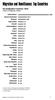 Migration and Remittances: Top Countries Top Immigration Countries a, 010 number of immigrants, millions United States b Russian Federation b Germany b Saudi Arabia b Canada b United Kingdom b Spain b
Graduate Certificate of Education Studies
 Graduate Certificate of Education Studies > Ranked 6th worldwide in the subject of Education (2013 & 2014 QS World University Rankings by Subject) > Ranked Top 1% of world universities (Times Higher Education
Division of Undergraduate Education 2009-2014 Strategic Plan Mission
 Mission The mission of the Division of Undergraduate Education is to promote academic excellence through collaboration with colleges and support units across the University. The mission is realized through
Raveh Ravid & Co. CPA. November 2015
 Raveh Ravid & Co. CPA November 2015 About Us Established in 1986 by Abir Raveh, CPA & Itzhak Ravid, CPA 6 Partners, 80 employees Located in Tel Aviv, Israel wide range of professional services highly experienced
Foreign Taxes Paid and Foreign Source Income INTECH Global Income Managed Volatility Fund
 Income INTECH Global Income Managed Volatility Fund Australia 0.0066 0.0375 Austria 0.0045 0.0014 Belgium 0.0461 0.0138 Bermuda 0.0000 0.0059 Canada 0.0919 0.0275 Cayman Islands 0.0000 0.0044 China 0.0000
Doctor of Architecture and Master of Architecture
 Michael Speaks, Ph.D., is Dean of the. David Biagi, M.Arch., is Director of the School of Architecture. Ann Whiteside-Dickson, M.S., is Director of the. The strives to be a leading force in the world of
Contact Centers Worldwide
 A Contact Centers Worldwide Country Tel.no. Supported lang. Contact Center Albania Algeria 852 665 00 +46 10 71 66160 Angola 89900 +34 91 339 2121 (Port) and Portuguese +34 913394044 +34 913394023 (Por)
UNIVERSITY OF HAWAI I AT MĀNOA POSITION DESCRIPTION DEAN, COLLEGE OF NATURAL SCIENCES ~~~~~~~~~~~~~~~~~~~~~
 UNIVERSITY OF HAWAI I AT MĀNOA POSITION DESCRIPTION DEAN, COLLEGE OF NATURAL SCIENCES ~~~~~~~~~~~~~~~~~~~~~ Position No: 0089197 Title of Position: Dean Reports to: Vice Chancellor for Academic Affairs,
PRESENTATION OF THE UCY MBA PROGRAM
 PRESENTATION OF THE UCY MBA PROGRAM 1 Table of Contents 1. The Republic of Cyprus 2. The University of Cyprus 3. The School of Economics and Management 4. The MBA Program 2 Where is Cyprus? 3 Cyprus Cyprus
Strategic Plan. Revised, April 2015
 Strategic Plan 2011 2020 Revised, April 2015 A Message from the President I am pleased to present Endicott College: Strategic Plan 2011 2020, which was developed by the Endicott College Planning Committee
360 o View of. Global Immigration
 360 o View of Global Immigration In a fast moving global economy, remaining compliant with immigration laws, being informed and in control is more challenging than ever before. We are a globally linked
JAPANESE GOVERNMENT (MONBUKAGAKUSHO: MEXT) SCHOLARSHIP FOR 2014 YOUNG LEADERS PROGRAM (YLP) STUDENT (SCHOOL OF GOVERNMENT)
 I OUTLINE JAPANESE GOVERNMENT (MONBUKAGAKUSHO: MEXT) SCHOLARSHIP FOR 2014 YOUNG LEADERS PROGRAM (YLP) STUDENT (SCHOOL OF GOVERNMENT) 1. Objectives The Young Leaders' Program (YLP) aims to cultivate national
PROGRAM PUBLIC INFORMATION
 Department of Civil Engineering & Construction Management College Of Engineering and Computer Science California State University-Northridge Northridge, Ca Construction Management Program PROGRAM PUBLIC
STRATEGIC PLAN 2013-2017 SUPPORTING STUDENT SUCCESS
 STRATEGIC PLAN 2013-2017 SUPPORTING STUDENT SUCCESS FROM THE VICE PRESIDENT It is my pleasure to share the University of Houston Division of Student Affairs and Enrollment Services 2013-2017 Strategic
Government of Ireland International Education Scholar & Ambassador Programme 2015/2016
 Government of Ireland International Education Scholar & Ambassador Programme 2015/2016 Call for Applications from Brazilian Undergraduate & Postgraduate Students Mary Immaculate College is delighted to
JAPANESE GOVERNMENT (MONBUKAGAKUSHO: MEXT) SCHOLARSHIP: Academic Year 2017 YOUNG LEADERS PROGRAM (YLP) in HEALTHCARE ADMINISTRATION
 JAPANESE GOVERNMENT (MONBUKAGAKUSHO: MEXT) SCHOLARSHIP: Academic Year 2017 YOUNG LEADERS PROGRAM (YLP) in HEALTHCARE ADMINISTRATION Ⅰ. OUTLINE 1. Objectives The Young Leaders' Program (YLP) aims to contribute
best practice guide Rise Above Unreliable Videoconferencing
 best practice guide Rise Above Unreliable Videoconferencing It s no secret that videoconferencing can have a positive impact on employee productivity, business agility, time-to-market, collaboration and
The Joint Japan/World Bank Graduate Scholarship Program and The Public Finance Program
 The Joint Japan/World Bank Graduate Scholarship Program and The Public Finance Program YUICHIRO YOSHIDA Director, the Public Finance Program National Graduate Institute for Policy Studies The Mission The
INTERNATIONAL AIR SERVICES TRANSIT AGREEMENT SIGNED AT CHICAGO ON 7 DECEMBER 1944
 State INTERNATIONAL AIR SERVICES TRANSIT AGREEMENT SIGNED AT CHICAGO ON 7 DECEMBER 1944 Entry into force: The Agreement entered into force on 30 January 1945. Status: 130 Parties. This list is based on
INFORMATION BROCHURE
 INFORMATION BROCHURE ENTRANCE EXAM -2010 INSTITUTE OF BUSINESS MANAGEMENT ACADEMIC PROGRAMMES B.B.A (BACHELOR OF BUSINESS ADMINISTRATION ) M.B.A (PART TIME) CHHATRAPATI SHAHU JI MAHARAJ UNIVERSITY, KANPUR-208024
Fall 2015 International Student Enrollment
 Fall 2015 International Student Enrollment Prepared by The Office of International Affairs Nova Southeastern University Nova Southeastern University International Student Statistics Fall 2015 International
Cloud Readiness Consulting Services
 Cloud Readiness Consulting Services Globalisation and economic pressures are changing the business landscape, increasing the pressure to expedite time-to-market with new products and services, while keeping
International Institute of Business Analysis. Salary Survey Report
 International Institute of Business Analysis Salary Survey Report December 15, 2013 Introduction International Institute of Business Analysis (IIBA) is the independent, nonprofit, professional association
Guide of the national scholarship programme for international students, researchers and academic staff
 Page 1/9 Guide of the national scholarship programme for international students, researchers and academic staff PURPOSE, SCOPE, RESPONSIBILITY Valid from 1 January 2015 The purpose of this programme guide
List of Agreements on Mutual Visa Exemption. Between the People s Republic of China and Foreign Countries
 List of Agreements on Mutual Visa Exemption Between the People s Republic of China and Foreign Countries (In alphabetical order of foreign countries) Last Update: May 9, 2015 No. Foreign Country Passport
Monthly Report on Asylum Applications in The Netherlands and Europe
 Asylum Trends Monthly Report on Asylum Applications in The Netherlands and Europe November 2013 2014 November 2014 Colophon Title Subtitle Author Asylum Trends Monthly Report on Asylum Applications in
Your Access to a World of Global Connectivity. www.nevigate.net
 Your Access to a World of Global Connectivity Agenda Company Background / Profile Our Commitment Coverage Strengths Products Portfolio Deliverables Measurable Benefits Support Company Background Nevigate