
Sacroiliac Joint Exercises For Stability And Pain Relief
|
|
|
- Arnold James
- 9 years ago
- Views:
Transcription
1 Sacroiliac Joint Exercises For Stability And Pain Relief By Sam Visnic NMT SamVisnic.com Endyourbackpainnow.com 2011 Sam Visnic All Rights Reserved. Warning! This information is NOT medical advice, and does not replace the diagnosis nor treatment of a licensed physician. This report and related content is for information purposes ONLY. Always seek the advice of a qualified health care professional before beginning any health program. Any actions taken as a result of reading this report and/or related information is at your OWN risk. Endyourbackpainnow.com, Sam Visnic, and all related affiliates and associates, assume no liability as a result of actions taken on your part. Copyright Sam Visnic. Page 1

2 What are the symptoms of Sacroiliac Joint Pain? As you can see from the image above, the most common area of pain related to SI joint problems is right next to the small bones that can be felt just to the sides of the lower spinal vertebrae called the posterior superior iliac spines. (PSIS for short). Of course, this area is not necessarily the only spot that can have pain due to SI joint issues. Pain can be felt over the hip joint, down to the gluteal and hamstring muscles, and even up the lumbar spine. Copyright Sam Visnic. Page 2

3 Frequently, SI joint dysfunction is overlooked and misdiagnosed, mostly due to the multiple effects that are seen as a result that makes the overall situation appear to be multi-factorial and complicated. SI joint expert, Richard Don Tigny, has identified the following: More Direct Effects Of The Subluxation At S The gluteus medius is inhibited when held in anterior rotation 2. The ilial origin of the gluteus maximus is separated from its sacral origin 3. The iliolumbar ligaments are loosened as the ilia approximate the vertebra 4. The long posterior ligaments will be stretched and may avulse from the PSIS 5. The ilial origin of the piriformis is separated from its sacral origin 6. If the sciatic nerve exits through the piriformis it may become painful Now, I know that may sound like a lot of anatomy gibberish, so let me make it clearer. Essentially, when the SI joint bone/s become mis-aligned (also called subluxed), they move the points at which the muscles attach further apart. When this occurs, it can cause strain. In some cases, as in #6 listed above, the sciatic nerve may become choked and cause irritation and pain. At first when the SI joint dysfunction appears, these may not all be present, but as the problem becomes chronic, some or all of them may appear and make it very difficult for the average doctor or therapist to see through to the root cause of the pain. What are the most common causes of SI joint pain? Just like any other back pain issue, there can, of course be many very complicated issues, from nerve entrapment to spinal derangements, and even infections. However, assuming these major issues have been ruled out, the two most common causes of pain are: 1. Mechanical dysfunction 2. Structural leg length discrepancy Mechanical Dysfunction This refers to the irregular movement of the SI joint (which shouldn t move much at all). The most common mechanical dysfunction, according to DonTigny, is subluxation of the joint at S3. 1 More Direct Effects Of The Subluxation At S3. Image Captions. DonTigny, Richard. Copyright Sam Visnic. Page 3

4 The picture above shows the direction that the pelvic bone moves during the S3 subluxation, which is up and out from the sacrum. For those of you who are familiar with the term, another way of putting it is anterior pelvic tilt on that side. Now, just to prevent 100 s from hitting my inbox after this document is released, you have probably found through various searches online about SI joint dysfunction that there appears to be many faulty dysfunctions that can be present, for example, a posterior upslip, etc. Even though these mechanical issues can be found through assessments, it is thought that these are SECONDARY subluxations to the S3, and mostly irrelevant once the correction is made at S3. Therefore, what I am saying is that you can skip all the arguments between therapists and doctors about the above, and get right to the main correction, which is at S3, and the other dysfunctions will be corrected at the same time. Structural Leg Length Discrepancy A structural leg length discrepancy is when you have a leg that is ACTUALLY shorter than the other. This should be measured via a full lower extremity X-ray. A special note here needs to be made. Many people do not actually have a structural leg length issue. Relying simply on measuring the leg length at the ankles is NOT enough to confirm a short leg. Too often, practitioners are quick to add a heel lift into a shoe which can cause more problems than it solves. A functional short leg is often the result of the SI joint subluxation. As the dysfunction is removed, the leg length balances out. If indeed a leg is confirmed short, appropriate measures such as heel lifts or shoe inserts/raises should be considered by a qualified specialist in postural dysfunction. Copyright Sam Visnic. Page 4

5 How to fix SI joint dysfunction Correcting SI joint dysfunction starts with ruling out serious issues with the joint. As always, a trip to your doctor can address these. If you are cleared for serious pathology, then mechanical corrections are the next step. Correcting the subluxation at S3 There are a number of simple self-corrections that can be done, but I find the one that is MOST useful involves a partner (preferably a therapist or chiropractor). The reason why the partner version is best is because there are actually no muscles that move the SI joint itself. Muscles surround the joint, and influence it, but none have the ability to move the joint itself. Now, I m not against the self-corrections, because sometimes they do work, but the partner-assisted versions I have found to be MUCH more efficient for correction. The goal of these mobilizations is to move the pelvic bone into posterior tilt and down on the sacrum, which is the opposite motion as the subluxation in the picture above. When performing SI joint mobilizations, be sure to do the correction on BOTH sides. This is a critical point. You MUST correct both. How is the correction done? You won t believe how simple the correction is to perform. When I first learned of this maneuver from Richard DonTigny s work, I was floored at how fast one could get SI joint pain relief. It s not uncommon for someone with pain at an 8 on a 10 scale to go down to a 2 or 3 within minutes. (Provided the pain was coming from the SI joint). The primary goal of the correction, as stated above, is to essentially move the pelvic bone into posterior tilt. This can be done a number of ways, as indicated on Don Tigny s website 2, but here are the two I recommend: 2 Thelowback.com (Richard DonTigny s website) Copyright Sam Visnic. Page 5

6 The Self-Correction Exercise The starting position involves the foot flat on the ground, about 6-8 inches from the glute. The goal is to push the thigh toward the foot until the glute comes up off the ground. In addition, an effort should be made to squeeze the glute on that side. The toughest part about this movement for most people is letting the NON-working side completely relax. This may take a bit of practice. Perform the motion gently, and repeat for 5-8 reps, then switch sides. If someone is monitoring your leg length at the ankles (at the medial malleoli), they will notice that after each set, there will be a change in the length of the leg relative to the other. If the movement produces no pain, each side can be done in an alternating fashion UNTIL NO FURTHER LEG LENGTH CHANGES OCCUR. This usually takes around 2-3 sets on each leg. CAUTION: Personally, I feel that attempting to make a full correction on day 1 for some people is NOT a good idea. Depending on how long the dysfunction has been present, there are likely to be many compensation patterns that have occurred in your body, and a full correction may be akin to, for example, having flat feet for years and suddenly getting a new pair of orthotic shoe inserts with a FULL correction on day 1. In case you don t know what I mean by this, doing this may create all sorts of aches and pains far from the SI joint. I feel that it is far better off starting with a small amount of correction at first to test, then increasing aggressiveness pending the results. (Most back pain sufferers have no problem, but JUST in case ) Copyright Sam Visnic. Page 6

7 The Partner-Assisted Correction Mobilization This movement is performed best by lying on the floor, while the partner holds the leg at a 45-degree angle just above the ankle. Then, GENTLY, the partner shifts their weight to the back leg while pulling the leg JUST enough for the glute to lift from the ground. Then, the movement is reversed, UNDER CONTROL. This process is repeated as in the self-correction. NOTE: There should be absolutely ZERO pain during this movement, and it is SUPER gentle. When to apply the SI joint corrections: These can be done every 1-2 hours throughout the day. Always do them BEFORE your corrective stretching and exercise program, then again AFTER. Stretches For SI Joint Stability All corrective approaches need to start with removing restriction from normal movement. Stretching muscles serves to restore normal range of motion, as well as reducing tension in facilitated (overactive) muscles. To some degree, all muscles around the lumbar-pelvic-hip region can influence SI joint function in some way, but the key areas to address are included below: External Hip Rotators Copyright Sam Visnic. Page 7

8 This stretch, called the 90/90 stretch 3, is fantastic for addressing the glutes and deep hip rotators. You will get the stretch on the front leg, by the way, and be careful not to go too hard with it too soon. A sign that this is happening is when you feel numbness or tingling in your foot as you hold the stretch, which can be from the piriformis muscle strangling the sciatic nerve. If you feel this, back off the stretch. Additionally, many people find it hard to even get INTO this position. That is a strong sign these muscles need to be stretched. Commonly, you will see this stretch performed in yoga classes, etc. with the lower back rounded and essentially laying on top of the thigh. I do NOT advise this. In fact, this is commonly done due to lack of understanding that the pelvis is the key to stretching the hip rotators. Performing an ANTERIOR pelvic tilt will increase the stretch. Doing the stretch in this way conditions you to learn proper pelvic control, to tip from the hips instead of the lumbar spine, and avoids aggravating any potential disc issues that may be present. Adductors (Groin) I know you have likely seen a ton of sites recommending groin stretches of all sort, however, I don t tend to spend a lot of time on these muscles. In fact, I find them to be more of the result of dysfunction in the SI joints or weakness in the lateral hips, rather than a primary cause. Additionally, as soon as the pain is reduced and squats can be introduced into the program, I prefer to use a wide stance squat to stretch them while strengthening them. However, since there are SOME people that need to stretch them right away to get relief, I ve included them in this program. There are a few different versions of adductor stretches. The one shown in the picture above stretches them with the hips flexed, and technically is the easiest to learn. The other version involves standing or on a therapy table with the hips straight, which will focus on a different area of the adductors. Due to technical reasons for attempting to explain this stretch, I won t include it here, but will on additional information on my website. 3 How To Eat, Move and Be Healthy. Chek, Paul. Pg.93. CHEK Institute Copyright Sam Visnic. Page 8

9 Hip Flexors The kneeling hip flexor stretch is arguably the most important stretch for the low back pain sufferer. I have seen more people get relief from this simple stretch than almost anything else. This is due to the immense influence the rectus femoris (quad muscle) and psoas has on pelvic tilt. When these two muscles harbor excess tension relative to the glutes, hamstrings, and abdominals, excessive anterior pelvic tilt is the result. When this occurs, back pain is sure to follow. The key to this stretch is CONTROLLING pelvic tilt. Allowing the pelvis to tilt anteriorly during this stretch renders it near useless, unless your hip flexors are SO tight you can t help to get a strong stretch even if its done wrong. When instructing this one, I always teach to perform it with a posterior pelvic tilt and squeezing the glutes to maintain the position of the pelvis as you shift forward into the stretch. Foam Roll Glutes and Iliotibial (IT) Bands The IT band is not a muscle, but instead a super thick band of tissue that runs down the lateral part of the leg to the knee. The primary concern is that a big chunk of this band connects to the glutes at the top. Excess tension in the IT bands + gluteals will cause the legs to abduct along with the external rotation that occurs from dominance in the hip rotators. (Very commonly seen in powerlifters who use a Sumo-Stance for lifts). I find stretches for the IT band to be near useless, as they tend to hit mostly the lateral glute fibers, and can agitate knee pain if overdone. Using a foam roller to self-massage these muscles does the trick. Copyright Sam Visnic. Page 9

10 These muscles are frequently very tender, and usually require a number of sessions to make decent progress. Exercises For SI Joint Stability Stabilization of the SI joints comes from the muscles that surround them. There are approximately 29 muscles in the lumbar-pelvic-hip complex. Each of these muscles performs an important role in stability of joints, as well as movement. When imbalances in these muscles are present, or deconditioning from lack of exercise, increased injury potential and pain are frequently the result. The exercises that I recommend for SI joint stability are the same that you would find in the programs that I recommend for the correction of excessive anterior pelvic tilt. Once the correction of the S3 subluxation is made, the following muscles must be strengthened. NOTE: These are not full descriptions regarding these movements, but instead a brief synopsis. For more information and instruction, refer to my DVD program, End Your Back Pain Now!, or additionally, consult with your qualified therapist or functional movement practitioner. Abdominal Wall The function of the abdominals is to flex the spine, but also to create posterior tilt of the pelvis. It is important to separate these two functions when assigning exercises. I include both, but I always start with the pelvic tilting function first. My primary go-to tool is the Chattanooga Stabilizer Biofeedback Pressure Unit. This tool keeps you honest about how well your abdominal muscles are functioning when performing pelvic tilting exercises. While a full outline of how to use this device, along with a full description of the corrective exercise/stretching protocol is beyond the scope of this report, I will introduce you to a few of the top exercises. (You can find videos/dvds of these on my website: Lower Abdominal Leg Slide (without Stabilizer) The goal of this exercise is to learn how to appropriately stabilize your spine with your abdominals while moving your legs. This version, called the Lower Abdominal Leg Slide, is a great place to begin. Start by tilting your pelvis posterior (this movement will flatten your lumbar spine toward the floor). The space between your lumbar spine and the floor should be just enough for you to slide your hand between. This position is held, while one leg is slid outward away from the body until it is almost straight, then Copyright Sam Visnic. Page 10

11 returned back to the starting position, while the spine does NOT move. Monitoring the amount of spinal movement can be challenging, which is why the Stabilizer is a perfect tool for the job. Prone Isometric Plank + Side Planking The prone plank is a progressed abdominal exercise that is used once control of pelvic tilt is learned. This exercise is performed for static holds of 10 seconds to 30 seconds for multiple reps, depending on strength level. The rest between reps is taken with the knees bent and resting on the ground. Side planks are helpful as well, as they shift the focus on the obliques and quadratus lumborum, which is a frequent location of trigger points. Glutes and Hamstrings The glutes and hamstrings also contribute to posterior pelvic tilt, and additionally, are powerful extensors of the hip. Frequently they suffer from deconditioning. It seems everyone in the gym these days has forgotten the importance of exercises such as squats, lunges and deadlifts, which are the key exercises for strengthening these muscles. Not only must these muscle groups be strengthened moving forward (as in a front lunge), but the side-stepping function can t be ignored. Lateral movements are encouraged to develop good movement control and stability in those motions. That said, the starting point can be as simple as straight-on hip extensions. Supine Hip Extension Copyright Sam Visnic. Page 11

12 The hip extension is a great fundamental exercise for strengthening the glutes. However, like other initial movements, it must be progressed in order to increase the resistance applied to the muscles to force them to develop strength. This exercise may be performed on the floor or with your back on a swiss ball. The focus is to use the glutes to perform the movement, and avoid extending into the lower back at the top of the movement. Be sure to perform the Kneeling Hip Flexor stretch above prior to doing this movement. A tight psoas and/or rectus femoris will limit your ability to achieve the full hip extension position at the top of the range of motion, and is frequently the reason why this exercise is felt in the lumbar spine for some. Romanian Deadlift (Hip Hinging) This movement is commonly overlooked in many therapeutic programs. In addition, it is challenging for some to learn, but is a cornerstone to further progress in a therapeutic movement program. As you can see from the picture, the goal is to bend from the hips, while maintaining the lumbar spine curve. In addition, the knees must be slightly unlocked. This drill will strengthen the entire posterior chain, while teaching the lumbar muscles, glutes, and hamstrings to work as a unit. Lastly, it is the most preferable way to restore normal hamstring length, which are commonly tight simply because they are overworked, while the glutes are underworked. Copyright Sam Visnic. Page 12

13 Putting It All Together This PDF is not designed to be a stand-alone program, but instead a guide to assist with helping you understand the direction a therapeutic exercise approach to sacroiliac joint should take. This may assist you, your PT, medical doctor, or chiropractor with some potential options on how to support your process for restoring health and function. For further resources on how to perform the exercises, stretches and more from this document, be sure to visit my website to learn more about my DVD set, or consultations. or As always, I am open to your feedback and appreciate knowing about your successes with this program. I would love to hear from you, so send me an letting me know how this program has helped you, or if you have questions you would like me to answer via my blog. Sincerely, Sam Visnic Neuromuscular Therapist [email protected] Copyright Sam Visnic. Page 13

NETWORK FITNESS FACTS THE HIP
 NETWORK FITNESS FACTS THE HIP The Hip Joint ANATOMY OF THE HIP The hip bones are divided into 5 areas, which are: Image: www.health.com/health/static/hw/media/medical/hw/ hwkb17_042.jpg The hip joint is
Lumbar/Core Strength and Stability Exercises
 Athletic Medicine Lumbar/Core Strength and Stability Exercises Introduction Low back pain can be the result of many different things. Pain can be triggered by some combination of overuse, muscle strain,
CHAPTER 3: BACK & ABDOMINAL STRETCHES. Standing Quad Stretch Athletic Edge - www.athleticedge.biz - (650) 815-6552
 CHAPTER : BACK & ABDOMINAL STRETCHES Standing Quad Stretch ) Stand and grasp right ankle with same hand, use a wall or chair to Lower maintain Back balance with left hand. Maintain an upright Stretches
Lower Body Exercise One: Glute Bridge
 Lower Body Exercise One: Glute Bridge Lying on your back hands by your side, head on the floor. Position your feet shoulder width apart close to your glutes, feet facing forwards. Place a theraband/mini
PERFORMANCE RUNNING. Piriformis Syndrome
 Piriformis Syndrome Have you started to experience pain in your hip or down your leg while beginning or advancing your fitness program? This pain may be stemming from the piriformis muscle in your hip.
Myofit Massage Therapy Stretches for Cycling
 Guidelines for Stretching Always assume the stretch start position and comfortably apply the stretch as directed. Think Yoga - gently and slowly, no ballistic actions or bouncing at joint end range. Once
Knee Conditioning Program. Purpose of Program
 Prepared for: Prepared by: OrthoInfo Purpose of Program After an injury or surgery, an exercise conditioning program will help you return to daily activities and enjoy a more active, healthy lifestyle.
Spine Conditioning Program Purpose of Program
 Prepared for: Prepared by: OrthoInfo Purpose of Program After an injury or surgery, an exercise conditioning program will help you return to daily activities and enjoy a more active, healthy lifestyle.
Post Operative Hip Arthroscopy Rehabilitation Protocol Dr. David Hergan Labral Repair with or without FAI Component
 Post Operative Hip Arthroscopy Rehabilitation Protocol Dr. David Hergan Labral Repair with or without FAI Component Initial Joint Protection Guidelines- (P.O. Day 1-4 wks): Joint Protection Patient education
Hip Arthroscopy Labral Repair Rehabilitation Protocol
 Hip Arthroscopy Labral Repair Rehabilitation Protocol PHASE 1: INITIAL Diminish pain and inflammation Protect integrity of repaired tissue Prevent muscular inhibition Restore ROM within the restrictions
Today s session. Common Problems in Rehab. www.physiofitness.com.au/filex.htm LOWER BODY REHAB ESSENTIALS TIM KEELEY FILEX 2012
 Tim Keeley B.Phty, Cred.MDT, APA Principal Physiotherapist physiofitness.com.au facebook.com/physiofitness Today s session Essential list for the lower body Rehab starting point Focussing on activation,
Low Back Pain Exercises Interactive Video Series Transcript July 2013
 Introduction Low Back Pain Exercises Interactive Video Series Transcript July 2013 ** Note: If an exercise causes an increase in your pain, stop the exercise.** [Music introduction; Dr. John Sheehan onscreen]
Posture. Let s look at. in the head is jutting. the norm. you know if your belt. If you belt. lower body. 2 sections, upper. pulls?
 Fixing the Computer Guy Posture Lower back/h hip stability Let s look at ideal posture for a minute. Look at your profile in the mirror. Chances are you re gonna find that your head is jutting forward,
Hip Bursitis/Tendinitis
 Hip Bursitis/Tendinitis Anatomy and Biomechanics The hip is a ball and socket joint that occurs between the head of the femur (ball) and the acetabulum of the pelvis (socket). It is protected by several
THE BENJAMIN INSTITUTE PRESENTS. Excerpt from Listen To Your Pain. Assessment & Treatment of. Low Back Pain. Ben E. Benjamin, Ph.D.
 THE BENJAMIN INSTITUTE PRESENTS Excerpt from Listen To Your Pain Assessment & Treatment of Low Back Pain A B E N J A M I N I N S T I T U T E E B O O K Ben E. Benjamin, Ph.D. 2 THERAPIST/CLIENT MANUAL The
Stretching in the Office
 Stretching in the Office Legs: Quads, Hamstrings, IT band, Hip flexors, Gluts, Calves Quads: Standing @ desk maintaining upright posture, grab one leg @ a time by foot or ankle and bring it towards backside
Exercises for the Hip
 Exercises for the Hip Gluteal Sets: Lie on your back, tighten buttocks and hold for 3-5 seconds. Repeat 20 times. Supine Hip ER/IR: Lie on your back with legs straight. Gently rotate knees out and in limited
By Agnes Tan (PT) I-Sports Rehab Centre Island Hospital
 By Agnes Tan (PT) I-Sports Rehab Centre Island Hospital Physiotherapy Provides aids to people Deals with abrasion and dysfunction (muscles, joints, bones) To control and repair maximum movement potentials
Hip Conditioning Program. Purpose of Program
 Prepared for: Prepared by: OrthoInfo Purpose of Program After an injury or surgery, an exercise conditioning program will help you return to daily activities and enjoy a more active, healthy lifestyle.
Hip Arthroscopy Post-operative Rehabilitation Protocol
 Hip Arthroscopy Post-operative Rehabilitation Protocol Introduction Since the early 20 th century, when hip arthroscopy was regarded as being almost impossible to undertake, the procedure has developed
Don t. Hamstrings. Calf Muscles. both legs 2-3 times. stretch is felt in the back of the calf. Repeat with both legs 2-3 times.
 Remember to: Warm-up your muscles first before stretching (e.g. stretch after walking). Stretch until you feel mild discomfort, not pain. Never bounce or force a stretch. Hold the stretch for 10-30 seconds
COMMON OVERUSE INJURIES ATTRIBUTED TO CYCLING, AND WAYS TO MINIMIZE THESE INJURIES
 COMMON OVERUSE INJURIES ATTRIBUTED TO CYCLING, AND WAYS TO MINIMIZE THESE INJURIES Listed are a few of the most common overuse injuries associated with cycling long distances. 1. Cervical and upper back
Injury Prevention for the Back and Neck
 Injury Prevention for the Back and Neck www.csmr.org We have created this brochure to provide you with information regarding: Common Causes of Back and Neck Injuries and Pain Tips for Avoiding Neck and
by Ellen Saltonstall and Dr. Loren Fishman
 10 Yoga Poses for Low Back Pain Prevention by Ellen Saltonstall and Dr. Loren Fishman Introduction This series of poses is designed to prevent future back pain and also to relieve back pain that you may
Is Your Neck Or Back Pain Caused By A Herniated Disc?
 Is Your Neck Or Back Pain Caused By A Herniated Disc? The bones in your spine are called the vertebrae. The vertebrae are held together and in place by ligaments and small discs that act as shock absorbers.
Stretching the Major Muscle Groups of the Lower Limb
 2 Stretching the Major Muscle Groups of the Lower Limb In this chapter, we present appropriate stretching exercises for the major muscle groups of the lower limb. All four methods (3S, yoga, slow/static,
EGOSCUE CLINIC PAIN/POSTURE STRETCHES 1. Standing Arm Circles: Helps Restore Upper Body Strength
 EGOSCUE CLINIC PAIN/POSTURE STRETCHES 1. Standing Arm Circles: Helps Restore Upper Body Strength Two sets of 40 repetitions each. Stand with your feet pointed straight and hip-width apart. Place your fingertips
KNEE EXERCISE PROGRAM
 KNEE PROGRAM INTRODUCT ION Welcome to your knee exercise program. The exercises in the program are designed to improve your knee stability and strength of the muscles around your knee and hip. The strength
-Balance on hands and feet rolling the upper hamstring area.
 -Begin w/roller around mid balance w/ back flat on ground, put hands behind head. -Slowly roll to mid/upper shoulder blade area. -Roll to right or left to emphasize one side. Thoracic Spine Mobility -Sit
DSM Spine+Sport - Mobility
 To set yourself up for success, practice keeping a neutral spine throughout all of these movements. This will ensure the tissue mobilization is being applied to the correct area, and make the techniques
BP MS 150 lunch and learn: Stretching and injury prevention. Dr. Bart Kennedy (Sports Chiropractor) and Josh Thompson February 04, 2015
 BP MS 150 lunch and learn: Stretching and injury prevention Dr. Bart Kennedy (Sports Chiropractor) and Josh Thompson February 04, 2015 Epidemiology Overuse injuries most common, traumatic event second
Exercises for Low Back Injury Prevention
 DIVISION OF AGRICULTURE RESEARCH & EXTENSION University of Arkansas System Family and Consumer Sciences Increasing Physical Activity as We Age Exercises for Low Back Injury Prevention FSFCS38 Lisa Washburn,
Psoas Syndrome. The pain is worse from continued standing and from twisting at the waist without moving the feet.
 Psoas Syndrome The iliopsoas muscle is a major body mover but seldom considered as a source of pain. Chronic lower back pain involving the hips, legs, or thoracic regions can often be traced to an iliopsoas
What is the Hip? Femur pull-back prone stabilize pelvis and pull the femur up at the top
 Spinning the Hip Dr. George Russell 1133 Broadway, #1125 New York, NY 10010 [email protected] georgerusselldc.com Copyright George Russell 2014 What is the Hip? Front bone of the pelvis Anterior
McMaster Spikeyball Therapy Drills
 BODY BLOCKS In sequencing Breathing and Tempo Flexibility / Mobility and Proprioception (feel) Upper body segment Middle body segment Lower body segment Extension / Static Posture Office / Computer Travel
Clasp hands behind hips and stretch arms down towards floor. Roll shoulder back to open chest. Do not let back arch. Power Skips
 Warm Up Exercises Jump Rope Ankle Bounces Jumping Jacks Using a fast twirl, rapidly jump up and down using spring in the feet and ankles, not in knees. V-Jumps Rapidly jump up and down using spring in
Kelly Corso MS, ATC, CES, FMSC, CSST
 ACL Injury Prevention Program Kelly Corso MS, ATC, CES, FMSC, CSST What is the ACL??? The ACL or anterior cruciate ligament, attaches the front top portion of the shin bone (tibia) to the back bottom portion
Medial Collateral Ligament Sprain: Exercises
 Medial Collateral Ligament Sprain: Exercises Your Kaiser Permanente Care Instructions Here are some examples of typical rehabilitation exercises for your condition. Start each exercise slowly. Ease off
Care at its Best! Foam Roller Exercise Program
 Foam Roller Exercise Program Foam rollers are a popular new addition the gym, physical therapy clinics or homes. Foam rollers are made of lightweight polyethyline foam. Cylindrical in shape, foam rollers
HELPFUL HINTS FOR A HEALTHY BACK
 HELPFUL HINTS FOR A HEALTHY BACK 1. Standing and Walking For correct posture, balance your head above your shoulders, eyes straight ahead, everything else falls into place. Try to point toes straight ahead
Exercise 1: Knee to Chest. Exercise 2: Pelvic Tilt. Exercise 3: Hip Rolling. Starting Position: Lie on your back on a table or firm surface.
 Exercise 1: Knee to Chest Starting Position: Lie on your back on a table or firm surface. Action: Clasp your hands behind the thigh and pull it towards your chest. Keep the opposite leg flat on the surface
Patellofemoral/Chondromalacia Protocol
 Patellofemoral/Chondromalacia Protocol Anatomy and Biomechanics The knee is composed of two joints, the tibiofemoral and the patellofemoral. The patellofemoral joint is made up of the patella (knee cap)
A proper warm-up is important before any athletic performance with the goal of preparing the athlete both mentally and physically for exercise and
 A proper warm-up is important before any athletic performance with the goal of preparing the athlete both mentally and physically for exercise and competition. A warm-up is designed to prepare an athlete
Self-Myofascial Release Foam Roller Massage
 How it works. Self-Myofascial Release Foam Roller Massage Traditional stretching techniques simply cause increases in muscle length and can actually increase your chances of injury. Self-myofascial release
Lower Back Pain An Educational Guide
 Lower Back Pain An Educational Guide A publication from the Center of Pain Medicine and Physiatric Rehabilitation 2002 Medical Parkway Ste 150 1630 Main St Ste 215 Annapolis, MD 21401 Chester, MD 21619
Low Back Pain Exercise Guide
 Nader M. Hebela, MD Fellow of the American Academy of Orthopaedic Surgeons http://orthodoc.aaos.org/hebela Cleveland Clinic Abu Dhabi Cleveland Clinic Abu Dhabi Neurological Institute Al Maryah Island
SAMPLE WORKOUT Full Body
 SAMPLE WORKOUT Full Body Perform each exercise: 30 secs each x 2 rounds or 2-3 sets of 8-12 reps Monday & Wednesday or Tuesday & Thursday Standing Squat Muscles: glutes (butt), quadriceps (thigh) Stand
Fact sheet Exercises for older adults undergoing rehabilitation
 Fact sheet Exercises for older adults undergoing rehabilitation Flexibility refers to the amount of movement possible around a joint and is necessary for normal activities of daily living such as stretching,
Living Room Bodyweight Workout Week 1 March or jog in place for 1 min to increase heart rate and lubricate joints.
 Warm Up- Living Room Bodyweight Workout Week 1 March or jog in place for 1 min to increase heart rate and lubricate joints. Protocol- All exercises will be done for 2 sets of 10 repetitions. After the
Physical Therapy after Hip Arthroscopy Therapy Phases 1 and 2
 Physical Therapy after Hip Arthroscopy Therapy Phases 1 and 2 patienteducation.osumc.edu Table of Contents Physical Therapy after Hip Surgery... 3 OSU Sports Medicine Locations... 4 Hip Therapy Goals...
CORRECTIVE CHIROPRACTIC EXERCISES
 CORRECTIVE CHIROPRACTIC EXERCISES J O W E T T & M O U L T O N C h i r o p r a c t o r s introduction This booklet, presented by Jowett and Moulton Chiropractors, is designed to provide you with a general
MET: Posterior (backward) Rotation of the Innominate Bone.
 MET: Posterior (backward) Rotation of the Innominate Bone. Purpose: To reduce an anterior rotation of the innominate bone at the SI joint. To increase posterior (backward) rotation of the SI joint. Precautions:
Integrated Manual Therapy & Orthopedic Massage For Low Back Pain, Hip Pain, and Sciatica
 Integrated Manual Therapy & Orthopedic Massage For Low Back Pain, Hip Pain, and Sciatica Assessment Protocols Treatment Protocols Treatment Protocols Corrective Exercises By Author & International Lecturer
Pelvic Girdle Pain (PGP) Fact Sheet
 Pelvic Girdle Pain (PGP) Fact Sheet Physiotherapy PGP describes pain that is experienced in the front (symphysis pubis joint) and/or back (sacroiliac joints) of your pelvis. This is a common problem, affecting
Sheet 1A. Treating short/tight muscles using MET. Pectorals. Upper trapezius. Levator scapula
 Sheet 1A Treating short/tight muscles using MET Pectorals Once daily lie at edge of bed holding a half-kilo can, arm out sideways. Raise arm and hold for 10 seconds, then allow arm to hang down, stretching
Lumbar Disc Herniation/Bulge Protocol
 Lumbar Disc Herniation/Bulge Protocol Anatomy and Biomechanics The lumbar spine is made up of 5 load transferring bones called vertebrae. They are stacked in a column with an intervertebral disc sandwiched
Dominic S. Carreira, M.D. 300 SE 17 th St First Floor, Fort Lauderdale, FL 33316 (954) 764-2192
 300 SE 17 th St First Floor, Fort Lauderdale, FL 33316 Phase I: Initial Hip Exercises A. Ankle Pumps - 20 repetitions, 2 times/day POST OPERATIVE HIP PROTOCOL B. Isometrics - 20 repetitions, 2 times/day
Flexibility Assessment and Improvement Compiled and Adapted by Josh Thompson
 Flexibility Assessment and Improvement Compiled and Adapted by Josh Thompson Muscles must have a full and normal range of motion in order for joints and skeletal structure to function properly. Flexibility
American Osteopathic Academy of Sports Medicine James McCrossin MS ATC, CSCS Philadelphia Flyers April 23 rd, 2015
 American Osteopathic Academy of Sports Medicine James McCrossin MS ATC, CSCS Philadelphia Flyers April 23 rd, 2015 Coming together is a beginning; keeping together is progress; working together is success.
EXERCISE DESCRIPTIONS PHASE I Routine #1
 EXERCISE DESCRIPTIONS PHASE I Routine #1 Hip Mobility Exercise: Forward Out-In Movement: Raise leg out to the side, and rotate around to the front. Keep shin/thigh angle at 90 degrees. Exercise: Backward
Low Back Pain: Exercises
 Low Back Pain: Exercises Your Kaiser Permanente Care Instructions Here are some examples of typical rehabilitation exercises for your condition. Start each exercise slowly. Ease off the exercise if you
Pilates for the Rehabilitation of Iliopsoas Tendonitis and Low Back Pain
 Pilates for the Rehabilitation of Iliopsoas Tendonitis and Low Back Pain Bruce Manuel November 30, 2015 CAP Standard 2015 Pilates Denver Greenwood Village, CO Abstract Iliopsoas Tendonitis is irritation
Hip and Trunk Exercise Program
 Hip and Trunk Exercise Program Hip and Pelvis Exercise Program Gluteus Medius and Minimus (Hip Abductors) Page 2 Lateral Hip Rotators Page 6 Tensor Fascia Lata (TFL) and Illiotibial Band (ITB) Page 7 Lower
Runner's Injury Prevention
 JEN DAVIS DPT Runner's Injury Prevention Jen Davis DPT Orthopedic Physical Therapy Foot Traffic 7718 SE 13th Ave Portland, OR 97202 (503) 482-7232 [email protected] www.runfastpt.com!1 THE AMAZING RUNNER
Above Knee Amputee Exercise Program
 Above Knee Amputee Exercise Program It is important that you take an active role in your rehabilitation. The following exercises must be done every day to prevent any complications. After an above the
Addressing Pelvic Rotation
 1 of 5 4/20/2008 10:31 AM http://www.strengthcoach.com Addressing Pelvic Rotation Aaron Brooks of Perfect Postures When trying to address your athlete's or client's limitations due to pain or joint restriction,
How To Stretch Your Body
 Exercise Module A New Leaf Choices for Healthy Living University of North Carolina at Chapel Hill 2007 Center for Health Promotion and Disease Prevention Physical Activity Exercises for Keeping Active
BALANCED BODYWORKS LA Rejuvenate. Heal. Restore.
 Tools For Myofascial Self Massage and Stretching Foam Roller Lacrosse Ball (Hard) Stretch Strap What is Foam Rolling? Foam Rolling or Self Myofascial Release, is a form of soft tissue massage. Similar
Sciatic Nerve A Case Report of the Treatment of Piriformis Syndrome (Muscle Related)
 Sciatic Nerve A Case Report of the Treatment of Piriformis Syndrome (Muscle Related) Elyse Silvia West August 5, 2007 Pacific Palisades Abstract Objective: The study assessed the benefits of Pilates training
SPINE. Postural Malalignments 4/9/2015. Cervical Spine Evaluation. Thoracic Spine Evaluation. Observations. Assess position of head and neck
 SPINE Observations Body type Postural alignments and asymmetries should be observed from all views Assess height differences between anatomical landmarks Figure 25-9 Figure 25-10 Figure 25-11 & 12 Postural
Information on the Chiropractic Care of Lower Back Pain
 Chiropractic Care of Lower Back Pain Lower back pain is probably the most common condition seen the the Chiropractic office. Each month it is estimated that up to one third of persons experience some type
Basic Stretch Programme 3. Exercise Circuit 4
 Basic Stretch Programme 3 Exercise Circuit 4 2 1 Calves Stand approximately 1 metre away from wall with legs straight and heels on floor. Step and lean forward and slowly push hips towards wall. Should
Shoulders (free weights)
 Dumbbell Shoulder Raise Dumbbell Shoulder Raise 1) Lie back onto an incline bench (45 or less) with a DB in each hand. (You may rest each DB on the corresponding thigh.) 2) Start position: Bring the DB
Rehabilitation Documentation and Proper Coding Guidelines
 Rehabilitation Documentation and Proper Coding Guidelines Purpose: 1) Develop a guide for doctors in South Dakota to follow when performing reviews on rehabilitation cases. 2) Provide doctors in South
TIPS and EXERCISES for your knee stiffness. and pain
 TIPS and EXERCISES for your knee stiffness and pain KNEE EXERCISES Range of motion exercise 3 Knee bending exercises 3 Knee straightening exercises 5 STRENGTHENING EXERCISES 6 AEROBIC EXERCISE 10 ADDITIONAL
THE BIG SIX. Six Best Volleyball Strength Training Exercises. By Dennis Jackson, CSCS www.strength-and
 THE BIG SIX Six Best Volleyball Strength Training Exercises By Dennis Jackson, CSCS www.strength-and and-power power-for for-volleyball.com THE SQUAT What it is The two most common squatting exercises
EXERCISE INSTRUCTIONS 1
 EXERCISE INSTRUCTIONS 1 Contents ANKLE TOUCHES... 4 BACK EXTENSIONS... 4 BACK REVERSE FLYES... 4 BALL ROLL... 4 BASKETBALL SQUATS... 4 BEAR CRAWL... 4 BICEP CURL (Resistance Band)... 4 BOXING JABS... 5
Range of Motion. A guide for you after spinal cord injury. Spinal Cord Injury Rehabilitation Program
 Range of Motion A guide for you after spinal cord injury Spinal Cord Injury Rehabilitation Program This booklet has been written by the health care providers who provide care to people who have a spinal
Spinal Exercise Program/Core Stabilization Program Adapted from The Spine in Sports: Robert G. Watkins
 Spinal Exercise Program/Core Stabilization Program Adapted from The Spine in Sports: Robert G. Watkins Below is a description of a Core Stability Program, designed to improve the strength and coordination
Avoid The Dreaded Back Injury by Proper Lifting Techniques
 Avoid The Dreaded Back Injury by Proper Lifting Techniques If you ve ever strained your back while lifting something, you ll know the importance of lifting safely. Agenda Introduction About the Back The
8 Power Moves for Perfect Posture By Dr. Kareem Samhouri
 8 Power Moves for Perfect Posture By Dr. Kareem Samhouri 2008 www.backinjuryguide.com All rights reserved. No portion of this manual may be used, reproduced or transmitted in any form or by any means,
ACL Reconstruction Rehabilitation
 ACL Reconstruction Rehabilitation The following exercises are commonly used for rehabilitation following ACL reconstruction surgery. However, each knee surgery is unique and each person s condition is
Cardiac Rehab Program: Stretching Exercises
 Cardiac Rehab Program: Stretching Exercises Walk around the room, step side to side, ride a bike or walk on a treadmill for at least 5 minutes to warm up before doing these stretches. Stretch warm muscles
No Equipment Agility/Core/Strength Program for Full Body No Equip Trainer: Rick Coe
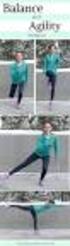 No Equipment Agility/Core/Strength Program for Full Body No Equip Trainer: Rick Coe Introduction Program designed to be performed in a circuit. Perform exercises in sequence without rest 2-3 times. Increase
Patient Guide. Sacroiliac Joint Pain
 Patient Guide Sacroiliac Joint Pain Anatomy Where is the Sacroiliac Joint? The sacroiliac joint (SIJ) is located at the bottom end of your spine, where the "tailbone" (sacrum) joins the pelvis (ilium).
Structure and Function of the Hip
 Structure and Function of the Hip Objectives Identify the bones and bony landmarks of the hip and pelvis Identify and describe the supporting structures of the hip joint Describe the kinematics of the
Post Surgery Rehabilitation Program for Knee Arthroscopy
 Post Surgery Rehabilitation Program for Knee Arthroscopy This protocol is designed to assist you with your rehabilitation after surgery and should be followed under the direction of a physiotherapist May
Physical & Occupational Therapy
 In this section you will find our recommendations for exercises and everyday activities around your home. We hope that by following our guidelines your healing process will go faster and there will be
What are Core Muscles?... 2. A Healthy Lumbar Spine...3. What is Low Back Pain?...4. Rehabilitation...6. Stages of Rehabilitation...
 Table of Contents What are Core Muscles?... 2 A Healthy Lumbar Spine...3 What is Low Back Pain?...4 Rehabilitation...6 Stages of Rehabilitation...7 Pain Management....................... 8 Heat/Ice What
Anatomy and Pathomechanics of the Sacrum and Pelvis. Charles R. Thompson Head Athletic Trainer Princeton University
 Anatomy and Pathomechanics of the Sacrum and Pelvis Charles R. Thompson Head Athletic Trainer Princeton University Simplify Everything There are actually only three bones: Two innominates, one sacrum.
FUNCTIONAL STRENGTHENING
 FUNCTIONAL STRENGTHENING *This group of exercises are designed to increase leg and core endurance and stability as related to bipedal functional activities. *Perform this program for 4-6 weeks. It is ideal
Lower Back Pain HealthshareHull Information for Guided Patient Management
 HealthshareHull Information for Guided Patient Management Index Introduction 2 Lumbar spine anatomy 2 What is lower back pain? 3 Conditions that may be causing your back pain 3 When should I see my doctor?
Rehabilitation of Sports Hernia
 Rehabilitation of Sports Hernia (Involving Adductor Tenotomy, Ilioinguinal Neurectomy and Osteitis Pubis) An appendix follows this protocol for examples of exercises in each phase of rehabilitation. There
 Low Back Pain Mansour Dib MD Physical Medicine and Rehabilitation Pain generators Disc Posterior elements Sacro-iliac joint Education - Spine Positioning Neutral Extension Flexion Disc disease Discogenic
ACL Injury Prevention Program
 ACL Injury Prevention Program Kinetic Physical Therapy Adolescent Sports Medicine Developed by Michelle Feairheller MPT, DPT, OCS, CSCS, Greg Macionsky ATC, and Kristyn Kauffman BS 2014 ACL Injury Prevention
Sciatica Yuliya Mutsa PTA 236
 Sciatica Yuliya Mutsa PTA 236 Sciatica is a common type of pain affecting the sciatic nerve, which extends from the lower back all the way through the back of the thigh and down through the leg. Depending
total hip replacement
 total hip replacement EXCERCISE BOOKLET patient s name: date of surgery: physical therapist: www.jointpain.md Get Up and Go Joint Program Philosophy: With the development of newer and more sophisticated
Info. from the nurses of the Medical Service. LOWER BACK PAIN Exercise guide
 Info. from the nurses of the Medical Service LOWER BACK PAIN Exercise guide GS/ME 03/2009 EXERCISE GUIDE One of the core messages for people suffering with lower back pain is to REMAIN ACTIVE. This leaflet
Self-mobilization methods
 Self-mobilization methods 5 Muscle energy techniques, as outlined in previous chapters, provide us with an excellent series of methods for relaxation and stretching of specific tight, shortened, contracted
How to Get and Keep a Healthy Back. Amy Eisenson, B.S. Exercise Physiologist
 How to Get and Keep a Healthy Back Amy Eisenson, B.S. Exercise Physiologist Lesson Objectives Statistics of Back Pain Anatomy of the Spine Causes of Back Pain Four Work Factors Core Muscles Connection