
Worship Music for Guitar. Rob Brayton Copyright Robert S. Brayton
|
|
|
- Beryl Dean
- 9 years ago
- Views:
Transcription
1 Worship Music for Guitar Ro Brayton Copyright Roert S. Brayton

2

3 Worship Music for Guitar Copyright Roert S. Brayton This ookand companion resources are copyrighted: no one may copy it for commercial use in any form, in whole or in part, without explicit written permission from the pulisher. ll other rights are diminished. Brayton, Roert S. Worship Music for Guitar First Edition 998. Third Electronic Edition 009 Printed in the United States of merica cknowledgments I would first like to thank my Creator and Savior, the Lord Jesus Christ, the est friend anyone could ever have. He has endowed me with the desire, talent, and resources to learn to worship Him in deeper ways than I thought possile. I would also like to thank my family, friends, and all the rothers and sisters in Christ who have een a great source of encouragement to me over the years. I especially want to thank those whom the Lord has rought in my path to help, teach, inspire and advise me in this endeavor: Brittain Fraley, Gerard Garno, Manny Novoa, Christy Shaw, John Michael Talot, Christopher Whitenton, and Horace Worley. This ook is dedicated to the Lam of God, the only One in heaven and earth who was found worthy. May we all strive to ecome worthy to worship Him only in spirit and truth. Personal Note. W. Tozer stated, To worship acceptaly, is to e orn anew y the Holy Ghost through faith in the Lord Jesus Christ and have the Holy Spirit of Christ teach us to worship and enale us to worship. The fact that you are reading this ook almost assumes that you already have a personal relationship with the Lord Jesus. If you do not, that prolem is easily remedied He has done the hard parts. He was orn of the virgin Mary y the Holy Spirit, lead a sinless life, presented Himself as the perfect, infinite atoning lood sacrifice for the sins of all humanity y dying on a cross, and arising from the dead on the third day. He now sits in heaven y the right hand of God the Father, and will come again as King, Lord, and Judge. ll that is left for you to do is sincerely call on the name of the Lord Jesus Christ for the forgiveness of your sins in a spoken prayer, repent turn away from your sins and worldliness, and accept Him as your savior and Lord. Having done this, I recommend tell the world of your Savior, find a group of Christians to fellowship with on a regular asis, start having a daily time of worship, prayer, meditation, and Bile study (start with the Gospel of John), and get aptized.

4 Tale of Contents Worship Music for Guitar... Worship Music for Guitar... Tale of Contents... Tale of Contents... Forward... Introduction...5 Music in the Bile...5 Worship God Wherever You re...5 Not In Your Own Strength...5 Find a Guitar...7 First, Find a Trustworthy Friend...7 Types of Guitars...7 Guitar Parts Head...8 Tuning Pegs...8 Neck...8 Nut, Bridge, and Saddle...8 Strings...8 Body...9 Frets...9 Guitar Basics...0 Tuning...0 Electronic Tuner...0 Relative Pitches...0 Harmonics...0 Notes of the Fingeroard... Position... Holding the Guitar... Using a Plectrum (pick)... Music Basics... The Four Parts of Music... Music Notation... Standard Notation... Clefs...5 Key Signature...5 Meter...5 Notes...6 Talature...7 Lead Sheet...7 Chord iagrams...8 Hymnals...8 Chord Basics...9 Major Triad...9 Chord Variations...9 Minor Chords...0 Seventh Note of a Chord...0 Inversions...0 Other Chord Variations...0 Methods of Guitar Playing...

5 Rhythm/Strumming... Finger Picking... Flat picking... Classical... Singing Basics... Relaxation... Breath and Pitch Control... nnunciation... Getting Started... mazing Grace...5 Peace is Flowing Like a River...0 Performance Notes...0 Variations... More Music Basics... Keys... Modes... Circle of Fifths... Transposing Keys...5 Capo...5 Movale (Barré) Chords...6 Performance Notes...7 E-ased Barré Chords...7 -ased Barré Chords...8 Repeat esignations...0 Harmonics... Intonation... Playing By Ear... Strum and Pick Patterns... Bass Runs...6 Practice Log...7 Now That You re a Guitarist...8 Music in Worship...9 Godly Music...50 Bile References...5 Reading List...56 Glossary...57 Quick Reference Charts...6 Example - sus...6 Example - Csus, Csus, Gsus...6 Example - Em7...6 Example - maj9, m7...6 Example Keys...65 Ta Sheet...67 Hymnal...68

6 Forward There are many resources on learning to play music, and there is certainly no shortage of ooks of Christian music. But for some reason, it is difficult to find a ook on learning Christian worship music on the guitar. I struggled once with the guitar when I was younger, ut was unsuccessful. This time around I was ale to learn it with the Lord s help for the purpose of worshipping Him. Seeing a need for a ook to help others with no musical ackground learn the guitar, I prayed the Lord would let me write a ook on the suject. He did. The fact that I have only een playing guitar for a short time helps me to rememer the early sticking points. on t worry, this ook has een proofread y some very knowledgeale guitarists for accuracy. This ook teaches the essentials of guitars and music. I cover only the music concepts that are required to learn to play the guitar. I cover various guitar techniques, ut mostly focus on classical guitar techniques where I have found them useful. However, if it is your desire to learn to play proper classical guitar, this is proaly not the right ook for you. To e sure, the classical techniques are time proven and very worthy of study for those who intend to play the old masters. On the other hand, if you just have a urning desire to worship your Creator with whatever gifts He has given you, read on! You may freely use and distriute this ook for non-commercial purposes. Please send a donation of $0 or more to [email protected] with a note telling me how you have een lessed y this work. If you teach someone else from this ook, please encourage them to make a donation too. Thank you for your support. Hopefully, I have done an adequate jo of explaining things here, ut if you have questions, comments, compliments, or complaints always feel free to write me. Your servant in Christ, Ro Brayton Magnolia, Texas [email protected]

7 Introduction Music in the Bile Music is one of the most significant ways that God has given us to worship Him. The Bile contains hundreds of songs and references to song y God, Moses, avid, Jo, Solomon, Isaiah, Ezekiel, Nehemiah, aniel, Hosea, mos, Mary, Paul, and Jesus. fter the Last Supper, Jesus and the disciples sang their last hymn together (Matthew 6:0). Many of the songs of avid were prophetic songs aout Jesus. avid was renown for his aility to play the harp ( Samuel 6:8). The Bile says that after the triulations of the ook of Revelations, the Lord will give us a new song (Revelations 5). There will e song in the next life as well as in this life. It seems that making music and singing are important to the Lord. The Bile talks aout the ten-string lyre, flute, agpipes (no wonder mazing Grace sounds so good on agpipes), cymal, gong, tamourine, drum, dulcimer, and others. The Psalms even contain musical notations, such as the word Selah. Several Psalms even end with a Selah. Most Bile scholars elieve this Herew word means to pause. While scholars may not agree on the exact application of this word, it makes sense that this is an indication for the singer to stop singing. uring this time, the instruments would continue playing while the listeners reflected on what was just sung. Worship God Wherever You re In Psalm 00, avid sings that we should all Make a joyful noise to the Lord. In Ephesians 5:9 Paul exhorts us to always e, Speaking to yourselves in psalms and hymns and spiritual songs, singing and making melody in your heart to the Lord. Sometimes when I listen to an accomplished musician I think that my measly offering of song must grate on the Lord s nerves. But then I rememer how sweet my children s music and singing sounds to my ears, even when it is less than perfection. We are all God s children. I am convinced that when we really try to make a joyful noise, even though it may e less than perfect, God is pleased, honored, and glorified. It is important to always worship God from a pure heart. o not sing lyrics that you are not also living. If there is sin in your life, God will not honor your hypocrisy (mos 5:).. W. Tozer wrote in The Pursuit of God, God reveals Himself to aes and hides Himself in thick darkness from the wise and prudent. We must simplify our approach to Him. We must strip down to the essentials (and they will e found to e lessedly few). We must put away all effort to impress, and come with the guileless candor of childhood. If we do this, without dout God will quickly respond. Even though I have a guitar, I do not always have it with me. There are other times when instrumental playing, no matter how simple, gets in the way of worship. In these times, I sing a cappella. There also are times when silence just putting your hand over your mouth in the presence of the almighty God is the most the appropriate form of worship. Not In Your Own Strength Not y power, not y might, ut y my Spirit says the Lord of hosts (Zechariah :6). out one year efore leading me to write this ook, I prayed that the Lord would help me to worship and praise Him etter. I was surprised when I felt that He was leading me to learn to play the guitar and to sing. I had never done either pulicly! He assured me that it was His will, and that He would help and strengthen me y His grace. I was glad to hear 5

8 that, since in a previous attempt to play the guitar aout ten years earlier I didn t even learn a single chord. The Lord has indeed een with me every step of the way. His Holy Spirit has given me the guidance, patience, perseverance, and talent to carry out His will. I know that through Him I have lessed Him, and His other children. nd certainly, I have also een lessed. Francis of ssisi (who is credited with the words to ll Creatures of Our God and King ) said that who ever sings to the Lord, prays twice once from the words, and once from the heart. 6

9 Find a Guitar First, Find a Trustworthy Friend The first step in this journey is to find someone who knows aout guitars and where to find the perfect one for you, and who has your est interest in mind. That person is, of course, the Lord Jesus. The est way to start any journey is on your knees. The Lord knows where every guitar is in the world. If it is truly His will for you to learn the guitar, you can rest assured that He has one already picked out for you. He will show it to you (in His time) ut you must ask first. lso, if He chooses, He may send you help. That s what He did for me. Types of Guitars There are four main types of guitars, and one hyrid. Each has advantages and disadvantages. If you are left-handed, as I am, you may e tempted to uy a left-handed guitar. Granted, strumming a right-handed guitar does feel a little awkward at first, ut in some ways, a right-handed guitar is easier for the left-hander to play. Most of the difficult tasks in guitar playing is in the left hand. I learned to play on a right-handed guitar with very little difficulty. ll the instructions in this ook are geared toward right-handed playing. Type dvantages Classical/ Folk coustic Electric cousticelectric Lefthanded isadvantages Nylon strings are easy on the fingers Wide neck is easier to place fingers Can e mic ed, or retrofitted with an electric pickup for amplification Brighter and louder sounding steel strings with a longer sustain than nylon Narrow neck is easier for small hands Can e mic ed, or retrofitted with an electric pickup for amplification Low tension strings and narrow neck With amplification, will fill any size room headphone amplifier allows practice without disturing others Very long (sometimes too long) sustain Signal modifiers create new sounds Easy to amplify, ut doesn t require an amplifier With amplification, will fill any size room Has a warm acoustic sound Initially easier to strum for lefties. However, with practice, right-handed guitars are just as easy. Not as loud, short sustain Wide neck makes some chords more difficult to finger for very small hands Physically the most difficult to play due to the high-tensioned steel strings Narrow neck can e restrictive to large hands Low tension strings end easily causing notes to e off pitch Narrow neck can e restrictive Requires an amplifier or direct ox Worldly association More expensive Preamplifier may require atteries May not e as loud as a normal acoustic guitar (shallower ody) More expensive Need special chord ooks, etc. Much harder to find Tale - Guitar Comparisons 7

10 Guitar Parts Figure - Guitar Parts Head The head is the top of the guitar. Its jo is to hold the tuning pegs...and to ang into things e careful! Tuning Pegs The tuning pegs, or machines, hold one end of the string. They allow you to adjust the string tighter or looser to raise or lower the pitch of the string. When shopping for a guitar, make sure the tuning pegs are not loose and do not slip when you turn them. Neck The neck gives the strings a place to stretch, the frets a place to lie, and the guitarist a place to play. Inside the neck on steel-stringed guitars is a truss rod. It adds stiffness to the neck. Some truss rods are adjustale to give the luthier a way to correct minor neck warpage. Nut, Bridge, and Saddle The nut holds the strings on the head, the ridge holds the strings on the ody, and the saddle determines the height of the strings. The height of the strings relative to the neck determines the action of the guitar. The closer the strings are to the neck, the easier the strings are to press against the frets. This makes for a fast action. It also makes the strings a higher risk for uzzing against the other frets. The nut is, in effect, the 0 fret. Strings Strings vary for each guitar and each guitarist. Classical guitars use nylon strings. The ass strings are wire wound to add mass. The extra mass allows the core string e thinner, and therefore easier to play. coustic and electric guitars use steel strings. 8

11 coustic guitars generally have the lowest four strings wire wound, classical and electric guitars have the lowest three strings wire wound. The strings on an acoustic guitar have the highest tension. This makes the strings play louder, ut it also makes them more difficult to play. When you are first learning to play, start with a light gauge of strings. The quality of the strings make a ig difference in the sound quality and longevity of the strings you do get what you pay for in strings. Body The ody holds the ridge and amplifies the sound of the virating strings. To a lesser extent, it also gives the guitarist something to steady the guitar. The top of the ody is the soundoard. Soundoards can e solid or laminate (plywood). solid top is usually superior to a laminate top. Some woods, such as spruce improve their tone with age. The sound of cedar and laminate tops generally do not significantly improve. On an electric guitar, the ody is solid. It does not amplify the sound directly ut has electric pickups. The pickups are coils of wire that generate an electric current when close to a virating steel string. This signal is connected to an electronic amplifier and speaker. Because the strings are not using their energy to make sound, the sustain is much longer. Frets The frets are mathematically spaced metal ars emedded in the fingeroard of the neck. Notes are sounded on a guitar y holding the string against the fret y pressing the string down slightly ehind the fret. On all ut classical guitars, there are markers on the neck to help the guitarist locate the frets more easily. Some ass guitars, and slide guitars do not have frets. fter much use, the frets can ecome worn down. Be aware that worn frets and a warped neck can make a guitar especially difficult for a eginner to play. Some guitars have a zero fret in addition to the nut. The zero fret allows precise adjustment of the heights of the strings. 9

12 Guitar Basics Tuning The process of tuning a guitar puts each string in a known state of pitch. Electronic Tuner Electronic tuners are the way to go for novice players. Tuning y ear from relative pitches and harmonics are for advanced players. quartz electronic tuner can e purchased for nominal cost at discount music stores. Learning to play a guitar is difficult enough without having to wonder if the guitar is in tune. nd, if y accident, the guitar is out of tune, you can e even more confused aout the sounds you are trying to make. quartz electronic tuner is a good investment for the eginner and experienced player alike. Relative Pitches The traditional method of guitar tuning is y using relative pitches. In this method, you first tune the low E string, and then tune the string relative to the E string y fretting the E string on the fifth fret. This process is repeated on the rest of the strings, except the B string, which is tuned relative to the G string, on the fourth fret. With relative tuning and harmonic tuning, the strings are adjusted for what is called zero eat. etecting this zero eat phenomena requires some practice to get it right. The relative pitches tuning method is the most used yet least accurate method of all. Get an electronic tuner. Harmonics Tuning y harmonics is even more complicated than relative pitch tuning. This method relies on the fact that the second harmonic of one string is the same note as the third harmonic of the next string, except for the second string, which is the third harmonic of the sixth string, and the first string, which is the fourth harmonic of the sixth string. On the plus side, this method is the most accurate of all. Properly applied, this method guarantees that at least four strings (6, 5,, and ) are in tune. fter you get used to the way the guitar sounds, try learning this method. There are other relationships of harmonics etween the strings. For more information on harmonics, see Tale 0 on page. Even so, the est advice for eginners is to find an electronic tuner. 0

13 Notes of the Fingeroard Once you correctly tune the guitar, you then know the notes of each string. Figure shows the notes for each string. While learning each note on each string is not required, it does help in picking out notes. Here are some aids in learning the fingeroard: n easy way to rememer the open notes is: Every ngel eclares God Be Exalted! Think of the high E, B and (sometimes) G strings as the melody strings, and the E, and (sometimes) strings as the ass strings. Whatever strings are currently not eing played as ass or melody strings are for harmony. The notes on the fifth fret are the same as the open strings, except shifted up one, and the B turns into a C (see Figure ). Open E G B E Fifth fret G C E Figure - Fifth Fret ll the notes have a sharp or flat note ( or ) etween them, except B and C, and E and F. The musicians theory of relativity is not E = mc, rather it is E = F. Likewise, F = E, B = C, and C = B. Thus, on the fingeroard, B and C, and E and F are one fret apart; all the other notes are two frets apart. These two notes, B and E, are the notes for the two melody strings. s you are learning chords, pay attention to the position of the lowest note of each chord. This is the root of the chord. In other words, if you know a given chord, you also know where to find the ass note corresponding to that chord. For instance, the lowest note played in a C chord is the fifth string, third fret. The fifth string, third fret is C. Learn the notes of the asic chords: C = C E G, F = F C, G = G B, = F, = C E, E = E G B. Notice that with these chords, the sharp notes only appear on the middle note (the third) of the chord. lmost all music for the guitar is ased on these six chords, and their variations. (See the Chord ictionary for recommended fingering.)

14 Figure - Notes of the Keyoard Figure - Notes of the Fingeroard (each fret is a half-step) Position Holding the Guitar There are three main ways to hold the guitar: classical, folk, and standing. The classical position is the est method for reaching the fingeroard, and forces the wrist to rotate into a position that is less likely to cause Repetitive Stress Injury (RSI) prolems. The one drawack is that the proper classical position is with your left foot propped up aout 0 inches. Real classical guitarists, of course, carry a footrest with them at all times, so this is not a prolem. The folk position is asically the same as the classical position, except with the guitar on the right knee without a footrest. This is the method that I use the most. When standing, I highly recommend using a guitar strap. If you think that you might need to play while standing, e sure to practice some while standing it s a lot different than sitting. Of all the ways people will tell you on how to hold a guitar, the est advice that I have found is: Some piano examples are included in this ook for those who already know the piano and are now learning the guitar. If you do not already know the piano, you may ignore these examples. Classical guitars do not take well to guitar straps they are designed to e played only while sitting (with your foot propped up aout 0 inches).

15 on t hold the neck like a aseall at. Play with your thum pressed in the middle of the neck. This requires concentration. The natural tendency is to want to gra the neck like a aseall at. The reason is twofold. The proper position feels wrong, and in the eginning, your thum is weak. To make matters worse, some accomplished (non-classical) guitarists always hold the neck this way. They do it so they can use the thum to fret the ass notes. fter a while of holding the guitar properly, it will egin to feel more natural, and your thum strength will increase. Hold your fingers of the left hand so that the tips come straight down on the strings. When you are first starting, the left hand and fingers are forever accidentally muting strings. Use just the tips of the fingers when fretting a string etween other strings, press the string as near to the fret as possile, and only use only enough force to keep the string from uzzing against the fret. on t allow the palm of your hand to touch the neck. This is a common prolem especially near the index finger. Make sure the fingers extend out and over the strings so this doesn t happen. If you start having RSI prolems such as carpal-tunnel syndrome, try the classical position. lso, try to use your left hand less. If your prolem persists, stop playing until you are ale to consult with a doctor. Using a Plectrum (pick) This ook is ased mainly on fingerpicking styles and not plectrum styles. pick is used for strumming and flatpicking. fter a few weeks of fingerpicking, the fingers on the right hand ecome callused enough that a pick is not necessary. If you need a righter sound, grow the fingernails on your right hand so they are even with the fingertip, and play with your nails. You should never use a pick on nylon strings.

16 Music Basics s music has come down through the ages, there have een many standards develop. This section attempts to explain some of the concepts of music that are common to all music, especially those concepts relating to worship music on guitar. There is a danger in attempting to fit music concepts into too small a ottle, due to the almost limitless variations within music. There is also a danger in presenting all the concepts of music, in that it can e overwhelming, confusing, and unnecessary. So, as you read the following, keep in mind that these are only the required asics required for simple songs and hymns for the guitar. For any concept presented here, there is invarialy at least one exception or variation that is not mentioned. This is why I use the words, almost always, generally speaking, usually, etc., throughout. Nonetheless, we must start somewhere, so here is where we start. The Four Parts of Music Music is made of sound: melody and harmony, and occurs in time: rhythm and tempo. Musical sound occurs within three strata, or layers. The lowest layer is the foundation the ase. In fact, the word ass is derived from the Latin word for ase. The next layer is the harmony layer. The highest layer is the melody. In hymn music, this is true almost without exception. The soprano part, the top note, is the melody. The middle notes, alto and tenor fill in the harmony. The ass part, the lowest note, is the foundation for the harmony, and helps to delineate the rhythm. ll these layers interact to form an interesting sound called music. The presence and interaction of the layers are carefully timed and syncopated. This timing forms the rhythm, or eat, of the music. The speed with which the music is played is called the tempo. Music Notation Standard Notation Standard musical notation defines the rhythm, and the pitch and duration for the notes of a song. Figure 5 is an example of standard notation. The notes shown are the notes of the open strings on the guitar. For the guitar, the notes are written one octave higher on the staff than they sound. By writing guitar music one octave higher than is sounds, more of the notes are in the trele clef.

17 Figure 5 - Standard Notation Clefs With a little imagination, you can see the trele clef, also called the G clef, symol is a stylized sitting on top of a G. Careful study further reveals that the is sitting on top of the line, and the G is wrapped around the G line. With a little more imagination you can see that the ass clef, also called the F clef, symol is actually the letter F. The two dots of the ass clef symol are on either side of the F line. The trele clef and ass clef together form the grand staff, also called the piano staff. The lyrics (words) are written elow the staff. Key Signature The key signature declares the key of the music. Keys will e covered in more detail in a later section. Meter The meter determines the rhythm of the music. It consists of a numer on top of another numer. In this example the meter is /. The top numer tells you the numer of eats in each measure. The ottom numer tells you the value, or time of each eat. The meter in the example indicates four quarter note eats for each measure. The top numer is generally,,, or 6. The ottom numer is generally,, or 8. Sometimes the / and / meters are areviated with or. c C In guitar notation, these symols are also used to signify full and half-arré. 5

18 Meter Count Tempo Two half notes per measure: One two one two Two quarter notes per measure: One two one two Three quarter notes per measure: One two three Four quarter notes per measure: One two three four Six eighth notes per measure: One two three four five six Slow to medium Slow march Medium to fast Quick March Slow to fast General purpose, Waltz (oom pah pah) Slow to fast General purpose Medium to fast Same as / time, ut usier. Sometimes it helps to think of each measure of 6/8 time as two measures of / time. 6 8 Or One and two and three and Uses Tale - Common Meters nother factor of the rhythm is the tempo. The tempo indicates the numer of eats per minute. fast song might have 0 eats per minute. slow song might have 60 eats per minute. When you are first learning to play, try to keep as steady a eat as possile. There is a tendency to play the easy parts faster than the hard parts, or not to hold the notes in relative time with each other; cutting the long notes too short, and holding the short notes too long. fter you learn to play a little, a metronome is a good investment. Notes The notes descrie the pitch and duration of each instrument that is to e played. The pitch is determined y the relative vertical position of the note on the staff. The notes on the lines of the ass clef (from ottom to top) spell Good Boys o Fine lways. The spaces spell ll Cows Eat Grass. The lines of the trele clef spell Every Good Boy oes Fine. The spaces spell F C E. There is one ledger line etween the ass and trele clef. It is middle C. Ledger lines allow the staffs to e extended ad hoc. The duration of notes are signified y their shape.5 Two methods are used to extend a note eyond its normal duration. One is to tie notes together. The other is to dot notes. otted notes are extended one half of their value. For instance, in / time, a half note is two eats. dotted half note is then three eats. That is, + =. Likewise, a dotted quarter note is one and one-half eats. Sometimes consecutive eighth notes are eamed. Consecutive sixteenth notes can e doule eamed. Be sure to only accent the odd eats. Continuous accent on the even eats can cause a ackeat the foundation of rock music rhythm. 5 Some hymnals further shape the notes as triangles, diamonds, etc., to also signify the relative pitch. 6

19 Name otted Whole Whole otted Half Half otted Quarter Quarter otted Eighth Note Tied w. w+h time time 8 time eats 6 eats eats eats eats 8 eats ½ eats eats 6 eats eat eats eats Î ä ¾ eat ½ eats eats Î ½ eat eat eats /8 eat ¾ eat ½ eat Rest w h. or H. h+q Î h or H q. or Q. q+e q or Q e. or E. e+x ä Å Eighth e or E ä ¼ eat ½ eat eat Sixteenth x or X Å /8 eat ¼ eat ½ eat Tale - Note and Rest urations Talature Standard musical notation defines the rhythm, pitch and duration for the notes of a song, ut it does not define which strings these notes should e played. That is where talature comes in. Guitar talature consists of six parallel lines. Each line signifies a string. On the lines are written numers. These numers signify which fret is to e played. The numer 0 signifies that the string is played open (unfretted). Figure 6 shows talature for playing each string in a slow strum with no strings eing fretted. Figure 6 - Talature Lead Sheet lead sheet contains the melody, written as notes on a trele staff, the harmony, written as chords aove the staff, and lyrics, written elow the staff. 7

20 Figure 7 - Lead Sheet Example Chord iagrams Some music written for guitar contains chord diagrams aove the staff, such as in the lead sheet example. Beware of music written in flat keys (B, E, etc.), and/or containing a lot of flat chords. lso eware of music with a chord for every note or nearly every note of the melody. This is not really guitar music. This is piano music with guitar chord diagrams added. Only the most skilled guitarist could ever hope to play this as it is written! Music written in C, G,,, E, or sometimes F (in other words, keys with mostly sharps, not flats) are the easiest to play on a guitar. void keys with flats until you can learn to transpose and use a capo (see page 5). While a skilled pianist plays a different chord for each note of the melody, the eginning guitarist can generally get away with playing one, two, or at most, three chords per measure. Practice will help you learn which ones to play and which ones to throw away. For example, referring again to the lead sheet example aove, you can skip the 7 and C chords. Hymnals Most hymnals are written for piano and organ. However, with a little practice, you can learn to play some hymns from a hymnal. The secret is learning to stay away from hymns with a lot of flats in the key signature (or learning to transpose), learning to read notes on the ass clef, and learning to play the II, III, and VI chords as minor chords (more on this in the next section). Generally speaking, the first ass note of each measure is the root or fifth of the harmony for that measure. In other words, if the first ass note of a measure is G, chances are good that a G chord will e the correct chord for that measure. Compare the chords in Figure 7 with the ass notes in Figure 8. They are identical. nd in fact, the chords themselves are identical. On the lead sheet, the chords are written as text aove the staff. In the hymnal, the chords are written explicitly, note y note. For more instruction on these concepts, see page. Figure 8 - Hymnal Example Chord Basics chord is a group of two or more notes that are played to support the melody of a song. The harmony of most hymns is ased on three notes called the Major Triad. Chords 8

21 mainly exist in the harmony strata. For the most part, eginning guitarists just learn to play chords from memorizing and practicing from chord charts. Part of the confusion of learning music is the fact that the same terminology is used with keys and chords. Within a key, there are fifth, seventh, third, etc., chords. Likewise, within a chord there are also fifth, sevenths, thirds, etc., notes. To help distinguish the chords of a key versus the notes of a chord, the chords of a key are written in Roman numerals (V, VII, III, etc.). The notes of a chord are written in raic numers (5, 7,, etc.). Major Triad The notes of the chord in most common music are ased on a root (), a third (), and a fifth (5). The root identifies the chord. For instance, a chord with a C as the root is a C chord. The other two notes are the third and the fifth. E is the third whole note aove C, and G is the fifth note aove C6. Thus, the C chord consists of C, E, and G. Sometimes the root is referred to as the tonic, the third is referred to as the mediant, or middle, and the fifth is referred to as the dominant. Figure 9 - Piano Chord Construction for C-chord (C E G) Chord Variations There are literally hundreds of chord variations. Most of the variations are used for special effect. Chord variations fall into four categories: modifying the root, modifying the third, modifying the fifth, and adding more notes to the asic triad. Fortunately, 90% of the time, a minor (flatting the third) or seventh (adding the note 0 half steps aove the root) are the only required variations to uild chord progressions. Even more fortunate is the fact that they are easy to learn and play. For instance, right now, find a standard-tuned guitar, and strum the four thinnest strings. You just played a variation of E-minor-seventh-over- (Em7/) chord. This is a real chord, used in real music. The point is, sometimes chords that look difficult are sometimes the easiest to play. Minor Chords The major triad is converted to a minor chord y flatting the third y a half step. Thus, C minor is C, E, G7. For a given key, the root (I), forth (IV), and fifth (V) of that key are naturally major chords. The second (II), third (III), and sixth (VI) chords of a given key are naturally minor chords. The seventh chord of the key (VII) is naturally diminished (the third and the fifth notes are flatted). iminished chords are rarely required. 6 7 More precisely, the third is four half-steps aove the root, and the fifth is seven half-steps aove the root. The flatted third is three half-steps aove the root, the fifth is seven half-steps aove the root. 9
22 Seventh Note of a Chord There are two varieties of the seventh. The major seventh (maj7 or 7), and the more common just plain seventh (7), also called the dominant seventh. Both are added to a major or minor chord triad. The seventh adds the note ten half steps aove the root. The major seventh adds a note eleven half steps aove the root. Thus, C7 is C, E, G, B, and Cmaj7 is C, E, G, B. The seventh adds a small amount of dissonance to the chord. Sevenths are usually used right efore the end of a phrase to signal that something ig is aout to happen. They help push the music along ack to the root chord of the song. The major seventh note is only one half step from the octave of the root. Because of this the major seventh chord really stands out when used in a song. The major seventh is rarely required in hymn music. Inversions s far as chords and music are concerned, it matters little which C, E, and G notes are played to form a C chord as long as it doesn t interfere with the melody strata. Within the context of a song, few people would ever notice if the C chord were played C E G, or E G C, or G C E. That is, provided a C note is played in the ass strata, and the notes of the chord do not wander into the melody strata. These other forms, E G C and G E C, are called the first and second inversions of the chord. Many of the guitar chords are ased on inversions. It is not important that you understand the inversions, only that you know that inversions are used in guitar chords. Other Chord Variations Other common variations include suspend fourth (sus, or sus), suspend second (sus ), sixth (6), add ninth (add 9), ninth (9), and alternate ass (/ass). To suspend a fourth or second, the third is removed, and the second or fourth is used in its place. The sixth is two half-steps aove the fifth. The ninth is the same as a second, ut usually played an octave aove the root. For add 9, only the ninth is added. For 9, add the ninth and the seventh. n alternate ass merely means to play a different note for the ass. It is also sometimes referred to as the alternate root. You may also see chords with no. These are sometimes the two note power chords common in Rock music. For these chords, just play the lowest two I and V notes of the chord. 0
23 Example for ( C E) Variation ction to a major triad Minor Suspend second Suspend fourth iminished ugmented Sixth Seventh Minor seventh Major seventh Ninth dd ninth lternate ass Flat the third ( ) Replace the third with the second8 () m ( C E) sus ( B E) Replace the third with the fourth () sus or sus ( E) Flat the third and fifth (, 5) Sharp the fifth ( 5) dd the sixth (6) dd the seventh (7) Flat the third ( ), add the seventh (7) dd the major seventh (M7) dd the seventh and ninth8 (7 and 9) dd the ninth8 only (9) dd the ass as the ass note dim or ( C E ) aug ( C E ) 6 ( C E F ) 7 ( C E G) m7 ( C E G) maj7 or 7 ( C E G ) 9 ( C E G B) add 9 ( C E B) /E (E C E) Tale - Common Chord Variations Methods of Guitar Playing Various methods of picking and strumming the chords add interesting variations to the music. This ook leans heavily toward the classical technique. Rhythm/Strumming This is the staple of folk guitar playing. In this method, the guitarist fingers chords with the left hand and strums the strings down and up in various rhythm patterns using the right hand. lternating ass patterns are very good with simple music, such as hymns. Finger Picking Finger picking can mean either roken arpeggiated chords, or playing individual strings independent of chord patterns. The latter method is sometimes used in classical music. Flat picking With enough practice, you can pick out the strings using a single pick. Flat-picking and finger picking are common in folk and luegrass music. Classical Classical guitar is sometimes ased on chords, ut it also allows non-chord picking. Most classical guitarist do not use talature, ut instead use standard notation. To signify which string to play, tiny numers are written y the notes. Usually, only the trele clef is used with the notes written one octave higher than the actual sound. In classical guitar playing, the thum and first three fingers of the right hand are given the names P, I, M, and. These are derived from the Italian names for the fingers. In Italian, thum is Pulgar, the index finger is called Indice, the middle is Medio, and the ring finger is the nnular: hence, P, I, M, and. The right little finger generally is not used in classical playing, ut when it is, it is designated the X, E, or even C, depending which ook you read. Each finger is assigned to generally only play specific strings. The thum, P, plays 8 Rememer, the second and ninth are the same note. The second is usually played in the same octave as the root where the ninth is usually played in a higher octave than the root.
24 only the ass strings (, 5, and 6), I plays the string, M plays the string, and plays the string. Let me repeat that. For classical style playing (recommended), the thum, P, plays only the ass strings (, 5, and 6 strings), I plays the string, M plays the string, and plays the string. This may seem strange at first, ut it is worth learning. By playing in this manner, the right hand does not move; only the fingers of the right hand move. This ultimately makes it easier to hit the correct strings. lso, you are ale to etter control what strings are played without having to resort to damping individual strings with the left hand. Furthermore, this allows you to pluck all the notes of a chord at the same time. For all its advantages, the classical position makes ordinary strumming very difficult. To play a strum, the thum plays 6, 5, or, I plays, M plays, and plays. This is done in rapid succession so it sounds like the strings were strummed. gain, the advantage is that the hand does not move relative to the strings. If you are fingerpicking a song that needs a strum in the middle, practice this method. If you are playing a song that is completely strummed, just use the thum or a pick to strum all the strings. lternatively, a single finger strum (index or middle finger) can e used without moving the whole hand. This is called a rush stroke. Because the rush stroke method does not require the whole hand to move, it works est with the classical position. Most real classical guitars do not have dot markings on the fingeroard. It is still relatively easy to pick out frets if you rememer this aout the classical guitar: There are twelve frets from the nut to where the neck meets the ody The eye can relialy count up to aout six frets. To find higher frets, count ack from the neck. For example, C is on the seventh fret. For most people, it is easier to count ack five frets from the neck, than it is to count seven frets from the nut. Unless you are having extreme difficulty in finding a fret, avoid the use of cheater markers.
25 Singing Basics Whether you intend only to sing to the Lord in private or to lead others in worship, you should work on improving your singing. The key to singing is rememering to whom you are singing. If you are not singing to the Lord when you practice, don t expect Him to show up when you are singing in a group. When you practice, concentrate on eing relaxed, controlling your reath, and annunciation. Use vocal exercises to practice scales and intervals. You will e amazed at how well vocal exercises help to improve your singing. Relaxation It is difficult to have a good tone when you are tense. Being relaxed can also help your guitar playing, and can make the whole experience a greater lessing. Start your practice with prayer. Clear your mind of the world, and focus your mind on God and making eautiful worship music to Him. Pray for peace in your soul and spirit. sk God to help you relax so that you can etter focus on worshipping Him. Having done this, it is good to relax your muscles. To do this, first get into a comfortale position. Take several deep reaths, inhaling from the diaphragm, and letting the air escape slowly. Then, starting with your feet and working your way all the way up your ody, clench and relax each muscle. If you are really serious aout improving your singing, try an aeroic workout followed y stretching exercises. Some experts recommend you avoid practice altogether unless you are relaxed. Clear your mind of the world and focus on singing praises and worship to the Lord. Breath and Pitch Control Some people have a naturally pure tone; others have a raspy voice. The same Creator gives oth. The key to pleasant singing is not the quality of the vocal cords, ut rather the steadiness of reath and correctness of pitch of what is sung. When you practice, strive for a correct and steady pitch. Here are some asic reathing exercises. Keep your neck stretched out y positioning your head such that the top of your head is as far away from the floor as possile. Keep your ricage expanded and your shoulders low, and reathe from your diaphragm. Inhale silently with the ack of your throat and jaw in a slight yawn position. Exhale slowly y lowing a stream of air. Repeat this slowly up to ten times. Next, take a deep reath and silently pant small steady reaths in and out. Repeat aout twenty pants and exhale completely. Rest, and repeat up to five times. Use vocal warm-ups singing up and down the scales to strengthen your vocal ailities. s you practice the vocal warm-ups, use ah ased syllales (la, ma, na, fa, etc.) Long Eased syllales such as mee, nee, etc., help righten your tone with nasal resonance. If your tone is already too right, long O-ased syllales such as lo, go, mo, etc., help uild mouth and throat resonance. nnunciation When singing, you must speak the words of the song so the listeners can understand what you are singing. Sure, the Lord knows even our groaning, ut the people listening need to hear it clearly. Vocal warm-ups also help to uild volume. eclare the truths of the Lord oldly!
26 Getting Started Well, enough music theory let s get playing! The keys to learning to play are summed up in these carefully selected nuggets of advice: For the first few days (or maye weeks), your fingertips will e sore. Eventually, calluses will uild up on your fingertips and they will not hurt anymore. Keep your fingernails trimmed very short on your left hand. t first, you will feel very clumsy. This is normal. Over the months, your fingers will eventually ecome programmed to hit right notes. Learning a new instrument generally happens in stages. In the eginning, it seems totally hopeless. Then, slowly, you will egin to make good progress for a while, and then seem to reach a plateau. When you reach a plateau, it sometimes seems like you will never get eyond this one step. Practice regularly, and just stick with it. Then one day, you will reak through the plateau. It will happen if you just stick with it. Be sure your motivation is pure, and pray. Prioritize tone and form over speed. It is etter to have a good sound and steady timing than to e ale to play fast. When you are learning a new piece, work out the difficult sections independently and play them slowly. Concentrate and analyze every movement. metronome can help you learn steadiness of eat. To start, try to practice five days per week, with at least five minutes of actual playing. Regular practice is critical! fter your fingers stop hurting, gradually work your way up to 0 to 0 minutes at least three, preferaly five, times per week. Rememer that this time is not just guitar practice, ut is time for worship. on t get so involved making music that you totally forget the Maker of music. lways egin with prayer. Bad haits learned at the start are hard to reak. Pay attention to practice, posture, and position. Practice regularly, use correct form, and e mindful of where your fingers are and what notes and chords you are playing. Take a lesson or sit down with an experienced player, if need e, to ensure you are holding and playing the guitar correctly. Keep your guitar in tune. When forming the chords, rememer to place your fingers just slightly ehind the frets. Press only hard enough that the strings do not uzz when played. If you get tired of singing a song during your practice, try whistling, humming, or singing do-do-do. Whistling sounds very nice with some songs. Music teachers often recommend regular playing efore an audience (or even a tape recorder). It gives you a good incentive for polishing your playing. on t e afraid to take a lesson now and then, or even regularly. Play with as many different people as you can. Practice with vocal warm-ups. Practice singing along with recordings of professional musicians. ttempt to emulate their technique, ut apply your own God-given personality. Make tapes of yourself. This can e a great help in polishing your sound. However, don t e discouraged y what you record. You are y far your worst critic. You really don t sound as ad to others as you sound to yourself. Strive to do your est and leave perfection to the professionals.
27 mazing Grace Sometimes called the Christian National nthem, mazing Grace is the one of the most revered and recognized songs in the world. It was written y John Newton, a converted slave trader who later ecame an aolitionist preacher. The importance of learning this song as presented here cannot e over-estimated. Here are all the elements of any song that you will ever learn: chord patterns, counting, strumming, arpeggiating, and talature. While it may seem that an inordinate amount of time is spent learning just this one piece, I assure you that it is time well spent. Learn each step as est as possile. Most hymnals have this written in the key of G. This arrangement9 is in the key of C. It uses four chords: C (I), F (IV), G (V), and m7 (VIm7). The I, IV, V, and to a lesser extent, VIm7 are the asic chords used in all guitar music. The C, F, G and m7 chords go particularly well together due to the fact that the fingers of the left hand move relatively little etween these chords. Try to make the chord changes with a single fluid motion. With practice (OK, with much practice) changing chords will eventually ecome automatic. The chord pattern for mazing Grace is C C F / C C C G / G7 C C F / C m7 G C. The song is divided into four musical phrases of four ars each. The first phrase ends in the middle of a sentence on the su-dominant F. The second phrase ends the sentence with the dominant G. G7 leads0 the third phrase that again ends in the middle of a sentence with a su-dominant F. The final phrase takes a daring leap to m to signal the end is near. fter one last visit to the dominant G, the song returns safely home to end with C. It is this simple and predictale chord structure that so endears the melody of this song in our hearts. Sophisticated chord structures may make for etter conversation among music scholars, ut it is hard to eat the pure simplicity of this great old hymn. Start y learning the chord changes. Practice C to F and C to F until they ecome single motions. Then learn C to G and C to G until they ecome single motions. Finally, practice the other chord changes until they also ecome automatic. s you are learning, work toward keeping a steady tempo. The strums should occur steadily at a rate of aout one strum every two or three seconds. It might help to tap your foot at a slow, steady eat and count one two three, one two three, etc., for each measure. fter you can play with some regularity, get a metronome. Set it for 60 to 70 eats per minute. 9 G is a perfectly good key for the guitar. I have transposed it to C to facilitate fingerpicking the melody. This is no surprise. The dominant seventh (V7) is technically referred to as the leading chord. 0 5
28 mazing Grace - C Mazing C grace how F sweet the C sound that C saved a C wretch like G me. G7 (selah) C Once was C lost, ut F now am m7 Blind ut, G now I C see! I C found. Was To play mazing Grace, follow these steps:. Form the C chord with your left hand.. Pluck the string (G) this is the first note of the song. Sing -.. Strum the strings from 5 to (down) with the thum of your right hand and sing the first measure, -mazing.. Strum again and sing, grace how. 5. Change to the F chord and strum to and sing, sweet the. 6. Change ack to the C chord, strum, and sing, sound that. 7. Strum and sing, saved a. 8. Strum and sing, wretch like. 9. Change to a G chord, strum, and sing, me. 0. Change to, and strum a G7 chord.. Change to a C chord, strum, and sing, I once was.. Strum and sing, lost. But.. Change to an F chord, strum, and sing, now am.. Change to a C chord, strum, and sing, found, was. 5. Change to an m7 chord, strum, and sing, lind ut. 6. Change to a G chord, strum, and sing, now I. 7. nd for the final chord, change to a C chord, strum slowly, and sing, see. E G5 X C F C5 E C 5 X6 F 7 G E5 Cm E5 G 6 G7 B F (F C) 5 X5 X6 C (C E G) B G 5 5 X6 G (G B ) m7 ( C E G) 6
29 Chord C to F F to C C to G G to C G to G7 G7 to C C to m7 m7 to G iagram Motion. Rotate your finger down so that it frets oth the and strings.. Move the and fingers on the same frets on the and strings.. o not play the 5 and 6 strings.. Rotate the finger up so that only the string is fretted.. Move the and fingers to the and 5 strings.. o not play the 6 string.. Lift the finger.. Move the and fingers to the same frets on the 5 and 6 strings.. Place the finger on the string, third fret.. Lift the finger.. Move the and fingers to the and 5 strings.. Fret the string with the finger on the first fret.. o not play the 6 string.. Place the finger on the string, first fret.. Lift the finger.. Move the finger to the string.. Move the and fingers to the and 5 strings.. Lift the finger.. o not play the 6 string Lift the finger. Move the finger to the 5 string. Place the finger on the 6 string. Place the finger on the string.
30 Once you have mastered one strum per measure, try the / Simple Strum. To learn this strum, start repeating, one and two and three and one and two and three and, and so on. s you are counting, play: ccented strum down One nd Two nd Three nd Light strum up Strum down Light strum up Strum down Figure 0 - / Simple Strum This looks much easier than it is to do. When I first learned this, I could not elieve how clumsy I felt. fter all, how hard is it to count to three? This should e like walking and chewing gum, right? Fortunately, after a few sessions, I egan to get the hang of it. Now I can even strum and chew gum without loosing a eat! fter learning to play mazing Grace with the / Simple Strum reasonaly well, next learn the / Simple rpeggio (see page ). To play the / Simple rpeggio assume the classical position with your right hand. That is, the I (index) finger plays only the string, the M (middle) finger plays only the string, the (annular or ring) finger plays only the string, and the P (thum) plays all ass notes of the, 5, and 6 strings. To play it, simply play the ass note on the first eat, the string on the second eat, and the string on the third eat of each measure. In other words, repeat: P I M pattern. End the song with a light strum across all the strings. The / Simple rpeggio may seem oring when played y itself. Well, it is. That rings us to the talature. The talature arrangement takes the / Simple rpeggio and adds the melody on top. The talature is ased on the same chords with only a few extra notes added for the melody. Playing it is mostly a matter of playing the chords arpeggio. You may notice that some of the notes of arpeggiated harmony are in the melody strata. This is ecause the melody collides with the F chord arpeggio. Rather than reak the steady eat of the arpeggio, the next note up of the arpeggio is sustituted. If you are ale to play a full arré F, start the arpeggio on the string to avoid the collision altogether. In other places, the arpeggio is started a string lower to avoid colliding with the melody. In yet other places, where the melody gets usy, the notes of the arpeggio are dropped. Otherwise the harmony can egin to upstage the melody. The melody notes should e slightly accented so as to rise aove the rest of the notes. If you have never played a guitar efore, expect this to take at least one month, possily as long as three months of steady practice (five to thirty minutes a day, three to five days a week) to learn this song. on t worry: It gets easier with practice. 8
31 rrangement Copyright 997 Roert S. Brayton ll Rights Reserved 9
32 Peace is Flowing Like a River Having more or less mastered mazing Grace, it is time to learn another song. The good news is that once you have learned these two songs, you will have developed the skills to tackle nearly any song. Performance Notes The chord pattern is ased on,, and Em. In the key of, is the fifth (V), and Em is the second (II). The G chord, learned in mazing Grace, is the fourth (IV), ut is not used in this arrangement. This arrangement lends the melody on top of arpeggio chords. The nice thing aout this song is that the melody conforms amazingly well to the / rpeggio pattern. The E chord is included in the chord tale. It is good to learn E and Em together, even though E is not used in this song. To play an Em chord, fret the and 5 strings. However, in this arrangement, these strings are not played for the arpeggiated Em chord. OK, ut should you fret these strings anyway? The answer is yes and no. Yes, you should ensure the strings are not allowed to sustain from previously played chords. This can e done y muting the strings with the heel of your right hand. No, it is not asolutely necessary to fret unplayed strings. It is good form, however, to fret them especially those times when your right hand accidentally plays a wrong string. lso, if you do not fret the strings, you will not learn to play the Em chord. I highly recommend fretting unplayed strings. To play the chord, stagger your fingers at an angle rather than trying to cram all in close to the fret. Hopefully y now your fingers are strong enough to e ale to do this. If your fingers are just too thick to all fit, try using, or fingering instead. These are easier to play, ut are more difficult to change to other chords. If your fingers are so thick that neither of these methods work, try using just the, or even the finger to arré, that is, to simultaneously fret the,, and strings with the single finger. This is quite a challenge at first, ut it will come with practice. You might also consider a wider necked guitar so that the strings are a little more spaced out. In ar of the song, the string is fretted on the second fret. This is accomplished y rotating the finger down to temporarily arré the and strings (6). The last measure has 0 H on the string. This is a technique called a hammer on, or hammer. To play this, play the string open (0), and then quickly fret the string () hard enough to cause the string to clearly sound the fretted note. Using the finger will come in handy for -ased arré chords later. 0
33 Variations This hymn is ased on Galations 5:: The fruits of the spirit are love, joy, peace, etc. This song can e allowed to repeat for each of the fruits. You might even throw in a verse of repeated alleluias. Just e sure to start and end with peace. Verse : Peace is flowing like a river... Verse : (God s) Love is flowing like a river... Verse : Joy is flowing like a river... Verse : lleluia, alleluia, (repeat)... Verse 5: Peace is flowing like a river... 6 F M7 5 7 E5 7 6 C E5 m M7 X5 X6 9 6 E B5 M7 5 E B5 m G 7 M E B5 5 E 6 ( C E) ( F ) E 9 5 X6 E B5 Gm E (E G B) Em (E G B)
34
35 More Music Basics Now that you can play two songs, it is time for some more music theory. Keys The key determines the overall pitch of the song. The chords you have learned so far: C, F, G, and m7 from mazing Grace, and,, Em, and E from Peace is Flowing Like a River, make a well-rounded chord arsenal. With these chords, you can play most songs in the keys of C, G, and. These keys cover a wide range of songs and vocal ranges. If you learn to play y ear, and G are the only keys you are likely to ever need. Key Sharps I C G E B 0 5 C G E B IV V F C G E G E B(7) F Tale 5 - Sharp Keys In Tale 5, the chords you already know are in old letters. Usually, in the key of E, the fifth (V) is played as a B7 (see chord dictionary). In the key of B, start with playing B and F in the half-arré positions (see the section on arré chords). Then, gradually work your way up to full-arré positions. For the key of B, you might e etter off to transpose to, capo, or, etter yet, if your guitar is the only instrument, transpose to C and sing a half step higher (see the section on transposing keys). Major -ased full-arré chords such as B are difficult for eginners to play. Modes Most music, and certainly most worship music, is played within the twelve-interval scale. These twelve intervals are roken up into eight whole notes. To simplify the process, the twelve intervals were divided into eight whole notes y adding half steps etween the whole notes. Two of the half steps had to e dropped to leave just twelve intervals. The result is the scale. scale of whole notes can e started on any of the eight whole notes. Look at the fingeroard on page and play a scale of whole notes starting on each note. You will notice that each scale has a different feel. The scale starting with is the minor scale. The scale starting with C is the major scale. That leaves five other modes that most people do not know exist. There are also pentatonic and whole step scales. ll of this is mentioned to raise your awareness of the fact that modes exist eyond just the major and minor scales. Circle of Fifths Within the major and minor scales, there exists a concept called the circle of fifths. The circle of fifths is derived y counting a fifth (that is, seven half steps) to create a circle of chords. It is not critical that you understand the circle of fifths perfectly it is only a tool to help that can help you understand the relationship of keys, chords and notes. You can impress your friends y rememering: Good eeds re Ever Bearing Fruit.
36 Figure - Circle of Fifths s you pick any given chord on the circle, the chord immediately clockwise is the fifth (V), and the chord immediately counter-clockwise is the fourth (IV). (The root of a fifth is always the fourth of that fifth and vice versa). These are major chords for the key (I, IV, and V). Continuing clockwise, the next three are the second (IIm), sixth (VIm), and third (IIIm). These are the most used minor chords for the key. It is rare that any given song requires other chords eyond these six. The circle of fifths is also helpful for determining key signatures. The key of C does not have sharps or flats in the key signature. Proceeding clockwise from C, each key adds a sharp in the key signature. Proceeding counter-clockwise from C, each key adds a flat. On the guitar, steer toward keys with sharps. s already noted, a guitarist who knows only F, C, G,,, and E chords in major, minor and seventh variations can play nearly any song played in the key of C, G,, or. For each major scale key in the circle of fifths, the equivalent minor scale key is three steps clockwise. Sharps and flats are added to a key signature in a specific order that is also shown y the circle of fifths. Sharps accumulate starting with the key of G. The accumulated sharps start with F, and are all the notes one key counter-clockwise. For example, the key of G uses F, the key of uses F and C, the key of uses F, C and G, and so on. Flats accumulate starting with the key of F. The accumulated flats are the next key counterclockwise. For example, the key of F uses B, the key of B uses B and E, the key of You may notice that there are thirteen chords in the circle. This is ecause F and G are actually the same chord (this is called enharmonic notes). Some music may have other chords, ut they are rarely required.
37 E uses B, E, and, and so on. Notice that the flats read ackwards from the sharps: the sharps are G,,, E, B, F, and the flats are F, B, E,,, G. lso, as the sharps grow in fifths ( is the fifth of G, is the fifth of G, etc.), the flats grow in fourths (B is the fourth of F, E is the fourth of B, etc.). Transposing Keys Sometimes you might come across a song that is too high or too low to sing. In this case, you might want to transpose the song into a lower or higher key. Transposing is simply a matter of raising or lowering all the notes and chords y numer of half-step differences etween the keys. The chord variations remain the same minors are still minors, sevenths are still sevenths, etc. If you need to transpose up one or two half steps, try a capo. Otherwise, refer to Tale 6 to locate the new transposed chords. If the music elongs to you, you might want to write the transposed chords next to the printed chords using a pencil (or etter yet, a right red pen). For example, to transpose from C to, play all C chords as chords, G chords as E chords, F chords as chords, etc. In this tale, each key is listed a row, and the chords for the keys are in the columns. The recommended guitar keys are lightly shaded. The I, IV, and V chords are shaded in lue, and the II, III, and VI chords are shaded gray. I C E E F IIm E E F F G IIIm E F F G G G B B B B C C B C C F G G B IV F G G B B C E E V G B B C Vim B B C C E E F F E F F G G C E Tale 6 Universal Transposing Chart VII B C C E F F G G Capo capo is a device that clamps onto the neck of the guitar. The elastic and capo suitale for most playing. The capo is placed so that it simultaneously presses all the strings to a given fret, effectively making that fret the new zero fret. It is used to raise the pitch of the 5
38 guitar. capo placed on the first fret raises all the notes one half step, etc. It transposes up without having to play different chords. For example, to raise mazing Grace one step, place the capo just ehind the second fret and play the same chords (C, F, G, and m7). Now you will e playing in the key of (one step aove C), and sounding the chords, G,, and Bm7. Generally speaking, it is etter to not to attempt to play with the capo aove the third or fourth fret. In an earlier section I suggested steering away from keys with flats. Well, that is good advice in theory, ut many songs are written in keys with flats. Fortunately, those songs can easily e moved into an easier key y using a capo. For example, a song that was written in can e played in the key of C (one half-step lower) with a capo on the first fret. The capo raises all notes one half step. This, comined with laying all the chords one half step lower in the key of C, results in the notes sounding as written. Of course, if you are playing y yourself, don t other with the capo, just transpose and sing lower. Oviously, if you are ale to play the chords with flats as written, don t transpose or capo just play it! Written Flats Trans- Capo pose Key to: F B E G F (alt.) 5 6 E G C E I IV F E B E G C G E F B E G C G F B B G V C B7 F E B E G B7 C Tale 7 - Transposing Keys with Flats These keys are relatively easy to transpose due to the fact that the keys are close to a key with sharps. For the most part, you can ignore the flat sign and just play one letter elow what is written. For instance, music with five flats is likely to have a lot of, G, and chords for the I, IV, and V chords. To play this music (refer to Tale 7), put your capo on the first fret, and transpose to C. To transpose, play as C, G as F, and as G. In other words, for most instances, to play the flat keys of F, B, E,, or : capo, drop the flat, and play the chord one letter elow what is written. To play G, capo. F might e played capo or, if you have troule with the B7 chord, capo. When all else fails, rememer this: capo up, transpose down. Movale (Barré) Chords C, G,,, and E are known as the open chords. They all have two things in common: they have at least one open string eing played in the chord, and they use three fingers to form the chord. This means that if the index finger can e used like a capo, these chords can e moved to any position on the fingeroard. Hence, the term movale chords. Barré chords are the only way some chords can e played. For instance, it is impossile to make a Cm from an open C chord. Recall that a C chord is made from C, E, and G. The third (), E, must e flatted to create the minor variation. However, it is an open string it cannot e flatted. So, the Cm chord is played as an m chord arréd on the third fret to raise it to Cm. The finger is used for the arré, and the chord is played with the,, and fingers, instead of the usual,, and fingers. 6
39 m Cm Of these open chords, and E are especially attractive for using as arré chords. This is due to the fact that they are played on the first and second frets (less of a stretch), and that the seventh (7) and minor (m) variations are made y either moving, or removing fingers rather than adding or changing fingers. The arré chords in this ook are all and E ased. The names of the E-ased arré chords are determined y the names of the notes of the first and sixth string. Likewise, the names of the -ased arré chords are determined y the names of the notes of the fifth string. With these arré chords, added to the open chords, you are ale to play almost any conceivale chord. nother feature of the E- and -ased arré chords is the relative intervals of E and themselves. E is the fifth (V) of, and is the fourth (IV) of E. So, if you are playing an ased arré chord, changing to the fifth (V) is a matter of changing the ➋, ➌, and ➍ fingers to the E-ased chord of the same fret. Likewise, when playing a E-ased arré chord, the fourth (IV) is the -ased chord of the same fret. Performance Notes To play full arré chords, lay the first and second joints of the ➊ finger flatly across the ase fret in such a way that all the strings are fretted just ehind the ase fret. The half arré is much easier. Just place first joint of the ➊ finger so that the required strings are fretted. You might find it more comfortale to angle the fingers of the left hand, rather than the standard position of keeping the fingers perpendicular to the fingeroard. Refer elow for a diagram of full-arré fingering. Figure - Full Barré Fingering E-ased Barré Chords E-ased minor (m) chord variations are formed y removing the finger. Beginners can then press the finger on top of finger to help it with the arré. Seventh (7) variations 7
40 are formed y removing the finger. To play a ninth variation (9), move the finger to the string. The E-ased chords require different fingering to form the Major 7 (M7) variations (see the Chord ictionary). On E-ased arré chords, the root () is repeated on the string. s a result, the 5 and 6 strings are optional. This fact simplifies the playing of these chords to where even a eginner can easily play these chords. When you are first learning to play, don t other with the full arré, ut only arré the and strings with the tip of the finger. This is called a half-arré (anything less that a full arré is a half arré). lso, fret the string with the finger instead of the finger (refer to the chord chart elow). -ased Barré Chords The -ased major chords can alternatively e formed y arring the first joint of the finger across the,, and strings instead of the standard,, and finger placement. This is especially handy in the higher frets where there is less room. In practice, the most common chords ased on the -ased chord are minor (m) and minor seventh (m7) variations. Major -ased arré chords are difficult to play. s in the E-ased arré chords, the root () is repeated on the string. Conceivaly then, -ased arré chords can e played on just the, and strings. This is not usually done due to the rather thin sound of only three strings. Position E-ased (notes of -ased (notes of (fret) the 6 string) the 5 string) Open E F F G G B EG B FC F C GB G C C E F B F B B C C E Tale 8 - Barré Chords 8 C E B F B F CEG C FG F G EG B
41 E B5 9 6 m G 7 M7 E B5 5 E6 F 7 6 C m 7 M7 E5 B B F E5 9 G G 5 X6 5 m 7 M7 5 xx x 5 m M7 5 5 m 7 M7 9 6 X x 6 m M7 5 5 X6 E-ased Half Barré for Major Chords 6 -ased Barré xxx 6 X6 X5 C ( C E) E-ased Full Barré C E (E G B) 5 m 7 M7 -ased lternate for Major Chords x X5 xxx 6 5 m M7 6 5 X6 E-ased Half Barré for Minor Chords 9 -ased lternate for Minor Chords
42 Repeat esignations Music often repeats. This fact allows written music to e shortened with repeat designations. Tale 9 shows the meaning of common repeat designations. Marking % Þ Fine or U.C..S..C. al fine.s. al fine.c. al Coda.S. al Coda To Coda Þ Italian Translation Meaning Segno (sane yoh) Coda signpost general purpose marker tailpiece Fine (fee nay) The end a Capo From the eginning al Segno a Capo al Fine al Segno al Fine a Capa al Coda From the sign From the eginning to the final measure From the sign to the final measure From the eginning to the ending al Segno al Coda To Coda From the sign to the ending Go to the ending marker for the formal ending of the song Marks the final measure. Only valid after an encounter with an al fine designation Start playing from the eginning of the song Start playing from the Segno Start playing at the eginning and end at the fine Start playing from the Segno and end at the fine Start from the eginning until encountering the To Coda, jump to the Coda Start playing from the Segno until the To Coda, jump to the Coda Jump to the Coda. Only valid after an encounter with an al Coda designation Repeat all measures within these doule dotted ars Repeat from the eginning (same as.c.) /: :/ :/ Tale 9 - Repeat esignations Music contained with repeat ars is repeated for all verses. Some songs might have alternate endings for some of the repeats. The Italian designations allow a very precise granularity of parts of songs to e repeated. Fortunately, not all music is this cryptic. Many times you will also encounter music with clear (English) designations such as, Refrain, Verses, Repeat Refrain, go to Verse, etc. These are intended to e selfexplanatory. ctually it gets worse. My favorite is a Capo senza ripetizione repeat from the eginning ignoring any repeats. 0
43 Harmonics given string virates at a certain rate when plucked. This rate determines the pitch, or fundamental frequency. The string is also virating at higher rates that are multiples of the fundamental frequency. These are called the harmonics, or overtones. You can play these harmonics y lightly touching the string at certain frets with your left hand, and plucking the string near the ridge with your right hand. Harmonic Fret Notes 5 7, 9 5,, 9, 6 ¼ E B E G B E C E F G G B Interval B F B F E B E G B One octave One octave + fifth (5) Two octaves Two octaves + third () Two octaves + fifth (5) Tale 0 - Harmonics You will recall that the major chord consists of a root, third () and fifth (5). Notice in Tale 0 that some of the harmonics just happen to fall on the fifth and third. It is no coincidence that these are the notes of a chord. The reason that the fifth harmonizes with the root is ecause the second harmonic of the root is the fifth (5) played an octave higher. The fifth harmonic repeats it again two octaves higher. The fourth harmonic is the third (), two octaves higher. The importance of these facts cannot e overestimated in the development of major chord triads, and chord progressions. s stated earlier, harmonics are also useful for guitar tuning. Except for the string, the third harmonic on any string is the same as the second harmonic on the string aove it. lso, the third harmonic of the 6 string is the same note as the string. Likewise, the second harmonic of the 6 string is the same note as the string. rmed with this knowledge, try tuning your guitar y these harmonic relationships. By the way, harmonics can help even when tuning with an electronic tuner (chromatic). The higher, clearer sound of a harmonic is sometimes easier for the tuner to lock on to. Intonation One last word aout harmonics. Notice the first harmonic, an interval of one octave, is on the twelfth fret. This should e the same pitch as the note played at the twelfth fret. Similarly, the second harmonic, one octave plus one fifth, can e played on fret seven or nineteen. Fret nineteen also happens to e one octave and one fifth of the string. gain, the harmonic played at the nineteenth fret should e the same pitch as the note played at the nineteenth fret. This is called intonation. There are two things that can cause incorrect intonation: a ad guitar, or old strings. When you are shopping for a guitar always check that the intonation is reasonaly close for each string.
44 Playing By Ear With enough practice, many simple hymns can e played y ear. Most people enjoy hearing the old hymns more than new music anyway. Some hymns work well with I, IV, and V chords, and others do not. This tale is a small sampling of ones that are known to work reasonaly well. Expect your first ones to take several hours to accomplish. The hymns listed in oldface type are in this ook. Hymns with mostly I, IV, and V chords ll Creatures of Our God and King mazing Grace Blessed ssurance Bringing In the Sheaves Christ rose Come Thou Fount of Every Blessing Count Your Blessings Crown Him With Many Crowns For the Beauty of the Earth God is So Good Great is Thy Faithfulness Have Thine Own Way, Lord Holy, Holy, Holy I Have ecided to Follow Jesus I Surrender ll I m Thine, Oh Lord I Know Whom I Have Believed I ll Fly way In the Garden Leaning on the Everlasting rms Love Lifted Me Rock of ges Old Rugged Cross Onward Christian Soldiers Peace is Flowing Like a River Rejoice, the Lord is King Silent Night The Solid Rock Sweet Hour of Prayer Swing Low, Sweet Chariot Take Time to e Holy Tell Me the Story of Jesus This is My Father s World What a Friend We Have in Jesus Victory in Jesus Most children s hymns and spirituals To play these hymns y ear, follow these steps:. Write the words down on a sheet of paper. Leave some space etween the lines.. If you have this song in a hymnal or songook, use the meter from it, and use the first ass note of each measure as a guide for the chord selection. Skip to step 6.. Try various chords (start with C, G,, and ) until you find one that seems to fit your singing range. Most songs start and end with the tonic chord (I), and start with the tonic (), third (), or fifth (5) note.. Using a pencil, write this chord aove the first word. 5. etermine the meter y humming the song while counting in your head (, and ) while playing the / and / asic strum patterns until you find the one that seems right. 6. Start playing the song with the selected chord and meter until the chord no longer sounds right, or sounds like it needs to change. It might e one measure, half a measure, or 0 measures, it all depends on the song. If you do end up with a long section without a chord change, you can go ack a try other chords later. 7. Try the I, IV, and V chords to see which sounds the est (the est, not necessarily perfect). Try II, III, and VI chords (might need to e minor) where the I, IV, and V chords do not sound completely right. Very often, the V and VI chords will e in the seventh (7) variation. 8. Write this chord aove the word.
45 9. Repeat the previous three steps for the rest of the hymn. 0. When you get done, you should have something like the mazing Grace chord guide on page 6 (Surprise! you have een playing y ear from the eginning).. If you are picking chords y ass notes from a hymnal or piano arrangement, and the first ass note in a measure doesn t sound right, try one of the other ass notes within the measure. If that doesn t work, assume the ass note is the fifth (5), and try the chord with the ass note as the fifth (5). If that doesn t sound right, assume the ass note is a third (), and try the chord with the ass note as a third (). For instance, if the ass note is an E, and an E chord (E G B) doesn t sound right, try a C chord (C E G), or an chord ( C E). If all else fails, look at all the notes in the arrangement to determine the exact chord that is written in there.. Try various strum and pick patterns until you find the comination that sounds the est. dd seventh (7) variations (especially on V and VI chords) and/or ass runs at the end of phrases or where needed.. Play it for someone (especially another guitarist) to see how they like it. Be open to suggestions.. If you are using a your own hymnal or songook, write the chords in ig letters using a red marker. Make sure to use one that doesn t leed through the paper. The right red ink makes it easy to read in the heat of a live performance. If none of the aove steps work, consider these points: Not all songs sound good on guitar (excessive chord changes, or too orchestrated ) Not all songs can e easily played on a guitar (see aove) You need more practice with other songs efore attempting this song Try to find a songook with the chords already worked out (I promise not to tell)
46 Strum and Pick Patterns The strum and pick patterns are for the right hand what chord diagrams are for the left hand. These show various rhythm patterns that are played with the right hand, while the chords are eing formed with the left hand. Once you have determined the chord patterns for a song, select strum and pick patterns to go with the music. Below are some guidelines for playing patterns: If a pattern seems too usy for a given song, play the pattern over two measures. If a pattern seems too thin, play it twice per measure. To play a song in 6/8 time, play a / pattern twice for each measure. It is not necessary to play a single pattern for the entire song, or even phrase. Make sure the pattern really fits the music. For instance, a fast alternating ass folk rhythm is not going to do well with a stately hymn such as Holy, Holy, Holy. rpeggio runs may e extended eyond a single measure. However, do not play more than two measures without playing a ass note. Usually, you should damp all the strings efore changing to a new chord. For measures with more than one chord, restart the pattern for the each chord. For measures with a chord for each eat, play the P and (or sometimes M) notes for each chord in each eat. Or, ignore the chords on the even numered eats. That is, only change chords on the first (and possily the third) eat. Strums may either e done with the thum, or with the index finger. Using the index finger is called a rush stroke. It is especially good for the folk and Carter patterns. Here, the thum plays the alternating ass notes while the index finger plays the rest of the strings. The alternate ass note is always the next higher string, except for the chord, where you might play either the next lower (5), higher (), or even the same () string (nonalternating). n arpeggio is played one note at a time. pinch is when a ass note is played with another note. pull is when several notes are played together, ut not with an opposing ass note. Travis Picking is usually (ut not necessarily) played with only the thum and index fingers. The strum patterns may e played with either your thum or a pick (do not use a pick on nylon strings). The PIM patterns are played with the P (thum) primarily playing the ass strings, the I (Index) primarily playing the string, the M (Middle) primarily playing the string, and the (ring finger) primarily playing the string. There are literally thousands of possile patterns. There is space in the tale for you to write in your own patterns.
47 Pattern Basic Strum Simple Strum Carter Folk Strum Herew Strum Syncopated Strum Folk Strum B B B Simple rpeggio Folk Strum rpeggio rpeggio Simple Pull Slow Pull rpeggio Pull rpeggio Pull Simple Pinch Slow Pinch rpeggio Pinch Moving Bass Minor rpeggio Folk Fingerpick Travis Picking 5 Travis Picking P P P P P P P P P P P P P P & IM I I I I I M I I M / & & B B B I M IM p IM IM M M I M I M M I M I M I M I M I M p I I M pm I M I P M pm I p+ I M p I I P P P P P P P P P P P P P P P P & I I I I M M I M / & I IM M M I M M I IM I M I pm I I p M I I M p B M p M I p p p M P p M p P P & I I I I I I M M M I IM M M M M M M PM I p+ I I I P Legend B, PIM p, p+ Bold ownstroke (6 to ) and upstroke ( to 6) strums Bass note, alternate ass note Pulgar (thum), Index, Middle, and nnular (sometimes called T ). lternate ass notes Bold symols indicate an accented eat Strum and Pick Patterns 5 This style of pattern was made famous y Merle Travis. It is a / only pattern. For a Chet tkins sound, lightly damp the ass string with the heel of the right hand. 5 & I I I M
48 Bass Runs Used in sparingly and in good taste, ass runs are especially effective with faster moving folk rhythm patterns. ass run is a series of ass notes that usually signals that a new phrase is coming. The ass run is played instead of the normal chord pattern for the last measure of the phrase. The run may e either descending or ascending, that is, going up or down. When you are playing a ass run, use the left-hand finger that corresponds to the fret numer (the fret per finger rule). That is, in the C to G run, the finger is used for B, and the finger is used for C and G. In the to, and to E runs, the finger is used for B and, and the finger is used for C and G. s with any flourish, a little goes a long ways: one or two ass runs at most are enough for most songs. Below is a tale of common ass runs. I V IV I iagram C G C B G C B E G F Bass Runs 6 Bass Run E
49 Practice Log ate Minutes Practiced Progress/Notes 7
50 Now That You re a Guitarist id the Lord lead you to play the guitar only for Him, or does He want you to share this talent that He has given you? There are many places that He can use you. Below is a list of places that you might consider: Sing your children (grandchildren, younger silings) to sleep with the old sweet hymns Lead the worship time in your Sunday School class, church, Bile study, etc. Church special music Make tapes to send to friends and loved ones: it ministers to the saved and witnesses to the lost Lead carols at your department s Christmas party. This is one way to lift up the name of Jesus among your co-workers that is less likely to cost you your jo. Hospitals. Physical therapy reha patients are usually moile enough to meet in a day room. rrange a regular time (0 to 5 minutes, one or two Sunday afternoons per month) with the reha head nurse, or coordinator. Retirement homes, shut-ins, orphanages, attered women homes, prisons, etc., are often very receptive Play outdoors in the park or some other location, either alone with the Lord, or for passers-y Have get-togethers for your lost neighors at your house (I call them Hymnorees ). Be sure to also invite lots of Christian friends. on t get discouraged when no one, or only a few come it happens. The important thing is to not ury your talent in the earth, ut use it for the Kingdom (Matthew 5). 8
51 Music in Worship lthough any joyful noise is encouraged for worship in Psalms 00, the most common instruments for worship music today are the voice, piano, organ, and guitar. avid played the ten-string lyre. It is likely that avid s lyre had ten strings to play two pentatonic (fivestep) octaves. The modern guitar has only six strings, ut uses frets to create up to four twelve-step octaves. Up until a few hundred years ago, church music was sung a cappella, that is, without instruments. In fact, the term a cappella is Italian for as in the chapel. Before that, church music was chanted. If you ask five Christians to define worship music, you are likely to get five different answers. For one thing, modern Christian music can e categorized into several groups: worship, praise, gospel, spiritual, inspirational, contemporary, etc. Within these groups, there are differing styles, such as a cappella, classical, chant, folk, easy listening, country and western, jazz, rock, new age, etc. In some churches, only voice is allowed for the purposes of worship. In other circles, it seems that any joyful noise is considered worship.6 When I think of worship music, I think of music that augments my meditation, prayer, praise, and worship of God (please see the referenced Bile verses provided in the next appendix): Will the oject of this worship (God) e pleased with the words and music? Worship music always worships something. Make certain that God, and only God, is the only oject of your worship (Exodus 0:, Matthew :0, Revelation 9:0, :8-9). Whatever you do, do all to the glory of God (I Corinthians 0:). Would Jesus have sung this song in this manner (I Corinthians 6:5)? re the lyrics in perfect agreement with the Bile, and Bilical principles? (Romans 6:7, John 7 - ) Oviously, lyrics taken straight from God s word, the Bile are the est starting place (Psalms :6). God must e worshipped in spirit and in truth (John :). Will meditating on, and memorizing the lyrics augment my daily walk with the Lord the way that meditating on, and memorizing the Bile does (Joshua :8, Psalms 9:)? Is the accompanying music Godly? oes it refresh and ring peace to the soul? ( Samuel 6:) If I were listening to this music live, when the music ends, would I feel like just praising the Lord ecause the music magnified the Lord (Psalm 7:), or would I feel that I should applaud ecause of a great performance (praise of man)? oes the music help me in my personal worship, praise, meditation, and prayer (Colossians :6)? This is the criteria that I use for selecting worship music, hence the music in this ook. 6 John Mcrthur, shamed of the Gospel, lmost nothing is dismissed as inappropriate: rock n roll oldies, disco tunes, heavy metal, rap In fact, one of the few things judged out of place in church these days is clear and forceful preaching. 9
52 Godly Music Before Elisha was ale to prophecy in Kings :5, he required listening to a minstrel. He required a minstrel one who plays a stringed instrument, not a singer. (cf. Samuel 0:5 6.) It was avid s virtuoso harp playing that drove out the evil spirit from Saul in Samuel 6:. Music alone, with or without lyrics, is ale to get the hand of the Lord into people, and evil spirits out of (or into?) people. The word holy means to e separated unto God. Some Christian music has, or attempts to have God-honoring lyrics, ut is mixed with accompanying music that is worldly. This music has rought some to hear the Gospel who might not have heard it otherwise and possily even unto salvation. I rejoice, for this is a good thing (Philippians :8). However, just ecause this music sometimes helps to ring the lost to a knowledge of the Gospel does not mean that it is the est music to promote the growth of Christians, or that it is conducive to meditation and prayer ( Corinthians 0:, Timothy :5, John :5 6). In the Bile, music is used for worship, praise, meditation and exhortation not for reaching the lost. Gods method of reaching the lost is through the preaching (Romans 0:) and sharing of His pure word (Isaiah 55:, cts :8). In John : 6, the eloved apostle warns Christians to try the spirits. Every prophet, preacher, teacher, song, songwriter, songleader, ook, author, and translator are influenced y a spirit. The spirit is either of Christ, or of antichrist (Matthew :0). Verse 5 of John reads (referring to spirit of antichrist), They are of the world: therefore speak they of the world, and the world hears them. Jesus taught in Matthew : 0 that the enemy has sown tares among the wheat. These false prophets intend to make merchandise of you ( Peter :). Today s Christian music is ig usiness. Recently, a friend attended a concert of a widely popular contemporary Christian artist. She said the artist that she went to see was a lessing for her. However, she discerned the opening act was nothing more than wolves in sheep s clothing (Matthew 7:5). Remarkaly, the concessions stand (the concert was not at a church) sold alcoholic eer throughout the entire concert! J.I. Packer lamented that modern Christianity is,000 miles wide and half an inch thick. We need less of the shallow hypocrisy of the world and a passion for more of God s infinite deep truth. This is not only my opinion. Consider what some great men of God have said: Some will maintain the if ilical principles are presented, the medium doesn t matter. That is nonsense. If an entertaining medium is the key to winning people, why not go all out? Why not have a real carnival? tattooed acroat on a high wire could juggle chain saws and shout Bile verses while a trick dog alanced on his head. That would draw a crowd. nd the content of the message would still e ilical. It s a izarre scenario, ut one that illustrates how the medium can cheapen and corrupt the message. (John Mcrthur, shamed of the Gospel, 99, emphasis in the original) Be alarmed if the plain Gospel, setting forth man s utter ruin and helplessness, and God s free and full salvation, fails to impress you and you feel it is trite and tiresome. Those who tire of the wholesome water of life and seek a more sophisticated drink often ecome intoxicated with their own cleverness instead of God s goodness, and end up promoting their own glory instead of God s. (r. Spiros Zodhiates, Conquering the Fear of eath, 970) For centuries the Church stood solidly against every form of worldly entertainment, recognizing it for what is was a device for wasting time, a refuge from the disturing voice of conscience, a scheme to divert attention from moral accountaility. So today we have the astonishing spectacle of millions of dollars eing poured into the unholy jo of providing earthly 50
53 entertainment for the so-called sons of heaven. (. W. Tozer, The Root of the Righteous, 955) The fact is, that many would like to unite church and stage, cards and prayer; dancing and sacraments. If we are powerless to stem this torrent, we can at least warn men of its existence, and entreat them to keep out of it. When the old faith is gone, and enthusiasm for the gospel is extinct, it is no wonder that people seek something else in the way of delight. Lacking read, they feed on ashes; rejecting the way of the Lord, they run greedily in the path of folly. (C. H. Spurgeon,7 887) The kingdom of God is within you, says Christ, our Savior. Turn yourself, therefore, with all your heart to God and forsake this wretched world, and you will soon find great inward rest. Learn to despise outward things, and give yourself to inward things, and you will see the kingdom of God come into your soul. (Thomas á Kempis, Imitation of Christ, 7) Some attempt to justify their music y citing that, in an effort to win the lost souls at the local tavern, Martin Luther ased hymn melodies on the drinking songs of his day. Luther was an accomplished musician and a good tenor. In reality, the majority of his more than thirty hymns were written, music and all, y himself and others in his church not the drunks at the local tavern. Luther wrote in the preface to his hymnook, I wish that the young men might have something to rid them of their love ditties and wanton songs and might instead of these learn wholesome things and thus yield willingly to the good; also, ecause I am not of the opinion that all the arts shall e crushed to earth and perish through the Gospel, as some igoted persons pretend, ut would willingly see them all, and especially music, servants of Him who gave and created them. Clearly, Luther s desire was for young persons to turn from the sensual and wanton music of the day, and replace it with good, wholesome songs. He wrote: mighty fortress is our God, a ulwark never failing; Our helper He, amid the flood of mortal ills prevailing. For still our ancient foe doth seek to work us woe; His craft and power are great, nd, armed with cruel hate, on earth is not His equal. I was addicted to rock music for many years. It was only after hearing that it might e ad, that I decided to try to completely stop listening to it. Unfortunately, I went overoard. This lead to a major prolem with legalism in my life and family. Quitting rock music and television has helped me to improve my walk with the Lord tremendously, and has made it easier to get rid of other sin in my life. However, I tried to impose my convictions on others. Each Christian must evaluate God's calling for themselves. In learning the guitar, I have purposed to only learn songs that worship Him. I share this with you in love, that you might also improve your walk with the Lord. 7 Spurgeon spent over 0 years writing seven volumes of exegesis on the Psalms nearly 00 pages on Psalms 9 alone. He later wrote, Only those who have meditated profoundly upon the Psalms can have any adequate conception of the wealth they contain. Sometimes as I pondered over them holy fear fell upon me, and I shrank from the attempt to explain themes so sulime. 5
54 Bile References Here are the Bile verses named in this ook. Please read and meditate on these. Can there e any dout that God has high standards for what He desires in worship music? Exodus 0: Thou shalt have no other gods efore me. Joshua :8 This ook of the law shall not depart out of thy mouth; ut thou shalt meditate therein day and night, that thou mayest oserve to do according to all that is written therein: for then thou shalt make thy way prosperous, and then thou shalt have good success. Samuel 0:5 6 fter that thou shalt come to the hill of God, where is the garrison of the Philistines: and it shall come to pass, when thou art come thither to the city, that thou shalt meet a company of prophets coming down from the high place with a psaltery (guitar), and a taret (tamourine), and a pipe, and a harp, efore them; and they shall prophesy: and the Spirit of the LOR will come upon thee, and thou shalt prophesy with them, and shalt e turned into another man. Samuel 6:8 Then answered one of the servants, and said, Behold, I have seen [avid], that is cunning in playing and the Lord is with him. Samuel 6: nd it came to pass, when the evil spirit from God was upon Saul, that avid took a harp, and played with his hand: so Saul was refreshed, and was well, and the evil spirit departed from him. Kings :5 (Elisha is speaking) But now ring me a minstrel. nd it came to pass, when the minstrel played, that the hand of the Lord came upon him. Psalms :6 The words of the Lord are pure words: as silver tried in a furnace of earth, purified seven times. Psalms 7: O clap your hands, all ye people; shout unto God with the voice of triumph. Psalms 9: Thy word have I hid in mine heart, that I might not sin against thee. Isaiah 55: So shall my word e that goeth forth out of my mouth: it shall not return unto me void, ut it shall accomplish that which I please, and it shall prosper in the thing whereto I sent it. mos 5:, For I know your manifold transgressions and your mighty sins take thou away from me the noise of thy songs; for I will not hear the melody of thy viols. ( Viol is from the Herew word neel (neel is more often translated psaltery ). It is elieved to e an ancient forerunner to the guitar.) Matthew :0 (also Luke :8) Then saith Jesus unto him, Get thee hence, Satan: for it is written, Thou shalt worship the Lord thy God, and him only shalt thou serve. Matthew 7:5 Beware of false prophets, which come to you in sheep's clothing, ut inwardly they are ravening wolves. Matthew :0 (also Luke :) He that is not with me is against me; and he that gathereth not with me scattereth aroad. Matthew :5 But while men slept, his enemy came and sowed tares among the wheat, and went his way. Matthew 6:0 (also Mark :6) (immediately following the Last Supper) nd when they had sung an hymn, they went out into the mount of Olives. ( They, of course, refers to Jesus and the eleven apostles.) 5
55 John : God is a Spirit: and they that worship him must worship him in spirit and in truth. John 5: ide in me, and I in you. s the ranch cannot ear fruit of itself, except it aide in the vine; no more can ye, except ye aide in me. cts :8 But ye shall receive power, after that the Holy Ghost is come upon you: and ye shall e witnesses unto me oth in Jerusalem, and in all Judaea, and in Samaria, and unto the uttermost part of the earth. Romans 0: How then shall they call on him in whom they have not elieved? and how shall they elieve in him of whom they have not heard? and how shall they hear without a preacher? Romans 6:7 Now I eseech you, rethren, mark them which cause divisions and offenses contrary to the doctrine which ye have learned; and avoid them. Corinthians 6:5 Know ye not that your odies are the memers of Christ? Shall I then take the memers of Christ, and make them the memers of a harlot? God forid. Corinthians 0: ll things are lawful for me, ut all things are not expedient: all things are lawful for me, ut all things edify not. Corinthians 0: Whether therefore ye eat, or drink, or whatsoever ye do, do all to the glory of God. Corinthians 6: 8 Be ye not unequally yoked together with unelievers: for what fellowship hath righteousness with unrighteousness? nd what communion hath light with darkness? nd what concord hath Christ with Belial? Or what part hath he that elieveth with an infidel? nd what agreement hath the temple of God with idols? For ye are the temple of the living God; as God hath said, I will dwell in them, and walk in them; and I will e their God, and they shall e my people. Wherefore come out from among them, and e ye separate, saith the Lord, and touch not the unclean thing and I will receive you, and will e a Father unto you, and ye shall e my sons and daughters, saith the Lord lmighty. (From Isaiah 5 and Jerimiah.) Galations 5:6 7 This I say then, Walk in the Spirit, and ye shall not fulfill the lust of the flesh. For the flesh lusteth against the Sprit, and the Spirit against the flesh: and these are contrary the one to the other: so that ye cannot do the things you would. Galations 5: But the fruit of the Spirit is love, joy, peace, longsuffering, gentleness, goodness faith, meekness, temperance: against such there is not law. Ephesians 5:8 For ye were sometimes darkness, ut now are ye light in the Lord: walk as children of light: (for the fruit of the Spirit is in all goodness and righteousness and truth;) proving what is acceptale unto the Lord. nd have no fellowship with the unfruitful works of darkness, ut rather reprove them. Philipians :8 What then? Notwithstanding, every way, whether in pretense, or in truth, Christ is preached; and I therein do rejoice, yea, and will rejoice. Colossians :6 Let the word of Christ dwell in you richly in all wisdom; teaching and admonishing one another in psalms and hymns and spiritual songs, singing with grace in your hearts to the Lord. Timothy :5 Having a form of godliness, ut denying the power thereof: from such turn away. Peter : nd in covetousness shall they (false prophets) with feigned words make merchandise of you: whose sentence now from of old lingereth not, and their destruction slumereth not. 5
56 John :5 7 Love not the world, neither the things that are in the world. If any man love the world, the love of the Father is not in him. For all that is in the world, the lust of the flesh, and the lust of the eyes, and the pride of life, is not of the Father, ut is of the world. nd the world passeth away, and the lust thereof: ut he that doeth the will of God aideth forever. John : 6 Beloved, elieve not every spirit, ut prove the spirits, whether they are of God; ecause many false prophets are gone out into the world. Herey know ye the Spirit of God: every spirit that confesseth that Jesus Christ is come in the flesh is of God: and every spirit that confesseth not Jesus is not of God: and this is the spirit of the antichrist, whereof ye have heard that it cometh; and now it is in the world already. Ye are of God, my little children, and have overcome them: ecause greater is he that is in you than he that is in the world. They are of the world: therefore speak they as of the world, and the world heareth them. We are of God: he that knoweth God heareth us; he who is not of God heareth us not. By this we know the spirit of truth, and the spirit of error. John 7 For many deceivers are entered into the world, who confess not that Jesus Christ come in the flesh. This is a deceiver and an antichrist. Look to yourselves, that we lose not those things which we have wrought, ut that we receive a full reward. Whosoever transgresseth, and aideth not in the doctrine of Christ, hath not God. He that aideth in the doctrine of Christ, he hath oth the Father and the Son. If there come any unto you, and ring not this doctrine, receive him not into your house, neither id him God speed: Revelation :6 and So then ecause thou art lukewarm, and neither cold nor hot, I will spew thee out of my mouth To him that overcometh will I grant to sit with me in my throne, even as I also overcame, and am set down with my Father in his throne. (There are three ways to make something lukewarm. Either taking something that is cold and heating it ut not too much, y taking something that is hot and allowing it to grow cold, or y mixing hot with cold. dding worldly music to God s truths is mixing hot and cold.) Revelation 9:0 nd I fell at his feet to worship him. nd he said unto me, See thou do it not: I am thy fellow servant, and of thy rethren that have the testimony of Jesus: worship God: for the testimony of Jesus is the spirit of prophecy. Revelation :8 9 nd I John saw these things, and heard them. nd when I had heard and seen, I fell down to worship efore the feet of the angel which showed me these things. Then saith he unto me, See thou do it not: for I am thy fellowservant, and of thy rethren the prophets, and of them which keep the sayings of this ook: worship God. 5
57 Reading List From Mel Bay Pulications: Mel Bay s eluxe Gospel Guitar Method: Volume Bill Bay The first part does an excellent task of explaining guitar asics. The first half of the ook is focused primarily on strumming, where the second half of the ook is more fingerpicking. The second half has some original worship songs y Bill Bay himself. fter you finish volume, you can proceed to volume. Favorite Hymns for coustic Guitar Rick Foster Sweet Tennessee Hymns - Gerard Garno These are collections of hymns with cassette tapes availale for each. When you are ready for the next step up, try these ooks. Other pulishers: How to Play Guitar - Roger Evans, St. Martin s Press Ironically, this is one of the least expensive general-purpose guitar ooks that is also one of the est. St. Martin s Press also has similar ooks for other instruments. ll the Best Song for Easy Guitar avid Winkler, Lillenas Pulishing Co. This contains 75 hymns and choruses that are arranged in order of difficulty from simple to difficult. The songs are arranged for guitar strumming. Worship: the Missing Jewel in the Evangelical Church. W. Tozer, Christian Pulications ll of Tozer s ooks are worth reading. This one deals specifically with worship. 55
58 Glossary cappella Italian for, as in the chapel (Church). Singing, generally in harmony, without instruments. It is different from a chant in that chant is mostly sung in unison. ccelerando To accelerate, or speed up the tempo of a song. ccidental sharp or flat note that is sharped or flatted other than ecause of the key signature. lamoth Musical notation from the Psalms that proaly means for high voices (literally for the virgins). lleluia Herew for praise Yahweh. rpeggiate To play harp-like. To reak chords into individual notes. rrangement specific way of playing a song. ny given song may e played a multitude of different ways with different chord structures, tempos, rhythms, instruments, etc. The ways are the arrangements. Backeat Music with accents on the second and forth eats of a measure that are often accented y a drum or other percussion instrument. Bar nother word for measure. Barré French for ar. To use the index finger as a ar across the strings. Beat single unit of time in a song. Capo small movale ar that is clamped to the neck of a guitar to raise the pitch of all the strings. Chant Plainsong, generally ased on the Psalms, sung in single note unison, or simple, predefined harmony, and usually without instruments. Chant is largely unique to old orders of the Catholic churches, and the mish. See acappella. Consonance perfect lending of harmony. ampen To lightly mute a string. escant harmony part of music that intentionally occurs aove the melody. iatonic Based on the standard eight-note octave. issonance n imperfect lending of harmony. little dissonance gives a song a contrast and adds variety. Too much dissonance draws attention away from the lyrics and melody. Enharmonic Notes or chords that are written differently, ut sound the same. For instance, F and G sound the same pitch. Fingerpicking ny style of guitar playing that does not use a plectrum. Gittith Musical notation from the Psalms of uncertain meaning. It most likely indicates to play in an uplifting manner, or possily refers to playing on a Gittite harp. 56
59 Godly Music Music that worships God in spirit and in truth. Lyrics Exalts, worships and praises the name of the Lord Exhorts Christians to more Godly living Extracted from the Bile, or uilt on solid Bile doctrine Is not intended to evangelize or preach the Gospel to the lost Melody Singale and pleasing Prosody - the melody must fit the lyrics Righteous lyrics cannot have prosody with wicked music Cor 6: & 5 Harmony ugments the melody issonance does not overtake consonance Rhythm Gives the song a predictale and interesting framework ccented odd eats - the rhythm follows the hearteat oes not require a drumeat - drums are not mentioned in the Bile Syncopation is the exception, not the rule Half-step The smallest interval in the diatonic scale. There are twelve half steps in an octave. Harmonic. (noun) frequency of pitch related to another pitch y a whole numer multiple of that pitch.. (adj.) Pleasantly related in pitch. Holy Set apart for the service of God. Interval The difference in pitch etween two tones. Key The tonic foundation of a song. Leannoth term from the Psalms of uncertain meaning. It most likely indicates to play either in a low register, or perhaps with deep feeling. Legalism When someone singles out a doctrine that they use to judge themselves and others, and require lind oedience to this doctrine. We are to judge ourselves with God s word, and shun anything that stifles our relationship with the Lord (John 5:). Luthier Literally, a lute maker. One who makes or repairs stringed instruments, specifically lutes, guitars or violins. Lyrics The words of a song. Mahalath Musical notation from the Psalms proaly meaning played on a harp, or to play solemnly. Maschil word from the Psalms of uncertain meaning. It most likely indicates a psalm for contemplation or meditation. Measure The asic rhythmic unit of music. Meter The rhythmic foundation of a song. Metronome device to help musicians keep a steady eat. MII Music Instruments igital Interface. This is an way of connecting two or more electronic musical devices so that musical events (such as pressing or releasing a key) generated y one device produces music sounds on the other device. For the most part, the musical events are starting and ending notes. 57
60 Mode Scale progressions estalished in the Middle ges and codified in the Gregorian chants. The seven modes can e heard y playing an octave of white keys on a piano. epending on where you start determines the mode. C to C is Ionian, to is orian, E to E is Phrygian, F to F is Lydian, G to G is Mixolydian, to is eolian, and B to B is called the Locrian mode. Today, the Ionian mode is called the major scale, and the eolian mode is called the minor scale. Some modern songs that sound like they are in a minor key, are in the orian mode. More generally, a mode can e any set of note intervals. Sometimes the words mode and scale are used interchangealy. Mute To play with little or no sound. Natural To flatten a sharped note, or sharpen a flatted note. Neginoth Musical notation from the Psalms that proaly means with string instruments. Nehiloth Musical notation from the Psalms that proaly means with flute accompaniment. Octave n interval of eight whole steps, or twelve half-steps, where one tone has twice as many virations per second as the other. Phrase segment of a song, poem, or sentence. Pitch The frequency of a sound measured in cycles or virations per second (cps) or Hertz (Hz). Plectrum pick. Reprise To play a part of a song again. Rest To cease playing for a specified period of time. Ritardo To retard, or gradually slow the tempo of a song. Scale series of successive tones that make up an octave. The most common are the major and minor scales. They consist of seven tone intervals made from twelve semitones. Selah Musical notation from the Psalms directing the singer(s) to rest while the instruments continued to play. Semitone See half-step. Sheminith Musical notation from the Psalms that proaly means for low voices. Shiggiaon word from the Psalms of uncertain meaning. It most likely indicates a stringed instrument. Shoshahannim Musical notation from the Psalms that proaly means played with a trumpet (literally refers to a lily). Stopped napestic Rhythm dangerous / time rhythm of two rapid eats, a single eat, and a missing eat. 58
61 Syncopation n imperfect adherence to an estalished rhythm. Like dissonance, syncopation can e good in small quantities, ut can draw attention away from the lyrics and melody when not used in alance. Tacit To cease making sound. Tempo The exact timing of music, measured in eats per minute. Largo Larghetto dagio ndante Moderato llegro Presto Prestissimo Tonic. The first note of a scale.. The root note of a chord. Worship In the Bile, this word literally means to fall on your face to pay homage, and to show reverence and adoration. The Greek word used in the Bile is derived from the concept of a dog licking its master s hand. Zero Beat When two pitches are almost identical, they will generate a warling or throing sound as the frequencies heterodyne or eat against each other. The frequency of the eating is the frequency difference of the two pitches. s the two pitches ecome identical, the frequency of this eating diminishes to zero. 59
62 Quick Reference Charts The chord diagrams show where to fret the strings with the left hand to form various chords. The chord diagrams in this ook show the names of the notes that are eing played, and other important notes relative to that chord. Chord variations fall into four categories: root modifications, third modifications, fifth modifications, and added notes. Root modifications include alternate root (/r), and to a lesser degree, chord inversions. Third () modifications consist of m, m7, sus sus, dim, and no. Fifth (5) modifications consist of dim and aug variations--these are rarely required. dded notes modifications consist mainly of 6, 7, m7, 9, and add9. With the exceptions noted elow, the chord charts in this ook are intended to e self-explanatory. Example - sus From Chord Variations tale, we see that replacing the third () with the fourth () creates the sus variation. Looking in the chord dictionary, we see that the third () is played on the second fret of the string, and that the fourth () is on the third fret of the string. So, to play the sus chord, fret the third fret of the string with the finger. Example - Csus, Csus, Gsus s noted earlier, the C chord has two thirds () one on the string, and one on the string. To create the sus variation, the third () must e replaced with the. Unfortunately, the string is open it cannot e played any lower. There are two possiilities: play the Csus as an -ased sus arré chord on the third fret, or remove the finger from the string to create the sus, and mute, or do not play the string. Likewise, Csus (also called Csus) is formed y rotating the finger to arré the and strings on the first fret, and muting the string with the finger. Like the C chord, the G chord also has the third () on two strings. Because the third on the string is an open string, the only possile third modification variation for G is Gsus. This is usually played y adding the fourth () on the string without changing the 5 string fingering. Technically, this is a Gadd. Example - Em7 This chord is formed y playing the (m) and (7) strings in the open position, and adding the finger on the third fret, string (7). Example - maj9, m7 proper maj9 chord requires at least 5 notes, namely,, F,, C, and E. The normal chord only uses strings. The on the six stringed E-ased arré chord is played on the 0th fret. That s out. The -ased arré chords do not allow a maj9 variation. Strike two. This is a case where you sustitute a maj7 (arré the, and strings on the second fret) and don t tell anyody they ll never miss it. To form the m7 chord, start with m, arré the finger across the and strings, and remove the finger. Example 5-9 Some chord charts show 9 as the normal chord with the string open. This is ecause the and the 9 are the same note. However, in reality this is an sus, or add9no chord. proper 9 is formed y arring the finger on the second fret across the,, and strings, using the finger to fret the string on the third fret, and the finger on the string, fourth fret. 60
63 Basic Chords E5 m 7 M7 6 C E5 7 9 G7 M7 E5 F 5 7 m B E M7 C 6 E F M7 5 7 F m 6 7 X5 X6 6C7 F 5 E B5 9 6 m G 7 M7 X5 m ( F ) ( F ) E B5 5 7 E6 X6 F C5 m 9 6 F 6 B 7 M7 G B X5 X6 G 5 G 6 E (E G B) 7 ( F C) C (C E G) M7 5 X5 X6 X X6 B7 (B F ) 6 7 C 5 X6 add G 9 G5 5 m7 ( C E G) B 5 X6 ( C E) 6 5 X6 E5 Cm F (F C) G (G B ) 6
64 Barré Chords E B5 9 6 m G 7 M7 E B5 5 7 m 7 M7 6 C E5 E (E G B) F C5 m F C5 M7 5 xx 6 F 5 7 x m M7 5 M7 5 F 5 7 x m M7 5 X6 G 5 m 7 B M7 G 5 6 G 5 x G 7 m M7 5 C 5 G (G B ) 9 6 G 5 C M7 5 xx 6 C G 5 X6 G 5 m 7 6 E B (B F) xx B F (F C) 6 B F 5 F B (B F) 9 6 F C 5 B F (F C) 6 6 B F 5 X6 xx ( C E) F F C 5 m 7 5 X6 E6 E5 5 C (C E G) G F C G 5 m M7 x G 5 C X6 5 6 G (G C ) 5 C (C F G) 6 6
65 More Chords Variation lternate ass Minor Suspend second Suspend fourth iminished ugmented Sixth Seventh Minor seventh Major seventh Ninth dd ninth Major ninth ction to a major triad dd the ass as the ass note Flat the third ( ) Replace the third with the second () Replace the third with the fourth () Flat the third and fifth (, 5) Sharp the fifth ( 5) dd the sixth (6) dd the seventh (7) Flat the third ( ), add the seventh (7) dd the major seventh (M7) dd the seventh and ninth (7 and 9) dd the ninth only (9) dd the major seventh and ninth (M7 and 9) Chord Variations 6 Example for ( C E) /E (E C E) m ( C E) sus ( B E) sus or sus ( E) dim or ( C E ) aug or + ( C E ) 6 ( C E F ) 7 ( C E G) m7 ( C E G) maj7 or 7 ( C E G ) 9 ( C E G B) add9 ( C E B) maj9 or 9 ( C E G B)
66 Keys Key Sharps I C G E B 0 5 C G E B IV V F C G E G E B(7) F Sharp Keys Written Flats Trans- Capo pose Key to: F B E G F (alt.) 5 6 E G C E I IV F E B E G C G E F B E G C G F B B G Flat Keys Circle of Fifths 6 V C B7 F E B E G B7 C
67 I C C B C B B B G G G F G G F GF E F E E E C II E C C B C B B B G G G F G G F F G E F E E C III IV E F E E E C C C B C B B B G G G F G G F GF VI G G G F G B F G B G G G F G G F E F G VII B F E F E E E C C C B C B B B Transposing Chart F G E C G G F E F E E E C C C B C B B B G G G E F F G G G B C C E G G B B E E F F G 5 B B C C E6 F F G G G V G F G F E E E C C C B C /B B C C/ F F/G G G/ C/ /E E G/ /B B /E E F F/G /B B C C/ Fretoard Notes Harmonic Fret 5 7, 9 5,, 9, 6 ¼ Notes E B E G B E C E F G G B Interval B F B F Harmonics 65 E B E G B One octave One octave + fifth (5) Two octaves Two octaves + third () Two octaves + fifth (5) /E /B F F/G C C/ G G/ /E 0 E B G E
68 Ta Sheet 66
69 Hymnal Included here is a short hymnal for guitar. The hymns are in alphaetical order. Whenever possile, the keys for this hymnal were selected with two main ojectives: to e in one of the asic guitar keys, and to e within the range of the soprano recorder. This lets you play with soprano instruments such as the recorder, flute or violin. lso, the key of is used whenever possile for those who enjoy playing with the ppalacian lap dulcimer. For some, the selected key may e a little low. In these cases, use a capo to raise the guitar to a higher pitch. capo may also e used on the third fret to accompany E (alto) instruments. ll Things Bright and Beautiful nd Can It Be? re You a Soldier of the Cross re You Washed in the Blood? t Calvary Be Still and Know Be Thou My Vision Blessed ssurance Blest Be the Tie That Binds Break Thou the Bread of Life Brethren We Have Met to Worship Face to Face Fairest Lord Jesus Faith of Our Fathers For the Beauty of the Earth Give Me Jesus God is So Good Great is Thy Faithfulness Hallelujah! What a Savior! He Leadeth Me Higher Ground Holy, Holy, Holy How Firm a Foundation I m Bound for the Promised Land I Know Whom I Have Believed I Must Tell Jesus I Need Thee Every Hour Immortal, Invincile In the Garden It Is Well With My Soul Jesus is ll the World to Me Jesus Loves Me Joyful, Joyful, We dore Thee Just s I m Just Over in Glory Land Let the Lower Lights e Burning Like a River Glorious My Country, Tis of Thee My Jesus, I Love Thee Near to the Heart of God Nothing But the Blood of Jesus On Jordan s Stormy Banks Rise Up, O Men of God Rock of ges Shall We Gather at the River? Standing on the Promises Sweet By and By Sweet Hour of Prayer Take Time to e Holy The Solid Rock There is a Fountain Filled with Blood This Is My Father s World Tis So Sweet To God e the Glory Trust and Oey Turn Your Eyes Upon Jesus Victory in Jesus What a Friend We Have in Jesus We Gather Together When I Survey the Wondrous Cross When We ll Get to Heaven 67
70 68
71 69
72 70
73 7
74 7
75 7
76 7
77 75
78 76
79 77
80 78
81 79
82 80
83 8
84 8
85 8
86 8
87 85
88 86
89 87
90 88
91 89
92 90
93 9
94 9
95 9
96 9
97 95
98 96
99 97
100 98
101 99
102 00
103 0
104 0
105 0
106 0
107 05
108 06
109 07
110 08
111 09
112 0
113
114
CAGED System Primer For Community Guitar by Andrew Lawrence Level 2
 System Primer or ommunity uitar y ndrew Lawrence Level communityguitar.com hords and hord Shapes The system is ased on the recognition that although there are many major chords on the neck of the guitar,
Beginners Guide to the Walkingbass
 Beginners uide to the Walkingbass Learning to play a new instrument can open up a whole new world of creativity. It certainly has for me. The 3-string Walkingbass is an easy instrument to learn, yet it
Learning To Play The Guitar An Absolute Beginner s Guide By Anthony Pell
 Learning To Play The Guitar An Absolute Beginner s Guide By Anthony Pell http://www.learningtoplaytheguitar.net All Rights Reserved. No part of this publication may be reproduced in any form or by any
BEGINNER GUITAR - LESSON 1
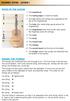 BEGINNER GUITAR - LESSON 1 PARTS OF THE GUITAR 1- The headstock. 2- The tuning pegs or machine heads. 3- The nut (where the strings are supported at the top of the fingerboard). 4- The frets (the metal
Beginner Guitar Level I
 Welcome to Beginner Guitar Level I E A D G B E * Please fill out the student form * Who is this guy? E A D G B E Logistics, etc.. sign in / out everyday start promptly -> don t be late! breaks / bathrooms
TRAINING WORSHIP LEADERS
 TRAINING WORSHIP LEADERS SESSION ONE LIVING FOR GOD S GLORY Junko is a gifted singer. She also loves to sing praise songs. So her small group leader asked Junko to use her talents and gifts by becoming
Advanced Techniques for the Walkingbass
 Advanced Techniques for the Walkingbass I have seen guys with 5 string basses who can t get half the sounds that you are getting out of just three. -Buddy Fo of the Invitations If you have read the Beginners
Music Theory: Explanation and Basic Principles
 Music Theory: Explanation and Basic Principles Musical Scales Musical scales have developed in all cultures throughout the world to provide a basis for music to be played on instruments or sung by the
Getting Started on the Hawaiian Steel Guitar
 Getting Started on the Hawaiian Steel Guitar Acoustic Hawaiian Steel Guitar Played in the Old Taro Patch Open G Tuning by Konabob - [email protected] When Hawaiians began playing guitars flat on their laps,
1.04 - Treble Clef. Page 1 1.00 - How to Read Music - by Pebber Brown
 Page 1 1.00 - How to Read Music - y Peer Brown 1.01 Music is written and notated with a common device called the Staff. There are two parts to the Staff- The upper part is called the "Trele Clef" and the
CONFIRMATION VERSE SUGGESTIONS
 Joshua 1:9b Psalm 23:1 Psalm 25:4-5 Psalm 27:1 Psalm 46:1 Psalm 46:10a Psalm 100:2 Psalm 100:1-3 Psalm 100:5 Psalm 118:1 Psalm 119:105 Psalm 121:1-2 OLD TESTAMENT READINGS Be strong and courageous. Do
Learning to play the piano
 Learning to play the piano INTRODUCTION TO THE KEYBOARD... 2 STEPPING UP... 2 TREBLE SPACES... 7 BASS SPACES... 9 TIME SIGNATURE... 12 UP AND DOWN THE HILLS... 15 UP AND DOWN THE HILLS IN G MAJOR... 16
INSTRUCTIONS for nine month family memorization plan:
 INSTRUCTIONS for nine month family memorization plan: 1. Eighteen scripture selections (two per month) will be memorized over the nine month period. 2. Three memorization levels are available for each
Playing By Ear Who Can Play By Ear?... 2 How To Play By Ear... 3 Happy Birthday To You (By Ear)... 4 Match Tones... 5 Add Chords...
 Playing By Ear Who Can Play By Ear?... 2 How To Play By Ear... 3 Happy Birthday To You (By Ear)... 4 Match Tones... 5 Add Chords... 6 Allcanplay TM Piano * MaxLearning.Net 2009 * Playing By Ear * 4/6/2009
Ukulele Music Theory Part 2 Keys & Chord Families By Pete Farrugia BA (Hons), Dip Mus, Dip LCM
 This lesson assumes that you are using a ukulele tuned to the notes G, C, E and A. Ukulele Notes In lesson 1, we introduced the sequence of 12 notes, which repeats up and down the full range of musical
How to Improvise Jazz Melodies Bob Keller Harvey Mudd College January 2007 Revised 4 September 2012
 How to Improvise Jazz Melodies Bob Keller Harvey Mudd College January 2007 Revised 4 September 2012 There are different forms of jazz improvisation. For example, in free improvisation, the player is under
Guitar Method Beginner: Book 1
 Guitar Method Beginner: Book 1 This book has been a project in the works for over a year, and now my dream of releasing it has finally come true. I would like to thank everyone who has encouraged or helped
This PDF is designed to go right along with the DVD. Print it out and keep it in front of you while working through the lessons.
 Beginner Strumming This PDF is designed to go right along with the DVD. Print it out and keep it in front of you while working through the lessons. Introduction You don t need to know much to get started
Mathematical Harmonies Mark Petersen
 1 Mathematical Harmonies Mark Petersen What is music? When you hear a flutist, a signal is sent from her fingers to your ears. As the flute is played, it vibrates. The vibrations travel through the air
2015 Pride Percussion TECHNIQUE & EXERCISE PROGRAM
 2015 Pride Percussion TECHNIQUE & EXERCISE PROGRAM Table of Contents Technique..3 Matched Grip Traditional Grip Bass Drum Grip Set Positions/Playing Areas..6 Snare Drum Keyboards Tenor Drums Bass Drum
THEME: God has a calling on the lives of every one of His children!
 Devotion NT298 CHILDREN S DEVOTIONS FOR THE WEEK OF: LESSON TITLE: Paul s First Missionary Journey THEME: God has a calling on the lives of every one of His children! SCRIPTURE: Acts 12:25 13:52 Dear Parents
The Tuning CD Using Drones to Improve Intonation By Tom Ball
 The Tuning CD Using Drones to Improve Intonation By Tom Ball A drone is a sustained tone on a fixed pitch. Practicing while a drone is sounding can help musicians improve intonation through pitch matching,
GOSPELKEYS TM 202 MASTERING WORSHIP CHORDS TRANSCRIPTS SIDENOTES. www.hearandplay.com www.gospelkeys202.com. Minister Jermaine A.
 GOSPELKEYS TM 202 MASTERING WORSHIP CHORDS TRANSCRIPTS & SIDENOTES www.hearandplay.com www.gospelkeys202.com Minister Jermaine A. Griggs, Author 1 INTRODUCTION Hello my friend, and welcome to Gospel Keys
How to Read Chord Charts
 How to Read Chord Charts Learning to read chord charts is fun, easy and it will open a new world of songs to you, as you will now be able to decipher the code. As a teacher and studio guitarist, I use
2010 Marty Buttwinick (818) 242-7551 All Rights Reserved Not for Sale. Marty Buttwinick. Melody 1 -
 2010 Marty uttwinick (818) 242-7551 All Rights Reserved Not for Sale Marty uttwinick Melody 1 - Melody 1 contains the fundamental definitions about the mechanics of melody. When you understand these concepts,
Your First Ukulele Lesson and Then Some
 2 Your First Ukulele Lesson and Then Some A Complete Beginner s Crash Course to Playing Ukulele by Brett McQueen of the Ukulele Tricks blog This ebook is dedicated to my grandfather who taught and inspired
Guitar Reference. By: Frank Markovich
 Guitar Reference By: Frank Markovich Guitar Reference Introduction The purpose of this book is to give the student the reference materials for learning how to play the guitar. In this book you will find
Chords and More Chords for DGdg Tenor Banjo By Mirek Patek
 Chords and More Chords for DGdg Tenor Banjo By Mirek Patek This tenth article about the fingerstyle tenor banjo in DGdg tuning will be focused on banjo accompaniment, i.e. on playing chords. The goal is
GRADE THREE THEORY REVISION
 GRADE THREE THEORY REVISION Note Pitches Use flashcards to make sure you know all your notes including leger lines. Whenever you name a note remember to check the clef, keysignature, and for accidentals
Memory Verses for Kids
 Memory Verses for Kids August 2013 Psalm 119:11 I have hidden your word in my heart, that I might not sin against you. Matthew 28:19 Go into all the world and make disciples of all nations, baptizing them
Companion Workbook to the bonus section with Glenn Pearce
 Companion Workbook to the bonus section with Glenn Pearce Page 1 of 21 Page 2 of 21 Chapter 1 leadworship.com title page Chapter 2 main menu and Paul s introduction Electric guitar players - what to play
Guitar Chords: a Beginner's Guide DEMO VERSION by Darrin Koltow
 Guitar Chords: a Beginner's Guide DEMO VERSION by Darrin Koltow Copyright 2002 Darrin Koltow Guitar Chords: a Beginner's Guide - DEMO VERSION Page 2 Table of Contents Other Ebooks...3 Introduction...4
Denver Baptist Church
 Denver Baptist Church 2016 Bible Reading Plan All Scripture is breathed out by God and profitable for teaching, for reproof, for correction and for training that the man of God may be complete, equipped
Piano Accordion vs. Chromatic Button Accordion
 Piano Accordion vs. Chromatic Button Accordion Which is best, piano accordion (PA), or five row chromatic button accordion (CBA)? This is a question which is often debated in newsgroups. The question should
MUSIC GLOSSARY. Accompaniment: A vocal or instrumental part that supports or is background for a principal part or parts.
 MUSIC GLOSSARY A cappella: Unaccompanied vocal music. Accompaniment: A vocal or instrumental part that supports or is background for a principal part or parts. Alla breve: A tempo marking indicating a
FREE CHORD BOOK Introduction
 FREE CHORD BOOK Introduction Hi, I m Andy and welcome to my chord book for beginners! Most chord books are packed full hundreds of chord diagrams, so many in fact it could take literally years to play
God: As He Wants You to Know Him Study Guide
 God: As He Wants You to Know Him Study Guide Week 1 (Sections 1-2, Chapters 1-3) Day 1 Read Chapter 1 and respond to the following questions: Why and how does the pursuit of knowing God lead to: o A right
National Standards for Music Education
 National Standards for Music Education 1. Singing, alone and with others, a varied repertoire of music. 2. Performing on instruments, alone and with others, a varied repertoire of music. 3. Improvising
Class #9 September 30 th, 2007 Worship (Part 1)
 Class #9 September 30 th, 2007 Worship (Part 1) This outline is the first part of what may be a three or four Sunday scripture centered discussion on worship and how we practice it that will unfold as
Illuminating Text: A Macro Analysis of Franz SchubertÕs ÒAuf dem Wasser zu singenó
 Illuminating Text: A Macro Analysis of Franz SchubertÕs ÒAuf dem Wasser zu singenó Maureen Schafer In ÒAuf dem Wasser zu singen,ó Franz Schubert embellishes a sentimental poem by L. Graf zu Stollberg to
The Chord Book - for 3 string guitar
 The Chord Book - for 3 string guitar Prepared for: 3 string fretted cbg Prepared by: Patrick Curley Forward This short ebook will help you play chords on your 3 string guitar. I m tuned to G, if you re
Page 1 of 36. Companion Workbook. 2005 leadworship.com
 Page 1 of 36 Companion Workbook Page 2 of 36 Glossary of Terms: Chord: A combination of 3 or more notes that blend harmoniously when sounded together. Chord Scale: All of the chord combinations that naturally
Suitable for: Beginners with absolutely no previous experience. Beginners who appear particularly shy or nervous.
 Lesson plan 1: CHORD STRUMMING FOR THE BEGINNER Suitable for: Beginners with absolutely no previous experience. Beginners who appear particularly shy or nervous. Prerequisites: None General Objective:
UKULELE CHORD SHAPES. More Strumming, Less Memorizing BRAD BORDESSA
 UKULELE CHORD SHAPES More Strumming, Less Memorizing BRAD BORDESSA TABLE OF CONTENTS GRATITUDES 2 9th 26 13th 26 INTRODUCTION 3 Altered 27 HOW TO USE THIS BOOK 4 Suspended 2 28 The Fingerboard 5 Suspended
The DADGAD Chord Primer: How to Build Chords in DADGAD Tuning. Version 2.2. By: Mark Parnis www.markparnis.com [email protected]
 The DADGAD Chord Primer: How to Build Chords in DADGAD Tuning Version 2.2 By: Mark Parnis www.markparnis.com [email protected] DADGAD is essentially a variant on open D tuning, DADF # AD. The subtle
WELCOME TO GOD S FAMILY
 WELCOME TO GOD S FAMILY To all who received him, to those who believed in his name, he gave the right to become children of God children born not of natural descent, nor of human decision or a husband
Study Kit No 9. Aura Lee (Love Me Tender)
 Study Kit No 9 Aura Lee (Love Me Tender) Reharmonization Study Kit No. 9 Aura Lee Author: Rosablanca Suen Web: www.learnpianowithrosa.com Email: [email protected] Cover Design: Raymond Suen Copyright
GUITAR THEORY REVOLUTION. Part 1: How To Learn All The Notes On The Guitar Fretboard
 GUITAR THEORY REVOLUTION Part 1: How To Learn All The Notes On The Guitar Fretboard Contents Introduction Lesson 1: Numbering The Guitar Strings Lesson 2: The Notes Lesson 3: The Universal Pattern For
J. JENNINGS PUBLISHING COMPANY 5012 Kahn Street, Carmichael, CA 95608
 I N T R O D U C T I O N This packet contains introductory lessons for Emerson Karaoke Guitar 1. We assume you are a total beginner. The exercises start out very easy and will progress gradually. Have some
Discover The God Who Believes In You
 Discover The God Who Believes In You I AM LOVED The most basic fact of the Bible is that there is a God. He made everything that is, including you, and loves you with an everlasting love. God has loved
Before you start, let s have a little fun. Grab a few crayons and a couple pieces of paper. Got it? Now, everyone draw a picture of Jesus.
 OMEGA PART 1 You Will Literally Fall On Your Face and Cry Oh My God! www.kensingtonchurch.org/watch Before you start, let s have a little fun. Grab a few crayons and a couple pieces of paper. Got it? Now,
Guitar Scales. The good news here is: you play the guitar!
 Regardless what instrument you play, learning to play scales is a rite of passage. This is the foundation to becoming a learned musician, rather than merely a recreational player. The good news here is:
A MUSICAL APPROACH TO LEARNING THE BANJO NECK
 A MUSICAL APPROACH TO LEARNING THE BANJO NECK Introduction One of the things that has become clear to me, after a number of years of playing banjo, is that if I have any hope of improvising creatively
How to Play Chords on your Mountain Dulcimer tuned DAd
 How to Play Chords on your Mountain Dulcimer tuned DAd (or Surviving in a Multi-Instrument Jam) by Missy Strothers If you are like me, sooner or later you ll get into a festival situation where you ll
Christopher D. Azzara Eastman School of Music of the University of Rochester. Richard F. Grunow Eastman School of Music of the University of Rochester
 Excerpts from... DEVELOPING MUSICIANSHIP THROUGH IMPROVISATION Christopher D. Azzara Eastman School of Music of the University of Rochester Richard. Gruno Eastman School of Music of the University of Rochester
Southern Gospel Collection. Rehearsal Tips By Dennis Allen
 Southern Gospel Collection Rehearsal Tips By Dennis Allen I m Standing on the Solid Rock with Leaning on the Everlasting Arms Southern Gospel music has several wonderful things going for it: memories and
An Introduction to Chords
 1 An Introduction to Chords by David Gilson A chord is the musical sound produced by playing a number of notes at the same time. The sound of the chord is different depending on the key you are playing
Sample Entrance Test for CR125-129 (BA in Popular Music)
 Sample Entrance Test for CR125-129 (BA in Popular Music) A very exciting future awaits everybody who is or will be part of the Cork School of Music BA in Popular Music CR125 CR126 CR127 CR128 CR129 Electric
Proverbs 22:6 New King James Version (NKJV) 6 Train up a child in the way he should go, And when he is old he will not depart from it.
 1 of 13 Walking in Wisdom - Proverbs 22 By Bruce Stewart Before we even begin to open up our bibles and walk in wisdom lets take a moment to pray. Ask God to reveal Himself in these scriptures, to help
Jesus Teaches About Prayer
 CHAPTER 4 Jesus Teaches About Prayer Jesus prayed. He prayed for Himself, His disciples, and for future believers. He also taught about prayer. Prayer is our way of communicating with God whenever we want
Please Read This Page First
 Mandolin and Fiddle Improvisation Using the Chord Tone Scale Copyright 2008 by Pete Martin Please Read This Page First This book is distributed using the shareware system. Try it out, if you like it please
MUSIC OFFICE - SONGWRITING SESSIONS SESSION 1 HARMONY
 MUSIC OFFICE - SONGWRITING SESSIONS SESSION 1 HARMONY Introduction All songwriters will use harmony in some form or another. It is what makes up the harmonic footprint of a song. Chord sequences and melodies
The Crux Chapter 4 Grace (Ephesians 2:1-9)
 BIBLE STUDY (Ephesians 2:1-9) What s This Passage All About? Writing to the Christians in the city of Ephesus (modern-day Turkey), St. Paul calls on them to take a step back and examine their salvation
KODÁLY METHOD AND ITS INFLUENCE ON TEACHING WIND INSTRUMENTS IN HUNGARY
 KODÁLY METHOD AND ITS INFLUENCE ON TEACHING WIND INSTRUMENTS IN HUNGARY Jozsef Csikota Midwest Clinic Chicago, Illinois U.S.A. 15th December 2004 KODÁLY METHOD IN HUNGARIAN SCHOOLS In Hungary, every student
6 DAY DEVOTION GUIDE FOR FASTING & PRAYER WEEK
 6 DAY DEVOTION GUIDE FOR FASTING & PRAYER WEEK There is one body and one Spirit, just as you were called to one hope when you were called; one Lord, one faith, one baptism; one God and Father of all, who
Lesson 21: Substitution Chords Play Piano By Ear Audio Course. Materials For This Lesson
 Hello, and welcome to Lesson 21. In Lesson 19 you learned Drink To Me Only With Thine Eyes, using just four chords. In this lesson we ll be using substitution chords to create a more professional sounding
"God's Wisdom Revealed to All (Ephesians 3:7-20)
 "God's Wisdom Revealed to All (Ephesians 3:7-20) by Rev. Jackie Stoneman Paul begins this chapter by reminding the Ephesians that he is in fact a prisoner. Because he has been preaching to the Gospel especially
Cheat Sheet for Local Church Audio Training Sound Essentials. Kick:
 Cheat Sheet for Local Church Audio Training Sound Essentials Thank you for attending this session and supporting your church s ministry. I believe that, as a sound technician, you are a vital part of the
Keyboard FUNdamentals James Lambert & Judy Moonert
 1 I. BASIC MUSIC THEORY A beginning mallet percussionist must memorize the 12 major scales. These scales relate to other harmonic information that the student will need. With each marimba bar one half
Leading Effective Discussions Psalm 19 The Law of the Lord is Perfect
 Precept Ministries International 14 Holiday Drive Brantford, Ontario N3R 7J4 Leading David writes, The law of the Lord is perfect reviving the soul. :7 Do you believe it?, is a song celebrating God s perfect
THE CHOIR: SING WHILE YOU WORK. THE BASICS OF SINGING bbc.co.uk/thechoir
 THE BASICS OF ING THE BASICS OF ING Gareth Malone Welcome to The Choir: Sing While You Work guide to singing. If you re reading this, congratulations, as you have either already taken that first step and
Chapter 2 How To Cheat A Barre Chord
 Chapter 2 How To Cheat A Barre Chord Now that you ve learned a variety of chords in different positions, there are times that we want to eliminate some of the notes. I know, in the previous chapter I explained
Week One!" Spiritual Journey#
 Week One!" Spiritual Journey# I. The reasons for the Bible study. A. Everyone is on a spiritual journey. Options: 1- Uninformed 2- Interested 3- Ready 4- Committed 5- Growing B. To help evaluate where
The Secret Weapon for Bar Chords
 Created by BCM The Secret Weapon for Bar Chords This handy device will make it much easier to form bar chords on your guitar. It is an effective tool that will give you immediate results. No more hours
THE ORDER OF THE MASS
 THE ORDER OF THE MASS The first part of the Mass is about getting to know everyone and welcoming everyone to God s house. It s called the INTRODUCTORY RITES. Entrance Song We sing to celebrate that we
Foundation Course. Study Kit No 1. Away In A Manger
 Foundation Course Study Kit No 1 Away In A Manger Reharmonization Study Kit No. 1 Away In A Manger Author: Rosablanca Suen Web: www.learnpianowithrosa.com Email: [email protected] Cover Design:
6) Minor Seventh & Suspended Chords. 7) Barre Chords on the 6 th String. 8) Barre Chords on the 5 th String. 9) The Secret to Great Strumming
 Table of Contents SESSIONS 1) Starting Off Right Overview 3 Finger Exercise 1 5 Finger Exercise 2 6 Finger Exercise 3 7 Alternating Finger Exercise 8 C & G7 Chord Exercise 9 2) Reading Music & Notes on
Electric Guitar/Electric Bass/Acoustic Guitar/Classic Guitar Produced by ARIA Owner s Manual
 Electric Guitar/Electric Bass/Acoustic Guitar/Classic Guitar Produced by ARIA Owner s Manual Thank you for choosing an Aria instrument. Please take a moment to read through this owners manual. We will
Bible Verses and Group Discussion Topics
 Bible Verses and Group Discussion Topics The following verses are intended to be used by the groups to facilitate discussions as part of every meeting that will put the career search in the context of
How they invented chord patterns for the guitar. J. Chaurette. Dec., 2012
 How they invented chord patterns for the guitar J. Chaurette Dec., 2012 The guitar has a very long history; it has evolved over the ages to what it is now. It has achieved its final distinct form in 1770,
Leader s Instructions Handbook
 1 Leader s Instructions Handbook The 80-minute video, God's Story, is divided into 18 discussion sections, ranging from 1 to 10 minutes in length. (You may be using God's Story in VCD format, with a different
Prayer Service to Celebrate the Ministry of Teachers During Catholic Schools Week 2015
 Prayer Service to Celebrate the Ministry of Teachers During Catholic Schools Week 2015 You Will Need A large candle with the words Love, Kindness, Joy, Truth and Justice (the final page of this document
GUITAR THEORY REVOLUTION
 GUITAR THEORY REVOLUTION The Major and Minor Pentatonic Scales Copyright Guitar Theory Revolution 2011 1 Contents Introduction 3 What are the Major and Minor Pentatonic Scales 3 Diagrams for all the Pentatonic
Liturgy & prayers for all age worship
 Diocese of Bristol Daniel Jones Youth & Children s Adviser Liturgy & prayers for all age worship General opening prayers: Loving Father, we thank you for this opportunity to worship you together. Please
And the Books Were Opened
 JUDGMENT DAY And the Books Were Opened 1 And the Books Were Opened Hebrews 9:27 INTRODUCTION: A. Have you thought of the reality of the judgment day? 1. Judgment day is a real day! 2. Judgment day is a
Church Services for People with Dementia in Care Homes. (Taken from various sources, particularly the Evening Star Project)
 Church Services for People with Dementia in Care Homes (Taken from various sources, particularly the Evening Star Project) Services with care homes should aim to enable to person with dementia to: Spark
Guitar Rubric. Technical Exercises Guitar. Debut. Group A: Scales. Group B: Chords. Group C: Riff
 Guitar Rubric Technical Exercises Guitar Debut In this section the examiner will ask you to play a selection of exercises drawn from each of the three groups shown below. Groups A and B contain examples
The Fruit of the Spirit is Joy
 The Fruit of the Spirit is Joy Pre-Session Warm Up (Galatians 5:22-23) Today we are going to learn more about the fruit of the Spirit called, Joy. What do you think of when you hear the word joy? A lot
Main Point: God gives each of us gifts and abilities. We should use them to glorify Him.
 The Ten Talents Matthew 18:21-35 PPT Title The Ten Talents Main Point: God gives each of us gifts and abilities. We should use them to glorify Him. Key Verse: God s gifts of grace come in many forms. Each
Jazz Guitar Chord Construction Thelonious Monk Institute of Jazz Online Jazz Handbook
 Jazz Guitar Chord Construction Thelonious Monk Institute of Jazz Online Jazz Handbook welcome to the guitar chapter of the Thelonious Monk Institute of Jazz s Online Jazz Handbook! A guitarist in a jazz
Strengthen Your Spirit
 Diabetes... Now What? Strengthen Your Spirit Self Assessment and Tools for Healthy Coping of Negative Emotions This product was developed by the Advancing Diabetes Self Management Program at Marshall University
Companion Instruction Booklet
 Companion Instruction Booklet Page 1 of 33 Glossary of Terms: Page 2 of 33 Chord: A group of notes played together, such as the notes C-E-G (C Major) Open Chord: A group of notes played on guitar that
MUSIC A. PROGRAM RATIONALE AND PHILOSOPHY
 MUSIC A. PROGRAM RATIONALE AND PHILOSOPHY The systematic development of musical skills, knowledge and perception is fundamental to the total development of the individual. Music education should begin
Confirmation Faith Statement
 A is simply 1-2 paragraphs of what you believe about God, faith, Jesus, salvation, etc. Every Confirmation student will pick out a Confirmation verse as a basis of their faith statement. You can use one
Brain Yoga - Instruction Guide. Congratulations!
 Brain Yoga - Instruction Guide Brain Yoga offers real help to those with learning difficulties, autism, Alzheimer s disease and anyone whose memory is not as sharp as it should be. This report is the companion
Whereas I was Blind, Now I See. John 9: 1-11; 25
 Whereas I was Blind, Now I See John 9: 1-11; 25 We all know that great hymn well: Amazing grace, how sweet the sound, that saved a wretch like me; I once was lost, but now I m found; was blind, but now
Intervals Harmony Chords and Scales. Workbook
 Intervals Harmony Chords and Scales Workbook Introduction In writing this book I was able to make many discoveries for myself both in methods of teaching and basic use of music theory. In every discipline
Reprinted by permission from Book of Common Worship, 1993 Westminster/John Knox Press
 Reprinted by permission from Book of Common Worship, 1993 Westminster/John Knox Press INVITATIONS to CONFESSION of SIN If we say we have no sin, we deceive ourselves, and the truth is not in us. But if
Merry Christmas from LifeWay Kids!
 FAMILY ADVENT GUIDE Merry Christmas from LifeWay! Use these devotions, activities, and connection questions to help your family rest in the love, peace, joy, and hope that only Jesus can bring. He s the
Introduction to Guzheng
 Introduction to Guzheng Guzheng is a Chinese musical instrument that has a history dating back to 500 BC It has many descendants all over Asia, such as the koto of Japan, the kayagum of Korea, and the