
Priorities of the People HARDSHIP IN TONGA
|
|
|
- Gwen Lester
- 9 years ago
- Views:
Transcription
1 Priorities of the People HARDSHIP IN TONGA May 2004 Asian Development Bank

2 Asian Development Bank 2004 All rights reserved This publication was prepared by consultants for the Asian Development Bank (ADB). The findings, interpretations, and conclusions expressed in it do not necessarily represent the views of ADB or those of its member governments. ADB does not guarantee the accuracy of the data included in this publication and accepts no responsibility whatsoever for any consequences of their use. Asian Development Bank P.O. Box 789, 0980 Manila, Philippines Website:

3 Contents Introduction 1 Is Hardship Really a Problem in Tonga? 2 What is Hardship? 3 Who is Facing Hardship? 5 What Causes Hardship? 7 What Can be Done? 13

4 Introduction Hardship and poverty have traditionally not been important issues in Tonga, but they are now becoming daily concerns for many. This is due mainly to the increasing need for cash, emigration from the outer islands to urban areas and overseas, and crowded conditions in some urban areas, especially the squatter settlements. External influences are changing people s attitudes and aspirations, straining the traditional Tongan social system in which everyone s needs are met by the community as a whole. Based on an analysis of the 2001 Household Income and Expenditure Survey, about 23% of households were estimated to be living below the basic needs poverty line of T$28.18 per person per week. These households would likely be experiencing some degree of financial hardship, although it doesn t necessarily mean they did not have enough to eat. It means, rather, that they didn t have enough income for a basic diet plus the costs of other essential items. Such families had to make difficult daily choices, such as between buying food or paying school fees. To better understand the nature of hardship and poverty in Tonga, the government undertook a Participatory Assessment of Hardship in 2003 with assistance from the Asian Development Hardship is becoming a daily concern for many A widower who takes care of his mentally handicapped son 1

5 Discussions were held with people in 16 communities Bank. The assessment identified the needs and priorities of people living in communities throughout the country with different levels of access to services such as education, health, markets, transportation, water, and sanitation. Sixteen communities were selected for the surveys and interviews, including three urban and two rural communities on the main island of Tongatapu, and 11 communities from the four outer island groups ( Eua, Ha apai, Vava u, and the Niuas). The assessment team consulted village and church leaders, elders, women, youth, and community members who were perceived to be suffering most from hardship. A national workshop was held to present the findings of the assessment and discuss strategies and recommendations for addressing the perceived needs of the people. Is Hardship Really a Problem in Tonga? Traditional support systems are declining 2 For many Tongans, hardship means more than not having cash income: it is about poor quality services and few opportunities to improve their lives, or of being unable to realize their own potential and aspirations. Tonga is a traditional society in transition moving away from a subsistence-based lifestyle where access to land and strong extended family ties were the basis for survival and well-being, to becoming a modern, monetized society similar to other Pacific countries. There is not enough land to provide each adult male with an allotment as was done in the past, and many overseas Tongans who hold allotments do not use their land. This has forced many people to enter into informal tenant arrangements and/or farm poor land, while much fertile land is unused. These changes are having a growing impact on the community structure and are shaping people s changing attitudes toward family and community. The assessment findings indicate that an increasing number of people, particularly the younger, more educated generation, are slowly moving away from providing for their extended families. The continued migration of outer island people to Tongatapu, Nuku alofa, and overseas is slowly but steadily depopulating the remoter outer islands and increasing the dependency of those

6 remaining. At the same time, the increasing population in urban areas is generating social tensions because there are more landless or land-poor people. What is Hardship? The communities consulted in this assessment viewed poverty or masiva as having nothing being without or having limited access to land, food, housing, education, health services, and money. They defined hardship, or tu utamaki, as Mother, 48 Years Old My husband and I are not originally from Eua. We met here when I accompanied my father to farm his land. I left school at Form 2 and am now the major income earner of the family. We have six children, aged 9 to 22. Our only son is 15, but he is no longer in school because we cannot afford his school fees. There is no one to help his father but myself. My husband s leg is paralyzed because he fell off the horse twice. Our third daughter is sitting her university entrance exam she is the only child we are able to put through school with assistance from my eldest daughter who is living in New Zealand. Our monthly income T$150, sometimes more, sometimes less, or nothing for weeks. We earn money from the sale of root crops that my son and I plant. We also plant paper mulberry to make tapa (a valued handicraft). Every week, my daughter beats enough paper mulberry to sell in the local market. Every day, my son and I work at the plantation and collect food for the day. Then we help my daughter beat the paper mulberry for the weekend sales. These sales cover our daily needs such as soap, laundry detergent, sugar, flour, fish, and if we can afford it, other necessities. Although it is embarrassing for women to do activities traditionally done by men like till the soil, I would rather break tradition and keep my family afloat than starve, especially when all our relatives have their own families to care for. I have to keep working hard for my family, look after my husband, encourage my children to finish their education, and find ways to put new flooring on our small house. Since my son is too young to earn, and there are no available jobs here, there is no one I can turn to. I wish I could get some help to build a better home for my sick husband. Then maybe life would be a lot easier for me. And if the government and the church s education system would allow drop-outs to go back to school, my two children would be able to complete their education. At times I think that if we had kept the tradition our grandparents talked about how everyone used to look after one another, I would not be so burdened. The sharing and caring are lost from Tonga. Now everyone is becoming individualistic. 3

7 living in a very difficult situation; being dependent on relatives for food, money, and shelter; and supporting too many dependents in the household. Hardship was also strongly associated with the inability to meet the family s basic needs and traditional obligations (kavenga) and having limited resources, particularly land. The consensus view was that hardship, rather than poverty, best described the condition in Tonga since everyone seemed to have access to food. Hardship due to limited access to markets, poorly maintained or lack of rural roads, inadequate medical supplies and trained staff, and the high cost of water tanks and education services was believed to hinder the people of Tonga from raising their standard of living. When asked if things have become better or worse over the past 5 years, two perceptions emerged. Most people perceived an improvement in their situation, citing increased numbers of permanent homes built; improved services; availability of skills training for women and youth; and better living conditions because of money earned from commercial farming. However, people also noted a declining trend from more school drop-outs; more joblessness; higher prices of goods; and deteriorating quality and/or rising costs of services Male Drifter, 27 Years Old 4 I was born in Pangai Ha apai. I went to primary school there, and went to Taufa ahau and Pilolevu College up to Form 3 and continued to Liahona High School for Form 4 and up to Tech. I left school in I had an opportunity to work at the police station on contract for 3 months as an engineer. I earned T$100 a week from this contract. My father died in My mother is still alive and is living with her sister at Havelu. There are three of us in the family. One is married and living with his family in Fasi. The other one is single and living at Ha apai. I am here because I went with some friends. I am currently living at a friend s house. This friend is married with five children. We cook our own meals to avoid burdening our friend and his family. Sometimes I fix things around the house for free as thanks to them. I am jobless right now and am still waiting for an opportunity to work, but I am afraid that there are a lot of skilled workers and my qualifications do not meet the job requirements. I wish that in the future, the government could set up a factory to employ people who cannot work in offices.

8 (particularly water supply, education, roads, and transport). Two communities reasoned that hardship was becoming worse because of the higher cost of living and falling value of the Tongan paanga, as well as perceived in-fighting in the Parliament and waste of public funds. Who is Facing Hardship? Aalthough Tongan society is divided into three groups royalty, chiefs, and commoners there is a strong social support system to look after the welfare of those in need. During the assessment, however, people indicated that the extended family and community support system was weakening due to pressure exerted by an increasing number of family dependents, low income, and changing values. As a result, some individuals and families were facing declining living standards and a higher degree of hardship than the rest of the community. People identified the following groups as suffering most from hardship: Widows and single mothers without regular income; Elderly people without regular income or children; Elderly people without children were viewed as suffering more hardship 5

9 Hardship was viewed as worse in rural areas and outer islands Large families without regular income and/or access to land; Lazy people (usually seen sleeping or drinking kava); Those who did not marry; Jobless migrants to urban areas ; The mentally and physically handicapped and sickly people; Drop-outs from primary and secondary school; and. Prostitutes. Hardship was said to be present in both urban and rural areas, with a larger concentration in the rural areas and outer islands. It appears that the further a community was from the capital, the lower its access to services such as water supply, power supply, and markets. Widow, 56 Years Old 6 I was born in Longomapu Vava u, where both my parents are from. I attended primary school there and left when I was in Class 6 to help my father look after my brothers and sisters because my mother passed away. I am the third child, but because I was strong and of big build, my father chose me to help him. At 18, I got married to a man from Vava u. We had three children and then my husband died. Eight years later, I met a man from Houma in Vava u, and we were married. I was 26 then. We left Vava u for Houma Tongatapu to live in my husband s village. I left my children from my previous marriage behind in Vava u with my brother. My husband and I had three children and, in 1999, he got very sick. When he was well, we moved from Houma to Patangata, which is closer to the sea. This enabled him to recuperate and allowed me to fish for the family. Unfortunately, he died in 2001, and I decided to continue living here in Patangata. I am now living here alone. My eldest daughter from my first marriage occasionally visits me, for she is now married and her family lives here too. I earn my living scavenging at the garbage dump for pieces of iron, aluminum cans, and copper. I also find other things to build myself a makeshift home. I earn about T$40 50 per month. I often dream that one day life will be easier for me since my strength is diminishing and I long for a much better life than what I have at present. I hoped that my children would care for me some day, but at the moment they are all busy with their own lives. I fear that no one will take care of me when I can no longer do things for myself anymore.

10 What Causes Hardship? Hardship is a complex problem with many different direct and indirect causes. The participatory assessment identified lack of jobs and other ways to earn cash as the most critical issue for all communities in both urban and rural areas. The people perceived that the poor quality of services, rather than the lack of services was an important cause of hardship in many communities. Other causes were having too many dependents and/or children; limited access to basic services; landlessness; the high cost of goods and services; burdensome family, church, and community obligations; poor health; and poor family budgeting. The increased individualism of the more educated youth, migration to urban areas, and poor relocation sites for squatter communities or those hit by calamities were also said to contribute to hardship in urban areas. Specific causes were cited for three especially affected groups: children, youth, and women. Lack of jobs and poor quality services are the main causes of hardship Children Parental neglect was said to be the primary cause of hardship among the children of Tonga. Those consulted said many homes are overcrowded because of extended family members and couples having too many children. This has left many children with limited parental guidance. Insufficient access to education has also contributed to hardship among children. Many parents were said to take their child or children out of school because they did not have enough money for bus fare. In other cases, children have to walk several miles to get to and from school. Parental neglect, coupled with increased numbers of drop-outs at the primary level, were said to lead to some children growing up with low chances of earning enough income, or worse, a greater likelihood of joining gangs and entering a life of crime. Youth The assessment showed that youth have experienced hardship due to a lack of educational and income opportunities. This has 7

11 The youth need more education and income opportunities brought about over-dependence on parents, reducing the family s already limited financial resources. In this case, the community often rejected or criticized the youth in question, leading him or her to turn to alcohol and/or substance abuse. Some young people turned to prostitution to earn money, but because of Tongan society s conservative nature, people known to engage in this activity were heavily looked down upon and may never rise from their situation. Others became drifters, seeking opportunities in urban areas. Many of the people consulted attributed problems with the youth to negative Western influences and parental neglect. Women A widow with 14 children Stress from too many family responsibilities, over-dependence on husbands and relatives, and increasing levels of domestic violence were some of the hardships that Tongan women were said to face. Although most couples decided jointly on financial matters, family planning was not usually discussed. Having too many children was said to be the result of not discussing family planning. In particular, widows and single mothers were viewed as experiencing the most hardship among women. As main family income earners, these women bore the stress of providing for their families along with caring for their children and, at times, sick family members. The pressure was greater especially when the women could not rely on relatives for help and or had no access to remittances from abroad. When asked how women s lives have changed over the past 5 years, all 16 communities were in agreement that they have improved. This was due to increased access to skills training and higher education, 8

12 being more organized to participate in community development activities, increased community recognition of women s contributions to community decision-making, and women s appointment to high-level government positions (e.g., acting secretaries, head of departments). These were seen as contributing to women s increasing participation in government at the national level. Poor Service Delivery In general, most basic services were said to be available and generally perceived to be good and improving by the communities consulted. The least available service was market access with only 9 of the 16 sample communities having good access to markets to sell their products. The poorest quality service was said to be water supply, with six of the communities rating it as poor and deteriorating. The following key services had a strong effect on the level of hardship experienced by Tongans. Women s lives have improved over the past 5 years Water was ranked the poorest quality service 9

13 Water. People cited regular interruption of water flow and limited number of water tanks to enable households to store drinking water, particularly during the dry season and drought periods, as major inconveniences. For example, in Niuatoputapu, due to its much drier climate and poor village water supply system, communities relied mainly on rainwater for their water supply, but it was costly to construct a tank: T$2,000 (about $1,025). Mother, 36 Years Old I was born in Tongatapu. We moved from Niutoua to Eua to look after my mother s old parents. I attended primary school here in Eua, and high school at Lavengamalie College in Tongatapu. I left high school at Form 5 and got married. My husband and I had two children. Hoping to find a better life, my husband and I agreed that he should travel to Australia so he could assist our children and me. Unfortunately, he did not return or remit money to us. I got married a second time and had two more children, but life was very difficult for me because my two children from my previous marriage were being badly treated by my second husband and his relatives. I decided to leave him and come back here to Eua with my children to live with my mother who is now a widow. I got married a third time, and had two more children. However, I now have eight children altogether because before my first marriage, my mother and I adopted two of my brother s children. The two adopted children are both in Australia and have families of their own. They are not able to assist in any way because only their husbands have jobs. I am now a full-time housewife and sometimes make handicrafts and sell them at the market in Tongatapu. My husband grows food only for family consumption and sometimes is hired by 10 other farmers to work on their gardens at 20 pa anga a day. In a week, he could earn between 20 to 40 pa anga. It is now 9 years that I ve been with my husband and I am trying my best to help him in financing our children s education. I can only make one kiekie (women s waistband) a month that I can sell for 50 or 60 pa anga. I cannot do much because I look after my mother who is 83 years old and almost blind. Although I would like to earn more, it would require me to leave my mother and younger children unattended. The only choice for me now is to make handicrafts. I had hoped that in moving to live and care for my mother, my four brothers living in New Zealand would assist us financially, but that is not the case. This year, so far, I have only received about T$150 from one of them. Although this is not much, I am thankful that at least one of them remembers that he has a mother in Tonga who is still alive. The difficulties I now face include not being able to meet the financial needs of my family and my mother and trying to secure a piece of land for my boys from my previous marriage. Luckily, my present husband is the eldest in his family and our children will eventually inherit his land. I am trying my very best to educate my children and secure a piece of land at Eua so they could have land to build their own homes and develop their plantations.

14 Number of Communities (of 16) Distribution of Poor Quality Services Urban Rural Outer Island Safe water supply Sanitation Health facility Communication Road Power Transport Services Rated Poor/Deteriorating Market Although the government, with donor support, has provided a number of water tanks, some communities said they are still threatened by a shortage of water supply during the dry season. Transport. Poorly maintained gravel and tar-sealed roads, lack of road networks, and irregular and costly inter-island transport services were the main concerns cited by the communities regarding transport. Usually, people in the rural and outer island communities with no access to roads cope through walking and horse riding. Outer island communities use canoes or boats to travel among the scattered islands and to the main island. Irregular and/or expensive air, land, and sea transport services were also cited as a major concern. For example, communities in the more remote outer islands usually waited for boats that visit once or twice a week (e.g., Hunga Island, Vava u) or ships that visit only about once a month (e.g., Niuatoputapu). People in the urban communities who didn t have private transport mostly borrowed vehicles from relatives or neighbors or hired trucks or taxis to get to the government center, access basic services, or sell their produce. Health. Health services were rated poor by four outer island communities due to limited medical supplies and lack of 11

15 Communities have their own coping strategies Solar powered telephone on Ha ano Island. It is one of two telephones on the island that serves nearly 400 people in two villages 12 qualified staff. For example, Panadol (an analgesic/pain reliever) was reportedly given by government health clinics/ centers as treatment for almost all ailments including headaches, stomach aches, and other complaints that may require other medications. In the absence of their own community health center, people said they used health services in the next village or in the nearest town center. Most communities said they still relied on traditional medicine and traditional healers to treat sickness when medicine or qualified medical personnel were unavailable. The findings also suggested that even when medicine and personnel were available, some people were still more comfortable using traditional medicines and healers. Markets. The great distance of some communities from the capital and irregular and/or expensive transport services to deliver produce (e.g., fish, kava, root crops, fruits, vegetables, and handicrafts), were cited as major obstacles. People on the outer islands said low prices hardly covered the cost of growing produce and they lack money for transport costs. Moreover, of major concern was the lack of agents to buy the produce from most outer islands, as well as the lack of warehousing and refrigeration facilities, especially for highly perishable marine and agricultural products. Except on Eua Island where marketing agents buy directly from the plantations, outer island communities said the above-mentioned factors made it much harder for them to improve agricultural production to take advantage of their rich marine resources. This limited opportunities for regular income, especially for the more remote outer island communities in Ha apai (Ha ano Island), Vava u (Hunga Island), and Niuas (Tafahi Island). Schools. Although said to be good and improving, education still concerned the communities because it was becoming too costly, especially for poor families. Some children at the primary level had stopped schooling due to their parents inability to pay for bus fare, school materials, and school contributions. However, some

16 in the rural communities and outer islands have been successfully raising funds through kava parties and community concerts to provide regular transport or bus fare and materials to poor children in their community. This was a common initiative in Kolomotua Village, Niutoua on Tongatapu Island, and Longomapu on Vava u Island. In addition, people on the outer islands reported that the lack of a secondary school on their island forced them to send their children to boarding schools or live with relatives on the main island to keep them in school. Communications. All communities, including those in the remotest areas said they have at least a community telephone. Those who could not afford to pay for a telephone connection used the village phone (when available), or asked an acquaintance to pass on their messages to relatives in the capital and other islands. What Can Be Done? After listening to the stories of the poor and understanding the nature and causes of hardship, what can be done to address it? Working together with those facing hardship to plan, prioritize, and implement solutions has a good chance of leading to successful, lasting initiatives. But before planning such Work with those facing hardship to plan and prioritize action 13

17 initiatives, it is important to understand the communities view of current assistance programs, how they currently cope with hardship, and most importantly, their priorities and suggestions for future action. Current Initiatives to Address Hardship Most of the current hardship alleviation initiatives identified by the communities surveyed were basic services and facilities, including water and power supply, health, education, wharves, road improvements, and market construction. The people said most of these were donor-assisted projects facilitated by the national government with funding from Australia, Canada, Japan, New Zealand, ADB and the World Bank; as well as assistance from international nongovernment organizations (NGOs). There were three major community-initiated activities to address hardship identified during the assessment: (1) individual financial, food, or moral and spiritual assistance (home visits) to needy people in the community; (2) community development projects and training such as mat making, kitchen improvement, and cooking lessons among women; and working as a group to help those who could not clear and plant the plantations among men; and (3) community petitions to government to get access to land for housing. 14

18 Most communities contributed land, free labor, construction materials, partial funding, and/or food during project construction. This involvement could be used to sustain future projects and build more active community participation not only in funding and construction but also maintenance, which was a concern repeatedly raised by a number of people during the assessment. Coping Strategies Communities have evolved their own strategies to cope with hardship, such as working as a community to support children who could not afford to attend school, utilizing family networks, and depending on their environment for drinking water. Supporting the strengthening of these strategies and community capacity building will help communities be stronger partners in development to reduce hardship. To help them cope during crises, most communities surveyed during the assessment ranked their immediate families, relatives, church, and village and island development communities as most important. Government ministries and departments, Members of Parliament, the Monarchy, and traditional hierarchy were ranked last. This ranking indicates that institutions that are closer to the communities could be useful partners for the government and other institutions to effectively reach disadvantaged groups. 15

19 Capacity Building The people consulted said the development of income generating skills, especially for agriculture, fishing, marketing, and business management, would directly contribute to the alleviation of hardship in Tonga. Organizational management skills such as organizational planning, communications, and leadership techniques were also seen as ways to strengthen community-based organizations. The people also mentioned the importance of women gaining greater knowledge of matters such as proper nutrition, hygiene, cooking, sewing, household budgeting, and gardening. Being family managers and increasingly family providers, women s knowledge of family planning was also seen as important. People s Priorities A chance to earn income and receive basic services are people s priorities The people of Tonga listed the following as the most important initiatives the government could act upon to reduce the level of hardship in their country. 1.Create more income opportunities through better access to land for those without an allocation; assistance with marketing produce, particularly on the outer islands; regular and affordable transport services; equipment; and capital. 2. Improve access and quality of available basic services, particularly power, water supply, health, education, and roads through regular maintenance, assignment of qualified health staff, provision of additional medical supplies, and reduction of service charges, particularly on the outer islands. 3.Broaden community access to skills training for income and lifestyle improvement. 4. Improve or construct village facilities, such as community halls for gatherings and activities, causeways, and wharves for improving the transport of goods to market and for people to access government services and income opportunities. 16

20 Contact Information For more information about hardship-reduction activities in Tonga, contact Ministry of Finance Government of Tonga P.O. Box 87, Vuna Road Nuku alofa, Tonga Tel: (676) Fax: (676) 21010/ Acknowledgements Principal Researcher/Writer Ma. Luisa Zuñiga-Carmine Managing Editor Photographer Production Lisa Kircher Lumbao Ma. Luisa Zuñiga-Carmine Office of External Relations and Printing and Graphics Section, ADB 17

It s Not Right! Neighbours, Friends and Families for Older Adults. What You Can Do to Keep Yourself Safe From Abuse
 It s Not Right! Neighbours, Friends and Families for Older Adults What You Can Do to Keep Yourself Safe From Abuse Everyone has the right to be safe and free from abuse. No one should experience abuse.
CHANGES IN FAMILY HEALTH AND EDUCATION. The Effects Of Funding Women s Community Organizations In Senegal
 CHANGES IN FAMILY HEALTH AND EDUCATION The Effects Of Funding Women s Community Organizations In Senegal CHANGES IN FAMILY HEALTH AND EDUCATION The Effects Of Funding Women s Community Organizations In
Interview with David Bouthiette [at AMHI 3 times] September 4, 2003. Interviewer: Karen Evans
![Interview with David Bouthiette [at AMHI 3 times] September 4, 2003. Interviewer: Karen Evans](/thumbs/39/20139896.jpg "Interview with David Bouthiette [at AMHI 3 times] September 4, 2003. Interviewer: Karen Evans") Interview with David Bouthiette [at AMHI 3 times] September 4, 2003 Interviewer: Karen Evans KE: What we are going to talk about first are your experiences while you were at AMHI, and then we will go on
Interview with David Bouthiette [at AMHI 3 times] September 4, 2003 Interviewer: Karen Evans KE: What we are going to talk about first are your experiences while you were at AMHI, and then we will go on
SECTOR ASSESSMENT (SUMMARY): CLIMATE CHANGE. 1. Sector Performance, Problems, and Opportunities
 Climate Resilience Sector Project (RRP TON 46351) Sector Road Map SECTOR ASSESSMENT (SUMMARY): CLIMATE CHANGE 1. Sector Performance, Problems, and Opportunities 1. Tonga is being affected by climate change,
How To Understand How Unemployment Affects Different Groups In Nelson
 Exemplar for internal assessment resource Economics for Achievement Standard 91225 Exemplar for Internal Achievement Standard Economics Level 2 This exemplar supports assessment against: Achievement Standard
SECTOR ASSESSMENT (SUMMARY): WATER SUPPLY AND OTHER MUNICIPAL INFRASTRUCTURE AND SERVICES 1. 1. Sector Performance, Problems, and Opportunities
 Country Partnership Strategy: Kyrgyz Republic, 2013 2017 SECTOR ASSESSMENT (SUMMARY): WATER SUPPLY AND OTHER MUNICIPAL INFRASTRUCTURE AND SERVICES 1 Sector Road Map 1. Sector Performance, Problems, and
Alexis Naugle 2-15-13. Intro to Special Education. Dr. Macy
 Running head: MOVIE REVIEW: MY LEFT FOOT 1 Alexis Naugle 2-15-13 Intro to Special Education Dr. Macy 2 The movie I chose to review was called My Left Foot, The story of Christy Brown filmed in 1989. The
Duties of a Husband. Lesson
 Lesson 6 Duties of a Husband A happy young man hurried home to his parents to share with them the good news that his girl friend had promised to marry him. But the father, rather than responding as his
Lesson Four: Meet Panjy / Child Labour
 Lesson Four: Meet Panjy / Child Labour About this lesson In this lesson students will meet Panjy who lives in rural Tamil Nadu, India and was taken out of school to work in the local fi reworks factory.
Assessments and the Care Act
 factsheet Assessments and the Care Act Getting help in England from April 2015 carersuk.org factsheet This factsheet contains information about the new system of care and support that will come into place
Sara Simon Tompkins Staff Attorney National Law Center on Homelessness & Poverty
 FOOD STAMP BASICS Sara Simon Tompkins Staff Attorney National Law Center on Homelessness & Poverty WHAT IS THE FOOD STAMP PROGRAM? The food stamp program is a federal nutrition program that helps people
Impact Assessment Research of Micro- Credit Loans on Palestinian Women
 Impact Assessment Research of Micro- Credit Loans on Palestinian Women Executive Summary: OPTIMUM for Consultancy & Training Randa Hilal Despite the fact that the universal Human Rights declarations, resolutions
SUSTAINABLE LIVELIHOODS AND FOOD SECURITY UNDER CHANGING CLIMATE IN DRY AREAS
 Expert Group Meeting on Promoting Best Practices On sustainable Rural Livelihoods in the ESCWA Region Beirut, 24-25 November 2010 SUSTAINABLE LIVELIHOODS AND FOOD SECURITY UNDER CHANGING CLIMATE IN DRY
Sundsvall Statement on Supportive Environments for Health
 Sundsvall Statement on Supportive Environments for Health Third International Conference on Health Promotion, Sundsvall, Sweden, 9-15 June 1991 The Third International Conference on Health Promotion: Supportive
You re One in Seven Billion!
 You re One in Seven Billion! We ve all heard the expression, You re one in a million!. With the ever-growing number of people on the planet, it might be more accurate to say, You re one in seven billion!
Ministry of Gender Equality and Family Republic of Korea
 www.mogef.go.kr Women, Youth and Family Creating a Brighter World Together Ministry of Gender Equality and Family Republic of Korea Welcome to the Happiness Project for women, youths and families. Offering
Blue Ribbon Task Force Focus Groups Notes prepared by Kathryn Lennox, Mediation Center of Eastern Carolina
 Blue Ribbon Task Force Focus Groups Notes prepared by Kathryn Lennox, Mediation Center of Eastern Carolina Focus Group #2: Flynn Home Question 1: How do you define homelessness? #5 Sleep under bridge;
Mammon and the Archer
 O. H e n r y p Mammon and the Archer OLD ANTHONY ROCKWALL, WHO HAD MADE millions of dollars by making and selling Rockwall s soap, stood at a window of his large Fifth Avenue house. He was looking out
A Learning Paths Whitepaper. Rapid Onboarding 3 Keys to Success
 A Learning Paths Whitepaper Rapid Onboarding 3 Keys to Success The Importance of Rapid Onboarding How soon would you be confident assigning a new employee to work with your most valued customer? When do
Oklahoma county. Community Health Status Assessment
 Oklahoma county Wellness Score 2014 Community Health Status Assessment Mental and Social Health Overall Mental Health score The World Health Organization defines mental health as a state of well-being
Sponsorship Proposal to World Airlines Clubs Association
 Sponsorship Proposal to World Airlines Clubs Association What is Blue Dragon Children s Foundation? Blue Dragon Children's Foundation is a grassroots charity reaching out to kids in crisis throughout Vietnam
30% Opening Prayer. Introduction. About 85% of women give birth at home with untrained attendants; the number is much higher in rural areas.
 This is the second of four studies on maternal health M AT E R N A L a n d C H I L D H E A LT H : A f g h a n i s t a n b y K a r e n B o k m a About 85% of women give birth at home with untrained attendants;
Teenage Pregnancy in Inuit Communities: Issues and Perspectives
 Teenage Pregnancy in Inuit Communities: Issues and Perspectives Introduction The paper explores the many complex issues surrounding teenage pregnancy in Inuit communities. Fifty-three individuals participated
Case Study 1: Senti. Doing it ourselves. Community self mobilization and pooling of resources in Senti settlement Lilongwe
 Case Study 1: Senti Doing it ourselves Community self mobilization and pooling of resources in Senti settlement Lilongwe February 2014 1 INTRODUCTION This case study is the first in a series of short case
WakeTheLion AY FGM FOURTEEN FGM. an interview with Sonyanga Ole Ngais
 AY FGM FOURTEEN FGM WakeTheLion an interview with Sonyanga Ole Ngais Sonyanga is Captain of the Maasai Cricket Warriors, coach of the Maasai Cricket Ladies team, and one of the stars of the highly acclaimed
Assessing adaptation options for climate change: A guide for coastal communities in the Coral Triangle of the Pacific 1. Assessment process
 Assessing adaptation options for climate change: A guide for coastal communities in the Coral Triangle of the Pacific 1. Assessment process Scoping Identifying options Evaluation of options Planning implementation
St. John Bosco Rehabilitation Center
 2700 N. Military Trail, Suite 240 PO Box 273908 Boca Raton, Florida 33427-3908 1-800-914-2420 St. John Bosco Rehabilitation Center Kitale, Kenya PROJECT 0568 Jesus said, Let the little children come to
Southern Grampians & Glenelg Shires COMMUNITY PROFILE
 Southern Grampians & Glenelg Shires COMMUNITY PROFILE Contents: 1. Health Status 2. Health Behaviours 3. Public Health Issues 4. References This information was last updated on 14 February 2007 1. Health
Cameroon CFSVA April/May 2011. Cameroon Comprehensive Food Security and Vulnerability Analysis. April/May 2011. Page 1
 Cameroon CFSVA April/May 2011 Cameroon Comprehensive Food Security and Vulnerability Analysis April/May 2011 Page 1 Cameroon CFSVA April/May 2011 Photo: Jane Howard Food insecurity high despite great agricultural
AUTOBIOGRAPHICAL ESSAY/PERSONAL NARRATIVE. Stephanie Jones ID: 111222. My name is Stephanie Jones and I was born in Small Town, MB in August 1971.
 AUTOBIOGRAPHICAL ESSAY/PERSONAL NARRATIVE Stephanie Jones ID: 111222 My name is Stephanie Jones and I was born in Small Town, MB in August 1971. I am the eldest and my brother is three years younger. The
Study team: Jozefina Cutura, World Bank consultant (team leader and report writer) Christine Van Hooft, AusAID
 WOMEN IN BUSINESS IN TONGA Key findings from the February 2008 scoping mission INTRODUCTION This report is based on an AusAID study to Tonga from 25 to 29 February 2008 which served to profile women s
WaterPartners International Project Funding Proposal: Gulomekeda and Ganta-afeshum, Ethiopia
 WaterPartners International Project Funding Proposal: Gulomekeda and Ganta-afeshum, Ethiopia Project Summary: Location: Eastern Region of the Tigray Regional State Number of Individual Beneficiaries: 1,720
Unplanned Pregnancy: Why People Choose Each of the Options
 Unplanned Pregnancy: Why People Choose Each of the Options Discussing pregnancy options in the classroom can elicit a range of student responses, such as confusion, anger, fear, etc. This appendix is designed
IDENTIFICATION OF PEOPLE MOST AT RISK OF FOOD INSECURITY
 TOOL 9 FOOD SECURITY AND LIVELIHOODS IDENTIFICATION OF PEOPLE MOST AT RISK OF FOOD INSECURITY PREPAREDNESS This tool will help you to: Understand how people in your municipality normally provide food for
A PARENT S GUIDE TO CPS and the COURTS. How it works and how you can put things back on track
 A PARENT S GUIDE TO CPS and the COURTS How it works and how you can put things back on track HOW YOU CAN USE THIS HANDBOOK We hope that this handbook will be easy for you to use. You can either read through
Though not a pleasant thought it's important to think about this: when you die, who will you leave behind?
 Personal insurance There are many risks you face during your lifetime, but the most serious ones you will face are death, disability, serious illness and/ or medical intervention (surgery). These can happen
Older Adults and Alcohol
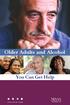 Older Adults and Alcohol You Can Get Help 5 What s Inside? Read this booklet to learn about alcohol and aging. Share this booklet with your friends and family. Use this booklet to start talking about how
Intercultural Research: Australia and Canada
 Intercultural Research: Australia and Canada Pierce Coordinator SHine South Australia Janet Kelly SHine South Australia Pierce and Janet Kelly are Registered Nurses in Australia who work with Aboriginal
Problem Tree Analysis
 Problem Tree Analysis What is it? The Problem Tree method is a planning method based on needs, however it is not a mechanical translation of problems into objectives. While going through the process, taking
What You Need to Know About Elder Abuse
 What You Need to Know About Elder Abuse What is Elder Abuse? Elder abuse, or the abuse of older adults, is often defined as any act or omission that harms a senior or jeopardizes his or her health or welfare.
7. What are the possible financial consequences of divorce?
 7. What are the possible financial consequences of divorce? When it comes to building wealth or avoiding poverty, a stable marriage may be your most important asset. Drs. Linda J. Waite & Maggie Gallagher,
Look after your mental health
 Look after your mental health It s important to take care of yourself and get the most from life. This booklet suggests 10 practical ways to look after your mental health. What is mental health? Hi, how
Child Custody Over Seas
 7 th JMTC Legal Assistance Information Child Custody Over Seas Please note that this Information Paper only provides basic information and is not intended to serve as a substitute for personal consultations
COMMUNITY HEALTH INFORMATION CARDS. Taking Action for Our Health
 COMMUNITY HEALTH INFORMATION CARDS Taking Action for Our Health COMMUNITY HEALTH INFORMATION CARDS The overall objective of these cards is to: Increase awareness about family planning and postabortion
Reasons for Low Enrolments in Early Childhood Education in Kenya: The parental perspective.
 International Journal of Education and Research Vol. 1 No. 5 May 2013 Reasons for Low Enrolments in Early Childhood Education in Kenya: The parental perspective. Catherine Gakii Murungi Kenyatta University,
Opening Our Hearts, Transforming Our Losses
 Preface Alcoholism is a disease of many losses. For those of us who are the relatives and friends of alcoholics, these losses affect many aspects of our lives and remain with us over time, whether or not
Born in Norway Pakistani Parents Fatima s Story
 Born in Norway Pakistani Parents Fatima s Story Katrine Fangen and Brit Lynnebakke Fatima was born in Norway of Pakistani parents in 1985. When we first met her she was 23 years old, and was searching
WHY YOU SHOULD CONSULT A FAMILY LAWYER AT EVERY STAGE OF YOUR RELATIONSHIP WHEN DO I NEED TO DO SOMETHING TO PROTECT MY ASSETS
 WHY YOU SHOULD CONSULT A FAMILY LAWYER AT EVERY STAGE OF YOUR RELATIONSHIP OR WHEN DO I NEED TO DO SOMETHING TO PROTECT MY ASSETS Brad and Angelina have been dating for 12 months. They are in love and
http://www.nationalarchives.gov.uk/education/homefront/ 2
 Create your own Home Front diary for the Second World War Use the documents and photographs in our Home Front website as evidence to help you write a diary about how your life was affected by the Second
IN A SMALL PART OF THE CITY WEST OF
 p T h e L a s t L e a f IN A SMALL PART OF THE CITY WEST OF Washington Square, the streets have gone wild. They turn in different directions. They are broken into small pieces called places. One street
MOBILITY POVERTY: DIFFERENT LEVELS OF RESTRICTED ACCESS TO PUBLIC TRANSPORT SERVICES IN EUROPEAN CONTEXT. András Ekés [email protected] +36-30-869-16-74
 MOBILITY POVERTY: DIFFERENT LEVELS OF RESTRICTED ACCESS TO PUBLIC TRANSPORT SERVICES IN EUROPEAN CONTEXT András Ekés [email protected] +36-30-869-16-74 Mobility poverty Recent notion bringing together different
LEARNING CASE 7: GENDER AND NATURAL RESOURCE MANAGEMENT 1
 LEARNING CASE 7: GENDER AND NATURAL RESOURCE MANAGEMENT 1 1. In Uganda, a natural resource management (NRM) project is aimed at breaking the cycle of natural resource degradation and poverty. This project
THE BASICS Custody and Visitation in New York State
 THE BASICS Custody and Visitation in New York State This booklet answers common questions about custody and visitation when the parents cannot agree about who is responsible for taking care of the children.
46 Appendix F8: myths & facts about calfresh
 APPENDIX F8: Myths & Facts About CalFresh Myth: You have to give stamps to the cashier at the grocery store in order to use CalFresh benefits. Fact: The CalFresh Program no longer uses paper stamps or
A STUDY ON OWN FUND REVENUE GENERATION THROUGH COMMON PROPERTY RESOURCE MANAGEMENT IN MADANMOHANPUR GRAM PANCHAYAT, WEST BENGAL
 A STUDY ON OWN FUND REVENUE GENERATION THROUGH COMMON PROPERTY RESOURCE MANAGEMENT IN MADANMOHANPUR GRAM PANCHAYAT, WEST BENGAL INTRODUCTION:- Self-Governing Institutions are an integral part of the Indian
The Story of Ruby Bridges
 The Story of Ruby Bridges Our Ruby taught us all a lot. She became someone who helped change our country. She was part of history, just like generals and presidents are part of history. They re leaders,
The Goodness and Mercy Missions Handbook. Introducing the GMM Africa Child Sponsorship Program
 The Goodness and Mercy Missions Handbook Introducing the GMM Africa Child Sponsorship Program Situation of Children in Africa Many of us provide our children with cell phones, ipods and various other extravagant
Community Family Support Signposting
 Community Family Support Signposting Hampshire, Dorset, Bournemouth RAPt (Rehabilitation for Addicted Prisoners Trust) The Foundry, 2nd Floor 17/19 Oval Way London, SE11 5RR Tel: 020 3752 5560 Fax: 020
BILET 2. AŞAMA ÖRNEK SINAV READING SECTION. Siblings Relationships: A Brief Analysis
 READING SECTION Siblings Relationships: A Brief Analysis 1 During childhood, sisters and brothers are a major part of each other s lives for better or for worse. As adults they may drift apart as they
CHILD NEGLECT. Types of Neglect
 CHILD NEGLECT At 64%, child neglect is the most frequently identified type of child maltreatment in the United States. It is estimated at 917,200 cases or an estimated incidence rate of 14.6 per 1,000
What really matters to women investors
 january 2014 What really matters to women investors Exploring advisor relationships with and the Silent Generation. INVESTED. TOGETHER. Certainly a great deal has been written about women and investing
Government Support Programs
 Newcomer Finances Toolkit Government Support Programs Worksheets Ottawa Community Loan Fund Fonds d emprunt Communautaire d Ottawa 22 O Meara St., Causeway Work Centre, Ottawa, ON K1Y 4N6 Tel: 613-594-3535
7. LESSONS LEARNT FROM CBNRM PROGRAMMES IN THE REGION
 7. LESSONS LEARNT FROM CBNRM PROGRAMMES IN THE REGION The CBNRM programmes described here: CAMPFIRE (Communal Areas Management Programme for Indigenous Resources) in Zimbabwe and CBNRM in Namibia are more
Parenting. Coping with A Parent s Problem Drug or Alcohol Use. For children. aged 6 to 12
 Parenting Positively Coping with A Parent s Problem Drug or Alcohol Use For children aged 6 to 12 The information in this booklet is meant to help children who are living with harmful parental drug or
Are you feeling... Tired, Sad, Angry, Irritable, Hopeless?
 Are you feeling... Tired, Sad, Angry, Irritable, Hopeless? I feel tired and achy all the time. I can t concentrate and my body just doesn t feel right. Ray B. I don t want to get out of bed in the morning
Texas Paternity Law: Frequently Asked Questions
 Texas Paternity Law: Frequently Asked Questions This brochure answers basic questions about Texas paternity law. It is not a substitute for the help and advice of a lawyer. Talk to a lawyer if you have
Types of transport. Post-beginner. Transport. Tutor Resources for the AMEP
 Types of transport Transport Post-beginner This work is copyright. You may download, display, print and reproduce this material in unaltered form only (retaining this notice) for your personal, non-commercial
Older Adults and Alcohol
 Older Adults and Alcohol You can get help From the National Institute on Aging Table of Contents What s inside 1 Get the facts about aging and alcohol 2 You can become more sensitive to alcohol as you
Unconditional Basic Income: Two pilots in Madhya Pradesh
 Background Unconditional Basic Income: Two pilots in Madhya Pradesh A Background Note prepared for the Delhi Conference, May 30-31, 2013. 1 The public debate on cash transfers in India has been highly
The Family-Friendly Workplace Model
 FOCUS ON INDIA The Family-Friendly Workplace Model Helping Companies Analyze the Benefits of Family-Friendly Policies Today, women make up 40 percent of the global workforce, and they are becoming an increasingly
What you should know about IN ONTARIO
 What you should know about IN ONTARIO This booklet contains information about the law as it was at the time it was written. The law can change. Check the Ministry of the Attorney General website at http://www.attorneygeneral.jus.gov.on.ca
LESSON 1 WHY STUDY THE STOCK MARKET?
 LESSON 1 WHY STUDY THE STOCK MARKET? INTRODUCTION This lesson is designed to spark student interest in the stock market and help the teacher learn what students already know or believe about the stock
What Women Want Addressing the gender imbalance on MBA programmes
 What Women Want Addressing the gender imbalance on MBA programmes 1 Introduction JWT Education undertook an international market research project addressing female participation in MBA programmes. The
AMP Risk Protection Plan Booklet. Protect what s most important to you
 AMP Risk Protection Plan Booklet Protect what s most important to you No matter how cautious we are, the unexpected can happen to any one of us, at any time. And our lives can change in a split second.
Episode Five Debriefing: Teacher Guide
 ACTIVITY 2 Why does a person abuse drugs? Why does he or she become addicted? In this activity, the students will discuss the different environmental, behavioral, social, and genetic factors that influence
Whereas I was Blind, Now I See. John 9: 1-11; 25
 Whereas I was Blind, Now I See John 9: 1-11; 25 We all know that great hymn well: Amazing grace, how sweet the sound, that saved a wretch like me; I once was lost, but now I m found; was blind, but now
Research to Practice Series
 Institute of Child Protection Studies 3 Younger Mothers: Stigma and Support The Institute of Child Protection Studies links the findings of research undertaken by the Institute of Child Protection Studies,
Global Urbanization: Trends, Patterns, Determinants, and Impacts. Abdullah Baqui, DrPH, MPH, MBBS Johns Hopkins University
 This work is licensed under a Creative Commons Attribution-NonCommercial-ShareAlike License. Your use of this material constitutes acceptance of that license and the conditions of use of materials on this
A Guide for Health Professionals
 Italians A Guide for Health Professionals This profile provides an overvie w of some of the cultural and health issues of concern to Italian migrants who live in Queensland, Australia. This description
World Vision. Battambang Drop-in Centre Combating Child Labour: Cambodia Project Proposal
 World Vision Battambang Drop-in Centre Combating Child Labour: Cambodia Project Proposal Brief Background: The Problem In parts of Cambodia, poverty is forcing vulnerable families to send their children
Seeking Protection from Domestic Violence in New York s. Information for Immigrant Victims with Limited English Proficiency
 Seeking Protection from Domestic Violence in New York s Family Court: Information for Immigrant Victims with Limited English Proficiency What is domestic violence? If your current or former intimate partner
Letters of administration (usually when there is no valid will).
 The Probate Service What is probate? When a person dies somebody has to deal with their estate (money property and possessions left) by collecting in all the money, paying any debts and distributing what
Dembwa consists of six villages
 Dembwa consists of six villages Pekka Hurskainen, Satu Lähteenoja, Piritta Peltorinne, Johanna Järvinen On 17th January 2004, we visited the village of Dembwa. The village chief was contacted earlier and
HOW TO BE CULTURALLY RESPONSIVE
 Department of Developmental Services SERVICES & SUPPORTS SECTION 1600 NINTH STREET, ROOM 340 SACRAMENTO, CA 95814 (916) 654-1956 FAX: (916) 654-3020 APRIL 1997 A QUICK LOOK Introduction By the year 2000,
Stock Market Crash and Great Depression
 Stock Market Crash and Great Depression USHC-7.4 Explain the causes and effects of the stock market crash of 1929 and the Great Depression, including the disparity in incomes, limited government regulation,
Rock-a-bye baby: Quad-City couple fosters infants
 Home / Lifestyles Rock-a-bye baby: Quad-City couple fosters infants Story Discussion Kay Luna Posted: Monday, December 15, 2008 12:00 am (2) Comments Font Size: Default font size Larger font size Andrew
Australia. Old Age, Disability, and Survivors. Australia. Exchange rate: US$1.00 equals 1.32 Australian dollars (A$). Qualifying Conditions
 Australia Exchange rate: US$1.00 equals 1.32 Australian dollars (A$). Old Age, Disability, and Survivors First laws: 1908 (old-age and disability) and 1942 (widows). Current laws: 1991 (social security),
New York State Senate Judiciary Committee. Hearing on Spousal Maintenance Calculations September 24, 2013
 New York State Senate Judiciary Committee Hearing on Spousal Maintenance Calculations September 24, 2013 Written Testimony of the New York Legal Assistance Group (NYLAG) Good afternoon and thank you for
True Stories: My Debt Crisis
 Read the following article and consider the following questions for the individual involved: 1. What were the threats and poor decisions? 2. What were the positive actions and good decisions? 3. What would
Life insurance. Shedding light on. a practical guide to helping you achieve a lifetime of financial security
 Shedding light on Life insurance a practical guide to helping you achieve a lifetime of financial security Learn more about: Safeguarding your loved ones Protecting your future Ensuring your dreams live
Women & Money: Factors influencing women s financial decision-making
 Women & Money: Factors influencing women s financial decision-making Professor Roslyn Russell, RMIT University Professor Amalia Di Iorio, La Trobe University Introduction Financial wellbeing can be considered
LTCI PLANNING AND SALES TECHNIQUES FACT FINDERS
 LTCI PLANNING AND SALES TECHNIQUES FACT FINDERS JANUARY 2006 Long Term Care Insurance Products are Underwritten by Genworth Life Insurance Company, and in New York, by Genworth Life Insurance Company of
D707. Cambridge English: ESOL Skills for Life. ESOL Skills for Life Reading Entry 3. Sample Test B. Time. 1 hour 15 minutes
 Centre Number Candidate Number Candidate Name Cambridge English: ESOL Skills for Life ESOL Skills for Life Reading Entry 3 D707 Candidates answer on the question paper. No additional materials are required.
THE BASICS Getting Spousal Support in New York State
 THE BASICS Getting Spousal Support in New York State In this booklet, we call the person who receives support the wife or ex-wife. And we call the person who pays support the husband or ex-husband. This