
Technology Risk Management in Agriculture Engineering
|
|
|
- Julian Sutton
- 9 years ago
- Views:
Transcription
1 Technology Risk Management in Agriculture Engineering Chandrasekaran Subramaniam. Department of Computer Science and Engineering Rajalakshmi Engineering College Anna University Chennai, India chandrasekaran Pradhan Nag M.P, Hanumanth Praveen Ravindran Sankarbharathy Ponnusamy* Department of Computer Science *Department of Technology Management Polytechnic Institute of NYU, USA (pnagma01,hravin01, Abstract The objective of the paper is to propose a risk assessment model for agricultural engineering related to biosafety and security while deploying agriculture information through the latest computing and communication technologies for farmers. The earlier works concentrate much on the biological risk and agricultural risk without focusing on the effects of uncertainty in different computing and communication technologies on agriculture. The agricultural risk is considered as a net effect of uncertainties in processes performed during a particular phase or season by a subject on the objects through particular method. A mathematical model for assessing the overall agricultural risk arising from the various uncertainties in processes of extending the latest technologies to agriculture business is proposed. The main focus of the paper is to analyze and mitigate agricultural risks towards healthy crops, nutrient soils for adequate food production in the market with a better environment to the society. Index Terms BioSafety, BioSecurity, Risk Assessment, Business process, Uncertainties I. INTRODUCTION An important area of application for information and communicational technology is improving the quality and quantity of the agricultural products and using the land soil nutrients, water, pesticides more efficiently and effectively. The agricultural engineering includes power and machinery, control systems, soil and water conservation, pest solutions, environmental hazards, food and aquaculture. The modern communication and computing technologies are to be integrated with agricultural engineering to improve the quality of agro products and profits through a number of concurrent agro processes. The internet, social networking or other global networks enable the farmers to plan, decide, and act on the agriculture processes which leads to a profitable business process. For instance, timely request for best seeds and need of pesticides and precautionary service of machineries are meaningful to avoid time consuming activities during pre-harvesting and post harvesting or other critical working conditions for better irrigation and water treatment, the Integration of computer techniques towards water management is required. However, it is the responsibility of the agro service provider to carry the benefits of the technologies to the agricultural society. In the context of process network the agriculture may be considered as a collaborative process improvement network where research and various agricultural administration, agricultural consultants, agricultural professionals, contractors and cooperatives are sharing their information [1]. The risks associated with the computing and communication technology towards agricultural science and engineering are due to uncertainties in the weather prediction, unlimited variety of crops, need for biosafety and fertility of the soil. For example, in the computation process context implementation of new sensors and its applications towards the agricultural product identification will be a communication risk in the product oriented traceability. Safety risk is associated with the development of detection systems and models that track microbes and toxic contamination. The sustainability is the assessment of environmental impacts of individual products whereas bio security demands the waste treatment and facing the risk of adulteration of incompatible ingredients to the food products [2]. Biotechnology and genetic engineering where engineers use living organisms and parts of organisms to produce new products and modify and improve existing ones are risky to environment. The habitat changes have disproportionately affected the vulnerable desert, semi-desert, and mountain ecosystems and have had an attendant and compounding effect on climate [4]. The primary concerns in agriculture with regards to Genetically Modified Organisms (GMO) are centered on environmental risks and safety risks to humans. Genetically Modified (GM) technology increases agriculture yield and in the other hand it is harmful to the soil by destroying natural supportive germs and worms. Climate variability causes considerable economic risk to the agriculture, forest, and water resources.[5] Most of the agricultural applications are developed by a non deterministic weather prediction which is a major threat during pre-harvesting and harvesting seasons. The data collection, generation of forecasts,developing and using simulation models to link climate, agriculture, and water resource systems, as well as understanding the economic and policy environments that affect how farmers and other climate information users apply that information [6]. If there is no willingness from the administration to share the
2 critical agriculture information to the farmers that leads to product risk due to policy of administrators or governments. Apart from the inadequate communication infrastructure in the villages and unequal ownership of computing resources; the literacy level of the farmers, non co-operation of government authorities and discrepancy in the deployed agriculture information are some of the causes of agriculture risks. At times, risks may arise from the quantum of change involved the use of certain technologies that have not had extended field use, complexity entailed in the application of software; and resistance to the application of information and communication technology from certain vested interests [7]. In the communication technology prospective the farmers can be linked by a heterogeneous network that carry a huge amount of agriculture information in a low bandwidth. At the same time millions of actors in the agricultural process share the information making a network congestion and network failure. The security and reliability are also the important cause for the technology risk in agriculture engineering [8]. The paper is organized as follows; Section II illustrates the various risk layers focusing the process risks and Section III describes the mathematical model of agriculture risk assessment proposing a definition of agriculture risk and calculation in terms of bio risk. In section IV discusses risk mitigation techniques and management solutions focusing the bio attributes like safety security and sustainability. Section V brings out simulated results of the model in terms of communication and computing risk for different agriculture phases. II. RISK LAYERS IN AGRICULTURE ENGINEERING The technology risk management system may be composed of many different sources of risk that affect the soil, water, crop and people. The risk may be viewed as a set of layers due to technical appliances and applications in computational and communication processes as shown in figure 1. The innermost layer represents the risks due to the uncertainties in the processes of computing related to agriculture engineering. For example, the distributed seed supply management techniques, weather prediction methods and the analytical methods used in the small and medium sized soil which are of different types. They have the high degree of unreliable and uncertain risk due to wrong soil analysis and improper seed selection that may affect the yield and market. The accurate determination of a seed for a particular crop in a specific soil is varying with respect to various agricultural phases or seasons. The product marked analysis and the demanded quantity of agricultural products of specific area are also complicated computing processes. These uncertainties lead to computational risk in the agricultural engineering. Even though the agricultural portal service may provide better interaction between the farmers and the agricultural technology center, due to the uncertainties out Fig. 1. Risk Layers in Agriculture of the computational complexity in the quantity of fertilizers and pesticides determination may seek a risk. The various risk attributes in all the phases of agriculture are shown in Table I. TABLE I AGRICULTURE RISK ATTIRIBUTES Season Subject Method Object Preharvest Seed and Soil Analysis Not determined Water Level Sowing Mobile Not informed Manure Germination Weather Prediction Rainfall Florent Growth RIFD Physical appearance sensing Stem Growth Media Broadcast protection methods Grain Growth Post Harvest Storage Flowers Plant Pestisides Diagonse Diseases Portal Services Marketing technology Cyber Crime Calculate DOS effect Seed prices The second inner layer represents the risk due to the communication process over heterogeneous networks and media. The risk are due to the single point of control and execution in the case of sensor network if deployed in the field. Due to the uncertainty in the mobility of the animals the sensor network may face erratic information, which is a risk to the animal and the farming process. A separate communicational network with maximum availability and security is needed to bring the benefits of the technology to the cultivating farmers. Television and radio technology
3 may not reach all the remote rural areas and in addition the literacy level of the farmers is not so considerable. The technology for the automated monitoring of fields during the irrigation phase the water management may lead to a product risk due to inaccurate and unreliable modern sensor networks. The satellite and mobile communication technology have an excellent impact on agricultural engineering but due to the low availability and security in the public networks, the agricultural engineering faces a security and privacy risk over the agricultural information. The two inner layers of the risk due to the exposed uncertainties are responsible for the third layer that represents the bio risk. The bio risks can be grouped Fig. 2. Risk Propagation in Agriculture into soil risk, plant risk, water risk and animal risk. These bio risks are the inputs for the overall agriculture risk in each and every agricultural phases. The agricultural risk can be categorized into production risks, market risks, environment risks and global risks. The agricultural risk may be considered as the cumulative propagated effects of all the technology risks in all phases of agriculture starting from ploughing and sowing to harvesting and post harvesting is shown in Fig 2 III. MATHEMATICAL MODEL OF AGRICULTURAL RISK ASSESSMENT The agricultural risk is considered as an cumulative effect of uncertain and unfavorable economic consequences due to uncertainty of a process performed by a subject s thorough a method m on an object o over a phase or season p invloved in that agricultural process. To illustrate, an irrigation process may be considered in which farmer as a subject s, watering is a method m and crop is an object o in pre-harvesting season p. Risk is a tuple consisting of variables pertaining to season, subject, method and object. Risk = ( p, s, m, o) In some cases there would be correct method but in a wrong phase, or incorrect method in a correct phase. For example a farmer may know the precise method to sow seeds but if the sowing done in a wrong season then it may result in low yeild or a farmer may not know the sowing method, then though the sowing is carried out in the correct season it would still result in a low yeild. Risk may result due to application of a correct method over an incorrect object, or an incorrect method over a correct object. For example if watering is done on date palms which actually doesnt require watering will result in crop failure, and if excess of watering is done in a correct seed will also result in a crop failure.the agro risk is the total effect of the risks to people, plant, soil and water altogether known as bio risk where, this bio risk is inturn the effect of computational and communicational risks. Uncertainties are due to lack of knowledge about the structure of various physical and biochemical processes and also to the limited amount of data available. In the context of agriculture engineering, risks are classified as tangible and intangible objects ranging from land, people to lack of information and communicatoin networks. The paper focuses on intangible objects involved in computating and communication technologies. Now bio-risk may be considered as an effect of uncertainity in the processes due to inter related computational and communicational risks over the agricultural phases from pre-harvesting to post-harvesting. This can be equated to: s R BIO = (R(CP ) i R(CM) z ) (1) i=1 where, i= phase/ season s= total number of seasons/ agriculture phases R CP = CumulativeComputationRisk R CM = CumulativeCommunicationRisk R CP = m [R(s j ) + R(m j ) + R(o j ) (2) j=1 where, m = total number of computation processes j = possible computation risk. R CM = z [R(s k ) + R(m k ) + R(o k )] (3) k=1 where z= total number of possible communication risks.
4 k= possible communication risk The agricultural risk is a consequence of the all the biological risks and it may be defined as a cumulative of bio risk represented as, s R AGRI = R BIO (4) R AGRI = R AGRI = c=1 n (R CP R CM ) (5) c=1 s m ( [R(s j ) + R(m j ) + R(o j )] c=1 j=1 z [R(s k ) k=1 +R(m k ) + R(o k ] (6) Fig. 4. Germination Season Risk Agricultural Season/Phases TABLE II AGRICULTURE RISK ATTIRIBUTES Weight age Computational Risk Communication Risk Sk Mk ok Sz Mz Oz Bio risk Pre harvest Sowing Germination Harvesting Post harvesting Agriculture risk Fig. 5. Harvesting Season Risk Fig. 6. Bio Risk Fig. 3. Pre Harvesting Season Risk With respect to the weight age associated to the agricultural phase, the various computational and communication risk are simulated according to equation 5 and shown in table X. The multiplication operator in the above equation represents the significance of inter related communicational and computational risk. For example if communication risk is considered there are farmers in remote villages where there is no communication network for them. Even if there is an extended network the agriculatural application software may not have a multi-lingual support so as to be understood by
5 the illiterate farmers. The model is simulated for different probabilities of risks that may may be caused in different agricultural phases are shown in Fig 3, 4, 5 and 6. IV. RISK MITIGATION AND MANAGEMENT The sources of risks are identified from various phases of the agriculture and classified according to their nature whether they are safety or security or integrity risks. Then they may be further classified into technical and non technical risks. The various possible causes for these risks can be identified and then prioritizing the risks based upon the severity, frequency and variability. For example, the very unreliable power and portable water supplies are major causes of postharvest losses and a serious constraint to the development of milk pasteurization units and meat storage facilities. This is one kind of technical risk with a periodic occurrence in the agricultural process. The non technical risks is due to limited essential marketing linkages (local and overseas) and restricted knowledge on the existing trends in prices and demand and supply situations. Information (on existing acreages, cost of production, seasonality, etc.) required for farmers planning purposes is poorly collated. Due to inadequate nutritional programs milk productions and reproductive performance of all livestock classes may go down, that may be classified as agriculture supportive risk. These types of technical, nontechnical and supportive risks may be mitigated and managed by declaring number of policies from the government to the private research organizations to promote the agro processes. The risk management activities should concentrate the bio attributes of the agriculture engineering. The producers have to be given speedy access to information of production and marketing through communication technology. The rural people may be given awareness and training not only in the latest equipment handling but also the use of latest technologies of production and marketing opportunities through communication technology. From the information technology context, starting of agro - processing centers in each village for primary processing of food grains, fruits and vegetables and developing market network for purchase or supply of processed material from agro-processing centers are needed. There is a need in developing proper network and infrastructures for popularization of agricultural machinery for crop production, and setting up agro-processing center.the bio attributes like bio-safety, security, integrity and sustainabilty are to be given importance in promoting the soil quality, pesticides quantity and nature of fertilizers. Bio safety refers to a set of measures aimed at regulating and ensuring the safe use of genetic engineering and transnational movements of genetically modified organisms and reducing the risk of food bacterial contamination. Agricultural scientists study farm crops and animals and develop ways of improving their quantity and quality. In recent years, a number of ways were identified to improve crop yield, control pests and weeds more safely and effectively, and conserve soil and water. At the same time, the bio-security that prevent the use of dangerous pathogens and toxins for malicious use, as well as by customs agents and agricultural and natural resource managers to prevent the spread of these biological agents in natural and managed ecosystems. The bio integrity is built on the assumption that a decline in the values of an ecosystem that are primarily caused by human activity or alterations. The relation between bio security and bio safety is that no bio security with out bio safety. The more an environment and its original processes are altered, the less biological integrity it holds for the community as a whole in agriculture engineering. The bio safety protects people from germs whereas the bio security should protect germs from people. The bio attributes and the possiblity and likelihood of agriculture risks are shown in TableII Bio attributes Biosafety BioSecurity BioIntegrity Soil acidification BioSustainability TABLE III BIO ATTRIBUTES AND AGRICULTURE RISKS Possibility Chance Probability Likelihood Monotonous cropping Genetically Modified crops Chemical fertilizers, Pesticides, Herbicides, Fungicides Poor cultivation methods Infertility Loss of Flora & Fauna Biodiversity Low yield Harmful effect on Humans Toxicity Loss of native crops Plant risk People risk Soil risk Soil degradation Envir- onment risk The top four components in a layered order of safety and security qualities are shown environmental systems, agrifood production, water management, food processing and crop processing. Sensing of soil fertility to vary fertilizer application rates is an example of a potential development of smart machine systems for use in precision agriculture. The green revolution will continue with a resulting emphasis on preservation and sustainability of natural resources, food quality and safety, worker health and safety, animal care and welfare, and a reduction of environmental hazards [3]. In future: Biodegradable sensors for temperature, moisture history of stored food. Nanotechnology holds the promise to exceed the advances achieved in recent decades in information and computer technology and biotechnology developing a nano-scaled surveillance system for the safety and security of todays agricultural products with capabilities of identity preservation and tracking.
6 V. CONCLUSION The information and communication technology help to reduce the negative effects of low yield due to pests and diseases and mitigate the risks of floods, draughts and long term climatic changes. But these technologies also have some adverse effects on agricultural engineering due to the lack of massive computation and communication resources needed. The risk due to the latest technologies is discussed in a layer form and a mathematical model for analyzing the risks is proposed. The effect of the individual technology risk on the agriculture is explored as risk propagation and simulated over different agricultural phases. The bio attributes are studied to mitigate the various types of technology-oriented risk on the forming and agricultural business. It is found that the inevitable agricultural risk can be managed by improving the infrastructural facilities in terms of computation and communication and extended to the rural farmers. The basic traditional farming methods and the latest nano technology are to be carefully exercised to the uneducated farmers of different regions not only to preserve the soil but also the global environment. The work may be further extended to the supportive agricultural oriented activities like animal husbandry and diary development. The risk associated with the low waged agricultural labors, contract labors and agricultural societies are to be studied in the future work. REFERENCES [1] A.Munack and H. Speckmann, Communication Technology is the Backbone of Precision Agriculture, in Agricultural Engineering International: the CIGR Journal of Scientific Research and Development., vol. III, May [2] Vision 2020 and Strategic Research Agenda of the European Agricultural Machinery Industry and Research Community for the 7th Framework Programme for Research of the European Community,. [3] Hugh Fraser, John Higgins, Don MacAulay, Eric Norris, Ralph Winfield, and Martin, Engineering in Agriculture, Food Production and Bio- Resource Systems, A Vision for the 21st Century, May [4] Carol Smith Wright and Kristen Neumann, In search of Biosecurity, UNU/IAS Report [5] DECISION SUPPORT SYSTEM FOR REDUCING AGRICULTURAL RISKS CAUSED BY CLIMATE VARIABILITY, Florida State University,on Behalf of the Southeastern Climate Consortium SECC, [6] International Consultation on Agricultural Research for Development and Innovation: Addressing emerging challenges and exploiting opportunities through Information and Communication Technologies, 2009 [7] Information and Communication Technology in the Globalization Era: The Socio-economic Concerns,Dr. Alka Dhameja* Dr. Uma Medury,Indira Gandhi National Open University,New Delhi [8] Peter G. Neumann, Computer-Related Risks and the National Infrastructures, The Role of Computer Security in Protecting U.S. Infrastructures, Hearing, 105th Congress, 1st session, No. 33, 1998, pages 64 99
Major/Specialization. B.Sc. Degree
 B.Sc. Degree Extension and Extension and Forestry and Forest Reclamation of Arid & Mountainous Regions Agronomy & with two specializations Landscape Design Aquatic Ecology Fish Processing Forestry and
Research to improve the use and conservation of agricultural biodiversity for smallholder farmers
 Research to improve the use and conservation of agricultural biodiversity for smallholder farmers Agricultural biodiversity the variability of crops and their wild relatives, trees, animals, arthropods,
FUTURE CHALLENGES OF PROVIDING HIGH-QUALITY WATER - Vol. II - Environmental Impact of Food Production and Consumption - Palaniappa Krishnan
 ENVIRONMENTAL IMPACT OF FOOD PRODUCTION AND CONSUMPTION Palaniappa Krishnan Bioresources Engineering Department, University of Delaware, USA Keywords: Soil organisms, soil fertility, water quality, solar
Sustainability in Agricultural Marketing:
 International Journal of scientific research and management (IJSRM) Special Issue On National Level Conference Business Growth and Social Development Pages 19-24 2014 Website: www.ijsrm.in ISSN (e): 2321-3418
Enterprise Budget User Guide
 Enterprise Budget User Guide An Accompanying Guide to the Southwest British Columbia Small-Scale Farm Enterprise Budgets Institute for Sustainable Food Systems Kwantlen Polytechnic University Technical
National Accounting Systems, Agricultural Statistics for Policy Analysis
 National Accounting Systems, Agricultural Statistics for Policy Analysis Workshop on Measuring Sustainable Agriculture, Food Security and Poverty Alleviation for enhancing Accountability in the Post 2015
How can information technology play a role in primary industries climate resilience?
 Manage Data. Harvest Information. How can information technology play a role in primary industries climate resilience? CHALLENGES FOR WORLD AGRICULTURE 9 Billion people on earth by 2040 Up to 40% of food
Integrated Pest Management
 Chapter 2 Integrated Pest Management In This Chapter Keywords After learning the information in this chapter, you will be able to: 1. Define Integrated Pest Management (IPM). 2. List and describe the 5
INTEGRATED PEST CONTROL
 19 TOPIC 3 INTEGRATED PEST CONTROL Scope Chemical pesticides are now the traditional solution to pest problems, and they have saved lives and crops. Their use, however, has created significant problems,
ARIMNet 2 Call 2014-15
 Coordination of the Agricultural Research In the Mediterranean Area Call i text ARIMNet 2 Call 2014-15 SUBMISSION Pre-proposal by December 1 st, 2014 Full Proposal by May 11 th 2015 on http://arimnet-call.eu/
FACT SHEET. Production Risk
 ALABAMA AGRICULTURAL & MECHANICAL UNIVERSITY SMALL FARMERS RESEARCH CENTER FACT SHEET Production Risk Any production related activity or event that is uncertain is a production risk. Agricultural production
ENERGY IN FERTILIZER AND PESTICIDE PRODUCTION AND USE
 Farm Energy IQ Conserving Energy in Nutrient Use and Pest Control INTRODUCTION Fertilizers and pesticides are the most widely used sources of nutrients and pest control, respectively. Fertilizer and pesticides
Agricultural Mechanization Strategies in India
 050 India Agricultural Mechanization Strategies in India Dr. Champat Raj Mehta Project Coordinator, All India Co-ordinated Research Project (AICRP) on Farm Implements and Machinery (FIM), Central Institute
Madagascar: Makira REDD+
 project focus Madagascar: Makira REDD+ Madagascar is considered to be one of the top five biodiversity hotspots in the world due to more than 75% of all animal and plant species being endemic while less
MICRO IRRIGATION A technology to save water
 MICRO IRRIGATION A technology to save water 1. Introduction Efficient utilization of available water resources is crucial for a country like, India, which shares 17% of the global population with only
Biodiversity Concepts
 Biodiversity Concepts WHAT IS BIODIVERSITY? Biodiversity is the variety of life on Earth. For any kind of animal or plant each individual is not exactly the same as any other; nor are species or ecosystems.
Curriculum Policy of the Graduate School of Agricultural Science, Graduate Program
 Curriculum Policy of the Graduate School of Agricultural Science, Graduate Program Agricultural Science plans to conserve natural and artificial ecosystems and its ideal of "Sustainable coexistence science"
Technology For Adaptation. Forestry Conservation Management. Dr. Javier Aliaga Lordemann
 Technology For Adaptation. Forestry Conservation Management Dr. Javier Aliaga Lordemann Forests has more carbon store than the currently carbon free atmosphere. By contrast, are important sources of emissions
Outline. What is IPM Principles of IPM Methods of Pest Management Economic Principles The Place of Pesticides in IPM
 Improving Control Systems in Thailand for Plant and Plants Products Intended for Export to the European Union co-funded by the European Union and Thai Department of Agriculture Preharvest Use of Pesticides
Cultivating Agricultural Information Management System Using GIS Technology
 Hitachi Review Vol. 58 (2009), No. 6 265 Cultivating Agricultural Information Management System Using GIS Technology Improving Agricultural Efficiency through Information Technology Osamu Nishiguchi Noriko
5 Long-term Mechanization Strategy at National Level Issues and Recommendations
 5 Long-term Mechanization Strategy at National Level Issues and Recommendations 5.1 PREAMBLE Mechanization has been well received the world over as one of the important elements of modernization of agriculture.
Index Insurance in India
 Index Insurance in India Kolli N Rao, PhD Aon Benfield, India Indian Agriculture & Risks What s Index Insurance? Why Index Insurance? The Outline Architecture of Indian Crop Insurance Coverage: The Numbers
Research Roadmap for the Future. National Grape and Wine Initiative March 2013
 Research Roadmap for the Future National Grape and Wine Initiative March 2013 Objective of Today s Meeting Our mission drives the roadmap Our Mission Drive research to maximize productivity, sustainability
SUSTAINABLE LIVELIHOODS AND FOOD SECURITY UNDER CHANGING CLIMATE IN DRY AREAS
 Expert Group Meeting on Promoting Best Practices On sustainable Rural Livelihoods in the ESCWA Region Beirut, 24-25 November 2010 SUSTAINABLE LIVELIHOODS AND FOOD SECURITY UNDER CHANGING CLIMATE IN DRY
INTRODUCTION. The 3-year upper primary syllabus development was guided by the RNPE, 1994, which called for the review of the Primary curriculum.
 INTRODUCTION The 3-year upper primary syllabus development was guided by the RNPE, 1994, which called for the review of the Primary curriculum. It followed the introduction of lower primary Environmental
Speaker Summary Note
 2020 CONFERENCE MAY 2014 Session: Speaker: Speaker Summary Note Building Resilience by Innovating and Investing in Agricultural Systems Mark Rosegrant Director, Environment and Production Technology Division
Farming. In the Standard Grade Geography exam there are three types of farming you need to know about arable, livestock and mixed.
 Types of Farming In the Standard Grade Geography exam there are three types of farming you need to know about arable, livestock and mixed. Arable farms are ones where the main way of making money is by
Deficit Rainfall Insurance Payouts in Most Vulnerable Agro Climatic Zones of Tamil Nadu, India
 Deficit Rainfall Insurance Payouts in Most Vulnerable Agro Climatic Zones of Tamil Nadu, India S.Senthilnathan, K.Palanisami, C.R.Ranganathan and Chieko Umetsu 2 Tamil Nadu Agricultural University, Coimbatore,
Agriculture Embracing
 TOWARDS Executive Summary Agriculture Embracing The IoT Vision The Problem The Food and Agricultural Organisation of the UN (FAO) predicts that the global population will reach 8 billion people by 2025
The Field. Specialty Areas
 Science Technician Overview The Field - Specialty Areas - Preparation - Day in the Life - Earnings - Employment - Career Path Forecast - Professional Organizations The Field Science technicians use the
AP ENVIRONMENTAL SCIENCE 2012 SCORING GUIDELINES
 AP ENVIRONMENTAL SCIENCE 2012 SCORING GUIDELINES Question 3 The active ingredients in many pesticides are chemical compounds that kill organisms such as insects, molds, and weeds. Proponents claim that
Open Meeting of the Club of Bologna Farm Machinery to Feed the World. 21 September 2015 Teatro della Terra, Biodiversity Park, EXPO Milano 2015
 Open Meeting of the Club of Bologna 21 September 2015 Teatro della Terra, Biodiversity Park, EXPO Milano 2015 Farm of the Future Giuseppe Gavioli [email protected] Challenges Child and maternal
Status of the World s Soil Resources
 5 December 2015 Status of the World s Soil Resources The Intergovernmental Technical Panel on Soils (ITPS), the main scientific advisory body to the Global Soil Partnership (GSP) hosted by the Food and
Basic Farming Questions What did you grow on the farm when you first started? Are you a first generation farm owner or has your family been in
 MASTER LIST OF POSSIBLE QUESTIONS FOR FARMER INTERVIEWS: Choose a subset of 15-20 of these questions and have them ready in case the conversation hits a slow spot. Personal History When did you start farming?
Precision agriculture, a strategy for food and feed challenges for the 21 st century. Dr. Thomas Lumpkin CIMMYT Director General April 10th, 2013
 Precision agriculture, a strategy for food and feed challenges for the 21 st century Dr. Thomas Lumpkin CIMMYT Director General April 10th, 2013 CIMMYT s Mission To sustainably increase the productivity
SOKOINE UNIVERSITY OF AGRICULTURE
 SOKOINE UNIVERSITY OF AGRICULTURE FACULTY OF FORESTRY AND NATURE CONSERVATION CURRICULUM FOR MSc. (MNRSA) DEGREE PROGRAMME May 2009 MASTER OF SCIENCE IN MANAGEMENT OF NATURAL RESOURCES AND SUSTAINABLE
Agricultural Technology for Development Old Issue, New Context
 Agricultural Technology for Development Old Issue, New Context Secretary-General s Report to the 64 th General Assembly UN response to food crisis In mid-april 2008, ECOSOC held Special Session on the
Precision Agriculture Using SAP HANA and F4F Cloud Integration to Improve Agribusiness. Dr. Lauren McCallum May, 2015
 Precision Agriculture Using SAP HANA and F4F Cloud Integration to Improve Agribusiness Dr. Lauren McCallum May, 2015 Global trends impact agribusiness Shrinking cultivable acreage: Loss of over 24 million
National Environment Awareness Campaign(NEAC) 2014-2015. Theme
 National Environment Awareness Campaign(NEAC) 2014-2015. Theme COMBATING DESERTIFICATION, LAND DEGRADATION AND DROUGHT Background Note Desertification is about land degradation: the loss of the land s
Agriculture in Australia: growing more than our farming future
 Australia 2025: Smart Science With growing pressures on our land, the aim will be to farm smarter, not harder. choctruffle/flickr, CC BY-NC-SA Agriculture in Australia: growing more than our farming future
Agriculture Mongolia. Mongolian Farmers Association. Presented by: Perenlei Chultem (M.Sc.) President of Mongolian Farmers Association
 Mongolian Farmers Association Agriculture Mongolia Presented by: Perenlei Chultem (M.Sc.) President of Mongolian Farmers Association Co-Presenter: Boldsaikhan Usukh (PhD.Agri.) President of Ensada Holding
Pest Toolkit. Pest proofing your land for a sustainable community. Help is at hand. Main topics: Pest Animal control. pest plant control
 Pest Toolkit Pg1 Main topics: RPMP Pest proofing your land for a sustainable community Pg2 Pg3 Pg4 Pest Animal control pest plant control weed control in retirement areas Pests are unwanted plants (invasive
environmental stewardship
 environmental stewardship environmental legacy When Amway was founded in 1959, it marketed only one product: L.O.C. Multi- Purpose Cleaner. L.O.C. established our environmental commitment because only
BENEFITS OF USING IPM
 Edward J. Bechinski and William H. Bohl Potato growers who use IPM consider all available pest control tools. Alternatives to conventional pesticides are the foundation of every IPM plan. Pesticides play
Agriculture and Forestry
 Agriculture and Forestry BUSINESS PLAN 2015 18 ACCOUNTABILITY STATEMENT This business plan was prepared under my direction, taking into consideration the government s policy decisions as of October 15,
our Commitment to Sustainable Agriculture Practices
 our Commitment to Sustainable Agriculture Practices Good for Business. Good for Society. As one of the world s largest food and beverage companies, we have some distinct challenges. We are committed to
Master of Science Program in Sustainable Agriculture Faculty of Science and Technology, Thammasat University New Curriculum Year2004
 Master of Science Program in Sustainable Agriculture Faculty of Science and Technology, Thammasat University New Curriculum Year2004 1. Curiculum Title Master of Science in Sustainable Agriculture 2. Degree
Kisan Call Centre. Background & Objectives
 Kisan Call Centre Background & Objectives Agriculture extension services along with facilitation to farmers are the mandate of Agriculture Department everywhere in the country. Continuing fragmentation
CROP INSURANCE IN INDIA - A BRIEF REVIEW
 Pinnacle Research Journals 20 CROP INSURANCE IN INDIA - A BRIEF REVIEW VISHITA KHANNA*; KEYUR UPADHYAY**; HARSHIL GANDHI*** ABSTRACT *International Agribusiness Management Institute, **International Agribusiness
Internship Opportunities Spring/Summer 2016
 Internship Opportunities Spring/Summer 2016 Stone Barns Center for Food and Agriculture operates an innovative nonprofit farm and education center, and works to create a healthy, resilient food system.
Cabrillo College Catalog 2015-2016
 HORTICULTURE Natural Applied Sciences Division Wa Garner, Division Dean Division Office, Room 701 Peter Shaw, Department Chair, (831) 479-6241 Aptos Counsel: (831) 479-6274 f appointment Watsonville Counsel:
MARKET ANALYSIS OF SOFTWARE TO SUPPORT DECISION MAKING FOR FARMS IN POLAND
 474 Bulgarian Journal of Agricultural Science, 20 (No 2) 2014, 474-479 Agricultural Academy MARKET ANALYSIS OF SOFTWARE TO SUPPORT DECISION MAKING FOR FARMS IN POLAND J. WAWRZYNOWICZ* and K. WAJSZCZUK
Meeting Future Food Demands for Singapore
 Meeting Future Food Demands for Singapore The world s population is projected to reach 9.1 billion by the year 2050 with about 70 per cent expected to live in urban areas. Current trends of declining agricultural
Climate-Smart Agriculture - Science for Action 24-26 October 2011 - Ede / Wageningen - The Netherlands
 The Wageningen Statement: Climate-Smart Agriculture - Science for Action 24-26 October 2011 - Ede / Wageningen - The Netherlands The Wageningen Statement: Climate-Smart Agriculture Science for Action The
Agricultural Production and Research in Heilongjiang Province, China. Jiang Enchen. Professor, Department of Agricultural Engineering, Northeast
 1 Agricultural Production and Research in Heilongjiang Province, China Jiang Enchen Professor, Department of Agricultural Engineering, Northeast Agricultural University, Harbin, China. Post code: 150030
ISA Engineering Program. Catalog of Courses. Academic year 2012-2013. First year (all classes are all year long)
 ISA Engineering Program Catalog of Courses Academic year 2012-2013 First year (all classes are all year long) Courses Number of hours ECTS Credits Language Exact Sciences Mathematics 59 4.5 French Physics
DRYLAND SYSTEMS Science for better food security and livelihoods in the dry areas
 DRYLAND SYSTEMS Science for better food security and livelihoods in the dry areas CGIAR Research Program on Dryland Agricultural Production Systems The global research partnership to improve agricultural
Creating Green Jobs within the Environment and Culture sector.
 Creating Green Jobs within the Environment and Culture sector. Matilda Skosana Environmental Programmes (ILO Definition): 1. DEFINITION OF GREEN JOB. Jobs are green when they help reduce negative environmental
The Pillars of Agricultural Literacy
 The Pillars of Agricultural Literacy Overview The following standards offer a framework for agricultural literacy throughout life. Foundational Knowledge is addressed first. This section provides a guide
SECTION 6. The Codex code of practice on good animal feeding
 SECTION 6 The Codex code of practice on good animal feeding 60 The Codex code of practice on good animal feeding SECTION 6 61 CODE OF PRACTICE ON GOOD ANIMAL FEEDING CAC/RCP 54-2004 SECTION 1. INTRODUCTION
Big Data: Challenges in Agriculture. Big Data Summit, November 2014 Moorea Brega: Agronomic Modeling Lead The Climate Corporation
 Big Data: Challenges in Agriculture Big Data Summit, November 2014 Moorea Brega: Agronomic Modeling Lead The Climate Corporation Outline THE AGRICULTURAL CHALLENGE DATA SCIENCE MEETS AGRICULTURE THE ROLE
Fire Management needs assessment and priority actions
 Needs Assessment Questionnaire Fire Management needs assessment and priority actions In the introduction of the guidelines it is said that the Principles and Strategic Actions can serve as a checklist
COMPREHENSIVE PLAN SECTION B, ELEMENT 4 WATER RESOURCES. April 20, 2010 EXHIBIT 1
 COMPREHENSIVE PLAN SECTION B, ELEMENT 4 WATER RESOURCES April 20, 2010 EXHIBIT 1 ELEMENT 4 WATER RESOURCES TABLE OF CONTENTS 4.1 INTRODUCTION 4.2 GOALS AND POLICIES 4.2.A General Goals and Policies 1 4.2.B
Fungal Entomopathogens: An Enigmatic Pest Control Alternative
 Fungal Entomopathogens: An Enigmatic Pest Control Alternative Nicole Rusconi $ and Cerruti R 2 Hooks! $ Student Research Assistant and 1 Associate Professor and Extension Specialist, University of Maryland
Crop residue management (CRM), a cultural practice that
 Chapter V Crop Residue Management Practices Crop residue management (CRM), a cultural practice that involves fewer and/or less intensive tillage operations and preserves more residue from the previous
Food Security in a Volatile World
 Issues in Brief Food Security in a Volatile World Developments in agriculture over the last fifty years have increased yields sufficiently to provide on average more than enough food for every person on
Weather Indexed Crop Insurance Jared Brown, Justin Falzone, Patrick Persons and Heekyung Youn* University of St. Thomas
 Weather Indexed Crop Insurance Jared Brown, Justin Falzone, Patrick Persons and Heekyung Youn* University of St. Thomas Corresponding author: [email protected] 1. Introduction There has been a growing
FAO-Adapt. Framework Programme on Climate Change Adaptation
 FAO-Adapt Framework Programme on Climate Change Adaptation Food security and climate change FAO s vision for the future is a world free of hunger and malnutrition where food and agriculture contribute
CORN IS GROWN ON MORE ACRES OF IOWA LAND THAN ANY OTHER CROP.
 CORN IS GROWN ON MORE ACRES OF IOWA LAND THAN ANY OTHER CROP. Planted acreage reached a high in 1981 with 14.4 million acres planted for all purposes and has hovered near 12.5 million acres since the early
AGRONOMY (NEW REGULATION)
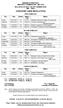 AGRONOMY (NEW REGULATION) Friday 08.05.2015 F.N STA 611 Statistical Methods & Design of Experiments Saturday 09.05.2015 F.N COM 615 Computer Applications for Monday 11.05.2015 F.N AGR 611 Modern Concepts
Enhancing Biodiversity. Proactive management of biodiversity in intensive agriculture
 Enhancing Biodiversity Proactive management of biodiversity in intensive agriculture Contents Introduction Increasing food security in a sustainable way 3 The importance of biodiversity The vitality and
IMPORTANCE OF LONG-TERM EXPERIMENTS IN STUDYING THE EFFECTS OF CLIMATE CHANGE. Introduction
 IMPORTANCE OF LONG-TERM EXPERIMENTS IN STUDYING THE EFFECTS OF CLIMATE CHANGE N. HARNOS 1, É. ERDÉLYI 2 and T. ÁRENDÁS 1 1 AGRICULTURAL RESEARCH INSTITUTE OF THE HUNGARIAN ACADEMY OF SCIENCES, MARTONVÁSÁR,
Chapter 3 - Additional rules for the certification program: Organic Production Methods (USDA NOP)
 Chapter 3 - Additional rules for the certification program: Organic Production Methods (USDA NOP) TABLE OF CONTENTS Article 3.1 Samples for USDA NOP... 2 Article 3.2 Classification of non-conformities
Forage Economics, page2. Production Costs
 Forage Economics Geoffrey A. Benson, Professor Emeritus, Department of Agricultural and Resource Economics, and James T. Green, Jr., Professor Emeritus, Department of Crop Science, NC State University
Humidtropics Kiboga/Kyankwanzi Soybean production training
 Humidtropics Kiboga/Kyankwanzi Soybean production training Makerere University and Humidtropics collaboration Soybean Seed production Training of Kiboga-Kyankwanzi platform members in Soybean Seed Production
THE ROLE OF VET IN FACILITATING DEVELOPMENT OF AGRICULTURAL SECTOR IN TANZANIA
 THE ROLE OF VET IN FACILITATING DEVELOPMENT OF AGRICULTURAL SECTOR IN TANZANIA Abstract Agriculture industry is the foundation of Tanzanian economy. It accounts for about half of the national income, three
Nutrient Stewardship. Reducing the Loss of Crop Nutrients to Waterways
 ETS & PERFORMANCE FOOD ENVIRONMENT PEOPLE COMPANY Nutrient Stewardship Reducing the Loss of Crop Nutrients to Waterways Crop nutrients help plants grow and produce the food, fiber and fuel we all need.
Risø-R-1512(EN) Green Technological Foresight on Environmental Friendly Agriculture: Executive Summary
 Risø-R-1512(EN) Green Technological Foresight on Environmental Friendly Agriculture: Executive Summary Risø National Laboratory Roskilde Denmark December 2004 Authors: Kristian Borch 1, Svend Christensen
U.S. SOYBEAN SUSTAINABILITY ASSURANCE PROTOCOL
 US SOYBEAN SUSTAINABILITY ASSURANCE PROTOCOL A Sustainability System That Delivers MARCH 2013 Since 1980, US farmers increased soy production by 96% while using 8% less energy US SOYBEAN SUSTAINABILITY
Academic Offerings. Agriculture
 Academic Offerings This section contains descriptions of programs, majors, minors, areas of concentration, fields of specialization, and courses. Semesters following course titles indicate when each course
THE SCIENCE THE FUTURE OF CANADIAN CANOLA: APPLY THE SCIENCE OF AGRONOMICS TO MAXIMIZE GENETIC POTENTIAL.
 THE SCIENCE THE FUTURE OF CANADIAN CANOLA: APPLY THE SCIENCE OF AGRONOMICS TO MAXIMIZE GENETIC POTENTIAL. WHERE WE HAVE BEEN CANOLA PRODUCTION HAS SURPASSED THE INDUSTRY TARGET OF 15 MMT. This was achieved
Integrated Pest Management
 Integrated Pest Management Andrea Veres Junior Technical Officer FAO REU [email protected] Yerevan, Armenia 2013 Why develop IPM? Agriculture was: not sustainable optimized inputs for maximum profit
THE MASTERCARD FOUNDATION: RURAL AND AGRICULTURAL FINANCE STRATEGY
 THE MASTERCARD FOUNDATION: RURAL AND AGRICULTURAL FINANCE STRATEGY SEPTEMBER 2015 The MasterCard Foundation works with visionary organizations to provide greater access to education, skills training and
O r g a n i c f o o d i s a g r o w t h i n d u s t r y. F i n d o u t a b o u t s o m e o f t h e j o b s t h a t b r i n g o r g a n i c s f r o m
 O r g a n i c f o o d i s a g r o w t h i n d u s t r y. F i n d o u t a b o u t s o m e o f t h e j o b s t h a t b r i n g o r g a n i c s f r o m t h e f a r m a n d t h e f a c t o r y t o y o u r
AGRICULTURAL SCIENCES Vol. II - Crop Production Capacity In North America - G.K. Pompelli CROP PRODUCTION CAPACITY IN NORTH AMERICA
 CROP PRODUCTION CAPACITY IN NORTH AMERICA G.K. Pompelli Economic Research Service, U. S. Department of Agriculture, USA Keywords: Supply, policy, yields. Contents 1. Introduction 2. Past Trends in Demand
Statement of ethical principles for biotechnology in Victoria
 Statement of ethical principles for biotechnology in Victoria Statement of ethical principles for biotechnology in Victoria Acknowledgments Published by the Public Health Group, Rural & Regional Health
CONDUCTING A COST ANALYSIS
 CONDUCTING A COST ANALYSIS Jennie S. Popp Department of Agricultural Economics & Agribusiness University of Arkansas Fayetteville, AR 72701 George Westberry, Retired Department of Agricultural & Applied
Recommended Resources: The following resources may be useful in teaching
 Unit D: Controlling Pests and Diseases in the Orchard Lesson 1: Managing and Controlling Pests of Fruit and Nut Crops Student Learning Objectives: Instruction in this lesson should result in students achieving
Current capabilities in the analysis of climate risks and adaptation strategies in critical areas
 Current capabilities in the analysis of climate risks and adaptation strategies in critical areas M. Arif Goheer Global Change Impact Studies Centre (GCISC) Islamabad- 44000, Pakistan Symposium on Climate
A SOIL TESTING SERVICE FOR FARMERS IN THAILAND, USING MOBILE LABORATORIES
 A SOIL TESTING SERVICE FOR FARMERS IN THAILAND, USING MOBILE LABORATORIES Narong Chinabut Office of Science for Land Development Land Development Department, Ministry of Agriculture and Cooperatives, Bangkok
College of Agricultural Sciences and Natural Resources Online Courses
 College of Agricultural Sciences and Natural Resources Online Courses Course # AECN/NRES 883 A B D D E J K L M N P Q Q R T T U V W Y Z AECN/ALEC 899 AGRI/ENTO 826 AGRI/AGRO/HORT 897 AGRO 811 AGRO 812/BIOC
Concept Note on Farm Income Insurance: Issues and Way Forward
 Farm Income Insurance India, an agrarian economy with 1/3 rd population depending on the agriculture sector directly or indirectly has ~ 116 million farm holdings covering an area of 163 million hectares
Section 5.1 Food chains and food webs
 Section 5.1 Food chains and food webs The ultimate source of energy in an ecosystem comes from sunlight This energy is converted to an organic form using photosynthesis which is then passed between organisms
Insurance environment in India: Bottlenecks and opportunities for a cost effective insurance products. Srinivasa Rao Gattineni
 Insurance environment in India: Bottlenecks and opportunities for a cost effective insurance products Srinivasa Rao Gattineni Rainfall variability is dominant due to the presence of the Monsoon (seasonal
A cool CAP post-2013: What measures could help adapt Cyprus farming and biodiversity to the consequences of climate change?
 A cool CAP post-2013: What measures could help adapt Cyprus farming and biodiversity to the consequences of climate change? 26 September 2012: IFOAM EU Conference Future farming in times of climate change