
Laser in situ keratomileusis for mixed astigmatism using a modified formula for bitoric ablation
|
|
|
- Harold Moody
- 9 years ago
- Views:
Transcription
1 European Journal of Ophthalmology / Vol. 18 no. 6, 2008 / pp Laser in situ keratomileusis for mixed astigmatism using a modified formula for bitoric ablation D. DE ORTUETA, C. HAECKER Augenlaserzentrum Recklinghausen, Recklinghausen - Germany PURPOSE. To evaluate the results of treatment of mixed astigmatism with laser in situ keratomileusis (LASIK) by means of a modified Chayet formula for bitoric ablation and personalized nomogram calculations. METHODS. A retrospective study was conducted in 19 consecutive eyes of 13 patients who underwent LASIK treatment of mixed astigmatism with a mean sphere of +1.63±1.23 D and a mean cylinder of 3.55±1.17 D. The authors used the Schwind ESIRIS Laser platform. The ablation was shifted from the pupil center to the vertex normal of the cornea. RESULTS. Three months postoperatively, the mean sphere was 0.08±0.24 D and the mean astigmatism 0.45±0.31 D. At 3 months, an uncorrected visual acuity (UCVA) of 20/50 or better could be found in 100% of the eyes, and of 20/25 or better in 59%. All eyes were within ±0.5 D spherical equivalent (SE) at 3, 6, and 12 months. No eye lost more than one line of best spectacle-corrected visual acuity (BSCVA). Postoperatively, the corneal wavefront showed a reduction of spherical aberrations and coma, which were analyzed at 4 and 6 mm pupil diameter. The postoperative higher-order aberrations decreased at 4 mm and increased at 6 mm pupil sizes after surgery. CONCLUSIONS. Modified bitoric treatment with the Schwind ESIRIS laser showed an excellent postoperative UCVA and BSCVA with applying external nomogram adjustments. The method demonstrated good predictability, safety, and effectiveness in the treatment of mixed astigmatism. (Eur J Ophthalmol 2008; 18: ) KEY WORDS. Mixed astigmatism, Laser in situ keratomileusis, Schwind ESIRIS laser, modified Chayet formula, Bitoric, Astigmatism Accepted: April 18, 2008 INTRODUCTION Many articles about the treatment of myopia and hyperopia with and without astigmatism by laser in situ keratomileusis (LASIK) have been published; however, there are few dealing with mixed astigmatism (1-11). In the late 1990s, Chayet et al (2, 3) and Vinciguerra et al (12) published toric ablation techniques which apply a myopic and a hyperopic cylinder (90 degrees away). Although there are different techniques for the treatment of astigmatism with LASIK and photorefractive keratectomy (PRK), cylinder splitting could be demonstrated to be the most tissue saving approach (13). Chayet et al (2, 3) introduced the bitoric ablation pattern which splits the intended correction into two cylinders, 90 degrees away. The correction of the minus cylinder flattens the steep meridian and the ablation of the plus cylinder steepens the flat meridian, thus achieving a balanced corneal curvature. As treating a myopic cylinder induces a spherical hyperopic shift (3, 6), the modified Chayet formula (2) (Fig. 1, formula 1 and 2) not only splits the initial subjective refraction into two cylinders of opposite sign, it also accounts for the coupling factor (CF). It is important to de- Wichtig Editore, /869-08$25.00/0

2 LASIK for mixed astigmatism Fig. 1 - Modified Chayet formula of bitoric ablation with a coupling factor of 25%. CMyo = negative cylinder; CHyp = positive cylinder; Ssubj = subjective sphere; Csubj = subjective cylinder. Fig. 3 - Bitoric treatment and hyperopic shift. Example for +1 5 D x 180. According to the subjective prescription, the initial spherical error starts at one diopter (dotted line), the astigmatic refractive error begins with 5 diopters (solid graph). Starting with cylindrical correction, each portion of the treated myopic cylinder will reduce the residual myopic astigmatic error. Because 33% of each portion will induce a hyperopic shift onto the sphere, the dotted graph (residual hyperopic sphere) will increase by that amount. During the process of treating the myopic cylinder the idea of Chayet s concept is to reach a condition where the residual myopic cylinder equals the amount of residual hyperopic sphere (intersection of the two graphs). Having treated 3 D of myopic cylinder, one gets equal values at 2 D of residual hyperopic sphere and 2 D of residual myopic cylinder (+2 2 D x 180). This intermediate prescription will be chanced into positive cylinder notation and hence results in 0 +2 D x 90. Now it is obvious to treat a hyperopic cylinder of 2 D 90 degrees away from the myopic cylinder in order to complete the two-stage treatment. Fig. 2 - Steps to calculate the laser setting for the Esiris Hyperopic Astigmatism Menu. CMyo = negative cylinder; CHyp = positive cylinder; _CMyo = offset of the negative cylinder; _CHyp = offset of the positive cylinder; Ssett = laser setting sphere; Csett = laser setting cylinder. Example with the manifest refraction of an eye with +1.5 D sphere and 5.0 D cylinder at 0 : Without coupling, the subjective refraction would be split into a myopic cylinder (CMyo) 3.5 D x 0 and a hyperopic cylinder (CHyp) 1.5 D x 90. Taking into account the coupling factor of 25% by applying the modified Chayet formula (Fig. 1), one has to be aware first to have negative cylinder notation of the subjective refraction. According to formula 1 (Fig. 1), one calculates the negative cylinder (CMyo) of 2.8 D x 0 and a positive cylinder (CHyp) of 2.2 D x 90 (Fig. 1, formula 2). The nomogram (Tab. I) was used to alter the theoretical cylindrical components CMyo and CHyp. Thus 0.5 D are added to CMyo resulting in CMyo* of 3.3 D x 0 (Fig. 2, formula 3) and additionally 0.75 D are added to CHyp resulting in CHyp* of 2.95 D x 90 (Fig. 2, formula 4). Now in order to insert the correction values into the Hyperopic Astigmatism Menu of ESIRIS software 2.1, the modified cylindrical components have to be recombined into a spherocylindrical refraction (applying formulae 5 and 6, Fig. 2). Therefore the final laser setting is D x 0. note that Chayet found his CF of approximately 33% empirically with his Nidek EC-5000 Excimer laser (3). In order to use the bitoric approach for individual laser systems and moreover to compensate for systematic over- or undercorrections in different laser systems, the modified Chayet formula (Fig. 1) was extended to obtain final laser settings (Fig. 2, formula 2 to 6). To clarify the idea of the Bitoric concept we introduced a diagram (Fig. 3) that shows the amount of induced hyperopic shift while treating a myopic cylinder. The aim of this study was to evaluate the efficacy, predictability, and safety of LASIK for mixed astigmatism performed with the ESIRIS laser system using the modified Chayet formula (Fig. 1) together with adjustments according to a specially developed nomogram (Tab. I). We demonstrate how to create a nomogram for mixed 870

3 De Ortueta and Haecker astigmatism with the data of hyperopic astigmatism and myopic astigmatism. We also show the corneal aberrations that we induce with the bitoric profile ablation. METHODS A retrospective study was performed in 19 consecutive eyes of 13 patients who underwent LASIK treatment for mixed astigmatism in the Recklinghausen laser eye center from January 2004 to December Prior to surgery, all patients underwent a complete ophthalmic examination, including uncorrected visual acuity (UCVA), best spectacle-corrected visual acuity (BSCVA), manifest and cycloplegic refraction, slit lamp biomicroscopy, applanation tonometry, binocularity, corneal topography with the Keratron videokeratoscope (Optikon, Italy), pachymetry, and biometry (Tomey AL 2000, Japan). Based on topography maps, we also measured the anterior corneal aberrations in terms of root-mean-square values of higher-order aberrations, spherical aberrations, and coma over a 4 and 6 mm pupil diameter. Exclusion criteria were corneal pachymetry below 500 µm, ophthalmic disease with visual impairment, eyes with previous surgery, and autoimmune diseases. In all cases we used a personalized customized nomogram. Postoperative controls were made 1 day and 3 weeks after surgery as well as after 3, 6, and 12 months: a followup after at least 3 months was carried out in each patient. Predictability (attempted vs achieved SE within a range of +0.5 D), defocus (SE + half the cylinder value), efficacy (gain/loss of UCVA lines postoperatively versus BSCVA preoperatively), safety (gain/loss of BSCVA lines), and stability were assessed. Prior to LASIK treatment informed consent was obtained from all patients. All surgeries were performed by the same surgeon (D.O.), using the ESIRIS laser with software version 2.1 (Schwind Eye-tech-solutions GmbH, Germany). This laser works with a 200 Hz flying/scanning spot, a video eye-tracker with 330 Hz repetition rate, and a 0.8 mm Gaussian-like beam profile. Lamellar keratotomy with superior hinge was carried out with the Carriazo pendular microkeratome (Schwind Eyetech-solutions GmbH) in all cases. A new blade was used in each eye. Preoperatively, each eye received one drop of a topical anesthetic. After positioning the speculum with suction, a second drop of the anesthetic was applied and the cornea was rinsed with balanced salt solution (BSS Alcon Lab). The complete flap was reflected using a spatula. Prior to ablation, the stroma was dried next to the hinge by using a dry sponge. During ablation, the hinge was protected with the sponge and dried again upon visible accumulation of liquid. After flap repositioning, the edges were dried with Merocel sponges. Dexamethasone and ofloxacin eyedrops and lacrimal preservative free eye gel were instilled. The patient received Isopto-Max eyedrops (Alcon Lab.) for 5 days (four times daily) and lacrimal preservative free eyedrops for 6 weeks. We used ESIRIS version 2.1 to treat mixed astigmatism by means of the hyperopic astigmatism menu. In this menu we get the refraction in a bitoric way; that means the treatment profile is split in a negative cylinder and in a positive cylinder. We obtained the negative cylinder offset values (Tab. I, left column) from analyzing our previous results of myopic astigmatism. The positive cylinder offset values (Tab. I, right column) were derived from previous results of hyperopic astigmatism. We used an average coupling factor (CF) of 25% which was found by multivariate statistical analysis of 100 previous myopic astigma- TABLE I - PERSONALIZED NOMOGRAM SHOWING THE OFFSET VALUE ADDED FOR EACH CYLINDRICAL COMPONENT Adjustments for negative cylinder Adjustments for positive cylinder Attempt Add Attempt Add

4 LASIK for mixed astigmatism tism treatments. The observed coupling factors were not constant for different initial corneal curvatures and varied between 21% and 29% (25% on average). In order to calculate the settings for the ESIRIS laser we used the maximum accepted subjective spherocylindrical correction and the modified bitoric formulae (Fig. 1). An example of our calculations is shown in Figure 2. To enter the correction into the hyperopic astigmatism menu of ESIRIS software 2.1, the modified cylindrical components have to be recombined into a spherocylindrical refraction using formulae (Fig. 2). Furthermore, the center of ablation was shifted from the pupil center to the vertex normal of the cornea using the pupillary offset measured with the Keratron videokeratoscope which has been described in a previous report (14, 15). In all cases an optical zone of 6.25 mm with a transition zone of 0.75 mm was chosen, thus leading to a total ablation diameter of 7.75 mm. The refractive data were analyzed using the graphs recommend by Waring (16). All data were collected using the software Datagraph-med version 3.20 XP (Pieger GmbH, Germany), and descriptive statistical analysis was performed including vector analysis. RESULTS The mean patient age was 40 years (range 21 to 66 years) with 9 eyes of female and 10 eyes of male patients. Nine left and 10 right eyes were treated. The preoperative refractive mean spherical equivalent (SE) was +0.14±0.95 D (range 1.5 D to D), the mean sphere was 1.63±1.23 D (range 0 to +4.0 D), the mean cylinder was 3.55±1.17 D (range 5.25 to 1.25 D). Refractive outcome The follow-up at 3 months included 100% of the treated eyes. The mean SE was 0.14±0.23 D (range 0.50 to D), the mean sphere was 0.08±0.24 D (range 0.25 to 0.50 D), and the mean cylinder 0.45±0.31 D (range 1.0 D to 0 D). At 6-month follow-up, 84.2% of the eyes (16 eyes) could be examined. The mean SE was 0.09±0.21 D (from 0.5 to 0.25 D), the mean sphere was 0.13±0.29 D (range 0.25 to 0.75 D), and the mean cylinder was 0.42 ± 0.36 D (range 1.25 to 0.0 D). At the 1-year follow-up, 84.2% of the eyes (16 eyes) could be examined. The mean SE was 0.12±0.21 D (from 0.50 to 0.25 D), the mean sphere was 0.19±0.38 D (range 0.25 to 1.0), and the mean cylinder was 0.61±0.48 D (range 1.5 to 0.0 D). Vector analysis was performed with Datagraph-med version 3.20 XP based on double angle scatter plots preoperatively and after 3, 6, and 12 months (Fig. 4). According to vector analysis the mean cylinder was 2.24 D x degrees preoperatively (19 eyes), 0.22 D x 4.2 degrees 3 months postoperative (19 eyes), 0.28 D x degrees 6 months postoperative (16 eyes), and 0.44 D x degrees 1 year postoperative (16 eyes). Predictability at 3, 6, and 12 months postoperatively was less than or equal to findings showing an SE within ±0.5 D (SE) in all cases. After 3 months the postoperative cylinder was minor or equal to 1.0 D in all cases, and 0.5 D or minor in 85% of the cases. Simple regression analysis showed a good correlation between attempted and achieved refraction for sphere and cylinder (Fig. 5). The defocus equivalent after 3, 6, and 12 months was ±0.5 D in 80% and ±1.0 D in 100% of the cases. No eye lost more than one line of BSCVA while a gain of two lines could be found in 5% at 3 months and 6% at 6 and 12 months (Fig. 6). The preoperative UCVA of 20/50 or worse in 95% of the cases compared to a postoperative UCVA of 20/50 or better in 100%, 20/30 or better in 89%, 20/25 or better in 58%, and 20/20 or better in 27% of the eyes at 3 months (Fig. 7). Comparing the BSCVA preoperatively with the UCVA 3 months postoperatively, there was an efficacy of 90% with a visual acuity of 20/25, 100% with a visual acuity of 20/40. Concerning stability, the SE was 0.14 (19 eyes) after 3 months, 0.09 D (16 eyes) after 6 months, and 0.12 D (16 eyes) after 1 year. Corneal aberrometry By means of the Keratron Scout videokeratoscope, corneal aberrations were measured and analyzed preoperatively and 3 months after surgery at 4 mm and 6 mm pupil diameter. All higher order aberrations presented in this study are expressed according to recommendations of the Optical Society of America (OSA). The average preoperative spherical aberration was 0.04 µm at 4 mm pupil diameter and 0.24 µm at 6 mm pupil diameter compared to µm at 4 mm and 0.04 µm at 6 mm postoperatively. 872

5 De Ortueta and Haecker Fig. 4 - Vectorial analysis preoperatively and at 3, 6, and 12 months postoperatively. 19 eyes (pre-op) eyes (3 months) eyes (6 months) eyes (12 months) The coma showed preoperative values of 0.11 µm at 4 mm and of 0.33 µm at 6 mm compared to postoperative findings of 0.08 µm and 0.27 µm, respectively. The average root mean square (RMS) value of total higher-order aberrations preoperatively was 0.18 µm at 4 mm and 0.52 µm at 6 mm, postoperatively 0.15 µm and 0.57 µm, respectively. Summarizing post LASIK results, the HOA increased at 6 mm pupil diameter, whereas the HOA decreased over a 4 mm pupil diameter. Coma and spherical aberrations diminished at 4 and 6 mm after surgery. Corneal asphericity Preoperative topography measurements with the Keratron videokeratoscope at 6 mm pupil diameter showed a mean asphericity (Q) of 0.18 (range 0 to 0.32), compared to a mean Q of 0.38 (range 0.08 to 0.93) 3 months postoperatively. Thus, there was a negative increase of asphericity with a mean delta Q of 0.20 in our group of patients. Fig. 5 - Scattergram of cylindrical values attempted vs achieved 3 months postoperatively. 873

6 LASIK for mixed astigmatism Fig. 6 - Safety 3 and 12 months after bitoric LASIK-gain or loss of Snellen lines. Fig. 7 - Efficacy in cumulative percentage comparing the preoperative best spectacle-corrected visual acuity (BSCVA) and the postoperative uncorrected visual acuity (UCVA). DISCUSSION The aim of this study was to evaluate the results of treating mixed astigmatism with the ESIRIS excimer laser based on a bitoric ablation profile. The advantage of the bitoric ablation is demonstrated to be the most tissue saving approach (13). In our case we used the ESIRIS excimer laser (SW version 2.1) to treat mixed astigmatism. This software version splits the entered refraction in a bitoric way so we get a myopic cylinder and a hyperopic cylinder 90 degrees away without a coupling factor. In order to compensate for possible over- or undercorrections of the treated myopic and hyperopic cylinders, we found a way to calculate the laser settings for cases of mixed astigmatism (Fig. 2). These calculations are not a trivial task, because one cannot simply add or subtract offset values to the sphere or the cylinder as for compound astigmatism. For this reason we developed a modified Chayet formula which allows to enter offset values (nomogram, Tab. I) for the intended cylindrical components and to use a coupling factor which is different from the one Chayet has discovered with his Nidek laser. To be more specific, the refractive outcome of the bitoric ablation pattern depends greatly on proper data analysis and proper calculation of laser settings. Especially the investigation of the coupling factor remains a rather difficult task, because it seems to be dependent on various factors. Individual excimer laser systems may have different coupling factors, cutting the flap could alter the initial prescription and also different preoperative corneal curvature (K-reading) may have an influence on the coupling factor. For these reasons we performed an unpublished multivariate statistical analysis of 100 previously treated eyes with myopic astigmatism. Subdividing this group into four groups with different defocus, we could derive coupling factors between 21% and 29%. As a first approximation, we applied an average coupling of 25% to the modified Chayet formula. For compensating undercorrections, we adjusted the myopic cylinder and the hyperopic cylinder of the bitoric ablation concept with offset values which we derived from analysis of previous compound astigmatism results (Tab. I). We recommend that each surgeon should analyze his or her own data and adjust the laser settings accordingly. This will lead to more reliable results. The ablation center was shifted to the cornea vertex cornea which was measured by means of the Keratron videokeratoscope, as described by us before (14-15). Shifting the ablation center is controversial (17-19). The cornea vertex is in the topography always at the same point; if the patient fixates correctly, it is reproducible and not dependent on the pupil diameter. As we get the measurement in photopic conditions similar to the conditions under the laser with the data of the topography we can shift the ablation center to the cornea vertex, which is why we prefer this point; whether the use of the pupil center is better was not the subject of this study. The cen- 874

7 De Ortueta and Haecker tration may have influenced the results as the astigmatism is then treated in a geometric way and this may be a limitation of our study, but as we treat all eyes on the cornea vertex we would not find it ethical to correct a group on the pupil center. For all eyes we chose an optical zone of 6.25 mm and a transition zone of 0.75 mm, resulting in a total ablation zone of 7.75 mm. Using the standard software, the actual ablation of this laser for an optical zone (OZ) of 6.25 mm is 7.05 mm. This is because the software considers the center of the laser spot as the limit of the 6.25 mm OZ: in this way, the spot having a Gaussian profile of 0.8 mm adds 0.4 mm to each side, thus resulting in an actual OZ diameter of 7.05 mm, leading to a total ablation of 8.05 mm. The transition zone covered 1.5 mm and seemed to be stable, since no regression could be observed in eyes with a follow-up of 12 months or more. With such a large optical zone in LASIK, a larger transition zone, as given by Carones et al (8), has the disadvantage that the hinge in our procedure protected by a sponge is within the calculated ablation area. If the lamellar cut is smaller than the total ablation zone, the cutting edge and surrounding epithelium will be removed, thus making epithelial ingrowth more likely. Our follow-up included 100% of the cases at 3 months and 84.2% at 6 and 12 months. In none of our cases was retreatment necessary, which is probably due to the appropriate nomogram and good centration. As proof of stability, a longer follow-up and a bigger group of eyes would be more convincing, even though, as displayed in the study of Rashad (20), the refractive spherical and astigmatic results are stable after 3 months. In our group of patients we had a decrease in corneal aberrations measured by the topographic system at 4 mm, and at 6 mm the HOA showed a slight increase; however, a decrease in spherical aberrations and coma could be observed at 4 as well as 6 mm in the 3-month follow-up examination. Llorente et al (21) measured the corneal aberration induced in hyperopic LASIK and found a significant increase in HOA. They also found an inducement of negative spherical aberrations in hyperopes and a positive inducement in myopes. Similar results were reported by Wang and Koch (22) and Albarrán-Diego et al (23). An explanation why the spherical aberrations did not increase in our study might be that in mixed astigmatism one meridian is treated in a myopic way and the other meridian in a hyperopic way, so that the SE was near 0 D in our patient group and inducement was low for the global treatment. The centration of the ablation might play a role, since a coma decrease could be observed in our group of patients after LASIK. A comparative study is required to confirm these results. Similar to the measurement in hyperopic LASIK (24), we found an increase in asphericity towards a more negative value, which will provide the patient with more depth of focus. Our data allow the conclusion that bitoric LASIK using the ESIRIS laser system, with a laser setting of a 6.25 mm optical zone and a 0.75 mm transition zone, is a predictable, effective, and safe method in the treatment of mixed astigmatism with a cylinder up to 5.25 D. Furthermore, Chayet s formula and our modifications are also applicable for pure myopic astigmatism. We successfully treated two eyes that we did not include in this study in order not to mix study groups. No propertary interest. Dr. Diego de Ortueta is Consultant for Schwind eye-tech solutions (Kleinhostheim, Germany). Reprint requests to: Diego De Ortueta, MD Augenzentrum Recklinghausen Eribruch Recklinghausen 45657, Germany [email protected] REFERENCES 1. Argento CJ, Cosentino MJ, Biondini A. Treatment of hyperopic astigmatism. J Cataract Refract Surg 1997; 23: Chayet AS, Magallanes R, Montes M, Chavez S, Robledo N. Laser in situ keratomileusis for simple myopic, mixed, and simple hyperopic astigmatism. J Refract Surg 1998; 14 (Suppl): S Chayet AS, Montes M, Gómez L, Rodríguez X, Robledo N, MacRae S. Bitoric laser in situ keratomileusis for the correction of simple myopic and mixed astigmatism. Ophthalmology 2001; 108: Sheludchenko VM, Fadeykina T. Comparative results between standard and bitoric nomograms for astigmatism correction. J Refract Surg 2001; 17(Suppl): S

8 LASIK for mixed astigmatism 5. Salz JJ, Stevens CA, LADARVision LASIK Hyperopia Study Group. LASIK correction of spherical hyperopia, hyperopic astigmatism, and mixed astigmatism with the LADARVision excimer laser system. Ophthalmology 2002; 109: Rueda L, Pineda-Fernández A, Huang D, Nur J. Laser in situ keratomileusis for mixed and simple myopic astigmatism with the Nidek EC-5000 laser. J Refract Surg 2002; 18: Hassaballa MA, Ayala MJ, Alió JL. Laser in situ keratomileusis correction of mixed astigmatism by bitoric ablation. J Cataract Refract Surg 2003; 29: Carones F, Vigo L, Scandola E. Laser in situ keratomileusis for hyperopia and hyperopic and mixed astigmatism with LADARVision using 7 to 10 mm ablation diameters. J Refract Surg 2003; 19: Albarrán-Diego C, Munoz G, Montés-Micó R, Alió JL. Bitoric laser in situ keratomileusis for astigmatism. J Cataract Refract Surg 2004; 30: Varley G, Huang D, Rapuano CJ, et al. LASIK for hyperopia, hyperopic astigmatism, and mixed astigmatism: a report by the American Academy of Ophthalmology. Ophthalmology 2004; 111: Jin GJ, Merkley KH, Lyle WA. Laser in situ keratomile-usis for primary and secondary mixed astigmatism. Am J Ophthalmol 2005; 139: Vinciguerra P, Sborgia M, Epstein D, Azzolini M, MacRae S. Photorefractive keratectomy to correct myopic or hyperopic astigmatism with a cross-cylinder ablation. J Refract Surg 1999; 15 (Suppl): S Azar D, Primack J. Theoretical analysis of ablation depths and profiles in laser in situ keratomileusis for compound hyperopic and mixed astigmatism. J Cataract Refract Surg 2000; 26: De Ortueta D, Schreyger F. Centration on the cornea vertex normal during hyperopic refractive photoablation using videokeratography. J Refract Surg 2007; 23: De Ortueta D, Arba Mosquera S. Centration during hyperopic LASIK using the coaxial light reflex. J Refract Surg 2007; 23: Waring GO 3rd. Standard graphs for reporting refractive surgery. J Cataract Refract Surg 2000; 16: Nepomuceno RL, Boxer Wachler BS, Kim JM, Scruggs R, Sato M. Laser in situ keratomileusis for hyperopia with the LADARVision 4000 with centration on the coaxially sighted corneal light reflex. J Cataract Refract Surg 2004; 30: Neuhann T. LASIK decentration. In: Buratto L, Brint S, eds. Custom LASIK: Surgical Techniques and Complications. Thorofare, NJ: Slack Inc, 2003; Boxer Wachler BS, Korn TS, Chandra NS, Michel FK. Decentration of the optical zone: centering on the pupil versus the coaxially sighted corneal light reflex in LASIK for hyperopia. J Refract Surg 2003; 19: Rashad KM. Laser in situ keratomileusis for the correction of hyperopia from to diopters with the Technolas Keracor 117C laser. J Refract Surg 2001; 17: Llorente L, Barbero S, Merayo J, Marcos S. Total and corneal optical aberrations induced by laser in situ keratomileusis for hyperopia. J Refract Surg 2004; 20: Wang L, Koch DD. Anterior corneal optical aberrations induced by laser in situ keratomileusis for hyperopia. J Cataract Refract Surg 2003; 29: Albarrán-Diego C, Muñoz G, Montés-Micó R, Rodriguez A, Alió JL. Corneal aberration changes after hyperopic LASIK: a comparison between the VISX Star S2 and the Asclepion- Meditec MEL 70 G Scan excimer lasers. J Refract Surg 2006; 22: Chen CC, Izadshenas A, Rana MA, Azar D. Corneal asphericity after hyperopic laser in situ keratomileusis. J Cataract Refract Surg 2002; 28:

9

Wavefront-guided Custom Ablation for Myopia Using the NIDEK NAVEX Laser System
 Wavefront-guided Custom Ablation for Myopia Using the NIDEK NAVEX Laser System Jan Venter, MD ABSTRACT PURPOSE: To determine the predictability, effi cacy, safety, and stability of LASIK using custom ablation
LASIK for Hyperopia With the WaveLight Excimer Laser
 LASIK for Hyperopia With the WaveLight Excimer Laser A. John Kanellopoulos, MD; Joseph Conway, MD; Lawrence H. Pe, MD ABSTRACT PURPOSE: To evaluate the safety and effi cacy of the ALLEGRETTO WAVE excimer
Treating Mixed Astigmatism A Theoretical Comparison and Guideline for Combined Ablation Strategies and Wavefront Ablation
 Treating Mixed Astigmatism A Theoretical omparison and Guideline for ombined Ablation Strategies and Wavefront Ablation Diego de Ortueta 1, Samuel Arba Mosquera 2 and hristoph Haecker 3 8 1 Medical Director
Life Science Journal 2014;11(9) http://www.lifesciencesite.com. Cross cylinder Challenging cases and their resultswith Nidek Quest (EC-5000)
 Cross cylinder Challenging cases and their resultswith Nidek Quest (EC-5000) Gamal Mostafa Abo El Maaty, Mohamed Elmoddather, Mahmoud Ibrahem Ghazy, Mohamed Al-Taher Ophthalmology Department, Faculty of
Quality Control in Refractive Surgery
 Quality Control in Refractive Surgery Stefan Pieger*, M.Sc. Ingenieurbüro Pieger GmbH, Wendelstein, Germany Introduction Personal experience as application specialist for refractive excimer lasers since
Bitoric Laser In Situ Keratomileusis for the Correction of Simple Myopic and Mixed Astigmatism
 Bitoric Laser In Situ Keratomileusis for the Correction of Simple Myopic and Mixed Astigmatism Arturo S. Chayet, MD, 1 Miguel Montes, MD, 1 Laura Gómez, MD, 1 Xavier Rodríguez, MD, 1 Nora Robledo, OD,
FIRST EXPERIENCE WITH THE ZEISS FEMTOSECOND SYSTEM IN CONJUNC- TION WITH THE MEL 80 IN THE US
 FIRST EXPERIENCE WITH THE ZEISS FEMTOSECOND SYSTEM IN CONJUNC- TION WITH THE MEL 80 IN THE US JON DISHLER, MD DENVER, COLORADO, USA INTRODUCTION AND STUDY OBJECTIVES This article summarizes the first US
VISX Wavefront-Guided LASIK for Correction of Myopic Astigmatism, Hyperopic Astigmatism and Mixed Astigmatism (CustomVue LASIK Laser Treatment)
 CustomVue Advantage Patient Information Sheet VISX Wavefront-Guided LASIK for Correction of Myopic Astigmatism, Hyperopic Astigmatism and Mixed Astigmatism (CustomVue LASIK Laser Treatment) Statements
ANGLE KAPPA. Copyrighted material. Not for distribution. chapter. Anastasios John Kanellopoulos, MD - 139 -
 chapter 21 Femto-LASIK for Hyperopia and Hyperopic Astigmatism: Practical Pearls From 8 Years of Experience With Topography-Guided Corrections for Hyperopic LASIK Anastasios John Kanellopoulos, MD Refractive
KERATOCONUS IS A BILATERAL, ASYMMETRIC, CHRONIC,
 Comparison of and Intacs for Keratoconus and Post-LASIK Ectasia MUNISH SHARMA, MD, AND BRIAN S. BOXER WACHLER, MD PURPOSE: To evaluate the efficacy of single-segment Intacs and compare with double-segment
Wavefront technology has been used in our
 Wavefront Customized Ablations With the WASCA Asclepion Workstation Sophia I. Panagopoulou, BSc; Ioannis G. Pallikaris, MD ABSTRACT PURPOSE: WASCA (Wavefront Aberration Supported Cornea Ablation) is a
Active Cyclotorsion Error Correction During LASIK for Myopia and Myopic Astigmatism With the NIDEK EC-5000 CX III Laser
 Active Cyclotorsion Error Correction During LASIK for Myopia and Myopic Astigmatism With the NIDEK EC-5000 CX III Laser Sudhank Bharti, MD; Harkaran S. Bains ABSTRACT PURPOSE: To investigate the predictability
Changes in higher order aberrations after wavefront-guided PRK for correction of low to moderate myopia and myopic astigmatism: Two-year follow-up
 European Journal of Ophthalmology / Vol. 17 no. 4, 2007 / pp. 507-514 Changes in higher order aberrations after wavefront-guided PRK for correction of low to moderate myopia and myopic astigmatism: Two-year
Topographically-guided Laser In Situ Keratomileusis to Treat Corneal Irregularities
 Topographically-guided Laser In Situ Keratomileusis to Treat Corneal Irregularities Michael C. Knorz, MD, Bettina Jendritza, MD Objective: To evaluate the predictability and safety of topographically guided
LASIK SURGERY IN AL- NASSIRYA CITY A CLINICOSTATISTICAL STUDY
 Thi-Qar Medical Journal (TQMJ): Vol(4) No(4):1(14-21) SUMMARY: LASIK SURGERY IN AL- NASSIRYA CITY A CLINICOSTATISTICAL STUDY Dr. Ali Jawad AL- Gidis (M.B.Ch.B., D.O., F.I.C.O.)* Background: LASIK which
Financial Disclosure. LASIK Flap Parameters IntraLase Microkeratome 6/9/2008. Femtosecond LASIK Flaps: What Could We Customize Yesterday?
 Financial Disclosure Arturo Chayet, MD Tijuana, BC Mexico Perry S. Binder, MS, MD San Diego CA USA I have the following financial interests or relationships to disclose: AMO/IntraLase Corporation - C Acufocus
CustomVue Treatments for Monovision in Presbyopic Patients with Low to Moderate Myopia and Myopic Astigmatism
 CustomVue Treatments for Monovision in Presbyopic Patients with Low to Moderate and Myopic Introduction Pre-Operative Examination Surgical Technique 1 2 IMPORTANT INFORMATION CustomVue Monovision treatments
Keratorefractive Surgery for Post-Cataract Refractive Surprise. Moataz El Sawy
 Keratorefractive Surgery for Post-Cataract Refractive Surprise Moataz El Sawy Departmentof Ophthalmology, Faculty of Medicine,MenoufiyaUniversity, Egypt [email protected] Abstract: Purpose: To evaluate
The Evolution of the Optical Zone in Corneal Refractive Surgery. Bruce Drum, Ph.D.
 The Evolution of the Optical Zone in Corneal Refractive Surgery. Bruce Drum, Ph.D. FDA, Division of Ophthalmic and ENT Devices, Rockville, MD Disclaimer This presentation represents the professional opinion
Customized corneal ablation and super vision. Customized Corneal Ablation and Super Vision
 Customized Corneal Ablation and Super Vision Scott M. MacRae, MD; James Schwiegerling, PhD; Robert Snyder, MD, PhD ABSTRACT PURPOSE: To review the early development of new technologies that are becoming
Richard S. Hoffman, MD. Clinical Associate Professor of Ophthalmology Oregon Health & Science University
 Zeiss Mel 80 and Visumax Refractive Laser Systems Richard S. Hoffman, MD Clinical Associate Professor of Ophthalmology Oregon Health & Science University No Financial Interest ZEISS Workstation CRS-Master
Comparison of higher-order aberrations after wavefront-guided laser in situ keratomileusis and laser-assisted subepithelial keratectomy
 J CATARACT REFRACT SURG - VOL 32, MAY 2006 Comparison of higher-order aberrations after wavefront-guided laser in situ keratomileusis and laser-assisted subepithelial keratectomy So-Hyang Chung, MD, In
INTRACOR. An excerpt from the presentations by Dr Luis Ruiz and Dr Mike Holzer and the Round Table discussion moderated by Dr Wing-Kwong Chan in the
 INTRACOR An excerpt from the presentations by Dr Luis Ruiz and Dr Mike Holzer and the Round Table discussion moderated by Dr Wing-Kwong Chan in the 1 Dr Luis Ruiz Presbyopia treatment with INTRACOR Luis
Laser in situ keratomileusis (LASIK) has been. Retreatment of Hyperopia After Primary Hyperopic LASIK REPORTS
 REPORTS Retreatment of Hyperopia After Primary Hyperopic LASIK Julio Ortega-Usobiaga, MD, PhD; Rosario Cobo-Soriano, MD, PhD; Fernando Llovet, MD; Francisco Ramos, MD; Jaime Beltrán, MD; Julio Baviera-Sabater,
The future of laser refractive surgery is exciting
 The Cornea is Not a Piece of Plastic Cynthia Roberts, PhD Editorial The future of laser refractive surgery is exciting with the potential for ever-improved postoperative visual performance. In the past,
Refractive Surgery. Evolution of Refractive Error Correction
 Refractive Surgery Techniques that correct for refractive error in the eye have undergone dramatic evolution. The cornea is the easiest place to place a correction, so most techniques have focused on modifying
LASIK in the Presbyopic Age Group
 LASIK in the Presbyopic Age Group Safety, Efficacy, and Predictability in 40- to 69-Year-Old Patients Ramon C. Ghanem, MD, 1,2 Jose de la Cruz, MD, 1,2 Faisal M. Tobaigy, MD, 1 Leonard P. K. Ang, FRCS(Ed),
Comparison of Residual Stromal Bed Thickness and Flap Thickness at LASIK and Post-LASIK Enhancement in Femtosecond Laser-Created Flaps
 Comparison of Residual Stromal Bed Thickness and Flap Thickness at LASIK and Post-LASIK Enhancement in Femtosecond Laser-Created Flaps Lingo Y. Lai, MD William G. Zeh, MD Clark L. Springs, MD The authors
SCHWIND CAM Perfect Planning wide range of applications
 SCHWIND CAM Perfect Planning wide range of applications ORK-CAM PresbyMAX PALK-CAM PTK-CAM 2 SCHWIND CAM the system solution The latest version of the modular SCHWIND CAM represents an even more efficient
Central Islands After LASIK Detected by Corneal Topography
 Korean J Ophthalmol Vol. 15:8-14, 2001 Central Islands After LASIK Detected by Corneal Topography Jin Seok Lee, MD, Choun-Ki Joo, MD Department of Ophthalmology, Kangnam St. Mary s Hospital, College of
Wavefront Analysis in Post-LASIK Eyes and Its Correlation with Visual Symptoms, Refraction, and Topography
 Analysis in Post-LASIK Eyes and Its Correlation with Visual Symptoms, Refraction, and Topography Maria Regina Chalita, MD, 1 Sai Chavala, MD, 1 Meng Xu, MS, 2 Ronald R. Krueger, MD, MSE 1 Purpose: To evaluate
Pseudo-accommodative Cornea (PAC) for the Correction of Presbyopia
 Pseudo-accommodative Cornea (PAC) for the Correction of Presbyopia Alaa El Danasoury, FRCS Magrabi Hospitals & Centers Surgical options for the Correction of Presbyopia Monovision Reversal of Presbyopia:
RELEX SMILE AND SMILE EXTRA.. OUR 1 YEAR RESULTS AND PATIENTS SURVEY
 RELEX SMILE AND SMILE EXTRA.. OUR 1 YEAR RESULTS AND PATIENTS SURVEY DR SANDIP MITRA MD FRCS CORNEA AND REFRACTIVE FELLOW (ROYAL VICTORIA EYE AND EAR HOSPITAL, AUSTRALIA) RELEX SMILE UNIT AT THE ALZAHRA
Anterior Lamellar Keratoplasty With a Microkeratome: A Method for Managing Complications After Refractive Surgery
 Anterior Lamellar Keratoplasty With a Microkeratome: A Method for Managing Complications After Refractive Surgery Farhad Hafezi, MD; Michael Mrochen, PhD; Franz Fankhauser II, MD; Theo Seiler, MD, PhD
Conductive keratoplasty (CK) utilizes radiofrequency energy. Original Article
 Original Article Comparing the Rate of Regression after Conductive Keratoplasty with or without Prior Laser-Assisted in situ Keratomileusis or Photorefractive Keratectomy Majid Moshirfar, Erik Anderson
Comparing Femtosecond Lenticule Extraction (FLEx) and Femtosecond Laser In-situ Keratomileusis (LASIK) for Myopia and Astigmatism
 Original Article Philippine Journal of OPHTHALMOLOGY Comparing Femtosecond Lenticule Extraction (FLEx) and Femtosecond Laser In-situ Keratomileusis (LASIK) for Myopia and Astigmatism Tina Marie Saban-Roa,
Advanced personalized nomogram for myopic laser surgery: First 100 eyes
 ARTICLE Advanced personalized nomogram for myopic laser surgery: First 1 eyes Ruth Lapid-Gortzak, MD, Jan Willem van der Linden, BOpt, Ivanka J.E. van der Meulen, MD, Carla P. Nieuwendaal, MD PURPOSE:
By Dr Waleed Al-Tuwairqi, MD Dr Omnia Sherif, MD Ophthalmology Consultants, Elite Medical & Surgical Center Riyadh -KSA.
 By Dr Waleed Al-Tuwairqi, MD Dr Omnia Sherif, MD Ophthalmology Consultants, Elite Medical & Surgical Center Riyadh -KSA Rome, Italy 2013 بسم الرحمن الرحيم In the name of Allah, Most Gracious, Most Merciful
OCT-guided Femtosecond Laser for LASIK and Presbyopia Treatment
 Shinagawa LASIK Center OCT-guided Femtosecond Laser for LASIK and Presbyopia Treatment Minoru Tomita, MD, Ph.D 1) Executive Medical Director at Shinagawa LASIK Center, Tokyo, Japan 2) Clinical Professor
The pinnacle of refractive performance.
 Introducing! The pinnacle of refractive performance. REFRACTIVE SURGERY sets a new standard in LASIK outcomes More than 98% of patients would choose it again. 1 It even outperformed glasses and contacts
LASIK To Improve Visual Acuity in Adult Neglected Refractive Amblyopic Eyes: Is It Worth?
 JKAU: Med. Sci., Vol. 18 No. 4, pp: 29-36 (2011 A.D. / 1432 A.H.) DOI: 10.4197/Med. 18-4.3 LASIK To Improve Visual Acuity in Adult Neglected Refractive Amblyopic Eyes: Is It Worth? Ali M. El-Ghatit, MD,
Customized corneal ablation can be designed. Slit Skiascopic-guided Ablation Using the Nidek Laser. Scott MacRae, MD; Masanao Fujieda
 Slit Skiascopic-guided Ablation Using the Nidek Laser Scott MacRae, MD; Masanao Fujieda ABSTRACT PURPOSE: To present the approach of using a scanning slit refractometer (the ARK 10000) in conjunction with
Curtin G. Kelley, M.D. Director of Vision Correction Surgery Arena Eye Surgeons Associate Clinical Professor of Ophthalmology The Ohio State
 Curtin G. Kelley, M.D. Director of Vision Correction Surgery Arena Eye Surgeons Associate Clinical Professor of Ophthalmology The Ohio State University Columbus, Ohio Refractive Errors Myopia (nearsightedness)
Optimized Profiles for Astigmatic Refractive Surgery
 14 Optimized Profiles for Astigmatic Refractive Surgery Samuel Arba-Mosquera 1,, Sara Padroni 3, Sai Kolli 4 and Ioannis M. Aslanides 3 1 Grupo de Investigación de Cirugía Refractiva y Calidad de Visión,
For approximately two decades photorefractive keratectomy. Seven-Year Changes in Corneal Power and Aberrations after PRK or LASIK.
 Cornea Seven-Year Changes in Corneal Power and Aberrations after PRK or LASIK Anders Ivarsen and Jesper Hjortdal PURPOSE. To examine long-term changes in corneal power and aberrations in myopic patients
Excimer Laser Instrumentation
 Ch073-X0016.qxd 5/10/07 6:39 PM Page 1 CHAPTER 73 Excimer Laser Instrumentation Theo Seiler and Tobias Koller AU: Please supply Key Features. ELEMENTS OF AN EXCIMER LASER SYSTEM The excimer laser emits
Wavefront-Guided LASIK for the Correction of Primary Myopia and Astigmatism
 Ophthalmic Technology Assessment Wavefront-Guided LASIK for the Correction of Primary Myopia and Astigmatism A Report by the American Academy of Ophthalmology Steven C. Schallhorn, MD, Ayad A. Farjo, MD,
INTRODUCTION. Trans Am Ophthalmol Soc 2006;104:402-413
 ORBSCAN II ASSISTED INTRAOCULAR LENS POWER CALCULATION FOR CATARACT SURGERY FOLLOWING MYOPIC LASER IN SITU KERATOMILEUSIS (AN AMERICAN OPHTHALMOLOGICAL SOCIETY THESIS) BY Henry Gelender MD ABSTRACT Purpose:
Overview of Refractive Surgery
 Overview of Refractive Surgery Michael N. Wiggins, MD Assistant Professor, College of Health Related Professions and College of Medicine, Department of Ophthalmology Jones Eye Institute University of Arkansas
When refractive surgeons began to understand
 The Fundamentals of Customized Ablation Customized treatments are especially useful when aberrations are high and symptomatic. BY LAURA DE BENITO-LLOPIS, MRCOphth, MD, PhD When refractive surgeons began
LASIK Eye Surgery Report
 LASIK Eye Surgery Report LASIK eye surgery can be a liberating experience for people hoping to reduce or eliminate their dependence on glasses and contact lenses. Most patients do not realize how evolved
MicroScan. Excimer laser system for all types of vision corrections OPTOSYSTEMS LTD.
 MicroScan Excimer laser system for all types of vision corrections OPTOSYSTEMS LTD. МicroScan is a new generation excimer laser system for all types of vision corrections: myopia, hypermetropia, astigmatism.
Laser refractive surgery is becoming increasingly
 Correlation of Aberrations With Visual Symptoms Using Wavefront Analysis in Eyes After Laser in situ Keratomileusis Maria Regina Chalita, MD; Meng Xu, MS; Ronald R. Krueger, MD, MSE ABSTRACT PURPOSE: To
Tamer O. Gamaly, FRCS; Alaa El Danasoury, MD, FRCS; Akef El Maghraby, MD
 A Prospective, Randomized, Contralateral Eye Comparison of Epithelial Laser in situ Keratomileusis and Photorefractive Keratectomy in Eyes Prone to Haze Tamer O. Gamaly, FRCS; Alaa El Danasoury, MD, FRCS;
Comparison Combined LASIK Procedure for Ametropic Presbyopes and Planned Dual Interface for Post-LASIK Presbyopes Using Small Aperture Corneal Inlay
 Comparison Combined LASIK Procedure for Ametropic Presbyopes and Planned Dual Interface for Post-LASIK Presbyopes Using Small Aperture Corneal Inlay Minoru Tomita, MD, PhD 1,2 1) Shinagawa LASIK, Tokyo,
Accelerated Refractive Performance
 Accelerated Refractive Performance Get There at the Speed of WaveLight Designed to accommodate your refractive technology goals now and into the future, the WaveLight Workstation is a faster way to get
Comparison of Two Procedures: Photorefractive Keratectomy Versus Laser In Situ Keratomileusis for Low to Moderate Myopia
 Comparison of Two Procedures: Photorefractive Keratectomy Versus Laser In Situ Keratomileusis for Low to Moderate Myopia Jae Bum Lee, Jae Sung Kim, Chul-Myong Choe, Gong Je Seong and Eung Kweon Kim Institute
New topographic custom ablation procedure for treating irregular astigmatism post keratoplasty with high frequency (1 KHz) excimer laser.
 New topographic custom ablation procedure for treating irregular astigmatism post keratoplasty with high frequency (1 KHz) excimer laser. G. COLONNA M.D., G. Lorusso M.D., S. Santoro M.D. ESCRS Berlin
Surgical Management of Irregular Astigmatism
 Peer-Reviewed Literature: Surgical Management of Irregular Astigmatism Editor: Ming Wang, MD, PhD, Clinical Associate Professor of Ophthalmology at the University of Tennessee and Director of the Wang
Multi-Centre Evaluation of TransPRK outcomes with SCHWIND AMARIS using SmartPulse Technology
 study 2015 Multi-Centre Evaluation of TransPRK outcomes with SCHWIND AMARIS using SmartPulse Technology David T. Lin, MD, Canada, Paolo Vinciguerra, MD, Italy, Maria C. Arbelaez, MD, Oman, Shady T. Awwad,
Consumer s Guide to LASIK
 Consumer s Guide to LASIK A Community Service Project brought to you by Price Vision Group Your Guide To A Successful LASIK Procedure The purpose of this educational guide is to help prospective patients
LASIK. Complications. Customized Ablations. Photorefractive Keratectomy. Femtosecond Keratome for LASIK. Cornea Resculpted
 Refractive Surgery: Which Procedure for Which Patient? David R. Hardten, M.D. Minneapolis, Minnesota Have done research, consulting, or speaking for: Alcon, Allergan, AMO, Bausch & Lomb, Inspire, Medtronic,
Wavefront-guided Excimer Laser Vision Correction After Multifocal IOL Implantation
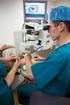 Wavefront-guided Excimer Laser Vision Correction After Multifocal IOL Implantation Bettina B. Jendritza, MD; Michael C. Knorz, MD; Steve Morton ABSTRACT PURPOSE: To investigate the use of wavefront-guided
ESCRS 2011 Complications after LASIK/PRK Dan Reinstein MD MA(Cantab) FRCSC FRCOphth
 Complications after LASIK or PRK: achieving excellent outcomes in therapeutic corneal refractive surgery Dan Reinstein, MD MA(Cantab) FRCSC DABO FRCOphth Introduction The options for repair of complications
Keratoconus Detection Using Corneal Topography
 Keratoconus Detection Using Corneal Topography Jack T. Holladay, MD, MSEE, FACS ABSTRACT PURPOSE: To review the topographic patterns associated with keratoconus suspects and provide criteria for keratoconus
final corrected draft
 Archived at the Flinders Academic Commons http://dspace.flinders.edu.au/dspace/ This is the author s final corrected draft of this article. It has undergone peer review. Citation for the publisher s version:
Refractive Surgery Issue. Inlays and Presbyopia: On the Horizon P. 24. Crack a SMILE or Raise a Flap? P. 30. LASIK Xtra: Who Should Get It? P.
 MULTIMODAL IMAGING OF PLACOID DISORDERS P. 42 WILLS RESIDENT CASE SERIES P. 67 NTG: THE NOCTURNAL BLOOD PRESSURE FACTOR P. 54 WISE CHOICES FOR OCULAR DIAGNOSES P. 50 NEW WAYS TO DETECT KERATOCONUS P. 58
A Contralateral, Randomized Comparison of Optimized Prolate Ablation and Conventional LASIK for Myopia With the NIDEK Excimer Laser Platform
 ORIGINAL ARTICLES A Contralateral, Randomized Comparison of Optimized Prolate Ablation and Conventional LASIK for Myopia With the NIDEK Excimer Laser Platform Alaa M. El Danasoury, MD, FRCS; Jack Holladay,
Clinical Study A Clinical and Confocal Microscopic Comparison of Transepithelial PRK and LASEK for Myopia
 Ophthalmology, Article ID 784185, 5 pages http://dx.doi.org/10.1155/2014/784185 Clinical Study A Clinical and Confocal Microscopic Comparison of Transepithelial PRK and LASEK for Myopia Safak Korkmaz,
How do we use the Galilei for cataract and refractive surgery?
 How do we use the Galilei for cataract and refractive surgery? Douglas D. Koch, MD Mariko Shirayama, MD* Li Wang, MD, PhD* Mitchell P. Weikert, MD Cullen Eye Institute Baylor College of Medicine Houston,
All surgical procedures have the potential for
 Laser in situ Keratomileusis Retreatment for Residual Myopia and Astigmatism Khaled M. Rashad, MD ABSTRACT PURPOSE: To evaluate the visual and refractive results of laser in situ keratomileusis (LASIK)
Femtosecond Laser versus Mechanical Keratome LASIK for Myopia
 Laser versus Mechanical Keratome for Myopia Robert Montés-Micó, PhD, 1,2,3 Antonio Rodríguez-Galietero, MD, PhD, 3 Jorge L. Alió, MD, PhD 2,4 Objective: To assess efficacy, safety, predictability, stability,
Corneal flap thickness with the Moria M2 single-use head 90 microkeratome
 Corneal flap thickness with the Moria M2 single-use head microkeratome Anne Huhtala, 1,2 Juhani Pietila, 1,2 Petri Ma kinen, 1,2 Sakari Suominen, 1,2 Matti Seppa nen 1,2 and Hannu Uusitalo 2,3 1 Mehila