
UNEP/GPA/IGR.3/6. United Nations Environment Programme
|
|
|
- Maximilian Carson
- 9 years ago
- Views:
Transcription
1 UNITED NATIONS EP UNEP/GPA/IGR.3/6 Distr.: General 26 January 2012 Original: English United Nations Environment Programme Intergovernmental Review Meeting on the Implementation of the Global Programme of Action for the Protection of the Marine Environment from Land-based Activities Third session Manila, 25 and 26 January 2012 Report of the third session of the Intergovernmental Review Meeting on the Implementation of the Global Programme of Action for the Protection of the Marine Environment from Land-based Activities Introduction 1. The third session of the Intergovernmental Review Meeting on the Implementation of the Global Programme of Action for the Protection of the Marine Environment from Land-based Activities was held pursuant to United Nations Environment Programme (UNEP) Governing Council decision 26/6 of 24 February 2011, by which the Governing Council requested the Executive Director to proceed with organizing the third session, working to ensure that participation was as broad as possible, and, to that end, urged all Governments to be actively involved in the intergovernmental review process and, where possible, to make financial contributions to defray costs associated with that meeting. 2. The third session of the Intergovernmental Review Meeting was held at the EDSA Shangri-La Hotel, Manila, on 25 and 26 January It consisted of a technical segment, held on 25 January, and a high-level segment, held on 26 January. Part One: Technical segment I. Opening of the technical segment 3. The technical segment was opened at a.m. on Wednesday, 25 January Opening statements were delivered by Ms. Amina Mohamed, Deputy Executive Director, UNEP, and Ms. Analiza Rebuelta Teh, Under-Secretary and Chief of Staff, Department of Environment and Natural Resources, Government of the Philippines. 4. The Deputy Executive Director, in her statement, welcomed the participants and thanked the Government and people of the Philippines for hosting the meeting. She said that UNEP and the Philippines enjoyed a long history of cooperation on environmental issues. Given its coastline of some 40,000 km, the Philippines had strongly advocated programmes related to coastal and marine issues, including the Global Programme of Action, and had made great strides in implementing the Programme at the national level. K

2 II. 5. The current session afforded an opportunity to discuss issues of consequence for all countries. Oceans had global relevance, even for countries lacking a coastline, given the significant role that they played in matters of worldwide importance, such as climate change and the long-distance transport of pollutants, and given the impact of land-based activities on the marine environment. Human activities on land, along with rising poverty and population growth, were placing increased pressure on the health of coastal and marine systems. At the second session of the Intergovernmental Review Meeting, held in Beijing in 2006, the participants had agreed that over the period the focus should be on mainstreaming the implementation of the Global Programme of Action within national development and budgetary mechanisms. In addition, in the Beijing Declaration on Furthering the Implementation of the Global Programme of Action they had urged that additional efforts should be made to address point and non-point sources of polluting nutrients. To support those aims, regional workshops had been organized to afford policymakers the opportunity to recognize the contribution by coastal and marine resources to national gross domestic product and livelihoods, and a number of countries had achieved progress in integrating the management of coastal and marine resources into wider national development frameworks. Lastly, outlining the various initiatives taking place globally, she said that it was important to sustain momentum to improve the health of oceans and coastal ecosystems. 6. In her statement, Ms. Teh said that at the recent Global Conference on Land-Ocean Connections the participants had recognized that there was a need to enhance the current approach to integrated coastal management by viewing it as an opportunity to achieve economic growth without compromising the environment. She drew attention to the recent UNEP report entitled Green Economy in a Blue World, which showed that green investments in the marine and coastal environment could result in economic and social benefits, including in such sectors as fisheries and aquaculture, maritime transport, marine-based renewable energy, coastal tourism and mineral exploitation. Noting that the focus of the second session of the Intergovernmental Review Meeting had been on mainstreaming the implementation of the Programme in national planning and budgetary mechanisms, she said that the current session would consider the role of the Programme as a strategic policy platform aimed at accelerating national implementation through integrated coastal management and other initiatives. Such a process would require further capacity-building, the development of global and regional partnerships, monitoring activities, access to financing mechanisms and the sharing of information across sectors. In conclusion, the key was to take local action to link the upstream and downstream dimensions on a large scale. 7. Following those statements, a certificate of recognition was presented to Mr. Alfred Duda, Senior Adviser, Global Environment Facility, for his contribution to the protection of the marine environment by securing funding through the international waters focal area of the Global Environment Facility. Organizational matters A. Election of officers 8. At the opening meeting of the technical segment, the following officers were elected, by acclamation, to the Bureau: Chair: Mr. Ramon J. P. Paje (Philippines) Vice-Chairs: Ms. Ydalia Acevedo (Dominican Republic) Ms. Natalia Tretiakova (Russian Federation) Ms. Rejoice Mabudafhasi (South Africa) Mr. Joe Murphy (United States of America) 9. Ms. Acevedo agreed to serve as rapporteur. B. Adoption of the agenda 10. The following agenda for the technical segment was adopted on the basis of the provisional agenda (UNEP/GPA/IGR.3/1), as orally amended: 1. Opening of the technical segment. 2. Organizational matters: (a) Election of officers; 2

3 (b) Adoption of the agenda; (c) Organization of work. 3. Global Conference on Land-Ocean Connections. 4. Review of implementation of the Global Programme of Action for the Protection of the Marine Environment from Land-based Activities at the international, regional and national levels. 5. Policy issues in relation to the further implementation of the Global Programme of Action. 6. Programme of work of the Global Programme of Action Coordination Office for Other matters. 8. Closure of the technical segment. 11. The following agenda for the high-level segment was adopted on the basis of the provisional agenda (UNEP/GPA/IGR.3/1), as orally amended: 1. Opening of the high-level segment. 2. Policy issues in relation to the further implementation of the Global Programme of Action. 3. Programme of work of the Global Programme of Action Coordination Office for Adoption of the ministerial declaration. 5. Adoption of the report of the session. 6. Closure of the session. C. Organization of work 12. As the session was convened under the auspices of the Governing Council of UNEP, the rules of procedure of the Governing Council applied, mutatis mutandis, to the proceedings. 13. The representatives agreed that the session should be divided into a technical segment, to be held on Wednesday, 25 January 2012, and a high-level segment, to be held on Thursday, 26 January The discussions would take the form of plenary meetings to be held from 10 a.m. to 1 p.m. and from 3 p.m. to 6 p.m. Working groups would be established as necessary, taking into account the needs of small delegations. D. Attendance 14. Representatives of the following States participated in the session: Algeria, Argentina, Austria, Bangladesh, Brazil, Burkina Faso, Burundi, Cambodia, Canada, Cape Verde, China, Colombia, Comoros, Côte d Ivoire, Cuba, Democratic Republic of the Congo, Dominican Republic, Ecuador, Egypt, Equatorial Guinea, Fiji, Germany, Georgia, Ghana, Grenada, Guinea-Bissau, Haiti, Iceland, India, Indonesia, Iraq, Japan, Kenya, Kiribati, Madagascar, Malaysia, Maldives, Mauritania, Mauritius, Mexico, Mozambique, Nepal, Netherlands, Nicaragua, Norway, Oman, Palau, Philippines, Republic of Korea, Russian Federation, Saint Lucia, Samoa, Seychelles, South Africa, Sri Lanka, Thailand, Togo, Tuvalu, United Republic of Tanzania, United States of America, Vanuatu, Viet Nam, Yemen and Zimbabwe. 15. An observer for Palestine also participated. 16. The following convention secretariats and United Nations bodies and specialized agencies were represented: Department of Economic and Social Affairs of the Secretariat, Office of Legal Affairs of the Secretariat, Economic and Social Commission for Asia and the Pacific, United Nations Development Programme, United Nations Educational, Scientific and Cultural Organization, United Nations Environment Programme, United Nations Human Settlements Programme (UN-Habitat), United Nations Office for Project Services and Secretariat of the Convention on Wetlands of International Importance Especially as Waterfowl Habitat. 17. The following intergovernmental organizations were represented: the Bay of Bengal Large Marine Ecosystem Project, the Global Environment Facility, the South Asia Cooperative Environment Programme and Water and Sanitation for Africa. 3

4 18. A number of non-governmental organizations and individuals were represented or attended (see UNEP/GPA/IGR.3/INF/1). III. IV. Global Conference on Land-Ocean Connections 19. Mr. Raphael Lotilla and Ms. Wendy Watson-Wright, the Co-Chairs of the Global Conference on Land-Ocean Connections held in Manila on 23 and 24 January 2012, presented a summary of the Conference (see UNEP/GPA/IGR.3/INF/14). 20. The representatives took note of the information provided. Review of implementation of the Global Programme of Action for the Protection of the Marine Environment from Land-based Activities at the international, regional and national levels 21. The representative of the secretariat drew attention to the note by the secretariat on progress in implementing the Global Programme of Action at the national, regional and international levels over the period (UNEP/GPA/IGR.3/2). 22. In the ensuing discussion, referring to wastewater management, a number of representatives highlighted the high cost of wastewater treatment. One said that the Programme should promote the development of inexpensive treatment technologies. Another called for the provision of guidance in developing low-cost options for tackling wastewater pollution and for information on sound management practices so as to raise public awareness of the issue. As to marine litter, one representative stressed the important role of UNEP in providing institutional support mechanisms and in mobilizing financial resources. Rather than developing new policy initiatives, those already in place should be reviewed and made more effective, and resources should be allocated to implementing pilot projects where most needed. 23. The representatives took note of the information provided. V. Policy issues in relation to the further implementation of the Global Programme of Action 24. The representative of the secretariat drew attention to the note by the secretariat on policy guidance for implementing the Global Programme of Action over the period (UNEP/GPA/IGR.3/3). 25. In the ensuing discussion, emphasis was laid on the establishment of global partnerships focusing on particular pollution source areas nutrients, wastewater and marine litter with general support expressed for their aims. One representative said that they would facilitate the best use of resources and have a greater impact on the implementation of the Global Programme of Action. 26. Several representatives drew attention to specific threats to the marine and coastal environment. One warned of the dangers posed by the transport of hazardous materials and the dumping of electronic waste in developing countries. Developed countries should control the export of wastes and ensure that they were treated or managed at source, where sufficient capacity existed. The Global Programme of Action and other stakeholders should assist developing countries in properly disposing of stocks and in taking steps to control imports. Another drew attention to the problems caused by mines, stressing that marine life had to be protected, and a third said that small island States were threatened by pollution and called for efforts to combat that scourge to be prioritized in the Programme. Yet another called for assistance and advice to be provided to his Government in the face of the problems that it was experiencing with marine litter and wastewater treatment, among other issues. 27. A number of representatives expressed support for the idea of prioritizing the Programme s source categories in order to guide resource mobilization and expenditure. One welcomed the emphasis laid on marine litter and warned of the dangers of physical alteration and destruction of habitats, while another endorsed integrated coastal management and ecosystem-based approaches and called for developed countries to provide technology and grants to developing countries on non-commercial terms so that the world could become free of waste as soon as possible. A third said that nutrients, wastewater and marine litter should be the priority source categories for the period One lauded the emphasis laid on efficiency in the use of resources and the need to reduce pollution, suggesting that reference should be made to the need to change unsustainable consumption 4

5 VI. UNEP/GPA/IGR.3/6 and production patterns with a view to reducing pollution and improving the use of ecosystem resources. Another suggested that ship-breaking should be included in the list of source categories, given that it was an activity carried out in coastal zones and was highly polluting. 28. One representative described a partnership between an agency of his Government and the Global Programme of Action to assist other countries, while another advocated the effective implementation of relevant international conventions, including those on the marine and coastal environment and on ballast water. A third called for cooperation at multiple levels to reach a common solution, saying that, rather than merely raising public awareness, there was a need to build capacity and to offer people an alternative lifestyle that would draw them away from activities causing pollution. One representative described work undertaken by his Government to implement its national programme of action and offered to share its experience in that regard with a view to successful replication in other countries. 29. One representative said that the important link between water quality and its impact on human health should be better affirmed. Through the partnerships established under the Global Programme of Action, such as those on nutrients and wastewater partnerships, the Programme should clearly demonstrate the importance of ecosystem-based approaches to managing coastal areas and water resources. 30. Some discussion took place regarding the establishment of a Bureau at the current session that would continue to function after the session and would play a role in receiving regular reports from the partnerships and in providing a conduit back to them. One representative welcomed the proposal while cautioning that funding for the Bureau should come from existing resources or voluntary contributions and that its establishment should not detract from the implementation of the work programme. Another said that the Bureau would enable countries to take stock of progress between global meetings and tackle emerging issues in a timely manner. 31. The representatives took note of the information provided. Programme of work of the Global Programme of Action Coordination Office for A. Programme of work 32. The representative of the secretariat drew attention to the note by the secretariat on the proposed programme of work of the Global Programme of Action Coordination Office for (UNEP/GPA/IGR.3/4). 33. In the ensuing discussion, one representative, while expressing support for the focus on nutrient management, marine litter and wastewater management, said that physical alteration and destruction of habitat was another threat meriting urgent attention. In addition, the Global Programme of Action should provide greater guidance to assist countries in implementing their national programmes of action, in particular with regard to setting clear goals and objectives and involving stakeholders in programme design and direction. He expressed support for the concept of ecosystem service valuation, while saying that the development of methodologies for valuation would be better achieved through partnership with experts with appropriate skills. 34. Another representative proposed some readjustment of the activities for the three priority areas and urged caution in ensuring an efficient distribution of work between the Coordination Office and the Bureau. A third said that explicit mention should be made of the role of the private sector in implementing all priority areas of the programme of work, including through the development of incentives to encourage the private sector to adopt more environmentally friendly practices. 35. With regard to nutrients, one representative favoured the proposal to set targets for their use. Others, however, expressed misgivings, saying that targets should be set by countries or through binding mechanisms or regional arrangements, where appropriate, rather than in the Programme. 36. Resource availability was raised as a key concern. One representative called upon developed countries to provide financial assistance and waste treatment technologies for developing countries. Another called on the private sector to invest in environmentally friendly technologies, within the framework of the green economy. A third expressed concern at the financial implications of the implementation of the programme of work, urging fiscal restraint. He welcomed UNEP efforts to maintain staffing at previous levels. 5

6 B. Draft ministerial declaration 37. The representative of the secretariat drew attention to a conference room paper containing a draft ministerial declaration. 38. Following an initial discussion of the draft declaration in plenary meeting, the representatives agreed to establish a drafting group, chaired by the representative of the Philippines, to finalize the draft declaration for consideration during the high-level segment. VII. VIII. Other matters 39. No other matters were discussed. Closure of the technical segment 40. The technical segment was declared closed at 5.50 p.m. Part Two: High-level segment I. Opening of the high-level segment 41. The high-level segment was opened at a.m. on Thursday, 26 January Opening statements were delivered by Ms. Amina Mohamed, Deputy Executive Director, UNEP, and Mr. Ramon J. P. Paje, Secretary of Environment and Natural Resources of the Philippines, on behalf of Mr. Benigno Simeon Cojuangco Aquino III, President of the Philippines. 42. The Deputy Executive Director, in her statement, welcomed representatives and thanked the Government and people of the Philippines for their hospitality. She expressed appreciation to the Governments of Italy, the Netherlands, Norway, Sweden and the United States of America for their financial support, including for facilitating the attendance of representatives of developing countries. The current session was aimed at consolidating the gains achieved to date by the Global Programme of Action and at charting the way forward, while keeping in mind the common purpose of protecting the environment while facilitating sustainable growth. She summarized the progress that had been made at the previous sessions of the Intergovernmental Review Meeting, out of which had grown the current focus on sustaining collective efforts to accelerate the implementation of the Programme at the national level through integrated coastal management using a results-based approach. 43. While various initiatives to protect coastal and marine ecosystems had been launched globally, those ecosystems continued to be negatively affected by such factors as nutrient and wastewater discharges and marine litter. New conceptual approaches were required, for example through exploration of the links between coastal ecosystem management and the green economy, recognizing that improvement in the quality of the environment went hand in hand with social and economic development. Such a wide-ranging agenda required the adoption of a multi-stakeholder approach, bringing together Governments, the private sector, academic institutions, civil society and others. Such partnerships would assist in the sharing of best practices, technology transfer and the setting up of pilot projects, with the support of UNEP and the Global Programme of Action. That support would be facilitated by the proposed establishment of a Bureau of regional representatives tasked to oversee the implementation of the Programme during the intersessional period. In conclusion, she stressed that, while the world faced considerable uncertainty, including financial turmoil, it should not be forgotten that the protection of fragile ecosystems and diminishing species was just as important as the protection of fragile economies. 44. The President of the Philippines, in a statement delivered by Mr. Paje, praised the rigorous and fruitful discussion at the Global Conference on Land-Ocean Connections and at the technical segment. The active engagement of representatives from a wide range of sectors, including scientists, policymakers and members of civil society, was vital for the successful implementation of the Global Programme of Action. Various innovative solutions to coastal and marine issues were emerging from that exchange of ideas, as were promising approaches, including regional seas management and valuation of coastal and marine ecosystem services. Such developments were of particular significance in the lead-up to the United Nations Conference on Sustainable Development, to be held in Rio de Janeiro, Brazil, in June The Global Environment Facility and United Nations agencies had a significant role to play in forging an agenda that connected upstream and downstream management and in developing a policy-driven, ecosystem-based coastal planning and management framework. A more flexible outlook was required, based less on previous sectoral divisions and more on partnership, 6

7 including at the regional level. In conclusion, he noted that the ministerial declaration that would emerge from the current session would embody the commitments and principles of the Global Programme of Action and express the resolve to take the necessary action to protect the marine environment from land-based activities. II. Policy issues in relation to the further implementation of the Global Programme of Action 45. The Deputy Executive Director delivered a policy statement in which she said that the Global Programme of Action specifically tasked national Governments to oversee its implementation through intergovernmental review, as at the current session. Between scheduled meetings, however, Governments could discuss emerging issues intersessionally, since such activities could contribute to more coordinated actions among countries in discharging their responsibilities under the Programme. While Governments had put great effort into the implementation of the Programme, the time was ripe to demonstrate specific impacts through focused efforts by multiple stakeholders to attain common targets. Prioritization was necessary to achieve those targets, and the programme of work had identified the management of nutrients, marine litter and wastewater discharge as meriting particular attention, given their contribution to the degradation of the marine and coastal environment and the fact that they were areas where the interests of stakeholders converged. Various initiatives and programmes on coastal zone management at the national and regional levels were increasingly adopting the approaches advocated by the Global Programme of Action, and those efforts should be consolidated to achieve demonstrable outcomes. 46. Following that policy statement, the representative of the secretariat drew attention to the note by the secretariat on policy guidance for implementing the Global Programme of Action over the period (UNEP/GPA/IGR.3/3). 47. In the ensuing discussion, all the representatives who spoke thanked the Government and people of the Philippines for their hospitality in hosting the current session. Many expressed wholehearted support for the Global Programme of Action and welcomed the focus in the programme of work for the coming five years on the three key pollutant sources: nutrients, marine litter and wastewater. One noted that that focus reflected her country s experience in a difficult economic climate where it was necessary to concentrate resources on those pollutants that posed the greatest threat to coastal resources. 48. Appreciation was also expressed for the emphasis on the development of partnerships to promote the priorities of the programme of work, dissemination of knowledge and capacity-building. It was noted that key stakeholders, including the private sector and civil society, should be involved to ensure the effective implementation of the Programme. One representative suggested that the Programme should not set specific targets for effluent reduction and should remain non-binding; targets were better defined at the national level or through regional agreements. 49. A number of representatives expressed appreciation for the proposal to establish a Bureau to maintain and oversee implementation of the Programme during intersessional periods. One called for the Programme s clearing-house mechanism to be used to disseminate key guidance documents, share best practices and demonstrate lessons learned in the implementation of the Programme. 50. Several representatives gave examples of progress in their countries, including the development of a green economy approach to tackling coastal pollution and the integration of pollution prevention into national planning. One drew attention to the advantages of the green economy in terms of recycling pollutants and reducing waste generation. Another spoke in support of the Honolulu Commitment, calling for further steps to tackle the problem of plastic marine litter, such as turning that waste product into a resource and setting targets for its reduction. 51. Other representatives raised issues facing their countries in tackling freshwater and coastal and marine water degradation. A number, including representatives of landlocked countries, called for better management of upstream freshwater sources as recommended at the Global Conference on Land-Ocean Connections. Several representatives of developing countries raised the issue of their insufficient capacity to deal with coastal pollution resulting from uncontrolled urbanization and the dumping of toxic waste, calling for the pooling of efforts through partnerships and cooperation to find economic and environmentally sound solutions. To that end, one representative recommended that regional development banks should be involved in future sessions of the Intergovernmental Review Meeting. Others highlighted the need for training and education and expressed appreciation for assistance already received under the Programme in that area. 7

8 52. A number of representatives drew attention to other areas that they wished to see better covered under the Programme, such as the link between water quality and its impact on human health, which was a significant and costly problem worldwide; the illegal dumping of hazardous chemicals and wastes, including nuclear waste and electronic wastes, which were other major sources of pollution; transboundary pollution from sources such as mining; and the introduction of alien invasive species into marine waters by means of sewage and freshwater sources. 53. The representatives took note of the information provided. III. IV. Programme of work of the Global Programme of Action Coordination Office for The representative of the secretariat described the proposed programme of work of the United Nations Environment Programme Global Programme of Action Coordination Office for (UNEP/GPA/IGR.3/4). 55. The representatives decided that important elements from that document had been well reflected in the ministerial declaration and that the declaration would serve as a guide to the Global Programme of Action Coordination Office in developing projects and activities. Adoption of the ministerial declaration 56. The chair of the drafting group established during the technical segment presented the draft ministerial declaration. 57. The Manila Declaration on Furthering the Implementation of the Global Programme of Action for the Protection of the Marine Environment from Land-based Activities, as adopted, is set out in the annex to the present report. V. Adoption of the report of the session 58. The representatives adopted the present report on the basis of the draft circulated during the session, on the understanding that it would be finalized by the Rapporteur, in consultation with the Chair and with the assistance of the secretariat. VI. Closure of the session 59. Following the customary exchange of courtesies, the session was declared closed at 7 p.m. on Thursday, 26 January

9 Annex UNEP/GPA/IGR.3/6 Manila Declaration on Furthering the Implementation of the Global Programme of Action for the Protection of the Marine Environment from Land-based Activities We, the representatives of 64 Governments and the European Commission, with the valued support and concurrence of representatives of international financial institutions, international and regional organizations, the private sector, non-governmental organizations, other stakeholders and major groups, Having met in Manila from 25 to 26 January 2012 at the third session of the Intergovernmental Review Meeting on the Implementation of the Global Programme of Action for the Protection of the Marine Environment from Land-based Activities, Recognizing that all people depend on the oceans and coasts and their resources for their survival, health and well-being, that a substantial proportion of the world s population derives its food security and economic livelihood from the coastal environment and marine resources such as fisheries and shellfish from highly productive coastal and estuary zones, Recognizing that marine and coastal ecosystems, in particular those of low-lying coastal areas and small island developing States, are vulnerable to rising sea levels, climate-related natural disasters and ocean acidification resulting from land-based activities, Acknowledging the large increases of nutrients such as nitrogen and phosphorus entering the world s environment as a result of human activity and noting the severity of the environmental problems caused by nutrient excess, including eutrophication of coastal waters and oxygen depletion, and the associated damage to ecosystems, biodiversity and coastal water quality, Noting the rapid growth of urban areas on coasts and the fact that the major threats to the health, productivity and biodiversity of the marine environment result from human activities on land, Recognizing that sewage and wastewater, persistent organic pollutants, heavy metals, oils (hydrocarbons), nutrients, sediments and marine litter, whether carried by rivers or discharged directly into coastal areas, take a severe toll on human health and well-being and on coastal and marine ecosystems and food and services they provide, Recognizing that marine litter is a problem, that is global in scale and underestimated in impact and that it directly threatens coastal and marine habitats and species, economic growth, human health and safety, and societal values and that a significant portion of marine litter originates from landbased activities; that movement of litter and debris, exacerbated by storm events, have significant impacts on the marine environment, as do ship-based activities, Recognizing also that the marine environment is threatened through, in particular, loss of marine biodiversity and marine ecosystems by physical alterations of the coastal zone, poor land use planning and socioeconomic pressures including destruction of habitats of vital importance to maintaining ecosystem health, as well as ecosystem goods and services provided by ecosystems such as coral reefs, coastal tidal flats, deltas, mangroves, seagrass beds and estuaries, Recognizing further the intrinsic value, and links between marine, coastal and freshwater ecosystems and human well-being and the need for integrated watershed and coastal management in efforts to achieve the effective sustainable management of land-based activities, including the incorporation of the value of ecosystem services into planning processes, Acknowledging that the Global Programme of Action is an effective tool for integrating environmental concerns into development planning and strategies at the international, regional and national levels and that, as such, it contributes substantially to the attainment of internationally agreed development goals, including the Millennium Development Goals, Recognizing the lack of capacities in science and technology and the need for integration of research, education, and extension advisory services, in particular of developing countries, as tools to build capacity to sustain the ability to address land-based activities that affect the marine environment, Recognizing the importance of the existing Regional Seas Conventions and Action Plans in tackling the accelerating degradation of the world s oceans and coastal areas, and in this regard engaging concerned countries in comprehensive and specific actions on land-based sources and activities, and through integrated coastal zone management, among other things, 9

10 10 Recognizing also the important contributions of the regional seas programmes, the Global Environment Facility and international financial institutions in implementing the Global Programme of Action, Recognizing further the achievements in the implementation of the Global Programme of Action over the period and, in particular, the contribution of the Global Programme of Action Coordination Office in the Freshwater and Marine Ecosystems Branch of the United Nations Environment Programme s Division of Environmental Policy Implementation, Recognizing the importance of improved coastal water quality and the need for improved monitoring to identify threats to the marine environment at the regional, national and local levels, as encouraged by the Regular Process for Global Reporting and Assessment of the State of the Marine Environment, including socio-economic aspects, Recognizing that litter does not belong to the sea and therefore emphasizing the relevance of the Honolulu Commitment endorsed at the 5 th International Marine Debris Conference, and the Honolulu Strategy, Recognizing also the significant progress made by some countries in building both human and institutional capacity and developing legislative frameworks, environmental policies and market-based instruments in context of a proper regulatory framework that protects public interest for the sustainable management of fisheries, marine resources and the coastal environment, Emphasizing also the need to support and enhance developing countries capacity to manage marine and coastal ecosystem sustainably in the context of the Bali Strategic Plan for Technology Support and Capacity Building, Acknowledging the important contribution of multi-stakeholder partnerships, including the importance of public-private partnerships, and United Nations inter-agency partnerships in the implementation of the Global Programme of Action and in the implementation of intergovernmental commitments to advance action on the Millennium Development Goals, Stressing the importance of marine and coastal ecosystems and biodiversity to the mitigation of and adaptation to climate change, by identifying and addressing the underlying drivers of marine and coastal ecosystem loss and destruction, and improving the sustainable management of coastal and marine areas, Recalling the 2009 Manado Declaration, UNEP Governing Council decision GC SS.XI/6 on Oceans and other global initiatives to tackle marine and coastal ecosystem loss and destruction and the need to achieve long term conservation, management and sustainable use of marine living resources and coastal habitats to, inter alia, increase climate resiliency, achieve global food security and reduce poverty, Acknowledging the importance of the upcoming Conference on Sustainable Development to be held in Rio de Janeiro on 20 to 22 June Stress the commitment to the implementation of the Global Programme of Action on the Protection of the Marine Environment from Land-based Activities at the international, regional and national levels as a flexible and effective tool for the sustainable development of oceans, coasts and islands, and for human health and well-being; 2. Resolve to commit to comprehensive, continuing and adaptive action within a framework of integrated coastal management relevant to respective national and regional priorities; 3. Dedicate ourselves to furthering the implementation of the Global Programme of Action with a focus on the identified priorities for the period and invite additional efforts and adequate voluntary financial resources to expedite the implementation of the Global Programme of Action for ; 4. Decide actively to engage ourselves and step up our efforts to develop guidance, strategies or policies on the sustainable use of nutrients so as to improve nutrient use efficiency with attendant economic benefits for all stakeholders, including farmers, and to mitigate negative environmental impacts through the development and implementation of national goals and plans over the period , as necessary; 5 Decide that the GPA Coordination Office in the period should focus its work on nutrients, litter and wastewater as the three priority source categories for the GPA, using global multi-stakeholder partnerships; and request the Coordination Office to develop its activity plan on the basis of these strategic directions.

11 (a) Decide to support the further development of the Global Partnership on Nutrient Management and associated regional and national stakeholder partnerships, as well as their activities, including assessments as agreed by the partnership, and sharing of best practices using extension and advisory services for policy makers and farmers (b) Further decide to work with all stakeholders concerned to find innovative solutions and initiatives to the marine litter problem, including by sharing best practices, technical information about capacity building, and legal, policy, community-based, economic and market-based means of preventing, reducing and managing marine litter, and recommend the establishment of a global partnership on marine litter; (c) Decide to support the further development of the global partnership on wastewater and share among stakeholders information, lessons learned and best practices for wastewater management, including sound technologies that do not adversely affect the environment and biodiversity, and resource reduction, reuse and recycling approaches for the purposes of environmental protection, sanitation and human health, climate change and nutrient benefits so as to prompt coordinated action, and encourage new investments in wastewater management that meets these objectives 6. Also decide to consider using the GPA as a platform to promote delta management through delta and inter-delta cooperation schemes and to support a proposal to declare an international year of deltas in the near future; 7. Decide to improve cooperation and coordination at all levels to deal with issues related to oceans, coasts, islands and their associated watersheds, by applying integrated management such as ridge to reef approaches, including by involving stakeholders and developing innovative solutions to improve or resolve identified problems; 8. Welcome the Regular Process for Global Reporting and Assessment of the State of the Marine Environment, including socio-economic aspects, to strengthen the regular scientific assessment of the state of the marine environment in order to enhance the scientific basis for policy making at global, regional and national levels; 9. Decide to strengthen and promote the implementation of existing Regional Seas Conventions and Action Plans, and other relevant global and regional arrangements, agreements and programmes for the protection of the marine and coastal environment, with a view to further the implementation of the Global Programme of Action; 10. Invite United Nations agencies, funds and programmes, United Nations inter-agency groups, such as the coordination mechanism on ocean and coastal issues within the United Nations system (UN-Oceans) and the coordination mechanism on water resources (UN-Water), the United Nations Development Group and multilateral environmental agreements to strengthen the integration of the Global Programme of Action into their policies, plans and programmes, consistent with their mandates; 11. Also invite the Global Environment Facility, other global and regional financial institutions, development partners and donor countries, to make coordinated efforts to support countries, especially developing countries and countries with economy in transition, in the implementation of the Global Programme of Action through financial and technical support and capacity building; 12. Express appreciation for the efforts of the United Nations Environment Programme in supporting the Global Programme of Action Coordination Office and expediting the implementation of the Global Programme of Action, and welcome additional extrabudgetary resources to support UNEP s work in this regard; 13. Request the Executive Director of the United Nations Environment Programme to forward the present political declaration to the United Nations Environment Programme Governing Council/Global Ministerial Environment Forum and the United Nations Conference on Sustainable Development as a contribution by the GPA IGR-3 to the deliberations on sustainable development; 14. Also request the Executive Director of the United Nations Environment Programme to convene the Fourth Intergovernmental Review Meeting on the Implementation of the Global Programme of Action for the Protection of the Marine Environment from Land-based Activities in 2016 in collaboration with the relevant organizations and institutions, and to seek the support of the United Nations Environment Programme Governing Council/Global Ministerial Environment Forum in organizing the meeting; 11

12 15. Decide that governments provide technical and policy guidance to the GPA coordination office during the intersessional period of , as necessary; 16. Express our gratitude and appreciation to the Government and people of the Philippines for hosting the third session of the Intergovernmental Review Meeting on the Implementation of the Global Programme of Action for the Protection of the Marine Environment from Land-based Activities. Manila on 26 January

International environmental governance. Bali Strategic Plan for Technology Support and Capacity-building
 UNITED NATIONS UNEP/GC.23/6/Add.1 EP Governing Council of the United Nations Environment Programme Distr.: General 23 December 2004 Original: English Twenty-third session of the Governing Council/ Global
MINISTERIAL MEETING OF THE BLUE WEEK 2015
 5 JUNE 2015 MINISTERIAL MEETING OF THE BLUE WEEK 2015 We, Ministers responsible for Ocean/ Fisheries/ Maritime Affairs, having met in Lisbon on June the 5 th, 2015, at the invitation of the Minister of
UNITED NATIONS ENVIRONMENT PROGRAMME. Environment for Development
 UNITED NATIONS ENVIRONMENT PROGRAMME Environment for Development UNEP is the voice for the environment within the United Nations system UNEP s mission is to provide leadership and encourage partnership
Original: English Rio de Janeiro, Brazil 20-22 June 2012
 United Nations A/CONF.216/5* Distr.: General 19 June 2012 Original: English Rio de Janeiro, Brazil 20-22 June 2012 Item 10 of the provisional agenda** Outcome of the Conference Letter dated 18 June 2012
Marine biological diversity beyond areas of national jurisdiction. Legal and policy framework
 Marine biological diversity beyond areas of national jurisdiction Legal and policy framework 1. The United Nations Convention on the Law of the Sea (UNCLOS) provides the legal framework within which all
Proforma Cost for international UN Volunteers for UN Partner Agencies for 2016. International UN Volunteers (12 months)
 Proforma Cost for international UN Volunteers for UN Partner Agencies for 2016 Country Of Assignment International UN Volunteers (12 months) International UN Youth Volunteers (12 months) University Volunteers
Key Recommendations of CVF Regional Activities
 Key Recommendations of CVF Regional Activities The Forum is currently meeting through regional-level activities since 2014, which produce recommendations in preparation for the UNFCCC Conference of Parties
Harmful substances and hazardous waste
 Harmful substances and hazardous waste United Nations Environment Programme An overview Chemicals are an integral part of everyday life. There are over 100,000 different substances in use today. They play
Resolution XII.13. Wetlands and disaster risk reduction
 12 th Meeting of the Conference of the Parties to the Convention on Wetlands (Ramsar, Iran, 1971) Punta del Este, Uruguay, 1-9 June 2015 Resolution XII.13 Wetlands and disaster risk reduction 1. RECALLING
How To Help Oceans
 The World Bank & the Ocean A Healthy & Productive Ocean to Help Reduce Poverty Why oceans matter to the World Bank NUTRITION Seafood provides 16% of the world s animal protein 1 billion people in developing
Coral Triangle Initiative (CTI) on Coral Reefs, Fisheries and Food Securities
 2008/MRCWG/022 Agenda Item: 10 Coral Triangle Initiative (CTI) on Coral Reefs, Fisheries and Food Securities Purpose: Information Submitted by: Indonesia 21 st Marine Resource Conservation Working Group
Wealth Accounting and Valuation of Ecosystem Services (WAVES): a Global Partnership. Natural Capital Accounting for Sustainable Development
 Wealth Accounting and Valuation of Ecosystem Services (WAVES): a Global Partnership Natural Capital Accounting for Sustainable Development WAVES Implementation and Funding Partnership Core Implementing
Ministerial Declaration of The Hague on Water Security in the 21st Century
 Ministerial Declaration of The Hague on Water Security in the 21st Century 1. Water is vital for the life and health of people and ecosystems and a basic requirement for the development of countries, but
I. Organizational issues in the field
 Report of the Conference of the Parties of the Stockholm Convention on Persistent Organic Pollutants on the work of its fourth meeting (UNEP/POPS/COP.4/38) (Extract) SC-4/34: Enhancing cooperation and
Nuclear Security Plan 2014 2017
 Atoms for Peace Board of Governors General Conference GOV/2013/42-GC(57)/19 Date: 2 August 2013 For official use only Item 4(b) of the Board s provisional agenda (GOV/2013/37) Item 16 of the Conference's
Bangladesh Visa fees for foreign nationals
 Bangladesh Visa fees for foreign nationals No. All fees in US $ 1. Afghanistan 5.00 5.00 10.00 2. Albania 2.00 2.00 3.00 3. Algeria 1.00 1.00 2.00 4. Angola 11.00 11.00 22.00 5. Argentina 21.00 21.00 42.00
Plan for the Establishment of ASEM Water Resources Research and Development Center
 2011/05/04 Plan for the Establishment of ASEM Water Resources Research and Development Center I. Background As one of the fundamental natural resources and strategic economic resources, and a key component
Countries Ranked by Per Capita Income A. IBRD Only 1 Category iv (over $7,185)
 Page 1 of 5 Note: This OP 3.10, Annex C replaces the version dated September 2013. The revised terms are effective for all loans that are approved on or after July 1, 2014. Countries Ranked by Per Capita
Biological Diversity and Tourism: Development of Guidelines for Sustainable Tourism in Vulnerable Ecosystems
 Biological Diversity and Tourism: Development of Guidelines for Sustainable Tourism in Vulnerable Ecosystems Secretariat of the Convention on Biological Diversity Foreword The rapid and often uncontrolled
Resolution adopted by the General Assembly. [without reference to a Main Committee (A/64/L.43 and Add.1)]
![Resolution adopted by the General Assembly. [without reference to a Main Committee (A/64/L.43 and Add.1)]](/thumbs/26/9256534.jpg "Resolution adopted by the General Assembly. [without reference to a Main Committee (A/64/L.43 and Add.1)]") United Nations A/RES/64/251 General Assembly Distr.: General 30 April 2010 Sixty-fourth session Agenda item 70 (a) Resolution adopted by the General Assembly [without reference to a Main Committee (A/64/L.43
United Nations A/RES/64/251 General Assembly Distr.: General 30 April 2010 Sixty-fourth session Agenda item 70 (a) Resolution adopted by the General Assembly [without reference to a Main Committee (A/64/L.43
A/58/210. General Assembly. United Nations
 United Nations General Assembly Distr.: General 1 August 2003 Original: English A/58/210 Fifty-eighth session Item 97 of the provisional agenda* Implementation of Agenda 21, the Programme for the Further
How To Be Sustainable With Tourism
 QUÉBEC DECLARATION ON ECOTOURISM In the framework of the UN International Year of Ecotourism, 2002, under the aegis of the United Nations Environment Programme (UNEP) and the World Tourism Organization
REPORT OF THE CONFERENCE OF THE PARTIES ON ITS SEVENTH SESSION, HELD AT MARRAKESH FROM 29 OCTOBER TO 10 NOVEMBER 2001 Addendum
 UNITED NATIONS Distr. GENERAL FCCC/CP/2001/13/Add.1 21 January 2002 Original: ENGLISH CONFERENCE OF THE PARTIES REPORT OF THE CONFERENCE OF THE PARTIES ON ITS SEVENTH SESSION, HELD AT MARRAKESH FROM 29
Eligibility List 2015
 The Global Fund adopted an allocation-based approach for funding programs against HIV/AIDS, TB and malaria in 2013. The Global Fund policy states that countries can receive allocation only if their components
SECTOR ASSESSMENT (SUMMARY): CLIMATE CHANGE. 1. Sector Performance, Problems, and Opportunities
 Climate Resilience Sector Project (RRP TON 46351) Sector Road Map SECTOR ASSESSMENT (SUMMARY): CLIMATE CHANGE 1. Sector Performance, Problems, and Opportunities 1. Tonga is being affected by climate change,
FCCC/SBI/2012/L.44. United Nations
 United Nations FCCC/SBI/2012/L.44 Distr.: Limited 1 December 2012 Original: English Subsidiary Body for Implementation Thirty-seventh session Doha, 26 November to 1 December 2012 Agenda item 10 Approaches
Applying Knowledge Management to Scale up Partnership Investments
 Applying Knowledge Management to Scale up Partnership Investments for Sustainable Development of Large Marine Ecosystems of East Asia and Their Coasts Project Title Applying Knowledge Management to Scale
United Nations General Assembly A/CONF.167/9
 United Nations General Assembly A/CONF.167/9 Distr. GENERAL October 1994 ORIGINAL: ENGLISH Global Conference on the Sustainable Development of Small Island Developing States REPORT OF THE GLOBAL CONFERENCE
Ref.: SCBD/MPO/AF/CR/84948 31 August 2015 N O T I F I C A T I O N. Preparation for the United Nations Sustainable Development Summit 2015
 Ref.: SCBD/MPO/AF/CR/84948 31 August 2015 Dear Madam/Sir, N O T I F I C A T I O N Preparation for the United Nations Sustainable Development Summit 2015 I am pleased to inform you that the President of
International cooperation in the peaceful uses of outer space
 United Nations A/RES/69/85 General Assembly Distr.: General 16 December 2014 Sixty-ninth session Agenda item 49 Resolution adopted by the General Assembly on 5 December 2014 [on the report of the Special
Expression of Interest in Research Grant Applications
 INTERNATIONAL CENTRE FOR GENETIC ENGINEERING AND BIOTECHNOLOGY THE ACADEMY OF SCIENCES FOR THE DEVELOPING WORLD UNITED NATIONS EDUCATIONAL, SCIENTIFIC AND CULTURAL ORGANIZATION ICGEB-TWAS-UNESCO/IBSP Joint
COMMISSION IMPLEMENTING DECISION. of 24.5.2016
 EUROPEAN COMMISSION Brussels, 24.5.2016 C(2016) 3040 final COMMISSION IMPLEMENTING DECISION of 24.5.2016 amending Commission Implementing Decision C(2015) 8936 of 15.12.2015 on the financing of humanitarian
Hong Kong Declaration on Sustainable Development for Cities
 Hong Kong Declaration on Sustainable Development for Cities 1. We, the representatives of national and local governments, community groups, the scientific community, professional institutions, business,
Action required The Committee is requested to take note of the position of 2010 11 income and expenditure as of 30 September 2010.
 INTERNATIONAL LABOUR OFFICE Governing Body 309th Session, Geneva, November 2010 Programme, Financial and Administrative Committee GB.309/PFA/1 PFA FOR INFORMATION FIRST ITEM ON THE AGENDA Programme and
OUTLINE. Source: 36 C/Resolution 16, 190 EX/Decision 9 and 192 EX/Decision 6.
 37th Session, Paris, 2013 37 C 37 C/57 4 November 2013 Original: English Item 5.19 of the provisional agenda PROPOSAL FOR A GLOBAL ACTION PROGRAMME ON EDUCATION FOR SUSTAINABLE DEVELOPMENT AS FOLLOW-UP
Demonstration Site Concept
 The Sustainable Financing and Management of Eastern Caribbean Marine Ecosystems Project Demonstration Site Concept Woburn Clarkes Court Bay Marine Protected Area Improving Water Quality in Marine Protected
Advance unedited version. Decision -/CP.13. Bali Action Plan
 The Conference of the Parties, Decision -/CP.13 Bali Action Plan Resolving to urgently enhance implementation of the Convention in order to achieve its ultimate objective in full accordance with its principles
KYOTO PROTOCOL STATUS OF RATIFICATION
 KYOTO PROTOCOL STATUS OF RATIFICATION Notes: R = Ratification At = Acceptance Ap = Approval Ac = Accession 1. ALBANIA ----- 01/04/05 (Ac) 30/06/05 2. ALGERIA ---- 16/02/05 (Ac) 17/05/05 3. ANTIGUA AND
Senate Committee: Education and Employment. QUESTION ON NOTICE Budget Estimates 2015-2016
 Senate Committee: Education and Employment QUESTION ON NOTICE Budget Estimates 2015-2016 Outcome: Higher Education Research and International Department of Education and Training Question No. SQ15-000549
Mineral Industry Surveys
 4 Mineral Industry Surveys For information contact: Robert L. Virta, Asbestos Commodity Specialist U.S. Geological Survey 989 National Center Reston, VA 20192 Telephone: 703-648-7726, Fax: (703) 648-7757
THE NAIROBI WORK PROGRAMME ON IMPACTS, VULNERABILITY AND ADAPTATION TO CLIMATE CHANGE UNFCCC THE NINE WORK AREAS OF THE NAIROBI WORK PROGRAMME
 ON IMPACTS, VULNERABILITY AND ADAPTATION TO CLIMATE CHANGE 1 METHODS AND TOOLS WHAT IS? The Nairobi work programme, under the United Nations Framework Convention on Climate Change (), aims to assist countries
Water Security : Experts Propose a UN Definition on Which Much Depends
 Embargo: 9 am EDT, Friday March 22 World Water Day 2013 International Year of Water Cooperation Contacts: Mr. Terry Collins, +1-416-538-8712; +1-416-878-8712; [email protected] Advance interviews are available.
Aquatic Ecosystems Restoration
 Presenter s name Aquatic Ecosystems Restoration Lessons Learned from Asian Development Bank Operations Qingfeng Zhang, Senior Water Resources Engineer Asian Development Bank This Presentation will discuss
EIGHTH SESSION OF THE OPEN WORKING GROUP ON SUSTAINABLE DEVELOPMENT GOALS
 EIGHTH SESSION OF THE OPEN WORKING GROUP ON SUSTAINABLE DEVELOPMENT GOALS New Zealand intervention in segment on Oceans and Seas Stephanie Lee, Chargé d'affaires a.i. 4 February 2014 Check against delivery
OFFICIAL NAMES OF THE UNITED NATIONS MEMBERSHIP
 OFFICIAL NAMES OF THE UNITED NATIONS MEMBERSHIP Islamic Republic of Afghanistan Republic of Albania People s Democratic Republic of Algeria Principality of Andorra Republic of Angola Antigua and Barbuda
Resource efficiency. United Nations Environment Programme
 Resource efficiency United Nations Environment Programme An overview Economic growth and social development cannot be sustained with our current consumption and production patterns. Globally, we are extracting
CSCAP MEMORANDUM No. 15 The Security Implications of Climate Change
 CSCAP MEMORANDUM No. 15 The Security Implications of Climate Change A Memorandum from the Council for Security Cooperation in the Asia Pacific (CSCAP) June 2010 CSCAP Memorandum No. 15 The Security Implications
Twelfth United Nations Congress on Crime Prevention and Criminal Justice
 United Nations A/65/92 General Assembly Distr.: General 10 June 2010 Original: English Sixty-fifth session Item 107 of the preliminary list * Crime prevention and criminal justice Twelfth United Nations
April 2015 C 2015/31 E. Thirty-ninth Session. Rome, 6-13 June 2015. Global Soil Partnership - World Soil Charter
 April 2015 C 2015/31 E CONFERENCE Thirty-ninth Session Rome, 6-13 June 2015 Global Soil Partnership - World Soil Charter Executive Summary The FAO Conference adopted the World Soil Charter (WSC) at its
192 EX/6. Executive Board Hundred and ninety-second session
 Executive Board Hundred and ninety-second session 192 EX/6 PARIS, 31 July 2013 Original: English Item 6 of the provisional agenda PROPOSAL FOR A GLOBAL ACTION PROGRAMME ON EDUCATION FOR SUSTAINABLE DEVELOPMENT
INDEX FOR RISK MANAGEMENT RESULTS 2015
 INDEX FOR RISK MANAGEMENT RESULTS 2015 INFORM 2015 INFORM MEASURES THE RISK OF HUMANITARIAN CRISES AND DISASTERS IN 191 COUNTRIES COUNTRY RISK 3 YR TREND Afghanistan 7.88 æ Albania 2.61 à Algeria 4.64
Intervention on behalf of Denmark, Norway and Ireland on the occasion of the Open Working Group on Sustainable Development Goals meeting on
 Intervention on behalf of Denmark, Norway and Ireland on the occasion of the Open Working Group on Sustainable Development Goals meeting on Sustainable Consumption and Production, including Chemicals and
Creating Green Jobs within the Environment and Culture sector.
 Creating Green Jobs within the Environment and Culture sector. Matilda Skosana Environmental Programmes (ILO Definition): 1. DEFINITION OF GREEN JOB. Jobs are green when they help reduce negative environmental
Libreville Declaration on Health and Environment in Africa
 Libreville Declaration on Health and Environment in Africa Libreville, 29 August 2008 REPUBLIQUE GABONAISE World Health Organization Regional Office for Africa Libreville Declaration on Health and Environment
States Parties to the 1951 Convention relating to the Status of Refugees and the 1967 Protocol
 States Parties to the 1951 Convention relating to the Status of Refugees and the 1967 Protocol Date of entry into force: 22 April 1954 (Convention) 4 October 1967 (Protocol) As of 1 October 2008 Total
Regional and Subregional Input to UNFF9
 Regional and Subregional Input to UNFF9 Regional/ Sub-regional Organization: The Montreal Process Working Group on Criteria and Indicators for the Conservation and Sustainable Management of Temperate and
Organisations Contacted by Robin des Bois In the framework of the Litter working group with some Internet sites visited
 Organisations Contacted by Robin des Bois In the framework of the Litter working group with some Internet sites visited 61 Organisations contacted on January 13th 2009, 11 answered Legend : * contact **
Resolution on ''Science and Technology for Development''
 UNITED NATIONS ECONOMIC AND SOCIAL COUNCIL (ECOSOC) July 2009 Session 2009/8 Resolution on ''Science and Technology for Development'' Resolution 2009/8 Science and technology for development The Economic
Framework Convention on Climate Change
 United Nations Framework Convention on Climate Change FCCC/CP/2010/7/Add.1 Distr.: General 15 March 2011 Original: English Conference of the Parties Contents Report of the Conference of the Parties on
Draft Resolution on Science, technology and innovation for development
 Draft Resolution on Science, technology and innovation for development The Economic and Social Council, Recognizing the role of the Commission on Science and Technology for Development as the United Nations
ECOSYSTEM MANAGEMENT. To ensure that countries utilize the ecosystem approach to enhance human well-being
 PERFORMANCE: ECOSYSTEM MANAGEMENT To ensure that countries utilize the ecosystem approach to enhance human well-being 0 0 0 PERFORMANCE: ECOSYSTEM MANAGEMENT PROGRAMME PERFORMANCE REPORT 2012-2013 74 HIGHLIGHTS
Country and Regional Reports on GEOSS-related Activities. Ms. Taniya Koswatta Coordinator, APN Secretariat
 Country and Regional Reports on GEOSS-related Activities Ms. Taniya Koswatta Coordinator, APN Secretariat What is APN An inter-governmental network of 22 countries in the Asia- Pacific to foster global
Mainstreaming Disaster Risk Reduction into National and Sectoral Development Process
 Mainstreaming Disaster Risk Reduction into National and Sectoral Development Process Safer Training Health Course Facilities Regional Consultative Committee on Disaster Management (RCC) Training Course
Centre International de Droit Comparé de l Environnement CIDCE. Comments on the Zero draft of the Post 2015 framework for disaster risk reduction
 Centre International de Droit Comparé de l Environnement CIDCE Comments on the Zero draft of the Post 2015 framework for disaster risk reduction Paragraph n (1,2,3,...), page Comments A. Preambule 5. page
UNITED NATIONS Economic and Social Commission for Asia and the Pacific 53 member States 9 associate members
 UNITED NATIONS Economic and Social Commission for Asia and the Pacific 53 member States 9 associate members South and South-West Asia Afghanistan Bangladesh Bhutan India Iran Maldives Nepal Pakistan Sri
UNHCR, United Nations High Commissioner for Refugees
 Belgium 22 Jul 1953 r 08 Apr 1969 a Belize 27 Jun 1990 a 27 Jun 1990 a Benin 04 Apr 1962 s 06 Jul 1970 a Bolivia 09 Feb 1982 a 09 Feb 1982 a Bosnia and Herzegovina 01 Sep 1993 s 01 Sep 1993 s Botswana
INSTRUCTIONS FOR COMPLETING THE USAID/TDA DEFENSE BASE ACT (DBA) APPLICATION
 INSTRUCTIONS FOR COMPLETING THE USAID/TDA DEFENSE BASE ACT (DBA) APPLICATION Full Name of Insured or Company and Complete Mailing Address: This is whoever has the contract with USAID. Generally, it is
Perspective. The Hanoi Communiqué
 The Hanoi Communiqué The Ministers, representatives of countries, practitioners, scientists, civil society, private sector, and all other participants present at the 2 nd Global Conference on Agriculture,
The United Nations Environment Programme and the 2030 Agenda. Global Action for People and the Planet
 The United Nations Environment Programme and the 2030 Agenda Global Action for People and the Planet Unemployment, resource scarcity, climate change, food insecurity and inequity all signal the need for
Organisation Strategy for Denmark s Co-operation with International Union for Conservation of Nature (IUCN), 2015 2017
 Concept Note Organisation Strategy for Denmark s Co-operation with International Union for Conservation of Nature (IUCN), 2015 2017 1. Introduction The Organisation Strategy for IUCN forms the basis for
Migration and Remittances: Top Countries
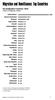 Migration and Remittances: Top Countries Top Immigration Countries a, 010 number of immigrants, millions United States b Russian Federation b Germany b Saudi Arabia b Canada b United Kingdom b Spain b
Draft Resolution on Science, technology and innovation for development
 1 Draft Resolution on Science, technology and innovation for development The Economic and Social Council, Recognizing the role of the Commission on Science and Technology for Development as the United
DECLARATIONS OF STATES PARTIES RELATING TO SETTLEMENT OF DISPUTES IN ACCORDANCE WITH ARTICLE 287 (CHOICE OF PROCEDURE)
 DECLARATIONS OF STATES PARTIES RELATING TO SETTLEMENT OF DISPUTES IN ACCORDANCE WITH ARTICLE 287 (CHOICE OF PROCEDURE) Algeria [Original: Arabic and French] The People's Democratic Republic of Algeria
Position of the International Indigenous Peoples Forum on Climate Change (IIPFCC)* on current Climate Change negotiations. Bonn, Germany, June 2010
 Position of the International Indigenous Peoples Forum on Climate Change (IIPFCC)* on current Climate Change negotiations Bonn, Germany, June 2010 GENERAL PRINCIPLES The IIPFCC, gathered in Bonn on the
FDI performance and potential rankings. Astrit Sulstarova Division on Investment and Enterprise UNCTAD
 FDI performance and potential rankings Astrit Sulstarova Division on Investment and Enterprise UNCTAD FDI perfomance index The Inward FDI Performance Index ranks countries by the FDI they receive relative
Views from Living Marine Resources Management and the Coral Triangle Project
 Views from Living Marine Resources Management and the Coral Triangle Project Annadel Salvio Cabanban Ecosystem Approach to Fisheries Management Specialist, Coral Triangle Initiative Southeast Asia Project:
Resolution adopted by the General Assembly on 19 December 2014. [on the report of the Second Committee (A/69/465)]
![Resolution adopted by the General Assembly on 19 December 2014. [on the report of the Second Committee (A/69/465)]](/thumbs/40/21877235.jpg "Resolution adopted by the General Assembly on 19 December 2014. [on the report of the Second Committee (A/69/465)]") United Nations A/RES/69/204 General Assembly Distr.: General 21 January 2015 Sixty-ninth session Agenda item 16 Resolution adopted by the General Assembly on 19 December 2014 [on the report of the Second
United Nations A/RES/69/204 General Assembly Distr.: General 21 January 2015 Sixty-ninth session Agenda item 16 Resolution adopted by the General Assembly on 19 December 2014 [on the report of the Second
The Copenhagen Decisions. Submission on the outcome of the Ad Hoc Working Group on Long Term Cooperative Action under the Convention under item 3
 The Copenhagen Decisions Submission on the outcome of the Ad Hoc Working Group on Long Term Cooperative Action under the Convention under item 3 Proposal by the African Group Rev.1 (Copenhagen Denmark,
ASEAN Framework for Tackling Climate Change and Food Security
 REGIONAL EXPERT FORUM ON CLIMATE CHANGE, AGRICULTURE AND FOOD SECURITY IN ASEAN 2 nd - 3 rd May 2013 Nai Lert Park Hotel, Bangkok, Thailand ------------------------------------------------------------
Guidelines for DBA Coverage for Direct and Host Country Contracts
 Guidelines for DBA Coverage for Direct and Host Country Contracts An Additional Help document for ADS Chapter 302 New Reference: 06/14/2007 Responsible Office: OAA/P File Name: 302sap_061407_cd48 BACKGROUND:
AFR EUR MENA NAC SACA SEA WP
 250000 200000 Millions (USD) 150000 100000 50000 0 AFR EUR MENA NAC SACA SEA WP India China USA Russian Federation Brazil Germany Pakistan Japan Indonesia Mexico Bangladesh Egypt France Italy Turkey Thailand
Revista Relaciones Internacionales Nº 42 (Segmento Digital) Instituto de Relaciones Internacionales (IRI) Segundo semestre de 2012
 APEC Kazan, Russia, 30-31 May 2012 2012 APEC Ministerial Meeting on Food Security Kazan Declaration on APEC Food Security Preamble 1. We, the APEC Ministers responsible for food security, met in Kazan,
Partnership in Environmental Governance. Swedish Environmental Protection Agency
 Partnership in Environmental Governance Swedish Environmental Protection Agency ISBN 978-91-620-8495-0. PRINT: CM Gruppen, Stockholm, 10-11. PRODUCTION: Swedish EPA. DESIGN: Peter Hönig. PHOTO: SXC if
Targets in the proposed SDGs framework
 Targets in the proposed SDGs framework Goal 3. Ensure healthy lives and promote well-being for all at all ages 3.2 By 2030, end preventable deaths of newborns and children under 5 years of age 3.6 By 2020,
Driving Sustainable Development: the role of Science, Technology and Innovation
 G-SCIENCE ACADEMIES STATEMENTS 2013 Driving Sustainable Development: the role of Science, Technology and Innovation 1. Introduction The framework of Millennium Development Goals has led to several in-depth
GLOBAL ALLIANCE FOR CLIMATE-SMART AGRICULTURE (GACSA)
 GLOBAL ALLIANCE FOR CLIMATE-SMART AGRICULTURE (GACSA) FRAMEWORK DOCUMENT Version 01 :: 1 September 2014 I Vision 1. In today s world there is enough food produced for all to be well-fed, but one person
Associated Programme on Flood Management: IFM HelpDesk, activities and outcomes
 WMO Seminar on: Integrated flood risk management in Sweden How to achieve it? Stockholm, Sweden, 12 November 2013 Associated Programme on Flood Management: IFM HelpDesk, activities and outcomes G. Teruggi
Code of Conduct on the Safety and Security of Radioactive Sources
 FOREWORD In recent years there has been a growing awareness of the potential for accidents involving radiation sources, some such accidents having had serious, even fatal, consequences. More recently still,
LIST OF RESOLUTIONS ADOPTED BY THE GENERAL ASSEMBLY AT ITS SIXTY-EIGHTH SESSION ON THE RECOMMENDATION OF THE THIRD COMMITTEE
 LIST OF AT THE LEVEL OF THE THIRD COMMITTEE ITEM 27: SOCIAL DEVELOPMENT ITEM 27 (a) Implementation of the outcome of the World Summit for Social Development and of the twenty-fourth special session of
WATER: ENVIRONMENTAL SCIENCE Syllabus
 WATER: ENVIRONMENTAL SCIENCE Syllabus Course Title Water: Environmental Science Course Description Central to all ecosystems, water is essential to life as we know it. It shapes our planet on every level,
RESOLUTION. (Adopted on Committee Two of CNMUN 2010)
 RESOLUTION (Adopted on Committee Two of CNMUN 2010) Council: UN Human Rights Council Committee Two Topic: the Impact of Financial Crisis on the Universal Realization and Effective Enjoyment of Human Rights
HOUSING AND LAND RIGHTS NETWORK H a b i t a t I n t e r n a t i o n a l C o a l i t i o n
 HOUSING AND LAND RIGHTS NETWORK H a b i t a t I n t e r n a t i o n a l C o a l i t i o n National Habitat III Parallel-reporting Tool Evaluation of Habitat II Implementation Following the commitments