
Dental Traumatology. Key words: consensus; fracture; luxation; review; trauma; tooth
|
|
|
- Ginger Pauline Joseph
- 9 years ago
- Views:
Transcription
1 Delltal Traumatology 2012; 28: 2-12: do;: I l/j I x Dental Traumatology International Association of Dental Traumatology guidelines for the management of traumatic dental injuries: 1. Fractures and luxations of permanent teeth Anthony J. DiAngelis*\ Jens O. Andreasen*2, Kurt A. Ebeleseder*3, David J. Kenny*4, Martin Trope*5, Asgeir Sigurdsson*s, Lars Andersson 7, Cecilia Bourguignon 8, Marie Therese Flores 9, Morris Lamar Hicks 10, Antonio R. Lenzi 1 \ Barbro Malmgren 12, Alex J. Moule 13, Yango Poh1 14, Mitsuhiro Tsukiboshi 15 1 Department of Dentistry, Hennepin County Medical Center and University of Minnesota School of Dentistry, Minneapolis, MN, USA; 2Center of Rare Oral Diseases, Department of Oral and Maxillofacial Surgery, Copenhagen University Hospital, Rigshopitalet, Denmark; 3Department of Conservative Dentistry, Medical University Graz, Graz, Austria; 4Hospital for Sick Children and University of Toronto, Toronto, Canada; 5Department of Endodontics, School of Dentistry, University of Pennsylvania, Philadelphia, PA, USA; 6Department of Endodontics, UNC School of Dentistry, Chapel Hill, NC, USA; 7Department of Surgical Sciences, Faculty of Dentistry, Health Sciences Center Kuwait University, Kuwait City, Kuwait; 8Private Practice, Paris, France; 9Pediatric Dentistry, Faculty of Dentistry, Universidad de Valparaiso, Valparaiso, Chile; 1 Department of Endodontics, University of Maryland School of Dentistry, Baltimore, MD, USA; "Private Practice, Rio de Janeiro, Brazil; 12Department of Clinical Sciences Intervention and Technology, Division of Pediatrics, Karolinska University Hospital, Stockholm, Sweden; 13Private Practice, University of Queensland, Brisbane, Australia; 14Department of Oral Surgery, University of Bonn, Bonn, Germany; 1sPrivate Practice, Amagun, Aichi, Japan Abstract - Traumatic dental injuries (TDIs) of permanent teeth occur frequently in children and young adults. Crown s and luxations are the most commonly occurring of all dental injuries. Proper diagnosis. treatment planning and followup are important for improving a favorable. Guidelines should assist dentists and patients in decision making and for providing the best care effectively and efficiently. The International Association of Dental Traumatology (IADT) has developed a consensus statement after a review of the dental literature and group discussions. Experienced researchers and clinicians from various specialties were included in the group. In cases where the data did not appear conclusive, recommendations were based on the consensus opinion of the IADT board members. The guidelines represent the best current evidence based on literature search and professional opinion. The primary goal of these guidelines is to delineate an approach for the immediate or urgent care of TDls. In this first article, the IADT Guidelines for management of s and luxations of permanent teeth will be presented. Key words: consensus; ; luxation; review; trauma; tooth Correspondence to: Anthony J DiAngeiis, DMD, MPH, Hennepin County Medical Center, 701 Park Avenue South, Minneapolis, MN 55415, USA Tel.: Fax: [email protected] Accepted 7 December, 2011 'Members of the Task Group John Wilcy & Sons A js

2 lad T guidelines for the mallagemellt of traumatic dental injuries 3 Traumatic dental injuries (TDls) occur with great frequency in preschool, school-age children, and young adults comprising 5% of all injuries for which people seek treatment (I, 2). A 12-year review of the literature reports that 25% of all school children experience dental trauma and 33% of adults have experienced trauma to the permanent dentition, with the majority of injuries occurring before age nineteen (3). Luxation injuries are the most common TDIs in the primary dentition, whereas crown s are more commonly reported for the permanent dentition (I. 4, 5) TDls present a challenge to clinicians worldwide. Consequently, proper diagnosis, treatment planning and follow up are critical to assure a favorable. Guidelines, among other things, should assist dentists, other healthcare professionals, and patients in decision making. Also. they should be credible, readily understandable, and practical with the aim of delivering appropriate care as effectively and efficiently as possible. The following guidelines by the International Association of Dental Traumatology (IADT) represent an updated set of guidelines based on the original guidelines published in 2007 (6-8). The update was accomplished by doing a review of the current dental literature using EMBASE, MEDLINE, and PUBMED searches from 1996 to 2011 as well as a search of the journal of Dental Traumatology from 2000 to Search words included tooth s, root s, tooth luxation, lateral luxation and pelmanent teeth, intruded permanent teeth, and luxated permanent teeth. The primary goal of these guidelines is to delineate an approach for the immediate or urgent care of TDIs. It is understood that subsequent treatment may require secondary and tertiary interventions involving specialist consultations. services, and/or materials/methods not always available to the primary treating clinician. The IADT published its first set of guidelines in 200 I and updated them in 2007 (6-13). As with the previous guidelines, the working group included experienced investigators and clinicians from various dental specialties and general practice. This revision represents the best evidence based on the available literature and expert professional judgment. In cases where the data did not appear conclusive. recommendations are based on the consensus opinion of the working group followed by review by the members of the IADT Board of Directors. It is understood that guidelines are to be applied with evaluation of the specific clinical circumstances, clinicians' judgment, and patients' characteristics, including but not limi ted to compliance, finances, and understanding of the immediate and long-term s of treatment alternatives versus non-treatment. The IADT cannot and does not guarantee favorable s from strict adherence to the Guidelines, but believe that their application can maximize the chances of a favorable. Guidelines undergo periodic updates. These 2012 Guidelines in this journal will appear in three parts: Part I: Fractures and luxations of permanent teeth Part II: Avulsion of permanent teeth Part III: Injuries in the primary dentition Guidelines offer recommendations for diagnosis and treatment of specific TDIs; however, they do not provide the comprehensive nor detailed infonnation found in textbooks, the scientific literature, and, most recently, the Dental Trauma Guide (DTG) that can be accessed on taltraumaguide.org. Additionally, the DTG, also available on the IADT's web page provides a visual and animated documentation of treatment procedures as well as estimations of prognosis for the various TDIs. General recommendations/considerations Clinical examination Detailed description of protocols, methods. and documentation for clinical assessment of TDIs can be found in current textbooks (1,14.15). Radiographic examination Several projections and angulations are routinely recommended, but the clinician should decide which radiographs are required for the individual. The following are suggested: Periapical radiograph with a 90 horizontal angle with central beam through the tooth in question. Occlusal view. Periapical radiograph with lateral angulations from the mesial or distal aspect of the tooth in question. Emerging imaging modalities such as cone-beam computerized tomography (CBCT) provide enhanced visualization of TDls, particularly root s and lateral luxations, monitoring of healing, and complications. Availability is limited, and its use not currently considered routine; however, specific information is available in the scientific literature (16, 17). Splinting type and duration Current evidence supports short-term, non-rigid splints for splinting of luxated. avulsed, and root-d teeth. While neither the specific type of splint nor the duration of splinting for root-d and luxated teeth are significantly related to healing s. it is considered best practice to maintain the repositioned tooth in correct position, provide patient comfort and improved function (18, 19). Use of antibiotics There is limited evidence for use of systemic antibiotics in the management of luxation injuries and 110 evidence that antibiotic coverage improves s for rootd teeth. Antibiotic use remains at the discretion of the clinician as TDT's are often accompanied by soft tissue and other associated injuries, which may require other surgical intervention. In addition. the patient's medical status may warrant antibiotic coverage (19. 20). Sensibility tests Sensibility testing refers to tests (cold test and/or electric pulp test) attempting to determine the condition of the 2012 John Wiley & Sons A S

3 4 Andreasen el at. pulp. At the time of injury, sensibility tests frequently give no response indicating a transient lack of pulpal response. Therefore, at least two signs and symptoms are necessary to make the diagnosis of necrotic pulp. Regular follow up controls are required to make a pulpal diagnosis. Immature versus mature permanent teeth Every effort should be made to preserve pulpal vitality in the immature permanent tooth to ensure continuous root development. The vast majority of TDIs occur in children and teenagers where loss of a tooth has lifetime consequences. The immature permanent tooth has considerable capacity for healing after traumatic pulp exposure, luxation injury, and root s. Pulp exposures secondary to TDIs are amenable to proven conservative pulp therapies that maintain vital pulp tissue and allow for continued root development (21-24). Tn addition, emerging therapies have demonstrated the ability to revascularize/regenerate vital tissue in canals of immature permanent teeth with necrotic pulps (25-30). Teeth frequently sustain a combination of several injuries. Studies have demonstrated that crown-d teeth with or without pulp exposure and associated luxation injury experience a greater frequency of pulp necrosis (31). The mature permanent tooth that sustains a severe TDI after which pulp necrosis is anticipated is amenable to preventive pulpectomy as root substantially completed. Pulp canal obliteration Pulp canal obliteration (PCO) occurs more frequently in teeth with open apices which have suffered a severe luxation injury. It usually indicates ongoing pulpal vitality. Extrusion, intrusion, and lateral luxation injuries have high rates of PCO (32, 33) Subluxated and crownd teeth also may exhibit PCO, although with less frequency (34). Additionally, PCO is a common occurrence following root s (35, 36). Permanent teeth 1. Treatment guidelines for s of teeth and alveolar bone procedures for fractu res of teeth and alveolar bone 1 Favorable and unfavorable s include some, but not necessarily all, of the following Clinical Radiographic Treatment Follow up Favorable Unfavorable Infraction Enamel An incomplete (crack) of the enamel without loss of tooth structure Not tender. If tenderness is observed evaluate, the tooth for a possible luxation injury or a root A complete of the enamel Loss of enamel. No visible sign of exposed dentin Not tender. If tenderness is observed, evaluate the tooth for a possible luxation or root injury Normal mobility Sensibility pulp test usually positive No radiographic In case of marked No follow up is AsymptomatiC SymptomatiC abnormalities infractions, generally needed Positive response Radiographs etching and for infraction to pulp testing recommended: sealing with resin injuries unless Continuing root a periapical view. to prevent they are Additional discoloration of associated with a radiographs are the infraction luxation injury or mdicated if lines; otherwise, other other signs or no treatment is types symptoms necessary are present Enamel loss is visible Radiographs recommended: periapical, occlusal, and eccentric exposures. They are recommended in order to rule out the possible presence of a root or a luxation injury Radiograph of lip or cheek to search for tooth fragments or foreign materials If the tooth fragment is available, it can be bonded to the tooth Contouring or restoration with composite resin depending on the extent and location of the 6-8 weeks C" 1 year C" Asymptomatic Positive response to pulp testing Continuing root Continue to next evaluation Negative response to pulp testing Signs of apical No continuing root Symptomatic Negative response to pulp testing Signs of apical No continuing root appropnate for 2012 John Wiley & Sons AS

4 la DT guidelille.i F)r the IIwlwgel1ll'llI oj' traumiltic dc'llial inil/ries 5 1. Treatment guidelines for s of teeth and alveolar bone procedures for Favorable and unfavorable s s of teeth include some, but not necessarily all, of the and alveolar bone 1 following Clinical Radiographic Treatment Follow up Favorable Unfavorable Enamel-dentin A confined Enamel-dentin If a tooth fragment to enamel and loss is visible is available, it can dentin with loss of Radiographs be bonded to the tooth structure, but recommended: tooth. Otherwise, not exposing the periapical, perform a pulp occlusal, and provisional Percussion test: not tender. If tenderness is observed, evaluate the tooth for possible luxation or root injury Normal mobility Sensibility pulp test usually positive eccentric exposure to rule out tooth displacement or possible presence of root Radiograph of lip or cheek lacerations to search for tooth fragments or foreign materials treatment by covering the exposed dentin with glass lonomer or a more permanent restoration using a bonding agent and composite resin, or other accepted dental restorative materials If the exposed dentin is within 0.5 mm of the pulp (pink, no bleeding), place calcium hydroxide base and cover with a material such as a glass ionomer 6-8 weeks C'" 1 year C" Asymptomatic Symptomatic Positive response Negative response to pulp testing to pulp testing Continuing root Signs of apical No continuing root Continue to next evaluation Indicated Enamel-dentin-pulp A involving. Enamel-dentin In young patients fhl weeks C" Asymptomatic Symptomatic enamel and dentin loss visible with immature, still 1 year C" Positive response. Negative response with loss of tooth Radiographs developing teeth, it to pulp testing to pulp testing structure and recommended: is advantageous to Continuing root Signs of apical exposure of the periapical, preserve pulp vitality pulp. occlusal, and by pulp capping or No continuing root Normal mobility eccentric partial pulpotomy. Continue to next Percussion test: exposures to Also, this treatment evaluation not tender. If rule out tooth is the choice in young tenderness is displacement or patients with observed, evaluate possible presence completely formed for possible of root teeth luxation or root Radiograph of lip Calcium hydroxide is a injury or cheek suitable material to be Exposed pulp lacerations to placed on the pulp sensitive to stimuli search for tooth wound in such fragments or procedures foreign materials In patients with mature apical development, root canal treatment is usually the treatment of choice, ahhough pulp capping or partial pulpotomy also may be selected If tooth fragment is available, it can be bonded to the tooth Future treatment for the d crown may be restoration with other accepted dental restorative materials ic) 2012 John Wiley & Sons AS

5 6 Andreasen et al. 1. Treatment guidelines for s of teeth and alveolar bone procedures for s of teeth and alveolar bone 1 Favorable and unfavorable s include some, but not necessarily all, of the following Clinical Radiographic Treatment Follow up Favorable Unfavorable Crown-root without pulp exposure A involving enamel, dentin, and cementum with loss of tooth structure, but not exposing the pulp Crown extending below gingival margin Percussion test: tender Coronal fragment mobile Sensibility pulp test usually positive for apical fragment Apical extension of usually not visible Radiographs recommended: periapical, occlusal, and eccentric exposures. They are recommended to detect lines in the root Emergency treatment As an emergency treatment, a temporary stabilization of the loose segment to adjacent teeth can be performed until a definitive treatment plan is made Non-emergency treatment ahernatives Fragment removal only Removal of the coronal crown-root fragment and subsequent restoration of the apical fragment exposed above the gingival level Fragment removal and gingivectomy (sometimes ostectomy) Removal of the coronal crown-root segment with subsequent endodontic treatment and restoration with a post-retained crown. This procedure should be preceded by a gingivectomy, and sometimes ostectomy with osteoplasty Orthodontic extrusion of apical fragment Removal of the coronal segment with subsequent endodontic treatment and orthodontic extrusion of the remaining root wrth sufficient length after extrusion to support a post-retained crown Surgical extrusion Removal of the mobile d fragment with subsequent surgical repositioning of the root in a more coronal position Root submergence Implant solution is planned Extraction Extraction with immediate or delayed implant-retained crown restoration or a conventional bridge. Extraction is inevitable in crown-root s with a severe apical extension, the extreme being a vertical 6-8 weeks C" 1 year C" Asymptomatic Positive response to pulp testing Continuing root Continue to next evaluation Symptomatic Negative response to pulp testing Signs of apical No continuing root development in 2012 John Wilc) & Son, AS

6 r AD T Kliide/ines for the liiu1ll1gelllellt of traumatic dellla! illjuries 7 1. Treatment guidelines for s of teeth and alveolar bone procedures for s of teeth and alveolar bone 1 Favorable and unfavorable s include some, but not necessarily all, of the following Clinical Radiographic Treatment Follow up Favorable Unfavorable Crown-root with pulp exposure A involving enamel, dentin, and cementum and exposing the pulp Percussion test: tender Coronal fragment mobile Apical extension of usually not visible Radiographs recommended: periapical and occlusal exposure Emergency treatment As an emergency treatment a temporary stabilization of the loose segment to adjacent teeth In patients with open apices, it is advantageous to preserve pulp vitality by a partial pulpotomy. This treatment is also the choice in young patients with completely formed teeth. Calcium hydroxide compounds are suitable pulp capping materials. I n patients with mature apical development, root canal treatment can be the treatment of choice Non-Emergency Treatment Alternatives Fragment removal and gingivectomy (sometimes ostectomy) Removal of the coronal fragment with subsequent endodonltc treatment and restoration with a post-retained crown. This procedure should be preceded by a gingivectomy and sometimes ostectomy with osteoplasty. This treatment option is only in crown-root s with palatal subgingival extension Orthodontic extrusion of apical fragment Removal of the coronal segment with subsequent endodonltc treatment and orthodontic extrusion of the remaining root with sufficient length after extrusion to support a post-retained crown Surgical extrusion Removal of the mobile d fragment with subsequent surgical repositioning of the root in a more coronal position Root submergence An implant solution is planned, the root fragment may be left in SITU Extraction Extraction with immediate or delayed implant-retained crown restoration or a conventional bridge. Extraction is inevitable in very deep crown-root s, the extreme being a vertical 6-8 weeks C" Asymptomatic Symptomatic 1 year C" Positive response to pulp testing Continuing root development in immature teeth Continue to next evaluation Negative response to pulp testing Signs of apical No continuing root development in \c 2012 John Wiley & Sons AS

7 8 Andreasen el al. procedures Favorable and unfavorable s for luxated include some, but not necessarily all, 2. Treatment guidelines for luxation injuries permanent teeth of the following 2 Radiographic Favorable Unfavorable Clinical Treatment Follow up Root The coronal The Reposition, if 4 weeks S, C++ Positive response Symptomatic segment may be involves the root displaced, the coronal 6-8 weeks C.. to pulp testing Negative mobile and may of the tooth and segment of the tooth 4 months S.., C++ (false negative response to pulp be displaced is in a horizontal as soon as possible 6 months C.. possible up to testing (false The tooth may be or oblique plane Check position 1 year C++ 3 months) negative possible tender to Fractures that are radiographically 5 years C.. Signs of repair up to 3 months) percussion in the horizontal Stabilize the tooth between d Extrusion of the Bleeding from the plane can usually with a flexible splint segments coronal segment gingival sulcus be detected in the for 4 weeks. If the Continue to next Radiolucency at may be noted regular periapical root is near evaluation the line Sensibility testing 90 0 angle film the cervical area of Clinical signs of may give negative with the central the tooth, stabilization or results initially, beam through the is beneficial for a abscess indicating tooth. This IS longer period of time associated with transient or usually the case (up to 4 months) the line permanent neural with s in It is advisable to damage the cervical third monitor healing for at Monitoring the of the root least 1 year to status of the pulp If the plane of determine pulpal is recommended is more status Transient crown oblique, which is If pulp necrosis discoloration (red common with develops, root canal or gray) may apical third treatment of the occur s, an coronal tooth occlusal view or segment to the radiographs with line is varying horizontal to preserve angles is more the tooth likely to demonstrate the including those located in the middle third Alveolar The Fracture lines Reposition any 4 weeks S, C.. Positive response Symptomatic involves the may be located at displaced segment 6-8 weeks C.. to pulp testing Negative alveolar bone and any level, from and then splint 4 months C.. (false negative response to pulp may extend to the marg inal bone Suture gingival 6 months C.. possible up to testing (false adjacent bone to the root apex laceration if present 1 year C++ 3 months) negative possible Segment mobility In addition to the Stabilize the 5 years C++ No signs of apical up to 3 months) and dislocation 3 angulations and segment for 4 weeks Signs of apical with several teeth occlusal film, Continue to next or moving together additional views evaluation external are common such as a inflammatory root panoramic resorption An occlusal radiograph can be change because helpful in of misalignment determining the the d course and alveolar segment position of the is often noted lines Sensibility testing mayor may not be positive \02012 John Wiky & Sons AS

8 J A DT guidelines for fhe lii ln l[;ellll'nf of fraumalic dental illjurie.1 9 procedures Favorable and unfavorable s for luxated include some, but not necessarily all, 2. Treatment guidelines for luxation injuries penmanent teeth of the following 2 Radiographic Favorable Unfavorable Clinical Treatment Follow up Concussion The tooth is tender No radiographic No treatment is 4 weeks C.. Asymptomatic Symptomatic to touch or tapping; abnormalities needed 6--8 weeks C++ Positive response Negative response it has not been Monitor pulpal 1 year C.. to pulp testing to pulp testing displaced and does condition for at False negative False negative not have increased least 1 year possible up to possible up to mobility 3 months 3 months Sensibility tests are Continuing root No continuing root likely to give positive results, Intact lamina dura signs of apical Subluxation The tooth is tender Radiographic Normally no 2 weeks S', C.. Asymptomatic Symptomatic to touch or tapping abnormalities are treatment is 4 weeks C.. Positive response Negative response and has increased usually not found needed; however, 6--8 weeks C.. to pulp testing to pulp testing mobility; it has not a flexible splint to 6 months C.. False negative False negative been displaced stabilize the tooth 1 year C.. possible up to possible up to Bleeding from for patient 3 months 3 months gingival crevice comfort can be Continuing root External may be noted used for up to inflammatory Sensibility testing 2 weeks resorption may be negative Intact lamina dura No continuing root initially indicating transient pulpal, damage signs of apical Monitor pulpal response until a definitive pulpal diagnosis can be made Extrusive luxation The tooth appears Increased Reposition the 2 weeks S C.. Asymptomatic Symptoms and elongated and is periodontal tooth by gently 4 weeks C++ Clinical and radiographic sign excessively mobile ligament re-inserting It into 6--8 weeks C.. radiographic consistent with Sensibility tests will space apically the tooth socket 6 months C.. signs of normal apical likely give negative Stabilize the tooth 1 year C.. or healed Negative response results for 2 weeks using Yearly 5 years C.. periodontium to pulp testing a flexible splint Positive response (false negative In matu re teeth to pulp testing possible up to where pulp (false negative 3 months) necrosis is possible up to If breakdown of anticipated or if 3 months) marginal bone. several signs and Marginal bone splint for an symptoms height additional indicate that the corresponds to 3-4 weeks pulp of mature or that seen External radiographically inflammatory root became necrotic, after resorption root canal repositioning EndodontiC treatment is Continuing root 2012 John Wiley & Sons A S

9 10 AndreasI'll 1'1 al. 2. Treatment guidelines for luxation injuries procedures Favoratlle and unfavorable s for luxated include some, but not necessarily all, permanent teeth of the following 2 Clinical Radiographic Treatment Follow up Favorable Unfavorable Lateral Luxation Intrusive luxation The tooth is The widened displaced, usually periodontal in a palatavlingual ligament space or labial direction is best seen on It will be eccentric or immobile and occlusal percussion exposures usually gives a high, metallic (ankylotic) sound Fracture of the alveolar process present Sensibility tests will likely give negative results The tooth is displaced axially into the alveolar bone It is immobile, and percussion may give a high, metallic (ankylotic) sound Sensibility tests will likely give negative results The periodontal ligament space may be absent from all or part of the root The cementoenamel junction is located more apically in the intruded tooth than in adjacent non-injured teeth, at times even apical to the marginal bone level Reposition the tooth digitally or with forceps to disengage it from its bony lock and gently reposition it into its original location Stabilize the tooth for 4 weeks using a flexible splint Monitor the pulpal condition If the pulp becomes necrotic, root canal treatment is to prevent root resorption Teeth with incomplete root formation Allow eruption without intervention If no movement within few weeks, initiate orthodontic repositioning If tooth is intruded more than 7 mm, reposition surgically or orthodontically Teeth with complete root formation Allow eruption without intervention if tooth intruded less than 3 mm. If no movement after 2-4 weeks, reposition surgically or orthodontically before ankylosis can develop If tooth is intruded beyond 7 mm, reposition surgically The pulp will likely become necrotic in teeth with complete root formation. Root canal using a temporary filling with calcium hydroxide is recommended and treatment should begin 2-3 weeks after surgery Once an intruded tooth has been repositioned surgically or orthodontically, stabilize with a flexible splint for 4-8 weeks 2 weeks S', C" 4 weeks C" 6-8 weeks C" 6 months C" 1 year C" Yearly for 5 years C" 2 weeks S', C" 4 weeks C" 6-8 weeks C" 6 months C" 1 year C" Yearly for 5 years C" Asymptomatic Symptoms and Clinical and radiographic signs radiographic consistent with signs of normal apical or healed Negative response to periodontium pulp testing (false Positive response negative possible to pulp testing up to 3 months) (false negative If breakdown of possible up to marginal bone, splint 3 months) for an additional Marginal bone 3-4 weeks height External corresponds to inflammatory root that seen resorption or radiographically replacement resorption after repositioning Continuing root Tooth in place Tooth locked in or erupting place/ankylotic tone Intact lamina to percussion dura Radiographic signs No signs of of apical resorption Continuing root External inflammatory root resorption or replacement resorption C", clinical and radiographic examination; S', splint removal; S", splint removal in cervical third s. l For crown-d teeth with concomitant luxation injury, use the luxation follow-up schedule. 2Whenever there is evidence of external inflammatory root resorption, root canal should be initiated immediately, with the use of calcium hydroxide as an intra-canal medication John Wile) & Son, AS

10 JADT guidelilles/or file mwwgeillellf of' ff{fulilafic dental illjuries 11 Patient instructions Patient compliance with follow-up visits and home care contributes to better healing following a TDI. Both patients and parents of young patients should be advised regarding care of the injured tooth/teeth for optimal healing. prevention of further injury by avoidance of participation in contact sports, meticulous oral hygiene. and rinsing with an antibacterial such as chlorhexidine gluconate 0.1 % alcohol free for I 2 weeks. Additional resources Besides the general recommendations mentioned earlier, clinicians are encouraged to access the DTG, the journal Dental Traumatology, and other journals for information perta\l1\11g to treatment delay (37), intrusive luxations 38-47), root s (48-52), pulpal management of d and luxated teeth (34, 53-64, splinting (18,39,65 68), and antibiotics (69). Acknowledgements IADT is grateful to the team of Dental Trauma Guide for kindly providing pictures to the article. References I. Andreasen JO. Andreasen FM. Andersson L. Textbook and color atla, or traumatic injuries to the teeth. 4th edn. Oxford. uk: Wiley-Blackwcll; Petersson EE. Andersson L. Sorensen S. Traumatic oral vs nonoral injuries. Swed Dent J 1997;21 : Glendor G. Epidemiology of traumatic dental injuries - a 12 year review of the literature. Dent Traumatol 2008;24: 603 II. 4. Flores MT. Traumatic injuries in the primary dentition. Dent Traumatol 2002: 18: Kramer PF. Zembruski C. Ferreira SH. Feldcns CA. Traumatic dental injuries in Brazilian preschool children. Dent Traumatol 2003; 19: I-Iores MT. Andersson L. Andreasen JO. Bakland LK. Malmgren B. Barnett F ct al. Guidelines for the managcment of traumatic dental injuries. I. Fractures and luxations of pennanent teeth. Dent Traumatol 2007;23: Flores MT. Andersson L. Andreasen JO. Bakland LK. Malmgren B. Barnell F et al. Guidelines for the management of traumatic dental injuries. II. Avulsion of permanent teeth. Dent Traumatol 2007:23: X I-Iores MT. Malmgren B. Andersson L. Andreasen JO. Bakland LK. Barncll F et al. Guidelines for the managemcnt of traumatic dental injuries. III. Primary Tecth. Dent Traumatol 2007;23: F10rcs MT. Andreasen JO. Bakland LK. Feiglin B. Gutmann J L. Oikarinen K et al. Guidelines for the evaluation and management of traumatic denlhi injuries (part I of the series). Dent Traumatol 2001;17: I-Iores MT. Andreasen JO. Bakland LK. Feiglin B. Gutmann J L. Oikarinen K et al. Guidelines for the evaluation and management of traumatic dental injuries (part 2 of the series). Dent TraumalOl 200 I; 17: II. I lor~s MT. Andreasen JO. BlIkland LK. Feiglin B. Gutmann JL. Oikarinen K ct al. Guidelines for the evaluation and management of traumatic dental injuries (part 3 of the series). Dent TraumatoI2001;17: Flores MT, Andreasen JO, Bakland LK, Feiglin B. Gutmann JL, Oikarinen K et al. Guidelines for the cvaluation and management of traumatic dental injuries (part 4 of the series). Dent Traumatol 2001;17: Flores MT. Andreasen JO. Bakland LK, Feiglin B. Gutmann JL, Oikarinen K et al. Guidelines for thc evaluation and management of traumatic dental injuries (part 5 of thc serics). Dent Traumatol 2001:17: Andreasen JO, Bakland LK, Flores MT, Andreasen rm. Traumatic dental injuries: a manual. 3rd edn. Chiche,ter. West Sussex: Wiley-Blackwell: Pinkham JR, Casamassino PS. Fields HW Jr. McTiguc DJ. Mowak A editors. Pediatric dentistry, 4th edn. SI. Louis. MO: Elsevier Saunders; Cohenca M, Simon JH, Roges R, Morag Y. Malfax JM. Clinical 1ndications for digital imaging in dento-alveolar trauma. Part 1: traumatic injuries. Dent Traumatol 2007;23: Cohenea N, Simon JH, Mathur A. Malfax JM. Clinical Indications for digital imaging in den to-alveolar trauma. Part 2: root resorption. Dent Traumatol 2007:23: I Kahler B. Heithersay GS. An cvidcnce-based appraisal of splinting luxated. avulsed and root-d tecth. Dent TraumatoI2008;241: Andreasen JO, Andreasen FM, Mejarc I, Cvek M. Healing of 400 intra-alveolar root s 2. Effect of treatment factors such as treatment delay. repositioning. splinting type and pcriod and antibiotics. Dcnt Traumatol 2004;20:203 II. 20. Hinekfuss SE, Messer LB. An evidence-based assessment of the clinical guidelines for replanted avulsed teeth. Part II: pre:;cription of systemic antibiotics. Dent Traumatol 2009;25: Cvek M. A clinical report on partial pulpotom) and capping with calcium hydroxidc in permanent incisors with complicated crown fraeturcs. J Endod 1978;4: Fuks AB. Bielak S. Chosak A. Clinical and radiographic assessment of direct pulp capping and pulpotomy in young permanent teeth. Pediatr Dent 1982;4: ~3. Olsburgh S. Jacoby T. Krejci I. Crown fracturcs in the permanent dentition: pulpal and restorativc considerations. Dent TraumatoI2002;18: Witherspoon DE. Vital pulp with ne", materials: new directions and treatment perspectives permancnt teeth. Pediatr Dent 2008;30: Huang GT. A paradigm shift in endodontic management of : conservation of stem cells for regeneration. J Dent 2008;36: Epub 16 April Chueh LH. Ho YC, Kuo TC, Lai WHo Chen YH. Chiang CPo Regenerative endodontic treatment for necrotic immature permanent teeth. J Endod 2009;35: Epub 12 December Bose R. ]\;ummikoski P, HargrcH\'cs K. A retrospccti\,\: eyaluation of radiographic s in Immature teeth with nccrotie root canal systems treated with regenerative endodontic procedures. J Endod 2009:35: Epub 15 August Thibodeau B. Trope M. Pulp reva:;eularization of a necrotic infected immature permanent tooth: case report and review of the literature. Pediatr Dent 2007:29: Trope M. Treatment of the immature tooth with a non-vital pulp and apical. Dent Clin [\;orth Am 20 I 0:54: Jung IY. Lee SJ. Hargreaves KM. Biologically based treatment of immature permanent teeth with pulpal necrosis: a case series. J Endod 2008;34: Epub 16 May ~ Robertson A. Andreasen FM. Andreasen JO. ]\;oren JG. Longterm prognosi" of crown-d permanent incisors. The effect of development and associated luxation injuries. Int J Paediatr Dent 2000:103:1919. 'e, 2012 John Wiley & Sons A 'S

11 12 Andreasell ef al. 32. Holcomb JB, Gregory WB Jr. Caleifie metamorphosis of the pulp; its incidence and treatment. Oral Surg Oral Med Oral Pathol 1967;24: NelO 11, Gondim 10, decarvalho FM. Giro EM. Longitudinal clinical and radiographic evaluations of scvercly intruded permanent incisors in a pediatric population. Dent Traumatol 2009:25: Robcnson A. A retrospective cvaluation of patients with uncomplicated crown and luxation injuries. Endod Dcnt Traumatol 1998;14: Amir FA, Gutmann JL, Withcrspoon DE. Calcific metamorphosis: a challenge in endodontic diagnosis and treatment. Quintessence Int 2001 ;32: Andreasen FM, Andreasen JO, Bayer T. Prognosis of root d permanent incisors; prediction of healing modalities. Endod Dent Traumatol 1989;5: Andreasen JO, Andreasen FM, Skeie A, Hjorting-Hansen E, Schwartz 0. Effcet of treatment delay upon pulp a nd periodontal healing of traumatic dental injuries - a review article. Dent Traumatol 2002;18: Andreasen 10, Bakland LK, Andreasen FM. Traumatic intrusion of permanent teeth. Part 3. A clinical study of the effect of treatment variables such as trcatment delay, mcthod of repositioning, typc of splint, length of splinting and antibiotics on 140 teeth. Dent Traumatol 2006;22: Kenny OJ, Barrett EJ, Casas MJ. Avulsions and Intrusions: the controversial displacement injuries. J Can Dent Assoc 2003;69: Stewart C, Dawson M, Phillips J, Shafi I, Kinirons M. Wclburg R. A study of the management of 55 traumatically intruded permanent incisor teeth in children. Eur Arch Paediatr Dent 2009; I 0: Albadri S, Zaitoun H, Kinirons MJ. UK National Clinical Guidclincs in Paediatric Dentistry: treatment of traumatically intrudcd pcrmanent incisor tecth in childrcn. Int. J Pediatr Dent 20 I 0:20(Suppl I): Andreasen JO, Bakland LK, Matras RC, Andreasen FM. Traumatic intrusion of permanent teeth. Part I. An epidermiological study of 216 intruded permanent teeth. Dent Traumatol 2006;22: Andreasen JO, Bakland LK, Andreasen FM. Traumatic intrusion of permanent teeth. Part 2. A clinical study of the effect of preinjury and injury factors such as sex, age. stage of root development, tooth location and extent of injury including number of intruded teeth on 140 intruded permanent teeth. Dent Traumatol 2006;22: Wigen TI. Agnalt R, Jacobsen I. Intrusive luxation of permanent incisors in Norwegians aged 6-17 years: a retrospective study of treatment and. Dent TraumatoI2008;24: Ebcleseder KA, Santler G, Glockner K. Huller H, Pern C. Quehenbcrger F. An analysis of 58 traumatically intruded and surgically extruded permanent teeth. Dent Traumatol 2000: 16: Humphrey JM, Kenny OJ, Barrett EJ. Clinical s for permanent incisor luxations in a pediatric population. I. Intrusions. Dent Traumatol 2003:1 9: Al Badri S. Kinirons M. Cole B. Wclbury R. Factors affecting resorption in traumatically intruded permanent incisors in children. Dent Traumatol 2002;18: Andreasen JO. Andreasen FM, Mejare I, Cvek M. Healing of 400 intra-alveolar root s. 1. Effect of pre-injury and injury factors sueb as sex, age. development, type. location of and severity of dislocation. Dent Traumatol 2004:20: Cvck M. Andreasen JO, Bonln1 MK. Healing of 208 intraalveolar root s in patients aged 7-17 years. Dent Traumatol 200 I; 17: Welbury RR. Kinirons MJ, Day P. Humphreys K, Gregg TA. Outcomes for root-d permanent incisors; a retrospective study. Pediatr Dent 2002;24: Cvek M, Mcjare I, Andreasen 10. Healing and prognosis of tceth with intra-alveolar s involving the cervical part of the root. Dent Traumatol 2002;18: Cvek M, Tsillingaridis G, Andreasen JO. Survival of 534 incisors after intra-alveolar root in 7 17 years. Dent Traumatol 2008;24: Farsi N, Alamoudi N, Balto K, Al Muskagy A. Clinical assessment of mineral trioxide aggregate (MTA) as direct pulp capping in young permanent teeth. J Clin Pediatr Dent 2006;31 : Moule AJ, Moule CA. The endodontic management of traumatized anterior teeth: a review. Aust Dent J 2007; 52(Suppl 1):SI Bakland LK. Revisiting traumatic pulpal exposure: materials, management principles and techniques. Dent Clin N Am 2009;53: Cavalieri G, Zerman N. Traumatic crown s in permanent incisors with immature roots: a follow-up study. Endod Dent Traumatol 1995; II : Fcrrazzini Pozzi EC, von Arx T. Pulp and periodontal healing of laterally luxated permanent teeth: results after 4 years. Dent Traumatol 2008;24: Nikoui M. Kenny OJ, Barrett EJ. Clinical s for permanent incisor luxation in a pediatric population. III. Lateral luxations. Dent Traumatol 2003; 19: Jackson NG. Waterhouse PJ, Maguire A. Factors affecting treatment s following complicated crown s managed in primary and secondary care. Dent Traumatol 2006;22: About [, Murray PE. Franquin Jc. Remusat M, Smith AJ. The effect of cavity restoration variables on odontoblast cell numbers and dental repair. J Dent 2001:29: Murray PE. Smith AJ, Windsor LJ, Mjor la. Remaining dentine thickness and human pulp responses. Int Endod J 2003;36: Subay RK, Demirei M. Pulp tissue reactions to a dentin bonding agent as a direct capping agent..j Endod 2005;31 : Bogen G, Kim.JS, Bakland LK. Direct pulp capping with mineral trioxide aggregate: an observational study. J Am Dent Assoc 2008; 139: Cvek M, Mejare I. Andreasen JO. Conservative endodontic treatment in the middle or apical part of the root. Dent TraumatoI2004;20: Hinckfuss S. Messer LB. Splinting duration and periodontal s for replanted avulsed teeth, a systematic review. Dent Traumatol 2009:25: Oikarinen K. Tooth Splinting - a revic\\ of the literature and consideration of the versatility of a wire-composite splint. Endod Dent Traumatol 1990:6: VonArx T, Fillipi A, Lussi A. Comparison of a new dental trauma splint device (ITS) with three commonly used splinting techniques. Dent Traumatol 2001:17: Berthold C, Thaler A. Petsehelt A. Rigidity of commonly used dental trauma splints. Dent Traumatol 2009:25: Andreasen JO. SlOrgaard Jensen S, Sac-Lim V. The role of antibiotics in presenting healing complications after traumatic dental injuries: a literature review. Endod Topics 2006: 14: John Wiley & Sons AjS

Guidelines for the management of traumatic dental injuries. I. Fractures and luxations of permanent teeth
 Dental Traumatology 2007; doi: 10.1111/j.1600-9657.2007.00592.x DENTAL TRAUMATOLOGY Guidelines Guidelines for the management of traumatic dental injuries. I. Fractures and luxations of permanent teeth
DENTAL TRAUMA GUIDELINES
 DENTAL TRAUMA GUIDELINES Revised 2011 CONTENT: Section 1. Fractures and luxations of permanent teeth Section 2. Avulsion of permanent teeth Section 3. Traumatic injuries to primary teeth Disclaimer: These
Guidelines for the Management of Traumatic Dental Injuries: 2. Avulsion of Permanent Teeth
 AMERICAN ACADEMY OF PEDIATRIC DENTISTRY Guidelines for the Management of Traumatic Dental Injuries: 2. Avulsion of Permanent Teeth Originating Group International Association of Dental Traumatology Endorsed
The Treatment of Traumatic Dental Injuries
 The Recommended Guidelines of the American Association of Endodontists for The Treatment of Traumatic Dental Injuries 2013 American Association of Endodontists Revised 9/13 The Recommended Guidelines of
Treatment of traumatically intruded permanent incisor teeth in children. BSPD reviewed guidelines
 Treatment of traumatically intruded permanent incisor teeth in children. BSPD reviewed guidelines Albadri S, Zaitoun H, Kinirons MJ Introduction Traumatic intrusion is a luxation injury where the tooth
DENTAL TRAUMA GUIDELINES
 International Association of Dental Traumatology DENTAL TRAUMA GUIDELINES Revised 2012 CONTENT: Section 1. Fractures and luxations of permanent teeth Section 2. Avulsion of permanent teeth Section 3. Traumatic
Guidelines for the management of traumatic dental injuries. I. Fractures and luxations of permanent teeth
 Dental Traumatology 2007; doi: 10.1111/j.1600-9657.2007.00592.x DENTAL TRAUMATOLOGY Guidelines Guidelines for the management of traumatic dental injuries. I. Fractures and luxations of permanent teeth
Guidelines for the Management of Traumatic Dental Injuries: 3. Injuries in the Primary Dentition
 Guidelines for the Management of Traumatic Dental Injuries: 3. Injuries in the Primary Dentition Originating Group International Association of Dental Traumatology Endorsed by the American Academy of Pediatric
Guidelines for the management of traumatic dental injuries. II. Avulsion of permanent teeth
 Dental Traumatology 2007; doi: 10.1111/j.1600-9657.2007.00605.x DENTAL TRAUMATOLOGY Guidelines Guidelines for the management of traumatic dental injuries. II. Avulsion of permanent teeth Flores MT, Andersson
Dental-based Injuries
 Dental-based Injuries LUXATIONS CROWN FRACTURE CROWN/ROOT FRACTURE ROOT FRACTURE ALVEOLAR BONE FRACTURE AVULSIONS LUXATIONS The tooth is loose, now what? 1. Concussive-not loose or displaced, but tender
Management of Avulsed Permanent Teeth
 Management of Avulsed Permanent Teeth Dr. Zuhair Al-Khatib Traumatic injuries to the teeth are so common among any community; trauma to the face especially to the oral region occurs frequently and comprises
The traumatic injuries of permanent teeth and complex therapy
 The traumatic injuries of permanent teeth and complex therapy Dr. Katalin Déri Semmelweis Egyetem Department of Pedodontics and Orthodontics Risk Angle II/1 Predisposing factor: overjet insufficient lip
DENTAL TRAUMATIC INJURIES
 DENTAL TRAUMATIC INJURIES Nitrous Oxide Not Contraindicated Predisposing Factors > 90% of All Injuries Protrusion of Anterior Teeth Poor Lip Coverage Mouthguards Girls as Well as Boys Off - the - Shelf
INITIAL MANAGEMENT OF DENTAL TRAUMA BY DR. LUKE MOLONEY
 INITIAL MANAGEMENT OF DENTAL TRAUMA BY DR. LUKE MOLONEY CONSULTANT ENDODONTIST ROYAL CHILDREN S HOSPITAL MELBOURNE This article has been prepared on the basis that it may provide a useful aid for Dentists
Dental traumatology: essential diagnosis and treatment planning
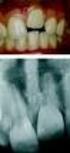 Endodontic Topics 2004, 7, 14 34 Printed in Denmark. All rights reserved Copyright r Blackwell Munksgaard ENDODONTIC TOPICS 2004 Dental traumatology: essential diagnosis and treatment planning LEIF K.
Use of Evidence-Based Decision-Making in Private Practice for Emergency Treatment of Dental Trauma: EB Case Report
 FEATURE ARTICLE Use of Evidence-Based Decision-Making in Private Practice for Emergency Treatment of Dental Trauma: EB Case Report Syrene A. Miller, BA, and Greg Miller, DDS Member of the American Dental
International Association of Dental Traumatology guidelines for the management of traumatic dental injuries: 3. Injuries in the primary dentition
 Dental Traumatology 2012; 28: 174 182; doi: 10.1111/j.1600-9657.2012.01146.x International Association of Dental Traumatology guidelines for the management of traumatic dental injuries: 3. Injuries in
Pediatric Dental Trauma. Acute Care Topics Mary Fox Braithwaite June 2008
 Pediatric Dental Trauma Acute Care Topics Mary Fox Braithwaite June 2008 Dental Injuries in Children Nearly 50% of children experience some type of dental injury during childhood, many of which are are
Multidisciplinary Approach to Delayed Treatment of Traumatic Teeth Injuries Involving Extrusive Luxation, Avulsion and Crown Fracture
 Ó Operative Dentistry, 2014, 39-6, 566-571 Clinical Technique/Case Report Multidisciplinary Approach to Delayed Treatment of Traumatic Teeth Injuries Involving Extrusive Luxation, Avulsion and Crown Fracture
Management of Dental Trauma in a Primary Care Setting
 Guidance for the Clinician in Rendering Pediatric Care CLINICAL REPORT Management of Dental Trauma in a Primary Care Setting abstract The American Academy of Pediatrics and its Section on Oral Health have
Classification of dental trauma & management of dental avulsions
 Dr Tony Skapetis The University of Sydney Clinical Director Education WCOH Clinical Senior Lecturer University of Sydney [email protected] Classification of dental trauma & management of dental
ENDODONTICS. Colleagues for Excellence. The Treatment of Traumatic Dental Injuries
 ENDODONTICS Colleagues for Excellence Summer 2014 The Treatment of Traumatic Dental Injuries Published for the Dental Professional Community by the American Association of Endodontists www.aae.org/colleagues
Trauma in Young Permanent Teeth: Factors Associated with Adverse Outcomes. Ahmed Hosamuddin Rozi. A thesis. Submitted in partial fulfillment of the
 Trauma in Young Permanent Teeth: Factors Associated with Adverse Outcomes Ahmed Hosamuddin Rozi A thesis Submitted in partial fulfillment of the requirements for the degree of Master of Science in Dentistry
Endodontic Considerations in Traumatized Teeth รศ ป ทมา ช ยเล ศวณ ชก ล
 Endodontic Considerations in Traumatized Teeth รศ ป ทมา ช ยเล ศวณ ชก ล Prevalence of dental injuries Permanent dentition (50%
Apexogenesis after initial root canal treatment of an immature maxillary incisor a case report
 doi:10.1111/j.1365-2591.2009.01645.x CASE REPORT Apexogenesis after initial root canal treatment of an immature maxillary incisor a case report S. R. Kvinnsland 1, A. Bårdsen 2 & I. Fristad 2 1 Clinic
Libyan general dentists knowledge of dental trauma management
 International Dental & Medical Journal of Advanced Research (2015), 1, 1 6 ORIGINAL ARTICLE Libyan general dentists knowledge of dental trauma management Marwa Hatem, Elsanousi M. Taher Department of Oral
Replantation of Avulsed Permanent Anterior Teeth: A Case Report.
 RESEARCH AND REVIEWS: JOURNAL OF DENTAL SCIENCES Replantation of Avulsed Permanent Anterior Teeth: A Case Report. Abu-Hussein Muhamad 1 *, Watted Nezar 2, and Abdulgani Azzaldeen 3. 1 Department of Pediatric
Emergency management of dental trauma
 Australasian Emergency Nursing Journal (2010) 13, 30 34 available at www.sciencedirect.com journal homepage: www.elsevier.com/locate/aenj CLINICAL PRACTICE UPDATE Emergency management of dental trauma
Tooth avulsion-a Dental emergency in children: A Review
 American Journal of Advances in Medical Science www.arnaca.com eissn: 2347-2766 Review Article Tooth avulsion-a Dental emergency in children: A Review Debapriya Pradhan 1, Prasant MC 2, Varsha H Tambe
J. O. Andreasen 1, F. M. Andreasen 1, I. Mejàre 2, M. Cvek 1 1 Department of Oral and Maxillofacial Surgery, University
 Dental Traumatology 2004; 20: 203 211 Printed in Denmark. All rights reserved Copyright Ó Blackwell Munksgaard 2004 DENTAL TRAUMATOLOGY Healing of 400 intra-alveolar root fractures. 2. Effect of treatment
4-1-2005. Dental Clinical Criteria and Documentation Requirements
 4-1-2005 Dental Clinical Criteria and Documentation Requirements Table of Contents Dental Clinical Criteria Cast Restorations and Veneer Procedures... Pages 1-3 Crown Repair... Page 3 Endodontic Procedures...
International Association of Dental Traumatology. IADT Newsletter THE IADT S DENTAL TRAUMA GUIDE YOUR TOOL TO EVIDENCE -BASED DENTAL TRAUMATOLOGY
 International Association of Dental Traumatology Volume 2, issue 1 IADT Newsletter Dear members, THE IADT S DENTAL TRAUMA GUIDE YOUR TOOL TO EVIDENCE -BASED DENTAL TRAUMATOLOGY The IADT s Dental Trauma
An overview of classification of dental trauma
 Review Article An overview of classification of dental trauma Sasikala Pagadala 1*, Deepti Chaitanya Tadikonda 2 1 Assistant Professor, Department t of Periodontics, Nanded Rural Dental College and Research
Use of ultrasound Doppler to determine tooth vitality in a discolored tooth after traumatic injury: its prospects and limitations
 Case report ISSN 2234-7658 (print) / ISSN 2234-7666 (online) http://dx.doi.org/10.5395/rde.2014.39.1.68 Use of ultrasound Doppler to determine tooth vitality in a discolored tooth after traumatic injury:
Management of Traumatic Tooth Injuries in the Dental Office
 Management of Traumatic Tooth Injuries in the Dental Office John M. Coulter, D.D.S., O. Lee Wilson, D.M.D., Murray K. Marks, Ph.D. T D A EXAM #61 Introduction Pediatric and adult traumatic dental injuries
DENTAL INJURIES IN 0-15 YEAR OLDS AT THE KENYATTA NATIONAL HOSPITAL, NAIROBI. H. M. MURIITHI, M. A. MASIGA and M. L.
 592 EAST AFRICAN MEDICAL JOURNAL November 2005 East African Medical Journal Vol. 82 No. 11 November 2005 DENTAL INJURIES IN 0-15 YEAR OLDS AT THE KENYATTA NATIONAL HOSPITAL, NAIROBI H. M. Muriithi, BDS,
Case Report(s): Uncomplicated Crown Fractures
 Case Report(s): Uncomplicated Crown Fractures Tooth fractures can be classified as follows: Uncomplicated crown fracture = fracture limited to the crown of the tooth with dentin exposure but no pulp exposure.
MEDICAID DENTAL PROGRAMS CODING, POLICY AND RELATED FEE REVISION INFORMATION
 MEDICAID DENTAL PROGRAMS CODING, POLICY AND RELATED FEE REVISION INFORMATION Effective for dates of service on and after November 1, 2005, the following dental coding, policy and related fee revisions
Chapter 15 ENDODONTIC CONSIDERATIONS IN DENTAL TRAUMA
 Chapter 15 ENDODONTIC CONSIDERTIONS IN DENTL TRUM Leif K. akland The outcome of traumatic events involving teeth depends on three factors: the extent of injury, the quality and timeliness of initial care,
A single visit, multidisciplinary approach to the management of traumatic tooth crown fracture C. P.K. Wadhwani, 1
 A single visit, multidisciplinary approach to the management of traumatic tooth crown fracture C. P.K. Wadhwani, 1 PRACTICE An immediate restorative technique resolving the acute problem of traumatic tooth
Guideline on Management of Acute Dental Trauma
 Guideline on Management of Acute Dental Trauma Originating Council Council on Clinical Affairs Review Council Council on Clinical Affairs Adopted 2001 Revised 2004, 2007, 2010, 2011 Purpose The American
CLINICAL MANAGEMENT OF THE AVULSED TOOTH: PRESENT STRATEGIES and FUTURE DIRECTIONS
 Dental Traumatology 2002: 18: 1 11 Copyright C Munksgaard 2002 Printed in Denmark. All rights reserved DENTAL TRAUMATOLOGY ISSN 1600-4469 Editor s note After a year at the helm of Dental Traumatology I
Residency Competency and Proficiency Statements
 Residency Competency and Proficiency Statements 1. REQUEST AND RESPOND TO REQUESTS FOR CONSULTATIONS Identify needs and make referrals to appropriate health care providers for the treatment of physiologic,
Revascularization of Immature Permanent Teeth With Apical Periodontitis: New Treatment Protocol?
 JOURNAL OF ENDODONTICS Printed in U.S.A. Copyright 2004 by The American Association of Endodontists VOL. 30, NO. 4, APRIL 2004 CLINICAL RESEARCH Revascularization of Immature Permanent Teeth With Apical
IMPLANT CONSENT FORM WHAT ARE DENTAL IMPLANTS?
 IMPLANT CONSENT FORM WHAT ARE DENTAL IMPLANTS? Dental implants are a very successful and accepted treatment option to replace lost or missing teeth. A dental implant is essentially an artificial tooth
MEDICAL POLICY POLICY TITLE DENTAL AND ORAL SURGERY SERVICES AFTER AN ACCIDENT POLICY NUMBER MP- 1.108
 Original Issue Date (Created): July 1, 2005 Most Recent Review Date (Revised): Effective Date: June 29, 2010 May 25, 2011- RETIRED I. POLICY II. Dental and/or oral surgery services (on a limited basis)
Orthodontic Treatment of an Ankylosed Maxillary Central Incisor through Osteogenic Distraction
 Case Report Orthodontic Treatment of an Ankylosed Maxillary Central Incisor through Osteogenic Distraction Doğan Dolanmaz a ; Ali Ihya Karaman b ; A.Alper Pampu c ; Ahu Topkara d ABSTRACT Tooth ankylosis
Quality guidelines for endodontic treatment: consensus report of the European Society of Endodontology
 doi:10.1111/j.1365-2591.2006.01180.x QUALITY GUIDELINES Quality guidelines for endodontic treatment: consensus report of the European Society of Endodontology Abstract. Quality guidelines for endodontic
Complications Associated with Tooth Extraction
 1 Complications Associated with Tooth Extraction Mark M. Smith, VMD, DACVS, DAVDC Center for Veterinary Dentistry and Oral Surgery 9041 Gaither Road Gaithersburg, MD 20877 Introduction Tooth extraction
Anthem Blue Dental PPO Plan
 Anthem Blue Dental PPO Plan For Individuals and Families Anthem Blue Cross and Blue Shield 700 Broadway Denver, Colorado 80273 anthem.com An independent licensee of the Blue Cross and Blue Shield Association.
Crown Dilaceration in Permanent Teeth after Trauma to the Primary Predecessors: Report of Three Cases
 Braz Dent J (2012) 23(5): 591-596 Crown dilaceration after trauma to the predecessors ISSN 0103-6440 591 Crown Dilaceration in Permanent Teeth after Trauma to the Primary Predecessors: Report of Three
Humana Health Plans of Florida. Important:
 Humana Health Plans of Florida Important: Dental discount membership in Florida is determined by viewing the member s ID card and verifying that the Humana Logo and Medicare name is listed with an effective
[PAGE HEADLINE] Improve your Health and Change Your Smile with Complete Dental Services in One [CITYNAME] Location
![[PAGE HEADLINE] Improve your Health and Change Your Smile with Complete Dental Services in One [CITYNAME] Location](/thumbs/31/14971568.jpg "[PAGE HEADLINE] Improve your Health and Change Your Smile with Complete Dental Services in One [CITYNAME] Location") Eddie Stephens//Copywriter Sample: Website copy/internal Dental Services Pages [PAGE HEADLINE] Improve your Health and Change Your Smile with Complete Dental Services in One [CITYNAME] Location [LEAD SENTENCE/PARAGRAPH]
Eddie Stephens//Copywriter Sample: Website copy/internal Dental Services Pages [PAGE HEADLINE] Improve your Health and Change Your Smile with Complete Dental Services in One [CITYNAME] Location [LEAD SENTENCE/PARAGRAPH]
CLINICAL GOALS OF PATIENT CARE AND CLINIC MANAGEMENT. Philosophical Basis of the Patient Care System. Patient Care Goals
 University of Washington School of Dentistry CLINICAL GOALS OF PATIENT CARE AND CLINIC MANAGEMENT Philosophical Basis of the Patient Care System The overall mission of the patient care system in the School
Splinting of traumatized teeth with a new device: TTS (Titanium Trauma Splint)
 Dental Traumatology 2001; 17: 180 184 Copyright C Munksgaard 2001 Printed in Denmark. All rights reserved DENTAL TRAUMATOLOGY ISSN 1600-4469 Splinting of traumatized teeth with a new device: TTS (Titanium
Powertome Assisted Atraumatic Tooth Extraction
 Powertome Assisted Atraumatic Tooth Extraction White et al Jason White, DDS 1 2 3 Abstract Background: While traditional dental extraction techniques encourage minimal trauma, luxated elevation and forceps
Acute Dental Problems in the School Setting
 Acute Dental Problems in the School Setting Keri Discepolo, D.D.S., M.P.H. Clinical Faculty, Yale Pediatric Dentistry Residency Program Associate, Yale School of Medicine Objectives Brief Description of
Role of dentistry in the health scciences, the dental team. Dr. Dézsi Anna Júlia
 Role of dentistry in the health scciences, the dental team Dr. Dézsi Anna Júlia The art of medicine Herodatus, a historian, described the medical art in Egypt: "The art of medicineis distributed thus:
www.iadt-dentaltrauma.org
 Current Treatment Options Of Guidelines of the International Association of tology Asgeir Sigurdsson, cand odont, MS Chairman of the Department of Endodontics NYU College of Dentistry Past President of
Pediatric Dental Emergencies
 Pediatric Dental Emergencies 36th Annual Common Childhood Problems Conference Sujatha S. Sivaraman BDS, DMD May 16 th 2014 Disclosures: None Objectives Identify Dental Emergencies Best methods to address
An Overview of Your Dental Benefits
 An Overview of Your Dental Benefits Educators Health Alliance ii \ DENTAL BENEFITS PPO Dental Plan Options OPTION 1 Maintenance Dentistry OPTION 2 (STANDARD PLAN) IN-NETWORK OUT-OF-NETWORK Maintenance
Teeth and Dental Implants: When to save, and when to extract.
 Teeth and Dental Implants: When to save, and when to extract. One of the most difficult decisions a restorative dentist has to make is when to refer a patient for extraction and placement of dental implants.
The Penn Dental Plan for Undergraduate and Graduate Students of the University of Pennsylvania
 The Penn Dental Plan for Undergraduate and Graduate Students of the University of Pennsylvania Effective August 1, 2015 Introduction The Penn Dental Plan of the University of Pennsylvania ( Penn Dental
RESIDENT TRAINING GOALS AND OBJECTIVES STATEMENTS
 RESIDENT TRAINING GOALS AND OBJECTIVES STATEMENTS Evaluation and treatment of dental emergencies Recognize, anticipate and manage emergency problems related to the oral cavity. Differentiate between those
Replacement of the upper left central incisor with a Straumann Bone Level Implant and a Straumann Customized Ceramic Abutment
 Replacement of the upper left central incisor with a Straumann Bone Level Implant and a Straumann Customized Ceramic Abutment by Dr. Ronald Jung and Master Dental Technician Xavier Zahno Initial situation
A collection of pus. Usually forms because of infection. A tooth or tooth structure which is responsible for the anchorage of a bridge or a denture.
 Abscess A collection of pus. Usually forms because of infection. Abutment A tooth or tooth structure which is responsible for the anchorage of a bridge or a denture. Amalgam A silver filling material.
OVERVIEW The MetLife Dental Plan for Retirees
 OVERVIEW The MetLife Dental Plan for Retirees IN NETWORK: Staying in network saves you money. 1 Participating dentists have agreed to MetLife s negotiated fees which are typically 15% to 45% below the
Postendodontic Tooth Restoration - Part I: The Aim and the Plan of. the procedure.
 Postendodontic Tooth Restoration - Part I: The Aim and the Plan of the Procedure Sanja egoviê 1 Nada GaliÊ 1 Ana Davanzo 2 Boæidar PaveliÊ 1 1 Department of Dental Pathology School of Dental Medicine University
Oftentimes, as implant surgeons, we are
 CLINICAL AVOIDING INJURY TO THE INFERIOR ALVEOLAR NERVE BY ROUTINE USE OF INTRAOPERATIVE RADIOGRAPHS DURING IMPLANT PLACEMENT Jeffrey Burstein, DDS, MD; Chris Mastin, DMD; Bach Le, DDS, MD Injury to the
ORTHODONTIC TREATMENT
 ORTHODONTIC TREATMENT Informed Consent for the Orthodontic Patient As a general rule, positive orthodontic results can be achieved by informed and cooperative patients. Thus, the following information
Pulpal response to sensibility tests after traumatic dental injuries in permanent teeth
 Dental Traumatology 2013; doi: 10.1111/edt.12074 Pulpal response to sensibility tests after traumatic dental injuries in permanent teeth Juliana Vilela Bastos 1, Eugenio Marcos Andrade Goulart 2, Maria
Avulsed maxillary central incisors: The case for autotransplantation
 POINT/COUNTERPOINT 9 Avulsed maxillary central incisors: The case for autotransplantation Jim Janakievski Seattle, Wash Traumatic dental injuries most often occur in childhood and early adolescence. 1
Dental luxation and avulsion injuries in Hong Kong primary school children
 Original ARTICLE Dental luxation and avulsion injuries in Hong Kong primary school children SY Cho * This article was published on 17 Jul 2015 at www.hkmj.org. A B S T R A C T Objectives: To identify the
A Dental Benefit Summary for Rice University
 Aetna Dental presents A Dental Benefit Summary for Rice University CODE CODE Office Visit Copay $5 DIAGNOSTIC CROWNS/BRIDGES D0120 Exam-Periodic No Charge D2510 Inlay, Metallic, One surface $225 D0150
Ankylosis of Traumatized Permanent Incisors: Pathogenesis and Current Approaches to Diagnosis and Management
 Clinical PRACTICE Ankylosis of Traumatized Permanent Incisors: Pathogenesis and Current Approaches to Diagnosis and Management Karen M. Campbell, DDS, MSc, FRCD(C); Michael J. Casas, DDS, DPaed, MSc, FRCD(C);
Retrospective analysis of factors influencing the eruption of delayed permanent incisors after supernumerary tooth removal
 Retrospective analysis of factors influencing the eruption of delayed permanent incisors after supernumerary tooth removal R.A.E. BRYAN*, B.O.I. COLE**, R.R. WELBURY* ABSTRACT. Aim This was to assess the
Dental Services. Dental Centre. HKSH Healthcare Medical Centre Dental Centre. For enquiries and appointments, please contact us
 Dental Services For enquiries and appointments, please contact us HKSH Healthcare Medical Centre Dental Centre Level 22, One Pacific Place 88 Queensway, Hong Kong (852) 2855 6666 (852) 2892 7589 [email protected]
Tough Choice for Young First Permanent molars: To Do Pulp Treatment or to Extract?
 Tough Choice for Young First Permanent molars: To Do Pulp Treatment or to Extract? Jung-Wei Chen, DDS, MS, PhD Professor and Program Director Advanced Education Program in Pediatric Dentistry Loma Linda
Histology of Irreversible Pulpitis Premolars Treated with Mineral Trioxide Aggregate Pulpotomy
 Operative Dentistry, 2010, 35-3, 370-374 Clinical Technique/Case Report Histology of Irreversible Pulpitis Premolars Treated with Mineral Trioxide Aggregate Pulpotomy L-H Chueh C-P Chiang Clinical Relevance
Straumann Bone Level Tapered Implant Peer-to-peer communication
 Straumann Bone Level Tapered Implant Peer-to-peer communication Clinical cases April, 2015 Clinical Cases Case No. Site 1 Single unit; Anterior Maxilla 2 Multi-unit; Anterior Maxilla Implant placement