
Improving smoking cessation in drug and alcohol treatment
|
|
|
- Emerald Cain
- 9 years ago
- Views:
Transcription
1 Improving smoking cessation in drug and alcohol treatment Interim briefing on Turning Point s PHE-supported smoking cessation pilots Tobacco smoking is prevalent among drug and alcohol users, and contributes significantly to illness and death. Many people may recover from their drug or alcohol dependence only to later die of their continued and untreated tobacco dependence. Public Health England (PHE) is supporting improvements in smoking cessation (or reduction for those who cannot stop) in drug and alcohol treatment services. Working with PHE and South London and Maudsley NHS Foundation Trust (SLAM), Turning Point launched smoking cessation pilots in nine of its substance misuse services in late Although too early to see any evaluated outcomes from the pilots, this briefing summarises what Turning Point did to set them up in terms of implementing evidence-based interventions and processes, which might be of use to other drug and alcohol services considering introducing or expanding smoking cessation, and to their commissioners. Turning Point s pilot programme Key elements of TP s pilot programme have been to: assess service user smoking prevalence to provide a baseline for comparing future prevalence assess workforce attitudes and behaviour, again to provide a baseline for future comparison train staff review smoking policies design interventions for assessment and goal planning record inputs and outcomes evaluate the pilots Although the pilot programme is still at a relatively early stage in its development, Turning Point has worked through these elements and has already identified a number of implementation lessons. These are described in the rest of this briefing. 1
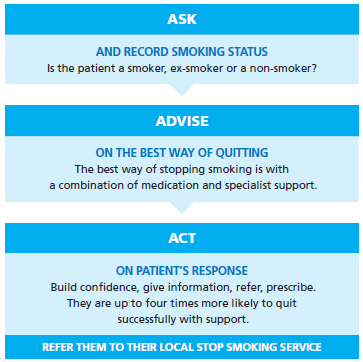
2 Address staff understanding, attitudes and behaviour Make staff aware that smoking causes many more deaths among service users than heroin or alcohol. 1 Tell staff about recent evidence that supports the feasibility and desirability of smoking cessation at the same time as recovery from drug or alcohol dependence. 2 Evidence suggests that service users who stop smoking can improve the outcomes of their drug and alcohol misuse treatment, perhaps contrary to the assumptions of some staff. Openly address staff smoking, how it might affect beliefs about smoking cessation among service users, the direct impact it has on service users who smoke, and how staff can be supported to stop smoking (or at least not smoke at work or not smoke with service users). To address the points above, Turning Point s pilot sites each held a team meeting with a tobacco quiz and post-quiz discussion (see appendix 1) led by a manager. Encourage staff to use any smoking cessation interventions that services develop and deliver. Promote smoking cessation at staff inductions, professional open days, through marketing events, etc. Keep smoking on the agenda between keyworkers and service users Routinely ask service users about their smoking status and help them find support to stop by following the Very Brief Advice (VBA) model shown. Include a smoking prompt on care or recovery plan review paperwork. Include stopping smoking as a care or recovery plan goal and a topic for discussion in groupwork, and introduce a stop smoking group into the group timetable if service users support it. Aim to get to a point where discussing tobacco smoking with service users is the norm and done as a matter of course. 2
3 Involve other service users Consult local service user groups for their views on how best to support people who want to stop smoking. Engage mutual aid and recovery groups to support people who want to stop smoking. Get peer supporters and mentors involved, as they would be in other parts of drug treatment and recovery. Plan, plan and plan again Don't underestimate how much there will be to do, especially if this is part of a broader health and wellbeing policy for staff and clients. Have a clearly phased plan that: communicates intentions with staff establishes baselines for values and behaviours involves staff in programme design delivers basic training on the VBA model to all staff includes questions about smoking in care planning and assessment tools delivers more advanced practitioner training to identified staff who then become leads monitors referrals, uptake and outcomes Champion A clear steer and support from the management is needed, although it will be operational staff who then really make the difference in delivery. Identify a stop smoking champion within the service to take ownership and develop a plan. Communicate Communicate clearly with staff: the plan, key dates, etc. Turning Point designed a poster (right) for its offices. It helps to bring together everybody who is going to be involved in the pilot. 3
4 Use data Data is important. Baseline smoking rates and attitudes, and then monitoring of what interventions and training are offered, their uptake and outcomes, will all be needed to demonstrate the programme s impact to staff, managers, funders, stop smoking services, etc. There are plans to introduce smoking into the Treatment Outcomes Profile (TOP) and a smoking intervention as a recovery support intervention in NDTMS core data. Services may want or need to collect more data than this. Turning Point collects the following at assessment: Have you ever smoked tobacco? Never Currently Previously If currently or previously smoked, (number) how many times have you tried to give up in last 12 months? How many cigarettes do you smoke (number) per day? On how many of the last 28 days (number) have you smoked? If you currently smoke, would you Yes or No like support to give up or cut down on your tobacco smoking? Offered and accepted support offered: Very Brief Advice Nicotine replacement therapy Referral to internal (TP provided) smoking cessation service Referral to external smoking cessation service Other Do you use e-cigarettes? If yes, how many times in a typical day do you use an e-cigarette? Yes or No (number) They also have updateable fields on the client s record for: review of smoking behaviour and subsequent offers of a stop smoking intervention whether an intervention commenced and was attended referrals to smoking cessation services when someone is successful no longer smoking following a stop smoking intervention 4
5 Involve commissioners and local stop smoking services Get local stop smoking services interested and develop a pathway with them: some are funded per quit so it will be in their interests to support local programmes that can help more people to stop some will provide free face-to-face training if not, it is available from the National Centre for Smoking Cessation and Training (NCSCT) for a fee larger services are often easier to engage Consider early on and with local partners who is going to pay for nicotine replacement therapy (NRT). Consider and discuss with commissioners a possible phased approach in which the service gradually takes on more direct responsibility for smoking cessation, if this more effectively meets need: Phase 1: refer to stop smoking clinics build pathway with current stop smoking services Phase 2: deliver stop smoking clinics in-house approach stop smoking commissioners for resources/funding Phase 3: directly prescribe or provide NRT approach commissioners to identify funding stream Support drug users Promote health advice for smokers (one-to-one, groups, smoking diaries and reduction plans). The Routes to Recovery goal planner can be used or adapted for smoking. It is available on page 33 at and Turning Point s adapted copy is included in appendix 2. Other points Review and consider existing policies and whether they cover everything, including removing smoking areas for staff and service users from outside premises, limiting smoking breaks, and developing a policy for e-cigarettes and vapers. Useful guidance includes: NICE public health guidance PH45 Tobacco harm reduction approaches to smoking NICE public health guidance PH48 Smoking cessation in secondary care: acute, maternity and mental health services Action on Smoking in Health resource, Will you permit or prohibit electronic cigarette use on your premises? 5
6 If referring someone to residential rehabilitation, it might be useful to include smoking cessation as one intended outcome for the package of care. Piggybacking on Stoptober, No Smoking Day, the January Health Harms campaigns or some other local campaign can help drive interest in and enthusiasm for a service-based stop smoking programme. Produced with the help of Turning Point: 6
7 Appendix 1. Staff team quiz Tobacco and substance misuse treatment how much do you know? Team name: Section A. Smoking and its effects 1. In a 2008 UK study, what percentage of opiate users in treatment reported smoking tobacco? a) 60% b) 75% c) 88% 2. Death rates of people in substance misuse treatment services are highest in relation to: a) Alcohol b) Tobacco c) Illicit drugs 3. What is the rate of tobacco-related deaths in substance misuse treatment compared to the general population? a) Twice as high b) Three times as high c) The same 4. Tobacco and which other drug multiplies the risk of developing cancers of the upper respiratory and digestive tracts? a) Cannabis b) Alcohol c) Cocaine Section B. Giving up smoking 5. Name three acute, physiological, nicotine-related withdrawal symptoms a) b) c) 6. Acute physiological nicotine-related withdrawal symptoms peak how soon after a person stops smoking? a) 12 to 24 hours b) 24 to 48 hours c) 48 to 72 hours 7
8 7. Physiological cravings for nicotine usually last a) 4 days b) 7 days c) 10 days 8. Which intervention is effective for smoking cessation in pregnant women? a) Clear strong advice to stop b) Nicotine replacement therapy c) Going through pros and cons of stopping 9. Once the decision has been made to stop, research indicates it is best to set a date to stop. After the decision point this date should be no later than a) 4 days b) 7 days c) 14 days 10. Which of these has not been shown to be effective in smoking cessation? a) Internet interventions b) Telephone helplines c) Hypnosis 11. During substance misuse treatment, smoking cessation intervention makes long term abstinence from alcohol and illicit drugs a) More likely b) Less likely c) Makes no difference Section C. What happens in a London treatment service? Based on a 2008 audit of a London NHS substance misuse service (both ward and community-based), (165 staff, 143 clients) ref. Ann McNeill, South London and Maudsley NHS Trust 12. What percentage of staff had ever smoked? 13. What percentage of staff were currently smoking? 14. What percentage of clients were currently smoking? 15. What percentage of clients who smoked said they wanted to give up? 16. What percentage of these said they wanted to give up smoking in the next three months? 8
9 17. For clients who wanted to give up smoking which was the most popular method? a) Stopping smoking abruptly b) Advice on gradually reducing the number of cigarettes smoked c) Nicotine replacement therapy 18. What percentage of clients who smoked had been offered support with smoking cessation during the current treatment episode? 19. What percentage of clients who smoked had never been offered smoking cessation support? 20. Staff rated nicotine dependence treatment as important as treatment of other substances? True/false. 21. Most staff thought nicotine dependence treatment should be put off until late or after a client s primary addiction treatment? True/false. 22. Almost half of the clients thought nicotine dependence should be addressed early in treatment? True/false. 23. Staff who smoke were more likely to question the importance of nicotine dependence treatment for clients? True/false. Section C information from Cookson C, Strang J, Ratschen E, Sutherland G, Finch E, McNeill A (2014). Smoking and its treatment in addiction services: Clients' and staff behaviour and attitudes. BMC Health Services Research 14, 304 9
10 Quiz answers 1. c) 88% 2. b) Tobacco 3. a) 2:1 4. b) Alcohol 5. Score 1 for each up to 3: intense craving for nicotine tension, irritability, frustration mild depression, decreased ability to experience pleasure anxiety, anger restlessness, difficulty concentrating increased appetite 6. b) 24 to 48 hours 7. b) 7 days 8. a) Clear strong advice to stop 9. c) 14 days 10. c) Hypnosis 11. a) More likely % (mark correct) % (mark correct) % (mark correct) % (mark correct) % (mark correct) 17. c) Nicotine replacement therapy % (mark correct) % (mark correct) 20. False 21. True 22. True 23. True Tobacco quiz follow-up questions for team discussion 1. Looking back over your scores is there anything that surprises you? 2. How often do we discuss tobacco smoking with our clients? 3. What difference could it make if we did? 4. When and how might we bring up the subject? 5. Which brief interventions do you know about that can help with smoking? Use the discussion to lead into a brief introduction to Very Brief Advice and how staff can be trained in it. 10

11 Appendix 2. Goal planner (also available at 11
12 References 1 Hurt et al. Mortality following inpatient addictions treatment. Journal of the American Medical Association: JAMA 275: , Such as Winhusen et al. A randomized trial of concurrent smoking-cessation and substance use disorder treatment in stimulant-dependent smokers. Journal of Clinical Psychiatry 75: , 2014 Produced by the Health & Wellbeing Directorate, Public Health England Public Health England Wellington House Waterloo Road London SE1 8UG PHE publications gateway number: First published: August 2015 Crown copyright 2015 Re-use of Crown copyright material (excluding logos) is allowed under the terms of the Open Government Licence, visit for terms and conditions. 12
A briefing on the evidence-based drug and alcohol treatment guidance recommendations on mutual aid
 A briefing on the evidence-based drug and alcohol treatment guidance recommendations on mutual aid A briefing on the evidence-based drug and alcohol treatment guidance recommendations on mutual aid About
Protecting and improving the nation s health. Specialist substance misuse treatment for young people in England 2013-14
 Protecting and improving the nation s health Specialist substance misuse treatment for young people in England 2013-14 January 2015 About Public Health England Public Health England exists to protect and
Alcohol treatment in England 2012-13
 Alcohol treatment in England 2012-13 October 2013 About Public Health England Public Health England s mission is to protect and improve the nation s health and to address inequalities through working with
Substance misuse among young people in England 2012-13
 Substance misuse among young people in England December 2013 About Public Health England Public Health England s mission is to protect and improve the nation s health and to address inequalities through
Residential rehabilitation: state of the sector in 2014 Report of a survey of providers and commissioners of residential services
 Residential rehabilitation: state of the sector in 2014 Report of a survey of providers and commissioners of residential services Residential rehab: state of the sector in 2014 About Public Health England
Protecting and improving the nation s health. Alcohol treatment in England 2013-14
 Protecting and improving the nation s health Alcohol treatment in England 2013-14 October 2014 About Public Health England Public Health England exists to protect and improve the nation s health and wellbeing,
Nursing and Midwifery Contribution to Public Health. Improving health and wellbeing
 Nursing and Midwifery Contribution to Public Health Improving health and wellbeing June 2013 1 Nursing and Midwifery Contribution to Public Health Introduction The challenges we face in terms of population
NEXT STEPS: TREATING TOBACCO AND CREATING HEALTHY MENTAL HEALTH/SUBSTANCE ABUSE TREATMENT FACILITY ENVIRONMENTS PART I
 NEXT STEPS: TREATING TOBACCO AND CREATING HEALTHY MENTAL HEALTH/SUBSTANCE ABUSE TREATMENT FACILITY ENVIRONMENTS PART I Stan Martin, MM Program Director CAI, TCTP Dr John R. Hughes February 19, 2014 Housekeeping
E-cigarettes: a new foundation for evidence-based policy and practice
 E-cigarettes: a new foundation for evidence-based policy and practice Introduction Smoking rates in England are in long-term decline. However, tobacco use remains one of the country s major public health
Protecting and improving the nation s health. Drug treatment in England 2013-14
 Protecting and improving the nation s health Drug treatment in England November 214 About Public Health England Public Health England exists to protect and improve the nation s health and wellbeing, and
Helping People to Stop Smoking
 The New Zealand Guidelines for Helping People to Stop Smoking Tobacco smoking is a major public health problem in New Zealand. Around 5000 New Zealanders die each year from a smoking-related disease. Of
Stop Smoking Wales Workplace Tool Kit
 Stop Smoking Wales Workplace Tool Kit Suitable for Workplaces with over 50 employees Developed in partnership between Stop Smoking Wales and Healthy Working Wales. Dear An estimated 34 million days a year
Milton Keynes Drug and Alcohol Strategy 2014-17
 Health and Wellbeing Board Milton Keynes Drug and Alcohol Strategy 2014-17 www.milton-keynes.gov.uk 2 Contents Foreword 4 Introduction 5 National context 6 Local context 7 Values and principles 9 Priorities
SOMERSET DUAL DIAGNOSIS PROTOCOL OCTOBER 2011
 SOMERSET DUAL DIAGNOSIS PROTOCOL OCTOBER 2011 This document is intended to be used with the Somerset Dual Diagnosis Operational Working guide. This document provides principles governing joint working
THE STORY OF DRUG TREATMENT
 THE STORY OF DRUG TREATMENT EFFECTIVE TREATMENT CHANGING LIVES The story of drug treatment The goal of all treatment is for drug users to achieve abstinence from their drug or drugs of dependency. For
POWDER COCAINE: HOW THE TREATMENT SYSTEM IS RESPONDING TO A GROWING PROBLEM
 Effective treatment is available for people who have a powder-cocaine problem seven in ten of those who come into treatment either stop using or reduce their use substantially within six months POWDER
Adult Alcohol statistics from the National Drug Treatment Monitoring System (NDTMS) 1 April 2013 to 31 March 2014
 Adult Alcohol statistics from the National Drug Treatment Monitoring System (NDTMS) 1 April 2013 to 31 March 2014 About Public Health England Public Health England exists to protect and improve the nation's
Smoking Cessation and Mental Health: A briefing for front-line staff
 Smoking Cessation and Mental Health: A briefing for front-line staff 2014 National Centre for Smoking Cessation and Training (NCSCT) Authors: Deborah Robson and Jennifer Potts Editors: Andy McEwen and
Topic Area - Dual Diagnosis
 Topic Area - Dual Diagnosis Dual Diagnosis is a challenging problem for both mental health and substance misuse services. People with mental health problems, who also suffer from substance misuse are at
Alcohol and drugs prevention, treatment and recovery: why invest?
 Alcohol and drugs prevention, treatment and recovery: why invest? 1 Alcohol problems are widespread 9 million adults drink at levels that increase the risk of harm to their health 1.6 million adults show
SPECIFICATION FOR THE LOCAL COMMISSIONED SERVICE FOR THE MANAGEMENT ALCOHOL MISUSE
 SPECIFICATION FOR THE LOCAL COMMISSIONED SERVICE FOR THE MANAGEMENT OF ALCOHOL MISUSE Date: March 2015 1 1. Introduction Alcohol misuse is a major public health problem in Camden with high rates of hospital
Scientific Facts on. Psychoactive Drugs. Tobacco, Alcohol, and Illicit Substances
 page 1/5 Scientific Facts on Psychoactive Drugs Tobacco, Alcohol, and Illicit Substances Source document: WHO (2004) Summary & Details: GreenFacts Context - Psychoactive drugs such as tobacco, alcohol,
Cognitive and behavioural therapy (CBT) for people with depression and anxiety What skills can service users expect their therapists to have?
 Cognitive and behavioural therapy (CBT) for people with depression and anxiety What skills can service users expect their therapists to have? Cognitive and behavioural therapy (CBT) for people with depression
Public Health England. Alcohol & alcohol related harm
 Public Health England Alcohol & alcohol related harm Mission To protect and improve the nation s health and to address inequalities, working with national and local government, the NHS, industry, academia,
drug treatment in england: the road to recovery
 The use of illegal drugs in England is declining; people who need help to overcome drug dependency are getting it quicker; and more are completing their treatment and recovering drug treatment in ENGlaND:
Bsafe Blackpool Community Safety and Drugs Partnership. Drug and Alcohol treatment planning in the community for Young People and Adults 2012/13
 Bsafe Blackpool Community Safety and Drugs Partnership Drug and Alcohol treatment planning in the community for Young People and Adults 2012/13 Planning Framework Treatment plan Planning Framework Bsafe
Quit plan. Your free guide on how to stop smoking. www.want2stop.info
 Quit plan Your free guide on how to stop smoking www.want2stop.info Thinking? about stopping Around three quarters of those people in Northern Ireland who smoke say they would like to stop. If you are
Alcohol-use disorders: alcohol dependence. Costing report. Implementing NICE guidance
 Alcohol-use disorders: alcohol dependence Costing report Implementing NICE guidance February 2011 (February 2011) 1 of 37 NICE clinical guideline 115 This costing report accompanies the clinical guideline:
Smoking Cessation Program
 Smoking Cessation Program UHN Information for people who are ready to quit smoking Read this information to learn: why you should quit smoking how the Smoking Cessation Program works treatments to help
Dual Diagnosis. Dual Diagnosis Good Practice Guidance, Dept of Health (2002);
 Dual Diagnosis Dual Diagnosis is a challenging problem for both mental health and substance misuse services. People with mental health problems, who also suffer from substance misuse are at an increased
Local action on health inequalities: Good quality parenting programmes
 Local action on health inequalities: Good quality parenting programmes Health equity briefing 1a: September 2014 About PHE Public Health England exists to protect and improve the nation s health and wellbeing,
Delivery of Tobacco Dependence Treatment for Tobacco Users with Mental Illness and Substance Use Disorders (MISUD)
 Delivery of Tobacco Dependence Treatment for Tobacco Users with Mental Illness and Substance Use Disorders (MISUD) Learning Objectives Upon completion of this module, you should be able to: Describe how
Review of Drug & Alcohol Services In Derby
 Review of Drug & Alcohol Services In Derby Take part from 9 June until 20 July 2014 To take part: Please read the background information contained within this document. If you have any questions about
Why invest? How drug treatment and recovery services work for individuals, communities and society
 Why invest? How drug treatment and recovery services work for individuals, communities and society What is drug addiction? Drug addiction is a complex but treatable condition Those affected use drugs compulsively,
Healthy Lifestyle, Tobacco Free and Recovery Lesson for Group or Individual Sessions
 Healthy Lifestyle, Tobacco Free and Recovery Lesson for Group or Individual Sessions This lesson is part of an overall curriculum based program developed by the New York State Office of Alcoholism and
What are the PH interventions the NHS should adopt?
 What are the PH interventions the NHS should adopt? South West Clinical Senate 15 th January, 2015 Debbie Stark, PHE Healthcare Public Health Consultant Kevin Elliston: PHE Consultant in Health Improvement
The story of drug treatment
 EFFECTIVE TREATMENT CHANGING LIVES www.nta.nhs.uk www.nta.nhs.uk 1 The story of drug treatment The use of illicit drugs is declining in England; more and more people who need help with drug dependency
It is a common beginning with many addicts and alcoholics. For many addicts that begin using in the early years, using tobacco fits in with the
 1 2 It is a common beginning with many addicts and alcoholics. For many addicts that begin using in the early years, using tobacco fits in with the rebellious behavior pattern or process that is often
Sheffield Future Commissioning of Drug & Alcohol Community Treatment
 Sheffield Future Commissioning of Drug & Alcohol Community Treatment Magdalena Boo, Joint Commissioning Manager Scope of the Plan IN SCOPE Adults 18+ (young people s services are separately commissioned)
Clinical Priorities for Alcohol and Drugs in Public Health
 Clinical Priorities for Alcohol and Drugs in Public Health What do we need to Measure up to? Dr Michael Kelleher Clinical Lead Alcohol and Drugs Team, Health and Wellbeing Directorate SMMGP 8 th Primary
Adult drug treatment plan 2009/10. Part 1: Strategic summary, needs assessment and key priorities
 Birmingham Drug and Alcohol Action Team Adult drug treatment plan 2009/10 Part 1: Strategic summary, needs assessment and key priorities The strategic summary incorporating the findings of the needs assessment,
Newborn and Infant Physical Examination Screening Programme Standards 2016/17
 Newborn and Infant Physical Examination Screening Programme Standards 2016/17 Publication Date: April 2016 Review Date: March 2017 Public Health England leads the NHS Screening Programmes About Public
DrugFacts: Treatment Approaches for Drug Addiction
 DrugFacts: Treatment Approaches for Drug Addiction NOTE: This is a fact sheet covering research findings on effective treatment approaches for drug abuse and addiction. If you are seeking treatment, please
BUILDING RECOVERY IN COMMUNITIES www.nta.nhs.uk
 For the small percentage of under- 18s who get into difficulties with drugs or alcohol, the problems can become significant SUBSTANCE MISUSE AMONG YOUNG PEOPLE 2011-12 BUILDING RECOVERY IN COMMUNITIES
INTRODUCTION. Tobacco Prevention & Cessation Program Substance Abuse and Tobacco Cessation Report - March 2011
 TPCP Tobacco Prevention & Cessation Program Substance Abuse and Tobacco Cessation Report Report Prepared by Antionne Dewayne Alcorn, BS, CPC, CIT Contributors Miriam N Karanja, MBA Ma rc h 2 0 1 1 INTRODUCTION
Treatment Approaches for Drug Addiction
 Treatment Approaches for Drug Addiction NOTE: This is a fact sheet covering research findings on effective treatment approaches for drug abuse and addiction. If you are seeking treatment, please call the
Drug Abuse and Addiction
 Drug Abuse and Addiction Introduction A drug is a chemical substance that can change how your body and mind work. People may abuse drugs to get high or change how they feel. Addiction is when a drug user
Dual Diagnosis: Models of Care and Local Pathways AGENDA. Part one: Part two:
 Slide 1 Dual Diagnosis: Models of Care and Local Pathways St. Anne s Community Services Dual Diagnosis Project Slide 2 AGENDA Part one: Models of Care. Clinical Guidelines & Evidence Base Local Care Pathways
Information for families, friends and carers of substance users
 South London and Maudsley NHS Foundation Trust Information for families, friends and carers of substance users Drug and Alcohol Service (Lambeth) Page Drug and Alcohol service (Lambeth) The Drug and Alcohol
Borderline personality disorder
 Understanding NICE guidance Information for people who use NHS services Borderline personality disorder NICE clinical guidelines advise the NHS on caring for people with specific conditions or diseases
Connection with other policy areas and (How does it fit/support wider early years work and partnerships)
 Illness such as gastroenteritis and upper respiratory tract infections, along with injuries caused by accidents in the home, are the leading causes of attendances at Accident & Emergency and hospitalisation
A MANIFESTO FOR BETTER MENTAL HEALTH
 A MANIFESTO FOR BETTER MENTAL HEALTH The Mental Health Policy Group General Election 2015 THE ROAD TO 2020 The challenge and the opportunity for the next Government is clear. If we take steps to improve
Alcohol treatment Information for service users Page
 South London and Maudsley NHS Foundation Trust Alcohol treatment Information for service users Page This leaflet tells you what you can expect during treatment for problems related to using alcohol. It's
About Public Health England
 Adult substance misuse statistics from the National Drug Treatment Monitoring System (NDTMS) 1 April 2014 to 31 March 2015 About Public Health England Public Health England exists to protect and improve
Principles for commissioning a substance misuse treatment system
 Developing Recovery Communities: Treatment Plan Strategic Summary 2013/14 East Sussex Drug and Alcohol Action Team 1. The East Sussex Drug and Alcohol Action Team (DAAT) is the multi-agency partnership
Submission to Department of Public Expenditure and Reform on comprehensive review of public expenditure
 Submission to Department of Public Expenditure and Reform on comprehensive review of public expenditure An introduction to reducing costs and improving clinical outcomes for people with addiction issues.
The Recovery Pathway Service forms a key component of the Sunderland Integrated Substance Misuse Service, as illustrated below:
 SERVICE SPECIFICATION LOT 1 RECOVERY PATHWAY 1.0 SERVICE MODEL The Recovery Pathway Service forms a key component of the Sunderland Integrated Substance Misuse Service, as illustrated below: Recovery Outcomes
Assessment of depression in adults in primary care
 Assessment of depression in adults in primary care Adapted from: Identification of Common Mental Disorders and Management of Depression in Primary care. New Zealand Guidelines Group 1 The questions and
Exercise therapy and the treatment of mild or moderate depression in primary care
 Exercise therapy and the treatment of mild or moderate depression in primary care Up and running? Executive summary Why isn t exercise referral offered by GPs? According to our research, only 42% of GPs
Tauto-Mod. Homeopathy for Addictions
 Homeopathy for Addictions Tauto-Mod Methods and outcomes of the Tauto-Mod prescribing system and an analysis of the addictions homeopathic medication pilot project in 2012. Based on a newly developed prescribing
Overview of the Breaking Free research and evaluation programme. Based on the MRC framework for developing and evaluating complex interventions
 Overview of the Breaking Free research and evaluation programme Based on the MRC framework for developing and evaluating complex interventions June 2015 1 Overview of the Breaking Free research and evaluation
echat: Screening & intervening for mental health & lifestyle issues
 echat: Screening & intervening for mental health & lifestyle issues Felicity Goodyear-Smith Professor & Academic Head Dept of General Practice & Primary Health Care Faculty of Medicine & Health Science
Incident reporting policy National Chlamydia Screening Programme
 Incident reporting policy National Chlamydia Screening Programme Date of publication: November 2014 Date for review: November 2016 About Public Health England Public Health England exists to protect and
How To Treat A Drug Addiction
 1 About drugs Drugs are substances that change a person s physical or mental state. The vast majority of drugs are used to treat medical conditions, both physical and mental. Some, however, are used outside
Presentation to Senate Health and Human Services Committee: Prescription Drug Abuse in Texas
 Presentation to Senate Health and Human Services Committee: Prescription Drug Abuse in Texas David Lakey, MD Commissioner, Department of State Health Services Lauren Lacefield Lewis Assistant Commissioner,
NATIONAL STATISTICS TO MONITOR THE NHS CANCER PLAN - REPORT OF A PRE SCOPING STUDY
 NATIONAL STATISTICS TO MONITOR THE NHS CANCER PLAN - REPORT OF A PRE SCOPING STUDY Statistics Commission Report No 2 May Statistics Commission Statistics Commission Report No. 2 National Statistics to
Norfolk Drug and Alcohol Partnership: Drug and Alcohol Services Commissioning Project Update.
 Report to Community Services Overview and Scrutiny Panel October 2012 Item No.. Norfolk Drug and Alcohol Partnership: Drug and Alcohol Services Commissioning Project Update. Report by the Director of Community
Young people s statistics from the National Drug Treatment Monitoring System (NDTMS) 1 April 2013 to 31 March 2014
 Young people s statistics from the National Drug Treatment Monitoring System (NDTMS) 1 April 2013 to 31 March 2014 1 About Public Health England Public Health England exists to protect and improve the
NICE Pathways bring together all NICE guidance, quality standards and other NICE information on a specific topic.
 bring together all NICE guidance, quality standards and other NICE information on a specific topic. are interactive and designed to be used online. They are updated regularly as new NICE guidance is published.
Addressing Alcohol and Drugs in the Community. Cabinet member: Cllr Keith Humphries - Public Health and Protection Services
 Wiltshire Council Cabinet 17 April 2012 Subject: Addressing Alcohol and Drugs in the Community Cabinet member: Cllr Keith Humphries - Public Health and Protection Services Key Decision: Yes Executive Summary
Smoking. cessation. in pregnancy. A call to action
 Organisations endorsing this report ASH, Action on Smoking and Health Community Practitioners and Health Visitors Association Faculty of Public Health FRESH Smoke Free North East Institute of Health Visiting
a five-day medically supervised residential detoxification programme
 Substance PICU and Acute Misuse and Services Detox Services Psychiatric Cygnet Hospital Intensive Harrogate Care and Acute services a five-day medically supervised residential detoxification programme