
IMPROVING IMPLANT AESTHETICS: PROSTHETICALLY GENERATED PAPILLA THROUGH TISSUE MODELING WITH COMPOSITE
|
|
|
- Oswin Reynolds
- 9 years ago
- Views:
Transcription
1 CONTINUING EDUCATION 9 IMPROVING IMPLANT AESTHETICS: PROSTHETICALLY GENERATED PAPILLA THROUGH TISSUE MODELING WITH COMPOSITE Brian P. LeSage, DDS* LESAGE 18 4 MAY Dental implants provide clinicians with a predictable means of replacing the function of lost natural teeth. Whereas innovative restorative materials and techniques have yielded predictable white aesthetics for a tooth, comparable success with the pink aesthetics of implant restorations has been more problematic. This article describes a technique for improving the aesthetic outcome of implant dentistry by contouring soft tissue around implants through a buildup of composite to a UCLA-type abutment. From this technique, it is believed that a similar procedure for other implant systems can be easily and successfully extrapolated. Learning Objectives: This article discusses a technique that allows for implant placement in cases where the emergence profile has been compromised. Upon reading this article, the reader should: Understand why the pink aesthetics of the patient s smile are as important as the white aesthetics. Learn how to contour the soft tissues surrounding implants Key Words: white aesthetics, pink aesthetics, prototype (lollipop), gingival creeping, ideal tissue contouring *Private practice, Beverly Hills, CA; Course Director, UCLA Aesthetic Continuum, UCLA Dental School, Los Angeles, CA. Brian P. LeSage, DDS, 436 N. Roxbury Drive, Suite 100, Beverly Hills, CA Tel: [email protected] Pract Proced Aesthet Dent 2006;18(4):

2 Practical Procedures & AESTHETIC DENTISTRY Dental implants are well-established as a predictable treatment modality for replacing the function of lost or missing natural teeth. Improved restorative materials and techniques have also brought a high level of quality and predictability to the white aesthetics of the tooth. Comparable success with the pink aesthetics of an implant restoration, however, has proven to be more problematic. When the quantity, quality, contour, and/or form of keratinized tissue surrounding dental implants is inadequate, the result too often is new teeth that are beautiful in color, but emerge from a less than favorable tissue contour and have length-to-width ratios and contact/connector issues that are unaesthetic. This article will describe a restorative technique for improving the aesthetic outcome of implant dentistry by contouring soft tissue around implants through a patient, progressive buildup of a composite to a standard UCLAtype abutment. From this well-documented technique, it is believed that a similar procedure for other implant systems can be easily and successfully extrapolated. Figure 1. Preoperative view of gingival biotype and architecture. Note apical extent of laterals verses centrals and asymmetry present. Background and Protocol In the 1990s, a number of developments improved the aesthetics of implant therapy. Better restorative materials made the replication of natural tooth morphology and color more attainable. At the same time, hard and soft tissue graft materials and techniques, 1-9 membrane techniques, and other restorative procedures enabled clinicians to place implants in optimal positions close to the missing tooth root. With enhanced implant placement, more ideal emergence profiles were made possible, and implant restorations became more lifelike Nonetheless, implant clinicians continued to struggle to provide soft tissue topography, contour, and form that met restorative ideals. The spotlight has finally turned to the pink aesthetics and to the biological considerations of tissue at the implant site. The tissue contour technique illustrated herein was developed by the author to help the implant team (ie, the surgeon) maximize the quantity of attached gingiva and to provide gingival scallop, zenith, and emergence profile mimicking tissue around the extracted tooth and the adjacent teeth. Termed the lollipop technique for the shape of the provisional restoration, the clinical protocol progressively nurtures development of keratinized Figure 2. Initial placement of the lollipop prototype to implant fixture. Figure 3. Deficient papillae formation is evident in view of the lollipop approximately 2 weeks after insertion. 258 Vol. 18, No. 4

3 LeSage A Figure 4A. The composite lollipop prototype prior to modification. 4B. The prototype following modification. Figure 5. View of the gingival tissue shows black triangles on mesial and distal aspects after initial modification of the prototype. Figure 6. Final lollipop exhibits proper adaptation, correct emergence profile, and elimination of the black triangle. B tissue at the implant site with the use of a composite prototype characterized by a very narrow neck. The ideal clinical strategy for optimizing pink aesthetics begins with the clinician s preservation of soft tissue at the time of extraction. After implant placement, the surgeon picks up the fixture with the aid of the surgical template and acrylic resin (ie, Duralay, Reliance Dental Manufacturing Co, Alsip, IL) and transfers the implant impression coping to a model. The prototype is fabricated in the laboratory with the application of composite materials to a plastic or metal opaque UCLA-type abutment. Connection to the implant occurs as early as the day of second-stage surgery and up to 2 weeks after uncovering. Experience of the surgical team, timing, and convenience of office schedules help determine this appointment. When considering this technique in the immediate loading case, Glauser has shown that the stabilization of the implant is at its weakest point during the period 2 to 4 weeks postoperative. 25 Following placement of the prototype, the patient is recalled at routine intervals for assessment of gingival movement and progressive enlargement and contouring of the prototype neck with composite as tissue moves into the gingival embrasure space. During the author s early cases utilizing the protocol, patients were scheduled for office visits every 3 weeks, the prototype was observed and/or removed at each appointment, and additional composite was applied to the neck of the restoration at most visits. Subsequent to developing the technique, Abrahamsson reported that there is an increased risk of tissue moving apically with frequent removal of a prototype from the fixture. 26,27 Although the author had not encountered this problem in his early trials of the technique, the protocol was modified to eliminate any risk of inhibiting tissue development with frequent removal of the prototype restoration. Patients now are appointed every 4 to 8 weeks and the prototype is removed only when incisal creeping of gingival papillae is observed. Tissue is allowed to fill in and is then pushed from the lingual toward the facial to create the papillae. During this process, extreme care is taken whenever material is added to the buccal aspect. If tissue is already on the implant tooth at the desired height, it is inadvisable to push more tissue on the direct facial because asymmetry can result with the contralateral tooth. Even PPAD 259

4 Practical Procedures & AESTHETIC DENTISTRY Figure 7. View of the definitive restoration two years postoperatively demonstrates natural gingival architecture and zenith. Figure 8. View of definitive restorations at 51 months reveals the stability that can be attained in the gingival complex over the long-term. without pushing, the gingiva will continue to move down naturally to the point of biological consideration, making it possible to build out the emergence profile somewhat more in the future if necessary. Should the surrounding tissue blanch for more than one minute after the prototype is replaced, the author has found the blanching indicates that the tissue has been overstressed. When this occurs, the prototype should be removed and the newly added composite trimmed back to relieve the tissue. While the tissue is being sculpted, the author recommends gentle but very thorough brushing only. Most interproximal aids (eg, floss, interproximal brushes, toothpick) will put apical pressure on the tissue and inhibit its ability to creep more coronally to fill the intentionally retained black triangles. Once the prototype is contoured fully and no black triangles exist, the tissue contour should be picked up in the final impression. The definitive restoration mimics the prototype in aesthetics, function, biology, and phonetics, and it can then be maintained with normal brushing and flossing. Once the papillae are well-established in optimal contour, scallop, and level relative to adjacent teeth, a precise technique is used to transfer the properly developed emergence profile impression without collapsing the tissue. Definitive restorations are then fabricated, tried in, and confirmed radiographically to be seated properly; restorations are then evaluated for parameters of white, pink, and black aesthetics, and delivered with the patient's approval. Three to 4 months of tissue contouring and development followed by 3 to 4 months of "creeping" and stabilization are normally required for ideal tissue contouring Figure 9. Postoperative radiograph of definitive restoration at 48 months. Figure 10. After 48 months postoperation, the papillae heights on the mesial and distal aspects of the lateral incisors are at matching heights. utilizing the lollipop protocol. It is important that patients be advised during treatment planning that a minimum of 1 year is required for treatment from implant placement to definitive restoration. At the same time, patients need to be thoroughly reassured that they will never be 260 Vol. 18, No. 4

5 LeSage Figure 11. Facial view of patient s smile prior to extraction of tooth #8(11). Figure 14. Prototype with modifications only supragingivally to aid with biological creeping to the desired gingival and papilla formation. Figure 12. The lollipop prototype in place, replacing the extracted tooth. Patient decided to whiten her teeth after prototype was fabricated and accepted color discrepancy. Figure 13. Facial view at 2 months reveals improved gingival architecture. without a tooth replacement during the treatment period. A fee that recognizes the duration of treatment and the frequency of clinical visits during the restorative stage is developed and also communicated to the patient during discussion of the treatment plan. Case Presentations Case 1 A 57-year-old female patient presented with a fractured tooth #7(12) that had previously been endodontically treated (Figure 1). The tooth was removed by the periodontist, and a 3.3-mm x 15-mm standard implant (ie, NP Brånemark, Nobel Biocare, Yorba Linda, CA) was placed. At the same time, a connective tissue graft was performed to maximize the available soft tissue during healing (Figures 2 and 3). Tissue grafting was not a requirement for success using the lollipop protocol, but may be used selectively when existing tissue quantity is deemed less than adequate for the desired outcome. After 6 months of healing, the implant was uncovered, additional tissue was grafted at the implant site, and the lollipop prototype was attached (Figures 4 and 5). Although the coronal aspect of the restoration completely filled the space supragingivally, the narrow neck of the prototype left ample black space into which the tissue could be manipulated, shaped, and contoured to optimize aesthetics. There was no buccolingual cantilever with this prototype. The prototype filled the entire coronal aspect of the missing tooth and, in doing so, was used to evaluate aesthetics, function, and phonetics. As the prototype was not wider buccolingually, there was no more cantilever than exists with the natural tooth. Additionally, ideal positioning of the implant allowed for lingual screw access through the cingulum. Since the patient was employed in the author s dental office, she was recalled more frequently than is typical for contouring the tissue to the desired aesthetic PPAD 261

6 Practical Procedures & AESTHETIC DENTISTRY and biologic outcome. After placement of the prototype, the patient was seen every 3 weeks for the first 3 months. Composite was added at most visits. Between 3 and 6 months, the site was observed without further enlargement of the prototype to allow tissue to continue moving coronally. The papillae were allowed to mature biologically to fill the space and to develop scaffolding around the prototype (Figures 6 and 7). A metal UCLA standard abutment was used because the gingival biotype was of adequate thickness and form and because it improved the match to the contralateral existing porcelain-fused-to-metal restoration on tooth #10(22), which had a gold-cast post and core. The result was a restoration in which the quality of the pink aesthetics enhanced the quality of the white aesthetics (Figures 8 through 10). Figure 15. View of lollipop reveals minimal transtissue modification 1 month following the prior composite contour change. Case 2 A 25-year-old woman presented with tooth #8(11) having been severely compromised by root resorption (Figure 11). Although preservation of the natural tooth is a priority in a patient of this age, a clinical team that included a periodontist and an endodontist concluded that salvaging the tooth would create defects that likely would compromise adjacent teeth #7(12) and #9(21). The tooth was extracted and a 4.3-mm x 15-mm standard implant (ie, NP Brånemark, Nobel Biocare, Yorba Linda, CA) was placed. At uncovering, a lollipop prototype was connected to the implant (Figure 12). During the ensuing 4 months, the prototype was removed four times and composite was added on each occasion (Figures 13 through 15). For the subsequent 3 months, the papillae were allowed to mature and stabilize. Because available soft tissue was adequate for a correct soft tissue profile, no grafting was performed in this case. Since the gingival biotype was thin and scalloped, however, an abutment (ie, Procera, Nobel Biocare, Yorba Linda, CA) with a pressed ceramic crown (ie, IPS Empress, Ivoclar Vivadent, Amherst, NY) was used. Again, the resulting restoration was one in which the quality of the pink aesthetics enhanced the quality of the white aesthetics (Figures 16 through 18). While this technique can be performed with success and predictability, similar results can now be achieved through the use of milled abutments, where one Figure 16. Radiograph reveals typical bone loss to first tread and nice adaptation of abutment/crown complex to fixture. can scan the prototype and precisely reproduce the abutment three dimensionally. Conclusion Natural soft tissue aesthetics are equally as important as the contour and color of the restoration in providing aesthetic, long-term, comprehensive care of the dental implant patient. The use of a narrow-neck prototype that is progressively and patiently widened during an extended period following second-stage implant surgery promotes the development of adequate attached gingiva for ideal implant aesthetics. Named for the prototype itself, this lollipop technique can be utilized with all commercial implant systems and with angled or one-piece abutments. The lollipop technique provides a prosthetic means of predictably achieving desirable white and pink aesthetic outcomes in implant therapy. No contraindications for its use have been identified. 262 Vol. 18, No. 4

7 LeSage Figure 17. Nearly ideal gingival contour, zenith, and papilla formation architecture can be seen. Figure 18. Sagittal view of the definitive restoration. Acknowledgment The author mentions his gratitude for the implant placement and connective tissue grafts provided by Sascha Jovanovic, DDS, UCLA Dental School, Los Angeles, CA. References 1. Henderson RD, Greenwell H, Drisko C, et al. Predictable multiple site root coverage using an acellular dermal matrix allograft. J Periodontol 2001;72(5): Botticelli D, Berglundh T, Buser D, Lindhe J. The jumping distance revisited: An experimental study in the dog. Clin Oral Implants Res 2003;14(1): Jovanovic SA, Spiekermann H, Richter EJ. Bone regeneration around titanium dental implants in dehisced defect sites: A clinical study. Int J Oral Maxillofac Implants 1992;7(2): Buser D, Dula K, Belser UC, et al. Localized ridge augmentation using guided bone regeneration. I. Surgical procedure in the maxilla. Int J Periodont Rest Dent 1993;13(1): Buser D, Dula K, Belser UC, et al. Localized ridge augmentation using guided bone regeneration. II. Surgical procedure in the mandible. Int J Periodont Rest Dent 1995;15(1): Tinti C, Parma-Benfenati S, Polizzi G. Vertical ridge augmentation: What is the limit? Int J Periodont Rest Dent 1996;16(3): Buser D, Dula K, Lang NP, Nyman S. Long-term stability of osseointegrated implants in bone regenerated with the membrane technique. 5-year results of a prospective study with 12 implants. Clin Oral Impl Res 1996;7(2): Jovanovic SA. Bone rehabilitation to achieve optimal aesthetics. Pract Periodont Aesthet Dent 1997;9(1): Zitzmann NU, Scharer P, Marinello CP. Long-term results of implants treated with guided bone regeneration: A 5-year prospective study. Int J Oral Maxillofac Implants 2001;16(3): Simion M, Misitano U, Gionso L, Salvato A. Treatment of dehiscences and fenestrations around dental implants using resorbable and nonresorbable membranes associated with bone autografts: A comparative clinical study. Int J Oral Maxillofac Implants 1997;12(2): Jovanovic SA, Nevins M. Bone formation utilizing titanium reinforced membranes. Int J Periodont Rest Dent 1995;15(1): Simion M, Jovanovic SA, Trisi P, et al. Vertical ridge augmentation around dental implants using a membrane technique and bone auto or allografts in humans. Int J Periodont Rest Dent 1998;18: Salama H, Salama MA, Garber D, Adar P. The interproximal height of bone: A guidepost to predictable aesthetic strategies and soft tissue contours in anterior tooth replacement. Pract Periodont Aesthet Dent 1998;10(9): Meyenberg KH, Imoberdorf MJ. The aesthetic challenges of single tooth replacement: A comparison of treatment alternatives. Pract Periodont Aesthet Dent 1997;9(7): Salama H, Salama MA, Li TF, et al. Treatment planning 2000: An esthetically oriented revision of the original implant protocol. J Esthet Dent 1997;9(2): Paul SJ, Jovanovic SA. Anterior implant-supported reconstructions: A prosthetic challenge. Pract Periodont Aesthet Dent 1999;11(5): Touati B, Guez G, Saadoun A. Aesthetic soft tissue integration and optimized emergence profile: Provisionalization and customized impression coping. Pract Periodont Aesthet Dent 1999;11(3): Bichacho N. Achieving optimal gingival esthetics around restored natural teeth and implants. Rationale, concepts, and techniques. Dent Clin North Am 1998;42(4): Sadan A, Raigrodski AJ, Salinas TJ. Prosthetic considerations in the fabrication of surgical stents for implant placement. Pract Periodont Aesthet Dent 1997;9(9): Kan JY, Rungcharassaeng K. Immediate placement and provisionalization of maxillary anterior single implants: A surgical and prosthodontic rationale. Pract Periodont Aesthet Dent 2000; 12(9): Bichacho N, Landsberg CJ. Single Implants Restoration: Prosthetically induced soft tissue topography. Pract Periodont Aesthet Dent 1997;9(7): Salama H, Salama M, Garber D, Adar P. Developing optimal peri-implant papillae within the esthetic zone: Guided soft tissue augmentation. J Esthet Dent 1995;7(3): Phillips K, Kois JC. Aesthetic peri-implant site development. The restorative connection. Dent Clin North Am 1998;42(1): Jemt T. Restoring the gingival contour by means of provisional resin crowns after single-implant treatment. Int J Periodont Rest Dent 1999;19(1): Touati, B, Guez G, Saadoun A. Aesthetic Soft Tissue Integration and optimized emergence profile: Provisionalization and customized impression coping. Pract Proced Aesthet Dent 1999; 11(3): Abrahamsson I, Berglundh T, Lindhe J. The mucosal barrier following abutment dis/reconnection. An experimental study in dogs. J Clin Periodontol 1997;24(8): Abrahamsson I, Berglundh T, Glantz PO, Lindhe J. The mucosal attachment at different abutments: An experimental study in dogs. J Clin Periodontol 1998;25(9): Touati B, Guez G, Saadoun A. Aesthetic soft tissue integration and optimized emergence profile: Provisionalization and customized impression coping. Pract Periodont Aesthet Dent 1999;11(3): LeSage B. Long-term prototypes: New techniques for implant dentistry. AACD Monograph: Picture Perfect Aesthetics. 2005;2: Garber DA, Belser UC. Restoration driven implant placement with restoration-generated site development. Compen Contin Educ Dent 1995;16(8): PPAD 263

8 CONTINUING EDUCATION (CE) EXERCISE NO. 9 9 CONTINUING CE EDUCATION To submit your CE Exercise answers, please use the answer sheet found within the CE Editorial Section of this issue and complete as follows: 1) Identify the article; 2) Place an X in the appropriate box for each question of each exercise; 3) Clip answer sheet from the page and mail it to the CE Department at Montage Media Corporation. For further instructions, please refer to the CE Editorial Section. The 10 multiple-choice questions for this Continuing Education (CE) exercise are based on the article Improving implant aesthetics: Prosthetically generated papilla through tissue modeling with composite, by Brian P. LeSage, DDS. This article is on Pages What is the name of the technique where the clinician progressively adds composite to a UCLA-type abutment over a period of months? a. Lollipop technique. b. Immediate loading technique. c. Progressive loading technique. d. Composite pressure technique. 2. On average, how much time is needed to prosthetically generate a papilla? a. Two to three months. b. Three to four months. c. Six to eight months. d. Ten to twelve months. 3. Pink aesthetics around implants is best accomplished when which of the following item(s) are maximized? a. Quality of gingival tissue. b. Form of keratinized tissue. c. Quantity of gingival tissue. d. All of the above. 4. According to Glauser, the stabilization of the implant is at its weakest point during which of the following periods? a. Up to 2 weeks. b. At 2 to 4 weeks. c. At 6 to 8 weeks. d. None of the above. 5. Prior to capturing the properly developed emergence profile in the precise final impression, the clinician must have established which of the following? a. Scallop/Zenith. b. Optimal contour. c. Relatively level with the adjacent tooth. d. All of the above 6. When using this technique, for how many minutes can a tissue blanch before it is considered overstressed? a. One. b. Two. c. Three. d. Four. 7. Extreme care must be taken when material is added to which surface, especially if the tissue is already symmetrical with the contralateral tooth? a. Distal. b. Mesial. c. Buccal. d. Lingual. 8. How many month(s) of tissue contouring and development will this technique average? a. Two. b. Three to four. c. Four to six. d. Five. 9. How many months of creeping and stabilization will this technique average? a. One to two. b. Two to three. c. Three to four. d. Four to five. 10. As specifically described in the article, which aspect of the lollipop prototype initially must completely fill the space supragingivally? a. Distal. b. Mesial. c. Coronal. d. Lingual. 264 Vol. 18, No. 4

CUSTOMIZED PROVISIONAL ABUTMENT AND PROVISIONAL RESTORATION FOR AN IMMEDIATELY-PLACED IMPLANT
 CONTINUING EDUCATION 1 4 CUSTOMIZED PROVISIONAL ABUTMENT AND PROVISIONAL RESTORATION FOR AN IMMEDIATELY-PLACED IMPLANT Gerard J. Lemongello, Jr, DMD* LEMONGELLO 19 7 AUGUST The use of immediate implant
IMMEDIATE CUSTOM IMPLANT PROVISIONALIZATION: A PROSTHETIC TECHNIQUE
 IMMEDIATE CUSTOM IMPLANT PROVISIONALIZATION: A PROSTHETIC TECHNIQUE Gerard J. Lemongello, Jr, DMD* LEMONGELLO 19 5 JUNE Surgical and restorative techniques that can reduce the loss of hard and soft tissues
Reconstruction of the anterior maxilla with implants using customized zirconia abutments and all-ceramic crowns: a clinical case report
 Vol. 34 No. 2, September 2015 Reconstruction of the anterior maxilla with implants using customized zirconia abutments and all-ceramic crowns: a clinical case report Sang-ki Byun, Yung-bin Lee, Woohyun
Replacement of the upper left central incisor with a Straumann Bone Level Implant and a Straumann Customized Ceramic Abutment
 Replacement of the upper left central incisor with a Straumann Bone Level Implant and a Straumann Customized Ceramic Abutment by Dr. Ronald Jung and Master Dental Technician Xavier Zahno Initial situation
Implants in your Laboratory: Abutment Design
 1/2 point CDT documented scientific credit. See Page 41. Implants in your Laboratory: Abutment Design By Leon Hermanides, CDT A patient s anatomical limitations have the greatest predictive value for successful
IMPLANT DENTISTRY EXAM BANK
 IMPLANT DENTISTRY EXAM BANK 1. Define osseointegration. (4 points, 1/4 2. What are the critical components of an acceptable clinical trial? (10 points) 3. Compare the masticatory performance of individuals
IMPLANTS IN FOCUS. Endosseous dental implant restorations PLANNING FOR IMPLANT RESTORATIONS
 IMPLANTS IN FOCUS PLANNING FOR IMPLANT RESTORATIONS Replacing a missing maxillary central incisor with a dental implant can be the most demanding restoration in dentistry, so it s important to consider
SOFT TISSUE RECESSION AROUND IMPLANTS: IS IT STILL UNAVOIDABLE?
 CONTINUING EDUCATION X X SOFT TISSUE RECESSION AROUND IMPLANTS: IS IT STILL UNAVOIDABLE? André P. Saadoun, DDS, MS* Bernard Touati, DDS, MS SAADOUN 19 1 JANUARY/FEBRUARY When treatment with dental implants
REALITIES AND LIMITATIONS IN THE MANAGEMENT OF THE INTERDENTAL PAPILLA BETWEEN IMPLANTS: THREE CASE REPORTS
 CONTINUING EDUCATION X X REALITIES AND LIMITATIONS IN THE MANAGEMENT OF THE INTERDENTAL PAPILLA BETWEEN IMPLANTS: THREE CASE REPORTS Nicolas Elian, DDS* Ziad N. Jalbout, DDS Sang-Choon Cho, DDS Stuart
Implant Replacement of the Maxillary Central Incisor Utilizing a Modified Ceramic Abutment (Thommen SPI ART) and Ceramic Restoration
 Implant Replacement of the Maxillary Central Incisor Utilizing a Modified Ceramic Abutment (Thommen SPI ART) and Ceramic Restoration ROBERT SCHNEIDER, DDS, MS* ABSTRACT The prosthetic restoration of a
Another Implant Option for Missing Teeth with Challenging Symmetry Patrick Gannon, DDS and Luke Kahng, CDT
 Another Implant Option for Missing Teeth with Challenging Symmetry Patrick Gannon, DDS and Luke Kahng, CDT Introduction A 58 year old male had been missing teeth #7=12 for approximately 28 years. During
1 The Single Tooth Implant. The Ultimate Aesthetic Challenge
 1 The Single Tooth Implant The Ultimate Aesthetic Challenge by Daniel G. Pompa, D.D.S. 2 Before starting any Maxillary Anterior Single Implant, or any case in the esthetic zone: TAKE A PHOTO OF YOUR PATIENT
Single anterior tooth replacement: clinical approaches
 Single anterior tooth replacement: clinical approaches Paul Swanson examines the role of implant design in approaching a range of treatment protocols for replacing a single tooth Case 1 Figure 1: Patient
Many factors must be considered when
 + CASE STUDY 1 Loss of the Interdental Papilla Prevention and management of dental implant-related complications in the esthetic zone + Stephen J. Chu DMD, MSD, CDT + Mark N. Hochman DDS + Dennis P. Tarnow
FABRICATING CUSTOM ABUTMENTS
 FABRICATING CUSTOM ABUTMENTS LUC AND PATRICK RUTTEN How much should a Dental Technician know about the clinical aspects of implantology? The answer is clear: as much as possible. This is the distinction
Dental Implants and Esthetics
 Dental Implants and Esthetics Charles J. Goodacre, DDS, MSD; Chad J. Anderson, MS, DMD Continuing Education Units: 1 hour Online Course: www.dentalcare.com/en-us/dental-education/continuing-education/ce203/ce203.aspx
Histologic comparison of biologic width around teeth versus implants: The effect on bone preservation
 Clinical Histologic comparison of biologic width around teeth versus implants: The effect on bone preservation Kazuto Makigusa 1 Abstract Histological analysis of the biological width surrounding primate
Aesthetic resources in rehabilitation with implant-supported restoration in the anterior region: a clinical case
 Braz J Oral Sci. April-June 2007 - Vol. 6 - Number 21 Paulo Roberto R. Ventura 1 Adalberto Bastos de Vasconcelos 2 1 Specialist in Dental Prosthesis, ABO-RJ -Major in charge of the Service of Implantology
Healing Abutment Selection. Perio Implant Part I. Implant Surface Characteristics. Single Tooth Restorations. Credit and Thanks for Lecture Material
 Healing Abutment Selection Perio Implant Part I Credit and Thanks for Lecture Material Implant Surface Characteristics!CAPT Robert Taft!CAPT Greg Waskewicz!Periodontal Residents NPDS and UMN!Machined Titanium!Tiunite!Osseotite
Straumann Bone Level Tapered Implant Peer-to-peer communication
 Straumann Bone Level Tapered Implant Peer-to-peer communication Clinical cases April, 2015 Clinical Cases Case No. Site 1 Single unit; Anterior Maxilla 2 Multi-unit; Anterior Maxilla Implant placement
More than a fixed rehabilitation.
 More than a fixed rehabilitation. A reason to smile. In combination with: Patient expectations drive dental treatments for fixed edentulous immediate restorations. Patients today have increasingly high
Objective Criteria: Guiding and Evaluating Dental Implant Esthetics
 Master of Esthetic Dentistry Objective Criteria: Guiding and Evaluating Dental Implant Esthetics Go to inclusivemagazine.com to earn CE credit on this article. by Lyndon F. Cooper, DDS, Ph.D The evolution
Modern Tooth Replacement Strategies & Digital Workflow
 Modern Tooth Replacement Strategies & Digital Workflow Case Studies by Dr Maurice Salama, DMD AS PUBLISHED BY Dentistry Today, June 2014 Complete Implant Restoration System FACTS: Implant Dentistry Has
Bone augmentation procedure without wound closure
 THE CREATION OF ATTACHED GINGIVA IMMEDIATELY AFTER EXTRACTION Bone augmentation procedure without wound closure One of the characteristics of wound healing after an extraction is that the alveolar process
Long-term success of osseointegrated implants
 Against All Odds A No Bone Solution Long-term success of osseointegrated implants depends on the length of the implants used and the quality and quantity of bone surrounding these implants. As surgical
The saddle connective tissue graft: a periodontal plastic surgery technique to obtain soft tissue coronal gain on immediate implants.
 CASE REPORT The saddle connective tissue graft: a periodontal plastic surgery technique to obtain soft tissue coronal gain on immediate implants. A case report David González, DMD, PhD Periodontology,
THE EVOLUTION OF EXTERNAL AND INTERNAL IMPLANT/ABUTMENT CONNECTIONS
 CONTINUING EDUCATION 2 5 THE EVOLUTION OF EXTERNAL AND INTERNAL IMPLANT/ABUTMENT CONNECTIONS Israel M. Finger, DDS, MS* Paulino Castellon, DDS Michael Block, DMD Nicolas Elian, DDS FINGER 15 8 SEPTEMBER
Relative position of gingival zenith in maxillary anterior teeth- a clinical appraisal
 Original article: Relative position of gingival zenith in maxillary anterior teeth- a clinical appraisal 1Dr Dipti Shah, 2 Dr Kalpesh Vaishnav, 3 Dr Sareen Duseja, 4 Dr Pankti Agrawal 1HOD, Dept of Prosthodontics,
Improving Esthetics with Sequential Treatment Planning and Implant-Retained Dentures
 Improving Esthetics with Sequential Treatment Planning and Implant-Retained Dentures by Timothy F. Kosinski, DDS, MAGD While oral function is the primary concern for most patients, the importance of esthetics
Accurate Transfer of Peri-implant Soft Tissue Emergence Profile from the Provisional Crown to the Final Prosthesis Using an Emergence Profile Cast
 ccurate Transfer of Peri-implant Soft Tissue Emergence Profile from the Provisional Crown to the Final Prosthesis Using an Emergence Profile Cast NICOLS ELIN, DDS* GERRD TOURIN, DDS, MS ZID N. JLOUT, DDS
Powertome Assisted Atraumatic Tooth Extraction
 Powertome Assisted Atraumatic Tooth Extraction White et al Jason White, DDS 1 2 3 Abstract Background: While traditional dental extraction techniques encourage minimal trauma, luxated elevation and forceps
Prosthodontist s Perspective
 Unless otherwise noted, the content of this course material is licensed under a Creative Commons Attribution - Non-Commercial - Share Alike 3.0 License. Copyright 2008, Dr. Jeff Shotwell. The following
Ridge Reconstruction for Implant Placement
 Volume 1, No. 5 July/August 2009 The Journal of Implant & Advanced Clinical Dentistry Ridge Reconstruction for Implant Placement 2 Hours of CE Credit Oral Implications of Cancer Chemotherapy Immediate
Restoring missing teeth in the anterior maxilla with
 Esthetic Outcome Evaluation of Maxillary Anterior Single-Tooth Bone-Level Implants with Metal or Ceramic Abutments and Ceramic Crowns Burçin Akoğlu Vanlıoğlu, DDS 1 /Erkut Kahramanoğlu, DDS, PhD 2 / Coşkun
THE PROFILE PROSTHESIS: AN AESTHETIC FIXED IMPLANT- SUPPORTED RESTORATION FOR THE RESORBED MAXILLA
 THE PROFILE PROSTHESIS: AN AESTHETIC FIXED IMPLANT- SUPPORTED RESTORATION FOR THE RESORBED MAXILLA Paul A. Schnitman, DDS, MSD* This article discusses a method for the predictable fabrication of fixed
Zirconium Abutments for Improved Esthetics in Anterior Restorations
 Zirconium Abutments for Improved Esthetics in Anterior Restorations by Luke S., C.D.T. Mr. is the founder and owner of Capital Dental Technology Laboratory, Inc., in Naperville, Illinois. The laboratory
Anatomic limitations in the maxilla provide challenges
 Osteotome Single-Stage Dental Implant Placement With and Without Sinus Elevation: A Clinical Report Orest G. Komarnyckyj, DDS*/Robert M. London, DDS** Forty-three sites in 16 patients were selected for
Appropriate soft tissue closure represents a critical
 Periosteoplasty for Soft Tissue Closure and Augmentation in Preprosthetic Surgery: A Surgical Report Albino Triaca, Dr Med, Dr Med Dent 1 /Roger Minoretti, Dr Med, Dr Med Dent 1 / Mauro Merli, DMD 2 /Beat
Taking the Mystique out of Implant Dentistry. Dr. Michael Weinberg B.Sc., DDS, FICOI
 Taking the Mystique out of Implant Dentistry Dr. Michael Weinberg B.Sc., DDS, FICOI What is Restorative Implant Dentistry? Restorative implant dentistry involves taking a few simple mechanical principles
Final Result 1 year later. Patient Case 19. Preoperative: Main Complaint:
 Patient Case 19 Preoperative: Main Complaint: The patient presented to the practice with the 21 that according to her started to move forward. Dental History I have been treating this patient for many
The Mandibular Two-Implant Overdenture First-Choice. Standard of Care for the Edentulous Denture Patient
 The Mandibular Two-Implant Overdenture First-Choice Standard of Care for the Edentulous Denture Patient Joseph R. Carpentieri, DDS Dennis P. Tarnow, DDS ii Preface Preface The prosthetic management of
Current Concepts in American Dentistry: Advances in Implantology and Oral Rehabilitation
 2009 New York University College Of Dentistry Linhart Continuing Dental Education Program Presents Current Concepts in American Dentistry: Advances in Implantology and Oral Rehabilitation International
ATLANTIS crown abutment. Patient-specific CAD/CAM abutments for single-tooth, screw-retained restorations
 ATLANTIS crown abutment Patient-specific CAD/CAM abutments for single-tooth, screw-retained restorations Excellent results every time For all major implant systems DENTSPLY Implants now offers the appreciated
What is a dental implant?
 What is a dental implant? Today, the preferred method of tooth replacement is a dental implant. They replace missing tooth roots and form a stable foundation for replacement teeth that look, feel and function
Don t Let Life Pass You By Because Of Oral Bone Loss
 Don t Let Life Pass You By Because Of Oral Bone Loss Ask For Dental Implant Solutions From BIOMET 3i Scan With Your Smartphone! In order to scan QR codes, your mobile device must have a QR code reader
Straumann Dental Implant System. Implant Selection Guide.
 Straumann Dental Implant System. Implant Selection Guide. STRAUMANN's IMPLANT PORTFOLIO The Straumann Dental Implant System offers two implant lines with diverse body and neck designs ranging from the
A Review of Implant Abutments - Abutment Classification to Aid Prosthetic Selection
 A Review of Implant Abutments - Abutment Classification to Aid Prosthetic Selection Sanjay Karunagaran, B.D.S., D.D.S., M.S.D., Gregory J. Paprocki, D.D.S., Russell Wicks, D.D.S., M.S., Sony Markose, B.D.S.,
Replacement of a single front tooth Surgical procedure and three-year results
 Case Report 10 2011 Replacement of a single front tooth Surgical procedure and three-year results Dr Peter Randelzhofer Munich, Germany Prosthetics Dr Peter Randelzhofer studied dentistry in Munich, Germany,
Abutment fracture in a bridge supported by natural teeth and implants
 Abutment fracture in a bridge supported by natural teeth and implants Authors_Dr Gregory-George Zafiropoulos, Dr Giorgio Deli & Dr Rainer Valentin, Germany/Italy _Introduction Implant treatment has evolved
Clinical and Laboratory Procedures for Fixed Margin Implant Abutments
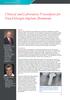 Clinical and Laboratory Procedures for Fixed Margin Implant Abutments Dr. Carl Drago DDS, MS, American Board of Prosthodontics Director, Dental Research BIOMET 3i, Adjunct Faculty Department of Prosthodontics,
ATLANTIS abutments design guide CAD/CAM patient-specific abutments
 ATLANTIS abutments design guide CAD/CAM patient-specific abutments Contents Introduction 4 This manual helps you to explore all the benefits of ATLANTIS CAD/CAM patient-specific abutments. It gives you
Tissue alterations at implant-supported single-tooth replacements: a 1-year prospective clinical study
 Giuseppe Cardaropoli Ulf Lekholm Jan L. Wennström Tissue alterations at implant-supported single-tooth res: a 1-year prospective clinical study Authors affiliations: Giuseppe Cardaropoli, Jan L. Wennström,
All-on-4 treatment concept with NobelSpeedy Groovy
 All-on-4 treatment concept with NobelSpeedy Groovy Product overview Immediate Function for high patient satisfaction Immediately loaded fixed provisional prosthesis on the day of surgery. Immediate improvement
Soft tissue stability at the facial aspect of gingivally converging abutments in the esthetic zone: A pilot clinical study
 Soft tissue stability at the facial aspect of gingivally converging abutments in the esthetic zone: A pilot clinical study Eric Rompen, DDS, PhD, a Nicolas Raepsaet, DDS, b Olivier Domken, DDS, c Bernard
CHAPTER 10 RESTS AND PREPARATIONS. 4. Serve as a reference point for evaluating the fit of the framework to the teeth.
 CHAPTER 10 RESTS AND DEFINITIONS A REST is any rigid part of an RPD framework which contacts a properly prepared surface of a tooth. A REST PREPARATION or REST SEAT is any portion of a tooth or restoration
Rehabilitation of Endondontically Failed Anterior teeth by Immediate Replacement and Loading of an Implant supported Crown: A Case Report.
 RESEARCH AND REVIEWS: JOURNAL OF DENTAL SCIENCES Rehabilitation of Endondontically Failed Anterior teeth by Immediate Replacement and Loading of an Implant supported Crown: A Case Report. Lalit Kumar 1
The Transition from Teeth to Implants and the Use of Post-ceramic Soldering
 The Transition from Teeth to Implants and the Use of Post-ceramic Soldering Basil Mizrahi, BDS, MSc, MEd* Anthony Laurie, RDT, FCGI, FBIDST** D ental implants have become a widely accepted and successful
In the Spring of 2010, the American Academy of Cosmetic
 Greetings to the members of the American Academy of Cosmetic Dentistry (AACD). As you know, a sisterhood agreement was concluded between the AACD and the Japan Academy of Esthetic Dentistry (JAED) at a
Immediate Dental Implant Placement: Technique, Part 2
 Course Number: 170 Immediate Dental Implant Placement: Technique, Part 2 Authored by John Cavallaro, DDS, and Gary Greenstein, DDS, MS Upon successful completion of this CE activity 2 CE credit hours may
TRI Product NewsFlash. December 2015
 TRI Product NewsFlash December 2015 Study Overview 2015 Dear Partners Year in, year out, we are screening all major scientific journals to ensure that our TRI Performance Concept still reflects the latest
Using BONDBONE as a composite in post extraction sockets with immediate implant placement everyday practice.
 32 News No. 32 May 2013 Using BONDBONE as a composite in post extraction sockets with immediate implant placement everyday practice. MAKE IT SIMPLE 2 Using BONDBONE as a composite in post extraction sockets
In 1999, more than 1 million people in
 Clinical SHOWCASE Slip-and-Fall Injuries Causing Dental Trauma Morley S. Rubinoff, DDS, Cert Prosth Clinical Showcase is a series of pictorial essays that focus on the technical art of clinical dentistry.
Nobel Clinician - Quick Guide
 1220 E. Birch St. #201 Brea, CA 92821 (800)750-5004 Haupt Dental Lab Inc. Nobel Clinician - Quick Guide Step #1 - Diagnostics Make impressions of both the upper and lower arches using custom trays. Care
DENT IMPLANT restoring qualit S: of LIfE
 DENTAL IMPLANTS: restoring quality of life Dental Implants: A Better Treatment Option. What are dental implants? Dental implants are a safe, esthetic alternative to traditional crowns, bridgework, and
The International Journal of Periodontics & Restorative Dentistry
 The International Journal of Periodontics & Restorative Dentistry 375 Use of a Combination Epithelized- Subepithelial Connective Tissue Graft for Closure and Soft Tissue Augmentation of an Extraction Site
Ideal treatment of the impaired
 RESEARCH IMPLANTS AS ANCHORAGE IN ORTHODONTICS: ACLINICAL CASE REPORT Dale B. Herrero, DDS KEY WORDS External anchorage Pneumatized Often, in dental reconstruction, orthodontics is required for either
Replacing Hopeless Retained Deciduous Teeth in Adults Utilizing Dental Implants: Concepts and Case Presentation
 Replacing Hopeless Retained Deciduous Teeth in Adults Utilizing Dental Implants: Concepts and Case Presentation by Michael Tischler, DDS Published: Dentistry Today November 2005 Photos at end of article
Full Crown Module: Learner Level 1
 Full Crown Module Restoration / Tooth # Full Gold Crown (FGC) / 30 Extensions: Porcelain Fused to Metal (PFM) / 12 All Ceramic / 8 Learner Level 1 Mastery of Tooth Preparation Estimated Set Up Time: 30
The utilization of dental implants for
 Implants Single tooth replacement utilizing implants in the esthetic zone: a case report Nicholas Egbert, DDS, MDS, FACP n Swati Ahuja, BDS, MDS n Robert Brandt, DDS, MS n Vinay Jain, BDS, MDS Russell
Restoration of a screw retained single tooth restoration in the upper jaw with Thommen Titanium base abutment.
 Restoration of a screw retained single tooth restoration in the upper jaw with Thommen Titanium base abutment. Dr. med. dent. David McFadden, Dallas County, USA Initial situation (single X-ray) Tooth 16
Workshops & Courses. For Further Information and Registeration. Tel.:+966 12 640 2000 Ext. 22264 / 73061 / 21206. By Art House : 0503684163
 Workshops & Courses By Art House : 0503684163 For Further Information and Registeration http://fdc.kau.edu.sa e-mail: [email protected] Tel.:+966 12 640 2000 Ext. 22264 / 73061 / 21206 Scan to Register
Choosing the right type of abutment
 50 Producing custom implant abutments using CAD/CAM Choosing the right type of abutment S. KHALILOVA 1, F. KISTLER 2, S. ADLER 3, S. WEISS 3, S. KISTLER 2 AND J. NEUGEBAUER 2,4 Rapid developments in the
THE SINGLE-TOOTH IMPLANT TREATMENT FOR MAXILLARY CENTRAL INCISORS LOSS AFTER TRAUMA: CASE REPORTS
 CLINICAL DENTISTRY AND RESEARCH 2011; 35(1): 47-52 THE SINGLE-TOOTH IMPLANT TREATMENT FOR MAXILLARY CENTRAL INCISORS LOSS AFTER TRAUMA: CASE REPORTS Hakan Tuna, DDS, PhD Assistant Professor, Department
CDT 2015 Code Change Summary New codes effective 1/1/2015
 CDT 2015 Code Change Summary New codes effective 1/1/2015 Code Nomenclature Delta Dental Policy D0171 Re-Evaluation Post Operative Office Visit Not a Covered Benefit D0351 3D Photographic Image Not a Covered
SCD Case Study. Treatment Considerations for Implant Rehabilitation
 SCD Case Study Treatment Considerations for Implant Rehabilitation Multiple surgical and restorative factors play a role in the treatment planning of implant restorations for the edentulous patient (Ali
Augmentation in Proximity to the Incisive Foramen to Allow Placement of Endosseous Implants: A Case Series
 DENTAL IMPLANTS J Oral Maxillofac Surg 68:2267-2271, 2010 Augmentation in Proximity to the Incisive Foramen to Allow Placement of Endosseous Implants: A Case Series Gerry M. Raghoebar, DDS, MD, PhD,* Laurens
BRITISH DENTAL JOURNAL
 IN BRIEF The most important step in treatment planning is determining the prognosis of the remaining dentition. There is some evidence that placement of foreign materials into extraction sockets will interfere
How to Achieve Shade Harmony With Different Restorations
 Procera Alumina vs. Feldspathic Porcelain How to Achieve Shade Harmony With Different Restorations Luke S. Kahng, CDT Key Words: Stump shade, Feldspathic Porcelain, Zirconia, Alumina, LSK Treatment Plan
THE MANAGEMENT OF A COMPLEX IMPLANT CASE USING CAD-CAM TECHNOLOGY: A CLINICAL REPORT
 CSE REPORT DOI:10.4047/jkap.2008.46.6.634 THE MNGEMENT OF COMPLEX IMPLNT CSE USING CD-CM TECHNOLOGY: CLINICL REPORT Eun-Jin Park*, DDS, MMSc, PhD ssistant Professor, Department of Dentistry School of Medicine,
The management of traumatic tooth loss with dental implants: Part 2. Severe trauma
 The management of traumatic tooth loss with dental implants: Part 2. Severe trauma D. W. Seymour,* 1 M. Patel, 2 L. Carter 3 and M. Chan 2 IN BRIEF Discusses the challenges associated with the provision
Boston College, BS in Biology 1980-1984. University of Southern California, Doctor of Dental Surgery, DDS, 1990.
 CLINICAL CASE REPORT Sinus Augmentation with Immediate Implant insertion Multidisciplinary Approach to Anterior Implant Therapy Immediate Implant after Extraction of Lower Molar Tooth DR. SHERMAN LIN Boston
Encode Impression System. Optimization By Design
 The Encode Impression System Optimization By Design Optimization Is Key To Aesthetics The BellaTek Encode Impression System provides optimized solutions to clinicians by eliminating the need for implant
Insurance Coding: Teaching Our Periodontics Residents
 Charleston, SC Insurance Coding: Teaching Our Periodontics Residents Joe W. Krayer, D.D.S., M.S. Associate Professor & Director Post-Doctoral Periodontics Program Robert G. Gellin, D.M.D., M.H.S. Professor
The Most Frequently Asked Questions About Dental Implants... A Consumer s Guide to Understanding Implant Treatment
 Number 3 $1.25 The Most Frequently Asked Questions About Dental Implants... A Consumer s Guide to Understanding Implant Treatment If you are like most people considering dental implants, you probably have
Immediate implantation and provisionalization: Single-tooth restoration in the esthetic zone
 Immediate implantation and provisionalization: Single-tooth restoration in the esthetic zone Authors_Susan McMahon, DMD, and Karrah Petruska _c.e. credit part II This article qualifies for C.E. credit.
IMPLANT MENTOR PROGRAM
 THE BRIGHTON INSTITUTE FOR DENTAL IMPLANTS IMPLANT MENTOR PROGRAM WITH DR BRUNO SILVA www.brightonimplantclinic.com www.thebrightonimplantinsitute.com Foreword Osseointegrated implants are enabling dentists
The Chairside Fabrication of a Provisional Crown for a Single Tooth Implant
 Earn 2 CE credits This course was written for dentists, dental hygienists, and assistants. The Chairside Fabrication of a Provisional Crown for a Single Tooth Implant A Peer-Reviewed Publication Written
Guided bone regeneration (GBR) has made the
 Case Report 684 Guided Bone Regeneration for Fenestration Defects in Dental Implants Hwey-Chin Yeh, DDS, MS; Kuang-Wei Hsu 1, DDS has been applied in implant dentistry for increasing the width and height
B978-0-443-06895-9.00005-8,
 B978-0-443-06895-9.00005-8, 00005 Chapter Restorative management 5 of dental implants 5.1 Basic implant terminology 133 5.2 Planning dental implants 134 5.3 Surgical phases 135 5.4 Provisional and definitive
Mastering aesthetics in post-extraction sites Ronnie J. Goené, DMD and Alwin C.L. van Daelen, DMD. Special Reprint, JIRD Vol. 4, No.
 www.jird.com Special Reprint, JIRD Vol. 4, No. 1, 2013 Mastering aesthetics in post-extraction sites Ronnie J. Goené, DMD and Alwin C.L. van Daelen, DMD Official Publication of The Institute for Implant
Oral Plastic Surgery
 20/20 TM Oral Plastic Surgery Hands-On Courses EDWARD P. ALLEN, DDS, PhD 20/20 Oral Plastic Surgery Advanced Techniques for Predictable Results Advanced surgical techniques in oral plastic surgery are
The planning of implant therapy in the anterior maxilla
 Team Treatment Planning for the Replacement of Esthetic Zone Teeth with Dental Implants Robert A. Levine, DDS; and Gary Nack, DDS ABSTRACT Implant therapy requires comprehensive preoperative planning and
LATERAL BONE EXPANSION FOR IMMEDIATE PLACEMENT OF ENDOSSEOUS DENTAL IMPLANTS
 LATERAL BONE EXPANSION FOR IMMEDIATE PLACEMENT OF ENDOSSEOUS DENTAL IMPLANTS Department of Oral Maxillofacial Surgery, Chisinau Abstract: The study included 10 using the split control expansion technique
Don t Let Life Pass You By Because Of Missing Teeth
 Don t Let Life Pass You By Because Of Missing Teeth Ask For Dental Implant Solutions From BIOMET 3i Scan With Your Smartphone! In order to scan QR codes, your mobile device must have a QR code reader installed.