
Comparison of low-complexity fall detection algorithms for body attached accelerometers
|
|
|
- Pierce Wiggins
- 9 years ago
- Views:
Transcription
1 Available online at Gait & Posture 28 (2008) Comparison of low-complexity fall detection algorithms for body attached accelerometers Maarit Kangas a, *, Antti Konttila a,b, Per Lindgren c, Ilkka Winblad a,d, Timo Jämsä a a Department of Medical Technology, University of Oulu, Oulu, Finland b Optoelectronics and Measurement Techniques Laboratory, University of Oulu, Oulu, Finland c Department of Computer Science and Electrical Engineering, Luleå University of Technology, Luleå, Sweden d FinnTelemedicum, University of Oulu, Oulu, Finland Received 3 July 2007; received in revised form 18 October 2007; accepted 3 January 2008 Abstract The elderly population is growing rapidly. Fall related injuries are a central problem for this population. Elderly people desire to live at home, and thus, new technologies, such as automated fall detectors, are needed to support their independence and security. The aim of this study was to evaluate different low-complexity fall detection algorithms, using triaxial accelerometers attached at the waist, wrist, and head. The fall data were obtained from standardized types of intentional falls (forward, backward, and lateral) in three middle-aged subjects. Data from activities of daily living were used as reference. Three different detection algorithms with increasing complexity were investigated using two or more of the following phases of a fall event: beginning of the fall, falling velocity, fall impact, and posture after the fall. The results indicated that fall detection using a triaxial accelerometer worn at the waist or head is efficient, even with quite simple threshold-based algorithms, with a sensitivity of 97 98% and specificity of 100%. The most sensitive acceleration parameters in these algorithms appeared to be the resultant signal with no high-pass filtering, and the calculated vertical acceleration. In this study, the wrist did not appear to be an applicable site for fall detection. Since a head worn device includes limitations concerning usability and acceptance, a waist worn accelerometer, using an algorithm that recognizes the impact and the posture after the fall, might be optimal for fall detection. # 2008 Elsevier B.V. All rights reserved. Keywords: Elderly; Independent living; Hip fracture; Movement analysis 1. Introduction In developed countries the portion of the elderly population over 65 years of age is growing rapidly. Fall related injuries are a central problem with elderly people, both in a home environment [1,2] and in hospitals and residential homes [3], affecting the overall quality of life. Elderly people desire to live at home, and it appears that they are also willing to accept new technologies to support their independence and safety [4,5]. Most falls among home-dwellers happen when walking, when rising to stand, when trying to sit down, when turning, or when reaching for something [6,7]. After fainting or tripping, most people fall forwards or sideways, and in most * Corresponding author. Tel.: ; fax: address: [email protected] (M. Kangas). cases the impact is located at the abdomen. Slipping is more likely to result in backwards or sideways falls, thus impacting the hip and buttocks equally [8]. Body attached accelerometers [9 12] and gyroscopes [13,14] have been used to detect human movement, including falls. The placement site at the waist is been thought to be optimal, when compared to wrist and knee [1]. Waist attached accelerometers are located near the body s center of gravity, providing reliable information on subject body movements, with the exception of specific movements of arms and legs [15]. The usability of a waist worn fall detector might be not optimal, e.g. when sleeping or changing clothes. Thus, there have been suggestions to integrate a fall detector into another device, such as a wrist watch [16] or a hearing-aid housing [17]. The usability of a wrist watch is excellent, highlighting the wrist as an attractive site for a fall detector /$ see front matter # 2008 Elsevier B.V. All rights reserved. doi: /j.gaitpost

2 286 M. Kangas et al. / Gait & Posture 28 (2008) However, the acceleration signal measured from the wrist varies widely as a function of the fall type and orientation of the arm, indicating that this placement site would need the most complicated algorithm for fall detection [1]. Recently, we presented simple thresholds for accelerometry-based parameters for fall detection [18]. The aim of this study is to compare different low-complexity fall detection algorithms, applied for triaxial waist, wrist and head worn accelerometers, using intentional falls in middle aged subjects. Three different detection algorithms were investigated using two or more of the following phases of a fall event: beginning of the fall, falling velocity, fall impact, and posture after the fall. The protocol for the test falls was designed based on the typical fall causes and directions of elderly home-dwellers, obtained from the literature. Activities of daily living (ADL) were used as a reference. 2. Materials and methods 2.1. Subjects, falls and ADL Intentional falls were performed with three healthy volunteers: one female (38 years) and two males (42 years and 48 years). Falls were performed towards a mattress (thickness 20 cm). Each subject performed three standardized type of falls in each of the three directions (forward, backward, and lateral) (Table 1) at least twice. A 15-cm high platform was used when stepping down to simulate missing a step, e.g. when stepping down from stairs. The falls were documented using digital video (Sony Handycam HDR-HC3). ADL samples were collected from two subjects (female 38 years, male 22 years), representing dynamic activities (e.g. walking, walking on the stairs, picking up objects from the floor) and posture transitions [18] Accelerometry During the falls and ADL, accelerations were measured synchronously at the waist, wrist and head with triaxial accelerometers, each constructed using three uniaxial capacitive accelerometers (VTI Hamlin SCA CDCV1G, amplitude range 12g) [19]. Each triaxial accelerometer was connected to a separate data logger (Tattletale, model 8v2, Onset Computer Corp.) with a sampling frequency of 400 Hz [19]. Each of the three axes was calibrated statically against the gravitation. The dynamic validation of the accelerometers has been described elsewhere [19,20]. Table 1 Different intentional test falls used in the study Nr Direction Instructions Accessories 1 Forward Straight, no step is performed 2 Forward Step down from platform Platform 3 Forward Sitting, getting up, short step, trip Chair 4 Backward Leg swing to front 5 Backward Round back, knees pended 6 Backward Sitting down on empty 7 Lateral Step down from platform Platform 8 Lateral Straight, no step is performed 9 Lateral Start falling back and turn to side Accelerometers were attached to the non-dominant wrist, the corresponding side of the waist close to the iliac crest, and the front of the forehead. The sensitive axes of the devices were mediolateral, anteroposterior, and vertical Data processing Data processing was similar to our previous study [18]. Accelerometer data (binary) were loaded from data loggers to a computer (software CrossCut 2.01, Borland International), and converted into gravitational units with a custom-made MATLAB (R2006a) program [20]. Data processing, analyses and fall detection simulation were done with a custom-made LabVIEW (8.0) program using a floating point data format. The measured acceleration signal was processed by resampling at 50 Hz and median filtering with a window length of three samples to reduce the data amount and noise before any further analyses. The processed data were low-pass (LP) or high-pass (HP) filtered ( f c = 0.25 Hz) with a digital second order Butterworth filter for posture detection and dynamic analysis, respectively. The use of accelerometer sensors with a limited acceleration amplitude range was simulated in a LabVIEW environment by restricting the amplitude of input acceleration data to 2g or 3g before any data processing Parameters Parameters used in the analyses were similar to those in our previous study [18]. The total sum vector SV TOT, containing both the dynamic and static acceleration components, was calculated from resampled data as indicated in Eq. (1). qffiffiffiffiffiffiffiffiffiffiffiffiffiffiffiffiffiffiffiffiffiffiffiffiffiffiffiffiffiffiffiffiffiffiffiffiffiffiffiffiffiffiffi SV ¼ ða x Þ 2 þða y Þ 2 þða z Þ 2 ; (1) where A x, A y, A z are the acceleration (g) in the x-, y-, and z-axes, respectively. While standing, SV TOT has a value 1g (Fig. 1(A)). The start of the fall was determined as the pit before the impact, SV TOT being equal or lower than 0.6g. The dynamic sum vector SV D was calculated similarly (Eq. (1)) from the HP filtered data. SV D has a value of 0g when standing (Fig. 1(A)). SV D was used to detect fall-associated impacts. Fast changes in the acceleration signal were investigated by constructing a sliding sum vector SV MaxMin, which was calculated using the differences between the maximum and minimum values in a 0.1 s sliding window for each axis. When standing, SV MaxMin has a value of 0g (Fig. 1(A)). Vertical acceleration Z 2 was calculated as indicated in Eq. (2). Z 2 ¼ SV2 TOT SV2 D G2 ; (2) 2G where SV TOT is the total sum vector (g), SV D is the dynamic sum vector (g), and G is the gravitational component (=1g). When the subject is standing, Z 2 has a value of 0g (Fig. 1(A)). Velocity v 0 was calculated by integrating the area of SV TOT from the pit, at the beginning of the fall, until the impact, where the signal value is lower than 1g [18]. The posture was detected 2 s after the impact from the LP filtered vertical signal, based on the average acceleration in a 0.4 s time interval, with a signal value of 0.5g or lower considered to be a lying posture [9,21]. For comparison with previous studies, the falling index (FI) was also calculated from waist measurements, as described earlier by
![site would need the most complicated algorithm for fall detection [1]. Recently, we presented simple thresholds for accelerometry-based parameters for fall detection [18].](/docs-images/42/15959438/images/page_2.jpg "The aim of this study is to compare different low-complexity fall detection algorithms, applied for triaxial waist, wrist and head worn accelerometers, using intentional falls in middle aged subjects.")
3 Yoshida et al. [22], using a time window of 0.4 s (Eq. (3)). M. Kangas et al. / Gait & Posture 28 (2008) vffiffiffiffiffiffiffiffiffiffiffiffiffiffiffiffiffiffiffiffiffiffiffiffiffiffiffiffiffiffiffiffiffiffiffiffiffiffiffiffiffiffiffiffiffiffiffiffiffiffiffiffiffiffiffiffiffiffiffiffiffiffiffiffiffiffiffiffiffiffiffiffiffiffiffiffiffiffiffiffiffiffiffiffiffiffiffiffiffiffiffiffiffiffiffiffiffiffiffiffiffiffiffiffiffiffiffiffiffiffiffiffiffiffiffiffiffiffiffiffiffiffiffiffiffiffiffiffiffiffiffiffiffiffiffiffiffi ux i FI i ¼ t ðða x Þ i ða x Þ i 1 Þ 2 þ Xi ðða y Þ i ða y Þ i 1 Þ 2 þ Xi ðða z Þ i ða z Þ i 1 Þ 2 i 19 i 19 i 19 (3) Fig. 1. (A) Examples of different accelerometric parameters (SV TOT,SV D, Z 2, and SV MaxMin ) from the waist, head and wrist worn accelerometers during a forward fall with an impact around the time point of 3 s. (B) An example of ADL activity measured from the waist and wrist, including sitting on a chair (0sto 4 s), walking (4 s to 16 s), lying on a bed (23 s to 44 s) and walking (49 s).

4 288 M. Kangas et al. / Gait & Posture 28 (2008) Table 2 Threshold values of different parameters for fall detection algorithms Parameter Waist Head Wrist SV TOT (g) SV D (g) Z 2 (g) SV MaxMin (g) v 0 (m s 1 ) SV DS pit (g) Adapted from [18]. where (A x ) i, (A y ) i, (A z ) i are the acceleration (g) of sample number i in x-, y-, and z-axes, respectively Algorithms for fall detection Three different fall detection algorithms with increasing complexity were investigated, using two or more of the following phases of a fall event: beginning of the fall, falling velocity, fall impact, and posture after the fall. These algorithms were composed and tested with the data from the falls and ADL. In order to avoid ADL-related false fall alarms, the thresholds for different parameters used in the algorithms (Table 2) were adjusted for a specificity of 100%, as described earlier [18]. The posture detection was included in fall detection simulations with data measured from the waist and head, but not from the wrist. The algorithm 1 (IMPACT + POSTURE) was based on the detection of the impact by a threshold value of SV TOT, SV D, SV MaxMin,orZ 2, followed by monitoring of the posture of the person. The algorithm 2 (START OF FALL + IMPACT + POSTURE) detected the start of the fall by monitoring SV TOT lower than the threshold of 0.6g, followed by the detection of the impact within a time frame of 1 s by a threshold value of SV TOT or Z 2, followed by monitoring of the posture. The algorithm 3 (START OF FALL + VELOCITY + IM- PACT + POSTURE) detected the start of the fall by monitoring SV TOT lower than the threshold of 0.6g, followed by detection of the velocity v 0 exceeding the threshold, followed by detection of the impact within a time frame of 1 s by a threshold value of SV TOT or Z 2, followed by monitoring of the posture Statistics Sensitivity (percentage of true alarms; 100% = all falls detected) was calculated from the fall data, and specificity (percentage of false alarms; 100% = no false alarms) from the ADL data. 3. Results Samples for different accelerometric parameters during a forward fall and ADL are shown in Fig. 1(A) and (B), respectively Sensitivity of fall detection algorithms The sensitivity of the fall detection algorithms was tested in a LabVIEW environment using the fall samples. Results from the waist, head, and wrist are summarized in Table Waist The fall detection sensitivity of the different algorithms at the waist varied from 76% to 97% (Table 3). Falls were best recognized Table 3 Sensitivity (%) of fall detection algorithms using the data from waist, head and wrist n Algorithm 1 a Algorithm 2 b Algorithm 3 c SV TOT SV D SV MaxMin Z 2 SV TOT Z 2 SV TOT Z 2 Waist F B L All Head F B L All Wrist d F B L All F = forward, B = backward, L = lateral. a IMPACT + POSTURE. b START OF FALL + IMPACT + POSTURE. c START OF FALL + VELOCITY + IMPACT + POSTURE. d Posture detection not included.

5 M. Kangas et al. / Gait & Posture 28 (2008) with algorithm 1 (IMPACT + POSTURE) using SV TOT or Z 2 as markers of fall associated impacts. SV MaxMin effectively detected falls to the front and side, whereas only 76% of backward falls were detected. The dynamic sum vector SV D showed the lowest impact detection sensitivity. The most sensitive parameters SV TOT and Z 2 were used in the calculation of algorithms 2 and 3. The sensitivity of algorithm 2 (START OF FALL + IMPACT + POSTURE) was congruent with the sensitivity of algorithm 1 (Table 3). In general, algorithms 1 and 2 detected forward and lateral falls more efficiently when compared to backward falls. Algorithm 3 (START OF FALL + VELOCI- TY + IMPACT + POSTURE) had an average fall detection sensitivity of 76% (Table 3). Lateral falls were most efficiently detected. The fall detection of forward falls using the FI parameter had 90% sensitivity with the detection threshold of 3.16g [22]. However, falls to the back and side were poorly detected with 56% and 71% sensitivity, respectively. When the threshold value of 2.6g was applied, an overall detection sensitivity of 74% was achieved Head Algorithm 1 (IMPACT + POSTURE) detected 97 98% of the falls regardless of the parameters used for impact detection (Table 3). The sensitivity of algorithm 2 (START OF FALL + IM- PACT + POSTURE) was lower than the sensitivity of algorithm 1(Table 3), detecting falls to the front more efficiently compared to falls to the back and side. Algorithm 3 (START OF FALL + VELOCITY + IMPACT + POSTURE) detected less than half of the falls (Table 3) Wrist Fall associated impacts were most efficiently detected using algorithm 1 (IMPACT + POSTURE) with parameter Z 2 (Table 3), the sensitivity being only moderate (53 84%). In general, impact detection was lowest in lateral falls. The overall fall detection sensitivity of algorithm 2 (START OF FALL + IMPACT + POSTURE) using Z 2 was 64%, varying from 41% to 73% between fall directions (Table 3). When analyzed in more detail, most of the falls (79%) had a SV TOT value lower than 0.6g at the pit just before the impact, but the impact detection was not fulfilled in all cases. The overall fall detection sensitivity of algorithm 3 (START OF FALL + VELOCITY + IMPACT + POSTURE) using Z 2 was 37% (Table 3). The two stage criteria for the start of the fall (SV TOT < 0.6g and v 0 > 0:9ms 1 before the impact) was fulfilled in 56%, 69%, and 27% of the falls to the front, back, and side, respectively Simulation of accelerometer with restricted amplitude range In order to test the possibility of using an accelerometric sensor with a lower amplitude range than 12g, LabVIEW simulations with restricted acceleration values were performed. Simulated use of an accelerometer with 3g amplitude range had no effect on the sensitivity or specificity of the fall detection algorithms using the data measured from the waist level, whereas an amplitude range of 2g was not efficient for these algorithms (data not shown). 4. Discussion Here we evaluated different fall detection algorithms using body attached accelerometers from intentional falls and activities of daily living (ADL). The results indicated that fall detection using a waist or head worn triaxial accelerometer is efficient, even with quite simple thresholdbased algorithms. On the contrary, the wrist did not appear to be an applicable site for fall detection. The fall detection sensitivity from the waist was maximally 97% when using an algorithm which detects the fall associated impact based on the total sum vector (SV TOT ) or acceleration towards the ground (Z 2 ), and the posture after the fall. The fall detection sensitivity of 97% and specificity of 100% from the waist is comparable to other reported results [7,9,11,22]. Even a sensitivity of 100% with young volunteers has been reported by Bourke et al. [13,24]. Their algorithm was very similar to our algorithm 1, indicating that even simple algorithms can be effective in fall detection. Algorithm 2, also including the detection of the start of the fall, had almost identical fall detection sensitivity to the more basic algorithm 1, indicating that at waist level the start of the fall is characterized as a pit in the SV TOT signal. The falls to the front and side in particular clearly showed these two fall phases, the start of the fall and impact. The velocity before the impact (included in algorithm 3) was often lower than the predetermined threshold, especially in forward and lateral falls. Video analyses showed that these falls were typically two-staged: falling first to the knees, followed by an impact at the waist or hands. Backward falls, which are one of the risk factors for hip fractures, were most inefficiently detected. The evaluation of the falls from video recorded material suggested that these backward falls were not detected because of the subject s soft landing with a rounded back, resulting in minimal impact at the waist level. Fall events were well characterized as an impact at the head level. This was the case especially in the backward and forward falls. Even the falls which were not detected from the waist because of soft landings were mostly detected as an impact to the head. The fall detection accuracy was 98%, which is slightly lower than the sensitivity reported by Lindemann et al. [17] in their study using sum vectors and velocity. However, they used a young test subject whereas we had middle-aged subjects, which supports our results on the head worn fall detector being highly reliable. Posture detection with a head worn accelerometer is partly problematic since the posture of the head is not identical to the posture of the torso if the person lifts his/her head when lying. However, it is probably necessary to include posture detection as a part of a fall detection algorithm to eliminate false alarms. The placement of an accelerometer at the head requires more detailed planning of the hardware to ensure usability and acceptance of the application among the end users.

6 290 M. Kangas et al. / Gait & Posture 28 (2008) The use of a wrist worn accelerometer for fall detection proved to be more problematic than waist and head worn ones, as expected based on the earlier reports [1,7]. Here, many of the fall events were characterized by impact to the hands, indicating the active role of hands in these intentional falls. Also in the study of Degen et al. [16] the highest sensitivity was found in forward falls, indicating an impact to the hands. This is in contrast to the fact that for elderly people it is typical that they are unable to use their hands to protect the body during accidental falls [23]. Furthermore, hands are not necessarily part of the impact, since a person can try to grip something to prevent the fall. The parameter Z 2, which was designed to monitor the acceleration towards the ground, was clearly the most effective parameter to distinguish between falls and ADL at the wrist. Most of the falls showed also the characteristic features for start of the fall (pit and high velocity toward the ground). In the future, algorithms 2 and 3 should be tested with lower threshold values for impact detection. This might improve the fall detection sensitivity but also maintain the good specificity. This study is based on intentional falls in a laboratory environment, because no acceleration database of actual falls of elderly subjects was available. The falls were performed on a mattress since falls to the hard floor would neither be safe nor ethically acceptable. However, the loss of the actual maximum acceleration of the fall associated impact was not a problem, since our simulation suggests that acceleration information exceeding 3g does not have significant additional value in fall detection. Other reports of fall detection devices have successfully used accelerometers with an amplitude range as low as 2g [16,22], but here this range was insufficient for fall detection. The fall and ADL samples used in this study are comparable to test material in earlier reports. For example, the values of maximum SV TOT value during ADL varied between 1g and 3g, as it was also reported by Bourke et al. [24]. The maximum SV TOT value of fall-related impact varied between 2.0g and 6.1g in this study, while impact values for young persons between 3.5g and 12g [24] have been previously shown. This difference may be explained, in part, by the median filtering used here. Testing our data with the earlier published falling index (FI) resulted in a fall detection sensitivity of 59%, which is somewhat lower than the 70% reported by Yoshida et al. [22]. The difference may be due to the diversity of fall detection sensitivity between individuals, reported to vary from 40% to 100% [22]. The number of individuals in our study was low but the number of fall samples was reasonable for sensitivity and specificity determinations. The test subjects performing the intentional falls in our study were middle aged instead of young persons used in the earlier studies [9,13,17,22,24 26]. However, we have to consider that even here, the mechanism of falls among elderly is different than suggested by the intentional falls of middle-aged people. Thus, tests with real end users (age 65+) in real home environment are required in the future for accurate evaluation of the implemented fall detection systems. In this experimental study, we used the criterion of 100% for specificity. In reality, some compromise between specificity and sensitivity might be needed, depending on the acceptance of false alarms. In addition, this study concentrated on different low-complexity algorithms that can most easily be implemented for practical fall detection applications. The conclusions made here might be different if more complicated data processing methods were used. We conclude that fall detection using waist or head worn triaxial accelerometers is efficient even with quite simple threshold-based algorithms. A head worn accelerometer provides excellent impact detection sensitivity, but it includes limitations concerning usability and acceptance. Thus, a triaxial waist worn accelerometer using an algorithm that recognizes the fall, impact and the posture after fall, might be optimal for fall detection. Acknowledgements Dr. Juha Oksa is acknowledged for the access to the experimental laboratory, and Mr. Erkki Vihriälä, M.Sc. Eng., for his kind technical assistance with the accelerometric measurement devices. This study was supported in part by the EU Interreg III A North Programme (grant nr ), the Finnish Funding Agency for Technology and Innovation (grant nr /05), the State Provincial Office of Lapland, National Semiconductor Finland, Elektrobit Ltd., CareTech Ab, and Kalix Electropolis Ab. Conflict of interests M.Sc. Kangas, M.Sc. Konttila, Ass. Prof. Lindgren, Prof. Jämsä, and Doc. Winblad have no conflict of interests. References [1] Doughty K, Lewis R, McIntosh A. The design of a practical and reliable fall detector for community and institutional telecare. J Telemed Telecare 2000;6(Suppl 1):S [2] Ozcan A, Donat H, Gelecek N, Ozdirenc M, Karadibak D. The relationship between risk factors for falling and the quality of life in older adults. BMC Public Health 2005;5:90. [3] Heinze C, Halfens RJ, Dassen T. Falls in German in-patients and residents over 65 years of age. J Clin Nurs 2007;16: [4] Brownsell SJ, Bradley DA, Bragg R, Catlin P, Carlier J. Do community alarm users want telecare? J Telemed Telecare 2000;6: [5] Brownsell S, Hawley MS. Automatic fall detectors and the fear of falling. J Telemed Telecare 2004;10: [6] Luukinen H, Koski K, Hiltunen L, Kivela SL. Incidence rate of falls in an aged population in northern Finland. J Clin Epidemiol 1994;47: [7] Brown B, An acceleration based fall detector: development, experimentation, and analysis. Summer Undergraduate Program in Engineering Research at Berkeley (SUPERB), University of California,

7 M. Kangas et al. / Gait & Posture 28 (2008) Berkeley, Reports/GarrettFinalPaper.pdf. [8] Smeesters C, Hayes WC, McMahon TA. Disturbance type and gait speed affect fall direction and impact location. J Biomech 2001;34: [9] Karantonis DM, Narayanan MR, Mathie M, Lovell NH, Celler BG. Implementation of a real-time human movement classifier using a triaxial accelerometer for ambulatory monitoring. IEEE Trans Inf Technol Biomed 2006;10: [10] Makikawa M, Asajima S, Shibuya K, Tokue R, Shinohara H. Portable physical activity monitoring system for evaluation of activity of the aged in daily life. Proc EMBS/BMES 2002; [11] Mathie MJ, Celler BG, Lovell NH, Coster AC. Classification of basic daily movements using a triaxial accelerometer. Med Biol Eng Comput 2004;42: [12] Boyle JR, Karunanithi MK, Wark TJ, Chan W, Colavitti C. An observation trial of ambulatory monitoring of elderly patient. Proc IFMBE 2005;12. [13] Bourke AK, Culhane KM, O Brien JV, Lyons GM. The development of an accelerometer and gyroscope based sensor to distinguish between activities of daily living and fall-events. Proc IFMBE 2005;11. [14] Nyan MN, Tay FE, Tan AW, Seah KH. Distinguishing fall activities from normal activities by angular rate characteristics and high-speed camera characterization. Med Eng Phys 2006;28: [15] Mathie MJ, Coster AC, Lovell NH, Celler BG. Accelerometry: providing an integrated, practical method for long-term, ambulatory monitoring of human movement. Physiol Meas 2004;25:R1 20. [16] Degen T, Jaeckel H, Rufer M, Wyss S, SPEEDY:. A fall detector in the wrist watch. Proc ISWC ; [17] Lindemann U, Hock A, Stuber M, Keck W, Becker C. Evaluation of a fall detector based on accelerometers: a pilot study. Med Biol Eng Comput 2005;43: [18] Kangas M, Konttila A, Winblad I, Jämsä T. Determination of simple threshold for accerometry-based parameters for fall detection. Proc IEEE EMBS 2007; [19] Vihriälä E, Saarimaa R, Myllylä R, Jämsä T. A device for long term monitoring of impact loading on the hip. Mol Quantum Acoust 2003;24: [20] Vihriälä E, A measuring device that measures accelerations caused by exercise and that can be attached to the test subject. Diploma thesis, University of Oulu, Department of Electrical Engineering; [21] Culhane KM, Lyons GM, Hilton D, Grace PA, Lyons D. Long-term mobility monitoring of older adults using accelerometers in a clinical environment. Clin Rehabil 2004;18: [22] Yoshida T, Mizuno F, Hayasaka T, Tsubota K, Wada S, Yamaguchi T. A wearable computer system for a detection and prevention of elderly users from falling. Proc ICBM 2005;12: [23] Talbot LA, Musiol RJ, Witham EK, Metter EJ. Falls in young, middleaged and older community dwelling adults: perceived cause, environmental factors and injury. BMC Public Health 2005;5:86. [24] Bourke AK, O brien JV, Lyons GM. Evaluation of a threshold-based tri-axial accelerometer fall detection algorithm. Gait Posture 2007;26: [25] Diaz A, Prado M, Roa LM, Reina-Tosina J, Sanchez G. Preliminary evaluation of a full-time falling monitor for the elderly. Proc IEEE EMBS 2004;3: [26] Hwang JY, Kang JM, Jang YW, Kim HC. Development of a novel algorithm and real-time monitoring ambulatory system using Bluetooth module for fall detection in the elderly. Proc EMBS 2004;1:

Accurate, Fast Fall Detection Using Gyroscopes and Accelerometer-Derived Posture Information
 Accurate, Fast Fall Detection Using Gyroscopes and Accelerometer-Derived Posture Information Qiang Li, John A. Stankovic, Mark Hanson, Adam Barth, John Lach University of Virginia {lq7c, stankovic, mah6s,
Accurate, Fast Fall Detection Using Gyroscopes and Accelerometer-Derived Posture Information
 Accurate, Fast Fall Detection Using Gyroscopes and Accelerometer-Derived Posture Information Qiang Li, John A. Stankovic, Mark A. Hanson, Adam T. Barth, John Lach University of Virginia Email: {lq7c, stankovic,
Recognition of false alarms in fall detection systems
 Recognition of false alarms in fall detection systems Stefano Abbate, Marco Avvenuti, Guglielmo Cola, Paolo Corsini, Janet Light and Alessio Vecchio IMT Institute for Advanced Studies, Lucca, Italy, [email protected]
Multi-Person Pose Recognition Using a Zigbee Sensor Network
 Proceedings of the 7th World Congress The International Federation of Automatic Control Seoul, Korea, July 6, 8 Multi-Person Pose Recognition Using a Zigbee Sensor Network Kai-Tai Song and Chun-Wei Chen
A fall and loss of consciousness wearable detector Livio Quagliarella, Nicola Sasanelli, and Giuseppe Belgiovine
 A fall and loss of consciousness wearable detector Livio Quagliarella, Nicola Sasanelli, and Giuseppe Belgiovine Abstract Fall and Loss of Consciousness (FLoC) is the leading cause of serious health problems,
Recognition of Day Night Activity Using Accelerometer Principals with Aurdino Development Board
 Recognition of Day Night Activity Using Accelerometer Principals with Aurdino Development Board Swapna Shivaji Arote R.S. Bhosale S.E. Pawar Dept. of Information Technology, Dept. of Information Technology,
Detection of falls using accelerometers and mobile phone technology
 Age and Ageing 2011; 40: 690 696 doi: 10.1093/ageing/afr050 Published electronically 19 May 2011 The Author 2011. Published by Oxford University Press on behalf of the British Geriatrics Society. All rights
Increased Fall Detection Accuracy in an Accelerometer-Based Algorithm Considering Residual Movement
 Increased Fall Detection Accuracy in an Accelerometer-Based Algorithm Considering Residual Movement Panagiotis Kostopoulos 1, Tiago Nunes 1, Kevin Salvi 1, Michel Deriaz 1 and Julien Torrent 2 1 Institute
Fall Detection System using Accelerometer Principals with Arduino Development Board
 ISSN: 2321-7782 (Online) Volume 3, Issue 9, September 2015 International Journal of Advance Research in Computer Science and Management Studies Research Article / Survey Paper / Case Study Available online
Fall Detection System based on Kinect Sensor using Novel Detection and Posture Recognition Algorithm
 Fall Detection System based on Kinect Sensor using Novel Detection and Posture Recognition Algorithm Choon Kiat Lee 1, Vwen Yen Lee 2 1 Hwa Chong Institution, Singapore [email protected] 2 Institute
Fall Detection System for Healthcare Quality Improvement in Residential Care Facilities
 Journal of Medical and Biological Engineering, 30(4): 47-5 47 Fall Detection System for Healthcare Quality Improvement in Residential Care Facilities Chih-Ning Huang 1 Chih-Yen Chiang 1 Guan-Chun Chen
Automated Monitoring System for Fall Detection in the Elderly
 Automated Monitoring System for Fall Detection in the Elderly Shadi Khawandi University of Angers Angers, 49000, France [email protected] Bassam Daya Lebanese University Saida, 813, Lebanon Pierre
Int. J. Sensor Networks, Vol. x, No. x, xxxx 1
 Int. J. Sensor Networks, Vol. x, No. x, xxxx 1 Chameleon: personalised and adaptive fall detection of elderly people in home-based environments Lingmei Ren* Department of Computer Science and Technology,
A MOTION ACTIVITY MONITOR MONITOR POHYBOVÉ AKTIVITY
 A MOTION ACTIVITY MONITOR MONITOR POHYBOVÉ AKTIVITY Josef Marek, Ladislav Štěpánek 1 Summary: The paper deals with motion and vital activity monitoring of person in the case of dangerous environment (rescue
PerFallD: A Pervasive Fall Detection System Using Mobile Phones
 PerFallD: A Pervasive Fall Detection System Using Mobile Phones Jiangpeng Dai, Xiaole Bai, Zhimin Yang, Zhaohui Shen and Dong Xuan School of Computer Sci. & Engr. Dept. of Computer Sci. and Engr. Division
Report of Research Results
 Report of Research Results Scaling and Deployment of e-guardian to Eldercare Centers and Single Elderly Homes Primary Researcher: Prof. Tan Kok Kiong, Department of Electrical and Computer Engineering
A DECISION TREE BASED PEDOMETER AND ITS IMPLEMENTATION ON THE ANDROID PLATFORM
 A DECISION TREE BASED PEDOMETER AND ITS IMPLEMENTATION ON THE ANDROID PLATFORM ABSTRACT Juanying Lin, Leanne Chan and Hong Yan Department of Electronic Engineering, City University of Hong Kong, Hong Kong,
A smartphone based real-time daily activity monitoring system. Shumei Zhang Paul McCullagh Jing Zhang Tiezhong Yu
 A smartphone based real-time daily activity monitoring system Shumei Zhang Paul McCullagh Jing Zhang Tiezhong Yu Outline Contribution Background Methodology Experiments Contribution This paper proposes
Evaluation of Three-Axial Wireless-based Accelerometer for Fall Detection Analysis
 International Journal of Integrated Engineering, Vol.7 No.3 (015) p. 15-0 Evaluation of Three-Axial Wireless-based Accelerometer for Fall Detection Analysis Farhanahani Mahmud 1,, and Nurul Suhadah Sirat
Fall Detection System Using Tri-Accelerometer for Wireless Body Area Network
 IOSR Journal of Electronics and Communication Engineering (IOSR-JECE) e-issn: 2278-2834,p- ISSN: 2278-8735.Volume 10, Issue 2, Ver. II (Mar - Apr.2015), PP 25-29 www.iosrjournals.org Fall Detection System
Monitoring of human movements for fall detection and activities recognition in elderly care using wireless sensor network: a survey
 Monitoring of human movements for fall detection and activities recognition in elderly care using wireless sensor network: a survey 1 01 Monitoring of human movements for fall detection and activities
A smartphone-based fall detection system
 A smartphone-based fall detection system Stefano Abbate a, Marco Avvenuti a, Francesco Bonatesta, Guglielmo Cola a, Paolo Corsini a, Alessio Vecchio a, a Dip. di Ingegneria dell Informazione, University
Automatic Fall Detector based on Sliding Window Principle
 Automatic Fall Detector based on Sliding Window Principle J. Rodriguez 1, M. Mercuri 2, P. Karsmakers 3,4, P.J. Soh 2, P. Leroux 3,5, and D. Schreurs 2 1 UPC, Div. EETAC-TSC, Castelldefels, Spain 2 KU
A Wearable Real-Time System for Physical Activity Recognition and Fall Detection
 A Wearable Real-Time System for Physical Activity Recognition and Fall Detection A Thesis Submitted to the College of Graduate Studies and Research In Partial Fulfillment of the Requirements For the Degree
A Multi-modal Sensing Framework for Human Activity Recognition
 A Multi-modal Sensing Framework for Human Activity Recognition Barbara Bruno 1, Jasmin Grosinger 2, Fulvio Mastrogiovanni 1, Federico Pecora 2, Alessandro Saffiotti 2, Subhash Sathyakeerthy 2, and Antonio
Have you ever missed a call while moving? : The Optimal Vibration Frequency for Perception in Mobile Environments
 Have you ever missed a call while moving? : The Optimal Vibration Frequency for Perception in Mobile Environments Youngmi Baek and Rohae Myung Dept. of Industrial and Information Engineering Korea University
DESIGN AND DEVELOPMENT OF FALL DETECTOR USING FALL ACCELERATION
 DESIGN AND DEVELOPMENT OF FALL DETECTOR USING FALL ACCELERATION Sudarshan B G 1, Raveendra Hegde 2, Prasanna Kumar S C 3, Satyanarayana B S 4 1 Assistant Professor, 3 Professor and Head, 4 Principal, Dept.
Integrated accelerometry-based Fall Detection and Fall Risk Prediction System
 Integrated accelerometry-based Fall Detection and Fall Risk Prediction System Cristina Soaz E-Mail: [email protected] Room: Z949 Motivation? Life expectancy is growing New care models are needed for
ABOUT THE FUNCTIONAL FITNESS TEST: ABOUT THE AUTHORS:
 The Interactive Health Partner Wellness Program addresses fall prevention with assessments and outcomes tracking in an easy to use, comprehensive online system. Website: www.interactivehealthpartner.com
FallDetectionbyAccelerometerandHeartRateVariabilityMeasurement
 Global Journal of Computer Science and Technology: G Interdisciplinary Volume 15 Issue 3 Version 1.0 Year 2015 Type: Double Blind Peer Reviewed International Research Journal Publisher: Global Journals
HONEY: A Multimodality Fall Detection and Telecare System
 HONEY: A Multimodality Fall Detection and Telecare System Quan Zhang 1, Lingmei Ren 1, and Weisong Shi 1, 2 1 Tongji University, China 2 Wayne State University, USA Contact author: [email protected] ABSTRACT
A Personalized Fall Detection System for Older People
 A Personalized Fall Detection System for Older People Yasar Guneri SAHIN, Alp Aslan EREN, Ahmet Reha SEKER, Erdem OKUR Department of Software Engineering Izmir University of Economics Izmir, Turkey [email protected];
Video-Based Eye Tracking
 Video-Based Eye Tracking Our Experience with Advanced Stimuli Design for Eye Tracking Software A. RUFA, a G.L. MARIOTTINI, b D. PRATTICHIZZO, b D. ALESSANDRINI, b A. VICINO, b AND A. FEDERICO a a Department
Premier Orthopaedic Pathway. Physiotherapy after dynamic hip screw (DHS)
 Premier Orthopaedic Pathway Physiotherapy after dynamic hip screw (DHS) The surgery After a fractured hip a dynamic hip screw (DHS) is used to hold the bones in place while the fracture heals. It allows
A Novel Method to Minimize False Alarm Rate of Fall Detection for Wireless Sensor Networks
 A Novel Method to Minimize False Alarm Rate of Fall Detection for Wireless Sensor Networks Jin Wang 1, Zhongqi Zhang 1, Liwu Zuo 1, Menglin Wu 2, Jeong-Uk Kim 3 1 Jiangsu Engineering Center of Network
Vision based approach to human fall detection
 Vision based approach to human fall detection Pooja Shukla, Arti Tiwari CSVTU University Chhattisgarh, [email protected] 9754102116 Abstract Day by the count of elderly people living alone at home
THE MS KINECT USE FOR 3D MODELLING AND GAIT ANALYSIS IN THE MATLAB ENVIRONMENT
 THE MS KINECT USE FOR 3D MODELLING AND GAIT ANALYSIS IN THE MATLAB ENVIRONMENT A. Procházka 1,O.Vyšata 1,2,M.Vališ 1,2, M. Yadollahi 1 1 Institute of Chemical Technology, Department of Computing and Control
Rehabilitation. Rehabilitation. Walkers, Crutches, Canes
 Walkers, Crutches, Canes These devices provide support through your arms to limit the amount of weight on your operated hip. Initially, after a total hip replacement you will use a walker to get around.
DINAMIC AND STATIC CENTRE OF PRESSURE MEASUREMENT ON THE FORCEPLATE. F. R. Soha, I. A. Szabó, M. Budai. Abstract
 ACTA PHYSICA DEBRECINA XLVI, 143 (2012) DINAMIC AND STATIC CENTRE OF PRESSURE MEASUREMENT ON THE FORCEPLATE F. R. Soha, I. A. Szabó, M. Budai University of Debrecen, Department of Solid State Physics Abstract
Chapter 4. The sleep and activities of daily living (ADL) monitoring application
 Authors: Yuchen-Huang (2014-07-30); recommended: Yeh-Liang Hsu(2014-08-01). Chapter 4. The sleep and activities of daily living (ADL) monitoring application Long-term ADL profiles of the older adults acquired
ERGONOMIC FIELD ASSESSMENT OF BUCKING BARS DURING RIVETING TASKS
 PROCEEDINGS of the HUMAN FACTORS AND ERGONOMICS SOCIETY 49th ANNUAL MEETING 2005 1354 ERGONOMIC FIELD ASSESSMENT OF BUCKING BARS DURING RIVETING TASKS Michael J. Jorgensen and Muthukurappan Viswanathan
Available online at www.sciencedirect.com. Smart phone application for real-time optimization of rower movements
 Available online at www.sciencedirect.com Procedia Procedia Engineering 2 (2010) 00 (2009) 3023 3028 000 000 Procedia Engineering www.elsevier.com/locate/procedia 8 th Conference of the International Sports
Review of Clinical Applications with Human Accelerometry
 Review of Clinical Applications with Human Accelerometry Marcus Chang Technical Report no. 06/12 ISSN: 0107-8283 Dept. of Computer Science University of Copenhagen Universitetsparken 1 DK-2100 Copenhagen
Survey of Fall Detection and Daily Activity Monitoring Techniques
 Survey of Fall Detection and Daily Activity Monitoring Techniques Farrukh Hijaz, Nabeel Afzal, Talal Ahmad and Osman Hasan School of Electrical Engineering and Computer Science, National University of
Human Activities Recognition in Android Smartphone Using Support Vector Machine
 2016 7th International Conference on Intelligent Systems, Modelling and Simulation Human Activities Recognition in Android Smartphone Using Support Vector Machine Duc Ngoc Tran Computer Engineer Faculty
Lifting & Moving Patients. Lesson Goal. Lesson Objectives 9/10/2012
 Lifting & Moving Patients Lesson Goal Learn the correct techniques, equipment, & positioning for moving patients safely and effectively in a variety of situations &locations Lesson Objectives Define body
Under 20 of rotation the accuracy of data collected by 2D software is maintained?
 Under 20 of rotation the accuracy of data collected by 2D software is maintained? Introduction This study was undertaken in order to validate the Quintic two-dimensional software. Unlike threedimensional
ifall - Case Studies in Unexpected Falls
 ifall - Case Studies in Unexpected Falls Ralf Salomon University of Rostock Faculty of Computer Science and Electrical Engineering, 85 Rostock, Germany Email: [email protected] Marian Lüder University
THE INFLUENCE OF WALL PAINTING ON SHOULDER MUSCLE ACTIVITY AND HORIZONTAL PUSH FORCE
 THE INFLUENCE OF WALL PAINTING ON SHOULDER MUSCLE ACTIVITY AND HORIZONTAL PUSH FORCE Background: Patricia M. Rosati and Clark R. Dickerson Department of Kinesiology, University of Waterloo, Waterloo, ON
he American Physical Therapy Association would like to share a secret with you. It can help you do more with less effort breathe easier feel great.
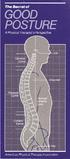 The Secret... T he American Physical Therapy Association would like to share a secret with you. It can help you do more with less effort breathe easier feel great. The secret is about good posture, which
Physiotherapy Database Exercises for people with Spinal Cord Injury
 Physiotherapy Database Exercises for people with Spinal Cord Injury Compiled by the physiotherapists associated with the following Sydney (Australian) spinal units : Last Generated on Mon Mar 29 16:57:20
FALL DETECTION AND PREVENTION FOR THE ELDERLY: A REVIEW OF TRENDS AND CHALLENGES
 FALL DETECTION AND PREVENTION FOR THE ELDERLY: Nashwa El-Bendary 1, 2, Qing Tan 1, Frédérique C. Pivot 1, Anthony Lam 3 1 Athabasca University, 1 University Drive, Athabasca, Alberta, Canada 2 Arab Academy
Advise and Do s and Don ts for low back pain
 Advise and Do s and Don ts for low back pain ADVISE : Wear lumbar belt. Do hot fomentation (with hot moist towel/hot water bottle) thrice a day. Keeps a towel roll under your lower back while doing exercise,
GETTING STARTED WITH LABVIEW POINT-BY-POINT VIS
 USER GUIDE GETTING STARTED WITH LABVIEW POINT-BY-POINT VIS Contents Using the LabVIEW Point-By-Point VI Libraries... 2 Initializing Point-By-Point VIs... 3 Frequently Asked Questions... 5 What Are the
Active Vibration Isolation of an Unbalanced Machine Spindle
 UCRL-CONF-206108 Active Vibration Isolation of an Unbalanced Machine Spindle D. J. Hopkins, P. Geraghty August 18, 2004 American Society of Precision Engineering Annual Conference Orlando, FL, United States
Division of Biomedical Engineering, Chonbuk National University, 567 Baekje-daero, deokjin-gu, Jeonju-si, Jeollabuk-do 561-756, Republic of Korea 3
 Upper Extremity Rehabilitation Program Using Inertial Sensors and Virtual Reality for Patients with Upper Extremity Hemiplegia due to Disorders after Stroke Je-Nam Kim 1, Mun-Ho Ryu 2,3, Yoon-Seok Yang
ε: Voltage output of Signal Generator (also called the Source voltage or Applied
 Experiment #10: LR & RC Circuits Frequency Response EQUIPMENT NEEDED Science Workshop Interface Power Amplifier (2) Voltage Sensor graph paper (optional) (3) Patch Cords Decade resistor, capacitor, and
Movement artifacts electrical noise caused by the movement of the sensor surface with respect to the skin surface
 BIOHARNESS 42 Aero Camino, Goleta, CA 93117 Tel (805) 685-0066 Fax (805) 685-0067 [email protected] www.biopac.com 12.15.08 Field Comparison: Zephyr BioHarness / Polar HR Monitor Introduction The Zephyr
THIS paper reports some results of a research, which aims to investigate the
 FACTA UNIVERSITATIS (NIŠ) SER.: ELEC. ENERG. vol. 22, no. 2, August 2009, 227-234 Determination of Rotor Slot Number of an Induction Motor Using an External Search Coil Ozan Keysan and H. Bülent Ertan
Electronic Communications Committee (ECC) within the European Conference of Postal and Telecommunications Administrations (CEPT)
 Page 1 Electronic Communications Committee (ECC) within the European Conference of Postal and Telecommunications Administrations (CEPT) ECC RECOMMENDATION (06)01 Bandwidth measurements using FFT techniques
Fall detection in the elderly by head tracking
 Loughborough University Institutional Repository Fall detection in the elderly by head tracking This item was submitted to Loughborough University's Institutional Repository by the/an author. Citation:
Effective Use of Android Sensors Based on Visualization of Sensor Information
 , pp.299-308 http://dx.doi.org/10.14257/ijmue.2015.10.9.31 Effective Use of Android Sensors Based on Visualization of Sensor Information Young Jae Lee Faculty of Smartmedia, Jeonju University, 303 Cheonjam-ro,
WIRELESS BLACK BOX USING MEMS ACCELEROMETER AND GPS TRACKING FOR ACCIDENTAL MONITORING OF VEHICLES
 WIRELESS BLACK BOX USING MEMS ACCELEROMETER AND GPS TRACKING FOR ACCIDENTAL MONITORING OF VEHICLES PROJECT REFERENCE NO. : 37S0430 COLLEGE BRANCH GUIDE : S.G.BALEKUNDRI INSTITUTE OF TECHNOLOGY,BELGAUM
Efficient Physical Activity Monitoring For The Elderly
 Ambulatory systems for monitoring physical activity: Technological issues in fall prevention in the elderly Kamiar Aminian Laboratory of Movement Analysis and Measurement (LMAM) Ecole Polytechnique Fédérale
The Power Plate is the innovative, time saving and results driven way to improve your fitness and well being.
 Welcome to the world of Power Plate Exercise The Power Plate is the innovative, time saving and results driven way to improve your fitness and well being. It works by accelerating the body s natural response
The Periodic Moving Average Filter for Removing Motion Artifacts from PPG Signals
 International Journal The of Periodic Control, Moving Automation, Average and Filter Systems, for Removing vol. 5, no. Motion 6, pp. Artifacts 71-76, from December PPG s 27 71 The Periodic Moving Average
A Dynamic Evidential Fall Monitoring and Detection System for Elder Persons
 IJSTE - International Journal of Science Technology & Engineering Volume 1 Issue 9 March 2015 ISSN (online): 2349-784X A Dynamic Evidential Fall Monitoring and Detection System for Elder Persons P. Bharathi
Using angular speed measurement with Hall effect sensors to observe grinding operation with flexible robot.
 Using angular speed measurement with Hall effect sensors to observe grinding operation with flexible robot. François Girardin 1, Farzad Rafieian 1, Zhaoheng Liu 1, Marc Thomas 1 and Bruce Hazel 2 1 Laboratoire
Welcome to your LOW BACK PAIN treatment guide
 Welcome to your LOW BACK PAIN treatment guide You are receiving this guide because you have recently experienced low back pain. Back pain is one of the most common musculoskeletal problems treated in medicine
An inertial haptic interface for robotic applications
 An inertial haptic interface for robotic applications Students: Andrea Cirillo Pasquale Cirillo Advisor: Ing. Salvatore Pirozzi Altera Innovate Italy Design Contest 2012 Objective Build a Low Cost Interface
Journal of Chemical and Pharmaceutical Research, 2014, 6(5): 647-651. Research Article
 Available online www.jocpr.com Journal of Chemical and Pharmaceutical Research, 2014, 6(5): 647-651 Research Article ISSN : 0975-7384 CODEN(USA) : JCPRC5 Comprehensive colliery safety monitoring system
Otago Exercise Program Activity Booklet
 Head Movements Stand up tall and look ahead. Slowly turn your head as far as you can to the right. Slowly turn your head as far as you can to the left. Repeat five times to each side. 44 Neck Movements
Exercises for older people
 Exercise for older people Exercises for older people Sitting Getting started If you ve not done much physical activity for a while, you may want to get the all-clear from a GP before starting. For the
Back Safety and Lifting
 Back Safety and Lifting Structure of the Back: Spine The spine is the part of the back that supports the trunk and head. It protects the spinal cord as well as giving flexibility to the body. Vertebrae