
Breathlessness. What is breathlessness? What causes breathlessness?
|
|
|
- Moris Wilkinson
- 9 years ago
- Views:
Transcription
1 What is breathlessness? All of us at some time in our lives have experienced shortness of breath, perhaps from over exertion, the after effects of a chest cold or when feeling particularly anxious or excited. causes you to increase the speed at which you breathe. This causes anxiety, tension and overuse of the muscles in your shoulders and upper chest. All of this makes the effort of breathing harder, by involving more muscles and using more energy. Your breathing can also become shallower. This means that the lungs do not receive as much air, which in turn can add to the feeling of breathlessness. What causes breathlessness? There are many reasons for breathlessness, sometimes referred to as dyspnoea (dis-nee-a) and you must always seek medical opinion to establish the cause and confirm the correct course of treatment. Below are common reasons for breathlessness: Anaemia Low levels of red cells in the blood can be caused by the cancer or cancer treatments, including chemotherapy or radiotherapy. Anxiety and panic Anxiety and panic can alter your natural way of breathing. When we are anxious sometimes we breathe in a more rapid way, using less of our lung capacity. This reduces the amount of air available and can result in a stressful, fast breathing cycle. Blockage of an airway or artery in the lung. Cancer treatments Some chemotherapy drugs can cause breathlessness. Radiotherapy may scar the treated lung causing mild to moderate breathlessness. Surgery, which may have involved removing part/all of the diseased lung, can sometimes cause shortness of breath. Chest infection This can result in swelling and/or inflammation in the lung tissue which reduces your ability to breathe deeply and get as much air into the lungs as you normally would. Other lung conditions such as asthma or chronic obstructive pulmonary disease COPD. Pain If your pain is not controlled, it can make it difficult to breathe comfortably. Pleural effusion A build up of fluid in the lining of the lung can be caused by the cancer or an infection. Pulmonary embolism A blood clot on the lung. Smoking makes breathlessness worse and contributes to many current and/or potential health problems. Tiredness/weakness and generally being very run-down. Page 1


2 Are there breathing techniques that can help my shortness of breath? Yes, while breathing is something we do all the time and seems automatic, with practice you can learn to increase your control over it. You can help your breathlessness by: Learning to control your breathing Breathing exercises Learning to relax Learning to control your breathing The first step in learning to control your breathing is to become more aware of your breathing pattern generally. Exercise, talking too fast, stressful situations and even excitement can alter your breathing pattern, so try to correct it if it is too shallow or too quick. Pursed-lip breathing and diaphragmatic breathing will both help. Pursed-lip breathing: Inhale through your nose for several seconds with your mouth closed, then exhale slowly through pursed lips for 4-6 seconds (like you are going to whistle). This helps to empty your lungs of old air, and makes as much room in your lungs for fresh oxygen-rich air. Diaphragmatic breathing: Relax the top of your chest and shoulders. Place your fingers lightly at the front of your chest on your stomach. Give a little cough and the muscle that you feel under your fingers is the diaphragm. Breathe in and feel the expansion of the lower ribs and stomach rise under your fingers. Breathe out as gently as possible like a sigh, feeling the lower ribs come down and in. Try to repeat this exercise about five or six times. Page 2

3 What positions will help me when I am short of breath? The most important thing is to be comfortable. Choose a position that will suit what you are doing and where you are. Try to be supported so that the upper chest and shoulders can relax. Your physiotherapist can help you if you are unsure. Sitting leaning Sitting upright High side lying forward Breathing exercises Standing leaning Forward Standing leaning back or sideways The aim is to allow the fresh air into the lungs and get rid of the old air. Try to imagine you are breathing out for twice as long as you breathe in. This will make room for the fresh air and also helps to slow down the speed of your breathing. Keep your shoulders and the upper chest relaxed and easy. Feel as if the air is going down to your stomach and imagine that the breathing is taking place there. Expansion of the lower chest. Place your hands on either side of your chest. Breathe out through your mouth, letting your ribs sink in as far as possible. Then, breathing in through your nose or mouth, feel your ribs expand outwards towards your hands. Gently breathe out to start again. Try to repeat the exercise about five or six times. It is a good idea to practice this frequently throughout the day, so that they become a habit and can be used when you are feeling breathless. Coughing can be hard work and can increase breathlessness so, if possible, try to cough only when you are ready to spit out phlegm. Breathing exercises may help to move the phlegm, which will make it easier to spit it out. For further information about breathing exercises and advice on breathlessness, ask your cancer doctor or lung cancer nurse specialist to refer you to a physiotherapist. Page 3

4 Learning to relax Another common reaction to anxiety is increased muscle tension, such as hunched shoulders, clenched fists or feeling a knot in your stomach. Learning to relax by letting go of this muscle tension can also be a useful method of controlling anxiety and breathlessness. Please see our Living with lung cancer booklet for more information relaxation. Visit or call our free helpline on (option 2). Are there any treatments that will help my breathlessness? The type of treatment given will depend upon the cause of your breathlessness. Your cancer doctor or lung cancer nurse specialist will discuss which treatment will help your breathlessness. These include: Drug treatments including painkillers (morphine), steroids and sedatives to help relieve anxiety and panic caused by breathlessness. Bronchodilator drugs relaxes the muscles in the lungs and opens up the airways. This makes breathing easier. These drugs are normally given through an inhaler or nebuliser. Oxygen therapy increases the amount of oxygen in the lungs and the bloodstream. If your blood oxygen levels are low, getting more oxygen can help you breathe better. An oxygen cylinder may be given if you only need oxygen for short periods of time. If you need oxygen for longer periods of time, an oxygen concentrator may be supplied. This is a machine which takes oxygen from surrounding air. It is usually given using a face mask or through small tubes that sit under the nostrils (called a nasal cannula). My breathlessness is causing me extreme anxiety. What should I do? Feelings of extreme (called acute) anxiety can sometimes happen suddenly. It is important to remember that these feelings will subside. While it might be tempting to avoid anxiety provoking situations, in the long term this can affect your self confidence. You can learn to manage anxiety experienced in such situations by facing up to them a little at time and using the breathing techniques mentioned. Page 4

5 For some people being breathless can be frustrating and at times even frightening. A number of people report that breathlessness is commonly linked with anxiety and panic. Unfortunately, anxiety only makes breathlessness worse. It can therefore be useful to learn ways of controlling anxiety and panic. Anxiety is a normal reaction to situations where we may feel frightened or threatened. The anxiety response involves changes in the body, and in the way you think and behave. Some common bodily responses to anxiety include: Fast breathing, chest tightness and shortness of breath. Muscle tension, trembling or shaking. Sweating, cold and clammy hands. Heart pounding/racing and palpitations. Light headedness, dizziness and feeling faint. Although you may feel anxious when breathless, try using the breathing techniques discussed and your breathing will naturally slow down as you regain control. Sometimes it helps to focus on a pleasant image in your mind s eye or do something to take your mind off the breathlessness. Find out what works best for you, for example, relaxing music, comedy show or a scenic view. Remember the fear will subside in time. If you are experiencing significant problems coping with anxiety, it may be useful to discuss with your cancer doctor or lung cancer nurse specialist about being referred to a clinical psychologist. I get very breathless at the start of the day, is there anything I can do to help this? When rising, take your time getting out of bed. Sit on the edge of the bed for a few minutes. Perhaps you don t need to get dressed immediately - you may feel better having a warm drink first. When bathing or showering, you may find that this takes up a lot of energy. Avoid having the water too hot and making the room too steamy. Try opening a window or leave the door slightly open. After your bath it may help to let the water out first then to kneel before getting out. Sit down while showering, especially if you are prone to getting very tired or dizzy. Have a small grab-rail in the shower that you can put your hand onto if you require. Following your bath/shower, sit down to dry yourself or wrap yourself in an absorbent towelling bathrobe. There is a whole range of bathing and showering equipment available to help (see your district nurse or occupational therapist for advice). Page 5

6 When dressing, give yourself as much time as you need. It may be easier to sit down for these activities and it is best to avoid bending as much as possible. You may wish to consider other methods of putting on your socks or shoes. Try a long handled shoehorn or perhaps a member of the family can help. Loose clothing is also often easier to put on and less restrictive on your breathing. Are there any tips to help me manage tasks around the house? Avoid too much bending and stretching. It may be easier to sit on a stool when bending down to reach low plugs and switches or, for example, emptying your washing machine. Another tip is to place shopping/washing baskets on a stool or table at waist level, when organising or emptying them. You may wish to consider using a pick-up stick or reacher useful for picking up the letters from behind the front door. Organise your house so that items you use frequently are kept within easy reach. Use your work surfaces or table to help you move your utensils or cup of tea around the kitchen - a kitchen trolley can be very useful to carry heavier objects from room to room. Use a flask and a shoulder bag if a trolley is not available or suitable. This can help to carry drinks around and keep both hands free. Keep the phone nearby; a cordless or mobile may be useful. Ask your family and friends to give you plenty of time to answer. Sit down to do as much as possible, for example, peeling potatoes, drying dishes or waiting for food to cook. Your occupational therapist may be able to arrange for you to be supplied with a perching stool, which is ideal for working at work top height. If you can, try to avoid climbing the stairs too many times during the day. Bring down everything you may need for the day when coming down in the morning. Try to ensure that your bed or chairs are easy to get on/off. If chairs or the toilet are too low, you will waste a lot of energy struggling to get up. Try to sit on a suitable height of chair. A low toilet can easily be sorted by using a slightly raised toilet seat or perhaps a small grab-rail, strategically placed, on the wall. Page 6


7 Can I still get out and about when I m feeling breathless? Remember to think ahead when you are planning an evening or a day out. If you are going somewhere unfamiliar, try to get information in advance, for example, make sure that lifts and parking/transport facilities are nearby. If you have to carry heavy shopping, try to distribute the weight comfortably by using a shopping trolley or rucksack. A wheelchair may be useful to you. Ask your GP or occupational therapist if this would be of benefit to you. Your local shopping centre and supermarket may have wheelchairs available to borrow. You may find that in certain atmospheres your mouth becomes dry or that you cough more. You may find that cold/damp weather or forced air/humid environments such as shopping centres can make you feel more breathless. It can be helpful to have a small bottle of water or some sweets handy. If you are having difficulty breathing whilst performing day-to-day activities, such as walking, bathing or dressing, then you may qualify for some financial benefit from the government. You may also be entitled to a disabled badge for parking the car or travelling expenses. I want to keep active but I m not sure if I should be exercising. Would it help me? It s natural to feel a little nervous about being too active and getting out of breath. However, light exercise can have real benefits to your well being. Certain exercises that focus on breathing can prove helpful, for example, swimming, walking, yoga and pilates. Page 7

8 My breathlessness is affecting my sexual relationship. What can I do to help this? As with other activities, you may find that your breathlessness affects your sexual relationship. This in turn could lead to frustration between you and your partner at a time when you want to be really close. It might help to set aside time when you can discuss your most intimate feelings with your partner and look at ways that you may overcome any problems. You may find that certain sexual positions make you less breathless than others. If you have a reliever inhaler, it may be of help to use it before and after sexual relations. It might help to discuss any problems with someone not so close, but who is able to answer your questions, such as your GP, cancer doctor or lung cancer nurse specialist. I am a smoker, will quitting smoking help my breathlessness? Although most health care professionals will advise you to quit, they will recognise that this is a very individual choice. If you do stop smoking, your breathlessness will improve. You will have better circulation and it will reduce the amount of poisonous chemicals in your body. Research shows that cleaner lungs may also help your recovery from treatments, reduce the risk of the cancer returning and may increase your chance of survival. Our online forum, Quit Support, provides a community to help you stop smoking and offers support and advice from others in the same situation. Visit our forum at healthunlocked.com/quitsupport. This forum allows you to share your experience through blog posts and questions. You can also ask your GP or lung cancer nurse specialist for advice on giving up smoking. Contact details of the NHS Smoking Helplines can be found at the back of our Living with lung cancer booklet or visit /usefulcontacts GIVING HELP AND HOPE The charity has two aims: Supporting people living with lung cancer - Working closely with lung cancer nurses, we provide information, run lung cancer support groups and offer telephone and online support. Our patient grants offer some financial help to people affected by lung cancer. Saving lives - We fund lung cancer research, campaign for better treatment and care for people who have lung cancer, and raise awareness of the importance of early diagnosis. Our lung cancer prevention work helps people to quit smoking and encourages young people not to start smoking. Call us on (option 2) This information has been taken from the following sources: Lung cancer answering your questions: Managing lung cancer symptoms 2014 Roy Castle Lung Cancer Foundation. Reg. Charity England and Wales No: Date produced: July 2014 Scotland No: SC Page 8

MANAGING BREATHLESSNESS
 12 Leaflet issued by: Pulmonary Rehabilitation Service Anglian Community Enterprise (CIC) Kennedy House Kennedy Way, Clacton-on-sea Essex CO15 4AB Tel: 01255 206263 MANAGING BREATHLESSNESS On request,
Managing my Breathlessness
 James Paget University Hospitals NHS Foundation Trust Managing my Breathlessness Patient Information Contents Living with breathlessness 3 Battery life 4 How can I control my breathlessness? 5 Simple breathing
Help Yourself Breathe. Tender Loving Care for Your Lungs. Department of Physiotherapy. PD 1359 (Rev 06-2009) File: peyles
 Help Yourself Breathe Tender Loving Care for Your Lungs PD 1359 (Rev 06-2009) File: peyles Department of Physiotherapy Why are you breathless? Chronic Airflow Limitation or Obstruction is a decrease in
Better Living with Obstructive Pulmonary Disease A Patient Guide
 Better Living with Obstructive Pulmonary Disease A Patient Guide Second Edition November 2012 Queensland Health The State of Queensland (Queensland Health) and The Australian Lung Foundation 2012 a Better
Better Breathing with COPD
 Better Breathing with COPD People with Chronic Obstructive Pulmonary Disease (COPD) often benefit from learning different breathing techniques. Pursed Lip Breathing Pursed Lip Breathing (PLB) can be very
Stem cell transplant, you and your rehabilitation Information for patients and their carers
 Oxford University Hospitals NHS Trust Physiotherapy department Stem cell transplant, you and your rehabilitation Information for patients and their carers Stem cell transplant exercise handout Thank you
Anxiety and breathing difficulties
 Patient information factsheet Anxiety and breathing difficulties Breathing is something that we all automatically do and we often take this for granted. Some chronic health conditions, for example asthma
There is no cure for COPD Chronic Bronchitis Emphysema
 Live Well With COPD Chronic Obstructive Pulmonary Disease, or COPD is a lung disease. People with COPD have a hard time getting air in and out of their lungs. There is no cure for COPD. COPD is also commonly
Breathing techniques to help breathlessness 1
 Breathing techniques to help breathlessness 1 Breathing techniques to help breathlessness This information is from the booklet Managing breathlessness. You may find the full booklet helpful. We can send
Physiotherapy for COPD. Chronic Obstructive Pulmonary Disease (COPD) Healthcare you can Trust. Pulmonary Rehabilitation
 Pulmonary Rehabilitation Pulmonary rehabilitation is a course of exercise and education designed to help people with COPD get fitter, cope with their symptoms and understand their condition better. Evidence
CONTENTS. Note to the Reader 00. Acknowledgments 00. About the Author 00. Preface 00. Introduction 00
 Natural Therapies for Emphysema By Robert J. Green Jr., N.D. CONTENTS Note to the Reader 00 Acknowledgments 00 About the Author 00 Preface 00 Introduction 00 1 Essential Respiratory Anatomy and Physiology
Breathlessness. and anxiety. Being anxious can make breathlessness feel worse. Not being able to catch your breath can be very frightening
 Breathlessness and anxiety Being anxious can make breathlessness feel worse Not being able to catch your breath can be very frightening Learning to relax and slow down can help to build your confidence
Medication and Devices for Chronic Obstructive Pulmonary Disease (COPD)
 Medication and Devices for Chronic Obstructive Pulmonary Disease (COPD) Patients with COPD take a wide variety of medicines to manage their symptoms these include: Inhaled Short Acting Bronchodilators
Chronic Obstructive Pulmonary Disease Patient Guidebook
 Chronic Obstructive Pulmonary Disease Patient Guidebook The Respiratory System The respiratory system consists of the lungs and air passages. The lungs are the part of the body where gases are exchanged
Living With Chronic Obstructive Pulmonary Disease (COPD) * Managing Your Diet, Fitness, and Moods. *Includes chronic bronchitis, emphysema, or both.
 DISEASE MANAGEMENT Living With Chronic Obstructive Pulmonary Disease (COPD) * Managing Your Diet, Fitness, and Moods *Includes chronic bronchitis, emphysema, or both. Learning to Live Well With COPD To
LIVING WITH CHRONIC OBSTRUCTIVE PULMONARY DISEASE (COPD)*: MANAGING YOUR DIET, FITNESS, AND MOODS
 LIVING WITH CHRONIC OBSTRUCTIVE PULMONARY DISEASE (COPD)*: MANAGING YOUR DIET, FITNESS, AND MOODS Boehringer Ingelheim Pharmaceuticals, Inc. has no ownership interest in any other organization that advertises
Living With Chronic Obstructive Pulmonary Disease (COPD) * Managing Your Diet, Fitness, and Moods. *Includes chronic bronchitis, emphysema, or both.
 DISEASE MANAGEMENT Living With Chronic Obstructive Pulmonary Disease (COPD) * Managing Your Diet, Fitness, and Moods *Includes chronic bronchitis, emphysema, or both. Learning to Live Well With COPD To
Asthma and COPD Awareness
 Asthma and COPD Awareness Molina Breathe with Ease sm and Chronic Obstructive Pulmonary Disease Molina Healthcare of Michigan Fall 2012 Importance of Controller Medicines Asthma is a disease that causes
Living with a lung condition:
 Living with a lung condition: how exercise and eating well can make a difference to your life This information is for people living with a lung condition in the UK and your family and carers. It will help
Functional rehab after breast reconstruction surgery
 Functional rehab after breast reconstruction surgery UHN A guide for women who had DIEP, latissimus dorsi with a tissue expander or implant, or two-stage implant based breast reconstruction surgery Read
Section 2. Breathlessness Management
 Section 2 Breathlessness Management Breathlessness Management Breathing techniques There are various techniques for coping with breathlessness. If you practice these every day when sitting, as you become
Call Your Home Health Nurse and/or Physician. Call 911. Self Management for COPD COMMUNITY HEALTH AND COUNSELING SERVICES
 COMMUNITY HEALTH AND COUNSELING SERVICES Self Management for COPD Call Your Home Health Nurse and/or Physician Call 911 Sputum (phlegm) that increases in amount/color or becomes thicker than usual Unrelieved
A Guide to Controlled Breathing (Pursed Lips Breathing)
 A Guide to Controlled Breathing (Pursed Lips Breathing) Your doctor or nurse may suggest that you learn how to do controlled breathing. This can help to ease shortness of breath (breathlessness) caused
Occupational therapy after stroke
 Stroke Helpline: 0303 3033 100 Website: stroke.org.uk Occupational therapy after stroke After a stroke, you are likely to need help to regain your abilities, learn new skills and cope with any remaining
Controlling symptoms of mesothelioma
 Controlling symptoms of mesothelioma This information is an extract from the booklet Understanding mesothelioma. You may find the full booklet helpful. We can send you a free copy see page 9. Contents
Treating Mesothelioma - A Quick Guide
 Treating Mesothelioma - A Quick Guide Contents This is a brief summary of the information on Treating mesothelioma from CancerHelp UK. You will find more detailed information on the website. In this information
Using an Inhaler. Breathe in through your mouth slowly and deeply this should take 3 4 seconds
 Using an Inhaler Without a spacer Remove the cap Shake the inhaler for 3 4 seconds Place your middle finger on the sprayer Place your thumb on the bottom of the inhaler Stand up and tilt your head back
Manage cancer related fatigue:
 Manage cancer related fatigue: For People Affected by Cancer In this pamphlet: What can I do to manage fatigue? What is cancer related fatigue? What causes cancer related fatigue? How can my health care
Asbestos and your lungs
 This information describes what asbestos is and the lung conditions that are caused by exposure to it. It also includes information about what to do if you have been exposed to asbestos, and the benefits
Smoking and your lungs Why it s never too late to give up
 Smoking and your lungs Why it s never too late to give up Giving up smoking is never easy, but it s the most important thing you can do to look after your health. If you have a lung condition, you might
Understanding your Peripherally Inserted Central Catheter (PICC) Patient Information
 Understanding your Peripherally Inserted Central Catheter (PICC) Patient Information The Purpose of this Information Sheet This information sheet has been written by patients, members of the public and
Cardiovascular rehabilitation home exercise programme
 Cardiovascular rehabilitation home exercise programme To get the most benefit from the cardiovascular rehabilitation programme we recommend that you do some form of exercise on the days you are not attending
The road to recovery. The support available to help you with your recovery after stroke
 The road to recovery The road to recovery The support available to help you with your recovery after stroke We re for life after stroke Introduction Need to talk? Call our confidential Stroke Helpline
Mesothelioma and Asbestos
 CANCER INFORMATION FACTSHEET Mesothelioma and Asbestos The information in this factsheet will help you to understand more about mesothelioma. It is an agreed view on this cancer by medical experts. We
About lung cancer. Contents. The lungs
 This information is an extract from the booklet Understanding lung cancer. You may find the full booklet helpful. We can send you a free copy see page 7. The lungs Contents The lungs Types of lung cancer
Help for completing attendance allowance and disability allowance forms
 Help for completing attendance allowance and disability allowance forms Advice and guidance on applying for these benefits HOUSING AND COMMUNITY LIVING www.luton.gov.uk Luton Borough Council aims to help
Emphysema. Introduction Emphysema is a type of chronic obstructive pulmonary disease, or COPD. COPD affects about 64 million people worldwide.
 Emphysema Introduction Emphysema is a type of chronic obstructive pulmonary disease, or COPD. COPD affects about 64 million people worldwide. Emphysema involves damage to the air sacs in the lungs. This
Percutaneous Nephrostomy. Care of your Nephrostomy. Department of Urology
 Percutaneous Nephrostomy Care of your Nephrostomy Department of Urology You may encounter some problems at home but these are usually easily overcome. Listed below are some questions patients commonly
Sensory Sanctuary Staff Occupational Therapy Stress Management Program [email protected]
 Abdominal Breathing Technique How it s done: With one hand on the chest and the other on the belly, take a deep breath in through the nose, ensuring the diaphragm (not the chest) inflates with enough air
Patient Information. and Physical Activity Diary. Wythenshawe Hospital Cardiac Rehabilitation. Name:... The ticker club Registered Charity No.
 Wythenshawe Hospital Cardiac Rehabilitation Patient Information Remember : Lifelong regular physical activity - 0 minutes, five times per week is important for your general health. I feel so much better
Mesothelioma. 1995-2013, The Patient Education Institute, Inc. www.x-plain.com ocft0101 Last reviewed: 03/21/2013 1
 Mesothelioma Introduction Mesothelioma is a type of cancer. It starts in the tissue that lines your lungs, stomach, heart, and other organs. This tissue is called mesothelium. Most people who get this
PATIENT HANDBOOK AND JOURNAL POST SURGERY
 PATIENT HANDBOOK AND JOURNAL POST SURGERY POST ANESTHESIA CARE UNIT (PACU) After surgery you will be moved from the Operating Room directly to a special recovery room, called the Post Anesthesia Care Unit
Breathing Exercises and Clearing Your Chest
 Information for patients Breathing Exercises and Clearing Your Chest Physiotherapy Department Tel: 01473 702073 DMI ref: 1898-08.indd(RP) Issue 1: October 2008 The Ipswich Hospital NHS Trust, 2008. All
Rehabilitation. Rehabilitation. Walking after Total Knee Replacement. Continuous Passive Motion Device
 Walking after Total Knee Replacement After your TKR, continue using your walker or crutches until your surgeons tells you it is okay to stop using them. When turning with a walker or crutches DO NOT PIVOT
Caring for a Tenckhoff Catheter
 Caring for a Tenckhoff Catheter UHN A Patient s Guide What is a Pleural Effusion? There is a small space between the outside of your lung and the chest wall (ribs). This space is called the pleural space.
Breathe Well and Live Well with COPD. preview
 Breathe Well and Live Well with COPD of related interest Chair Yoga Seated Exercises for Health and Wellbeing Edeltraud Rohnfeld ISBN 978 1 84819 078 8 eisbn 978 0 85701 056 8 How to Give Clients the Skills
Your Recovery After a Cesarean Delivery
 Your Recovery After a Cesarean Delivery It is normal to have many questions about your care after delivery. Cesarean delivery is surgery and your body needs time to heal and recover for the next 6 weeks,
Strengthen Your Spirit
 Diabetes... Now What? Strengthen Your Spirit Self Assessment and Tools for Healthy Coping of Negative Emotions This product was developed by the Advancing Diabetes Self Management Program at Marshall University
Patient information. How to Stop Smoking Before your Operation PIF 734 V5
 Patient information How to Stop Smoking Before your Operation PIF 734 V5 Fag Ends can help you stop smoking before your operation. To contact Fag Ends for help to stop smoking please call Freephone: 0800
Lower Back Pain www.spireperform.com 01283 576333
 Lower Back Pain www.spireperform.com 01283 576333 Low back pain can be caused through deficiencies in movement, posture and your lower limbs or pelvis. The advice in this booklet aims to help with relieving
Chronic obstructive pulmonary disease (COPD)
 Chronic obstructive pulmonary disease (COPD) Chronic obstructive pulmonary disease (COPD) is the name for a group of lung diseases including chronic bronchitis, emphysema and chronic obstructive airways
Treatment for pleural mesothelioma
 Treatment for pleural mesothelioma This information is an extract from the booklet Understanding mesothelioma. You may find the full booklet helpful. We can send you a free copy see page 9. Contents Treatment
Sandwell Community Respiratory Service
 Contents Page Community Respiratory Service 2 Service times and locations 3 Oxygen Service 4 Pulmonary Rehabilitation 5 Maintenance Programme 6 Occupational Therapy 7 Dietary support and advice 7 Weatherwise
Total Hip Replacement
 NOTES Total Hip Replacement QUESTIONS DATES PHONE NOS. Compiled by Mr John F Nolan FRCS for The British Hip Society 2009. A patient s information booklet 16 1 Introduction This booklet has been produced
GOING HOME AFTER YOUR TAVR PROCEDURE
 GOING HOME AFTER YOUR TAVR PROCEDURE HENRY FORD HOSPITAL CENTER FOR STRUCTURAL HEART DISEASE GOING HOME After your TAVR procedure, you will need help when you go home. It is hard to predict how much help
Secondary breast cancer in the lung
 Secondary breast cancer in the lung This booklet is for people who have been diagnosed with secondary breast cancer in the lung. It describes what secondary breast cancer in the lung is, what the symptoms
Radiotherapy for a mesothelioma
 Oxford University Hospitals NHS Trust The Radiotherapy Department Radiotherapy for a mesothelioma Information for patients Introduction This leaflet is for people who have been recommended treatment with
Cast removal what to expect #3 Patient Information Leaflet
 Cast removal what to expect #3 Patient Information Leaflet SM466 Now your cast is off, self help is the key! Follow the advice given to you by your doctor and the staff in the clinic. Your skin will be
Rehabilitation after shoulder dislocation
 Physiotherapy Department Rehabilitation after shoulder dislocation Information for patients This information leaflet gives you advice on rehabilitation after your shoulder dislocation. It is not a substitute
Pulmonary Rehabilitation in Chronic Obstructive Pulmonary Disease (COPD)
 Pulmonary Rehabilitation in Chronic Obstructive Pulmonary Disease (COPD) Development of disability in COPD The decline in airway function may initially go unnoticed as people adapt their lives to avoid
Your guide to stopping smoking for good
 Your guide to stopping smoking for good Reading this is your first step to stopping smoking for good Help2Quit gives you advice and support to help stop smoking for good. Nicotine replacement therapy and
Controlling Your Pain Without Medicine
 Controlling Your Pain Without Medicine The following information is based on the general experiences of many prostate cancer patients. Your experience may be different. If you have any questions about
Rivaroxaban to prevent blood clots for patients who have a lower limb plaster cast. Information for patients Pharmacy
 Rivaroxaban to prevent blood clots for patients who have a lower limb plaster cast Information for patients Pharmacy Your doctor has prescribed a tablet called rivaroxaban. This leaflet tells you about
Quit plan. Your free guide on how to stop smoking. www.want2stop.info
 Quit plan Your free guide on how to stop smoking www.want2stop.info Thinking? about stopping Around three quarters of those people in Northern Ireland who smoke say they would like to stop. If you are
Information for Patients Receiving Radiation Therapy: Breast Cancer or Ductal Carcinoma in Situ (DCIS) of the Breast
 Information for Patients Receiving Radiation Therapy: Breast Cancer or Ductal Carcinoma in Situ (DCIS) of the Breast Why is radiation therapy used to treat breast cancer or DCIS? Breast cancer or DCIS
Medications to help you quit smoking
 Medications to help you quit smoking How can medication help me quit smoking? Using medications can increase your chances of quitting smoking 2 to 3 times more than quitting without using medications.
Active Cycle of Breathing Technique
 Patient Information Leaflet Physiotherapy Department Active Cycle of Breathing Technique Derriford Hospital Derriford Road Plymouth PL6 8DH Tel: 0845 155 8155 www.plymouthhospitals.nhs.uk Active Cycle
WHEN COPD* SYMPTOMS GET WORSE
 WHEN COPD* SYMPTOMS GET WORSE *Includes chronic bronchitis, emphysema, or both. Boehringer Ingelheim Pharmaceuticals, Inc. has no ownership interest in any other organization that advertises or markets
Secondary liver cancer Patient Information Booklet
 Secondary liver cancer Patient Information Booklet Delivering the best in care UHB is a no smoking Trust To see all of our current patient information leaflets please visit www.uhb.nhs.uk/patient-information-leaflets.htm
Physiotherapy for Video Assisted Thoracic Surgery Patients
 Physio for VATS patients Royal Devon and Exeter NHS Foundation Trust Physiotherapy for Video Assisted Thoracic Surgery Patients July 2008 (Review date: July 2011) Physiotherapy Department...01392 402438
Your Go-to COPD Guide
 Your Go-to COPD Guide Learning how to live with chronic obstructive pulmonary disease (COPD) Inside, you ll learn: COPD facts COPD symptoms and triggers How to talk with your doctor Different treatment
You will be having surgery to remove a tumour(s) from your liver.
 Liver surgery You will be having surgery to remove a tumour(s) from your liver. This handout will help you learn about the surgery, how to prepare for surgery and your care after surgery. Surgery can be
Recovery plan: radical cystectomy Information for patients
 Recovery plan: radical cystectomy Information for patients Help for you following a bereavement 5 This leaflet will help you know what to expect during your time with us. Please take some time to read
Local anaesthesia for your eye operation
 Local anaesthesia for your eye operation Information for patients and families. www.anaesthesia.ie 1 This information leaflet is for anyone expecting to have an eye operation with a local anaesthetic.
Radiotherapy for breast cancer
 Radiotherapy for breast cancer This information is an extract from the booklet Understanding breast cancer. You may find the full booklet helpful. We can send you a copy free see page 6. Contents Radiotherapy
DRAFT OUTLINE YOGA IN HOSPICE CARE PRESENTATION Michele Hoffman, E-RYT, CYT April 21, 2015
 DRAFT OUTLINE YOGA IN HOSPICE CARE PRESENTATION Michele Hoffman, E-RYT, CYT April 21, 2015 1. What is Yoga? Holistic practice over 5,000 years old which works on all levels of being mind, body and spirit.
What Is. Norovirus? Learning how to control the spread of norovirus. Web Sites
 Web Sites Centers for Disease Control and Prevention (CDC) http://www.cdc.gov/norovirus/index.html Your Local Health Department http://www.azdhs.gov/diro/lhliaison/countymap.htm What Is Ocument dn Norovirus?
Lung cancer (non-small-cell)
 Patient information from the BMJ Group Lung cancer (non-small-cell) It can be devastating to find out that you or someone close to you has lung cancer. You will have to make some important decisions about
Physical therapies. Massage
 This information is an extract from the booklet, Understanding complementary therapies. You may find the full booklet helpful. We can send you a copy free see page 6. This information discusses eight physical
written by Harvard Medical School COPD It Can Take Your Breath Away www.patientedu.org/copd
 written by Harvard Medical School COPD It Can Take Your Breath Away www.patientedu.org/copd What Is COPD? COPD stands for chronic obstructive pulmonary disease. There are two major diseases included in
All About Your Peripherally Inserted Central Catheter (PICC)
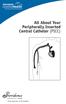 All About Your Peripherally Inserted Central Catheter (PICC) General Information Intravenous (IV) therapy is the delivery of fluid directly into a vein. An intravenous catheter is a hollow tube that is
Tunnelled indwelling pleural catheter (TIPC)
 Tunnelled indwelling pleural catheter (TIPC) A patient s guide 1 What is a tunnelled indwelling pleural catheter? A tunnelled indwelling pleural catheter is a specially designed small tube to drain fluid
COPD What Is It? Why is it so hard to catch my breath? What does COPD feel like? What causes COPD? What is an exacerbation (ig-zas-er-bay-shun)?
 Attitudes and Beliefs 4 COPD What Is It? Why is it so hard to catch my breath? COPD is a disease that damages the lungs. In a healthy lung, the airways are open and the air sacs fill up with air. Then
Radiotherapy to the chest wall
 Oxford University Hospitals NHS Trust The Radiotherapy Department Radiotherapy to the chest wall Information for patients Introduction This leaflet is for people who have had surgery for breast cancer
Pulmonary Rehabilitation Educational Booklet Energy Conservation Techniques Hospital Authority Coordinating Committee in Occupational Therapy,
 Pulmonary Rehabilitation Educational Booklet Energy Conservation Techniques Hospital Authority Coordinating Committee in Occupational Therapy, Hospital Authority Foreword This booklet is complied by Occupational
How treatment is planned Giving your consent The benefits and disadvantages of treatment Second opinion
 Treatment overview for lung cancer This information is an extract from the booklet Understanding lung cancer. You may find the full booklet helpful. We can send you a free copy see page 5. Contents How
ADVICE FOR PATIENTS WITH NECK PAIN
 ADVICE FOR PATIENTS WITH NECK PAIN Patient Information Leaflet Physiotherapy Department (Information sheet code SHOT/SHOA) A SMOKING FREE ENVIRONMENT WAHT-TH-007-1 - Version 1.2 Dear Patient This advice
ROTATOR CUFF HOME EXERCISE PROGRAM
 ROTATOR CUFF HOME EXERCISE PROGRAM Contact us! Vanderbilt Sports Medicine Medical Center East, South Tower, Suite 3200 1215 21st Avenue South Nashville, TN 37232-8828 For more information on this and other
Mesothelioma and Asbestos
 Cancer information factsheet Mesothelioma and Asbestos The information in this factsheet will help you to understand more about mesothelioma. It is an agreed view on this cancer by medical experts. We
What If I Have a Spot on My Lung? Do I Have Cancer? Patient Education Guide
 What If I Have a Spot on My Lung? Do I Have Cancer? Patient Education Guide A M E R I C A N C O L L E G E O F C H E S T P H Y S I C I A N S Lung cancer is one of the most common cancers. About 170,000
How To Stretch Your Body
 Exercise Module A New Leaf Choices for Healthy Living University of North Carolina at Chapel Hill 2007 Center for Health Promotion and Disease Prevention Physical Activity Exercises for Keeping Active
Cardiac rehabilitation
 NHS Choices Provides online information and guidance on all aspects of health and healthcare, to help you make choices about your health. w: www.nhs.uk Become a member of your local hospitals, and help
The Well Woman Centre. Adult Urinary Incontinence
 The Well Woman Centre Adult Urinary Incontinence 1 Adult Urinary Incontinence... 3 Stress Incontinence Symptoms... 3 Urge Incontinence Symptoms... 4 Mixed Incontinence Symptoms... 5 Where to Start?...
Department of Surgery
 Thoracic Surgery After Your Lung Surgery Patient Education Discharge Information You have just had lung surgery. The following are definitions of terms you may hear in connection with your surgery: THORACOTOMY