
The Challenger Version 8 User Guide
|
|
|
- Damon Augustine Goodman
- 10 years ago
- Views:
Transcription
1 Issue III : October 1997 The Challenger Version 8 User Guide

2 CONTENTS Introduction... 3 Glossary... 4 The Challenger Console.. Liquid Crystal Display... 6 Keypad... 7 Indicator Lights... 8 User Identification...PIN... 9 Using a PIN... 9 Duress...Duress Facility How to activate the Duress Facility Door Opening Arming How to arm your system Disarming How to disarm your system Unsealed Inputs...When arming/disarming your system Types of Alarms...Local Alarm Alarm System Alarm Local Alarm...How to identify the source of a Local Alarm How to acknowledge a Local Alarm Alarm...How to identify the source of an alarm How to reset an alarm Quick Alarm History Continued overleaf... 2 V8-U-TXT.PM6 : Issue I, Revision I : October 1997

3 CONTENTS The Challenger menu... How to display menu options How to select a menu option How to exit a menu option Menu Options: 1... Panel Status Inputs Unsealed Inputs in Alarm Inputs Isolated History Test Report Service Menu Film Counters Input Text Isolate De-Isolate Test Input Start Auto Access Test Program Users (Cards) Time and Date Isolate/De-isolate RAS/DGP Enable/Disable Service Tech Reset Cameras Installer Menu Door and Floor Groups Holidays Open Door Unlock, Lock, Disable and Enable Doors Print History Programming Records:...Introduction...62 User Record Door Group Record Floor Group Record Holiday Record Alarm Group Record Timezone Record The Challenger Version 8.0 User Guide : Issue I, Revision I : October

4 THE CHALLENGER The Challenger panel combines sophisticated design with versatility. It is easy to use and this, together with its many other features, makes The Challenger the leader in its field. Programming and system features: The Challenger can be programmed to function in a number of different ways. The way that your system functions depends on the requirements of your organization and on the way those requirements have been achieved via the programming. Your system may not have all the features detailed in this guide, or it may incorporate additional features which are detailed separately in the user guides for that equipment. It should be remembered that some of your system features may not be authorized to all users. The User Guide: The User Guide provides details of all the procedure variations, including the different responses from The Challenger. It should be noted however, that the procedures and Challenger responses will be consistent throughout one system. For example, if a list is presented in a particular way in one function, it will be presented in the same way in all other functions. Display Text: The terminology used to describe the various parts of your building or security system has been programmed specifically for your organization. Testing: It is important that you regularly test your system to ensure that all equipment is operating correctly. Disclaimer It is the responsibility of the customer to test and determine the suitability of this product for specific applications. In no event shall Tecom Systems be responsible or liable for any damages incurred by the buyer or any third party arising out of the use or inability to use the product. Due to ongoing development the contents of this manual are subject to change without notice. All efforts have been made to ensure the accuracy of this manual. However, Tecom Systems can assume no responsibility for any errors or omissions in this manual or their consequences. Should any errors be found, we would greatly appreciate being notified of them. 4 V8-U-TXT.PM6 : Issue I, Revision I : October 1997

5 GLOSSARY ACCESS CONTROL ACCESS ALARM ALARM GROUP AREA ARMED ARMING STATION (RAS) CURSOR : The control of entry to, or exit from a security area. : The condition of an area or building when it is occupied and when the security system has been set so that normal activity does not set off an alarm. : The state of a security system when an armed input device is activated. eg. A door lock is broken causing a siren to sound. The alarm signal (siren, flashing light etc.) and the circumstances which cause it, will depend on the system programming. : A Challenger feature which defines a User's Security requirements by specifying a group of areas, functions and menu options. Alarm groups are used when programming Users to define what areas can be controlled and what functions can be performed by that user. : A section of a building which has specific security requirements. The Challenger allows a building to be divided into 16 areas of differing security requirements. Each area is identified by a number and name. eg. 1. Office, 2. Workshop, 3. Boardroom etc. : The condition of an input, an area or a building, when a change in the status of any input (from sealed to unsealed) will cause an alarm. An area or building is only armed when it is unoccupied. Some inputs may remain armed continually. : A device which is the user s control panel for security functions for an area(s) or for access points (doors). The arming station may be a Challenger console, or any other device which can be used to perform security functions such as arm/disarm, open doors etc. : A flashing underline character on the liquid crystal display which indicates where the next character entered on the keypad, will appear. DATA GATHERING PANEL : A device which collects data from other security devices within (DGP) an area, and transfers it to the main control panel. DOOR GROUP DURESS FLOOR GROUP HISTORY INPUT ISOLATE : A Challenger feature which defines a group of doors to a user, in order to allow access at those doors. Access to each door in the group may be restricted by a timezone. : A situation where a user is being forced to breach the system security (eg. forced at gunpoint to disarm the security). The Challenger Duress Facility allows a signal to be activated (eg. notification to a security station) by a user. This is done by entering on a keypad, a duress digit in conjunction with a PIN. : A Challenger feature which defines a group of floors to a user, in order to allow selection of those floors when accessing a lift reader. Access to each floor in the group may be restricted by a timezone. : A list of past alarm and access control events stored in memory which can be viewed on an LCD Arming station or sent to a printer. : An electrical signal from a security device (Input Device) to The Challenger system. Each input device is identified by a number and text. eg. Reception Hold Up Button, 6. Fire Door. : See Sealed/Unsealed/Isolated. The Challenger Version 8.0 User Guide : Issue I, Revision I : October

6 GLOSSARY LCD LED LOCAL ALARM ON-LINE / OFF-LINE PIN REMOTE MONITORING : (Liquid Crystal Display) The part of an arming station where messages or programming input are displayed. : (Light Emitting Diode) A light indicator, on an arming station, which conveys a condition. eg. Area in Alarm, communications fault etc. : An alarm which is transmitted only within a building, and occurs when an area is occupied. The circumstances which cause a local alarm can be checked and rectified by personnel on site and it is therefore unnecessary for the alarm to be relayed to a remote monitoring station. : Operational/ Not Operational. A device may be off-line due to a malfunction in the device itself or a disconnection from the control. : A 4-10 digit number given to, or selected by a user. It is necessary to enter a PIN on The Challenger keypad as a pre-requisite to performing most Challenger functions. In The Challenger programming, the PIN is associated with a user number which identifies the PIN holder to the system. : An installation which monitors whether an alarm has occurred in a security system. A remote monitoring station is located away from the building/area it monitors. SEALED/UNSEALED : Describes the condition of an input device. /ISOLATED Sealed : The input device is NOT activated. eg. door closed. Unsealed : The input device is activated. eg. door open. Isolated : The input device has been inhibited from indicating sealed or unsealed status. It is excluded from functioning as part of the system. SECURE SYSTEM ALARM TAMPER TIMEZONE UNSEALED USER NUMBER : The condition of an area or building when it is armed (security turned on) and unoccupied. : The state of a security system when a Challenger device (Challenger panel, Data gathering panel or Remote arming station) is tampered, stops communicating or detects a fault condition such as mains fail, low battery, fuse fail etc. The alarm signal (siren, flashing light etc) will depend on the system programming. : A situation where an input device or associated wiring are tampered with, or accidentally damaged. The Challenger Tamper Facility activates a signal (eg. flashing light) when Tamper occurs. : A program setting which identifies specific time periods on specific days. Timezones are allocated to Challenger functions to control the activity of that function by time and day and are primarily used to restrict access. e.g. Timezones can be assigned to Door Groups, Floor Groups and Alarm Groups. : See Sealed/Unsealed/Isolated. : A number which is associated with a user s PIN or card to identify the user to The Challenger. 6 V8-U-TXT.PM6 : Issue I, Revision I : October 1997

7 THE CHALLENGER CONSOLE Liquid Crystal Display The liquid crystal display (LCD) on The Challenger is where messages are displayed. These messages will guide you through the functions of The Challenger. These functions include the identification of problems, the procedures necessary to rectify problems, programming functions and other menu options. The display may also show information you have entered on the keypad. The first line of the display is used to show system information and will scroll if there are more characters than can be displayed, depending on the arming station type. The second line of the display is used to show instructions, and any characters you enter on the keypad. In some instances there may be insufficient space to display all the text being presented, eg. a list of areas in your building or a name or location. ~ If a complete list is displayed on Line 1, a full stop will be shown at the end of the list. ~ If the list is incomplete, a ">" will be shown at the end of the line and the full stop does not appear. By pressing NEXT you can then display the rest of the list and update the information at the same time. ~ If only part of a name or location is shown, it can be moved left by entering the applicable number preceding the text, followed by ENTER. The usual message on the display is: There Are No Alarms In This Area Code: Your system may display a custom message instead of the one shown above if it has been programmed to do so. e.g: Welcome to The Challenger Code: The Challenger Version 8.0 User Guide : Issue I, Revision I : October

8 THE CHALLENGER CONSOLE The Keypad The Challenger keypad consists of numeric keys - 0 to 9, and operational keys - MENU *, ENTER, NEXT, CLEAR, ON, and OFF. Not all keys are available on all arming stations. 0-9 ~ The numeric keys are used primarily as numbers but can be used for text when programming user names. For further information on using the keypad for text - Refer to: Menu Option 14 - Program Users. ON ~ Used after entering your PIN to tell the system that you are turning the after hours security on. OFF ~ Used after entering your PIN to tell the system that you are turning the after hours security off. ENTER ~ Enter key - this key is always used when information is to be processed (similar to the Enter key on a computer). ~ Scroll forwards in the menu. MENU * ~ Bring up the menu login prompt. ~ Backspace to correct an error when you are keying information on the keypad. ~ Scroll backwards in the menu. (some arming stations may only have the * without the word menu) NEXT ~ Display the next items in a list. ~ Update the information shown. ie. show the most recent status. (available on some arming stations only) CLEAR ~ Exit the current function or operation and return to alarm control prompt. (available on some arming stations only) Note:? In the User Guide, this symbol indicates a numeric or alpha value to be recorded. eg. a number for a specific input, area, PIN etc. 8 V8-U-TXT.PM6 : Issue I, Revision I : October 1997

9 THE CHALLENGER CONSOLE The Indicator Lights There are a number of red indicator lights (or LEDs) on the Challenger console. These lights, together with the information shown on the display, allow you to determine the system status at a glance. Not all indicator lights are available on all arming stations. Area Lights: The area lights, one for each of the possible security areas, indicate the status of the particular area. Light ON : Indicates that the area is unoccupied and armed. Light OFF : Indicates that the area is occupied and the security system has been set to allow normal access. Light FLASHING slow: Light FLASHING fast : Indicates that an alarm has occurred in the area while in access. (Note: Does not flash for local alarms that do not require a code to reset e.g. Type 15 or 41) Indicates that an alarm has occurred in the area while in secure. System Alarm Lights: (available on some arming stations only) The system alarm lights indicate a breach of security. One of the system alarm lights will flash when an alarm has occurred. (An areas armed light will also flash to indicate the location of the alarm). ACCESS Alarm light : Will flash when an alarm has occurred in an area which is occupied and the security system has been set to allow normal access. 24 HOUR Alarm light : Will flash when an alarm has occurred in an area where an input device has been programmed for 24 hour monitoring. SECURE Alarm light : TAMPER Alarm light : Will flash when an alarm has occurred in an area which is unoccupied and armed. Will flash when an alarm has occurred due to tamper. System Faults: (available on some arming stations only) Any system faults will be displayed on the arming station consoles if the arming station has an LCD fitted and/or "System faults" LEDs. Comms Fail : Will display if there is a failure in the communications between The Challenger and a remote monitoring station. RAS Fail : Will display if a remote arming station is off-line. DGP Fail : Will display if an access controller or data gathering panel is off-line. Battery Fail : Will display if the auxiliary battery power is found to be low on cutover to battery after mains power is lost. The Challenger Version 8.0 User Guide : Issue I, Revision I : October

10 USER IDENTIFICATION As a user, you are identified by a Personal Identification Number (PIN) and/or a Card. The PIN is a 4 to 10 digit number given to, or selected by a user. It can be any combination of numbers between 0 and 9. In The Challenger programming, your PIN/Card is associated with a User number which identifies you to The Challenger. When a Card and/or PIN is used, the programming ensures that the only functions performed will be those authorized to the specific PIN/Card holder. This is achieved by three features which group functions together to create: i) alarm groups, ii) door groups and iii) floor groups. Alarm Groups: There are many alarm groups and each one is allotted specific areas and a specific set of functions. Your User number is assigned to an alarm group and will therefore perform only the functions of that alarm group. Also, time zones are allotted to each alarm group. this means that the functions of an alarm group can be further controlled by the time. Door Groups: There are at least 10 and up to 128 door groups in your system for controlling access to doors. Each door group is allotted specific door numbers, and each door number is allotted a time zone during which the door can be accessed by the user. Your User number is assigned to a door group and will therefore access only the doors of that door group during the specified timezone/s. Floor Groups: (relevant to systems with Lift Controllers) There are at least 10 and up to 64 floor groups in your system. Each door group is allotted specific floor numbers, and each floor number is allotted a time zone during which the floor can be selected by the user. Your User number is assigned to a floor group and will therefore access only the floors of that floor group during the specified timezone/s. The Challenger can therefore be programmed so that a PIN and/or Card may be used to perform any function or combination of functions during any time period. eg. - An alarm group for Managers may allow access to all Challenger user operations at all times. Using a PIN: - An alarm group for a cleaner may only allow their Card to disarm an area for 1 hour between 5pm & 11 pm - A door group for a night shift worker may allow their PIN to be used to open a door between 11pm and 7am only. When you enter your PIN on The Challenger keypad, each key pressed will be indicated by * on the display. Input of an incorrect code, or a code/card which is not valid at the particular arming station, will result in 7 quick beeps from the console. See Also:Program Users - Menu Option V8-U-TXT.PM6 : Issue I, Revision I : October 1997

11 DURESS A duress facility is available on The Challenger but will operate only if your system has been programmed to use it. The duress facility is a device which will activate a silent signal to security personnel. If you are asked, under threat, to breach your system security (eg. being forced to disarm the system), you are able to do so in a way that will also activate the system duress facility. This is done by using a duress digit in conjunction with your PIN. The duress digit is the last digit of your PIN, plus one (1). eg. PIN = duress digit = 5 PIN = duress digit = 3 If the last digit of your PIN is 9, then the duress digit is 0. To Activate Duress: ~ Enter all but the last digit of your PIN. 5 ~ Enter the duress digit. OFF ~ Press or ON ~ Press or ENTER ~ Press When duress has been activated, the display will show:...,there Are No Alarms In This Area Code: Reset Duress: To reset the duress facility (ie. Turn off the signal), enter a valid PIN code. The display will return to There Are No Alarms In This Area etc. The..., will be removed. Notes: 1. If Duress was activated under conditions which are no longer valid (false alarm), and it has been reset, it is important that you contact your monitoring company to ensure that no further action is taken by them. 2. Use of your PIN with the duress digit will still activate the functions associated with the PIN. The Challenger Version 8.0 User Guide : Issue I, Revision I : October

12 DOOR OPENING OPTION A Challenger console may be used to open a door, by entering a door code. Your door code is related to your PIN. It varies, depending on whether your PIN has been programmed to allow you to arm/disarm your system, as well as open doors. To open a door: The bottom line of the display must show: Code: ~ Enter your door code. (See Note 3) ENTER ~ Press. To open the door only. (See Note 2) or OFF ~ Press. To disarm the security and open the door if your full PIN code is entered. (See Notes 2 & 3) or ON ~ Press. To arm the security and open the door if your full PIN code is entered. (See Notes 2 & 3) If the door is only allowed to be opened for a preset time, the display may show. eg. Suppressed Code: If the door is closed prior to the end of the maximum open time, the word " Suppressed" will be removed from the display and the console will sound the warning buzzer for 3 seconds to indicate that the door is no longer suppressed. If the door is not closed at the end of the suppression time, the display will show "Suppression Ending" on the top line of the display. The console will sound the warning buzzer for a preset time to enable you to close the door or re-enter your PIN to extend the suppression time. Notes: 1. If the console sounds 7 quick beeps when you enter your door code, an invalid code has been entered, or the code is not valid at this arming station. 2. A door code will only open doors programmed to be opened by that code. i.e. The Door Group assigned to the user may not allow access to all doors. 3. In most systems with access control, an "Alarm Code Prefix" is used. The Alarm Code Prefix is the number of digits that are to be left off the front of your full PIN code to make the door code and is programmed by the installer. e.g. Alarm Code Prefix = 2 digits. Full PIN code = Door PIN code will therefore be See Also:Door Groups - Menu Option 20. User Identification. 12 V8-U-TXT.PM6 : Issue I, Revision I : October 1997

13 ARMING YOUR SYSTEM The arming procedure is used (when leaving the premises) to set devices in your system to cause an alarm should there be a change in their condition. You are turning on the security for an area or building which is unoccupied. - The arming procedure will vary depending on how your system is programmed. The recommended OFF/ON procedure is described in this User Guide. - Each arming station controls specific area/s. Only the area/s controlled by an arming station can be armed at that arming station. - Each PIN will only be authorized to arm specific area/s. When an arming procedure is used, only the area/s assigned to the PIN will be armed. - It is not possible to arm an area with an unsealed input. If at any time during the arming process the console sounds 7 quick beeps and displays the word unsealed, refer to the section on Unsealed Inputs. - After an area is armed you will have a pre-set time to exit the area before an alarm occurs. The Challenger Version 8.0 User Guide : Issue I, Revision I : October

14 ARMING YOUR SYSTEM OFF/ON Operation. To arm the system, you must specify that you are leaving an area, by using the ON key. Arming Procedure: 1. Before commencing, the display must show: There Are No Alarms In This Area Code: ~ Enter your PIN ON ~ Press 3. The result of step 2 will depend on: - Whether the system has been programmed to display the areas assigned to your PIN. - Whether the areas to be armed are sealed. (See Unsealed Inputs). Areas not displayed: If your system has not been programmed to display the areas assigned to your PIN, any of those areas which were disarmed, will now be armed (provided all inputs were sealed). The display will return to that shown in step 1. The area light(s) will illuminate when the arming procedure has been successful. Areas displayed: If the areas assigned to your PIN are displayed, any of those areas which are disarmed will be listed. eg. 0-All 1, Office 2, Boardroom 3, Workshop Enter Area: From this display you have several options: a/ Arm all areas 0 ~ Select All disarmed areas listed. ENTER ~ Press This will arm all the areas assigned to your PIN and which were not already armed. The display will return to that shown in step V8-U-TXT.PM6 : Issue I, Revision I : October 1997

15 ARMING YOUR SYSTEM b/ Arm individual areas? ~ Enter the area number ENTER ~ Press This will arm the selected area immediately and remove it from the display. If there are more areas than can be shown on the display the list will now show the next area. You may arm any of the areas listed by selecting them in this way. When arming is complete, press ENTER to return to the display shown in step 1. c/ Cancel the function ENTER ~ Press This will cancel the function and return you to the display shown in step 1. If you have already armed areas prior to using this function, the areas will remain armed. d/ Display more areas NEXT ~ Press This will display the next disarmed areas in the list and update the information. Select from these areas to arm the individual area (as shown in b/ above) or continue to press NEXT to view all the areas and return to the first display. 4. The area light(s) will illuminate when the arming procedure has been successful. The Challenger Version 8.0 User Guide : Issue I, Revision I : October

16 DISARMING YOUR SYSTEM Disarming your system is turning off those devices which would cause an alarm if they were left on when the building is occupied. Note that the security system is not necessarily turned off but that other devices may still operate which will cause an alarm under different circumstances. Disarming changes your system to Access. i.e. The area/building is occupied and the security system has been set to allow normal access. - The disarming procedure will vary depending on how your system is programmed. The recommended OFF/ON option is described in this User Guide. - Each arming station controls specific area/s. Only the area/s controlled by an arming station can be disarmed at that arming station. - Each PIN will only be authorized to disarm specific area/s. When a disarming procedure is used, only the area/s assigned to the PIN will be disarmed. - If at any time during the disarming process the console sounds 7 quick beeps and displays the word unsealed, refer to the section on Unsealed Inputs. - On entering the area, the system will allow you a pre-set time to disarm before an alarm occurs. - If there is a current alarm condition when you disarm your system, the alarm will be reset. To determine the cause of the alarm, use the function Quick Alarm History. 16 V8-U-TXT.PM6 : Issue I, Revision I : October 1997

17 DISARMING YOUR SYSTEM OFF/ON Operation To disarm the system, you must specify that you are entering an area, by using the OFF key. Disarming Procedure: 1. Before commencing, the display must show: There Are No Alarms In This Area Code: ~ Enter your PIN OFF ~ Press 3. The result of step 2 will depend on: - Whether the system has been programmed to display the areas assigned to your PIN. - Whether the areas to be disarmed are sealed. (See Unsealed Inputs). Areas not displayed: If your system has not been programmed to display the areas assigned to your PIN, any of those areas which were armed, will now be disarmed (provided all inputs were sealed). The display will return to that shown in step 1. Areas displayed: If the areas assigned to your PIN are displayed, any of those areas which are armed will be listed. eg. 0-All 1, Office 2, Boardroom 3, Workshop Enter Area: From this display you have several options: a/ Disarm all areas 0 ~ Select All armed areas listed. ENTER ~ Press This will disarm all the areas assigned to your PIN and which were not already disarmed. The display will return to that shown in step 1. The Challenger Version 8.0 User Guide : Issue I, Revision I : October

18 DISARMING YOUR SYSTEM b/ Disarm individual areas? ~ Enter the area number ENTER ~ Press This will disarm the selected area immediately and remove it from the display. If there are more areas than can be shown on the display the list will now show the next area. You may disarm any of the areas listed by selecting them in this way. When disarming is complete, press ENTER to return to the display shown in step 1. c/ Cancel the function ENTER ~ Press This will cancel the function and return you to the display shown in step 1. If you have already disarmed areas prior to using this function, the areas will remain disarmed. d/ Display more areas NEXT ~ Press This will display the next armed areas in the list and update the information. Select from these areas to disarm the individual area (as shown in b/ above) or continue to press NEXT to view all the areas and return to the first display. 4. The area light(s) will extinguish when the disarming procedure has been successful. Reset an Alarm: 1. Resetting an alarm is the same as the disarming procedure except that the initial display will show: Code: 2. Steps 2 & 3 of the disarming procedure can then be followed. 3. If the reset function is successful: - The area light stops flashing and returns to the off state. - The display will return to "There Are No Alarms In This Area", or the custom text programmed for your system. See Also: Alarm 18 V8-U-TXT.PM6 : Issue I, Revision I : October 1997

19 UNSEALED INPUTS (When arming/disarming your system) It is not possible to arm (or disarm, if your system is programmed that way) an area unless all the inputs in that area are sealed, as an unsealed input would usually set off an alarm. For example, all the doors and windows must be closed. If any input is unsealed when you try to arm or disarm an area, The Challenger console will sound 7 quick beeps and will display the unsealed inputs. Unsealed inputs are listed either: One at a time eg. Unsealed On 6. Front Door NEXT or ENTER or As a list of numbers eg. Unsealed On 6, 7, 9. Input No: From either display:. NEXT ~ Update the list of unsealed inputs and display the next inputs in the list (if any) or? ENTER ~ Display the input name in full. or ENTER ~ Exit the function and return to the display shown when you were attempting to arm the system. After you have determined which inputs are unsealed, you must seal them (eg. close door) then exit this display and try again to arm or disarm the system. Note: If you are unable to seal an input, refer to Isolate Input - Menu Option 10. See Also: Arming Your System Disarming Your System Isolate Input - Menu Option 10 The Challenger Version 8.0 User Guide : Issue I, Revision I : October

20 TYPES OF ALARMS The are three types of alarms that are used in The Challenger. A description of each of the three types is provided here. 1. Local Alarm. 2. Alarm. 3. System Alarm. Local Alarm: An alarm which is transmitted only within a building, and occurs when an area is occupied. The circumstances which cause a local alarm can be checked and rectified by personnel on site and it is therefore unnecessary for the alarm to be relayed to a remote monitoring station. To acknowledge a local alarm on the keypad a PIN code is NOT required. e.g. Fire door opened during the day when building is occupied. See "Local Alarm" for the procedure to identify, acknowledge and reset a local alarm. Alarm: The state of a security system when an armed input device is activated. eg. A door lock is broken causing a siren to sound. The alarm signal (siren, flashing light etc.) and the circumstances which cause it, will depend on the system programming. A PIN code is required to be entered at the keypad to reset an Alarm. e.g. PIR Detector activated when building is unoccupied. Fire Door opened at night when building is unoccupied. Tamper switches on Input devices activated. Holdup button/s activated. See "Alarm" for the procedure to identify and reset an alarm. 20 V8-U-TXT.PM6 : Issue I, Revision I : October 1997

21 TYPES OF ALARMS System Alarm: The state of a security system when a Challenger device (Challenger panel, Data gathering panel or Remote arming station) is tampered, stops communicating or detects a fault condition such as mains fail, low battery, fuse fail etc. The alarm signal (siren, flashing light etc) will depend on the system programming. e.g. Alarm equipment interfered with or covers removed. (DGP Tamper) Communications cabling interfered with - cut or shorted. (DGP Fail, RAS Fail) Connections to siren speaker/s interfered with - cut or shorted. (Siren Fail) Telephone line interfered with - cut, shorted or damaged. (Report Fail) Power supply interruption and/or overload and Battery problems. (Mains Fail, Fuse Fail, Low Battery) Your system may be programmed to respond to System Alarms in one of two ways: 1) Latching System Alarms. A valid PIN code that is authorized to reset system alarms must be entered to reset a system alarm. The procedure to identify and reset latching system alarms is the same as the procedure described for "Alarms". 2) Non - Latching System Alarms. The system alarm will reset automatically as soon as the condition causing the alarm has been rectified. The procedure to identify the system alarm details is the same as the procedure described to Identify Alarms. Notes: 1. If the alarm conditions are no longer valid (problem rectified), and the alarm has been reset, it is important that you contact your monitoring company to ensure that no further action is taken by them. 2. If you are unable to reset a system alarm because the conditions require the service tech to attend etc, refer to the section on Isolate/Deisolate RAS/DGP - Menu Option If you reset an alarm before determining it s cause, you may use the function Quick Alarm History to check system alarm details. 4. You can only reset a system alarm if your alarm group authorizes you to do so. The Challenger Version 8.0 User Guide : Issue I, Revision I : October
22 LOCAL ALARM A local alarm is one which occurs when an area is occupied. The circumstances causing the alarm need to be checked and can possibly be rectified without the need to contact a remote monitoring station. The alarm is therefore transmitted only within the building and not relayed to a remote monitoring station. eg. A local alarm could be caused by opening a fire door which is monitored 24 hours a day. When a local alarm occurs: - The console will emit a continuous tone until the local alarm is acknowledged. - The display will show the following:,local Alarm Code: To determine the cause of the alarm: ENTER ENTER ~ Press (twice) The inputs causing the alarm are listed either: One at a time eg. Local Alarm On A4, Rear Fire Door NEXT or ENTER or As a list of numbers eg. Local Alarm On A4, A5, A9. Input No: From either display: 0 ENTER ~ Acknowledge the local alarm (see below). or NEXT ~ Update the list of inputs and display the next inputs in the list (if any). or? ENTER ~ Display the input name in full. 22 V8-U-TXT.PM6 : Issue I, Revision I : October 1997
23 LOCAL ALARM Acknowledge the local alarm: You must acknowledge the local alarm to stop the console tone. ENTER ENTER ~ Press (twice) The input/s causing the alarm are listed. 0 ~ Enter ENTER ~ Press This will acknowledge all local alarms, stop the tone and return the display to There Are No Alarms In This Area. Reset the local alarm: To ensure the local alarm does not recur, you must rectify whatever was causing it. ( eg. close door) The A preceding the input number on the display will be shown only on inputs where the local alarm has not been acknowledged. Re-alarm: If your system has been programmed with a reminder on local alarms, it will re-alarm after a pre-set time unless the cause has been fixed. It will continue to re-alarm, regardless of acknowledgment each time, unless the alarm cause is fixed. When a re-alarm does occur, the letter preceding the input number will not be shown. See Also: Alarm Panel Status - Menu Option 1 Inputs in Alarm - Menu Option 3 The Challenger Version 8.0 User Guide : Issue I, Revision I : October
24 ALARM Alarm is the state of your security system when a device has been activated by a breach of security. When an alarm occurs: - An area light will flash to indicate which area the alarm is coming from. - The display will show the following message on the second line: Code: Note: When an alarm occurs, There Are No Alarms In This Area is removed from the top line. Inputs in Tamper Alarm will be displayed with a T in front of the input number. To determine the cause of the alarm: ENTER ENTER ~ Press (twice) The inputs causing the alarm are listed either: One at a time eg. Alarm On 1. Workshop PIR Detector NEXT or ENTER or As a list of numbers eg. Alarm On 1, 2, 3. Input No: From either display: NEXT ~ Update the list of inputs in alarm and display the next input(s) in the list (if any). or 0 ENTER ~ Stop cameras operating and return to the initial display showing Code: etc. or? ENTER ~ Display the input name in full. or ENTER ~ Return to the initial "Code" display. 24 V8-U-TXT.PM6 : Issue I, Revision I : October 1997
25 ALARM Reset an Alarm: 1. Before commencing, the display must show: Code: ~ Enter your PIN OFF ~ Press 3. If the reset function is successful: - The area light stops flashing and returns to the state it was in before the alarm occurred. - The display will show: There Are No Alarms In This Area Code: 4. If the reset function is not successful: - The display will show the input/s causing the alarm: e.g. Alarm On 1. Workshop PIR Detector NEXT or ENTER This indicates that the input is still unsealed and needs to be re-sealed before attempting to reset the alarm. From this display: Refer to the procedure "To determine the cause of the alarm", and re-seal the input/s before attempting to reset the alarm again. Notes: 1. If the alarm conditions are no longer valid (false alarm), and the alarm has been reset, it is important that you contact your monitoring company to ensure that no further action is taken by them. 2. If you are unable to reset an alarm because of a faulty input, refer to the section on Isolate Input - Menu Option If you reset an alarm before determining it s cause, you may use the function Quick Alarm History to check alarm details. 4. You can only reset an alarm for an area which is assigned to your PIN. If you are unable to reset the alarm, ensure that the flashing area light is for an area you can access with your PIN. If not, your attempt to reset the alarm will result in you arming/disarming the system. See Also: Local Alarm Panel Status - Menu Option 1 Inputs in Alarm - Menu Option 3 Quick Alarm History The Challenger Version 8.0 User Guide : Issue I, Revision I : October
26 QUICK ALARM HISTORY This function provides a list of past alarm events. It is a fast and simple way to determine the location of the input which caused an alarm. This information may be necessary where you have to reset an alarm without first checking the cause. 1. Before commencing, the display must show: There Are No Alarms In This Area Code: Note: You cannot access alarm history if there is currently an alarm condition. 2. ENTER ENTER ~ Press (twice) The display will show the following details of each alarm: (The most recent alarm is shown first) The time the alarm occurred as hour & minutes - HH:MM. The date the alarm occurred as day & month - DD:MM. The type and location of the alarm. eg. *13:23 31/10 LOCAL ALARM Input 1 Fire D> 1-Scan, 0-Exit 3. From the history display it is possible to : ENTER ~ Move backwards through the history, one event at a time, from most recent alarm to oldest alarm. NEXT ~ Move forwards through the history, one event at a time. or 0 ~ Exit the history and return to the display showing There Are No Alarms In This Area or 1 ~ Scan the display to view the complete input name where the alarm has occurred. See Also : History - Menu Option 5 26 V8-U-TXT.PM6 : Issue I, Revision I : October 1997
27 THE CHALLENGER MENU The Challenger menu has 24 options available for performing various functions. Some of the functions are specific only to certain installations, while others may not be authorized to you. It is therefore unlikely that you will see all the menu options when you access the menu, but only those which have been programmed to be available when your PIN is used. To display the menu options available to you: 1. Before commencing, ensure that the prompt below is shown on the bottom line of the display: Code: 2. MENU * ~ Press The display will show: To Access Menu Enter Code Code: ~ Enter your PIN ENTER ~ Press The display will show: "0"-Exit ENTER"-Down * -Up 0-Exit, Menu: 4. ENTER ~ Move forwards one by one through the menu options. or MENU * ~ Move backwards one by one through the menu options. or 0 ENTER ~ Exit the menu and return to the display shown in step 1. Note: When scrolling through, each menu option will be displayed. eg. 10-Isolate 0-Exit, Menu: Selecting a Menu Option:? ~ Enter the option number ENTER ~ Press Note: The option need not be shown on the display. If you know the option number you need not move to it to select it. The Challenger Version 8.0 User Guide : Issue I, Revision I : October
28 THE CHALLENGER MENU Exit a menu option: ENTER ~ Press This will return you to the menu. Exit the Menu: 0 ~ Press ENTER ~ Press This will return you to the original display shown in step 1 of how to display menu items. Note: 1. If you access the menu and do not use any keys for two minutes, the menu will be exited. It is good practice to ensure you exit the menu using 0 ENTER rather than the time out facility. If anyone else uses the menu before it times out, the functions they use would be logged against your PIN. 2. If you attempt to select an option which is not authorized to your PIN, the display will show the message: You are unauthorized for this function 3. Although you may be authorized to access a menu option, you may not be allowed to access all the information it provides. You will only be allowed to access information on the areas assigned to your PIN. 28 V8-U-TXT.PM6 : Issue I, Revision I : October 1997
29 PANEL STATUS - Menu Option 1 This function is used to list any inputs which are in alarm, in tamper alarm, isolated or unsealed and any system alarms. There are menu options available which display each of these conditions separately, however this option may be used to check on all inputs which need attention. The status is shown by the letter preceding the input number: A = Alarm An alarm has occurred at this input and it should be acknowledged and reset. Refer to the section - Alarm. T = Tamper Alarm An alarm has occurred at this input due to tamper or accidental damage. The alarm should be acknowledged and reset. Refer to the section - Alarm. i = Isolated The input has been excluded from functioning as part of the security system and is probably broken or faulty. U = Unsealed The input is activated and needs to be checked and sealed if necessary to ensure security is maintained. eg. Close door. No inputs in alarm, tamper alarm, isolated or unsealed: The display will show: ENTER ~ Return to the menu. or NEXT ~ Update the status. No Alarms, Tampers, Isolates, Unsealed Press ENTER Inputs in alarm, tamper alarm, isolated or unsealed are listed either: One at a time eg. Summary On U2. Front Door Contact NEXT or ENTER or As a list of numbers eg. Summary On U1, A3, T4, i5, i9. Input No: From either display: NEXT ~ Update the list of inputs and display the next inputs in the list (if any). or ENTER ~ Return to the menu. or? ENTER ~ Display the input name in full. Note: \See Also: Using Panel Link changes the standard numbering system seen here, to reflect that of Panel Link's system. Alarm Types Inputs Unsealed - Menu Option 2 Inputs in Alarm - Menu Option 3 Inputs Isolated - Menu Option 4 The Challenger Version 8.0 User Guide : Issue I, Revision I : October
30 INPUTS UNSEALED - Menu Option 2 This function is used to display all unsealed inputs. eg. Door open. The function would be used to determine whether you need to check an input in order to maintain security. eg. Close the door. No inputs unsealed: The display will show: All Inputs Are Sealed Press ENTER ENTER ~ Return to the menu. or NEXT ~ Update the status. Unsealed inputs are listed either: One at a time eg. Unsealed On 4. PIR In Managers Office NEXT or ENTER or As a list of numbers eg. Unsealed On 1, 2, 6. Input No: From either display: NEXT ~ Update the list of inputs and display the next inputs in the list (if any). or ENTER ~ Return to the menu. or? ENTER ~ Display the input name in full. Note: Using Panel Link changes the standard numbering system seen here, to reflect that of Panel Link's system. See Also: Panel Status - Menu Option 1 30 V8-U-TXT.PM6 : Issue I, Revision I : October 1997
31 INPUT IN ALARM - Menu Option 3 This function is used to display details of all inputs which are in alarm. Alarms should be acknowledged and reset - Refer to the section - Alarm. No inputs in alarm: The display will show: No Alarms Press ENTER ENTER ~ Return to the menu. or NEXT ~ Update the status. Inputs in alarm are listed either: One at a time eg. Alarm On 3. Fire Escape Door NEXT or ENTER or As a list of numbers eg. Alarm On 1, T2, 6. Input No: From either display: NEXT ~ Update the list of inputs and display the next inputs in the list (if any). or ENTER ~ Return to the menu. or? ENTER ~ Display the input name in full. Note: 1. Tamper alarms are identified by T preceding the input number. 2. Using Panel Link changes the standard numbering system seen here, to reflect that of Panel Link's system. See Also: Alarm Types Panel Status - Menu Option 1 Alarm The Challenger Version 8.0 User Guide : Issue I, Revision I : October
32 INPUTS ISOLATED - Menu Option 4 This function is used to display details of all isolated inputs. An isolated input is one which is excluded from functioning as part of the security system. It would be isolated because it is faulty or broken and by isolating it you would stop it causing an alarm. This function would therefore be used to determine which inputs are not operational and need attention. No isolated inputs: The display will show: No Isolated Inputs Press ENTER ENTER ~ Return to the menu. or NEXT ~ Update the status. Isolate inputs are listed either: One at a time eg. Isolated On 4. Beam Across Loading Bay NEXT or ENTER or As a list of numbers eg. Isolated On 1, 2, 6. Input No: From either display: NEXT ~ Update the list of inputs and display the next inputs in the list (if any). or ENTER ~ Return to the menu. or? ENTER ~ Display the input name in full. Note: Using Panel Link changes the standard numbering system seen here, to reflect that of Panel Link's system. See Also: Panel Status - Menu Option 1 32 V8-U-TXT.PM6 : Issue I, Revision I : October 1997
33 HISTORY - Menu Option 5 This function is used to display past events of system history, including alarms, access to the menu, etc. It can help you determine events such as the time that an alarm occurred, the time it was reset and who reset it, the time the system was disarmed in the morning, etc. The events are displayed in reverse chronological order ie. the last event is the first shown. The display will show: 1-Alarm Events 2-Log Only Events Option:? ENTER ~ Select the History option required. or ENTER ~ Return to the menu. 1 - Alarm Events: All events related to the Alarm System. 2 - Log Only Events: Events not reported to the monitoring station but sent to local printer or computer. e.g. Access Granted/Denied at doors etc. Example of one event: The top line of the display shows: 13:49 26/11 Menu Entered at Console 1> 1-Scan, 0-Exit - The time of the event in hours & minutes - HH:MM. - The date of the event as day & month - DD/MM. - The type of event eg. Menu Entered. - The location of the event eg. RAS 1 = Remote Arming Station 1. - The User's number and name. The second line of the display shows the options available regarding the history events list: MENU * ~ Move forwards through the list. or ENTER ~ Move backwards through the list. or 0 ~ Exit history and return to the menu. or 1 ~ Scan the display to view the complete English text for history events. (e.g. user names and alarm inputs). Note: 1. Using Panel Link changes the standard numbering system seen here, to reflect that of Panel Link's system. 2. Events are sorted across all panels in chronological order. See Also: Quick Alarm History. The Challenger Version 8.0 User Guide : Issue I, Revision I : October
34 TEST REPORT - Menu Option 6 This function is used to display the results of the Access Test or Secure Test. The display will show: Test Report: 1-Access 2-Secure Option:? ENTER ~ Select the Test Report option required. or ENTER ~ Return to the menu. SECURE TEST REPORT: This option is used to display the results of the Secure Test which is done on specific inputs to see if they were operating correctly. The inputs are those that are programmed to be included in testing, and which operate when a building is unoccupied. All inputs tested successfully: The display will show: No Untested Inputs Press ENTER ENTER ~ Return to the menu. or NEXT ~ Update the status. Untested inputs will be listed either: One at a time eg. Untested Secure On 17. Rear Door Contact NEXT or ENTER or As a list of numbers eg. Untested Secure On 9, 14, 17. Input No: From either display: NEXT ~ Update the list of untested inputs and display the remaining inputs in the list (if any). or ENTER ~ Exit the function and return to the menu. or? ENTER ~ Display the input name in full. See Also: Secure Test. 34 V8-U-TXT.PM6 : Issue I, Revision I : October 1997
35 TEST REPORT - Menu Option 6 ACCESS TEST REPORT: This function is used to determine the results of the Access Test which is done on specific inputs and cameras to see if they were operating correctly. The inputs are those that have been programmed to be included in testing and which operate when a building is occupied. All the cameras are tested. Inputs: The untested inputs will be listed either: One at a time eg. Untested Access On 25. Reception Hold Up NEXT or ENTER or As a list of numbers eg. Untested Access On 25, 26, 27. Input No: From either display: NEXT ~ Update the list of inputs and display the remaining inputs in the list (if any). or ENTER ~ Display camera test results if applicable, otherwise return to the menu. or? ENTER ~ Display the full input name. Note: Where an input is displayed as untested, it could mean that it has not been tested because it was missed, or, because it was faulty and could not be tested. Cameras: The results of camera tests will be displayed provided that: i) The user conducting the access test has been programmed to test cameras. ii) The User has Area 1 assigned in their Alarm Group and is testing Area 1. All cameras tested successfully: The display will show: ENTER ~ Return to the menu. Untested cameras will be listed: All Cameras Have Tested Successfully Press ENTER eg. Cameras Not Tested : 1, 2. Press ENTER ENTER ~ Return to menu. See Also: Access Test The Challenger Version 8.0 User Guide : Issue I, Revision I : October
36 SERVICE MENU - Menu Option 7 This function is used to provide a facility for the User to request a service call or to establish connection to a remote service centre to allow programming over the telephone network. Code Required Code: ~ Enter your PIN ENTER ~ Press The display will show: 1 - Request Service Technician 0-Exit, Menu:? ENTER ~ Select the Service Menu Option required. See list below. In some cases this will bring up another display for more information to be entered. Those options are detailed on the following page. or ENTER ~ Return to the menu. Menu Options: 1 - Request Service Technician: Enables a request for service technician to be sent to the remote monitoring station. (Not available in all reporting formats) 2 - Disconnect Management Software: 3 - Dial Management Software: 4 - Dial Temporary Management Software: Service connection is terminated. The Challenger panel will dial the pre-programmed service telephone number and attempt to connect to the remote service modem to allow programming changes to be made over the telephone network. If it fails on the first try, it will not redial. The panel will automatically drop the line if there have been no keys pressed by the remote service operator within the last 2 minutes. Allows a temporary telephone number to be programmed and dialled for the remote computer/ras connection. 5 - Direct (via J15) Management Software: 6 - Answer Management Software: The Challenger panel will establish a temporary direct connection to a PC connected to the Serial Port (J15) on the motherboard. Service Technician option only. Instructs The Challenger panel to answer a current dial-in attempt immediately. 36 V8-U-TXT.PM6 : Issue I, Revision I : October 1997
37 SERVICE MENU - Menu Option 7 REQUEST SERVICE TECHNICIAN: The display will show: 1-Confirm Request Service Technician 0-Exit, Menu: 1 ENTER ~ Confirm the Request for Service Technician. or 0 ENTER ~ Return to the menu. or ENTER ~ Return to the menu. The Challenger panel will send a "Service Requested" message to the Remote Monitoring Station. DIAL MANAGEMENT SOFTWARE: The display will show: 1-Confirm Dial 0-Exit, Menu: 1 ENTER ~ Confirm that the Challenger Panel is to dial the management software. or 0 ENTER ~ Return to the menu. or ENTER ~ Return to the menu. DIAL TEMPORARY MANAGEMENT SOFTWARE: This option allows a temporary telephone number to be programmed and dialled by the system. The display will show: "*"-Pause, Phone No: Ser No:? ENTER ~ Enter and display a temporary service telephone number. (Up to 10 digits) and/or ENTER ~ Save the displayed telephone number and move to the "Confirm Dial" display. Proceed as detailed for "Confirm Dial" above. Note: If "Dial Temporary Management Software" is used to make the connection to the remote computer, the computer operator will not be required to use the Security Password to gain access to the Challenger. The Challenger Version 8.0 User Guide : Issue I, Revision I : October
38 FILM COUNTERS - Menu Option 8 This function is used to display the current frame number position on each of the security camera films. If you maintain a log on frame counts it will indicate whether the cameras have operated since they were last checked. eg. Film Counts 1: :1077 3:0056 4:---- Press ENTER ENTER ~ Move on to the film count display for cameras 5 to 8. The display will show: Film Counts 5: :---- 7:---- 8:---- Press ENTER ENTER ~ Return to the menu. Note: 1. If a camera is fitted with a film out detector and that camera does not have a film in it, the frame count will be displayed as OUT. OUT will be removed when film is loaded. 2. A possible 8 cameras may be displayed. Any of the 8 camera positions which does not have a camera fitted will display the frame count as A frame count may be from 0 to V8-U-TXT.PM6 : Issue I, Revision I : October 1997
39 INPUT TEXT - Menu Option 9 This function is used to display the text which is provided as a description of the inputs in your system. The inputs will be listed either: One at a time eg. Input: 1. Rear Door Input No: or As a list of numbers eg. Input: 1, 2, 3, 4, 5, 6, 7 Input No: From either display: NEXT ~ Display the remaining inputs in the list (if any). or ENTER ~ Exit the function and return to the menu. or? ENTER ~ Display the input name in full. The Challenger Version 8.0 User Guide : Issue I, Revision I : October
40 ISOLATE INPUT - Menu Option 10 This function is used to isolate inputs ie. exclude them from functioning as part of the security system. An input would be isolated because it is faulty or broken and by isolating it, you would stop it causing an alarm. The function provides a list of unsealed inputs for you to select an input to isolate. A faulty or broken input is usually unsealed, however, sealed inputs may also be isolated if you know the input number. No Unsealed Inputs: The display will show: All Inputs are Sealed Isolate No:? ENTER ~ Isolate the selected input. or ENTER ~ Return to the menu. Unsealed inputs will be listed either: One at a time eg. Unsealed On 4. PIR In Managers Office Isolate No: or As a list of numbers eg. Unsealed On 1, 2, 4. Isolate No: From either display:? ENTER ~ Isolate the selected input (this will remove the input from the display and replace it with the next unsealed input in the list - if any). or NEXT ~ Update the list of inputs and display the remaining inputs in the list (if any). or ENTER ~ Return to the menu. Note: 1. If the unsealed inputs are shown as a list of numbers, it is not possible to display the name of the input. 2. If an attempt is made to isolate an input which is already isolated, the request appears as if it is processed but it is not logged in the history and the input remains isolated. 3. As soon as an input which is in alarm is isolated, the alarm is reset. 4. Using Panel Link changes the standard numbering system seen here, to reflect that of Panel Link's system. See Also: De-Isolate Input. 40 V8-U-TXT.PM6 : Issue I, Revision I : October 1997
41 DE-ISOLATE INPUT - Menu Option 11 This function is used to de-isolate inputs ie. Return them back to functioning as part of the security system. An input is isolated because it is faulty or broken and when it is repaired, it must be de-isolated. The function provides a list of isolated inputs for you to select an input to de-isolate. Inputs which are unsealed are shown on the list with U in front of the input number. It should be noted that de-isolating an unsealed input may cause an alarm. No Isolated Inputs: The display will show: All Inputs are De-isolated DeIsolate: ENTER ~ Return to the menu. Isolated inputs will be listed either: One at a time eg. Isolated On 4, Beam Across Loading Bay DeIsolate: or As a list of numbers eg. Isolated On 1, U2, 4. DeIsolate: From either display:? ENTER ~ De-isolate the selected input (this will remove the input from the display and replace it with the next isolated input in the list - if any). or NEXT ~ Update the list of inputs and display the remaining inputs in the list (if any). or ENTER ~ Return to the menu. Note: 1. Using Panel Link changes the standard numbering system seen here, to reflect that of Panel Link's system. 2. A "U" displayed before the input number indicates that the input is unsealed. 3. Do not De-isolate the input before checking the circumstances, as de-isolating an unsealed input may cause an alarm. See Also: Isolate Input The Challenger Version 8.0 User Guide : Issue I, Revision I : October
42 TEST INPUT - Menu Option 12 This function is used to test an individual input device to determine if it is operating correctly. The display will show: Test Individual Input: Input No: ENTER ~ Return to the menu. or? ENTER ~ Test the selected input. If you selected an input, one of four responses may be given: a/ The input is sealed eg. SEALED On 12, Roller Door Press ENTER b/ The input is unsealed eg. UNSEALED On 12, Roller Door Press ENTER c/ There is a faulty condition due to cable tamper. The cabling to the input shows an OPEN circuit. eg. OPEN On 12, Roller Door Press ENTER d/ There is a faulty condition due to cable tamper. The cabling to the input shows a SHORT circuit. eg. SHORT On 12, Roller Door Press ENTER From each of these displays: ENTER ~ Return to the original menu option display. Notes: 1. If an input is unsealed, open or short, the console will emit a continuous tone. When the status of the input is changed to sealed, the display will be updated and the tone will stop. 2. If the input is isolated when a test is requested on it, the system will de-isolate the input, conduct the test then return the input back to isolated. 3. There is a pre-determined time in which to complete the test. If the test is not completed within this time, the option is exited. See Also: Secure Test Access Test 42 V8-U-TXT.PM6 : Issue I, Revision I : October 1997
43 START AUTO ACCESS TEST - Menu Option 13 This function starts the access test. The display will show: Access Test, NEXT For Untested "0"-Cancel: NEXT ~ Display the untested inputs. 0 ENTER ~ Cancel the Access test and move on to test completed/not completed display. If "NEXT" is selected to display any untested inputs, the display will show the list of untested unputs: Either one at a time eg. Untested Access On 4. PIR In Office NEXT or ENTER NEXT ~ Display the remaining inputs in the list (if any). or ENTER ~ Move on to the Camera Test or Test Completed/Not Completed display. Or as a list of numbers eg. Untested On 1, 2, 4. Input No:? ENTER ~ Display the description of the selected input or NEXT ~ Display the remaining inputs in the list (if any). or ENTER ~ Move on to the Camera Test or Test Completed/Not Completed display. The display may show: All Cameras Have Tested Successfully Press ENTER ENTER ~ Return to the original menu option display, Note that only cameras allocated to Area 1 are tested. When all inputs that are programmed to be tested during access test have been tested, or the time allowed for access test has expired the test will automatically cease and the display will indicate if the test is completed or not completed. a/ The test is completed Test Completed Press ENTER b/ The test is not completed Test Not completed Press ENTER ENTER ~ Return to the menu. The Challenger Version 8.0 User Guide : Issue I, Revision I : October
44 PROGRAM USERS - Menu Option 14 This function allows you to add, delete or create a user. Your system may have been set up to require two authorised users to enter this menu. The user programming includes a record of: - The Challenger user (or card) number. This is a number between 1 and 11,466* which is used by the system to link a PIN or card to the functions it will perform and the doors it can enter. Note: When programming cards, the ID number programmed in the card is the user number (Unless your system uses a card offset). - The user s alarm group which determines the user's area/s, & alarm control functions. eg. Manager, Staff etc. (Note:Your own alarm group may or may not allow you to program PIN codes. If it does allow use of the function, there may still be restrictions on which alarm groups you are allowed to update) - The users door group which determines which doors the user has access to. - The users floor group which determines which floors the user has access to. - The user s name (some users only). - The users PIN code (some users only). Note: Card ID numbers are NOT programmed as the PIN code. If your system requires two users to access (dual custody) this option, the display will show: Enter Second Code Code:???? ~ Enter second users PIN ENTER ~ Press The display will show: 1-Delete 2-Display 3-Create Option:? ENTER ~ Select the function you wish to perform. See Note 1. or ENTER ~ Return to the menu. *Note: Only 50 users with name, PIN and/or card can be programmed in a system with standard memory. In a system with expanded memory: - Only the 1st 200 users can have their name programmed to their user number. - Only the 1st 1000 users can have a PIN assigned to them. - Users 1 to 1000 can have a PIN and/or card. - Users 1001 to 11,466 can only have a card. 44 V8-U-TXT.PM6 : Issue I, Revision I : October 1997
45 PROGRAM USERS - Menu Option 14 DELETE A USER 1. The display will show: Delete User User No: 2. You may delete the user by entering the system user number.??? ~ Enter the user number. ENTER ~ Press This will delete the user. 3. You can repeat step 2 to delete other users or ENTER ~ Return to the display shown in step 1. Notes: 1. A master code cannot be deleted. 2. You cannot delete a user unless your alarm group authorized you to do so. See Also: User Record. The Challenger Version 8.0 User Guide : Issue I, Revision I : October
46 PROGRAM USERS - Menu Option 14 DISPLAY A USER 1. The display will show: Display User User No: 2.??? ENTER ~ Enter the system user number. 3. The display will show the user s alarm group*. eg *-View, Alm Grp:12,Forman Press ENTER ENTER ~ Press 4. The display will show the user's door group*. ENTER ~ Press eg Door Group: 2 Press ENTER 5. The display will show the user's floor group*. ENTER ~ Press eg Floor Group: 1 Press ENTER 6. If your system is programmed with the ability to assign special User Flags to the Users, the display will now show the User Flags in sequence. See "CREATE (and CHANGE) A USER" for User Flag details. 7. The display will show the user's name (if any and the user number is 200 or less). eg Your Name is Ann Brown, (*)-End Ann Brown ENTER ~ Press 8. The display will show the user's PIN (if any and user number is 1000 or less). eg Pin Code: 1234 Press ENTER ENTER ~ Return to the display shown in step 1. See Also: User Identification which includes a description of Alarm Groups, Door Groups, and Floor Groups. 46 V8-U-TXT.PM6 : Issue I, Revision I : October 1997
47 PROGRAM USERS - Menu Option 14 CREATE (and CHANGE) A USER The procedure to create a user may vary depending on whether yor are creating a user higher than 200 or higher than If your system has the ability to program non-tecom format magnetic cards (e.g. credit cards, financial institution cards, etc.) into the system as users, follow the special procedure described on page 51, before proceeding with step The display will show. eg. Create User User No:?? ~ Select the system user number (card number) to create or change. ENTER ~ Press. 2. The display will show the user's alarm group*. eg. *-View, Alm Grp:1-No Access Alarm Group: NEXT ~ Display the list of alarm groups that you can issue to a user (if any). or? ENTER ~ Select the number of the alarm group to be issued to this user. See Note 2 or ENTER ~ Press. Move on to next display. 3. The display will show the user's door group*. Card Users must always have a valid door group assigned in order to perform alarm control or door functions. eg. Door Group: 0 Door Group:? ENTER ~ Select the door group number to be issued to the user (if any). or ENTER ~ Press. Move on to next display. 4. The display will show the user's floor group*. eg. Floor Group: 0 Floor Group:? ENTER ~ Select the floor group number to be issued to the user (if any). or ENTER ~ Press. Move on to next display. See Also: User Identification which includes a description of Alarm Groups, Door Groups, and Floor Groups. The Challenger Version 8.0 User Guide : Issue I, Revision I : October
48 PROGRAM USERS - Menu Option If the user number that you are programming is higher than 1000, and User Flags are not displayed in your system, then all options available have been programmed and the display will return to step 1. If the system has been programmed so that users don't have name files or if you are programming a user higher than 200 and User Flags are not displayed, skip to step If your system is programmed with the ability to assign special User Flags to the Users, the display will now show the User Flags in sequence. The User Flags are as follows: Dual Custody - If set to YES the user will always require a second valid user code/card to be entered to perform any alarm or access control function at Doors 17 to 64. Guard - If set to YES the user's code/card can only perform functions at Doors 17 to 64 when used in conjunction with a "Visitor" code/card. Visitor - If set to YES the user's code/card can only perform functions at Doors 17 to 64 when used in conjunction with a "Guard" code/card. Trace User - If set to YES all alarm & access functions performed by the user at Doors 17 to 64, will cause a "Trace" message to be sent to the management computer. Card Only - If set to YES the user will NOT be able to use the PIN code. This allows the PIN code field to be used to program cards on formats not normally compatible with the Challenger, when a special reader is used. See special procedure on page 51. Privileged - If set to YES the User's code/card will over-ride any "Anti-Passback" restrictions on Doors 17 to 64. Long Access - If set to YES the user will be allowed extended door access times at Doors 17 to 64. e.g. To allow the door to remain open longer for disabled access. The display will show: eg. YES - Dual Custody * - Change 0 - Skip * ~ Change YES to NO, or NO to YES and display the new setting. ENTER ~ Press. Save the displayed setting and move to the next User Flag. 0 ~ Save the displayed setting; skip the remaining user flags and move on to the next Step. The Programming procedure detailed above is the same for all the User flags. 48 V8-U-TXT.PM6 : Issue I, Revision I : October 1997
49 PROGRAM USERS - Menu Option 14 The display will show: eg. YES - Guard * - Change 0 - Skip eg. YES - Visitor * - Change 0 - Skip eg. YES - Trace User * - Change 0 - Skip eg. YES - Card Only * - Change 0 - Skip eg. YES - Privileged * - Change 0 - Skip eg. YES - Long Access * - Change 0 - Skip 7. If the user number that you are programming is higher than 1000, then all options available have been programmed and the display will return to step 1. If the system has been programmed so that users don't have name files or if you are programming a user higher than 200, skip to step 9. The Challenger Version 8.0 User Guide : Issue I, Revision I : October
50 PROGRAM USERS - Menu Option The display will show. Your Name is, (*)-End This allows you to enter a user s name of up to 16 characters, by using the text option on the keypad. Keys 1 to 9 have alphabetical characters printed above them. To enter a letter, press the key the number of times relative to the position of the letter. Both upper and lower case letters are available as well as the numerical values. Refer to Figure 2. After entering a letter in the name, press ENTER to move the cursor to the next position.?? ENTER ~ Enter each letter of the user s name followed by ENTER. or ENTER ~ To move the cursor to the position after the name. or MENU * ~ Save the name. (And display the new name if programmed/changed) If the name has been changed, only letters preceding the cursor will be saved. and MENU * ~ If name is programmed/changed. Save the name and move to the PIN code display. CAUTION When programming name text, the "ENTER" key is ONLY used to move the cursor. Make sure that the procedure above is followed carefully when programming name text. 9. The display will show. eg. Pin Code: Code:???? ~ Enter the PIN for this user. See Notes 3, 4, 5 & 6. ENTER ~ Save and display the PIN code. ENTER ~ Return to the display shown in step 1. Notes: 1. You cannot create a user unless your alarm group authorizes you to do so. 2. You cannot assign an alarm group to a user unless the alarm group has the option "Can this Alarm Group be Assigned to Users" set to YES and your alarm group has all the "Areas" & "User Menu Options" of the alarm group you wish to assign. If the alarm group you wish to assign has "Alarm System Control" & "Modem Access" set to YES, then your alarm group must have these features set to YES also. 3. You cannot program a PIN or User number that already exists. 4. You cannot program a PIN that will conflict with another user's duress code. (Refer to the section on Duress). 5. You cannot program a PIN that will conflict with another user's door code. (Refer to the section on Opening a Door). 6. A User who will be allowed to both open doors and arm/disarm the system, should have a PIN of at least 5 digits. (Refer to the section on Opening a Door). 50 V8-U-TXT.PM6 : Issue I, Revision I : October 1997
51 PROGRAM USERS - Menu Option 14 Special Procedure for programming non-tecom magnetic card formats. The following procedure must be used to allow non-tecom format magnetic cards such as credit cards, financial institution cards, etc. to be programmed in the Version 8 Challenger System as Users. Your system must be equipped with the appropriate card reader in order to perform this function. 1) Swipe the card in the reader. 2) If the card is not recognised by the system, an event will be logged in history and on the printer (if fitted); "Card/Pin" followed by an enrolment number of up to 10 digits. e.g. Card/Pin?????????? Make a note of the enrolment number. This number will be recorded as the PIN code when programming the user. 3) Follow the procedure for "CREATE (and CHANGE) A USER" but note the following points: STEP 1 Select a user. STEP 6 User Flags. STEP 9 PIN Code. The user number MUST be below 1000 but does NOT have to be the card number for these types of card. If you do not wish the enrolment number to be used as the User's PIN code, the User Flag "Card Only" must be set to YES. (If the user flags are not displayed when programming user's, ask the installer to enable "Display User Flags" in the System Options) The enrolment number is entered here. Figure 2 : Keypad Layout for entering text Key 1st 2nd 3rd 4th 5th 6th 7th 1... A... B... C a... b... c 2... D... E... F d... e... f 3... G... H... I g... h... i 4... J... K... L j... k... l 5... M... N... O m... n... o 6... P... Q... R p... q... r 7... S... T... U s... t... u 8... V... W.. X v... w... x 9... Y... Z... sp y... z... sp & & (sp=space) See Also: User Identification. Important Note! Always remember to update your "User" List when any changes are made. The Challenger Version 8.0 User Guide : Issue I, Revision I : October
52 TIME AND DATE - Menu Option 15 This function is used to program a new time and date. The time and date are not visible during normal use of The Challenger however all internal functions are reliant on them. A new date or time would only need to be programmed when The Challenger is first installed or if the time needs to be adjusted for daylight saving. Time options : 1. Display 2. Set 3. DST (Daylight Saving Time) 4. Correct The time is programmed for a 24 hour clock. Option 1. Display and 2. Set 1. The display will show: Time & Date hh:mm dd/mm/yy Xxxxday Hours: (Where hh:mm dd/mm/yy Xxxxday = the current time and date held by the system as hour, minute, day, month, year and day of the week.)?? ~ Select the correct hour. ENTER ~ Update the hour and go the next display. 2. The display will show: Time & Date hh:mm dd/mm/yy Xxxxday Minutes:?? ~ Select the correct minutes. ENTER ~ Update the minutes and go to the next display. 3. The display will show:?? ~ Select the correct day. Time & Date hh:mm dd/mm/yy Xxxxday Day: ENTER ~ Update the day and go to the next display. 4. The display will show: Time & Date hh:mm dd/mm/yy Xxxxday Month:?? ~ Select the correct month. ENTER ~ Update the month and go to the next display. 52 V8-U-TXT.PM6 : Issue I, Revision I : October 1997
53 TIME AND DATE - Menu Option The display will show:?? ~ Select the correct year. ENTER ~ Update the year. Time & Date hh:mm dd/mm/yy Xxxxday Year: 6. The seconds will automatically be set to zero and the correct day of the week will be calculated and you will be returned to the menu. Option 3 DST (Daylight Saving Time) 1. Display will show: Start Daylight Saving ##/$$ Day of Mth: _?? ~ Select the correct day of the month. ENTER ~ Update the day. 2. Display will show: Start Daylight Saving ##/$$ Month: _?? ~ Select the correct month. ENTER ~ Update the month. Option 4 Correct (Update time difference in clock) 1. Display will show: Seconds Correction per Day: +0 *-Chg, Sec:_?? ~ Select the time correction in seconds. ENTER ~ Update the display. Note: You cannot exit this function halfway through. Press ENTER on each value that does not need to be changed until you return to the menu. The Challenger Version 8.0 User Guide : Issue I, Revision I : October
54 ISOLATE / DE-ISOLATE RAS / DGP - Menu Option 16 This function is used to isolate Remote Arming Stations (RASs) and Data Gathering Panels (DGPs). i.e. Exclude fault and tamper messages (System Alarms) from a RAS or DGP from the security system. This would be used if a RAS or DGP has generated a system alarm or is out of service, and needs to be isolated while awaiting service. The display will show: 1-RAS, 2-DGP Isolate / Deisolate 0-Exit, Menu:? ENTER ~ Select RAS or DGP. or 0 ENTER ~ Return to the menu. If RAS is selected the display will show any RASs that are isolated: No RASs Are Isolated Isolate RAS:? ENTER ~ Add / delete a Remote Arming Station number to be isolated. If the number entered is not recorded, it will be added and displayed. If the number entered is already recorded, it will be deleted & removed from the display or ENTER ~ Return to the Menu. If DGP is selected the display will show any DGPs that are isolated: No DGPs Are Isolated Isolate DGP:? ENTER ~ Add / delete a Data Gathering Panel number to be isolated. If the number entered is not recorded, it will be added and displayed. If the number entered is already recorded, it will be deleted & removed from the display or ENTER ~ Return to the Menu. Notes: 1) Isolating a DGP will NOT isolate the alarm inputs on that DGP, but will disable DGP off-line/on-line reporting. 2) Isolating a RAS or DGP will also reset any system alarm generated by the RAS or DGP. See Also: Types of Alarms - System Alarms 54 V8-U-TXT.PM6 : Issue I, Revision I : October 1997
55 ENABLE / DISABLE SERVICE TECHNICIAN - Menu Option 17 This function is used to enable and disable the Service Technicians code. The display will show: 0-Cancel, 1-Service In Option: 1 ENTER ~ Enable the Service Tech's code for the programmed time period and return to the menu. or 0 ENTER ~ Cancel the Service Tech's code and return to the menu. ENTER ~ Return to the menu The Challenger Version 8.0 User Guide : Issue I, Revision I : October
56 RESET CAMERAS - Menu Option 18 This function is used to reset the film frame count on a security cameras to zero or to change the frame count number on an individual camera. This would be necessary when you change the film in the camera. The display will show: Reset Camera Counts 0# -All Camera No: 0 ENTER ~ Reset the frame count for all the cameras to zero. or ENTER ~ Return to the menu. or? ENTER ~ Display the present count for the selected camera. eg. Film Counts 1:0123 Film Count:?? ENTER ~ Record the new frame count (0 to 1900) for the selected camera and return to the original camera counts display to allow input of another camera number. or ENTER ~ Return to the menu. Note: 1. Using Panel Link changes the standard numbering system seen here, to reflect that of Panel Link's system. 2. Door and floor groups are spanned across the entire system. 56 V8-U-TXT.PM6 : Issue I, Revision I : October 1997
57 DOOR AND FLOOR GROUPS - Menu Option 20 This function allows you to select and program door and floor groups. The display will show: Groups, 1-Doors 2,Floors Option:? ENTER ~ Select the option you wish to perform. or ENTER ~ Return to the menu. DOOR GROUPS Each door group contains a list of all doors (64 doors) and the time zone for each door within the group. Authorised access is only valid during the time zone. 1. The display will show: Door Groups Group No:?? ENTER ~ Enter door group number, and move on to next display. ENTER ~ Press. Return to the initial display, "Groups, 1-Doors 2-Floors". 2. The display will show. eg. Door Grp 1 D1-00 D2-00 D3-** D4-** Enter Door:?? ENTER ~ Select door number, e.g. 3, and move on to next display. ENTER ~ Press. Return to previous display, "Door Groups". 3. The display will show the details of four doors starting with the door number selected. (See Note on page 56 for details of this display) eg. Door Grp 1 D3-** D4-** D5-03 D6-00 *-Dis,Tz-D3: MENU * ~ Disable door for this door group. or?? ENTER ~ Enter time zone number, and return to Step 2. or ENTER ~ Press. Return to step 2. Important Note! Always remember to update your "Door Group" List when any changes are made. The Challenger Version 8.0 User Guide : Issue I, Revision I : October
58 DOOR AND FLOOR GROUPS - Menu Option 20 FLOOR GROUPS Each floor group contains a list of 64 floors and the time zone for each floor within the group. Authorised access to the floor is only valid during the time zone. 1. The display will show: Floor Groups Group No:?? ENTER ~ Enter floor group number, and move on to next display. ENTER ~ Press. Return to the initial display, "Groups, 1-Doors 2-Floors". 2. The display will show. eg. Floor Grp 1 F1-00 F2-01 F3-** F4-** Enter Floor:?? ENTER ~ Select floor number, and move on to next display. ENTER ~ Press. Return to previous display, "Floor Groups". 3. The display will show. eg. Floor Grp 1 F3-** F4-** F5-** F6-** *-Dis,Tz-F3: MENU * ~ Disable floor for this floor group. or?? ENTER ~ Enter time zone number and return to step 2. or ENTER ~ Return to step 2. Note: 1. Timezone display: D1-00 Timezone 0-24 Hour Access D1-** Door Disabled. D1-?? Timezone to restrict access at the door to a specific time period. 2. Using Panel Link changes the standard numbering system seen here, to reflect that of Panel Link's system. Important Note! Always remember to update your "Floor Group" List when any changes are made. 58 V8-U-TXT.PM6 : Issue I, Revision I : October 1997
59 HOLIDAYS - Menu Option 21 This function allows you to record the date of holidays. The holidays recorded here may be used in conjunction with time zones to control access. eg. staff who are allowed access during normal week days can be denied access on weekdays declared a holiday. The Challenger is capable of recording up to 24 holiday dates. The display will show: Holidays Holiday No:?? ~ Record the holiday number. ENTER ~ Press The display will show the holiday number and the date of the holiday in numerics: eg. Holiday 1: 00/00/00 Day of Mth:?? ~ Record the day or the week for the new holiday. or NEXT ~ Scroll forwards through list of holidays. ENTER ~ Press The display will show the new day of the week: eg. Holiday 1: 26/00/00 Month:?? ~ Record the month for the new holiday. ENTER ~ Press The display will show the new month: eg. Holiday 1: 26/01/00 Year:?? ~ Record the new year. ENTER ~ Return to the first display shown to input the next holiday. Important Note! Always remember to update your "Holidays" List when any changes are made. The Challenger Version 8.0 User Guide : Issue I, Revision I : October
60 OPEN DOOR - Menu Option 22 This function is used to open a valid door via the LCD Arming Station. The display will show: Open Door Door No:? ENTER ~ Select the door number you wish to open. or ENTER ~ Return to the menu. Note: 1. Only doors programmed to be opened by your code may be opened using this option. i.e. The Door Group assigned to the user may not allow access to all doors. 2. Using Panel Link changes the standard numbering system seen here, to reflect that of Panel Link's system. See Also:Door Groups - Menu Option 20. User Identification. 60 V8-U-TXT.PM6 : Issue I, Revision I : October 1997
61 UNLOCK, LOCK, DISABLE & ENABLE DOORS - Menu Option 23 This function is used to Unlock, Lock Disable & Enable a valid door via the LCD Arming Station. The function can only be used with Door numbers 17 to 64. i.e. Doors controlled by Intelligent Access Controllers. The door will remain in the state selected until an opposite event occurs in the system that will change the state of that door. e.g. Door 21 automatically unlocks at 8 a.m. and relocks at 5 p.m. (Using an "Override Timezone") If the user wishes to secure the premises and leave at 4 p.m., the door can be locked using the "lock" option, but will still automatically unlock at 8 a.m. again the following morning. The display will show: 1-Unlock 2-Lock 3-Disable 4-Enable Option:? ENTER ~ Select the Door function option you wish to perform. or ENTER ~ Return to the menu. The display will show the option selected: eg. Unlock Door Door No:?? ENTER ~ Select the Door Number to Unlock and return to the menu. or ENTER ~ Return to the menu. Note: 1. Only doors programmed to be opened by your code may be operated using this option. i.e. The Door Group assigned to the user may not allow access to all doors. 2. Using Panel Link changes the standard numbering system seen here, to reflect that of Panel Link's system. See Also:Door Groups - Menu Option 20. User Identification. The Challenger Version 8.0 User Guide : Issue I, Revision I : October
62 PRINT HISTORY - Menu Option 24 This function is used to instruct The Challenger panel to print all the system history from when the last print history command was issued (max 200 events with standard memory or 2000 events with expanded memory). The display will show. Print History Back To 00/00/90 Enter Day: You may enter the day of the month to start printing from or if zero is entered for the day and month, the printer will start printing from the last un-printed history.?? ~ Enter the day of the month. ENTER ~ Press. or ENTER ~ Press (to skip this field) The display will show: Print History Back To 00/00/90 Enter Month:?? ~ Enter the month of the year. ENTER ~ Press or ENTER ~ Press (to skip this field) The display will show:?? ~ Enter the year. ENTER ~ Press Print History Back To 00/00/90 Enter Year: or ENTER ~ Press (to skip this field) The printer will start printing from the date specified. Note: 1. The Challenger will not print if the printer is not ready, eg. OFF LINE, OUT OF PAPER, etc. 2. Using Panel Link changes the standard numbering system seen here, to reflect that of Panel Link's system. 3. Events are sorted across all panels in chronological order. 62 V8-U-TXT.PM6 : Issue I, Revision I : October 1997
63 PROGRAMMING RECORDS - INTRODUCTION Use the following pages to record details of the relevent data programmed for your system that relates to: 1. Menu Option 14 - Users 2. Menu Option 20 - Door Groups 3. Menu Option 20 - Floor Groups 4. Menu Option 21 - Holidays 5. Alarm Groups - For use when programming Users. (Details to be supplied by the Installer) 6. Timezones - For use in Door Groups & Floor Groups. (Details to be supplied by the Installer) It is suggested you use pencil to complete these details. By erasing obsolete entries you can then keep the records up to date and compact. It may be necessary to make copies of certain record sheets where the number of records exceeds the space allowed. e.g. If your system uses more than two Door Groups or more than 4 Timezones etc. It is recommended to keep the User guide and any copies of record sheets together in a safe place, and ensure that they are always kept up to date. The Challenger Version 8.0 User Guide : Issue I, Revision I : October
64 USER RECORD - Menu Option 14 Use this page to record details of the relevent user data for your system. It is suggested you use pencil to complete these details. By erasing obsolete entries you can then keep the record up to date and compact. User Number Alarm Group Door Group Lift Group Name V8-U-TXT.PM6 : Issue I, Revision I : October 1997
65 DOOR GROUP RECORD - Menu Option 20 Door Group No: Door Group No: Door Door No: Timezone: No: Timezone * = Disabled Door Door No: Timezone: No: Timezone * = Disabled The Challenger Version 8.0 User Guide : Issue I, Revision I : October
66 FLOOR GROUP RECORD - Menu Option 20 Floor Group No: Floor Group No: Floor Floor No: Timezone: No: Timezone * = Disabled Floor Floor No: Timezone: No: Timezone * = Disabled 66 V8-U-TXT.PM6 : Issue I, Revision I : October 1997
67 HOLIDAY RECORD - Menu Option 20 Holiday Number:... Number... Date / / Day Mth Year Holiday Number:... Number... Date / / Day Mth Year Holiday Number:... Number... Date / / Day Mth Year Holiday Number:... Number... Date / / Day Mth Year Holiday Number:... Number... Date / / Day Mth Year Holiday Number:... Number... Date / / Day Mth Year Holiday Number:... Number... Date / / Day Mth Year Holiday Number:... Number... Date / / Day Mth Year Holiday Number:... Number... Date / / Day Mth Year Holiday Number:... Number... Date / / Day Mth Year Holiday Number:... Number... Date / / Day Mth Year Holiday Number:... Number... Date / / Day Mth Year The Challenger Version 8.0 User Guide : Issue I, Revision I : October
68 ALARM GROUP RECORD - Details to be supplied by the Installer Number:... Name: Function Summary: Number:... Name: Function Summary: Number:... Name: Function Summary: Number:... Name: Function Summary: Number:... Name: Function Summary: Number:... Name: Function Summary: Number:... Name: Function Summary: Number:... Name: Function Summary: V8-U-TXT.PM6 : Issue I, Revision I : October 1997
69 TIMEZONE RECORD - Details to be supplied by the Installer Timezone Number.1 Start End Days: SUN/MON/TUE/WED/THU/FRI/SAT/HOL.2 Start End Days: SUN/MON/TUE/WED/THU/FRI/SAT/HOL.3 Start End Days: SUN/MON/TUE/WED/THU/FRI/SAT/HOL.4 Start End Days: SUN/MON/TUE/WED/THU/FRI/SAT/HOL.1 Start End Days: SUN/MON/TUE/WED/THU/FRI/SAT/HOL.2 Start End Days: SUN/MON/TUE/WED/THU/FRI/SAT/HOL.3 Start End Days: SUN/MON/TUE/WED/THU/FRI/SAT/HOL.4 Start End Days: SUN/MON/TUE/WED/THU/FRI/SAT/HOL.1 Start End Days: SUN/MON/TUE/WED/THU/FRI/SAT/HOL.2 Start End Days: SUN/MON/TUE/WED/THU/FRI/SAT/HOL.3 Start End Days: SUN/MON/TUE/WED/THU/FRI/SAT/HOL.4 Start End Days: SUN/MON/TUE/WED/THU/FRI/SAT/HOL.1 Start End Days: SUN/MON/TUE/WED/THU/FRI/SAT/HOL.2 Start End Days: SUN/MON/TUE/WED/THU/FRI/SAT/HOL.3 Start End Days: SUN/MON/TUE/WED/THU/FRI/SAT/HOL.4 Start End Days: SUN/MON/TUE/WED/THU/FRI/SAT/HOL The Challenger Version 8.0 User Guide : Issue I, Revision I : October
70 The Challenger is Designed and Manufactured by: Tecom Systems Pty. Ltd. A.C.N Whitehorse Rd MITCHAM VIC AUST 3132 Telephone: Facsimile: C Tecom Systems Pty. Ltd V8-U-TXT.PM6 : Issue I, Revision I : October 1997
ATS Control Panel. User s Manual
 ATS Control Panel User s Manual ARITECH is a division of GE Interlogix BV COPYRIGHT 2004 GE Interlogix BV. All rights reserved. GE Interlogix BV grants the right to reprint this manual for internal use
Alliance System. User Manual
 Alliance System User Manual ii Alliance system User Manual Copyright Disclaimer Trademarks and patents Software license agreement Copyright 2006, GE Security Inc. All rights reserved. This document may
Challenger Version 8 Basic Alarm System.
 Challenger Version 8 Basic Alarm System. This document provides details of the programming requirements for getting a basic alarm system that uses PIN codes to arm/disarm/reset etc., up and running. A
The Challenger Version 8 Programming Guide
 Issue I, Revision III: Nov. 2004 The Challenger Version 8 Programming Guide Released November 2004 Copyright GE Interlogix Pty Ltd 2004 All Rights Reserved Printed in Australia GE and g are registered
Solution-16 Operators Manual ISSUE 1.60
 Solution-16 Operators Manual ISSUE 1.60 !"#$%&"'()*+ Operators Manual Copyright 2002 by, SYDNEY, AUSTRALIA Document Part Number MA880O DOCUMENT ISSUE 1.60 Printed 22 March 2002 This documentation is provided
IDS. Users Guide to Keypad Functions S E C U R I T Y MANUAL NO. 700-171-01B ISSUED AUG 2002 VERSION 1.18
 INHEP DIGITAL IDS S E C U R I T Y Users Guide to Keypad Functions MANUAL NO. 700-171-01B ISSUED AUG 2002 VERSION 1.18 Summary of Operation A rm/ disarm [#] + [USER CODE] Quick Quick Quick Away Arm Stay
Solution 862 Operators Manual. Issue 1.00
 Solution 862 Operators Manual Issue 1.00 Solution 862 Operators Manual Copyright 1998 by Electronics Design and Manufacturing Pty Limited, SYDNEY, AUSTRALIA Document Part Number MA406O Document Issue
Using your LED Plus keypad
 Using your LED Plus keypad System 238 System 2316 System 238i System 2316i Part Number 5-051-372-00 Rev B Thank you for purchasing this C&K alarm system Your system is one of the most powerful and advanced
Maintenance Manual PC6010. WARNING This manual contains information on limitations regarding product use and function
 WARNING This manual contains information on limitations regarding product use and function and information on the limitations as to liability of the manufacturer. The entire manual should be carefully
Users Guide to Keypad Functions
 Users Guide to Keypad Functions MANUAL NO. 700-175-01J ISSUED JAN 2002 VERSION 1.41 Summary of Operation A rm/ disarm [#] + [USER CODE] Quick Quick Quick Panic Fire Medical Away Arm Stay Arm Stay Arm &
Solution 880 Operators Manual ISSUE 1.10
 Solution 880 Operators Manual ISSUE 1.10 Solution 880 Operators Manual Copyright 2001 by, SYDNEY, AUSTRALIA Document Part Number MA408O DOCUMENT ISSUE 1.10 Printed 25 May 2001 This documentation is provided
USER GUIDE SERIES 4250 AUDIO ALARM CONFIRMATION SYSTEM CONTROL UNIT
 USER GUIDE SERIES 4250 AUDIO ALARM CONFIRMATION SYSTEM CONTROL UNIT CONTENTS Page INTRODUCTION... 2 Security conditions... 3 Full Set (Fully armed)... 3 Part Set (Partially armed)... 3 Unset (Disarmed)...
CS450. User Manual 143163999-2
 CS450 User Manual 143163999-2 COPYRIGHT SLC BV 1997. All rights reserved. No part of this publication may be reproduced, transmitted, stored in a retrieval system, or transmitted in any form, or by any
NetworX NX-6V2. LED Keypad User Manual
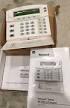 NetworX NX-6V2 LED Keypad User Manual POWER Light is on when AC power is present; flashes to indicate a low battery condition. ARMED Light is on when armed; off when disarmed; flashes to indicate a previous
IDS X-Series User Manual 700-398-01D Issued July 2012
 1 2 Contents 1. Introduction to the IDS X-Series Panels... 7 2. Before Operating Your Alarm System... 7 3. Understanding the Keypad LEDs... 8 3.1 Viewing Data on an LED Keypad... 12 3.1.1 LED Status Indicators...
Solution 16 plus. User Guide Security System
 Solution 16 plus EN Security System Copyright Notice Unless otherwise indicated, this publication is the copyright of Bosch Security Systems Pty Ltd ( Bosch ). All rights are reserved.you may download
SECURITY SYSTEM NOTES
 SECURITY SYSTEM NOTES Installing/Service Company For Service Call Central Station Duress Code FUNCTION CODES Function Code Controls Function EMERGENCY ACTIVATION KEYS (check if enabled) Fire Auxiliary
NetworX Series. NX- 4/8 Code Pad. User Manual (Australian Version)
 NetworX Series NX- 4/8 Code Pad User Manual (Australian Version) Table Of Contents Code Pad Diagram... Inside Front Glossary of Terms...2 Understanding the Code Pad lights...3 Code Pad Tones...4 Fully
TS590. Intruder Alarm Control Panel. SYSTEM OPEN 17:30 01 Jan ENT 0 ESC
 TS590 Intruder Alarm Control Panel 7:0 0 Jan _ ~ A B 5 6 C 7 8 9 D 0 ESC Setting the System Enter your passcode XXXX then leave the protected area. Unsetting the System Go directly to the keypad and en
VR8. User Guide Intruder Alarm System
 VR8 EN User Guide Intruder Alarm System VR8 User Guide Notices EN 2 Copyright Notice Unless otherwise indicated, this publication is the copyright of Bosch Security Systems Pty Ltd ( Bosch ). All rights
SECURITY SYSTEM NOTES. EMERGENCY ACTIVATION KEYS (check if enabled) PROGRAMMED FUNCTIONS
 SECURITY SYSTEM NOTES Installing/Service Company For Service Call Installation Date / / Central Station Duress Code EMERGENCY ACTIVATION KEYS (check if enabled) Fire Auxiliary Emergency Police PROGRAMMED
Access to the Lift Data Menu is via The Challenger User Menu option - Program Door Data.
 LIFT DATA MENU How to access the Lift Data menu: Access to the Lift Data Menu is via The Challenger User Menu option - Program Door Data. 1. The display will show: Program Door Data Enter Door No. (17-64):?
SECURITY SYSTEM NOTES
 SECURITY SYSTEM NOTES Installing/Service Company For Service Call Central Station Duress Code FUNCTION CODES Function Code Controls Function This system is is not partitioned. EMERGENCY ACTIVATION KEYS
HILLS Series LED Code Pad User Manual
 HILLS Series LED Code Pad User Manual Not all features may be available on your system Check with your installer to find out which features are programmed Page 2 TABLE OF CONTENTS Code Pad Diagrams...2
D1260/D1260B. Keypad. National Security Systems Inc (800)457-1999. Owner's Manual
 D1260/D1260B EN Owner's Manual Keypad National Security Systems Inc (800)457-1999 D1260/D1260B Owner's Manual This system includes a telephone line seizure feature. The system may be programmed to communicate
Solution-16 Operators Manual ISSUE 1.40
 Solution-16 Operators Manual ISSUE 1.40 Solution-16 Operators Manual Copyright 1995-97 by, SYDNEY, AUSTRALIA Document Part Number MA880O Document Issue 1.40 Printed 29 July 1997 This documentation is
CONTENTS 4. HOW TO UNSET THE PANEL...7
 Pi-8 USER MANUAL CONTENTS 1. THE KEYPAD AND ITS OPERATION...3 1.1 DESCRIPTION OF THE KEYPAD LEDS... 3 1.1.1 READY LED (RED)...3 1.1.2 TAMPER LED (RED)...3 1.1.3 POWER LED (GREEN)...3 1.1.4 CIRCUIT LEDs
Elite 8D/Lite Version 8 Zone Controller. Arrowhead Alarm Products Ltd. Operating Guide. Proudly Designed and Manufactured in New Zealand
 Elite 8D/Lite Version 8 Zone Controller 8 Arrowhead Alarm Products Ltd Operating Guide 1 Proudly Designed and Manufactured in New Zealand 2 CONTENTS Page No. INTRODUCTION 4 About your Alarm 4 OPERATING
616, 626, 636 & 646 Keypads
 616, 626, 636 & 646 Keypads User s Manual TABLE OF CONTENTS 1.0 BASIC OPERATION...2 2.0 ACCESS CODES...4 3.0 ARMING & DISARMING...6 4.0 PANIC ZONES...13 5.0 KEY ACCESS PROGRAMMING.14 6.0 ADDITIONAL FEATURES...15
Accenta/Optima. User Guide. Servicing Organisation (Installer) name: Telephone Number: Date of Installation: Account Number: Honeywell Security
 Accenta/Optima User Guide ZONE 1 2 3 4 5 6 7 8 9 Chime Omit Prog PA 0 1 2 3 4 5 6 7 8 9 CHIME OMIT RESET PROG SET Accenta + TA PA DAY POWER PA! " # $ % & 0 1 2 3 5 6 7 8 Chime Omit Reset Prog 4 9 Set PA
FIRST ALERT INSTRUCTION MANUAL FOR FA 270 KEYPADS SECURITY SYSTEM
 FIRST ALERT INSTRUCTION MANUAL FOR FA 270 KEYPADS SECURITY SYSTEM Page 0 Table of Contents Introduction 1 System Basics.. 1 Burglary Protection.. 1 Fire Protection.. 1 Security Codes. 1 Zones and Partitions
D24 ALARM CONTROL PANEL USER S MANUAL REVISION 1.1 A$12.00 INC GST
 D24 ALARM CONTROL PANEL USER S MANUAL REVISION 1.1 A$12.00 INC GST Ness Security Products Pty Ltd Quality Endorsed Company ISO9001 LIC.No. QEC2074 NSW Head Office only WWW.NESS.COM.AU Australia s largest
SCORPION. micron security products
 SCORPION 4120 6020 & 8020 USER INSTRUCTIONS Thank you for purchasing a Quality Micron Security Alarm Controller. Micron product is manufactured to exacting quality standards. We understand the importance
Using Your. Security System With Icon Keypad S5020, S5021, S5022
 Using Your Security System With Icon Keypad S5020, S5021, S5022 Contents 1 Overview Your Security System... 1 How Your Security System Works... 2 Your System's Programming... 3 Getting Used to Your System...
SECURITY SYSTEM NOTES SPECIAL CODES ENTRY / EXIT DELAY TIMES ARM / DISARM CODES
 SECURITY SYSTEM NOTES Installing/Service Company For Service Call SPECIAL CODES "Chime" Digit 1 "Partial Arm" Digit 2 "Quick Arm" Digit 3 ENTRY / EXIT DELAY TIMES Exit Delay Time Entry Delay Time Secondary
HILLS Series LED Code Pad User Manual
 HILLS Series LED Code Pad User Manual Not all features may be available on your system Check with your installer to find out which features are programmed Page 2 TABLE OF CONTENTS Code Pad Diagrams...2
System Manager s Manual
 LCD Keypad DGP2-641B / DGP2-641RB DGP2-641 / DGP2-641R System Manager s Manual Also includes Operating Instructions Table of Contents Introduction... 1 Legend... 1 Basic Operation... 1 Auditory Feedback
CONTENTS QUICK SETUP & INSTALLATION USER MANUAL. SUPA8 Quick Setup & User Manual
 SUPA8 Quick Setup & User Manual QUICK SETUP & INSTALLATION CONTENTS FACTORY DEFAULTS... 1 INSTALLATION OF THE SECURITY SYSTEM... 2 COMMISSIONING THE DIALLER PANEL... 5 ZONE INPUT CONNECTIONS... 7 PANEL
User s Guide. Security Systems D220
 User s Guide Security Systems D220 Table of Contents About This User s Guide... 3 Introduction... 3 Security System Basics... 4 Controlled Points... 5 24-Hour Points... 6 Keypad Keys... 6 Keypad Lights...
Understanding the Code Pad lights...4. Code Pad tones...5. Fully arming the system On MODE...6. Fully arming the system - Quick Arm MODE...
 TABLE OF CONTENTS...Glossary of terms...2...code Pad Diagram...3 Understanding the Code Pad lights...4 Code Pad tones...5 Fully arming the system On MODE...6 Fully arming the system - Quick Arm MODE...6
THANK YOU FOR VOTING TEXECOM MASTER USER MANUAL. Security Control Panels with Integrated Communicator. Issue 6
 THANK YOU FOR VOTING TEXECOM MASTER USER MANUAL Security Control Panels with Integrated Communicator Issue Contents Premier 4// Master User Manual Contents. About the System... Introduction... About this
SECURITY SYSTEM NOTES AREA LISTINGS SPECIAL CODES ENTRY / EXIT DELAY TIMES ARM / DISARM CODES ZONE DESCRIPTIONS
 SECURITY SYSTEM NOTES Installing/Service Company For Service Call Area 1 Area 2 Area 3 AREA LISTINGS SPECIAL CODES "Quick Arm" Digit "Partial Arm" Digit "Chime" Digit ENTRY / EXIT DELAY TIMES Exit Delay
SPECIAL CONTROL BUTTON FUNCTIONS
 Operating Guide 1 2 3 CONTENTS Page No. OPERATING YOUR ALARM 5 General Information 5 Arming the Alarm 5 Disarming the Alarm 6 Arming in Stay Mode 7 Disarming Stay Mode 8 Bypassing Zones 8 Manual Panic,
EURO User Manual. Castle Care-Tech 2012 (RINS1531) Issue 2. Page 1
 Contents Introduction 1 Using EURO Panel with Code or Tag 7-9 Intelligent Setting 13 Silencing the Alarm 20 Setting Individual Areas 14-17 Chime Facility 22 Omitting Inputs 18-19 Keypad Hold Up/Personal
SCORPION Z16040C Alarm Controller User Instructions
 SCORPION Z16040C Alarm Controller User Instructions Thank you for choosing to purchase this micron security alarm controller. Micron product is manufactured to exacting quality standards. We understand
Destiny 4100. Destiny 4100. Owners Manual
 Destiny 4100 Destiny 4100 Owners Manual TABLE OF CONTENTS INTRODUCTION Control Panel...3 Detection Devices...3 Telephone Keypads...3 GLOSSARY... 4-5 LOCAL PHONE ACCESS Using Your Telephones As Keypads...6
ICP-CP500. User's Guide ICP-CP500 Codepads
 ICP-CP500 EN User's Guide ICP-CP500 Codepads ICP-CP500 User's Guide 1.0 ICP-CP500 Series Codepads Overview EN 2 1.0 ICP-CP500 Series Codepads Overview The codepad is the communications interface between
Welcome to Bell Aliant NextGen Home Security
 Quick Start Guide Welcome to Bell Aliant NextGen Home Security Congratulations! Your home is now protected by the most advanced security technology available. This guide is intended to familiarize you
ICP-CC488 ICP-CC488 EN. Control Panel. User s Guide
 ICP-CC488 EN User s Guide ICP-CC488 Control Panel ICP-CC488 User's Guide Notices EN 2 Copyright Notice Unless otherwise indicated, this publication is the copyright of Bosch Security Systems, Inc. ( Bosch
User s Information Guide R1A
 HSC505-R Home Security Controller - User Manual Release R1a Pi HSC505 and Pi HSC505R Home Security Controller User s Information Guide R1A Page 1 QD Dynamics (Pty) Ltd reserves the right to make changes
MONITOR ISM / AFx Multi-Tenant Security System User Guide V1.3
 MONITOR ISM / AFx Multi-Tenant Security System User Guide V.3 Multi-Tenant Security System User Guide Welcome New Users! There are two types of suite security keypads. Follow the instructions in the proceeding
ICP-CC488. Installation Guide ICP-CC488 Control Panel
 ICP-CC488 EN Installation Guide ICP-CC488 Control Panel ICP-CC488 Installation Guide Notices EN 2 Copyright Notice Unless otherwise indicated, this publication is the copyright of Bosch Security Systems,
PowerWave-8. Users Operating and Programming Guide Version 8.64. 8 zone Control panel Communicator
 ELECTRONIC ENGINEERING LTD. PowerWave-8 8 zone Control panel Communicator Users Operating and Programming Guide Version 8.64 P/N 7101261 Rev. C N.A July 2002 2 Contents Introduction...5 Meet the Crow Alarm
SECURIT 800L+ CONTROL PANEL
 USER MANUAL SECURIT 800L+ CONTROL PANEL COMPANY PROFILE IntelliSense have been successfully making security products for over 20 years and lead the security industry throughout the world with many innovative
SECURITY SYSTEM NOTES SPECIAL CODES AUXILIARY ARM / DISARM CODES ENTRY / EXIT DELAY TIMES ZONE DESCRIPTIONS
 SECURITY SYSTEM NOTES Installing/Service Company For Service Call SPECIAL CODES Master Code Duress Code "Quick Arm" Digit "Chime" Digit "Entry-Guard" Digit AUXILIARY ARM / DISARM CODES 02 12 22 03 13 23
Diamond + User Manual. Wireless Alarm System. Default codes: User code: 1234 Master Manager Code: 2222
 Diamond + Wireless Alarm System User Manual Default codes: User code: 1234 Master Manager Code: 2222 CONTENTS CHAPTER 1: INTRODUCTION... 4 CHAPTER 2: KEYPADS / READERS... 5 CHAPTER 3: THE KEY-FOB... 6
HARDWIRED CONTROL PANELS
 USER GUIDE 9651 HARDWIRED CONTROL PANELS Contents 1. Introduction...3 The Alarm System...3 The Keypad...3 About This Guide...5 2. Everyday Operation...6 How Do I Know if the System is Working?...6 Setting
Matrix 424/832/832+ ICON & LCD User Manual. Software Version 5 RINS915-2. EN50131-1 Security Grade 2 Environmental Class 2
 Matrix 424/832/832+ ICON & LCD User Manual Software Version 5 RINS915-2 EN50131-1 Security Grade 2 Environmental Class 2 CONTENTS CHAPTER 1: INTRODUCTION... 1 CHAPTER 2: REPLACING THE BATTERIES... 2 CHAPTER
NESS D16. 16 Zone Control Panel and Dialler OWNER S MANUAL
 NESS D16 16 Zone Control Panel and Dialler OWNER S MANUAL REVISION 2, JULY 2001 Ness Security Products Pty Ltd Quality Endorsed Company ISO9001 LIC.No. QEC2074 NSW Head Office only WWW.NESS.COM.AU Australia
National Security Systems Inc (800)457-1999. Security System User's Guide
 National Security Systems Inc (800)457-1999 Security System User's Guide Security System Glossary As security system technology has evolved, a special jargon has developed. Some terms widely used within
S I E R R A PRODUCT INFORMATION GUIDE FOR HOME SECURITY. SIERRA Page 1
 S I E R R A PRODUCT INFORMATION GUIDE FOR HOME SECURITY SIERRA Page 1 C O N T E N T S USING YOUR SIERRA SYSTEM: Turning On/Off Home Arming Instant Home Arming Quick Exit Mode Chime Mode SPECIAL FUNCTIONS:
Galaxy 2 Series. User Guide. Honeywell Security
 Galaxy 2 Series User Guide Honeywell Security Table of Contents Table of Contents... iii Introduction...1 Controlling Your Alarm System...2 Users... 2 Groups... 2 Keypads...3 Prox Tags/Cards... 3 Wireless
VISTA-128FBP VISTA-250FBP Commercial Fire and Burglary Partitioned Security Systems with Scheduling
 VISTA-128FBP VISTA-250FBP Commercial Fire and Burglary Partitioned Security Systems with Scheduling User Guide K0377V2 7/09 Rev. C 2 TABLE OF CONTENTS SYSTEM OVERVIEW... 5 General... 5 A Partitioned System...
LCD and 16-Zone LED Keypads. User s Manual
 LCD and 16-Zone LED Keypads 1689 1641 16-Zone LED Keypad LCD Keypad User s Manual TABLE OF CONTENTS 1.0 INTRODUCTION...3 2.0 BASIC OPERATION...4 2.1 Keypad Indicator Lights... 4 2.2 Visual Feedback...
Solution-8 Control Panel
 Solution-8 Control Panel Issue 3c September 1994 Copyright 1994-1995 All rights reserv (MA 800 O) Important Note As there are many different types of consoles available for use with this control panel,
Using Your. Security System. With LED Keypad S5030, S5031, S5032
 Using Your Security System With LED Keypad S5030, S5031, S5032 Contents 1 Overview Your Security System... 1 How Your Security System Works... 2 Your System's Programming... 3 Getting Used to Your System...
Intruder alarm system Operating Instructions
 New remote keypad Intruder alarm system Operating Instructions 0 2 3 4 5 6 7 8 9 CHIME OMIT RESET PROG SET Power Power 0 2 3 5 6 7 8 Chime Omit Prog 4 9 Set AccentaG3 mini Servicing organisation details
Ademco Vista-20P/First Alert FA-168C Basic Commands
 Zones 64 total Ademco Vista-20P/First Alert FA-168C Basic Commands Wireless Yes, Zones 09 to 48 + 16 Keyfob Zones (Zones 49 to 64) Batteries Downloadable Partitions 2 12 volt Rechargable inside main Panel,
GE Concord 4 Quick User Guide
 GE Concord 4 Quick User Guide GE Concord 4 Quick User Guide Page 1 Before Calling Is the keypad beeping? Press *. This will silence the beeping and let you know where the trouble is. Is there a flashing
FA701 Series. User s Guide. K6249-2V2 5/09 Rev. A
 FA701 Series TouchCenter Keypads User s Guide K6249-2V2 5/09 Rev. A Table of Contents ABOUT THE TOUCHCENTER... 5 Introduction... 5 2 The TouchCenter Interface... 5 Navigating through the TouchCenter...
642 LCD Keypad User Manual
 642 LCD Keypad User Manual TABLE OF CONTENTS Introduction...3 Legend... 3 Basic Operation...5 Keypad Indicator Lights... 5 Visual Feedback... 5 Auditory Feedback... 6 Info List... 7 Access Codes...8 User
Digiplex LCD Keypad DGP-641. User s Manual
 Digiplex LCD Keypad DGP-641 User s Manual TABLE OF CONTENTS 1.0 INTRODUCTION... 7 1.1 Legend... 7 2.0 BASIC OPERATION... 8 2.1 Auditory Feedback (Beep Tones)... 9 2.2 Keypad Indicator Lights... 9 2.3
ATS2000/3000/4000/4500 Control Panel. Programming guide
 ATS2000/3000/4000/4500 Control Panel Programming guide Version 2.01 (SR_F), June 2004 Aritech is a GE Interlogix brand. www.aritech.com Copyright (c) 2003 GE Interlogix B.V.. All rights reserved. GE Interlogix
HUNTER-PRO 32 Ver. 3.8 Intruder Alarm System RXN-9/416 User Guide
 HUNTER-PRO 32 Ver. 3.8 Intruder Alarm System RXN-9/416 User Guide PIMA Electronic Systems Ltd. 5 Hatzoref Street, Holon 58856, Israel +972-3-5587722 +972-3-5500442 [email protected] http://www.pima-alarms.com
ABUS WIRELESS ALARM SYSTEM
 ABUS WIRELESS ALARM SYSTEM These installation instructions are published by Security-Center GmbH & Co. KG, Linker Kreuthweg 5, D-86444 Affing/Mühlhausen. All rights including translation reserved. Reproductions
Advisor Master Programming Guide
 Advisor Master Programming Guide P/N 000000 REV 00.04 ISS 15SEP10 Copyright Trademarks and patents Manufacturer 2010 UTC Fire & Security. All rights reserved. The Advisor Master name and logo are trademarks
2 4PI175 issue 1_6/01. How to unset system in alarm. Programs 1, 2 and 3. Access codes. How to operate Personal Attack
 Access codes Contents Unset system indications - - - - - - - - - - - System indication - - - - - - - - - - - - Access codes - - - - - - - - - - - - - - - - How to operate Personal - - - - - - How to unset
ELECTRONIC ENGINEERING LTD. Runner Series WIRELESS AND WIRED CONTROL PANEL. User s Guide. Version 9.08.2
 ELECTRONIC ENGINEERING LTD. Runner Series WIRELESS AND WIRED CONTROL PANEL User s Guide Version 9.08.2 Crow Limited Warranty (Crow) warrants this product to be free from defects in materials and workmanship
SECURITY ALARM CONTROL PANEL QUICK SETUP & USER MANUAL
 SECURITY ALARM CONTROL PANEL QUICK SETUP & USER MANUAL PINKERTON Quick Setup & User Manual QUICK SETUP & INSTALLATION CONTENTS FACTORY DEFAULTS...1 INSTALLATION OF THE SECURITY SYSTEM...2 COMMISSIONING
Quick Installation Guide LCD GSM ALARM SYSTEM LH http://www.usmartbuy.com
 A. Manipulation Specification Quick Installation Guide 1. Arming Arming means all-around guarded when there is no person at home. All detectors are working. Once something triggers any of the detectors,
EVO48 EVO192. User Guide
 EVO48 EVO192 User Guide We hope this product performs to your complete satisfaction. Should you have any questions or comments, please visit www.paradox.com and send us your comments. Table of Contents
Power864. User s Guide. Now classified in accordance with ANSI/SIA CP-01-2000 (SIA-FAR)
 WARNING This manual contains information on limitations regarding product use and function and information on the limitations as to liability of the manufacturer. The entire manual should be carefully
Control/Communicator Installation Manual
 DAS NETWORX NX-8 Control/Communicator Installation Manual Page General Description... 2 Ordering Information... 2 Option Definitions... 2 Programming the LED Code Pads... 4 Programming the NX-8... 8 Types
User Manual Wireless Alarm System RINS1548-4. PIEZO WARNING The wireless system contains a loud siren, please be aware of this after an activation
 EN50131-1:2006+A1:2009 EN50131-3:2009 EN50131-6:2008 EN50131-5-3:2005+A1:2008 PD6662:2010 Security Grade 2 Environmental Class II Software Version >9.13 User Manual Wireless Alarm System RINS1548-4 PIEZO
SPECIAL CODES AUXILIARY CODES SYSTEM NOTES
 Installing/Service Company Monitoring Center SPECIAL CODES Master Code Duress Code AUXILIARY CODES "Quick Arm" " Chime" 08 02 09 03 10 04 11 05 12 06 13 07 14 SYSTEM NOTES Exit Delay Time Entry Delay Time
FireSeeker Fire Alarm Control Panel Model FS-250 Programming Manual
 FireSeeker Fire Alarm Control Panel Model FS-250 Programming Manual P/N 315-049403-1 Siemens Building Technologies Fire Safety Table Of Contents Introduction...1 The Access levels...1 User Level...1 Maintenance
ACTIVE 5 ENGINEERING MANUAL
 ACTIVE 5 ENGINEERING MANUAL C & K Systems Ltd C031-066 Issue 3 THE ACTIVE 5 INSTALLATION MANUAL. Date: Feb 1997 INTRODUCTION. The Active 5 is a microprocessor controlled intruder alarm panel. It features
DESTINY OWNER S MANUAL
 DESTINY OWNER S MANUAL DESTINY You have made a wise decision to protect your family and property with the DESTINY Security System. The DESTINY has been designed to provide you with a maximum level of security
NetworX Series. NX-148E LCD Keypad. User Manual
 NetworX Series NX-148E LCD Keypad User Manual TABLE OF CONTENTS I. GLOSSARY OF TERMS... 3 II. UNDERSTANDING THE LIGHTS... 4 III. KEYPAD FUNCTIONS... 5 ARMING YOUR SYSTEM IN THE AWAY MODE... 5 MAKING YOUR
How To Use A Keypad On A Iphone Or Ipad (Awn) With A Security System On A Powerline (Apl) With An Alarm System On It (Aldeen) And A Power Button On It
 WARNING This manual contains information on limitations regarding product use and function and information on the limitations as to liability of the manufacturer. The entire manual should be carefully
User s Guide. Security Systems
 User s Guide Security Systems National Security Systems Inc (800)457-1999 2 Table of Contents About This Users Guide... 4 Introduction... 4 Security System Basics... 5 Controlled Points... 6 24-Hour Points...
User s Guide. Security Systems
 User s Guide Security Systems 2 Table of Contents About This Users Guide... 4 Introduction... 4 Security System Basics... 5 Controlled Points... 6 24-Hour Points... 7 Keypad Keys... 7 Keypad Tones... 8
!"#$%&"'()**+),-+)).( /'0%1##1%&"'(21'$1#( ISSUE 1.40
 !"#$%&"'()**+),-+)).( /'0%1##1%&"'(21'$1#( ISSUE 1.40 MA8XXI 34&0(5167(410(877'(&'9#$:7:(;"
VISTA-50P VISTA-50PUL
 S e c u r i t y S y s t e m User's Manual VISTA-50P VISTA-50PUL N5943-6 7/95 TABLE OF CONTENTS SYSTEM OVERVIEW... 3 A Partitioned System... 3 Zones... 3 Fire Protection... 4 Burglary Protection... 4 Alarms...
GUIDE GETTING STARTED IMPORTANT SUPPORT RESOURCES
 IMPORTANT SUPPORT RESOURCES Subscriber Portal Go to https://portal.coxhomelife.com to log in to your account and manage your system features online. Online Support Go to www.cox.com/homelifesupport to
SECURITY SYSTEM NOTES. Security System Configuration
 Installing / Service Company: For Service Call: SECURITY SYSTEM NOTES Security System Configuration Master Code: Auxiliary Code(s) 2 3 4 5 6 "Quick Arm" Digit: Exit Delay Time Auxiliary Exit Delay Time
Security System. User's Guide. Keypad
 Security System EN User's Guide Keypad Security System User's Guide This system includes a telephone line seizure feature. The system can be programmed to communicate with a central monitoring station
AMAX 2100 / 3000 / 4000. en User Guide
 AMAX 2100 / 3000 / 4000 en User Guide AMAX Table of Contents en 3 Table of contents 1 Safety 5 2 Short information 6 2.1 Introduction 6 2.2 Keypads 7 2.3 Keypad Indicators 8 2.4 Quick Keypad Operations
astec Integrated Alarm System USER GUIDE
 astec Integrated Alarm System USER GUIDE 020008599 CONTENTS Full Set, Part Set and Disarm 3 Instant Full Set 3 Part Set with exit time 4 Bell Test 4 Bypassing zones 4 Switch Lights on/off 4 Bypass (24