
Navigating the Houston Ship Channel
|
|
|
- Isabella Palmer
- 10 years ago
- Views:
Transcription
1 Navigating the Houston Ship Channel a reference for commercial users A publication of the Houston-Galveston Navigation Safety Advisory Committee

2 2

3 Welcome to the Houston Ship Channel one of the busiest and most challenging waterways in the world The Houston Ship Channel hosts more than 60 ships and 340 barge movements each day. Statistics from Vessel Traffic Service indicate annual increases of nearly 10% since 2004; and as the Panama Canal nears completion, we may see additional increases in vessel size and traffic. The deepening and widening of the Houston Ship Channel brought larger ships to the waterway. With a project depth of 45 feet and width of 530 feet, the channel can accommodate the Suezmax tanker, which carries up to 40% more cargo than any ship permitted within the channel s previous dimensions. Similar expansions are ongoing for the Texas City and Galveston channels. The deepening and widening of the Houston Ship Channel incorporated barge lanes on either side of the deep channel and permits the safe movement of larger volumes of mixed use traffic and expanded opportunities for our ports and all who use their facilities. To capitalize on these improvements, however, we must maintain a safe navigation environment. This means adjusting our operations and procedures to accommodate heavy traffic and large vessels in the channel. With some simple considerations, and continued cooperation among vessel operators, we can ensure a deeper, wider, and safer waterway. 3

4 Our Houston Ship Channel The Houston Ship Channel consists of a main channel with a project depth of 45 feet, width of 530 feet, and barge lanes on either side between the Gulf Intracoastal Waterway and Morgan s Point. A cross section of the improved channel shows: A main channel dredged to a project depth of 45 feet and width of 530 feet; 35-foot wide transition slopes on either side of the main channel, measuring 45 feet deep at their innermost point, and 12 feet deep at their outermost point; 200-foot wide barge lanes outside the transition slopes, measuring 12 feet deep; and, Width of the entire channel along this reach as 1000 feet. Navigable space within the barge lanes includes the 35-foot transition slope, for a total navigable width of 235 feet on either side of the main channel. The outer edges of the barge lanes are marked with gated beacons in good water, but inner edges are left unmarked. Tow operators are encouraged to use the lanes as a safe navigation space, leaving the main channel free for fastermoving vessels and deep-draft ships. Operators should be aware, however, of hydraulic effects caused by the new channel configuration. Currents in the barge lanes may run slightly faster due to their shallower depth, and forces exerted by larger displacement ships will be amplified. See the sections on Deepdraft/Tow Interactions and Mooring Issues for additional details on the impact of hydraulic effects. 4

5 Deepdraft / Tow Interaction Every vessel type transiting the Houston Ship Channel has its own unique navigational challenges and limitations. In order to maintain a safe environment, it is important to understand the differences between vessel types, and how their operation impacts others on the waterway. Can you see off that ship? A ship s configuration and cargo affect the vessel operator s line of sight from the ship s bridge. The blind spot ahead of the bow can be a few hundred feet or thousands of feet in the case of deep draft container ships. Cranes, containers and cargo canopies can create additional blind spots. Towboat and other vessel operators should exercise extreme caution when attempting to overtake a ship, taking care to avoid blind spots and to communicate intentions when necessary. DANGER ZONE How much does that ship hold, and why should I care? With the deepening and widening project complete, the Houston Ship Channel can accommodate the massive Suezmax tanker. On average, the Suezmax is 70 feet longer and 20 feet wider than the Aframax the largest vessel permissible in the Channel prior to the deepening and widening project. It is also capable of carrying up to 40% more cargo. The larger size and cargo capacity of the Suezmax tanker means more weight and greater water displacement in the Channel. This leads to amplification of hydraulic forces exerted on other vessels in the vicinity. Aframax Length: 830 Beam: 145 Dra : 38 Suezmax Length: 899 Beam: 164 Dra : 45 Empire State Building Height:

6 Compensating for hydrodynamics A moving ship pushes water away from its hull in all directions. As the ship moves forward, water will flow around and under the vessel to fill space in its wake. Areas of high pressure exist on both sides of the moving ship s bow as water is displaced. As it flows along the sides of the ship, water speed increases until it reaches an area of low pressure near the stern. This is where ship s suction occurs. Ship s suction is a hydraulic effect that draws neighboring vessels toward the stern as the ship passes, or pulls the stern near the bank of the channel when transiting close to shore. Water Flow Around a Moving Ship Low Pressure High Pressure When two ships meet in the Channel, this effect can turn each of them off-course in a counter-clockwise direction (assuming opposing vessels are both on their respective right sides of the Channel). This poses potential danger to vessels following either ship. To avoid this hazard, vessels should maintain following distances large enough to permit meeting ships to correct their course. The effect of ship s suc on of passing vessels can jeopardize those following too closely In similar fashion, a ship exerts suction on vessels it overtakes in the Channel. To mitigate the effect, tow operators are encouraged to position their vessels at an angle to the ship s path (with the stern pointing toward the ship and the bow pointing away from the ship).. Hydraulic effects on moored vessels are also amplified by the presence of larger ships in the Houston Ship Channel. Please see the section on Mooring Issues for tips on mitigating these effects. A tow prepares to be overtaken by a ship in the channel. 6

7 Working Around Harbor Tugs Vessel berths along the Houston Ship Channel are numerous and varied and you can expect to encounter vessels berthing and unberthing at all times of the day and night. Assisting those vessels will be harbor tugs. Harbor tugs are powerful and maneuverable vessels that range in horsepower from 1700 to 6300 Hp Z-drive tugs. Tug designs may vary from single screw conventional tugs to advanced twin screw azimuth stern drive (Z-drives), these design differences account for varied performance in both power and maneuvering capability. When assisting ships, harbor tugs may or may not be made up to the vessel with a line, but regardless it is imperative you recognize the tug is assisting a vessel and provide a wide berth for the operation one minute the tug can be working against the vessel and the next be stretched out on their lines. Additionally, tugs may be maneuvering around the vessel while they assist with the berthing/ unberthing; they may suddenly move into sight as they move from the one side of the vessel to the other very rapidly. Tugs also produce vessel very powerful propeller wash that may affect tows passing in close proximity. Harbor tugs have much deeper drafts than towboats and will usually be restricted to the deeper areas of the channel. While assisting ships, the actions of the tugs are at the direction of a State Pilot or the Ship s Master. It is common practice that the Pilot will make a broadcast on channel 13 before they shift to a working channel to direct the operation of the tugs. You should maintain a VHF radio listening watch (see section later in this publication), so the pilot assisting the vessel can communicate with you regarding the movement(s) of the vessel and/or tugs. 7

8 Mooring Issues With deepening and widening of the Houston Ship Channel complete, ships larger than ever before transit the channel. These ships some with as much as 40% more cargo capacity than the largest ships permissible within previous channel dimensions can exert much stronger forces on moored vessels. As a passing ship approaches, the water surge ahead of it will cause a water flow at the pier in the direction of the passing ship. As the ship passes, water flow at the berth will shift direction, drawing the moored vessel in the opposite direction. A third force comes into play as the stern of the vessel passes. This force follows the passing vessel and is diametrically opposed to the previous force. In a short period, the moored vessel will be pushed in different directions three times. Because these forces are amplified by the transit of larger ships, it is particularly important to pay attention to proper dockside moorings. Mariners should tend their lines carefully and make sure loads are equally distributed. Lines should be tensioned such that no movement is allowed at the dock. If slack lines permit movement of even a few feet, the moored vessel will be subjected to a substantial amount of energy that will surge loads and part overloaded mooring lines. The Houston Galveston Navigation Safety Advisory Committee includes a sub-committee whose purpose is to address issues related to mooring safety along the Houston Ship Channel. This group is working with the U.S. Coast Guard to reduce incidents of parted mooring lines and damaged moorings. They are accomplishing this goal by educating mariners and dockhands on the importance of proper mooring leads, adequate mooring lines and optimal use of cleats and bitts. The subcommittee is also working on a comprehensive survey of mooring facilities throughout the Houston, Galveston and Texas City Port complexes, to assess the configuration and condition of docks, wharves and piers, as well as practices in place at those facilities. Subcommittee members offer courtesy reviews of any new waterfront construction involving moorings, providing facility owners a better understanding of the mooring needs of both shallow and deep draft vessels. 8

9 Dredge Operations You can find a dredge working within the port complex at almost any time. It is important to be aware of dredge operations and understand their signals in order to avoid an accident. During the day, dredges will display a ball-diamond-ball in a vertical line, usually on the centerline near the forward portion of the dredge. This signals that you are approaching a vessel with limited maneuverability. The safe side will be marked with two diamonds. Avoid the danger side marked with two black balls. It is the side on which the dredge pipe is connected. At night, the ball-diamond-ball pattern will instead be represented with a red-white-red pattern. The two diamonds of the safe side will show two green lights, and the two black balls of the danger side will show two red lights. Do not confuse these with navigation lights, and never pass a dredge until you confirm passing instructions with the dredge master on VHF-FM Channel 13. Dredge operations involve a considerable number of support vessels that are necessary to move the dredge, relocate anchors and anchor balls, place dredging pipe and connecting flanges, and ferry personnel and supplies. These boats are on the move 24 hours a day. Maintain a close lookout, and be prepared for sudden maneuvers by support vessels. 9

10 Areas Requiring Special Attention There are several locations within the vicinity of the Houston Ship Channel that warrant the special attention of mariners. Area Challenges Intersection of the Gulf Intracoastal Waterway and the Houston Ship Channel. Traffic congestion, current, wind and weather, vessel size and speed variation, radio congestion, mariner inexperience. Area Challenges Lynchburg Ferry/San Jacinto River Traffic congestion, line of sight, current, ferry crossing, background lights intersecting waterway, sharp bend, communication issues. Area Dredge Locations (various) Challenges Channel restrictions, closures, communication issues, one-way traffic, location of equipment. Area Challenges Manchester Narrow passage, limited line of sight, congestion. Area Challenges Morgan s Point Highlines Barbours Cut and Cedar Bayou intersections, high traffic area subject to congestion. 10

11 Bolivar Roads Alternate Inbound Route The Bolivar Roads intersection with the Houston Ship Channel has always been a busy one, but with additional traffic and larger vessels transiting, it is expected to become even more challenging. At the same time that barge lanes were added, we implemented an alternate route that allows mariners to avoid the Bolivar Roads/Houston Ship Channel intersection. Known as the Bolivar Roads Alternate Inbound Route, or BRAIR, the passage acts much like a freeway on-ramp. Westbound traffic exiting Bolivar Roads may enter the Ship Channel via the BRAIR and continue inbound, rather than navigating the difficult 105-degree turn at the intersection. The BRAIR is intended to serve inbound traffic only. It features an inbound range on the extended centerline of the route s northern end. Some towing vessel operators are unaccustomed to using ranges, but those who do find them most helpful. Vessels departing the GIWW at Bolivar buoys 19 and 20 inbound for Houston will pick up a rear range (ISO G 6S) and a front range (Q G) on a heading of 300 true which will keep them in naturally deep water until they merge into the Houston Ship Channel at buoys 27 and 28. The Bolivar Roads Alternate Inbound Route is 1700 feet wide at its entrance (lower right), 730 feet wide at its exit (upper le ) and one nau cal mile in length. Range lights assist with staying on the centerline. 11

12 Anchorage Areas at Bolivar Roads Anchorage areas at Bolivar Roads are intended for temporary use by vessels of all types. Most vessels use the Bolivar Roads Anchorages while waiting for dock space to clear, for bad weather to pass, for bunkering and/or provisioning, or for completion of any required inspections. Mariners should note specific restrictions applicable to Anchorage Areas A and C as set forth at 33 CFR : Unless otherwise authorized by the Captain of the Port of Galveston, vessels shall not anchor in Anchorage Area A or C for more than 48 hours. No vessel with a draft of less than 22 feet may occupy Anchorage Area A without prior approval from the Captain of the Port. No vessel with a draft of less than 16 feet may occupy Anchorage Area C without prior approval from the Captain of the Port. Anchors shall not be placed in the navigation channel, and no portion of the hull or rigging of any anchored vessel shall extend outside the anchorage areas. Vessel Traffic Service (VTS) Houston/Galveston oversees the management of vessels within Bolivar Roads Anchorages. 12

13 Bunkering Operations at Bolivar Roads Anchorages The Bolivar Roads area is generally a safe place for ships to anchor. Passing traffic and adverse weather conditions that pose little danger to a ship, however, can find the brownwater vessel either preparing for or conducting bunkering operations in a hazardous situation. Every vessel passing the anchorage should respect the hazards of the bunkering operation when it is being conducted. The master of the towing vessel is responsible for the conduct and safety of the vessel prior to, during, and at the conclusion of bunkering operations. Tow safety can be ensured by taking precautions and following operating procedures. [Compete text is available at (click Bolivar Roads Anchorage Bunkering Safety Guidelines).] Bunkering Safety Guidelines 1. It is incumbent upon the master to check weather conditions existing and forecasted before departing for the bunkering operation. There should be adequate familiarity with the receiving vessel to ensure appropriate lines and fenders are prepared prior to departure. 2. To ensure safety of the crew, to protect the vessel and bunkering operation, and to prevent spills, the master should conduct a pre-critical task conference with the crew. At minimum, the master and crew should discuss: Weather, tide, and current Duration of the operation Lookout procedures Communications with the receiving ship Definition of crewman responsibilities Identification of situations that would require shutting down the transfer The mooring plan, as well as potential placement of lines and fenders 3. When possible, Masters should plan to moor on the side of the vessel least affected by the wake effects of passing vessels. While alongside, both the master and crew should continuously monitor conditions including passing traffic, shifting tides or winds, and changing weather. As conditions change, the master and crew should not hesitate to shift sides or stop the operation if it becomes hazardous. 4. Prior to departing, the crew should ensure that all hoses, valves, and any equipment used in bunkering are secured and properly stowed. Following appropriate notifications, the towing vessel may depart for its next job. Advance Notice Required In accordance with 33 CFR , vessel operators must provide a 4-hour notice of anticipated bunkering operations to the Captain of the Port. This notice is required for all bunkering operations within the Bolivar Roads Anchorage, as defined by 33 CFR Operators may make this notification to Houston Traffic via telephone (preferred) at or VHF FM Channel 05A (alternate). 13

14 Vessel Traffic Service Communications VTS Houston/Galveston acts as a communications hub to provide accurate, relevant, and timely information to mariners, port authorities, facility operators, and local, state, and federal agencies. Its primary purpose is to prevent groundings, allisions, and collisions by sharing information and implementing appropriate traffic management measures. Calling the Vessel Traffic Center (VTC) VTS Houston/Galveston s call sign is Houston Traffic. The VTS requires all captains and pilots to use the vessel s official name when calling the VTC. Houston, Galveston, and Texas City Pilots may use their individual identification number in addition to the vessel s name. All communications must be in English. Radio Frequencies VHF-FM Channel 05A All vessels must first contact Houston Traffic on this frequency before switching to a working frequency. VHF-FM Channel 11/12 Working frequencies for the Houston/Galveston VTS area include VHF-FM Channels 11 and 12. Use Channel 11 at ExxonMobil Baytown and all points above. Use Channel 12 at all points below. VTS Users not maintaining a listening watch on the appropriate VTS frequency (VHF-FM Channel 11 or 12) are required to monitor VHF-FM Channel 16, and bridge-to-bridge frequency VHF-FM Channel 13. Other VHF-FM Channels used along the HSC Channel Use 09 Kirby Fleeting Area Old River 10 Channel Shipyard San Jacinto River tow traffic 14 Port Operations and Houston Pilots Ship-to-Tug; Pilot Boats 19 ExxonMobil Docks Baytown 21A USCG Sector Houston-Galveston working 22A Government/non-Government liaison 73 Galveston-Texas City Pilots working 74 Houston Pilots working 77 Galveston-Texas City Pilots Ship-to-Tug 81 USCG working 83 USCG working 14

15 Channel Obstruction Application Anyone proposing to conduct maritime operations that may interrupt or impede navigation on a ship channel within the Captain of the Port Houston-Galveston area of responsibility must submit a channel obstruction application to the Coast Guard at in advance of the requested closure. Processing differs between requests inside the VTSA of VTS Houston/Galveston and those for all other COTP channels/waterways, but there are two categories of channel obstruction. Applicants should review these categories carefully prior to submitting an application. Category I Obstructions Include those operations impacting (or potentially impacting) navigation which cannot be completely mitigated by unilateral traffic management measures imposed by the Coast Guard. Complete or near-complete channel closure, or significant restrictions of meeting or overtaking situations, for dredging pipeline constriction, power line placement, dead ship movements, or large off-shore rig movements are examples of Category I obstructions. The COTP requires four days (five days if the period covers a weekend) advance notice for consideration of a Category I obstruction. Category II Obstructions Include operations not completely limited to the boundaries of the channel, and with marginal effect on vessel navigation. Heavy-lift operations, roll-on/roll-off evolutions, and most off-shore rig movements are examples. Category II obstructions are typically short duration, short notice undertakings, and must be moveable of terminable within one hour of notification from the VTS or Captain of the Port. The COTP requires twenty-four hours advance notice for consideration of a Category II obstruction. 15

16 Channel Reopening Process Given the large number of vessels simultaneously awaiting arrival or departure following a major closure of the port complex, standard procedures are in place to ensure the orderly flow of traffic and the maintenance of a safe operating environment. A major closure is typically defied as one lasting 12 hours or more, and may be attributable to weather, destruction of major navigation aids, channel blockage, or other factors. 1. At the onset of any long duration channel closure, a VTS representative will communicate with the members of the Port Coordination Team (PCT) to establish the timing of a series of conference calls. 2. During the closure, and until traffic has been restored to pre-closure norms, PCT industry and agency representatives will conduct a series of conference calls to establish channel conditions and movement priorities. 3. VTS Houston/Galveston will manage the resumption of traffic by operationalizing the priorities established by the PCT and by implementing such VTS Directives and Measures as may be required. 4. The VTS may direct dredges to cease and/or move dredging operations or any other obstructions from the Channel until vessel traffic returns to normal levels. 5. The VTS may require vessels to monitor VHF-FM Channel 11 or 12 until vessel traffic returns to normal levels, reducing the need to repeat advisories, and freeing airwaves for vessels with urgent information to report. 16

17 Reporting Aids to Navigation Allisions The Houston Ship Channel and Gulf Intracoastal Waterway (within the Houston Vessel Traffic Service Area) hold claim to the highest rate of Aids to Navigation (ATON) discrepancies of any U.S. Coast Guard district. More than $2 million is spent each year to repair or replace aids in these areas. When aids are damaged or missing, navigation safety is jeopardized. It is a mariner s legal obligation to report any incident involving damage to or destruction of an ATON. Failure to report not only puts all other mariners in harm s way, but also comes with severe penalties including fines and/or imprisonment, along with revocation and/or loss of license. By reporting an incident immediately, the Coast Guard s limited resources may be put to most efficient use, and risk to other mariners can be removed as quickly as possible. Because ATON damage and destruction are not self-reported in the majority of cases, those aids most vulnerable to damage are now fitted with an ATON monitoring system providing automatic electronic notification of an allision. This enables the Coast Guard not only to respond promptly with repair or replacement, but also to identify the offending vessel. Report ATON damage to Houston Traffic, Port Arthur Traffic, or the Sector Houston-Galveston Command Center via the phone numbers or frequencies below. The watch stander taking your report will collect information as described at Appendix D of the VTS Houston/Galveston User s manual. Sector Houston-Galveston Command Center VHF Channel 16 VTS Houston/Galveston VHF Channels 05A, 11, 12 VTS Port Arthur VHF Channels 01A, 65A 17

18 Additional Resources American Waterways Operators Bolivar Roads Anchorage Bunkering Safety Guidelines Galveston-Texas City Pilots Gulf Intracoastal Canal Association Houston Pilots Physical Oceanographic Real-Time System (P.O.R.T.S.) Houston/Galveston Port of Galveston Port of Houston Authority Port of Texas City and Texas City Terminal Railway Company U.S. Army Corps of Engineers, Galveston District U.S. Coast Guard Vessel Traffic Service Houston/Galveston Wheelhouse Report 18

19 Maritime Safety One more sunset for us all to enjoy 19

20 This publication is presented by the Houston-Galveston Navigation Safety Advisory Committee, with the support of its generous sponsors. Pictures used are courtesy of Bay Houston Towing, Higman Marine, Kirby Inland Marine, Port of Houston, Philip Kropf, Steve Nerheim, and the USCG. May

VESSEL TRAFFIC SERVICE HOUSTON/GALVESTON
 VESSEL TRAFFIC SERVICE HOUSTON/GALVESTON USER'S MANUAL Revised February 2015 VMRS Users (Full Participation): USER GROUPS These vessels must monitor the designated VTS VHF-FM frequency, make reports to
Passenger Terminal Amsterdam
 Fact sheet large cruise ships to Passenger Terminal Amsterdam Port of Amsterdam Amsterdam-IJmond Pilot Organization 2009 Version: November 6 th 2009 This fact sheet provides information on the passage
Code of conduct Safe on-water conduct on the Brisbane River
 Code of conduct Safe on-water conduct on the Brisbane River Introduction The safe operation of passive craft on Queensland s waterways is a priority for state and local government authorities, commercial
World Vessel Traffic Services Guide - United Kingdom - Port of London
 World Vessel Traffic Services Guide - United Kingdom - Port of London Approaches The Port of London is normally approached using one of three channels. The main Deep Water route is from the North East
World Vessel Traffic Services Guide - Australia - Melbourne
 World Vessel Traffic Services Guide - Australia - Melbourne VHF Procedures Port of Melbourne VTS Area is divided into two Sectors. Sector 1: Lonsdale VTS (LVTS) Located at: POINT LONSDALE SIGNAL STATION
U.S. Department of Transportation United States Coast Guard NAVIGATION RULES COMDTINST M16672.2D NAVIGATION RULES INTERNATIONAL INLAND
 NAVIGATION RULES COMDTINST M16672.2D U.S. Department of Transportation United States Coast Guard NAVIGATION RULES INTERNATIONAL INLAND RECORD OF CHANGES CHANGE NUMBER DATE OF CHANGE DATE ENTERED BY WHOM
Vessel Traffic Service Lower Mississippi River
 Vessel Traffic Service Lower Mississippi River User Manual Second Edition 2010 Available for self printing at: http://homeport.uscg.mil TABLE OF CONTENTS INTRODUCTION... 1 GENERAL INFORMATION... 1 DEFINITIONS...
Gulf Intracoastal Waterway
 TEXAS DEPARTMENT OF TRANSPORTATION Gulf Intracoastal Waterway Photo by TexasGulfCoastOnline.com Gulf Intracoastal Waterway in Texas Figure 1 - Texas GIWW Executive Summary The Texas Department of Transportation
Harbourmaster s Office Operation of Emergency Response Vessels within the Auckland Region. Navigation Safety Operating Requirements 2014
 Harbourmaster s Office Operation of Emergency Response Vessels within the Auckland Region Navigation Safety Operating Requirements 2014 Auckland Council Harbourmaster s Office Operation of Emergency Response
Marine Guide for Ship Masters Contents
 Marine Guide for Ship Masters Contents Marine Guide for Ship Masters... 1 Port Operating Company... 2 Harbour Authority... 2 Location... 2 Pilotage... 2 Pilot Boat... 3 Pilot Ladder... 3 Pilots and Tugs
VTS User s Manual USCG Vessel Traffic Service San Francisco. User's Manual - March 2005 INTRODUCTION
 Page 1 of 28 VTS User s Manual USCG Vessel Traffic Service San Francisco User's Manual - March 2005 INTRODUCTION The primary mission of Vessel Traffic Service (VTS) San Francisco is to coordinate the safe,
Maryland Port Administration. Hurricane Preparedness Plan For Marine Terminals
 Maryland Port Administration 2700 Broening Highway Baltimore, Maryland 21222 Contact Person: Barbara McMahon (P) 410-633-1147 (F) 410-285-0921 Hurricane Preparedness Plan For Marine Terminals Revised May
Pilot on the Bridge Role, Authority and Responsibility. Necessity of Bridge Team Management.
 Pilot on the Bridge Role, Authority and Responsibility. Necessity of Bridge Team Management. Captain Ajaz Peermohamed Gard (UK) Limited London, United Kingdom Captain Ajaz Peermohamed Senior Claims Executive
National Transportation Safety Board
 National Transportation Safety Board Marine Accident Brief Allision of Bulk Carrier Anna Smile with Louis Dreyfus Grain Elevator Accident no. Vessel name Accident type Location DCA14LM013 Anna Smile Allision
International Maritime Pilots Assoication Association Internationale des Pilotes Maritimes Asociascisn Internacional de Practicos Maritime-portuarios
 International Maritime Pilots Assoication Association Internationale des Pilotes Maritimes Asociascisn Internacional de Practicos Maritime-portuarios INTERNATIONAL MARITIME ORGANIZATION ORGANISATION MARITIME
GUIDELINES AND CRITERIA FOR VESSEL TRAFFIC SERVICES ON INLAND WATERWAYS (VTS Guidelines 2006)
 GUIDELINES AND CRITERIA FOR VESSEL TRAFFIC SERVICES ON INLAND WATERWAYS (VTS Guidelines 2006) 1. INTRODUCTION 1.1 These Guidelines are compatible with SOLAS regulation V/8-2 and IMO Assembly Resolution
KOTKA VTS MASTER'S GUIDE
 1 (5) KOTKA VTS MASTER'S GUIDE Vessel Traffic Services The provisions on vessel traffic services are laid down in the Vessel Traffic Service Act 623/2005 and in the Government Decree on Vessel Traffic
CHAPTER 27 NAVIGATION REGULATIONS
 CHAPTER 27 NAVIGATION REGULATIONS SHIP ROUTING 2700. Purpose and Types of Routing Systems Navigation, once independent throughout the world, is an increasingly regulated activity. The consequences of collision
AUTORIDAD DEL CANAL DE PANAMÁ
 AUTORIDAD DEL CANAL DE PANAMÁ Feasibility Evaluation of a Tug Assisted Locks Vessel Positioning System Prepared by the ACP Evaluation Team: Eduardo Hevia Capt. Felipe Josephs Capt. Chet Lavalas Boris Moreno
CONTAINMENT BOOM OBJECTIVE & STRATEGY TACTIC DESCRIPTION. Mechanical Recovery Containment and Recovery
 Mechanical Recovery Containment and Recovery CONTAINMENT BOOM OBJECTIVE STRATEGY ing is a fixed- tactic. The objective is to corral spilled oil on the water, usually near the source, thus minimizing spreading
PORT INFORMATION GUIDE PRIMORSK JUNE 2010
 1 PORT INFORMATION GUIDE PRIMORSK JUNE 2010 2 INITIATED BY IN ASSOCIATION WITH SUPPORTED BY 3 GENERAL INTRODUCTION This book has been written for Masters of seagoing vessels, shipping lines, publishers
Hurricanes and Storm Surge www.hcfcd.org/tropicalweather
 Hurricanes and Storm Surge www.hcfcd.org High-level winds fl ow outward Strong surface winds spiral inward EYE Calm, sometimes cloudfree, sinking air Air sinks in calm area at the storm s eye THUNDERSTORMS
The Nationwide Automatic Identification System Newsletter Issue #1 3 rd Quarter FY 2007
 June 2007 Issue 1 The Nationwide Automatic Identification System Newsletter Issue #1 3 rd Quarter FY 2007 W elcome to the first issue of The Guardian, a quarterly newsletter issued by the Nationwide Automatic
CODES OF CONDUCT FOR VESSELS AND CRAFT USING THE CATTEWATER
 PORT OF PLYMOUTH CATTEWATER HARBOUR COMMISSIONERS 2 The Barbican, Plymouth, PL1 2LR Tel: 01752 665934 Fax: 01752 253624 e-mail: [email protected] PLYMOUTH PILOTAGE SERVICE 2 The Barbican, Plymouth,
Hellesylt. PORT Contact on arrival (detail name): VHF channel: 13/16 PFSO on duty Telephone: + 47 91784699 Notice required:
 NAME OF PORT Region/City/Port : Geirangerfjord Cruise Port Internet Web Site Official Port Address: 6216 Geiranger Hellesylt www.stranda-hamnevesen.no GEIRANGERFJORD CRUISE PORT IMO registered Port Facilities
3 Tappan Zee Bridge Rehabilitation Options
 3 Tappan Zee Bridge Rehabilitation Options 3.1 Introduction This chapter describes possible options that rehabilitate and enhance the existing Tappan Zee Bridge. Four Rehabilitation Options have been developed:
Storm tide is the water level rise during a storm due to the combination of storm surge and the astronomical tide.
 INTRODUCTION TO STORM SURGE Introduction to Storm Surge BOLIVAR PENINSULA IN TEXAS AFTER HURRICANE IKE (2008) What is Storm Surge? Inland Extent Storm surge can penetrate well inland from the coastline.
Storm tide is the water level rise during a storm due to the combination of storm surge and the astronomical tide.
 INTRODUCTION TO STORM SURGE Introduction to Storm Surge National Hurricane Center Storm Surge Unit BOLIVAR PENINSULA IN TEXAS AFTER HURRICANE IKE (2008) What is Storm Surge? Inland Extent Storm surge can
How To Design A Crash Investigation Site
 CHAPTER 7 CRASH INVESTIGATION SITES December, 2000 7. Crash Investigation Sites (CIS) 7.1. Introduction and Usage The idea of "crash investigation sites" or areas outside of the freeway mainline where
Congratulations and Welcome USCG Flotilla 4 76, 5NR
 Congratulations and Welcome USCG Flotilla 4 76, 5NR The United States Coast Guard Auxiliary The civilian volunteer arm of the United States Coast Guard Penn s Landing Philadelphia Safe Boating Education
Marine Order 4 (Transitional modifications) 2013 provides for this Order to have effect and makes modifications for it.
 Marine Order 30 (Prevention of collisions) 2009 in effect under the Navigation Act 2012 This is a compilation of Marine Order 30 (Prevention of collisions) 2009, prepared on 3 June 2013, taking into account
Incident Management Response Plan Hampton Roads Highway Incident Management Committee
 Incident Management Response Plan Hampton Roads Highway Incident Management Committee Multi-Jurisdictional Memorandum of Understanding Highway Incident Management Plan This memorandum of understanding
Maritime Information Services of North America and Marine Exchange of Puget Sound at
 M I S N A Maritime Information Services of North America and Marine Exchange of Puget Sound at John Veentjer Executive Director, Puget Sound Marine Exchange President, Maritime Information Services of
London Array. Operations and Maintenance
 London Array londonarray.com London Array Operations & Maintenance Base Port of Ramsgate Military Road Ramsgate CT11 9LG Registered in England and Wales No 04344423 Operations and Maintenance 1 2 Operations
CONCEPT FOR ACTIVITY 1: DYNAMIC & PROACTIVE ROUTES OR GREEN-ROUTES
 TEN-T PROJECT NO: 2010-EU-21109-S CONCEPT FOR ACTIVITY 1: DYNAMIC & PROACTIVE ROUTES OR GREEN-ROUTES January 2012 TABLE OF CONTENTS 1 INTRODUCTION... 3 1.1 Scope and purpose... 3 1.2 Objectives and expected
These "rules of the road" are based on Texas Transportation Code statutes. Find the complete bicycle code at the bottom of the page
 Texas Bicycle Laws These "rules of the road" are based on Texas Transportation Code statutes. Find the complete bicycle code at the bottom of the page Bicyclists have the rights and duties of other vehicle
How To Navigate The Ocean In The Pacific Coastline
 BookletChart El Segundo and Approaches NOAA Chart 18748 A reduced-scale NOAA nautical chart for small boaters When possible, use the full-size NOAA chart for navigation. Published by the National Oceanic
New Orleans Hurricane Storm Damage Risk Reduction System Tour March 23 24, 2012
 New Orleans Hurricane Storm Damage Risk Reduction System Tour March 23 24, 2012 Host: Falcolm E. Hull, Vice President/Technical Expert, ARCADIS, U.S. Inc. Attending: Cherie Coffman, Coastal Projection
Marine Safety and Pollution Prevention Laws and Enforcement Authorities
 A rather large number of existing federal, state and local laws, regulations and ordinances affect the LA/LB Harbor area. The Committee does not have the resources to systematically review them, but has
Hellesylt. PORT Contact on arrival (detail name): VHF channel: 13/16 PFSO on duty Telephone: + 47 99531717 Notice required:
 NAME OF PORT Region/City/Port : Geirangerfjord Cruise Port Internet Web Site Official Port Address: 6216 Geiranger Hellesylt www.stranda-hamnevesen.no GEIRANGERFJORD CRUISE PORT IMO registered Port Facilities
ITF LIST of warlike and high risk designations, with main applicable benefits (as of 1 st April 2012):
 Annex 2 to ITF Circular No. 068/S.17/D.20/SS.7/2012 ITF LIST of warlike and high risk designations, with main applicable benefits (as of 1 st April 2012): 1) Warlike Operations Area 12 n.m. off Somali
chapter 3 basic driving skills
 chapter 3 basic driving skills When curving to the left, keep the front wheels close to the right edge of the lane to keep your driver s side rear wheels out of the next lane of traffic. Curve ahead slow
Table of Contents. Introduction... ii. Section 1 Vessel Operator Quick Reference Guide. 1-1
 Table of Contents Introduction... ii Section 1 Vessel Operator Quick Reference Guide. 1-1 Section 2 - Title 33: Navigation and Navigable waters PART 161 VESSEL TRAFFIC MANAGEMENT. 2-1 Subpart A Vessel
Aligning Natural and Built Infrastructure for
 Aligning Natural and Built Infrastructure for Houston Climate Resilience National Exercise Program (NEP) Houston Climate Change Preparedness & Resilience Workshop Edmond J. Russo, Jr., PhD, PE, D.CE, D.NE,
Real-time Risk Assessment for Aids to Navigation Using Fuzzy-FSA on Three-Dimensional Simulation System
 http://www.transnav.eu the International Journal on Marine Navigation and Safety of Sea Transportation Volume 8 Number 2 June 2014 DOI: 10.12716/1001.08.02.04 Real-time Risk Assessment for Aids to Navigation
Program guidance that details the eligibility, criteria and application process. Ferry Boat Program. Ohio Department of Transportation
 Program guidance that details the eligibility, criteria and application process. Ferry Boat Program Ohio Department of Transportation TABLE OF CONTENTS Program Overview Program Administration.........2
LNG as Ship Fuel. Effects on Ship Design, Operations and Supporting Infrastructure
 LNG as Ship Fuel Effects on Ship Design, Operations and Supporting Infrastructure New Technologies for the Marine Highway TRB Marine Highways Committee (AW010(1)) January 14, 2013 LNG as a Ship s Fuel
A SOLUTION FOR THE NEW YORK HARBOR TODAY. A LEADER FOR THE SHIPPING WORLD TOMORROW.
 NYCT EXPANSION Last years record cargo volume was impressive under any circumstances. "It's kind of like having the family over for a big dinner and you've just started renovation of your kitchen," says
Rules of the Road-International and Inland. ABS VER Question Choice A Choice B Choice C Choice D Illustration
 150417 0 150157 1 150187 15 150124 0 A towing light Vessel "A", a power driven vessel underway, sights vessel "B" which is a vessel underway and fishing as shown. Which statement is true? A 50-meter vessel
New Zealand Port and Harbour Marine Safety Code. Maritime Safety MARITIME SAFETY AUTHORITY OF NEW ZEALAND Kia Maanu Kia Ora FINAL CODE
 FINAL CODE New Zealand Port and Harbour Marine Safety Code KEEPING YOUR SEA SAFE FOR LIFE Maritime Safety MARITIME SAFETY AUTHORITY OF NEW ZEALAND Kia Maanu Kia Ora Disclaimer: All care and diligence has
National Transportation Safety Board
 National Transportation Safety Board Marine Accident Brief Fire On Board Motor Yacht Ocean Alexander 85E06 Accident no. Vessel name Accident type Location DCA13LM029 Ocean Alexander 85E06 Fire Date July
A method for assessing the risk of sea transportation: Numerical examples for the Oslofjord
 A method for assessing the risk of sea transportation: Numerical examples for the Oslofjord Håvard J. Thevik*, Eirik Sørgård, and Tim Fowler * Veritasveien 1, N-1322 Høvik, Norway. [email protected]
ASA 105: Coastal Navigation Curriculum
 (784) 456-9526 www.barefootoffshore.com [email protected] ASA 105: Coastal Navigation Curriculum Prerequisites: None General Description: Able to demonstrate the navigational theory required to
REGULATION NO. 3 of the Director of Maritime Office in Szczecin of 26 th July 2013
 REGULATION NO. 3 of the Director of Maritime Office in Szczecin of 26 th July 2013 This version contains amendments of regulation of the Director of Maritime Office in Szczecin: - Regulation no. 1 of the
BookletChart. San Francisco Bay Southern Part NOAA Chart 18651. A reduced-scale NOAA nautical chart for small boaters
 BookletChart San Francisco Bay Southern Part NOAA Chart 18651 A reduced-scale NOAA nautical chart for small boaters When possible, use the full-size NOAA chart for navigation. Included Area Published by
United States Coast Guard Auxiliary Telecommunications Workshop. USCG Auxillary Communications 1
 United States Coast Guard Auxiliary Telecommunications Workshop USCG Auxillary Communications 1 United States Coast Guard The lead military agency of the Department of Homeland Security (not DOD) A multi-mission
Back to School Car Safety. Direct Buy Warranty Staff September 19, 2014
 Back to School Car Safety Direct Buy Warranty Staff September 19, 2014 It s back to school season, and that means kids are picking out new clothes, putting on their backpacks, and hitting the road to get
Maritime Security Regulations
 Maritime Institute of Technology Graduate Studies & Conference Center Maritime Security Regulations Maritime Institute of Technology (MITAGS) & Pacific Maritime Institute (PMI) 1 MITAGS Facility Linthicum
Videos for Safety Meetings
 Videos for Safety Meetings 2474 2005, ERI Safety Videos OPERATING ELECTRIC PALLET JACKS SAFELY This easy-to-use Leader s Guide is provided to assist in conducting a successful presentation. Featured are:
STANDARDS OF TRAINING, EVALUATION AND CERTIFICATION OF TURKISH MARITIME PILOTS
 STANDARDS OF TRAINING, EVALUATION AND CERTIFICATION OF TURKISH MARITIME PILOTS Ali CÖMERT 1, Özkan POYRAZ 2 1 Captain, Maritime Pilot (Strait of Istanbul), Turkish Maritime Organisation Inc. (TDİ A.Ş.),
PEDESTRIAN LAWS OF NORTH CAROLINA
 PEDESTRIAN LAWS OF NORTH CAROLINA Under North Carolina law, pedestrians have the right of way at all intersections and driveways. However, pedestrians must act responsibly, using pedestrian signals where
Jacksonville Port Authority: Fire and Rescue Marine Fire Station #40, Jacksonville, Florida
 Draft Tiered Site-Specific Environmental Assessment Jacksonville Port Authority: Fire and Rescue Marine Fire Station #40, Jacksonville, Florida Port Security Grant Program Project # 2008-GB-T8-K019 November
Stop The stop sign, a red octagon with white lettering, means come to a full stop and be sure the way is clear before proceeding.
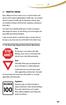 Tr a f f i c S i g n s 7 7. TRAFFIC SIGNS Many collisions and near crashes occur as a result of drivers who ignore or fail to respond appropriately to traffic signs. It is essential that the meaning of
Performance Condition When asked by a qualified assessor, On board ship or in an approved training program,
 17.1.A International Conventions Monitor compliance with legislative requirements Basic working knowledge of the relevant IMO conventions concerning safety of life at sea, security and protection of the
Excavation Procedure. MIDGA Reviewed: 07/29/14 Effective: 06/20/09 Supersedes: Original Preparer: Owner: Approver: Safety Safety Safety
 Procedure No.: SOP-0203 Page: 1 of 5 Preparer: Owner: Approver: Safety Safety Safety 1. PURPOSE The purposes of this procedure is to ensure safe excavation, reduce the potential of damaging underground
GUIDANCE NOTES ON RISK ASSESSMENT FOR EVENTS IN HARBOUR AUTHORITY AREAS NOTIFICATION AND STANDARD EVENT PLANNING RISK ASSESSMENT GUIDANCE NOTE
 GUIDANCE NOTES ON RISK ASSESSMENT FOR EVENTS IN HARBOUR AUTHORITY AREAS NOTIFICATION AND STANDARD EVENT PLANNING RISK ASSESSMENT GUIDANCE NOTE The DfT (Department for Transport) Port Marine Safety Code
To Foreign Nationals Who Drive Vehicles in Japan (English Language Version) Chapter 1 Basic Information
 7,1, 2011 License Division Translated by National Police Agency To Foreign Nationals Who Drive Vehicles in Japan (English Language Version) Introduction This booklet is designed to help you understand
PORT OF SAN FRANCISCO STRATEGIC PLAN. To increase the volume of cargo shipping. To efficiently manage and improve all Port property.
 PORT OF SAN FRANCISCO STRATEGIC PLAN Mission: Goals: The Port of San Francisco is a public enterprise committed to promoting a balance of maritime, recreational, industrial, transportation, public access
15-Passenger Van Safety Awareness Program. Environmental Health & Safety Department 570-662-4906
 15-Passenger Van Safety Awareness Program Environmental Health & Safety Department 570-662-4906 Course Objective The objective of this presentation is to increase the safety awareness of passenger van
DEPARTMENT OF MARINE SERVICES AND MERCHANT SHIPPING (ADOMS) Boatmaster s Licenses
 CIRCULAR Local 2013-001 DEPARTMENT OF MARINE SERVICES AND MERCHANT SHIPPING (ADOMS) Boatmaster s Licenses Ref SCV Code. Companies operating SCV certificated vessels under the flag of Antigua and Barbuda.
Impact of Larger Vessel Size on Port Infrastructure Costs
 Balancing and Calculating ROI and Risk against Cost of Technical Developments Diego Quiroga, Associate Ports & Marine, AECOM Port Finance International - Casablanca 16-17 September 2015 Outline Introduction
Disaster Resilient GIS Aids Port Security and Benefits All Stakeholders. Eric Napralla, Port of Oakland Cassandra Gray, NorthSouth GIS
 Disaster Resilient GIS Aids Port Security and Benefits All Stakeholders Eric Napralla, Port of Oakland Cassandra Gray, NorthSouth GIS The Port of Oakland at a Glance Enterprise agency of the City of Oakland,
Bicycle riding is a great way to get into shape
 Bicycle riding is a great way to get into shape and have fun. To remain safe on Illinois roads, it is important to follow the same traffic safety laws that govern vehicle drivers. No amount of bicycle
REHABILITATION AND EXTENSION PROJECT FOR PORT OF LOBITO
 REHABILITATION AND EXTENSION PROJECT FOR PORT OF LOBITO Advantages of Port Lobito (1) Predominant geological locations Facing the Atlantic, Port Lobito locates around 30km north to Beguela City, and it
There is no water, surface tension cracks, nor other environmental conditions present that reduce the stability of the excavation.
 Part 1926 Subpart P Introduction The Occupational Safety and Health Administration (OSHA) issued its first Excavation and Trenching Standard in 1971 to protect workers from excavation hazards. Since then,
Benefits of Navigational Port Studies
 Navigational Services within Port Development Hvad er udfordringerne? - Kampen om vand og land - Kan man bringe større skibe ind i eksisterende havne og derved øge godsmængden? - Vil et krav om at flytte
Statement of. Thomas A. Allegretti President & CEO The American Waterways Operators
 Statement of Thomas A. Allegretti President & CEO The American Waterways Operators Maritime Transportation Regulations: Impacts on Safety, Security, Jobs and the Environment, Part I Before the Subcommittee
Atlanta, Georgia Road Test
 1. When driving your car Into traffic from a parked position, you should: A. Sound your horn and pull Into the other lane. B. Signal and proceed when safe. C. Signal other traffic and pull directly into
CHAPTER 7 DEAD RECKONING
 CHAPTER 7 DEAD RECKONING DEFINITION AND PURPOSE 700. Definition and Use Dead reckoning is the process of determining one s present position by projecting course(s) and speed(s) from a known past position,
skirt Appendix A Mechanical Containment and Cleanup Technologies Containment Booms
 Appendix A Mechanical Containment and Cleanup Technologies Containment Booms Oil spill containment barriers or booms are floating devices generally resembling short curtains that restrict an oil slick
Bicycle Safety Quiz Answers Parental Responsibilities
 Bicycle riding is a great way to get into shape and enjoy the outdoors. To remain safe on Illinois roads, it is important to follow the same traffic safety laws that govern vehicle drivers. No amount of
Evaluating ship collision risks
 Evaluating ship collision risks Silveira, P., Teixeira, A.P, & Guedes Soares, C. IRIS Project risk management: Improving risk matrices using multiple criteria decision analysis Centre for Marine Technology
GENERAL GUIDE FOR WORKPLACE TRAFFIC MANAGEMENT
 1 This General Guide provides information on how to manage traffic risks at a workplace. It is supported by specific guidance material on traffic management for shopping centres, construction workplaces,
TECHNICAL INFORMATION
 Page: 1/6 This checklist recognizes the major accident hazards found by experience of previous HAZID studies. It is not intended to be totally exhaustive and feedback from users should be incorporated
PIANC 2002, 30 th INTERNATIONAL NAVIGATION CONGRESS S8C P121 SYDNEY-SEPTEMBER 2002 Page 1 of 12
 S8C P121 Ensuring the Safe and Efficient Movement of Ships in Channels Jennifer K. WATERS i, Ph.D. 1 Associate Professor, Department of Naval Architecture and Ocean Engineering, U.S. LT Alan L. BLUME ii,
GUIDELINES FOR MOVEMENT OVER SOUTH CAROLINA HIGHWAYS OF OVERSIZE AND OVERWEIGHT VEHICLES AND LOADS
 GUIDELINES FOR MOVEMENT OVER SOUTH CAROLINA HIGHWAYS OF OVERSIZE AND OVERWEIGHT VEHICLES AND LOADS Statutory Authority: Section 56-5-4010 through 56-5-4230 and 57-3-130 through 57-3-160 A. Implements of
Delineation. Section 4 Longitudinal markings
 Delineation Section 4 Longitudinal markings The delineation guidelines have been developed to assist in designing and maintaining a quality delineation system. The guidelines are to comprise 19 sections
Crowley 60 Years in Alaska. February 2014
 Crowley 60 Years in Alaska February 2014 Company Overview Crowley was founded in 1892, when founder Thomas Crowley grandfather of current chairman, president and CEO Thomas B. Crowley, Jr. purchased an
SERVICES TO SHIPPING LINES & AGENTS TARIFF REGULATIONS & MARINE USER CHARGES
 A Strategic Business Unit of Port Authority of Trinidad and Tobago POSINCO TARIFF SERVICES TO SHIPPING LINES & AGENTS TARIFF REGULATIONS & MARINE USER CHARGES Effective January 1 st 2014 Head Office: Port