
BIRDS OF LITTLE DIOMEDE ISLAND, ALASKA
|
|
|
- Ross Barker
- 10 years ago
- Views:
Transcription
1 Nov., BIRDS OF LITTLE DIOMEDE ISLAND, ALASKA By KARL W. KENYON and JAMES W. BROOKS The Eskimo village of Ignalook on Little Diomede Island, Alaska, is isolated, and facilities for visitors are limited. Few ornithologists have visited the island. We are aware of no recorded observations on birds of the island in spring other than those given here. Summer observations, mostly of a general nature, were presented by Jaques (Auk, 46, 1929:230, and Nat. Hist. Mag., 1929: ) and Jenness (Can. Geog. Jour., 7, ). Brooks observations of 1953 were available to Gabrielson and Lincoln during preparation of the Birds of Alaska (1959). Much of this material, however, was not utilized. Repetition in the present paper is avoided except in a few instances where comparisons of observations of 1953 and 1958 appear desirable. Little Diomede is situated in Bering Strait 20 nautical miles west of Cape Prince of Wales and 2.25 miles east of Big Diomede (USSR). Fairway Rock lies 8 miles and King Island 52 miles southeast of Little Diomede. The island is 2 miles long, north to south, and 1.5 miles wide, east to west. It rises steeply to a nearly flat plateau at an altitude of 1308 feet. Vegetation is sparse and limited to patches and crevices among the tumbled granitic boulders and outcrops. Beaches, except for a few narrow stretches of large cobbles, are nonexistent; steep rocks and cliffs extend directly into the sea. In the course of studies of marine mammals, Brooks spent the period from April 25 to June 26,1953, and Kenyon from May 10 to June 14, 1958, on Little Diomede or on the sea in its vicinity. Both of us kept systematic records of birds, although Brooks did not attempt to list all species seen. Specimens of species presumed to be unusual at this locality were collected whenever possible in The season of 1953 was characterized by a period of unusual warmth in early April but cool weather later caused an unusually late spring. However, leads were open near Little Diomede in April and May. In 1958 only a few narrow leads opened near the island until the latter half of May when considerable areas clear of ice appeared. This condition apparently affected the arrival dates of murres at the island; however, breeding activities commenced at about the same time as in As will be noted in the following annotated list and table 2, the arrival dates of a number of species were nearly the same in both seasons, as were also the periods of passage of certain migrants going from Alaska to Siberia. A total of 40 species is listed of which 13 are known to breed on Little Diomede. Table 1 Estimated Magnitude of Populations of Birds Known to Breed at Little Diomede SPXkS Minimum Maximum Phalucvocorax pelagicus Lams hyperborew Rissa tridactyla polka& Uris (aalge and lomvia) Cepphw columba Cyclorrhynchus psittacula Aethia cristatella Aethia pusilla Fratercula comicdata Lunda cirrhata Calcarius lapponicus dascensis Plectrophenax nivalis nivdis ,000 SO, , ,000,000 S,ooo ,OOQ 200,000 20,OQO 5qOQO 1,000,ooo 10,000 1,

2 458 THE CONDOR Vol. 62 Most of the small passerines observed and collected in 1958, although not previously recorded from Little Diomede, might be expected to land there en route from wintering grounds in the Old World to breeding areas in Alaska. Species wintering in North America may find the island a convenient resting place when blown from usual spring migration routes. Few attempts were made to census populations. An attempt was made to estimate a lower and upper limit for the numbers of each species thought to be present. Large numbers are difficult to estimate, thus the order of magnitude of the populations could be expressed as an exponent of 10. However, when the estimated upper and lower limits are given we believe that a more concrete express!on of the approximate order of magnitude of each population is achieved. - Table 2 Arrival Dates of Birds at Little Diomede Species Chen hyperborea Grus canadensis Rissa tridactylu poll&-is Uris (aalge and lomvrir) Cyclorrhynchus psittacula Aethiu &state&z Aethia pus& Fratercula corniculata Lunda cirrhata Nyctea scandiuca 1953 May May IS-22 May 1.5 May 21 April 27 May 3 June 11 19% May 20-June 1 May May 14 May 20 May 16 May 20 June 9 May 29 May 26 May 22 May 20 May 18 May 23 ca. May 25 May 27 June 2 June 2 June 2 May 26 May 23 May 26 Remarks Migration passed Migration passed First sighted First on cliffs First on cliffs First breeding behavior First on rocks First on rocks SPECIES LIST Fzdmwus glacialis rodgersii. Fuhnar. Ira N. Gabrielson (in litt.) saw only two at Little Diomede, both white phase, near Fairway Rock on July 26, In 1953 Brooks was told by the Eskimos that the Fulmar, locally called walrus bird is not known to nest on Little Diomede. In 1958 Kenyon saw none near the cliffs. All those seen at Little Diomede in were of the white phase. The first was seen on May 29, flying over narrow leads among ice floes about 1 mile east of Little Diomede. Other individuals were seen on June 3, 5, and 9. On June 10, 20 Fulmars circled and fed in the channel in front of Ignalook Village. On June 13 the birds were numerous and constantly in view over the water from the village. Phakzuocorax pelagicus pekzgicus. Pelagic Cormorant. Brooks found cormorants present on April 25, 1953, and he believes he observed two species, one larger than the other. In 1958 only pelagicas was noted but no special search for Phakrocorax urize was made. One cormorant was seen near the north end of the island from the aircraft before landing on May 11, The natives said that cormorants are present throughout the winter, when they feed in leads, particularly around the north point of the island. Large numbers were not seen on the cliffs until May 18. The greatest concentrations were at the north and south ends of the island. While we hunted walruses from umiaks, groups of cormorants were often seen resting on broken pressure ridges of ice floes. Croaking mating calls were heard from the cliffs frequently on May 20. Olor colzrmbionus. Whistling Swan. On May 20, 1958, two flew past Little Diomede and dis- appeared in the direction of Siberia. They flew low over leads, passing among ice floes. The bills appeared completely black. Branta: nigrkans. Black Brant. On June 3, 1958, a flock of ten was seen flying westward toward Big Diomede. On June 9 a subadult was seen sitting on the hillside north of the village.

3 Nov., 1960 BIRDS OF LITTLE DIOMEDE 459 Chen hy#erborea. Snow Goose. In 1953 the first flocks appeared on May 22 and by the evening of May 24 the migration had ended. On May 20, 1958, a flock of four in company with three Sandhill Cranes, flying in line, headed directly west over the ice south of the village. On May 23 a flock of six was closely observed resting on an ice floe as it drifted with the current past the south point of the island. On May 29 and 30 several flocks flew westward, and on June 1 they were heard calling while moving over the village in a westerly direction. Anus acuta. Pintail. On May 18, 1958, an adult male circled over the village. On May 23 one pair was seen on a lead near shore at the south end of the island. On June 9 an adult male flew north along the shore near the village and a male in subadult plumage was shot on the hillside behind the village. Gonads were enlarged (2.5 x 7 mm.).. Anas crecca. Green-winged Teal. On June 10, 1958, an adult female (nimia or carolinenti?) was seen resting on an ice floe near the village. It was driven away by dogs and no others were subsequently seen. PoZysticta stelleri. Steller Eider. Small flocks were seen between May 25 and June 5, None was seen in Apparently the northward migrants usually stay close to continental coast Pines. Ckrngtda hyemalis. Oldsquaw. In 1953 these ducks appeared to pass in greatest abundance near Cape Prince of Wales. On May 14, 1958, the first pair was seen in a lead at the south point of the island. Pairs and small flocks, headed north or east, were seen on the open water during the entire period. Histrioniclcs histrioniczts. Harlequin Duck. The first were seen on June 2, 1958, a flock of approximately ten, flying northward over open leads near the south end of the island. On June 5 two pairs were seen near shore ice north of the village. Somuter&z moz&&na. Common Eider. This species is often taken for food by the Eskimos. On May 16, 19.58, approximately 100 were seen on open leads south of Little Diomede. Although we saw a number of flocks while on walrus hunting trips at sea, we also spent several entire days on the water in late May without seeing this species. Somateriu spectubilis. King Eider. Between May 14 and June 2, 1958, flocks of from 4 to 35 were seen on several occasions flying low over the water among ice floes. Dead individuals were seen at several Eskimo homes on May 11 and the Eskimos said that they often take them on leads in the winter and early spring. Brooks has observed that while great numbers migrate northward near Cape Prince of Wales in May relatively few are seen near the Diomede Islands. Lumprmetta fischeri. Spectacled Eider. This species did not appear numerous at Little Diomede in One adult male was brought in by a hunter on May 11 and several hunters said that they had seen a few after this date. Grm cansden.& Sandhlll Crane. In 1953 the migration passed between May 15 and 22. Flocks en route from Alaska to Siberia frequently passed both north and south of Little Diomede in mid- May, During periods of low visibility, the birds could often be heard but not seen. On May 17 four flocks were seen; on May 18 a flock of 27 and another of 24 were closely observed and a number of others were reported by Eskimos. On May 20 a flock of 62 and 3 other individuals, accompanied by 4 Snow Geese, passed by. A number of hours was spent in the field subsequento May 20. On May 23 a particular effort was made to record the passing of cranes but none was seen during nine hours of field observations and none was reported by hunters. Apparently the entire migration passed in four days, from May 17 to 20. Erdia alpine mifica. Dunlin. Only stray migrants were seen. On May 20, 1958, a lone bird flew north along the edge of the ice pack and alighted on floating ice about 2 miles east of Little Diomede. Another was seen on the ice near shore rocks at the south end of the island on May 30. A male in breeding condition was taken on June 1 (USNM no ) as it looked for food among rocks and snow patches at the water s edge. Phalaropus f&zarius. Red Phalarope. A few migrants stopped at Little Diomede in late May and June. On May 29, 1958, an adult in breeding plumage, probably a female, searched for food in a pool of melt water on shore ice. On June 6, two flew among the ice floes about 8 miles south of Little Diomede. Between June 10 and 14, 10 to 15 birds searched energetically for food under and near the shore ice shelf along the west shore of Little Diomede. A male in breeding condition was taken on June 10 (USNM no ).

4 460 THE CONDOR Vol. 62 Pomarine Jaeger. On M.ay 20, 1958, a flock of eight, in dark plumage, was headed north in direct flight close to the water 1 mile east of Little Diomede. On May 29 five were seen and on June 10 one was seen. On June 14 and 15 several were seen at Wales where they appeared more numerous than at Little Diomede. Loras hyperboreus. Glaucous Gull. On June 7, 1953, the Eskimos brought in about two dozen G~COUS Gull eggs, some of which were in late stages of incubation. Although some gulls nest on Little Diomede, the Eskimos say that the Fairway Rock colony is larger. Gulls were relatively scarce at Little Diomede until about May 15, On June 10 Eskimos from Diomede visited Fairway Rock and found full sets of eggs which had been laid only a few days previously. Rissa triductyla polkuris. Black-legged Kittiwake. Incubation was in progress on July 26, 1946, when Ira N. Gabrielson visited the island (in litt.). In 1953, the first kittiwakes were seen at Little Diomede on May 15, the first landed on the cliffs on May 21, and egg laying had not begun on June 25. On May 11, 1958, several flocks of 20 to 100 were seen in open leads among the ice during a flight between Nome and Little Diomede. On May 14 four were seen flying over the ice south of Little Diomede. As leads opened near the island, the birds became numerous. Twenty were seen on May 16 and on May 18 huge flocks of many thousands were present on open leads near the island. On May 20 at 8:00 a.m. thousands rested on cliff ledges, many of them on the snow. By f:oo p.m. thousands more had come to the cliffs. Previous to May 20 not one bird had been seen on the cliffs. By I:00 a.m. on May 21 the cliffs were again completely deserted by kittiwakes. Until May 26 no birds were seen visiting the cliffs and relatively small numbers were seen near the island over open water. On May 26 several hundred birds rested on ice and open water near shore but only about 100 to 200 were on the cliffs. The cliff population gradually increased until by May 29 every available ledge and old nest was occupied by pairs of kittiwakes. The first subadult bird was seen on June 5 and numbers had increased considerably by June 14. The behavior of kittiwakes, in making a preliminary visit to nesting cliffs in great numbers and then deserting them completely for five days before returning to stay, is of interest because of its similarity to behavior patterns of other larids. For example, the Sooty Tern (Sterno fuscata) approaches the colony site at first by night, then in daylight for several days before finally resting on the ground intermittently at night. The periodic approach of the flock to the colony site is described for the Herring Gull, Lw-us wgentatus (Tinbergen, The Herring Gull s World, 1953 :44-45). Uris aulge and Uris Zomoia. Common Murre and Thick-billed Murre. On April 27, 1953, large flocks (50 to 200) began passing Little Diomede heading north, and their migration continued until about May 5. During the same period, several thousand birds accumulated in the open leads near Little Diomede and began landing on the cliffs at the south end of the island on May 3. Breeding was observed on June 11, and the first eggs were found on June 19. So many of these birds were seen that it was not ascertained which species was more numerous. Large flocks were seen on open water on May 11, 1958, during the flight from Nome to Little Diomede. Their number decreased sharply on the narrow leads 2 or 3 miles south of the island. None was seen near Little Diomede until May 16 when leads opened near the island, at which time flocks of several hundred were present, and by May 20 many thousands were present on the water. In the morning none rested on the cliffs, although by 7:00 p.m. many thousands were there, most of them sitting on snow and ice. Several birds were seen fighting and in one case two birds locked in combat fell to the surface of the shore ice where they continued to fight, their beating wings leaving a trail for several yards in the snow. By midnight the majority of birds had left the cliffs and by 3:00 a.m. on the morning of May 21 not one remained. Between this date and May 31 a few birds occupied the cliffs intermittently but at 1:oO p.m. on May 31 none was seen there. They again began to occupy ledges by midafternoon. From this time on the cliff population steadily increased and birds were present there at all hours. Breeding behavior was observed on June 9. Cepphzu columba. Pigeon Guillemot. In 1953 small numbers were seen on April 25, but no eggs had been found by June 2.5. On May 14, 1958, two were seen in a narrow lead south of Little Diomede ; in the course of a day at sea on May 20 approximately 20 individuals, some in pairs, were seen. Erratic courtship flight was observed near an open lead on May 21. The number of pairs occupying open water south of the island increased. On May 26 six pairs were seen near shore. By May 31 sev-

5 Nov., 1960 BIRDS OF LITTLE DIOMEDE 461 era1 pairs were seen flying close to island cliffs and on June 2 several pairs occupied holes in cliffs at the south end of the island. By June 13, when open water was available all around Little Diomede, the number of Pigeon Guillemots had increased to a hundred or more pairs. Cyclorrhyruhus psittacdu. Parakeet Auklet. In 1953 this species was first seen to settle on Little Diomede on May 29. The first flocks of five to ten individuals were seen on May 20, 1958, well offshore on open water among ice floes. By 7:oO p.m., to 600 birds were seen near shore. By May 23 Fig. 1. Habitat areas at the top of Little Diomede Island on June 2, Two Wheatears fed among rocks at the edge of the tundra patch in the foreground. Longspurs had taken territories on the rock-strewn plateau at left, and auklets (Aethie and Cyclorrhynchus) occupied the rock slides on the right. Photograph by Kenyon, June, thousands flocked on open water near shore. On May 26 auklets were flying high above the island and a few individuals landed on the highest rocky outcrops. By May 31 large numbers began to assemble high on the rocky slopes at about 4:3O p.m. Between this date and June 4 the numbers increased rapidly. The Parakeet Auklet appears to be the least numerous of the three species of small alcids. During late May, the most auklets were in the air from late afternoon until the early morning hours in spite of the fact that &ylight prevailed during 24 hours. On foggy days the auklet frights began later than on sunny days. Aethti cri.dateua. Crested Auklet. On May 20, 1958, three were seen flying over open leads 3 miles east of Little Diomede. By May 25 flocks of from 5 to 30 birds flew high above the upper slopes of the island in early afternoon; by late afternoon the flocks approached the rocks closely and a few landed on the higher slopes. An assemblage of many thousands gathered on an open lead south of the island, then took to the air, broke into smaller flocks and circled up about the island. The citrus-like odor of this auklet is often quite noticeable, both on the water and in nesting areas. On May 29 the odor of a flock of about lo,c!gl auklets was quite strong at least half a mile downwind while the birds were hidden from view by fog. Large flocks on the water increased daily until by June 3 a number of flocks consisted of an estimated 0 to 10,000 birds. As soon as a large flock took to the air, it broke into small groups of four to ten birds and circled upward around the island. The greatest number of birds was in the air and on the rocks at about 2:OO a.m.

6 462 THE CONDOR Vol. 62 Aethia pz1silke. Least Auklet. The first was seen on May 23, 1958, and by May 26 a few flew about the upper slopes. At 3:oO a.m. on May 27 thousands flew over the village and landed among the rocks. By June 10 Least Auklets were by far the most numerous birds about Little Diomede. The heaviest flights occurred from 9:oO p.m. to about midnight. By June 8 it appeared that the majority of available nesting areas had been taken and flocks of to 600 Least Auklets, accompanied by a few of the other two species, rested on snow drifts that still covered portions of the rocky hillside. These birds appeared to be awaiting access to nesting areas. On June 10 at twelve noon not one bird could be seen flying. By ~:OO p.m. a few were flying and the number rapidly increased during the afternoon and evening hours. Froterculu cornicduta. Horned Puffin. The puffins are the last summer residents to reach Little Diomede. The first puffins arrived on June 2, 1953, and egg laying had not commenced by June 25. The first puffin was also seen flying over open water on June 2 in On June 3 two were seen on cliffs at the south end of the island and two others flying along the cliffs. On June 6 several Pairs flew over open water and along the cliffs. On June 10 many hundreds occupied cliff ledges. This species outnumbered the Tufted Puffin to a considerable degree. Lunda cirrhata. Tufted Puffin. On May 26, 1958, one bird made numerous close passes along the rocky cliffs at the south point of the island. Numbers increased slowly until June 13 when scattered pairs occupied cliffside ledges. Nyctea scandiuca. Snowy Owl. In 1953, one was seen on May 23 and the Eskimos said that this owl is more numerous in fall than spring. One adult was seen on the top of the island on May 26,1958. Asia &wmneus. Short-eared Owl. Two were seen flying westward past Little Diomede on May 20 and 22, The species was not observed in COYVUS corux. Raven. On April 25, 1953, three flew from Big Diomede to Little Diomede. Sub- sequently they were seen almost daily. On May 14, 1958, one was seen flying about near open leads south of Little Diomede and on June 1 a lone bird flew from Big Diomede toward the north end of Little Diomede. The Eskimos said that two or three Ravens always wintered at the Diomedes and that sometimes they nested on the higher outcroppings of Little Diomede. It is doubtful that any nested there in The species is apparently present in small numbers throughout the year. Oenunthe oenunthe oenanthe. Wheatear. On June 2, 1958, a pair of birds was flushed from among large boulders near the edge of the flat top of Little Diomede. They were quite wary but a female was taken (USNM no ). Although this species is recorded as breeding at Wales and a specimen was taken on Little Diomede by Dufresne in 1924 (Gabrielson and Lincoln, The Birds of Alaska, 1959:668), it is not known to breed there. Phylloscopus bore& kennicotti. Arctic Warbler. Only one individual was seen, on June 12, It hopped about energetically among large granite boulders as it searched for food among lichens and patches of dead grass near the schoolhouse. The bird, an adult female, was taken (USNM no ). Although this species is not previously recorded from Little Diomede, its presence there is not surprising. It winters in tropical Asia, has been recorded from other Bering Sea islands, and breeds in western Alaska. Motacilla dba. White Wagtail. Single birds were seen on June 4, 10, and 13, They were very elusive and shy. Each bird passed rather rapidly along the island shore and did not return to an area after leaving it. An unsuccessful effort was made to collect each individual. Identifying characteristics were observed through binoculars. Nesting of this species on St. Lawrence Island is recorded (Fay and Cade, Univ. Calif. Publ. Zool., 63, 1959:129). Mot&&z fiava tschutschemis. Yellow Wagtail. On June 13, 1958, an adult female was observed for half an hour (12:30 p.m. to 1:OO p.m.) before it was obtained (USNM no ). It repeatedly flew to an altitude of about 75 feet over a selected spot, then while descending on rapidly vibrating wings uttered a high-pitched trill. One other was observed later the same afternoon as it flew rapidly along the steep Diomede hillside. The breeding range of this species includes western Alaska areas but it has not been recorded previously from Little Diomede. Anthus cervinus. Red-throated Pipit. On June 12 and 13, 1958, several pipits were observed as they flew low over the rocks and grassy patches on the steep lower slopes of Little Diomede. The birds were quite wary and exact identification of the five or six pipits seen was not certain. However, two adult males in breeding condition were collected (USNM nos and ), one on June 1.3

7 Nov.,1960 BIRDS OF LITTLE DIOMEDE 463 and one on June 14. This species has not previously been recorded from Little Diomede but there is one nesting record from Wales (Bailey, Condor, 34, 1932:47). A more careful exploration of Little Diomede may show that it breeds there also. The species is represented by only three other specimens from North America. Acanthis hornemanni. Hoary Redpoll. One bird was seen on May 18 and another on June 13, Both were quite light colored and were thus considered to be this species. They flitted among rocks along a steep hillside and were so persistently chased by Snow Buntings that neither could be obtained. Although not previously recorded from Little Diomede, redpolls probably visit there in small numbers on migration as they do at other Bering Sea islands, Junco hyemdis hyemdis. Slate-colored Junco. On June 5, 1958, one bird, a male in breeding condition, was obtained (USNM no ) on the rocky hillside behind the village. The bird was chased by a White-crowned Sparrow but repeatedly returned to one area where it was taken. Two Eskimos said they had never seen a bird like it there before. The species has been found on other islands of the Bering Sea but not previously on Little Diomede. Zonotrichiu Zeucophrys gambelii. White-crowned Sparrow. On June 5, 1958, a male in breeding condition was first heard singing from the hillside behind the village where it remained for about 12 hours before being taken (USNM no ). The Eskimos said that usually they saw one or two of these birds in the spring, but they had never found its nest on Little Diomede. This is a common species on the mainland of Alaska and is probably blown occasionally from its usual migration route to islands in the Bering Sea. It is not previously recorded from Little Diomede. Colcarizcs lapponicus. Lapland Longspur. In 1953 only a single pair was observed. On May 27, 1958, an adult male was seen on a grassy stretch among rocks above the village. On May 29 several males in soaring song flight were frequently visible in this area. On June 2 about ten pairs were seen on the flat top of Little Diomede. A nest with five fresh eggs was found on June 9 about 300 yards north of the schoolhouse. On June 13 this nest contained six eggs and a second nest with seven partly incubated eggs was found nearby. Plectrophenax nivdis nivdis. Snow Bunting. In 1953 the birds arrived in the first part of April. Eggs were found on June 1. Birds of this species were numerous along the lower slopes of Little Diomede on May 11, Courtship behavior was apparent on May 14. On May 18 numerous males sang and disputed territorial boundaries among rocky outcrops. Between the hours of 11:OO p.m. and 2:oO a.m. no singing was noted. Singing began about 3:oO a.m. and continued throughout the day. On May 23 four females and one male were seen to arrive at the island from the south. On May 24 females were first seen gathering nesting material and by May 31 numerous mated pairs occupied territories along the shore and hillside. Only one nest, with a female incubating, was found on June 10. One male (USNM no ) was taken on May 31, United States Fish and Wildlife Service, Seattle, Washington, and Alaska Department of Fish and Game, Juneazl, Alaska, February 1, 1960.

Date Species Species_2 Gender # Road Milepost or Specific Location Comments 4/10/2013 Red Fox Fox, Red 1 Tank Farm 5/25/2013 Emperor Goose Goose,
 Date Species Species_2 Gender # Road Milepost or Specific Location Comments 4/10/2013 Red Fox Fox, Red 1 Tank Farm 5/25/2013 Emperor Goose Goose, Emperor 4 Nome River Bridge Norton Sound Side 5/28/2013
(262) SONG-THRUSH NOBLE ROLLIN
 (262) SONG-THRUSH BY NOBLE ROLLIN SONG SOME aspects of Song-Thrush (Turdus e. ericetorwm) song are dealt with below under the following headings: total output for the day, portion of day used, hour to
South-west Iceland 24th February 2nd March 2016
 South-west Iceland 24th February 2nd March 2016 This was by no means a birding holiday, but more of a trip for me and my wife to relax and spend some time planning the birth of our first child and celebrate
Environmental Considerations of Oil & Gas Exploration & Production on Alaska s s North Slope. Presented by: Caryn Rea Sr.
 Environmental Considerations of Oil & Gas Exploration & Production on Alaska s s North Slope Presented by: Caryn Rea Sr. Staff Biologist Canada-US Oil and Gas Conference Nov 30 Dec 2, 2010 Presentation
MARCH OF THE PENGUINS
 MARCH OF THE PENGUINS S C I E N C E M O V I E N I G H T The Academic Support Center @ Daytona State College (Science 127 Page 1 of 33) The Academic Support Center @ Daytona State College (Science 127 Page
Owls. Choose words from the list at the end of the page to fill in the blank spaces.
 Owls Choose words from the list at the end of the page to fill in the blank spaces. Owls are _ of prey. A bird of prey is one that catches its food in its Owls hunt for their at night. A bird that hunts
Polar Regions of the Earth
 Polar Regions of the Earth A Reading A Z Level S Benchmark Book Word Count: 1,028 B E N C H M A R K S Written by Elizabeth Austin Visit www.readinga-z.com for thousands of books and materials. www.readinga-z.com
Climate, Vegetation, and Landforms
 Climate, Vegetation, and Landforms Definitions Climate is the average weather of a place over many years Geographers discuss five broad types of climates Moderate, dry, tropical, continental, polar Vegetation:
Where Do Birds Live?
 Objectives You will learn about 1) where birds build nests, 2) the materials they use, 3) different nest characteristics and 4) how to observe nesting activity. Introduction Birds hatch their young in
Common Backyard Birds of Alabama
 Common Backyard Birds of Alabama Alabama Ornithological Society (AOS) state list includes 420 species: 158 species regularly breed in Alabama 174 species regularly winter 80 species migrate through Alabama
Name That Adaptation. Background: Link to the Plan Read Section 5 (Whooping Crane Ecology and Biology) in the Management Plan
 Summary Students will explore structural, physiological, and behavioral adaptations of whooping cranes. Objectives: Students will be able to: Define an adaptation Describe several whooping crane adaptations
PUSD High Frequency Word List
 PUSD High Frequency Word List For Reading and Spelling Grades K-5 High Frequency or instant words are important because: 1. You can t read a sentence or a paragraph without knowing at least the most common.
Monitoring Beaufort Sea Waterfowl and Marine Birds Aerial Survey Component
 OCS Study MMS 2002-002 Monitoring Beaufort Sea Waterfowl and Marine Birds Aerial Survey Component By Julian B. Fischer 1, Tim J. Tiplady 1, and William W. Larned 2 1 U.S. Fish and Wildlife Service, Migratory
Bird watching is organized by Alecturist Mr. Tomaz Remzgar
 Bird watching is organized by Alecturist Mr. Tomaz Remzgar Bird watching trip 1: Birds of alpine forests DURATION: 6-8 hours HABITATS: coniferous forest, mixed forest, rock cliffs PRICE: 180 A trip into
Cycles of life. You will be visiting the museum to see some baby animals and their parents. Here are some of their stories.
 Cycles of life Some animals die of old age, some die of disease, some are killed and eaten by other animals. But the world does not run out of animals because more are being born or hatched all the time.
Crotophaga ani (Smooth-billed Ani)
 Crotophaga ani (Smooth-billed Ani) Family: Cuculidae (Cuckoos and Anis) Order: Cuculiformes (Cuckoos, Anis and Turacos) Class: Aves (Birds) Fig. 1. Smooth-billed ani, Crotophaga ani. [http://www.hoteltinamu.com/wp-content/uploads/crotophaga-ani-garrapatero-piquiliso-smooth-billed-ani-
STATUS REPORT FOR THE SUBMERGED REEF BALL TM ARTIFICIAL REEF SUBMERGED BREAKWATER BEACH STABILIZATION PROJECT FOR THE GRAND CAYMAN MARRIOTT HOTEL
 STATUS REPORT FOR THE SUBMERGED REEF BALL TM ARTIFICIAL REEF SUBMERGED BREAKWATER BEACH STABILIZATION PROJECT FOR THE GRAND CAYMAN MARRIOTT HOTEL performed by Lee E. Harris, Ph.D., P.E. Consulting Coastal
MONITORING LONG TERM TRENDS OF BIRD POPULATIONS IN SWEDEN
 S. SVENSSON, 2004 - Monitoring long term trends of bird populations in Sweden.In : Anselin, A. (ed.) Bird Numbers 1995, Proceedings of the International Conference and 13 th Meeting of the European Bird
DESCRIBING DESERT, TAIGA, AND TUNDRA BIOMES
 Lesson B5 1 DESCRIBING DESERT, TAIGA, AND TUNDRA BIOMES Unit B. Science and Technology in Wildlife Management Problem Area 5. Desert, Taiga, and Tundra Biomes National Academic Standard. NS.9-12.1 Science
A Method of Population Estimation: Mark & Recapture
 Biology 103 A Method of Population Estimation: Mark & Recapture Objectives: 1. Learn one method used by wildlife biologists to estimate population size of wild animals. 2. Learn how sampling size effects
SVALBARD ADVENTURE. 0800 945 3327 (within New Zealand) +64 (0) 3 365 1355 1800 107 715 (within Australia)
 SVALBARD ADVENTURE The midnight sun reigns supreme, the bird colonies are teeming with life and the peaks of the dramatic mountain ranges are beautifully snow-covered. The ice still keeps the islands in
Gray Whales on the Move
 Gray Whales on the Move Students trace the migration route of a gray whale and discover the gray whale s natural history. Subjects Science GRADE LEVEL Grades 6 8 TIME 60 minutes OBJECTIVES Students will
Feasibility Study for Marine Wildlife Tourism in Henningsvær and in the Vestfjord
 1 Feasibility Study for Marine Wildlife Tourism in Henningsvær and in the Vestfjord Heike Vester Biologist, specialist for Marine Mammal Biology and Bio acoustics Ocean Sounds AS, Sauøya 1, 8312 Henningsvær
Small Scale Poultry Housing
 Small Scale Poultry Housing Phillip J. Clauer, Poultry Extension Specialist, Animal and Poultry Sciences Small scale poultry coops seem to be built in almost every possible shape and size. Those building
Bird Island Lodge. A truly relaxing hotel on an incredible island. A private island, wildlife reserve and hotel - all rolled into one
 Bird Island Lodge - Seychelles Archipeleago A truly relaxing hotel on an incredible island A private island, wildlife reserve and hotel - all rolled into one Ranked No.7 in the world s top 10 eco-destinations
The Wonderful World of Wetlands BINGO
 The Wonderful World of Wetlands BINGO Time: 10-15 minutes to create Bingo board; 5-10 minutes to play one-round of Bingo Scituate Reservoir Watershed Education Program 17 Smith Ave Greenville, RI 02828
The Polar Climate Zones
 The Polar Climate Zones How cold is it in the polar climate? Polar areas are the coldest of all the major climate zones The Sun is hardly ever high enough in the sky to cause the plentiful ice to melt,
Seattle is -- FOR THE BIRDS. How to Identify Common Seattle Birds
 Seattle is -- FOR THE BIRDS How to Identify Common Seattle Birds Want to learn more about birds? Join Seattle Audubon s Family and Youth Programs Mailing List to hear about upcoming opportunities. Name:
IN A SMALL PART OF THE CITY WEST OF
 p T h e L a s t L e a f IN A SMALL PART OF THE CITY WEST OF Washington Square, the streets have gone wild. They turn in different directions. They are broken into small pieces called places. One street
Benton MacKaye Trail - Section 2. Three Forks (FS 58) to GA. Highway 60. 11.4 miles
 General Benton MacKaye Trail - Section 2 Three Forks (FS 58) to GA. Highway 60 11.4 miles This is the longest and most remote section of the Benton MacKaye Trail (BMT) east of GA 5. It follows the Appalachian
THERE IS ONE DAY THAT IS OURS. THERE IS ONE
 p T w o T h a n k s g i v i n g D a y G e n t l e m e n THERE IS ONE DAY THAT IS OURS. THERE IS ONE day when all Americans go back to the old home and eat a big dinner. Bless the day. The President gives
Sullivan s Island Bird Banding and Environmental Education Program. Sarah Harper Díaz, MA and Jennifer Tyrrell, MS
 Sullivan s Island Bird Banding and Environmental Education Program Sarah Harper Díaz, MA and Jennifer Tyrrell, MS I. Introduction The Sullivan s Island Bird Banding and Environmental Education Program
Population dynamics and conservation biology of the Red-throated Diver in Finland
 Population dynamics and conservation biology of the Red-throated Diver in Finland Kalevi Eklöf & Pertti Koskimies Jari Heikkinen Pertti Koskimies Contents: The Red-throated Diver in Finland: population
Kakapo Recovery Plan 1996-2005
 Kakapo Recovery Plan 1996-2005 Threatened Species Recovery Plan No.21 Kakapo Management Group Department of Conservation P.O. Box 10-420 Wellington New Zealand CONTENTS 1. Background 5 2. Distribution
Offshore development benefits. www.shell.us/alaska
 8 C H A P T E R E i g h t: Offshore development benefits www.shell.us/alaska Barrow, Alaska The Ripples of Offshore Development Benefits Energy production has done much for Alaskans previously, and by
Background on Airspace
 Background on Airspace There are six classifications of airspace in the United States; A, B, C, D, E, and G. Class A is the most restrictive and Class G the least restrictive. They can be categorized as:
Geography affects climate.
 KEY CONCEPT Climate is a long-term weather pattern. BEFORE, you learned The Sun s energy heats Earth s surface unevenly The atmosphere s temperature changes with altitude Oceans affect wind flow NOW, you
Adapted from Stone Girl Bone Girl by Laurence Anholt, Francis Lincoln Children s Book
 1. Mary Anning Adapted from Stone Girl Bone Girl by Laurence Anholt, Francis Lincoln Children s Book This is the true story of Mary Anning, who lived 200 years ago. Mary was born in 1799 and was one of
CONSERVATION MEASURES FOR ELEONORA S FALCON IN GREECE LAYMAN S REPORT
 CONSERVATION MEASURES FOR ELEONORA S FALCON IN GREECE LAYMAN S REPORT JANUARY 2008 2 Eleonora s Falcon Eleonora s Falcon is one of the most characteristic birds of the Aegean Sea. It is a migrating falcon
Kamchatka. Russian land of bears and fire
 Kamchatka Russian land of bears and fire A land of spectacular wild beauty, with dozens of smoking volcanoes Rivers, creeks and lakes crowded with salmons. Forests of birch and conifer and in another part
The Saami. The Traditional Saami Homeland
 The Traditional Saami Homeland The Saami The traditional homeland of the Saami is located in the tundra and forests of northern Norway, Sweden, Finland and the Kola peninsula of Russia. Within this homeland,
Where Will the Polar Bears Go?
 Service Stewardship Where Will the Polar Bears Go? Courtesy Kaathy Crane, NOAA Arctic Research Office Science Protect the Earth The Arctic is one of the least explored places on earth, and is changing
Floods are too much water on normally dry land. Rivers can flood after heavy rain has fallen over a long period of time. River flooding can last
 Floods are too much water on normally dry land. Rivers can flood after heavy rain has fallen over a long period of time. River flooding can last weeks or longer. River floods usually occur slowly enough
4.2 Buena Vista Creek Watershed
 Buena Vista Creek Watershed 4.2 Buena Vista Creek Watershed Watershed Overview The Buena Vista Creek Watershed is the fourth-largest system within the Carlsbad Hydrologic Unit. The watershed extends approximately
2010 Paragliding Injuries Summary Mike Steed
 2010 Paragliding Injuries Summary Mike Steed Looking back at ushpa.aero, I see this will be my fifth annual summary article. Last year I finished the article with, "Now, with this sobering experience behind
Wildlife Hazard Mitigation Strategies for Pilots
 Executive Summary From the very beginning of powered flight, pilots have competed with birds for airspace, sometimes with disastrous results. Over the years, there have been many efforts to create a better
Ruby River Grayling - Gravel Spawning Beds Monitoring Report January 2008
 Ruby River Grayling - Gravel Spawning Beds Monitoring Report January 2008 In partnership with Montana Department of Fish, Wildlife, and Parks (FWP), American Wildlands, and Wildlife Forever, the Madison
Jackson Hydroelectric Project (FERC Project No. 2157) Revised Study Plan 12: Northern Spotted Owl Surveys. Final Technical Report
 (FERC Project No. 2157) Revised Study Plan 12: Northern Spotted Owl Surveys Final Technical Report Prepared for: Public Utility District No. 1 of Snohomish County Everett, Washington Prepared by: Biota
PRINCE GEORGE S COMMUNITY COLLEGE SAMPLE TEST AND INFORMATION FOR INTERNATIONAL STUDENTS (MICHIGAN TEST)
 PRINCE GEORGE S COMMUNITY COLLEGE SAMPLE TEST AND INFORMATION FOR INTERNATIONAL STUDENTS (MICHIGAN TEST) NO APPOINTMENT NECESSARY at Largo Campus MONDAY through THURSDAY 8:30 am to 6:00 pm FRIDAYS: 8:30
Fry Phrases Set 1. TeacherHelpForParents.com help for all areas of your child s education
 Set 1 The people Write it down By the water Who will make it? You and I What will they do? He called me. We had their dog. What did they say? When would you go? No way A number of people One or two How
WESTERN SNOWY PLOVER NATURAL HISTORY AND POPULATION TRENDS
 WESTERN SNOWY PLOVER NATURAL HISTORY AND POPULATION TRENDS Adapted from U.S. Fish and Wildlife Western Snowy Plover Pacific Coast Population Draft Recovery Plan, May 2001 DESCRIPTION AND TAXONOMY The snowy
Animals and Adaptation
 Animals and Adaptation From: http://www.learninghaven.com/science/articles/animals_and_adaptation.htm In order for animals to survive, they need to be able to adapt. In this lesson we will look at the
DECOY COMPETITION RULE BOOK
 34th Annual Havre de Grace Decoy & Wildlife Festival May 1, 2, 3, 2015 DECOY COMPETITION RULE BOOK GENERAL RULES AND REGULATIONS 1. All entrants must complete the entry form. Entry form must be signed.
The concepts developed in this standard include the following: Oceans cover about 70% of the surface of the Earth.
 Name Date Grade 5 SOL 5.6 Review Oceans Made by SOLpass - www.solpass.org [email protected] Reproduction is permitted for SOLpass subscribers only. The concepts developed in this standard include
Regents Questions: Plate Tectonics
 Earth Science Regents Questions: Plate Tectonics Name: Date: Period: August 2013 Due Date: 17 Compared to the oceanic crust, the continental crust is (1) less dense and more basaltic (3) more dense and
Four Short Walks From the Mill
 Four Short Walks From the Mill With directions, duration and length of walk www.ratonera.com (0034) 958 339 560 There are steep sections on most of these walks so please wear boots or stout shoes. A stick
Extinction; Lecture-8
 I. introduction Definition Current extinction Genetic drift Extinction; Lecture-8 II. 3 types of extinction 1. background 2. mass 3. stochastic III. 5 periods of mass IV. human caused 1. on land and in
These Maps Are For The Birds
 These Maps Are For The Birds Students will study New York State Breeding Bird Atlas maps to learn where different bird species nest and how their distributions have changed over time. Objectives: Students
Seasonal & Daily Temperatures. Seasons & Sun's Distance. Solstice & Equinox. Seasons & Solar Intensity
 Seasonal & Daily Temperatures Seasons & Sun's Distance The role of Earth's tilt, revolution, & rotation in causing spatial, seasonal, & daily temperature variations Please read Chapter 3 in Ahrens Figure
All members of the puma species carry their kittens the same way domestic cats do, and they can purr like housecats too.
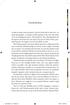 Florida Panther In spite of many, many attempts, I have not been able to discover let alone photograph a majestic Florida panther in the wild. The tawny cat is an endangered species. The panthers I have
BIRD OBSERVATIONS AT JOHNSON RIVER, ALASKA
 Jan., 1949 29 BIRD OBSERVATIONS AT JOHNSON RIVER, ALASKA By LAWRENCE H. WALKINSHAW and JOHN J. STOPHLET On June 1, 1946, accompanied by Jim Walkinshaw, we arrived at Bethel in the Yukon-Kuskokwim River
ANGLAIS NOTE. Durée : 60 minutes. Nom :... Prénom :... Type de maturité (cochez SVP) : Consigne : Points obtenus :.../ 80
 2013 Artistique (MPA) Commerciale (MPC) Sciences naturelles (MPSN) Santé-social (MP-S2) Technique (MPT) Durée : 60 minutes Nom :... Prénom :... Type de maturité (cochez SVP) : MPA MPC MPSN MP-S2 MPT Consigne
feet that are used for hunting prey and to defend against predators at the nest.
 Anatomy of Owls: Function of Wing Feathers: o Primary Feathers propel an owl into flight. o Secondary Feathers keep an owl in flight through gliding. o On both the primary and secondary feathers, there
The Geology of the Marginal Way, Ogunquit, Maine
 Geologic Site of the Month February, 2002 The Geology of the Marginal Way, Ogunquit, Maine 43 14 23.88 N, 70 35 18.36 W Text by Arthur M. Hussey II, Bowdoin College and Robert G. Marvinney,, Department
Statoil s Arctic program, Bear Island nature reserve and the ice edge May 12, 2014
 Statoil s Arctic program, Bear Island nature reserve and the ice edge May 12, 2014 Media Brief WHAT: Statoil is preparing to drill the northernmost well ever drilled on the Norwegian continental shelf,
What Causes Climate? Use Target Reading Skills
 Climate and Climate Change Name Date Class Climate and Climate Change Guided Reading and Study What Causes Climate? This section describes factors that determine climate, or the average weather conditions
NATURAL REGIONS OF KENTUCKY
 NATURAL WONDERS As you travel around Kentucky taking pictures, you are excited by what you see. Kentucky offers diverse and amazing sights. The Six Regions In the West, you see the Mississippi River, the
Introduction. Description. This bird
 Introduction This bird takes its name from a distinctive whooping call that carries over several kilometres performs an elaborate courtship ritual that includes whooping and dancing uses an energy-efficient
Safety Challenges in the Arctic
 Safety Challenges in the Arctic International Conference on Integrated Operations in the Petroleum Industry Trondheim, 25.09.13 Børre Johan Paaske, DNV GL Agenda Defining the Arctic Safety and environmental
The Start of my Arctic Adventure
 The Start of my Arctic Adventure I have been asked if I would like to go to the Arctic. I am very excited. All I know about the Arctic is that it has lots of ice and is very cold. Here are some of the
Why Count Birds? (cont.)
 AVIAN CENSUS TECHNIQUES: Why count birds? Descriptive Studies = asks what types of birds occur in a particular habitat? - Provides gross overview of bird occurrence and perhaps a crude estimate of abundance
Part 2. Appendix 2O. Greater Black Backed Gull EIA Analysis
 Part 2 Appendix 2O Greater Black Backed Gull EIA Analysis Greater Black Backed Gull EIA Analysis Introduction Natural England (NE) and JNCC (in their further detailed response to Relevant Representations,
LOW LEVEL ROAD RE-ALIGNMENT PACIFIC YEW TREE ASSESSMENT ENKON File No. 1590-001
 April 11, 2012 Port Metro Vancouver 100 The Pointe, 999 Canada Place Vancouver, BC V6C 3T4 Attention: RE: Carolina Eliasson, Environmental Specialist LOW LEVEL ROAD RE-ALIGNMENT PACIFIC YEW TREE ASSESSMENT
Using Nighttime Falconry for Roosting Blackbird Abatement at Dallas/Fort Worth International Airport
 University of Nebraska - Lincoln DigitalCommons@University of Nebraska - Lincoln 2011 Bird Strike North America Conference, Niagara Falls Bird Strike Committee Proceedings 9-1-2011 Using Nighttime Falconry
Got ELK? Hunting Prices and Dates Also Current discounted pricing on Over the Counter Rifle seasons.
 Hunt ID: CO-ElkMDeerFishAll-Durango-DBARG-DIY Got ELK? We sure do too many Elk. So many we are offering a DIY drop camp hunt for a limited number of hunters in prime Southwestern Colorado Elk Country!
Breeding ground banding of Atlantic Population Canada Geese in northern Québec 2014
 Breeding ground banding of Atlantic Population Canada Geese in northern Québec 2014 Jim Bennett A round-up of family groups of Canada Geese near Virgin Lake (Ungava Bay) for banding on August 8, 2014.
Poultry Sample Questions from Animals In Pursuit
 Q. What is barring on a chicken s feather? A. Two alternating colors on a feather, running across its width Q. What commercial strain of layers is best for egg production? A. White Leghorn strains Q. How
Chapter 8, Section 2 The Louisiana Purchase. Pages 272-277
 Chapter 8, Section 2 The Louisiana Purchase Pages 272-277 American Settlers Move West By the early 1800s, thousands of Americans settle in the area between the Appalachians and the Mississippi River. Kentucky,
Increasing water availability through juniper control.
 Tim Deboodt, OSU Crook County Extension Agent 498 SE Lynn Blvd. Prineville, OR 97754 541-447-6228 [email protected] Increasing water availability through juniper control. Throughout the region
Rimutaka Incline activity cards
 Rimutaka Incline activity cards To the supervisor As you lead your group on an exploration of the Rimutaka Incline, please ensure that the group stays together, treats the environment respectfully and
A Rancher s Guide for Monitoring Elk, Deer and Pronghorn Antelope Populations
 M O N T G U I D E MT 9516 Agriculture A Rancher s Guide for Monitoring Elk, Deer and Pronghorn Antelope Populations by James E. Knight, Extension Wildlife Specialist Much emphasis is put on the positive
Introduction. Description. Habitats and Habits. This bird
 Introduction This bird can walk 30 km when it is one day old can fly as fast as 95 km/h and make nonstop flights of up to 1 000 km mates for life gathers in great numbers during its migrations: for example,
ALASKA INDIGENOUS LAND CLAIMS
 Sustainable Development of the Arctic in the face of Global Climate Change: scientific, social, cultural and educational challenges ALASKA INDIGENOUS LAND CLAIMS Sharon McClintock Alaska, USA ANCSA Alaska
An Introduction to the Sea Turtles of Virginia. Amber Knowles CBNERR-VA July 22, 2008
 An Introduction to the Sea Turtles of Virginia Amber Knowles CBNERR-VA July 22, 2008 Overview Introduction to species of sea turtles Focus on Loggerhead and Kemp s ridley sea turtles Importance of the
Geomorphology is the Study of Landforms. Usually by Erosion, Transportation and Deposition
 Geomorphology is the Study of Landforms and the Processes that t Create Them, Usually by Erosion, Transportation and Deposition Fluvial = running water, rivers and floodplains Glacial = flowing ice in
Fry s Fourth 100 Words
 Fry s Fourth 100 Words 301. body 321. usually 341. hours 361. five 381. cold 302. music 322. didn t 342. black 362. step 382. cried 303. color 323. friends 343. products 363. morning 383. plan 304. stand
Antarctica Project - Fact File and References
 Antarctica Project - Fact File and References Enough information to get started, or perhaps enough in itself for a younger age group. Physical: Antarctica is regarded as being the continent of Antarctica,
Join Result Unknown Word Problems
 Join Result Unknown Word Problems There were pencils in your desk. You put more pencil (s) in your desk. How many pencils are in your desk now? I had crayons. My teacher gave me more crayons. How many