
ABHES BULLETIN. Subject: Final Radiologic Technology Standards Effective January 1, 2013
|
|
|
- Ashley Harmon
- 10 years ago
- Views:
Transcription
1 ACCREDITING BUREAU OF HEALTH EDUCATION SCHOOLS 7777 Leesburg Pike, Suite 314 N. Falls Church, Virginia Tel. 703/ Fax 703/ ABHES BULLETIN To: From: ABHES-Accredited Institutions and Programs Recognized Accrediting Agencies State Departments of Education Kay Gilcher, U.S. Department of Education Interested Parties Carol Moneymaker, Executive Director Date: August 15, 2012 Subject: Final Radiologic Technology Standards Effective January 1, 2013 Following the June 18, 2012, Call for Comment and consideration of all comments by the Advisory Committee for Radiologic Technology/Radiography, the Commission of the Accrediting Bureau of Health Education Schools (ABHES) approved implementation of the attached program-specific standards for Radiologic Technology programs, effective January 1, These standards are applicable to any ABHES-accredited institution or applicant for accreditation offering a radiologic technology program. The program-specific standards outlined in Chapter VIII of the Accreditation Manual, build upon Chapter V, Evaluation Standards Applicable to All Educational Programs; therefore, institutions must comply with all related standards. The attached standards culminate over two years of consideration and work by specialists in the field of radiologic technology. While ABHES is not seeking to accredit radiologic technology on a programmatic basis, recent activities in the field have expedited the need for these standards. The American Registry of Radiologic Technologists (ARRT) is the national certifying agency for radiologic technologists/radiographers and will only certify graduates of programs accredited by organizations recognized by the ARRT. ABHES is not recognized by the ARRT and in July 2011 the ARRT issued a moratorium on recognizing new accrediting agencies while it reviewed its approval process. The moratorium remains in place today. As such, the new radiography standards do not affect radiography program graduate credentialing. ABHES will be seeking ARRT recognition as an approved accrediting agency once the ARRT accreditation moratorium is lifted. As of January 1, 2015, the ARRT will permit only graduates who have earned an academic degree to sit for credentialing. Therefore, programs currently accredited or seeking inclusion under an ABHES institutional grant of accreditation are reminded the ARRT degree requirements will affect students enrolling on or after January 1, Immediate consideration of potential changes to areas such as curriculum, enrollment and admissions criteria, and catalogs and other promotional documents, as well as ABHES approval for any program changes, is essential. As noted previously, the new standards are effective January 1, Institutions are expected to comply with the new standards on or before January 1, Nationally Recognized by the U.S. Department of Education

2 CHAPTER VIII PROGRAM EVALUATION STANDARDS FOR RADIOLOGIC TECHNOLOGY/RADIOGRAPHY The Accrediting Bureau of Health Education Schools does not accredit radiologic technology programs, but as an institutional accrediting agency, includes this program within an institution s grant of accreditation. ABHES-accredited radiologic technology programs must comply with all policies, procedures and standards described throughout the Accreditation Manual, including the general evaluation standards as outlined in Chapter V, degree standards as outlined in Chapter VI, as well as the Appendices. This chapter contains additional specific requirements for a radiologic technology program. Accordingly, each Self-Evaluation Report (SER), on-site evaluation, and Site Visitation Report evaluates each program individually against all ABHES accreditation standards. A program specialist is used to evaluate each individual program offered by an institution. Individual programs that do not demonstrate compliance with the standards, policies, and procedures set forth in the Accreditation Manual may be excluded from the institution s grant of accreditation or may cause the institution s accreditation to be subject to adverse action. For purposes of this chapter, a radiologic technology (aka medical imaging or radiography) program includes any programs identified by any other name or designation that is reasonably understood by professionals in the field, students, or the public to have the same meaning and educational focus. These standards apply to only full scope radiologic technology programs. This chapter is equally applicable to any educational program offered by the institution that intends to prepare graduates for employment based on the knowledge and skills set forth in this chapter. DESCRIPTION OF THE PROFESSION Within the diagnostic imaging field, radiologic technologists (also referred to as radiographers) produce radiographic images for diagnostic and medical intervention procedures and are not limited in scope or license to specific regions of human anatomy. Such trained individuals perform specific pre-, intra-, and post-procedure duties that allow for patient safety and comfort, while providing a physician with accurate radiographic images for quality patient care. Radiologic technologists are trained to use various techniques, safety devices, and equipment to protect their patients, themselves, and their coworkers from unnecessary exposure to radiation. Experienced technologists/radiographers may specialize in more complex imaging procedures, to include, but not limited to, computed tomography (CT), magnetic resonance imaging (MRI), or mammography. CREDENTIALING The American Registry of Radiologic Technologists (ARRT) offers voluntary certification for radiologic technologists. In addition, many states use ARRT-administered exams for state licensing purposes. Credentialing as an ARRT certified radiologic technologist is encouraged for all graduates of programs within institutions accredited by ABHES. ARRT certification and/or state licensure is also a requirement of many employers. Students are advised, prior to admission and throughout the program, of any credentialing requirements necessary to achieve employment in the field, including eligibility requirements to sit for the ARRT exam. Focus must be placed on credentialing requirements and opportunities to obtain employment and to increase employability. Adherence to an approved radiography curriculum is expected to prepare students to take the ARRT national certification examination. 1

3 SECTION A Curriculum, Competencies, and Clinical Experience RT.A.1. The depth and breadth of the program s curriculum enables graduates to acquire the skills and competencies necessary to become an entry-level professional in the radiologic technology field. Minimally, all programs are expected to provide a curriculum that incorporates the current content described in the ARRT Content Specifications for the Examination in Radiography and the ARRT Radiography Didactic and Clinical Competency Requirements. These curriculum elements should be reflective of those provided in the current version of the American Society of Radiologic Technologists (ASRT) Radiography Curriculum. The program must demonstrate its ability to meet stated program objectives, competencies, and program effectiveness data as outlined in Chapter V, Section I in the Manual. Clinical and patient care competency is defined as the demonstrated ability to perform clinical procedures consistent with the expectations of an entry level radiographer independently and without direction from external sources. Clinical competency shall include proper positioning of the patient, the ability to adapt the exam process to the patient s condition, accurate and efficient equipment operation, the ability to evaluate resulting image(s), and the ability to identify and make appropriate corrections to improve suboptimal images as needed. Competencies required for successful completion of the program are consistent with or exceed those outlined in the clinical competency requirements of the ARRT Radiography Didactic and Clinical Competency Requirements. The competencies are clearly delineated and the curriculum ensures achievement of these entry-level competencies through coursework, laboratory requirements, and clinical experience. RT.A.2. Clinical experience is required for completion of the program. The clinical experience prepares the graduate to encounter practical applications derived from a standard code of ethics within the professional clinical setting; to function as a team member in a skilled environment and to apply principles of conflict resolution. Clinical assignments are progressive and competency-based. In addition, the clinical experience prepares the graduate to practice patient confidentiality according to the policies and procedures for the Health Insurance Portability and Accountability Act (HIPAA); produce and evaluate radiographic images of consistent quality and take corrective actions as appropriate; operate and maintain radiography equipment; practice appropriate personal and patient radiation safety principles and procedures; handle emergencies effectively (including local and national emergency response); perform patient assessment and document clinical history; understand and apply concepts of total quality management; and communicate effectively with patients, family members, and other health care professionals. The following are considered in choosing, placing and maintaining a clinical experience: (a) Assignment and Administration Clinical experience sites will be selected and assigned to provide equitable learning opportunities for all students. Clinical sites will consist of skilled and professional facilities that perform various types of radiologic and related activities which expose students to the necessary skills required of current and developing imaging technologies. In all cases, the clinical experience facility must be properly licensed and regulated by the appropriate governing authority. 2

4 The program establishes and maintains clinical experience agreements for each assigned site or facility as described in Chapter V, V.B.4 of the Manual. The institution must maintain documentation that supports and chronicles communication between the program and clinical site. Students may not replace existing clinical site personnel and may not receive compensation while participating in the clinical experience. Admissions or other clinical experience preparatory documents (e.g., clinical agreement) must include these disclosure requirements. Under no circumstances may a student be considered an employee or serve as a staff substitution. Rather, students serve in a capacity to experience relevant processes and procedures in order to learn and master the required skills of the profession. (b) Activities Students are oriented to the clinical facility and the daily routine, functions, services, and operations of the facility. Initially, students must observe the required processes and procedures and, following successful completion of clinical site orientation, perform relevant tasks and procedures under direct supervision. Clinical site orientation should include a review of site-specific policies and procedures. As students progress in the clinical experience, the student transitions towards exam or procedure competency. Following competency achievement, students may qualify to perform those exams or procedures under indirect supervision. In all instances, student procedure logs or checklists must be maintained to ensure that a variety of the necessary or required tasks have been performed. Student records must contain documentation of student repeat examinations and must indicate that such examinations occurred under direct supervision. 1. General Patient Care General patient care competencies required for successful completion of the program meet or exceed those outlined in the ARRT Radiography Didactic and Clinical Competency Requirements. If state or institutional regulations forbid radiologic technology students from performing these procedures on patients, then simulations are acceptable. 2. Imaging Procedures Imaging procedure competencies required for successful completion of the program meet or exceeds those outlined in the ARRT Radiography Didactic and Clinical Competency Requirements. For each exam or procedure, the graduate demonstrates the ability to evaluate physician orders; conduct patient assessment; coordinate room preparation; operate equipment; select required techniques; conduct patient positioning; practice radiation safety procedures, image processing, and evaluation while following applicable state and federal regulations, as well as policies and procedures of the clinical site and program. Programs must provide students with learning opportunities in advanced medical imaging technologies. It is the program s prerogative as to how these learning opportunities occur. Advanced medical imaging technologies may include, but are not limited to, computed tomography, magnetic resonance imaging, sonography, nuclear medicine, and vascular imaging/interventions. If mammography or other gender sensitive procedures are included, equal opportunities must be available to all students regardless of gender. 3

5 (c) (d) Supervision There is supervision by qualified clinical staff or technologists of all students in the field while participating in a clinical experience with a minimum of a 1:1 student-registered technologist ratio. Direct supervision is indicated during all exams and procedures prior to the student's achievement of competency on that specific exam or procedure and during all repeat images. Direct supervision is the direct observation of student performance by a qualified technologist throughout the entire performance of the exam including patient assessment, image evaluation and approval. Indirect supervision is the immediate availability of a qualified technologist to assist a student, generally considered within verbal distance. Indirect supervision is only applicable during exams and/or procedures in which the student has previously achieved and documented competency. Program design must include the responsibilities of the clinical instructor or preceptor and specific functions related to student supervision, including student evaluation process and conflict resolution procedures. The institution ensures that the responsible individual or preceptor understands the program expectations as defined. Program Completion Clinical experiences should be designed and congruent with the curriculum in relation to sequencing of content and be appropriate and educationally valid. Subsequent to attempts to achieve competency on any examination or procedure in the clinical setting, students must receive relative didactic instruction and demonstrate entry-level skills in the laboratory setting. All competencies required within the program's curriculum must be achieved prior to the student's eligibility for graduation. SECTION B Program Supervision, Faculty, and Consultation Subsection 1 Program Supervision RT.B.1. The program supervisor possesses supervisory experience and is credentialed in the field. The Program Supervisor (Educational Supervisor) is a graduate of an accredited radiography program and holds a minimum of a master's degree, current ARRT certification in radiography with a minimum of three years of full-time clinical experience in medical imaging, and two years of experience as an instructor in a program accredited by an agency recognized by the United States Department of Education or the Council for Higher Education Accreditation (CHEA) with evidence of learned knowledge and/or experience in instruction, student evaluation, academic advising, educational methods, and supervision of personnel. The Program Supervisor is responsible for the organization; administration; periodic review; planning; development; evaluation; consistency with educational mission and scope; and overall effectiveness of the program. The Program Supervisor also has input into budget preparation. The Program Supervisor may have limited teaching assignments; however, such assignments must allow for adequate time for administrative responsibilities. The Program Supervisor is a full-time position. Subsection 2 Faculty and Consultation RT.B.2.a. Faculty formal education/training and experience support the goals of the program. All Program faculty members work under the direction of the Program Supervisor. Job descriptions and responsibilities of program personnel are clearly explained to include, but are not limited to: 4

6 1. Clinical Coordinator (or Clinical Supervisor) is a graduate of an accredited radiography program and holds a minimum of a baccalaureate degree, current ARRT certification in radiography with a minimum of two years of full-time clinical experience in the diagnostic radiography, and one year of experience as an instructor in a program accredited by an agency recognized by the United States Department of Education or the Council for Higher Education Accreditation (CHEA), with experience in instruction, student evaluation, and academic advising. The Clinical Coordinator is responsible for the supervision and training of Clinical Instructors and preceptors and is the primary point of communication between the clinical site(s) and the program. The Clinical Coordinator is responsible for scheduling of students in all clinical assignments to ensure alignment with curriculum sequencing, as well as equitable and educationally valid experiences. The Clinical Coordinator may have limited teaching assignments; however, such assignments must allow for adequate time for administrative responsibilities. A full-time Clinical Coordinator position is held by one individual or a collective role between no more than two qualified individuals; however, programs may have more than one full-time Clinical Coordinator position. 2. Full-Time and Part-Time Program Faculty are graduates of an accredited radiography program and hold a certificate in radiography, a baccalaureate degree, and a current ARRT certification in radiography with a minimum of two years of full-time clinical experience in diagnostic radiography,. Courses which do not require expertise in the technical performance of radiography may be taught by individuals who possess qualifications commensurate with the individual courses being taught. 3. Clinical Instructors hold a minimum of a certificate or diploma in radiography from an accredited program and current ARRT certification in radiography with a minimum of two years of clinical experience in medical imaging. 4. Clinical Staff (Preceptors) hold a minimum of a certificate or diploma in radiography from an accredited program and current ARRT certification in radiography or equivalent (e.g., unrestricted state license for the state in which the clinical education setting is located). Clinical Preceptors are working radiographers with a minimum of one year of full-time (or its equivalent) clinical experience in diagnostic radiography who evaluate students for competency achievement. Preceptors are sponsored by the clinical site and work under the direction of their clinical site supervisor. The Program must have input in the nomination and appointment of preceptors. The Program documents preceptor orientation and ongoing training to include responsibilities specific to clinical instruction and student competency evaluation, annual program updates, and documentation to support the communication between the Program and the Preceptor. The Program must document regular evaluations of all personnel and which are shared with the respective personnel in a timely manner to assure role effectiveness, positive communications, and opportunities for professional development. Programs must provide evidence of the students' role in evaluations to include overall evaluations of the Program and validity of clinical education settings. Faculty must comply with Chapter V (non-degree programs) and, as applicable, Chapter VI (degreegranting programs). 5

7 RT.B.2.b. Faculty numbers and ratio support the goals of the program. The program limits class size to ensure instruction without risking student or faculty safety. Supervision during laboratory instruction is defined as student-to-faculty ratio of 10:1. RT.B.2.c. A program is served by an advisory board of program related specialists to assist administration and faculty in fulfilling stated educational objectives. The advisory board is comprised of individuals from the community of interest (i.e. currently licensed or registered radiographer and other practitioners in the field; physicians (as appropriate); scientific consultants; academic professionals; and administrators) who have knowledge of radiological science education. SECTION C Educational Laboratory Facilities and Resources RT.C.1.a. The program has sufficient resources to meet program outcomes and assure the quality and educational effectiveness of the instructional plan. If on-site laboratories are provided, these must be operational and readily available to accommodate all enrolled students. 1. Laboratory areas are of a size to accommodate students, faculty and equipment during instruction. 2. Equipment and instruments are available in quantity and quality to accommodate student during instruction. 3. Energized laboratories are in compliance with applicable federal and/or state radiation safety regulations. 4. Student use of an energized laboratory must be under the direct supervision of a qualified instructor. RT.C.1.b. Equipment and instruments are available within the institution s clinical educational settings or laboratory facility to achieve the program s goals and objectives. Radiographic equipment must also follow state guidelines and follow radiation protection specifications. Equipment and instruments include, but are not limited to, the following: Radiographic table energized or non-energized x-ray tube, collimator and control panel Image receptors (digital and/or analog based) Image receptor holders (Bucky tray or other) Image processing equipment (digital scanners and/or darkroom with chemical processor) Image display device (computer monitor and/or viewbox) Various foam positioning sponges Various radiographic lead markers Lead aprons and shields Positioning phantom (full-body anthropomorphic and/or phantom limbs) 6

8 SECTION D - Radiation Safety RT.D.1.a. The program has established radiation safety policies and procedures compliant with federal and state radiation protection laws. 1. Radiation safety policies and practices promote the application of ALARA (as low as reasonably achievable) principles. 2. The program evaluates the student application of radiation safety practices in the clinical setting. RT.D.1.b. Students must be issued radiation exposure monitors that are in keeping with current field requirements regarding type and length of exposure. 1. The program requires students to wear assigned radiation monitor in all potential exposure situations to include laboratory, clinical, or other observational experiences. 2. The program has an established process for timely review of student dosimetry reports by a qualified radiation safety officer (RSO) or other qualified individual. 3. The program documents timely (e.g., 30 calendar days of receipt of report) communication of dosimetry report results to students. 4. The program has established thresholds for student exposure and an established process for investigation and counseling for excessive readings. RT.D.1.c. The program has an established student pregnancy policy compliant with federal and state radiation protection laws 1. The program s pregnancy policy allows for voluntary disclosure of pregnancy, including a voluntary withdrawal of this disclosure. 2. The program s pregnancy policy provides enrollment choices for disclosed pregnant students including remaining actively enrolled in the program. 3. The program s pregnancy policy allows disclosed pregnant students to seek counseling from a radiation safety officer (RSO) or other qualified individual. 4. Students must have access to the program s pregnancy policy upon enrollment. 7

The Field. Radiologic technologists take x-rays and administer nonradioactive materials into patients' bloodstreams for diagnostic purposes.
 Radiologic Technologist Overview The Field - Specialty Areas - Preparation - Day in the Life - Earnings - Employment - Career Path Forecast - Professional Organizations The Field Radiologic technologists
it s all about Choices School of Health Related Professions Diagnostic Imaging Technologies
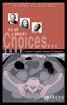 D E P A R T M E N T O F D I A G N O S T I C I M A G I N G T E C H N O L O G Y it s all Choices about S H R P School of Health Related Professions Diagnostic Imaging Technologies D I A G N O S T I C M E
NEW JERSEY RADIOLOGIC TECHNOLOGY BOARD OF EXAMINERS (BOARD) ACCREDITATION STANDARDS FOR SCHOOLS OF DENTAL RADIOLOGIC TECHNOLOGY
 NEW JERSEY RADIOLOGIC TECHNOLOGY BOARD OF EXAMINERS (BOARD) ACCREDITATION STANDARDS FOR SCHOOLS OF DENTAL RADIOLOGIC TECHNOLOGY This document contains the Board s accreditation standards for schools of
Standards for an Accredited Educational Program in Radiologic Sciences
 Standards for an Accredited Educational Program in Radiologic Sciences EFFECTIVE JANUARY 1, 2002 Adopted by: The Joint Review Committee on Education in Radiologic Technology: January 1996; Revised 2001
NEW JERSEY RADIOLOGIC TECHNOLOGY BOARD OF EXAMINERS (BOARD) ACCREDITATION STANDARDS FOR SCHOOLS OF RADIATION THERAPY TECHNOLOGY
 NEW JERSEY RADIOLOGIC TECHNOLOGY BOARD OF EXAMINERS (BOARD) ACCREDITATION STANDARDS FOR SCHOOLS OF RADIATION THERAPY TECHNOLOGY This document contains the Board s accreditation standards for schools of
Commission on Accreditation of Allied Health Education Programs
 Standards and Guidelines for the Accreditation of Educational Programs in Surgical Technology Essentials/Standards initially adopted in l972; revised in 1991, 2000, 2002, and 2004 by the: American College
Accreditation Standards for Nuclear Medicine Technologist Education
 Accreditation Standards for Nuclear Medicine Technologist Education DRAFT 2 FOR PUBLIC COMMENT Joint Review Committee on Educational Programs In Nuclear Medicine Technology??? A table of contents and introduction
Radiologic Technology Program. Radiation Safety and Protection Program
 Radiologic Technology Program Radiation Safety and Protection Program Name of Program: Charles R. Drew University of Medicine and Science College of Science and Health CA RHB Program Number: 1029 Name
Standards for an Accredited Educational Program in Radiography
 Standards for an Accredited Educational Program in Radiography EFFECTIVE JANUARY 1, 2014 Adopted by: The Joint Review Committee on Education in Radiologic Technology - October 2013 Joint Review Committee
The Practice Standards for Medical Imaging and Radiation Therapy. Quality Management Practice Standards
 The Practice Standards for Medical Imaging and Radiation Therapy Quality Management Practice Standards 2015 American Society of Radiologic Technologists. All rights reserved. Reprinting all or part of
The Practice Standards for Medical Imaging and Radiation Therapy. Radiography Practice Standards
 The Practice Standards for Medical Imaging and Radiation Therapy Radiography Practice Standards 2015 American Society of Radiologic Technologists. All rights reserved. Reprinting all or part of this document
U.S. Bureau of Labor Statistics. Radiology Tech
 From the: U.S. Bureau of Labor Statistics Radiology Tech What They Do Radiologic technologists (RTs) perform diagnostic imaging examinations, such as x rays, on patients. Duties RTs typically do the following:
DUNWOODY COLLEGE OF TECHNOLOGY RADIOLOGIC TECHNOLOGY
 DUNWOODY COLLEGE OF TECHNOLOGY RADIOLOGIC TECHNOLOGY Associate in Applied Science Degree Application and Information Packet 2015-2016 Radiologic Technology Thank you for your interest in the Dunwoody Radiologic
Radiologic Technology. Advanced Education. Program Mission
 Radiologic Technology Radiologic Technology is the art and science of applying ionizing radiation to create images of the human body. People educated in this profession are called radiographers, radiologic
Radiography Frequently Asked Questions
 Frequently Asked Questions What is a radiographer? Radiographers, commonly referred to as X-ray techs or radiologic technologists, are medical personnel, who perform diagnostic imaging procedures. They
Accreditation Standards for Nuclear Medicine Technologist Education
 Accreditation Standards for Nuclear Medicine Technologist Education Joint Review Committee on Educational Programs In Nuclear Medicine Technology 2010 Includes May 2011 Addendum; April 2014 Update; October
Medical Radiologic Technology
 Medical Radiologic Technology 220 Medical Radiologic Technology Location: Trenholm Campus - Bldg. H Program Information The Medical Radiologic Technology program at Trenholm State provides students with
Cabrillo College Catalog 2015-2016
 RADIOLOGIC TECHNOLOGY Health, Athletics, Wellness, and Kinesiology Division Ian Haslam, Division Dean Division Office, Room 1102 Ann Smeltzer, Department Chair, (831) 479-5056 Aptos Counselor: (831) 479-6274
PENSACOLA STATE COLLEGE
 PENSACOLA STATE COLLEGE RADIOGRAPHY PROGRAM ADMISSION PACKET Contact Information: Dr. Marilyn Coseo, Program Contact (850) 484-2305 [email protected] Health Programs Admissions Office (850) 484-2210
SCOTT COMMUNITY COLLEGE RADIOLOGIC TECHNOLOGY PROGRAM DESCRIPTION
 SCOTT COMMUNITY COLLEGE RADIOLOGIC TECHNOLOGY PROGRAM DESCRIPTION In the mid-1970's, SCC established a program to educate students in the field of radiologic technology. The Radiologic Technology Program
B e l l i n. S c h o o l R a d i o l o g i c T e c h n o l o g y. Bellin Health School of Radiologic Technology. Bellin Health
 B e l l i n Bellin Health School of Radiologic Technology S c h o o l o f R a d i o l o g i c T e c h n o l o g y The radiologic technologist is an essential The radiologic technologist is an essential
Bon Secours St. Mary s Hospital School of Medical Imaging Course Descriptions by Semester 18 Month Program
 Bon Secours St. Mary s Hospital School of Medical Imaging Course Descriptions by Semester 18 Month Program First Semester RAD 1101 Patient Care, Ethics, Law and Diversity Credits This 16 week course prepares
Standards and Guidelines for the Accreditation of Educational Programs for the Medical Scribe Specialist
 Standards and Guidelines for the Accreditation of Educational Programs for the Medical Scribe Specialist Standards initially adopted in 201x Adopted by the The American College of Medical Scribe Specialists
ESSENTIALS OF AN ACCREDITED CERTIFICATE PROGRAM FOR OPHTHALMIC LABORATORY TECHNOLOGY
 ESSENTIALS OF AN ACCREDITED CERTIFICATE PROGRAM FOR OPHTHALMIC LABORATORY TECHNOLOGY Initially adopted 1974 Revised 1978, 1982, 1983, 1986, 1990, 1995, 2001, 2008, 2009, 2014 Effective May 1, 2014 ************************************************************************
Standards for the Academic Accreditation of Professional Athletic Training Programs
 Standards for the Academic Accreditation of Professional Athletic Training Programs Commission on Accreditation of Athletic Training Education, July 1, 2012 Standards for the Academic Accreditation of
The Practice Standards for Medical Imaging and Radiation Therapy. Sonography Practice Standards
 The Practice Standards for Medical Imaging and Radiation Therapy Sonography Practice Standards 2015 American Society of Radiologic Technologists. All rights reserved. Reprinting all or part of this document
RADIOLOGIC TECHNOLOGY PROGRAM ASSOCIATE in SCIENCE DEGREE
 Mt. San Antonio College Technology and Health Division RADIOLOGIC TECHNOLOGY PROGRAM ASSOCIATE in SCIENCE DEGREE The course of study in Radiologic Technology offered at Mt. San Antonio College and its
MERCY MEDICAL CENTER SCHOOL OF RADIOGRAPHY Brochure/Catalog
 MERCY MEDICAL CENTER SCHOOL OF RADIOGRAPHY Brochure/Catalog A Two Year Program Accredited by the Joint Review Committee on Education in Radiologic Technology (312-704-5300) and The New York State Department
Radiologic Technology (RAD, CLE) courses are open only to Radiologic Technology majors.
 RADIOLOGIC TECHNOLOGY (A.A.S Degree) Director: Prof. Virginia Mishkin, M.S., R.T. (R) (M) (QM) A radiologic technologist is a skilled professional who provides a specialized health care service. This rewarding
HIM 2012. Baccalaureate Degree. Standards and Interpretations for Accreditation of Baccalaureate Degree Programs in Health Information Management
 HIM 2012 Baccalaureate Degree Standards and Interpretations for Accreditation of Baccalaureate Degree Programs in Health Information Management Who We Are The Commission on Accreditation for Health Informatics
RADIOGRAPHER LICENSE AND LIMITED X-RAY MACHINE OPERATOR PERMIT
 STATE OF WISCONSIN Department of Regulation & Licensing 1400 E Washington Ave PO Box 8935 Madison WI 53708-8935 Governor Scott Walker Secretary Dave Ross Email: [email protected] Web: www.drl.wi.gov Voice:
Glossary of Accreditation
 Academic An individual whose current responsibilities focus primarily on the curricular aspects of an educational institution or program. Depending on the nature of the institution, this definition may
RADIOLOGIC TECHNOLOGY PROGRAM ASSOCIATE of SCIENCE DEGREE
 Mt. San Antonio College Technology and Health Division 1100 N. Grand Ave Walnut, CA 91789 TEL: 909-594-5611, EX. 4750 FAX: 909-468-3938 RADIOLOGIC TECHNOLOGY PROGRAM ASSOCIATE of SCIENCE DEGREE The course
Accreditation Council for Occupational Therapy Education (ACOTE ) Guide to Compliance with the 2006 Master s-level OT Standards
 Accreditation Council for Occupational Therapy Education (ACOTE ) Guide to Compliance with the 2006 Master s-level OT Standards PREAMBLE: The rapidly changing and dynamic nature of contemporary health
WISCONSIN BOARD OF NURSING GUIDELINES FOR NURSING SCHOOL APPROVAL AND REFRESHER COURSE APPROVAL
 Mail To: P.O. Box 8366 1400 E. Washington Avenue Madison, WI 53708-8366 Madison, WI 53703 FAX #: (608) 266-2602 E-Mail: [email protected] Phone #: (608) 266-2112 Website: http://dsps.wi.gov WISCONSIN BOARD
15. Policy on Institutions Participating in Title IV Programs
 15. Policy on Institutions Participating in Title IV Programs This policy sets forth the Accrediting Commission s procedures for the institutions to seek to establish eligibility to participate in, Federal
4. Appendices - supplemental information that supports the documentation related to the standards provided in the report.
 Oklahoma Board of Nursing 2915 North Classen Boulevard, Suite 524 Oklahoma City, OK 73106 (405) 962-1800 GUIDELINES FOR SURVEY VISITS OF NURSING EDUCATION PROGRAMS Preparing for the Survey Visit Each nursing
Radiologic Technologist (R.T.)
 PROGRAM MISSION, GOALS, PURPOSE AND OUTCOMES Mission MODALITY Radiologic Technologist (R.T.) The mission of Southwest University at El Paso is to provide exceptional career and technical training, promote
The Radiologic Technology Program at Trenholm University
 H. Councill Trenholm State Technical College 243 Location: Trenholm Campus Program Information The Radiology Technology program at TrenholmState will provide students with the necessary training to gain
MINIMUM STANDARDS FOR LIMITED PERMIT X-RAY TECHNICIAN PROGRAMS SCHOOLS
 MINIMUM STANDARDS FOR LIMITED PERMIT X-RAY TECHNICIAN PROGRAMS SCHOOLS DRAFT (As of March 17, 2010) State of California Department of Health Services Public Health Radiologic Health Branch Certification
C. Responsibilities of Sponsor The Sponsor must ensure that the provisions of these Standards and Guidelines are met.
 NOTE: This document contains the changes that the 2015 Standards includes. There are some minor wording changes that have not been included, but the focus is on the change in requirements. Please see the
RADIOLOGIC TECHNOLOGY PROGRAM
 RADIOLOGIC TECHNOLOGY PROGRAM CENTRAL GEORGIA TECHNICAL COLLEGE Warner Robins Campus 80 Cohen Walker Drive, Warner Robins, GA 31088 (478)218-3216 Macon Campus 3300 Macon Tech Drive, Macon, GA 31206 478-757-3552
ACCREDITATION STANDARDS FOR A MASTER S-DEGREE-LEVEL EDUCATIONAL PROGRAM FOR THE OCCUPATIONAL THERAPIST
 2011 Accreditation Council for Occupational Therapy Education (ACOTE ) Standards and Interpretive Guide (effective July 31, 2013) August 2015 Interpretive Guide Version STANDARD N PREAMBLE The rapidly
ONLINE BACHERLOR OF SCIENCE MEDICAL DIAGNOSTIC IMAGING
 FORT HAYS STATE UNIVERSITY DEPARTMENT OF ALLIED HEALTH ONLINE MEDICAL DIAGNOSTIC IMAGING PROGRAM Fort Hays State University is the only university in Kansas that offers a Bachelor of Science Degree in
OCCUPATIONAL ASSOCIATE DEGREE (OAD) TEMPLATE
 Pages: 1 of 8 OCCUPATIONAL ASSOCIATE DEGREE (OAD) TEMPLATE INTRODUCTION The Occupational Associate Degree (OAD) Template must be completed by institutions offering Occupational Associate Degree (OAD) programs,
How To Recognize And Recognize The American Health Education Accrediting Agency, American Association Of Health Education
 Promoting Educational Excellence: Best Practices, Best Results 1 OVERVIEW OF THE ACCREDITING BUREAU OF HEALTH EDUCATION SCHOOLS Formed in 1964 as the Accrediting Bureau of Medical Laboratory Schools, the
Associate in Applied Science and Career Certificates. Medical Imaging
 Medical Imaging Biological and Health Sciences Division, Room C140, (847) 543-2042 Medical Imaging (Associate in Applied Science) Plan 21MI This is a limited enrollment program. MIM courses are only offered
Follow Your Pathway to SONOGRAPHY CERTIFICATION
 Follow Your Pathway to SONOGRAPHY CERTIFICATION The American Registry of Radiologic Technologists Promoting High Standards of Patient Care by Recognizing Qualified Individuals in Medical Imaging, Interventional
SANFORD HEALTH RADIOLOGY PROGRAM
 SANFORD HEALTH RADIOLOGY PROGRAM Sanford Health Radiology Program of Sanford Health, North Dakota, offers a 24-month program in radiology, affiliating with NDSU and University of Jamestown for fulfillment
Los Angeles City College Radiologic Technology Advisory Meeting Minutes
 Los Angeles City College Radiologic Technology Advisory Meeting Minutes February 4, 2014 I. Call to order Mr. Fonseca called to order the advisory meeting of the Los Angeles City College Radiologic Technology
ACEN 2013 STANDARDS AND CRITERIA CLINICAL DOCTORATE
 CLINICAL DOCTORATE STANDARD 1 Mission and Administrative Capacity The mission of the nursing education unit reflects the governing organization s core values and is congruent with its mission/goals. The
ABHE Programmatic Accreditation Standards. Conditions of Eligibility
 www.abhe.org ABHE Programmatic Accreditation Standards Adopted by the ABHE Delegate Assembly February 20, 2015 Conditions of Eligibility To be considered for programmatic accreditation, an institution
Chapter 2. Objectives. Three General Classifications of Organizations Accreditation Certification Professional Organizations
 Chapter 2 Professional Copyright 2012, 2007, 2002, 1997, 1991, 1984, 1979 by Saunders, an imprint of Elsevier Inc. All rights reserved. 1 Objectives 1. Differentiate accreditation, certification, and representation
Illinois. Accreditation. Requirements. Medical Radiation. Technology
 Illinois Emergency Management Agency Division of Nuclear Safety A Guide for Illinois Accreditation Requirements in Medical Radiation Technology Pat Quinn Governor Jonathan Monken Director CONTENTS 1. Introduction...
Science and Health Professions Division. Radiography Program
 Dear Prospective Student, Science and Health Professions Division Radiography Program Thank you for your inquiry about the Mercer County Community College Radiography Program. The information contained
Health Informatics 2010. Master s Degree. Standards and Interpretations for Accreditation of Master s Degree Programs in Health Informatics
 Health Informatics 2010 Master s Degree Standards and Interpretations for Accreditation of Master s Degree Programs in Health Informatics Who We Are The Commission on Accreditation for Health Informatics
CHAPTER 6 STANDARDS FOR NURSING EDUCATION PROGRAMS
 CHAPTER 6 STANDARDS FOR NURSING EDUCATION PROGRAMS Section 1: Statement of Purpose. (a) To foster the safe and effective practice of nursing by graduates of nursing education programs by setting standards
SCHOOL OF RADIOLOGIC TECHNOLOGY 809 University Blvd. E Tuscaloosa, AL 35401 [email protected]
 SCHOOL OF RADIOLOGIC TECHNOLOGY 809 University Blvd. E Tuscaloosa, AL 35401 [email protected] General Information Goals & Purpose Program of Instruction Clinical Education Accreditation Expenses Refunds
33-10-06-03. General requirements. 1. Administrative Controls.
 33-10-06-03. General requirements. 1. Administrative Controls. a. Registrant. The registrant shall be responsible for directing the operation of the x-ray systems which have been registered with the department.
TABLE OF CONTENTS Licensure and Accreditation of Institutions and Programs of Higher Learning ARTICLE ONE Policies and Procedures
 Board of Governors for Higher Education Sec. 10a-34 page 1 (12-96) TABLE OF CONTENTS Licensure and Accreditation of Institutions and Programs of Higher Learning ARTICLE ONE Policies and Procedures Introduction....
Consultation. Review of the scopes of practice for registration in the profession of medical radiation technology
 Consultation Review of the scopes of practice for registration in the profession of medical radiation technology CONTENTS Page Consultation Information... 3 Context of the Consultation... 4-7 Legislative
Radiologic Technology Degree
 Radiologic Technology Degree This associate degree brings the student into the area of high technology in the field of medicine. You will experience all the applications of diagnostic imaging, including
portable x-ray survey report
 department of HealtH and Human services centers for medicare & medicaid services form approved omb no. 0938-0027 portable x-ray survey report provider number H1 date surveyed (1) initial (2) survey W H2
Letter of Intent. Radiologic Technician Program. AAS Degree in Radiologic Technology
 Letter of Intent Radiologic Technician Program AAS Degree in Radiologic Technology Office of the Provost and Department of Nursing Table of Contents 1. Purposes and goals 2. Need for the Curriculum 3.
Commission on Accreditation of Allied Health Education Programs
 Standards and Guidelines for Cardiovascular Technology Educational Programs Essentials/Standards initially adopted 1985; revised in 2003 Adopted by the American College of Cardiology Foundation American
New Nursing Programs Requesting Approval in Louisiana (Out-of-State SON Graduate Programs)
 New Nursing Programs Requesting Approval in Louisiana (Out-of-State SON Graduate Programs) A parent institution wishing to establish a new program in nursing shall submit, at least one year in advance
Guidelines of the Swiss University Conference for Academic Accreditation in Switzerland
 Guidelines of the Swiss University Conference for Academic Accreditation in Switzerland (Accreditation Guidelines) 414.205.3 of 28 June 2007 (of 1 st September 2007) The Swiss University Conference (SUK/CUS),
Federal Supply Schedule (FSS) 621 I Professional & Allied Healthcare Staffing Services
 Department of Veterans Affairs Federal Supply Service Authorized Federal Supply Schedule Price List Effective Date: November 1, 2007 On-line access to contract ordering information, terms and conditions,
CPME 120 STANDARDS AND REQUIREMENTS FOR ACCREDITING COLLEGES OF PODIATRIC MEDICINE
 CPME 120 STANDARDS AND REQUIREMENTS FOR ACCREDITING COLLEGES OF PODIATRIC MEDICINE COUNCIL ON PODIATRIC MEDICAL EDUCATION This document is concerned with ensuring the quality and improvement of colleges
MERCY MEDICAL CENTER SCHOOL OF RADIOGRAPHY Brochure/Catalog
 MERCY MEDICAL CENTER SCHOOL OF RADIOGRAPHY Brochure/Catalog A Two Year Program Accredited by the Joint Review Committee on Education in Radiologic Technology (312-704-5300) and The New York State Department
http://www.bls.gov/oco/ocos104.htm
 http://www.bls.gov/oco/ocos104.htm Nuclear Medicine Technologists Nature of the Work Training, Other Qualifications, and Advancement Employment Job Outlook Projections Data Earnings OES Data Related Occupations
Mayo School of Health Sciences. Radiography Program. Jacksonville, Florida. www.mayo.edu
 Mayo School of Health Sciences Radiography Program Jacksonville, Florida www.mayo.edu Radiography Program PROGRAM DESCRIPTION Mayo School of Health Sciences (MSHS) at Mayo Clinic in Jacksonville, Fla.,
SUBCHAPTER 19. RADIOLOGIC TECHNOLOGY. 7:28-19.1 Purpose, scope and applicability
 SUBCHAPTER 19. RADIOLOGIC TECHNOLOGY 7:28-19.1 Purpose, scope and applicability (a) The purpose of this subchapter is to prohibit unnecessary ionizing radiation exposure and to prevent improper exposure
ABHE Commission on Accreditation Manual
 2012 ABHE Commission on Accreditation Manual 2012, Ed.1 EXCERPT All rights reserved, no part of the Manual may be reproduced in any form or by any electronic or mechanical means, including information
Radiologic Technology Program
 C OLUMBUS TECHNICAL COLLEGE A Unit of the Technical College System of Georgia Radiologic Technology Program Program Accreditation The Radiologic Technology Program is accredited by the Joint Review Committee
Everest University AS in Radiologic Technology
 Everest University AS in Radiologic Technology Students enrolled in Everest University's Associate of Science in Radiologic Technology program have the opportunity to learn about radiography, x-ray intensification,
ACEN 2013 STANDARDS AND CRITERIA ASSOCIATE
 STANDARD 1 Mission and Administrative Capacity The mission of the nursing education unit reflects the governing organization s core values and is congruent with its mission/goals. The governing organization
Mayo School of Health Sciences. Radiography Program. Rochester, Minnesota. www.mayo.edu
 Mayo School of Health Sciences Radiography Program Rochester, Minnesota www.mayo.edu Radiography Program PROGRAM DESCRIPTION Mayo School of Health Sciences (MSHS) at Mayo Clinic in Rochester, Minn., offers
IAC 7/2/08 Nursing Board[655] Ch 2, p.1. CHAPTER 2 NURSING EDUCATION PROGRAMS [Prior to 8/26/87, Nursing Board[590] Ch 2]
![IAC 7/2/08 Nursing Board[655] Ch 2, p.1. CHAPTER 2 NURSING EDUCATION PROGRAMS [Prior to 8/26/87, Nursing Board[590] Ch 2]](/thumbs/26/9126685.jpg "IAC 7/2/08 Nursing Board[655] Ch 2, p.1. CHAPTER 2 NURSING EDUCATION PROGRAMS [Prior to 8/26/87, Nursing Board[590] Ch 2]") IAC 7/2/08 Nursing Board[655] Ch 2, p.1 CHAPTER 2 NURSING EDUCATION PROGRAMS [Prior to 8/26/87, Nursing Board[590] Ch 2] 655 2.1(152) Definitions. Approval means recognition status given to nursing education
IAC 7/2/08 Nursing Board[655] Ch 2, p.1 CHAPTER 2 NURSING EDUCATION PROGRAMS [Prior to 8/26/87, Nursing Board[590] Ch 2] 655 2.1(152) Definitions. Approval means recognition status given to nursing education
ACEN 2013 STANDARDS AND CRITERIA MASTER S and POST-MASTER S CERTIFICATE
 STANDARD 1 Mission and Administrative Capacity The mission of the nursing education unit reflects the governing organization s core values and is congruent with its mission/goals. The governing organization
American Psychological Association D esignation Criteria for Education and
 American Psychological Association D esignation Criteria for Education and Training Programs in Preparation for Prescriptive Authority Approved by APA Council of Representatives, 2009 Criterion P: Program
Agency for Health Care Administration
 Page 1 of 20 FED - H0000 - INITIAL COMMENTS Title INITIAL COMMENTS CFR Type Memo Tag FED - H0005 - COMPLIANCE WITH FED/STATE/LOCAL LAWS Title COMPLIANCE WITH FED/STATE/LOCAL LAWS CFR 486.100 Type Condition
How To Become An Xray Technician
 MICHIGAN CIVIL SERVICE COMMISSION JOB SPECIFICATION X-RAY TECHNICIAN JOB DESCRIPTION Employees in this job function as radiological technologists with responsibility for operating X-ray and fluoroscopic