
Integrating Catholic Social Teaching in the Accounting Curriculum
|
|
|
- Natalie Watts
- 10 years ago
- Views:
Transcription
1 Integrating Catholic Social Teaching in the Accounting Curriculum DR. ANTHONY ZORDAN Introduction Integrating Catholic Social Teaching (CST) into the curriculum is a way that Franciscan colleges can foster and enhance their Catholic identity and Franciscan charism in the spirit of Ex Corde Ecclesiae, Pope John Paul II s 1990 apostolic constitution on the identity and mission of Catholic higher education. In response, faculty in several business schools and programs in Catholic schools are attempting to integrate CST in their courses. Aside from reflecting church regulations, the discussion of business ethics and the importance of considering business decision-making from a moral perspective are crucial means for broadening a student's consideration of his or her chosen career path. Such an emphasis establishes the imperative that business be viewed as something more than a career choice guided by narrow self-interest (Kidwell & Kidwell, 2006, p. 295). CST is generally assumed to include those documents of the Catholic Church dealing with social issues related to work, employment and the economy beginning with Rerum Novarum by Pope Leo XIII in 1891 to the present especially the writings of Pius XI, Pius XII, and John Paul II. Pope Leo XIII was a member of the Franciscan Third Order and one could propose that CST is an embodiment of the Franciscan spirit we strive to promote in our colleges (Jarrett et. al., 1912). When viewed in the light of CST, our work can be a means by which people can develop and realize an element of their potential growth. Employers and employees can work together to address the needs of others, to use their investigative skills, and to feel a sense of empowerment. All people - employers, employees, entrepreneurs - are called to establish workplaces driven not only by the pursuit of profit, but also by a concern for people. A guiding principle of social teaching as stated by Pope John Paul II is that all work is ultimately for the person; the person is not for work (Laborem Exercens, 1981 Sec. 6). This paper which outlines my efforts during my recent sabbatical at the University of St. Francis, IL begins with establishing the value of Catholic Social Teaching for the business curriculum. Methods used by several other faculty members to integrate CST in accounting, finance, and other business courses are also considered. A brief insight into the work of Luca Pacioli, the Father of Accounting and a Franciscan friar, provides support for the inclusion of CST in accounting and precedes my own proposal for my accounting classes. Integration into the Curriculum One might ask, why bother with CST in the business curriculum? What does the Church have to say about how people should live with and relate to each other? An overall theme of the encyclical Sollicitudo Rei Socialis (1987) responds to these questions in its awareness of the Church's duty through its knowledge of humanity to scrutinize the signs of the times and to interpret them in light of the Gospel. CST, with its focus on the person, is a tool for business faculty to help students think about business as a vocation instead of just a career. CST and the Catholic Social Tradition also call one to do the right thing, out of a sense of justice rather than a sense of professionalism. The sense of justice should be grounded in, or flow from, the main themes of CST which suggest what society should look like in the social, political, and economic spheres. The themes of CST are summarized by the U.S. Catholic Bishops ( as: Sacredness of life and the dignity of the human person; Call to family, community and participation and the concept of subsidiarity; Rights and responsibilities- social justice; Option for the poor and vulnerable; The dignity of work and the rights of workers; Importance of the common good (Solidarity) and Care for creation - ecology and safeguarding the environment. The encyclicals challenge all people but especially those of us living in first world countries.

2 The encyclicals challenge all people but especially those of us living in first world countries. In Sollicitudo Rei Socialis (1987, Sec. 9) Pope John Paul II wrote, Therefore political leaders, and citizens of rich countries considered as individuals, especially if they are Christians, have the moral obligation, according to the degree of each one s responsibility, to take into consideration, in personal decisions and decisions of government, this relationship of universality, this interdependence which exists between their conduct and the poverty and underdevelopment of so many millions of people. Pope John Paul II clearly defined the duty of solidarity in this encyclical. The Pope continues in Sec. 10: On the contrary, in a different world, ruled by concern for the common good of all humanity, or by concern for the spiritual and human development of all instead of by the quest for individual profit, peace would be possible as the result of a more perfect justice among people. Development thus becomes a new name for peace. The most comprehensive statement of CST is provided in the Compendium of the Social Doctrine of the Church. The introduction includes the following: Discovering that they are loved by God, people come to understand that through their own transcendent dignity, they learn not to be satisfied with only themselves but to encounter their neighbor in a network of relationships that are ever more authentically human. Men and women who are made new by the love of God are able to change the rules and the quality of relationships, transforming even social structures Only love is capable of radically transforming the relationships that men maintain among themselves. (Pontifical Council for Justice and Peace, 2004, p. 2) The challenge for each of us who teach in business programs is to develop concrete ways of integrating CST into our research and the courses we teach and then to develop mechanisms or opportunities to encourage our colleagues to do the same. The challenge for each of us who teach in business programs is to develop concrete ways of integrating CST into our research and the courses we teach and then to develop mechanisms or opportunities to encourage our colleagues to do the same. What other Catholic Schools are doing In the U.S. there are almost 2,600 four-year schools of higher education. Over 1,800 are private and around 1,000 have religious affiliation. Of these, 224 are Catholic; 22 are of Franciscan sponsorship. 71% offer courses in business ethics, 41% in CST, and 14% in service learning (Brandsuch, 2008). All but two of the CST courses were offered in theology or religious studies departments. The business ethics courses were split between Philosophy and Business departments. 78% of AACSB (Association to Advance Collegiate Schools of Business) schools offer business ethics higher than the 71% of Catholic schools. Based on a review of syllabi, the course topics were grouped in one of three ways by: 1. CST principles or documents; 2. Specific ethical issues and 3. Stakeholders Most common topics were whistle-blowing, workplace diversity and discrimination, workplace conditions, privacy, wages, the use of technology, environmental concerns, and corporate social responsibility. Rerum Novarum, Economic Justice for All (United States Conference of Catholic Bishops), and John Paul II s Laborem Exercens were the most referenced readings. Types of assignments were also discussed. Tellis (2008) believes it is important to link students to the fundamental principles on which Catholic institutions are built. In the first part of a Technology and Society course, material from Catholic Social Teaching: Our Best Kept Secret (Henroit, DeBerri, & Schultheis, 1985) is used. The papal encyclicals are not presented as such but as a list of essays. Students are usually surprised when they find their source. The course includes a service learning component. Conroy (2008) argues that exposure to CST should not be relegated to Theology courses and business 2

3 and society courses only. He describes a service learning course and immersion experience that focuses on the seven broad themes of CST identified by the USCCB which were presented earlier in this paper. Palmer and Coate (2008) identify three key initiatives that helped St. Bonaventure University. The Pacioli Project (named for the father of accounting, a Franciscan, discussed later in this work) helped 30 faculty members examine Franciscan history and theology. Their particular focus was on the role that the economy and poverty had on early Franciscan thought. The Pacioli Scholars is their honors program specifically for business majors. Finally, there are several co-curricular service activities like BonaResponds (disaster relief efforts), VITA (Volunteer Income Tax Assistance), and SIFE (Students in Free Enterprise). The benefits of these service learning activities are described in more detail in Coate and Palmer (2008). For an example of service learning in a marketing course see Devasagayam (2009). Pierucci (2008) contrasts the economistic view proposed in many business courses shareholder wealth maximization, the greater attractiveness of the material over the spiritual and moral with Catholic tradition s consistently held image of the priority of persons over things. He refers to Laborem Exercens development of the objective and subjective elements of human work with its foundation in Genesis to dominate and subdue the earth. He emphasizes four aspects of this subjective dimension: 1. Work is an immanent act of self-realization; 2. Human work is an act of communion for the common good, not only an act to help satisfy the common, material need 3. Fair compensation for work and decent working conditions are necessary, but not sufficient, acknowledgements of work s subjective dimensions and 4. The value as a moral agent of the human person doing the work determines the significance of any work. The theory of modernity, as shaped by John Paul II, is the principle reason for the broken image of the priority of persons over things the opposition of capital and labor, materialism, atheism and the rationalism of the Enlightenment. The challenge is to counter the prevailing academic understanding of business which is to maximize shareholder profit. It is such a fundamental challenge that the very identity of the business school as Catholic is at stake. Pierucci (2008) also discusses the difference between the liberal and servile arts and the two inheritances of work; that is, the self-realization and self-giving of prior generations of workers who make our work possible and God s gift of creation. Kidwell and Kidwell (2006) summarize the ways CST can be applied to business organizations; consequently these teachings should be brought into the college business curriculum. They are as follows: 1. Workers should be paid a livable and fair wage that allows them to support their families above the poverty line; 2. Workers should be provided with a reasonable level of job security and, at the least, be informed when layoffs and plant closings are being considered; 3. Workers should be treated as partners in the production process and be allowed to share in the profits of the business; 4. Workers should be allowed to have greater involvement and participation in the decisionmaking process of the business, including the right to form unions and engage in collective bargaining; 5. Employers should have a greater regard for the effects of their actions on the surrounding community (e.g., external stakeholders) in making business decisions and 6. Employers should have a great regard for the employees' overall welfare in operating the business. The principles of CST could be brought into the business classroom when discussing a variety of topics such as contract law and labor relations including the issue of management's decision to replace striking workers. 3

4 The principles of CST could be brought into the business classroom when discussing a variety of topics such as contract law and labor relations including the issue of management's decision to replace striking workers. The use of CST to frame business ethics and related courses gives students a much more realistic view of people and their motivations than those models originating in the study of economics. The authors, Kidwell and Kidwell, also suggest that CST principles are not incorporated into the business curriculum, even in the study of ethics, to the level they might be. Three + Three: Three Principles of CST and Three Premises CST touches many areas of life as summarized in seven themes by the USCCB. All have varying degrees of application for business classes. Through my sabbatical study, I chose to emphasize three themes in my accounting courses: Sacredness of life and the dignity of the human person; Dignity of work and the rights of workers and Importance of the common good (Solidarity). As indicated earlier, Catholic social teaching is that part of Catholic moral teaching that deals with humanity's social life. Based upon the ultimate purpose of our life on earth, it suggests what society should look like in its social, political and economic aspects. A common thread through all the encyclicals and other Church documents is the emphasis on the dignity of the human person. Human beings have innate dignity and should be respected because each one is created in the image and likeness of God, called to communion with God, and redeemed by the blood of Christ. People do not lose their dignity because of disability, poverty, age, lack of success, race, location, or size. This emphasis on people over things and being over having is the foundation of the Church s promotion of respect for human life. A second overarching principle of CST is the dignity of work. Too often, work is portrayed in our culture as something to be avoided, even dreaded. However, all work has dignity because the work is done by a human being. Through work we become more fully human. The Church has always taught the priority of labor over capital. Labor is always a primary efficient cause; capital is a mere instrument or instrumental cause. While they must be tracked and controlled, labor costs are not simply one more cost of doing business. The value of work does not come from the job title; it flows from the fact that work is done by a person. The importance of work is affirmed by John Paul II: Work is a good thing for people a good thing for their humanity because through work people not only transform nature, adapting it to their own needs, but they also achieve fulfillment as a human being and indeed in a sense become more a human being. (Laborem Exercens, 1981, Sec. 9) A third principle is the common good. Related to the common good are the principles of solidarity and subsidiarity. Solidarity connects all people as members of one human family who should look out for and care for each other. Subsidiarity clarifies that a community of higher order is not to interfere in the internal life of a community of a lower order; it should not deprive the latter of its functions, but should support it. The Compendium of the Social Doctrine of the Church also addresses the common good: Businesses should be characterized by their capacity to serve the common good of society through the production of useful goods and services. In seeking to produce goods and services according to plans aimed at efficiency and at satisfying the interests of the different parties involved, businesses create wealth for all of society, not just for the owners but also for the other subjects involved in their activity. Besides this typically economic function, businesses also perform a social function, creating opportunities for meeting, cooperating and the enhancement of the abilities of the people involved. In a business undertaking, therefore, the economic dimension is the condition for attaining not only economic goals, but also social and moral goals, which are all pursued together. A business' objective must be met in economic terms and according to economic criteria, but the authentic values that bring about the concrete development of the person and society must not be neglected. In this personalistic and community vision, a business cannot be considered only as a society of capital goods; it is also a society of persons in which people participate in different ways and with specific responsibilities, whether they supply the necessary capital for the company's activities or take part in such activities through their labor. (Compendium of the Social Doctrine of the Church, 2004, Sec. 338) 4

5 The three premises of CST that I propose should be integrated into business courses are the following: Good businesses do a lot of good for society; There is value in seeing your work as a vocation and There is value in working to develop virtues. In everything we do, faculty should be asking: what is the good that I seek to achieve with my teaching or research? A general approach for integrating CST in business courses is to start with the premise that businesses do a lot of good for society as expressed in The Good That Business Does by Robert G. Kennedy (2006). Using CST as a basis, Kennedy argues that good businesses do three key things - create wealth, create good jobs, and offer products and services that serve genuine human needs. It follows then that the Christian virtue of solidarity is practiced when we strive to produce wealth (abundance) and achieve prosperity with a focus on authentic human development and fulfillment. We have a capacity to create wealth and not merely consume it. We create wealth when we bring increased order to creation and employ human intelligence to unlock nature s secrets and devise new ways to satisfy human needs. For example, wealth is achieved when we use new tools to make the earth more productive in agriculture and energy. Another of Kennedy's keys for a good business is the creation of good jobs. A good job is one that treats the worker as an individual, as a person. In a good job, the work is fulfilling. Even monotonous or boring jobs can be fulfilling when workers see themselves not as cogs in a machine but as contributing to the development of society. A good job pays a wage sufficient for people to provide for themselves and their families at least at a subsistence level. Kennedy (2006) argues that there are six human needs or basic goods life and health, beauty, action, truth, harmony and friendship. At a minimum, a good business provides goods or services that address at least some of these genuine human needs. An excellent business does this exceptionally well, at a fair price, and in a safe manner. A second premise is that there is value in seeing your work as a vocation. When a career in business is viewed as a vocation, faculty will want to help students see it that way also. Work, considered as our natural state, is one of the highest human values and the way in which we contribute to the progress of society. The fact that most students will work in profit-driven business firms does not change this reality. John Paul II's encyclical supports this premise: The purpose of a business firm is not simply to make a profit, but is to be found in its very existence as a community of persons who in various ways are endeavoring to satisfy their basic needs and who form a particular group at the service of society. Profit is a regulator of the life of a business, but it is not the only one; other human and moral factors must also be considered, which in the long term are at least equally important for the life of a business. (Centesimus Annus, 1991, Sec. 35) A third premise is that there is value in working to develop virtues. Since our actions can enhance or reduce our dignity, we should strive to live virtuous lives. Besides the theological virtues of faith, hope, and charity, the most important virtues are the cardinal virtues because everything else hinges on them. The word itself, cardino, is Latin for hinge. These virtues are: 1. Prudence being wise stewards; 2. Justice creating right relationships; 3. Courage (fortitude) taking risks to achieve good ends and 4. Temperance when is enough, enough? As ethical issues are discussed in class we should strive to connect the practice of these virtues and the business decisions made. The right decision is the virtuous one. In Bringing Your Business to Life Cornwall and Naughton (2008) argue that connecting virtue and vocation is good business. Although addressed to entrepreneurs, they consider how the development of each of the cardinal virtues allows any business person to practice a moral and spiritual vision of work built on a more holistic view of people. 5

6 In everything we do, faculty should be asking: what is the good that I seek to achieve with my teaching or research? As ethical issues are discussed in class we should strive to connect the practice of these virtues and the business decisions made. The right decision is the virtuous one. The questions we ask today, the relationships evident between the world of accounting and the world of theology may seem to be new ideas, but a premise for supporting these ideas was first presented in the 15th Century. Luca Pacioli: Finding Connections between Mathematics and Theology The work of Luca Pacioli, the father of accounting and a Franciscan, provides an ideal opportunity to discuss Franciscan thought in an accounting class and to focus on seeing work as a vocation. Pacioli was born in 1445 in Sansepolcro, a small town about 100 miles north of Rome and 40 miles northwest of Assisi. Sometime in the early 1470s Pacioli joined the Franciscans and became a brother in the Order of Friars Minor. In 1474 he began teaching mathematics at the University of Perugia where he taught for six years, becoming the first university professor to fill a chair in mathematics. Later, he traveled to Zadar (Croatia), Florence, Pisa, back to Perugia, and then to Rome (Brown & Johnson, 1963). In 1494 Pacioli published his most famous work The Summa of Arithmetic, Geometry, Proportion, and Proportionality. The Summa contained one section in which Pacioli described the double-entry system of record keeping employed by Venetian merchants, a method he considered superior to those used in other cities. For this reason he is known as the father of accounting. Pacioli saw a direct connection between theology and mathematics. He believed the proportion and proportionality found in mathematics were divinely inspired. His works included frequent references to God. In the first chapter of his treatise on bookkeeping (Section 9, Treatise 11of his Summa) he wrote of the importance of establishing credit through faith which is based on the integrity of the individual. This [need to establish credit based on integrity] is not unusual because truly everyone is saved by faith, without which it is impossible to please God. (Brown & Johnson, 1963, p. 25) Pacioli began his second chapter: First, I assume that each businessman is working toward an end, and that he makes use of every effort to satisfy this end. The end or objective of every businessman is to make a lawful and satisfactory profit, so that he may remain in business. Therefore, businessmen should commence their affairs with the name of God at the beginning of every book, always bearing His holy name in mind. (Brown & Johnson, 1963, p. 27) In Chapter 4 he continued, Remember God and your neighbor and Attend to religious meditation every morning, for through this you will never lose your way "(Geijsbeek, 1914, p. 27). Near the end of this treatise he admonished the reader to take good care, to make all efforts to be a good bookkeeper in order to avoid mischief and to pray to God for the author so that for God s praise and glory he may always go on doing good (Taylor, 1980, p. 74). Application of CST Principles to an Accounting Class I usually start the first class period of the accounting class with a fictional case about Frank Bernadone, a new entrepreneur, wondering if he made enough profit his first year in his upholstery business in Assisi. The purpose is to get students thinking early on about how business persons rely on financial information. The second day I raise the issues of the benefits of having your own business. What good does it provide society? What is the role of profit? Is profit sinful? My goal is to lead the students to the three roles of a business as discussed by Kennedy (2006): 1. Create wealth, 2. Provide good jobs and 3. Offer products and services that serve genuine human needs. While profits are a legitimate measure of how we are doing, they are not the only measure. (Assignment is available from the author.) The first chapter of most introductory accounting texts introduces profitability and liquidity as two main goals of every business. Businesses need both main goals to achieve their more important, specific goals. Our 6

7 There are many opportunities to reinforce the CST principles of the dignity of the person, the dignity of work and the common good in both the introductory and intermediate accounting courses. university goals are to teach and advise students and to instill the values of respect, compassion, integrity and service. It is important to ask if every business that is profitable and liquid is a good business. For example, consider a profitable and liquid cocaine distribution business. Is it good? The question provides another opportunity to consider what makes a business good. I also ask students to think and write about what makes a business a good place to work or a bad place to work. The first chapter also introduces the basic accounting equation, assets = liabilities + owners equity. However, as Shapiro (2008) asks, are creditors and investors really the only sources of an entity s resources? There is opportunity here to consider how everything we have is a gift from God. This is also a place to consider the role of private property. While CST consistently defends the role of private property, this needs to be tempered with an understanding of the universal destination of goods. It is a lack of justice for one who has more than he needs to be unwilling to share his excess with those less fortunate. These two topics, the universal destination of goods and the defense of the role of private property, are further developed later in the course when long-term assets are discussed. In the second or third week, I review the recognition principle and show how Enron violated this by recognizing income much too early. Their policy for revenue recognition was very aggressive. How did this action violate a basic good? It violated the basic goods of truth and harmony (Kennedy, 2006). This applies also to the proper application of the matching principle that good businesses promote truth and harmony. Neither is enhanced when companies violate accounting principles. Around this point in the course I ask students to write a short essay. State a business or career goal and explain how your academic major and this Financial Accounting course can help you achieve that goal. It could be a financial goal, a business plan, a retirement goal, etc." Many students say they want to make a lot of money and retire early, often by starting their own businesses. Many say that want to open a bar or restaurant. When returning the papers I take the opportunity to suggest that money does not guarantee happiness, and that there are more important things in life. This is also an opportunity to discuss the principle of solidarity that we are all brothers and sisters who need to be concerned for the common good of all humanity. Although the pursuit of profit is not intrinsically evil because a business needs to survive and can provide benefits to employees, the community and to society at large, the common good which is the greater end should be the driving force. (Assignment is available from the author.) There are many other opportunities to reinforce the CST principles of the dignity of the person, the dignity of work and the common good in both the introductory and intermediate accounting courses. St. Francis of Assisi s aversion to even touching money is well known and could be mentioned in the chapter on cash. At this point I also mention I Tim 6:10a For the love of money is the root of all evils. It is the love of money a disordered pursuit not money itself, that is the root of evil. Money can be used to start businesses and businesses can be instruments for promoting the common good. Internal control, inventory and contingent liabilities are topics that also lend themselves to a consideration of dignity and the common good especially when considering the creation of allowances and contingencies. The chapter on accounts receivable is a good place to consider the legitimacy of pay day loan stores and ask if they satisfy Kennedy s (2006) criteria for being a good business. Wherever there is a presumption or bias in favor of the premise that the role of the financial manager is to maximize shareholder wealth, faculty have an opportunity to emphasize the universal destination of goods, solidarity and the common good. While this paper addresses ways of integrating CST in the accounting curriculum, there are probably even more opportunities to integrate CST in economics, management, marketing, and policy courses in the business curriculum. 7

8 Conclusion Business is a major form of work for our students. A Catholic university has a major role to play in forming students to fill that role. All business education involves an education in principles be they Machiavellian, economic, or from Catholic Social Teaching. A Catholic university, if it takes its mission seriously, needs to engage its business students in ideas of vocation, faith and reason, spirituality of work, principles of the Catholic social tradition, the cardinal and theological virtues, responsibilities to the poor and marginalized, all of which can move the student to a richer understanding and relationship with God." (Naughton, 2008). As I look at the other Colleges at my University, I see a clear call to service in their mission. The College of Education prepares teachers; the College of Nursing prepares nurses, and the College of Arts and Sciences prepares social workers and physician assistants. While it is possible that those students are driven primarily by a desire to earn a lot of money, I believe it is not likely. I suspect a higher calling for most of these students is their desire to serve others. I know from the essay responses in my accounting class that many of our School of Business students are strongly driven by the profit motive. That puts our College of Business & Health Administration in a unique position to be able to have a positive influence on the moral reasoning of our students. While our College is guided by the University s Catholic and Franciscan values of respect, compassion, integrity, and service, we need to teach to those values and integrate them into the business curriculum. A more deliberate integration of CST could enhance our efforts to instill those values. Note: This paper is based on a presentation at the 2010 AFCU Symposium: Implementing Catholic Social Teaching at the University of St. Francis. References Brown, R. G., & Johnston, K. S. (1963). Paciolo on accounting. New York: Garland. Centesimus Annus (1991). The 100 th Anniversary of Rerum Novarum - Encyclical of John Paul II. Vatican. Coate, C. J,. & Palmer, T. (2008). Franciscan-based service learning: The evolution of a service experience. The AFCU Journal: A Franciscan Perspective on Higher Education, 5, Conroy, S. J. (2008). Using immersion experiences and community service learning to promote the principles of Catholic social teaching in an economics course. Summary Papers: Business Education at Catholic Universities. Notre Dame University. June Cornwall, J., & Naughton, M. (2008). Bringing your business to life: The four virtues that will help you build a better business and a better life. Ventura, CA : Regal. Devasagayam, R. (2009). Successful integration of Franciscan values in business curriculum: A case study. The AFCU Journal: A Franciscan Perspective on Higher Education, 6, Geijsbeek, J. B. (1914). Ancient double-entry bookkeeping. Houston: Scholars Book. Henroit, P. J., DeBerri, E. P., & Schultheis, M. J. (1989). Catholic social teaching: Our best kept secret. Washington D.C: Center of Concern. Jarrett, B., Heckmann, F., Zimmerman, B., Oliger, L., Jouve, O., Hess, L., et al. (1912). Third Orders. In The Catholic Encyclopedia. New York: Robert Appleton. Retrieved July 18, 2010 from New Advent: Kennedy, R. G. (2006) The good that business does. Grand Rapids, MI: Acton Institute. 8

9 Kidwell, R.E. & Kidwell, L. A. (2006). Ethical beliefs in the Catholic business school: the impact of Catholic social teaching on classroom reality. Journal of Markets & Morality Laborem Exercens (1981). On Human Work - Encyclical of John Paul II. Vatican. Naughton, M. (2008). Can business be Catholic? Interview with M.Naughton of University of St. Thomas. Zenit.org by Annamarie Adkins June 2. Palmer, T., & Coate, C. J. (2008). The transformative faith-based education mission and one school s journey to become a Franciscan institution. Summary Papers: Business Education at Catholic Universities. Notre Dame University. June Pierucci, E. S. (2008). Restoring the broken image: The centrality of the subjective dimension of labor and liberal education in Catholic business education. Summary Papers: Business Education at Catholic Universities. Notre Dame University. June Pontifical Council for Justice and Peace. (2004). Compendium of the Social Doctrine of the Church. Washington D.C.: USCCB. Shapiro, B. (2008). Theological perspectives on the objective and subjective dimensions of the good accountant. Summary Papers: Business Education at Catholic Universities. Notre Dame University. June Sollicitudo Rei Socialis. (1987). On Social Concern: Encyclical Letter of John Paul II. Vatican. Taylor, R. E. (1980). No royal road: Luca Pacioli and his times. New York: Arno. Tellis, W. (2008). Catholic social teaching and technology? A service learning course at the Dolan School of Business. Summary Papers: Business Education at Catholic Universities. Notre Dame University. June About the Author Tony Zordan received his Bachelor of Science in Commerce (Accounting) and Masters of Business Administration (Finance) from DePaul University, and his Doctor of Business Administration (Accounting) from Nova Southeastern University. He is also a CPA and CMA (Certified Management Accountant). Tony currently teaches introductory and intermediate accounting, auditing, accounting information systems, and the Core I Speech classes. He has also taught taxes, international accounting, advanced accounting, accounting theory, finance, and management. His published research is in the areas of business failure prediction modeling and environmental accounting. Tony has been teaching at the University of St. Francis since 1983, spending three of those years as chair of the Department of Business Administration and three months as interim Academic Vice-President. Before he came to USF he worked in public accounting as an auditor and consultant, and in private industry as a controller. Tony makes a point of emphasizing the importance of seeing one s work as a vocation and developing virtues besides the practical and theoretical accounting issues in all his classes. Tony and his wife, Nancy, have five grown children, live in the Beverly/Morgan Park neighborhood in Chicago and are active in St. Cajetan Parish. You can visit his website at 9

Hospitality I Compassion I Respect I Justice I Excellence
 Hospitality I Compassion I Respect I Justice I Excellence St John of God Health Care s Mission is to continue the healing mission of Jesus Christ. In his life and ministry, Jesus provided compassionate
GUIDELINES FOR CATHOLIC HIGH SCHOOL RELIGION TEACHER CERTIFICATION
 ` GUIDELINES FOR CATHOLIC HIGH SCHOOL RELIGION TEACHER CERTIFICATION Archdiocese of Cincinnati Office of Evangelization & Catechesis 2016 TABLE OF CONTENTS I. THE RELIGION TEACHER PAGE A. Personal Qualifications...
Supporting Your Child s Heart, Soul, and Mind during the College Years TODD C. REAM, TIMOTHY W. HERRMANN, & C. SKIP TRUDEAU
 Supporting Your Child s Heart, Soul, and Mind during the College Years TODD C. REAM, TIMOTHY W. HERRMANN, & C. SKIP TRUDEAU by Stanton L. Jones Provost, Wheaton College f the glossy viewbooks generated
Major Catholic Social Teaching Documents Activity cut outs
 On the Condition of Labor (Rerum Novarum) This groundbreaking social encyclical addresses the dehumanizing conditions in which many workers labor and affirms workers rights to just wages, rest, and fair
institute of pastoral studies
 loyola university chicago institute of pastoral studies faith in action The many faces of ministry each generation of christians, since the first, has preserved the memory of jesus and, as best they could,
Prayers for a Virtual Pilgrimage with Pope Francis
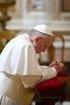 Prayers for a Virtual Pilgrimage with Pope Francis Tuesday, September 22 Washington, DC As our shepherd Pope Francis begins his pilgrimage to the United States, please pray for the Church in our country.
FUNDRAISING AND SOCIAL JUSTICE POLICY
 FUNDRAISING AND SOCIAL JUSTICE POLICY APPROVAL OF FUNDRAISING AND SOCIAL JUSTICE POLICY Principal College Board Chair Date: 16 December 2013 Review Date: September 2016 INDEX VISION STATEMENT...3 OUR MISSION...3
Grand Valley State University School of Social Work
 Grand Valley State University School of Social Work Grand Valley State University was chartered by the Michigan Legislature in 1960, in response to the need for a public, four-year institution of higher
The Catholic University of America
 The Catholic University of America s School of Business and Economics and The Napa Institute P R E S E N T A C O N F E R E N C E O N Celebrating the occasion of the 125th anniversary of Pope Leo XIII s
PASTORAL PLAN FOR HOLY TRINITY CATHOLIC HIGH SCHOOL 2015-2016. Ut Omnes Unum Sint That All May Be One
 PASTORAL PLAN FOR HOLY TRINITY CATHOLIC HIGH SCHOOL 2015-2016 Ut Omnes Unum Sint That All May Be One Principal: Humberto Cacilhas BHNCDSB Theme: Act Justly, Love Tenderly, Walk Humbly With Our God. - 1
Religious Education in Catholic Schools
 Religious Education in Catholic Schools a statement from the Catholic Bishops Conference of England & Wales May 2000 Catholic Media Office Published in 2000 by the Catholic Media Office 39 Eccleston Square,
Marian K. Diaz, D. Min. 5833 N. Sheridan Rd. Chicago, IL 60660 (937) 765-6369 [email protected]
 Marian K. Diaz, D. Min. 5833 N. Sheridan Rd. Chicago, IL 60660 (937) 765-6369 [email protected] EDUCATION 2003 Doctor of Ministry, Barry University (Miami Shores, FL) Dissertation: Filling the Hungry with
Reflections From Our Graduates
 Reflections From Our Graduates Graduate Degrees in Theology Seminary & School of Theology Steeped in Tradition, Engaging the present, Shaping the future The laity is called to participate actively in the
Accreditation to teach in a Catholic school Accreditation to teach religion in a Catholic school
 Accreditation to teach in a Catholic school Accreditation to teach religion in a Catholic school Policy statement of the Queensland Catholic Education Commission 1. Policy statement Every registered teacher
Lay Ministry Formation Program
 Archdiocese of Hartford Office of Religious Education and Evangelization Lay Ministry Formation Program Course Descriptions What is Lay Ministry? Ministry is the way in which the Church continues what
PRINCIPLES OF GOOD PRACTICE FOR STUDENT AFFAIRS AT CATHOLIC COLLEGES AND UNIVERSITIES
 PRINCIPLES OF GOOD PRACTICE FOR STUDENT AFFAIRS AT CATHOLIC COLLEGES AND UNIVERSITIES Introduction The purpose of these Principles is to provide a framework for student affairs professionals who work at
My friends, I am honored to be here with you this morning. This Rotary Club is such a distinguished group, such a historic organization.
 Immigration and the Next America Most Reverend José H. Gomez Archbishop of Los Angeles Rotary Club of Los Angeles Los Angeles, California January 10, 2013 My friends, I am honored to be here with you this
SELF-EVALUATION ECCLESIAL LAY MINISTRY PROGRAM Diocese of Lafayette-in-Indiana
 SELF-EVALUATION ECCLESIAL LAY MINISTRY PROGRAM Diocese of Lafayette-in-Indiana Applicant: Directions: Please read each statement and evaluate this statement based on the following levels of satisfaction:
Fundamental Principles of the Brothers of Saint Francis Xavier
 Fundamental Principles of the Brothers of Saint Francis Xavier Adapted for use in Xaverian Brothers Sponsored Schools Friend, You have freely chosen to respond to the call of God to live a life of love
Preparation for Teaching in Catholic Schools
 PREPARATION FOR TEACHING IN CATHOLIC SCHOOLS Preparation for Teaching in Catholic Schools (Initial Teacher Education Course) 2012 1. Introduction 1 The Institute for Catholic Education periodically updates
~SHARING MY PERSONAL PERSPECTIVE~
 April 2012 ~SHARING MY PERSONAL PERSPECTIVE~ Dear Friends, It is a certainty that shared values encourage cooperative relationships. I don t know who first said this, but I certainly believe it to be true.
University of Mary is now in Tempe, AZ
 University of Mary is now in Tempe, AZ Faithfully Christian Joyfully Catholic Gratefully Benedictine In the Phoenix area alone, there are more than 14,000 students in Catholic schools. Those students and
Fundamental Principles of Catholic Social Teaching
 Fundamental Principles of Catholic Social Teaching A statement often heard among Catholics involved in the Church s social justice ministry is that Catholic social teaching is a well-kept secret. Since
MISSION / VISION / VALUES FRAMEWORK
 MISSION / VISION / VALUES FRAMEWORK The Mission / Vision / Values Framework builds on the strengths of Concordia today and provides the vision and strategies to build an even stronger and more vital Concordia
EDYTH T. JAMES DEPARTMENT OF NURSING
 EDYTH T. JAMES DEPARTMENT OF NURSING Our nursing program has a rich 106-year history that includes being the first nursing school established in the state of Maryland. The Washington Missionary College
VINCENTIAN UNIVERSITY COURSE CATALOG
 VINCENTIAN UNIVERSITY COURSE CATALOG Mission Statement: The Society of St. Vincent de Paul Georgia empowers people, regardless of their background, ethnicity, or faith, to achieve stability & self-sufficiency
HOW FAITH INFLUENCES ETHICAL CHOICE. Ann Boyd ([email protected]) or ([email protected])
 ETHICS AND FAITH HOW FAITH INFLUENCES ETHICAL CHOICE Ann Boyd ([email protected]) or ([email protected]) WHAT IS ETHICS? Ethics begins at the intersection of conflict of competing claims. Is morality
WOMEN AND THE RECOVERY OF WORK: A REFLECTION ON LABOREM EXERCENS
 ejournal of Personalist Feminism Vol. 2 (2014) D. Savage: Women and the Recovery of Work 9 WOMEN AND THE RECOVERY OF WORK: A REFLECTION ON LABOREM EXERCENS Deborah Savage, Ph.D. University of St. Thomas,
Catholic Social Teaching. Scripture Guide
 Introduction Catholic social teaching has been called the Church s best kept secret. Yet, from the beginning of time, God s call to justice has been clear. The Law and the Prophets both preserve a deep
Testimony Submitted for the Record. On behalf of the
 Testimony Submitted for the Record On behalf of the United States Conference of Catholic Bishops Committee on Domestic Justice and Human Development, Catholic Charities USA, and The Society of St. Vincent
PRESIDENTIAL SEARCH. August 2014. www.regent-college.edu
 PRESIDENTIAL SEARCH August 2014 www.regent-college.edu REGENT COLLEGE, a transdenominational, evangelical graduate college in Vancouver, Canada, will have a vacancy for the office of President in August
Archdiocese of Chicago Department of Stewardship and Development Proposed Campaign for Catholic Education. Case Statement
 Archdiocese of Chicago Department of Stewardship and Development Proposed Campaign for Catholic Education Case Statement The Church of Chicago is called to introduce the world to its savior, Jesus Christ.
A publication of Creative Longevity and Wisdom A project of The Institute for Social Innovation at Fielding Graduate University Santa Barbara, CA
 Creative Longevity: Essays on Aging and Wisdom A publication of Creative Longevity and Wisdom A project of The Institute for Social Innovation at Fielding Graduate University Santa Barbara, CA Preface
Introduction. Dear Leader,
 Table of Contents Introduction...4 Meeting and Setting Goals...6 Week 1: The Great Human Questions...9 Week 2: Examining the Ways We Know...15 Week 3: The Christian Worldview...24 Appendix A: The Divine
APPLICATION FOR ADMISSION
 APPLICATION FOR ADMISSION OFFICE of ADMISSIONS, McAFEE SCHOOL of THEOLOGY MERCER UNIVERSITY 3001 MERCER UNIVERSITY DRIVE ATLANTA, GEORGIA 30341-4115 OFFICE: (678) 547-6474 TOLL FREE: (888) 471-9922 [email protected]
FORMATION: CATECHIST, MASTER CATECHIST, PARISH CATECHETICAL LEADERSHIP
 FORMATION: CATECHIST, MASTER CATECHIST, PARISH CATECHETICAL LEADERSHIP Catechesis needs to announce the essential mysteries of Christianity, promoting the Trinitarian experience of life in Christ as the
Catholic Campus Ministry Resource Guide
 Catholic Campus Ministry Resource Guide 2014 Version www.cccm.ca Pastoral ministry is an indispensable means by which Catholic students can, in fulfillment of their baptism, be prepared for active participation
DOMINICAN COLLEGE DIVISION OF NURSING
 DOMINICAN COLLEGE DIVISION OF NURSING FAMILY NURSE PRACTITIONER PROGRAM PRECEPTOR HANDBOOK 2015 2016 DOMINICAN COLLEGE DIVISION OF NURSING 470 WESTERN HIGHWAY ORANGEBURG, NY 10962 (845) 848-6028 Created
GRADUATE PROGRAM IN THEOLOGY MASTER OF ARTS IN CATHOLIC THEOLOGY
 GRADUATE PROGRAM IN THEOLOGY MASTER OF ARTS IN CATHOLIC THEOLOGY The Theology Program at Our Lady of Holy Cross College offers a Master of Arts in Catholic Theology (MACT). This degree is designed to be
SCHOOL OF THEOLOGY & MINISTRY BLUEPRINT FOR LEADERSHIP
 SCHOOL OF THEOLOGY & MINISTRY BLUEPRINT FOR LEADERSHIP THE VISION FOR A 21st CENTURY CHURCH Pope Francis has called those who lead to always to do so with mercy and humility. The School of Theology and
HARBERT HILLS ACADEMY STRATEGIC PLAN. Vision 20/20
 HARBERT HILLS ACADEMY STRATEGIC PLAN Vision 20/20 With Action Plans February 23, 2014 Presented by: The Strategic Planning Committee Harbert Hills Academy Vision 20/20 0 Introduction A Message from the
Catholic Charities DC Agency History
 Catholic Charities DC Agency History Mission and Initial Founding: Although Catholic Charities was not founded specifically as a response to the Great Depression, it was in fact born and came to fruition
6 DAY DEVOTION GUIDE FOR FASTING & PRAYER WEEK
 6 DAY DEVOTION GUIDE FOR FASTING & PRAYER WEEK There is one body and one Spirit, just as you were called to one hope when you were called; one Lord, one faith, one baptism; one God and Father of all, who
Conceptual Framework for the Master of Arts in Teaching at Earlham College:
 Conceptual Framework for the Master of Arts in Teaching at Earlham College: Awakening the Teacher Within It is worth acknowledging, in all humility, that, though there are many great, beautiful, noble
Revelation. Life in Jesus. (The Way, The Truth and The Life, Teacher Book, CTS Religious Education)
 Religion Policy Committee Name: Curriculum Date of Approval: Validity Date: 2012-2015 Person responsible: RE Leader / Worship Leader Purpose Our primary focus... should be revelation. God is always the
THE BOOK OF EPHESIANS
 Ephesians Roger A. Cox 1 THE BOOK OF EPHESIANS Introduction Except for the book of Romans, the book of Ephesians is the most carefully written presentation of Christian theology in the New Testament. Paul
Whoever does not face challenges, whoever does not take up challenges, is not living. Pope Francis
 Whoever does not face challenges, whoever does not take up challenges, is not living. Pope Francis DEAR FRIENDS Thank you for your interest in the Westcott and Sheridan Study Centers. The past thirty years
The Church 02. 1 P a g e
 The Church 02 In the creed, we say that we believe in one, holy, catholic and apostolic Church. These four properties or characteristics were seen as so essential to the nature of the Church that they
These prayers and intercessions are intended to bring sisters to light throughout the liturgical year.
 Prayers These prayers and intercessions are intended to bring sisters to light throughout the liturgical year. Advent This is a season for waiting and wondering. Help us to prepare our hearts for Jesus
Associations of the Faithful
 Associations of the Faithful Sacred Scripture provides a foundation for the natural right to associate: Then God said: Let Us make man in Our image, after Our likeness. Let them have dominion over the
The Catholic Independent Schools of Vancouver Archdiocese
 The Catholic Independent Schools of Vancouver Archdiocese 150 Robson Street, Vancouver, BC V6B 2A7 Phone: (604) 683-9331 Fax: (604) 687-6692 CISVA Elementary School Policy regarding Gender Expression and
TRINITY EVANGELICAL DIVINITY SCHOOL THE GOAL OF MISSIONS: HUMANIZATION OR SALVATION?
 TRINITY EVANGELICAL DIVINITY SCHOOL THE GOAL OF MISSIONS: HUMANIZATION OR SALVATION? JOEL JUPP DEERFIELD, IL NOVEMBER 11, 2010 In the context of Christian mission, our goal determines purpose, activity,
Catholic Education in Frederick County. An education for Life
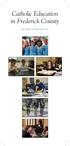 Catholic Education in Frederick County An education for Life A Catholic School education is the starting point on the path to a lifetime of accomplishment for your child. It is a sound investment in a
Leadership Application Packet
 Leadership Application Packet Godʼs word tells us that it is more blessed to give than to receive. We are excited and grateful that you are making the decision to get involved and use the talents God has
Why do we go to Adoration? Quotes on the Most Blessed Sacrament
 Why do we go to Adoration? Quotes on the Most Blessed Sacrament "The Eucharist is connected with the Passion. To make sure that we do not forget, Jesus gave us the Eucharist as a memorial of his love When
Catholic School Recognition by the Roman Catholic Bishop of Manchester
 Page 1 of 5 Catholic School Recognition by the Roman Catholic Bishop of Manchester Introduction Education is integral to the mission of the Church to proclaim the good news. First and foremost, every Catholic
The Archbishop s Char ter for Catholic Schools
 Centrality of the Catholic Ethos Link to the Parish Community Curriculum Enrolment policyleadership Staff selection policy Spiritual formation The Archbishop s Disadvantaged and Marginalised Feat Char
Caring, one person at a time.
 JOHNSON & JOHNSON STRATEGIC FRAMEWORK Caring, one person at a time. STRATEG IC FRAM EWOR K 1 Nothing is more important than the health and well-being of those we love. That s why the Johnson & Johnson
EXECUTIVE SEARCH PROFILE. Program Director of Online Nursing
 EXECUTIVE SEARCH PROFILE Program Director of Online Nursing THE OPPORTUNITY To provide entrepreneurial leadership and management oversight in all aspects of the College s well established and rapidly growing
Formation 1 FORMATION / ONGOING. Continuing Education 2. Ecclesial Lay Ministry Degree Procedures 6. Spiritual Direction 8. Catechist Certification 12
 Formation 1 FORMATION / ONGOING Continuing Education 2 Ecclesial Lay Ministry Degree Procedures 6 Spiritual Direction 8 Catechist Certification 12 Formation 2 Continuing Education Requirements In order
DOCTOR OF EDUCATION IN EDUCATIONAL LEADERSHIP AND CERTIFICATION OPTIONS FOR PRINCIPAL K 12 AND SUPERINTENDENT S LETTER OF ELIGIBILITY
 DOCTOR OF EDUCATION IN EDUCATIONAL LEADERSHIP AND CERTIFICATION OPTIONS FOR PRINCIPAL K 12 AND SUPERINTENDENT S LETTER OF ELIGIBILITY Overview The Doctor of Education (Ed.D.) in Educational Leadership
EXECUTIVE SUMMARY. List all of the program s learning outcomes: (regardless of whether or not they are being assessed this year)
 STUDENT LEARNING ASSESSMENT REPORT SUBMITTED BY: BRIAN DOYLE DATE: FALL, 2014 BRIEFLY DESCRIBE WHERE AND HOW ARE DATA AND DOCUMENTS USED TO GENERATE THIS REPORT BEING STORED: THERE ARE TWO SPECIFIC SOURCES
The Covenant between Lyon College and the Synod of the Sun, Presbyterian Church (USA)
 The Covenant between Lyon College and the Synod of the Sun, Presbyterian Church (USA) This covenant is the basis for the commitment of the Synod of the Sun (hereafter, the Synod ) to Lyon College as a
Your Growth as a Leader Starts Right Now! OUR VISION OUR DIFFERENCE BENEFITS OF A DESTINY COLLEGE DEGREE ACADEMIC CAREER PATHS
 Your Growth as a Leader Starts Right Now! You can start today by developing your leadership skills at Destiny College. We shape futures by educating people to develop the confidence, competence, and character
Whereas I was Blind, Now I See. John 9: 1-11; 25
 Whereas I was Blind, Now I See John 9: 1-11; 25 We all know that great hymn well: Amazing grace, how sweet the sound, that saved a wretch like me; I once was lost, but now I m found; was blind, but now
Seventh-day Adventist Philosophy of Education Policy FE05, FE10
 Seventh-day Adventist Philosophy of Education Policy FE05, FE10 Premises Seventh-day Adventists, within the context of their basic beliefs, acknowledge that God is the Creator and Sustainer of the entire
Go therefore and make disciples of all nations, teaching them to observe all that I have commanded you; and lo, I am with you always, to the close of
 Go therefore and make disciples of all nations, teaching them to observe all that I have commanded you; and lo, I am with you always, to the close of the age. (Mt. 28:19a, 20) Catechist Certification Guidelines
Principles for Understanding Deaf Ministry and. Guidelines for Hiring Pastoral Ministers for the. Deaf Community
 Principles for Understanding Deaf Ministry and Guidelines for Hiring Pastoral Ministers for the Deaf Community It happens that there are many different languages in the world, and none is meaningless;
DEFIANCE COLLEGE Business Department Strategic Plan 2013-2016. Mission Statement
 DEFIANCE COLLEGE Strategic Plan 2013-2016 The at Defiance is part of the Division of Business, Education, and Social Work. The department includes majors in Business Administration and Accounting; minors
Living Water Church Ministry Training Center
 Living Water Church Ministry Training Center He that believeth on me, as the scripture hath said, out of his belly shall flow rivers of living water. John 7:38 1000 Hall Valley Drive Bridgeport, WV 26301
Mission Statement on Health and Human Service United Church of Christ
 The mission of the arises out of faith in God who calls the worlds into being, creates humankind in the divine image, and intends for us the blessing of wholeness and harmony with God, with creation, with
3) Presentation Track - Practice
 Leadership Studies At a Historically Black, Liberal Arts College: The Intersection of Leadership Theory, History, and the African American Cultural Experience 1) Presenter Information Belinda Johnson White,
Forming Engaged Church Catechists and Teachers Certification Program
 Forming Engaged Church Catechists and Teachers Certification Program Catechesis is a pillar of faith education and we need good catechists! Thank you for your service to the Church and in the Church Pope
*Performance Expectations, Elements and Indicators
 C o m m o n C o r e o f L e a d i n g : Connecticut School Leadership Standards *Performance Expectations, Elements and Indicators *For further information, visit: http://www.sde.ct.gov/sde/cwp/view.asp?a=2641&q=333900
Living the Truth in Love. At the Threshold of the Apostles
 Living the Truth in Love At the Threshold of the Apostles At regular intervals, every bishop is required to make an ad limina visit to meet with the Pope and to give him an account of the bishop's particular
IGNATIAN ASSOCIATES. Core Beliefs and Statement of Identity and Values
 Our Core Beliefs 1 We are rooted in the Gospel above all else. From this experience of God in the person of Jesus and the Word of Scripture, all our core beliefs flow. We are formed by Ignatian Spirituality
Introducing King s Online Bible School
 Introducing King s Online Bible School Our Goals for our Students We desire and pray that you will: abide in Christ abide in His Word abide in His church abide in His love For all things belong to you,
A sermon preached by the Dean on Sunday 5 th January 2014 The Fest of the Epiphany at the Cathedral Eucharist.
 A sermon preached by the Dean on Sunday 5 th January 2014 The Fest of the Epiphany at the Cathedral Eucharist. The Christmas story mentions two groups of visitors to the holy family in Bethlehem. Each
Our Shared Responsibility to Our Clients, Colleagues and Communities
 Our Shared Responsibility to Our Clients, Colleagues and Communities Code of Business Conduct and Ethics To the People of Goldman Sachs: Since our beginnings as a family business in 1869, Goldman Sachs
1: Creation. can rediscover this covenant and build closer relationships with God, with each other and with creation?
 1: Creation We must protect creation for it is a gift which the Lord has given us, it is God s present to us; we are the guardians of creation. When we exploit creation, we destroy that sign of God s love.
St. Bonaventure University Strategic Plan Update June 2016
 St. Bonaventure University Strategic Plan Update June 2016 On Friday, June 10 th, the University Planning Commission presented the draft of the University s Strategic Plan to the Board of Trustees and
The Secularization of the Modern American University
 The Secularization of the Modern American University BY J. A. APPLEYARD, S.J. IN CONVERSATIONS ON JESUIT HIGHER EDUCATION, 10 (1996): 31-33 Appleyard is a Professor of English literature and the Vice President
Lesson 2: Principles of Evangelism
 Lesson 2: Principles of Evangelism Introduction In our last lesson, we discovered that our identity determines, more than anything else, the success of our mission work. Who we are is so much more important
SPIRITUAL FORMATION AND LEADERSHIP
 Master of Arts in SPIRITUAL FORMATION AND LEADERSHIP ONLINE PROGRAM GUIDE online.arbor.edu 1 CONTENTS 04 From the Office of the President 05 About SAU Online 06 Student Support 06 Online Learning Community
Pontifical Council for Interreligious Dialogue. World Council of Churches. World Evangelical Alliance
 Pontifical Council for Interreligious Dialogue World Council of Churches World Evangelical Alliance Mission belongs to the very being of the church. Proclaiming the word of God and witnessing to the world
An Introduction to Vocational Service
 An Introduction to Vocational Service The Object of Rotary The Object of Rotary is to encourage and foster the ideal of service as a basis of worthy enterprise and, in particular, to encourage and foster: