
Anchors in Earnest Basic Anchor Considerations for Experienced Trip Leaders revision Cyril Shokoples
|
|
|
- Calvin Houston
- 10 years ago
- Views:
Transcription
1 Anchors in Earnest Basic Anchor Considerations for Experienced Trip Leaders revision Cyril Shokoples 2008 Cyril Shokoples / RescueDynamics.ca page 1

2 Table of Contents Introduction 3 EARNEST 4 SRENE and IDEAL 5 Anchor Failure, Primary Placements and Material Facts 6 Single Point Anchors 7 Girth Hitch 7 Clipping into a Doubled Sling 8 Clipping into a Long Doubled Sling 8 Doubled Sling with Master Point 8 Wrap Three / Pull Two 9 Boulders as Anchors 9 Rock Horns as Anchors 9 Natural Chockstones 10 Threads or Pinches 10 Two Point Anchors 11 Sliding X Equalizer 11 Limiting Knots 12 Independent Slings 13 Three Way Loading and Cross Loading 13 Knotted Sling With Master Point 14 Equalette Two Point 15 Quad 15 Death Triangle 15 Multi Point Anchors 16 Load Distribution and Equalization in Anchors 16 New Multi Point Anchor The Equalette 16 Three Point Equalette 17 Four Point Equalette 19 Using Cordelette & Variations 20 Inline Anchors 22 Mixed Configurations Cyril Shokoples / RescueDynamics.ca page 2

3 Anchors in Earnest Some Basic Anchor Considerations for Experienced Trip Leaders Version Cyril Shokoples WARNING: Failure to use any or all of the techniques or systems explained or illustrated in this article in an appropriate manner could result in property damage, injury or death. Expert instruction and constant practice are mandatory. This is not a stand alone instructional article. It is designed to accompany professional instruction and practice under supervision. Introduction The illiterate of the 21 st century will not be those who cannot read and write, but those who cannot learn, unlearn and relearn. Alvin Toffler Rethinking the Future This is the third major revision to this article in the last five years. This article should not be taken alone out of the context of the greater body of knowledge regarding climbing technique. This body of knowledge is rapidly changing at a rate that is faster than at most times in the past and requires us to be willing to evaluate our systems and employ critical thinking in deciding which type of rigging best suits our needs. This article is written for the highly skilled intermediate, advanced or expert leader who is looking to lead groups of less experienced friends in a club or similar setting and will be leading most of the time on a given outing. We will focus less on anchors common to recreational climbers in a party of two experienced individuals swinging leads. Instead we will look at some alternative methods of anchoring familiar to mountain guides and others. The use of a 6m length of 7mm nylon accessory cord figures highly in many of the examples. This versatile piece of gear is now becoming the norm on the average climbers rack and has come to be called a cordellette but old timers will still call it a Prusik sling or accessory cord. Some of the techniques discussed are well known and others have not yet filtered down to the entire climbing community. This article will also review general considerations of common anchor types. It is assumed that the reader has an intimate knowledge of the use of chocks, camming devices, pitons, bolts and natural anchors and can make a determination if a protection piece or natural anchor is more or less likely to be sound. Let s begin by looking at some of the criteria to assess whether an anchor is going to be safe. Remember that this is a guideline and NOT an absolute set of rules. There may be many times in which one or another of the EARNEST criteria are maximized while another is minimized based on a given set of circumstances. Considerations such as the quality of the primary placements (large tree, new bolts, old rusty pitons or sketchy nuts in friable rock) and fixed vs. changing direction of pull can alter the final product. A good starting point is the EARNEST mnemonic Cyril Shokoples / RescueDynamics.ca page 3

4 EARNEST Equal tension Angles appropriate Redundant Non Extending Strong Timely Equal tension implies that in a multi-point anchor the load is shared relatively equally between the pieces within the anchor. This can be one of the most elusive of the considerations to actually achieve. Appropriate angles refers to the angles that the outside legs of a sling should make. Generally the angles should always be kept well below 60 degrees in a two piece anchor and absolutely less than 90 degrees in a three or more point anchor. Less is better. Strive for 25. Redundant means that only in special circumstances would you use a single point anchor. The less you like the strength of the individual pieces in an anchor the more pieces there should be. I once made an anchor with five ice screws and both of my ice tools and still felt scared. We decided to retreat right after that! Non-extending means that if one of the points in your anchor should fail you should not have a situation where the entire anchor shifts a great distance with possible loss of the belay as the belayer may be pulled out of position or over an edge. Strong means that each primary placement in an anchor should be good or bombproof unto itself. Avoid being satisfied with a multi-point anchor where each point is weak by itself. This can lead to catastrophic failures when all the pieces zipper or cascade out. Timely means that you should strive for safe simple anchor constructions that don t waste time. Wasted time in setting up belays can leave you out overnight or still trying to scratch your way to the summit as the afternoon thunderstorms start rolling in. Practice rigging is the best way to get fast! Be efficient and you will enhance your safety. The EARNEST mnemonic does not include the consideration that some anchors must be multi-directional. So although EARNEST gets you a long way in assessing your anchors, there is more you should think about each time you clip in Cyril Shokoples / RescueDynamics.ca page 4

5 SRENE and IDEAL John Long argues that everyone should adopt the mnemonic SRENE for anchor building to keep a common terminology between climbers. French, German and Spanish climbers may find this doesn t fit well for them. The idea is sound in principle but difficult in practice. In order to allow climbers who are schooled in different locations to exchange concepts I have included the three most common mnemonics in Canada for comparison. EARNEST Equal tension Angles appropriate Redundant Non Extending Strong Timely SRENE Solid Redundant Equal Tension Non Extending IDEAL Integrity (of the overall anchor and each primary placement in it / also see below) Doubled (or more, for redundancy) Equal tension Angles appropriate Loading (direction of pull considered) Integrity of Primary Placements consists of: quality of the rock quality of the placement size of the gear (size matters! i.e. bigger gear is better than smaller gear) direction of pull considered reduction of leverage or multiplication of forces (i.e. rigid stem cams over horizontal edges) IDEAL has been recently taught in the Association of Canadian Mountain Guides training programs and may still be the mnemonic taught to aspiring guides in their Rock Guide program Cyril Shokoples / RescueDynamics.ca page 5

6 Anchor Failure, Primary Placements and Material Facts One thing that is often overlooked when leaders build anchors is the importance of the individual primary placements in the overall integrity of the anchor. Retrospective analysis of anchor failures have shown a few distressing shortcomings and some surprises that some may find unbelievable. Suffice it to say that a few people have died and many more have been injured allowing us to discover some of the following information: 1) Don t gamble on using a bunch of moderately tolerable placements for your main anchor. Use the biggest, strongest placements you can find and be sure your gear is placed in solid rock. Small to medium primary placements in anchors fail far more often than large primary placements. Of particular note is the fact that small or medium placements in horizontal cracks have a habit of being less bombproof than a few climbers have thought. Trying to equalize a bunch of weak placements generally gives you a weak anchor. Don t rely on equalization or load distribution. Use strong primary placements whenever possible instead. 2) Place a good bombproof piece of protection as soon after leaving the belay as you can possibly manage. Don t think of this as just your first runner as in fact it is really protecting your belay and is an integral part of your anchoring system. A few years ago I witnessed the aftermath of a climber taking a factor two fall directly onto the belay. The anchor failed and the two climbers plummeted meters ( feet) down the V gullies on Mount Andromeda. Miraculously they both survived, albeit with significant injury. A bombproof first piece of protection may well have completely prevented the anchor failure. 3) DO NOT clip into your belay anchor with a daisy chain. In fact, don t even think of it. Despite what your sport climbing friends may have taught you at the crag, this is not a safe practice. Use the climbing rope instead. A daisy chain is a relatively static component. Several fatalities in the US have now been directly attributed to the use of daisy chains as the main tie-in point. A significant number of accidents have also been seen in Europe. All of the manufacturers of daisy chains recommend against it. Tests by Kirk Mauthner in British Columbia have demonstrated eye-opening failures in very short falls onto a daisy chain. In addition, it is possible to double clip a daisy chain in such a manner that very, very low loads can cause total failure. And if that is not enough, it may make it impossible for you to escape the belay in certain types of falls. Read the latest edition of Climbing Anchors for a more complete treatment of this topic. 4) A number of tests have now confirmed that 7mm nylon cord may be a better material for most types of anchor construction for climbing. It provides good dynamic qualities, has better edge resistance, lasts a long time, and is strong. Most of the new high tech fibers do not have all of these qualities, especially not in the area of dynamics. They also must be replaced more often and have poor cutting resistance over edges. Even though the new fibers may be strong, they still may let you down in certain applications. 5) Remember that falls may not be straight up and down. Consider direction of pull carefully and whether a swing or pendulum can occur. Rig accordingly Cyril Shokoples / RescueDynamics.ca page 6

7 Single Point Anchors We just reviewed a mnemonic that has as one of its premises that anchors should be redundant. Is there ever a time when we would anchor off a single point? Any experienced climber will tell you that indeed there is. So what do we need to think about when it comes to single point anchors? Is it bombproof and tested? If it s a large tree push it back and forth to see if it is well rooted or ready to fall over. Is the tree alive or dead? If it is a rock horn kick it repeatedly to see if it wiggles. If it s a large boulder kick it and yank on it repeatedly to be sure it is seated and not ready to slide away with you and your partner attached. (Don t drop it on anyone below!) Are the loads going to pull in a predictable manner and direction? Are the forces on the anchor going to be high or low? Are you going to be checking a slip or catching a fall? Are you braced and belaying off your body with the anchor as a back-up or are you belaying directly off the anchor? What is the probability of a fall? What are the consequences if the anchor fails? How experienced are you at assessing these types of situations? An experienced guide or leader in some situations may belay off a single piton, ice screw or bolt but usually only after careful consideration of the above factors and more. That is not to say that single piece anchors should become your norm far from it! They should be your exception in technical climbing. Be aware that not all situations are the same and the better and more experienced you are at looking at all the variables the more likely you are to make the right choice. Always assess the possible consequences of your decision. If you make the wrong choice, how much will you and your partner(s) have to pay? Let us continue the anchor discussion by looking at single point tree anchors as the most obvious example of single point anchors. We will start with the basic assumption that we have chosen a reasonable sized well rooted live tree and tested it appropriately. We will reduce the leverage on it by anchoring low down on its trunk in most cases. Girth Hitch A Girth Hitch around a tree is a fairly common practice in climbing circles but in fact it is not necessarily the best anchoring practice. In all likelihood it will sustain the average fall, but it creates a higher load at the point where the sling runs over itself than we would like. If you pull off on the side of the Girth Hitch in the wrong way you also get the effect of a mini-pulley system increasing the load on the sling. So what else is there? Let s look at some good and bad alternatives to the Girth Hitch Cyril Shokoples / RescueDynamics.ca page 7

8 Clipping into a Doubled Sling This can sometimes be a reasonable thing to do, but in this particular case the bad angle of the sling around the tree is going to increase the forces in the sling and at the carabiner. With an angle that big we also risk three way loading on the carabiner (more on that later) if things wiggle around a bit. This is a case of a good idea with poor execution! So far things don t look that great. Let s look at another example. Clipping into a Long Doubled Sling In this case we have increased the length of the sling we are using and have gotten that nasty angle back down to where it is more manageable. The ideal for this situation is to have the angle between the legs of the sling down to 25 degrees. This reduces forces and also makes the loading on the carabiner better. It also reduces the possibility of three way loading. To further reduce the risk of three way loading a DMM Belay Master carabiner is being used here which captures the rope and webbing in the appropriate positions. Doubled Sling with Master Point In this case the sling is taken doubled around the tree and tied off in a figure eight knot to create a Master Point. This master point eliminates the three way loading problem. It is great for situations where you are leading a group of less experienced folks on a climb as it gives them an identifiable point for clipping in to. A common technique is to untie a knotted sling and then retie a single sling around the tree (not illustrated.) The final tree illustration we will show is rarely seen in recreational climbing but a necessity for organized rescue situations where large loads and low stretch ropes can create high impact forces Cyril Shokoples / RescueDynamics.ca page 8

9 Wrap Three / Pull Two This configuration is the way to get the most of your rope or webbing sling. The knot is effectively removed from the equation as it is a full wrap around a tree away from where the load is applied. The load is shared between two webbing slings with little angle and no three way loading problems. No wonder this is one of the anchoring methods of choice for rescue situations. It is time consuming and overkill for climbing, but it may be worth knowing as you never know when you need the ultimate bombproof tree anchor. Boulders as Anchors Be certain that the boulder is large and very well imbedded into surrounding rock or soil. Before trusting it you should kick it and yank on it repeatedly to be sure it is seated. Make sure that the webbing does not slip up and over the boulder or get yanked off. Good strong webbing may be better than cord in applications such as this as cord may have a tendency to roll off, where the webbing may stay put. Take the time to be sure that this single point will be strong and secure. The photo shows a large boulder which required a 6m or 20 sling to go around it properly. This keeps the angle small. In the last 25 years at least six instances of single boulder rappel anchor failures have been recorded in Accidents in North American Mountaineering. Recall that rappel anchors only have to hold 3.5 kn in an extreme situation. Climbing and lead falls can generate a lot more than that! Rock Horns as Anchors Horns are one of the mainstays for climbers of classic alpine routes. When used properly they provide rapid secure anchors for both climbing and rappelling. As with boulders they must be tested well before use and backed up if required. Be sure the horn or flake you are using is actually attached to the mountain. Boulders and horns tend to be unidirectional anchors however and other constructions may be necessary for a truly multidirectional anchor. The same considerations of webbing versus cord apply. With both boulders and horns you should be alert for sharp edges which could cut your webbing or cord. As with other anchors, keep the angles small Cyril Shokoples / RescueDynamics.ca page 9

10 Natural Chockstones Large rocks occasionally wedge into cracks and are called Chockstones. After proper testing a large lodged chockstone may also be slung as an anchor with due attention to the potential for cutting. Occasionally, you can create an artificial chockstone by wedging a rock into an appropriate constriction in a crack as shown at left. This particular chockstone would be good for a downward pull as one of the primary placements in a multi-piece anchor but would not be sufficient as a single point anchor. Threads or Pinches Occasionally natural rock features allow a sling to be threaded through a natural hole or tunnel to provide a point of protection or anchor. The same considerations discussed above regarding testing and sharp edges apply. The thread shown in this photos is likely inadequate as a single point anchor on its own, but could be used as part of a multi-point anchor system where two or more pieces are joined to make an EARNEST anchor Cyril Shokoples / RescueDynamics.ca page 10

11 Two Point Anchors There are many situations in which you are presented with two great pieces of protection with which to make an anchor; two solid pitons, two good bolts, etc. There are some rapid and reasonable ways to configure a two point anchor. Sliding X Equalizer When using two strong secure pieces of protection such as bolts or well placed pitons it may be appropriate to go with a self equalized anchor. (They have also been know as equalizers, sliding knot, sliding-x or magic-x anchors.) They are often considered when the direction of pull will be changing or when it is very difficult to assess the actual direction of pull. Let s examine a few pros and cons of equalizers. Some experts object to the words self equalizing as research has shown that when the load shifts, the anchor does not truly equalize the load because of friction and pinching of the sling on itself. Many three point equalizing setups are particularly bad in this manner and won t be discussed further here. Many have chosen to now call these pseudo-equalizing anchors or load distributing anchors to identify their true nature. I have chosen to continue to use the traditional and widespread term equalized even though it is technically not 100 percent accurate. Equalizing setups are also sometimes used to try to share the load between marginal pieces. Use this concept with caution as rapid loading of the single remaining piece may follow failure of the first piece. The resulting extension of the sling may allow a belayer to be left dangling over the edge of the ledge having let go of the belay rope. If you want to reduce extension there are several possible answers. Shorten the sling by doubling it up in its entirety. This will effectively halve the length of any possible extension. Be aware that if the angle between the two legs is increased by doing this you may have partly defeated your purpose of creating an EARNEST anchor. You may need to try an alternate strategy to limit the extension that we ll discuss in a moment. Besides significant extension which may result in the belayer being pulled off a small ledge, the other significant problem with self-equalizing anchors is that they are not truly redundant in that failure of the sling itself would lead to total failure of the anchor. In what sort of the situation could this possibly happen? Just imagine using a knotted webbing sling or a knotted cordellette in which the bend or knot joining the two ends comes loose or was tied incorrectly or with tails much too short. Once the knot comes undone the entire anchor fails Cyril Shokoples / RescueDynamics.ca page 11

12 This has occurred on several occasions in rappel anchors with serious or fatal consequences and has been reported in Accidents in North American Mountaineering. A similar potential for total failure exists if the sling is cut over a sharp edge. Some folks consider this lack of redundancy to be a major weakness, particularly when using nonsewn slings where knots will be a constant concern. What can be done to mitigate these circumstances? Limiting Knots These two knots are great to reduce the amount of extension while retaining the benefits of equalization. You can keep your sling long to keep the angles and forces low as well as allowing for a changing direction of pull. By adjusting the actual locations of the knots you can decide the actual range of movement that is allowed by your anchor. Let s examine the affect of the two limiting knots in this photo on the previously discussed shortcomings of the sliding equalizer. Let s look at each of the possible failure scenarios in turn. 1. What if a knot in webbing or a cordellette comes untied for whatever reason? We get 8 cm of extension (3 inches) and the second piece takes the load. 2. What if one of the two anchor pieces fails? We get 8 cm of extension and the second piece takes the load. 3. What if the sling gets cut? We get 8 cm of extension and the second leg takes the load. How bad a shock load is caused by that amount of extension? With a statically applied load it is less than or equal to the typical range of forces expected in a very short toproping fall. Even in a dynamically applied load the shock-load per se is negligible but the actual load may be double the force that the leg originally held if the anchor was distributing the load well. Recent testing suggests that our past concern with shock loading may have been dramatically overstated. Our choices for a two point anchor will not often include the sliding equalizer alone as it has no real redundancy and has excess extension if one piece of the anchor fails. If that is a concern you can use independent slings, a cordellette with a master knot, a sliding equalizer with two limiting knots or perhaps the NEW Equalette. None of these alternatives is really complicated! In some limited cases a single limiting knot may be used. When one leg of an anchor is dramatically longer than another only one limiting knot may be used to create your equalized setup Cyril Shokoples / RescueDynamics.ca page 12

13 Independent Slings You can use two independent slings when you are fairly certain of the direction of pull and you need to build a two point anchor with limited gear. The lengths often need to be adjusted to create distributed tension. An Example of an anchor using independent slings along is shown next. On the left we have two totally bombproof pieces that we wish to join together to make a simple anchor to bring our partner up from below. The quick draws are interconnected at right with non-locking carabiners in this case being connected in an opposite and opposed fashion. A locking carabiner could just as easily be used. We clip ourselves in and prepare to belay provided that we are certain that the direction of pull is going to be at the correct angle. If it is not then we need to rectify the situation before going any further. This is a fast and simple solution providing that your two pieces are bombproof and you watch for possible three way (triaxial) loading of the carabiner(s). The greater the angle between the slings, the more likely three way loading becomes. Three Way Loading and Cross Loading These evil twins can reduce the load a carabiner can hold to a third or less of its strength compared to the gate closed strength of a carabiner along the major axis. (The major axis is along the spine of the carabiner). These evil twins should be avoided like the plague! An interesting solution to reduce the possibility of three way loading is the use of a DMM Belay Master carabiner. It holds everything neatly in place, but of course if you don t have one of these carabiners you might as well be on Mars for all the good it will do you. Any other ides? 2008 Cyril Shokoples / RescueDynamics.ca page 13

14 Right Knot the independent slings together. A simple and ingenious solution that also gives us that master point that we discussed earlier with the tree scenarios. The chance of three way loading is gone as well. But if you are going to go that far you might as well consider another alternative that makes it quick and easy to get some load sharing within a narrow range of loading angles without a lot of fussing around. Grab a long sling or cordellette. Knotted Sling With Master Point Using a single long sling or cordellette, pull in the direction of the expected loading to get the strands under equal tension then tie a knot to make the strands independent and there you have it. Quick and dirty. This reduces the chance of any extension, but is a hard to get the load distribution quite right if you cannot accurately predict the direction of pull. It also turns out that if the legs of a knotted sling are drastically unequal the load will also be unequal. What it amounts to is that the knotted sling with master point is quick and simple but not great if the direction of pull shifts or is unpredictable. On many alpine climbs you may have a limited selection of slings with which to build anchors. What if the sling you have available is a 6m long, 7mm diameter cordellette and you want to join two secure pieces into the anchor with a known direction of pull? How do you deal with all that excess length in a quick and tidy manner? The simplest is to use another quick sling trick. Join the ends of your cordellette with an appropriate bend (double fisherman s / grapevine, etc.) Clip one end of the sling into one of the two anchor points. Drop the remaining end of the sling through the other anchor point and make the ends come out even as in the photo at left. Now use an appropriate knot (overhand, figure of eight) to create a master point to join all the strands together as shown in the photo at right. Voila! You have a super fast way of creating a shorter anchor Cyril Shokoples / RescueDynamics.ca page 14

15 Equalette Two Point The two point equalette is simply a slight modification on the sliding X. Tests as early as the 1980s showed that a sliding X style equalizer could actually bind up and prevent true equalization. Add this to ordinary friction and often only one of the two legs of a two point anchor takes most of the load. More recently, tests reported in the 2006 edition of Climbing Anchors validated the earlier results and a better configuration dubbed the Equalette was born. In its simplest form two carabiners are placed into the master point of a sliding X configuration. One is placed on each strand instead of using an X. This eliminates the binding and reduces the friction and thus far better load distribution results. Alas, you need two carabiners! A more detailed discussion of the relatively new equalette will follow in the section on multi-point anchors. It is conceivable that the equalette may emerge as one of the better constructions for many two, three and four point anchor constructions. Given some of the recent testing, we may find that knotted slings with a master point and independent sling constructions may be used less often than in the past with the equalette gaining prominence in situations where direction of pull is uncertain and may change plus in situations where better load distribution is desired. Quad John Long advocates a further variation on the Equalette theme for use in bolted top roping situations where you want a bombproof top anchor for having a herd of folks yoyo up and down on a route. It is simply a two point equalette made with a doubled cord and limiting knots. You now will have four strands coming down to the master point. You clip three of the four strands with three carabiners opposite and opposed to create a ridiculously beefy anchor that any paranoid would feel safe on. See his book for photos. Death Triangle One type of two point anchor should be avoided. It has been called the death triangle, although I am unsure that anyone has died using it. Be that as it may, this simple arrangement of slings and carabiners has the potential to load your pieces more than you expect in unexpected directions. There is no redundancy in the event of the sling failing (if it is cut or a knot slips or unties). In any case, it is best to steer clear of this stinker Cyril Shokoples / RescueDynamics.ca page 15

16 Multi Point Anchors Load Distribution and Equalization in Anchors It has been know for quite some time that the sliding X equalizing anchor had a tendency to bind up and not equalize in some situations. It is also well known that a knotted sling does not equally distribute the load if the pull is more than ten degrees off axis. For a long time it was widely believed that if the pull on a multi-point knotted sling anchor configuration was in the axis for which the pull was intended, the sling would generally distribute the load fairly evenly provided that the rigger was careful in the construction. Recent test showed surprising results if the legs of a knotted sling were of unequal length. The longest leg would hold far less load than the shortest leg due to the stretch in the anchor building material. If the legs of the sling were of relatively equal length, the rigger was attentive to making sure that the legs were under relatively equal tension to begin with and the direction of pull was accurately determined then the load may be somewhat reasonably distributed. If these conditions are not met then there may be radically unequal load distribution of the load onto the primary placements. The worst case scenario could see successive failures of each individual placement in a zipper-like failure. Having taken a zipper fall (or two) in my younger days as an aid climber, I can attest to the fact that many pieces can fail if they each take the load in succession rather than sharing the load together. Around 2004 a new anchor configuration came onto the scene as the result of some testing on anchor configurations. (For a detailed discussion of the tests, see John Long s Climbing Anchors, 2006 edition.) These tests demonstrated some weaknesses in some of the anchor configurations discussed elsewhere in this article. In particular, the ability of inline anchors and cordelette anchors with a tied master point to distribute the load equally to the legs of the anchor has been called into question in certain situations. Even the classic sliding X equalizer does not truly equalize. New Multi Point Anchor The Equalette Some folks have actually know about the lack of equalization in equalizing anchors since the early 1980s when Arnor Larson from Wilmer, British Columbia did some ingenious test on multi-point equalizing anchors and deduced they don t actually do what their name implies! As a result of this most recent round of testing a new configuration called the equalette came into existence. It has now been gaining popularity after its inclusion in the 2006 edition of John Long s Climbing Anchors. The Equalette does not solve all of our problems, but it does give us another valuable tool to help us deal with two, three and four point configurations. It is being discussed first as it is the newest anchor construction and has tremendous potential for many situations Cyril Shokoples / RescueDynamics.ca page 16

17 Three Point Equalette Since many of the illustrations in the multi-point anchor section of this article show three point anchor configurations, I will begin with a three point equalette with which you can compare the other configurations that will be shown. Note that the master point, if I may call it that, is rigged similarly to a two point sliding X equalizer except that two carabiners are used instead of one. Each carabiner is clipped into a single strand of the master point. This is a key element to ensure a better load distribution. Can it be clipped in to a single locking carabiner just like a sliding X with limiting knots? Of course it can in a pinch, but that reduces the effectiveness of the equalizing ability of this new form of rigging. The left leg is knotted off to isolate the length of the leg and create some redundancy in case of cutting of the cord. The right legs are each independently tied off with a clove hitch. Care must be taken to try to adjust the hitches so that the load is shared roughly equally between the two right legs in this case. The left leg of the anchor in this situation will bear roughly half of the load while the right legs collectively will bear roughly the other half shared between the two of them. If the load comes on to the anchor in the anticipated direction, the right legs may feel roughly a quarter of the load each. If the pull comes from some other direction, the left leg will still receive about half of the load while one of the rightmost primary placements may receive the other half of the load entirely. Meanwhile the third protection piece (also on the right) may receive no load at all unless the other right placement fails. Since this load sharing is not entirely equal and the doubled leg generally takes half of the load, it may be wise to always try to clip the doubled leg in to what you perceive to be the best of the three primary placements in your anchor Cyril Shokoples / RescueDynamics.ca page 17

18 In the photo above, it is easier to see how each of the independent pieces are rigged. At left we have a close up of the master point created with one carabiner clipped into each strand. The two carabiners do not bind like the sliding X and provide for better equalization. In the event of failure of a single leg there are also two independent carabiners, neither of which will be likely to be loaded along the gate side, unlike the possible scenario with a simple sliding X. Of course, the downside is two locking carabiners are required at every anchor If four primary placements are used in situations where the primary placements are less than stellar, it is a simple matter to change the rigging to include a fourth piece. The equalette requires a 6m length (20 ) of 7mm diameter cord to rig in the manner shown in this article. Since this is one of the standard lengths for cordelettes, it will likely not require a change to your rack Cyril Shokoples / RescueDynamics.ca page 18

19 Four Point Equalette Given our discussion on the previous two pages, it should be obvious that each of the four primary placements in a four point equalette is rigged onto a single strand leg of the equalette with a clove hitch. If the load is applied in the anticipated direction of pull you will have each of the four primary placements sharing some degree of the load, typically no more than 50 percent and potentially as little as zero. With careful rigging and some degree of luck you may end up with each placement holding about 20 to 30 percent of the load. If the load is applied in some direction far off axis, it is possible that two of the four legs take roughly half of the load each while the other two legs act as non-loaded backups which will only come in to play with some small amount of extension taking place before loading occurs. The amount of extension will entirely depend on which legs get loaded and which leg fails. Each of the primary placements here could be replaced with one or two placements connected together in a mini anchor and providing a mixed configuration similar to some of those illustrated at the end of this article Cyril Shokoples / RescueDynamics.ca page 19

20 Using Cordelette & Variations Occasionally our needs may not be met by an equalette and our solutions need to be ingenious to keep things simple and timely, particularly when we find ourselves short on gear at the end of a pitch. We will now look at some traditional old-school configurations for when multiple protection pieces are spread out horizontally as well as when they are in-line as in a vertical crack scenario. We could always mix and match an independent sling with a knotted sling (with a master point) and use some tricks to make each leg of the anchor roughly equal tension. This can sometimes be a great solution and at other times it can be a tremendous waste of time. The risk of three way loading creeps into the situation again. As things become more inelegant it is time to look elsewhere for clean and timely anchor construction ideas. Consider the equalette or Shown here is the classic three point anchor using a 7mm diameter cordellette. It is simple, fast and versatile. The cord should be 5 6m long and 7mm in diameter. Note that recent tests show that if the legs going to each primary placement are of unequal length, the loading will also be unequal due to stretch of the cord. You should be certain of the direction of pull or the load may not be distributed at all. With an off axis pull of more than 10 degrees a zipper type failure may result as each placement fails in sequence. The knot to create the master point need not be a figure eight knot as the radius of the bends in this configuration even in an overhand knot are nice and large. Like the equalette, this technique is that it requires a fairly long piece of cord. A 6m length of 7mm nylon makes things work out most often. An advantage of this configuration is that there are actually three places where you can attach to the anchor. They are called the master point, the knot and the shelf. Carabiners at the knot and the master point are shown in this photo. Have a knowledgeable instructor show you exactly where the carabiner goes into the knot. It may be a good idea to put a carabiner in the knot in any case as it makes a good handle for undoing the knot if it comes under high loads Cyril Shokoples / RescueDynamics.ca page 20

21 It is also a good place to clip yourself personally which leaves the master point clear for belaying with a Munter Hitch or clipping in your rope team members when they get up to you. You have to remember to clip into the knot before it comes under load as it is nearly impossible to do so once it is fully loaded. If you have forgotten to clip into the knot and now you want two separate attachment points, you can always clip into the shelf and the master point. Clip one strand of cord coming from each of the anchor points when you do this. Have a knowledgeable instructor show you exactly where the carabiner goes onto the cords. Clipping into the shelf may put unusual loads on a carabiner so better to use it as a personal attachment point rather than as the attachment point for a belay device. On rare occasions you may find uses for all three of the points simultaneously. Just don t get them mixed up. What if single cordellette doesn t quite have the length to bring it all together? Sometimes the anchor construction involves more than three protection pieces or multiple slings or cordelettes may make up the anchor with two knots coming down to two master points instead of one. The need for a strong anchor and a limited amount of material may necessitate this type of construction. The angles at which the slings come together once again have us running the risk of three way loading. Fortunately for us, a few relatively simple solutions exist to eliminate the three way loading and keep things working well. As discussed previously, you may be able to knot the independent slings together. Try that first. At other times you may want to interlock the master points by threading the master point from one sling through the knot of the other. This now aligns both the master points so that the pull is along a single plane and can eliminate the risk of three way loading in many situations. This can be done with both cord and webbing slings but you should be careful that the manner in which you have interconnected things will not destroy the integrity of the knots you are using. The example shown here of an interlocking master point shows 2008 Cyril Shokoples / RescueDynamics.ca page 21
22 the webbing threaded through the knot in the cord. You may also consider threading a cord through a knot in webbing. You will have to decide which is cleanest and most appropriate for each situation. The cleaner and simpler you can keep things with multipoint anchors the better off you will be as complex configurations often eat up a large amount of time. Inline Anchors An inline anchor can be used when everything lines up in a straight line. The farthest away piece is clipped in with the cordellette. Each closer piece is attached in turn with a clove hitch. The sling is then knotted at the end to form your master point. As you can see, it often doesn t take up much cord. The photo at left shows an inline anchor in which four pieces have been integrated into the anchor. (The uppermost piece is out of the picture at the top.) You can see the clove hitches that connect each of the pieces to the anchor. Note that the lowest piece in this anchor is placed to resist an upward pull as may occur in a leader fall after the leader has placed protection. Before using the anchor, try to equalize the tension in all of the strands, then tighten the master point knot (which in this photo still seems a bit loose.) Inline anchors can be quick and simple to set up once you have practiced them a few times, but it can be difficult to get the tension equal among all of the pieces. This is the most difficult anchor type we have discussed thus far in regard to getting equal tension on all pieces. Have a knowledgeable instructor show you exactly how to set up anchors in the inline configuration and spend time practicing with them so you don t waste time figuring things out during your climbs. Sometimes neither the horizontal configuration with a cordelette nor an inline configuration seem to be able to connect all of the pieces in an acceptable manner. It is possible to mix the two anchor types together to get a good quick multi-directional anchor arrangement Cyril Shokoples / RescueDynamics.ca page 22
23 Mixed Configurations The mixed anchor shown at left is using a cordelette in which the left leg is acting like an inline anchor while the right leg is rigged as per normal. A similar situation can be constructed using webbing instead of cord. In addition, each leg of an anchor could be configured in an inline fashion with a master knot joining the legs together. A longer sling is mandatory in that case. With our discussion of mixed anchor types we have completed this brief review of Anchors in Earnest. The following pages contain several diagrams of anchors incorporating various elements discussed. They show some of the many ways in which primary placements can be linked together creatively and quickly to make solid anchors. Some of these examples could be readily replaced with the new equalette! Example #1 Here we have a classic inline anchor configuration. It may be difficult to see but there are actually three separate pieces that are being linked together with the cordelette. The upper two are fairly close together while the lower piece is farther away. This anchor is not configured to take an upward pull at this point Cyril Shokoples / RescueDynamics.ca page 23
24 Example #2 Here we have a cordelette being used in the classic manner to connect three pieces. The leftmost piece is a sling thread and is pretty bombproof and multi-directional. The carabiner connecting this piece to the cordelette may be accidentally opened if it is pressed against the rock, so you may have to re-orient the carabiner, add a second carabiner in an opposite and opposed fashion or use a locking carabiner. The lowest piece has had a small sling added as an extension since the cordelette was not quite long enough in this instance to link everything together well. The carabiner here may also have the same issue as its mate to the left. All in all, this should be a pretty good anchor setup for bringing up your partner from below. Example #3 Here is a mixed configuration using webbing. The lower leg is constructed with two pieces inline while the upper leg has its own piece to itself. Try to avoid having a knot pressing directly on a carabiner as in the upper leg. This anchor may be able to sustain loads from multiple directions Cyril Shokoples / RescueDynamics.ca page 24
25 Example #4 This is another type of mixed anchor incorporating several elements from the article. The left-hand leg of the anchor is a three piece inline configuration. The upper two pieces can take a downward pull, while the lower piece can take both an upward and a downward pull. The right-hand leg is a piton (multi-directional) connected to a long sling. The sling is interlocked with the master point of the inline anchor to avoid a three way pull on the master carabiner. This sling also has a knot tied along its length to better create equal tension in the anchor. There is far more involved in building anchors than appears here! Read Freedom of the Hills for a general treatment on mountaineering, but more importantly get a copy of the new 2006 edition of Climbing Anchors by John Long. It is not the last word on anchor building and contains a few concepts that are still the subject of lively debate in the climbing community but it is as modern and progressive a treatment of anchors as we have available at this point. Get good instruction, preferably from an ACMG or IFMGA certified guide, then get out and practice! 2008 Cyril Shokoples / RescueDynamics.ca page 25
26 About the Author Cyril Shokoples is an internationally certified Mountain Guide and Past-President of the Association of Canadian Mountain Guides. He has been a member of the Alpine Club of Canada and Edmonton Section since 1975 and became a Senior Member in He received the Silver Rope award in 1988 and the Distinguished Service Award in He also received the Distinguished Service Award from the Association of Canadian Mountain Guides in In 2005, the Edmonton Section of the ACC awarded Cyril with the George Stefanick Legacy Award (only the second time this award has been presented). Cyril has been teaching mountain leadership for over two decades and he continues to broaden his background and skills into many related areas of safety and rescue education. He trained Emergency Medical Technicians for over a decade and is a life member of the National Association for Search and Rescue (US). He has been training the Canadian military Search and Rescue Technicians in mountain climbing and mountain rescue for twenty years. He created the Parks Emergency Responder program for National Park Wardens and has taught that program across Canada for nearly two decades. He is a PADI Open Water Scuba Instructor and a DAN Dive Emergency Specialist. He is also a professional member of the Canadian Avalanche Association, a CSIA Ski Instructor and a licenced Advanced Amateur Radio Operator. Cyril has taught courses and seminars in BC, Alberta, Saskatchewan, Manitoba, Ontario, Quebec, Nunavut, The Yukon and North West Territories. Cyril currently resides in Edmonton, Alberta, Canada and is the proprietor of the firm Rescue Dynamics, which is involved in climbing, rescue and safety instruction, as well as mountain guiding. Further information on courses as well as additional copies of this and other technical notes in this series can be obtained directly from Rescue Dynamics. On the internet, visit the Rescue Dynamics Website at Cyril Shokoples / RescueDynamics.ca page 26
Anchor Building on Multi-Pitch Climbs
 Anchor Building on Multi-Pitch Climbs Anchors are a crucial and important piece of the multi-pitch technical system but they are still only one piece. A well-built anchor alone cannot fully protect you
Knots for Rock Climbers KNOT SELECTION AND CARE
 Knots for Rock Climbers - by Michael Strong - illustrations by Ryan Ojerio - KNOT SELECTION AND CARE The climber has a large selection of knots to chose from. While it may be tempting to learn as many
Rescue Dynamics. Subject: RAPPEL SAFETY TECHNIQUES: Instructional Support. Version: 4.0 Technical Note
 Rescue Dynamics 5109-17A Avenue NW, Edmonton, AB T6L 1K5 780-461 - 5040 fax / voice Internet - www.compusmart.ab.ca/resqdyn/ or email: [email protected] Subject: RAPPEL SAFETY TECHNIQUES: Instructional
ACCIDENT REPORT LIPTON, RJUKAN febrary 22. 2015
 ACCIDENT REPORT LIPTON, RJUKAN febrary 22. 2015 Head of safety commision NKF, Odd Magne Øgreid [email protected] On February 22, 2015, a 33-year old Italian climber lost his life in an accident while
Even the word "knot" can be unclear. It is a general term given to all knots, hitches, and bends, although each term represents a subgroup.
 It seems as though new knots are introduced into arboriculture every year. Some seem redundant to traditional knots already in use. Others offer immediate advantages, given the application and choice of
Biner Blocks, Pull Cords, and All That Stuff by Tom Jones
 Biner Blocks, Pull Cords, and All That Stuff by Tom Jones A BLOCK is a way of attaching the rope to an anchor so it can be retrieved. The normal "climber" method of setting up a rappel is to thread the
Chapter 6. Basic Ropes & Knots. Chapter 6 Ropes & Knots
 Chapter 6 Basic Ropes & Knots Chapter 6 Ropes & Knots 305 ROPE Introduction In the Fire Service, the knowledge of how to tie and use knots is essential. While there are many knots available, the following
What Heavy climbers need to know. Page 1 of 7
 What Heavy climbers need to know. Page 1 of 7 Ever taken a fall that jolted your belayer for a short ride towards that first clip? Or perhaps you ve seen a piece or two of that maybe it will hold gear
Route-setting and Maintenance Fall Protection Management
 Route-setting and Maintenance Fall Protection Management Note: this plan is based on Alberta workplace regulations as of October, 2010. Not all jurisdictions have similar standards. Canadian Mountain and
Calculating Forces in the Pulley Mechanical Advantage Systems Used in Rescue Work By: Ralphie G. Schwartz, Esq.
 Calculating Forces in the Pulley Mechanical Advantage Systems Used in Rescue Work By: Ralphie G. Schwartz, Esq. Introduction If you have not read the companion article: Understanding Mechanical Advantage
An Illustration of Crevasse Rescue - the one thousand steps you need to know to save your climbing partner
 An Illustration of Crevasse Rescue - the one thousand steps you need to know to save your climbing partner without breaking your back 9 th revision, the color coordinated version! updated 1/4/2012, compliant
30 minutes in class, 2 hours to make the first time
 Asking questions and defining problems Developing and using models Planning and carrying out investigations 30 minutes in class, 2 hours to make the first time 3 12 x 24 x ¾ inch plywood boards 1 x 12
Constructing Systems. A program based on the RESET General Rescue curriculum
 Constructing Systems A program based on the RESET General Rescue curriculum Objectives Defining and determining good anchoring systems Defining and utilizing belays Communicating using common commands
EMPLOYEE FALL PROTECTION
 EMPLOYEE FALL PROTECTION You can fall from any height and be seriously injured or killed. In the construction industry, as well as any other industry, when falls from heights happen, they are usually very
STRING TELEPHONES. Education Development Center, Inc. DESIGN IT! ENGINEERING IN AFTER SCHOOL PROGRAMS. KELVIN Stock #651817
 STRING TELEPHONES KELVIN Stock #6587 DESIGN IT! ENGINEERING IN AFTER SCHOOL PROGRAMS Education Development Center, Inc. DESIGN IT! Engineering in After School Programs Table of Contents Overview...3...
Double Deck Blackjack
 Double Deck Blackjack Double Deck Blackjack is far more volatile than Multi Deck for the following reasons; The Running & True Card Counts can swing drastically from one Round to the next So few cards
Fall Protection System: A system put in place to protect workers from falling. (i.e. installation of guardrails, fall arrest, fall restraint, etc.
 SWP (6) FALL PROTECTION PROGRAM The following information on Fall Protection has been based around the BC OHS Regulations, standards, policies and guidelines. Prior to starting work outside of BC, the
BEGINNING TERRAIN PARK SKI INSTRUCTION
 BEGINNING TERRAIN PARK SKI INSTRUCTION By Chuck Roberts PSIA Certified Level III Alpine http://www.robertsski.com [email protected] - 1 - Copyright 2004 Charles C. Roberts, Jr. All rights reserved. Printed
Layout of Hanging Light Strings for Morningside Gym
 Layout of Hanging Light Strings for Morningside Gym Loops on beams 1:00 2:00 3:00 Loop on window crank 4:00 5:00 Light String Labels STAGE 12:00 Junction Board (suspended) 6:00 11:00 7:00 10:00 9:00 8:00
STEADYfast Stabilizer Installation Notes Fifth Wheel and Travel Trailers 11/23/13
 STEADYfast Stabilizer Installation Notes Fifth Wheel and Travel Trailers 11/23/13 (See Supplemental Instructions for trailers with heavy duty round footplates and/or Power Leveling Systems) PHONE SUPPORT
Understanding Mechanical Advantage in the Single Sheave Pulley Systems Used in Rescue Operations By Ralphie G. Schwartz, Esq.
 Understanding Mechanical Advantage in the Single Sheave Pulley Systems Used in Rescue Operations By Ralphie G. Schwartz, Esq. Simple Machines Consistent with other simple machines such as inclined planes
Get to Know Golf! John Dunigan
 Get to Know Golf! John Dunigan Get to Know Golf is an initiative designed to promote the understanding the laws that govern ball flight. This information will help golfers develop the most important skill
SEAT BELT Installation Manual
 SEAT BELT Installation Manual You have purchase a premium set of Simpson Seat Belts. They are designed with attention to detail, just like your entire Simpson safety system. WARNING: THIS ARTICLE IS SOLD
Chapter Four: How to Collaborate and Write With Others
 Chapter Four: How to Collaborate and Write With Others Why Collaborate on Writing? Considering (and Balancing) the Two Extremes of Collaboration Peer Review as Collaboration * A sample recipe for how peer
Contents. Front Derailleurs... 2. Part One - Planning... 2 I. Objectives... 2 II. Materials Needed... 2 III. Setting...2 IV. Evaluation...
 Contents... 2 Part One - Planning... 2 I. Objectives... 2 II. Materials Needed... 2 III. Setting...2 IV. Evaluation... 2 Part Two - Activity Instructions... 3 Steps to Adjusting and Replacing... 3 Disassemble...
Belt Tensioning Methods for Small Package Conveyors What s the best solution?
 Belt Tensioning Methods for Small Package Conveyors What s the best solution? Industrial White Paper By: Michael A. Hosch, P.E. Dorner Mfg. Corp. 975 Cottonwood Avenue Hartland, WI 53029 USA Phone: 800
Owner s Manual Gantry Cranes
 Owner s Manual Gantry Cranes Fixed Height Gantry Crane MODEL NUMBER: SERIAL NUMBER: CAPACITY IN TONS: Telescoping Gantry Crane Bushman AvonTec 262-790-4200, 800338-7810, Fax 262-790-4200 www.bushmanavontec.com
The Six Systems of Rope Rescue
 The Six Systems of Rope Rescue (or The Systems Approach to Rope Rescue) Grant Prattley, Programme Manager Rescue, Search and Rescue Institute New Zealand (SARINZ) Cell: +64 27 2419948, Phone: +64 3 3597669,
Biomechanical Analysis of the Deadlift (aka Spinal Mechanics for Lifters) Tony Leyland
 Biomechanical Analysis of the Deadlift (aka Spinal Mechanics for Lifters) Tony Leyland Mechanical terminology The three directions in which forces are applied to human tissues are compression, tension,
Step by step guide to installing your own Ku Band satellite dish
 Step by step guide to installing your own Ku Band satellite dish If you don't feel comfortable installing your own system, your local TV Aerial or Handyman can easily follow these helpful guidelines for
Rigging for Rescue Notes
 The term 'highline' often inappropriately referred to as a 'Tyrolean' refers to a system that uses a track rope (mainline) to suspend a load over a span. Highlines can be much more practical for rescue
If A is divided by B the result is 2/3. If B is divided by C the result is 4/7. What is the result if A is divided by C?
 Problem 3 If A is divided by B the result is 2/3. If B is divided by C the result is 4/7. What is the result if A is divided by C? Suggested Questions to ask students about Problem 3 The key to this question
THE LAW OF CHARTS WITH INFORMATION NOT SHOWN IN OUR PREVIOUS COURSE MANUALS
 THE LAW OF CHARTS WITH INFORMATION NOT SHOWN IN OUR PREVIOUS COURSE MANUALS 1-2-3 HIGHS AND LOWS A typical 1-2-3 high is formed at the end of an uptrending market. Typically, prices will make a final high
1998-2002 Suzuki Katana Fender Eliminator
 1998-2002 Suzuki Katana Fender Eliminator The following are instructions and illustrations on the installation of the custom fender elimination. 1 Begin by removing seat, both rear fairings, and tail light
Introduction. What is RAID? The Array and RAID Controller Concept. Click here to print this article. Re-Printed From SLCentral
 Click here to print this article. Re-Printed From SLCentral RAID: An In-Depth Guide To RAID Technology Author: Tom Solinap Date Posted: January 24th, 2001 URL: http://www.slcentral.com/articles/01/1/raid
INSTRUCTIONS FOR CHAIN LINK INSTALLATION Chain Link fence & Posts Meshdirect.co.uk
 INSTRUCTIONS FOR CHAIN LINK INSTALLATION Chain Link fence & Posts Meshdirect.co.uk This guide explains how to correctly install our chain link fencing and post system. The guide provides details of the
13. Project Management and the Australian Bureau of Statistics: Doing What Works
 13. Project Management and the Australian Bureau of Statistics: Doing What Works Dennis Trewin, Australian Statistician, Australian Bureau of Statistics Introduction Project management has to be a core
Quest for Speed. Discover Engineering. Youth Handouts
 Discover Engineering Youth Handouts Activity 1: Spooling Around Name: Date: Materials List Wooden spool Nail Flat washer Rubber bands Craft stick Nut Tape measure Calculator Masking tape Procedure 1. To
Low Angle Rope Rescue Outline
 Low Angle Rope Rescue Outline Low angle rescue techniques differ from high angle skills in more rescue personnel at risk on the litter, more tension on the ropes, but less potential for free falls during
FTC 2015-2016 DIY Mountain Build Guide
 FTC 2015-2016 DIY Mountain Build Guide Assembly Instructions Check out the DIY2015-2016 Prints and BoM for individual part details. Release 1.0 9/10/15 Page 1 This guide and Bill of Materials are for constructing
Simple Machines. What are simple machines?
 Definitions to know: Simple Machines Work done when an applied force causes an object to move in the direction of the force Energy ability to cause change; can change the speed, direction, shape, or temperature
Pulleys. Experiment 1 The Lone Pulley
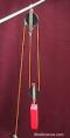 Pulleys Well, I hope you used the lever lesson to get some leverage on this work, energy and simple machines concept. This lesson we re going to pulley ourselves up by our bootstraps and play with these
BUILDING WITH STONE AND EARTH
 BUILDING WITH STONE AND EARTH PART 1 Earth is a popular building material all over the world. It can be used by itself, but if there is stone available, then the two can be used together to make very good
New Perspectives on Accident/Incident Investigation
 Session No. 515 New Perspectives on Accident/Incident Investigation Larry Wilson Belleville, Ontario Canada Introduction Most accident/incident investigations tend to look at the injury or incident from
1000-LB. TRAILER JACK OWNER S MANUAL
 1000-LB. TRAILER JACK OWNER S MANUAL WARNING: Read carefully and understand all INSTRUCTIONS before operating. Failure to follow the safety rules and other basic safety precautions may result in serious
I BEAM TRACK INSTALLATION
 PDQ 0/700 FESTOON SYSTEM INSTALLATION AND MAINTENANCE INSTRUCTIONS INTRODUCTION The PDQ Festoon System was designed to run on one of three sizes of I-beams: S x., S8 x 8. and S x.. System trolleys must
BONUS REPORT#5. The Sell-Write Strategy
 BONUS REPORT#5 The Sell-Write Strategy 1 The Sell-Write or Covered Put Strategy Many investors and traders would assume that the covered put or sellwrite strategy is the opposite strategy of the covered
ZCorum s Ask a Broadband Expert Series:
 s Ask a Broadband Expert Series: The Advantages of Network Virtualization An Interview with Peter Olivia, Director of Systems Engineering ZCorum 1.800.909.9441 4501 North Point Parkway, Suite 125 Alpharetta,
How to re-string & re-cable the Genesis Compound bow. Step by step, picture by picture Right hand models ONLY
 How to re-string & re-cable the Genesis Compound bow. Step by step, picture by picture Right hand models ONLY Introduction and Terminology Inspect all bows prior to use. Once a string or cable has become
Practical Alignment Tools and Techniques
 Practical Alignment Tools and Techniques Bruce Lehmann Sr. Engineer, Thin Kerf Technologies Inc Accurate sawing requires attention to proper alignment and maintenance. Alignment is critical to modem sawmills
Adventure Studies Department 900 McGill Road, Kamloops, British Columbia, Canada, V2C 0C8 www.adventurestudies.ca. Application Package
 Adventure Studies Department 900 McGill Road, Kamloops, British Columbia, Canada, V2C 0C8 www.adventurestudies.ca CANADIAN MOUNTAIN AND SKI GUIDE PROGRAM Application Package Package Contents: 1. Course
Vehicle Recovery and Towing
 Vehicle Recovery and Towing Guideline (Glove Box Edition) First Published 01-2010 Endsed by #1 Rule: It is always best to call a tow truck! However, if your company permits and equips you to pull out stuck
Reading Gaps in Charts to Find Good Trades
 Reading Gaps in Charts to Find Good Trades One of the most rewarding and challenging things I have done in my 40-year trading career is teach elementary school students the basics of technical analysis
Getting Started in Tinkercad
 Getting Started in Tinkercad By Bonnie Roskes, 3DVinci Tinkercad is a fun, easy to use, web-based 3D design application. You don t need any design experience - Tinkercad can be used by anyone. In fact,
Tips for Traders 7/21/2008 How To Avoid Getting Washed and Rinsed in the Markets
 Tips for Traders 7/21/2008 How To Avoid Getting Washed and Rinsed in the Markets I have the honor and pleasure of mentoring a number of very talented traders-some who are full-time professional traders
LOUISIANA. Ropes and Rigging for Tree Removal Operations
 LOUISIANA Ropes and Rigging for Tree Removal Operations Introduction This manual is to be used as a tool to assist Chainsaw Teams in the removal of trees after a disaster has occurred. It can be taught
ECM-D70T / ECM-D70T1.5
 Elliptical Ceiling Dual Mount for 37 to 50 Flat Panels INSTALLATION INSTRUCTIONS CREATING POSITIVE CUSTOMER EXPERIENCES 9531-041-001-01 Contents ECM-D70T / ECM-D70T1.5 Installation Tools... 3 Parts List...
INSTALLATION MANUAL. Contents JAPANESE ENGLISH GERMAN FRENCH ITALIAN SPANISH. To the installing technician: CEILING BRACKET
 Be sure to read this installation manual thoroughly prior to installation. If installation methods or non-standard parts not specified in this installation manual are used, accidents or injury may result.
SPM FIS B-Net Assembly Instructions. Installation Recommendations. 2009, World Cup Supply, Inc SPM B-Net Assembly/Installation
 SPM FIS B-Net Assembly Instructions & Installation Recommendations B-Net Assembly Instructions & Installation Recommendations TABLE OF CONTENTS 1. INTRODUCTION 3 2. GENERAL INFORMATION 4 3. SPM FIS B-NETS
Ideal Cable. Linear Spring - 1. Cables, Springs and Pulleys
 Cables, Springs and Pulleys ME 202 Ideal Cable Neglect weight (massless) Neglect bending stiffness Force parallel to cable Force only tensile (cable taut) Neglect stretching (inextensible) 1 2 Sketch a
Gas Dynamics Prof. T. M. Muruganandam Department of Aerospace Engineering Indian Institute of Technology, Madras. Module No - 12 Lecture No - 25
 (Refer Slide Time: 00:22) Gas Dynamics Prof. T. M. Muruganandam Department of Aerospace Engineering Indian Institute of Technology, Madras Module No - 12 Lecture No - 25 Prandtl-Meyer Function, Numerical
TIME MANAGEMENT by Dr. Ben S. Graham, Jr. The Ben Graham Corporation
 TIME MANAGEMENT by Dr. Ben S. Graham, Jr. The Ben Graham Corporation Everyone gets the same twenty-four hours each day, yet some people accomplish many times more than what might be considered normal.
Basic circuit troubleshooting
 Basic circuit troubleshooting This worksheet and all related files are licensed under the Creative Commons Attribution License, version 1.0. To view a copy of this license, visit http://creativecommons.org/licenses/by/1.0/,
Table of Contents WARNING SYMBOLS AND DEFINITIONS
 Table of Contents SAFETY INSTALLATION OPERATION MAINTENANCE Safety... 2 Specifications... 4 Installation... 5 Operation... 8 WARNING SYMBOLS AND DEFINITIONS Maintenance... 9 Parts List and Assembly Diagram...
EVALUAT ING ACADEMIC READINESS FOR APPRENTICESHIP TRAINING Revised for ACCESS TO APPRENTICESHIP
 EVALUAT ING ACADEMIC READINESS FOR APPRENTICESHIP TRAINING for ACCESS TO APPRENTICESHIP SCIENCE SKILLS SIMPLE MACHINES & MECHANICAL ADVANTAGE AN ACADEMIC SKILLS MANUAL for The Construction Trades: Mechanical
Frequency Matters. The keys to optimizing email send frequency
 The keys to optimizing email send frequency Email send frequency requires a delicate balance. Send too little and you miss out on sales opportunities and end up leaving money on the table. Send too much
Statics problem solving strategies, hints and tricks
 Statics problem solving strategies, hints and tricks Contents 1 Solving a problem in 7 steps 3 1.1 To read.............................................. 3 1.2 To draw..............................................
GIBRALTAR 6000 Series Cymbal Stands
 GIBRALTAR 6000 Series Cymbal Stands Gibraltar Upgrades 6000 Series Cymbal Stands with Swing Nut fast cymbal mounting system. Professional in features yet light enough in weight and mass for easy transport.
Washington Industrial Safety & Health Division (WISHA) Fall Protection: Responding to Emergencies: F417-208-000
 R E S P O N D I N G T O E M E R G E N C I E S Fall Protection: Responding to Emergencies: F417-208-000 Washington Industrial Safety & Health Division (WISHA) Materials contained in this publication are
MODULE 4 MODULE 4 INTRODUCTION PROGRAMME LEVERAGE AND MARGIN
 INTRODUCTION PROGRAMME MODULE 4 LEVERAGE AND MARGIN This module explains leverage and gearing and compares CFDs with non-geared investments. Additionally, there are a number of worked examples of how our
Coaxial Cable Installation Accessories
 Installation Instructions Bulletin 37608 Coaxial Cable Installation Accessories Hoisting Grips for Coaxial Cable and Elliptical Waveguide READ ALL WARNINGS AND INSTRUCTIONS BEFORE INSTALLATION Antenna
Work at Height / Falling Objects
 Introduction This information sheet gives employers and employees practical advice on work at height and falling objects and how to eliminate or reduce the risk of harm or damage occurring. It will assist
Ground Rigging Overview of concept Terms (diagram)
 Ground Rigging Overview of concept Terms (diagram) Steel- "aircraft cable" 3/8 and 1/2 inch in lengths from 2' to 50' Shackles Bell and pin 5/8, 3/4, and 1/2 Deck chain Magic making adjusting chain in
Auxiliary Rams USERS MANUAL
 Auxiliary Rams 2007 Chief Automotive Technologies, Inc. Chief s Limited One-Year Warranty & Liability CHIEF'S LIMITED ONE-YEAR WARRANTY & LIABILITY Chief Automotive Technologies, Inc. warrants for one
INSTRUCTIONS: LocknCharge Laptop Carts
 INSTRUCTIONS: LocknCharge Laptop Carts www.lockncharge.com Extra Tools required: Hammer, Philips head screwdriver, medium adjustable spanner. (Allen key supplied) (Panel colours for illustration purposes
AwanaGames Circle. Official. Diagram 1. Key to diagram: Pin & Striped Bean Bag C Diagonal or Starting Line. B Scoring Pins, or Center.
 Official AwanaGames Circle Diagram 1 The AwanaGames Circle is 30 feet in diameter surrounded by a 37-40 foot square. Each team is designated by a color and occupies a quarter-circle or one side of that
The Very Best Way We Know to Play the Exacta
 Frandsen Publishing Presents Favorite ALL-Ways TM Newsletter Articles The Very Best Way We Know to Play the Exacta Common Sense vs. Calculator The Exacta is one of the very best wagers in racing. We do
WHITE PAPER. Data Center Fabrics. Why the Right Choice is so Important to Your Business
 WHITE PAPER Data Center Fabrics Why the Right Choice is so Important to Your Business Introduction Data center fabrics are emerging as the preferred architecture for next-generation virtualized data centers,
Alpine Archery Owner s Manual
 Alpine Archery Owner s Manual 2 www.alpinearchery.com Thank you for choosing Alpine... Thank you for buying an Alpine bow! All of us at Alpine are confident you will have many years of enjoyable shooting
Gaming the Law of Large Numbers
 Gaming the Law of Large Numbers Thomas Hoffman and Bart Snapp July 3, 2012 Many of us view mathematics as a rich and wonderfully elaborate game. In turn, games can be used to illustrate mathematical ideas.
How to Outsource Without Being a Ninnyhammer
 How to Outsource Without Being a Ninnyhammer 5 mistakes people make when outsourcing for profit By Jason Fladlien 2 Introduction The way everyone does outsourcing is patently wrong, and this report is
The 3 Configurations of Rope Rescue Systems
 The 3 Configurations of Rope Rescue Systems Rope Rescue Systems Rope Rescue Systems incorporate a mainline to lower and raise rescuers and victims and; A Belay line which provides a redundant safety component
Whatever s special about your family life, make sure you protect it
 Whatever s special about your family life, make sure you protect it Your family is special, so make sure you protect it When something awful happens, it feels like normal life stops. But, even for a family
THE HR GUIDE TO IDENTIFYING HIGH-POTENTIALS
 THE HR GUIDE TO IDENTIFYING HIGH-POTENTIALS What makes a high-potential? Quite possibly not what you think. The HR Guide to Identifying High-Potentials 1 Chapter 1 - Introduction If you agree people are
Responsibilities of a Volunteer Leader
 Responsibilities of a Volunteer Leader Inspecting tools for safe conditions. Removing unsafe tools from use and immediately notifying site supervisor. Teaching safe tool use to volunteers on your crew.
Best Option Strategies For You How To Give Yourself A Serious Edge In The Stock Market
 GREAT OPTION TRADING STRATEGIES Best Option Strategies For You How To Give Yourself A Serious Edge In The Stock Market Brad Castro Best Option Strategies For You I hope I m not being too presumptuous (or
ROTATING MACHINES. Alignment & Positioning of. Fast, easy and accurate alignment of rotating machines, pumps, drives, foundations, etc.
 Alignment & Positioning of ROTATING MACHINES Fast, easy and accurate alignment of rotating machines, pumps, drives, foundations, etc. To compete in today s marketplace, you have to outperform your competitors
www.beavertreemn.com No one ties knots more frequently and of such variety than those who work in the tree care profession.
 No one ties knots more frequently and of such variety than those who work in the tree care profession. In a profession as potentially dangerous as this, only knots that are correctly tied and aptly applied
Physics: Principles and Applications, 6e Giancoli Chapter 4 Dynamics: Newton's Laws of Motion
 Physics: Principles and Applications, 6e Giancoli Chapter 4 Dynamics: Newton's Laws of Motion Conceptual Questions 1) Which of Newton's laws best explains why motorists should buckle-up? A) the first law
Q&A. Questions and Answers on Insurance for Housing Co-operatives. What insurance does our housing co-operative need?
 Q&A Questions and Answers on Insurance for Housing Co-operatives What insurance does our housing co-operative need? You need at least five kinds of insurance perhaps more, depending on your circumstances.
27PercentWeekly. By Ryan Jones. Part II in the Series Start Small and Retire Early Trading Weekly Options
 By Ryan Jones Part II in the Series Start Small and Retire Early Trading Weekly Options Important My 27% Option Strategy is one of the best option trading opportunities you will come across. When you see
<< INSERT COMPANY NAME
 > SLIIP-TRIIP-FALL & STRAIIN IINJURY TRAIINIING > Fall Prevention Slips, trips, and falls constitute the majority of general industry accidents. They cause 15% of
Mathematics on the Soccer Field
 Mathematics on the Soccer Field Katie Purdy Abstract: This paper takes the everyday activity of soccer and uncovers the mathematics that can be used to help optimize goal scoring. The four situations that
T53 SLAB BUNDLE EXTRACTOR ATTACHMENT
 T53 SLAB BUNDLE EXTRACTOR ATTACHMENT APPLICATION AND OPERATING GUIDE Distributed By: UNIT LOAD HANDLING SYSTEMS, INC. 2301 SO. MISSION CIRCLE, FRIENDSWOOD, TX 77546 PH: 281-992-2006 FX: 281-992-2040 EM:
Installation instructions, accessories - Handsfree for cellular phone, system B, entry level
 XC90 Section Group Weight(Kg/Pounds) Year Month 3 39 0.5/1.1 2006 07 XC90 2003, XC90 2004 IMG-249663 Page 1 of 18 Required tools A0000162 A0000163 IMG-239664 M0000232 IMG-253123 IMG-252223 Page 2 of 18
Health and Safety Resources Caution to Users
 Health and Safety Resources Caution to Users Many of the resources in this archive were originally prepared by WSN s predecessor organizations for use by industry clients. While much of the information