
On Database for Mobile Phones Ownership
|
|
|
- Constance Rich
- 10 years ago
- Views:
Transcription
1 On Database for Mobile Phones Ownership Dmitry Namiot Lomonosov Moscow State University Moscow, Russia Manfred Sneps-Sneppe ZNIIS Moscow, Russia Abstract This article examines the confirmation of mobile phone ownership. We propose a model of digital certificates that can be used to programmatically check the lawful use of the device. The developed model combines device identification and proper identification of the owner in social networks. As a practical deployment and use cases we discuss an additional check for authorization of mobile users in various services (for example, financial applications). I. INTRODUCTION In the telecommunications industry a service provider can record information regarding a mobile communication device at the time of activation of service [1]. For example, each communications device s International Mobile Equipment Identity (IMEI) contains information regarding that device. This information tells telecom provider what type of device is being used. It lets telecom operator know what functionality is available on that particular device. In the same time mobile device has got a removable Subscriber Identity Module (SIM) card. SIM cards are gradually replaced by UICC (Universal IC Card), starting from 3G. SIM card contains information related to the mobile user (subscriber) and allows the device to work with the particular mobile network. The information on the SIM card (part of it) is transmitted each time a user connects to a network. Technically, telecom provider can know the relationship between the SIM card and the IMEI. For example, this information could be collected at the time of SIM card activation. SIM cards distribution is subject to regulation (e.g., it is so in Russia). So, the telecom provider knows the person behind the particular SIM card. As soon as we have a link SIM -> IMEI, we can discover the owner of particular phone. On practice, telecom operator is the only owner of this information (at least, potentially). In the same time, a user may transfer the SIM card from one device to another without the telecom operator ever learning of the switch. In the past, home location register (the main database at the telecom operator) contained mobile identification number. It was needed in order for mobile device to be used. And subscribers were unable to make changes to their equipment without involving the telecom operator. The modern approach gives the more freedom to the users, but creates the problem for operator in providing the optimal service (the actual device is unknown). We can mention also security issues as a result for SIM card portability. For example, a stolen or lost mobile device may be used by anyone with an active SIM card by simply replacing the SIM card into the stolen or lost phone. It means that telecom provider theoretically should track SIM cards data in conjunction with IMEI. Of course, it should be performed in the real time, what could be an additional technical problem. This information can be used in many ways. For example, by matching SIM data with IMEI data, telecom operator may determine that a device that has been reported lost or stolen is being used. Operator may track and locate the device in question or even disable the service for that particular device. Yes, the information about the device could be used in services to align capabilities for both parties, but in this paper we will discuss lost and stolen devices. So, the ideal picture is presented on the Fig. 1. Phone Fig. 1. IMEI DB & HLR IMEI DB VLR/HLR The question is how to present this picture for nonoperators environment? Can we do that without the SIM card? The main reason for this switch is to present open Application Program Interfaces to this ownership information. But telecoms are not very willing to provide open interfaces to their data. The rest of the paper is organized as follows. The Section II describes approaches to mobile phones identification and discusses the related works. The Section

2 III describes our social digital certificates for ownership. And the Section IV discusses some use cases and practical applications. II. MOBILE PHONES IDENTIFICATION There are several factors that could be used for the identification. International Mobile Subscriber Identity (IMSI) number. It is a unique number associated with all GSM and Universal Mobile Telecommunications System (UMTS) network mobile phone users. It is stored in the SIM card. An IMSI is usually 15 digits long. The first 3 digits are the Mobile Country Code, and are followed by the Mobile Network Code (MNC). The remaining digits are the mobile subscriber identification number (MSIN) within the network s customer base. This number will also be stored in the server s database for each client. IMEI is a unique 15 digits number assigned to an individual device. IMEI can be used to determine information associated with the device. This information includes the manufacturer and model type. An associated parameter for the IMEISV (International Mobile station Equipment Identity and Software Version number) is 16 digits number. The IMEI includes a Type Allocation Code (TAC) of 8 decimal digits and the Serial Number (SNR) of 6 decimal digits plus a Spare decimal digit. The TAC identifies the type of the Mobile Equipment and is chosen from a range of values allocated to the Mobile Equipment manufacturer in order to uniquely identify the model of the Mobile Equipment. The SNR is an individual serial number that uniquely identifies each Mobile Equipment within the TAC. The Spare digit is used as a check digit to validate the IMEI and is always set to the value 0 when transmitted by the Mobile Equipment [2]. The IMEISV is 16 decimal digits long and includes the TAC and SNR same as for the IMEI but also a 2 decimal digit Software Version Number (SVN) which is allocated by the Mobile Equipment manufacturer to identify the software version of the Mobile Equipment [2]. Mobile operating system APIs provide applications with large amounts of information about users. Applications can query mobile APIs for the user's location, list of contacts, browser and download history, list of installed applications, and IMEI [3]. Consumer IMEIs have value to black market phone vendors. When a phone is reported stolen, its IMEI is blacklisted. Theoretically (it depends on telecom operator) this black listed database could prevent mobile phone from connecting to the network. It could make stolen phones useless. In practice, thieves can alter phone IMEIs to replace blacklisted IMEIs with valid IMEIs [4]. To address IMEI theft, mobile operating systems could provide applications with an alternate, globally-unique device ID [3]. E.g., [5] suggests the obvious method to do this is to compare the internally stored IMEI with the IMEI printed on the phone (commonly located under the battery). In other words, it is also highlights the need for some external database, where IMEI is just a part of data. In the same time studies for mobile communities show that only a very small percentage of the participants (less than 24%) knows his/her phone s IMEI [6]. Almost half of respondents are completely unaware of its existence [7]. IMEI is very often used a part of Multi Factor Authentication with mobile phone [8]. Multi factor authentication refers to the use of more than one factor in the authentication process [9]. One form of attack on networked computing systems is eavesdropping on network connections to obtain authentication information. For examples third party can obtain the login ID and password of legitimate user. Once captured, this information can be used at a later time to gain access to the system. One-time password (OTP) systems are designed to counter this type of attack [10]. An OTP is valid for only one login session or transaction. OTPs prevent a number of shortcomings associated with traditional authentication (such as user names and passwords) [11]. IMEI is usually a part of OTP calculation. For example, during the registration phase, users are compelled to use their personal information (username, password, PIN, etc.) in addition to the IMEI. As the next step, we can perform an IMEI validation check for the mobile phone of the user. We can prevent from registering in the system users with not valid IMEI. Thus, the user is compelled to enter a valid IMEI during registration [12]. Alternatively, what is important for our issue, we can collect that IMEI from some external database. In addition, we can check if the IMEI and the mobile number are repeated. It means that it is registered by another user, so we can stop the registration process. The use of this method ensures that every user has one mobile number and one IMEI number. In our paper we propose some external database with IMEI numbers that could be used in registration processes as a confirmation for phone ownership. III. DIGITAL CERTIFICATES The main goal for research is some external database that could be used for mobile phone ownership confirmation. By our vision this database should be disconnected from telecom operators (see Fig. 1.). The main reason for this disconnection is the need for open API for this database. Traditionally, telecom operators are weak in presenting access to own data. So, independently hosted and maintained data store could be more developers friendly. The project

3 itself was developed as Open Source software in university. The project itself could be community maintained entity. Also we offered this software to ZNIIS institute, who maintains mobile number portability database in Russia. Of course, filling this database of ownerships must be completely voluntary. As per some analogy: the owner of a dog that places the badge with own coordinates (e.g. mobile phone) on her collar. So, there are two main questions: - how to identify a phone, - how to identify an owner. As per phone identification we will use the above mentioned IMEI. It means that as a mechanism for identification we should use some mobile application. Mobile application (e.g. Android app) has got access to IMEI, so it could be read and saved somewhere. Public class TelephonyManager (android.telephony.telephonymanager) provides access to information about the telephony services on the device. Applications can use the methods in this class to determine telephony services and states, as well as to access some types of subscriber information. Applications can also register a listener [13] to receive notification of telephony state changes. Public method String getdeviceid () returns the unique device ID, for example, the IMEI for GSM and the MEID or ESN for CDMA phones. It returns null if device ID is not available. Now let us talk about owner s identity. Nowadays, most (if not all) mobile users are members of some social networks. Our idea is to use social identity as a confirmation of phone ownership. In social networks users can build profiles for storing and sharing various types of content with others. And what is interesting for us, social-networking sites expose their networks to Web services in the form of online application programming interfaces. These APIs allow third-party developers to interface with the social-networking site, access information and media posted with user profiles [14]. Social networks provide numerous application services that can mash up user-profile data with third-party data. As it is mentioned in [14], all major social networks have begun launching social-networks connect services such as Facebook Platform, Google Friend Connect, etc. These services break down the garden walls of social-networking sites and let third-party sites develop social applications and extend their services without having to either host or build their own social network. This extension allows third-party sites to leverage the social-networking site s features. What is especially interesting for us, third-party sites can exploit the authentication services provided by a social-networking site so that users need not create another username and password to access the third-party site. Instead those, users can rely on their social-network credentials and established profile. Alternatively, the third-party site can obtain users profiles from the social-networking site to create an enhanced experience. This brings us to the idea of digital certificates: IMEI, confirmed by (signed with) social networks ID. It eliminates the need for yet another user name/password database and, what is very important also, it eliminates the need for saving users personal data. Our digital certificate contains IMEI and a link to the profile in social network. So, in this schema we rely on data in social network. There is no need to copy personal data to some external location. So, each certificate is just a pair: (IMEI, Social ID). Social ID has got a form of link to user s profile. E.g. Let us see Facebook Connect (Fig. 2). Facebook Platform contains several APIs: Fig. 2. Facebook Connect Identity authentication. It proves users identity. So, users can authenticate using their existing accounts from Facebook. Authorization governs access to user data in Facebook based on predefined authorization access rights. This authorization API lets third-party sites create new content and extract existing content from users data in Facebook. Streams let third-party sites publish to users activity streams and vice versa. Applications let third-party sites develop rich social features in the form of applications and thereby extend Facebook. Authentication is, probably, the most used component from Facebook Platform. This API enables third-party sites to leverage Facebook as an identity provider. Users can use their existing Facebook profile to authenticate. Facebook leverages OAuth 2.0 [15] for authentication and authorization. OAuth 2.0 is a simplified, improved version of the Open Authorization standard that lets third-party sites

4 obtain authorization tokens from Facebook. First, a user of the third-party site authenticates using Facebook as an identity provider. Next, Facebook issues a token that lets the third-party site access the user s basic profile information. The typical examples of Facebook Connect usage are customized check-ins [16]. In our case digital certificates suite includes a mobile application (currently it is for Android). This mobile application incorporates Facebook Connect library for Android. Application reads IMEI, asks users to authenticate using Facebook and create a new certificate. There is no need in obtaining additional permissions; successful authentication is used just for creating a proper URL to Facebook profile. Usually, this URL has got the following form: Where user_name is just an alias for this ID. As soon as the certificate is calculated, we can store it in some external database. So, the above mentioned telecomrelated picture (Fig. 1) is transformed to this: - API for programmable access to database (e.g., perform a search from applications). Finally, the whole picture is very straightforward. Mobile user (owner of the phone) can voluntarily create a digital certificate for own phone. This certificate is an identification number (IMEI), signed by referring to the user profile in a social network (Fig. 4). Facebook Fig. 4. Facebook authentication Phone Digital Certificates In the current implementation we used Facebook as a social network. But technically it could be any network with open API for authentication. Of course, the user must use this application only once. As soon as certificate is created, it is saved in public available database (Fig. 5). Telecom DBs Fig. 3. Digital Certificates So, our platform for digital certificates contains the following components: - Mobile application for creating certificates. - Web-hosted database with certificates. - Web-based UI for access to database (e.g., perform a search). Fig 5. Digital certificate As soon as this database if publicly available, the process of checking the phone owner is greatly simplified. Webbased UI allows DB search by IMEI and/or by social ID. And this, in turn, is able to stop some significant percentage

5 of mobile subscribers from using the phone, which came to him not quite a legitimate way. Moreover, such a framework could be help for the official investigation. Database for certificates lets users only add records. So, for the each phone it will keep timestamped list of certificates. So, any current owner of the phone can add a new record with own identification. But he cannot change the previously collected information. Of course, he can see it but cannot edit or delete. And this mechanism allows to resign IMEI with other social network ID. The usage of social network (Facebook in this case) lets us eliminate the need for saving personal data in this database. It is very important from the practical point of view, because storing personal data could be a subject for a special regulation in some countries. In our case database keeps only a link (public link) to the social network profile without any personal details (Fig. 6). user s authentication via social network can check out who owns this phone. Of course, it is completely up to application what to do with this information. For example, it can send a warning (alert) to user s about access from new device or even prevent the access unless user confirm it, etc. Technically, nothing prevents operators from using the same open database to verify the owners at the time of making calls and sending SMS. Users can search database via mobile application and web (including mobile web). Digital Certificates is Open Source application [17]. Web part developed on PHP, data store uses MySQL database. The term Digital Certificates has been selected by the analogue with crypto algorithms. Actually, this idea for linking social profiles with some hardware identification could be extended beyond the phone. Fig. 6. Search database As side result database provides actually some form of the social networks (social circles) inside of Facebook. Each such circle contains a list of all owners for the particular phone. Thus, the general idea of this model is not in tracking lost (stolen) phone. Certificates introduce the possibility of checking the phone's owner at the time of using the phone. In this case, first of all, we mean the use of smart phones on the Internet. The idea is that for many mobile application users will use the same Facebook Connect for authentication. And authentication module for mobile application is mobile application too. So, this third party application can obtain IMEI, perform a search in database for digital certificates, obtain a social ID and compare it with ID, just provided by the mobile user. It is the simplest use case: application during IV. USE CASES Web link for search could be QR-coded and printed on the sticker. So, we will get a physical form for digital certificate. QR-code contains URL for search particular IMEI. It could be some analogue for context-aware QRcode [18]. The next possible direction is programming API for digital certificates data base. Technically, it is REST based HTTP interface. It lets obtain ownership info (get chain of records) programmatically. For example, applications similar to Geo Messages [19] or WATN [20] will be able to check identity rights of sender. Checking ownership for mobile phone could be useful for finance applications, for example. Application could be aware of social ID for mobile users or it can offer the same Facebook login for authentication. In both cases application can compare this ID with ID that corresponds to the current IMEI in database of digital certificates. Here is the basic example for Facebook login: FB.login(function(response) { if (response.authresponse) { console.log('welcome! Fetching your information... '); FB.api('/me', function(response) { console.log('good to see you, ' + response.name + '.'); // here we can add code for IDs comparison });

6 } else { console.log('user cancelled login or did not fully authorize.'); } }); Such kind of authentication with additional checking could be a useful add-on for the customized check-in systems [21, 22] or local messaging applications [23]. In both cases we add an additional level for users identity checking. Actually, the link between phone identity and social identity is probably used by Google for preventing unauthorized access to Gmail on Android. It could be one of the many elements for checking user s identity. Database for digital certificates with public API opens this possibility for all applications. V. CONCLUSION In this paper we propose digital certificates for phone ownership. Each certificate combines phone identity (IMEI) and social ID. It lets check phone ownership via web search (including mobile web), mobile application or via API. In general, our digital certificates can add an additional checking layer for mobile authentication. The proposed approach has been implemented as Open Source project. ACKNOWLEDGMENT We would like to thank A.Kolosova for an initial release of digital certificates in her diploma at Lomonosov Moscow State University (supervised by D. Namiot) [24]. REFERENCES [1] Cardina, Donald M., and Anastasios L. Kefalas. "System and method for IMEI detection and alerting." U.S. Patent No. 8,126, Feb [2] Gosden, Paul, et al. "A Uniform Resource Name Namespace for the GSM Association (GSMA) and the International Mobile station Equipment Identity (IMEI)." (2013). [3] Felt, A. P., Finifter, M., Chin, E., Hanna, S., & Wagner, D. (2011, October). A survey of mobile malware in the wild. In Proceedings of the 1st ACM workshop on Security and privacy in smartphones and mobile devices (pp. 3-14). ACM. [4] iclaried. How to change your iphone IMEI with ZiPhone (Windows). [5] Willassen, S. (2003). Forensics and the GSM mobile telephone system. International Journal of Digital Evidence, 2(1), [6] Androulidakis, I., & Kandus, G. (2011, April). Mobile Phone Security Awareness and Practices of Students in Budapest. In ICDT 2011, The Sixth International Conference on Digital Telecommunications (pp ). [7] ITwire, One-third of Aussies lose mobile phones: survey, ITwire article, [accessed: 16/12/2013] [8] Aloul, Fadi, Syed Zahidi, and Wasim El-Hajj. "Multi Factor Authentication Using Mobile Phones." International Journal of Mathematics and Computer Science 4 (2009): [9] Jing-Chiou Liou and S. Bhashyam, A feasible and cost effective two-factor authentica tion for online transactions in International Conference on Software Engineering an d Data Mining (SEDM), pp , IEEE. [10] Jongpil Jeong, Min Young Chung, and Hyunseung Choo. Integrated OTP-based User Authentication Scheme Using Smart Cards in Home Net works. Proceedings of the 41st Annual Hawaii International Conference on System Sciences Waikoloa, IEEE. [11] K.Aravindhan and R.R.Karthiga, One Time Password: A Survey. International Journal of Emerging Trends in Engineering and Development, (3): p [12] Hussein, K. W., Sani, N. F. M., Mahmod, R., & Abdullah, M. T. (2013). A Novel Authentication Scheme to Increase Security for Non-Repudiation of Users. [13] Android SDK Reference onymanager.html#getdeviceid%28%29 Retrieved: Feb, 2014 [14] Ko, M. N., Cheek, G. P., Shehab, M., & Sandhu, R. (2010). Social-networks connect services. Computer, 43(8), [15] Hardt, Dick. "The OAuth 2.0 Authorization Framework." (2012). [16] Namiot, D., & Sneps-Sneppe, M. (2011). Customized check-in procedures. In Smart Spaces and Next Generation Wired/Wireless Networking (pp ). Springer Berlin Heidelberg. [17] Digital Certificates Retrieved: Feb, 2014 [18] Namiot, Dmitry, Manfred Sneps-Sneppe, and Oleg Skokov. "Context-aware QR-codes." // World Applied Sciences Journal Vol. 25, no. 4. pp DOI: /idosi.wasj [19] Namiot, D. Geo messages, In Ultra Modern Telecommunications and Control Systems and Workshops (ICUMT), 2010 International Congress on (pp ). IEEE. DOI: /ICUMT [20] Dmitry Namiot and Manfred Sneps-Sneppe. "Where Are They Now Safe Location Sharing." Internet of Things, Smart Spaces, and Next Generation Networking. Springer Berlin Heidelberg, DOI: / _6 [21] Namiot, D., & Sneps-Sneppe, M. (2011, October). A new approach to advertising in social networks-business-centric check-ins. In Intelligence in Next Generation Networks (ICIN), th International Conference on (pp ). IEEE. [22] Namiot, D., & Sneps-Sneppe, M. (2013, March). Wireless Networks Sensors and Social Streams. In Advanced Information Networking and Applications Workshops (WAINA), th International Conference on (pp ). IEEE. [23] Dmitry Namiot and Manfred Sneps-Sneppe. "Local messages for smartphones". Future Internet Communications (CFIC), 2013 Conference on (pp. 1-6). IEEE. DOI: /CFIC [24] Namiot, D.E., & Kolosova, A.I. (2013). Checking of mobile phone owner. International Journal of Open Information Technologies, 1(8), (in Russian)

TABLE OF CONTENTS. Introduction 3 OTP SMS Two-Factor Authentication 5 Technical Overview 9 Features 10 Benefits 11 About MobiWeb 12 Quality 13
 TABLE OF CONTENTS Introduction 3 OTP SMS Two-Factor Authentication 5 Technical Overview 9 Features 10 Benefits 11 About MobiWeb 12 Quality 13 Introduction Our world is more Mobile now than ever. In 2013
Review Paper on Two Factor Authentication Using Mobile Phone (Android) ISSN 2319-9725
 Review Paper on Two Factor Authentication Using Mobile Phone (Android) ISSN 2319-9725 Rahul Kale Neha Gore Kavita Nilesh Jadhav Mr. Swapnil Shinde Bachelor s Degree program in Information Technology Engineering
Using Mobiles for On Campus Location Tracking
 Using Mobiles for On Campus Location Tracking F. Aloul A. Sagahyroon A. Al-Shami I. Al-Midfa R. Moutassem American University of Sharjah P.O. Box 26666, Sharjah, UAE {faloul, asagahyroon, b00020906, b00020142,
Improving Online Security with Strong, Personalized User Authentication
 Improving Online Security with Strong, Personalized User Authentication July 2014 Secure and simplify your digital life. Table of Contents Online Security -- Safe or Easy, But Not Both?... 3 The Traitware
WHITE PAPER Usher Mobile Identity Platform
 WHITE PAPER Usher Mobile Identity Platform Security Architecture For more information, visit Usher.com [email protected] Toll Free (US ONLY): 1 888.656.4464 Direct Dial: 703.848.8710 Table of contents Introduction
Internet Banking Two-Factor Authentication using Smartphones
 Internet Banking Two-Factor Authentication using Smartphones Costin Andrei SOARE IT&C Security Master Department of Economic Informatics and Cybernetics Bucharest University of Economic Studies, Romania
A SECURE COMMUNICATION IN SMART PHONES USING TWO FACTOR AUTHENTICATIONS
 A SECURE COMMUNICATION IN SMART PHONES USING TWO FACTOR AUTHENTICATIONS Soumya Murali 1, Anitha.B 2, Anitha Mary Paul 3 1, 2, 3 Assistant Professor, 1, 2 Sree Buddha College of Engineering, Pattoor, Alappuzha,
RSA SecurID Software Token 1.0 for Android Administrator s Guide
 RSA SecurID Software Token 1.0 for Android Administrator s Guide Contact Information See the RSA corporate web site for regional Customer Support telephone and fax numbers: www.rsa.com Trademarks RSA,
Device-Centric Authentication and WebCrypto
 Device-Centric Authentication and WebCrypto Dirk Balfanz, Google, [email protected] A Position Paper for the W3C Workshop on Web Cryptography Next Steps Device-Centric Authentication We believe that the
Two Factor Authentication Using Smartphone Generated One Time Password
 IOSR Journal of Computer Engineering (IOSR-JCE) e-issn: 2278-0661, p- ISSN: 2278-8727Volume 11, Issue 2 (May. - Jun. 2013), PP 85-90 Two Factor Authentication Using Smartphone Generated One Time Password
Ensuring the security of your mobile business intelligence
 IBM Software Business Analytics Cognos Business Intelligence Ensuring the security of your mobile business intelligence 2 Ensuring the security of your mobile business intelligence Contents 2 Executive
Two-Factor Authentication over Mobile: Simplifying Security and Authentication
 SAP Thought Leadership Paper SAP Mobile Services Two-Factor Authentication over Mobile: Simplifying Security and Authentication Controlling Fraud and Validating End Users Easily and Cost-Effectively Table
STRONGER AUTHENTICATION for CA SiteMinder
 STRONGER AUTHENTICATION for CA SiteMinder Adding Stronger Authentication for CA SiteMinder Access Control 1 STRONGER AUTHENTICATION for CA SiteMinder Access Control CA SITEMINDER provides a comprehensive
A Novel Authentication Scheme to Increase Security for Non-Repudiation of Users
 Available Online at www.ijcsmc.com International Journal of Computer Science and Mobile Computing A Monthly Journal of Computer Science and Information Technology IJCSMC, Vol. 2, Issue. 7, July 2013, pg.396
Building a Smartphone App by Using Service-Oriented. Computing and Social Network APIs for Supporting Check-in. Activities
 Building a Smartphone App by Using Service-Oriented Computing and Social Network APIs for Supporting Check-in Activities Pin-Fan Lee Institute of Technology Management, National Chung Hsing University
Contents. Identity Assurance (Scott Rea Dartmouth College) IdM Workshop, Brisbane Australia, August 19, 2008
 Identity Assurance (Scott Rea Dartmouth College) IdM Workshop, Brisbane Australia, August 19, 2008 Contents Authentication and Identity Assurance The Identity Assurance continuum Plain Password Authentication
Google Identity Services for work
 INTRODUCING Google Identity Services for work One account. All of Google Enter your email Next Online safety made easy We all care about keeping our data safe and private. Google Identity brings a new
Ensuring the security of your mobile business intelligence
 IBM Software Business Analytics Cognos Business Intelligence Ensuring the security of your mobile business intelligence 2 Ensuring the security of your mobile business intelligence Contents 2 Executive
KEYSTROKE DYNAMIC BIOMETRIC AUTHENTICATION FOR WEB PORTALS
 KEYSTROKE DYNAMIC BIOMETRIC AUTHENTICATION FOR WEB PORTALS Plurilock Security Solutions Inc. www.plurilock.com [email protected] 2 H IGHLIGHTS: PluriPass is Plurilock static keystroke dynamic biometric
Enhancing Totp Protocol By Embedding Current Gps Location
 Enhancing Totp Protocol By Embedding Current Gps Location U. A. Abdurrahman, M. Kaiiali and J. Muhammad Abstract Static password authentication is no longer considered secure in the internet and banking
How To Use A Femtocell (Hbn) On A Cell Phone (Hbt) On An Ipad Or Ipad (Hnt) On Your Cell Phone On A Sim Card (For Kids) On The Ipad/Iph
 . Femtocell: Femtostep to the Holy Grail... Ravishankar Borgaonkar, Kévin Redon.. Technische Universität Berlin, SecT ravii/[email protected] TROOPERS 2011, 30 March 2011 3G/UMTS femtocells
Two Factor Authentication (TFA; 2FA) is a security process in which two methods of authentication are used to verify who you are.
 Two Factor Authentication Two Factor Authentication (TFA; 2FA) is a security process in which two methods of authentication are used to verify who you are. For example, one method currently utilized within
Two Factor Zero Knowledge Proof Authentication System
 Two Factor Zero Knowledge Proof Authentication System Quan Nguyen Mikhail Rudoy Arjun Srinivasan 6.857 Spring 2014 Project Abstract It is often necessary to log onto a website or other system from an untrusted
Guidelines for E-mail Account Management and Effective E-mail Usage
 Guidelines for E-mail Account Management and Effective E-mail Usage October 2014 Version 1.0 Department of Electronics and Information Technology Ministry of Communications and Information Technology Government
ADDING STRONGER AUTHENTICATION for VPN Access Control
 ADDING STRONGER AUTHENTICATION for VPN Access Control Adding Stronger Authentication for VPN Access Control 1 ADDING STRONGER AUTHENTICATION for VPN Access Control A VIRTUAL PRIVATE NETWORK (VPN) allows
A Characterization of Malicious Android Applications
 A Characterization of Malicious Android Applications Lorenzo Gomez Iulian Neamtiu Department of Computer Science and Engineering University of California, Riverside {gomezl,neamtiu}@cs.ucr.edu June 2011
Running Head: AWARENESS OF BYOD SECURITY CONCERNS 1. Awareness of BYOD Security Concerns. Benjamin Tillett-Wakeley. East Carolina University
 Running Head: AWARENESS OF BYOD SECURITY CONCERNS 1 Awareness of BYOD Security Concerns Benjamin Tillett-Wakeley East Carolina University AWARENESS OF BYOD SECURITY CONCERNS 2 Abstract This paper will
Dynamic Query Updation for User Authentication in cloud Environment
 Dynamic Query Updation for User Authentication in cloud Environment Gaurav Shrivastava 1, Dr. S. Prabakaran 2 1 Research Scholar, Department of Computer Science, SRM University, Kattankulathur, Tamilnadu,
Flexible Identity. OTP software tokens guide. Multi-Factor Authentication. version 1.0
 Flexible Identity Multi-Factor Authentication OTP software tokens guide version 1.0 Publication History Date Description Revision 2014.02.07 initial release 1.0 Copyright Orange Business Services 2 of
Cloud Services MDM. ios User Guide
 Cloud Services MDM ios User Guide 10/24/2014 CONTENTS Overview... 3 Supported Devices... 3 System Capabilities... 3 Enrollment and Activation... 4 Download the Agent... 4 Enroll Your Device Using the Agent...
Adding Stronger Authentication to your Portal and Cloud Apps
 SOLUTION BRIEF Cyphercor Inc. Adding Stronger Authentication to your Portal and Cloud Apps Using the logintc April 2012 Adding Stronger Authentication to Portals Corporate and consumer portals, as well
Security Guide. BlackBerry Enterprise Service 12. for ios, Android, and Windows Phone. Version 12.0
 Security Guide BlackBerry Enterprise Service 12 for ios, Android, and Windows Phone Version 12.0 Published: 2015-02-06 SWD-20150206130210406 Contents About this guide... 6 What is BES12?... 7 Key features
ESET Mobile Security Business Edition for Windows Mobile
 ESET Mobile Security Business Edition for Windows Mobile Installation Manual and User Guide Click here to download the most recent version of this document Contents 1. Installation...3 of ESET Mobile Security
BlackBerry Enterprise Service 10. Secure Work Space for ios and Android Version: 10.1.1. Security Note
 BlackBerry Enterprise Service 10 Secure Work Space for ios and Android Version: 10.1.1 Security Note Published: 2013-06-21 SWD-20130621110651069 Contents 1 About this guide...4 2 What is BlackBerry Enterprise
MiniPOS and BluePad-50 user manual
 MiniPOS and BluePad-50 user manual Welcome to MiniPOS application for mobile and card payments! +386 (30) 70 4444 +386 (30) 70 5555 [email protected] www.paywiser.si Slovenska ulica 54 Ljubljana, Slovenija
An Example of Mobile Forensics
 An Example of Mobile Forensics Kelvin Hilton K319 kchilton@staffsacuk [email protected] www.soc.staffs.ac.uk/kch1 Objectives The sources of evidence The subscriber The mobile station The network
IDENTITY & ACCESS. BYOD and Mobile Security Seizing Opportunities, Eliminating Risks in a Dynamic Landscape
 IDENTITY & ACCESS BYOD and Mobile Security Seizing Opportunities, Eliminating Risks in a Dynamic Landscape Introduction How does your enterprise view the BYOD (Bring Your Own Device) trend opportunity
An Innovative Two Factor Authentication Method: The QRLogin System
 An Innovative Two Factor Authentication Method: The QRLogin System Soonduck Yoo*, Seung-jung Shin and Dae-hyun Ryu Dept. of IT, University of Hansei, 604-5 Dangjung-dong Gunpo city, Gyeonggi do, Korea,
AUTHENTIFIERS. Authentify Authentication Factors for Constructing Flexible Multi-Factor Authentication Processes
 AUTHENTIFIERS Authentify Authentication Factors for Constructing Flexible Multi-Factor Authentication Processes Authentify delivers intuitive and consistent authentication technology for use with smartphones,
AAI for Mobile Apps How mobile Apps can use SAML Authentication and Attributes. Lukas Hämmerle [email protected]
 AAI for Mobile Apps How mobile Apps can use SAML Authentication and Attributes Lukas Hämmerle [email protected] Berne, 13. August 2014 Introduction App by University of St. Gallen Universities
Alaa Alhamami, Avan Sabah Hamdi Amman Arab University Amman, Jordan
 World of Computer Science and Information Technology Journal (WCSIT) ISSN: 2221-0741 Vol. 5, No. 5, 87-91, 2015 Mobile Secure Transmission Method Based on Audio Steganography Alaa Alhamami, Avan Sabah
Secure Authentication and Session. State Management for Web Services
 Lehman 0 Secure Authentication and Session State Management for Web Services Clay Lehman CSC 499: Honors Thesis Supervised by: Dr. R. Michael Young Lehman 1 1. Introduction Web services are a relatively
Final Year Project Interim Report
 2013 Final Year Project Interim Report FYP12016 AirCrypt The Secure File Sharing Platform for Everyone Supervisors: Dr. L.C.K. Hui Dr. H.Y. Chung Students: Fong Chun Sing (2010170994) Leung Sui Lun (2010580058)
Norton Mobile Privacy Notice
 Effective: April 12, 2016 Symantec and the Norton brand have been entrusted by consumers around the world to protect their computing devices and most important digital assets. This Norton Mobile Privacy
DIGIPASS Authentication for Sonicwall Aventail SSL VPN
 DIGIPASS Authentication for Sonicwall Aventail SSL VPN With VASCO IDENTIKEY Server 3.0 Integration Guideline 2009 Vasco Data Security. All rights reserved. PAGE 1 OF 52 Disclaimer Disclaimer of Warranties
Security Levels for Web Authentication using Mobile Phones
 Security Levels for Web Authentication using Mobile Phones Anna Vapen and Nahid Shahmehri Department of computer and information science Linköpings universitet, SE-58183 Linköping, Sweden {annva,nahsh}@ida.liu.se
WHITEPAPER. SECUREAUTH 2-FACTOR AS A SERVICE 2FaaS
 WHITEPAPER SECUREAUTH 2-FACTOR AS A SERVICE 2FaaS EXECUTIVE OVERVIEW 2-Factor as a Service (2FaaS) is a 100% cloud-hosted authentication solution that offers flexible security without compromising user
U.S. Cellular Mobile Data Security. User Guide Version 00.01
 U.S. Cellular Mobile Data Security User Guide Version 00.01 Table of Contents Install U.S. Cellular Mobile Data Security...3 Activate U.S. Cellular Mobile Data Security...3 Main Interface...3 Checkup...4
Junos Pulse for Google Android
 Junos Pulse for Google Android User Guide Release 4.0 October 2012 R1 Copyright 2012, Juniper Networks, Inc. Juniper Networks, Junos, Steel-Belted Radius, NetScreen, and ScreenOS are registered trademarks
Cross-site site Scripting Attacks on Android WebView
 IJCSN International Journal of Computer Science and Network, Vol 2, Issue 2, April 2013 1 Cross-site site Scripting Attacks on Android WebView 1 Bhavani A B 1 Hyderabad, Andhra Pradesh-500050, India Abstract
Kony Mobile Application Management (MAM)
 Kony Mobile Application Management (MAM) Kony s Secure Mobile Application Management Feature Brief Contents What is Mobile Application Management? 3 Kony Mobile Application Management Solution Overview
Android App User Guide
 www.novell.com/documentation Android App User Guide ZENworks Mobile Management 2.7.x August 2013 Legal Notices Novell, Inc., makes no representations or warranties with respect to the contents or use of
Monitoring mobile communication network, how does it work? How to prevent such thing about that?
 Monitoring mobile communication network, how does it work? How to prevent such thing about that? 潘 維 亞 周 明 哲 劉 子 揚 (P78017058) (P48027049) (N96011156) 1 Contents How mobile communications work Why monitoring?
Remote Android Assistant with Global Positioning System Tracking
 IOSR Journal of Computer Engineering (IOSR-JCE) e-issn: 2278-0661, p- ISSN: 2278-8727Volume 16, Issue 2, Ver. III (Mar-Apr. 2014), PP 95-99 Remote Android Assistant with Global Positioning System Tracking
3. Security. 3.1. Security center. Open the Settings app. Tap the Security option. Enable the option Unknown sources.
 G DATA Software 1. Introduction G DATA INTERNET SECURITY FOR ANDROID offers comprehensive protection against malware, intrusive apps and phishing attacks. Locate lost devices or wipe their content remotely
YubiKey Authentication Module Design Guideline
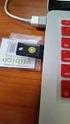 YubiKey Authentication Module Design Guideline Yubico Application Note Version 1.0 May 7, 2012 Introduction Disclaimer Yubico is the leading provider of simple, open online identity protection. The company
p@$5w0rd??_ 300% increase 280 MILLION 65% re-use passwords $22 per helpdesk call Passwords can no longer protect you
 Freja is an innovative solution to one of the biggest problems in the Internet era: How do you securely manage identities, access and credentials for a large number of users without costs going haywire?
Monalisa P. Kini, Kavita V. Sonawane, Shamsuddin S. Khan
 International Journal of Scientific & Engineering Research, Volume 5, Issue 7, July-2014 1410 Secured Authentication Using Mobile Phone as Security Token Monalisa P. Kini, Kavita V. Sonawane, Shamsuddin
Secure Authentication for the Development of Mobile Internet Services Critical Considerations
 Secure Authentication for the Development of Mobile Internet Services Critical Considerations December 2011 V1 Mobile Internet Security Working Group, SIMalliance AGENDA SIMalliance presentation What s
Citizens 1 st National Bank Mobile Banking FAQ
 Citizens 1 st National Bank Mobile Banking FAQ Citizens 1 st National Bank has an App for its customers available for Apple iphones, ipads and Android phones. SMARTPHONE DEVICE MINIMUM REQUIREMENTS APPLE
Implementing two-factor authentication: Google s experiences. Cem Paya ([email protected]) Information Security Team Google Inc.
 Implementing two-factor authentication: Google s experiences Cem Paya ([email protected]) Information Security Team Google Inc. Google services and personalization Identity management at Google 1. Internal
Beyond passwords: Protect the mobile enterprise with smarter security solutions
 IBM Software Thought Leadership White Paper September 2013 Beyond passwords: Protect the mobile enterprise with smarter security solutions Prevent fraud and improve the user experience with an adaptive
Guidelines for smart phones, tablets and other mobile devices
 Guidelines for smart phones, tablets and other mobile devices Summary Smart phones, tablets and other similar mobile devices are being used increasingly both privately and in organisations. Another emerging
Flexible Identity. Tokenless authenticators guide. Multi-Factor Authentication. version 1.0
 Flexible Identity Multi-Factor Authentication Tokenless authenticators guide version 1.0 Publication History Date Description Revision 2014.02.07 initial release 1.0 Copyright Orange Business Services
Securing e-government Web Portal Access Using Enhanced Two Factor Authentication
 Securing e-government Web Portal Access Using Enhanced Two Factor Authentication Ahmed Arara 1, El-Bahlul Emhemed Fgee 2, and Hamdi Ahmed Jaber 3 Abstract This paper suggests an advanced two-factor authentication
Dirty use of USSD codes in cellular networks
 .. Dirty use of USSD codes in cellular networks Ravishankar Borgaonkar Security in Telecommunications, Technische Universität Berlin TelcoSecDay, Heidelberg, 12th March 2013 Agenda USSD codes and services
Kaseya 2. User Guide. Version 1.0
 Kaseya 2 Mobile Device Management User Guide Version 1.0 March 12, 2012 About Kaseya Kaseya is a global provider of IT automation software for IT Solution Providers and Public and Private Sector IT organizations.
Wind River. Intelligent Device Platform XT EMS Profile EMS DEVICE MANAGEMENT USER'S GUIDE WIND RIVER 1.0
 Wind River Intelligent Device Platform XT EMS Profile WIND RIVER EMS DEVICE MANAGEMENT USER'S GUIDE 1.0 Copyright Notice Copyright 2014 Wind River Systems, Inc. All rights reserved. No part of this publication
MBAM Self-Help Portals
 MBAM Self-Help Portals Authoring a self-help portal workflow for BitLocker Recovery Using Microsoft BitLocker Administration and Monitoring (MBAM) Technical White Paper Published: September 2011 Priyaa
CA ArcotOTP Versatile Authentication Solution for Mobile Phones
 PRODUCT SHEET CA ArcotOTP CA ArcotOTP Versatile Authentication Solution for Mobile Phones Overview Consumers have embraced their mobile phones as more than just calling or texting devices. They are demanding
2-FACTOR AUTHENTICATION WITH
 2-FACTOR AUTHENTICATION WITH 2X JUNE 2014 Two-Factor Authentication and Authy What is Two-Factor Authentication? Two-Factor Authentication is a process involving two stages to verify the identity of someone
Single Sign On. SSO & ID Management for Web and Mobile Applications
 Single Sign On and ID Management Single Sign On SSO & ID Management for Web and Mobile Applications Presenter: Manish Harsh Program Manager for Developer Marketing Platforms of NVIDIA (Visual Computing
DIGIPASS as a Service. Google Apps Integration
 DIGIPASS as a Service Google Apps Integration April 2011 Table of Contents 1. Introduction 1.1. Audience and Purpose of this Document 1.2. Available Guides 1.3. What is DIGIPASS as a Service? 1.4. About
BlackShield Authentication Service
 BlackShield Authentication Service Guide for Users of CRYPTOCard MP-1 Software Tokens on Smart Phones Protecting Your On-line Identity Authentication Service Delivery Made EASY Copyright Copyright 2011.
MOBILE BANKING USER GUIDE
 MOBILE BANKING USER GUIDE CentricBank.com DrCentricBank.com 717.657.7727 Centric Bank does not currently charge a fee for Mobile Banking. However, your mobile phone provider may charge data usage fees
PULSE SECURE FOR GOOGLE ANDROID
 DATASHEET PULSE SECURE FOR GOOGLE ANDROID Product Overview In addition to enabling network and resource access for corporate managed mobile devices, many enterprises are implementing a Bring Your Own Device
Architecture and Data Flow Overview. BlackBerry Enterprise Service 10 721-08877-123 Version: 10.2. Quick Reference
 Architecture and Data Flow Overview BlackBerry Enterprise Service 10 721-08877-123 Version: Quick Reference Published: 2013-11-28 SWD-20131128130321045 Contents Key components of BlackBerry Enterprise
3 day Workshop on Cyber Security & Ethical Hacking
 3 day Workshop on Cyber Security & Ethical Hacking 1 st day-highlights-hands On Phishing Attack Hammad Mashkoor Lari Freelancer What is Cyber Security? What is Ethical hacking? What is Computer Science?
NetIQ Advanced Authentication Framework
 NetIQ Advanced Authentication Framework Security Officer Guide Version 5.2.0 1 Table of Contents 1 Table of Contents 2 Introduction 3 About This Document 3 Authenticators Management 4 Card 8 Email OTP
GO!Enterprise MDM Device Application User Guide Installation and Configuration for Android with TouchDown
 GO!Enterprise MDM Device Application User Guide Installation and Configuration for Android with TouchDown GO!Enterprise MDM for Android, Version 3.x GO!Enterprise MDM for Android with TouchDown 1 Table
Application Installation/Setup
 Application Installation/Setup Q: Who is allowed to use the iphone or Android Mobile Banking Applications? A: Any customer with personal accounts may access the App. The customer must also be in good standing
Spring Hill State Bank Mobile Banking FAQs
 Spring Hill State Bank Mobile Banking FAQs What is Mobile Banking? Mobile Banking enables you to access your account information using the Bank online banking website. You must first be enrolled as an
SYSPRO App Store: Registration Guide
 SYSPRO App Store: Registration Guide SYSPRO App Store Registration Guide 2 Table of Contents What is the SYSPRO App Store?... 3 The SYSPRO App Store URL... 3 Who can use it?... 3 Register as a customer...
Authentication Levels. White Paper April 23, 2014
 Summary White Paper April 23, 2014 This document describes levels of authentication that can be utilized for users known and unknown to gain access to applications and solutions. Summary... 1 Description...
Salesforce1 Mobile Security Guide
 Salesforce1 Mobile Security Guide Version 1, 1 @salesforcedocs Last updated: December 8, 2015 Copyright 2000 2015 salesforce.com, inc. All rights reserved. Salesforce is a registered trademark of salesforce.com,
Vulnerability Analysis on Mobile VoIP Supplementary Services and MITM Attack
 Vulnerability Analysis on Mobile VoIP Supplementary Services and MITM Attack You Joung Ham Graduate School of Computer Engineering, Hanshin University, 411, Yangsan-dong, Osan, Gyeonggi, Rep. of Korea
Fairsail REST API: Guide for Developers
 Fairsail REST API: Guide for Developers Version 1.02 FS-API-REST-PG-201509--R001.02 Fairsail 2015. All rights reserved. This document contains information proprietary to Fairsail and may not be reproduced,
APPLICATION OF CLOUD COMPUTING IN ACADEMIC INSTITUTION
 APPLICATION OF CLOUD COMPUTING IN ACADEMIC INSTITUTION 1 PRIYANKA DUKLE, 2 TRISHALA PAWAR, 3 SNEH BHAT 1,2,3 Computer, Amrutvahini College of Engineering, Sangamner Email: [email protected] 1, [email protected]
White Paper: Multi-Factor Authentication Platform
 White Paper: Multi-Factor Authentication Platform Version: 1.4 Updated: 29/10/13 Contents: About zero knowledge proof authentication protocols: 3 About Pairing-Based Cryptography (PBC) 4 Putting it all
A Guide to New Features in Propalms OneGate 4.0
 A Guide to New Features in Propalms OneGate 4.0 Propalms Ltd. Published April 2013 Overview This document covers the new features, enhancements and changes introduced in Propalms OneGate 4.0 Server (previously
The Top 5 Federated Single Sign-On Scenarios
 The Top 5 Federated Single Sign-On Scenarios Table of Contents Executive Summary... 1 The Solution: Standards-Based Federation... 2 Service Provider Initiated SSO...3 Identity Provider Initiated SSO...3
Guide to Evaluating Multi-Factor Authentication Solutions
 Guide to Evaluating Multi-Factor Authentication Solutions PhoneFactor, Inc. 7301 West 129th Street Overland Park, KS 66213 1-877-No-Token / 1-877-668-6536 www.phonefactor.com Guide to Evaluating Multi-Factor
Quick Start Guide: Iridium GO! Advanced Portal
 Quick Start Guide: Iridium GO! Advanced Portal Contents Set-Up... 3 Overview... 4 Main Tab 1: General... 5 Status.... 5 Settings... 8 Audio.... 8 GPS.... 9 Tab 2: Communication... 9 Wi-Fi... 9 Satellite...
User Guide Supplement. S/MIME Support Package for BlackBerry Smartphones BlackBerry Pearl 8100 Series
 User Guide Supplement S/MIME Support Package for BlackBerry Smartphones BlackBerry Pearl 8100 Series SWD-292878-0324093908-001 Contents Certificates...3 Certificate basics...3 Certificate status...5 Certificate
Android Developer Applications
 Android Developer Applications January 31, 2013 Contact Departmental Privacy Office U.S. Department of the Interior 1849 C Street NW Mail Stop MIB-7456 Washington, DC 20240 202-208-1605 [email protected]