
Culinary Applications
|
|
|
- Calvin West
- 10 years ago
- Views:
Transcription
1 5 Culinary Applications Chapter 15 Cooking Techniques 16 Seasonings and Flavorings 17 Breakfast Cookery 18 Garde Manger Basics 19 Sandwiches and Appetizers 20 Stocks, Sauces, and Soups 21 Fish and Shellfish 22 Poultry Cookery 23 Meat Cookery 24 Pasta and Grains 25 Fruits, Vegetables, and Legumes EXPLORE THE PHOTO Culinary workers must prepare a variety of foods. What types of foods have you prepared? 372 Unit 5 Culinary Applications

2 Local and Seasonal Foods After completing this unit, you will know how to identify and cook a variety of foods. In your unit thematic project you will find foods from your local area. Then you will create a visual presentation on how to prepare them and prepare a dish using them. Write a journal entry about the different types of foods you have made. What ingredients have you used? How did you choose them? How did you cook them? Culinary school allowed me to experience a tremendous amount of new foods and spices, and even tickled taste buds I Zena Harrison never knew I had. Assistant Food and Beverage Director/Catering Chef Compass Group Unit 5 Culinary Applications 373

3 CHAPTER 15 Cooking Techniques SECTIONS 15.1 How Cooking Alters Food 15.2 Dry Cooking Techniques 15.3 Moist Cooking Techniques Cause-and-Effect Paragraph Cause-and-effect paragraphs explain the reasons for something, or the results of something. Write a cause-andeffect paragraph about how an egg changes when it is cooked. Writing Tips 1. Use focusing sentences to help readers anticipate organization. 2. Use conjunctions such as as a result, due to, or because. 3. End with a concluding sentence. EXPLORE THE PHOTO Different cooking methods affect the flavor, texture, appearance, and nutritional content of food. How many different cooking techniques can you name? 374

4 SECTION 15.1 How Cooking Alters Food Reading Guide Use different cooking techniques for different foods. Think of an Example Look over the Key Concepts for this section. Think of an example of how or when you could use one of the skills from the Key Concepts. Thinking of how you might apply a skill can help motivate your learning by showing you why the skill is important. Read to Learn Key Concepts Compare and contrast different cooking methods. Explain how cooking affects a food s nutritive value, texture, color, aroma, and flavor. Main Idea Cooking is heating food to transform it in some way. Food is affected in different ways by different cooking techniques. Content Vocabulary dry cooking technique evaporate moist cooking technique combination cooking coagulate pigment caramelization Academic Vocabulary subject enhance Graphic Organizer As you read, you will discover five changes in food made by cooking. Use a herringbone diagram like this one to list the changes. ACADEMIC STANDARDS Mathematics NCTM Data Analysis and Probability Understand and apply basic concepts of probability. Science NSES B Develop an understanding of chemical reactions. NSES B Develop an understanding of the structure and properties of matter. Social Studies NCSS I A Culture Analyze and explain the ways groups, societies and cultures address human needs and concerns. Changes in Cooked Food NCTE National Council of Teachers of English NCTM National Council of Teachers of Mathematics NSES National Science Education Standards NCSS National Council for the Social Studies Graphic Organizer Go to this book s Online Learning Center at glencoe.com for a printable graphic organizer. Chapter 15 Cooking Techniques 375

5 Cooking Techniques Suppose the restaurant where you work offers chicken for dinner. There can be many different results, depending on how you choose to cook the chicken. You use very different cooking techniques to cook an egg, grill a steak, or stew tomatoes. Although each technique involves heating the food, they all use a different process to transfer heat to the food. The degree of change that occurs during the cooking process depends on the length of cooking time, the temperature, and the cooking technique you use. Some methods will produce a great deal of change, while others will not produce very much change. The three cooking techniques are dry, moist, and a combination of both. Dry Cooking A dry cooking technique uses oil, fat, the radiation of hot air, or metal to transfer heat. No moisture is used in this cooking process. Any moisture that comes from the food evaporates into the air. To evaporate means that a liquid escapes from a pan as a vapor. Baking and sautéing are good examples of dry cooking techniques. You will learn more about using dry cooking techniques in Section Moist Cooking A moist cooking technique uses liquid instead of oil to create the heat energy that is needed to cook the food. Boiling and simmering are good examples of moist cooking techniques. You will learn more about how to use moist cooking techniques in Section Combination Cooking Combination cooking uses both moist and dry cooking techniques. This kind of cooking is a two-step process. You start by using one technique and finishing with the other. For example, for stew, you brown the meat, a dry cooking technique. Then, you simmer the meat and vegetables with seasonings, a moist technique. The objective of combination cooking is to build upon food flavors. Method Knowledge You must know many different cooking methods to work in a professional kitchen. Why is it important to understand how different cooking methods work? 376 Unit 5 Culinary Applications

6 Perfect Timing Perfectly cooked vegetables should be colorful and flavorful. What happens to vegetables that have been overcooked? If you understand each type of cooking technique, you can combine them in ways that create great-tasting food. You will learn more about how to use combination cooking techniques in Section Distinguish What are the key differences between the dry, moist, and combination cooking techniques? Changes in Cooked Food A food s nutritive value, texture, color, aroma, flavor, and appearance do not stay the same after cooking. The cooking technique you choose can affect all of these factors. It is important to know how food will change after it is cooked. Nutritive Value The length of time food is cooked and the cooking technique you use determine how much nutrition a food will retain. Raw foods lose more nutritive value the longer they cook. In fact, certain cooking techniques can actually speed up nutrient loss. For example, boiling green beans extracts nutrients in two ways. Nutrients are destroyed simply because the green beans are exposed to heat. Nutrients also are lost during boiling because they are diluted in the liquid. You might think that if you steam the green beans, you will maintain all of the nutrients. Although steaming is one of the best ways to minimize nutrient loss, exposure to heat will still extract some nutrients from the green beans. However, because the vegetables are cooked by the steam, and not in water, they will not lose nearly as many nutrients as if they had been boiled. Texture If you have ever overcooked vegetables, you have seen how cooking can change the texture of food. During cooking, moisture is lost, food tissue breaks down, and proteins coagulate. All of these factors change the texture of cooked food. Chapter 15 Cooking Techniques 377

7 When heat is applied, the proteins in food coagulate. This means that they change from a liquid or semiliquid state to a drier, solid state. The longer that you subject, or expose, the proteins to heat the firmer and more solid they will become. For example, compare the difference in texture between a soft-cooked egg and a hard-cooked egg. If you simmer an egg for three to five minutes, you will produce a soft-cooked egg with a partly solid white and a semiliquid yolk. To produce a hard-cooked egg with both a solid white and yolk, the egg must be simmered for 8 to 10 minutes. The length of time cooked will affect the texture of the egg white and yolk. Coagulation also occurs in meat proteins as heat is applied during cooking. Meat proteins lose some moisture as the protein becomes more solid during cooking. Long, slow cooking techniques and moderate heat will make some meats tender, flavorful, and juicy. However, using too much heat can toughen the protein in those same meats. This happens because too much moisture is lost. Color The cooking process also affects the color of food. For example, certain ingredients that are commonly used to cook vegetables, such as lemon juice, vinegar and baking soda, can change the color of vegetables. There are cooking techniques, such as blanching, that can help keep the color of vegetables. (You will learn about blanching in Section 15.3) Fruits and vegetables get their unique colors from naturally occurring pigments. A pigment is the matter in cells and tissue that gives them their color. Common pigments in foods include chlorophyll (green vegetables), flavonoids (red, purple, and blue vegetables), and carotenoids (yellow, orange, and red vegetables). Many foods have more than one type of pigment. Remember that the longer that fruits and vegetables are cooked, the more their color will change. Likewise, as meat cooks for extended periods of time, moisture is extracted. The meat will lose its deep-red color as it cooks. These color changes happen at different temperatures. Texture Changes When highprotein foods are cooked, their texture changes. How can you tell which egg has been cooked longer? 378 Unit 5 Culinary Applications

8 As the internal temperature of meat reaches between 140 F and 160 F (60 C and 71 C), the redness decreases significantly. The same thing happens when the meat reaches an internal temperature between 168 F and 176 F (76 C and 80 C). That is why the inside of a rare steak is red, a medium rare steak is pink, and a well done steak is brownish gray. Remember, however, that using a thermometer to measure internal temperature is the only safe way to determine if meat is done. Aroma The aroma created from cooking food can be as appealing as the flavor and presentation of the final dish. Cooking techniques that use fat as an ingredient or as a way to transfer heat create an appealing aroma. Caramelization (=ker-`-m`l-`-+z@-sh`n), or the process of cooking sugar to high temperatures, is what creates these pleasing aromas. As the sugar in the food turns brown, a rich aroma is produced. Caramelization can also affect the color and flavor of food. Flavor The cooking process also affects the flavor of food. If you have ever eaten overcooked meat or vegetables, you know that overcooking can ruin the flavor. However, if you use the correct cooking technique, you can actually enhance, or increase the quality of, the flavor of food. For example, if you grill meats over charcoal or woods such as hickory and mesquite, it will give them an appealing, smoky flavor. Foods that are cooked with dry-heat methods taste rich because of the caramelization that occurs. Moist cooking techniques help bring out a food s natural flavor. The flavor of foods can also be changed during cooking by using seasonings and flavorings at different times during the cooking process. Cooking methods that use liquids rather than fats to cook can bring out Color Fade Do you know what gives green vegetables their color? Green vegetables, such as broccoli and spinach, contain two types of the pigment chlorophyll. One type of chlorophyll is a bright bluish-green color. The other type is a yellowishgreen color. Green vegetables have about four times more of the blue-green type than the yellow-green type. To maintain the color of a green vegetable, do not overcook it. Heat from cooking damages the vegetable s cells. This allows the acids that were in the once-living cells of the vegetable to be released. Once exposed to this acid, the chlorophyll changes to a brownish-yellow color. Procedure To complete the following experiment, you will need four broccoli stalks, a pot with a lid, and a second pot without a lid. Bring 3 cups of water to a boil in each uncovered pot. Separate the florets, or flowers, of the broccoli. Place half of the broccoli in one pot and cover it with the lid. Place the rest of the broccoli in the other pot without a lid. Cook both pots of broccoli for 7 minutes. After 7 minutes, drain each pot and place the broccoli into two separate bowls. Analysis Determine which style of cooking provided a greener vegetable. Examine each bowl. Describe the color and the texture of the broccoli in each bowl. Which dish has the greener broccoli? Explain in a short summary why you think one method of cooking had a greater impact on the color change than the other. NSES B Develop an understanding of chemical reactions. flavors in a food. Slow roasting foods will bring out rich flavors. Deep-frying foods creates a unique flavor that is enhanced by the crispness of the food. It is important to enhance the flavor of food because it increases the appeal of the food to the customer. Appealing food is one of the main factors that will bring back customers to a restaurant. If you do not choose the right cooking method for a food, all other methods to enhance flavor will be wasted. Chapter 15 Cooking Techniques 379

9 Another way to enhance the flavor of food is to add seasonings and flavorings before, during, or after the cooking process. These seasonings and flavorings, including herbs, spices, and condiments, will be discussed in more detail in Chapter 16. Not all seasonings and flavorings are used in the same way. Knowing which seasoning to add, and when to add it, is an important part of your culinary training. Safety Check Internal Temperatures Although you should be careful not to overcook food, it must be cooked to a minimum internal temperature to be safe. A thermometer shows the minimum safe internal cooking temperatures for various foods. CRITICAL THINKING What might happen if food is not cooked to the minimum internal temperature? Explain Why does the texture of foods toughen after prolonged exposure to heat? SECTION 15.1 Review Key Concepts 1. Describe dry cooking techniques. 2. Explain how cooking can affect the texture of a food. Practice Culinary Academics Science 3. Procedure Work in groups as directed by your teacher. Wash and peel several carrots and divide them into three even amounts. Cook each group using the following techniques: 1) steam, 2) roast, 3) sear and then braise. Analysis Sample each group of carrots and evaluate the differences in texture, color, aroma, and flavor. Why are there differences? Summarize your results. NSES Content Standard B Develop an understanding of the structure and properties of matter. Social Studies 4. Choose a country and research common cooking techniques that are used in that country. What types of cooking methods are they? Can you predict how these techniques would affect nutritive value, texture, color, aroma, and flavor? Give a fiveminute oral presentation on your findings. Use pictures to illustrate cooking techniques. Mathematics 5. Your sous chef prepared one dozen softcooked eggs and one dozen hard-cooked eggs. Unfortunately, he then mixed the two batches together in one container. What is the probability that if you grab two of the eggs, both will be hard-cooked? Math Concept Probability of Dependent Events When two events are dependent (the probability of a second event depends on the outcome of the first), find the probability of each event, and multiply those probabilities together. Starting Hint For the first selection, the probability that the egg is hard-cooked is 12/24 (or ½). However, when you select the next egg, remember that there will be one fewer hardcooked egg, and one fewer egg overall. NCTM Data Analysis and Probability Understand and apply basic concepts of probability. Check your answers at this book s Online Learning Center at glencoe.com. NCSS I A Culture Analyze and explain the ways groups, societies and cultures address human needs and concerns. 380 Unit 5 Culinary Applications

10 SECTION 15.2 Dry Cooking Techniques Reading Guide Bake, roast, or grill foods to give them a rich flavor. Study with a Buddy It can be difficult to review your own notes and quiz yourself on what you have just read. According to research, studying with a partner for just 12 minutes can help you study better. ACADEMIC STANDARDS Read to Learn Key Concepts Demonstrate dry cooking techniques. Main Idea Dry cooking causes moisture in food to evaporate into the air. Dry cooking techniques include baking, roasting, sautéing, stir- frying, pan-frying, deepfrying, grilling, and broiling. Content Vocabulary bake carryover cooking smoking roasting sear basting open-spit roast sautéing stir-frying wok frying dredging breading batter heat lamp pan-fry deep-fried recovery time grilling griddle broiling Academic Vocabulary effect delicate Graphic Organizer Use a matrix like the one below to list the different dry cooking techniques, with a short description of each. Technique Dry Cooking Techniques Description Graphic Organizer Go to this book s Online Learning Center at glencoe.com for a printable graphic organizer. English Language Arts NCTE 5 Use different writing process elements to communicate effectively. Mathematics NCTM Geometry Use visualization, spatial reasoning, and geometric modeling to solve problems. Science NSES B Develop an understanding of the interactions of energy and matter. Social Studies NCSS V A Individuals, Groups, and Institutions Apply concepts such as role, status, and social class in describing the connections and interactions of individuals, groups, and institutions in society. NCSS I B Culture Predict how data and experiences may be interpreted by people from diverse cultural perspectives and frames of reference. NCTE National Council of Teachers of English NCTM National Council of Teachers of Mathematics NSES National Science Education Standards NCSS National Council for the Social Studies Chapter 15 Cooking Techniques 381

11 Dry Cooking Dry cooking techniques include baking, roasting, sautéing, stir-frying, pan-frying, deep-frying, grilling, and broiling. Do not let the word dry fool you. It is called the dry cooking technique because no moisture is directly used in the cooking process. Any moisture that comes from the food evaporates into the air. Some dry cooking techniques use oil and fat to transfer heat. Others use metal and radiation of hot air to create heat. This section will introduce you to dry cooking techniques. Baking Baking is a very popular dry cooking technique. Bread and chicken are foods that are commonly baked. Fish, vegetables, fruits, breads, and pastry items also can be baked. To bake, you use dry heat in a closed environment, usually an oven. No fat or liquid is added to the cooking process. Any moisture that comes from food is turned into steam and evaporates into the air. This is because the food is baked uncovered. A large food product will continue to cook for 5 to 15 minutes after you remove it from the oven. This is called carryover cooking, or the cooking that takes place after you remove something from its heat source. This happens because the outside of the food is hotter than the inside of the food. This effect, or result, continues until the temperature throughout the food becomes stable. Carryover cooking can add 5 to 15 degrees to the food s final temperature. There is no way to stop the carryover cooking that happens at the end of dry heat cooking. You must keep this effect in mind when you plan cooking times. Smoking Smoking is usually done with meats, but also can be done with other foods, such as nuts, vegetables, and cheeses. Smoking is a form of cooking that uses low heat, long cooking times, and wood smoke for flavor. Commercial smokers are usually kept at a temperature of 225 F (107 C). Smoking is done with hot coals, to which smoking wood chunks of hickory, mesquite or just about any Roasted Foods Roasting adds a rich flavor to meats and vegetables. What other foods could be roasted? 382 Unit 5 Culinary Applications

12 hardwood or fruitwood is added. Foods are placed on the opposite side of the smoker as the coals and wood. This keeps the food from cooking too quickly. Roasting Like baking, roasting uses dry heat in a closed environment to cook food. Foods commonly roasted include meat and poultry. These foods are placed on top of a rack that is inside a pan. This allows air to circulate all the way around the food so that it cooks evenly. In general, roasting involves longer cooking times than baking. Carryover cooking also applies to roasting. Remove roasted foods from the oven just before they reach the desired doneness. Remember to use a thermometer to check the internal temperature of foods for safety. The carryover heat that occurs will complete the cooking process. Searing Roasting differs from baking in that sometimes the outside of the food product is seared. To sear means to quickly brown the outside of food at the start of the cooking process. Searing enhances flavors and adds color. It also helps to build body in juice drippings that can later be used to make sauces. Searing can be done two different ways: in a pan on the rangetop or in the oven. When you sear foods on the rangetop, heat the pan, then place the food in a pan that contains a small amount of heated oil. Brown the meat on one side, and then turn the meat until all of its surfaces are browned. After this is done, place the pan in a hot oven to finish the cooking process. When searing in the oven, place the food, such as a roast, in a pan in a 450 F to 475 F (232 C to 246 C) oven. Cook the meat for about 15 to 20 minutes, or until the outside begins to turn golden brown. Then, reduce the heat to 325 F to 350 F (163 C to 177 C) to finish the cooking process John F. Kennedy is elected President of the United States 1963 Julia Child s cooking show The French Chef debuts on TV Cooking Through Time Cave drawings dating back to the Stone Age show that prehistoric life centered around the gathering and preparation of food. Prehistoric people had no choice but to grill or roast their food on small open fires. During the Middle Ages, the cauldron was the main cooking pot in the kitchen. Seventeenthand 18 th -century people cooked food over fire in kettles or on spits. Chefs such as Elizabeth David and Julia Child have made an impact on cooking history by introducing both new and historic cooking methods to the masses through their cookbooks and television shows. Although some cooking methods have evolved, others remain the same today as they were in prehistoric times. History Application Imagine that you are a TV news reporter doing a story on Julia Child s life and career. Research Julia Child s career and write a short biography on her life. Explain how she revolutionized the cooking world. NCSS V A Individuals, Groups, and Institutions Apply concepts such as role, status, and social class in describing the connections and interactions of individuals, groups, and institutions in society. Some meats should be basted during the cooking process to avoid dryness. Basting involves moistening foods with melted fats, pan drippings, or another liquid during the cooking time. Open-Spit Roasting Many cooks prefer to roast food over an open fire. This is called open-spit roasting. To open-spit roast, place the food, usually meat such as pork, on a metal rod or a long skewer. Then, slowly turn it over the heat source. Place a drip pan under the food to catch its juices. Many commercial roasters will automatically turn the spit during the long cooking time. Chapter 15 Cooking Techniques 383

13 Check the internal temperature with a thermometer before you remove food from the spit. Remember that the food will continue to cook for another 5 to 15 minutes after you remove it from the heat source. Sautéing and Stir-Frying Sautéing (s}-=t@-i{) is a quick, dry cooking technique that uses a small amount of fat or oil in a shallow pan to cook foods. Sautéing is generally used with delicate, or fragile, foods that cook relatively quickly. These foods include fish fillets, scallops, tender cuts of meat, vegetables, and fruit. Most sautéed foods are served with a sauce. During sautéing, you will want to seal the surface of the food. To do this, preheat a pan on high heat, then add a small amount of fat or oil. When the fat or oil is heated and nearly smoking, add the food. Do not overcrowd the pan. Doing so will lower the temperature of the food, and it will not cook properly. After the food is sealed, lower the temperature so that the food cooks evenly throughout. Foods may need to be turned in the pan while they are sautéing. Stir-frying is a dry cooking technique that is similar to sautéing. When stir-frying, you use a wok. A wok is a large pan with sloping sides. Stir-fried foods require less cooking time than sautéed foods. Vegetables and tender, boneless meats are often stir-fried. To stir-fry, place a wok over high heat, add a small amount of fat, and then add small pieces of food. Because of the wok s size and shape, it is important to constantly stir the food as it cooks. Frying It is hard for most people to resist crispy foods, such as fried chicken and French fries. Foods like these are prepared using a dry-heat cooking technique called frying. During frying, foods are cooked in larger amounts of hot fat or oil. Small Bites Pan-Frying Tip Chill cuts of meat before you pan-fry them. The outside of the meat will brown before the inside finishes cooking. The outside of the food becomes sealed when it comes in contact with the hot oil during frying. The natural moisture that is in the food turns to steam, which bubbles up to the surface. Because the outside of the food is sealed, fried foods are often moist and juicy on the inside. Foods are usually coated before frying. To do this, foods can be dredged, breaded, or battered. Dredging One way to prepare foods for frying is to dredge them. Dredging means to coat foods with flour or finely ground crumbs. Breading Another way to add texture and flavor to fried foods is to add a breading, or a coating made of eggs and crumbs. Batter Another tasty way to prepare fried foods is to batter them before frying them. This adds texture and flavor. Batter is a semiliquid mixture that contains ingredients such as flour, milk, eggs, and seasonings. Dip the food into the batter immediately before frying. Tips to Follow After Frying After food has been fried, remove it from the oil and drain it well on an absorbent surface such as paper towels. You can also add seasoning at this time. Fried foods are best served and eaten immediately after being cooked. If you cannot serve fried foods right away, they can be temporarily stored under a heat lamp. A heat lamp uses light in the infrared spectrum to keep food warm during holding without becoming soggy. Pan-Frying One way to fry food is pan-frying. To pan-fry, heat a moderate amount of fat in a pan before adding food. Use enough fat to cover about one-half to three-quarters of 384 Unit 5 Culinary Applications

14 HOW TO 1 Dredge and Bread Food Dredge the food product in seasoned, dry flour by dipping it into the flour and coating it evenly on all surfaces. Shake off any excess flour. 2 Immediately dip the food into an egg wash or other liquid. An egg wash is a mixture of beaten eggs and a liquid such as milk or water. Coat the food completely. Shake off any excess. 3 Quickly place the food into a container of dry crumbs and coat evenly. Crumbs can be made from bread, ground nuts, cereal, crackers, or shredded coconut. the food. The fat should not be so hot that it smokes. Instead, it should be hot enough to sizzle when food is added, usually at 350 F to 375 F (177 C to 191 C). Pan-frying does use more fat than sautéing, so it requires longer cooking times and lower heat. Because food is not completely covered by the oil during pan-frying, you will need to turn the food after one side is done to allow for even cooking throughout. Foods that are often pan-fried include chicken, potatoes, fish, and pork chops. Deep-Frying Another way to fry foods is to deep-fry them. Deep-frying means to cook foods by completely submerging them in heated fat or oil at temperatures between 350 F and 375 F (177 C to 191 C). Fried foods must be cooked until they are done on the inside. Temperature and timing on deep-fat fryers help you determine doneness. Deep-fried foods will be a golden brown color. Once deepfried foods are done, remove them from the oil and briefly hold them up over the oil tank Chapter 15 Cooking Techniques 385

15 so that the excess fat can drip off. Oil must be changed frequently. Heat and use can cause oil to darken, break down, and give food an off flavor. Oil can also transfer strong flavors between foods. The most popular types of deep-fried foods are potatoes, onions, fish, and poultry. Many foodservice operations purchase foods that are already breaded and are ready to be deepfried. Commercial fryers with fry baskets that can sit directly in the oil are commonly used. Commercial deep-fryers have some advantages over other frying equipment: There is less recovery time than with stove-top pots. Recovery time is the time it takes for the fat or oil to return to the preset temperature after the food has been submerged. The life of the fat or oil is maximized if correct temperatures are used. Grilling Many commercial kitchens use gas, electric, charcoal, or wood-fired grills. Grilling is often used for tender foods that cook relatively quickly. To grill foods properly, you must first preheat the grill. Depending on the type of food you wish to grill, brush the food lightly with oil, and then place it on the grill. Do not move the food after you place it initially. This will help create the distinctive markings of a grilled food product. Griddle Use Grilling can also be done on a griddle. A griddle is a flat, solid plate of metal with a gas or electric heat source. Griddles are commonly used to make sandwiches such as grilled cheese and breakfast items such as pancakes and eggs. Depending on the type of food that is cooked, you may want to add a little fat to the griddle to keep the food from sticking. The temperature of a griddle is about 350 F (177 C). Food can also be grilled on a grooved griddle. This type of griddle has raised ridges. Although grooved griddles are similar in design to grills, they do not generate as much smoke as a grill. That is why food cooked on a griddle will not have the same smoky flavor as food cooked on a grill. Colorful Cooking Cooking foods produces many changes in the food. What changes occurred to this food as it cooked? 386 Unit 5 Culinary Applications

16 Broiling Broiling means to cook food directly under a primary heat source. When you broil food, the temperature is controlled by how close the food is to the heat source. Thicker foods should be placed farther from the heat source, and thinner foods should be placed closer to the heat source. This ensures that the inside and outside of the food will cook at the same rate. Foods that are commonly broiled include vegetables, meats, and poultry. Tender foods lend themselves to being broiled. Foods are usually turned only once during cooking when they are broiled. The broiling rack may make grill marks on the food, or a heatproof Small Bites Seasonings Some cooks add seasonings to the meat before broiling. Do not add salt before broiling, however, because it draws out juices. This can dry out the meat. platter may be used. Unlike a grill, broilers are heated only by gas or electricity. Additional flavors cannot be added to the food by burning charcoal or wood. Broiling uses no extra fat to cook food. Compare and Contrast How do stir-frying and sautéing differ? SECTION 15.2 Review Key Concepts 1. Explain how to use a griddle. Practice Culinary Academics English Language Arts 2. Imagine that you write an advice column for a local or school newspaper about cooking. Ask and answer two questions about using dry cooking techniques. Share your column with the class. NCTE 5 Use different writing process elements to communicate effectively. Science 3. Procedure Cook a piece of chicken and a potato. Record the temperature immediately after removing the food from the oven. Record the temperature again each minute until the food begins to cool. Analysis Create a chart of the cooling times for each item. What do you observe about carryover cooking times? NSES B Develop an understanding of the interactions of energy and matter. Social Studies 4. Choose a dry cooking technique and study its development. What were the first cultures to use the technique? How has it changed since then? What cultures use the technique now? Create a two-page report to discuss your research. NCSS I B Culture Predict how data and experiences may be interpreted by people from diverse cultural perspectives and frames of reference. Mathematics 5. To pan-fry some breaded chicken cutlets, Jody adds oil to her pan so that the oil is 1/2-inch deep. If the pan is 10 inches in diameter, how many fluid ounces of oil did Jody use? Math Concept Volume of a Cylinder Calculate the volume (V) of a cylinder as V = πr 2 h, where r = the radius of the circular base, and h is the height of the cylinder. Use 3.14 for π. Starting Hint Find the volume in cubic inches of the oil using the formula, with 0.5 inches as h and one-half the pan s diameter as r. One cubic inch = fluid ounces, so multiply the volume by NCTM Geometry Use visualization, spatial reasoning, and geometric modeling to solve problems. Check your answers at this book s Online Learning Center at glencoe.com. Chapter 15 Cooking Techniques 387

17 SECTION 15.3 Moist Cooking Techniques Reading Guide Boil, simmer, or poach foods to add tenderness and flavor. Preview Understanding causes and effects can help clarify connections. A cause is an event or action that makes something happen. An effect is a result of a cause. Ask yourself, Why does this happen? to help you recognize cause-and-effect relationships in this section. Read to Learn Key Concepts Demonstrate moist cooking techniques. Describe combination cooking techniques. Main Idea Moist cooking involves heating food in a liquid. Sometimes moist cooking techniques are applied to food that has been partially cooked with a dry cooking technique. Content Vocabulary boiling boiling point convection blanching shocking parboiling simmering reduce poach steaming braising deglaze stewing Academic Vocabulary submerged extracted Graphic Organizer There are four steps in stewing foods. Use a sequence chart like this one as you read to list these steps Steps in Stewing Foods ACADEMIC STANDARDS English Language Arts NCTE 12 Use language to accomplish individual purposes. Mathematics NCTM Problem Solving Build new mathematical knowledge through problem solving. Science NSES B Develop an understanding of interactions of energy and matter. NCTE National Council of Teachers of English NCTM National Council of Teachers of Mathematics NSES National Science Education Standards NCSS National Council for the Social Studies Graphic Organizer Go to this book s Online Learning Center at glencoe.com for a printable graphic organizer. 388 Unit 5 Culinary Applications

18 Cooking in Liquid There is more than one way to cook eggs. Some people like them to be boiled so that they are hard-cooked, while others prefer their eggs lightly poached so that they are softer in texture. Boiling and poaching are both moist cooking techniques. Cooking food using a moist technique involves heating food in a liquid other than oil. Moist cooking techniques include boiling, blanching, parboiling, simmering, poaching, and steaming. Sometimes, a moist cooking technique is applied to foods that have already been partially cooked using a dry cooking technique. This section will introduce you to moist and combination cooking techniques. When you cook foods in water or other liquids, foods are completely submerged, or covered in liquid. Boiling, simmering, and poaching involve cooking in liquid. The doneness of food will depend on the type of food that is cooked and the specific method chosen. Boiling Boiling is a moist cooking technique in which you bring a liquid, such as water or stock, to the boiling point and keep it at that temperature while the food cooks. The boiling point, or temperature at which a liquid boils, of water is 212 F (100 C) at sea level. When liquid reaches the boiling point, food can be added and cooked. When liquid boils, a process called convection occurs. During convection, the liquid closest to the bottom of the pan is heated and rises to the top. Meanwhile, the cooler liquid descends to the bottom of the pan. This sets off a circular motion in the pan that keeps the food in constant motion. This motion keeps food from sticking to the pan. Boiling cooks food quickly. However, it can be harmful to some food. The rapid circular motion of the liquid does not harm pasta, but it can break apart a tender piece of fish. Because of this, very few food items are cooked completely by boiling. Bring to a Boil Boiling is best used for foods that are not too tender or delicate. Why should delicate foods not be boiled? Chapter 15 Cooking Techniques 389

19 Cool Down One way to cool food immediately after blanching is to plunge it into ice water. What should be done with food after it has been blanched? Blanching Using the boiling method to partially cook food is also known as blanching. It is a quick way to change the flavor and keep the color in foods. Blanching is usually a two-step process: 1. Completely submerge the food in a boiling liquid and blanch, or briefly cook, it. 2. Remove the blanched food from the liquid. To make sure the food stops cooking as soon as you remove it from the liquid, briefly plunge the food into ice water. This is called shocking. This will completely stop the cooking process. Remember that a blanched food item is only partially cooked. You will need a second stage of cooking to complete the cooking process. For example, you might first blanch green beans and then sauté them in butter and herbs. Blanching has many uses. Blanching is sometimes used to: Simplify peeling of vegetables and fruits. Precook foods before they are frozen. Soften herbs. Lock in the color of foods. Help preserve a food s nutrients. Remove excess salt from ham or pork. Remove blood from meats. Remove strong flavors from meats. Cook food partially to prepare it for faster service later. Parboiling Parboiling is a moist cooking technique that is similar to blanching. In parboiling, foods are put into boiling water and partially cooked. However, the cooking time for parboiling foods is longer than for blanching. Recipes that include parboiling will give you the exact timing for a particular food item. For example, ribs are often parboiled before they are grilled. This tenderizes the meat and reduces grilling time. Small Bites Tomato Peeling You can lightly blanch a fresh tomato to make it easier to peel. You must immediately plunge the tomato into ice water after blanching so that it does not continue to cook. 390 Unit 5 Culinary Applications

20 Simmering Simmering is the most commonly used moist cooking method. It can be used to cook food items, or blanch them. Foods should be simmered until they are moist and tender. Like boiling, simmering involves cooking food in liquid. However, during simmering, food cooks slowly and steadily in a slightly cooler liquid that is heated from 185 F to 200 F (85 C to 93 C). The bubbles in the liquid rise slowly to the surface of the liquid, but do not break the surface. Because of the lower temperature, not as much convection action occurs during simmering. This makes simmering a much more gentle cooking process than boiling. Foods such as yellow squash and zucchini should be fully submerged in the liquid to simmer. The advantages of simmering include less shrinkage of the food, less evaporation and better control over evaporation, and less breakup of fragile food, such as fish. Simmering is also used to reduce, or decrease the volume of, a liquid. For example, you might want to simmer spaghetti sauce to make it thicker. Poaching Poaching is an even gentler method of moist cooking than simmering. To poach means to cook food in a flavorful liquid between 150 F (66 C) and 185 F (85 C). Generally, tender or delicate foods such as fish and eggs are poached in just enough liquid to cover the food. You can poach food on the rangetop or in the oven. Sometimes the poaching liquid is used to make a sauce that accompanies the food when it is served. Steaming Steamed vegetables are both tasty and nutritious. Steaming means cooking vegetables or other foods in a closed environment filled with steam, such as in a pot with a tight-fitting lid. Steam is created inside the pot when water reaches the boiling point and turns into vapor. Although the food never touches the liquid, the temperature inside the closed environment rises high enough to cook the food. Steaming is generally faster than other moist cooking techniques. Gentle Simmer Simmering cooks foods slowly. What are some of the advantages of simmering versus boiling? Chapter 15 Cooking Techniques 391

21 If pressure is added during steaming, the temperature inside the pot rises even higher. This cooks the food even faster. A pressure steamer holds steam under pressure. As the pressure increases, so does the temperature. For example, say you cook asparagus at 10 pounds of pressure per square inch (psi) at 240 F (116 C). If you increase the pressure to 15 psi, the temperature will rise to 250 F (121 C). Steamers cook foods, such as vegetables, without dissolving the nutrients. Summarize Why would you blanch a food? Combination Cooking Sometimes, great things happen when you combine the best of two techniques. This is the case with combination cooking. As the term suggests, combination cooking combines two techniques you have already learned: moist and dry. Two major combination techniques are braising and stewing. Braising and stewing involve both a dry and a moist cooking process. The first step for both cooking methods is usually to brown the food using dry heat. Then, the food is completely cooked by simmering the food in a liquid. Cooking food using a combination technique is especially useful for tough, but flavorful, cuts of meat. The combination cooking process makes the meat more tender. It is also an excellent way to prepare large pieces of less-tender meat. Braising Braising is a long, slow cooking process. It can make tough cuts of meat more tender. Meat is first seared and the pan deglazed before the moist cooking technique is used. To deglaze means to add a small amount of liquid such as stock or water to a pan to loosen brown bits of food after searing or sautéing. An additional amount of stock, sauce, or water is added, and the food is cooked on top of the range or in the oven. During cooking, braising produces a very flavorful liquid. The flavors extracted, or drawn out, from the food become highly concentrated. Flavorful Liquid Braising liquid should be strained before it can be reused for sauces. Why do you think this is? 392 Unit 5 Culinary Applications
22 Imagine braising a pork loin. The juices from the pork are mixed with the braising liquid. The braising liquid takes on the flavor of the meat s juices. Braised foods are always served with the cooking liquid. You will want to strain, thicken, and add salt, pepper, or other spices to the liquid before you serve it. HOW TO 1 Braise Food Begin by searing the food in a frying or roasting pan. 3 Cook the vegetables and deglaze by adding a small amount of liquid to the pan. Stir to dissolve the browned bits of food that stick to the pan. Return the seared food to the pan if you removed it. 2 Remove the food from the pan or push it to one side. Add mirepoix or vegetables that are appropriate to the preparation. 4 Add enough liquid, such as stock or sauce, to cover no more than two-thirds of the food. Cover the pan, if desired. Place the pan in a 350 F (177 C) oven, and cook the food slowly until it is fork- tender. Turn the food every 20 to 30 minutes. Braising can also be done on the rangetop over low heat. Chapter 15 Cooking Techniques 393
23 Stewing Stewing is another combination cooking technique. However, stewed foods are completely covered with liquid during cooking. Cooking time for stewing is generally shorter than for braising. That is because the main food item in stew is cut into smaller pieces before cooking. Follow these steps to stew foods: 1. First, sear the food in a pan over high heat. Tender cuts of meat should not be stewed or they will become tough. 2. Completely cover the food with liquid. 3. Bring the stew to a simmer and cook until tender. 4. Add vegetables, if desired, part of the way through simmering the main food. This will ensure that the vegetables will not be overcooked when the main food in the stew is fully cooked. Explain What are the differences between braising and stewing? Safety Check Burned by Steam Take special care when you remove the lids from pots or containers that may have steam trapped inside. Always tip the lid open by lifting it away from your hand and body. Steam is at least 212 F (100 C) and can cause severe burns. CRITICAL THINKING Why do you think the steam is so hot? SECTION 15.3 Review Key Concepts 1. Explain how to blanch foods. 2. Describe the braising process. Practice Culinary Academics Science 3. Procedure Browning occurs in meat when it is cooked at high heat. Cook two pieces of meat. Sear one piece, and use another cooking technique on the second piece that does not involve searing. Analysis Compare the flavor of the seared meat with the other meat. Create a chart to record observations about the appearance and flavor. Write a short summary of why you think meat is browned before stewing or braising. NSES B Develop an understanding of interactions of energy and matter. English Language Arts 4. Create a poster to illustrate the process of braising foods. Use drawings and text to display each step in the process. Display your posters in the classroom. Mathematics 5. Gina can cook basmati rice 3½ times faster in her pressure cooker than in a regular pot. If rice normally cooks in 20 minutes, what is the cooking time in the pressure cooker (to the nearest second)? Math Concept Working with Time To convert decimal minutes (such as 12.43) into minutes and seconds, keep the whole number portion (as minutes), and multiply the decimal portion by 60 (which represents the seconds). Starting Hint Find the new cooking time by dividing 20 minutes by 3 ½. Convert any decimal portion of your answer into seconds by multiplying it by 60. Round to the nearest second. NCTM Problem Solving Build new mathematical knowledge through problem solving. Check your answers at this book s Online Learning Center at glencoe.com. NCTE 12 Use language to accomplish individual purposes. 394 Unit 5 Culinary Applications
24 CHAPTER 15 Review and Applications Chapter Summary There are three different cooking techniques: dry, moist, and combination cooking. The cooking technique, temperature, and cooking time affect nutritive value, texture, color, aroma, and flavor. Dry techniques include baking, roasting, sautéing, stir-frying, pan-frying, deep-frying, grilling, and broiling. Moist cooking techniques include boiling, simmering, poaching, and steaming. Combination cooking techniques include braising and stewing. Content and Academic Vocabulary Review 1. Create multiple-choice test questions for each content and academic vocabulary term. Content Vocabulary dry cooking technique (p. 376) evaporate (p. 376) moist cooking technique (p. 376) combination cooking (p. 376) coagulate (p. 378) pigment (p. 378) caramelization (p. 379) bake (p. 382) carryover cooking (p. 382) smoking (p. 382) roasting (p. 383) sear (p. 383) basting (p. 383) open-spit roast (p. 383) sautéing (p. 384) stir-frying (p. 384) Review Key Concepts wok (p. 384) frying (p. 384) dredging (p. 384) breading (p. 384) batter (p. 384) heat lamp (p. 384) pan-fry (p. 384) deep-fried (p. 385) recovery time (p. 386) grilling (p. 386) griddle (p. 386) broiling (p. 387) boiling (p. 389) boiling point (p. 389) convection (p. 389) blanching (p. 390) shocking (p. 390) parboiling (p. 390) simmering (p. 391) reduce (p. 391) poach (p. 391) steaming (p. 391) braising (p. 392) deglaze (p. 392) stewing (p. 394) Academic Vocabulary subject (p. 378) enhance (p. 379) effect (p. 382) delicate (p. 384) submerged (p. 389) extracted (p. 392) 2. Compare and contrast different cooking methods. 3. Explain how cooking affects a food s nutritive value, texture, color, aroma, and flavor. 4. Demonstrate dry cooking techniques. 5. Demonstrate moist cooking techniques. 6. Describe combination cooking techniques. Critical Thinking 7. Imagine that a coworker has cooked a meal. The piece of cooked meat is tough and grayish-brown color, and the vegetables are limp and colorless. What has gone wrong during cooking? 8. Explain how you should prepare an extra-lean pork loin roast to avoid it becoming dry and tasteless. 9. Imagine that a food critic is coming to your restaurant. What would you tell your staff about cooking to ensure good flavor, nutritive value, texture, color, and aroma? 10. Describe the advantages of having a variety of cooking techniques on a restaurant menu. Is it possible to have too many techniques represented? Chapter 15 Cooking Techniques 395
25 CHAPTER 15 Review and Applications Academic Skills English Language Arts 11. Interpret Cooling Methods Obtain a cookbook or a cooking magazine that has at least 10 recipes. Read through the book or magazine and review the recipes. Choose 10 recipes and identify the cooking techniques used in each. For each recipe, list the cooking technique, whether it is moist or dry, and how you think the technique will affect the dish s color, texture, aroma, and flavor. NCTE 3 Apply strategies to interpret texts. Social Studies 12. Equipment Advances Choose one cooking technique and conduct research to discover how the equipment used for that cooking method has changed over time. Create a time line with brief descriptions of the changes in the equipment used. How has the changing equipment improved that cooking technique? NCSS VIII B Science, Technology, and Society Make judgments about how science and technology have transformed the physical world and human society. Mathematics 13. Fill a Fryer Oscar has just purchased a new deep fryer for his restaurant. The fryer holds 60 pounds of cooking oil. But Oscar s containers of cooking oil on hand were measured in volume (gallons), not weight. If the oil has a density of 7.5 pounds per gallon at room temperature, and a 4-gallon container of oil costs Oscar $38.75, how much will it cost to fill up the fryer? Math Concept Weight vs. Volume A liquid s weight and volume are related to each other by a concept called density, which is the ratio of its weight to its volume at a particular temperature. Use the formula weight = density volume. Starting Hint First, determine the total volume of oil that Oscar will need by rearranging the formula above to solve for volume. Use the total weight and density given in the problem. Then, find the number of containers that Oscar will need by dividing the total volume by 4. Multiply the number of containers by the cost per container. NCTM Problem Solving Apply and adapt a variety of appropriate strategies to solve problems. Certification Prep Directions Read the questions. Then, read the answer choices and choose the best possible answer for each. 14. Which of the following uses a combination cooking technique? a. braise b. stir-fry c. poach d. grill 15. At what temperature does water begin to boil? a. 100ºF b. 132ºF c. 200ºF d. 212ºF Sharpen your test-taking skills to improve your kitchen certification program score. Test-Taking Tip Building your vocabulary will help you take tests. Practice new vocabulary and concepts with other students until you understand them all. 396 Unit 5 Culinary Applications
26 CHAPTER 15 Review and Applications Real-World Skills and Applications Self-Management Skills 16. Work with Time Constraints Imagine that you have only 30 minutes to prepare a meal. Your main ingredient will be chicken. What cooking methods could you use to prepare the chicken in time? Which methods would retain the most nutritional value? What could you add to the meal to increase its nutritional value? Write a one-page report to describe your cooking method choices. Communication Skills 17. Watch a Cooking Show Watch a cooking show. Look for the particular cooking technique that the host uses. Take notes on what the host is doing and what you learned about that technique from the show. Give a five-minute oral presentation to the class to explain what you learned about the cooking technique. Turn in your notes to your teacher. Technology Applications 18. Create a Web Site As a class, plan and design a Web site that explains the different cooking methods. Make sure it contains basic instructions for each method. If possible, create recipes for a few or all of the techniques that you describe on the Web site. You may also want to photograph the steps of the techniques to illustrate the instructions. Financial Literacy 19. Cost Ingredients Ordering chicken precooked will cost you $3 per pound of chicken. Ordering uncooked chicken and having the staff cook it will cost you $2 per pound, including labor. How much money will you save having the staff cook the chicken if you need 25 pounds? Cook a Meal 20. Use Cooking Techniques Working in teams, during this lab you will prepare a three-course meal that involves dry, moist, and combination cooking techniques. A. Choose your courses. Follow your teacher s instructions to form teams. As a team, determine which five menu items you will prepare, and which cooking technique you will use for each food item. When you choose cooking techniques, consider nutritive value, texture, color, aroma, flavor, appearance, and cooking time. B. Gather ingredients. Determine the list of ingredients needed to prepare the menu items. Gather those ingredients at your work station. C. Make a schedule. Develop a workflow and preparation time schedule for team members to follow when they prepare menu items. D. Cook and serve your meal. Once your schedule is set, cook your menu items and serve the meal to the other teams. On a piece of paper, create a rating chart to evaluate each team s meal. Use the culinary skills you have learned in this chapter. Create Your Evaluation Create a chart to evaluate food items for texture, color, aroma, flavor, and appearance. Use this scale: 1 = Poor; 2 = Fair; 3 = Good; 4 = Great Discuss amongst yourselves and then with the class how each item rated in the different categories and which technique produced the best food. Chapter 15 Cooking Techniques 397
Cooking A World of New Tastes
 Cooking A World of New Tastes S E G M E N T 2 Cooking With Moist Heat Steaming Boiling Glazing Segment 2 Cooking With Moist Heat 19 S E G M E N T 2 Cooking With Moist Heat Learning Objectives Apply steaming
2014-2015 Culinary Arts STAR Events Menu Options. Menu I
 2014-2015 Culinary Arts STAR Events Menu Options Menu I Waldorf Salad Shaker Style Turkey Cutlets Potatoes Parmentier Sautéed Green Beans Menu II Sautéed Breast of Chicken with Mustard Cream Sauce Fresh
Mexican Recipes. 1 tablespoon chili powder ¼ teaspoon garlic powder
 Mexican Recipes Taco Seasoning 1 tablespoon chili powder ¼ teaspoon garlic powder ¼ teaspoon onion powder ¼ teaspoon dried oregano 1 ¼ teaspoon crushed red pepper flakes ½ teaspoon paprika 1 ½ teaspoons
Eating well: first year of life Food photo cards
 Eating well: first year of life Food photo cards For information on how to use these food photo cards, see Eating Well First Year of Life Practical Guide. ISBN 978-1-89-782030-8 Eating Well: First Year
MEN'S FITNESS FAT TO FIT CHALLENGE - 1800 CALORIE MEAL PLAN WEEK 2
 Day 1 1 egg + 3 egg whites scrambled 125 1.1 17.1 5.1 1/2 whole wheat english muffin, toasted 67 13.3 2.9 0.7 1 medium orange 61.6 15.4 1.2 0.2 TOTAL 253.6 29.8 21.2 6 2 Tbs dried cherries 48.8 12.8 0
SkillsUSA. National Culinary Arts Contest High School June 26, 2014 Kansas City, Missouri
 SkillsUSA National Culinary Arts Contest High School June 26, 2014 Kansas City, Missouri SkillsUSA High School Culinary Arts Contest June 26, 2014 MENU Composed Salad with Emulsified Dressing Clear Soup
FHA-HERO: The California Affiliate of FCCLA Competitive Recognition Events
 Competitive Recognition Events 2015 2016 FCCLA STAR Event Culinary Arts Region Qualifying Competition Menu & Recipes Menu Garden Salad with Vinaigrette Dressing Classic Steak Diane Green Beans and Mushrooms
HISTORY AND GUIDELINES FOR USING CEDARS PLANKS
 HISTORY AND GUIDELINES FOR USING CEDARS PLANKS History of Cedar Planking It was the spiritual traditions of the Native Americans along the Pacific Coast with their early uses of cooking with wood that
Grace Emmaus Walk #49 Recipes
 Grace Emmaus Walk #49 Recipes Amish Oatmeal 1 ½ cup oatmeal ½ cup sugar ½ cup milk ¼ cup melted butter 1 eggand 1 tsp baking powder ¾ tsp salt 2 tsp vanilla Combine all ingredients and mix well. Spread
Geneva CUSD 304 Content-Area Curriculum Frameworks Grades 6-12 Family & Consumer Science
 Geneva CUSD 304 Content-Area Curriculum Frameworks Grades 6-12 Family & Consumer Science Mission Statement The relationship between work and family is our unique focus. The mission of Geneva Community
QUINOA AND BLACK BEAN SALAD
 QUINOA AND BLACK BEAN SALAD GF V VG SERVES: 12 (1 cup each) Prep Time: 30 min. Cooking Time: 12 min. CONTAINER EQUIVALENTS (per serving): 1 2 1½ I usually make a bunch of quinoa at the beginning of the
Chop and Mince. Cube and Dice. Pare. Peel. Score. Slice. Crush. Flake. Grate and Shred. Grind. Julienne Mash. Puree. Quarter Snip
 Cutting Terms Chop and Mince Cube and Dice Pare Peel Score Slice Crush Flake Grate and Shred Grind Julienne Mash Puree Quarter Snip Chopping means to cut foods into small irregular pieces. To mince is
COOKERY PROCESSES (COOKING METHODS)
 COOKERY PROCESSES (COOKING METHODS) A lot of cooking methods are used in catering and hotel industry. Each is specific and has its advantages and disadvantages. The cookery processes or cooking methods
2016 National Leadership Conference Culinary Arts Menu and Required Equipment List Event will take place at The Art Institute of San Diego
 Family, Career and Community Leaders of America 2016 National Leadership Conference Culinary Arts Menu and Required Equipment List Event will take place at The Art Institute of San Diego Teams will be
2015-2016 Culinary Arts STAR Events Menu Options
 2015-2016 Culinary Arts STAR Events Menu Options MENU I Garden Salad with Vinaigrette Dressing Classic Steak Diane Green Beans and Mushrooms Classic French Crepes with Berries and Cream MENU II Spinach
Vegetables. Deep Fried Onion Rings
 Vegetables Deep Fried Onion Rings 4 large white onions cold milk 2/3 cup yellow cornmeal 2/3 cup all-purpose flour, sift before measuring 1/4 teaspoon salt 1/8 teaspoon pepper 2 tablespoons melted shortening
Nutritious & Hearty Recipes
 Nutritious & Hearty Recipes Nutrition Tips Pork is a leading dietary source of Thiamin, or vitamin B1. Thiamin builds and repairs nerves and muscles, maintains an appetite and helps to release energy from
NULEAN SCRUMPTIOUS FOOD RECIPES
 NULEAN SCRUMPTIOUS FOOD RECIPES Here are some addition ideas for meals while doing the NuLean Cleanse. A key to choosing foods for this program is to go back to basics. Buy items with the least amount
!!!!!!! Herring with beetroot gnocchi
 Herring with beetroot gnocchi 1 large red onion 2 tomatoes about 200g each 1 aubergine, around 300g 2 garlic cloves, finely chopped 4 tbsp olive oil 4 large herring, scaled and filleted 300ml fresh home-made
RECIPES FOR GONADAL TYPES G-Type
 RECIPES FOR GONADAL TYPES G-Type Stir-Fried Chicken 1 whole chicken breast, skinned and boned 1 cup fresh asparagus (if available) or 1 cup frozen asparagus, thawed and cut into 1-inch lengths MARINADE:
Banana-Cinnamon French Toast (#70)
 Banana-Cinnamon French Toast (#70) 25 slices whole wheat bread 8 eggs 5 bananas 2 ½ cups milk, low fat, 1% 1 ½ tsp vanilla extract ¼ cup vegetable oil 3 Tbsp brown sugar 1 ½ tsp cinnamon Serving size:
Fully one-third of the population of the United States lives at high altitudes. Cooking at a high altitude requires
 United States Department of Agriculture Food Safety and Inspection Service Food Safety Information High Altitude Cooking and Food Safety Fully one-third of the population of the United States lives at
Kitchen Tools. Four basic knives should meet the needs of most home cooks.
 6 Part A Kitchen Tips and Information 7 Choose kitchen tools that work for you. Kitchen Tools Knives Choose knives that feel comfortable in your hand. A good choice is highcarbon stainless steel with blades
Mealtime Memo. Timesaving Tips for Mealtime
 Mealtime Memo National Food Service Management Institute The University of Mississippi for Child Care No. 6, 2009 Timesaving Tips for Mealtime Family day care home providers have a busy day. It starts
You can eat healthy on any budget
 You can eat healthy on any budget Is eating healthy food going to cost me more money? Eating healthy meals and snacks does not have to cost you more money. In fact, eating healthy can even save you money.
Eating Well For Less. Document developed by Mapleton Teaching Kitchen 2011 TIPS & RESOURCES FOR COMMUNITY FOOD MENTORS
 Eating Well For Less TIPS & RESOURCES FOR COMMUNITY FOOD MENTORS EATING WELL ON A BUDGET Food takes a big bite from most of our household incomes, but eating nutritious & tasty meals IS possible with skills
Common Baking Ingredients
 Common Baking Ingredients With the following seven categories of ingredients you can make almost every type of baked good. 1. Flour a. Examples: Wheat (white or whole), rice, corn b. Purpose in baking:
Nutrition Pointers: Fruits and Veggies
 Nutrition Pointers: Fruits and Veggies Eat as many as possible try filling half your plate with fruits and veggies. Fruits and veggies are good for you whether they are fresh or frozen. Go for a wide variety
How To Eat Without Getting Sick
 Level 2 Dysphagia Mechanically Altered* This diet consists of foods that are moist, soft-textured and easily formed into a bolus. All foods on Level 1 are. Meats and other select foods may be ground or
VIDEO WORKSHEET. Review: #300024. Name: Hour: After watching Amazing Eggs, answer the following questions.
 Name: Hour: VIDEO WORKSHEET Review: After watching Amazing Eggs, answer the following questions. 1. What steps do eggs take to get from the farm to the grocery store? 2. Does the color of an egg s shell
Eat More, Weigh Less?
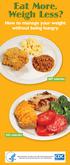 Eat More, Weigh Less? How to manage your weight without being hungry 607 calories 293 calories Department of Health and Human Services Centers for Disease Control and Prevention Can you weigh less without
Special Mother s Day menu
 Mother s Day is a time of commemoration and celebration for MUM. It is the one day out of the year when children, young and old remember their mothers and express their appreciation. This year make your
SHOP SMART, STORE SAFE
 SHOP SMART, STORE SAFE Introduction This lesson gives an older adult audience an opportunity to focus on making the most of their food budgets by sharing strategies for healthy shopping on a budget and
DRY BEAN RECIPES. Beans, Beans and More Beans Soup
 DRY BEAN RECIPES Beans, Beans and More Beans Soup ¼ cup each dry Black Beans, Cranberry Beans, Pinto Beans and Light Red Kidney Beans 1 cup dry Navy Beans 6 cups water ½ cup onion, diced 2 cloves garlic,
healthy in a hurry photography by KEN BURRIS EatingWell.com
 healthy in a hurry Great ideas for meals in minutes! photography by KEN BURRIS Shopping List This list outlines everything you need to make all the recipes for the week: Shop For: Produce 1 bunch asparagus
Take Control Nutrition Tools for Diabetes. 50/50 plate Portions Servings
 Take Control Nutrition Tools for Diabetes 50/50 plate Portions Servings Eat more Vegetables Especially non starchy vegetables Choosing Foods to manage blood glucose Select a variety of colors and types
Easter Brunch Menu Ideas with Chef Eric Crowley
 Easter Brunch Menu Ideas with Chef Eric Crowley March 7th, 2014 Chef Eric Jacques Crowley is a seasoned, professional chef and the founder, owner and chef instructor at his dynamic cooking school, Chef
We want you to have the best results possible while doing our detox. If your goal is weight loss, then eating the right foods and exercising
 Detox Menu Guide We want you to have the best results possible while doing our detox. If your goal is weight loss, then eating the right foods and exercising moderately will help boost your results and
Crappie, Perch, Bluegill, & Other Pinfish Recipe Page
 Crappie, Perch, Bluegill, & Other Pinfish Recipe Page BLUEGILL SURPRISE filleted bluegill small amount of lemon juice dab of butter small amount of finely chopped onion Roll fillets jelly roll style securing
Culinary Arts Level 1 Prep Cook
 Job Ready Assessment Blueprint Culinary Arts Level 1 Prep Cook Test Code: 4236 / Version: 01 Copyright 2012. All Rights Reserved. General Assessment Information Blueprint Contents General Assessment Information
Blenderized & Pureed Recipes
 Blenderized & Pureed Recipes While you are having difficulty chewing or swallowing, use these recipes for preparing pureed meals. Use the recipes as a base for developing your own recipes. Be creative!
2013-2014 Culinary Arts STAR Events Menu Options. Menu I
 2013-2014 Culinary Arts STAR Events Menu Options (modified 12/12/13) Menu I Wheat Berry Salad with Oranges, Cherries and Pecans Sautéed Chicken Breast with Mushroom Sauce Braised Zucchini Mashed Potatoes
38 th Annual Skills USA Maryland State Championships Culinary Arts March 26, 2011. Hosted by
 38 th Annual Skills USA Maryland State Championships Culinary Arts March 26, 2011 Hosted by Baltimore International College School of Culinary Arts 210 South Central Avenue at Pratt Street Baltimore, Maryland
HOME FREEZING GUIDE FOR FRESH VEGETABLES
 HOME FREEZING GUIDE F FRESH VEGETABLES Freezing most vegetables at home is a fast, convenient way to preserve produce at their peak maturity and nutritional quality. The following links provide information
Can You Name this Kitchen Equipment? Assembled and photographed by
 Can You Name this Kitchen Equipment? Assembled and photographed by Stacy Halvorson, Program Assistant Julie Garden Robinson, Ph.D., L.R.D. Food and Nutrition Specialist Look at the pictures on the following
A GUIDE TO HELP PLAN, PURCHASE & PREPARE YOUR OWN HEALTHY FOOD. FOOD SENSE HEALTHY MEALS ON A BUDGET
 A GUIDE TO HELP PLAN, PURCHASE & PREPARE YOUR OWN HEALTHY FOOD. FOOD SENSE HEALTHY MEALS ON A BUDGET You ll be surprised at how affordable, delicious & convenient your own meals can be! the Great Plate:
Brunch Recipes and Drinks for Your Family and Friends
 Brunch Recipes and Drinks for Your Family and Friends Drinks Refreshing Punch 1 can frozen cranberry juice (thawed) (frozen raspberry juice may also be used) 1-2 liter Raspberry Ginger Ale (chilled) (or
DESSERT Apple and cinnamon crumble with custard. 5 11 year olds. www.cwt-chew.org.uk
 DESSERT Apple and cinnamon crumble with custard DESSERT Apple and cinnamon crumble with custard Apple and cinnamon crumble Custard 90g 80g Apple and cinnamon crumble This recipe makes 4 portions of about
Raise the Bar with BBQ!
 Raise the Bar with BBQ! Seasoned Sauced GFS Hickory Smoked Shredded Beef BBQ Select cuts of fresh USDA beef brisket Slow-cooked using natural hickory GFS Hickory Smoked Shredded Beef BBQ with Sauce Available
Healthy Christmas Mini-Cookbook
 Healthy Christmas Mini-Cookbook Brought To You By Healthy Menu Mailer Editors: Susanne Myers & Christine Steendahl Table of Content Introduction Main Dishes Butterflied Beef Eye Roast Roast Pork with Cranberry
Save Time and Money at the Grocery Store
 Save Time and Money at the Grocery Store Plan a Grocery List Making a list helps you recall items you need and also saves you time. Organize your list according to the layout of the grocery store. For
Filipino Carers Kitchen Recipes- Part 2
 Filipino Carers Kitchen Recipes- Part 2 Sift flour, salt, baking soda, baking powder. Mix brown sugar, water, oil, butter flavor and vanilla flavor. (or add flour mixture all at once to the liquid mixture,
Salad with Creole Roquefort Dressing
 Salad with Creole Roquefort Dressing Romaine Lettuce 4 Whole Leaves Medium Tomatoes 2 Crumbled Roquefort 1/4 Cup Anchovy Fillets 4 Egg 1 White Wine Vinegar 1/4 cup Dijon Mustard Olive Oil 3/4 Cup Sugar
Patient and Family Education. Low Sodium Recipes
 Patient and Family Education Low Sodium Recipes Try these recipes to get started with lowsodium cooking that tastes good and is quick and easy! Oatmeal muffins 2 eggs 1 teaspoon vanilla extract 2 cups
Oatmeal Regular oatmeal does not have enough protein by itself Use Quaker Wt. Control Oatmeal or Kashi Oatmeal made with milk
 Breakfast Eggs (egg beaters or egg whites have all the protein and no fat) Make omelet with your veggies of choice Have with low fat breakfast meat like turkey bacon/sausage, ham or Canadian bacon. Morningstar
A. GENERAL INFORMATION No. 33 (1) GUIDELINES FOR COMBI-OVENS
 A. GENERAL INFORMATION No. 33 (1) GUIDELINES FOR COMBI-OVENS A combi-oven is a versatile piece of equipment that combines three modes of cooking in one oven: steam, circulated hot air or a combination
Banana Boats. STYLE: Foil DIFFICULTY: Beginner TOTAL TIME: Prep 20 min/bake: 5-10 min SERVINGS: 4
 Banana Boats STYLE: Foil TOTAL TIME: Prep 20 min/bake: 5-10 min SERVINGS: 4 4 medium unpeeled ripe bananas 4 teaspoons miniature chocolate chips 4 tablespoons miniature marshmallows Cut banana peel lengthwise
Texas SkillsUSA District 7 Culinary Arts Contest February 13, 2015 Culinary Institute LeNotre, Houston, TX
 Texas SkillsUSA District 7 Culinary Arts Contest February 13, 2015 Culinary Institute LeNotre, Houston, TX MENU Sautéed Chicken Breast with Mushroom Pan Sauce Rice Pilaf Green Vegetable and Julienne Carrots
5-INGREDIENTS-OR-LESS CROCK POT RECIPES
 5-INGREDIENTS-OR-LESS CROCK POT RECIPES Table of Contents Page # Santa Fe Soup 4 Fiesta Chicken 5 Teriyaki Chicken 6 Pulled Barbecued Chicken 7 Pineapple Pork 9 Cranberry Pork Roast 10 Apple BBQ Pork Tenderloin
Sugar Cookies. Ice Box Cookies. Hannah Christiane Hansen Cox. Hannah Christiane Hansen Cox. Ingredients: Ingredients:
 Sugar Cookies 1 heaping cup lard 1 1/3 cups sugar 2 eggs - well beaten 1 cup canned milk (evaporated) or ½ and ½ 5 cups flour 4 teaspoons baking powder ¼ teaspoon salt 2 teaspoons vanilla Mix flour, baking
Take Away & Delivery Menu
 313-317 King Street, Hammersmith, W6 9NH T: 020 8748 6887 T: 020 8748 4390 www.saigon-saigon.co.uk Delivery available everyday, from 6.30pm - 9.30pm for all orders above 20 We deliver within a 3 mile radius
SLOW COOKER FREEZER MEAL LIST GROCERY LIST
 SLOW COOKER FREEZER MEAL LIST Two bags of slow cooker chicken fajitas Two bags of slow cooker chicken pot pie Two bags of spicy Dr. Pepper Shredded Pork (for tacos) One bag of slow cooker beef roast and
MEN'S FITNESS FAT TO FIT CHALLENGE - 1800 CALORIE MEAL PLAN WEEK 3
 Day 1 2 hard boiled eggs 155 1.1 12.6 10.6 1 slice whole wheat bread, toasted 110 19 5 1.5 1 Tbs apricot jam 48.4 12.9 0.1 0 1 grapefruit 81.9 20.7 1.6 0.3 TOTAL 395.3 53.7 19.3 12.4 10 celery sticks 6
Eating Low-Fat on a Budget. Shop Smart: Save Money at the Grocery Store
 Eating Low-Fat on a Budget Following a low-fat diet can help lower your risk of heart disease, cancer, diabetes and stroke. Eating low fat usually means eating fewer calories. High calorie intake may lead
seafood Grilled Salmon with Peanut Sauce The sweet and mildly spicy flavors of peanut sauce nicely balance the stronger flavor of salmon.
 seafood Baked Peanut Fish Fillets This is a great alternative to fried fish. Grilled Salmon with Peanut Sauce The sweet and mildly spicy flavors of peanut sauce nicely balance the stronger flavor of salmon.
2015-2016 Culinary Arts STAR Events Menu Options
 2015-2016 Culinary Arts STAR Events Menu Options Updated January 19, 2016 MENU I Garden Salad with Vinaigrette Dressing Classic Steak Diane Roasted Red Bliss Potatoes Green Beans and Mushrooms Classic
BREAKFAST. 2 poached eggs 1 envelope Instant Breakfast 1 cup warm milk 8 oz milk
 WHAT CAN I EAT NOW? While you are recovering from your surgery, good nutrition will be vitally important. Even though all food will need to be in liquid form, you can still enjoy mealtimes and promote
Restaurant Rehab: Using the Menu to Make Heart Healthy Choices
 Restaurant Rehab: Using the Menu to Make Heart Healthy Choices It can be hard to find heart healthy restaurant foods. Restaurant foods are often high in calories, fat, cholesterol and sodium. For this
RECIPE STANDARDIZATION PROCESS
 MEASURING SUCCESS WITH STANDARDIZED RECIPES 3 RECIPE STANDARDIZATION PROCESS Definition The United States Department of Agriculture (USDA) defines a standardized recipe as one that has been tried, adapted,
Westwood Retirement Resort II 09/21/2014-09/27/2014. Westwood Retirement Resort II Sunday, September 21, 2014. Spice Cake
 Sunday, September 21, 2014 Five-Bean Soup Cranberry Wine Salad % Baked Sole Almondine Fillet of sole baked with onion, garlic, lemon and slivered almonds. Beef Tips Tender beef tips simmered in a mushroom
Contact Us. Best Food Forward: Plan, Shop, Cook, Enjoy!
 For more information about the Northern Nutrition Association, please contact us at [email protected] Contact Us Email us at [email protected] Bringing home healthy foods is the first step in healthy eating!
We give great importance to breakfast, especially if it weekend. A typical. Turkish breakfast consists of slices of Turkish feta cheese, honey or jam,
 A. TURKISH BREAKFAST We give great importance to breakfast, especially if it weekend. A typical Turkish breakfast consists of slices of Turkish feta cheese, honey or jam, butter, black olives, tomatoes
Ithaca College Culinary Arts Club Mediterranean Night Recipes
 Ithaca College Culinary Arts Club Mediterranean Night Recipes Eggplant Dip Babaghanoosh http://ohan.itlnet.net/personpages/recipes.htm#rec 1 large eggplant 1 cup tahini ¼ cup lemon juice 3 cloves garlic,
TABLE OF CONTENTS CLEAR JEL -- 2 CANNING APPLE PIE FILLING -- 3 CANNING BLUEBERRY PIE FILLING -- 4 CANNING CHERRY PIE FILLING -- 5
 TABLE OF CONTENTS CLEAR JEL -- 2 CANNING APPLE PIE FILLING -- 3 CANNING BLUEBERRY PIE FILLING -- 4 CANNING CHERRY PIE FILLING -- 5 CANNING FESTIVE MINCEMEAT PIE FILLING -- 6 CANNING GREEN TOMATO PIE FILLING
GREEN ONION POTATO SALAD A Bobby Flay Recipe
 GREEN ONION POTATO SALAD Prep Time: 10 minutes 2 lbs. red potatoes 1 Tbsp. PLUS 2 tsp. Kosher salt, divided 1-1/4 cups Hellmann's or Best Foods Real Mayonnaise 2 Tbsp. white wine vinegar 1 to 2 jalapeno
SITHASC201 Produce dishes using basic methods of Asian cookery
 SITHASC201 Produce dishes using basic methods of Asian cookery Release 1 SITHASC201 Produce dishes using basic methods of Asian cookery Modification History The version details of this endorsed unit of
Dr. Bronner s Magic All One Coconut Oil Recipes
 Dr. Bronner s Magic All One Coconut Oil Recipes Vegan Lasagna 3 Tablespoons Dr. Bronner's Organic White or Whole Kernel Unrefined Coconut Oil 1 large chopped onion 4 or 5 cloves minced garlic to taste
Healthy Grocery Shopping on a Budget. Tips for smart spending at the grocery store
 Healthy Grocery Shopping on a Budget Tips for smart spending at the grocery store Re c ipe e! In d si Grocery Store Science Eating well does not need to cost a lot of money. Here are some ways to choose
Culinary Arts Level 2 Cook
 Job Ready Assessment Blueprint Culinary Arts Level 2 Cook Test Code: 4336 / Version: 01 Copyright 2012. All Rights Reserved. General Assessment Information Blueprint Contents General Assessment Information
Making Healthy Food Choices. Section 2: Module 5
 Making Healthy Food Choices Section 2: Module 5 1 Nutrition For Health What is healthy Tips on planning meals Making a shopping list/ Bulk orders Using WIC foods Cook and freeze What foods to choose How
ACF Culinary Arts Certification
 Assessment Blueprint ACF Culinary Arts Certification Test Code: 3990 and 3991 / Version: 01 Copyright 2013. All Rights Reserved. General Assessment Information Blueprint Contents General Assessment Information
1. According to the Food Guide Pyramid, how many daily servings do we need of fruits?
 NAME HOUR VIDEO WORKSHEET 1. According to the Food Guide Pyramid, how many daily servings do we need of fruits? 2. How many daily servings do we need of vegetables according to the Food Guide Pyramid?
Monday Paella Broccoli with coconut oil and spices Baby greens with Asian dressing Sauerkraut 8 oz. coconut milk tonic* (or glass raw milk)
 weekly meal menu Dinner: July 10-14 20 minutes before dinner: 1 tablespoon coconut oil in warm water Before bed: Monday Paella Broccoli with coconut oil and spices Baby greens with Asian dressing (or glass
Culinary Arts Blueprint
 Culinary Arts Blueprint This Blueprint contains the subject matter content of this Skill Connect Assessment. This Blueprint does NOT contain the information one would need to fully prepare for a SkillsUSA
MEN'S FITNESS FAT TO FIT CHALLENGE - 1800 CALORIE MEAL PLAN WEEK 1
 Day 1 Tomato & Basil Omelet* (see recipe) 1 large egg 73.5 0.4 6.3 5 2 large egg whites 34.3 0.5 7.2 0.1 1/4 cup chopped tomato 8.1 1.8 0.4 0.1 2 Tbs grated parmesan cheese 43.1 0.4 3.9 2.9 2 Tbs chopped
Delicious Dinners on a Dime
 Delicious Dinners on a Dime No-Fuss Family Meals that Feed Four for Less than $10 by SparkRecipes.com Taco Soup $15.34 for 9 servings; $1.70 per serving; about $6.80 to serve 4 Prep time: 10 minutes Cooking
Name: Hour: Review: 1. What are the similarities and differences between a blender and a hand blender?
 #300030 Name: Hour: VIDEO WORKSHEET Review: After viewing Small Kitchen Appliances, answer the following questions. 1. What are the similarities and differences between a blender and a hand blender? 2.
MEAL PLANNING FOR MECHANICAL SOFT DIET
 MEAL PLANNING FOR MECHANICAL SOFT DIET Definition of Terms Calories Protein Blenderized Pureed Units of energy. A nutrient used by your body for growth and repair. The best sources are milk, meats, fish,
Food Science & Chef School
 Food Science & Chef School I. Introduction Lesson 1: Introduction to Food Science Learn about the course sections Learn why cooking skills are important Lesson 2: Food Science & Chef School Projects Learn
Directions. 2. Dredge shrimp through flour, followed by egg whites and Samoas Girl Scout Cookies mixture.
 Fried Samoas Shrimp Ingredients Directions Uses box of Samoas Girl Scout Cookies Yields 5 shrimp 5 extra-large shrimp, peeled and de-veined 5 Samoas Girl Scout Cookies, finely chopped 2 cups seasoned bread
Cold water to cooked pasta in minutes
 Australian Made Cold water to cooked pasta in minutes BPA FREE Cold water to cooked pasta in minutes 4 easy steps 1. measure 2. microwave - without lid 3. drain 4. serve Refer overleaf for full instructions
Bread. Learning objective: Understand how to work with fresh yeast to make bread
 Bread Learning objective: Understand how to work with fresh yeast to make bread Ingredients: 350g... plain flour ½ tsp salt ½ tsp sugar 15g fresh yeast 1... tablet 15g... 200mls... water large mixing bowl,
Cut chicken into ½ inch cubes and cook in steamer for 2 minutes. Add all other ingredients and cook for 6 minutes,
 BBQ Chicken and Rice BBQ Chicken and Rice - Serves 2 8 oz boneless skinless chicken breast 1 cup minute rice 1 cup frozen corn ¾ cup chicken broth 2 Tbs tomato sauce 1 Tbs BBQ seasoning Salt and pepper
Healthy Foods for my School
 yum, yum, yum, yum, yum, yum, yum, yum, yum, yum, yum, yum, yum, yum, yum, yum, yum, yum, yum, yum, yum, Healthy Foods for my School Nutrition Standards for Saskatchewan Schools Schools are an ideal place
WHOLE GRAINS FOR GOOD HEALTH
 WHOLE GRAINS FOR GOOD HEALTH Section 1: What are Whole Grains? Whole grains are nutritious, delicious, and are included in the WIC program! Whole grains contain the entire grain kernel. That means whole
American Cancer Society. Nutritional Guidelines for Reducing Your Risk of Cancer
 American Cancer Society Nutritional Guidelines for Reducing Your Risk of Cancer Cancer Impact More than one million Americans will be diagnosed with cancer this year. Scientific evidence suggests that
Back to School RECIPE BOOK WITH FARRO FRESH
 Back to School RECIPE BOOK WITH FARRO FRESH Granola with Greek yoghurt and Feijoa Granola is a quick and easy family favourite. This variation makes the most of fresh seasonal fruit, topped with creamy
Grocery Shopping Within a Budget
 Grocery Shopping Within a Budget Lesson Plan Grade Level 10-12 Take Charge of Your Finances National Content Standards Family and Consumer Science Standards: 1.1.6, 2.1.1, 2.1.2, 2.1.3, 2.5.1, 2.6.1, 2.6.2,
Onions. Signature Sandwiches Layers of Flavor
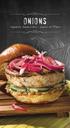 Onions Signature Sandwiches Layers of Flavor Today s sandwiches are no longer limited to cold cuts, cheese and a squirt of mustard. Instead, they are inspired with specialty breads and kicked-up condiments.
Processi della Tecnologia Alimentare - Prof. Davide Barbanti. The frying process
 The frying process 1 Frying is a unit operation which is mainly used to alter the eating quality of a food. A secondary consideration is the preservative effect that results from thermal destruction of