
On The Use Weight Belts
|
|
|
- Clifton O’Neal’
- 10 years ago
- Views:
Transcription
1 On The Use Weight Belts Stuart M. McGill Professor of Spine Biomechanics, University of Waterloo, Canada A review invited by the National Strength and Conditioning Association March 2005 Scientific studies regarding the use of belts for athletic endeavours is scarce. Much more evidence and insight exists for the use of belts in occupational settings. The relevant information from occupational usage is discussed in this article and is blended with the limited work on athletic/performance use. I will also conclude with my own opinion. The intention of this article is to assist the reader in making their own decisions on whether or not to wear a belt and to suggest guidelines for their prescription and use. Issues of Back Belts The average person must be confused when they observe both Olympic lifters and back-injured people wearing back belts. Several years ago I conducted a review of the documented effects of belt wearing in occupational settings (McGill, 1993). The opinions that I formed were as follows: Those who have never had a previous back injury appear to have no additional protective benefit from wearing a belt. Those who are injured while wearing a belt seem to risk a more severe injury. Belts appear to give people the perception they can lift more and may in fact enable them to lift more. Belts appear to increase intra-abdominal pressure and blood pressure. Belts appear to change the lifting styles of some people to either decrease the loads on the spine or increase the loads on the spine. 1

2 In summary, given the assets and liabilities of belt wearing, I do not recommend them for healthy individuals either in routine work or exercise participation. However, the temporary prescription of belts may help some individual workers return to work. The exception is for extreme athletic lifting where belts appear to increase torso stability to reduce the risk of buckling and provide some elastic extensor recoil to assist with the lift. But the possible liabilities underscore the counterpoint to this proposition. Many claims have been made as to how abdominal belts could reduce injury, although few hold up to scrutiny. For example, some have suggested that belts perform the following functions: Remind people to lift properly Support shear loading on the spine that results from the effect of gravity acting on the handheld load and mass of the upper body when the trunk is flexed Reduce compressive loading of the lumbar spine through the hydraulic action of increased intra-abdominal pressure associated with belt wearing Act as a splint, reducing the range of motion and thereby decreasing the risk of injury Provide warmth to the lumbar region Enhance proprioception via pressure to increase the perception of stability Reduce muscular fatigue Provide stiffening to the torso to enhance performance Let s interpret the scientific literature for guidance. Scientific Studies The scientific studies can be divided into clinical trials and those that examined biomechanical, psychophysical, and physiological changes from belt wearing. 2 Clinical Trials: Difficulties in executing a clinical trial clearly exist. The Hawthorne effect is a concern, as it is difficult to present a true double-blind paradigm to participants since those who receive belts certainly know so. In addition, logistical constraints on duration, diversity in occupations, and sample size are problematic. However, the data reported in the better-executed clinical trials cannot support the practice of universal prescription of belts to all workers involved in manual handling of materials to reduce the risk of low-back injury (for example, Reddell and colleagues, 1992, Mitchell and colleagues, 1994, Wassell and colleagues, 2000). Weak evidence suggests that those people already injured might benefit from belts with a reduced risk of injury recurrence. However, evidence does not appear to support uninjured workers wearing belts to reduce the risk of injury; in fact, the risk of injury seems to increase during the period following a trial of belt wearing. Finally, some evidence suggests that the cost of a back injury may

3 be higher in workers who wear belts than in workers who do not. Biomechanical Studies: Researchers who have studied the biomechanical issues of belt wearing have focused on spinal forces, intra-abdominal pressure (IAP), load, and range of motion. The most informative studies are reviewed in this section. Two studies in particular (Harman et al.,1989, and Lander et al., 1992) suggested that wearing a back belt can increase the margin of safety during repetitive lifting. Both of these papers reported ground reaction force and increased intraabdominal pressure while subjects repeatedly lifted barbells. It was only assumed that intra-abdominal pressure is a good indicator of spinal forces. However, several studies have questioned the hypothesized link between elevated intra-abdominal pressure and reduction in low back load. For example, using an analytical model and data collected from three subjects lifting various magnitudes of loads, McGill and Norman (1987) noted that a buildup of intra-abdominal pressure required additional activation of the musculature in the abdominal wall. This activity resulted in a net increase in low back compressive load and not a net reduction of load, as researchers had previously thought. In addition, Nachemson and colleagues (1986) published some experimental results that directly measured intradiscal pressure during the performance of Valsalva maneuvers, documenting that an increase in intraabdominal pressure increased, not decreased, the low back compressive load. Therefore, the conclusion that an increase in intra-abdominal pressure due to belt wearing reduces compressive load on the spine seems erroneous. In fact, such an increase may have no effect or may even increase the load on the spine. Several studies have put to rest the belief that IAP affects low back extensor activity. Our own study (McGill and colleagues, 1990) suggested that there was no change in activation levels of the low back extensors nor in any of the abdominal muscles (rectus abdominis or obliques). Both Reyna and colleagues (1995) and Ciriello and Snook (1995) found belts provided no enhancement of function in terms of alleviating the loading of back extensor muscles or fatigue, but these trials were not conducted over a very long period of time. Both Lantz and Schultz (1986) and McGill and colleagues (1994) observed the range of lumbar motions in subjects wearing low back orthoses and belts. Generally, the stiffness of the torso was significantly increased about the lateral bend and axial twist axes when belt wearing but not when subjects were rotated into full flexion. 3

4 A data set presented by Granata and colleagues (1997) supports the notion that some belt styles are better in stiffening the torso in the manner described previously namely, the taller elastic belts that span the pelvis to the rib cage. Furthermore, these authors also documented that a rigid orthopedic belt generally increased the lifting moment, while the elastic belt generally reduced spinal load. Even in well controlled studies, belts appear to modulate lifting mechanics in some positive ways in some people and in negative ways in others. Studies of Belts, Heart Rate, and Blood Pressure: Hunter and colleagues (1989) monitored the blood pressure and heart rate of five males and one female performing dead lifts and one-arm bench presses and riding bicycles while wearing and not wearing a 10-cm (4-in.) weight belt. During the lifting exercise, blood pressure (up to 15 mmhg) and heart rate were both significantly higher in subjects wearing belts. Given the relationship between elevated systolic blood pressure and an increased risk of stroke, Hunter and colleagues (1989) concluded that individuals who may have cardiovascular system compromise are probably at greater risk when undertaking exercise while wearing back belts than when not wearing them. Our own work (Rafacz and McGill, 1996) supports these conclusions. Anecdotally, belts and associated pressures may possibly be linked with higher incidents of varicose veins in the testicles, hemorrhoids, and hernias. As of this writing, there has been no scientific and systematic investigation of the validity of these suggestions. It may be prudent to simply state concern and test these ideas in the future. Psychophysical Studies: Some scientists and coaches have expressed concern that wearing belts fosters an increased sense of security that may, or may, not be warranted. Studies based on the psychophysical paradigm allow workers to select weights that they can lift repeatedly using their own subjective perceptions of physical exertion. For example McCoy and colleagues (1988) found that subjects were willing to lift by approximately 19% when wearing a belt. This evidence may lend some support to the theory that belts give people a false sense of security. Summary of Prescription Guidelines for Recreational/Occupational Use 4 While there are guidelines for belt wearing for occupational use, sporting use requires a different approach. Occupational use is based on the premise of injury risk reduction while sporting use includes performance enhancement to lift more for example. The fundamentals of my recommendations for occupational use (see McGill, 1993, 1999, 2004) presented data and evidence that neither completely supported, nor condemned, the wearing of abdominal/back belts. Given the available literature, it would appear the universal prescription of belts (i.e., providing belts to

5 all workers in an industrial operation) is not in the best interest of globally reducing both the risk of injury and compensation costs. Uninjured workers do not appear to enjoy any additional benefit from belt wearing, and in fact may be exposing themselves to the risk of a more severe injury if they were to become injured. Moreover, they may have to confront the problem of weaning themselves from the belt. However, if some individual workers perceive a benefit from belt wearing, they should be allowed to wear a belt conditionally, but only on trial. The mandatory conditions for occupational/recreational prescription (for which there should be no exception) are as follows: 1. Given the concerns regarding increased blood pressure and heart rate and issues of liability, all candidates for belt wearing should be screened for cardiovascular risk by medical personnel. 2. Given the concern that belt wearing may provide a false sense of security, belt wearers must receive education on lifting mechanics (back school). All too often, belts are being promoted to industry as a quick fix to the injury problem. Promotion of belts, conducted in this way, is detrimental to the goal of reducing injury as it redirects the focus from the cause of the injury. Education programs should include information on how tissues become injured, techniques to minimize musculoskeletal loading, and what to do about feelings of discomfort to avoid disabling injury. 3. Consultants should not prescribe belts until they have conducted a full ergonomic assessment of the individual s job. The ergonomic approach should examine, and attempt to correct, the cause of the musculoskeletal overload and provide solutions to reduce the excessive loads. In this way, belts should only be used as a supplement for a few individuals, while a greater plant-wide emphasis should be on the development of a comprehensive ergonomics program. 4. Belts should not be considered for long-term use. The objective of any smallscale belt program should be to wean workers from the belts by insisting on mandatory participation in comprehensive fitness programs and education on lifting mechanics, combined with ergonomic assessment. Furthermore, consultants would be wise to continue vigilance in monitoring former belt wearers for a period of time following belt wearing, given that this period appears to be characterized by an elevated risk of injury. Guidelines for Serious Lifting Athletes 5 Much of the occupational evidence has relevance for athletic use of belts. There is no question that belts assist in generating a few more Newton-meters (or foot-pounds) of torque in the torso through elastic recoil of a bent torso that is stiffened with a belt. However, if a neutral spine is preserved throughout the lift this effect is minimal. In other words, to obtain the maximal effect from a belt, the

6 lifter must lift poorly and in a way that exposed the back to a much higher risk of injury! There is no question that belts assist in generating torso stiffness to reduce the risk of spine buckling in extreme heavy lifts. Many athletes working at this edge of the envelope will receive this assist. However, other techniques are employed to maximize the torso stiffness the lungs are filled to almost the top of tidal volume and the breath is then held. In some tasks, an athlete will only sip the air never allowing much air to leave the lungs that would reduce torso stiffness. Belts also increase intra-abdominal pressure which in turn increases the CNS fluid pressure in the spine and, in turn, the brain. This decreases the transmural gradient (the pressure difference between the arterial blood pressure in the brain vessels and the brain itself) which in turn may reduce the risk of aneurysm, or stroke. Others have argued that this effect has detrimental implications for venous return to the heart. I am unaware of any evidence to suggest where the balance lies. There are other counter considerations. Evidence suggests that people change their motor patterns, together with their motion patterns when using a belt. The evidence suggests that these motor control changes can elevate the risk of injury should a belt not be worn in a belttraining athlete. The severity of a back injury may be greater if a belt is worn. Many people adopt belts in training for one of three reasons: They have observed others wearing them and have assumed that it will be a good idea for them to do so. Their backs are becoming sore and they believe that a back belt will help. They want to lift a few more pounds. None of these reasons are consistent with the objective of good health. If one must lift a few more pounds, wear a belt. If one wants to groove motor patterns to train for other athletic tasks that demand a stable torso, it is probably better not to wear one. Instead do the work to perfect lifting technique. Looking forward -A final opinion 6 Training for high performance usually requires high speed movement. Also critical for ultimate performance is timed and coordinated stiffness and joint stability. Consider the golf swing that epitomizes the contrast between controlled relaxed motion through the backswing and violent whole body stiffening at the instant of ball contact only to be followed by more relaxed follow through motion. The same contrast can be generalized for punching power and for the impressive hit in football, for example. The best athletes are able to generate motion but know when to stiffen with extremely rapid muscle activation together with rapid muscle relaxation. Techniques for training this skill involve selective plyometric exercise which in my

7 opinion is generally encumbered by wearing a belt. Thus, I modify my opinion for speed training and consider belts inappropriate when used in this way. Adapted from the chapter on back belts by Stuart McGill in: Ultimate Back Fitness and Performance, Wabuno publishers, 2004, Canada. Available from References Ciriello, V.M., and Snook, S.H. (1995) The effect of back belts on lumbar muscle fatigue. Spine, 20 (11): Granata, K.P., Marras, W.S., and Davis, K.G. (1997) Biomechanical assessment of lifting dynamics, muscle activity and spinal loads while using three different style lifting belts. Clin. Biomech, 12 (2): Harman, E.A., Rosenstein, R.M., Frykman, P.N., and Nigro, G.A. (1989) Effects of a belt on intra-abdominal pressure during weight lifting. Med. Sci. Sports Exercise, 2 (12): Hunter, G.R., McGuirk, J., Mitrano, N., Pearman, P., Thomas, B., and Arrington, R. (1989) The effects of a weight training belt on blood pressure during exercise. J. Appl. Sport Sci. Res., 3 (1): Lander, J.E., Hundley, J.R., and Simonton, R.L. (1992) The effectiveness of weight belts during multiple repetitions of the squat exercise. Med. Sci. Sports Exercise, 24 (5): Lantz, S.A., and Schultz, A.B. (1986) Lumbar spine orthosis wearing. I. Restriction of gross body motion. Spine, 11 (8): McCoy, M.A., Congleton, J.J., Johnston, W.L., and Jiang, B.C. (1988) The role of lifting belts in manual lifting. Int. J. Ind. Ergonomics, 2: McGill, S.M. (1993) Abdominal belts in industry: A position paper on their assets, liabilities and use. Am.Ind.Hyg.Assoc.J., 54 (12): McGill, S.M., and Norman, R.W. (1987) Reassessment of the role of intra-abdominal pressure in spinal compression. Ergonomics, 30 (11): McGill, S., Norman, R.W., and Sharratt, M.T. (1990) The effect of an abdominal belt on trunk muscle activity and intraabdominal pressure during squat lifts. Ergonomics, 33 (2): McGill, S.M., Seguin, J.P., and Bennett, G. (1994) Passive stiffness of the lumbar torso in flexion, extension, lateral bend and axial twist: The effect of belt wearing and breath holding. Spine, 19 (6): McGill, S.M. Invited Paper. (1999) Should industrial workers wear abdominal belts: guidelines based on the recent literature. Int. J. Industrial Ergonomics 23(5-6): McGill, S.M. Medical Management: Back Belts. In: Occupational Ergonomics Handbook (second edition), CRC Press,

8 McGill, S.M., Ultimate back fitness and performance, Wabuno Publishers, Waterloo, 2004 (available from Mitchell, L.V., Lawler, F.H., Bowen, D., Mote, W., Asundi, P., and Purswell, J. (1994) Effectiveness and costeffectiveness of employer-issued back belts in areas of high risk for back injury. J. Occup. Med., 36 (1): Nachemson, A.L., Andersson, G.B.J., and Schultz, A.B. (1986) Valsalva maneuver biomechanics. Effects on lumbar trunk loads of elevated intra-abdominal pressures. Spine, 11 (5): National Institute for Occupational Safety and Health (NIOSH) (1994, July) Workplace use of back belts. U.S. Department of Health and Human Services, Centers for Disease Control and Prevention. Rafacz, W., and McGill, S.M. (1996) Abdominal belts increase diastolic blood pressure. J. Occup. Environ. Med., 38 (9): Reddell, C.R., Congleton, J.J., Huchinson R.D., and Montgomery J.F. (1992) An evaluation of a weightlifting belt and back injury prevention training class for airline baggage handlers. Appl. Ergonomics, 23 (5): Reyna, J.R., Leggett, S.H., Kenney, K., Holmes, B., and Mooney, V. (1995) The effect of lumbar belts on isolated lumbar muscle. Spine, 20 (1): Wassell, J.T., Gardner, L.I., Landsittel, D.P., Johnston, J.J., and Johnston, J.M. (2000) A prospective study of back belts for prevention of back pain and injury. J. Am. Med. Assn., 284 (21):

Biomechanical Analysis of the Deadlift (aka Spinal Mechanics for Lifters) Tony Leyland
 Biomechanical Analysis of the Deadlift (aka Spinal Mechanics for Lifters) Tony Leyland Mechanical terminology The three directions in which forces are applied to human tissues are compression, tension,
Biomechanics of Lifting and Lower Back Pain S.N. Robinovitch
 Biomechanics of Lifting and Lower Back Pain S.N. Robinovitch Outline Epidemiology of lower back pain Strength of spinal segments Lifting models: muscle and intervertebral joint forces (compression and
Mechanics of the Human Spine Lifting and Spinal Compression
 Mechanics of the Human Spine Lifting and Spinal Compression Hamill and Knutzen: Chapter 7 Nordin and Frankel: Ch. 10 by Margareta Lindh Hall: Ch. 9 (more muscle anatomy detail than required) Low Back Pain
Low back pain in athletes requires unique rehab approach
 UBM logo BioMechanics November 2004 spacer Printable Version spacer Low back pain in athletes requires unique rehab approach By: Michael Higgins, PhD, ATC, PT Many athletes sustain low back injuries that
PILATES Fatigue Posture and the Medical Technology Field
 PILATES Fatigue Posture and the Medical Technology Field Marybeth Kane May 2014 Course: 2014, Pacific Palisades, CA 1 ABSTRACT A medical laboratory scientist (MLS) (also referred to as a medical technologist
Enhancing Low Back Health through stabilization exercise Stuart M. McGill, Professor (Spine Biomechanics), University of Waterloo
 Enhancing Low Back Health through stabilization exercise Stuart M. McGill, Professor (Spine Biomechanics), University of Waterloo Note: Dr McGill has recently authored the text book Low Back Disorders:
What is Pilates? Pilates for Horses?
 What is Pilates? Pilates is a conditioning system that increases core stability, strength and body awareness; redresses imbalances, and re aligns the body from the inside out. It can improve posture, achieve
Spinal Anatomy. * MedX research contends that the lumbar region really starts at T-11, based upon the attributes of the vertebra.
 Spinal Anatomy Overview Neck and back pain, especially pain in the lower back, is one of the most common health problems in adults. Fortunately, most back and neck pain is temporary, resulting from short-term
Intra-abdominal pressure mechanism for stabilizing the lumbar spine
 Journal of Biomechanics 32 (1999) 13 17 Intra-abdominal pressure mechanism for stabilizing the lumbar spine Jacek Cholewicki *, Krishna Juluru, Stuart M. McGill Biomechanics Research Laboratory, Department
University of South Florida, Tampa, FL. Nutrition Laboratory
 Bill Campbell, PhD, CSCS, FISSN Assistant Professor of Exercise Science at the University of South Florida, Tampa, FL. Director of the Exercise and Performance Director of the Exercise and Performance
Stability of the spine modelled as an arch
 Loughborough University Institutional Repository Stability of the spine modelled as an arch This item was submitted to Loughborough University's Institutional Repository by the/an author. Citation: XIAO,
Current Concepts of Low Back Pain. Terry L. Grindstaff, PhD, PT, ATC, SCS, CSCS
 Current Concepts of Low Back Pain Terry L. Grindstaff, PhD, PT, ATC, SCS, CSCS 28% population reports LBP in past 3 months (CDC 2010) 60% recurrence rate (Turner et al, 1992) Low Back Pain Low Back Pain
 Low Back Pain Mansour Dib MD Physical Medicine and Rehabilitation Pain generators Disc Posterior elements Sacro-iliac joint Education - Spine Positioning Neutral Extension Flexion Disc disease Discogenic
Sit stand desks and musculo skeletal health. Katharine Metters
 Sit stand desks and musculo skeletal health Katharine Metters Topics Sitting Standing Movement and activity Work and human change Sitting uses less energy Sitting provides support for the body to reduce
Spinal Exercise Program/Core Stabilization Program Adapted from The Spine in Sports: Robert G. Watkins
 Spinal Exercise Program/Core Stabilization Program Adapted from The Spine in Sports: Robert G. Watkins Below is a description of a Core Stability Program, designed to improve the strength and coordination
Archery: Coaching Young Athletes. Developing Fundamental Movement Skills
 Archery: Coaching Young Athletes Developing Fundamental Movement Skills Make a long term commitment Long Term Athlete Development Long Term Athlete Development (LTAD) is a strategy for helping youngsters
The Process of Strength and Conditioning for Golfers
 The Process of Strength and Conditioning for Golfers The use of different sporting activities and resistance work to develop a strength and conditioning program specific to golf. Many club golfers are
AMERICAN COUNCIL ON EXERCISE PERSONAL TRAINER UNIVERSITY CURRICULUM LAB MANUAL
 AMERICAN COUNCIL ON EXERCISE PERSONAL TRAINER UNIVERSITY CURRICULUM LAB MANUAL LAB ACTIVITY #1: SOCIAL SUPPORT STRATEGIES ACTIVITY DESCRIPTION An important coping strategy for relapse prevention is for
SPECIFIC SPINAL EXERCISE
 SPECIFIC SPINAL EXERCISE Three Case Studies Using the MedX Lumbar Extension Machine Brian D. Johnston IART Research ABSTRACT The purpose of this research project was to ascertain the effects of specific
THE BIG SIX. Six Best Volleyball Strength Training Exercises. By Dennis Jackson, CSCS www.strength-and
 THE BIG SIX Six Best Volleyball Strength Training Exercises By Dennis Jackson, CSCS www.strength-and and-power power-for for-volleyball.com THE SQUAT What it is The two most common squatting exercises
Strength Training. Designed Specifically for Novice/Junior/Senior Skaters and Coaches
 Strength Training Designed Specifically for Novice/Junior/Senior Skaters and Coaches Strength Training Instructor Guidelines Instructor Qualifications A. Degree in exercise, physical education or sports
5TH GRADE FITNESS STUDY GUIDE
 PHYSICAL EDUCATION 5 TH GRADE FITNESS STUDY GUIDE PART I. Revised 5-13 DIRECTIONS: Review the following terms and concepts. Do not try to memorize the definitions, rather think about and understand: 1)
I tro r duct c io i n t o Exercise Technique
 Introduction to Exercise Technique Is Exercise Technique Important? It is the actual technique used for a resistance training exercise that determines; The precise movement pattern the body will be attempting
KIN 335 - Biomechanics LAB: Ground Reaction Forces - Linear Kinetics
 KIN 335 - Biomechanics LAB: Ground Reaction Forces - Linear Kinetics Reading Assignment: 1) Luhtanen, P. and Komi, P.V. (1978). Segmental contribution to forces in vertical jump. European Journal of Applied
THE INFLUENCE OF WALL PAINTING ON SHOULDER MUSCLE ACTIVITY AND HORIZONTAL PUSH FORCE
 THE INFLUENCE OF WALL PAINTING ON SHOULDER MUSCLE ACTIVITY AND HORIZONTAL PUSH FORCE Background: Patricia M. Rosati and Clark R. Dickerson Department of Kinesiology, University of Waterloo, Waterloo, ON
Evaluation of Z-Slider for Lateral Patient Transfers, Repositioning, and Staff Musculoskeletal Injuries (Abstract) Laurie J. Bacastow RN, MSN, CNRN
 Evaluation of Z-Slider 1 Evaluation of Z-Slider for Lateral Patient Transfers, Repositioning, and Staff Musculoskeletal Injuries (Abstract) Laurie J. Bacastow RN, MSN, CNRN Stanford Hospital and Clinics
Passive Range of Motion Exercises
 Exercise and ALS The physical or occupational therapist will make recommendations for exercise based upon each patient s specific needs and abilities. Strengthening exercises are not generally recommended
Flexibility, Static and Dynamic Stretching, and Warm-Up
 Readings: Flexibility, Static and Dynamic Stretching, and Warm-Up NSCA text: Chapter 12 pp 251 260, 266-274 Course web site: Supplemental optional reading articles on course web site discussed and cited
No Equipment Agility/Core/Strength Program for Full Body No Equip Trainer: Rick Coe
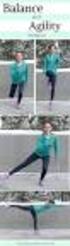 No Equipment Agility/Core/Strength Program for Full Body No Equip Trainer: Rick Coe Introduction Program designed to be performed in a circuit. Perform exercises in sequence without rest 2-3 times. Increase
Fact sheet Exercises for older adults undergoing rehabilitation
 Fact sheet Exercises for older adults undergoing rehabilitation Flexibility refers to the amount of movement possible around a joint and is necessary for normal activities of daily living such as stretching,
are you reaching your full potential...
 T h e r e s n o s u c h t h i n g a s b a d e x e r c i s e - j u s t e x e r c i s e d o n e b a d l y FIT for sport are you reaching your full potential... These tests are a series of exercises designed
Plyometric Training. Plyometric Training. chapter
 chapter 16 Plyometric Training Plyometric Training David H. Potach, PT; MS; CSCS,*D; NSCA-CPT,*D Donald A. Chu, PhD; PT; ATC; CSCS,*D; NSCA-CPT,*D; FNSCA Chapter Objectives Explain the physiology of plyometric
Clinical Biomechanics
 Clinical Biomechanics 25 (2010) 859 866 Contents lists available at ScienceDirect Clinical Biomechanics journal homepage: www.elsevier.com/locate/clinbiomech Intra-abdominal pressure and abdominal wall
Chronos - Circuit Training Bodyweight
 Outline Chronos - Circuit Training Bodyweight 1. Mountain climbers doubles x 10 2. Mountain climbers singles x 10 each leg 3. Mountain climbers singles out x 10 each leg 4. Mountain Climbers Doubles out
Material 1. Dolly, hand cart, wheel cart, large box, back belt
 29CFR 1926.20(b)-Accident Reduction, 29CFR 1926.21- Safety Training & Education Back and Lifting Safety Preparation 1. Read Applicable Background information and related Company Policy Chapter. 2. Make
Rehabilitation Documentation and Proper Coding Guidelines
 Rehabilitation Documentation and Proper Coding Guidelines Purpose: 1) Develop a guide for doctors in South Dakota to follow when performing reviews on rehabilitation cases. 2) Provide doctors in South
Ergonomics in the Workplace
 Ergonomics in the Workplace Ergonomics in the Workplace 1 Introduction The purpose of this short guide is to provide information to the reader on the subject of Ergonomics. It also provides guidance on
.org. Fractures of the Thoracic and Lumbar Spine. Cause. Description
 Fractures of the Thoracic and Lumbar Spine Page ( 1 ) Spinal fractures can vary widely in severity. While some fractures are very serious injuries that require emergency treatment, other fractures can
Supporting the Spine When Seated
 L Supporting the Spine When Seated The science and research behind the Mirra chair By Studio 7.5: Burkhard Schmitz, Claudia Plikat, Roland Zwick, Carola Zwick, Nicolai Neubert; Bill Dowell; and Gretchen
LOW BACK PAIN & THE BASKETBALL ATHLETE McGill s Guide to Intervention and Rehab. Art Horne, Northeastern University
 LOW BACK PAIN & THE BASKETBALL ATHLETE McGill s Guide to Intervention and Rehab Art Horne, Northeastern University Tolerance Tolerance: training the back just under the their tolerance; the key is never
UNIVERSAL FITNESS NETWORK, Inc. 2315 West Monica Dunlap, IL 61525 (309)-360-5615 [email protected] FACTS ABOUT THE PHYSICAL FITNESS ASSESSMENT TESTS
 UNIVERSAL FITNESS NETWORK, Inc. 2315 West Monica Dunlap, IL 61525 (309)-360-5615 [email protected] FACTS ABOUT THE PHYSICAL FITNESS ASSESSMENT TESTS Universal Fitness Network, Inc. specializes in physical
THE BADMINTON ASSOCIATION OF ENGLAND MISSION STATEMENT
 THE BADMINTON ASSOCIATION OF ENGLAND MISSION STATEMENT Badminton is an Olympic Sport It is played by groups, families and individuals of all ages and it provides a healthy, lifelong sport activity that
Rehabilitation of Sports Hernia
 Rehabilitation of Sports Hernia (Involving Adductor Tenotomy, Ilioinguinal Neurectomy and Osteitis Pubis) An appendix follows this protocol for examples of exercises in each phase of rehabilitation. There
Anatomy and Physiology for Exercise and Health Level 3
 Anatomy and Physiology for Exercise and Health Level 3 A/600/9051 Mock Paper There are 25 questions within this paper To achieve a pass you will need to score 18 out of 25 marks All questions are multiple
Knee Conditioning Program. Purpose of Program
 Prepared for: Prepared by: OrthoInfo Purpose of Program After an injury or surgery, an exercise conditioning program will help you return to daily activities and enjoy a more active, healthy lifestyle.
Rotator Cuff and Shoulder Conditioning Program. Purpose of Program
 Prepared for: Prepared by: OrthoInfo Purpose of Program After an injury or surgery, an exercise conditioning program will help you return to daily activities and enjoy a more active, healthy lifestyle.
Safe Lifting/Back Safety Training. Presented by Rita Gagnon Occupational Health Outreach Coordinator Benefis Health Systems 406-731-8328
 Safe Lifting/Back Safety Training Presented by Rita Gagnon Occupational Health Outreach Coordinator Benefis Health Systems 406-731-8328 Risk Factors Involved with Manual Handling Tasks: Bending at Trunk
Today s session. Common Problems in Rehab. www.physiofitness.com.au/filex.htm LOWER BODY REHAB ESSENTIALS TIM KEELEY FILEX 2012
 Tim Keeley B.Phty, Cred.MDT, APA Principal Physiotherapist physiofitness.com.au facebook.com/physiofitness Today s session Essential list for the lower body Rehab starting point Focussing on activation,
Designing Back Exercise: from Rehabilitation to Enhancing Performance
 1 Designing Back Exercise: from Rehabilitation to Enhancing Performance Stuart McGill, Ph.D. Professor of Spine Biomechanics, Faculty of Applied Health Sciences, Department of Kinesiology, University of
Professor Alan Hedge, Cornell University, August 2013
 Lifting and Back Stress DEA3250/6510 Professor Alan Hedge Low Back Pain Low back pain occurs in 80% of adults at some point in their lives Low back pain is second only to upper respiratory infections as
New Research More research has been done in the past decade in the area of strength and conditioning than in the five decades prior to 1987
 Designing a Resistance Training Program for the Track and Field Athlete 2010 Illinois State High School Clinic Larry Judge Ph.D. Ball State University Muncie, IN USA Overall Core Control To be successful
Hip Rehab: Things to Consider. Sue Torrence, MS, PT, ATC Lead Physical Therapist
 Hip Rehab: Things to Consider Sue Torrence, MS, PT, ATC Lead Physical Therapist Where to Start? Objectives: Discuss injuries related to hip dysfunction Review commonly used functional tests for posteriolateral
Rethinking Core Training
 Rethinking Core Training By Jason Shea M.S., PICP, PES What is the core and why do so many magazines and personal trainers espouse this term, explaining that it is the most important part of one s physical
Shoulders (free weights)
 Dumbbell Shoulder Raise Dumbbell Shoulder Raise 1) Lie back onto an incline bench (45 or less) with a DB in each hand. (You may rest each DB on the corresponding thigh.) 2) Start position: Bring the DB
Mike s Top Ten Tips for Reducing Back Pain
 Mike s Top Ten Tips for Reducing Back Pain The following article explains ways of preventing, reducing or eliminating back pain. I have found them to be very useful to myself, my clients and my patients.
The WalkOn Range. Dynamic Lower Leg Orthoses. NeW. Information for physicians, orthotists and physiotherapists
 The WalkOn Range Dynamic Lower Leg Orthoses NeW Information for physicians, orthotists and physiotherapists One Range Many Different Applications The WalkOn product range allows you to address the specific
Injury Prevention for the Back and Neck
 Injury Prevention for the Back and Neck www.csmr.org We have created this brochure to provide you with information regarding: Common Causes of Back and Neck Injuries and Pain Tips for Avoiding Neck and
Screening Swimmers for Injuries. What we know about injury screening for swimmers
 Screening Swimmers for Injuries What we know about injury screening for swimmers About me Dr. G. John Mullen, DPT, CSCS G. John Mullen received his Doctorate in Physical Therapy at the University of Southern
Anterior Cruciate Ligament Reconstruction Rehabilitation Protocol
 The First Two Weeks After Surgery You will go home with crutches and be advised to use ice. Goals 1. Protect reconstruction 2. Ensure wound healing 3. Maintain full knee extension 4. Gain knee flexion
Stoopid Back Schooling thoughts
 Stoopid Back Schooling thoughts Lifting training and back schools have been viewed somewhat negatively recently. It's been said that doing a course in lifting makes no difference to the way you lift (1
Stretching the Low Back THERAPIST ASSISTED AND CLIENT SELF-CARE STRETCHES FOR THE LUMBOSACRAL SPINE
 EXPERT CONTENT by Joseph E. Muscolino photos by Yanik Chauvin body mechanics THE ESSENCE OF MOST MANUAL THERAPIES, and certainly clinical orthopedic massage therapy, is to loosen taut soft tissues, thereby
Rehabilitation after shoulder dislocation
 Physiotherapy Department Rehabilitation after shoulder dislocation Information for patients This information leaflet gives you advice on rehabilitation after your shoulder dislocation. It is not a substitute
Basic techniques of pulmonary physical therapy (I) 100/04/24
 Basic techniques of pulmonary physical therapy (I) 100/04/24 Evaluation of breathing function Chart review History Chest X ray Blood test Observation/palpation Chest mobility Shape of chest wall Accessory
Spine flexion exercise: Myths, Truths and Issues affecting health and performance
 Spine flexion exercise: Myths, Truths and Issues affecting health and performance Professor Stuart McGill, PhD University of Waterloo, Canada, and Backfitpro Inc. (www.backfitpro.com) This short article
A proper warm-up is important before any athletic performance with the goal of preparing the athlete both mentally and physically for exercise and
 A proper warm-up is important before any athletic performance with the goal of preparing the athlete both mentally and physically for exercise and competition. A warm-up is designed to prepare an athlete
Fitness Fundamentals
 Fitness Fundamentals Participate 2-3/week Duration 30-60 minutes Intensity moderate to vigorous Exercises should be developmentally appropriate, enjoyable and varied. Benefits can include increased Careful
Hills St. Sports Medicine & Rehabilitation Centre
 LUMBAR SPINE PREVENTATIVE & REHABILITATION PROGRAM Theron King B. Ed. (Sports Science) Hills St. Sports Medicine & Rehabilitation Centre Denny Shearwood B.APP.SC. (Physiotherapy) M.A.P.A. Appointed Physiotherapist
ACL Reconstruction Rehabilitation Program
 ACL Reconstruction Rehabilitation Program 1. Introduction to Rehabilitation 2. The Keys to Successful Rehabilitation 3. Stage 1 (to the end of week 1) 4. Stage 2 (to the end of week 2) 5. Stage 3 (to the
The type of cancer Your specific treatment Your pre training levels before diagnose (your current strength and fitness levels)
 Exercise and Breast Cancer: Things you can do! Cancer within the fire service is one of the most dangerous threats to our firefighter s health & wellness. According to the latest studies firefighters are
The Effects of Cox Decompression Technic in the Treatment of Low Back Pain and Sciatica in a Golf Professional
 Cox Technic Email Case Report 72, June 2009, James Schantz DC 1 The Effects of Cox Decompression Technic in the Treatment of Low Back Pain and Sciatica in a Golf Professional James E. Schantz, D.C. Leading
REHAB 442: Advanced Kinesiology and Biomechanics INTRODUCTION - TERMS & CONCEPTS
 Rehab 442: Introduction - Page 1 REHAB 442: Advanced Kinesiology and Biomechanics INTRODUCTION - TERMS & CONCEPTS Readings: Norkin & Levangie, Chapters 1 & 2 or Oatis, Ch. 1 & 2 (don't get too bogged down
Part Two: Dr. Chang Han Dong CEO Regulatory Affairs, Quality Engineering
 Clinical Evaluation of the Dr. Ho 2- in- 1 Back Relief Decompression Belt: Part One: A critical Examination by the Ontario Research Medical Group Director, Dr. Michel Rice Part Two: Dr. Chang Han Dong
USCGA Health and Physical Education Fitness Preparation Guidelines
 USCGA Health and Physical Education Fitness Preparation Guidelines MUSCULAR STRENGTH Muscular strength and endurance can be improved by systematically increasing the load (resistance) that you are using.
What are Core Muscles?... 2. A Healthy Lumbar Spine...3. What is Low Back Pain?...4. Rehabilitation...6. Stages of Rehabilitation...
 Table of Contents What are Core Muscles?... 2 A Healthy Lumbar Spine...3 What is Low Back Pain?...4 Rehabilitation...6 Stages of Rehabilitation...7 Pain Management....................... 8 Heat/Ice What
The Core of the Workout Should Be on the Ball
 The Core of the Workout Should Be on the Ball Paul J. Goodman, MS, CSCS New technology and high priced machines and equipment that claim to aid in enhancing performance have inundated the market in recent
dotfit Certification Integrated Training
 The Scientific Rationale Today s Society To understand the rationale behind integrated training, it s imperative for the health and fitness professional to first understand the current state of today s
What Are the Health Benefits Associated with Strength Training?
 Strength Training Program Necessary Basic information to obtain results. -- Most of the information contained in this handout is based on information gathered, researched, and presented by the National
Rehabilitation after ACL Reconstruction: From the OR to the Playing Field. Mark V. Paterno PT, PhD, MBA, SCS, ATC
 Objectives Rehabilitation after ACL Reconstruction: From the OR to the Playing Field Mark V. Paterno PT, PhD, MBA, SCS, ATC Coordinator of Orthopaedic and Sports Physical Therapy Cincinnati Children s
Welcome to your LOW BACK PAIN treatment guide
 Welcome to your LOW BACK PAIN treatment guide You are receiving this guide because you have recently experienced low back pain. Back pain is one of the most common musculoskeletal problems treated in medicine
Lumbar Disc Herniation/Bulge Protocol
 Lumbar Disc Herniation/Bulge Protocol Anatomy and Biomechanics The lumbar spine is made up of 5 load transferring bones called vertebrae. They are stacked in a column with an intervertebral disc sandwiched
Strength Training for the Runner
 Strength Training for the Runner Strength Training for the Runner What? The goal of resistance training for runners is not necessarily adding muscle mass but 1. improving muscular strength, 2. improving
Pilates for the Rehabilitation of Iliopsoas Tendonitis and Low Back Pain
 Pilates for the Rehabilitation of Iliopsoas Tendonitis and Low Back Pain Bruce Manuel November 30, 2015 CAP Standard 2015 Pilates Denver Greenwood Village, CO Abstract Iliopsoas Tendonitis is irritation
Off the shelf orthoses are commonly used to treat conditions such as foot and ankle sprains, minor shoulder injuries and to provide back support.
 Orthotic Bracing: Why and How Orthotic braces, or orthoses, are used to provide support to a weakened body part or joint. While many times they are worn for a short period of time, usually after an injury
A1 Reasons for taking part in activity. A2 Health, fitness, exercise and performance
 Centre No. Paper Reference (complete below) Candidate No. / Surname Signature Initials Paper Reference 1827/01 Edexcel GCSE Physical Education End Of Unit Test SECTION 1: FITNESS A1 Reasons for taking
Hip and Trunk Exercise Program
 Hip and Trunk Exercise Program Hip and Pelvis Exercise Program Gluteus Medius and Minimus (Hip Abductors) Page 2 Lateral Hip Rotators Page 6 Tensor Fascia Lata (TFL) and Illiotibial Band (ITB) Page 7 Lower
ABOUT US. Why train using the ACTIV8 Program? - Restoration of movement. Performance Enhancement & Injury Prevention
 ABOUT US Mission Statement - ACTIV8 Strength and Conditioning Program is committed to providing training experience for each participant. Our focus is on building a strong and functionally fit human being
Lifting and Handling, a Risk Assessor s Guide
 Lifting and Handling, a Risk Assessor s Guide 1 Introduction Unfortunately manual handling accidents are all too common, and can lead to life-long problems with bad backs. While they do not have the same
Core Training Anatomy
 Core Training Anatomy CORRESPONDENCE EDUCATION PROGRAM # 127. Check your receipt for course expiration date. After that date no credit will be awarded for this program. 2012 by Exercise ETC Inc. All rights
Spinal Cord Injury Education. An Overview for Patients, Families, and Caregivers
 Spinal Cord Injury Education An Overview for Patients, Families, and Caregivers Spinal Cord Anatomy A major component of the Central Nervous System (CNS) It is 15 to 16 inches long, and weighs 1 to 2 ounces
Illinois Law Enforcement Training and Standards Board. Preface
 Illinois Law Enforcement Training and Standards Board Preface The Illinois Law Enforcement Training and Standards Board, in recognizing the importance of physical fitness status for academy performance
Procedure for Managing Injury Risks Associated with Manual Tasks
 Burgess-Limerick & Associates Ergonomics and Research Consultants ABN 84976421949 Procedure for Managing Injury Risks Associated with Manual Tasks Burgess-Limerick, R. (2008). Procedure for Managing Injury
How To Stabilize Your Spine
 IJSPT CLINICAL COMMENTARY DYNAMIC NEUROMUSCULAR STABILIZATION & SPORTS REHABILITATION Clare Frank, DPT, OCS, FAAOMPT 1 Alena Kobesova, MD, PhD 2 Pavel Kolar, PT, PhD 2 ABSTRACT Dynamic neuromuscular (core)
HealthStream Regulatory Script
 HealthStream Regulatory Script Back Safety Version: May 2007 Lesson 1: Introduction Lesson 2: Back Injury Lesson 3: Spinal Anatomy and Physiology Lesson 4: Safe Operation of the Spine Lesson 5: Preventive