
Ishikawa Prefectural University
|
|
|
- Justin Gallagher
- 10 years ago
- Views:
Transcription
1 Ishikawa Prefectural University University Brochure Ishikawa Prefectural University

2 CONTENTS organisms Circle of Life The Learning Theme at Ishikawa Prefectural University is Creating a Sustainable Society by Utilizing Biotechnology and Protecting Environments 1 Basic Principles 3 Faculty of Bioresources and Environmental Sciences Bioproduction Science 5 Bioproduction Science Food and Health Comfortable Environment Environmental Science nature Food Science humans 7 Environmental Science 9 Food Science Research Institute for Bioresources and Biotechnology 11 Graduate School 13 Liberal Arts Education Center 14 Research Institute for Bioresources and Biotechnology 15 University Library 16 University Farm Basic Principles of Ishikawa Prefectural University Providing high level and interdisciplinary education and research Developing society and economy, and creating culture in the local area Based on original scientific research and intellectual inheritance, the university not only provides high-level and specialized research and education but also paves the way for new research and education areas through the extension of interdisciplinary research. The university acts as a main activity center in the region, facilitating educational and research activities through exchanges and cooperative events with the region's residents. The university contributes to the sustainable development of the local society and economy by developing innovative technology and new industries through collaborations with regional enterprises. Fostering talented individuals who will pave the way to the future The university develops students who will pave the way to the future. For this purpose, the university fosters students abilities to individually look for research problems and resolve them. They are encouraged to use their language and computer skills to cope with this global, information-based society, as well as cultivate specific knowledge, abilities, and techniques. 1 Contributing internationally by sharing intellectual resources The university contributes various solutions to the world's environmental issues and shares its intellectual inheritance with human society. This contribution is enabled by utilizing our research achievements and developing academic exchanges with many areas of the world. 17 Campus Guide 19 Campus Calendar 20 Admission Information 21 Message from the President Ishikawa Prefectural University 2

3 The Faculty of Bioresources and Environmental Sciences Develops Various Kinds of Learning Concerning Different Organisms on Earth Bioresources and Environmental Science is defined as an academic field which pursues and practices the coexistence of humans and nature, and investigates the relationships among nature, organisms, and humans from three different perspectives: bioproduction, environment, and food. The faculty represents three departments: Bioproduction Science, Environmental Science and Food Science. Each department considers the usage of bioresources (such as plants, animals, and microorganisms) rather than fossil fuels (such as oil). Bioresources and Environmental Sciences Bioproduction Science Environmental Science Food Science To pursue the science of food and to investigate the safety and new possibilities of food materials. To promote resourceful environments in which humans and nature can coexist. To pursue the science of food and to investigate the safety and new possibilities of food materials. p.5 p.7 p.9 Educational Policies To encourage students to help humans live in favorable natural environments. To develop their abilities for comprehending the mechanisms of nature and human society. To produce technical specialists who have high environmental ethics in the areas of bioproduction, natural environments, and food. To train students in English and information management skills. Research Goals Development of new technologies Research contributing to the development of the local regions Research concerning the regional environments Research on new functional foods 3 Ishikawa Prefectural University 4

4 Bioproduction Science Possible majors in this department Biological Sciences Group Plant Genetics and Breeding Plant Nutrition and Physiology Plant Protection Plant Production Group Horticultural Science Crop Science Animal Production Group Animal Nutrition Animal Management Animal Reproduction Bioresource Management Group Bioresources Economics Bioproduction Systems This department examines the relationship between human beings and other living organisms, and develops new production technologies. Our department focuses on developing researchers who can contribute new technologies and become leaders in the areas of bio- and agro-production. We study plants and animals that are closely related to our lives. We aim to elucidate the characteristics of bioresources ranging from population or individual levels to cell or molecular levels, and to develop production techniques using advanced technologies, such as biotechnology. We provide educational programs focusing on basic and applied sciences. These sciences concern plants and animals, agricultural engineering for effective and systematic production, management of farms and resources, and agricultural economics. We also provide laboratory programs for students to learn experimental and analytical techniques, as well as fieldwork programs, agro-production sites, and experiment stations. pomology physiology floricultural entomology gene Bioproduction soil Science pathology neotyphodium agribusiness DNA VFA Advanced Courses Overview of Bioresources and Environmental Science Agricultural Industry in Ishikawa Biostatistics Applied Meteorology Environmental Ethics Introduction of Cultivation Science Material Cycles and Waste Management General Genetics Plant Physiology Introduction to Ecology Introduction to Microbiology Overview of Bioengineering Introduction to Molecular Biology Introduction to Biochemistry Farm Practicum A Farm Practicum B Experimental Course for Recombinant DNA Basic English for Bioproduction Science Basic Experiments in Plant Production Plant Breeding Basic Experiments in Plant Production Plant Genetics Laboratory Work in Plant Production Science Plant Physiology Laboratory Work in Plant Production Science Plant Biotechnology Laboratory Work in Animal Production Plant Protection Bioproduction Systems Laboratory Plant Pathology Internship in Agricultural Practice and Survey Applied Entomology Exercise for Bioproduction Science Plant Production Science Graduation Thesis Plant Anatomy Food Crop Science Industrial Crop Science Vegetable Crop Science Pomology Ornamental Horticulture Introduction to Animal Science Animal Reproduction Animal Breeding Animal Nutrition Animal Care and Management Introduction to Bioproduction Systems Bio-Measurement Engineering Farm Management and Producers Organization Food Economics and Food Safety Markets and Marketing of Agricultural Products Policy for Agriculture, Forestry, and Fishery Sectors 5 Ishikawa Prefectural University 6

5 Environmental Science Possible majors in this department Fundamental Environment Group Soil Environmental Science Hydrospheric Environmental Science Atmospheric Environmental Science Ecology Group Plant Ecology Animal Ecology Microbial Ecology Farmland Environment Group Water and Soil Management Rural Facilities Engineering Farmland Engineering Regional Environment Group Regional Planning Regional Environmental Informatics Water Resources Management Advanced Courses This department focuses on establishing harmonious environments with and between humans and nature Our department promotes education and research to create environments in which humans and nature can live compatibly. We aim to develop experts who contribute to the promotion of a safe and comfortable community. On the basis of knowledge about the soil, water, and atmosphere, we conduct research to analyze the relationships between human activities and the environments or ecosystems in which they take place. We also establish theory and technology in order to create and conserve the environments of agricultural production and daily life while maintaining the natural environments. The laboratory and fieldwork courses for environmental sciences prepare students to work in various fields after they graduate without the need of additional training. Many fieldwork situations outside the campus are provided for students to experience and learn how the environmental factors work in a specific place. CH4 NPP NH4 CO2 N2O PCDD BOD ph GPP Environmental Science NO3 Biotope COD Overview of Bioresources and Environmental Science Agriculture Industry in Ishikawa Biostatistics Applied Meteorology Environmental Ethics Introduction of Cultivation Science Material Cycles and Waste Management General Genetics Plant Physiology Introduction to Ecology Introduction to Microbiology Introduction to Molecular Biology Introduction to Biochemistry Farm Practicum A Soil Environmental Science Basic English for Environmental Science Water Environment Atmospheric Environment Hydrology Plant Ecology Animal Ecology Microbial Ecology Conservation Ecology Land Environmental Engineering Irrigation & Drainage Irrigation Structures Soil Mechanics Regional Environmental Planning Water Resources Utilization Environmental Impact Assessment Regional Environmental Informatics Introduction to Taxonomy Surveying Soil Physics Hydraulics Applied Mathematics Applied Mechanics Applied Ecological Engineering Construction Materials Study of Green Town Planning Regional Information Programming Environmental Economics Laws Related to Environment Introduction to Biotope Laboratory and Fieldwork in Environmental Analysis Exercises in Ecology Field Practicum for Surveying I Field Practicum for Surveying II Laboratory Work in Soil Mechanics and Physics Experiments in Hydraulics Exercises in Land Environmental Engineering Exercises in Regional Environment Fieldwork in Environmental Science Internship in Environmental Science Graduation Thesis 7 Ishikawa Prefectural University 8

6 Food Science Possible majors in this department Basic Food Sciences Group Food Biochemistry Biomolecular Functionalities Molecular Biology Food Manufacturing Group Food Processing Food Technology Food Microbiology Food Engineering Food Function Group Food Chemistry Food Nutrition Food Function Biomaterial Science Food Safety Group Food Management Food Hygiene Food Analysis Advanced Courses This department seeks to pursue the science of food and to investigate the safety and new possibilities of food materials. Our department provides educational programs and research activities related to food nutrition, food functionality, and food safety to promote health. In addition, activities concerning new methods in food production, storage, and circulation are developed to establish a new food supply system to guarantee food safety. Through these activities, we expect to develop students who play an active role in food industries and food-related academic fields. Classes and laboratory courses cover a wide range in the field of food science including food chemistry, nutrition, hygiene, food processing, molecular biology, biotechnology, and so forth. Research studies in food industries are also available. Aroma DNA Drying Texture GMO Taste Food Science FOSHU Bioreactor HACCP O157 Allergen BSE Overview of Bioresources and Environmental Science Agricultural Industry in Ishikawa Biostatistics Environmental Ethics Introduction of Cultivation Science Material Cycles and Waste Management General Genetics Plant Physiology Introduction to Ecology Introduction to Microbiology Overview of Bioengineering Introduction to Molecular Biology Introduction to Biochemistry Farm Practicum A Farm Practicum B Experimental Course for Recombinant DNA Basic English for Food Science Biological Chemistry Organic Chemistry Molecular Biology Food Microbiology Food Processing Engineering of Food Manufacture Food Materials Food Chemistry Food Functionality Food Nutrition Evaluation Methods for Food Functionality Food Management Food Analysis Food Hygiene Biological Chemistry Preservation of Food Cooking Chemistry Regulation of Microorganisms Introduction to Food Quality Management Food Marketing Food Coordinates Dietary Life Bioinformatics Applied Micrbiology Development of Food Business Nutritional Biochemistry Food Physical Chemistry Instrumental Analysis Overview of Food Specialists Laboratory for Basic Food Science Laboratory for Food Processing and Cookery Laboratory Training for Food Engineering Laboratory for Food Function Laboratory for Food Safety Laboratory for Biochemistry Study Tours to Food Processing Plants Exercise in Food Science Exercise in Food Science General Exercise in Food Science Graduation Thesis 9 Ishikawa Prefectural University 10

7 Graduate School of Bioresources and Environmental Sciences The goals of the graduate school are to contribute to the region and society, to develop the fields of bioresources and environmental sciences, and to provide high-level education and research experiences for students. Master's Degree Courses in Graduate School Division of Bioproduction Science Producing specialists in effective bio- and agro-production We promote education and research based on the development of technologies in the areas of bio- and agro-production, settlement farming, and large-scale farming. We aim to develop students who are individually able to define problems and resolve them, based on the knowledge and skills that they obtained from this education. We seek to produce specialists capable of pursuing effective and stable bio- and agro-production, compatible with biodiversity conservation and sustainable agriculture and supportive of the ecosystem and the socio-economic system. Research areas Biological science Plant production Animal production Division of Environmental Science Examining relationships between the environmental and ecological systems, and humans We seek to conduct education and research to restore and conserve the natural environments and to promote a safe and comfortable community compatible with nature. We develop technicians who can contribute to resolving the relationships of the ecosystems and human activities in cooperation with experts in environmental science. Research areas Environmental analysis Conservation of biological environments Management of environment for agricultural production Regional environmental system Division of Food Science Contributing to the establishment of a total support system regarding food We seek to provide education and research activities in food analysis at a molecular level, the development of new foods, new food preservation and processing techniques, food nutrition and functionality, and food safety. We expect to develop highly specialized, creative engineers who can contribute to the establishment of a total support system in food. Division of Applied Life Science Improving the quality and quantity of agricultural plants and microorganism through biotechnology The education and research activities of this division are based on basic and applied molecular biology. The goal of this division is to utilize organisms useful to mankind and to develop new technologies that improve the quality and quantity of agricultural, food, and medical products. Our students become specialists in biotechnology. Research areas Biomolecular function Food function Food manufacturing Food safety Research areas plant gene technology plant cell technology applied microbiology environment biology Creating new values with which humans and nature can coexist. Our old social systems of mass production and consumption have brought about the threat of food and environmental problems as side effects of over-consumption of materials. Our mission is to solve these issues and to create a sustainable society where humans and nature can coexist. The university established this new graduate school of bioresources and environmental sciences in April 2009, in order to develop students with high-level knowledge and abilities. The graduate school seeks to develop skilled scientists who can contribute to the development of regional societies and enterprises. In order to achieve the above purposes, we will continue to develop novel bioresources and environmental sciences, along with highly specialized education and research. Doctoral Degree Courses in Graduate School Division of Sciences for Bioproduction and the Environment Cooperating with research and education organizations as a graduate school in agricultural science This university has the only agricultural graduate school in Ishikawa Prefecture. We promote fundamental studies in bioresources, sustainable agriculture, and protection of the different environments in this district. We deal with various subjects using international and interdisciplinary perspectives, and search for adaptable solutions for our district. Also, we continue to promote cooperative studies and information exchanges with other research and education organizations. Research areas Bioproduction Environmental science Division of Sciences for Biofunction Development Challenge to develop new bioscience and biotechnology This division offers educational and research programs to lead areas of bioscience and biotechnology. To develop new technologies to improve the quality and quantity of biological resources, our programs provide opportunities for cuttingedge research training, from gene manipulations in plants and microbe to analysis of structures and functions of food. Research areas Food science Biotechnology 11 Ishikawa Prefectural University 12

8 Liberal Arts Education Center Research Institute for Bioresources and Biotechnology We seek to help students develop fundamental knowledge and perspectives so that they can individually define problems and make proper and flexible judgments after they graduate. Various liberal arts courses are provided so that the students can learn to solve problems they will be confronted with in the present society and contribute to a better future for this world. The Liberal Arts Education Center offers humanity courses, English courses for cross-cultural communication, computer courses and sports. In addition, we provide basic science courses, such as biology, chemistry, physics, and mathematics so that students can progress smoothly into more advanced scientific courses. Also, we offer all necessary courses for students to obtain a high school teaching certificate in science and agriculture. Various liberal arts courses Philosophy Harmony of Man and Nature Economics Literature History Law Sociology Psychology Modern Society and Lifelong Learning Japanese Constitutional Law English I A English I B English IIA English II B Practical English IA Practical English IB Practical English IIA Practical English IIB English Conversation A English Conversation B English Writing A English Writing B Science of Health Sports Practice I Sports Practice II Introduction of Information Processing Exercise on Information Processing I Exercise on Information Processing II Exercise on Information Processing III Basic Biology Basic Chemistry Basic Physics Basic Mathematics Mathematics Statistics Biology Inorganic Chemistry Introduction to Organic Chemistry Physics Earth Science Exercises in Biology Laboratory Work in Inorganic Chemistry Laboratory Work in Organic Chemistry Exercises in Physics Teaching Certificate Courses Theory of Teachers Education Principles of Education Educational Psychology Educational Systems Theory of Curriculum Methodology of Teaching Science I Methodology of Teaching Science II Method of Teaching Agriculture I Method of Teaching Agriculture II Method and Technology for Education School Guidance Educational Counseling Seminar in Teaching Practice Teaching Practicum This research center explores the infinite potential of sciences to fulfill the demands of the local district. Our high-level research center is one of the unique characteristics of our university. The center aims to develop various products and technologies useful for the society by using biological resources. It also functions as a base for research studies that support the development of the district in cooperation with the departments of Bioproduction Science, Environmental Science, and Food Science. The research center has four laboratories and conducts research on various subjects, such as plant science, genomics, and environment. Moreover, this institute seeks to positively cooperate with research laboratories and local businesses in order to create new industries. 13 Ishikawa Prefectural University 14

9 University Library University Farm The university library is open to the public in the region. A variety of resources are offered here, from professional books on bioresources and the environment to general magazines. Above the main entrance of the university is a large comfortable space with abundant sunshine. This is a library which holds more than 73,000 books and 3,000 journal titles, mainly concerning agricultural science, food science, and biotechnology. These are available to all local people over the age of 15 years. The PCs in the library can be used to search for books not only in this library but also in other libraries in Ishikawa Prefecture or other university libraries. The media corner offers DVDs or videotapes for viewing. At the self-study area next to the window side, students may be found working on a report or homework. This farm is practical learning areas, focusing on agriculture of the present and the future. The university has an experimental farm. It is located on our main campus in Nonoichi Town. It is used for various kinds of field experiences, mainly in the Bioproduction Science, and are also used for experiments conducted by students, teachers, and researchers. This farm is 3 ha in area (1 ha paddy field, 1 ha orchard, and 1 ha vegetable field) and has nine blocks of greenhouses. The farm is used to conduct basic and applied research in aspects of cultivation physiology and breeding on various crops, such as rice, vegetables, and fruits. We provide a Farm Practicum course for junior students to learn the cultivation of agricultural crops and to experience farming. This farm is also open to the senior and graduate students for their research. Some of the students voluntarily grow various flowers and vegetables under the guidance of our staff. 15 Ishikawa Prefectural University 16

10 Campus Guide Nonoichi-machi, where Ishikawa Prefectural University is located, is next to Kanazawa City and has an energetic atmosphere of young people. Residential areas have been recently developed with good supermarkets, restaurants, and big bookstores. The campus itself is 134,000 square meters, and surrounded by rice fields. It is located in a beautiful and natural environment, and it has a gorgeous view, especially on a sunny day, of the Hakusan peaks. The school buildings have very high-level equipment for education and research. Agricultural Machine Experimental Building Agricultural Machine Practicum Building Agricultural Engineering Experiment Building Food Science Experiment Building Hydraulics Experiment Building Sheep Research Breeding Farm Animal Breeding Experiment Building Biohazard Greenhouse Phytotron Information Processing Room This room is used for information processing classes, and also for students' self-studies. It is open until 22:00, which is useful for working on assignments such as reports. University Library In the spacious library with a nice atmosphere, you can read and borrow books and magazines, including those in special academic fields. A lot of students study here between classes and after school. Gym It is used for sports classes, club activities, and graduation ceremonies. Tennis Courts Ground Parking Lot Graduate School Buildings Vinyl Plastic Hothouse Attached Experimental Farm Storehouse for Agricultural Machines Preparation House Farm Management Office Large Greenhouse Greenhouse Gym Bioproduction Science Food Science Main Campus Environmental Science Graduate School Buildings The graduate school was founded in April, It has various high-tech equipments, such as analyzers. Workshop Greenhouse Parking Lot Main Entrance Promenade Large Lecture Hall University Library Student Cafeteria Plaza Regulating Pondage Research Institute for Bioresources and Biotechnology Administration Office Ishikawa Business Incubator Research and Development Regulating Pondage Parking Lot Large Lecture Hall This lecture hall is a big classroom used by students from all the departments. It has good audio equipment so some movie-loving students enjoy watching movies here. Attached Experimental Farm This is a place for practical learning. It has rice fields, vegetable fields, orchards, and greenhouses, and are all used for various research and classes. Research Institute for Bioresources and Biotechnology This institute has four laboratories and one center, and is a base for various fundamental research. Ishikawa Business Incubator Research and Development This organization is located next to the Research Institute for Bioresources and Biotechnology. Researchers who wish to start a business or a private research company can do research activities here in cooperation with the university. Patio and Plaza This is a nice spot where students can relax on a sunny day. On the school festival day, a lot of refreshment booths are opened and various events take place here. Student Cafeteria This is an open-space cafeteria with a lot of sunshine. Many students gather here at lunch time, including those who bring their own home-made lunch. The reasonably-priced special lunch for the day is particularly popular. University Store This store is located next to the cafeteria and is very useful for buying necessities, such as sweets, lunch, drinks, and stationery. 17 Ishikawa Prefectural University 18

11 Campus Calendar 4 Entrance Ceremony Physical Check-up 1st Semester Starts Admission Information 5 6 School Founding Anniversary (May 29th) School Festival This takes place in October, when the sky is blue and the air is fresh. It includes a lot of entertainment, such as refreshment booths, stage events, and research presentations. There is also a very popular vegetable and flower stand, which represents the character of this school. Numbers of Places on Offer Undergraduate (Faculty of Bioresources and Environmental Sciences) Department Number of Places Available Entrance Ceremony This ceremony is attended by the Ishikawa Governor, the founder of this school, Nonoichi-machi Mayor, etc. All the new students names and the official admission to the school are announced. A representative student and the president give speeches st Semester-End Exams Summer Vacation Intensive Courses Open Campus Day Graduate School Entrance Exams 2nd Semester Starts School Festival Entrance Exams on the Recommendation System Skiing Intensive Course The school gives a three-day-skiing seminar as an intensive sports course every winter. Students can receive appropriate instruction, depending on their level. About 30 students participate, including beginners, intermediate, and advanced skiers. Bioproduction Science Environmental Science Food Science Graduate School (Bioresources and Environmental Science major) Major Master s Degree Courses Doctoral Degree Courses Division of Bioproduction Science Division of Environmental Science Division of Food Science Division of Applied Life Science Division of Sciences for Bioproduction and the Environmentopment Division of Sciences for Biofunction Development Number of Places Available Anniversary of the School Founding The School Founding Ceremony was conducted on May 29th, Every year the student organization organizes a special event for students and teachers to remember this day Winter Break Skiing Intensive Course 2nd Semester-End Exams First Entrance Exams Spring Break Graduation Ceremony Tuition and Admission Fee Admission and Other Fees 463,000 yen Tuition 535,800 yen (per year) 3 Second Entrance Exams Graduation Ceremony The very first graduation ceremony was conducted in March, The president gave the graduation certificate to each student. Then the Ishikawa Governor, special guests, and representative students gave wonderful speeches and made this an unforgettable day for everyone. Open Campus Day Teachers and students work together to introduce the school to high school students through explaining the various departments, giving special lectures, providing lunch at the cafeteria, and offering private counseling. The mini-experiments are popular among high school students since they can experience a real laboratory experiment. 19 Ishikawa Prefectural University 20

12 Message from the President Access We create the kotowari (philosophy) of mutualism and coexistence of human beings and nature with respect to our relationships with neighbors. President of Ishikawa Prefectural University Ryuichi Matsuno The Ishikawa Prefectural University consists of one faculty, the Undergraduate School of Bioresources and Environmental Sciences with its three departments (Bioproduction Sciences, Environmental Sciences, and Food Sciences) and a Graduate School of Bioresources and Environmental Science with its four divisions for a Master's degree (Bioproduction Science, Environmental Science, Food Science and Applied Life Science) and two divisions for a Doctoral degree (Science for Bioproduction and Environment, and Science for Biological Function). We consider the basic idea of Bioresources and Environmental Sciences as an academic field to pursue and practice the kotowari (philosophy) of mutualism and coexistence of human beings, and nature. The word kotowari is the science and technology promised by humanity, and has the same meaning as the old Japanese word dori (humanistic reason) but can be reread as philosophy. Furthermore, the kotowari of mutualism and coexistence is clarified by synthesizing the kotowari of human beings, living things and nature, and then it contributes to the stability and sustainability of human beings. To embody these concepts, our university boldly challenges the notion of the kotowari of mutualism and coexistence by establishing the above three departments, the Research Institute of Bioresources and Biotechnology for undergraduate courses and the four divisions for Master courses, corresponding to the three departments and the institute. And finally, the fruit is synthesized in the two divisions of the Doctoral courses. We will be happy to welcome you to join our challenge! I would strongly urge our students to immerse themselves in creating the kotowari of mutualism and coexistence by creating and maintaining contacts with their classmates, their teammates in the laboratory, the university staff, and the local residents, especially because we have a tendency to not have close personal relationships these days. Working on their learning and research within comfortable circumstances with top level teaching and supervising staff and well-prepared facilities, the students shall grow up as persons having full basic knowledge in each professional field, a harmonious co-operative nature, a strong sense of responsibility, and moreover, the ability to consider things from other people s perspectives. I, the president of this university, sincerely hope students to become such persons. From Kanazawa By bus Take a Hokuriku-Tetsudo Bus for Nanbushako, Kagasan-yamashimadai, or Tatsunokuchi Haitaun Wakodai-iki from JR Kanazawa Station or Korinbo, and get off at Kagasan-kanbayashi. It's about 1 kilometer from the bus stop or a 15-minute walk. By train Take a Hokuriku-Tetsudo Ishikawa-sen train and get off at Otomaru Station. It is a 25-minute walk from the station. By car Wajima About a 25-minute drive from JR Kanazawa Station. About a 7-minute drive from JR Matto Station. Noto Airport From other cities to Kanazawa From Tokyo to JR Kanazawa Station By plane (about 1 hour 40 minutes) Fly from Haneda Airport to Komatsu Airport, and take a shuttle bus to JR Kanazawa Station. By train (about 3 hours 50 minutes) Take Joetsu-Shinkansen Toki from JR Tokyo Station to Echigoyuzawa, and change to Hakutaka for Kanazawa. From Osaka to JR Kanazawa Station By train (about 2 hours and 30 minutes) Take Thunderbird from JR Osaka Station to JR Kanazawa Station. the Sea of Japan Nonoichi-machi Komatsu Airport From Nagoya to JR Kanazawa Station By train (about 3 hours) Take Shirasagi from JR Nagoya Station to JR Kanazawa Station. Kanazawa-City Ishikawa Prefectural University Hakusan 21 Ishikawa Prefectural University 22

Curriculum Policy of the Graduate School of Agricultural Science, Graduate Program
 Curriculum Policy of the Graduate School of Agricultural Science, Graduate Program Agricultural Science plans to conserve natural and artificial ecosystems and its ideal of "Sustainable coexistence science"
2.*An equivalent standard with a master s degree or with a first professional degree by qualification examination by
 1. Number of students to be accepted in 2015 Graduate Schools Bioindustry Department Master Student quota Doctor 14 5 Animal 12 4 Human and Animal-Plant Relationship 10 3 Bioscience 30 6 Chemistry 25 5
Degrees Offered with Enrollment and Degrees Awarded - 2012-13 All plans, programs, and degrees 2012-13
 Offered with and - 2012-13 All plans, programs, and degrees 2012-13 2012-13 AAS Agribusiness Management Associate of Applied Science 20 166 64 AAS Field Crops Technology Associate of Applied Science 9
X Degree Programs, Bachelor of Science in Engineering
 182 Program Information Objectives of the Program Students in this program obtain a liberal engineering education, which enables them to undertake the solution of engineering problems of the biological
Major/Specialization. B.Sc. Degree
 B.Sc. Degree Extension and Extension and Forestry and Forest Reclamation of Arid & Mountainous Regions Agronomy & with two specializations Landscape Design Aquatic Ecology Fish Processing Forestry and
Academic Offerings. Agriculture
 Academic Offerings This section contains descriptions of programs, majors, minors, areas of concentration, fields of specialization, and courses. Semesters following course titles indicate when each course
Graduate Degree Granting Units and Programs at Michigan State University Accounting - Master of Science Advertising - Master of Arts African American
 Accounting - Master of Science Advertising - Master of Arts African American and African Studies - Doctor of Philosophy African American and African Studies - Master of Arts Agricultural, Food and Resource
Department Overview. Our mission and goals
 Department Overview Our mission and goals The primary mission of the Department is to serve society through research and education in agricultural and environmental technologies. We take an engineering
Academic Program Inventory, 2013 NC State University ===============================================================================================
 01.0000 Agriculture, General 01.0000 003 000 A AAS General Agriculture 01.0000 027 000 A BS Agricultural Science 01.0901 Animal Sciences, General 01.0901 001 000 A 1C Animal Nutrition 01.0901 027 000 A
Welcome to Ibaraki University!
 Welcome to Ibaraki University! Ibaraki University is a national university established in 1949 under the postwar education system, integrating four existing institutions Mito College, Ibaraki School of
Undergraduate Program in Molecular Biology http://www.biology.wisc.edu/academic_programs/molecular_biology LAST REVISED October 2009
 Undergraduate Program in Molecular Biology http://www.biology.wisc.edu/academic_programs/molecular_biology LAST REVISED October 2009 Molecular biology is the basic science that seeks an understanding of
Agricultural & Biosystems Engineering (http://bulletin.ndsu.edu/graduate/programs/agricultural-biosystems-engineering)
 North Dakota State University 1 Graduate Programs Agricultural & Biosystems Engineering (http://bulletin.ndsu.edu/graduate/programs/agricultural-biosystems-engineering) Animal Sciences (http://bulletin.ndsu.edu/graduate/programs/animal-science)
Faculty of AGRO-INDUSTRY
 Faculty of AGRO-INDUSTRY Tanaboon Sajjaanantakul, Dean, Faculty of Agro-industry Bangkok, Thailand Food Science Education in Thailand KU has first started the food education curriculum in Thailand 1964
Tokyo Tech Education Reform
 Tokyo Tech Education Reform For prospective graduate s Program Overview Main points of education reform Q & A 1 Goal of Education Reform 国 立 大 学 法 人 東 京 工 業 大 学 教 育 改 革 のお 知 らせ We will cultivate s with
BSc (Hons) Biology (Minor: Forensic Science or Marine & Coastal Environmental Science)/MSc Biology SC516 (Subject to Approval) SC516
 BSc (Hons) Biology (Minor: Forensic Science or Marine & Coastal Environmental Science)/MSc Biology SC516 (Subject to Approval) SC516 1. Mission, Aims and Objectives The new BSc (Hons)/ MSc course is a
MICHAEL OKPARA UNIVERSITY OF AGRICULTURE, UMUDIKE POSTGRADUATE SCHOOL
 MICHAEL OKPARA UNIVERSITY OF AGRICULTURE, UMUDIKE POSTGRADUATE SCHOOL Michael Okpara University of Agriculture Umudike invites applications for admission into the following Postgraduate Programmes of the
Tokyo Tech Education Reform
 Tokyo Tech Education Reform For current s continuing degree programs in 2016 Program Overview Main points of education reform Q & A 1 Goal of Education Reform 国 立 大 学 法 人 東 京 工 業 大 学 教 育 改 革 のお 知 らせ We
First Cycle (Undergraduate) Degree Programme in Environmental Science, Cl. L-32
 First Cycle (Undergraduate) Degree Programme in Environmental Science, Cl. L-32 DURATION 3 years 180 CAMPUS Udine ADMISSION REQUIREMENTS High school graduate students are allowed to be admitted to the
GUIZHOU UNIVERSITY. Degree Programs
 GUIZHOU UNIVERSITY GZU is a key "211 Project" university co-built by the Ministry of Education of the People s Republic of China and the People s Government of Guizhou Province; in 2012, it was listed
Saku University, School of Nursing
 Saku Educational Institutes Saku University, School of Nursing Administrative Office Tel: +81-267-68-6680 Fax: +81-267-68-6687 E-mail: [email protected] http://www.saku.ac.jp/ Address: 2384 Iwamurada,
Kazan (Volga region) Federal University, Kazan, Russia Institute of Fundamental Medicine and Biology. Master s program.
 Kazan (Volga region) Federal University, Kazan, Russia Institute of Fundamental Medicine and Biology Master s program Bioinformatics I. THEORETICAL BASIS The development of effective technologies of theoretical
Biological Sciences B.S. Degree Program Requirements (Effective Fall, 2015)
 Biological Sciences B.S. Degree Program Requirements (Effective Fall, 2015) Preparatory Subject Matter......56-66 Biological Sciences 2A-2B-2C.....15 Chemistry 2A-2B-2C...15 Chemistry 8A-8B or 118A-118B-118C......6-12
Study in Chinese Academy of Agricultural Sciences (CAAS)
 Study in Chinese Academy of Agricultural Sciences (CAAS) Founded in 1957, one of the three Academies of Sciences of the People s Republic of China, the Chinese Academy of Agricultural Sciences (CAAS) is
UPBM CURRICULAR BROCHURE
 UPBM CURRICULAR BROCHURE Undergraduate Program in Biology and Medicine Contents Academic Year 2015-16 About the Undergraduate Program in Biology and Medicine...pg. 1 Undergraduate Majors...pg. 2-3 Getting
BIOLOGICAL SCIENCES. What can I do with this degree? EMPLOYERS
 AREAS BIOLOGICAL SCIENCES What can I do with this degree? BIOTECHNOLOGY and Development Laboratory Testing GENETICS and Development related to: Animals Plants Humans Genetic Counseling MICROBIOLOGY Production
BIOSCIENCES COURSE TITLE AWARD
 COURSE TITLE AWARD BIOSCIENCES As a Biosciences undergraduate student at the University of Westminster, you will benefit from some of the best teaching and facilities available. Our courses combine lecture,
AGRONOMY (NEW REGULATION)
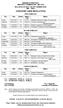 AGRONOMY (NEW REGULATION) Friday 08.05.2015 F.N STA 611 Statistical Methods & Design of Experiments Saturday 09.05.2015 F.N COM 615 Computer Applications for Monday 11.05.2015 F.N AGR 611 Modern Concepts
Undergraduate Degree Turfgrass Management
 Undergraduate Degree Turfgrass Management 2 What Is The Rutgers Advantage? 4 Nationally recognized turfgrass program 4 World-class faculty 4 Focused turfgrass curriculum 4 Low student/teacher ratios 4
ISA Engineering Program. Catalog of Courses. Academic year 2012-2013. First year (all classes are all year long)
 ISA Engineering Program Catalog of Courses Academic year 2012-2013 First year (all classes are all year long) Courses Number of hours ECTS Credits Language Exact Sciences Mathematics 59 4.5 French Physics
Policy for the Organization of Curricula for Undergraduate Degrees. Policy for the Management of Curricula for Undergraduate Degrees
 Nishikyushu University Policy for the Organization of Curricula for Undergraduate Degrees 1. In order to achieve the educational objectives of its faculties and departments, Nishikyushu University shall
AGRICULTURAL SCIENCE I (180)
 DESCRIPTION The first assessment in a series, Agricultural Science I provides foundational knowledge for careers in animal science, plant science, horticulture, natural resources, or agricultural systems
INTERNATIONAL MASTER S DEGREE PROGRAMMES
 INTERNATIONAL MASTER S DEGREE PROGRAMMES FACULTY OF AGRICULTURE AND FORESTRY Edited by Suvipäivikki Mikola, Salla Mehtälä, Sanna Schildt Photos by Wilma Hurskainen, Veikko Somerpuro Cover photo by Veikko
EXHIBIT B. SPECIALTY FIELD CODES FOR THE SURVEY OF EARNED DOCTORATES, 1994 95, INCLUDED IN THE DISCIPLINE GROUPS REPORTED HERE
 EXHIBIT B. SPECIALTY FIELD CODES FOR THE SURVEY OF EARNED DOCTORATES, 1994 95, INCLUDED IN THE DISCIPLINE GROUPS REPORTED HERE EXHIBIT B. SPECIALTY FIELD CODES FOR THE SURVEY OF EARNED DOCTORATES, 1994
Academic Programs. C CNC Machine Welding - CAS (http://catalog.montana.edu/ undergraduate/gallatin-college/workforce-programs/cnc-machinetechnology)
 Montana State University 1 Academic Programs A Accountancy (Professional) - M (http://catalog.montana.edu/graduate/ business) Accounting - BS option in Business; minor (http:// catalog.montana.edu/undergraduate/business/business-minors/
THAMMASAT UNIVERSITY Master of Science Program in Organic Farming Management
 THAMMASAT UNIVERSITY Master of Science Program in Organic Farming Management (New Program) 1. Program Name Master of Science Program in Organic Farming Management 2. Degree Master of Science (Organic Farming
Diablo Valley College Catalog 2014-2015
 Biological science BIOSC Diablo Valley College is approved by the California Board of Registered Nurses for continuing education credits. Biological Science courses which can be used are BIOSC-119, 120,
The University of Vermont: Degrees Awarded by Degree Program, 2007-8
 Degree Programs: Bachelor's Degrees Degree College or School # 2007-08 Degrees AIS: Asian Studies BA College of Arts and Sciences 10 AIS: European Studies BA College of Arts and Sciences 3 AIS: Latin America
Environmental Studies (ES)
 Environmental Studies (ES) The Environmental Studies program prepares students to understand and critically examine environmental issues from an interdisciplinary perspective, to teach in various outdoor
BACHELORS DEGREE PROGRAMMES
 BACHELORS DEGREE PROGRAMMES Bachelor of Science in Environment Management NUBES31101 Earth structure and Geo-process 60 00 60 04 NUBES31102 Atmospheric Environment and Physics 60 00 60 04 NUBES31103 Soil
National Research Council (NRC) Assessment of Doctoral Programs
 National Research Council (NRC) Assessment of Doctoral Programs NRC Assessment What Is It? A study of the quality and characteristics of doctoral programs in the U.S. o Only programs in the Arts and Sciences
Degree Type Bachelor of Science (BS) Degree Title Biology. Focus: Biological Science
 Degree Type Bachelor of Science (BS) Degree Title Biology 09-23-15 Focus: Biological Science The Department of Biology is committed to excellence in instruction, scholarly accomplishment, research, professional
The Graduate School. Welcome from the Dean of The Graduate School Dr. Karlene Hoo, Dean of The Graduate School
 Montana State University 1 The Graduate School Vision The Graduate School strives to foster an environment that produces outstanding graduate scholars who contribute new ideas and knowledge using creative
A Degree in Science is:
 A Degree in Science is: Intellectually stimulating Can lead to a variety of careers: Scientific Research (with opportunities for working with animals) Teaching Science-related jobs Advisory Sales Patents..
Table of Contents. The Goodwin College of Professional Studies Graduate Programs. About The Goodwin College of Professional Studies...
 Table of Contents The Goodwin College of Professional Studies Graduate Programs About The Goodwin College of Professional Studies... 2 Graduate Programs M.S. in Sport Management... 4 Degree Requirements...
Appendix 1: Proposed Eligibility Criteria for Each Type of Graduate Program (As of November 10, 2015)
 Appendix 1: Proposed Eligibility Criteria for Each Type of Graduate Program (As of November 10, 2015) Note: The criteria set forth below are provisional and indicative, subject to change pending public
FOR TEXTILES. o Kuchipudi-I] textiles. Outdoor Activity Based Courses. Camp
![FOR TEXTILES. o Kuchipudi-I] textiles. Outdoor Activity Based Courses. Camp](/thumbs/29/13158029.jpg "FOR TEXTILES. o Kuchipudi-I] textiles. Outdoor Activity Based Courses. Camp") SEMESTER I Basic Sciences Courses o General Chemistry o Biology for Engineers o Fundamentals of Mathematics o Applied Physics-I for Life Science Behavioural Science o Understanding Self for Effectiveness
SEMESTER I Basic Sciences Courses o General Chemistry o Biology for Engineers o Fundamentals of Mathematics o Applied Physics-I for Life Science Behavioural Science o Understanding Self for Effectiveness
APPENDIX A. DEGREE FIELD LIST
 APPENDIX A. DEGREE FIELD LIST SED/DRF Field Name SDR COMPUTER AND INFORMATION SCIENCES 400 Computer sciences 671-677 410 Information sciences & systems 671-677 MATHEMATICAL SCIENCES 420 Applied mathematics
BIOLOGICAL SCIENCES REQUIREMENTS [63 75 UNITS]
![BIOLOGICAL SCIENCES REQUIREMENTS [63 75 UNITS]](/thumbs/24/2707224.jpg "BIOLOGICAL SCIENCES REQUIREMENTS [63 75 UNITS]") Biological Sciences Major The Biological Sciences address many of the most important and fundamental questions about our world: What is life? How does our brain produce our ideas and emotions? What are
Biological Sciences Major The Biological Sciences address many of the most important and fundamental questions about our world: What is life? How does our brain produce our ideas and emotions? What are
FACULTY OF VETERINARY MEDICINE
 FACULTY OF VETERINARY MEDICINE UNIVERSITY OF CORDOBA (SPAIN) E CORDOBA01 LLP ERASMUS ECTS European Credit Transfer System Degree in Food Science and Technology FIRST YEAR FOOD AND CULTURE 980048 Core 1st
Regulations of the United Graduate School of Agricultural Sciences, Kagoshima University
 Regulations of the United Graduate School of Agricultural Sciences, Kagoshima April 1, 004 UGSAS Regulations No.1 (Purpose) Article 1 These regulations specify the essentials regarding the United Graduate
MEDICAL PREPARATORY PROGRAM PRE-DEGREE STUDY PROGRAM
 MEDICAL PREPARATORY PROGRAM PRE-DEGREE STUDY PROGRAM GET YOUR MEDICAL CAREER STARTED! MEDICAL PREPARATORY PROGRAM (MEDPREP) Do you have a passion for medicine and do you wonder about the right way to get
NI_360_301_A - Subpart A - GS-457, Soil Conservation Qualification Determinations. Subpart A - GS-457, Soil Conservation Qualification Determinations
 NI_360_301_A - Subpart A - GS-457, Soil Conservation Qualification Determinations Subpart A - GS-457, Soil Conservation Qualification Determinations 301.0 OPM Qualification Standards The Office of Personnel
Agriculture, Food Systems, and Natural Resources
 College of Agriculture, Food Systems, and Natural Resources 20 academic programs Hundreds of careers Limitless opportunity After obtaining a degree from NDSU s College of Agriculture, Food Systems, and
Department of Food and Nutrition
 Department of Food and Nutrition Faculties Professors Lee-Kim, Yang Cha, Ph.D. (M.I.T., 1973) Nutritional biochemistry, Antioxidant vitamins, Fatty acid metabolism, Brain development, and Hyperlipidemia
Quotas of Master Degree. Quotas of PhD. Yearly Fee. Institute and Master Program. Condition. Institute of Natural and Applied Sciences
 Institute and Master Program Quotas of Master Degree Quotas of PhD Condition Yearly Fee Institute of Natural and Applied Sciences Archeometry 2 Horticulture Master: Those who have not graduated from one
1. Program Title Master of Science Program in Biochemistry (International Program)
 1 Program Structure and Specification Master of Science Program in Biochemistry (International Program) Curriculum Last Revised in 2012 for Students Entering in Academic Year 2016 -----------------------------------------
EXISTING DEGREES, CERTIFICATES, AND AREAS OF STUDY
 EXISTING DEGREES, CERTIFICATES, AND AREAS OF STUDY EXISTING DEGREES Associate of Applied Science (available only at the Agricultural Technical Institute) Associate of Arts (available only at the Lima,
AGRI-ENVIRONMENTAL SCIENCE
 AGRI-ENVIRONMENTAL SCIENCE Class LM-73 of the Master degrees in Forest and Environmental Science and Technology www.saa.unimi.it DIRECTOR OF THE MASTER PROGRAMME Prof. Gian Attilio Sacchi Department of
ANNOUNCEMENT. Candidates from the following Academic units will receive their awards on:
 ANNOUNCEMENT The Academic Registrar, Makerere University wishes to announce that the 60 th Graduation Ceremony will be held from Monday, 18 th January, 2010 to 22 nd January, 2010. The Ceremony starts
DISCIPLINES LIST DIVISION 2
 DISCIPLINES LIST DIVISION 2 DISCIPLINE: AGRICULTURE MASTERS DEGRE REQUIRED Master s in agriculture, agriculture sciences or education with a specialization In agriculture or other agriculture area (including
Molecular Biology & Bio-MCB majors meeting, February 2015
 Molecular Biology & Bio-MCB majors meeting, February 2015 Table of Contents New Molecular Biology Major, as of February 2015... 1 Table 1. Department of Molecular Biology courses... 3 Timeline for choosing
Biology (BL) WHY STUDY BIOLOGY AT MONTREAT COLLEGE?
 Biology (BL) The Biology program of study prepares students to understand the fundamental concepts and methodologies of the biological sciences, to engage in scientific research, and to investigate the
Please note that for area of speciazation of graduate programmes, candidates are advised to contact the various Departments/Schools/Institutes.
 Departmental Requirements for Graduate Programmes Please note that for area of speciazation of graduate programmes, candidates are advised to contact the various Departments/Schools/Institutes. After submission
Federal University of Parana. International Affairs Office
 Federal University of Parana International Affairs Office International Affairs Office International Affairs Office (ARI) is attached to Rector s Office at Federal University of Parana (the UFPR). Its
UNIVERSITY OF WYOMING MASTER LIST OF DEGREES AND MAJORS as authorized by the Trustees May 2015 Prepared by the Office of Academic Affairs
 UNIVERSITY OF WYOMING MASTER LIST OF DEGREES AND MAJORS as authorized by the Trustees May 2015 Prepared by the Office of Academic Affairs By way of explanation, the degree title is listed in bold italics
Have a Bright Idea? University of North Texas Master of Science in Environmental Science
 Have a Bright Idea? University of North Texas Master of Science in Environmental Science Professional Science Master s Degree MS Environmental Science MS in Environmental Science - Proposed Professional
PROVISIONAL SHEET FOR GRADUATE STUDENT. *Or 9 credit hours of courses in discipline approved by Advisory Committee
 PROVISIONAL SHEET FOR GRADUATE STUDENT CORE CURRICULUM FOR ONLINE MASTER OF ENVIRONMEMTAL SCIENCE (M.S.) DEGREE. REQUIRED CORE COURSES 14 credits): EVSC 0501 Biostats II * EVSC 0504 EVSC II * EVSC 0600
SECTION D. CLASSIFICATION OF PROGRAMS
 SECTION D. CLASSIFICATION OF PROGRAMS 25 89 Completions Survey and the Survey of Earned Doctorates ENGINEERING Aeronautical/Astronautical Engineering 14.02 Aerospace, Aeronautical, and Astronautical Engineering
THE RUBENSTEIN SCHOOL DEGREE REQUIREMENTS 2005-2006 UVM CATALOGUE
 THE RUBENSTEIN SCHOOL DEGREE REQUIREMENTS 2005-2006 UVM CATALOGUE Students must be matriculated in The Rubenstein School of Environment and Natural Resources and in residence at the University of Vermont
Overview of the Environmental Science (CSES) B.S. Degree Program at Virginia Tech THE Environmental Science Program at Virginia Tech!
 Overview of the Environmental Science (CSES) B.S. Degree Program at Virginia Tech THE Environmental Science Program at Virginia Tech! The Environmental Science curriculum is science and technology oriented.
KENYATTA UNIVERSITY SCHOOL OF PURE AND APPLIED SCIENCES
 KENYATTA UNIVERSITY SCHOOL OF PURE AND APPLIED SCIENCES Internal Links: The School forms one of the six Schools of the University and has a student population of approximately 2000. External Links: Through
BIOLOGICAL SCIENCES. What can I do with this degree?
 AREAS BIOLOGICAL SCIENCES What can I do with this degree? EMPLOYERS STRATEGIES BIOTECHNOLOGY Laboratory Testing GENETICS related to: Animals Plants Humans Genetic Counseling MICROBIOLOGY Agricultural industry
Degrees and Majors Offered
 Mississippi State University 1 Degrees and Majors Offered Graduate Degrees and Majors Mississippi State University offers the following graduate degrees and majors. University admission and degree completion
University undergraduate study of Cosmetology at Faculty of pharmacy: Why and how?
 University undergraduate study of Cosmetology at Faculty of pharmacy: Why and how? MIRJANA GAŠPERLIN University of Ljubljana, Faculty of pharmacy, Aškerčeva 7, 1000 Ljubljana P-SC- COS member 2014 EAFP
01 Mathematical Sciences. 02 Physical Sciences. 03 Chemical Sciences. 04 Earth Sciences. 05 Environmental Sciences. 06 Biological Sciences
 STATE OF AUSTRALIAN UNIVERSITY RESEARCH 2015 16 01 Mathematical Sciences 364 02 Physical Sciences 366 03 Chemical Sciences 368 04 Earth Sciences 370 05 Environmental Sciences 372 06 Biological Sciences
Graduate School of Agriculture. Tottori University
 1. Graduate school code 6 2. Maximum number of participants Graduate School of Agriculture Tottori University 5 participants every year Engineering Manufacturing Engineering Civil Engineering Electrical
Memorandum of Agreement
 Between the Cornell University Department of Education and the State University of New York at Cobleskill School of Agricultural and Natural Resources For the Professional Preparation of Teachers of Agricultural
1. The conditions for earning a bachelor's degree are that the student must be enrolled for the number of academic
 (1) Policy for the Granting of Bachelor's Degrees (Diploma Policy) 1. The conditions for earning a bachelor's degree are that the student must be enrolled for the number of academic years specified by
UNIUYO postgraduate programmes - ------ Uploaded Online by www.myschoolgist.com.ng
 UNIVERSITY OF UYO P.M.B. 1017, UYO, NIGERIA POSTGRADUATE SCHOOL ADMISSION INTO THE POSTGRADUATE SCHOOL PROGRAMMES FOR 2016/2017 ACADEMIC SESSION Applications are invited from suitably qualified candidates
Introduction. Beijing Normal University
 Beijing Normal University Introduction Beijing Normal University (BNU), founded in 1902, is one of the universities that receive key supports from the state in Beijing. In recent years, with the support
Langara s University Quality Alliance (UQA) program. is designed to help students access Canada s top universities.
 Langara s University Quality Alliance (UQA) program is designed to help students access Canada s top universities. Through UQA, students have the opportunity to study two years at Langara followed by two
Introduction. South China Normal University
 South China Normal University Introduction South China Normal University (SCNU) was established in 1933, a prestigious university in Guangdong Province and a member of Project 211. It is a comprehensive
MASTER OF SCIENCE IN BIOLOGY
 MASTER OF SCIENCE IN BIOLOGY The Master of Science in Biology program is designed to provide a strong foundation in concepts and principles of the life sciences, to develop appropriate skills and to inculcate
Degrees and Programs Offered
 Degrees and Programs Offered 1 Degrees and Programs Offered Degree Programs Tables Undergraduate, Graduate and Professional Degree Programs Approved by the Texas Higher Education Coordinating Board Interdisciplinary
PH.D. PROGRAM IN COMPUTATIONAL SCIENCE CONCENTRATION IN COMPUTATIONAL BIOLOGY & BIOINFORMATICS (Quantitative Biology)
 PH.D. PROGRAM IN COMPUTATIONAL SCIENCE CONCENTRATION IN COMPUTATIONAL BIOLOGY & BIOINFORMATICS (Quantitative Biology) Conducted Jointly by San Diego State University Claremont Graduate University Degree
Educational Opportunities at Temple University. Deborah B. Nelson, Ph.D. [email protected] January 21, 2012
 Educational Opportunities at Temple University Deborah B. Nelson, Ph.D. [email protected] January 21, 2012 Educational Opportunities at Temple University Master of Science in Clinical Research and Translational
Food and Agricultural Business General Option (no concentration) Agricultural Equipment Systems CONCENTRATION:
 Undergraduate Majors, s, Concentrations, and Degrees Department/Unit Major Concentration Degree Available COLLEGE OF AGRICULTURAL SCIENCES AND NATURAL RESOURCES Agriculture and Natural Resources (Interdepartmental)
BIOLOGICAL SCIENCES. What can I do with this degree?
 BIOLOGICAL SCIENCES What can I do with this degree? RESEARCH AND DEVELOPMENT Basic Applied Quality Control Administration Grant Writing Industry and laboratories: Pharmaceutical Healthcare Agriculture
Major Code Major College Bachelor's Master's Doctor's 822 Digital Production Arts MFA 600 Interdisciplinary Nondegree non degree non degree 117
 Major Code Major College Bachelor's Master's Doctor's 822 Digital Production Arts MFA 600 Interdisciplinary Nondegree non degree non degree 117 International Family and Community Studies PhD 999 Non Degree
129 Environmental and Natural Res (Natural Resources CAFLS BS 126 Environmental and Natural Resources CAFLS non degree 127 Environmental and Natural
 Major Code Major College Bachelor's Master's Doctor's 505 Accounting COBBS BS MPAcc 323 Administration and Supervision (EdS) HEHD EdS 303 Administration and Supervision (MEd) HEHD MEd 104 Agricultural
MAT: Science Education
 MAT: Science Education The University of Pittsburgh, School of Education, offers a post-baccalaureate program for secondary science teacher certification (grades 7-12), the Master of Arts in Teaching (MAT)
School of Tropical Medicine and Global Health, Nagasaki University Department of Global Health:
 Target Priority Area: Revitalization of rural area Component: Improvement of Basic living environment (Support for strengthening capacities for implementing health policies) School of Tropical Medicine
THE UNIVERSITY OF THE WEST INDIES ST. AUGUSTINE OFFICE OF GRADUATE STUDIES AND RESEARCH POSTGRADUATE PROGRAMMES 2015/2016
 THE UNIVERSITY OF THE WEST INDIES ST. AUGUSTINE OFFICE OF GRADUATE STUDIES AND RESEARCH POSTGRADUATE PROGRAMMES 2015/2016 On-line applications are invited for entry in September 2015 from suitably qualified
113 Plant and Environmental Sciences CAFLS MS PhD
 Major Code Major College Bachelor's Master's Doctor's 000 Special Student 007 Tri County Bridge Program 009 Summer Transient 100 Agriculture, Forestry and Life Sciences (Non Degree Graduate) CAFLS non