
Code Obfuscation Literature Survey
|
|
|
- Conrad Maxwell
- 10 years ago
- Views:
Transcription
1 Code Obfuscation Literature Survey Arini Balakrishnan, Chloe Schulze CS701 Construction of Compilers, Instructor: Charles Fischer Computer Sciences Department University of Wisconsin, Madison December 19th, 2005 Abstract In this paper we survey the current literature on code obfuscation and review current practices as well as applications. We analyze the different obfuscation techniques in relation to protection of intellectual property and the hiding of malicious code. Surprisingly, the same techniques used to thwart reverse engineers are used to hide malicious code from virus scanners. Additionally, obfuscation can be used to protect against malicious code injection and attacks. Though obfuscation transformations can protect code, they have limitations in the form of larger code footprints and reduced performance. 1 Introduction In the last decade, distribution of code in an architecturally-neutral format has increased the ability to reverse engineer source code from executables. This practice has greatly concerned software companies who desire to protect the intellectual property of their products. Though copyright laws forbid direct piracy of software, developers are worried by possible theft of proprietary data structure and algorithmic design. Though there are several methods for protecting software, such as encryption, server-side execution and native code, obfuscation has been found to be the cheapest and easiest solution to this problem[6]. Code obfuscation is the practice of making code unintelligible, or at the very least, hard to understand. The process of code obfuscation is the application of transformations to the code, which changes the physical appearance of the code, while preserving the black-box specifications of the program. In this project we have surveyed the different obfuscation techniques that are currently being researched, particularly those that can be implemented via a compiler. Not only can code obfuscation be used to protect intellectual property, it is also used extensively by authors of malicious code to avoid detection. Many viruses utilize obfuscation techniques to subvert virus scanners by continually changing their code signature with obfuscating transformations. We review the types of viruses that commonly use obfuscation and the techniques they employ. The paper is laid out as follows: in Section 2 we review the general methods used in common obfuscation techniques, then in Section 3 we discuss techniques used to thwart static analysis. Section 4 talks about obfuscation in the disassembly phase, and Section 5 addresses obfuscation techniques used by viruses. Finally, we conclude in section 6. 2 General Methods for Obfuscation General code obfuscation techniques aim to confuse the understanding of the way in which a 1

2 program functions. These can range from simple layout transformations to complicated changes in control and data flow. The techniques described below summarize the work by Collberg et al. [4]. 2.1 Obfuscation Quality The quality of an obfuscating transformation is evaluated according to four criteria: 1. Potency: How much obscurity it adds to the program 2. Resilience: How difficult is it to break for an automatic deobfuscator 3. Stealth: How well the obfuscated code blends with the rest of the program 4. Cost: How much computation overhead it adds to the obfuscated application 2.2 Obfuscating control transformations The control flow transformations used for obfuscation can be described as affecting the aggregation, ordering or computations of the flow of control. Aggregation transformation breaks up computations that are logically related and merges computations that are not. Control ordering transformations randomize the order in which the computations are carried out. Computation transformations insert new code or make algorithmic changes to source application. The key to the success of control transformations is the resilience of opaque predicates and variables[5]. Opaque predicates and variables are constructs whose values are known to the obfuscator, but are difficult for the deobfuscator to deduce. An opaque predicate is trivial if a deobfuscator can deduce it by static local analysis, and weak if a deobfuscator can deduce it by static global analysis. 2.3 Computation Transformation There is a strong relation between the complexity of the code and the number of predicates it contains. As the number of predicates increase in a body of code, insertion of dead or irrelevant code into the program becomes easier. Therefore, the presence of opaque predicates provides opportunities to further obfuscate a program. For instance, a basic block, B can be split into two basic blocks by inserting an opaque predicate P T (which always evaluates to true) in the center of B. Different obfuscations can then be applied to each half of B. We can also obfuscate a loop by making the termination condition complex. This can be done by introducing an opaque predicate P T (always evaluates to true) or P F (always evaluates to false) that does not affect the number of times a loop will execute. 2.4 Obfuscating data abstractions In the following sections we describe transformations that obscure data abstractions used in source code. There are two types of such obfuscation: namely, modifying inheritance relations and restructuring data arrays. This information is gleaned from a further study done by Collberg et al. [7] Modifying inheritance relations According to the Chidamber metric 1, the complexity of a program increases with greater depth of the inheritance tree. Along these lines, we can artificially increase the complexity of a program either by splitting up a class or by inserting a new bogus class. Suppose C is the class we want to factor into C1 and C2, we should make sure 1 The Chidamber metric measures the complexity of a class C according to the number of methods in C, the depth of C in the inheritance tree, number of direct subclasses of C, number of other classes to which C is coupled, number of methods that can be executed in response to a message sent to an object of C, and the degree to which C s methods do not reference the same set of reference variables. 2

3 that this factoring respects the scope of the variables V in C. In other words, if we split a class in two, one half must not end up with all the variables, while the other half contains all the methods. Inheritance relations can also be modified by false refactoring. Refactoring takes place in two steps. Firstly, identify two independent classes that implement the same behavior. Secondly, move the features common to both the classes to a parent class. False refactoring is similar to refactoring except that false refactoring is performed on two independent classes that do not have a common behavior Restructure Arrays There are many different types of transformations that can be devised to obscure the operations performed on an array. These transformations include: splitting an array, merging two or more arrays, flattening an array (i.e. decrease the dimensions of the array), and folding the array (i.e. increase the dimensions of the array). 2.5 Obfuscating Procedural Abstractions In the following section we discuss different obfuscating transformations that obscure the procedural abstractions in a program. These break up user-defined abstractions or introduce new abstractions, thereby destroying the original structure of the source code Table Interpretation This is one of the most efficient, but expensive, transformations used for obfuscation of code. The fundamental idea is to convert a portion of the code to a different machine code. This new code is then executed by a new virtual machine interpreter included in the obfuscated code. There is usually one to two orders of magnitude slowdown for each level of interpretation, and so this transformation should only be used for those sections of code that consumes a small part of the total runtime. While this transformation is highly potent, it is not very resilient. The deobfuscator could inline code for each bytecode instruction prior to decompilation. One way to thwart this is to replace the bytecode string by a program that produces it or obfuscate the program itself by introducing bogus predicates and dead code Inline and Outline Methods Inlining, a code optimization technique also finds a use in code obfuscation. Once code is inlined and the procedure itself has been removed there is no trace of that abstraction left in the code. Conversely, outlining is the process of selecting a group of statements in a procedure and using them to create a sub-procedure. One example of applying inlining and outlining could be to inline two procedures A and B which are called one after the other, and then outline a portion of their combined code into a new procedure Clone Methods While examining the purpose of a subroutine, a reverse engineer would examine its body and signature. Also the environments where these functions are called play an important role in the understanding of the code. We can make this process difficult by obfuscating a method s call site to make it appear like different routines are called. 2.6 Obfuscating built-in data types In the following sections we discuss different obfuscating transformations that obscure basic data types used in the source application. Designing such transformations is difficult because these data types form an integral part of programming languages. These transformations are very high in cost and low in stealth. Cost is high because we are obscuring the data type, but it is not very stealthy because the transformation is easy to identify. 3

4 2.6.1 Split variables Variables of restricted range can be split up into two or more variables. In order to split a variable V of type T into two variables p and q of type U, we need to provide three pieces of information: 1. A function f(p,q) that maps the values of p and q into the corresponding value of V. 2. a function g(v) that maps the value of V into the corresponding values of p and q. 3. new operations cast in terms of operations on p and q. The potency, resilience and cost of this transformation all grow with the number of variables into which the original variable is split Convert static to procedural data Static strings contain much useful information to a reverse engineer. A simple way of obfuscating them would be to convert the string to a program that computes the string. Aggregating the computation of all static string data into one function, however, may be un-stealthy. We can achieve much higher resilience and potency if the program that computes the string is broken into smaller components and embedded in the normal control flow of a program Merge scalar variables This method of obfuscation involves merging two or more scalar variables into a single variable. The variables v 1,v 2... v k can be merged into one variable V m provided the the combined ranges of v 1,v 2...v k fit within the precision of V m. Arithmetic on individual variables would be transformed into arithmetic on V m. The resilience of merging variables, however, is too low to make the transformation profitable. 3 Code obfuscation by obstructing static analysis of programs Effective alias detection is shown to be NP Hard and this method of code obfuscation aims to introduce non trivial aliases into the program such that data flow analysis is rendered slow or less precise. The transformations discussed below introduce aliases into the program which further hinders the systematic analysis of the program by breaking down control flow. We focus here on techniques used for obstructing static analysis of programs. Static analysis can be either controlflow sensitive or control-flow insensitive. Flowinsensitive analysis does not provide as much information with which to tamper, as does flowsensitive analysis. Control-flow sensitive analysis first constructs a control flow graph of a program and conducts data flow analysis. The techniques to thwart static analysis increase the data dependency of the control flow graph. This results in increased complexity and decreased precision of the analysis. In the following sections we summarize the work of Wang et al. [13]. 3.1 Control-flow Transformations Control flow transformations are accomplished in two steps. The first step involves decomposing high level control transfers into a series of ifthen-goto statements. The second step is to then modify the goto statements such that the target addresses are determined dynamically. This can be achieved by branching on a data variable instead of direct jumps. These transformations make direct branches dependent on data and results in the flattening of the control flow graph. Now, given that there is no direct information about branch target addresses, the problem of building a flow-graph for static analysis of the program depends on identifying the latest definition of the variable at each branching point. 4

5 3.2 Data-flow Transformations Once control-flow transformations have been applied, the problem of constructing a flow-graph now depends on data-flow analysis. Data-flow problems have been proved to be NP complete or harder. The fundamental difficulty in data flow analysis arises from the presence of aliases in the program. The second set of transformations aims to introduce aliases into the program that determine the computation and hence the analysis, of branch targets. The transformation is done in the following steps: 1. In each function, introduce an arbitrary number of pointer variables. 2. Insert artificial blocks, or code in existing blocks, that assign pointers to data variables. 3. Replace references to variables and array elements with indirection through these pointers. Previously meaningful computation on data quantities can be replaced with semantically equivalent computation through the pointers. 4. A definition of a pointer is placed in a different block than its use. The effect of these transformations is that the static analyzer does not know which blocks to execute and since definitions to pointers and their uses are placed in different blocks the analyzer will not be able to deduce which definition applies to each use of the pointer. This approach of thwarting static disassembly is capable of expanding analysis times and reducing the precision of analysis to useless levels. 4 Code Obfuscation in Disassembly Phase Most of the obfuscation techniques discussed so far were applied during the decompilation phase. We can also obfuscate code at the disassembly phase. In this section we discuss the two widely used static disassembly algorithms and techniques to thwart each of them. There are two methods of disassembly: static disassembly, where the file being disassembled by the disassembler is not executed during the course of disassembly; and dynamic disassembly, where the file is executed on some input while the disassembly happens. We focus only on code obfuscation techniques for thwarting static disassembly proposed in the literature. There are two kinds of static disassembly: linear sweep and recursive traversal. A linear sweep disassembler sweeps through the program disassembling instructions as they are encountered. A recursive traversal disassembler would disassemble the instructions according to the flow of control. That is, when a branch instruction is encountered, it determines the possible control flow successors of that instruction and proceeds with disassembly at those instructions. In the following sections we summarize the work of Linn et al. [9]. 4.1 Thwarting disassembly A machine code file consists of different sections that contain various details about the program. One such instruction stored in the machine code of a program is the program entry point, i.e the location in the machine code where the machine instructions begin. To thwart a disassembler, we have to confuse as much as possible its notion of where the instruction boundaries in a program lie. On some instruction sets the disassembly process is self-repairing. That is even when a disassembly error occurs, the disassembler eventually ends up resynchronizing with the actual instruction. So the efforts to confuse disassembly should take this factor into account. Some techniques used to thwart disassembly are discussed in the following sections. 4.2 Junk Insertion We can thwart disassembly by inserting junk bytes at specific places in the instruction stream. To confuse the disassembler, the junk instruc- 5

6 tions should be partial instructions and in order to preserve program semantics the junk instructions inserted should be unreachable at run time. To do so we choose candidate blocks, which are blocks that will allow such junk bytes to be inserted before it. To ensure that these junk instructions are unreachable during program execution, these candidate blocks must not allow the execution to fall through to them. Once this is done, we have to determine which junk instructions to insert so as to confuse the disassembler as much as possible and delay resynchronization for as long as possible. 4.3 Thwarting Linear Sweep A linear sweep disassembly cannot distinguish data in the text section. This can be exploited in thwarting disassembly by inserting junk bytes at selected locations in the instruction stream. The junk bytes can only be inserted before candidate blocks that do not have execution fall through to it. In programs obtained from a typical optimizing compiler candidate blocks are around 30 instructions apart. To enable introduction of more junk bytes, we have to find more candidate blocks and this can be done with the help of branch flipping. The idea is to invert the sense of conditional jumps, by converting code of the form b cc Addr where cc represents a condition to at the possible targets of this branch. Recursive traversal assumes that the normal branches and call functions work reasonably. That is, a conditional branch has two possible targets and a call to a function returns to the point from where it was called. Another aspect of recursive traversal is the difficulty in identifying possible targets of indirect control transfer functions Branch functions The assumption that the call function returns to the instruction immediately following the call instruction can be exploited using branch functions. Given a finite map φ over locations in a program φ = {a 1 b 1,a 2 b 2...a n b n } a branch function f φ is a function that, whenever it is called from one of the locations a i, causes control to be transferred to the corresponding location b i. Given such a branch function we can replace n conditional statements by the following lines: A1:jmp b 1 A2:jmp b 2 An:jmp b n By calls to branch function b cc L jmp Addr L : where cc is the complementary condition to cc. 4.4 Thwarting Recursive Traversal Recursive traversal deals intelligently with control flow and this can be exploited to confuse the disassembly process. Once a branch is encountered, recursive traversal continues disassembly A1:call f φ A2:call f φ An:call f φ Such branch functions have two purposes. One which obscures the computation of the target address within branch function, and the second creates opportunities for misguiding the disassembler. Such branch functions can be implemented in a number of ways. One implementation would be to use the return addresses to look up the table. Another, better, implementation is to have 6

7 the callee pass, as an argument the offset from the instructions immediately after it to the target b i Call conversion A variation of the branch function scheme can be used to insert junk bytes of instructions immediately following call instructions as well. This is done by rerouting call instructions through a specialized branch function, which branches to its appropriate target function, but returns to some predetermined offset from the original call instruction. This can obscure control flow information and also makes it difficult to decipher function entry points while increasing the potential to mislead the disassembler Opaque predicates The assumption that a conditional branch has two targets can be exploited by converting an unconditional branch to a conditional branch, that always goes in one direction. This can be achieved by the use of opaque predicates. Once the unconditional branch is replaced by a conditional branch that uses an opaque predicate, we have a candidate block before which we can insert junk bytes to mislead disassembly Jump Table Spoofing In addition to inserting junk bytes to mislead disassembly we can also insert artificial jump tables to subvert recursive traversal disassembly. Recursive traversal disassembly attempts to determine the size of the jump table to identify possible targets of an indirect jump. This behavior can be exploited by introducing a jump table that is unreachable at runtime. 5 Code Obfuscation as it Relates to Viruses Not only is code obfuscation used to protect commercial software against reverse engineering; malicious code writers can also use obfuscation to hide their creations from virus scanners. In the end, both uses have the same basic intent: to obscure understanding of the program. Of course each task involves different limiting properties. Viruses need to deal with the fact that their obfuscations must continually change, or else scanners will have a known signature to match against. This brings up time and space restrictions. Conversely, commercial software has performance requirements, which limit the types and extent of obfuscation. In this section we discuss the differences between obfuscation of commercial software and malicious code. We first introduce the particular types of viruses that use obfuscation techniques; we then discuss the transformations they typically use in subverting detection. Finally, we explore the possibility of learning from these techniques and perhaps transferring them to the task of protecting commercial software. We restrict our survey to viruses in the interest of time and space. 5.1 Virus Types The two main types of malicious code that use obfuscation techniques to hide themselves from virus scanners are polymorphic and metamorphic viruses. Simple viruses do not change from generation to generation, so virus scanners can rely on simplistic string matching detection to determine if a file has been infected or not. Polymorphic and metamorphic viruses were developed so as to subvert general scanner methods. They rely on techniques that change their code signature each infection generation, making it impossible for string matching algorithms to detect their presence Polymorphic Polymorphic viruses are an extension to encrypted viruses [1, 14]. An encrypted virus simply encrypts its body and then attaches a decryption key to itself, which changes from gen- 7

8 eration to generation. A polymorphic virus also encrypts its body, however, it randomly changes its decryption algorithm each time the virus infects a host. Because the decryption scheme is never encrypted, and it is generally tacked on to the end of the virus code, it might be source of detection by virus scanners. Therefore, when a polymorphic virus changes its decryption routine, it changes the part of the signature that scanners could detect. Virus scanners can still get around this obfuscation by basically waiting for a polymorphic virus to deobfuscate itself. Virus scanners have the ability to run a virus in a sandbox or emulator, which allows the virus to run without causing harm. As the virus runs, it must decrypt itself to attempt to infect a file and therefore the emulator can scan for the virus signature when the virus decides to execute. Obviously this technique has limitations, one of which is how to know how long to run Metamorphic Metamorphic viruses, like polymorphic viruses encrypt themselves to hide their signatures from virus scanners. Metamorphic viruses, however, can change their source code and then recompile themselves if compilers are available on the victim machine. This allows the virus to add and remove junk code, which evolves their signature over time. Metamorphic viruses are, of course, an advance in technology beyond the techniques of polymorphic viruses. Whereas, polymorphic viruses will decrypt themselves in memory to propagate and infect hosts, metamorphic viruses do not. In fact, a metamorphic virus never reveals its entire virus body at once, making it almost impossible for a simple signature-matching scanner to detect it. As a response, virus scanners have evolved to use heuristics to detect metamorphic viruses. Common techniques still involve emulation, or running on a Virtual Machine, which simulates some of the functionality of a operating system. Tracking system calls is a technique that has seen much research in the last few years [12, 8]. M. Christodorescu et al. have recently developed a static analysis technique to detect metamorphic viruses [3]. Techniques to detect a metamorphic virus can be very much like those that are used to reverse engineer commercial software. Static analysis, decompilation and the like can recognize obfuscation efforts such as dead code insertion. 5.2 Obfuscation Techniques Obfuscations used by virus writers are generally utilized for the purpose of changing the signature of the code, i.e. the sequence of instructions so that a virus scanner will be unable to use search strings to detect the presence of the virus. Common obfuscation techniques, which change the layout of code, are: dead code insertion (also called junk or trash insertion, code transposition, register reassignment and instruction substitution. These obfuscations are explained briefly below, though they generally expand on the earlier descriptions of obfuscation transformations Dead Code Insertion This transformation acts just like it sounds, it involves placing ineffectual instructions in amongst existing instructions. These new instructions can be no-ops, change the state of a program, only to change it right back, or can involve jump instruction placement which will skip the new instructions all together. Though changes such as these most likely will not fool a reverse engineer, it has been shown by M. Christodorescu et al. [3] that these simple transformations can subvert many virus scan engines Code Transposition Code transposition is simply the cosmetic movement of code within a file. For instance the location of procedures could be changed around, or instructions within a procedure, which are independent of one another, can be reordered. 8

9 5.2.3 Register Reassignment Register reassignment refers to the change of registers used by live variables. If a particular register R1 is not used during the live range of a variable, then the register R2 used currently to store the live variable can be replaced by R1. Again, this transformation would not stand up to reverse engineering techniques, but it does have the effect of changing the signature of the program Instruction Substitution When compared to the above transformations, this obfuscation technique is the most resilient, even when it comes to reverse engineering. Instruction substitution is implemented using a library of equivalent instructions. It replaces an instruction in the body of code with one that is equivalent. This can greatly change the signature of the code, and is difficult to deobfuscate, especially if the library of equivalent instructions is unavailable. 5.3 Comparisons Virus writers obfuscate code to change the signature of the code, so that virus scanners cannot recognize it. Which makes sense because the scanners are searching for an infection that may not be there. This is obviously different than obfuscation from a reverse engineering standpoint. In the latter case the obfuscation is meant to hide important or sensitive data, which the reverse engineer knows is present. In general, obfuscation techniques used by malicious code writers are not as potent as those used for commercial software. There are practices, however, which malicious code authors use, that may have applications to obfuscation of commercial software. Such an example is a technique used by the Zmist virus to hide its polymorphic decryptor[12]. The decryptor is placed within the host program in chunks separated by pieces of the host code and connected together by jumps. It might be possible to apply this type of transformation on commercial software. An important or sensitive algorithm could be broken into chunks and spread throughout the code. For the most part, however, transformations applied to viruses will not stand up against reverse engineering attacks and so cannot directly be applied to commercial software. 5.4 Another Angle There is of course another angle to obfuscation of commercial software, which is the use of obfuscation to protect against malicious attacks. Such attacks are generally in the form of code injection, where a malicious entity attempts to insert code into an existing program with the intent that the code will be run and transfer control of the system to the attacker [10]. One can apprehend that to insert code into a program and have it successfully run without notice requires an indepth understanding of the victim program. To thwart such an attack, clearly it would help if it were difficult to understand the inner workings of the victimized program. And here code obfuscation can take on yet another role. There is current research in the area of address obfuscation, which aims to vary the location of data and procedures through dynamic change of the program s address space during execution [11, 2]. Not only does this technique subvert understanding of a program, but it also has the ability to protect against repeated attacks because of its ability to change dynamically. This is an especially interesting technique because it seems to influenced by the way in which viruses themselves can mutate to avoid detection. 6 Conclusion Though code obfuscation can thwart many attacks, given enough time and effort any of the techniques discussed above can be overcome by reverse engineers. No obfuscation has yet been found that can completely resist reverse engi- 9

10 neering. In addition to this drawback, code obfuscation increases the code footprint, decreases performance, and can hinder certain compiler optimizations. In spite of these limitations, obfuscation techniques, when used sparingly, and combined appropriately, can add a layer of protection against theft and insertion of malicious code. The literature surveyed produces an inconclusive result as to whether obfuscation techniques used by viruses can be applied to commercial software. Clearly, obfuscation does help to protect against virus infections, but further study is needed to ascertain which techniques produce the best results. References [1] Understanding and managing polymorphic viruses, [2] Sandeep Bhatkar, Daniel C. DuVarney, and R. Sekar. Address obfuscation: an efcient approach to combat a broad range of memory error exploits. [3] M. Christodorescu and S. Jha. Static analysis of executables to detect malicious patterns. In 12th USENIX Security Symposium, pages , August [4] Christian Collberg, Clark Thomborson, and Douglas Low. A taxonomy of obfuscating transformations, July [5] Christian Collberg, Clark Thomborson, and Douglas Low. Manufacturing cheap, resilient, and stealthy opaque constructs. In Principles of Programming Languages 1998, POPL 98, pages , [7] Christian S. Collberg, Clark D. Thomborson, and Douglas Low. Breaking abstractions and unstructuring data structures. In International Conference on Computer Languages, pages 28 38, [8] A. Lakhotia and E. U. Kumar. Abstract stack graph to detect obfuscated calls in binaries. In IEEE International Workshop on Source Code Analysis and Manipulation, September [9] C. Linn and S. Debray. Obfuscation of Executable Code to Improve Resistance to Static Disassembly, [10] C. M. Linn, M. Rajagopalan, S. Baker, C. Collberg, S. K. Debray, J. H. Hartman, and P. Moseley. A multi-faceted defence mechanism against code injection attacks. [11] M. Madou, B. Anckaert, P. Moseley, S. Debray, B. De Sutter, and K. De Bosschere. Software protection through dynamic code mutation. [12] Peter Szor and Peter Ferrie. Hunting for Metamorphic, September [13] Chenxi Wang, Jonathan Hill, John Knight, and Jack Davidson. Software tamper resistance: Obstructing static analysis of programs. Technical Report CS , [14] T. Yetiser. Polymorphic Viruses: Implementation, Detection, and Protection. VDS Advanced Research Group, January [6] Christian S. Collberg and Clark Thomborson. Watermarking, tamper-proofing, and obfuscation - tools for software protection. In IEEE Transactions on Software Engineering, volume 28, pages , August

Software Code Protection Through Software Obfuscation
 Software Code Protection Through Software Obfuscation Presented by: Sabu Emmanuel, PhD School of Computer Engineering Nanyang Technological University, Singapore E-mail: [email protected] 20, Mar,
Software Protection through Code Obfuscation
 Software Protection through Code Obfuscation Dissertation submitted in partial fulfillment of the requirements for the degree of Master of Technology, Computer Engineering by Aniket Kulkarni Roll No: 121022016
Code Obfuscation. Mayur Kamat Nishant Kumar
 Code Obfuscation Mayur Kamat Nishant Kumar Agenda Malicious Host Problem Code Obfuscation Watermarking and Tamper Proofing Market solutions Traditional Network Security Problem Hostile Network Malicious
Obfuscation: know your enemy
 Obfuscation: know your enemy Ninon EYROLLES [email protected] Serge GUELTON [email protected] Prelude Prelude Plan 1 Introduction What is obfuscation? 2 Control flow obfuscation 3 Data flow
Implementation of an Obfuscation Tool for C/C++ Source Code Protection on the XScale Architecture *
 Implementation of an Obfuscation Tool for C/C++ Source Code Protection on the XScale Architecture * Seongje Cho, Hyeyoung Chang, and Yookun Cho 1 Dept. of Computer Science & Engineering, Dankook University,
Applications of obfuscation to software and hardware systems
 Applications of obfuscation to software and hardware systems Victor P. Ivannikov Institute for System Programming Russian Academy of Sciences (ISP RAS) www.ispras.ru Program obfuscation is an efficient
Parasitics: The Next Generation. Vitaly Zaytsev Abhishek Karnik Joshua Phillips
 Parasitics: The Next Generation. Vitaly Zaytsev Abhishek Karnik Joshua Phillips Agenda Overview W32/Xpaj analysis Overview of a virtual machine Software protection trends W32/Winemmem analysis W32/Induc
Introduction to Program Obfuscation
 Introduction to Program Obfuscation p. 1/26 Introduction to Program Obfuscation Yury Lifshits Saint-Petersburg State University http://logic.pdmi.ras.ru/ yura/ [email protected] Introduction to Program
Surreptitious Software
 Surreptitious Software Obfuscation, Watermarking, and Tamperproofing for Software Protection Christian Collberg Jasvir Nagra rw T Addison-Wesley Upper Saddle River, NJ Boston Indianapolis San Francisco
Lecture 12: Software protection techniques. Software piracy protection Protection against reverse engineering of software
 Lecture topics Software piracy protection Protection against reverse engineering of software Software piracy Report by Business Software Alliance for 2001: Global economic impact of software piracy was
SOURCE CODE OBFUSCATION BY MEAN OF EVOLUTIONARY ALGORITHMS
 SOURCE CODE OBFUSCATION BY MEAN OF EVOLUTIONARY ALGORITHMS Sébastien Martinez 2011 Tutor : Sébastien Varrette Advisor : Benoît Bertholon University of Luxembourg, Faculty of Sciences, Technologies and
Software Tamper Resistance: Obstructing Static Analysis of Programs
 Software Tamper Resistance: Obstructing Static Analysis of Programs Abstract Chenxi Wang, Jonathan Hill, John Knight, Jack Davidson Department of Computer Science University of Virginia{cw2e jch8f knight
Automated Program Behavior Analysis
 Automated Program Behavior Analysis Stacy Prowell [email protected] March 2005 SQRL / SEI Motivation: Semantics Development: Most engineering designs are subjected to extensive analysis; software is
LASTLINE WHITEPAPER. Why Anti-Virus Solutions Based on Static Signatures Are Easy to Evade
 LASTLINE WHITEPAPER Why Anti-Virus Solutions Based on Static Signatures Are Easy to Evade Abstract Malicious code is an increasingly important problem that threatens the security of computer systems. The
Software Reverse Engineering
 Software Reverse Engineering Jacco Krijnen June 19, 2013 Abstract While reverse engineering probably started with the analysis of hardware, today it plays a significant role in the software world. We discuss
DATA OBFUSCATION. What is data obfuscation?
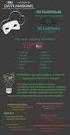 DATA OBFUSCATION What data obfuscation? Data obfuscations break the data structures used in the program and encrypt literals. Th method includes modifying inheritance relations, restructuring arrays, etc.
Static Analysis of Virtualization- Obfuscated Binaries
 Static Analysis of Virtualization- Obfuscated Binaries Johannes Kinder School of Computer and Communication Sciences École Polytechnique Fédérale de Lausanne (EPFL), Switzerland Virtualization Obfuscation
Control Flow Obfuscation with Information Flow Tracking
 Control Flow Obfuscation with Information Flow Tracking Haibo Chen, Liwei Yuan, Xi Wu, Binyu Zang Parallel Processing Institute Fudan University {hbchen, yuanliwei, wuxi, byzang}@fudan.edu.cn Bo Huang
Bachelor of Games and Virtual Worlds (Programming) Subject and Course Summaries
 First Semester Development 1A On completion of this subject students will be able to apply basic programming and problem solving skills in a 3 rd generation object-oriented programming language (such as
AS RECENTLY AS SIX YEARS AGO, COMPUTER
 Computer Virus Coevolution The battle to conquer computer viruses is far from won, but new and improved antidotes are controlling the field. Carey Nachenberg AS RECENTLY AS SIX YEARS AGO, COMPUTER relatively
Malicious Programs. CEN 448 Security and Internet Protocols Chapter 19 Malicious Software
 CEN 448 Security and Internet Protocols Chapter 19 Malicious Software Dr. Mostafa Hassan Dahshan Computer Engineering Department College of Computer and Information Sciences King Saud University [email protected]
Malicious Software. Ola Flygt Växjö University, Sweden http://w3.msi.vxu.se/users/ofl/ [email protected] +46 470 70 86 49. Viruses and Related Threats
 Malicious Software Ola Flygt Växjö University, Sweden http://w3.msi.vxu.se/users/ofl/ [email protected] +46 470 70 86 49 1 Outline Viruses and Related Threats Malicious Programs The Nature of Viruses Antivirus
Compiling Object Oriented Languages. What is an Object-Oriented Programming Language? Implementation: Dynamic Binding
 Compiling Object Oriented Languages What is an Object-Oriented Programming Language? Last time Dynamic compilation Today Introduction to compiling object oriented languages What are the issues? Objects
Load Profile-based Efficiency Metrics for Code Obfuscators
 Acta Polytechnica Hungarica Vol. 12, No. 5, 2015 Load Profile-based Efficiency Metrics for Code Obfuscators Marko Đuković Schneider Electric DMS, Narodnog Fronta 25A, 21000 Novi Sad, Serbia, E-mail: [email protected]
Computing Concepts with Java Essentials
 2008 AGI-Information Management Consultants May be used for personal purporses only or by libraries associated to dandelon.com network. Computing Concepts with Java Essentials 3rd Edition Cay Horstmann
Self Protection Techniques in Malware
 DSIE 10 5 th Doctoral lsymposium on Informatics Engineering i January 28 29, 2010 Porto, Portugal Self Protection Techniques in Malware Tiago Santos Overview Introduction Malware Types Why Self Protection?
Interpreters and virtual machines. Interpreters. Interpreters. Why interpreters? Tree-based interpreters. Text-based interpreters
 Interpreters and virtual machines Michel Schinz 2007 03 23 Interpreters Interpreters Why interpreters? An interpreter is a program that executes another program, represented as some kind of data-structure.
Habanero Extreme Scale Software Research Project
 Habanero Extreme Scale Software Research Project Comp215: Java Method Dispatch Zoran Budimlić (Rice University) Always remember that you are absolutely unique. Just like everyone else. - Margaret Mead
Automating Mimicry Attacks Using Static Binary Analysis
 Automating Mimicry Attacks Using Static Binary Analysis Christopher Kruegel and Engin Kirda Technical University Vienna [email protected], [email protected] Darren Mutz, William Robertson,
Obfuscation of Abstract Data-Types
 Obfuscation of Abstract Data-Types Stephen Drape St John s College Thesis submitted for the degree of Doctor of Philosophy at the University of Oxford Trinity Term 2004 Obfuscation of Abstract Data Types
Lecture 26: Obfuscation
 Lecture 26: Obfuscation 15411: Compiler Design Robbie Harwood and Maxime Serrano 21 November 2013 1 Introduction We have previously (lecture 20) considered the problem of doing compilation backwards (i.e.,
Attacking Obfuscated Code with IDA Pro. Chris Eagle
 Attacking Obfuscated Code with IDA Pro Chris Eagle Outline Introduction Operation Demos Summary 2 First Order Of Business MOVE UP AND IN! There is plenty of room up front I can't increase the font size
Limits of Static Analysis for Malware Detection
 Limits of Static Analysis for Malware Detection Andreas Moser, Christopher Kruegel, and Engin Kirda Secure Systems Lab Technical University Vienna {andy,chris,ek}@seclab.tuwien.ac.at Abstract Malicious
Application of Data Mining based Malicious Code Detection Techniques for Detecting new Spyware
 Application of Data Mining based Malicious Code Detection Techniques for Detecting new Spyware Cumhur Doruk Bozagac Bilkent University, Computer Science and Engineering Department, 06532 Ankara, Turkey
Sandy. The Malicious Exploit Analysis. http://exploit-analysis.com/ Static Analysis and Dynamic exploit analysis. Garage4Hackers
 Sandy The Malicious Exploit Analysis. http://exploit-analysis.com/ Static Analysis and Dynamic exploit analysis About Me! I work as a Researcher for a Global Threat Research firm.! Spoke at the few security
Obfuscating C++ Programs via Control Flow Flattening
 Obfuscating C++ Programs via Control Flow Flattening Tímea László and Ákos Kiss University of Szeged, Department of Software Engineering Árpád tér 2., H-6720 Szeged, Hungary [email protected],
Malware, Phishing, and Cybercrime Dangerous Threats Facing the SMB State of Cybercrime
 How to Protect Your Business from Malware, Phishing, and Cybercrime The SMB Security Series Malware, Phishing, and Cybercrime Dangerous Threats Facing the SMB State of Cybercrime sponsored by Introduction
JavaScript static security analysis made easy with JSPrime
 JavaScript static security analysis made easy with JSPrime Nishant Das Patnaik & Sarathi Sabyasachi Sahoo [email protected] & [email protected] JavaScript is the lingua-franca of Web 2.0 and, recently,
k-gram Based Software Birthmarks
 k-gram Based Software Birthmarks 2005 ACM Symposium on Applied Computing Ginger Myles Christian Collberg Department of Computer Science University of Arizona Tucson, AZ 85721 {mylesg,collberg}@cs.arizona.edu
KITES TECHNOLOGY COURSE MODULE (C, C++, DS)
 KITES TECHNOLOGY 360 Degree Solution www.kitestechnology.com/academy.php [email protected] [email protected] Contact: - 8961334776 9433759247 9830639522.NET JAVA WEB DESIGN PHP SQL, PL/SQL
Platform Independent Code Obfuscation
 Platform Independent Code Obfuscation OSKAR ARVIDSSON Master s Thesis at CSC Supervisor: Mikael Goldmann Examiner: Johan Håstad TRITA xxx yyyy-nn Abstract Code obfuscation is a technique used to make software
Computer Security DD2395
 Computer Security DD2395 http://www.csc.kth.se/utbildning/kth/kurser/dd2395/dasakh11/ Fall 2011 Sonja Buchegger [email protected] Lecture 7 Malicious Software DD2395 Sonja Buchegger 1 Course Admin Lab 2: - prepare
Persistent Binary Search Trees
 Persistent Binary Search Trees Datastructures, UvA. May 30, 2008 0440949, Andreas van Cranenburgh Abstract A persistent binary tree allows access to all previous versions of the tree. This paper presents
OBFUSCATING C++ PROGRAMS VIA CONTROL FLOW FLATTENING
 Annales Univ. Sci. Budapest., Sect. Comp. 30 (2009) 3-19 OBFUSCATING C++ PROGRAMS VIA CONTROL FLOW FLATTENING T. László and Á. Kiss (Szeged, Hungary) Abstract. Protecting a software from unauthorized access
CS Standards Crosswalk: CSTA K-12 Computer Science Standards and Oracle Java Programming (2014)
 CS Standards Crosswalk: CSTA K-12 Computer Science Standards and Oracle Java Programming (2014) CSTA Website Oracle Website Oracle Contact http://csta.acm.org/curriculum/sub/k12standards.html https://academy.oracle.com/oa-web-introcs-curriculum.html
An Iteration Obfuscation Based on Instruction Fragment Diversification and Control Flow Randomization
 An Iteration Obfuscation Based on Instruction Fragment Diversification and Control Flow Randomization Xin Xie, Fenlin Liu, Bin Lu, and Fei Xiang Abstract As the control flow graph can reflect the logic
ALLIED PAPER : DISCRETE MATHEMATICS (for B.Sc. Computer Technology & B.Sc. Multimedia and Web Technology)
 ALLIED PAPER : DISCRETE MATHEMATICS (for B.Sc. Computer Technology & B.Sc. Multimedia and Web Technology) Subject Description: This subject deals with discrete structures like set theory, mathematical
[Refer Slide Time: 05:10]
![[Refer Slide Time: 05:10]](/thumbs/29/13447118.jpg "[Refer Slide Time: 05:10]") Principles of Programming Languages Prof: S. Arun Kumar Department of Computer Science and Engineering Indian Institute of Technology Delhi Lecture no 7 Lecture Title: Syntactic Classes Welcome to lecture
Principles of Programming Languages Prof: S. Arun Kumar Department of Computer Science and Engineering Indian Institute of Technology Delhi Lecture no 7 Lecture Title: Syntactic Classes Welcome to lecture
Computer Virus Strategies and Detection Methods
 Int. J. Open Problems Compt. Math., Vol. 1, No. 2, September 2008 Computer Virus Strategies and Detection Methods Essam Al Daoud 1, Iqbal H. Jebril 2 and Belal Zaqaibeh 3 1 Department of Computer Science,
Domains and Competencies
 Domains and Competencies DOMAIN I TECHNOLOGY APPLICATIONS CORE Standards Assessed: Computer Science 8 12 I VII Competency 001: The computer science teacher knows technology terminology and concepts; the
Banking Security using Honeypot
 Banking Security using Honeypot Sandeep Chaware D.J.Sanghvi College of Engineering, Mumbai [email protected] Abstract New threats are constantly emerging to the security of organization s information
Transparent Monitoring of a Process Self in a Virtual Environment
 Transparent Monitoring of a Process Self in a Virtual Environment PhD Lunchtime Seminar Università di Pisa 24 Giugno 2008 Outline Background Process Self Attacks Against the Self Dynamic and Static Analysis
Next-Generation Protection Against Reverse Engineering
 Next-Generation Protection Against Reverse Engineering 4 February 2005 Chris Coakley, Jay Freeman, Robert Dick [email protected]; [email protected]; [email protected] Purpose This white
RE-TRUST. PoliTO Prototypes Overview. Paolo Falcarin, Stefano DiCarlo Alessandro Cabutto, Nicola Garazzino, Davide Barberis
 RE-TRUST PoliTO Prototypes Overview Paolo Falcarin, Stefano DiCarlo Alessandro Cabutto, Nicola Garazzino, Davide Barberis RE-TRUST meeting Paris, Dec 2008 RE-TRUST Project Many prototypes developed: 1.
A Survey of Anti-Tamper Technologies
 A Survey of Anti-Tamper Technologies The unauthorized modification and subsequent misuse of software is often referred to as software cracking. Usually, cracking requires disabling one or more software
CIS570 Modern Programming Language Implementation. Office hours: TDB 605 Levine [email protected]. [email protected].
 CIS570 Modern Programming Language Implementation Instructor: Admin. Assistant: URL: E Christopher Lewis Office hours: TDB 605 Levine [email protected] Cheryl Hickey [email protected] 502
Data Structure Reverse Engineering
 Data Structure Reverse Engineering Digging for Data Structures Polymorphic Software with DSLR Scott Hand October 28 th, 2011 Outline 1 Digging for Data Structures Motivations Introduction Laika Details
Java Application Developer Certificate Program Competencies
 Java Application Developer Certificate Program Competencies After completing the following units, you will be able to: Basic Programming Logic Explain the steps involved in the program development cycle
How to Sandbox IIS Automatically without 0 False Positive and Negative
 How to Sandbox IIS Automatically without 0 False Positive and Negative Professor Tzi-cker Chiueh Computer Science Department Stony Brook University [email protected] 2/8/06 Blackhat Federal 2006 1 Big
APPLETS AND NETWORK SECURITY: A MANAGEMENT OVERVIEW
 84-10-25 DATA SECURITY MANAGEMENT APPLETS AND NETWORK SECURITY: A MANAGEMENT OVERVIEW Al Berg INSIDE Applets and the Web, The Security Issue, Java: Secure Applets, Java: Holes and Bugs, Denial-of-Service
Intrusion Detection in AlienVault
 Complete. Simple. Affordable Copyright 2014 AlienVault. All rights reserved. AlienVault, AlienVault Unified Security Management, AlienVault USM, AlienVault Open Threat Exchange, AlienVault OTX, Open Threat
Obfuscation by Partial Evaluation of Distorted Interpreters
 Obfuscation by Partial Evaluation of Distorted Interpreters Neil D. Jones DIKU, University of Copenhagen (prof. emeritus) Joint work with Roberto Giacobazzi and Isabella Mastroeni University of Verona
What is Software Watermarking? Software Watermarking Through Register Allocation: Implementation, Analysis, and Attacks
 hat is Software atermarking? Software atermarking Through Register Allocation: Implementation, Analysis, and Attacks Ginger Myles Christian Collberg {mylesg,collberg}@cs.arizona.edu University of Arizona
Shellshock. Oz Elisyan & Maxim Zavodchik
 Shellshock By Oz Elisyan & Maxim Zavodchik INTRODUCTION Once a high profile vulnerability is released to the public, there will be a lot of people who will use the opportunity to take advantage on vulnerable
2) Write in detail the issues in the design of code generator.
 COMPUTER SCIENCE AND ENGINEERING VI SEM CSE Principles of Compiler Design Unit-IV Question and answers UNIT IV CODE GENERATION 9 Issues in the design of code generator The target machine Runtime Storage
Cryptography and Network Security Department of Computer Science and Engineering Indian Institute of Technology Kharagpur
 Cryptography and Network Security Department of Computer Science and Engineering Indian Institute of Technology Kharagpur Module No. # 01 Lecture No. # 05 Classic Cryptosystems (Refer Slide Time: 00:42)
CAS : A FRAMEWORK OF ONLINE DETECTING ADVANCE MALWARE FAMILIES FOR CLOUD-BASED SECURITY
 CAS : A FRAMEWORK OF ONLINE DETECTING ADVANCE MALWARE FAMILIES FOR CLOUD-BASED SECURITY ABHILASH SREERAMANENI DEPARTMENT OF COMPUTER SCIENCE AND ENGINEERING SEOUL NATIONAL UNIVERSITY OF SCIENCE AND TECHNOLOGY
Comp 411 Principles of Programming Languages Lecture 34 Semantics of OO Languages. Corky Cartwright Swarat Chaudhuri November 30, 20111
 Comp 411 Principles of Programming Languages Lecture 34 Semantics of OO Languages Corky Cartwright Swarat Chaudhuri November 30, 20111 Overview I In OO languages, data values (except for designated non-oo
Anti-virus Evasion Techniques. By: Abhinav Singh a.k.a DaRkLoRd
 Research Whitepaper on Anti-virus Evasion Techniques By: Abhinav Singh a.k.a DaRkLoRd (Information Security Specialist) url : http://hackingalert.blogspot.com Anti-virus Evasion Techniques Anti-virus has
Advanced Computer Architecture-CS501. Computer Systems Design and Architecture 2.1, 2.2, 3.2
 Lecture Handout Computer Architecture Lecture No. 2 Reading Material Vincent P. Heuring&Harry F. Jordan Chapter 2,Chapter3 Computer Systems Design and Architecture 2.1, 2.2, 3.2 Summary 1) A taxonomy of
Thomas Jefferson High School for Science and Technology Program of Studies Foundations of Computer Science. Unit of Study / Textbook Correlation
 Thomas Jefferson High School for Science and Technology Program of Studies Foundations of Computer Science updated 03/08/2012 Unit 1: JKarel 8 weeks http://www.fcps.edu/is/pos/documents/hs/compsci.htm
AP Computer Science A - Syllabus Overview of AP Computer Science A Computer Facilities
 AP Computer Science A - Syllabus Overview of AP Computer Science A Computer Facilities The classroom is set up like a traditional classroom on the left side of the room. This is where I will conduct my
Java 6 'th. Concepts INTERNATIONAL STUDENT VERSION. edition
 Java 6 'th edition Concepts INTERNATIONAL STUDENT VERSION CONTENTS PREFACE vii SPECIAL FEATURES xxviii chapter i INTRODUCTION 1 1.1 What Is Programming? 2 J.2 The Anatomy of a Computer 3 1.3 Translating
Full System Emulation:
 Full System Emulation: Achieving Successful Automated Dynamic Analysis of Evasive Malware Christopher Kruegel Lastline, Inc. [email protected] 1 Introduction Automated malware analysis systems (or sandboxes)
Source Code Security Analysis Tool Functional Specification Version 1.0
 Special Publication 500-268 Source Code Security Analysis Tool Functional Specification Version 1.0 Paul E. Black Michael Kass Michael Koo Software Diagnostics and Conformance Testing Division Information
Dynamic Spyware Analysis
 Dynamic Spyware Analysis Manuel Egele, Christopher Kruegel, Engin Kirda, Heng Yin, and Dawn Song Secure Systems Lab Technical University Vienna {pizzaman,chris,ek}@seclab.tuwien.ac.at Carnegie Mellon University
Programming Language Pragmatics
 Programming Language Pragmatics THIRD EDITION Michael L. Scott Department of Computer Science University of Rochester ^ШШШШШ AMSTERDAM BOSTON HEIDELBERG LONDON, '-*i» ЩЛ< ^ ' m H NEW YORK «OXFORD «PARIS»SAN
ARIZONA CTE CAREER PREPARATION STANDARDS & MEASUREMENT CRITERIA SOFTWARE DEVELOPMENT, 15.1200.40
 SOFTWARE DEVELOPMENT, 15.1200.40 1.0 APPLY PROBLEM-SOLVING AND CRITICAL THINKING SKILLS TO INFORMATION TECHNOLOGY 1.1 Describe methods and considerations for prioritizing and scheduling software development
Mobile Payment Security
 Mobile Payment Security Maurice Aarts & Nikita Abdullin Black Hat Sessions, 23 June 2016, Ede - NL Content Introduction EMV & NFC for HCE Platform / ecosystem overview Attacker model Attacks and countermeasures
Homeland Security Red Teaming
 Homeland Security Red Teaming Directs intergovernmental coordination Specifies Red Teaming Viewing systems from the perspective of a potential adversary Target hardening Looking for weakness in existing
Polymorphic Worm Detection Using Structural Information of Executables
 Polymorphic Worm Detection Using Structural Information of Executables Christopher Kruegel 1,EnginKirda 1, Darren Mutz 2, William Robertson 2, and Giovanni Vigna 2 1 Technical University of Vienna [email protected]
Dr. Jinyuan (Stella) Sun Dept. of Electrical Engineering and Computer Science University of Tennessee Fall 2010
 CS 494/594 Computer and Network Security Dr. Jinyuan (Stella) Sun Dept. of Electrical Engineering and Computer Science University of Tennessee Fall 2010 1 Introduction to Cryptography What is cryptography?
Instructional Design Framework CSE: Unit 1 Lesson 1
 Instructional Design Framework Stage 1 Stage 2 Stage 3 If the desired end result is for learners to then you need evidence of the learners ability to then the learning events need to. Stage 1 Desired Results
The Software Similarity Problem in Malware Analysis
 The Software Similarity Problem in Malware Analysis Andrew Walenstein and Arun Lakhotia 1 University of Louisiana at Lafayette, Center for Advanced Computer Studies, P.O. Box 44330, Lafayette, LA 70504-4330,
Anti-Virus Evasion Techniques and Countermeasures
 Anti-Virus Evasion Techniques and Countermeasures Author: Debasis Mohanty www.hackingspirits.com Email ID: [email protected] [email protected] Table of Contents 1. INTRODUCTION............3 2.
Where s the FEEB? The Effectiveness of Instruction Set Randomization
 Where s the FEEB? The Effectiveness of Instruction Set Randomization Ana Nora Sovarel David Evans Nathanael Paul University of Virginia, Department of Computer Science http://www.cs.virginia.edu/feeb Abstract
Software Reversing Engineering (a.k.a. Reversing) Spiros Mancoridis. What is Reverse Engineering? Software Reverse Engineering: Reversing
 Software Reversing Engineering (a.k.a. Reversing) Spiros Mancoridis What is Reverse Engineering? Reverse engineering (RE) is the process of etracting the knowledge or design blueprints from anything man