
The GuideCane Applying Mobile Robot Technologies to Assist the Visually Impaired
|
|
|
- Joanna Jones
- 10 years ago
- Views:
Transcription
1 IEEE Transactions on Systems, Man, and Cybernetics, Part A: Systems and Humans, Vol. 31, No. 2, March 2001, pp The GuideCane Applying Mobile Robot Technologies to Assist the Visually Impaired by Iwan Ulrich 1 and Johann Borenstein 2, Member, IEEE ABSTRACT The GuideCane is a novel device designed to help blind or visually impaired users navigate safely and quickly among obstacles and other hazards. During operation, the user pushes the lightweight GuideCane forward. When the GuideCane s ultrasonic sensors detect an obstacle, the embedded computer determines a suitable direction of motion that steers the GuideCane and the user around it. The steering action results in a very noticeable force felt in the handle, which easily guides the user without any conscious effort on his/her part. I. INTRODUCTION There are about two million visually impaired or blind persons 3 in the United States alone [10]. Many of these persons use the white cane the most successful and widely used travel aid for the blind. This purely mechanical device is used to detect obstacles on the ground, uneven surfaces, holes, steps, and other hazards. The inexpensive white cane is so lightweight and small that it can be folded and slipped into a pocket. The main problem with this device is that users must be trained in its use for more than 100 hours a substantial hidden cost. In addition, the white cane requires the user to actively scan the small area ahead of him/her. The white cane is also not suited for detecting potentially dangerous obstacles at head level. Guide dogs are very capable guides for the blind, but they require extensive training. Fully trained guide dogs cost between $12,000 and $20,000, and they are only useful for about five years [10]. Furthermore, many blind and visually impaired people are elderly and find it difficult to care appropriately for another living being. As a result, only 1% of the estimated two million visually impaired people in the U.S. have guide dogs. 1) Iwan Ulrich lost his life in a tragic car accident on July 3rd, He was with the Department of Mechanical Engineering at the University of Michigan during the development of the GuideCane and he was with the Robotics Institute, Carnegie Mellon University, Pittsburgh, PA, at the time of his death. 2) Johann Borenstein is with the Department of Mechanical Engineering, University of Michigan, Ann Arbor, MI ([email protected]). 3) In the remainder of this article the term blind persons will be used for severely visually impaired persons as well as for totally blind persons.

2 During the past three decades, several researchers have introduced devices that use sensor technology to improve the blind users mobility in terms of safety and speed. Examples of these devices, collectively called Electronic Travel Aids (ETAs), are the C-5 Laser Cane [1], the Mowat Sensor [19], the Nottingham Obstacle Detector [2], and the Sonicguide [11]. These ETAs, however, have not found wide use among their targeted users, likely because the utility of this group of systems is limited [3]. In particular, conventional ETAs suffer from the following three fundamental shortcomings: 1) The user must actively scan the environment to detect obstacles (no scanning is needed with the Sonicguide, but it does not detect obstacles at floor level). This procedure is timeconsuming and requires the user s constant activity and conscious effort. 2) The user must perform additional measurements when an obstacle is detected in order to determine the dimensions and shape of the object. The user must then plan a path around the obstacle. Again, a time-consuming, conscious effort that reduces the walking speed. 3) Another problem with all ETAs based on acoustic feedback is their interference (called masking) with sound cues from the environment, reducing the blind person s ability to hear these essential cues [12; 11; 9]. For over a decade, the University of Michigan Mobile Robotics Laboratory has conducted active research in applying mobile robot obstacle technologies to assistive devices for the disabled. In 1989it developed the NavBelt, which is a portable device equipped with ultrasonic sensors and a computer [14]. Although the NavBelt successfully eliminated some of the problems common to conventional ETAs, the device lacked odometry capabilities and required a considerable conscious effort for the user to comprehend its audio cues. The NavBelt s successor, the GuideCane, was developed to overcome these problems. II. THE GUIDECANE CONCEPT Figure 1 shows a schematic view of the GuideCane and its functional components. Much like the widely used white cane, the user holds the GuideCane in front of himself/herself while walking. The GuideCane is considerably heavier than the white cane, but it rolls on passive wheels that support its weight during regular operation. Both wheels are equipped with encoders to determine the relative motion. A servomotor, controlled by the built-in computer, can steer the wheels left and right relative to the cane. To detect obstacles, the GuideCane is equipped with ten ultrasonic sensors. A mini joystick located at the handle allows the user to specify a desired direction of motion. A. Functional Description During operation, the user pushes the GuideCane forward. While traveling, the ultrasonic sensors detect obstacles in a 120 o wide sector ahead of the user (see Step 1 in Figure 2). Based on the sonar and encoder data, the embedded computer instantaneously determines an appropriate direction of travel. If an obstacle blocks the desired travel direction, then the obstacle avoidance algorithm prescribes an alternative direction that clears the obstacle and then resumes in the original direction (see Step 2 in Figure 2). 2
![These ETAs, however, have not found wide use among their targeted users, likely because the utility of this group of systems is limited [3].](/docs-images/43/14472658/images/page_2.jpg "In particular, conventional ETAs suffer from the following three fundamental shortcomings: 1) The user must actively scan the environment to detect obstacles (no scanning is needed with the")
3 Once the wheels begin to steer sideways to avoid the obstacle, the user feels the resulting horizontal rotation of the cane (see Step 3 in Figure 2). In a fully intuitive response, requiring virtually no training time, the user changes his/her orientation to align himself/herself with the cane at the nominal angle. In practice, the user s walking trajectory follows the trajectory of the GuideCane similar to the way a trailer follows a truck. Because of the handle s short length, the user s trajectory is very close to the GuideCane s trajectory. Once the obstacle is cleared, the wheels steer back to the original direction of travel. The new line of travel will be offset from the original line of travel. Depending on the circumstances, the user may wish to continue walking along this new line of travel, or the system can be programmed to return to the original line of travel. This latter option is made possible by the GuideCane s dead-reckoning capability. The user can prescribe a desired direction of motion with the thumb-operated mini joystick. This directional command is discretized into eight directions and is understood to be relative to the GuideCane s current direction of motion. For example, if the user presses the button to the left, then the computer adds 90 to the current direction of motion and, as soon as the new desired motion of travel is free of obstacles, steers the wheels to the left until the 90 left turn is completed. It is important to note that the user can usually indicate a new direction well before the change of direction should occur. In the case of a corridor, if the user presses the button to the left, then the GuideCane will continue down the corridor until it reaches an intersection or an open door where it can turn to the left. The ability to indicate a desired direction of motion in advance significantly enhances the GuideCane s ease-of-use. The detection of stairs is a particular problem for most ETAs. The GuideCane offers separate solutions for downsteps and up-steps. Down-steps are detected in a fail-safe Step 2: Servo steers guide wheels to avoid obstacle Obstacle Step 1: Sonar detects obstacle Step 3: User feels motion of cane and follows Thumb-operated mini joystick (for direction control) Cane GuideCane Head Ultrasonic sensors Incremental encoders Steering servo guidca11.cdr,.wmf Side view: partial cut Figure 1: Functional components of the GuideCane. guideca12.cdr,.wmf Figure 2: Avoiding an obstacle. 3

4 manner: when a down-step is encountered, the wheels of the GuideCane drop off the edge until the shock-absorbing bottom hits the step without a doubt a signal that the user can not miss. Because the user walks about 60 cm behind the GuideCane, he/she has enough time to stop. Upsteps can be detected by additional front-facing sonars as described in [8]; however, this method has not yet been implemented in the GuideCane. Because the GuideCane is compact and lightweight, it can easily be lift up whenever the user needs to cope with stairs. B. Guidance Signals versus Obstacle Information Conventional ETAs are designed to notify the user of obstacles, usually requiring the user to perform additional scanning once the obstacle is detected. The user must evaluate all of the obstacle information, which comprises of the size and proximity of each obstacle, and then decide on a suitable travel direction. In sighted people, such relatively high bandwidth information is processed almost reflexively, usually without the need for conscious decisions. Nature had millions of years of evolution to perfect this skill. However, the evaluation of obstacle information presented by acoustic or tactile signals is a new skill that must be acquired over hundreds of hours of learning [15]. Even then, exercising such a skill requires a great deal of conscious effort, and thus processing time. The required effort further increases with the number of detected obstacles. The GuideCane is fundamentally different from other devices in that it first analyzes the environment and then computes the momentary optimal direction of travel. The resulting guidance signal is a single piece of information a direction which substantially reduces the information bandwidth. As a consequence, it is far easier and safer to follow the low-bandwidth guidance signal of the GuideCane than to follow the high-bandwidth information of other existing systems. However, reducing the high-bandwidth obstacle information to a momentary optimal direction of travel requires the implementation of a reliable obstacle avoidance system. C. Information Transfer In prior research with the NavBelt [14], different methods were tested that use binaural (stereophonic) signals to guide the user around obstacles. Subjects found that it is generally extremely difficult to recognize and react to such signals at walking speed [15]. Even after 100 hours of training, its developer could not walk safely at walking speed. By contrast, our tests have shown that untrained subjects could immediately follow the GuideCane at walking speed, even among densely cluttered obstacles. This advantage can be credited to another unique feature of the GuideCane: information transfer through direct physical force (also called haptic display in the scientific literature). This process is completely intuitive so that everybody can use the system right away without learning how to interpret artificially defined acoustic or tactile signals, as with conventional ETAs. Yielding to external forces is a reflexive process that does not require a conscious effort. Moreover, many blind persons are accustomed to being guided by sighted people in a similar fashion. Although the GuideCane s wheels are unpowered, the GuideCane can apply a substantial amount of physical force on the user. The sideways motion of the wheels results in a rotation of the handle of the cane, which is clearly noticeable. A second force, immediately felt after the wheels change their orientation, is the increased reaction force that is opposed to pushing the cane 4
![Upsteps can be detected by additional front-facing sonars as described in [8]; however, this method has not yet been implemented in the GuideCane.](/docs-images/43/14472658/images/page_4.jpg "Because the GuideCane is compact and lightweight, it can easily be lift up whenever the user needs to cope with stairs. B.")
5 forward. This change in reactive force is immediately felt by the user and prepares him/her for an upcoming obstacle avoidance maneuver. D. Mobile Robots as Guides for the Blind In general terms, one could argue that any mobile robot with obstacle avoidance can be used as a guiding device for the blind. However, conventional mobile robots with powered wheels are inherently unsuited to the task of guiding a blind person. Actively driven wheels require motors and thus more powerful batteries, making a standard mobile robot larger and heavier than the GuideCane. The added weight and size are a considerable inconvenience for a user whenever he/she encounters situations like stairs or sidewalk ledges. Another problem with powered wheels is that the speed of the robot could make the user feel uncomfortable by either pulling a cautious user forward or by unnecessarily slowing a confident user down. An additional interface would be required so that the user could indicate the desired speed to the robot. However, with the GuideCane configuration, the user is in direct control of the speed, allowing for the most intuitive and easiest use possible. Another concept is to have a visually impaired person sit in a powered semi-autonomous wheelchair equipped with sensors and obstacle avoidance technology. The main problem of this approach is that a visually impaired user with healthy legs would unnecessarily be burdened with the additional handicap of limited mobility. It was this observation with the NavChair that had led to the development of the NavBelt [7]. III. THE GUIDECANE SYSTEM The GuideCane is a fully embedded system, implementing all components on-board. The main constraints in the mechatronic design of the GuideCane are size and weight. The mechanical hardware must be as compact and as lightweight as possible so that the user can easily lift the GuideCane, e.g., for coping with stairs and access to public transportation. For the same reason, the electronic components should require minimal power in order to minimize the weight of the batteries. In addition, both the mechanical and electronic hardware must be designed to facilitate the software s task, allowing real-time performance with limited on-board processing power. A. Mechanical Hardware The GuideCane consists of three main modules: housing, wheelbase, and handle. The housing, made of acrylic, contains and protects most of the electronic components. The current prototype is equipped with ten Polaroid ultrasonic sensors that are located around the housing. Eight of the sonars are located in the front in a semi-circular fashion with an angular spacing of 15, covering the area ahead of the GuideCane with a total angular spacing of 120. The other two sonars face sideway and are useful for following walls and for going through narrow openings, such as doorways. The sonars are close to the ground so that the GuideCane can also detect obstacles that protrude only slightly above the ground. One disadvantage of this location is that the sonars sometimes detect minor irregularities in the ground, which erroneously trigger an avoidance maneuver). By placing the sonars at a small upward-looking angle, we hope to eliminate this potential problem with the next prototype. 5

6 The housing and wheelbase are about 43 cm (17") wide, 25 cm (10") high, and 23 cm (9") deep. The current GuideCane prototype weighs about 4 kg (9 lbs). However, we expect that a commercial version can be built that weighs only kg ( lbs). As shown in Figure 3, the wheelbase uses ball bearings to support two unpowered wheels. To perform odometry, both wheels are equipped with lightweight quadrature encoders. Using full quadrature decoding, the resolution of the encoders is 2,000 pulses per revolution, resulting in more than 5 pulses for a wheel advancement of 1 mm. The GuideCane's odometry equations are the same as for a differential drive mobile robot. However, because the wheels are unpowered, there is considerably less risk of wheel slippage. The wheelbase is attached to the housing with a pivot screw and can be rotated by a small servomotor. A push-rod couples the wheelbase to the servo, which is fixed to the housing bottom. Because the servo shaft is rigidly linked to the wheelbase, the built-in computer can access the potentiometer inside the servomotor to determine the relative angle between the wheelbase and the housing. This information is important for correctly updating the local map based on the sonar and the odometry data. The handle serves as the main physical interface between the user and the GuideCane. It consists of an extruded aluminum bar with a square-shaped profile. A square shape is better than a circular shape as it allows the user to determine the handle s orientation through tactile contact. The handle is attached to the housing with a hinge, whose angle can be adjusted to accommodate users of different heights. B. Electronic Hardware Figure 3: The GuideCane housing and wheelbase. The electronic system architecture of the GuideCane is shown in Figure 4. The main brain of the GuideCane is an embedded PC/104 computer, equipped with a 486 microprocessor clocked at 33 MHz. The PC/104 stack consists of four layers. Three of the modules are commercially available, including the motherboard, the VGA utility module, and a miniature 125-MB harddisk. The fourth module, which we custom-built, serves as the main interface between the PC and the sensors (encoders, sonars, and potentiometer) and actuators (main servo and brakes). The main interface executes many time-critical tasks, such as firing the sonars at specific times, constantly checking the sonars for echoes, generating PWM signals for the servos, and decoding the encoder data. The main interface also acts as an asynchronous buffer for the sonar data. Although the GuideCane currently uses only ten sonars, the main interface provides hardware and software support for up to 16 sonars. 6

7 The main interface is connected to the PC s bi-directional parallel port. The interface preprocesses most of the sensor data before the data is read by the PC. In addition, all communications are buffered. The preprocessing and buffering not only minimize the communications between the PC and the interface, but also minimize the computational burden on the PC to control the sensors and actuators. Because the main interface completes all the lowlevel tasks, almost all of the PC s computational power can be dedicated to medium and highlevel tasks. The interface consists mainly of three MC68HC11E2 microcontrollers, two quadrature decoders, a FIFO buffer, and a decoder. The embedded PC/104 computer provides a convenient development environment. For stationary development, the system is connected to a regular keyboard and a CRT monitor. For mobile tests, the PC is connected to a smaller keyboard and a color LCD screen that is attached to the handle below the developer s hand. The entire system is powered by rechargeable NiMH batteries, allowing mobile testing for several hours. The GuideCane is thus fully autonomous in terms of power and computational resources. While the current prototype consists of four PC/104-sized modules, only two of them are required for the final version. While the VGA module is very useful for visual verification and debugging, it is no longer needed after development. In addition, the hard-disk module can be eliminated in the final product, because the final software can be stored in an EPROM on the motherboard. This solid-state solution also eliminates potential problems with the moving parts of the hard-disk, which is sensitive to shocks and vibrations. C. Software The GuideCane is a semi-autonomous system, providing full autonomy for local navigation (obstacle avoidance), but relying on the skills of the user for global navigation (path planning and Figure 4: The GuideCane system. Dashed lines indicate components that are only required during the development stage. 7

8 localization). Combining the skills of a mobile robot with the existing skills of a visually impaired user makes this particular application feasible at the current stage of mobile robotics research. While reliable global navigation systems might be available in the future, they are not essential for the GuideCane. Although visually impaired people have difficulties performing fast local navigation without a travel aid, they are in most cases perfectly capable of performing global navigation. The main task of the GuideCane is to steer around obstacles and to proceed toward the desired direction of travel. To achieve safe travel at fast walking speed through cluttered and unknown environments, the GuideCane employs several mobile robot obstacle avoidance technologies that were developed earlier at the University of Michigan s Mobile Robotics Lab, as explained next. The ultrasonic sensors are controlled by the Error Eliminating Rapid Ultrasonic Firing (EERUF) method [6]. EERUF allows sonars to fire at rates that are 5-10 times faster than conventional methods. Each of the 10 sonars is fired at a rate of 10 Hz, so that the GuideCane receives 100 sonar readings per second. However, fast firing with multiple sonars can result in crosstalk, a phenomenon in which one sensor receives the echo from another sensor. By employing alternating delays before firing each sensor, EERUF is able to detect and reject crosstalk. The faster firing rate improves the reliability of the GuideCane s obstacle avoidance performance and is necessary for allowing safe travel at fast walking speed. Based on the sensor data, the GuideCane uses histogramic in-motion mapping (HIMM) to build a local map of its immediate surroundings [4]. The map is represented by a twodimensional array, called histogram grid, which is based on the concept of certainty grids pioneered by Moravec and Elfes [13]. HIMM produces high certainty values for cells that correspond to obstacles and keeps low certainty values for cells that were increased because of misreadings or moving objects. In the current implementation, the dimensions of the local map are 18 m 18 m with a cell size of 10 cm 10 cm. The map requires less than 32 kilobytes of memory. A discrete scrolling algorithm is implemented so that the finite dimensions of the local map do not limit the GuideCane s workspace. Based on the information contained in the local map, the local obstacle avoidance algorithm determines an appropriate instantaneous direction of motion. Using the information in the local map instead of solely the current sonar readings, a better obstacle avoidance performance is achieved than with a purely reactive system. The task of the obstacle avoidance algorithm is to determine a suitable direction of motion, i.e., one that is free of obstacles but close to the user s desired direction of travel. This direction is then used to send the appropriate steering signal to the GuideCane s servomotor. Originally, the vector field histogram (VFH) obstacle avoidance method was implemented in the GuideCane [5]. During the GuideCane development, the original VFH method was successively improved, resulting in the VFH+ and VFH* algorithms [16; 17]. The improved algorithms are more robust by taking into account the width and the trajectory of the GuideCane, and less likely to direct the GuideCane into local dead-ends. 8

9 IV. EXPERIMENTAL RESULTS A performance analysis of the experimental GuideCane prototype, shown in Figure 5, can be divided into two categories: 1) the usefulness of the concept and 2) the performance of the obstacle avoidance system. The actual GuideCane prototype was tested throughout its development. In total, about 10 people tested the GuideCane. Their age ranged from 20 to 65 years. Three of the test subjects were blind, all of them users of the white cane. The others were sighted but blindfolded. Most of the tests were done indoors, mainly consisting of navigating through corridors and of traversing through cluttered areas. Each test lasted between 5 and 15 minutes. The main result of our tests is that all test subjects only needed a few minutes of training to traverse cluttered environments at fast walking speed of up to 1 m/s. Blind subjects typically needed a few minutes to fully comprehend the GuideCane concept, as they could not visually observe how the device works. Blindfolded subjects needed some time to simply become accustomed to walking around without sight. In addition, blind and blindfolded subjects alike observed that walking with the GuideCane was very intuitive and required little conscious effort. The same tasks would have required hundreds of hours of training with the NavBelt, and would still result in a slower walking speed and require a substantial amount of conscious effort. The GuideCane concept thus fulfilled all our expectations and confirmed our initial hypothesis that following the GuideCane is a completely intuitive process. The second category, the obstacle avoidance performance, is adequate in many indoor environments. The performance of the combined EERUF/HIMM/VFH* system is excellent as long as the obstacles are indeed detected by the sonars. Failures of the obstacle avoidance system were in most cases caused by obstacles that were not detected by the sonars. For example, the GuideCane is currently not able to detect overhanging obstacles like tabletops. However, these obstacles, as well as potentially dangerous obstacles at head level, should easily be detected with the additional upward-looking sonars of the next prototype version. The addition of these sonars is expected to improve the GuideCane's performance to a level where a visually impaired person could effectively use the device indoors. Outdoors, however, the GuideCane currently lacks the ability of detecting important features such as sidewalk borders. Overcoming this problem will be a necessary step to make the GuideCane a truly useful device for the visually impaired. Dynamic obstacles are rarely a problem. The most commonly encountered dynamic obstacles are sighted people, who typically have enough courtesy to get out of the blind person s path. For less accommodating but slowly moving obstacles, the GuideCane is capable of avoiding them. Figure 5: Iwan Ulrich demonstrates the actual GuideCane prototype. 9

10 V. FUTURE IMPROVEMENTS Sonars The next version of the GuideCane prototype will be equipped with 13 sonars located in the front in a semi-circular fashion, covering 195 ahead of the GuideCane. Three additional sonars will be placed on top of the housing to detect overhanging obstacles. Brakes Both wheels can be equipped with brakes that can be activated by the onboard computer, for several purposes. In densely cluttered environments, the user can be slowed down if his/her speed is too fast. Or, when the user walks into a dead-end where no avoidance maneuver is possible, e.g., a closed door at the end of a corridor, the system can immediately signal this condition by fully applying the brakes. Brakes can be implemented using off-the-shelf, servo-actuated disk brakes used in model race cars. These brakes are powerful and their dimensions are suitable for the GuideCane. Wheel Configuration We have proposed a new wheelbase design that consists of a tricycle configuration with three unpowered wheels [18]. This new configuration, of which we built and tested a simple prototype, has significantly less inertia, is exposed to smaller mechanical shocks, and insures that the sonar inclination stays horizontal. This configuration is also much more comfortable to hold, and it automatically adapts to the height of the user as well as to vertical movements of his/her hand. Speech output Speech output could be a very helpful feature if used appropriately. It would allow the GuideCane to not only guide the user to a desired location, but also to provide additional information about the environment. One useful function could be the instant presentation of location and orientation data. Another useful function would be to warn a user if he/she gets too close to an obstacle, and even telling him/her on which side the obstacle is. Speech output could also be used instead of the brakes to ask the user to slow down or stop. Global Navigation Another promising improvement consists of adding a localization module to the GuideCane. This would allow the user to enter a desired target location to the system and then have the GuideCane automatically guide him/her to that location. Alternatively, the system could learn a desired path by recording path segments during an initial lead-through run with a sighted person. Computer vision The main problem of the current GuideCane prototype is its sensor performance outdoors. The sonars are unable to detect important features such as the borders of a sidewalk. Computer vision seems to be the most promising approach to solve this problem. Computer vision could also be used for other purposes, like localization. VI. CONCLUSION The GuideCane offers innovative solutions for the three fundamental shortcomings of conventional ETAs: 1. Because of the sensor array comprising of multiple sonars, the user no longer needs to actively scan the area ahead of him/her. Although not yet implemented in the experimental prototype described in this paper, upward-facing sonars should be relatively easy to implement to detect overhanging obstacles. 10

11 2. When the user approaches an obstacle, the GuideCane does not communicate everything it knows about the obstacle to the user. Instead, it analyzes the situation, determines an appropriate direction to avoid the obstacle, steers the wheels in that direction, and thus guides the user around the obstacle without requiring any conscious effort on his/her part. This is possible because a coarse representation of the obstacle s contour is formed in the GuideCane s local map. 3. The GuideCane does not use acoustic feedback, so that there is no masking of audio cues on which many blind persons rely heavily. As a consequence of these advantages, the GuideCane is intuitive and easy to use. In addition, because the GuideCane takes care of the local navigation task, it allows the user to fully concentrate on the global navigation task. Acknowledgment: This research was funded by the Whitaker Foundation. The authors would like to thank Jaebum Son, Joey Jean, and Ivy Zhou for their work on the GuideCane. Thanks also to Jim Berry, Brian Costanza, Brad Holt, Patrick Kenny, and Chris Minekime for their support and comments during the development. 7. REFERENCES [1] J. M. Benjamin, N. A. Ali, and A. F. Schepis, A Laser Cane for the Blind, Proc. San Diego Biomedical Symp., vol. 12, pp , [2] D. Bissitt and A. D. Heyes, An Application of Biofeedback in the Rehabilitation of the Blind, Applied Ergonomics, vol. 11, no. 1, pp , [3] B. B. Blasch, R. G. Long, and N. Griffin-Shirley, National Evaluation of Electronic Travel Aids for Blind and Visually Impaired Individuals: Implications for Design, RESNA 12 th Annual Conf., New Orleans, Louisiana, pp , [4] J. Borenstein and Y. Koren, Histogramic In-Motion Mapping for Mobile Robot Obstacle Avoidance, IEEE J. Robot. Automat., vol. 7, no. 4, pp , August [5] J. Borenstein and Y. Koren, The Vector Field Histogram Fast Obstacle-Avoidance for Mobile Robots, IEEE J. Robot. Automat., vol. 7, no. 3., pp , June [6] J. Borenstein and Y. Koren, Error Eliminating Rapid Ultrasonic Firing for Mobile Robot Obstacle Avoidance, IEEE Trans. Robot. Automat., vol. 11, no. 1, pp , February [7] J. Borenstein, S. Levine, and Y. Koren, "The NavChair - A New Concept in Intelligent Wheelchair Control for People with Multiple Handicaps." CSUN's 5 th Annual Conf. Technology and Persons with Disabilities, Los Angeles, California, pp , March [8] J. Borenstein and I. Ulrich, The GuideCane - A Computerized Travel Aid for the Active Guidance of Blind Pedestrians, IEEE Int. Conf. Robotics Automation, Albuquerque, NM, pp , April

12 [9] J. A. Brabyn, New Developments in Mobility and Orientation Aids for the Blind, IEEE Trans. Biomedical Engineering, vol. BME-29, no. 4, pp , [10] C. Jackson, 1995, Correspondence with Carroll L. Jackson, Executive Director of the Upshaw Institute for the Blind, August Available at ftp.eecs.umich.edu/people/johannb/carroll_jackson_letter.pdf. [11] L. Kay, A Sonar Aid to Enhance Spatial Perception of the Blind: Engineering Design and evaluation, Radio and Electronic Engineer, vol. 44, no. 11, pp , [12] V. V. Lebedev V. L. Sheiman, Assessment of the Possibilities of Building an Echo Locator for the Blind, Telecommunications and Radio Engineering, vol , no. 3, pp , [13] H. P. Moravec and A. Elfes, High resolution maps from wide angle sonar, IEEE Int. Conf. Robotics Automation, pp , March [14] S. Shoval, J. Borenstein, and Y. Koren, The NavBelt - A Computerized Travel Aid For The Blind Based On Mobile Robotics Technology, IEEE Trans. Biomedical Engineering, vol. 45, no. 11, pp , November [15] S. Shoval, J. Borenstein, and Y. Koren, Auditory Guidance with the NavBelt - A Computerized Travel Aid for the Blind, IEEE Trans. Syst., Man, Cybern., vol. 28, no. 3, pp , August [16] I. Ulrich and J. Borenstein, VFH+: Reliable Obstacle Avoidance for Fast Mobile Robots, IEEE Int. Conf. Robotics Automation, Leuven, Belgium, pp , May [17] I. Ulrich and J. Borenstein, VFH*: Local Obstacle Avoidance with Look-Ahead Verification, IEEE Int. Conf. Robotics Automation, San Francisco, CA, pp , April [18] I. Ulrich, The GuideCane - A Computerized Travel Aid for the Active Guidance of Blind Pedestrians, Master Thesis, University of Michigan, MEAM, Ann Arbor, August [19] Wormald International Sensory Aids, 6140 Horseshoe Bar Rd., Loomis, CA
![[11] L. Kay, A Sonar Aid to Enhance Spatial Perception of the Blind: Engineering Design and evaluation, Radio and Electronic Engineer, vol. 44, no. 11, pp. 605-627, 1974. [12] V. V. Lebedev V. L. Sheiman, Assessment of the Possibilities of Building an Echo Locator for the Blind, Telecommunications and Radio Engineering, vol.](/docs-images/43/14472658/images/page_12.jpg "34-35, no. 3, pp. 97-100, 1980. [13] H. P. Moravec and A. Elfes, High resolution maps from wide angle sonar, IEEE Int. Conf. Robotics Automation, pp. 116-121, March 1985. [14] S. Shoval, J.")
The GuideCane A Computerized Travel Aid for the Active Guidance of Blind Pedestrians
 Proceedings of the IEEE International Conference on Robotics and Automation, Albuquerque, NM, Apr. 21-27, 1997, pp. 1283-1288 The GuideCane A Computerized Travel Aid for the Active Guidance of Blind Pedestrians
Frequently Asked Questions
 Frequently Asked Questions Basic Facts What does the name ASIMO stand for? ASIMO stands for Advanced Step in Innovative Mobility. Who created ASIMO? ASIMO was developed by Honda Motor Co., Ltd., a world
A ROBOTIC MOBILITY AID FOR FRAIL VISUALLY IMPAIRED PEOPLE
 A ROBOTIC MOBILITY AID FOR FRAIL VISUALLY IMPAIRED PEOPLE Shane MacNamara, Gerard Lacey Department of Computer Science Trinity College Dublin, Ireland ABSTRACT This paper discusses the design of a smart
Mobile Robotics I: Lab 2 Dead Reckoning: Autonomous Locomotion Using Odometry
 Mobile Robotics I: Lab 2 Dead Reckoning: Autonomous Locomotion Using Odometry CEENBoT Mobile Robotics Platform Laboratory Series CEENBoT v2.21 '324 Platform The Peter Kiewit Institute of Information Science
Robotics. Lecture 3: Sensors. See course website http://www.doc.ic.ac.uk/~ajd/robotics/ for up to date information.
 Robotics Lecture 3: Sensors See course website http://www.doc.ic.ac.uk/~ajd/robotics/ for up to date information. Andrew Davison Department of Computing Imperial College London Review: Locomotion Practical
Obstacle Avoidance Design for Humanoid Robot Based on Four Infrared Sensors
 Tamkang Journal of Science and Engineering, Vol. 12, No. 3, pp. 249 258 (2009) 249 Obstacle Avoidance Design for Humanoid Robot Based on Four Infrared Sensors Ching-Chang Wong 1 *, Chi-Tai Cheng 1, Kai-Hsiang
Improved Mecanum Wheel Design for Omni-directional Robots
 Proc. 2002 Australasian Conference on Robotics and Automation Auckland, 27-29 November 2002 Improved Mecanum Wheel Design for Omni-directional Robots Olaf Diegel, Aparna Badve, Glen Bright, Johan Potgieter,
LEGO NXT-based Robotic Arm
 Óbuda University e Bulletin Vol. 2, No. 1, 2011 LEGO NXT-based Robotic Arm Ákos Hámori, János Lengyel, Barna Reskó Óbuda University [email protected], [email protected], [email protected]
A Surveillance Robot with Climbing Capabilities for Home Security
 Available Online at www.ijcsmc.com International Journal of Computer Science and Mobile Computing A Monthly Journal of Computer Science and Information Technology IJCSMC, Vol. 2, Issue. 11, November 2013,
Tips and Technology For Bosch Partners
 Tips and Technology For Bosch Partners Current information for the successful workshop No. 04/2015 Electrics / Elektronics Driver Assistance Systems In this issue, we are continuing our series on automated
Static Environment Recognition Using Omni-camera from a Moving Vehicle
 Static Environment Recognition Using Omni-camera from a Moving Vehicle Teruko Yata, Chuck Thorpe Frank Dellaert The Robotics Institute Carnegie Mellon University Pittsburgh, PA 15213 USA College of Computing
Digital Systems Based on Principles and Applications of Electrical Engineering/Rizzoni (McGraw Hill
 Digital Systems Based on Principles and Applications of Electrical Engineering/Rizzoni (McGraw Hill Objectives: Analyze the operation of sequential logic circuits. Understand the operation of digital counters.
The Basics of Robot Mazes Teacher Notes
 The Basics of Robot Mazes Teacher Notes Why do robots solve Mazes? A maze is a simple environment with simple rules. Solving it is a task that beginners can do successfully while learning the essentials
ExmoR A Testing Tool for Control Algorithms on Mobile Robots
 ExmoR A Testing Tool for Control Algorithms on Mobile Robots F. Lehmann, M. Ritzschke and B. Meffert Institute of Informatics, Humboldt University, Unter den Linden 6, 10099 Berlin, Germany E-mail: [email protected],
Development of Docking System for Mobile Robots Using Cheap Infrared Sensors
 Development of Docking System for Mobile Robots Using Cheap Infrared Sensors K. H. Kim a, H. D. Choi a, S. Yoon a, K. W. Lee a, H. S. Ryu b, C. K. Woo b, and Y. K. Kwak a, * a Department of Mechanical
Analecta Vol. 8, No. 2 ISSN 2064-7964
 EXPERIMENTAL APPLICATIONS OF ARTIFICIAL NEURAL NETWORKS IN ENGINEERING PROCESSING SYSTEM S. Dadvandipour Institute of Information Engineering, University of Miskolc, Egyetemváros, 3515, Miskolc, Hungary,
E190Q Lecture 5 Autonomous Robot Navigation
 E190Q Lecture 5 Autonomous Robot Navigation Instructor: Chris Clark Semester: Spring 2014 1 Figures courtesy of Siegwart & Nourbakhsh Control Structures Planning Based Control Prior Knowledge Operator
Autonomous Advertising Mobile Robot for Exhibitions, Developed at BMF
 Autonomous Advertising Mobile Robot for Exhibitions, Developed at BMF Kucsera Péter ([email protected]) Abstract In this article an autonomous advertising mobile robot that has been realized in
Chapter 4 DEFENSIVE DRIVING
 Chapter 4 DEFENSIVE DRIVING Chapter 4 Table of Contents Chapter 4 DEFENSIVE DRIVING... 4-1 DEFENSIVE DRIVING... 4-3 Positioning The Bus... 4-3 When Making a Turn at an Intersection... 4-3 Making the perfect
Have you ever missed a call while moving? : The Optimal Vibration Frequency for Perception in Mobile Environments
 Have you ever missed a call while moving? : The Optimal Vibration Frequency for Perception in Mobile Environments Youngmi Baek and Rohae Myung Dept. of Industrial and Information Engineering Korea University
CE801: Intelligent Systems and Robotics Lecture 3: Actuators and Localisation. Prof. Dr. Hani Hagras
 1 CE801: Intelligent Systems and Robotics Lecture 3: Actuators and Localisation Prof. Dr. Hani Hagras Robot Locomotion Robots might want to move in water, in the air, on land, in space.. 2 Most of the
Microcontrollers, Actuators and Sensors in Mobile Robots
 SISY 2006 4 th Serbian-Hungarian Joint Symposium on Intelligent Systems Microcontrollers, Actuators and Sensors in Mobile Robots István Matijevics Polytechnical Engineering College, Subotica, Serbia [email protected]
3D Vision An enabling Technology for Advanced Driver Assistance and Autonomous Offroad Driving
 3D Vision An enabling Technology for Advanced Driver Assistance and Autonomous Offroad Driving AIT Austrian Institute of Technology Safety & Security Department Christian Zinner Safe and Autonomous Systems
FRC WPI Robotics Library Overview
 FRC WPI Robotics Library Overview Contents 1.1 Introduction 1.2 RobotDrive 1.3 Sensors 1.4 Actuators 1.5 I/O 1.6 Driver Station 1.7 Compressor 1.8 Camera 1.9 Utilities 1.10 Conclusion Introduction In this
PALLETS ROLLER CONVEYOR LOADING CONVEYOR CHAIN TRANSFER TURNTABLE ROLLER STOP
 AUGUST 12, 2014 INDEX 04 07 04 06 EMITTER REMOVER 07 08 10 12 14 BOXES BELT CONVEYOR BELT CONVEYOR GATE STRAIGHT SPUR CONVEYOR CONVEYOR SCALE 16 17 18 19 20 22 24 26 ALIGNERS WHEEL ALIGNER BRACKET CHUTE
Alignment Laser System.
 - O T 6 0 0 0 Alignment Laser System. The OT-6000. Multi -Target,Two Dimensional Alignment. Introducing the most powerful way to measure alignment at distances up to 300 feet. The OT-6000 Alignment Laser
Sensor-Based Robotic Model for Vehicle Accident Avoidance
 Copyright 2012 American Scientific Publishers All rights reserved Printed in the United States of America Journal of Computational Intelligence and Electronic Systems Vol. 1, 1 6, 2012 Sensor-Based Robotic
C.I. La chaîne d information LES CAPTEURS. Page 1 sur 5
 LES CAPTEURS C.I. La chaîne d information The Touch Sensor gives your robot a sense of touch. The Touch Sensor detects when it is being pressed by something and when it is released again. Suggestions for
Wearable Finger-Braille Interface for Navigation of Deaf-Blind in Ubiquitous Barrier-Free Space
 Wearable Finger-Braille Interface for Navigation of Deaf-Blind in Ubiquitous Barrier-Free Space Michitaka Hirose Research Center for Advanced Science and Technology, The University of Tokyo 4-6-1 Komaba
Frequently Asked Questions
 Frequently Asked Questions Basic Facts What does the name ASIMO stand for? ASIMO stands for Advanced Step in Innovative Mobility. Who created ASIMO? ASIMO was developed by Honda Motor Co., Ltd., a world
Tutorial 1. Introduction to robot
 Tutorial 1. Introduction to moway robot www.moway-robot.com 1 Index INTRODUCTION... 2 MOWAY ROBOT... 2 MOWAY PERSON COMPARISON... 6 HEARING SENSE EXAMPLE... 11 VISION EXAMPLE... 12 TOUCH SENSE EXAMPLE...
2/26/2008. Sensors For Robotics. What is sensing? Why do robots need sensors? What is the angle of my arm? internal information
 Sensors For Robotics What makes a machine a robot? Sensing Planning Acting information about the environment action on the environment where is the truck? What is sensing? Sensing is converting a quantity
Area of Rescue Assistance Communication System ADA Code Applicable excerpts:
 Area of Rescue Assistance Communication System ADA Code Applicable excerpts: CONTENTS (Guidelines and Definitions) Page 1 Area of Rescue Assistance Requirements Page 2 Emergency Communication Equipment
A Method for Image Processing and Distance Measuring Based on Laser Distance Triangulation
 A Method for Image Processing and Distance Measuring Based on Laser Distance Triangulation Saulo Vinicius Ferreira Barreto University of Pernambuco UPE [email protected] Remy Eskinazi Sant Anna University
Robotic Home Assistant Care-O-bot: Past Present Future
 Robotic Home Assistant Care-O-bot: Past Present Future M. Hans, B. Graf, R.D. Schraft Fraunhofer Institute for Manufacturing Engineering and Automation (IPA) Nobelstr. 12, Stuttgart, Germany E-mail: {hans,
Effective Use of Android Sensors Based on Visualization of Sensor Information
 , pp.299-308 http://dx.doi.org/10.14257/ijmue.2015.10.9.31 Effective Use of Android Sensors Based on Visualization of Sensor Information Young Jae Lee Faculty of Smartmedia, Jeonju University, 303 Cheonjam-ro,
Multi-ultrasonic sensor fusion for autonomous mobile robots
 Multi-ultrasonic sensor fusion for autonomous mobile robots Zou Yi *, Ho Yeong Khing, Chua Chin Seng, and Zhou Xiao Wei School of Electrical and Electronic Engineering Nanyang Technological University
A Cognitive Approach to Vision for a Mobile Robot
 A Cognitive Approach to Vision for a Mobile Robot D. Paul Benjamin Christopher Funk Pace University, 1 Pace Plaza, New York, New York 10038, 212-346-1012 [email protected] Damian Lyons Fordham University,
Robot Sensors. Outline. The Robot Structure. Robots and Sensors. Henrik I Christensen
 Robot Sensors Henrik I Christensen Robotics & Intelligent Machines @ GT Georgia Institute of Technology, Atlanta, GA 30332-0760 [email protected] Henrik I Christensen (RIM@GT) Sensors 1 / 38 Outline 1
A STRATEGIC PLANNER FOR ROBOT EXCAVATION' by Humberto Romero-Lois, Research Assistant, Department of Civil Engineering
 A STRATEGIC PLANNER FOR ROBOT EXCAVATION' by Humberto Romero-Lois, Research Assistant, Department of Civil Engineering Chris Hendrickson, Professor, Department of Civil Engineering, and Irving Oppenheim,
Data Sheet. Remote Presence for the Enterprise. Product Overview. Benefits of Video Collaboration Robots
 Data Sheet Remote Presence for the Enterprise Product Overview irobot Ava 500 Video Collaboration Robot builds on the value of telepresence by extending the power of in-person beyond fixed environments
Navigation Aid And Label Reading With Voice Communication For Visually Impaired People
 Navigation Aid And Label Reading With Voice Communication For Visually Impaired People A.Manikandan 1, R.Madhuranthi 2 1 M.Kumarasamy College of Engineering, [email protected],karur,india 2 M.Kumarasamy
Servo Info and Centering
 Info and Centering A servo is a mechanical motorized device that can be instructed to move the output shaft attached to a servo wheel or arm to a specified position. Inside the servo box is a DC motor
International Year of Light 2015 Tech-Talks BREGENZ: Mehmet Arik Well-Being in Office Applications Light Measurement & Quality Parameters
 www.led-professional.com ISSN 1993-890X Trends & Technologies for Future Lighting Solutions ReviewJan/Feb 2015 Issue LpR 47 International Year of Light 2015 Tech-Talks BREGENZ: Mehmet Arik Well-Being in
Visual Servoing Methodology for Selective Tree Pruning by Human-Robot Collaborative System
 Ref: C0287 Visual Servoing Methodology for Selective Tree Pruning by Human-Robot Collaborative System Avital Bechar, Victor Bloch, Roee Finkelshtain, Sivan Levi, Aharon Hoffman, Haim Egozi and Ze ev Schmilovitch,
Analog control unit for mobile robots
 Analog control unit for mobile robots Soldering kit for experimentation For Fischertechnik robots and others Most diverse functions Requires no programming Patented sensor technology Summary We are pleased
Definitions. A [non-living] physical agent that performs tasks by manipulating the physical world. Categories of robots
![Definitions. A [non-living] physical agent that performs tasks by manipulating the physical world. Categories of robots](/thumbs/27/11692183.jpg "Definitions. A [non-living] physical agent that performs tasks by manipulating the physical world. Categories of robots") Definitions A robot is A programmable, multifunction manipulator designed to move material, parts, tools, or specific devices through variable programmed motions for the performance of a variety of tasks.
Definitions A robot is A programmable, multifunction manipulator designed to move material, parts, tools, or specific devices through variable programmed motions for the performance of a variety of tasks.
Experimental Results from TelOpTrak - Precision Indoor Tracking of Tele-operated UGVs
 Experimental Results from TelOpTrak - Precision Indoor Tracking of Tele-operated UGVs Johann Borenstein*, Adam Borrell, Russ Miller, David Thomas All authors are with the University of Michigan, Dept of
3D SCANNERTM. 3D Scanning Comes Full Circle. s u n. Your Most Valuable QA and Dosimetry Tools A / B / C. The 3D SCANNER Advantage
 3D SCANNERTM 3D Scanning Comes Full Circle Relative 3D Dosimetry offering the easiest setup, most objectivity, and best consistency available The 3D SCANNER Advantage Advanced Design Ring and diameter
sonobot autonomous hydrographic survey vehicle product information guide
 sonobot autonomous hydrographic survey vehicle product information guide EvoLogics Sonobot an autonomous unmanned surface vehicle for hydrographic surveys High Precision Differential GPS for high-accuracy
A 5 Degree Feedback Control Robotic Arm (Haptic Arm)
 A 5 Degree Feedback Control Robotic Arm (Haptic Arm) 1 Prof. Sheetal Nirve, 2 Mr.Abhilash Patil, 3 Mr.Shailesh Patil, 4 Mr.Vishal Raut Abstract: Haptics is the science of applying touch sensation and control
The entire document shall be read and understood before proceeding with a test. ISTA 3B 2013 - Page 1 of 35
 Packaged-Products for Less-Than-Truckload (LTL) Shipment ISTA 3 Series General Simulation Performance Test PROCEDURE VERSION DATE Last TECHNICAL Change: NOVEMBER 2012 Last EDITORIAL Change: JANUARY 2013
Using angular speed measurement with Hall effect sensors to observe grinding operation with flexible robot.
 Using angular speed measurement with Hall effect sensors to observe grinding operation with flexible robot. François Girardin 1, Farzad Rafieian 1, Zhaoheng Liu 1, Marc Thomas 1 and Bruce Hazel 2 1 Laboratoire
Solving Simultaneous Equations and Matrices
 Solving Simultaneous Equations and Matrices The following represents a systematic investigation for the steps used to solve two simultaneous linear equations in two unknowns. The motivation for considering
HUR Rehab Line H E A L T H & F I T N E S S E Q U I P M E N T
 H E A L T H & F I T N E S S E Q U I P M E N T HUR Rehab Line HUR naturally different Contents HUR naturally different HUR SmartCard 1 HUR Rehab Line key to rehabilitation 2 SmartCard FCM Rehab Line computerized
MODULE BOUSSOLE ÉLECTRONIQUE CMPS03 Référence : 0660-3
 MODULE BOUSSOLE ÉLECTRONIQUE CMPS03 Référence : 0660-3 CMPS03 Magnetic Compass. Voltage : 5v only required Current : 20mA Typ. Resolution : 0.1 Degree Accuracy : 3-4 degrees approx. after calibration Output
Adaptive Cruise Control
 IJIRST International Journal for Innovative Research in Science & Technology Volume 3 Issue 01 June 2016 ISSN (online): 2349-6010 Adaptive Cruise Control Prof. D. S. Vidhya Assistant Professor Miss Cecilia
Cat Detect. for Surface Mining Applications
 Cat Detect for Surface Mining Applications Enhance Your Site s Safety through Increased Operator Awareness Configurable to suit your operation s needs, Cat MineStar System is the industry s broadest suite
Internet based manipulator telepresence
 Internet based manipulator telepresence T ten Kate, P Zizola, B Driessen, K van Woerden TNO Institute of Applied Physics, Stieltjesweg 1, 2628 CK DELFT, The NETHERLANDS {tenkate, zizola, driessen, vwoerden}@tpd.tno.nl
Intelligent Flexible Automation
 Intelligent Flexible Automation David Peters Chief Executive Officer Universal Robotics February 20-22, 2013 Orlando World Marriott Center Orlando, Florida USA Trends in AI and Computing Power Convergence
Encoders for Linear Motors in the Electronics Industry
 Technical Information Encoders for Linear Motors in the Electronics Industry The semiconductor industry and automation technology increasingly require more precise and faster machines in order to satisfy
Sensor Based Control of Autonomous Wheeled Mobile Robots
 Sensor Based Control of Autonomous Wheeled Mobile Robots Gyula Mester University of Szeged, Department of Informatics e-mail: [email protected] Abstract The paper deals with the wireless sensor-based
The connector we use most in joining beams is the Technic pin. The Technic pin comes in several variants, as shown in Figure 1 below.
 In this chapter we consider various ways to build strong constructions. A strong construction is vital to a robot, particularly mobile robots that tend to run into solid objects like walls, chairs, table
MOOVO, BEAUTIFULLY PRACTICAL
 2 MOOVO, BEAUTIFULLY PRACTICAL Moovo is the latest automation system for gates and garage doors: sturdy, practical, with a clear-cut, functional and ergonomic design. Moovo can be installed anywhere, even
Hybrid System for Driver Assistance
 International Journal of Information & Computation Technology. ISSN 0974-2239 Volume 4, Number 15 (2014), pp. 1583-1587 International Research Publications House http://www. irphouse.com Hybrid System
Path Tracking for a Miniature Robot
 Path Tracking for a Miniature Robot By Martin Lundgren Excerpt from Master s thesis 003 Supervisor: Thomas Hellström Department of Computing Science Umeå University Sweden 1 Path Tracking Path tracking
The Back Saver. Ergonomic Lifting Guide For Roll Handling
 The Back Saver Ergonomic Lifting Guide For Roll Handling Since 1990, Alum-a-lift has conceived, designed, developed and manufactured ergonomic lifting devices; Devices to lift, lower, move, position and
City of Wichita, Kansas Americans with Disabilities Act Transition Plan Main Library Address
 City of Wichita, Kansas Americans with Disabilities Act Transition Plan Main Library Address July 005 Prepared by DMCG Disability Management Consulting Group L.L.C. 801 Jonquil Place Columbia, MO 650 In
Robot Task-Level Programming Language and Simulation
 Robot Task-Level Programming Language and Simulation M. Samaka Abstract This paper presents the development of a software application for Off-line robot task programming and simulation. Such application
Robot Perception Continued
 Robot Perception Continued 1 Visual Perception Visual Odometry Reconstruction Recognition CS 685 11 Range Sensing strategies Active range sensors Ultrasound Laser range sensor Slides adopted from Siegwart
By: M.Habibullah Pagarkar Kaushal Parekh Jogen Shah Jignasa Desai Prarthna Advani Siddhesh Sarvankar Nikhil Ghate
 AUTOMATED VEHICLE CONTROL SYSTEM By: M.Habibullah Pagarkar Kaushal Parekh Jogen Shah Jignasa Desai Prarthna Advani Siddhesh Sarvankar Nikhil Ghate Third Year Information Technology Engineering V.E.S.I.T.
Digital Single Axis Controller
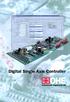 Digital Single Axis Controller The concept of intelligent hydraulic drive a vision? DSAC (Digital Single Axis Controller) Do you need hydraulic servo drive for your machine/system? What would it be like
Operating Vehicle Control Devices
 Module 2 Topic 3 Operating Vehicle Control Devices 1. Identify the vehicle controls in the pictures below: 1. 2. 3. 4. 7. 7. 5. 6. 1. accelerator 2. parking brake 3. foot brake 4. gear shift lever_ 5.
DEVELOPMENT OF SMALL-SIZE WINDOW CLEANING ROBOT BY WALL CLIMBING MECHANISM
 DEVELOPMENT OF SMALL-SIZE WINDOW CLEANING ROBOT BY WALL CLIMBING MECHANISM Tohru MIYAKE MIRAIKIKAI Inc. and Graduate school of Engineering, Kagwa Univ. 2217-2, Hayashi, Takamatsu, Kagawa 761-396 Japan
Physics 2A, Sec B00: Mechanics -- Winter 2011 Instructor: B. Grinstein Final Exam
 Physics 2A, Sec B00: Mechanics -- Winter 2011 Instructor: B. Grinstein Final Exam INSTRUCTIONS: Use a pencil #2 to fill your scantron. Write your code number and bubble it in under "EXAM NUMBER;" an entry
Applications > Robotics research and education > Assistant robot at home > Surveillance > Tele-presence > Entertainment/Education > Cleaning
 Introduction robulab 10 is a multi-purpose mobile robot designed for various indoor applications, such as research and education, tele-presence, assistance to people staying at home. robulab 10 is a generic
Digital Position Control for Analog Servos
 Digital Control for Analog Servos Sven Behnke and Michael Schreiber Humanoid Robots Group, Computer Science Institute University of Freiburg, Georges-Köhler-Allee 52, 79 Freiburg, Germany Email: { behnke
Advanced Personal Dead-reckoning (PDR) System for Firefighters
 Mobile Robotics Lab Advanced Personal Dead-reckoning (PDR) System for Firefighters Presented by Johann Borenstein Research Professor at the University of Michigan 29 years experience in GPS-free position
Autonomous Mobile Robot-I
 Autonomous Mobile Robot-I Sabastian, S.E and Ang, M. H. Jr. Department of Mechanical Engineering National University of Singapore 21 Lower Kent Ridge Road, Singapore 119077 ABSTRACT This report illustrates
The TrimTrac Locator: A New Standard in Practical and Affordable Asset Tracking
 The TrimTrac Locator: A New Standard in Practical and Affordable Asset Tracking By Bill Dussell Director, Integrated Products Trimble Navigation 15-December-2003 1997 2003, Trimble Navigation Limited.
Cloud Computing for Agent-based Traffic Management Systems
 Cloud Computing for Agent-based Traffic Management Systems Manoj A Patil Asst.Prof. IT Dept. Khyamling A Parane Asst.Prof. CSE Dept. D. Rajesh Asst.Prof. IT Dept. ABSTRACT Increased traffic congestion
Synthetic Sensing: Proximity / Distance Sensors
 Synthetic Sensing: Proximity / Distance Sensors MediaRobotics Lab, February 2010 Proximity detection is dependent on the object of interest. One size does not fit all For non-contact distance measurement,
Electric Power Steering Automation for Autonomous Driving
 Electric Power Steering Automation for Autonomous Driving J. E. Naranjo, C. González, R. García, T. de Pedro Instituto de Automática Industrial (CSIC) Ctra. Campo Real Km.,2, La Poveda, Arganda del Rey,
Test Driven Development of Embedded Systems Using Existing Software Test Infrastructure
 Test Driven Development of Embedded Systems Using Existing Software Test Infrastructure Micah Dowty University of Colorado at Boulder [email protected] March 26, 2004 Abstract Traditional software development
SYSTEMS, CONTROL AND MECHATRONICS
 2015 Master s programme SYSTEMS, CONTROL AND MECHATRONICS INTRODUCTION Technical, be they small consumer or medical devices or large production processes, increasingly employ electronics and computers
Unit A451: Computer systems and programming. Section 2: Computing Hardware 4/5: Input and Output Devices
 Unit A451: Computer systems and programming Section 2: Computing Hardware 4/5: Input and Output Devices Input and Output devices Candidates should be able to: (a) understand the need for input and output
CNC HARDWARE & TOOLING BASICS
 Computer Aided Manufacturing (CAM) CNC HARDWARE & TOOLING BASICS Assoc. Prof. Dr. Tamer S. Mahmoud 1. Parts of CNC Machine Tools Any CNC machine tool essentially consists of the following parts: Part Program,
ACCESS AUDIT OF WESTPORT HOUSE
 ACCESS AUDIT OF WESTPORT HOUSE Large sign on the highway to indicate the entrance to Purbeck District Council Large and wide entrance Entrance showing sign for opening times Entrance sign Main entrance
A PHOTOGRAMMETRIC APPRAOCH FOR AUTOMATIC TRAFFIC ASSESSMENT USING CONVENTIONAL CCTV CAMERA
 A PHOTOGRAMMETRIC APPRAOCH FOR AUTOMATIC TRAFFIC ASSESSMENT USING CONVENTIONAL CCTV CAMERA N. Zarrinpanjeh a, F. Dadrassjavan b, H. Fattahi c * a Islamic Azad University of Qazvin - [email protected]
Mobile Robot FastSLAM with Xbox Kinect
 Mobile Robot FastSLAM with Xbox Kinect Design Team Taylor Apgar, Sean Suri, Xiangdong Xi Design Advisor Prof. Greg Kowalski Abstract Mapping is an interesting and difficult problem in robotics. In order
DDX 7000 & 8003. Digital Partial Discharge Detectors FEATURES APPLICATIONS
 DDX 7000 & 8003 Digital Partial Discharge Detectors The HAEFELY HIPOTRONICS DDX Digital Partial Discharge Detector offers the high accuracy and flexibility of digital technology, plus the real-time display
House Design Tutorial
 Chapter 2: House Design Tutorial This House Design Tutorial shows you how to get started on a design project. The tutorials that follow continue with the same plan. When we are finished, we will have created
Nano Meter Stepping Drive of Surface Acoustic Wave Motor
 Proc. of 1st IEEE Conf. on Nanotechnology, Oct. 28-3, pp. 495-5, (21) Maui, Hawaii Nano Meter Stepping Drive of Surface Acoustic Wave Motor Takashi Shigematsu*, Minoru Kuribayashi Kurosawa*, and Katsuhiko
Robot Navigation System with RFID and Ultrasonic Sensors
 Middle-East Journal of Scientific Research 20 (9): 1133-1137, 2014 ISSN 1990-9233 IDOSI Publications, 2014 DOI: 10.5829/idosi.mejsr.2014.20.09.114136 Robot Navigation System with RFID and Ultrasonic Sensors