
Medications that are associated
|
|
|
- May Collins
- 10 years ago
- Views:
Transcription
1 Pharmacists role in ensuring safe and effective hospital use of insulin Michael R. Cohen Purpose. To highlight the potential errors that may occur with insulin use in the inpatient setting and to describe how pharmacists can be part of the solution by implementing practices that reduce the likelihood of insulin-related medication errors. Summary. Insulin is a drug with a low therapeutic index, and it bears a heightened risk of causing significant patient harm when used in error, making it a high-alert medication. Both underdosing and overdosing of insulin may be associated with adverse outcomes. The use of standard insulin order sets for scheduled subcutaneous insulin administration and standard concentrations for i.v. insulin are recommended to ensure the safe use of this medication. Any ambiguous insulin therapy orders should be clarified in writing prior to administration. Preparation of all insulin infusions should occur within the pharmacy. Pharmacists should be aware of possible medication errors related to inappropriate use of abbreviations such as U for units. Safe insulin storage practices are recommended to reduce the risk for insulin Medications that are associated with the highest risk of injury when used in error are known as high-alert medications. 1 Insulin is consistently among those identified as a high-alert medication. 2,3 One characteristic of high-alert medications (including insulin, parenteral chemotherapy, opiates, i.v. potassium chloride, and others) is their low therapeutic index. Although insulin therapy can be lifesaving in the hospital setting, it can be life threatening if used inappropriately. 4 Insulin errors may be twice as likely to result in harm to patients as errors involving other medications. The United States Pharmacopeia described 4764 insulin errors over a two-year period that were reported to the MEDMARX voluntary reporting program (now operated by Quantros). 5 Approximately 6.6% of these caused harm to the patient. One of the 12 interventions that the Institute for Healthcare Improvement recommends for its 5 Million Lives Campaign is Prevent Harm from High-Alert Medications, starting with a focus on anticoagulants, sedatives, narcotics, and insulin. 6 The campaign s goal is to achieve a 50% reduction in harm related to high-alert medications. 6 This article will discuss ways in which clinical pharmacists can support the safe and effective use of insulin in the hospital setting. error. Insulin pen delivery devices may be used in hospitals, but safe use depends on ongoing oversight by a multidisciplinary committee, introduction of one device at a time, and initial and regular follow-up education of nurses, including agency nurses and those who work part-time. In addition, ongoing monitoring is needed to assure ongoing safety. The use of slidingscale insulin can lead to hyperglycemia and hypoglycemia and is confusing and prone to error; it is not recommended. Conclusion. Pharmacists can contribute to the safe use of insulin in the inpatient setting by minimizing the likelihood of medication errors related to prescribing, transcription, dispensing, administration, storage, and communication. Index terms: Abbreviations; Dosage; Drug administration; Errors, medication; Hospitals; Insulin; Insulins; Pharmaceutical services; Pharmacists, hospital; Prescribing; Protocols; Storage; Toxicity Am J Health-Syst Pharm. 2010; 67(Suppl 8):S17-21 Types of medication errors associated with insulin therapy Omission errors (leading to hyperglycemia) and improper dose or quantity (leading to hyperglycemia Michael R. Cohen, B.S.Pharm., M.S., Sc.D., is President, Institute for Safe Medication Practices, 200 Lakeside Drive, Suite 200, Horsham, PA ([email protected]). Based on a symposium held December 7, 2009, in conjunction with the 44th ASHP Midyear Meeting and Exhibition, Las Vegas, NV, and supported by an educational grant from Novo Nordisk, Inc. Dr. Cohen reports that he has no relevant financial relationship with a commercial interest, as defined by the American Council for Pharmacy Education. He received an honorarium from American Association of Clinical Endocrinologists (AACE) Educational Services for his participation in the symposium and for his work on this article. This article was developed with the assistance of Kate Mann, Pharm.D., a medical writer working with AACE Educational Services. The author approved the final article and all its contents. The author has declared no potential conflicts of interest. Copyright 2010, American Society of Health-System Pharmacists, Inc. All rights reserved /10/0802-0S17$ DOI /ajhp S17

2 or hypoglycemia) are the two most frequently reported types of error associated with insulin usage. 5 Untreated hyperglycemia in patients with known diabetes mellitus and those without documented diabetes is associated with poor outcomes. 7 Underdosing or missed doses of insulin in diabetic patients can lead to poor outcomes, such as ketoacidosis. Insulin-induced hypoglycemia may result in a range of symptoms from nausea to falls and to the risk of myocardial ischemia. 8 Types of insulin-use errors include prescription and transcription errors such as illegible orders, missing or misplaced zeros and decimal points, use of unsafe abbreviations, and ordering of an unintended formulation. Dispensing errors may arise from look-alike or sound-alike medications or incorrect preparation of injectable doses. Errors associated with administration include incorrect dosage, drug, or infusion rates and lack of drug monitoring or double-checking. 9 Medication given to the wrong patient is also classified as an administration error. 9 The use of unsafe medical abbreviations to order insulin increases the risk for serious errors. The Joint Commission National Patient Safety Goal 2B states that each hospital should standardize a list of abbreviations, symbols, acronyms, and dose designations that are not to be used within the organization. 10 For example, the abbreviation U for unit is on the official do not use list created by the Joint Commission. 11 When insulin is ordered, the word units should be written out; ml/hr should be used rather than cc/hr for insulin infusions because cc can be mistaken for U. Table 1 identifies some medical abbreviations that can cause confusion with regard to insulin prescribing. 12 Recommended safety practices Pharmacists can establish and enforce safe ordering guidelines. Standardized order forms that list specific products and contain prompts to specify administration times in relation to meals are recommended, as are the use of standardized insulin infusion protocols. 13 The use of standardized order forms for insulin has been shown to decrease medication errors and episodes of hypoglycemia, the most dangerous effect of insulin Pharmacists can prohibit acceptance of orders containing trailing zeros and U in place Table 1. Medical Abbreviations to Avoid a BT cc D/C IJ HS IU b q.d. or QD b Qhs qn q6pm etc. Sub q U or u Abbreviation Intended Meaning Misinterpretation Correction Trailing zero after decimal point (e.g., 1.0 mg) b No leading zero before a decimal point (e.g.,.5 mg) b Bedtime Cubic centimeters Discharge or discontinue Injection At bedtime International unit Daily Nightly at bedtime Nightly or at bedtime Every evening at 6 p.m. daily Subcutaneous Unit 1 mg 0.5 mg b.i.d. (twice daily) U (units) Medications discontinued prematurely when term is intended to mean discharge i.v. or i.j. (intrajugular) Half-strength i.v. or 10 q.i.d (four times daily) q hr (every hour) q h (every hour) Every 6 hours q understood as meaning every (e.g., sub q 2 hours before surgery interpreted as every 2 hours before surgery ) 0, 4, or cc (e.g., 4U interpreted as 40, 44, or 4 cc) 10 mg 5 mg Use bedtime Use ml Use discharge or discontinue as intended Use injection Use at bedtime Use units Use daily Use nightly Use nightly or at bedtime Use daily at 6 p.m. Use subcut or subcutaneously Use unit Do not use trailing zeros for doses Use zero before a decimal point when the dose is less than a whole unit a Adapted from reference 12. b The Joint Commission has established a National Patient Safety Goal that specifies that these abbreviations must appear on an accredited organization s do not use list. S18

3 of units. Handwritten insulin therapy orders or handwritten components of preprinted order sets should be legible and clearly written. All illegible orders should be clarified in writing prior to administration. Any ambiguous insulin therapy orders should be clarified in writing prior to administration. Oral and telephone orders for insulin should be minimized and used only when necessary in urgent medical situations. The receiver of the order should write down the complete order or enter it into a computer, then the receiver should read it back (rather than only repeating it back before writing it) and receive confirmation from the individual who gave the order. 9 This helps ensure that the order was both properly heard and properly transcribed. Preparation of all insulin infusions within the pharmacy is recommended. Pharmacists should verify the diagnosis and indication for insulin to assure orders have not been accidentally processed for a nondiabetic patient. 17 A standard insulin concentration to prepare infusion bags should be employed. 5 Pharmacists should prepare and dispense prefilled syringes for once-daily doses of long-acting insulin but only when they can be given within the labeled time frame. Staff can be alerted to insulin-containing i.v. solutions and differentiate them from other infusions by use of a brightly labeled bag. Finally, all insulin preparations should be independently doublechecked against original orders prior to dispensing. Pharmacy-prepared vials of lowconcentration neonatal insulin should be labeled with bold warnings (e.g., NICU only ). An empty sterile vial, different in size from standard insulin vials, should be used to dispense insulin; this helps to further distinguish the diluted neonatal insulin. Be sure any preparation instructions clearly state which insulin dilution should be used. Employ a checklist and documentation log to ensure proper verification by at least one pharmacist who was not involved in the actual admixture of both the volume and concentration of insulin added to the solution. Be cautious of ambiguous manufacturer labeling and packaging. This has largely been rectified by the use of color differentiation of insulin products by manufacturers. However there have been mix-ups between similar names of insulin products (e.g., Humalog and Humulin R, Novolog and Novolin, Novolog 70/30 and Novolin 70/30). Applying tall man (mixed case) lettering to dissimilar portions of name can be helpful (e.g., HumALOG versus HumULIN, NovoLOG versus NovoLIN). Use other means to make things look different or call attention to important information (e.g., stickers, labels, enhancement with pen or yellow marker). 18 Insulin delivery devices Use of the correct insulin syringe is extremely important. The Institute for Safe Medication Practices (ISMP) and the Pennsylvania Patient Safety Reporting System have received several reports describing errors in which a nurse administering insulin selected a tuberculin rather than an insulin syringe and gave a 10-fold overdose (e.g., 0.9 ml [90 units] for a 9-unit dose). 19 Several institutions have transitioned from vials to patient-specific insulin pen devices as a way to reduce the risk of errors. However, errors associated with pen injectors can occur in the health care setting. Cautions against using insulin pens like vials (by aspirating contents out of the pen cartridge with a needle) and using the same pen for multiple patients have been published previously. 20 On the basis of reports from ISMP, FDA has released an alert reminding health care professionals that single-patient insulin pens and insulin cartridges must not be used for multiple patients, even if the needles are changed between patients, due to the risk of transmitting bloodborne pathogens such as hepatitis and human immunodeficiency virus. 21 Insulin pen delivery devices may be used in hospitals, but safe use depends on oversight by a multidisciplinary committee, introduction of one device at a time, and initial and regular follow-up education of nurses, including agency nurses and those who work parttime. In addition, ongoing monitoring is needed to assure ongoing safety. This would require constant monitoring via a risk-management function. The presence of a window on the pen device allows direct visualization of the number of units being administered, which has the potential to reduce dosing errors. Nurses who learn to appropriately use the pens are able to educate patients on using them at home. The insulin volume in pens is less than that in vials and may yield cost advantages for patients with short hospital stays or low insulin requirements. 22 Eli Lilly provides a 3-mL vial of regular insulin human, which may also reduce costs in these situations. Sometimes nurses incorrectly use insulin pen devices as vials because they like the technique required to use the pen less than that for the traditional needle and syringe. However, use of pen as a vial can damage the integrity of the pen as a result of altering the pressure dynamics, with consequent introduction of air into the cartridge. Large pockets of air have been observed in cartridges of insulin pen injectors after aspirating some of the drug with a needle. If the pen injector or cartridge is not discarded and the air is not eliminated before delivering a subsequent dose, the patient could receive less than the desired dose of insulin as well as a subcutaneous injection of air. The use of pens as vials may also lead to unlabeled sy- S19

4 ringes of insulin on the nursing unit, which is not acceptable. 23 There is potential for inadvertent needle sticks of nursing personnel secondary to not maintaining the 90-degree angle of the pen device to the skin pinch. 24 Misalignment of this angle results in the needle traveling through the skin pinch into the finger of the nurse, resulting in a dirty needle stick. Use of a single pen device on multiple patients results in an infection-control risk because of contamination of the pen device. Pens are for single-patient use only. The wide variety of pen injector designs makes it difficult for health care practitioners, particularly nurses, to learn how to use them properly and maintain competence. Suggestions for safe introduction of insulin pen devices include oversight by a multidisciplinary committee, introduction of one device at a time and initial and follow-up nurse education. A requirement for initial and periodic testing of proficiency and competency may also be considered. 22 A recently published study shows that implementation of insulin pen devices does not increase nursing time spent to teach patients to self-inject insulin and does not increase insulin-related needlestick injuries. 25 Furthermore, compared with patients treated with conventional insulin vials and syringes during hospitalization, increased patient satisfaction and continuation at home of the method of insulin administration used in the hospital have been reported by patients treated with insulin pens. 26 This is an important consideration in improving longterm glycemic control of the many patients with diabetes who are discharged from hospitals. 26 U-500 insulin Clinicians should be aware that patients who require U-500 insulin and use a U-100 syringe may report their doses incorrectly. For example, a reported dose of 50 units (read on the U-100 scale) may actually be a dose of 250 units. U-500 strength should be avoided for insulin doses less than 100 units. 27 Some errors seem to be related to the position of information about insulin product listings on computer screens. Depending on the screen size, the entire insulin product description, particularly the drug concentration if it is listed last, may not be visible. Since U-500 insulin is not common, prescribers may not look for information about concentration if they believe insulin is available only in a U-100 concentration. ISMP has contacted the major drug-information vendors that provide inventory information for electronic systems, and they have agreed to reorder this information or use the word concentrate for U-500 following the drug name. Sliding-scale insulin The use of sliding-scale insulin has been in question for years. 28 Slidingscale insulin is often used in hospitals, but its use has not been substantiated by clinical evidence. It is a reactive rather than proactive approach to managing the blood glucose concentration (BG). Discontinuation of this practice is recommended. 29 However, if sliding-scale insulin is ordered, precautions should be put into place. Sliding-scale insulin should only be ordered on a preprinted order or computerized order set created and approved by the organization. 30 Long-acting insulin should not be used in a sliding-scale, and scheduled insulin should be ordered in place of sliding-scale insulin. 31 One hospital reported to ISMP that physicians typically prescribe a sliding scale of insulin as 2 units Humulin R for each BG 50 > 150. The intended interpretation is to administer 2 units of Humulin R insulin for a BG of mg/dl, 4 units for a BG of mg/dl, 6 units for a BG of mg/dl, and so on. When this hospital s pharmacists began providing work coverage at another affiliated hospital, they learned that this order was being interpreted differently. In that hospital, the staff thought that BG 50 > 150 implied that the scale should begin at 200 mg/ dl. Thus, patients were receiving 2 units of Humulin R insulin for a BG of mg/dl, 4 units for a BG of mg/dl, 6 units for a BG of mg/dl, and so on. Insulin storage practices Safe insulin storage practices have been recommended to reduce the risk for insulin error. 30 Unusual vial concentrations (e.g., U-500) should be removed from patient care areas. Insulin and heparin should be separated on nursing units and in the pharmacy (because one drug has been given when the other was prescribed 32 ), while insulin syringes should be stored apart from tuberculin syringes. An insulin vial should be labeled with the patient s name and vial expiration time per institutional guidelines. Consider conducting unit inspections to ensure proper labeling and disposal of insulin per institutional guidelines. Do not dispense insulin in its original carton. Instead, discard the carton upon dispensing because nurses sometimes accidentally place insulin vials of one type in a carton meant for another. Pharmacists and nurse managers should provide ongoing education and oversight to ensure that insulin pens are not shared among patients and that cartridges are not used to prepare insulin doses with a conventional insulin syringe. Hold orders Pharmacists can improve safety by maintaining awareness of enteral feedings and alerting staff when diabetic patients with insulin orders have their feedings held or discontinued. Elevated BG values from enteral feedings are often treated with an intermediate- or a long- S20

5 acting subcutaneous insulin. When enteral feedings are stopped or held for diabetic patients, any insulin they are receiving needs adjustment or discontinuation. Directions to adjust or discontinue insulin under these conditions should be listed prominently on medication administration records and with any documentation about enteral feedings. An example of what should not happen is as follows. A diabetic patient receiving continuous enteral feedings was also receiving subcutaneous isophane insulin 24 units twice daily to control elevated BG values. 33 The feedings were then held for a computed tomography scan, but no one discontinued the insulin. By the time the BG was checked again, it measured only 26 mg/dl. Conclusion Pharmacists can contribute to the safe use of insulin in the inpatient setting by minimizing the likelihood of medication errors related to prescribing, transcription, dispensing, administration, storage, and communication. References 1. Institute for Safe Medication Practices. ISMP 2007 survey on high-alert medications: differences between nursing and pharmacy perspectives still prevalent. articles/ asp (accessed 2010 Jan 29). 2. Institute for Healthcare Improvement. 5 Million Lives campaign. Getting started kit: prevent harm from high-alert medications. Cambridge, MA: Joint Commission. High-alert medications and patient safety. mission.org/sentinelevents/sentinelevent Alert/sea_11.htm (accessed 2010 Jan 29). 4. Moore TJ, Cohen MR, Furberg CD. Serious adverse drug events reported to the Food and Drug Administration, Arch Intern Med. 2007; 167: U.S. Pharmacopeia. USP Patient Safety CAPSLink. Section I. Insulin errors: a common problem. patientsafety/capslink pdf (accessed 2010 Feb 12). 6. Federico F. Preventing harm from highalert medications. Jt Comm J Qual Patient Saf. 2007; 33: Garber AJ, Moghissi ES, Bransome ED Jr et al. American College of Endocrinology position statement on inpatient diabetes and metabolic control. Endocr Pract. 2004; 10: Hellman R. A systems approach to reducing errors in insulin therapy in the inpatient setting. Endocr Pract. 2004; 10(suppl 2): American Society of Health-System Pharmacists. Recommendations for Safe Use of Insulin in Hospitals. Use_of_Insulin.pdf (accessed 2010 Feb 12). 10. Joint Commission. National Patient Safety Goals. PatientSafety/NationalPatientSafety Goals/08_hap_npsgs.htm (accessed 2009 Mar 3). 11. Joint Commission. The official do not use list. PatientSafety/DoNotUseList/ (accessed 2009 Mar 3). 12. Institute for Safe Medication Practices. ISMP s list of error-prone abbreviations, symbols, and dose designations. abbreviations.pdf (accessed 2010 Feb 12). 13. Schnipper JL, Liang CL, Ndumele CD et al. Effects of a computerized order set on the inpatient management of hyperglycemia: a cluster-randomized controlled trial. Endocr Pract. 2010; 16: Donihi AC, DiNardo MM, DeVita MA et al. Use of a standardized protocol to decrease medication errors and adverse events related to sliding scale insulin. Qual Saf Health Care. 2006; 15: Schnipper JL, Ndumele CD, Liang CL et al. Effects of a subcutaneous insulin protocol, clinical education, and computerized order set on the quality of inpatient management of hyperglycemia: results of a clinical trial. J Hosp Med. 2009; 4: Noschese M, Donihi AC, Koerbel G et al. Effect of a diabetes order set on glycaemic management and control in the hospital. Qual Saf Health Care. 2008; 17: Grissinger M. Reducing medication errors associated with intravenous insulin infusions. P&T. 2003; 28: Pennsylvania Patient Safety Authority. 19. Institute for Safe Medication Practices. New color code for 25 gauge safety needles may lead to confusion and errors. ISMP Med Saf Alert Mar Institute for Safe Medication Practices. Newsletter acute care edition. May 8, (accessed 2009 Mar 12). 21. Food and Drug Administration. Information for healthcare professionals: risk of transmission of blood-borne pathogens from shared use of insulin pens. PostmarketDrugSafetyInformationfor PatientsandProviders/DrugSafety InformationforHeathcareProfessionals/ ucm htm (accessed 2010 Feb 12). 22. Greenwood B, Szumita PM, Pendergrass M. Conversion to insulin devices in the inpatient setting. Am J Health-Syst Pharm. 2008; 65: Institute for Safe Medication Practices. PEN injectors: technology is not without impending risks. ISMP Med Saf Alert Nov Pellissier G, Miguéres B, Tarantola A et al. Risk of needlestick injuries by injection pens. J Hosp Infect. 2006; 63: Davis EM, Bebee A, Crawford L et al. Nurse satisfaction using insulin pens in hospitalized patients. Diabetes Educ. 2009; 35: Davis EM, Christensen CM, Nystrom KK et al. Patient satisfaction and costs associated with insulin administered by pen device or syringe during hospitalization. Am J Health-Syst Pharm. 2008; 65: Institute for Safe Medication Practices. Insulin syringe is not meant for U-500 insulin. ISMP Med Saf Alert Oct Browning LA, Dumo P. Sliding-scale insulin: an antiquated approach to glycemic control in hospitalized patients. Am J Health-Syst Pharm. 2004; 61: Hirsch IB. Sliding scale insulin time to stop sliding. JAMA. 2009; 301: Cohen MR, Smetzer JL, Tuohy NR et al. High-alert medications: safeguarding against errors. In: Cohen MR, ed. Medication errors. 2nd ed. Washington, DC: American Pharmacists Association; Lien LF, Bethel MA, Feinglos MN. Inhospital management of type 2 diabetes mellitus. Med Clin North Am. 2004; 88: Institute for Safe Medication Practices. Action needed to prevent dangerous heparin insulin confusion. Newsletters/acutecare/articles/ asp (accessed 2010 Jun 14). 33. Institute for Safe Medication Practices. Stop the insulin. ISMP Med Saf Alert Sep 4. S21

Reducing the risk of patient harm: A focus on insulin
 Reducing the risk of patient harm: A focus on insulin New York State Partnership for Patients (NYSPFP) Initiative Regional Educational Session November 2013 1 1 Disclosure Matt Fricker, Matt Grissinger,
Addressing safety concerns about U-500 insulin in a hospital setting
 Addressing safety concerns about U-500 insulin in a hospital setting Karen Hamrick Samaan, Megan Dahlke, and Judy Stover U-500 regular insulin has been used since the 1950s to treat diabetic patients with
the use of abbreviations and dosage
 N O T E Educational interventions to reduce use of unsafe abbreviations MOHAMMED E. ABUSHAIQA, FRANK K. ZARAN, DAVID S. BACH, RICHARD T. SMOLAREK, AND MARGO S. FARBER The use of abbreviations and dosage
Avoiding Medication Errors
 Avoiding Medication Errors with Insulin Therapy Supported by an educational grant from Novo Nordisk Inc. Created in conjunction with the Institute for Safe Medication Practices Avoiding Medication Errors
Medication Errors Involving L Insulins
 Clinical Review Article Medication Errors Involving L Insulins Lucy A. Levandoski, PA-C Martha M. Funnell, MSN, RN, CDE In 1999, the Institute of Medicine reported that an estimated 44,000 to 98,000 people
The Massachusetts Coalition for the Prevention of Medical Errors. MHA Best Practice Recommendations to Reduce Medication Errors
 The Massachusetts Coalition for the Prevention of Medical Errors MHA Best Practice Recommendations to Reduce Medication Errors Executive Summary In 1997, the Massachusetts Coalition for the Prevention
GUIDELINES ON PREVENTING MEDICATION ERRORS IN PHARMACIES AND LONG-TERM CARE FACILITIES THROUGH REPORTING AND EVALUATION
 GUIDELINES GUIDELINES ON PREVENTING MEDICATION ERRORS IN PHARMACIES AND LONG-TERM CARE FACILITIES THROUGH REPORTING AND EVALUATION Preamble The purpose of this document is to provide guidance for the pharmacist
HealthStream Regulatory Script
 HealthStream Regulatory Script Medication Terminology: Use of Abbreviations & Symbols Release Date: December 2011 HLC non-pa Version: 603 HLC PA Version: 603 Lesson 1: Introduction Lesson 2: Risky Terms
Medication Errors with the Dosing of Insulin: Problems across the Continuum
 Medication Errors with the Dosing of Insulin: Problems across the Continuum ABSTRACT Controlling blood sugars with insulin is essential in the management of hyperglycemia in both diabetic and nondiabetic
Humulin R (U500) insulin: Prescribing Guidance
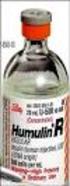 Leeds Humulin R (U500) insulin: Prescribing Guidance Amber Drug Level 2 We have started your patient on Humulin R (U500) insulin for the treatment of diabetic patients with marked insulin resistance requiring
Insulin: A Practice Update. Department of Nursing Staff Development Elizabeth Borgelt, MS, RN
 Insulin: A Practice Update Department of Nursing Staff Development Elizabeth Borgelt, MS, RN Learning Outcome The learner will be able to identify the different types of insulins available, their actions,
SafetyFirst Alert. Errors in Transcribing and Administering Medications
 SafetyFirst Alert Massachusetts Coalition for the Prevention of Medical Errors January 2001 This issue of Safety First Alert is a publication of the Massachusetts Coalition for the Prevention of Medical
Safe IV Compounding Procedures: The Release of ISMP Guidelines
 Safe IV Compounding Procedures: The Release of ISMP Guidelines Matthew P. Fricker, Jr., MS, RPh, FASHP, Program Director Institute for Safe Medication Practices 1 Objectives List system based causes of
Objective. Failure Modes & Effects Analysis: A U-500 Insulin Case Study. What is a FMEA? Assembling a Team. Steps to Conducting a FMEA 5/12/2011
 5/12/2011 Objective Failure Modes & Effects Analysis: A U-500 Insulin Case Study Understand the role of a failure mode and effects analysis (FMEA) in developing U-500 insulin use criteria Ryan J. Bickel,
Starting patients on the V-Go Disposable Insulin Delivery Device
 Starting patients on the V-Go Disposable Insulin Delivery Device A simple guide for your practice For adult patients with Type 2 diabetes on basal insulin who need to take the next step Identify appropriate
Medication Safety and Error Prevention
 Medication Safety and Error Prevention 16 LEARNING OBJECTIVES By the end of this chapter, students will be able to competently: 1. Explain the process for reporting errors. 2. Explain the difference between
A Simplified Approach to Initiating Insulin. 4. Not meeting glycemic goals with oral hypoglycemic agents or
 A Simplified Approach to Initiating Insulin When to Start Insulin: 1. Fasting plasma glucose (FPG) levels >250 mg/dl or 2. Glycated hemoglobin (A1C) >10% or 3. Random plasma glucose consistently >300 mg/dl
Medication Guidelines
 Medication Guidelines January 2014 Approved by the College and Association of Registered Nurses of Alberta Provincial Council, January 2014. Second printing with editorial change (p16), November 2014.
The Importance of Using Insulin Safely. Learning Objectives
 The Importance of Using Insulin Safely Victor Tran, PharmD PGY 1 Pharmacy Resident Ambulatory Care Diabetes Symposium November 12, 2015 Learning Objectives List the potential adverse drug events of insulin
ISMP Canada. Dangerous abbreviations: U can make a difference!
 ISMP Canada Dangerous abbreviations: U can make a difference! By Christine Koczmara, RN, BScPsy, Valentina Jelincic, RPh, BScPhm, and Carol Dueck, RN, BScN Abstract Dangerous abbreviations are also known
Intensive Insulin Therapy in Diabetes Management
 Intensive Insulin Therapy in Diabetes Management Lillian F. Lien, MD Medical Director, Duke Inpatient Diabetes Management Assistant Professor of Medicine Division of Endocrinology, Metabolism, & Nutrition
D( desired ) Q( quantity) X ( amount ) H( have)
 Name: 3 (Pickar) Drug Dosage Calculations Chapter 10: Oral Dosage of Drugs Example 1 The physician orders Lasix 40 mg p.o. daily. You have Lasix in 20 mg, 40 mg, and 80 mg tablets. If you use the 20 mg
Prior Authorization Guideline
 Prior Authorization Guideline Guideline: PC (CO) - Insulin Delivery Systems Therapeutic Class: Hormones and Synthetic Substitutes Therapeutic Sub-Class: Insulin Delivery Systems Client: CO Approval Date:
Safe use of insulin e- learning module
 Safe use of insulin e- learning module Page 1 Introduction Insulin is a hormone produced by the beta cells in the pancreas, it is released when blood glucose levels are raised for example after a meal.
at The Valley Hospital (TVH) for Nursing Students/Nursing Instructors 2012
 at The Valley Hospital (TVH) for Nursing Students/Nursing Instructors 2012 Subject - Insulin Safety Background Insulin known to be high risk medication Can promote serious hypoglycemia if given incorrectly
Incorporating Pediatric Medication Safety into your Health System
 Incorporating Pediatric Medication Safety into your Health System Julie Kasap, Pharm.D. Margaret CHOI Heger, Pharmacy PharmD, Supervisor BCPS January 2015 Pediatric Antimicrobial Stewardship Conference
DISPENSING HIGH RISK/ALERT MEDICATIONS. Lana Gordineer, MSN, RN Diabetes Educator
 DISPENSING HIGH RISK/ALERT MEDICATIONS Lana Gordineer, MSN, RN Diabetes Educator HIGH RISK/ALERT MEDICATIONS (or DRUGS) Medications that have a high risk of causing serious injury or death to a patient
Prior Authorization Guideline
 Prior Authorization Guideline Guideline: PC - Apidra, Levemir Therapeutic Class: Hormones and Synthetic Substitutes Therapeutic Sub-Class: Antidiabetic Agents Client: CA, CO, NV, OK, OR, WA and AZ Approval
8/6/2015. Diabetes Educator Needed: Transitioning Inpatient Persons with Diabetes on U-500 Regular Insulin to Discharge Safely
 Diabetes Educator Needed: Transitioning Inpatient Persons with Diabetes on U-500 Regular Insulin to Discharge Safely Carol A. Biondi MSN, RN, CDE Diabetes Nurse Specialist Tampa General Hospital Tampa,
How To Prevent Medication Errors
 The Academy of Managed Care Pharmacy s Concepts in Managed Care Pharmacy Medication Errors Medication errors are among the most common medical errors, harming at least 1.5 million people every year. The
INSULINThere are. T y p e 1 T y p e 2. many different insulins for
 T y p e 1 T y p e 2 INSULINThere are many different insulins for Characteristics The three characteristics of insulin are: Onset. The length of time before insulin reaches the bloodstream and begins lowering
INPATIENT DIABETES MANAGEMENT Robert J. Rushakoff, MD Professor of Medicine Director, Inpatient Diabetes University of California, San Francisco
 INPATIENT DIABETES MANAGEMENT Robert J. Rushakoff, MD Professor of Medicine Director, Inpatient Diabetes University of California, San Francisco CLINICAL RECOGNITION Background: Appropriate inpatient glycemic
For Educational Use Only - Not for Detailing or Distribution
 This document is intended for healthcare professionals practicing in the United States and may contain information that has not been approved by the FDA. It is supplied to you as a professional courtesy
Parenteral Dosage of Drugs
 Chapter 11 Parenteral Dosage of Drugs Parenteral Route of administration other than gastrointestinal Intramuscular (IM) Subcutaneous (SC) Intradermal (ID) IV Parenteral Most medications prepared in liquid
Ten Ways to Prevent Insulin-Use Errors in Your Hospital. ASHP Research and Education Foundation May 14, 2014
 Ten Ways to Prevent Insulin-Use Errors in Your Hospital ASHP Research and Education Foundation May 14, 2014 To Ask Questions and Adjust the Control Panel Expand or Collapse Type your question here Faculty
NCC MERP Taxonomy of Medication Errors 1
 Preamble NCC MERP Taxonomy of Medication Errors 1 This document provides a standard taxonomy of medication errors to be used in combination with systems analysis in recording and tracking of medication
Administrative Policies and Procedures for MOH hospitals /PHC Centers. TITLE: Organization & Management Of Medication Use APPLIES TO: Hospital-wide
 Administrative Policies and Procedures for MOH hospitals /PHC Centers TITLE: Organization & Management Of Medication Use APPLIES TO: Hospital-wide NO. OF PAGES: ORIGINAL DATE: REVISION DATE : السیاسات
Glycemic Control Initiative: Insulin Order Set Changes Hypoglycemia Nursing Protocol
 Glycemic Control Initiative: Insulin Order Set Changes Hypoglycemia Nursing Protocol Ruth LaCasse Kalish, RPh Department of Pharmacy Objectives Review the current practice at UConn Health with sliding
Insulin: A Powerful Weapon in the Diabetic Arsenal. Diana Cowell, PharmD PGY-1 Pharmacy Resident
 Insulin: A Powerful Weapon in the Diabetic Arsenal Diana Cowell, PharmD PGY-1 Pharmacy Resident Objectives Identify the mechanism of action of insulin Describe the onset and duration for the various types
Rapid Response Report NPSA/2010/RRR013: Safer administration of insulin
 Rapid Response Report NPSA/2010/RRR013: Safer administration of insulin June 2010 Supporting Information Contents 1. Introduction...2 2. Background...2 3. Review of evidence of harm...4 References...7
Managing the U Managing the U--500 500 Patient as a Surg as a Sur ical Inpatient
 Managing the U-500 Patient as a Surgical Inpatient Tyler Fischback Pharmacy Specialist St. Clare Hospital I have no conflicts of interest to disclose The Case DM is a 37 y.o.. developmentally delayed T2DM
March 2015. Medication Guidelines
 March 2015 Medication Guidelines Approved by the College and Association of Registered Nurses of Alberta Provincial Council, March 2015. Permission to reproduce this document is granted. Please recognize
Subcutaneous Insulin Audit Tool
 Name of organisation Audit completed by Designation Date Recommendations 1. Is there promotion of insulin as a high risk medicine in your organisation? 2. Does your organisation promote use of the word
Managing the Hospitalized Patient on Insulin: Care Transition. Catie Prinzing MSN, APRN, CNS
 Managing the Hospitalized Patient on Insulin: Care Transition Catie Prinzing MSN, APRN, CNS Diabetes and Hospitalization People with DM are hospitalized 3x more frequently than patients without diabetes
Diabetes and the Elimination of Sliding Scale Insulin. Date: April 30 th 2013. Presenter: Derek Sanders, D.Ph.
 Diabetes and the Elimination of Sliding Scale Insulin Date: April 30 th 2013 Presenter: Derek Sanders, D.Ph. Background Information Epidemiology and Risk Factors Diabetes Its Definition and Its Impact
CLASS OBJECTIVES. Describe the history of insulin discovery List types of insulin Define indications and dosages Review case studies
 Insulins CLASS OBJECTIVES Describe the history of insulin discovery List types of insulin Define indications and dosages Review case studies INVENTION OF INSULIN 1921 The first stills used to make insulin
An introduction to High Risk Medications
 An introduction to High Risk Medications Une politique sure des médicaments : déjà deux approches 25 octobre 2013 Danguy Christine Hôpital A. Vésale An introduction to High Risk Medications 1. High Risk
Insulin T Y P E 1 T Y P E 2
 T Y P E 1 T Y P E 2 INSULIN There are many different insulins for many different situations and lifestyles. This section should help you and your doctor decide which insulin or insulins are best for you.
Resident s Guide to Inpatient Diabetes
 Resident s Guide to Inpatient Diabetes 1. All patients with diabetes of ANY TYPE, regardless of reason for admission, must have a Hemoglobin A1C documented in the medical record within 24 hours of admission
A new insulin order form should be completed for subsequent changes to type of insulin and/or frequency of administration
 of nurse A new insulin order form should be completed for subsequent changes to type of insulin and/or frequency of administration 1. Check times for point of care meter blood glucose testing. Pre-Breakfast
CHAPTER 61-03-02 CONSULTING PHARMACIST REGULATIONS FOR LONG-TERM CARE FACILITIES (SKILLED, INTERMEDIATE, AND BASIC CARE)
 CHAPTER 61-03-02 CONSULTING PHARMACIST REGULATIONS FOR LONG-TERM CARE FACILITIES (SKILLED, INTERMEDIATE, AND BASIC CARE) Section 61-03-02-01 Definitions 61-03-02-02 Absence of Provider or Consulting Pharmacist
Alert. Patient safety alert. Actions that can make anticoagulant therapy safer. 28 March 2007. Action for the NHS and the independent sector
 Patient safety alert 18 Alert 28 March 2007 Immediate action Action Update Information request Ref: NPSA/2007/18 4 Actions that can make anticoagulant therapy safer Anticoagulants are one of the classes
Insulin pen start checklist
 Insulin pen start checklist Topic Instruction Date & Initials 1. Cognitive Assessment 2. Insulin Delivery loading appropriate mixing priming shot dialing up dose delivery of insulin 3. Insulin type/action
Medical Policy An independent licensee of the Blue Cross Blue Shield Association
 Afrezza Page 1 of 6 Medical Policy An independent licensee of the Blue Cross Blue Shield Association Title: Afrezza (human insulin) Prime Therapeutics will review Prior Authorization requests Prior Authorization
Electronic Medication Administration Record (emar) (For Cerner Sites Only)
 POLICY NO. 1009 Approved: 12/05 Effective: 12/05 Reviewed: 9/10; 5/12 1. Purpose: Electronic Medication Administration Record (emar) (For Cerner Sites Only) To provide direction for the transcription and
Inpatient Treatment of Diabetes
 Inpatient Treatment of Diabetes Alan J. Conrad, MD Medical Director Diabetes Services EVP, Physician Alignment Diabetes Symposium November 12, 2015 Objectives Explain Palomar Health goals for inpatient
10 to 30 minutes ½ to 3 hours 3 to 5 hours. 30 60 minutes 1 to 5 hours 8 hours. 1 to 4 hours
 Insulin Action There are several types of insulin. They are classified by how long they act: very fast, fast, slow and very slow acting. Each type of insulin has a certain time period in which it works.
Health IT and Patient Safety: A Nursing Perspective from the United States
 Health IT and Patient Safety: A Nursing Perspective from the United States Patricia P. Sengstack DNP, RN-BC, CPHIMS Chief Nursing Informatics Officer Bon Secours Health System Marriottsville, Maryland
Onset Peak Duration Comments
 Rapid- Acting 5-15 minutes 0.5-3 hours 3-5 hours Meal should be available before administering, ideally taking within 10 minutes of eating). Good in refrigerator (36-46 F) until expiration date. Protect
Intensifying Insulin Therapy
 Intensifying Insulin Therapy Rick Hess, PharmD, CDE, BC-ADM Associate Professor Gatton College of Pharmacy, Department of Pharmacy Practice East Tennessee State University Johnson City, Tennessee Learning
CARDIAC SURGERY INTRAVENOUS INSULIN PROTOCOL PHYSICIAN ORDERS INDICATIONS EXCLUSIONS. Insulin allergy
 Page 1 of 5 INDICATIONS EXCLUSIONS 2 consecutive blood glucose measurements greater than 110 mg per dl AND NPO with a continuous caloric source AND Diagnosis of : Cardio-thoracic Surgery NOTE: This protocol
INSTITUTIONAL POLICY AND PROCEDURE (IPP) Department: Manual: Section: EFFECTIVE DATE REVIEW DUE REPLACES NUMBER NO. OF PAGES
 HOSPITAL NAME INSTITUTIONAL POLICY AND PROCEDURE (IPP) Department: Manual: Section: TITLE/DESCRIPTION POLICY NUMBER HIGH RISK MEDICATIONS EFFECTIVE DATE REVIEW DUE REPLACES NUMBER NO. OF PAGES APPROVED
Guide for Storage of Insulin
 Guide for Storage of Insulin Every effort is made to assure the accuracy of the attached information. This information is not intended to be used as a tool to prescribe medication or provide other clinical
February 2016. page 1 / 9
 February 2016 page 1 / 9 page 2 / 9 Alternative Medicines Corner Advising on this article: Nicole M. Maisch February 1, 2016 Melatonin supplementation may improve outcomes in children with atopic dermatitis
NSW Adult Subcutaneous Insulin Prescribing Chart User Guide
 NSW Adult Subcutaneous Insulin Prescribing Chart User Guide Adult Subcutaneous Insulin Prescribing Chart User Guide - 13 August 2013 Contents Target audience:... 1 Exceptions:... 1 1. Introduction... 2
Objectives PERINATAL INSULIN PUMPS: BASICS FOR NURSES. Historical Perspective. Insulin Pumps in Pregnancy. Insulin Pumps in the US
 Objectives PERINATAL INSULIN PUMPS: BASICS FOR NURSES Jo M. Kendrick, APN BC, CDE [email protected] Describe indications and contraindications for insulin pump use in hospitalized patients Differentiate
West Midlands Centre for ADRs. Jeffrey Aronson. Robin Ferner. Side Effects of Drugs Annuals. Editor Meyler s Side Effects of Drugs
 Do we have a common understanding of medication errors? Editor Meyler s Side Effects of Drugs Jeffrey Aronson Co-editor: Stephens Detection and Evaluation of Adverse Drug Reactions Side Effects of Drugs
MEDICATION ERRORS A CASE STUDY
 MEDICATION ERRORS A CASE STUDY L. K. V. Reddy*, A. G. Modi**, B. Chaudhary***, V. Modi****, M. Patel***** Keywords : Medication Errors, Medical Negligence, Risk in Hospitals. ABSTRACT The case study emphasises
Introduction to Insulin. Your guide to taking insulin
 Introduction to Insulin Your guide to taking insulin Introduction Insulin helps control the level of blood glucose in the body. Everyone with type 1 diabetes must take insulin, and many people with type
Automating the Pharmacy Medication Cycle in Acute Care Settings
 Automating the Pharmacy Medication Cycle in Acute Care Settings Costs, Benefits and Potential Unintended Consequences Enterprise Information Systems Steering Committee Nursing Informatics Committee and
Department of Quality Directorate General of Health Planning RATIONALE
 Ministry of Health Department of Quality Directorate General of Health Planning RATIONALE The Scope of this Recommendation is to offer information to healthcare workers regarding particularly dangerous
Diabetes: When To Treat With Insulin and Treatment Goals
 Diabetes: When To Treat With Insulin and Treatment Goals Lanita. S. White, Pharm.D. Director, UAMS 12 th Street Health and Wellness Center Assistant Professor of Pharmacy Practice, UAMS College of Pharmacy
INSTITUTIONAL POLICY AND PROCEDURE (IPP) Department: Manual: Section: EFFECTIVE DATE REVIEW DUE REPLACES NUMBER NO. OF PAGES
 HOSPITAL NAME INSTITUTIONAL POLICY AND PROCEDURE (IPP) Department: Manual: Section: TITLE/DESCRIPTION POLICY NUMBER MEDICATIONS EFFECTIVE DATE REVIEW DUE REPLACES NUMBER NO. OF PAGES APPROVED BY APPLIES
written by Harvard Medical School Insulin Therapy Managing Your Diabetes www.patientedu.org
 written by Harvard Medical School Insulin Therapy Managing Your Diabetes www.patientedu.org What Is Insulin? The cells of your body need energy and one source of energy is sugar in your blood. Insulin
EDUCATOR S LESSON PLAN
 EDUCATOR S LESSON PLAN Pharmacy Technician Training Program Student Version Orientation Orientation introduces the student to basic terms and definitions. An introduction to the Pharmacy Technician Certification
Health Professions Act BYLAWS SCHEDULE F. PART 2 Hospital Pharmacy Standards of Practice. Table of Contents
 Health Professions Act BYLAWS SCHEDULE F PART 2 Hospital Pharmacy Standards of Practice Table of Contents 1. Application 2. Definitions 3. Drug Distribution 4. Drug Label 5. Returned Drugs 6. Drug Transfer
ASHP Guidelines on Preventing Medication Errors in Hospitals
 222 Medication Misadventures Guidelines ASHP Guidelines on Preventing Medication Errors in Hospitals The goal of drug therapy is the achievement of defined therapeutic outcomes that improve a patient s
YOUR GUIDE TO THE LANTUS SOLOSTAR INSULIN PEN
 Important Safety Information for Lantus You must test your blood sugar levels while using insulin, such as Lantus. Do not make any changes to your dose or type of insulin without talking to your healthcare
[ ] POCT glucose Routine, As needed, If long acting insulin is given and patient NPO, do POCT glucose every 2 hours until patient eats.
![[ ] POCT glucose Routine, As needed, If long acting insulin is given and patient NPO, do POCT glucose every 2 hours until patient eats.](/thumbs/35/17205932.jpg "[ ] POCT glucose Routine, As needed, If long acting insulin is given and patient NPO, do POCT glucose every 2 hours until patient eats.") Glycemic Control - Insulin Infusion NOTE: For treatment of Diabetic Ketoacidosis or Hyperglycemic Hyperosmolar Syndrome please go to order set named Diabetic Ketoacidosis (DKA) and Hyperglycemic Hyperosmolar
Glycemic Control - Insulin Infusion NOTE: For treatment of Diabetic Ketoacidosis or Hyperglycemic Hyperosmolar Syndrome please go to order set named Diabetic Ketoacidosis (DKA) and Hyperglycemic Hyperosmolar
Revised: X Date: 04/07/14. 1. All medication orders shall be reviewed, signed, or co-signed by a Registered Nurse (RN).
 Vermont Psychiatric Care Hospital Procedure Revised: X Date: 04/07/14 I. Medication Orders 1. All medication orders shall be reviewed, signed, or co-signed by a Registered Nurse (RN). 2. Medication orders
What Is Patient Safety?
 Patient Safety Research Introductory Course Session 1 What Is Patient Safety? David W. Bates, MD, MSc External Program Lead for Research, WHO Professor of Medicine, Harvard Medical School Professor of
DEPARTMENT OF HEALTH PO BOX 358 TRENTON, N.J. 08625-0358. www.nj.gov/health
 CHRIS CHRISTIE Governor KIM GUADAGNO Lt. Governor Dear Administrator: DEPARTMENT OF HEALTH PO BOX 358 TRENTON, N.J. 08625-0358 www.nj.gov/health January, 2013 MARY E. O DOWD, M.P.H. Commissioner Since
Diabetes Medications: Insulin Therapy
 Diabetes Medications: Insulin Therapy Courtesy Univ Texas San Antonio Eric L. Johnson, M.D. Department of Family and Community Medicine Diabetes and Insulin Type 1 Diabetes Autoimmune destruction of beta
User guide Basal-bolus Insulin Dosing Chart: Adult
 Contacts and further information Local contact Clinical pharmacy or visiting pharmacy Diabetes education service Director of Medical Services Visiting or local endocrinologist or diabetes physician For
Labelling and Packaging: An Aggregate Analysis of Medication Incident Reports Project Report
 Labelling and Packaging: An Aggregate Analysis of Medication Incident Reports Project Report Institute for Safe Medication Practices Canada Institut pour l utilisation sécuritaire des médicaments du Canada
UW School of Dentistry Comprehensive Medication Policy
 UNIVERSITY OF WASHINGTON SCHOOL OF DENTISTRY Subject: UW School of Dentistry Comprehensive Medication Policy Policy Number: Effective Date: December 2014 Revision Dates: June 2015 PURPOSE This policy provides
Insulin Pens & Improving Patient Adherence
 Insulin Pens & Improving Patient Adherence Bonnie Pepon, RN, BSN, CDE Certified Diabetes Educator Conemaugh Diabetes Institute Kip Benko, MD FACEP Asst Clinical Professor University of Pittsburgh School
ExCPT Certified Pharmacy Technician (CPhT) Detailed Test Plan* 100 scored items, 20 pretest items Exam time: 2 hours 10 minutes
 ExCPT Certified Pharmacy Technician (CPhT) Detailed Test Plan* 100 scored items, 20 pretest items Exam time: 2 hours 10 minutes # scored items 1. Regulations and Pharmacy Duties 35 A. Overview of technician
California SB-486 Plan Revision Date: July 1, 2014. Plan for Supporting Safe Collection and Proper Disposal of Home Generated Sharps
 Plan for Supporting Safe Collection and Proper Disposal of Home Generated Sharps Background: The State of California recently enacted two laws to address home generated sharps disposal. The first law (SB
Insulin Administration: What You Don t Know May Hurt Your Patient
 Insulin Administration: What You Don t Know May Hurt Your Patient Jaime A. Davidson, MD, FACP, MACE Clinical Professor of Internal Medicine UT Southwestern Medical Center Dallas, Texas Jaime A. Davidson,
SHINE Study Ordering Instructions for Investigators SUNY Downstate
 General Directions SHINE Study Ordering Instructions for Investigators SUNY Downstate 1) Call Spiro Demetis to get patient admitted to ICU ASAP. Cell: 646-261-5730; Pager: 917-760-1653. Let him know that
BOARD OF PHARMACY DIVISION 41 OPERATION OF PHARMACIES (RETAIL AND INSTITUTIONAL DRUG OUTLETS) CONSULTING PHARMACISTS AND OPERATION OF DRUG ROOMS
 BOARD OF PHARMACY DIVISION 41 OPERATION OF PHARMACIES (RETAIL AND INSTITUTIONAL DRUG OUTLETS) CONSULTING PHARMACISTS AND OPERATION OF DRUG ROOMS 855-041-6050 Definitions Hospitals with Pharmacies (1) In
RULES OF DEPARTMENT OF COMMUNITY HEALTH HEALTHCARE FACILITY REGULATION
 Disclaimer: This is an unofficial copy of the rules that has been provided for the convenience of the public by the Department of Community Health. The official rules for this program are on record with
Introduction. Background to this event. Raising awareness 09/11/2015
 Introduction Primary Care Medicines Governance HSCB Background to this event New class of medicines Availability of training Increasing volume of prescriptions Reports of medication incidents Raising awareness
GUIDELINES FOR NUCLEAR PHARMACY TECHNICIAN TRAINING PROGRAMS
 GUIDELINES FOR NUCLEAR PHARMACY TECHNICIAN TRAINING PROGRAMS Prepared by Ad Hoc Committee on Nuclear Pharmacy Technicians Nuclear Pharmacy Section Academy of Pharmacy Practice and Management American Pharmaceutical