
MEDICATION ERRORS A CASE STUDY
|
|
|
- Alyson Dickerson
- 10 years ago
- Views:
Transcription
1 MEDICATION ERRORS A CASE STUDY L. K. V. Reddy*, A. G. Modi**, B. Chaudhary***, V. Modi****, M. Patel***** Keywords : Medication Errors, Medical Negligence, Risk in Hospitals. ABSTRACT The case study emphasises on Medication errors in a hospital and this paper discusses the medication errors which occurred at a multi-speciality hospital, Patan, Gujarat. This is a record based retrospective study of sample of inpatient records, focussing on adverse drug events (ADE). A total of 36 ADEs were recorded giving an ADER of 7.2%. A root cause analysis was done and steps for reducing/avoiding medication errors were suggested, based on findings. INTRODUCTION Medication errors that lead to iatrogenic injuries are a well-known worldwide phenomenon and are common, costly and clinically important. In 1910, Richard Clark published the first study that looked at error rates in clinical diagnosis. Since then, several studies have looked at the problem of medication errors. Medication errors are a common occurrence and continue to be a problem in the health care industry. It is estimated that the annual cost of drug-related morbidity and mortality is nearly $ 177 billion in the United States. Approximately 7,000 deaths occur each year and medication errors occur in just about 1 of every 5 doses given in hospitals. There is at least one death per day and 1.3 million people are injured each year due to medication errors.(1) Incidence rates of adverse drug events amongst adults admitted to the hospital have ranged from 2 to 7 per 100 admissions. Approximately, 28% of adverse drug events (ADEs) are related to medication errors and are, therefore, judged to be preventable. This issue has also received considerable attention in the lay press.(2) The National Coordinating Council for Medication Error (NCCMER) defines a medication error as being any preventable event that may cause or lead to inappropriate medication use or patient harm, while the medication is in the control of the health care professional, patient or consumer. Such events may be related to professional practice, health care products, procedures and systems including: prescribing; order communication; product labelling, packaging and nomenclature; compounding; dispensing; distribution; administration; education monitoring; and use.(3) Common causes of medication errors include incorrect diagnosis, prescribing errors, drug-drug related reactions, dose miscalculations, incorrect drug administration and lack of patient education. Other factors that can contribute are job-related stress, improper training or education and sound-alike lookalike packaging of medications. Phillips J. et al did a retrospective analysis of medication errors between and found that the most common types of errors were from administering improper dose (40.9%); overdose (36.4%), wrong drug (19%) and wrong route of administration (9.5%). The investigators also found that the most common causes of errors were performance and knowledge deficits (44%) and communication errors (15.8%)(4). Medication errors directly impact the lives of the patients. It also leaves a lasting negative impression on the minds of the people about the hospital. * Faculty, Dept, of Hospital Management, HNG University, Patan , Gujarat, India. ** Coordinator, Dept. of Hospital Management, HNG University, Patan , Gujarat, India. *** Faculty, Dept. of Hospital Management, HNG University, Patan , Gujarat, India. **** Consultant, Doctors House Hospital, Patan , Gujarat, India. ***** Manager, Apollo Hospital, Gandhinagar, Gujarat, India. 28

2 These can be broadly divided into four categories Prescription error Administration error Transcription error Dispensing errors Adverse Medication Event It includes adverse consequences, adverse drug reactions and medication errors. Medication use is a complex process that includes a series of steps medication prescribing, order processing, dispensing, administration and effects monitoring any one of which could lead to medication error. Several national organizations whose missions are focused on enhancing the safe use of prescription medicines have developed practical guidelines and tips for healthcare professionals. Different type of Adverse Medication Events : 1. Wrong drug 2. Wrong dose and/or frequency 3. Wrong form 4. Wrong route 5. Wrong rate 6. Wrong time 7. Wrong preparation 8. Wrong patient 9. Wrong documentation 10. Omitted drug or dose 11. Allergy information missing 12. Inadequate or inappropriate monitoring 13. Administered when ceased or withheld 14. Administered but not signed 15. Extra dose given on over dose. Objectives : 1. To identify the various types of Medication errors occurring in the Hospital. 2. To find the cause and streamline the medication process for in-patients to prevent life threatening medication errors. 3. To determine the reasons and cause for Medication errors in the hospital. 4. To find out at which level, these medication errors are occuring commonly. 5. To determine what are the common medication errors and how can be they be reduced or at least minimized. 6. To analyse the data and draw conclusions from the study. 7. To make recommendations on the improvement of quality service and motivate the staff to deliver and strive for patient satisfaction. RESEARCH METHODOLOGY A literature review was undertaken to find out the various medication errors occuring all over the globe. To get familiarized with research, various aspects of Medication errors were studied. Thereafter, secondary data was collected from a multi specialty hospital, Patan, Gujarat, India to examine and evaluate the medication errors. Data Source : This study is based entirely on secondary data. This has been collected from the in-patient records of patients who were receiving the treatment in hospital at the time of study. Sampling : Sample size is in-patient records of patients receiving treatment at the time of study. Time Duration of Study : 3 Months (Aug Oct. 2009). Research Design : Research technique is concerned with discovering the nature and cause of problems. A number of techniques have been used to study adverse medication event - the four research methods used in the study are : 29

3 Direct observation. In-patient case sheet review. Attending medical rounds to listen for clues that an error has occurred. Medication administration record comparison to physician orders. RESULTS : For the purpose of study of Adverse Medication Events, cases have been studied in hospital. The relevant data has been collected from patrent records and the process took around one month. For the study, the following types of adverse drug events are taken into consideration : 1. Omission 2. Wrong time 3. Wrong dose 4. Wrong drug 5. Unordered Drug 6. Wrong Route 7. Wrong Patient 1. Omissions : Omission of drug from the order. Drug which is prescribed by physician/duty medical officer which has not been given to patient. No of cases found are : Omission of drug = 100 = 2.80% 2. Wrong Time : A condition where drug is administered to patient at wrong time i.e. before actual time or after the actual time which is prescribed by doctor. No of cases found are : 7 7 Wrong Time = 100 = 1.40% 3. Wrong Dose : Administering a medicine at a dose different to that prescribed. For example, if Doctor prescribed Injection. Taxim 1 gm and if nurse administered Injection. Taxim mg or 1.5, gm, then it is considered as wrong dose. No of cases found are : 5 5 Wrong Dose = 100 = 1.0% 4. Wrong Drug : Administering a medicine that is different from that is prescribed is known as wrong drug. No of cases found are : 5 5 Wrong Drug = 100 = 1.0% 5. Unordered Drug : is a drug administrated to patient by nurse which was ceased or withheld or not at all prescribed by physician/duty doctor. No of cases found are : 4 4 Unordered Drug = 100 = 0.8% 6. Wrong Route : defined as those situations where a medication is administered to the patient using a different route than was ordered. An example would be the oral administration of a drug ordered for intramuscular use. Also included in this category are doses given in the wrong site, such as the left eye instead of the right eye. No of cases found are : 1 1 Wrong Route = 100 = 0.2% 7. Wrong Patient : Administering a medicine to a person that is not intended for him or her. The incrdence of during given the study hospital was 0%. The incident rate of wrong Patient is : 0 Wrong Patient = 0% 30

4 Graphical representation of different adverse medication event as follow : Figure 1 : Types of Adverse Medication Events Table 1 : Summary of Adverse Drug Events (ADE) : Type of Adverse Drug Event (ADE) No. 1. Omissions Wrong Time 7 3. Wrong Dose 5 4. Wrong Drug 5 5. Unordered Drug 4 6. Wrong Route 1 7. Wrong Patient 0 Total 36 The total adverse drug events during the study in bedded multi-speciality hospital was 36 from sample size of patients studied. Adverse Drug Event Rate (ADER) = Τotal Adverse Drug Event 100 Total number of patients 36 ADER = 100 ADER = 7.2% Root Cause Analysis (RCA) method is used for analysis of data, as it is a way to identify the cause that is most directly responsible for errors. The Joint Commission on Accreditation of Health Care Organizations (JCAHO) now requires all institutions to undertake RCA (Root Cause Analysis) of all sentinel events. RCAs are multidisciplinary reviews of serious errors, which help to identify underlying causes or factors that may have contributed to the event. 31

5 Figure 2 : Depicts a cause and effect diagram that attempts of identify the various causes for medication incidents in a hospital setting. DISCUSSION 1. Performance deficit : Major cause for performance deficit time was due to increased workload, high activity, stress environment and rushing. This accounted for lion s share of errors as high as 38%. 2. Untrained nurses : Posting of junior untrained nurses is another major cause accounting for 13% of adverse medication events. Training imparts necessary skill sets and professionalism. 3. Poor communication between staff : Poor communication between staff is the leading cause of adverse medication events. After changing order in patient record by consultant, the same is not informed to resident doctor/nurse. Sometimes the Resident doctor changes the existing order which is not duly informed to nurse resulting in adverse medication error. 4. Unclear order : Physician must be explained of the need for clarity in prescription order. The prescription need to be clearly mentioned in capital writing with full name of drug, quantity and time of administration. Doctors sloppy handwriting kills more than 7,000 people annually.(5) This was found to be the fourth important cause of adverse event, accounting for 12%. 5. Increased workload on nurse : The majority of nurses felt overburdened by the amount of work they were assigned. It often seems like I have too much work for one person to do, Nurses in this hospital are found overburdened and overstretched with other work not related to the profession. Most of the time nurses are found busy attending to unnecessary and unrelated calls from other departments with very little help forthcoming from supervisor, housekeeping & other support staff. All this has ontributed to 6% of adverse medication events. 6. High activity & stress environment, rushing & distraction in work : Majority of nurses mentioned complexity of the patients needs, interruptions, stressful environment and rushing as a reason for adverse medication. A relative of patient rushing around nursing station causes distraction in the work. Nurses are found working overtime, overloaded and working in an environment where working relations between physicians and nurses are some what strained. The study has found out that the above cause has accounted for as high as 16% of adverse event. 7. Wrong order : Wrong order by physician/resident doctor due to hurried work & emergencies has contributed to 1% adverse medication event. 32

6 8. Pharmacy dispensing wrong drug : This results in due to confusion between similar drug names and drug looking same. It causes 1% of adverse medication event. RECOMMENDATIONS 1. Training and education of nurses : Basic nursing education provides the foundation and necessary skills to be able to handle critical patient s condition and safe medication administration. Practice and continued education programs have placed a heavy emphasis on the administration stage of the medication. They use process that includes types of medication orders, dosage calculations, new medications and applying appropriate equipment to deliver medications. However, the study reveals that errors are traced to the states of prescription and administration as root cause of error. Hence it is suggested that effort should be directed at the development of curricula that target various component of medication use system. In addition, nurses are also found reluctant to report errors to their superior. The reason behind reluctance stems from unfriendly environment and longstanding practices that have been existence in health care, Focused efforts therefore directed at culture change within the hospital can reduce this reluctance. 2. Performance deficit : All in-charge nurses must be periodically trained and should be encouraged to report a wide range of safety information and adverse medication events. 3. Drug name confusion : To minimize confusion between drug names that look or sound alike must be listed at the nursing station. Educate staff to be watchful of look-alike medications. Post facility-specific list at all nurses/medication stations. 4. Install computer system on nursing station : Control over the medication distribution system should start with entry of the order into the computer and continue through administration to the patient. The computer system must give signals at dosing times: In order to minimize omission errors and wrong time errors, the device should remind the nurse when a dose is due. 5. Computerized Physician Order Entry (CPOE) : Various studies have shown that CPOE is effective in reducing medication errors. It involves entering medication orders directly into a computer system rather than on paper or verbally. This avoids misinterpretation of prescription. 6. Pharmacist training : Pharmacists must be trained properly to dispatch proper drug. If prescription is unclear then pharmacist should not dispatch drug by judging the medicine. Computerisation will help eliminate many of the errors that occur when pharmacists misunderstand or mis record medication names or dosages conveyed messily on paper. Hence hospital must create a computerized program that will assist in detecting similar names and that will help adopt more scientific approach to comparing names, or sound alike. 7. Measures taken to decrease work load on nurses : Nurses mentioned heavy workloads, stress environment & high activities complexity of the patients needs, interruptions and poor communication among health care providers as reasons linked to adverse medication event. The majority of nurses felt overburdened by the amount of work they were assigned. It often seems like I have too much work for one person to do, Of the workplace environment factors examined, statistically significant associations with medication error persisted for adequacy of staffing and resources, role overload, nurse-physician working relations, job security and co-worker support. 8. Motivating staff for effective communication : Between Nurses, Between Duty Medical Officer & Nurse, Between Consultant & Duty Medical Officer and Between Consultant & Nurse. Any changes in the patient medication order must be informed immediately by consultant/resident doctor to in-charge nurse. 9. Health-care workers : Who report adverse events, near misses and other safety concerns should not be punished as a result of reporting. 10. The identities of reporters should not normally be disclosed to third parties. 11. Reported events should be analysed promptly and timely. 12. Analysing Reports : Reported events should be analysed by experts who understand the clinical circumstances and care processes involved and who are trained to recognize underlying systems causes. 13. The entity that receives reports should be capable of making and disseminating recommendations. Participating organizations should agree to implement recommendations wherever possible. Recommendations for preventative strategies should be rapidly disseminated. 14. Avoid using abbreviations. 33

7 Table 2 : Dangerous abbreviations used Abbreviation Intended meaning Common Error U Units Mistaken as a zero or a four (4) resulting in overdose. Also mistaken for cc (cubic centimeters) when poorly written. µg Micrograms Mistaken for mg (milligrams) resulting in an overdose. Q.D. Latin abbreviation The period after the Q has sometimes been mistaken for an for every day I, and the drug has been given QID (four times daily) rather than daily. Q.O.D. Latin abbreviation Misinterpreted as QD (daily) or QID (four times daily). for every other day If the O poorly written, it looks like a period or I. SC or SQ Subcutaneous Mistaken as SL (sublingual) when poorly written. T I W Three times a week Misinterpreted as three times a day or twice a week. D/C Discharge ; also Patient medications have been prematurely discontinued when discontinue D/C, (intended to man discharge ) was misinterpreted as discontinue, because it was followed by a list of drugs. HS Half strength Misinterpreted as the Latin abbreviation HS (hour of sleep). Cc Cubic centimetres Mistaken as U (units) when poorly written. AU, AS, AD Latin abbreviation Misinterpreted as the Latin abbreviation OU (both eyes) OS for both ears; left ear; (left eye); OD (right eye) right ear IU International Unit Mistaken as IV (intravenous( or 10(ten) BT Bedtime Mistake as BID twice a day X3d For three day Mistake as three dose Ug Microgram Mistake for mg when handwritten Ss Sliding scale (insulin) ot ½ Mistake for 55 (apothecary) REFERENCES 1. U.S. food and Drug Administration; Journal of Postgraduate Medicine, Vol. 51, No. 1, January-March, 2005; pg The National Coordinating Council for Medication Error (NCCMERP) 4. J Phillips, S Beam, A Brinker, C Holquist, P Honig, LY Lee, and C Pamer Retrospective analysis of mortalities associated with medication errors; 34

Medication Safety and Error Prevention
 Medication Safety and Error Prevention 16 LEARNING OBJECTIVES By the end of this chapter, students will be able to competently: 1. Explain the process for reporting errors. 2. Explain the difference between
HealthStream Regulatory Script
 HealthStream Regulatory Script Medication Terminology: Use of Abbreviations & Symbols Release Date: December 2011 HLC non-pa Version: 603 HLC PA Version: 603 Lesson 1: Introduction Lesson 2: Risky Terms
SafetyFirst Alert. Errors in Transcribing and Administering Medications
 SafetyFirst Alert Massachusetts Coalition for the Prevention of Medical Errors January 2001 This issue of Safety First Alert is a publication of the Massachusetts Coalition for the Prevention of Medical
How To Prevent Medication Errors
 The Academy of Managed Care Pharmacy s Concepts in Managed Care Pharmacy Medication Errors Medication errors are among the most common medical errors, harming at least 1.5 million people every year. The
Evidence Based Practice Information Sheets for Health Professionals. Strategies to reduce medication errors with reference to older adults
 Volume 9, issue 4, 2005 ISSN 1329-1874 BestPractice Evidence Based Practice Information Sheets for Health Professionals Information source Strategies to reduce medication errors with reference to older
ISMP Canada. Dangerous abbreviations: U can make a difference!
 ISMP Canada Dangerous abbreviations: U can make a difference! By Christine Koczmara, RN, BScPsy, Valentina Jelincic, RPh, BScPhm, and Carol Dueck, RN, BScN Abstract Dangerous abbreviations are also known
GUIDELINES ON PREVENTING MEDICATION ERRORS IN PHARMACIES AND LONG-TERM CARE FACILITIES THROUGH REPORTING AND EVALUATION
 GUIDELINES GUIDELINES ON PREVENTING MEDICATION ERRORS IN PHARMACIES AND LONG-TERM CARE FACILITIES THROUGH REPORTING AND EVALUATION Preamble The purpose of this document is to provide guidance for the pharmacist
What Is Patient Safety?
 Patient Safety Research Introductory Course Session 1 What Is Patient Safety? David W. Bates, MD, MSc External Program Lead for Research, WHO Professor of Medicine, Harvard Medical School Professor of
CHAPTER - 14 MEDICATION ERRORS : CAUSES & PREVENTION* Vijay Roy, Paneet Gupta, Shouryadeep Srivastava **
 Health Administrator Vol : XIX Number 1: 60-64 Introduction CHAPTER - 14 MEDICATION ERRORS : CAUSES & PREVENTION* Vijay Roy, Paneet Gupta, Shouryadeep Srivastava ** Drug use is a complex process and there
NCC MERP Taxonomy of Medication Errors 1
 Preamble NCC MERP Taxonomy of Medication Errors 1 This document provides a standard taxonomy of medication errors to be used in combination with systems analysis in recording and tracking of medication
Medical Information Services Medical Transcription Services. New Housestaff Orientation. Sheila Bowlds Director of Medical Information Services
 Medical Information Services Medical Transcription Services New Housestaff Orientation Sheila Bowlds Director of Medical Information Services MISD/MTSD Manual Explains the functions of the Medical Information
Administrative Policies and Procedures for MOH hospitals /PHC Centers. TITLE: Organization & Management Of Medication Use APPLIES TO: Hospital-wide
 Administrative Policies and Procedures for MOH hospitals /PHC Centers TITLE: Organization & Management Of Medication Use APPLIES TO: Hospital-wide NO. OF PAGES: ORIGINAL DATE: REVISION DATE : السیاسات
All Wales Prescription Writing Standards
 All Wales Prescription Writing Standards These standards should be read in conjunction with completing the All Wales Medication Chart e- learning package, available on the Learning@NHSWales internet site
Drug Utilization and Evaluation of Cephalosporin s At Tertiary Care Teaching Hospital, Bangalore
 Research Article Drug Utilization and Evaluation of Cephalosporin s At Tertiary Care Teaching Hospital, Bangalore HS. Shekar 1*, HR. Chandrashekhar 2, M. Govindaraju 3, P. Venugopalreddy 1, Chikkalingiah
the use of abbreviations and dosage
 N O T E Educational interventions to reduce use of unsafe abbreviations MOHAMMED E. ABUSHAIQA, FRANK K. ZARAN, DAVID S. BACH, RICHARD T. SMOLAREK, AND MARGO S. FARBER The use of abbreviations and dosage
ASHP Guidelines on Preventing Medication Errors in Hospitals
 222 Medication Misadventures Guidelines ASHP Guidelines on Preventing Medication Errors in Hospitals The goal of drug therapy is the achievement of defined therapeutic outcomes that improve a patient s
105 CMR: DEPARTMENT OF PUBLIC HEALTH 105 CMR 210.000: THE ADMINISTRATION OF PRESCRIPTION MEDICATIONS IN PUBLIC AND PRIVATE SCHOOLS
 105 CMR 210.000: THE ADMINISTRATION OF PRESCRIPTION MEDICATIONS IN PUBLIC AND PRIVATE SCHOOLS Section 210.001: Purpose 210.002: Definitions 210.003: Policies Governing the Administration of Prescription
Humulin R (U500) insulin: Prescribing Guidance
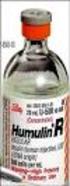 Leeds Humulin R (U500) insulin: Prescribing Guidance Amber Drug Level 2 We have started your patient on Humulin R (U500) insulin for the treatment of diabetic patients with marked insulin resistance requiring
Medication Errors. Prevention and Reduction Guidelines. Approved by PEIPB November 2004
 Medication Errors Prevention and Reduction Guidelines Approved by PEIPB November 2004 Medication Error Reduction Given the complexity of the processes required to safely and accurately process a prescription
Health Professions Act BYLAWS SCHEDULE F. PART 2 Hospital Pharmacy Standards of Practice. Table of Contents
 Health Professions Act BYLAWS SCHEDULE F PART 2 Hospital Pharmacy Standards of Practice Table of Contents 1. Application 2. Definitions 3. Drug Distribution 4. Drug Label 5. Returned Drugs 6. Drug Transfer
Healthcare Math: Calculating Dosage
 Healthcare Math: Calculating Dosage Industry: Healthcare Content Area: Mathematics Core Topics: Applying medical abbreviations to math problems, using formulas, solving algebraic equations Objective: Students
Assistance. Teaching Plan. With Self-Administered Medication
 Assistance With Self-Administered Medication Teaching Plan Note to leader: Complete Page 4 of the learning guide and insert it in the learning guide before making copies of the lesson for each learner.
Medicines reconciliation on admission and discharge from hospital policy April 2013. WHSCT medicines reconciliation policy 1
 Medicines reconciliation on admission and discharge from hospital policy April 2013 WHSCT medicines reconciliation policy 1 Policy Title Policy Reference Number Medicines reconciliation on admission and
Keeping patients safe when they transfer between care providers getting the medicines right
 PART 1 Keeping patients safe when they transfer between care providers getting the medicines right Good practice guidance for healthcare professions July 2011 Endorsed by: Foreword Taking a medicine is
Upon completion of this activity, the participant should be able to:
 The Utility of Root Cause Analysis and Failure Mode and Effects Analysis in the Hospital Setting Learning objectives: Upon completion of this activity, the participant should be able to: 1. Discuss the
Office of Clinical Standards and Quality / Survey & Certification Group
 DEPARTMENT OF HEALTH & HUMAN SERVICES Centers for Medicare & Medicaid Services 7500 Security Boulevard, Mail Stop C2-21-16 Baltimore, Maryland 21244-1850 Office of Clinical Standards and Quality / Survey
Volume 3 1. This paper was written for Dr. Maranah Sauter s Nursing Resarch course.
 Medication Errors In Relation To Education & Medication Errors In Relation To Years of Nursing Experience CHRIS G. BAILEY, BRYAN S. ENGEL, JILLIAN N. LUESCHER, MAEGAN L.TAYLOR This paper was written for
West Midlands Centre for ADRs. Jeffrey Aronson. Robin Ferner. Side Effects of Drugs Annuals. Editor Meyler s Side Effects of Drugs
 Do we have a common understanding of medication errors? Editor Meyler s Side Effects of Drugs Jeffrey Aronson Co-editor: Stephens Detection and Evaluation of Adverse Drug Reactions Side Effects of Drugs
MARY T. INC. PROGRAM POLICY MANUAL
 MARY T. INC. PROGRAM POLICY MANUAL POLICY Safe Medication Assistance and SECTION: 2-2C TITLE: Administration Policy REVISED BY: Jane Strobel, RN PAGE: 1of 6 APPLIES TO: All Services Operating Under Rule
Types of Medical Errors Understanding Why Errors Happen Error Active Errors Placing a topical steroid on an active Herpetic epithelial keratitis
 Prevention of Medical Errors Joseph Sowka, OD, FAAO, Dipl. Barry J. Frauens, OD, FAAO [email protected] [email protected] Nova Southeastern University College of Optometry Purpose of Course To reduce risk
The Massachusetts Coalition for the Prevention of Medical Errors. MHA Best Practice Recommendations to Reduce Medication Errors
 The Massachusetts Coalition for the Prevention of Medical Errors MHA Best Practice Recommendations to Reduce Medication Errors Executive Summary In 1997, the Massachusetts Coalition for the Prevention
IT requirement specification Safety alert. Oral methotrexate 2.5mg and 10mg tablets
 IT requirement specification Safety alert Oral methotrexate 2.5mg and 10mg tablets Synopsis This document sets out the IT requirements for addressing methotrexate-related patient safety incidents that
Reducing the risk of patient harm: A focus on insulin
 Reducing the risk of patient harm: A focus on insulin New York State Partnership for Patients (NYSPFP) Initiative Regional Educational Session November 2013 1 1 Disclosure Matt Fricker, Matt Grissinger,
7/24/2015. Disclosure. Preventing Medication Errors in a Just Culture Environment. Blame Free Culture. Objectives.
 49th Annual Meeting Preventing Medication Errors in a Just Culture Environment Disclosure I do not have a vested interest in or affiliation with any corporate organization offering financial support or
Overview of emar Electronic Medication Administration Record
 Overview of emar Electronic Medication Administration Record March 2006 WHAT IS emar? emar Electronic Medication Administration Record - Replaces the paper MAR MAK Medication Administration Check (Siemens)
Measure #130 (NQF 0419): Documentation of Current Medications in the Medical Record National Quality Strategy Domain: Patient Safety
 Measure #130 (NQF 0419): Documentation of Current Medications in the Medical Record National Quality Strategy Domain: Patient Safety 2016 PQRS OPTIONS FOR INDIVIDUAL MEASURES: CLAIMS, REGISTRY DESCRIPTION:
CONNECTICUT. Downloaded January 2011 19 13 D8T. CHRONIC AND CONVALESCENT NURSING HOMES AND REST HOMES WITH NURSING SUPERVISION
 CONNECTICUT Downloaded January 2011 19 13 D8T. CHRONIC AND CONVALESCENT NURSING HOMES AND REST HOMES WITH NURSING SUPERVISION (d) General Conditions. (6) All medications shall be administered only by licensed
UNIVERSITY OF WISCONSIN HOSPITAL AND CLINICS DEPARTMENT OF PHARMACY SCOPE OF PATIENT CARE SERVICES FY 2014 October 1 st, 2014
 UNIVERSITY OF WISCONSIN HOSPITAL AND CLINICS DEPARTMENT OF PHARMACY SCOPE OF PATIENT CARE SERVICES FY 2014 October 1 st, 2014 Department Name: Department of Pharmacy Department Director: Steve Rough, MS,
Learning Objectives. Introduction to Reconciling Medication Information. Background. Elements of Performance NPSG.03.06.01
 Pharmacy Evaluation of Medication Reconciliation Initiated in the Emergency Department Manuel A. Calvin, Pharm.D. PGY1 Pharmacy Resident Saint Francis Hospital, Tulsa, OK OSHP Annual Meeting Residency
Medication Management: A Family Caregiver s Guide
 Family Caregiver Guide Medication Management: A Family Caregiver s Guide Types of Medications You should make sure all of your family member s doctors and the home care nurse know all the overthe-counter
Example of a Health Care Failure Mode and Effects Analysis for IV Patient Controlled Analgesia (PCA) Failure Modes (what might happen)
 Prescribing Assess patient Choose analgesic/mode of delivery Prescribe analgesic Institute for Safe Medication Practices Example of a Health Care and Effects Analysis for IV Patient Controlled Analgesia
Mona Osman MD, MPH, MBA
 Mona Osman MD, MPH, MBA Objectives To define an Electronic Medical Record (EMR) To demonstrate the benefits of EMR To introduce the Lebanese Society of Family Medicine- EMR Reality Check The healthcare
The Importance of Using Insulin Safely. Learning Objectives
 The Importance of Using Insulin Safely Victor Tran, PharmD PGY 1 Pharmacy Resident Ambulatory Care Diabetes Symposium November 12, 2015 Learning Objectives List the potential adverse drug events of insulin
The Brigham and Women s Hospital Department of Pharmacy
 Using Bar Code Verification to Improve Patient Care and Tracking and Traceability William W. Churchill MS, R.Ph. Chief of Pharmacy Services Brigham and Women s Hospital The Brigham and Women s Hospital
Guidelines on Counseling. Approved by PEIPB
 Guidelines on Counseling Approved by PEIPB November 2005 1 Patient Counseling Patient counseling is a key competency element of the Pharmaceutical Care process. Given the advertising for medication in
Frequently Asked Questions (FAQs) Treatment Authorization Request (TAR) Restriction on Antipsychotic Medications for the 0-17 Population
 Frequently Asked Questions (FAQs) Treatment Authorization Request (TAR) Restriction on Antipsychotic Medications for the 0-17 Population Prescriber FAQs Update January 22, 2015 1. What information is needed
Medication Administration for CNAs
 Medication Administration for CNAs Two (2.0) contact hours Expiration Date: 12/4/2017 First Published: 12/4/2013 Reproduction and distribution of these materials is prohibited without RN.com content licensing
ADMINISTRATION OF MEDICATIONS POLICY
 Policy 6.007. ADMINISTRATION OF MEDICATIONS POLICY It is the policy of Cooperative Educational Services (C.E.S.) that students who require any medications to be administered during school hours, including
The following book is required for purchase prior to the beginning of the semester:
 Dear Student: As a faculty member of the Johns Hopkins University School of Nursing, we are pleased to welcome you to the School. In preparation for a key nursing course, Principles and Applications in
Analysis of the medication management system in seven hospitals
 Analysis of the medication management system in seven hospitals James Baker, Clinical Director, Marketing, Medication Technologies, Cardinal Health Marcy Draves, Clinical Director, Marketing, Medication
Incorporating Pediatric Medication Safety into your Health System
 Incorporating Pediatric Medication Safety into your Health System Julie Kasap, Pharm.D. Margaret CHOI Heger, Pharmacy PharmD, Supervisor BCPS January 2015 Pediatric Antimicrobial Stewardship Conference
Concept Series Paper on Electronic Prescribing
 Concept Series Paper on Electronic Prescribing E-prescribing is the use of health care technology to improve prescription accuracy, increase patient safety, and reduce costs as well as enable secure, real-time,
NHS Professionals. Guidelines for the Administration of Medicines
 NHS Professionals Guidelines for the Administration of Medicines Introduction The control of medicines in the United Kingdom is primarily through the Medicines Act (1968) and associated British and European
GUIDELINES FOR THE CONTROL AND ADMINISTRATION OF MEDICINES DOMICILIARY CARE AGENCIES
 GUIDELINES FOR THE CONTROL AND ADMINISTRATION OF MEDICINES DOMICILIARY CARE AGENCIES January 2009 Contents Page Number 1.0 Introduction 3 2.0 Background 4 3.0 Criteria 5 3.1 Referral 5 3.2 Levels of assistance/consent
A Self-Study Learning Module
 FBN # 50-12426 CE Broker #20-295341 A Self-Study Learning Module Sheryl Gilson, MSN, RN Preventing Medical Errors This course will provide and introduction and overview of the safety concerns facing health
Medical Errors for CNAs & HHAs
 Medical Errors for CNAs & HHAs Purpose: The purpose of this course is to provide CNAs and HHAs an overview of medical errors in today s health care system and what certified nurse s aides and home health
ADMINISTRATION OF PRESCRIPTION MEDICATIONS IN SCHOOLS OBJECTIVES. Purpose of Regulations 105 CMR 210.000. Diane M. Gorak, RN, MEd
 ADMINISTRATION OF PRESCRIPTION MEDICATIONS IN MASSACHUSETTS SCHOOLS Diane M. Gorak, RN, MEd OBJECTIVES Review Massachusetts Regulations Recognize Challenges Ensure Safe Delivery of Prescription Medications
Recommendations for Terminology, Abbreviations and Symbols used in the Prescribing and Administration of Medicines
 Recommendations for Terminology, Abbreviations and Symbols used in the Prescribing and Administration of Medicines Introduction One of the major causes of medication errors is the ongoing use of potentially
Reducing Medical Errors with an Electronic Medical Records System
 Reducing Medical Errors with an Electronic Medical Records System A recent report by the Institute of Medicine estimated that as many as 98,000 people die in any given year from medical errors in hospitals
Medical/Clinical Assistant CIP 51.0801 Task Grid
 1 Secondary Task List 100 PHARMACOLOGY 101 Measure drug dosages using droppers, medicine cups, syringes, and other specialized devices. 102 Utilize correct technique to administer medications using the
MEDICINES MANAGEMENT STANDARD OPERATING PROCEDURE (MMSOP018) Preparation of Medication Administration Record (MAR) Charts
 MEDICINES MANAGEMENT STANDARD OPERATING PROCEDURE (MMSOP018) Preparation of Medication Administration Record (MAR) Charts Any deviation in practice from this procedure must be discussed with the Community
Medication Error. Medication Errors. Transitions in Care: Optimizing Intern Resources
 Transitions in Care: Optimizing Intern Resources DeeDee Hu PharmD, MBA Clinical Specialist Critical Care and Cardiology PGY1 Program Director Memorial Hermann Memorial City Medical Center Medication Error
Medication Errors Among Nurses in Government Hospital
 IOSR Journal of Nursing and Health Science (IOSR-JNHS) ISSN: 2320 1959. ISBN: 2320 1940 Volume 1, Issue 2 (Jan. Feb. 2013), PP 18-23 Medication Errors Among Nurses in Government Hospital Hariati Johari
CNA and NSO Risk Control Self-assessment Checklist for Nurse Practitioners 1. Self-assessment topic Yes No Actions needed to reduce risks
 Risk Control Self-assessment Checklist for Nurse Practitioners This checklist is designed to help nurse practitioners evaluate risk exposures associated with their current practice. For additional nurse
Health Professions Act BYLAWS SCHEDULE F. PART 3 Residential Care Facilities and Homes Standards of Practice. Table of Contents
 Health Professions Act BYLAWS SCHEDULE F PART 3 Residential Care Facilities and Homes Standards of Practice Table of Contents 1. Application 2. Definitions 3. Supervision of Pharmacy Services in a Facility
Root cause analysis in context of WHO International Classification for Patient Safety
 1 NHS Presentation to [XXXX Company] [Type Date] Root cause analysis in context of WHO International Classification for Patient Safety Dr David Cousins Associate Director Safe Medication Practice and Medical
Unit/Standard Number. Proficiency Level Achieved: (X) Indicates Competency Achieved to Industry Proficiency Level
 1 Secondary Task List 100 INTRODUCTION TO HEALTHCARE 101 Identify the roles and educational/credentialing requirements of various health care practitioners. 102 Describe the 's job description, personal
4. Emergency medical treatment due to injury or physical illness. 5. Hospitalization (Medical) due to injury or physical illness
 MCCMH MCO Policy 9-321 CONSUMER, INCIDENT, ACCIDENT, ILLNESS, DEATH, OR ARREST REPORT MONITORING Date: 7/02/13 receive and review all Consumer Incident, Accident, Illness, Death or Arrest Reports for violations
Electronic Medical Record (EMR) Safety Results of CAH Testing. Tom Johns, PharmD Shands at the University of Florida
 Electronic Medical Record (EMR) Safety Results of CAH Testing Tom Johns, PharmD Shands at the University of Florida Vendors Evaluated CPSI Healthland Cerner Test Patients Test Patient A Age: 76 y/o Sex:
Ensuring Safe & Efficient Communication of Medication Prescriptions
 Ensuring Safe & Efficient Communication of Medication Prescriptions in Community and Ambulatory Settings (September 2007) Joint publication of the: Alberta College of Pharmacists (ACP) College and Association
Standards of Practice for Pharmacists and Pharmacy Technicians
 Standards of Practice for Pharmacists and Pharmacy Technicians Introduction These standards are made under the authority of Section 133 of the Health Professions Act. They are one component of the law
CHAPTER 2 THE PHARMACY TECHNICIAN S ROLE IN REDUCING MEDICATION ERRORS (2 CONTACT HOURS - MANDATORY)
 CHAPTER 2 THE PHARMACY TECHNICIAN S ROLE IN REDUCING MEDICATION ERRORS (2 CONTACT HOURS - MANDATORY) Learning objectives Explain the common points of medication errors as they pertain to pharmacy technicians.
Revised: X Date: 04/07/14. 1. All medication orders shall be reviewed, signed, or co-signed by a Registered Nurse (RN).
 Vermont Psychiatric Care Hospital Procedure Revised: X Date: 04/07/14 I. Medication Orders 1. All medication orders shall be reviewed, signed, or co-signed by a Registered Nurse (RN). 2. Medication orders
Adverse Drug Events and Medication Safety: Diabetes Agents and Hypoglycemia
 Adverse Drug Events and Medication Safety: Diabetes Agents and Hypoglycemia Date: October 20, 2015 Presented by Mike Crooks, PharmD., PCMH-CCE Pharmacy Interventions, Technical Lead 11/9/2015 1 Objectives:
Pharmacist, Mr C A Pharmacy Company. A Report by the Health and Disability Commissioner. (Case 04HDC10718)
 Pharmacist, Mr C A Pharmacy Company A Report by the Health and Disability Commissioner (Case 04HDC10718) Opinion/04HDC10718 Parties involved Mrs A Ms B Mr C A Pharmacy Company Dr D Dr E Ms F Consumer
East & South East England Specialist Pharmacy Services Medicines Use and Safety Division Community Health Services Transcribing
 East & outh East England pecialist Pharmacy ervices East of England, London, outh Central & outh East Coast Medicines Use and afety Division Community Health ervices Transcribing Guidance to support the
NHS Lanarkshire Care Homes Protocol Group. Care Home Prescriptions - Good Practice Guide
 NHS Lanarkshire Care Homes Protocol Group Care Home Prescriptions - Good Practice Guide Date of Publication Review Date August 2015 Responsible Author Francesca Aaen Care Homes Pharmacist on behalf of
Root Cause Analysis Investigation Tools. Concise RCA investigation report examples
 Root Cause Analysis Investigation Tools Concise RCA investigation report examples www.npsa.nhs.uk/nrls Acute service example Mental health example Ambulance service example Primary care example Acute service
Learning from Defects
 Learning from Defects Problem Statement: Healthcare organizations could increase the extent to which they learn from defects. We define learning as reducing the probability that a future patient will be
Truth or Consequences, Best Medication List Practices to Deliver Best Care. Leaning & Action Network Session
 Truth or Consequences, Best Medication List Practices to Deliver Best Care Leaning & Action Network Session Introduction David Cook (5 minutes) Housekeeping: - In event of a fire? - Restrooms? David R.
One of the Institute of Medicine s 10 rules for health
 MEDICATION RECONCILIATION TOOL A Practical Tool to Reduce Medication Errors During Patient Transfer from an Intensive Care Unit Peter Pronovost, MD, PhD, Deborah Baugher Hobson, BSN, Karen Earsing, RN,
RULE. The Administration of Medication in Louisiana Public Schools
 RULE The Administration of Medication in Louisiana Public Schools Developed in 1994 by The Louisiana State Board of Elementary and Secondary Education and The Louisiana State Board of Nursing Amendments
Medical Errors Prevention & Reporting for Dietitians (#107328)
 Medical Errors Prevention & Reporting for Dietitians (#107328) Attention Florida Dietitians: Florida CE Provider #: 50-8625 CE Broker Tracking #: 20-382665 This course is mandated for all health care professionals
Menu Case Study 3: Medication Administration Record
 Menu Case Study 3: Medication Administration Record Applicant Organization: Ontario Shores Centre for Mental Health Sciences Organization s Address: 700 Gordon Street, Whitby, Ontario, Canada, L1N5S9 Submitter
MEDICAL ERRORS IN THE HOSPITAL SETTING
 MEDICAL ERRORS IN THE HOSPITAL SETTING Joe Garcia DNP, RN Director of Cardiovascular Services and Acute Dialysis University Medical Center El Paso, Tx Learning Objectives 1. Define Medical Errors Can you
RULES OF DEPARTMENT OF COMMUNITY HEALTH HEALTHCARE FACILITY REGULATION
 Disclaimer: This is an unofficial copy of the rules that has been provided for the convenience of the public by the Department of Community Health. The official rules for this program are on record with
National terminology, abbreviations and symbols to be used in the prescribing and administering of medicines in Australian hospitals
 National terminology, abbreviations and symbols to be used in the prescribing and administering of medicines in Australian hospitals Introduction One of the major causes of medication errors is the ongoing
Medication Management Guidelines for Nurses and Midwives
 Medication Management Guidelines for Nurses and Midwives 1. Introduction As the statutory body responsible for the regulation of nursing and midwifery practice in Western Australia (WA), the Nurses & Midwives
Standard 5. Patient Identification and Procedure Matching. Safety and Quality Improvement Guide
 Standard 5 Patient Identification and Procedure Matching Safety and Quality Improvement Guide 5 5 5October 5 2012 ISBN: Print: 978-1-921983-35-1 Electronic: 978-1-921983-36-8 Suggested citation: Australian
COUNTY OF LOS ANGELES DEPARTMENT OF MENTAL HEALTH PSYCHIATRIC MENTAL HEALTH NURSE PRACTITIONER STANDARDIZED PROCEDURES
 COUNTY OF LOS ANGELES DEPARTMENT OF MENTAL HEALTH PSYCHIATRIC MENTAL HEALTH NURSE PRACTITIONER STANDARDIZED August 2010 Page 2 TABLE OF CONTENTS I. Development, Review and Approval of Psychiatric Mental
D( desired ) Q( quantity) X ( amount ) H( have)
 Name: 3 (Pickar) Drug Dosage Calculations Chapter 10: Oral Dosage of Drugs Example 1 The physician orders Lasix 40 mg p.o. daily. You have Lasix in 20 mg, 40 mg, and 80 mg tablets. If you use the 20 mg
Optimizing Medication Administration in a Pediatric ER
 Optimizing Medication Administration in a Pediatric ER ER Pharmacist Review of First Dose Non-Emergent Medications Penny Williams, RN, MS Clinical Program Manager, Emergency Center Children s Medical Center
Foreword by Director of Medical Services... Foreword by Chief Pharmacist... Acknowledgements... iii. Executive summary... 1
 Contents page Foreword by Director of Medical Services... Foreword by Chief Pharmacist... i ii Acknowledgements... iii Executive summary...... 1 Section 1 Introduction: Medication safety 3 1.1 Definitions