
NAON Patient Education Series Postoperative Spine
|
|
|
- Melvyn Butler
- 10 years ago
- Views:
Transcription
1 NAON Patient Education Series Postoperative Spine

2 Copyright 2013 by National Association of Orthopaedic Nurses. All rights reserved. This publication, in its entirety or specific pages, is intended to be printed and distributed as needed to patients undergoing Shoulder Replacement. Content may not be copied and reproduced without written permission of the National Association of Orthopaedic Nurses. National Association of Orthopaedic Nurses 330 N. Wabash Ave., Suite 2000 Chicago, IL Ph: Web Site:

3 Table of Contents 1. General Information Welcome Introduction to Spine Anatomy Spine Surgery Frequently Asked Questions about Spine Surgery Your Health Care Team 2. Before Surgery Checklist 6-8 Weeks before Surgery Advanced Health Care Directive Assistance Diet Equipment Exercise Medical Appointments Smoking Weight Loss Work Days before Surgery Church or Synagogue Home Changes Mail Medications Pre-op Class Several Days before Surgery Groceries and Supplies Infection Transportation 1 Day/Night before Surgery Pack Showers Do Not 3. Hospital Care Day of Surgery Activity Breathing Circulation Managing Pain Food/Fluids Going to the Bathroom Wound Care 4. Caring for Yourself at Home Nutrition Managing Pain Equipment Incision Care and Dressing Changes Coping with Stress Intimacy Preventing/Recognizing Problems Infection Contact your Surgeon Blood Clots Brace Wear 5. PostOp Exercises and Activity Guidelines Leg Exercises Ham Sets Gluteal Sets Straight Leg Raises Ankle Pumps Sitting Knee Extension Heel Raises Standing Hip Extension Standing Knee Flexion Standing Knee Raises Standing Hip Abduction Standing Hip Adduction Toe Raises Mini Squats Arm Exercises Shoulder Flexion Shoulder Abduction Shoulder Adduction 6. Activities of Daily Living Precautions Safety Bed Mobility Ambulation Walker Transfers Bed Chairs and Toilets Shower Vehicle Stairs Dressing Healthy Activity 7. Appendices Health Care Provider Phone Numbers Other Phone Numbers Appointment List Notes and Additional Questions 1 Postoperative Spine National Association of Orthopaedic Nurses

4 General Information Welcome Welcome to your spine surgery patient education. This book will help you learn how to prepare for surgery. It will help you know what to expect after your spine surgery. You are a key partner in reaching your goals. What you do before and after surgery can help reduce problems and improve your activity level. Introduction to Spine Anatomy The spine is made up of 5 parts: Neck (cervical) 7 bones (vertebrae), C1-C7 Chest/mid-back (thoracic) 12 bones (vertebrae), T1-T12 Low back (lumbar) 5 bones (vertebrae), L1-L5 Sacrum 5 joined bones Coccyx 4 joined bones, also known as the tailbone There are 33 bones (vertebrae) in the spine. Between each stacked bone is a soft disc that acts as a shock absorber. The area between each vertebra on the left and right sides is called a facet joint. The facet joints allow for movement in the spine. The bony area from the base of the neck to the low back level is the protective canal that surrounds the spinal cord. Each vertebra has nerves that send and receive information for sensation (feeling) and movement. The complete structure of the spine protects the spinal cord, attaching muscles, protecting organs, and providing upright posture. From OrthoInfo - American Academy of Orthopaedic Surgeons - Reproduced with permission. Healthy Intervertebral Disc From OrthoInfo - American Academy of Orthopaedic Surgeons - Reproduced with permission. 2 Postoperative Spine National Association of Orthopaedic Nurses

5 Herniated Intervertebral Disc Discectomy: removal of part or all of disc between two vertebrae. If the entire disc is removed, bone graft material may be used. A metal, plastic, bone, or cage type spacer is inserted to realign the height in this space. Anterior Cervical Discectomy and Fusion (front and side view with plates and screws for stability) From OrthoInfo - American Academy of Orthopaedic Surgeons - Reproduced with permission. Spine Surgery When other treatments have been tried or a major injury occurs, spine surgery may be needed. There are different surgeries for the spine. The one your surgeon suggests for your care depends on the cause leading up to your surgery. It also depends on the surgeon s training and treatment beliefs. Common surgeries include discectomy, laminectomy, fusion, or artificial disc replacement. Surgery can be done from the front (anterior), the back (posterior), or both. Your surgeon will discuss the best option for you. Laminectomy: provides access toward the center of the soft disc between the vertebrae or to nerve roots. It relieves pressure and eases symptoms. Laminectomy Screws and bone graft From OrthoInfo - American Academy of Orthopaedic Surgeons - Reproduced with permission. Fusion: spinal fusion stabilizes the spine by fusing together two or more vertebrae. In some cases, a discectomy may be done along with a fusion. Posterior Lumbar Interbody Fusion (The disc is removed and spacer is placed in the open space) From OrthoInfo - American Academy of Orthopaedic Surgeons - Reproduced with permission. From OrthoInfo - American Academy of Orthopaedic Surgeons - Reproduced with permission. 3 Postoperative Spine National Association of Orthopaedic Nurses

6 Transforaminal Lumbar Interbody Fusion (This is a side instead of back approach.) Note that some questions have a reminder to do just that. From OrthoInfo - American Academy of Orthopaedic Surgeons - Reproduced with permission. Bone grafting is needed to provide stability. A bone graft can be taken from your own hip bone or from a bone bank. The graft is placed on the sides of two joining vertebrae. Over time, the bone fuses together, creating a solid, stable area. If a discectomy was also performed, bone graft material is used in the space between the vertebrae. Metal rods and screws are sometimes used for additional support. Bone graft from the iliac crest of hip with authograft Why does my neck or back hurt and why do I have this problem? You may have pressure on the nerve roots or spinal cord from many causes. Some causes can be a herniated disc, bone spurs, calcium deposits, tumors, bone fragments from a fracture, or infection. The pressure may cause numbness, tingling (pins and needles feeling), and pain in your arms, legs, neck or back. These problems may cause the vertebrae in the spine to be unstable or be out of alignment. How can this problem be fixed? Your doctor will have you try non-surgery treatments first. If the pain and related symptoms are not lessened and you are not able to function well in your daily activities, surgery may be a valid option. There are different spine surgeries. Your surgeon will talk about different options with you, along with risks and benefits of having surgery. Where does a bone graft come from? Bone graft material can come from different sources. Some are your own hip or pelvis bone, a bone bank, or a synthetic option. Your surgeon will decide which is best for you. From OrthoInfo - American Academy of Orthopaedic Surgeons - Reproduced with permission. What are the risks of spine surgery? Some risk factors may include nerve injury, unintentional tear to the a protective layer of the spinal cord (called a dural tear), infection, hematoma, failure to achieve bone fusion, or failure to ease symptoms. Risks of surgery should be discussed with your surgeon. Frequently Asked Questions about Spine Surgery Well-informed patients can take part in their care and recovery. Knowing what to expect before, during and after surgery can help you recover more quickly. It can assist you and your caregiver to avoid potential problems. There are common questions patients have about spine surgery. Some answers are listed below. However, it is best to discuss questions with your surgeon. Will I be hospitalized? Some surgeries are simpler and those patients can be discharged within a few hours. Other surgeries may require a hospital stay of 1 to 3 days. Your type of surgery, health, age, and response to surgery will define how long you stay in the hospital. 4 Postoperative Spine National Association of Orthopaedic Nurses

7 When will I be able to get out of bed? When you are awake and doing well, a nurse or therapist will assist you out of bed and help you to get around. You may sit at the edge of the bed or take a short walk. Activity is part of your recovery. The physical therapist or occupational therapist will instruct you on safe ways of moving, walking, and climbing stairs. They may suggest some devices for you to use at home. Do I need to wear a neck collar or back brace? A brace may help provide extra support after surgery. Your surgeon will decide if a brace is needed and which one is best for you. In some cases, a brace may not be needed. How should I take care of my incision? Your incision should be kept clean and dry. If you have staples, change the gauze over the incision daily. If you have a clear dressing over a gauze pad, you should follow instructions from the doctor on when to remove it. If present, leave any pieces of tape in place. They will come off on their own. Staples will be removed about days after surgery. Most types of stitches will dissolve on their own and do not need to be removed. When can I take a bath at home? It is safest to shower with your incision covered. Apply a clean, dry dressing on after your shower. Check with your doctor or nurse when it will be safe to shower without a dressing over your incision. Only then will it be okay to let water run over the incision. A bath, hot tub, or pool is generally not okay until your surgeon tells you it is safe. In what position can I sleep? You may sleep on your back or on either side with pillows for positioning. A therapist or member of your care team will teach you these positions. Sleeping on your stomach or on a waterbed may not be okay. Will I need therapy at home? Ask your surgeon about therapy at home. The need for therapy at home depends on many factors. *Ask your surgeon if therapy will be needed after surgery. What limits will I have after surgery? There is an easy way to learn common spine precautions. It is no BLT SPP. That means: no Bending, no Lifting (over 10 pounds), no Twisting, no Sitting (more than 30 minutes), and no Pushing or Pulling. Walking is the best form of activity until your surgeon says you should do more. Avoid highimpact activities such as jogging and running. Plan to get out of the car at least every hour to stretch during long rides. Sitting in a seat that is slightly reclined is most comfortable. *Discuss specific activities with your surgeon. When can I return to work? Returning to work will depend on the type of surgery you have as well as the type of work that you do. *Discuss your specific work activities with your surgeon. When can I drive? Your surgeon will let you know when it is safe to drive again. You cannot drive while taking pain medicines. *Discuss driving with your surgeon. 5 Postoperative Spine National Association of Orthopaedic Nurses

8 Your Health Care Team Your health care team members have special training and interest in the area of spine care. Be an active partner with your health care team in order to have the best possible outcome. The team may include: Anesthesiologist/Certified Registered Nurse Anesthetist A doctor and advanced practice nurse who work together and on your anesthesia during your spine surgery. They may help with pain management before and after surgery. Case Manager/Discharge Planner A registered nurse or social worker that works closely with your surgeon and the other healthcare team members to help with your discharge plans. This may include physical therapy, home equipment, and/or skilled nursing care if needed. The case manager or discharge planner can answer your questions about insurance coverage for what you may need. Nurse Practitioner (NP) A registered nurse who has advanced skills and education that works with your surgeon to manage your care. An NP can diagnose and treat health care problems, prescribe medicines, write orders, and interpret tests. Nurse practitioners often see you before, during, and after spine surgery. Occupational Therapist (OT) An OT is a healthcare team member that plans safe ways for you to complete your daily activities such as bathing. The OT may partner with the physical therapist (PT) to complete your exercises. The OT offers safety ideas for your home. Some equipment may be used to simplify tasks and protect the spine. Orthopaedic Spine Surgeon or Neuro Spine Surgeon A surgeon with extensive training in the diagnosis and treatment of the spine. This surgeon will perform the surgery and direct your care after surgery. Physical Therapist (PT) A physical therapist plans your rehab after spine surgery. This therapist will teach you exercises for motion, muscle strength, and balance to walk safely after your spine surgery. You may need to learn how to use a temporary device such as a walker. Your surgeon may ask that you work with a therapist to learn exercises before surgery. Depending on your surgery, you may need to wait for your spine to heal before working with therapy. Physician Assistant (PA) A physician assistant is a healthcare team member that works with your doctor to prescribe, diagnose, and treat health care problems. A physician assistant may see you before, during, and after spine surgery. Registered Nurse (RN) An RN is a professional nurse who manages your bedside nursing care after surgery. The RN uses the surgeon s instructions to guide your care. An RN provides education to you and your family about your health and safety needs. This includes information before and after surgery and helps you plan for your discharge from the hospital. An RN may provide care and education in your surgeon s office. Clinical Nurse Specialist (CNS) A Clinical Nurse Specialist is an advanced practice RN who is a clinical expert in a specialized area of nursing practice. The CNS works with your surgeon and healthcare team. The CNS may write orders, direct your plan of care, provide education, and in some cases may prescribe medicine. 6 Postoperative Spine National Association of Orthopaedic Nurses

9 Before Surgery Checklist 6-8 Weeks before Surgery Advanced Health Care Directive (Advance Directive, Living Will) It is a good time to complete an Advanced Health Care Directive if you do not have one. This form will help explain your health care wishes to your doctor and others. Your hospital has the form for you to complete if needed. If you have an Advanced Health Care Directive, please bring a copy along to the hospital. Assistance Ask your spouse, children, or others if they can help you for a few weeks after returning home from surgery. Diet Eat as healthy as possible. Balance servings of fruits, vegetables, protein, whole grains, and low fat dairy. An adequate iron supply is important before surgery. Good sources of iron include lean red meats, fortified cereals, and leafy green vegetables such as spinach or kale. Discuss taking a multivitamin and iron supplement with your primary care doctor. They may need to be stopped 1-2 weeks before surgery. Fluids are needed to help you to have regular bowel movements. Most of that fluid should be water, juicy fruits, and vegetables. Equipment Assistive devices may be needed after your surgery. Items may include a walker, an elevated toilet seat, or bedside commode. The bedside commode has arms and can often fit directly over your home toilet. The commode may fit in your shower as a seat. The therapist will suggest what you will need at home. Call your insurance company to find out which items are covered. If items are not covered by insurance, you may be able to purchase them at the hospital. Other places to purchase items are a local home improvement center or pharmacy. You could borrow equipment from churches, VFW posts, or family/friends. Below are listed items that can be useful after your surgery. A sock aid helps to put on a pair of socks by yourself. A long-handled sponge helps clean hard to reach places when bathing. Safety bars can be installed by a handyman in the shower area and wherever else needed. A tub bench/shower chair allows safe transfer and seat while in the shower or tub. A hand-held shower helps with bathing from the tub bench or shower chair. A basket or bag that attaches to a walker allows carrying needed items. A travel mug or thermos with a secure lid allows safe transport of a liquid such as water. A reacher/grabber/dressing stick helps to pull up your pants, reach for dropped items, or obtain items that are higher than arms can reach. A long-handled shoehorn helps to put on shoes without bending your back. Elastic shoelaces help to secure shoes instead of trying to tie laces after surgery. Exercise Building strength can help you to have a great outcome after surgery. Walking is your best exercise. Water exercise, walking in waist high water, or swimming 2-3 times a week can also increase strength and endurance. There are some simple exercises you can do in your own home from now through your rehab after surgery. Please see the exercises listed in the Post-op Exercises, and Activity Guidelines section of this manual. Before starting a new exercise, ask your doctor or therapist. 7 Postoperative Spine National Association of Orthopaedic Nurses

10 Medical Appointment You may be asked to see your primary care doctor before surgery. Ask your surgeon what tests are needed for surgery so you can tell your primary care doctor. EKG (electrocardiogram) Lab work Chest x-ray Urinalysis Smoking Smoking is known to cause breathing problems. It can lessen healing after surgery. Try to decrease smoking or seek methods to stop. Your doctor can offer ideas to do so. Weight Loss If weight loss is a goal before surgery, ask a dietician or exercise specialist for help. Your primary care doctor can make a referral for you. Work Ask your surgeon to sign a work release form for you. Depending on the type of surgery and work you do, you may need time off work to gain strength and mobility Days before Surgery Church or Synagogue Notify your place of worship as desired for prayers, support, or visitors while you are in the hospital. Home Changes Before surgery, some changes at home may be needed so that you can return there safely after surgery. It is best to have the bathroom, bedroom, and living areas on the same floor. If this is not the case, you may want to place a bed on the main floor for a short while. Purchase nightlights and place them in your bathroom, bedroom, and hallways. Keep frequently used items at a level between waist and shoulder height. This helps to avoid the need to bend, lift, or twist (BLT). Throw rugs and electrical cords should be removed or tied up. Both rugs and cords can be safety hazards. Move furniture and objects that do not allow a clear walking path. Consider temporary placement of a small pet with a loved one. A pet running around your legs could cause you to fall. Identify chairs with arms in the living and kitchen areas that are not too short or soft. A chair with arm rests and firm cushion at knee height is ideal. Make meals that can be frozen and easily reheated. Consider another option for laundry if the washer and dryer are not on the living level. Place a rubber mat or non-skid adhesive on the floor of the tub or shower. Mail If needed, ask someone to collect your mail or place it on hold at the post office. Medicines Any changes to your medicines should only be made with as directed by your surgeon and/or primary care doctor. Medicines that are often stopped prior to surgery include: Aspirin Non-steroidal anti-inflammatory medicines (like Motrin, Aleve, etc.) Some vitamins Fish oils Herbal supplements (such as ginseng, gingko biloba, garlic pills) Herbal teas Fortified cereals that contain vitamin E Pain medicines that contain aspirin Blood-thinning medicines (e.g. Coumadin or Plavix) Some over the counter and prescription pain medicines can continue until the time of surgery. Please be honest about your drug and alcohol use. It is important for us to know for safe anesthesia and pain management. 8 Postoperative Spine National Association of Orthopaedic Nurses

11 Pre-op Class Attend a pre-op class if one is offered by your surgeon s office or the hospital. *Discuss class times/dates with your surgeon s office. Several Days before Surgery Groceries and Supplies Buy food items and needed supplies that can be used after you return home. Infection Call your surgeon s office right away if you think you may have an infection of any kind: bladder, skin, tooth, etc. Transportation Secure a ride to and from the hospital. You are not allowed to drive yourself home from the hospital. Assure that the passenger seat reclines and can fully move backward. One Day/Night before Surgery Pack Items to include are ( ): Your most current list of medicines and supplements. Note which ones have been stopped and when. Loose pajamas or short nightgown and short robe if desired. Underwear. Loose shorts, jogging suit, sweats, tops. Slippers with backs and rubberized sole or walking sneakers/shoes with Velcro closures or elastic shoelaces. Socks. Personal toiletries. Eyeglasses. Hearing aid and batteries. CPAP machine settings, tubing and machine. Driver s license and photo ID, insurance card, Medicare/Medicaid card. Copy of the Advanced Health Care Directive. Important telephone numbers (include person bringing you home), cell phone, phone charger. Books, magazines or other activities (e.g., music, games, etc.). Electronic tablet and charger. Any hand-carry equipment such as a reacher, sock aid, long-handled shoehorn, walker, brace or collar (marked with your name). This education manual so you can review items with your health care team. Showering The night before or morning of surgery, wash your hair and rinse it well. Shower as instructed by your surgeon s office, hospital staff, or preoperative education class. Do Not Do NOT eat or drink anything after the time you were instructed. Ice chips, gum, or mints are not allowed. Do NOT bring valuables no jewelry, credit cards, checkbooks, cash >$20. Do NOT bring your own medicines unless told otherwise. Do NOT use lotions or powder. Apply newly washed pajama/nightgown or clothes. Sleep on freshly laundered linens. 9 Postoperative Spine National Association of Orthopaedic Nurses

12 Hospital Care Day of Surgery Do not wear makeup and jewelry (a wedding band is usually fine). Remove fingernail and toenail polish. Take regular medicine the morning of surgery with only small sips of water if you have been told to do so. Do not eat or drink anything else. You may brush your teeth. Do not take insulin unless told otherwise. Arrive at the hospital on time. You will be asked to complete any needed forms. You will be taken to the preop area where nurses will prepare you for surgery. You will put on a hospital gown and go to the bathroom. You will have an IV started in your vein. You will discuss your anesthesia with an anesthesiologist or nurse anesthetist. You may be given medicine to relax. You will be taken to the operating room for your surgery. Anesthesia will be given to you. After your surgery is completed, you will be taken to the recovery room for up to several hours. Nurses will watch you closely until you are stable and then transport you to the hospital unit. Your surgeon will talk with your family after surgery has ended. Activity Some patients get out of bed on the day of surgery. A nurse, assistant, or therapist will help you do so. Being out of bed and walking several times each day is very needed for your recovery. Active movement after your surgery also helps to prevent problems. Your surgeon may order a brace to wear for extra support. If a brace is ordered for you, you will be shown how to put on and take off the brace. You will learn to log roll into and out of bed. Use learned safety tips for your back or neck. Therapists will teach you what you need to avoid such as bending and twisting. Plan to walk farther each day. You will learn exercises to strengthen your muscles. You will perform exercises several times per day as well as after you go home. You will learn safe ways of doing your daily activities. You will increase activity daily to enhance your strength and mobility. Rest between your therapy and activities. Sleep helps in the healing of your surgical wound. Breathing There may be an oxygen tube in your nose. Your nurse likely will remove the tube later that day. You will do deep breathing and coughing exercises for several days after surgery. You may be asked to use a breathing exercise device as well. It will help to expand your lungs and help get oxygen to your tissues. Circulation Perform leg exercises that have been shown to you. They help your blood flow. There may be snug stockings and/or sleeves wrapped around your legs or feet. The sleeves fill with air and then relax. The sleeves help blood to flow in your legs. Smoking is discouraged before and after spine surgery. Nicotine slows the healing of your tissue and bones. It can cause problems with your surgery. There are options to help you quit smoking. Please ask your doctor for more information. The doctor can help you decide which option is best for you. Managing Pain You will have some amount of pain after surgery. Everyone feels pain differently. Your nurse will ask you to rate your pain on a scale. The goal is to get the pain low enough so that you can rest and exercise. Pain medicine can be given in different ways. You may receive pain medicine through your IV, by injection, or by pills. Medicines can be helped by other methods such as essential oils, ice packs, music, or changing position. Many people use more than one approach to get the best pain relief. 10 Postoperative Spine National Association of Orthopaedic Nurses

13 Food/Fluids You will have fluids through your IV at first. The IV will be stopped when you are eating and drinking well. You will likely start with a liquid diet. Your nurse will help you decide when you can eat solid food. Increasing food slowly may help to avoid nausea that can happen after anesthesia or with use of pain medicine. You may not be very hungry right away. Eat as best you can in order to heal well. Going to the Bathroom You may have a tube to drain the urine from your bladder. This tube will be removed in a day or two. After that, someone will help you out of bed to go into the bathroom. It may take a day or more to have a bowel movement. Anesthesia and pain medicine can cause constipation. Drink plenty of fluids and eat whole grains, fruits, and vegetables. A stool softener or laxative can help normal bowel function to return. Wound Care Your incision may have stitches, tape, or staples closing the skin. Your incision will be covered with a dressing after surgery. You may also have a tube (a drain) coming out of the incision. Your surgeon will decide when to remove the drain. Day after Surgery to Discharge Your surgeon or a partner will visit you. Your incision dressing may be changed daily. This is a good time for the person who will be helping you at home to see the incision and watch the nurse change your dressing. Continue to cough and deep breathe. Your nurse will help you walk to the bathroom. Solid food will be offered to you. Drink fluids to stay hydrated. You will switch to pain pills if not already done. You will work with therapists to practice exercises, walk, and climb stairs. Repeating exercises throughout the day will help you gain strength. Discuss discharge options and needed equipment with the team caring for you. Caring for Yourself at Home Nutrition Eat nutritious foods after surgery. Choose foods from all food groups. Foods high in protein help you to heal. Do not restrict calories after surgery. Your body needs adequate nutrition after surgery to promote healing. Managing pain Take pain medicine with food and as prescribed by your surgeon. Take your pain medicine about 30 minutes before your planned therapy or exercise session. Do not wait until pain gets the best of you to take medicine. Do not drink alcohol or drive while taking pain medicine. As you have less pain, start to decrease how many pain pills you take and how often you take them. Pain medicines can be constipating. Drink at least 6-8 glasses of water each day unless told otherwise. Increase the fiber in your diet. Walking can also help prevent constipation. Use a stool softener or laxative if needed. Soon you will no longer need pain medicine. Continue to use ice for comfort and to reduce swelling. Limit icing to 20 minutes at a time. Wrap ice in a light towel before applying it to your skin. Change your position at least every 45 minutes during the day to avoid stiffness. Contact your surgeon if your pain does not lessen as the days go by. Equipment An elevated toilet seat, bedside commode, or toilet safety rails can be handy in the bathroom. A bedside commode may fit over the toilet and may be used for sitting in the shower. Do not get down into the bathtub until you are told it is okay. Equipment such as a reacher, sock-aid, long-handled shoehorn, long-handled sponge, handheld shower, and grab bars may be helpful to you. Please refer to the 6-8 Weeks before Surgery section for further information. 11 Postoperative Spine National Association of Orthopaedic Nurses

14 Incision Care and Dressing Changes You and your caregiver should wash your hands before and after changing your dressing. Have someone look at your incision and change your dressing every day. There should be no redness, heat, odor, increased drainage, or opening of the incision. Call your surgeon s office if you notice those changes. Stitches or staples usually are removed at your first follow-up visit to your surgeon s office. There may be several small pieces of tape covering your incision. They help keep your incision pulled together. Do not pull them off. They will fall off by themselves several days after surgery. If you do not know, call to find out whether or not to get your incision wet while showering. Until you have been told that you can, do not get into a bath, swimming pool, or hot tub. Coping with Stress Having surgery can be stressful. Relying on others to help while you are healing can be stressful. Support from friends and family is needed to improve your recovery. Having a positive outlook and setting realistic goals can help. Make note of small successes. Deep breathing and relaxation techniques may help lessen stress. Many hospitals have resources available to help you (social workers, counselors, or spiritual care). Remember to ask for help when you need it. Intimacy Most people wait to resume sexual activity for a few weeks after surgery. Your incision and soft tissues need time to heal. You can resume sexual activity when you feel ready. The bottom or missionary position is usually the most safe and comfortable. A pillow placed between the knees is needed for the side lying position. Discuss return to sexual activity with your healthcare provider. Preventing/Recognizing Problems Infection Hand washing (or an alcohol-based hand cleanser) is the most important step for preventing infection. You and your caregiver need to wash your hands prior to changing the dressing over your incision. Keep your incision clean and dry, unless your surgeon has approved getting it wet. Eating a healthy diet and drinking plenty of fluids can help prevent infection too. Contact your surgeon right away if you note any of the following: Increased redness, heat, or swelling around incision. Increased or foul smelling drainage from incision. Increased pain in spite of pain medicine. Persistent chills or fever greater than 100 F. Blood Clots You may be asked to wear snug stockings at home. Perform exercises as taught by your care team. Avoid sitting for extended periods. Walk often. These are ways to prevent blood clots. A blood clot in the leg can move to the lung. This can lead to shortness of breath, chest pain, coughing up blood, or extra anxiety, especially with breathing. Call 911 for this medical emergency. Brace wear Your surgeon may require you to wear a brace after surgery. You will be shown how to apply and take off the brace. You will be taught about care of the brace and your skin. There are cases in which a brace is not needed. 12 Postoperative Spine National Association of Orthopaedic Nurses

15 Postop Exercises and Activity Guidelines Exercise is very important before and after spine surgery. Exercise will help you strengthen your muscles and improve your daily activities. Continue your walking program and go farther every day. The more you are active and exercise, the better able you will return to routine activities. Ask your surgeon or therapist before starting a new exercise. Leg Exercises Ham Sets Lie on your back in bed. Keep your leg bent and the other leg straight. Tighten the muscle on the back of the bent leg. Push the heel down into the bed. Hold for 5 seconds. Repeat 10 times with both legs, 2-3 times per day. Straight Leg Raises (only if told to do so by your surgeon or therapist) Lie on your back in bed. Bend one leg. Tighten the thigh muscles on the other leg and lift 4-6 inches off the bed. Keep your knee straight and toes pointed up. Hold the leg up for 3-5 seconds and then lower it back onto the bed. Repeat 5-10 times with the each leg, 2-3 times per day. Do not do this exercise if it hurts your low back. Gluteal Sets Lie on your back in bed, sit in a chair, or stand. Squeeze your buttock muscles together and hold for 5-10 seconds. Repeat 10 times, 2-3 times per day. Ankle Pumps Lie on your back in bed or sit in a chair. Straighten one knee and slowly push your foot forward and backward. Repeat times with each foot, 2-3 times per day. 13 Postoperative Spine National Association of Orthopaedic Nurses

16 Sitting Knee Extension Sit in a chair with your back against the chair back. Straighten one knee and hold for 5-10 seconds. Lower your leg back down to the floor. Repeat 5-10 times with the each leg, 2-3 times per day. Standing Hip Extension Stand up and hold on to the back of a sturdy chair or countertop. Bring one leg backward as far as you can without low back pain. Keep your knee straight. Repeat 5-10 times with each leg, 2-3 times per day. Heel Raises Stand up and hold on to the back of a sturdy chair or a countertop for balance. Rise up on your toes. Repeat 5-10 times, twice per day. Standing Knee Flexion Stand up and hold on to the back of a sturdy chair or countertop. Bend one knee back behind you. Slowly lower it back to the ground. Repeat 5-10 times with each leg, 2-3 times per day. 14 Postoperative Spine National Association of Orthopaedic Nurses

17 Standing Knee Raises Stand up and hold on to the back of a sturdy chair or countertop. Raise one knee at a time as if marching in place. Lift your knee to at least waist level. Hold your knee up for 2-3 seconds. Slowly lower it back to the ground. Repeat 5-10 times with each leg, 2-3 times per day. Standing Hip ABduction Stand up and hold on to the back of a sturdy chair or countertop. Move one leg out to the side. Keep hip, knee, and foot pointed forward. Keep your knee straight. Slowly lower it back down to the ground. Repeat 5-10 times with the each leg 2-3 times per day. Standing Hip ADduction Stand up and hold on to the back of a sturdy chair or countertop. Move one leg in front of and across the opposite leg. Keep hip, knee, and foot pointed forward. Keep your knee straight. Return the leg in motion to its starting position. Repeat 5-10 times with each leg, 2-3 times per day. 15 Postoperative Spine National Association of Orthopaedic Nurses

18 Toe Raises Stand up and hold on to the back of a sturdy chair or countertop. Lean body weight onto your heels. Toes should be off the ground. Slowly lower toes back to the ground. Repeat 5-10 times, 2-3 times per day. Mini Squats Stand up and hold on to a sturdy chair or countertop. Squat down as though sitting in a chair. Legs should be about shoulder width apart. Knees should be directly over the toes, but not past them. Squat down until your knees are bent at Slowly rise up to the straight position. Repeat 5-10 times, 2-3 times per day. 16 Postoperative Spine National Association of Orthopaedic Nurses

19 Arm Exercises Shoulder Flexion Sit in a chair with feet flat on the floor. Hold a soup can, soda can, or bottle of water in each hand. Start with your hands on your legs. Reach your arms toward the ceiling with the elbows straight. Do not raise your arms higher than shoulder height. Lower your arms to your legs. Repeat 5-10 times, 2-3 times per day. Shoulder ADduction Sit in a chair with feet flat on the floor. Hold a soup can, soda can, or bottle of water in each hand. Place your arm on the armrest of the chair. Bring elbows up to be even with the shoulders and out to the sides of the body. Push arms backward to squeeze the shoulder blades together. Repeat 5-10 times, 2-3 times per day. Shoulder ABduction Sit in a chair with feet flat on the floor. Hold a soup can, soda can, or bottle of water in each hand. Start with your arms next to your sides. Keeping your elbows straight, lift from the sides of your body. Do not lift your arms higher than shoulder height. Lower arms back toward the sides of the body. Repeat 5-10 times, 2-3 times per day. 17 Postoperative Spine National Association of Orthopaedic Nurses

20 Activities of Daily Living Precautions Certain body positions and activities should be avoided while you recover from neck or back surgery. Do NOT BLT SPP: Do NOT Bend. Do NOT Lift more than 10 pounds. Do NOT Twist. Do NOT Sit for longer than 30 minutes without changing your position. Do NOT Push heavy objects. Do NOT Pull heavy objects. Follow the above precautions for about 12 weeks after surgery. Ask your surgeon if these or any other precautions should be followed beyond 12 weeks after surgery. Safety There are many things you can do to keep your neck and back safe. Please follow these ideas to avoid injury: Sit in a firm chair with arm rests. Get up slowly from a chair or the bed in case you are dizzy. Lie down on a firm surface that gives your spine good support. Change positions often to avoid stiffness and back strain. Get out of the car for a short walk every hour during travel. Wear your brace as shown (if ordered by your surgeon). Keep appointments with your surgeon. Bed Mobility Log roll in and out of bed as you did in the hospital. Lie on your side with a pillow between your knees. Elevate your head slightly to reduce strain on your low back. Ambulation You may be told to use a walker for a short period of time. A therapist will show you how to use a walker the right way. As a general rule, these are basic guidelines for safe use of a walker. Walker 1. Stand up straight with the walker a few inches in front of you. 2. Place each hand on a handgrip of the walker. 3. Take a step into the walker. 4. Lean on the walker to give balance and support. 5. Take another step into the walker with the opposite leg. 6. Move the walker forward one step. 7. Repeat the above until you ve reached your target. Transfers Bed Getting into bed: 1. Back up to the bed until you feel it behind your legs. You should be halfway between the foot and head of the bed. 2. Reach back with both hands and sit down on the edge of the bed. Scoot your buttocks back toward the center of the mattress. 3. Lean down onto the elbow nearest the head of the bed to support your upper body. 4. Bring your legs onto the mattress. 5. In one motion, logroll your body onto your back. Your head, chest, hips, and legs should move as one unit. Getting out of bed: 1. Logroll toward the side from where you will get up. 2. Push up from the elbow nearest the head of the bed to lift your upper body. 3. Gently bring your legs over the side of the bed as you push your upper body to a sitting position. Lying on your stomach is not a suggested position. Discuss with your surgeon or therapist if you really like this sleep position. 18 Postoperative Spine National Association of Orthopaedic Nurses

21 Chairs and Toilets Sit in chairs with firm seats and arm rests. An extra cushion or pillow may be needed on the seat of a low chair if there is no other choice for sitting. It is most safe to keep both feet on the floor. A raised toilet seat, a three-in-one bedside commode, or toilet safety rails may be needed for several weeks after surgery. Sitting on a chair or toilet: 1. Take small steps and turn until your legs are against the toilet/chair. Do NOT twist. 2. When using armrests, reach back for both armrests and lower yourself onto the toilet. 3. Be sure the toilet is high enough to avoid bending over to reach the seated position. Shower: If you do not know, call to find out if you can get your incision wet. Assure all needed items are within reach prior to your shower. Use a rubber mat or non-skid adhesive on the floor of the tub or shower. Do not get into a bath until your surgeon says it is okay. You can sit on a bench/ chair or stand in a tub or shower. If you are using a tub bench or chair, be sure it is high enough for your height. Getting into the tub using a tub bench: 1. Place the tub bench in the tub. It should face the faucets. 2. Back up until you can feel the tub bench on the back of your legs. Be sure you are centered against the tub bench. 3. Slowly lower yourself onto the tub bench without bending over. Reach for the arm rests or the seat of the chair to avoid tipping the chair. 4. Scoot yourself to the center of the bench. Getting out of the tub using a tub bench: 1. Scoot yourself around as you lift your legs, one at a time, over the edge of the tub. 2. Scoot yourself to the edge of the tub bench until your feet reach the floor. 3. Push up from the armrests or seat of the bench using your arms. Your feet should be firmly under you for balance. Vehicle Getting in or out of a vehicle: 1. Push the front passenger seat all the way back. 2. Place a plastic trash bag on the seat to help you turn more easily. 3. Back up to the vehicle until you feel it touch the back of your legs. 4. Reach back for the seatback with one hand and the dashboard with the other hand. Lower yourself down onto the seat. Be sure to lower your head to avoid hitting it on the doorframe. Scoot backward as far as you can toward the other seat. 5. Turn frontward by bringing each leg into the car while turning at the same time. Avoid twisting your neck/back. 6. Put on your seatbelt. 7. Reverse the above steps when getting out of a vehicle, taking care not to twist. Stairs General reminders related to stairs: 1. Face the stairs. 2. Hold the handrail with one hand. 3. Step up with one foot on a stair. 4. Step up with the other foot. 5. Increase to taking one stair with each foot when you feel ready to do so. * Let your therapist or healthcare provider know if you have leg weakness. You will be taught how to go up and down stairs safely. Dressing Putting on pants and underwear by yourself: 1. Be sure all needed items are within easy reach. 2. Sit down on a firm surface to keep balanced. 3. If needed to avoid bending or twisting, use a reacher or dressing stick to grasp the clothing. The reacher or dressing stick can be used to guide the waistband over your feet and knees. 4. Pull your pants up to your thighs. 5. Stand to pull your pants up the rest of the way. 19 Postoperative Spine National Association of Orthopaedic Nurses
22 Taking off pants, underwear, or socks by yourself: 1. Be sure all needed items are within easy reach. 2. Back up to a chair or bed. 3. Unfasten your pants and allow them to fall to the floor. Push your underwear off your hips. 4. Lower yourself down to a chair or bed. 5. If needed to avoid bending or twisting, use a reacher or dressing stick to grasp the clothing. Putting on socks by yourself: 1. Be sure all needed items are within easy reach. 2. Sit down on a firm surface to keep balanced. 3. Slide the sock fully onto the sock aid (if needed). 4. Bend your knee slightly to avoid bending or twisting. 5. While holding the cord with both hands, drop the sock aid in front of one foot. 6. Slide your foot into the sock aid. 7. Point your toes and straighten your knee. Pull the sock on and keep pulling until the sock aid pulls out of the sock. Putting on shoes by yourself: NOTE: Shoes should have rubber soles. Do NOT wear high heels or shoes without backs until told otherwise. Wear one of the following: sturdy slipon shoes, Velcro closure shoes, or shoes with elastic shoelaces. It may be too difficult to tie your own shoes at first. 1. Be sure all needed items are within easy reach. 2. Sit down on a firm surface to keep balanced. 3. If needed, use a long-handled shoehorn, dressing stick, or reacher to slide your shoe in front of your foot. 4. Place the shoehorn inside the shoe. 5. Lean back slightly as you lift your leg to place your toes inside the shoe. 6. Step down into your shoe, sliding your heel downward against the shoehorn. 7. Fasten your shoe by using the reacher to close the Velcro straps or pull elastic shoelaces tight. Taking shoes off by yourself: 1. Be sure all needed items are within easy reach. 2. Sit down on a firm surface to keep balanced. 3. If needed, use a reacher to unfasten your Velcro straps or elastic shoelaces. 4. If needed, use a long-handled shoehorn, dressing stick, or reacher to slide your shoe off of your foot. Healthy Activity Choose low-impact activities such as: Regular walks in or outdoors on an even surface. Walking on treadmill. Walking in water (when approved by your surgeon). Avoid high-impact activities such as: Jogging or running. High impact aerobics. Jumping activities. Contact sports. Repeated moderate or heavy lifting. Household Tips: Keep often used cooking or working supplies where they can be easily reached. Plan ahead by gathering all cooking or working supplies at one time to work on a project. Use a stool to provide a better working height. Make sure to hold on to something sturdy, like a countertop. Plan rest in-between periods of activity. Shift your weight when standing. Rest one foot on a low stool some of the time. Pace yourself. Doing too much at one time can leave you tired for the rest of the day. Note your highest energy time of day to tackle a heavier activity. Break down a heavy activity into smaller tasks. Ask for help when you need it. 20 Postoperative Spine National Association of Orthopaedic Nurses
23 Appendix A Health Care Provider Phone Numbers Health Care Provider Name Phone Number Nurse Occupational Therapist Physical Therapist Surgeon Primary Care Doctor Other Phone Numbers Name Phone Number Comment Appendix B Appointment List Appointment Date Time Comment 21 Postoperative Spine National Association of Orthopaedic Nurses
24 Notes 22 Postoperative Spine National Association of Orthopaedic Nurses
Rehabilitation. Rehabilitation. Walkers, Crutches, Canes
 Walkers, Crutches, Canes These devices provide support through your arms to limit the amount of weight on your operated hip. Initially, after a total hip replacement you will use a walker to get around.
Orthopaedic Spine Center. Anterior Cervical Discectomy and Fusion (ACDF) Normal Discs
 Orthopaedic Spine Center Graham Calvert MD James Woodall MD PhD Anterior Cervical Discectomy and Fusion (ACDF) Normal Discs The cervical spine consists of the bony vertebrae, discs, nerves and other structures.
Low Back Surgery. Remember to bring this handout to the hospital with you.
 Remember to bring this handout to the hospital with you. Table of contents Page Why do I need low back surgery?... 1 What kinds of low back surgeries are there?... 2 Before your surgery... 3 After your
ANTERIOR CERVICAL DECOMPRESSION AND FUSION
 ANTERIOR CERVICAL DECOMPRESSION AND FUSION NOTE: PLEASE DO NOT TAKE ANY NON-STEROIDAL ANTI-INFLAMMATORY DRUGS (NSAIDs like Advil, Celebrex, Ibuprofen, Motrin, Vioxx, etc) OR ASPIRIN PRODUCTS FOR 2 WEEKS
We ve got your back. Physical Therapy After Lumbar Fusion Surgery
 We ve got your back Physical Therapy After Lumbar Fusion Surgery Physical therapy is an extremely important part of you recovery after spinal surgery. This booklet, prepared by the therapists who specialize
Neck Surgery (Cervical spine surgery) Remember to bring this handout to the hospital with you.
 Neck Surgery (Cervical spine surgery) Remember to bring this handout to the hospital with you. 1 Neck Surgery (cervical spine surgery) Table of contents Page Why do I need neck surgery?... 2 What kinds
Rehabilitation. Rehabilitation. Walking after Total Knee Replacement. Continuous Passive Motion Device
 Walking after Total Knee Replacement After your TKR, continue using your walker or crutches until your surgeons tells you it is okay to stop using them. When turning with a walker or crutches DO NOT PIVOT
PATIENT HANDBOOK AND JOURNAL POST SURGERY
 PATIENT HANDBOOK AND JOURNAL POST SURGERY POST ANESTHESIA CARE UNIT (PACU) After surgery you will be moved from the Operating Room directly to a special recovery room, called the Post Anesthesia Care Unit
total hip replacement
 total hip replacement EXCERCISE BOOKLET patient s name: date of surgery: physical therapist: www.jointpain.md Get Up and Go Joint Program Philosophy: With the development of newer and more sophisticated
Lumbar or Thoracic Fusion +/- Decompression
 Lumbar or Thoracic Fusion +/- Decompression PLEASE DO NOT TAKE ANY NON-STEROIDAL ANTI-INFLAMMATORY DRUGS (NSAIDs like Advil, Celebrex, Ibuprofen, Motrin, Vioxx, Naprosyn, Aleve, etc) OR ASPIRIN PRODUCTS
Total Hip Replacement Surgery Home Care Instructions
 Total Hip Replacement Surgery Home Care Instructions Surgery: Date: Doctor: This handout will review the care you need to follow once you are home. If you have any questions or concerns, please ask your
Lumbar or Thoracic Decompression and Fusion
 Lumbar or Thoracic Decompression and Fusion DO NOT TAKE ANY ASPIRIN PRODUCTS OR NON-STEROIDAL ANTI- INFLAMMATORY DRUGS (ie NSAIDs, Advil, Celebrex, Ibuprofen, Motrin, Naprosyn, Aleve, etc) FOR 2 WEEKS
NAON Patient Education Series Total Knee Replacement
 NAON Patient Education Series Total Knee Replacement Copyright 2009 by National Association of Orthopaedic Nurses. All rights reserved. This publication, in its entirety or specific pages, is intended
NAON Patient Education Series Total Hip Replacement
 NAON Patient Education Series Total Hip Replacement Copyright 2009 by National Association of Orthopaedic Nurses. All rights reserved. This publication, in its entirety or specific pages, is intended to
TOTAL KNEE REPLACEMENT
 PENN ORTHOPAEDICS TOTAL KNEE REPLACEMENT Home Exercise Program PENN ORTHOPAEDICS TOTAL KNEE REPLACEMENT HOME EXERCISE PROGRAM To get the best results from your surgery, it is important that you do your
Endovascular Abdominal Aortic Aneurysm Repair Surgery
 Endovascular Abdominal Aortic Aneurysm Repair Surgery You are scheduled for an admission to Cooper University Hospital for Endovascular Abdominal Aortic Aneurysm surgery (EVAR). Please read this handout,
My Spinal Surgery: Going Home
 My Spinal Surgery: Going Home The Spinal Surgery Team has prepared this insert containing information to help prepare you and your family for going home after your spinal surgery. Please visit the UHN
Anterior Cervical Decompression and Fusion or Anterior Cervical Corpectomy and Fusion
 Anterior Cervical Decompression and Fusion or Anterior Cervical Corpectomy and Fusion DO NOT TAKE ANY ASPIRIN PRODUCTS OR NON-STEROIDAL ANTI- INFLAMMATORY DRUGS (ie NSAIDs, Advil, Celebrex, Ibuprofen,
Lumbar Spine Surgery What to Expect
 Lumbar Spine Surgery What to Expect You have been scheduled for lumbar spine surgery and are probably wondering what to expect with your surgical journey. We will discuss pre- operative tasks, the day
AFTER TOTAL HIP REPLACEMENT. Living with Your New Hip
 AFTER TOTAL HIP REPLACEMENT Living with Your New Hip Getting Back in Step By having a total hip replacement, you re taking the first step toward returning to an active lifestyle. The next step is rehabilitation
Knee Arthroscopy Post-operative Instructions
 Amon T. Ferry, MD Orthopedic Surgery Sports Medicine Knee Arthroscopy Post-operative Instructions PLEASE READ ALL OF THESE INSTRUCTIONS CAREFULLY. THEY WILL ANSWER MOST OF YOUR QUESTIONS. 1. You may walk
You will be having surgery to remove a tumour(s) from your liver.
 Liver surgery You will be having surgery to remove a tumour(s) from your liver. This handout will help you learn about the surgery, how to prepare for surgery and your care after surgery. Surgery can be
Range of Motion. A guide for you after spinal cord injury. Spinal Cord Injury Rehabilitation Program
 Range of Motion A guide for you after spinal cord injury Spinal Cord Injury Rehabilitation Program This booklet has been written by the health care providers who provide care to people who have a spinal
TIPS and EXERCISES for your knee stiffness. and pain
 TIPS and EXERCISES for your knee stiffness and pain KNEE EXERCISES Range of motion exercise 3 Knee bending exercises 3 Knee straightening exercises 5 STRENGTHENING EXERCISES 6 AEROBIC EXERCISE 10 ADDITIONAL
ANTERIOR HIP REPLACEMENT WWW.ORTHOWISCONSIN.COM
 ANTERIOR HIP REPLACEMENT WWW.ORTHOWISCONSIN.COM The Orthopaedic Surgery Center Welcome Thank you for choosing The Orthopaedic Surgery Center for your medical and surgical needs. It is our goal and privilege
TOTAL HIP REPLACEMENT
 PENN ORTHOPAEDICS TOTAL HIP REPLACEMENT Home Exercise Program Maintain Your 3 HIP PRECAUTIONS! The purpose of your hip precautions is to allow for the best healing and the most successful outcomes from
Physical & Occupational Therapy
 In this section you will find our recommendations for exercises and everyday activities around your home. We hope that by following our guidelines your healing process will go faster and there will be
Functional rehab after breast reconstruction surgery
 Functional rehab after breast reconstruction surgery UHN A guide for women who had DIEP, latissimus dorsi with a tissue expander or implant, or two-stage implant based breast reconstruction surgery Read
Arthritis of the hip. Normal hip In an x-ray of a normal hip, the articular cartilage (the area labeled normal joint space ) is clearly visible.
 Arthritis of the hip Arthritis of the hip is a condition in which the smooth gliding surfaces of your hip joint (articular cartilage) have become damaged. This usually results in pain, stiffness, and reduced
.org. Herniated Disk in the Lower Back. Anatomy. Description
 Herniated Disk in the Lower Back Page ( 1 ) Sometimes called a slipped or ruptured disk, a herniated disk most often occurs in your lower back. It is one of the most common causes of low back pain, as
Colon Cancer Surgery and Recovery. A Guide for Patients and Families
 Colon Cancer Surgery and Recovery A Guide for Patients and Families This Booklet You are receiving this booklet because you will be having surgery shortly. This booklet tells you what to do before, during,
Injury Prevention for the Back and Neck
 Injury Prevention for the Back and Neck www.csmr.org We have created this brochure to provide you with information regarding: Common Causes of Back and Neck Injuries and Pain Tips for Avoiding Neck and
Lower Back Pain An Educational Guide
 Lower Back Pain An Educational Guide A publication from the Center of Pain Medicine and Physiatric Rehabilitation 2002 Medical Parkway Ste 150 1630 Main St Ste 215 Annapolis, MD 21401 Chester, MD 21619
Orthopaedic Surgery Center of Joint Preservation and Replacement After Total Hip Replacement Discharge Instructions
 Congratulations on your new hip! You are going home after a successful total hip replacement. Although there is still much work to do, we have already achieved a lot. So, when you get home, take a deep
GOING HOME AFTER YOUR TAVR PROCEDURE
 GOING HOME AFTER YOUR TAVR PROCEDURE HENRY FORD HOSPITAL CENTER FOR STRUCTURAL HEART DISEASE GOING HOME After your TAVR procedure, you will need help when you go home. It is hard to predict how much help
Knee Conditioning Program. Purpose of Program
 Prepared for: Prepared by: OrthoInfo Purpose of Program After an injury or surgery, an exercise conditioning program will help you return to daily activities and enjoy a more active, healthy lifestyle.
Cardiac Rehab Program: Stretching Exercises
 Cardiac Rehab Program: Stretching Exercises Walk around the room, step side to side, ride a bike or walk on a treadmill for at least 5 minutes to warm up before doing these stretches. Stretch warm muscles
Spine Conditioning Program Purpose of Program
 Prepared for: Prepared by: OrthoInfo Purpose of Program After an injury or surgery, an exercise conditioning program will help you return to daily activities and enjoy a more active, healthy lifestyle.
POSTOPERATIVE INSTRUCTION FOR ANTERIOR/POSTERIOR LUMBAR SPINE FUSION
 www.southerarizonaspine.com POSTOPERATIVE INSTRUCTION FOR ANTERIOR/POSTERIOR LUMBAR SPINE FUSION This handout will review the care you need to follow once you are home. If you have any questions or concerns,
Excision of Vaginal Mesh
 What is excision of vaginal mesh? This procedure is done to remove mesh from the vagina. When is this surgery used? If mesh has eroded into the vagina, bladder, urethra, or bowel If there is pain associated
Patient Guide to Lower Back Surgery
 The following is a sampling of products offered by Zimmer Spine for use in Open Lumbar Fusion procedures. Patient Guide to Lower Back Surgery Open Lumbar Fusion Dynesys The Dynesys Dynamic Stabilization
Knee arthroscopy advice sheet
 Knee arthroscopy advice sheet During an arthroscopy, a camera is inserted into the knee through two or three small puncture wounds. It allows the surgeon to look at the joint surfaces, cartilage and the
Exercises for older people
 Exercise for older people Exercises for older people Sitting Getting started If you ve not done much physical activity for a while, you may want to get the all-clear from a GP before starting. For the
Total Abdominal Hysterectomy
 What is a total abdominal hysterectomy? Is the removal of the uterus and cervix through an abdominal incision (either an up and down or bikini cut). Removal of the ovaries and tubes depends on the patient.
Knee Arthroscopy Exercise Programme
 Chester Knee Clinic & Cartilage Repair Centre Nuffield Health, The Grosvenor Hospital Chester Wrexham Road Chester CH4 7QP Hospital Telephone: 01244 680 444 CKC Website: www.kneeclinic.info Email: [email protected]
HELPFUL HINTS FOR A HEALTHY BACK
 HELPFUL HINTS FOR A HEALTHY BACK 1. Standing and Walking For correct posture, balance your head above your shoulders, eyes straight ahead, everything else falls into place. Try to point toes straight ahead
Strength Training HEALTHY BONES, HEALTHY HEART
 Strength Training HEALTHY BONES, HEALTHY HEART No matter what your age, strength training can improve your bone health and your balance. As we age, our bones lose both tissue and strength. This condition
Recto-vaginal Fistula Repair
 What is a recto-vaginal fistula repair? Rectovaginal fistula repair is a procedure in which the healthy tissue between the rectum and vagina is closed in multiple tissue layers. An incision is made either
Total Hip Replacement
 NOTES Total Hip Replacement QUESTIONS DATES PHONE NOS. Compiled by Mr John F Nolan FRCS for The British Hip Society 2009. A patient s information booklet 16 1 Introduction This booklet has been produced
Do s and Don ts with Low Back Pain
 Do s and Don ts with Low Back Pain Sitting Sit as little as possible and then only for short periods. Place a supportive towel roll at the belt line of the back especially when sitting in a car. When getting
AFTER TOTAL KNEE REPLACEMENT. Living with Your New Knee
 AFTER TOTAL KNEE REPLACEMENT Living with Your New Knee Stepping into Recovery Before knee replacement surgery, your painful knee may have limited your activity. Movements that you once took for granted
How to Care for Yourself after Lumbar Posterior Decompression
 How to Care for Yourself after Lumbar Posterior Decompression What is Lumbar Posterior Decompression? Lumbar Posterior Decomposition is the removal of part of or all of the bone that covers the back of
CORONARY ARTERY BYPASS GRAFT & HEART VALVE SURGERY
 CORONARY ARTERY BYPASS GRAFT & HEART VALVE SURGERY www.cpmc.org/learning i learning about your health What to Expect During Your Hospital Stay 1 Our Team: Our cardiac surgery specialty team includes nurses,
Hip Conditioning Program. Purpose of Program
 Prepared for: Prepared by: OrthoInfo Purpose of Program After an injury or surgery, an exercise conditioning program will help you return to daily activities and enjoy a more active, healthy lifestyle.
A Healthy Lumbar Spine... 2. A Problem Lumbar Spine... 3. Understanding Your Surgery... 4. Preparing for Surgery... 5. Day of Surgery...
 Table of Contents A Healthy Lumbar Spine................. 2 A Problem Lumbar Spine................. 3 Understanding Your Surgery.............. 4 Preparing for Surgery.................... 5 Day of Surgery.........................
A Patient s Guide to Diffuse Idiopathic Skeletal Hyperostosis (DISH)
 A Patient s Guide to Diffuse Idiopathic Skeletal Hyperostosis (DISH) Introduction Diffuse Idiopathic Skeletal Hyperostosis (DISH) is a phenomenon that more commonly affects older males. It is associated
PATIENTS GUIDE TO SPINAL SURGERY
 Mr Paul S. D Urso MBBS(Hons), PhD, FRACS Neurosurgeon Provider Nº: 081161DY PATIENTS GUIDE TO SPINAL SURGERY The Epworth Centre Suite 6.1 32 Erin Street Richmond 3121 Tel: 03 9421 5844 Fax: 03 9421 4186
X-Plain Preparing For Surgery Reference Summary
 X-Plain Preparing For Surgery Reference Summary Introduction More than 25 million surgical procedures are performed each year in the US. This reference summary will help you prepare for surgery. By understanding
HOPE EXERCISE RECOVERY RESOURCES RELATIONSHIPS INFORMATION REHABILITATION PREVENTION SELF ADVOCACY RELATIONSHIPS MOVEMENT. A Stroke Recovery Guide
 INFORMATION REHABILITATION PREVENTION SELF ADVOCACY RECOVERY HOPE A Stroke Recovery Guide RELATIONSHIPS MOVEMENT RESOURCES RELATIONSHIPS EXERCISE www.stroke.org CHAPTER FOUR Movement and Exercise Moving
What are Core Muscles?... 2. A Healthy Lumbar Spine...3. What is Low Back Pain?...4. Rehabilitation...6. Stages of Rehabilitation...
 Table of Contents What are Core Muscles?... 2 A Healthy Lumbar Spine...3 What is Low Back Pain?...4 Rehabilitation...6 Stages of Rehabilitation...7 Pain Management....................... 8 Heat/Ice What
Total Vaginal Hysterectomy
 What is a total vaginal hysterectomy? Is the removal of the uterus and cervix through the vagina. Removal of the ovaries and tubes depends on the patient. Why is this surgery used? To treat disease of
Herniated Lumbar Disc
 Herniated Lumbar Disc North American Spine Society Public Education Series What Is a Herniated Disc? The spine is made up of a series of connected bones called vertebrae. The disc is a combination of strong
Lumbar Decompression Surgery Guide
 Lumbar Decompression Surgery Guide TABLE OF CONTENTS: Page 3: Page 5: Page 7: Page 8: Page 9: Page 10: Page 11: Page 12: The Lumbar Spine Lumbar Surgery Before Surgery Medications Day of Surgery Evening
PATIENT HANDBOOK AND JOURNAL DAY OF SURGERY
 PATIENT HANDBOOK AND JOURNAL DAY OF SURGERY PREPARING YOUR SKIN BEFORE SURGERY PRE-OP HIBICLENS BATHING INSTRUCTIONS: General Information: Because the skin is not sterile, it is important to make sure
Healthy Steps. Your guide to falls prevention and home safety
 Healthy Steps Your guide to falls prevention and home safety Are you at risk for a fall? The best way to keep yourself safe and independent in your home is to know where the risks are. Risks include: Having
Surgical removal of fibroids through an abdominal incision-either up and down or bikini cut. The uterus and cervix are left in place.
 What is an abdominal myomectomy? Surgical removal of fibroids through an abdominal incision-either up and down or bikini cut. The uterus and cervix are left in place. When is this surgery used? Treatment
Welcome to your LOW BACK PAIN treatment guide
 Welcome to your LOW BACK PAIN treatment guide You are receiving this guide because you have recently experienced low back pain. Back pain is one of the most common musculoskeletal problems treated in medicine
Laparoscopic Bilateral Salpingo-Oophorectomy
 Laparoscopic Bilateral Salpingo-Oophorectomy What is a? This is a surgery where your doctor uses a thin, lighted camera and small surgical tool placed through a small (1/2 inch) incision usually in the
How To Recover From A Surgical Wound From A Cast
 Care of Your Wounds After Amputation Surgery by Paddy Rossbach, RN Depending on the reason for your amputation and the state of your limb at the time of surgery, definitive closure of the wound may take
back care TIPS FOR DAILY ACTIVITIES
 back care TIPS FOR DAILY ACTIVITIES TIPS FOR DAILY ACTIVITIES INTRODUCTION When your back hurts, the way you hold and move your body is important. Your muscles can become more tense and painful depending
Information and exercises following dynamic hip screw
 Physiotherapy Department Information and exercises following dynamic hip screw Introduction A dynamic hip screw is performed where the neck of femur has been fractured and where there is a good chance
Info. from the nurses of the Medical Service. LOWER BACK PAIN Exercise guide
 Info. from the nurses of the Medical Service LOWER BACK PAIN Exercise guide GS/ME 03/2009 EXERCISE GUIDE One of the core messages for people suffering with lower back pain is to REMAIN ACTIVE. This leaflet
Total Vaginal Hysterectomy with an Anterior and Posterior Repair
 Total Vaginal Hysterectomy with an Anterior and Posterior Repair What is a total vaginal hysterectomy with an anterior and posterior repair? Total vaginal hysterectomy is the removal of the uterus and
Physical Capability Strength Test: One Component of the Selection Process
 Physical Capability Strength Test: One Component of the Selection Process One aspect of the Power Systems Institute selection process is to successfully complete and achieve a passing score on a physical
INTRODUCTION TO POSITIONING. MODULE 3: Positioning and Carrying
 MODULE 3: Positioning and Carrying Blankets, pillows and towels, sandbags, carpet on the floor, a doll with floppy limbs that can be positioned i.e. not a hard plastic doll, display materials. Icebreaker
Hip Replacement Surgery Johns Hopkins Hip and Knee Replacement Program
 Patient Education: Hip Replacement Surgery Johns Hopkins Hip and Knee Replacement Program Thank you for choosing Johns Hopkins for your hip replacement surgery. We use a team-based approach, and you are
Why Back Safety is Important
 Back Safety Why Back Safety is Important Back injuries are considered by OSHA (the Occupational Safety and Health Administration) as the nation's #1 workplace safety problem. Back Injuries are often: Very
ROTATOR CUFF HOME EXERCISE PROGRAM
 ROTATOR CUFF HOME EXERCISE PROGRAM Contact us! Vanderbilt Sports Medicine Medical Center East, South Tower, Suite 3200 1215 21st Avenue South Nashville, TN 37232-8828 For more information on this and other
Total Knee Replacement
 Total Knee Replacement Contents Introduction Total Knee Replacement Preparing for surgery Pre-op visit Day of surgery After surgery (In Hospital) After surgery (In Rehab) Exercise Program and Physical
Premier Orthopaedic Pathway. Physiotherapy after dynamic hip screw (DHS)
 Premier Orthopaedic Pathway Physiotherapy after dynamic hip screw (DHS) The surgery After a fractured hip a dynamic hip screw (DHS) is used to hold the bones in place while the fracture heals. It allows
Herniated Disk. This reference summary explains herniated disks. It discusses symptoms and causes of the condition, as well as treatment options.
 Herniated Disk Introduction Your backbone, or spine, has 24 moveable vertebrae made of bone. Between the bones are soft disks filled with a jelly-like substance. These disks cushion the vertebrae and keep
Orthopaedic Surgery Center of Joint Preservation and Replacement After Total Knee Replacement Discharge Instructions
 Congratulations! You are going home after a successful total knee replacement. Although there is still much work to do, we have already achieved a lot. So, when you get home, take a deep breath and relax.
Posterior Cervical Decompression
 Posterior Cervical Decompression Spinal Unit Tel: 01473 702032 or 702097 Issue 2: January 2009 Following your recent MRI scan and consultation with your spinal surgeon, you have been diagnosed with a
Herniated Disk in the Lower Back
 Nader M. Hebela, MD Fellow of the American Academy of Orthopaedic Surgeons http://orthodoc.aaos.org/hebela Cleveland Clinic Abu Dhabi Cleveland Clinic Abu Dhabi Neurological Institute Al Maryah Island
Gallbladder Surgery with an Incision (Cholecystectomy)
 Gallbladder Surgery with an Incision (Cholecystectomy) It is normal to have questions about your surgery. This handout gives you information about what will happen to you before, during and after your
Transferring Safety: Prevent Back Injuries
 Transferring Safety: Prevent Back Injuries OBJECTIVES: At the end of this class you will be able to: 1. Describe the back and what it does. 2. List things that you can do everyday in your home and at work
SPINE SURGERY - LUMBAR DECOMPRESSION
 SPINE SURGERY - LUMBAR DECOMPRESSION Information Leaflet Your Health. Our Priority. Page 2 of 7 Introduction This booklet has been compiled by the physiotherapy department to help you understand lumbar
Herniated Cervical Disc
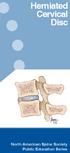 Herniated Cervical Disc North American Spine Society Public Education Series What Is a Herniated Disc? The backbone, or spine, is composed of a series of connected bones called vertebrae. The vertebrae
Your Recovery After a Cesarean Delivery
 Your Recovery After a Cesarean Delivery It is normal to have many questions about your care after delivery. Cesarean delivery is surgery and your body needs time to heal and recover for the next 6 weeks,
Managing at home with your arm in a polysling following shoulder surgery
 Managing at home with your arm in a polysling following shoulder surgery Exceptional healthcare, personally delivered Contents Page Introduction...04 Restrictions in movement following shoulder surgery...04
Patient Guide. Sacroiliac Joint Pain
 Patient Guide Sacroiliac Joint Pain Anatomy Where is the Sacroiliac Joint? The sacroiliac joint (SIJ) is located at the bottom end of your spine, where the "tailbone" (sacrum) joins the pelvis (ilium).
Patient information for cervical spinal fusion.
 Patient information for cervical spinal fusion. Introduction This booklet has been compiled to help you understand spinal cervical fusion surgery and postoperative rehabilitation. Anatomy The cervical
Sue Schuerman, PT, GCS, PhD UNLVPT
 Sue Schuerman, PT, GCS, PhD UNLVPT Exercise & Physical Activity (Your Everyday Guide from the National Institute on Aging) Go4Life Retain our physical and mental health Continue to do the things we enjoy
Patient Information for Lumbar Spinal Fusion. What is a lumbar spinal fusion? Page 1 of 5
 Patient Information for Lumbar Spinal Fusion What is a lumbar spinal fusion? You have been offered surgery to the lumbar region of your spine, your lower back. The operation is called a lumbar spinal fusion.
Lumbar Laminectomy and Interspinous Process Fusion
 Lumbar Laminectomy and Interspinous Process Fusion Introduction Low back and leg pain caused by pinched nerves in the back is a common condition that limits your ability to move, walk, and work. This condition