
Module 1: Why is the Environment Important? Activity #1: Your Classroom Environment
|
|
|
- Sharleen Russell
- 10 years ago
- Views:
Transcription
1 Module 1: Why is the Environment Important? Unit A: What is an environment? Identifying what an environment is can be difficult to do, because an environment comes in many shapes and sizes. Environments can be as small as the period at the end of this sentence or as large as an ocean. Whether you are looking at a small environment or a large environment, understanding what makes environments different is a key to understanding how all environments are connected to each other. One easy way to start identifying and understanding what an environment is, is to look all around you. What can you touch, smell, see, taste or hear? Ask yourself questions; Are you inside or outside? Can you hear insects or vehicles? Your five senses help you identify and understand what is in your environment. An environment is your surroundings and your environment changes depending on where you are. There are even things in your environment that your five senses cannot detect, such as, bacteria, bugs and viruses to name just a few. So think of an environment as you, your surroundings, your community and how everything interacts with each other. Indiana has many natural environments that include but are not limited to: forests; wetlands; prairies; lakes; caves; rivers; etc. Some items in Indiana s environments are renewable, meaning an item can restore itself naturally such as a tree, wind, sun, plants and animals. Some items in Indiana s environments are nonrenewable and either cannot be created again or take a very, very long time to be created such as a rock, coal, or metals. Activity #1: Your Classroom Environment Purpose: Students will gain a better understanding of what an environment is. Materials: Paper, pen or pencil, computer or encyclopedia Instructions: Have students compare and contrast two different environments in Indiana, so they can gain a better understanding of what an environment is. Environments can be a classroom, bedroom, kitchen, backyard, or any environment you would like. The students will need time to research the materials that makeup their items. The following is an example of a classroom environment. Have students list the following: something they can touch, smell, see, taste, and hear in a classroom. Students can save their sense of taste for lunch time. Following is an example of the activity: 1. Touch = Desk 2. Smell = Pencil 3. See = Chalkboard 4. Taste = Apple 5. Hear = Vehicles

2 Now list what those items are made from. 1. Desk = Wood 2. Pencil = Wood and graphite 3. Chalkboard = Slate stone (old) or a piece of board painted with matte dark paint (new) 4. Apple = Apple Tree 5. Vehicles = Steel, plastic, rubber, leather Now list the renewable or nonrenewable items that make up your list. 1. Desk = Wood = Trees 2. Pencil = Wood and graphite = Trees and mineral 3. Chalkboard = Slate stone (old) or a piece of board painted with matte dark paint (new) 4. Apple = Apple Tree 5. Vehicle = Metal alloy, plastic = oil, rubber = trees (Hevea brasiliensis), leather = tanned hides

3 Your Classroom Environment List 5 items you find in your classroom Now list what those items are made from Now list the renewable or nonrenewable items that make up your list

4 Unit B: Who needs the environment? Who do you think the environment is important to? Is it important to trees? Is it important to frogs? How about you, is the environment important to you? The environment is important to all of the plants and animals in Indiana. Everyday, your decisions impact the environment. Everything from brushing your teeth, washing the dishes, throwing away a piece of paper, driving to school and even turning on a light in your bedroom has an impact on the environment. What other things do you do that impacts the environment? Activity #2: Paper Pounds Purpose: To help students identify some possible ways they can reduce waste and how they can make an impact on their environment and community. Materials: Paper, poster board, pen, scale, bags Background: No matter where you live, everyday you use paper; it is given to you or generated for you. The U.S. Postal Service delivers more than 90 billion pieces of direct mail every year, so everyday actions and decisions have a direct impact on the amount of waste generated in Indiana. Even a simple act like throwing away a piece of paper, which seems like an insignificant amount of waste, can quickly add up when thousands or millions of Hoosiers do it everyday. Each of us in Indiana throws away approximately 680 pounds of paper a year, which includes cardboard, paperboard, magazines, newspaper, computer paper, mail, etc. That totals 4,293,193,600 pounds of paper thrown away each year in Indiana that ends up in one of Indiana s 43 operating landfills (pounds of paper x population of Indiana=pounds of paper thrown away each year). Most of this paper could have been recycled, but instead it was thrown away, and makes up 39% of the items found in a landfill. Paper is everywhere. People use paper at school, home and work. It comes in the mail and is received at stores when a receipt is given with a purchase. Instead of throwing the paper away, have students collect it for one school week. They can bring in mail, receipts, computer paper, drawings, etc. Instructions: First, have students collect paper for one school week (5 days). Second, at the end of the week have each student weigh their bag of paper. Third, students can then write the weight of their paper on individual charts or a classroom chart. Finally, have students write their collected paper weight on the chart to see how much the class brought in. Students can individually add up the classes total weight of paper collected. Students can figure out what their weight in paper would be for the whole year by dividing the total weight of their paper collected by 5 to get a daily weight. To get the annual amount of paper, students can multiply the daily rate by 365. Students can then add up everyone s total from the class to see how much paper could be recycled for one year. Average the classroom total for one year and multiply it by 6,313,520 (the population of Indiana) to see approximately how much paper Hoosiers throw away each year.

5 Discussion/ Follow-up: Ask the class if they knew how much paper they threw away each day. Ask students what a difference they can make if they recycle paper. Think about all the space paper takes up in the trash and at a landfill and how recycling could make landfills last longer. There are 79 curbside recycling programs and more than 570 recycling drop-off sites in Indiana. Ninety-five percent of Indiana residents live within eight miles of a recycling location or are directly serviced by a curbside recycling program. Using a map of your town, indicate where you live and locate the nearest recycling location. To find recycling locations and services visit IDEM at: Unit C: What makes a good environment? Now we have a better understanding of what an environment is and how we impact it. But what makes an environment healthy? Clean air, land and water are essential to a good healthy environment. We can ask ourselves questions using our five senses again to help us quickly determine if an environment is healthy; does the air, land or water smell? How does it look? We can not always determine quickly if an environment is healthy or unhealthy. A river may look clean one day but the next day may not for many reasons. Did it rain and wash pollutants into the river through storm sewers? Did someone dump a pollutant directly into the river? Once again you can use your five senses to investigate why the river does not look clean, but you may not know why since pollution can travel through the air, land and water. When we don t know exactly where pollution comes from, we call it non-point source pollution. Everyone, in some way, contributes to nonpoint source pollution, through regular household activities (the at home water section has more on nonpoint source pollution). Major rivers in Indiana are affected by nonpoint source pollution, such as: White River; Ohio River; Wabash River; Whitewater River; Kankakee River; Eel River; and the Tippecanoe River. The streams, creeks, groundwater and other waterways of Indiana are all connected, so if the major rivers are affected by nonpoint source pollution so are all of the water sources in Indiana. Using a map of Indiana, identify the nearest major river to your town and trace its path. What happens to water pollution from your town? Where does it end up? Activity #3: What s Wrong with this Picture? Purpose: To encourage students to think about how their environment can be affected by their everyday activities. Materials: Pen or pencil, copies of What s Wrong with this Picture Instructions: The following picture is of a neighborhood where people are engaged in everyday activities. Divide students into small groups for the activity. Have students find seven things in the following picture that are wrong for the environment. Encourage students to discuss different options to the make the picture more environmentally friendly.

6 Can you find the 7 things that are wrong with this picture? Activity courtesy of the U.S. EPA:

7 Answers to: Can you find the 7 things that are wrong with this picture? Activity courtesy of the U.S. EPA:

8 1. The woman is throwing a glass bottle into the trash instead of recycling it. Recycling helps both the environment and the economy by reducing the need for raw materials to be extracted, and recycling also creates many jobs. Recycling also prevents materials from being thrown away, reducing the need for landfills and incineration. 2. The man is raking grass clippings and leaves into trash bags. You can use leaf bags to recycle your leaves and grass, or you can leave mowed grass clippings on the lawn as a source of nutrients for the grass. Leaving grass clippings on the lawn also reduces erosion. You can also compost grass clippings and fallen leaves, and later use the compost to fertilize the soil. 3. The car is leaking oil and antifreeze into the street. When oil and antifreeze leaks out of cars it is then washed into storm drains when it rains. Storm drains often lead directly to rivers and streams in the community. Check your cars for drips and leaks. If you find any, ask an adult to have the car fixed. 4. The man is throwing litter into the street. Street litter, such as plastic bags, cups, and candy wrappers, often gets swept away with rain water into storm drains and ends up floating in rivers or washing up on land. A great deal of street litter is made up of plastic, which takes hundreds of years to break down. Animals can mistake plastics for food and can become tangled up in it. Recycle as much of your trash as possible, and put all other litter in garbage cans. 5. The man is pouring motor oil down the storm drain. Motor oil and antifreeze can damage or kill underwater plants and animals. Never pour used motor oil or antifreeze down a storm drain, onto the soil, or into a waterway. Put used oil or antifreeze in a sturdy container and take it to a local service station or other approved center. Some storm drains are stenciled DUMP NO WASTE, DRAINS TO LAKE (or river, etc.) so that people will know that allowing liquids other than storm water to get into the drain leads to pollution of lakes and streams. 6. The sprinkler is watering the sidewalk. Place sprinklers so that the water goes only on the lawn not the street or sidewalk. Water the lawn or garden during the coolest part of the day, such as early in the morning, to reduce evaporation and increase the amount of water that sinks into the soil and reaches the plants roots. Avoid watering on windy days when water may be blown onto streets or sidewalks. 7. The man and woman are burning leaves. Smoke from five pounds of leaves contains about one pound of air pollution which contains harmful pollutants. Open burning contributes to the formation of ground-level ozone that damages human health, vegetation and buildings. Some of the health problems caused by open burning include eye, nose and throat irritation; lung irritation and congestion; shortness of breath and coughing; stomach or intestinal upset; and headaches. Activity courtesy of the U.S. EPA: For additional ideas on environments and their effects, visit IDEM s Enviroville at:

9 Unit D: What does Indiana s environment look like? Think of Indiana s environment as separate pieces of a puzzle that when put together make up the shape of our state. The first piece is your home. The second piece is your neighbor s home. When you connect the two pieces it makes a larger piece. You find a piece that is the park down the street but before you can connect it to you and your neighbor s house you have to find the school that lies between your house and the park. Don t forget about the grocery stores, banks, farms, coal mines, sport stadiums, zoos, race tracks, forest, wetlands, the list goes on and on. Activity #4: Indiana s Environment and You Puzzle Purpose: To demonstrate to students that their everyday activities affect Indiana s many environments, and to help students recognize the importance of clean air, land and water. As the puzzle is being put together students will also understand how Indiana s many environments are connected, and that their activities affect the entire earth. Materials: Copy of Indiana s Environment and You Puzzle, crayons or markers, scissors, poster board, glue sticks or tape Instructions: Give each student one or two puzzle pieces and have them create their own environment on each piece, either an environment you assign them or one they come up with on their own. Second, have each student cut out their puzzle piece. Third, gather the students around the poster board and have them put the puzzle together. Finally, have students glue or tape their pieces of puzzle to the poster board. Click here to get a copy of the puzzle Discussion/Follow-up: Have the students make predictions about how their puzzle piece will affect their neighbors puzzle piece, and how our everyday actions can affect Indiana s environment.

10

NYSDEC Environmental Education
 NYSDEC Environmental Education Where is Away? For Students in Grades 5 through 8 A 45- minute program designed to introduce the basics of where garbage goes, and how reduction of the waste stream is beneficial.
SAMPLE ACTIVITY. from
 SAMPLE ACTIVITY from The Water SourceBook Distributed By Legacy, Inc., Partners in Environmental Education Funding for this project is made possible by proceeds from the sale of Alabama's Protect Our Environment
PUZZLING PIPES. Grade Level: 4-6
 PUZZLING PIPES Overview: Students will learn about the various paths that water takes after it is used. They will trace the path of wastewater either through the storm drain system or the sanitary sewer
Why Do I Need to Recycle? LESSON 1
 Why Do I Need to Recycle? LESSON 1 Recycling Benefits Everyone The earth has a limited amount of space with limited resources that must sustain us all. We cannot keep wasting our resources and polluting
Water Clean- up Crew. Learn about water quality and how to solve different water quality problems. Time Needed 1 hour
 Water Clean- up Crew Learn about water quality and how to solve different water quality problems Time Needed 1 hour Ages 4 th to 6 th Season Any Materials aluminum trays, tape, tin foil, sponges, clay,
Where Garbage Goes. What Happens to Things We Throw Away?
 North arolina Testing Program Where Garbage Goes Most of the things around you will be replaced or thrown away someday. Skates, clothes, the toaster, furniture they can break or wear out, or you may get
City of Green Bay Department of Public Works Engineering Department
 City of Green Bay Department of Public Works Engineering Department The Difference Between Sanitary & Storm Sewers Contact Information: Department of Public Works City Hall 100 North Jefferson Street,
How Can I Reuse? LESSON 2
 How Can I Reuse? LESSON 2 Why Should I Reuse? When you reuse something that means that an item is used several times before throwing it away or recycling it. Just as recycling materials help keep them
Water Saver Bingo. Objectives:
 Water Saver Bingo Objectives: Materials: Determine the average amount of water used through daily activities. Recognize that large quantities of water can be wasted from a dripping faucet. Describe different
US Bank Tower Cincinnati Recycling
 US Bank Tower Cincinnati Recycling US Bank Tower Recycling US Bank Tower produces 335 tons of trash annually. Approximately 80% of what we throw away can be recycled, but we Need your participation to
How To Plan A Buffer Zone
 Backyard Buffers Protecting Habitat and Water Quality What is a buffer? A buffer (also called a riparian buffer area or zone) is the strip of natural vegetation along the bank of a stream, lake or other
Trivia Game (Print double-sided for cards with answers on the back)
 Trivia Game (Print double-sided for cards with answers on the back) 2 3 Landfills/Disposal: Landfills/Disposal Which item takes up most of our garbage out of these three options? A. Diapers. B. Plastic
ELEMENTARY/MIDDLE SCHOOL LOCAL GOVERNMENT CURRICULA Copyright 2003-2009 The Civics Institute. Let s Reuse
 ELEMENTARY/MIDDLE SCHOOL LOCAL GOVERNMENT CURRICULA Copyright 2003-2009 The Civics Institute Grade 2 Title: GLCE: 2 C1.0.2 Let s Reuse Distinguish between government action and private action. You can
Water Cycle Unit Test
 Name: Multiple Choice (2 pts each): 1. What is the source of energy for all parts of the water cycle? A. Wind B. The Ocean C. Soil D. The Sun 2. Which of the following processes would result in water pollution?
1EPA. planet protectors club. Solid Waste and Emergency Response (5305W) United States Environmental Protection Agency
 1EPA planet protectors club United States Environmental Protection Agency Solid Waste and Emergency Response (5305W) EPA530-K-98-001 September 1998 www.epa.gov/osw Someone dropped an important note, but
Living with the Trinity Lesson Plan 2: The Trinity River Watershed
 Living with the Trinity Lesson Plan 2: The Trinity River Watershed Learning Objective: Students will begin to understand how all of the living things in and around the Trinity River Watershed affect each
Fats, Oils and Grease. Educational Kit
 Fats, Oils and Grease Educational Kit When you think of fats, oils and grease, you might say yuck. Well, the real yuck comes when fats, oils and grease are not disposed of properly. Fats, oils and grease
This lesson aligns with science content for animals and habitats, plants, biodiversity, biomes, and ecosystems.
 Recycling Renovation Overview Recycling is an easy and a fun way to create impact on the world. Students often take an interest in recycling and finding ways to keep the environment clean. This project
Findon PS Sustainability Leaders / CSI
 Findon PS Sustainability Leaders / CSI Zebras: No Smoking, No Violence, Less Factories, No Graffiti, Look after the Envrionment, No Poaching Animals, Less Cutting down Trees, Every one getting along. The
Get Ready For The One Tonne Action Challenge!
 Get Ready For The One Tonne Action Challenge! Read through the four elements of the one-tonne challenge - making a difference is easier than you think!! Watt's It All About? As our demand for electricity
Dukes of Hazard Activity Time:
 Dukes of Hazard Activity Time: TEACHERS: Read Populution and Water Source Protection on page 80 of Peel Water Story book. Objectives: Students will: Identify household hazardous waste (HHW) materials around
Kindergarten Respect Unit Lesson Seven Respect The Environment
 Kindergarten Respect Unit Lesson Seven Respect The Environment PURPOSE/OBJECTIVE Students will learn that respect must also be shown to the environment. Students will identify specific ways care and concern
Grade 3. SWA Classroom Presentation Pre Lesson Plan. Background for Teachers:
 Grade 3 SWA Classroom Presentation Pre Lesson Plan Objectives: 1) Students will understand the need to protect natural resources. 2.) Students will gain an understanding of the environmental benefits of
Worksheet A Environmental Problems
 Worksheet A Environmental Problems Vocabulary Can you talk about Environmental issues in English? With a partner, try to explain the terms in the diagram below. Why are the words divided into two groups
Water Recycles poster
 Water Recycles poster The "Water ReCycles" poster is designed for students of all ages. It shows the natural water cycle and humans influence on water resources. Raincloud illustration The raincloud in
Writing a Persuasive Essay
 INTRODUCTION Attention-getter Background information Do Something Good for the Earth Garbage! It smells bad and looks disgusting. Most people think about trash only when they take it out. People in the
School Recycling 101. Brought to you by. www.acua.com
 School Recycling 101 Brought to you by www.acua.com School Recycling 101 Schools play an essential role in keeping our environment healthy and clean. Educating students about recycling and implementing
Human Impact on the Environment and Pollution 2 nd or 3 rd Grade Bret Underwood
 Human Impact on the Environment and Pollution 2 nd or 3 rd Grade Bret Underwood Benchmarks: SLC 14: Students identify and describe the relationship between human activities and the environment in terms
Rockdale County Storm Drain Stenciling Program Volunteer Information and Safety Briefing
 BOARD OF COMMISSIONERS RICHARD A. ODEN, CHAIRMAN & CEO OZ NESBITT, SR., COMMISSIONER POST I JANICE VANNESS, COMMISSIONER POST II DEPARTMENT OF PLANNING AND DEVELOPMENT STORMWATER DIVISION (770) 278-7100
ORDINANCE NO. 3 OF 2009
 PENN TOWNSHIP CUMBERLAND COUNTY BOARD OF SUPERVISORS 1301 Centerville Road Tel: 717-486-3104 Newville, PA 17241 Fax: 717-486-3522 Email: [email protected] Website: www.penntwpcc.org ORDINANCE NO. 3 OF
Summary This lesson will introduce the concept of the water cycle by using a simple demonstration.
 Partnerships Implementing Engineering Education Worcester Polytechnic Institute Worcester Public Schools Supported by: National Science Foundation Weather: 4.H.3 Water Cycle Grade Level 4 Sessions Seasonality
A Resident s Guide to Recycling
 A Resident s Guide to Recycling We understand. We re competing for attention with everything else in your life. Recycling may not be exciting but it s important and easy, and recycling right benefits the
SEPTIC SYSTEM. Taking care of your. ... what you need to know
 Taking care of your SEPTIC SYSTEM... what you need to know For more information, please call: WATER & WASTE MANAGEMENT PROGRAM (909) 387-4666 Visit our web site: www.sbcounty.gov/dehs A:\Septic System
Phosphorus. Phosphorus Lake Whatcom Cooperative Management. www.ecy.wa.gov/programs/wq/nonpoint/phosphorus/phosphorusban.html
 Phosphorus Phosphorus Brochure Lake Whatcom Cooperative Management Reducing Phosphorus Website Washington State Department of Ecology www.ecy.wa.gov/programs/wq/nonpoint/phosphorus/phosphorusban.html Nutrients
Automated Garbage and Recycling Collection Frequently Asked Questions
 What is automated residential collection service? Automated residential collection service consists of two specially designed 95-gallon roll carts: one is for garbage and one is for recycling. These large
septic systems What is a Septic System? How does a Septic System Work?
 septic systems What is a Septic System? A septic system is a private sewage treatment system. They are common in rural areas where there are no municipal sewage pipes for homes, farms, businesses or other
Grade 4 Standard 1 Unit Test Water Cycle. Multiple Choice. 1. Where is most water found on Earth? A. in glaciers B. in lakes C. in rivers D.
 Grade 4 Standard 1 Unit Test Water Cycle Multiple Choice 1. Where is most water found on Earth? A. in glaciers B. in lakes C. in rivers D. in oceans 2. What source of energy evaporates the most water from
Recycling ACTIVITY BOOK. Follow the birds Jasmine, Pablo, Lola, and Michael as they Reduce, Reuse, Compost, and Recycle!
 Recycling ACTIVITY BOOK Follow the birds Jasmine, Pablo, Lola, and Michael as they Reduce, Reuse, Compost, and Recycle! Reduce, Reuse, Recycle, and Compost Learn these words and what they mean, and you
Mud in the Water. www.agclassroom.org/ok. Oklahoma Academic Standards. Objective. Background. Resources Needed. Activities
 Mud in the Water Objective Students will learn about soil erosion and water pollution by building a demonstration model from pop bottles and observing the movement of pollutants from soil into water. Background
Water Quality and Water Usage Surveys
 Appendix 1 Water Quality and Water Usage Surveys This appendix contains copies of the Water Quality Survey and the Lake Usage Survey that we used to complete the watershedbased community assessments. We
Frequently Asked Questions about Septic Systems
 What is a septic tank? Where is my septic tank located? Do septic tanks last forever? What should and should not go into my septic tank? How can I tell if my septic tank is working properly? Why should
Landscape Maintenance
 Photo Credit: Geoff Brosseau Description This category includes businesses that provide landscaping and landscape maintenance/gardening services. Pollutant Sources The following are sources of pollutants:
Zoner and the Drip Study Guide
 Zoner and the Drip Study Guide Objectives This study guide will emphasize the lessons taught in the Zoner and the Drip puppet show by the Great Arizona Puppet Theater and demonstrate how those lessons
Be a part of the Team! Keep the Bay CLEAN!
 Be a part of the Team! Keep the Bay CLEAN! Water Quality Protection Guidelines for Food Handling Facilities Regional Water Quality Control Plant Operated by the City of Palo Alto for the communities of
LEAK DETECTION GUIDE
 LEAK DETECTION GUIDE Your Guide to Home Water Conservation CITY OF BELLEVUE UTILITIES WATER & SEWER DEPARTMENTS LEAK DETECTION GUIDE PAGE: 1 WHERE TO START If you receive a high water bill, or think there
How do you treat water based on water quality from different water sources?
 How do you treat water based on water quality from different water sources? Why? Authors: Wendy Lane and Kim Sciarrone Seattle Public Schools; Seattle, WA Water from different sources will contain different
Water is a valuable and expensive resource.
 Conserving Water VIRGINIA SOL Science 6.5 Social studies CE.1, CE.9 Language arts 6.1, 7.1 Math 6.8, 6.10, 6.18, 7.17, 7.18 Technology C/T8.1, C/T8.4 OBJECTIVES Discuss different uses of water Discuss
RECYCLING BOARD GAME
 RECYCLING BOARD GAME INSTRUCTIONS/ RULES Choose three representatives of your countries and take the counter with the flag of your country. Put all the counters on the square marked START. Now, please
Turn off the tap while you brush your teeth You ll conserve up to 5 gallons of water per day.
 Go Green Tips Turn off the tap while you brush your teeth You ll conserve up to 5 gallons of water per day. Buy locally It is good for the local economy and it will save energy because products haven t
Objectives The student will be able to do the following: Define pollution Identify possible sources of pollution to the stream near the school
 Land Use and Pollution Scavenger Hunt Lesson 7 --------------------------------------------------------------------------------------------------------------------- Objectives The student will be able
Preventing Storm Water Pollution: What We Can Do
 Preventing Storm Water Pollution: What We Can Do ~Employee Training Series~ Streets and Drainage Maintenance PREPARED IN COOPERATION WITH THE Texas Commission on Environmental Quality AND U.S. ENVIRONMENTAL
Is a Storm Drain a Trashcan?
 WHAT IS A WATERSHED? Is a Storm Drain a Trashcan? Objective: Students will understand the relationship between neighborhood litter, floatable debris, and storm drains (a.k.a. catch basins). Students will
Is a Green Economy the Key to Job Growth? Employment Trends and Opportunities for ESL Learners
 Is a Green Economy the Key to Job Growth? Employment Trends and Opportunities for ESL Learners OBJECTIVES At the end of this session, students will be able to: Understand the connection between carbon
Poison-proof your home
 Poison-proof your home Information for Families Your guide to keeping your family safe from poisons How to keep your family safe from poisons Your home contains many items that can poison a child. You
NEIGHBORHOOD WATER QUALITY
 1 NEIGHBORHOOD WATER QUALITY Lesson 1: Aquatic Ecosystems Keywords: ecosystem, ecology, watershed, surface water, hydrologic cycle, evaporation, transpiration, precipitation, surface runoff, percolation,
OUR WATER, OUR LIFE Asia/Pacific Cultural Centre for UNESCO (ACCU)
 OUR WATER, OUR LIFE Asia/Pacific Cultural Centre for UNESCO (ACCU) Our planet of water We are all living on this planet, Earth. Do you see the blue part? That's all water. See, almost 3/4 of our planet
Unit: Healthy Habits Grade: 1
 Unit: Healthy Habits 5.3b Good health habits include hand washing, personal cleanliness; avoiding harmful substances; eating a balanced diet; engaging in regular eercise ways to stay healthy Wash hands
Learning About Saving Energy CLEARINGHOUSE
 U ENERGY EFFICIENCY AND RENEWABLE ENERGY CLEARINGHOUSE Learning About Saving Energy What is energy? Energy is the ability to do work. It can come in the forms of heat and light. There are two types of
Renewable and Nonrenewable Resources
 Grades: 3 4 Renewable and Nonrenewable Resources Time Allotments: Teacher preparation: 15 minutes Lesson and activity: 45-60 minutes Vocabulary: Conservation Natural Resources Nonrenewable Resources Renewable
A copy of Worksheet 1 at the appropriate level for each pupil. Ask pupils to answer the question 'What is sewerage?'
 Waste Water Treatment 1. Fascinating Facts Aim: To introduce pupils to key facts about waste water Materials: A copy of Worksheet 1 at the appropriate level for each pupil String Method: Ask pupils to
Crossword Puzzle. Down. Across. Protecting the Environment Today...for a Better Tomorrow. Fredericton Region Solid Waste Commission
 Crossword Puzzle 1 2 3 4 5 6 7 8 9 10 11 12 13 14 15 1. 3. 5. 9. 11. Across These heavy-duty vehicles collect recyclables from our homes. When materials are made into new products, they are. These kinds
Swallow Street recycling facts and figures in partnership with Bywaters
 Regent Street Direct Swallow Street recycling facts and figures in partnership with Bywaters 2013 Swallow Street produced 76 tonnes of cardboard Mission Recycling Ltd: Paper and Cardboard Paper of all
Environmental Science: A Global Perspective. All the flowers of all the tomorrows are in the seeds of today. Chinese Proverb
 Environmental Science: A Global Perspective All the flowers of all the tomorrows are in the seeds of today. Chinese Proverb Shout Out Think about 5 major environmental problems that we are facing today
ORGANISE & ADMINSTRATE BY: MARCOM RECYCLING POINT
 PROPOSAL FOR SCHOOL RECYCLING PROGRAM ORGANISE & ADMINSTRATE BY: MARCOM RECYCLING POINT CONTACT PERSON: PEARLIE TAN CONTACT DETAILS: 63431270 (TEL) 62340176 (FAX) 96180879 (HP) [email protected]
4X BMPs for Food Service Facilities
 4X BMPs for Food Service Facilities APPENDIX 4X BEST MANAGEMENT PRACTICES 4X-1 Food Service Facilities Focus of Document This guidance presents BMPs to address the discharge of pollutants to the storm
Drain to Drinking Water
 Drain to Drinking Water Adapted from Project WET Curriculum and Activity Guide Subject: Science, Social Studies Target Grades: 6-8 Duration: one class period Materials Per group (2-3 students) 1 set of
4THE UNIVERSITY OF THE STATE OF NEW YORK
 4THE UNIVERSITY OF THE STATE OF NEW YORK GRADE 4 ELEMENTARY-LEVEL SCIENCE TEST WRITTEN TEST JUNE 6, 2011 Student Name School Name Print your name and the name of your school on the lines above. The test
This rain is known as acid rain.
 Rain is very important for life. All living things need water to live, even people. Rain brings us the water we need. But in many places in the world even where you live, rain has become a menace. Because
City of Cardiff Council Commercial Waste Service
 City of Cardiff Council Commercial Waste Service Don t throw your money away. Reduce waste. REDUCE - REUSE - RECYCLE - 02920 717501 CONTENTS 1) Introduction... Page 1 2) Our services... Page 2 2a) Waste
Bio 2106: Environmental Biology Lab 4: Landfills and Recycling Lab Requires:* Part A: 1-2 weeks Part B: several days. Introduction
 Bio 2106: Environmental Biology Lab 4: Landfills and Recycling Lab Requires:* Part A: 1-2 weeks Part B: several days Introduction It is very easy to throw things away- a bottle or can, the wrapper from
Working for our future today. Water saving tips. Water saving tips for your home, garden and pool
 Working for our future today Water saving tips Water saving tips for your home, garden and pool From the bathroom to the backyard, there are some simple things you can do that could save thousands of litres
Here s your rubbish and recycling guide
 Here s your rubbish and recycling guide Why are we changing? It s time to see our waste for what it can be a valuable resource. Aucklanders are already great recyclers, sending more than 100,000 tonnes
WASTE COLLECTION SERVICES
 WASTE COLLECTION SERVICES The City of Peoria contracts with PDC Services, Inc. (PDC) to handle the disposal of its residential garbage, landscape waste and recyclables. PDC is a local, family-owned company
Answer Keys to Unit Tests
 Reading Geography Series Answer Keys to Unit Tests Unit 1 The Five Themes of Geography Unit 2 Patterns in Physical Geography Unit 3 Natural Resources 7 Portage & Main Press Unit Test for The Five Themes
Chapter 3: Separating Mixtures (pg. 54 81)
 Chapter 3: Separating Mixtures (pg. 54 81) 3.2: Separating Mechanical Mixtures (PB Pg. 40 5 & TB Pg. 58 61): Name: Date: Check Your Understanding & Learning (PB pg. 40 & TB pg. 61): 1. What are four methods
YOUR SEPTIC SYSTEM UNCOVERED
 YOUR SEPTIC SYSTEM UNCOVERED By Raymond King District Director of Environmental Health It s underground where you can t see it. You don t really understand how it works. When it doesn t work your toilets
Rainforest Concern Module 2 Why do we need rainforests?
 Rainforest Concern Module 2 Why do we need rainforests? Rainforest Concern Module 2: Why do we need Rainforest? Before we go any further, there are some words you may not understand, and these words and
Follow the Drop. Activity Overview Students observe and collect information about water runoff on their school property. Objective Students will:
 Follow the Drop Activity Overview Students observe and collect information about water runoff on their school property. Objective Students will: Practice observation and investigative skills Survey and
What to Do About Rats or Mice in Your Home or Business
 Janel Heinrich, MPH, MA, Director City-County Building, Room 507 608 266-4821 210 Martin Luther King, Jr. Boulevard 608 266-4858 fax Madison, WI 53703 www.publichealthmdc.com What to Do About Rats or Mice
Introduction to Waste Treatment Technologies. Contents. Household waste
 Contents Introduction to waste treatment technologies 3 Section 1: The treatment of recyclable waste 4 Bulking facilities 5 Materials Reclamation Facility (MRF) 6 Reuse and recycling centres 8 Composting
Don t spit in the well - you may need to drink from it! -- Unknown, Russia.
 Don t spit in the well - you may need to drink from it! -- Unknown, Russia. WATER POLLUTION Water is a unique substance, because it can naturally renew and cleanse itself, by allowing pollutants to settle
Put Rubbish Away for Good!
 Put Rubbish Away for Good! Lesson aims Students will become rubbish detectives and investigate areas of unsightly rubbish in their school or community. Students will need to take photographs or draw the
Household customer. Wastewater flooding guidelines. www.thameswateruk.co.uk
 Household customer Wastewater flooding guidelines www.thameswateruk.co.uk We are very sorry that you have recently suffered wastewater flooding to your property. This leaflet has been designed to answer
Your guide. to the new recycling and waste service. What s new What you need to do What s changing What you can recycle
 Your guide to the new recycling and waste service What s new What you need to do What s changing What you can recycle Your improved recycling and waste service We re making it easier for you to recycle
WWW.STOPTHECLOG.COM WHY A FATS, OILS AND GREASE PROGRAM. Employee Food Service Establishment Information Sheet INTRODUCTION
 Employee Food Service Establishment Information Sheet WHY A FATS, OILS AND GREASE PROGRAM Fats, oils and grease (FOG) cause serious problems in the sewer system. FOG sticks to the walls of the pipes when
Organizing Cafeteria Recycling Programs in Elementary Schools
 Organizing Cafeteria Recycling Programs in Elementary Schools --A How-to Guide-- Elementary School Environmental Education Program Table of Contents How to Start a Cafeteria Recycling Program......................
FOOD SERVICE FACILITIES Best Management Practices Stormwater Management Program City of Bluff City P.O. Box 70, Bluff City, TN 37618 423-538-7144
 FOOD SERVICE FACILITIES Best Management Practices Stormwater Management Program City of Bluff City P.O. Box 70, Bluff City, TN 37618 423-538-7144 This document may be printed and used for reference by
CHAPTER 11. MUNICIPAL SOLID WASTE
 CHAPTER 11. MUNICIPAL SOLID WASTE Sections: 11-1 Title. 11-2 Definitions and rules of construction. 11-3 Who may collect, transport and dispose of municipal solid waste. 11-4 Licensing procedure - Fee.
PLASTIC BAGS: What are they and do we need them?
 PLASTIC BAGS: What are they and do we need them? 1 Plastic Bags When you buy something at the store, do you get a bag for your items? Does the clerk ask if you want a bag? Do you hear, paper or plastic?
Level 2 6.4 Lesson Plan Session 1
 Session 1 Materials Materials provided: image of 3R symbol; 4 environment images; Word Map; homework puzzle. Suggested additional materials: examples of compostable and non-compostable waste, i.e., apple
Leading Causes of Wildfires in Oregon
 RANGERS will be able to: a. Identify safe procedures to prevent wildfires when burning debris; b. Identify safe procedures to prevent wildfires when using power equipment. Appropriate for ages 8-12 Overview:
RainScapes. Runoff/Erosion: RainScapes for Schools Environmental Report Card. Excess runoff will affect these indicators of Bay health:
 RainScapes Environmentally Friendly Landscapes for Healthy Watersheds RainScapes for Schools Environmental Report Card How is your schoolyard doing? Is it helping the Chesapeake Bay, or is it contributing
Art with Re-purpose Project Guide
 Art with Re-purpose Project Guide PROJECT NAME: Art with Repurpose PROJECT FOCUS: Waste reduction, reuse, and repurposing INTRODUCTION: In the U.S., the average person generates more than four pounds of
Septic System. Responsibility! Is Your. You should know that:
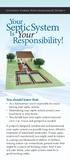 Southwest Florida Water Management District Septic System Your Is Your Responsibility! PIPE SEPTIC TANK DRAIN FIELD SOIL You should know that: As a homeowner you re responsible for maintaining your septic
HENRY COUNTY SOLID WASTE ORDINANCE
 HENRY COUNTY SOLID WASTE ORDINANCE PREAMBLE This ordinance is established to eliminate vectors and nuisances and the transmission of disease organisms resulting from improper storage and inadequate handling
Steps To A Successful School Recycling Program
 Recycling In School Steps To A Successful School Recycling Program Environmental Specialist: Jill Adams County Administration Center 701 Main St. St. Joseph, MI 49085 269-983-7111 ext. 8234 Fax #: 269-982-8611