
BEHAVIOURAL ASSESSMENT FORM PLACEMENT SERVICES
|
|
|
- Dortha Beasley
- 10 years ago
- Views:
Transcription
1 BEHAVIOURAL ASSESSMENT FORM PLACEMENT SERVICES Client Name: Date of Birth: HCN: Date of Completion: (Last Name, First Name) (Day/Month/Year) (Day/Month/Year) (Version Code) INSTRUCTIONS: Frequency scales are from least to most. Frequency 0=never 1=behaviours occurred within 1 year but not present within 3 months 2=less than once a week 3=once or twice a week 4=several times a week 5=once or twice a day 6=several times a day 7=several times an hour Enter the appropriate Frequency scale that applies. Please indicate the behaviour that most describes the client within the last 12 MONTHS. Comment sections MUST include triggers, onset, frequency of occurrence, time of day and interventions required. CS.PCS.Form # 132 Approved Version Page 1 of 7

2 1. Wanders Frequency (0-7) (aimless wandering, exit seeking, pacing, include wandering in wheelchair, etc) Wanders aimlessly in and out of rooms Wanders halls but does not attempt to leave immediate environment Wanders and will leave immediate environment if not prevented Exit seeks 2. Hoarding/Rummaging Frequency (0-7) Hoards food or medication or picks up objects which are lying around, but does not search other s belongings Searches other s belongings looking for food, medications or objects 3. Agitated Behaviour (state of restlessness, nagging, pleading, inability to relax Frequency (0-7) often accompanied by restlessness activity such as pacing up and down, repetitiveness, unrealistic fears, i.e. abandonment) Behaviour present describe below in more detail 4. Verbally Aggressive/Angry Behaviour Frequency (0-7) (cursing, swearing, use of obscenity, profanity, etc. - different from normal behaviour) Displays anger or is verbally abusive in predictable situation, i.e. when provoked Angry or verbally aggressive with no apparent provocation CS.PCS.Form # 132 Approved Version Page 2 of 7

3 5. Physically Aggressive/Angry Behaviour Frequency (0-7) (spitting, kicking, grabbing, pushing, throwing objects, hitting self and others, etc.) Displays anger, physically aggressive in predictable situations, i.e. when provoked Angry or physically aggressive with no apparent provocation 6. Suspicious Behaviour Frequency (0-7) (fear of abandonment, harmed, stealing belongings, hiding objects, infidelity, etc.) Occasionally suspicious of food or people Hallucinations please describe below Suspicious of most people/food but behaviour does not disrupt daily routine Suspicious of most people/food in environment to the extent that it interferes with daily routines, i.e. eating 7. Indiscriminate Ingestion of Foreign Substances Frequency (0-7) Ingests, eats foreign substances Ingests foreign substances/objects, requires frequent supervision 8. Inappropriate Sexual Behaviour (dirty talk, grabbing, touching, etc) Frequency (0-7) Exposes self or makes inappropriate remarks or gestures Touches others inappropriately CS.PCS.Form # 132 Approved Version Page 3 of 7

4 9. Smoking (please refer to smoking assessment guidelines) Frequency (0-7) (non-smoker) Independent safe smoker Unsafe smoker (burned self or others, falling asleep while smoking, puts out cigarettes in inappropriate places, hides cigarettes and lighter/matches, burned clothing/environment, overflowing ashtray) 10. Substance Misuse/Abuse Frequency (0-7) (A) Alcohol (B) Drug Abuse (illicit/prescribed/over the counter medication) Social drinker only Causing danger to self only Causing danger to self and others Causing danger to self only Causing danger to self and others _ 11. Resists Treatment or Refuses Care Frequency (0-7) Resists or refuses but can be persuaded to comply Resists or refuses and misses treatment as a result _ 12. Low Mood/Depressed Frequency (0-7) (no known diagnoses of depression/not on anti-depressants) Exhibits behaviour but participates in activities (no change in normal routine) Exhibits behaviour and refuses to participate or cooperate in activities (loss of interest/change from normal routine) CS.PCS.Form # 132 Approved Version Page 4 of 7

5 13. Suicidal Behaviour Frequency (0-7) Verbalizes ideas of suicide, no prior history of threats or attempts Verbalizes ideas of suicide, history of prior threats or attempts Verbalizes plans for suicide Previous attempted suicide (please indicate if and where patient was hospitalized) 14. Potential for Injury to Self or Others (Presence of behaviour that places self or others Frequency (0-7) at risk for psycho-social or physical injury, and which requires intervention; includes clients whose physical condition or tendency toward violence contributes to the risk. Intervention is aimed at reducing or removing risks.) General observation and intermittent intervention required less frequently than every hour Close observation and intermittent intervention required hourly or more often Close and constant intervention required every 15 minutes or more often 15. Ineffective Coping (Presence of behaviour that reflects an inability to deal appropriately Frequency (0-7) with routine living situations or with individuals and which requires intervention. Intervention is aimed at altering ability to cope.) Intervention required totaling less than 30 minutes over a 24-hour period Intervention required totaling from 30 minutes up to but not including 2 hours over a 24-hour period Intense intervention required totaling 2 hours or more over a 24-hour period _ CS.PCS.Form # 132 Approved Version Page 5 of 7

6 If there are any behaviours not otherwise addressed on this form, please identify them and the interventions that were successful in managing the behaviours: (Psychogeriatric/Geriatric Assessments i.e. Pharmaceutical interventions) Are there any life-altering experiences which might trigger behaviours? (i.e. Holocaust Survivor, Traumatic Loss) Summarizing Comments: Form Completed By (please print) Signature Key Additional Informant(s) Date CS.PCS.Form # 132 Approved Version Page 6 of 7

7 Guidelines for Completing the Behavioural Assessment Form All Long-Term Care applicants with identified behaviours in the RAI-HC (scoring or in the notes in the preceding 12 months) must have a Behavioural Assessment completed to capture the type of behaviour. Legibility is imperative when completing the tool. For each behavior check the box that best describes the behavior within the last 12 months. For each behavior enter the number that best reflects the Frequency of the behavior using the 0-7 scale as indicated on page 1. Clearly state a Description of the behavior/triggers - describe the what, where, when. (i.e. attempts to hit staff with cane, gestures with fist, agitated when someone attempts to change the client s clothes). Refrain from using words such as "combative", or resistive. Indicate if the client actually hit or injured someone and describe these events (i.e. what does the client do?) Indicate how long the behaviour has been occurring? is it new or long-standing? List the Current interventions including the amount of time required per day. Indicate how the behaviour is managed by others? What works, doesn't work that would inform the LTCH for managing the behaviour? For clients on a psychotropic medication for the behaviours, describe the behavior without the medication. Indicate if client has been seen by a psychogeriatrician/health professionals/other resources. Include consultation notes if available. Describe the impacts of the behavior: Verbal abusive - How does the behaviour affect others - does the client go to his/her room and swear or is it directed at other residents? Substance Abuse - what is the result? (i.e. does client pass out or need to be hospitalized?) Smoking is the client willing to quit? Do they require any assistance to safely smoke? Resisting and refusing care (i.e. refusing medication) - how does it affect the client - does client end up needing hospitalization or will she/he comply later? Low mood/depressed - how is it exhibited (i.e. sleeps a lot, cries?) Suicidal behavior - what has client done? Provide examples. CS.PCS.Form # 132 Approved Version Page 7 of 7

Government of Western Australia Department for Child Protection and Family Support. How do I recognise when a child is at risk of abuse or neglect?
 Government of Western Australia Department for Child Protection and Family Support How do I recognise when a child is at risk of abuse or neglect? Physical abuse Physical abuse is when someone is deliberately
Memory, Behaviour, Emotional and Personality Changes after a Brain Injury
 Memory, Behaviour, Emotional and Personality Changes after a Brain Injury The consequences of a brain injury on any individual, family or relationship are far reaching. A brain injury not only impacts
Illinois Department of Public Health STATEMENT OF DEFICIENCIES AND PLAN OF CORRECTION. Investigation of Incident Report Investigation of 7/6/13.
 (X1) PROVER/SUPPLIER/CLIA ENTIFICATION NUMBER: (X3) SURVEY D NAME OF PROVER OR SUPPLIER (X4) SUMMARY REGULATORY OR LSC ENTIFYING INFORMATION) PROVER'S PLAN OF CORRECTION Z 000 COMMENTS Z 000 Investigation
School-Age Child Guidance Technical Assistance Paper #2
 School-Age Child Guidance Technical Assistance Paper #2 School-age Child Guidance High quality out-of-school time programs promote school-age children s emotional and social development as well as their
Bullying. Take Action Against. stealing money. switching seats in the classroom. spreading rumors. pushing & tripping
 switching seats in the classroom stealing money Take Action Against Bullying spreading rumors pushing & tripping U.S. DEPARTMENT OF HEALTH & HUMAN SERVICES Substance Abuse and Mental Health Services Administration
THE EFFECTS OF FAMILY VIOLENCE ON CHILDREN. Where Does It Hurt?
 THE EFFECTS OF FAMILY VIOLENCE ON CHILDREN Where Does It Hurt? Child Abuse Hurts Us All Every child has the right to be nurtured and to be safe. According to: Family Violence in Canada: A Statistical Profile
It s hard to know what to do when you know or suspect that a friend or family member is living with violence.
 How can you help? A B It s hard to know what to do when you know or suspect that a friend or family member is living with violence. How do I know what is the right thing to do? Should I say something or
REFERRAL INFORMATION CHILD, YOUTH AND FAMILY PROGRAM
 Please Note the following information: WE DO NOT OFFER EMERGENCY OR CRISIS SERVICE Please print clearly and ensure contact information is correct. Complete all forms. We will contact the family to set
Behaviour Management: Partnering To Bridge The Continuum. Presented by: Nancy Boaro, MN, CNN(C), CRN(C) Karey-Anne Fannon, BA, BST, RRP.
 Behaviour Management: Partnering To Bridge The Continuum Presented by: Nancy Boaro, MN, CNN(C), CRN(C) Karey-Anne Fannon, BA, BST, RRP Objectives Review some of the behaviours exhibited by patients with
South Wilts Grammar School. When do teenage problems become Problems? A presentation by Dr. Anna Randle, Chartered Clinical Psychologist
 South Wilts Grammar School When do teenage problems become Problems? A presentation by Dr. Anna Randle, Chartered Clinical Psychologist Do you remember being a teenager? What were some of the dilemmas
Treatment Planning. The Key to Effective Client Documentation. Adapted from OFMQ s 2002 provider training.
 Treatment Planning The Key to Effective Client Documentation Adapted from OFMQ s 2002 provider training. 1 Models Medical Model Diagnosis Psych Eval Problems Symptoms Psycho/Social/Behavioral Model Diagnosis
Walking a Tightrope. Alcohol and other drug use and violence: A guide for families. Alcohol- and Other Drug-related Violence
 Walking a Tightrope Alcohol and other drug use and violence: A guide for families Alcohol- and Other Drug-related Violence Alcohol and other drug use and family violence often occur together. Families
Twin no JL Cummings, 1994. 1. Did not ask according to instructions 2. Not applicable (e.g., due to twin s physical condition)
 1 Interviewer Number: Informant: Name: Informant Number: Telephone: What is your job? Aide Undernurse Nurse Other What shift do you usually work? Day/Night (schedule) Days only Nights only Other Reason
Levels of Behaviors, Interventions and Responses. Level One Behavior Examples Name Calling
 Levels of Behaviors, Interventions and Responses Level One Behavior Definition 1. Behavior that is of student/ 2. Refusal to comply with reasonable requests. 3. Behavior that is generally managed with
Mandatory Review Date: January 15, 2018
 THE SHERIDAN COLLEGE INSTITUTE OF TECHNOLOGY AND ADVANCED LEARNING TITLE: Student Code of Conduct Policy Date of Approval: January 13, 2015 Effective Date: January 15, 2015 Mandatory Review Date: January
Diploma In Child Protection Studies Block Two
 Diploma In Child Protection Studies Block Two 1 Neglect 2 Neglect Is. any act or omission that results in impaired physical functioning, injury, and/or development of a child or young person Types Of Neglect
Severity Scale. Unclassified and Class A Felonies. Sexual Abuse of a Minor II. Solicitation of Kidnapping. Class B Felonies
 Severity Scale Unclassified and Class A Felonies Arson I Misconduct involving a Controlled Substance II Assault I Murder, First Degree Attempted Murder Murder, Second Degree Attempted Kidnapping Robbery
RAI-HC Tracking Tool for use in Supportive Living
 Start Date: Start Time A Mood Check all that apply (describe in detail in comment section) Makes negative statements e.g. life is not worth living, what s the use, nothing matters Shows constant anger
Additional Questions to Intake Interview Questions
 Additional Questions to Intake Interview Questions Contents ADDITIONAL QUESTIONS TO INTAKE INTERVIEW QUESTIONS... 3 Neglect... 3 Abandonment... 3 Clothing... 3 Drug Labs... 3 Food... 4 Home Environment...
ACE Awareness for Prevention
 Parenting Fundamentals ACE Awareness f Prevention Adverse Childhood Experiences The infmation provided in this booklet was excerpted from: The Ace Study http://acestudy.g/ Centers f Disease Control and
Intensive Residential Treatment Services -IRTS. Program Description
 Intensive Residential Treatment Services -IRTS Program Description A highly structured non-hospital based treatment setting that brings comprehensive and specialized diagnostic and treatment services to
SIGNS AND SYMPTOMS OF CHILD ABUSE AND NEGLECT
 SIGNS AND SYMPTOMS OF CHILD ABUSE AND NEGLECT The warning signs and symptoms of child abuse and neglect vary from child to child. Children have different ways of coping with abuse and the signs often depend
General Information. Age: Date of Birth: Gender (circle one) Male Female. Address: City: State: Zip Code: Telephone Numbers: (day) (evening)
 Kelly Bernstein, MS, LCDC, LPC Medical Center Psychological Services 7272 Wurzbach Road, Suite 1504 San Antonio, Texas 78240 Office: (210) 522-1187 Fax: (210) 647-7805 Functional Assessment Tool The purpose
Challenging behaviour and cerebral palsy
 CP Factsheet Challenging behaviour and cerebral palsy What is challenging behaviour? The term challenging behaviour has been used to describe "difficult" or problematic behaviour. The more severe challenging
ADDICTIONS. BEHAVIOURAL Internet Shopping Work Sex Gambling Food. SUBSTANCE - RELATED Alcohol Drugs Medicine Tobacco
 ADDICTIONS BEHAVIOURAL Internet Shopping Work Sex Gambling Food SUBSTANCE - RELATED Alcohol Drugs Medicine Tobacco Addiction is a chronic, relapsing disease affecting the brains's reward, motivation and
S.O.A.R. (Safely, Orderly, And Respectfully) To School. Messalonskee Transportation Department Behavior on the Bus
 S.O.A.R. (Safely, Orderly, And Respectfully) To School Messalonskee Transportation Department Behavior on the Bus Introduction It is our goal to establish key strategies by teaching and developing safe
MANDATED REPORTING OF CHILD NEGLECT OR PHYSICAL OR SEXUAL ABUSE
 No. _414 I. PURPOSE MANDATED REPORTING OF CHILD NEGLECT OR PHYSICAL OR SEXUAL ABUSE The purpose of this policy is to make clear the statutory requirements of school personnel to report suspected child
INPATIENT SERVICES. Inpatient Mental Health Services (Adult/Child/Adolescent)
 INPATIENT SERVICES Inpatient Mental Health Services (Adult/Child/Adolescent) Acute Inpatient Mental Health Services represent the most intensive level of psychiatric care and is delivered in a licensed
Personality Difficulties
 Personality Difficulties The essential features of a personality disorder are impairments in personality (self and interpersonal) functioning and the presence of pathological personality traits. There
Identifying Individuals with a Dual Diagnosis and Substance Misuse
 Identifying Individuals with a Dual Diagnosis and Substance Misuse Presented by the Dual Diagnosis Substance Misuse Committee 1 Goal of Presentation To raise awareness To assist staff to identify individuals
Preadmission Screening. Who Is Subject to PASRR Screens. Who can Complete the ACH PASRR Level I Screen. Getting Help
 North Carolina Department of Health and Human Services Update Preadmission Screening and Review (PASRR) Process for Adult Care Homes licensed under G.S. 131D, Article 1 and defined in G.S. 131D-2.1 Preadmission
Patient will be promoted to the next grade level by end of school year. Academic Issues
 Treatment Planning for Children and Adolescents Long and Treatment Goals Prepared by Nancy Lever, Ph.D. and Jennifer Pitchford, LCPC SMHP Program, May 2008 Problem Academic Issues Treatment Goals Patient
An Overview of Elder Abuse 1
 Chapter Two: An Overview of Elder Abuse 1 What s In This Chapter: Definition of Elder Abuse and Neglect Types of Elder Abuse Who Is Being Abused? Who Are the Abusers? Ch.2: An Overview of Elder Abuse 7
Child Protection. Be vigilant, report child abuse
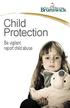 Child Protection Be vigilant, report child abuse Introduction All children have the right to live free of abuse. Most children grow up in families where they are safe and secure. Others may be abused
A STUDENT WILL BE DENIED THE PRIVILEGE OF PARTICIPATION IN THE ATHLETIC PROGRAM IF HE/SHE CHOOSES NOT TO FOLLOW THE RULES ESTABLISHED BY THIS CODE.
 EAST LIVERPOOL SCHOOLS ATHLETIC ASSOCIATION 100 MAINE BOULEVARD EAST LIVERPOOL, OHIO 43920 PREFACE The coaches, administration, and athletic director believe that the philosophy and purpose of interscholastic
CHAPTER 6 Diagnosing and Identifying the Need for Trauma Treatment
 CHAPTER 6 Diagnosing and Identifying the Need for Trauma Treatment This chapter offers mental health professionals: information on diagnosing and identifying the need for trauma treatment guidance in determining
Anti-Bullying Policy. Page 1 of 6
 Anti-Bullying Policy Date of Last Review: May 2016 Reviewed by: Mr R Beattie Agreed by Governors: Frequency of Review: Annually Date of Next Review: May 2017 Page 1 of 6 Statement of Intent 1 We are committed
INTRODUCTION STUDENT RIGHTS
 INTRODUCTION Fairfax County Public Schools is committed to creating a safe, welcoming school community that stimulates intellectual curiosity, fosters respect for individual differences, inspires and enables
Physical Symptoms Mood Symptoms Behavioral Symptoms
 Prescription drugs are the 3 rd most commonly abused drugs amongst teens in Nebraska, and the same statistic holds true on a national level. The rise in prescription drug abuse is becoming increasingly
Elder Abuse. Annual Compliance Education. This course contains annual compliance education necessary to meet compliance and regulatory requirements.
 Annual Compliance Education This course contains annual compliance education necessary to meet compliance and regulatory requirements. Instructions: To receive credit for completion: 1. Read the content
Personality disorder. Caring for a person who has a. Case study. What is a personality disorder?
 Caring for a person who has a Personality disorder Case study Kiara is a 23 year old woman who has been brought to the emergency department by her sister after taking an overdose of her antidepressant
414 MANDATED REPORTING OF CHILD NEGLECT OR PHYSICAL OR SEXUAL ABUSE
 I. PURPOSE 414 MANDATED REPORTING OF CHILD NEGLECT OR PHYSICAL OR SEXUAL ABUSE The purpose of this policy is to make clear the statutory requirements of school personnel to report suspected child neglect
Keynote Session 1 Navigating Teenage Depression Prof. Gordon Parker
 Keynote Session 1 Navigating Teenage Depression Prof. Gordon Parker Professor Gordon Parker is a leading international expert on depression and mood disorders. He is Scientia Professor of Psychiatry at
July 2014 EDITION. Sanctuary Centers of Santa Barbara
 CO-OCCURRING DISORDERS INFORMATIONAL HANDBOOK July 2014 EDITION Sanctuary Centers of Santa Barbara 1 Table of Contents Welcome Message 2 Who s Who.3-4 Treatment Philosophy and Objectives 5-6 SCSB....7
Best Practices Manual For Counseling Services. A Guide for Faculty & Staff
 Best Practices Manual For Counseling Services A Guide for Faculty & Staff 7/2014 Table of Contents Purpose of the Best Practices Manual for Counseling Services.3 General Guidelines on Responding to Concerns
The centre will comply with any reporting requirements laid out in provincial and federal legislation.
 Resource Library Banque de ressources SAMPLE POLICY: CHILD ABUSE Sample Community Health Centre Keywords: child abuse, high risk Policy The centre recognizes that abuse may take many forms such as economical,
Durham SOC Care Review LEVELS OF RESIDENTIAL CARE
 The following is a description of the levels of residential care available to the children of North Carolina. These services can be provided in a variety of locations from urban to rural, from facility
Godley Community Primary School. Anti-Bullying Policy
 Godley Community Primary School. Anti-Bullying Policy Delivering Excellence in a Happy and Nurturing Learning Environment Bullying is action taken by one or more children with the deliberate intention
3 Level Behaviour Management System
 1 Student Welfare & Behaviour Management Policy & Procedures 3 Level Behaviour Management System U:\PUBLIC\Policies & Procedures\Approved Policies\Student Welfare & Behaviour Management Policy & Procedures
Antisocial personality disorder
 Page 1 of 7 Diseases and Conditions Antisocial personality disorder By Mayo Clinic Staff Antisocial personality disorder is a type of chronic mental condition in which a person's ways of thinking, perceiving
IS IT A MOOD OR A MOOD DISORDER
 TEENAGE DEPRESSION & BIPOLAR IS IT A MOOD OR A MOOD DISORDER PRESENTED BY THE MOOD DISORDERS ASSOCIATION OF MANITOBA MOOD DISORDERS ASSOCIATION OF MANITOBA We are a self-help organization whose purpose
* Use tag F224 for deficiencies concerning mistreatment, neglect, or misappropriation of resident property.
 F223 483.13(b) Abuse The resident has the right to be free from verbal, sexual, physical, and mental abuse, corporal punishment, and involuntary seclusion. Intent 483.13(b) Each resident has the right
RESIDENT ASSESSMENT TOOL
 RESIDENT ASSESSMENT TOOL To be completed by a physician, certified nurse practitioner, registered nurse, or physician assistant within 30 days prior to admission, at least annually, & within 48 hours after
Sometimes people live in homes where a parent or other family member drinks too
 Alcohol and Drugs What If I'm Concerned About Someone Else's Drinking? Sometimes people live in homes where a parent or other family member drinks too much. This may make you angry, scared, and depressed.
EMERGENCY PSYCHIATRIC AMBULATORY SERVICES IN BANGALORE.
 EMERGENCY PSYCHIATRIC AMBULATORY SERVICES IN BANGALORE. Psychiatric emergencies are conditions in which there is alteration in behavior, emotion or thought, presenting in an acute form, needing immediate
Assessing families and treating trauma in substance abusing families
 Children, Trauma and the impact of Substance abuse Day One Outpatient (874-1045) Amy Stevenson LCPC CCS ([email protected]) Don Burke LCPC CCS ([email protected]) Assessing families and treating trauma in
Guidance. Wigan s Threshold of Need. www.wiganlscb.com. Wigan Safeguarding Children Board
 Wigan Safeguarding Children Board Wigan s Threshold of Need Guidance Working to keep children and young people happy, healthy and safe. www.wiganlscb.com Contents Welcome.........................................................................Page
Protecting Children. Information for families and carers involved in the child protection process
 Protecting Children Information for families and carers involved in the child protection process This leaflet provides information for families who are involved in the child protection process. It will
Alcohol use after traumatic brain injury (TBI)
 Alcohol use after traumatic brain injury (TBI) A resource for individuals with traumatic brain injury and their supporters This presentation is based on TBI Model Systems research and was developed with
MANDATED REPORTING OF CHILD NEGLECT OR PHYSICAL OR SEXUAL ABUSE 214. A. Child means a person under age 18.
 I. PURPOSE It is the policy of Lakes International Language Academy (the school ) to maintain this policy on mandated reporting of child neglect or physical or sexual abuse. The purpose of this policy
Job Description. Community Social Worker
 Job Description 5/30/2005 Page 1 PURPOSE OF THE POSITION (The main reason for the position, in what context and what is the overall end result) The Community Social Services Worker (CSSW) is responsible
INDEPENDENT SCHOOL DISTRICT #877 POLICY. Buffalo-Hanover-Montrose
 INDEPENDENT SCHOOL DISTRICT #877 POLICY Buffalo-Hanover-Montrose INDEX TITLE Employee/Personnel SERIES NO. 400 Mandated Reporting of Child Neglect or POLICY TITLE Physical or Sexual Abuse CODE NO. 414.
MANDATED REPORTING OF CHILD NEGLECT OR PHYSICAL OR SEXUAL ABUSE
 MANDATED REPORTING OF CHILD NEGLECT OR PHYSICAL OR SEXUAL ABUSE I. PURPOSE The purpose of this policy is to make clear the statutory requirements of school personnel to report suspected child neglect or
4th STUDY ON CHILD ABUSE
 4th STUDY ON CHILD ABUSE This type of questionnaire is good, maltreatment and abuse needs to be stopped! It let me say things I ve not said to anybody Santiago, Chile October 2012 Authors: Soledad Larraín
APPENDIX B. ASSESSMENT OF RISK POSED TO CHILDREN BY DOMESTIC VIOLENCE Anne L. Ganley, Ph.D.
 APPENDIX B ASSESSMENT OF RISK POSED TO CHILDREN BY DOMESTIC VIOLENCE Anne L. Ganley, Ph.D. Assessment of Domestic Violence for Child Protective Services (CPS) Decision Making Guidelines for Interviewing
UWM Counseling and Consultation Services Intake Form
 UWM Counseling and Consultation Services Intake Form Dear Student, Date Affix Label Here (Office Use Only) Thank you for giving us the opportunity to better serve you. Please help us by taking a few minutes
Student Medical, Mental Health and Behavioral Crises
 Student Medical, Mental Health and Behavioral Crises 120814 The University of Maine is committed to the health and safety of all students. If a student s behavior is disruptive and/or poses potential harm
Disruptive Student Behavior - Use of Physical Restraint and Seclusion
 Disruptive Student Behavior - Use of Physical Restraint and Seclusion This regulation provides guidelines for the use of physical intervention, physical restraint, and seclusion techniques in order for
HOSPITAL POLICY AND INFORMATION MANUAL Date Issued: Date Last Revised: Next Review Date: Approved By:
 Page 1 of 12 Policy Applies to: All Mercy Hospital staff. Compliance by Credentialed Specialists or Allied Health Professionals, contractors, visitors and patients will be facilitated by Mercy Hospital
Campus and Workplace Violence Prevention
 Campus and Workplace Violence 1 Prevention SECTION I Policy SUNYIT is committed to providing a safe learning and work environment for the college community. The College will respond promptly to threats,
ADULT INTAKE QUESTIONNAIRE. Today s Date: Home phone: Ok to leave message? Yes No. Work phone: Ok to leave message? Yes No
 ADULT INTAKE QUESTIONNAIRE Name: Today s Date: Age: Date of Birth: Address: Home phone: Ok to leave message? Yes No Work phone: Ok to leave message? Yes No Cell phone: Ok to leave message? Yes No Email:
MANDATED REPORTING OF CHILD NEGLECT OR PHYSICAL OR SEXUAL ABUSE
 POLICY #414 MANDATED REPORTING OF CHILD NEGLECT OR PHYSICAL OR SEXUAL ABUSE I. PURPOSE The purpose of this policy is to make clear the statutory requirements of school personnel to report suspected child
Child Abuse, Child Neglect. What Parents Should Know If They Are Investigated
 Child Abuse, Child Neglect What Parents Should Know If They Are Investigated Written by South Carolina Appleseed Legal Justice Center with editing and assistance from the Children s Law Center and the
PSYCHIATRIC INFORMATION: Currently in treatment? Yes No If no, what is barrier to treatment: Clinical Treatment Agency:
 APPLICATION FOR CHILD AND YOUTH MENTAL HEALTH SUPPLEMENTARY SERVICES PROGRAM REQUESTED: Respite Services Supportive Intensive Home and Community-Based Case Management Case Management Services Waiver Referrals
WORKPLACE VIOLENCE POLICY
 WORKPLACE VIOLENCE POLICY SUNY Canton is committed to providing a safe work environment for all employees that is free from intimidation, threats, and violent acts. The college will respond promptly to
Depression Signs & Symptoms
 Depression Signs & Symptoms Contents What Is Depression? What Are The Signs And Symptoms Of Depression? How Do The Signs And Symptoms Of Depression Differ In Different Groups? What Are The Different Types
Anti-Social Personality Disorder
 Anti-Social Personality Disorder Definition Anti-Social Personality Disorder is a type of chronic mental condition in which a person's ways of thinking, perceiving situations and relating to others are
Using Individual Behaviour Support Plans
 Using Individual Behaviour Support Plans An individual behaviour support plan, which documents supports and strategies based on students unique and individual characteristics, will benefit students with
Mental Health Awareness. Haley Berry and Nic Roberts Nottinghamshire Mind Network
 Mental Health Awareness 2015 Haley Berry and Nic Roberts Nottinghamshire Mind Network The aim of this training:! to provide you with a basic understanding of mental health and mental illness. What do you
CHILD ABUSE AND NEGLECT SERVICES CHILD PROTECTIVE SERVICES
 PORTAGE COUNTY HEALTH AND HUMAN SERVICES CHILD ABUSE AND NEGLECT SERVICES CHILD PROTECTIVE SERVICES Frequently Asked Questions Regarding Child Abuse and Neglect How do I make a child abuse and/or neglect
CHILD ABUSE AND NEGLECT STATEMENT AND REPORTING POLICY DEFINITIONS:
 CHILD ABUSE AND NEGLECT STATEMENT AND REPORTING POLICY DEFINITIONS: ABUSED CHILD means an individual under the age of eighteen years who is suffering from serious physical harm or traumatic abuses caused
INTAKE SERVICES HIGHER LEVEL OF CARE REFERRAL
 INTAKE SERVICES HIGHER LEVEL OF CARE REFERRAL DEPARTMENT OF SERVICES FOR CHILDREN, YOUTH & THEIR FAMILIES DIVISION OF PREVENTION & BEHAVIORAL HEALTH SERVICES 1825 Faulkland Road Wilmington, DE 19805 (302)
Associates for Life Enhancement, Inc. 505 New Road ~ PO Box 83 ~ Northfield, NJ 08225 Phone (609) 569-1144 ~ Fax (609) 569-1510 ~ 1-800-356-2909
 Parents Names (If Client is a Minor) Client Information Sheet Client s Last Name First M.I.. Social Security No. Date of Birth: Age Sex M / F Home Phone No.( ) Education Level: Marital Status: Home Address:
Initial Evaluation for Post-Traumatic Stress Disorder Examination
 Initial Evaluation for Post-Traumatic Stress Disorder Examination Name: Date of Exam: SSN: C-number: Place of Exam: The following health care providers can perform initial examinations for PTSD. a board-certified
Tier 3/4 Social Work Services
 Children s Services key guidelines 2010 Information from Southampton City Council The threshold criteria for accessing Tier 3/4 Social Work Services Introduction Information sharing is as important as
Admission Application
 Admission Application Kids in Focus Girls in Focus Little Kids in Focus Little Kids in Focus II Kids in Focus II Instructions: When completing the application please do not leave blanks. If the requested
What is DOMESTIC VIOLENCE?
 What is DOMESTIC VIOLENCE? Domestic violence is a pattern of control used by one person to exert power over another. Verbal abuse, threats, physical, and sexual abuse are the methods used to maintain power
Putting the smiles back. When Something s Wr ng o. Ideas for Families
 Putting the smiles back When Something s Wr ng o Ideas for Families Borderline Personality Disorder (BPD) Disorder is characterized by an overall pattern of instability in interpersonal relationships and
APPENDIX B COMMUNITY OUTPATIENT TREATMENT READINESS SCALE
 APPENDIX B COMMUNITY OUTPATIENT TREATMENT READINESS SCALE Appendix B.2 Community Outpatient Treatment Readiness Scale I. The Community Outpatient Treatment Readiness Scale (COTREI) is a revision of a scale
Healthy Families Florida Assessment Tool - Scoring Guidelines
 1) Inability to meet basic needs (no access to food, clothing, no access to any form of transportation) Definitions: Inability means not knowing how, where or from whom to obtain basic needs. Basic needs
Minnesota Co-occurring Mental Health & Substance Disorders Competencies:
 Minnesota Co-occurring Mental Health & Substance Disorders Competencies: This document was developed by the Minnesota Department of Human Services over the course of a series of public input meetings held
Strategies that mental health nurses can utilise to reduce aggression in acute mental health settings through cultural change
 3 rd NUS-NUH International Nursing Conference & 20 th Joint Singapore-Malaysia Nursing Conference 2015 Strategies that mental health nurses can utilise to reduce aggression in acute mental health settings