
PowerPoint Slide Presentation with Instructor Comments
|
|
|
- Bruno Glenn
- 10 years ago
- Views:
Transcription
1 American Burn Association SCALD INJURY PREVENTION Educator s Guide A Community Fire and Burn Prevention Program Supported by the United States Fire Administration Federal Emergency Management Agency General Background Information on Scald Burns High risk groups Time and temperature relationship Selected burn and scald injury statistics for children Fact Sheets for Community Distribution Hot food and beverage scalds Microwave scald prevention Tap water scald prevention Water heater thermostat settings and scald prevention Other causes of scald burns Getting the Message to the Media Sample press releases Sample Public Service Announcements References/Resources PowerPoint Slide Presentation with Instructor Comments Evaluation Form

2 GENERAL BACKGROUND INFORMATION ON SCALD BURNS Although scald burns can happen to anyone, young children, older adults and people with disabilities are the most likely to incur such injuries. Most scald burn injuries happen in the home, in connection with the preparation or serving of hot food or beverages, or from exposure to hot tap water in bathtubs or showers. Severe scalds also occur in the workplace, typically when pipes or valves fail while carrying or regulating the flow of steam. Both behavioral and environmental measures may be needed to protect those vulnerable to scalds because of age or disability, or because they do not have control of the hot water temperature in multi-unit residential buildings. The severity of a scald injury depends on the temperature to which the skin is exposed and how long it is exposed. The most common regulatory standard for the maximum temperature of water delivered by residential water heaters to the tap is 120 degrees Fahrenheit/48 degrees Celsius. At this temperature, the skin of adults requires an average of five minutes of exposure for a full thickness burn to occur. When the temperature of a hot liquid is increased to 140 o F/60 o C it takes only five seconds or less for a serious burn to occur 1. Coffee, tea, hot chocolate and other hot beverages are usually served at 160 to 180 o F /71-82 o C, resulting in almost instantaneous burns that will require surgery. Since immediate removal of the hot liquid from the skin may lessen severity, splash and spill burns may not be as deep as burns suffered in a bathtub. High risk groups Young Children Young children have thinner skin resulting in deeper burns than adults for the same temperature and exposure time to a scalding substance. The proportion of a child s body that is exposed to any given amount of a scalding substance is also greater: the same cup of spilled coffee will burn a much larger percent of a small child s body. Small children also have little control of their environment, less perception of danger and less ability to escape a burning situation on their own. Children grow fast and can reach new, dangerous things every day. They do not realize that hot liquids burn like fire. Older Adults Older adults, like young children, have thinner skin so hot liquids cause deeper burns with even brief exposure. Their ability to feel heat may be decreased due to certain medical conditions or medications so they may not realize water is too hot until injury has occurred. Because they have poor microcirculation, heat is removed from burned tissue rather slowly compared to younger adults. 2 Older adults may also have conditions that make them more prone to falls in the bathtub or shower or while carrying hot liquids. People With Disabilities or Special Needs 1 Moritz, AR, Herriques, FC Jr. Studies of thermal injuries: II The relative importance of time and surface temperature in the causation of cutaneous burns. Am J Pathol 1947; 23: Stone, M, Ahmed J, Evans J. The continuing risk of domestic hot water scalds to the elderly. Burns 2000; 26:

3 Individuals who may have physical, mental or emotional challenges or require some type of assistance from caregivers are at high risk for all types of burn injuries including scalds. The disability may be permanent or temporary due to illness or injury and vary in severity from minor to total dependency on others. Mobility impairments, slow or awkward movements, muscle weakness or fatigue, or slower reflexes increase the risk of spills while moving hot liquids. Burns to the lap are common when a person attempts to carry hot liquids or food while seated in a wheelchair. Moving hot liquids can be extremely difficult for someone who uses a cane or walker. Sensory impairments can result in decreased sensation, especially to the hands and feet, so the person may not realize if something is too hot. Changes in a person s intellect, perception, memory, judgment or awareness may hinder the person s ability to recognize a dangerous situation (such as a tub filled with scalding water) or respond appropriately to remove themselves from danger. Other risk factors Studies have shown that children who live in crowded housing and in families with low socioeconomic status are at higher risk for scald burns. Other related risk factors may include a lack of safe play environments, single and/or young mothers, and poor maternal education. 3 While the basic principles of scald prevention apply to the general population the additional concerns affecting these high risk groups must be addressed. Scald injuries result in considerable pain, prolonged treatment, possible lifelong scarring, and even death. Prevention of scald injuries is always preferable to treatment and can be largely accomplished through simple changes in behavior and in the home environment. Time and Temperature Relationship to Severe Burns 4 Water temperature Time for a third degree burn to occur 155 o F 68 o C 1 second 148 o F 64 o C 2 seconds 140 o F 6 0 o C 5 seconds 133 o F 56 o C 15 seconds 127 o F 52 o C 1 minute 124 o F 51 o C 3 minutes 120 o F 48 o C 5 minutes 100 o F 37 o C safe temperature for bathing 3. Delgado J, Ramirez-Cardich ME, Gilman RH, et al. Risk factors for burns in children: crowding, poverty and poor maternal education. Inj Prev 2002:8: Moritz, A.R., Herriques, F.C. Jr., ibid.

4 Selected Burn and Scald Injury Statistics for Children 5 Total burns In 2003, an estimated 83,300 children ages 14 and under were treated in hospital emergency rooms for burn-related injuries. 15,000 children are hospitalized annually with burn injuries. 1,100 children die each year from fire and burns. Scald burns Approximately 21,000 children were treated for scald burns. Among children ages 4 and under hospitalized for burn-related injuries, an estimated 65% are treated for scald burns. The total annual cost of scald burn-related deaths and injuries among children ages 14 and under is $44 million. Children 4 and under account for more than 90 percent of these costs. 5 National Safe Kids Campaign. Facts About Childhood Burns. 2006

5 SCALD PREVENTION FACT SHEETS FOR COMMUNITY DISTRIBUTION Hot food and beverage scalds Microwave scald prevention Tap water scald prevention Water heater thermostat settings and scald prevention Other causes of scald burns

6 HOT FOOD AND BEVERAGE SCALDS Cooking-related scalds are common in all age groups, but are especially serious for young children, older adults and people with disabilities. Children get burned when they upset cups of coffee, hot tea, hot chocolate or other hot beverages, grab dangling appliance cords or pot handles, or pull on hanging tablecloths. Adults receive cooking related scalds from hot liquid spills or when attempting to move containers of hot liquids. Although cooking-related scalds may cover a smaller surface area than tap water scalds, they are often deeper because of higher temperatures and, in the case of many foods, a thicker texture, which may stick to the skin longer. When these scalding foods and liquids come into contact with the thinner skin of a small child or older adult, they may cause a full-thickness burn which will skin grafting surgery. Steps you can take to make your home safer from food and beverage scalds include: In the Cooking Area: Establish a safe area, out of the traffic path between the stove and sink, where children can safely play but still be supervised. Place young children in high chairs or playpens a safe distance from counter or stove tops, hot liquids, hot surfaces or other cooking hazards while preparing or serving food. Child walkers are extremely dangerous and should never be allowed in kitchens or bathrooms. Infants in child walkers have increased mobility and height and can more easily come in contact with dangling cords and pot handles. Provide safe toys for children, not pots, pans and cooking utensils, to occupy a child s attention. Young children are unable to distinguish between a safe or play pan that they perceive as a toy and one used for cooking, which they may reach for on the stove. Cook on back burners when young children are present. Keep all pot handles turned back, away from the stove edge. All appliance cords need to be kept coiled and away from counter edges. Curious children may reach up and grab handles or cords. Cords may also become caught in cabinet doors causing hot food and liquids to spill onto you or others. The grease in deep fat fryers and cookers can reach temperatures higher than 400 degrees and cause serious burns in less than 1 second. When removing lids from hot foods, remember that steam may have accumulated. Lift the cover or lid away from your face and arm. If young children want to help with meal preparation, give them something cool to mix in a location away from the cooking. Do not allow a child to stand on a chair or sit on

7 the counter next to the stove. Children should not be allowed to use cooking appliances until they are tall enough to reach cooking surfaces safely. As children get older and taller and assume more cooking responsibilities, teach them safe cooking practices. Check all handles on appliances and cooking utensils to guarantee they are secure. Consider the weight of pots and pans. Lift only those items you can easily handle. Wear short sleeves or tight-fitting clothing while cooking. Always use oven mitts or potholders when moving pots of hot liquid or food. If area rugs are used in cooking areas, make sure they have non-slip In the Dining Area: During meal time, place hot items in the center of the table, at least 10 inches from the edge. Use non-slip placemats instead of tablecloths if toddlers are present - young children may use the table cloth to pull themselves up causing hot food to spill down on them. Tablecloths can also become tangled in crutches, walkers or wheelchairs, causing hot liquids to spill. Hot Beverages: Never drink or carry hot liquids while holding or carrying a child. Quick motions (reaching or grabbing) may cause the hot liquid to spill. Do not make hot coffee, tea or hot chocolate in a mug that a child normally uses. Consider using mugs with tight-fitting lids, like those used for travel, when children are present. Do not place hot liquids on low coffee or end tables that a young child can reach. Special Considerations for People With Mobility Impairments: If it is necessary to move hot liquids while using a wheelchair, place a large, sturdy tray with a solid lip in your lap to decrease the risk of lap burns. A tray in the lap may also prevent burns from hot foods or beverages if someone is unsteady or shaky. Use a serving cart to transfer food from the stove to the table top instead of carrying it.

8 MICROWAVE SCALD PREVENTION Microwave ovens are thought by many families to be safer than conventional ovens and stoves. In these families, young children may be permitted to use the microwave but not other heating appliances. However, they heat foods and liquids to very high temperatures, resulting in burns from spills, splashes and release of steam. The face and upper body are the most common areas burned on children. Hands, arms, abdomens and legs are more frequently injured with adults. In addition to reading and following manufacturer s instructions, other microwave safety pointers include: Place microwaves at a safe height, within easy reach, for all users to avoid spills. The face of the person using the microwave should always be higher than the front of the door. All users should be tall enough to reach the microwave oven door, easily view the cooking area, and handle the food safely. Microwaves installed above counters or stoves can be a scald hazard for anyone. Children under age 7 should not operate the microwave unless they are closely supervised. Never heat baby bottles of formula or milk in the microwave, especially those with plastic bottle liners. When the bottle is inverted, plastic liners can burst, pouring scalding liquids onto the baby. Always mix the formula well and test on the back of a hand or inner wrist before feeding. Steam, reaching temperatures greater than 200 degrees, builds rapidly in covered containers and can burn the face, arms and hands. Puncture plastic wrap or use vented containers to allow steam to escape while cooking. Or, wait at least one minute before removing the cover. When removing covers, lift the corner farthest from you and away from your face or arm. Steam in microwave popcorn bags is hotter than 180 degrees. Follow package directions, allow to stand one minute before opening, and open bag away from the face. Foods heat unevenly in microwaves. Jelly and cream fillings in pastries may be extremely hot, even though outer parts feel only warm. Microwaved foods and liquids may reach temperatures greater than boiling without the appearance of bubbling. Stir and test food thoroughly before serving or eating.

9 TAP WATER SCALD PREVENTION Tap water scalds are almost completely preventable, through a combination of behavioral and environmental changes. Tap water scalds, common among young children, older adults and people with disabilities, are often more severe than cooking related scalds. For these high risk groups, hospitalization is longer and recovery more difficult. Tap water scalds to children usually occur when a child is left unattended in the bathroom for even a brief time. This may happen when he or she is placed in water that is too hot, being bathed by an inexperienced caregiver (baby-sitter or older sibling), are in the tub when another child turns on the hot water, or when the child falls into the tub. Tap water scalds to older adults or someone with a disability usually happen when they slip or fall in the tub or shower, when a caregiver fails to recognize that the water is too hot, when water temperature fluctuates due to running water in other parts of the home, or when a faucet or plumbing fixture malfunctions and the person is unable to escape a sudden burst of scalding water. The safest temperature for bathing is about 100 degrees Fahrenheit / 37 o C. Adequate and constant supervision is the single most important factor in preventing tap water scalds. Provide constant adult supervision of young children, anyone who may experience difficulty removing themselves from hot water on their own, or people who may not recognize the danger associated with turning on the hot water. If you must leave the bathroom when bathing a child, take them with you. Fill tub to desired level and turn water off before getting in. Run cool water first, then add hot. Turn hot water off first. This can prevent scalding in the event someone should fall in while the tub is filling. Mix the water thoroughly and check the temperature by moving your elbow, wrist or fingers with spread fingers through the water before allowing someone to get in. The water should feel warm, hot to touch. Do not leave the bathroom unattended while the tub is filling. Turn the faucet to the COLD position when not in use if the tub has a single faucet handle. Clearly mark the HOT water position on faucets. Do not allow young children or a person with a mental disability to adjust the water temperature. When bathing young children, seat the child facing away from faucets and so he or she can not reach the faucet. Turn the faucet to the COLD position. Set water heater thermostats to deliver water at a temperature no higher than 120 o F/

10 48 o C. An easy method to test this is to allow hot water to run for three to five minutes, then test with a candy, meat or water thermometer. Adjust the water heater and wait a full day to allow the temperature to change. Re-test and readjust as needed. Install grab bars and non-slip flooring or mats in tubs or showers if someone is unsteady or frail. Use a shower chair or stool when bathing or showering if standing unassisted is a problem. Provide a way to call for help (bell or whistle) for people who may need assistance or may be unable to remove themselves from the tub or shower in case of emergency. Avoid flushing toilets, running water, or using the dish- or clothes-washer while anyone is showering to avoid sudden fluctuations in water temperature. Consider keeping the bathroom door closed when not in use. Reinforce these recommendations with baby-sitters and other care providers. Install anti-scald* devices. Thousands of people suffer scald injuries every year due to sudden surges of hot water. Anti-scald devices, anti-scald aerators, and scald guards are heat-sensitive devices that stop or interrupt the flow of water when the temperature reaches a pre-determined temperature (generally 110 to 114 degrees, but before it reaches 120 o F / 48 o C.) and prevent hot water from coming out of the tap before scalding occurs. These devices will not allow the faucet to become fully operational until the water temperature is reduced to a safe level. Some devices allow the resident to preset a comfortable maximum temperature to eliminate the risk of scalding. Whole house anti-scald mixing valves installed in a hot water line are also available. *Anti-scald devices can simply and inexpensively be installed on most existing taps in showers, bathtubs and sinks. These are especially beneficial for people living in multifamily or apartment buildings when the family is unable to lower the temperature of the water heater. Anti-scald devices are available at some local hardware, plumbing and baby stores. Caution: Each residence (house, apartment, mobile home, RV) has special plumbing needs. It is important to evaluate which type of device is best suited for your own home to protect your family from tap water scalds. It is also important to test the temperature with your hand or elbow.

11 WATER HEATER THERMOSTAT SETTINGS AND SCALD PREVENTION Several points need to be emphasized to correct common misconceptions about water heaters and dangerous tap water temperatures. Please take a moment to review the information below. 1) 120 degrees Fahrenheit is an upper limit to safety, not a target to be aimed at. Numerous safety brochures and public service announcements urge consumers to set your water heater at 120 degrees. This is a brief and misleading reference to the manufacturing standard established by the U.S. Consumer Product Safety Commission (CPSC). In fact, the Commission merely requires that the thermostats of residential hot water heaters be set at the factory to deliver hot water to the tap at a temperature that does not exceed 120 F/48 C. Many consumers will find it both effective and cheaper to set their thermostats to deliver hot water at a temperature below 120 degrees. 2) The research regarding time of exposure and temperature relationships used in setting scald safety standards was based on a normal adult model. Standards based on this research have never been adjusted to account for the thinner skin in general of small children and older adults. Persons with altered peripheral circulation such as diabetics are also at increased risk for scald injuries and complications if a burn injury occurs. Such safety standards, which are set to provide guidelines for the overall well-being of a general population, also cannot be customized to account for the wide variation in thickness of skin on different body areas of any single person. 3) While the 120 degree temperature is considered safe, it is still higher than the comfortable bathing temperature for most people and potentially dangerous to many. Water not hot enough to burn on a brief exposure may be hot enough to cause someone to fall while attempting to adjust the temperature or escape discomfort in the tub or shower, and not be able to get back up. They may also slip or suffer a fainting spell. In any of these cases, they may suffer a scald injury from a continuing exposure to water that would not cause an injury in a brief exposure. 4) Water heater thermostats do not have numerical settings. Unlike the temperature of household air, which can be maintained by thermostats within a range of a few degrees, the actual temperature of hot water may vary greatly, depending on the distance from the heater to a particular tap, which may vary widely in a multi-unit building, and recent hot water use for bathing or cleaning. We normally adjust water temperature by mixing cold water with hot, rather than constantly resetting the water heater thermostat.

12 OTHER COMMON CAUSES OF SCALD BURNS Potpourri pots, especially those filled with oil, reach very high temperatures. Locate potpourri pots where they can not be tipped and out of the reach of children. Hot Steam Vaporizers, especially: older models which often work at very high temperatures. Replace hot steam vaporizers with a cool mist humidifier or vaporizer. If you must use a steam vaporizer: Place on a level surface to prevent tipping. Keep out of the reach of children. Allow the water to cool before emptying the vaporizer. Home Radiators Do not remove or release pressure valves. Repairs should be performed by a professional. Car Radiators. Car radiator scalds primarily affect adult males. Radiator caps are clearly marked DO NOT REMOVE CAP WHEN ENGINE IS HOT or with a similar warning for a good reason When the car is running and the radiator working properly, the temperature of the fluid is normally between 195 and 220 o degrees - hot enough to cause serious burns in less than one second. When the radiator overheats, the temperature increases drastically and pressure builds. When the cap is removed, the liquid boils or even explodes out, causing serious injuries. Faces, hands, arms and chests are the most common areas burned. In addition to scalds, radiator fluid contains antifreeze which may cause chemical burns. Prevention is simple - do not remove the cap until the engine has cooled.

13 GETTING THE MESSAGE TO THE MEDIA Sample press releases Sample Public Service Announcements

14 Sample Press Release #1 For Immediate Release Contact: Local person and title Local phone number or American Burn Association Scalds - A Burning Issue (Dateline: City and Date) Scald injuries affect all ages. Young children and the elderly are most vulnerable. This is why the American Burn Association wants to provide you with information on scald injury prevention. Annually in the United States and Canada, over 500,000 people receive medical treatment for burn injuries. Roughly have of these injuries are scalds. (Insert statistics from regional burn center if available). Most burns occur in the home, usually in the kitchen or bathroom. Scalds can be prevented through increased awareness of scald hazards and by making simple environmental or behavioral changes. These include providing a kid-safe zone while preparing and serving hot foods and beverages, and lowering the water heater thermostat to deliver water at a temperature not to exceed 120 degrees. For more information about preventing scalds, contact (local organization) at (phone number).

15 Sample Press Release #2 For Immediate Release Contact: Local person and title Local phone number or American Burn Association Scalds - A Burning Issue (Dateline: City and Date) Scald injuries are painful and require prolonged treatment. They may result in lifelong scarring and even death. Prevention of scalds is always preferable to treatment and can be accomplished through simple changes in behavior and the home environment. In conjunction with Burn Awareness Week, (date) the American Burn Association (and local organization) is providing information relating to scald burns for use in your own communities. Although anyone can sustain a scald burn, certain people are more likely to be scalded --- infants, young children, older adults and people with disabilities. These high risk groups are also more likely to require hospitalization, suffer complications and experience a difficult recovery says (local fire department, burn center or support organization representative) Most burn injuries occur in the person s own home and the vast majority of these injuries could have easily been prevented. Tap water scalds are often more severe than cooking-related scalds. The American Burn Association recommends the following simple safety tips to decrease the risk to yourself and those you love from tap water scalds. Set home water heater thermostats to deliver water at a temperature no higher than 120 degrees Fahrenheit / 48 degree Celsius. An easy method to test this is to allow hot water to run for three to five minutes, then test with a candy, meat or water thermometer. Adjust the water heater and wait a day to let the temperature drop. Re-test and re-adjust

16 as necessary. Provide constant adult supervision of young children or anyone who may experience difficulty removing themselves from hot water on their own. Gather all necessary supplies before placing a child in the tub, and keep them within easy reach. Fill tub to desired level before getting in. Run cold water first, then add hot. Turn off the hot water first. This can prevent scalding in case someone should fall in while the tub is filling. Mix the water thoroughly and check the temperature by moving your elbow, wrist or hand with spread fingers through the water before allowing someone to get in. Install grab bars, shower seats or non-slip flooring in tubs or showers if the person is unsteady or weak. Avoid flushing toilets, running water or using the dish- or clothes washer while anyone is showering. Install anti-scald or tempering devices. These heat sensitive instruments stop or interrupt the flow of water when the temperature reaches a pre-determined level and prevent hot water that is too hot from coming out of the tap. Cooking-related scalds are also easy to prevent. Some things you can do to make your home safer from cooking-related burns include: Establish a kid zone out of the traffic path between the stove and sink where children can safely play and still be supervised. Keep young children in high chairs or play yards, a safe distance from counter- or stovetops, hot liquids, hot surfaces or other cooking hazards. Cook on back burners when young children are present. Keep all pot handles turned back, away from the stove edge. All appliance cords should be coiled and away from the counter edge. During mealtime, place hot items in the center of the table, at least 10 inches from the table edge. Use non-slip placemats instead of tablecloths if toddlers are present. Never drink or carry hot liquids while carrying or holding a child. Quick motions may cause spilling of the liquid onto the child. For more information about preventing scald burns, contact the American Burn Association at or (Local information for contacts can be inserted here instead.)

17 Sample Public Service Announcements SUBJECT HOT LIQUIDS SCALD PREVENTION CONTACT Name: Organization: Telephone: Start use: Immediately Stop use: Indefinitely READING TIME: 10 SECONDS Hot liquids burn like fire and can injure the people you love. Call the (insert local identification) for scald prevention tips at (phone number). READING TIME: 20 SECONDS Scalds are the number one cause of burn injuries to small children. The (insert local identification) reminds you to supervise young children near stoves and cooking appliances For more burn safety tips, call (insert local identification) at (phone number). READING TIME: 30 SECONDS Hot liquids burn like fire! That is just one of the messages the (insert local identification) wants you to remember this week. Scalds are the number one cause of burn injuries to children under four. Remember to supervise children when you are cooking or drinking hot liquids and to turn water heaters down to deliver hot water at less than 120 degrees Fahrenheit. For more burn safety tips, call (insert local identification) at (phone number).

18 REFERENCES/RESOURCES Advanced Burn Life Support Instructor Manual. American Burn Association, Chicago, IL. Bidegare CM & Brown KR Role of the burn nurse: Emergent care. (1995). Topics in Emergency Medicine. March, 17 (1); 61-9 (The entire issue is burn-related). Cagle KM, Davis JW, Dominic W, Ebright S, Gonzales W. Developing a Focused Scald- Prevention Program. (2006) J Burn Care & Research, May-June, 27(3), Carrougher GJ. Burn Care and Therapy; Mosby, St. Louis, Delgado J, Ramirez-Cardich ME, Gilman RH et al. Risk factors for burns in children: crowding, poverty and poor maternal education. (2002) Inj Prev 8: Diller KR. Adapting Adult Scald Safety Standards to Children. (2006) J Burn Care & Research, May-June. 27(3), (invited critique by Palmieri, TL, Ibid., ). Drago DA. Kitchen Scalds and Thermal Burns in Children Five Years and Younger, (2005) Pediatrics 115(3), Jackman J. Scalding criticism alarm by the number of children scalded in hotels, a sister in a burn unit sets out to do something about it. (1994) Nursing Times Aug., 90 (31); 18. Macarthur C. Evaluation of Safe Kids week 2001: prevention of scald and burn injuries in young children. (2003) Inj Prev 9:112-6 Maley MP, Aucher BM. Prevention of tap water scald burns. (1987) J Burn Care Rehabil 8(1): Moritz AR, Herriques FC Jr. Studies of thermal injuries: II The relative importance of time and surface temperature in the causation of cutaneous burns. (1947) Am J Pathol; 23: National Safe Kids Campaign. Injury facts: burn injury. (Available at Washington, D.C. Stone M, Ahmed J, Evans J. The continuing risk of domestic hot water scalds to the elderly, Burns, (2000) 26: Trofino, RB; Nursing Care of the Burn-Injured Patient; F. A. Davis, Co. Philadelphia,

19 1991. Young M, Manara A, Burd D. Intensive care management of the child with severe burns. Care of the Critically Ill. (1995) May-June, 11(3); 93-7.

20 EVALUATION FORM SCALD INJURY PREVENTION We appreciate any suggestions and recommendations for future improvements in the community fire and burn prevention education programs. Please take a moment to print and complete this form; return it to the American Burn Association, 625 N. Michigan Ave., Suite 2550, Chicago, IL (Fax ). Thank you. Name (optional) Date: Affiliation: Hospital Fire Service Burn Support Organization Other (describe) 1. Did the content covered in the campaign kit meet your learning needs? Yes No 2. If you answered no, please tell us what we should add, or subtract? 3. Did the length of the topic coverage provide what you needed? Yes No 4. Were the fact sheets helpful? Yes No 5. What did you like most about this campaign? 6. What did you like least about this campaign? 7. What pieces of this campaign did you use? Please check all that apply. Statistics PSAs Fact Sheets PowerPoint Presentation Press release

Surveyor Guidance for Excessive Hot Water Temperatures
 Overview Introduction In This Document Surveyor Guidance for Excessive Hot Water Temperatures This establishes guidance for surveyors to follow when they identify excessively hot tap water temperatures
*Falls *Suffocation or Choking *Poisoning *Scalds and Burns *Motor Vehicle Accidents. *Never leave infants or toddlers
 CENTER FOR EFFECTIVE PARENTING INJURY PREVENTION for Infants, Toddlers & Preschoolers Accidental injuries are a leading cause of hospitalization and death for young children. Because many childhood injuries
Base Cabinet with Self-storing Folding Doors and Floor
 Usable Kitchens When designing a kitchen for use by persons with mobility impairments, especially those who use wheelchairs, careful layout of the kitchen is crucial to maintaining accessibility. People
This document was prepared for the Federal Emergency Management Agency s U.S. Fire Administration under contract number HSFE20-13-P-0275.
 Family Guide This document was prepared for the Federal Emergency Management Agency s U.S. Fire Administration under contract number HSFE20-13-P-0275. For more information about the SESAME STREET Fire
Hot Water Central. Electric Hot Water Dispenser. Instruction Manual AAP-325W. www.aromaco.com
 Hot Water Central Electric Hot Water Dispenser Instruction Manual www.aromaco.com AAP-325W With the Aroma Hot Water Central, hot water is just a button away. Boil up to 3 liters of water in just 30 minutes,
Sanitary Food Preparation & Safe Food Handling
 70 Feeding Infants 10 Sanitary Food Preparation & Safe Food Handling Babies are more susceptible to bacteria than older children, and unsanitary food conditions can cause serious infections. General cleanliness,
HEALTH AND SAFETY REDUCING ACCIDENTS IN KITCHENS
 HEALTH AND SAFETY REDUCING ACCIDENTS IN KITCHENS HEALTH & SAFETY UNIT SPRING 2006 CONTENTS 1. WHAT CAUSES ACCIDENTS?...2 2. WHO GETS INJURED?...2 3. SLIPS...2 4. TRIPS...3 5. SCALDS AND BURNS...3 6. MACHINERY
Preventing Accidents in the Kitchen
 Preventing Accidents in the Kitchen Lesson Overview Lesson Participants: School Nutrition Assistants/Technicians Type of Lesson: Short face-to-face training session Time Needed to Conduct the Lesson: 10
Injury Prevention in Restaurants and Kitchens
 Injury Prevention in Restaurants and Kitchens Strains, Sprains, Bruises, and Fractures Result primarily from: Slips, trips, and loss of balance Falls to floors, walkways, and other surfaces Overexertion
Healthy Steps. Your guide to falls prevention and home safety
 Healthy Steps Your guide to falls prevention and home safety Are you at risk for a fall? The best way to keep yourself safe and independent in your home is to know where the risks are. Risks include: Having
Balloon Inside a Bottle
 Balloon Inside a Bottle What is Needed * One small party balloon * One small bottle. A 16 ounce pop bottle works well. What to Do Put approximately 1 tablespoon of water into the empty pop bottle. Then
the Soft Top Breville Customer Service Center www.breville.com Instruction Book - Livret d instructions
 Breville Customer Service Center the Soft Top Instruction Book - Livret d instructions US Customers Mail: Breville USA 19400 S. Western Ave Torrance CA CA 90501-1119 Phone: Customer Service 1 (866) BREVILLE
Safe Bathing, Hot Water and Surface Temperature Policy
 Safe Bathing, Hot Water and Surface Temperature Policy Version Number: V4 Name of originator/author: Health and Safety Advisor Name of responsible committee: Health and Safety Committee Name of executive
Saving Energy in the Home Top Tips Easy Read
 Saving Energy in the Home Top Tips Easy Read Rory Rory BILLY BILLY Rory Save it! This workbook has been made by people with learning disabilities and/or autism. This workbook will help you to think about
Welcome to the safe@work Retail Module.
 Welcome to the safe@work Retail Module. Have you read the General Module, completed the test and printed your safe@work General Award of Attainment? The Retail Module should be done AFTER the General Module.
Thank You... On behalf of the entire team at Thane Housewares, we appreciate your recent purchase
 User s Guide Thank You... On behalf of the entire team at Thane Housewares, we appreciate your recent purchase of the FLAVORCHEF cooking system, which will provide you with healthy and tasty meals for
Breville Customer Service Centre
 Breville Customer Service Centre Australian Customers Mail: PO Box 22 Botany NSW 2019 AUSTRALIA Phone: 1300 139 798 Fax: (02) 9384 9601 Email: Customer Service: [email protected] New Zealand Customers
MAP COFFEE MIA CAPSULE COFFEE MACHINE INSTRUCTION MANUAL MODEL: CM4725. Read this manual thoroughly before using and save it for future reference
 MAP COFFEE MIA CAPSULE COFFEE MACHINE INSTRUCTION MANUAL MODEL: CM4725 Read this manual thoroughly before using and save it for future reference Purchase MAP capsules at Harvey Norman stores nationwide
Emergency Showers and Eyewash Stations
 Emergency Showers and Eyewash Stations Here is a guide regarding what types and specifications are required when selecting an emergency Shower and/or eyewash station. Why are emergency showers or eyewash
Precautionary Boil Water Notices: Frequently Asked Questions
 Precautionary Boil Water Notices: Frequently Asked Questions QUICK TIPS: Boil Water For: Drinking Brushing Teeth Washing fruits & vegetables Preparing food Mixing baby formula Making ice Giving water to
Dining Services OSHA Safety Training Program TRAINING RECORD
 Dining Services OSHA Safety Training Program TRAINING RECORD Employee Title: This record documents the safety training received by Dining Services employees, including student employees, as required by
Fire Safety and Burn Prevention Knowledge and Practice Assessment
 Fire Safety and Burn Prevention Knowledge and Practice Assessment 1. Most home fires start in the A. Bedroom B. Chimney C. Kitchen D. Living room Answer C: Most home fires start in the kitchen. The National
Guide to Care and Maintenance
 Village of Mount Prospect Guide to Care and Maintenance of Your Apartment Sponsored ed by: y: Village of Mount Prospect Envir nvironmental Health Division with the assistance of The Concerened ened Owners
How To Fix A Leaky Water Heater
 Preventing water damage caused by plumbing fixtures Thousands of home insurance claims are filed every year. Some losses are major, others aren t, but they re always inconvenient and usually avoidable!
Working Safely In Restaurants
 Connecticut Department of Public Health Environmental Health Section Environmental & Occupational Health Assessment Program 410 Capitol Avenue MS # 11EOH, PO Box 340308 Hartford, CT 06134-0308 (860) 509-7744
Support Cleaning Apparatus. Operation, Cleaning, & Safety Manual
 Support Cleaning Apparatus Operation, Cleaning, & Safety Manual Revision 1.1 31 May 2014 WARNING: The instructions and precautionary statements contained herein are intended for the Support Cleaning Apparatus
electric kettle owner's manual SAVE THIS USE AND CARE BOOK Please call 1-800-231-9786 with questions. MGD550
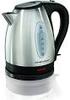 electric kettle owner's manual SAVE THIS USE AND CARE BOOK MGD550 * Please call 1-800-231-9786 with questions. IMPORTANT SAFEGUARDS When using electrical appliances, in order to reduce the risk of fire,
in the United States Home fires are a major problem Older Homes Pose an Even Greater Threat Put it into perspective: Electrocutions can be Prevented
 Home fires are a major problem in the United States Each year, home electrical problems alone account for an estimated 53,600 fires. These fires cause more than 500 deaths, injure 1,400 people, and account
Microwave Rice Maker
 Microwave Rice Maker CONTENT Microwave Rice Maker How does the cover work? Why is it better? Preparation Cooking Serving Tips Precautions Assembly In a Nutshell General Information Microwave Rice Maker
R432. Health, Health Systems Improvement, Licensing. R432-5. Nursing Facility Construction. R432-5-1. Legal Authority. R432-5-2. Purpose.
 R432. Health, Health Systems Improvement, Licensing. R432-5. Nursing Facility Construction. R432-5-1. Legal Authority. This rule is promulgated pursuant to Title 26, Chapter 21. R432-5-2. Purpose. The
EMERGENCY PROCEDURES
 EMERGENCY PROCEDURES Introduction Being prepared is the first step towards preventing and/or handling emergency situations. Because your safety is of utmost importance, SOLEX College has created this document
Autoclave Safety. Autoclaves are sterilizers using high pressure and high temperature steam. The potential safety risks for the operators are:
 Autoclave Safety Purpose: Sterilization refers to the complete killing of all living organisms, including spores. Common sterilization techniques include the application of wet heat, dry heat, chemicals,
Emergency Guideline for Food Facilities during Boil Water Advisory or Other Public Notices
 Emergency Guideline for Food Facilities during Boil Water Advisory or Other Public Notices Water supply warnings are generally required when water suppliers need to provide consumers with immediate and
Idaho Falls School District 91 Effective Date January 25, 2010
 PLN-4 CONTENTS 1. PURPOSE... 2 2. SCOPE AND APPLICABILITY... 2 3. SPIDERS... 2 4. COCKROACH CONTROL... 3 PLN-4 1. PURPOSE It is the policy of Idaho Falls School District #91 to provide a place of education
Schedule of Maintenance Fees
 Schedule of Maintenance Fees Effective July 1, 2015 It is the policy of the Housing Authority of Murray not to charge for NORMAL wear and tear. However, the Housing Authority reserves the right in every
WINTERIZING YOUR HOME PLUMBING AT BLUE RIDGE SHORES
 WINTERIZING YOUR HOME PLUMBING AT BLUE RIDGE SHORES The following are suggestions to help you winterize your home plumbing. They are for homes where the heat is not left on during the winter months. There
How to Use Water Safely in Your Food Establishment During a Boil Water Advisory
 How to Use Water Safely in Your Food Establishment During a Boil Water Advisory Food service establishments are allowed to operate during the boil water advisory as long as the conditions outlined below
PLEASE READ ALL INSTRUCTIONS BEFORE USE AND SAVE A COPY FOR FUTURE REFERENCE!
 PLEASE READ ALL INSTRUCTIONS BEFORE USE AND SAVE A COPY FOR FUTURE REFERENCE! 1. Read all instructions carefully before using the machine. 2. Do not touch hot surfaces. Use handles or knobs. The lid and
Convection TCO600. For your safety and continued enjoyment of this product, always read the instruction book carefully before using.
 Convection Toaster Oven TCO600 For your safety and continued enjoyment of this product, always read the instruction book carefully before using. IMPORTANT SAFEGUARDS SAVE AND READ THESE INSTRUCTIONS When
Instruction Manual. Image of SP-3015 & SP-3815. Important Safeguards. Automatic Dispensing Hot Water Pot with Reboil Function
 Important Safeguards READ ALL INSTRUCTIONS BEFORE USE. Instruction Manual Automatic Dispensing Hot Water Pot with Reboil Function Image of SP-3015 & SP-3815 SP-3015: 3.0L SP-3815: 3.8L SP-3017: 3.0L (Stainless
Deluxe Bottle Warmer
 Deluxe Bottle Warmer IMPORTANT SAFEGUARDS This product is for household use only. When using electrical appliances, basic safety precautions should always be followed including the following: Read all
Child and Infant Safety Checklist
 Child and Infant Safety Checklist The Safety Checklist can help you learn risks for injury at home, in the car, at childcare centers, at schools, and on playgrounds. The Safety Checklist also tells you
MY HOME IN A HOUSING BLOCK A GUIDE FOR RESIDENTS
 MY HOME IN A HOUSING BLOCK A GUIDE FOR RESIDENTS -KESKUSTA One half of Finns live in housing blocks, which is a safe and comfortable way to live. Welcome a board! Buildings and the Finnish climate There
BELLMAN CXE-25/27 INSTRUCTIONS
 IMPORTANT SAFEGUARDS BELLMAN CXE-25/27 INSTRUCTIONS 1. READ ALL INSTRUCTIONS. 2. WARNING: SCALDING MAY OCCUR IF TOP IS NOT TIGHTENED DOWN COMPLETELY OR IF TOP IS TAKEN OFF BEFORE MACHINE IS COOL AND ALL
my personal joint profile Your own personal profile of how rheumatoid arthritis is affecting your joints.
 my personal joint profile Your own personal profile of how rheumatoid arthritis is affecting your joints. What you and your rheumatologist can learn from your joint profile. It seems like a simple question:
Heat Illnesses. Common Heat Rash Sites
 Heat Illnesses Introduction Heat illnesses happen when the body becomes too hot and cannot cool itself. There are several different types of heat-related illnesses. This includes heat cramps, heat exhaustion,
IMPORTANT INSTRUCTIONS & OPERATING MANUAL. Houston 50 Inch Electric Wall Mounted Fireplace Black / White
 IMPORTANT INSTRUCTIONS & OPERATING MANUAL Houston 50 Inch Electric Wall Mounted Fireplace Black / White Model Number:MFE5050BK Model Number:MFE5050WH Read these instructions carefully before attempting
X-Plain Foley Catheter Male Reference Summary
 X-Plain Foley Catheter Male Reference Summary Introduction A Foley catheter is a tube that is put through the urinary opening and into your bladder to drain urine. Your doctor may have placed or may ask
Cougar Home Safety Assessment 4.0 Initial Visit
 Cougar Home ty Assessment 4.0 Initial Visit Adapted with permission from: The ty for Older Consumers Home ty Checklist, by Consumer Product ty Commission. (N.D.) Retrieved on November 23, 2003 from http://www.cpsc.gov/cpscpub/pubs/701.html.
Be Safe! Manage Heat Stress. Be Safe! Manage Heat Stress.
 Be Safe! Manage Heat Stress. Be Safe! Manage Heat Stress. Overview Workers who are exposed to extreme heat or work in hot environments may be at risk of heat stress. Exposure to extreme heat can result
Check for Safety. A Home Fall Prevention Checklist for Older Adults
 P Safety This checklist was produced with support from the MetLife Foundation. Centers Disease Control and Prevention National Center Injury Prevention and Control A Home Fall Prevention list Older Adults
This section gives you some helpful information and tips on running your home and the equipment in it.
 67 This section gives you some helpful information and tips on running your home and the equipment in it. Electricity Fuse board (electrical consumer unit) Make sure you know where your fuse board is and
How To Prevent Accidents
 HOME SAFETY AND PREVENTION OF HOME ACCIDENTS IN YOUNG CHILDREN Wong Chin Khoon Home is a wonderful place to care for the children. Home is where we feel safe. However, many of us are not aware that home
How to prepare your baby s bottle
 How to prepare your baby s bottle Cleaning and Sterilising Using or storing sterilised bottles Preparing a bottle feed Storing and warming feeds Feeding your baby Crèches, childminders and other childcare
Slip, Trip & Fall Prevention Handbook
 Slip, Trip & Fall Prevention Handbook This prevention handbook provides you with a basic understanding of what causes a slip, trip or fall and gives you some ideas on what you can do to stop these incidents
High Dose Radioactive Iodine (I-131) Therapy for Treatment of Thyroid Cancer
 12 High Dose Radioactive Iodine (I-131) Therapy for Treatment of Thyroid Cancer Please arrive 15 minutes early to allow for parking and registration. If you have questions or need to cancel your appointment
Moving to a hospital or skilled nursing facility
 H Moving to a hospital or skilled nursing facility What to expect when you have MRSA (Methicillin-resistant Staphylococcus aureus) A booklet for patients, residents, family members, and caregivers About
Conservation of Momentum Greg Kifer
 SCIENCE EXPERIMENTS ON FILE Revised Edition 6.7-1 Conservation of Momentum Greg Kifer Topic Conservation of momentum Time 1 hour! Safety Please click on the safety icon to view the safety precautions.
Cholera Prevention and Control: Introduction and Community Engagement. Module 1
 Cholera Prevention and Control: Introduction and Community Engagement Module 1 Introduction This guide instructs how to prevent cholera illnesses and deaths in your communities. These slides and modules
Burn Safety and Prevention for Older Adults
 Burn Safety and Prevention for Older Adults BURN STATISTICS: Each year, 45,000 Americans are hospitalized for burn injuries. 1 Adults aged 65 years and older who live in New York City are more than three
Hot Leaks. See how the temperature of liquids changes the way they flow.
 P h y s i c s Q u e s t A c t i v i t i e s Activity 2 1 Hot Leaks See how the temperature of liquids changes the way they flow. Safety: This experiment requires using the hot water tap and straight pins.
Operating and Installation Instructions
 Operating and Installation Instructions System Drawer ESS 2062 To prevent accidents and en - US, CA appliance damage, read these instructions before installation or use. M.-Nr. 07 342 360 Contents IMPORTANT
HOUSEHOLD FLOOD PLAN
 HOUSEHOLD FLOOD PLAN INTRODUCTION Flooding can happen quickly and often when you least expect it. It can be a devastating and traumatic experience. Having a flood plan for your household can reduce your
PICCs and Midline Catheters
 Patient Education PICCs and Midline Catheters Patient s guide to PICC (peripherally inserted central catheter) and midline catheters What are PICCs and midline catheters used for? Any medicine given over
Heat Transfer: Conduction, Convection, and Radiation
 Heat Transfer: Conduction, Convection, and Radiation Introduction We have learned that heat is the energy that makes molecules move. Molecules with more heat energy move faster, and molecules with less
USER MANUAL Two Tier Steamer Model: 16145 Helpline No: 015394 88100
 Lakeland Alexandra Buildings, Windermere, Cumbria LA23 1BQ Tel: 015394 88100 Web: www.lakeland.co.uk USER MANUAL Two Tier Steamer Model: 16145 Helpline No: 015394 88100 INTRODUCTION Thank you for choosing
If you fall or witness a fall, do you know what to do?
 If you fall or witness a fall, do you know what to do? We all fall from time to time. With age, both the number of falls and the likelihood of injury increase. So, it s important to know what to do if
Sun Retirement Health Assist
 Sun Retirement Health Assist product FEATURE SHEET Sun Retirement Health Assist provides an income-style benefit if you become unable to care for yourself due to aging, an accident, illness or deteriorated
Removing a Clog. Before you begin:
 Removing a Clog Before you begin: Flush only once. If it s not flushing the first time, don t flush again. This will cause more water to be pumped into the toilet bowl. If the toilet becomes clogged, the
How to prepare your baby s bottle feed
 How to prepare your baby s bottle feed New Safety Advice Powdered infant formula is not sterile. It may contain bacteria that can make your baby sick. You can reduce the risk to your baby if you prepare
FACT SHEET: HAZARDOUS MATERIALS ACCIDENTS
 FACT SHEET: HAZARDOUS MATERIALS ACCIDENTS A hazardous materials accident can occur anywhere. Communities located near chemical manufacturing plants are particularly at risk. However, hazardous materials
Electric Water Kettle
 Electric Water Kettle Instruction Manual Model: AWK-101 Congratulations! Your Water Kettle will surely become one of the most versatile and practical appliances in your home and office. Please read the
McDonald s Kitchen Cleaning Instructions. Prepared for: Employees of McDonald s
 McDonald s Kitchen Cleaning Instructions Prepared for: Employees of McDonald s Prepared By: Aracelly Arana TECM 2700 MWF 10-10:50 May 9, 2014 Table of Contents Table of Contents Table of Contents... iii
How To Manage A Catastrophic Injury
 Report #14 CATASTROPHIC INJURIES: Paralysis, Amputation, Burns Overview: A catastrophic injury or illness usually occurs suddenly and without warning. Injuries may be considered catastrophic when they
CAREGIVER GUIDE. A doctor. He or she authorizes (approves) the rehab discharge.
 Guide for Discharge to Home From Inpatient Rehab Who Is on the Discharge Team? Many people help plan a rehab discharge, and they are often referred to as a team. The team members include: A doctor. He
www.morphyrichards.co.uk
 43922 rev2:x 06/01/2010 15:06 Page 1 Upon registration with Morphy Richards (UK & ROI only) Register online for your 2 year guarantee. See back of this instruction book for details. (UK and Ireland customers
75th anniversary blender
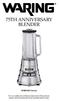 75th anniversary blender MBB1000 Series For your safety and continued enjoyment of this product, always read the instruction book carefully before using. CONTENTS Important Safeguards... 3 Grounding Instructions...
Energy Efficiency, Let s Save Energy!
 , Let s Save Energy! Instructor Guide Subject Area Unit Grade Time Science Earth Science K -1st grade 45 minutes Overview This lesson presents various ways to the student can save energy in their home
http://intranet.urmc-sh.rochester.edu/policy/smhpolicies/section10/10-22.pdf
 APPENDIX B Patient Care Lifting Guidelines Patient handling, including lifting, transferring, and repositioning, is covered by SMH Policy 10.22 Minimal Lift for Patient Handling, which can be found at:
Help for completing attendance allowance and disability allowance forms
 Help for completing attendance allowance and disability allowance forms Advice and guidance on applying for these benefits HOUSING AND COMMUNITY LIVING www.luton.gov.uk Luton Borough Council aims to help
Pressure Ulcers. Occupational Therapy. This leaflet is for both yourself and Carers
 Pressure Ulcers Occupational Therapy This leaflet is for both yourself and Carers Contents What is a pressure ulcer? 3 Who is at risk of developing a pressure ulcer? 4 How can I avoid developing a pressure
Burns and scalds accidents in the home
 G o v e r n m e n t C o n s u m e r S a f e t y R e s e a r c h Burns and scalds accidents in the home CONTENTS PAGE 1. SUMMARY OVERVIEW - BURNS/SCALDS ACCIDENTS IN THE HOME 1 1.1 OVERVIEW OF BURNS AND
Home Home Safety Safety Community Action Kit: A Guide for Health Professionals CONTENTS
 Home Home Safety Safety Community Action Kit: A Guide for Health Professionals MAJOR TYPES BACKGROUND OF CHILD ON INJURIES KIDSAFE IN WA THE HOME CONTENTS Kidsafe WA (Kidsafe Western Australia Inc.) is
HOW YOU CAN HELP YOUR CHILD WITH CEREBRAL PALSY
 HOW YOU CAN HELP YOUR CHILD WITH CEREBRAL PALSY CBM is one of the world s largest international disability and development organisations, committed to improving the quality of life of persons with disabilities
Managing at home with your arm in a polysling following shoulder surgery
 Managing at home with your arm in a polysling following shoulder surgery Exceptional healthcare, personally delivered Contents Page Introduction...04 Restrictions in movement following shoulder surgery...04
IMPORTANT SAFETY INSTRUCTIONS WARNING READ AND SAVE THESE OPERATING AND SAFETY INSTRUCTIONS BEFORE USING THIS HEATER.
 THERMAWAVE CERAMIC HEATER Model HZ-850 Series Model HZ-860 Series IMPORTANT SAFETY INSTRUCTIONS WARNING READ AND SAVE THESE OPERATING AND SAFETY INSTRUCTIONS BEFORE USING THIS HEATER. Warning Failure to
PATIENT GUIDE. Care and Maintenance Drainage Frequency: Max. Drainage Volume: Dressing Option: Clinician s Signature: Every drainage Weekly
 PATIENT GUIDE Care and Maintenance Drainage Frequency: Max. Drainage Volume: Dressing Option: Every drainage Weekly Clinician s Signature: ACCESS SYSTEMS Pleural Space Insertion Site Cuff Exit Site Catheter
Working as a cashier. HealthandSafetyOntario.ca. Hazard: Poor Workstation Layout
 Working as a cashier Cashiers are at risk for many painful muscles and joint injuries, hazards due to noise, and possibly a quick pace of work. Hazard: Poor Workstation Layout The workstation surface is
Can you do this in less than 12 seconds? YES NO
 Why is falling a problem for farmers over 55? The risk of falling and being injured from a fall increases as people age. Preventing falls in older people is important because falls often result in serious
INSTRUCTIONS FOR USE. Read this information before you start. Important things to know about your SmartJect autoinjector. Important things to remember
 INSTRUCTIONS FOR USE SIMPONI (SIM-po-nee) (golimumab) SmartJect autoinjector If your doctor decides that you or a caregiver may be able to give your injections of SIMPONI at home, you should receive training
GOING FOR A SPIN: Making a Model Steam Turbine
 GOING FOR A SPIN: Making a Model Steam Turbine PLANNING OVERVIEW SUBJECT AREAS: Physical Science, Math, Language Arts TIMING: Preparation: 30-60 minutes Activity: 1-2 45-minute class periods Note: Going
XONYX Solid Surface Owner's Manual
 XONYX Solid Surface Owner's Manual 1. IMPORTANT SAFETY CAUTION: Never allow children to use the bath/shower cabin without adult supervision to avoid accidents. CAUTION: Physically challenged people must
All About Your Peripherally Inserted Central Catheter (PICC)
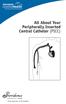 All About Your Peripherally Inserted Central Catheter (PICC) General Information Intravenous (IV) therapy is the delivery of fluid directly into a vein. An intravenous catheter is a hollow tube that is
Breastfed Babies in Child Care. Breastfeeding Works! How to Meet the Needs of
 Breastfeeding Works! How to Meet the Needs of Breastfed Babies in Child Care Massachusetts Department of Public Health Bureau of Family and Community Health Nutrition and Physical Activity Unit WIC Nutrition
U.S. Department of Housing and Urban Development Office of Public and Indian Housing. A Good Place to Live!
 U.S. Department of Housing and Urban Development Office of Public and Indian Housing A Good Place to Live! Introduction Having a good place to live is important. Through your Public Housing Agency (or
Your Recovery After a Cesarean Delivery
 Your Recovery After a Cesarean Delivery It is normal to have many questions about your care after delivery. Cesarean delivery is surgery and your body needs time to heal and recover for the next 6 weeks,
Energy saving tips for home
 Energy saving tips for home Contents 1 Heating and cooling 2 Computers, TVs and general appliances 4 Kitchen and cooking 6 Washing and drying 8 Lighting 9 Outdoors 9 We re all looking for ways to cut back