
Surveyor Guidance for Excessive Hot Water Temperatures
|
|
|
- Marcia Taylor
- 10 years ago
- Views:
Transcription
1 Overview Introduction In This Document Surveyor Guidance for Excessive Hot Water Temperatures This establishes guidance for surveyors to follow when they identify excessively hot tap water temperatures in sinks and bathing facilities that may cause scald burns of those persons who receive services in all regulated health care and programs. This document contains: TOPIC PAGE Background 1 Population at Risk 4 Definition of a Burn 5 Procedures 8 Responsibilities 15 References 16 Attachment A: Thermometer Calibration 17 Background This guidance is to assist survey staff in assuring that these issues are addressed in a consistent manner, in any regulated facility/program in which potentially hazardous hot water temperatures are identified. Typically, the regulations for most federally certified facilities do not include specific required hot water temperatures; however, the regulations address that the facility/provider must ensure the environmental safety of the persons receiving services. There is information available regarding the time/temperature relationship of contact with hot water that can be used as guidance to determine the seriousness of threat of injury to the persons receiving services. Rev. October2011 Florida Agency for Health Care Administration 1

2 Surveyor Guidance For Excessive Hot Water Temperatures The following are some regulatory requirements for hot water temperatures in health care facilities (this is not all inclusive): Facility Federal Requirement State Requirement Temperature Abortion Clinics None Adult Day Care* ALF* 58A-6.013(8) Tag D E (3)* Must ensure patient safety 105 F to 115 F Not to exceed 120 F AFCH* 64E (3)* Not to exceed 120 F Ambulatory Surgical Centers 42CFR Tag Q A (1) Tag M0051 Must ensure patient safety Birth Center None 59A (17)(C) Tag B0116 Not to exceed 110 F CORF 42CFR Tag I0570(CoP) None Must ensure patient safety CSU* 64E (3)* Not to exceed 120 F Health Care Clinic Hospice* 42CFR (h) (Only requires control valves to regulate temperature) Tag L732 64E (3)* The recommended water temperatures at the plumbing fixtures should be maintained at or below 110 F Rev. October 2011 Florida Agency for Health Care Administration 2

3 Surveyor Guidance for Hot Water Temperatures Facility Federal Requirement State Requirement Temperature Hospital ICF/MR* Nursing Home 42CFR (C)(2) Only requires that water temperature is safe Tag A724 42CFR (d)(3) Tag W426 42CFR (h)(1) Only requires that water temperature is safe Tag F323 59A (44)(e) Tag H E (3)* 59A (16)(d) Tag N110 Not to exceed 120 F Not to exceed 110 F 105 F to 115 F PPECs* 64E (3)* Not to exceed 120 F RTF* 64E (3)* Not to exceed 120 F RTCs* Rural Health Clinics 42CFR491.6(a) Only requires that water temperature is safe Tag J E (3)* None Not to exceed 120 F Must ensure patient safety *These facilities are included in Community Based Residential Facilities rule, 64E-12, which is enforced by the Department of Health. Florida Statute Ch (16) defines a group care facility means any public or private school, assisted living facility, adult family-care home, adult day care center, short-term residential treatment center, residential treatment facility, home for special services, transitional living facility, crisis stabilization unit, hospice, prescribed pediatric extended care center, intermediate care facility for persons with developmental disabilities, or boarding school. According to the 2000 American Burn Association Burn Awareness Week Campaign, scald burns are preventable. Young children, older adults and Rev. October 2011 Florida Agency for Health Care Administration 3

4 Surveyor Guidance For Excessive Hot Water Temperatures people with disabilities are most vulnerable to this type of injury. Most burn injuries happen in the home with tap water scalds occurring in the bathroom or other bathing areas. Other scalds relating to preparation or serving of food occur in the kitchen. The severity of injury with scalds depends on two factors: The temperature to which the skin is exposed, and The length of time that the hot liquid is in contact with the skin. At 120 degrees Fahrenheit / 48 degrees Celsius, the recommended temperature setting for home water heaters, skin requires five minutes of exposure for a full thickness burn to occur. When the temperature of a hot liquid is increased to 140 F / 60 C. it takes only five seconds or less for a serious burn to occur 1. Coffee, tea, hot chocolate and other hot beverages are usually served at 160 to 180 F. / C. degrees, resulting in almost instantaneous burns that require surgery to heal. Immediate removal of the hot liquid from the skin may lessen severity, therefore splash and spill burns may not be as deep as burns to someone who falls into a bathtub. 1 Moritz, A.R., Herriques, F.C. Jr. Studies of thermal injuries: II The relative importance of time and surface temperature in the causation of cutaneous burn. Am J Pathol 1947; 23: High Risk Population for Scald Burns Although anyone can be affected by scalds, certain people are at increased risk. These high risk groups include infants and young children, older adults and people with any type of disability. Males are about twice as likely to be scalded as females in all age groups. Older Adults Older adults, like young children, have thinner skin so hot liquids cause deeper burns with even brief exposure. Their ability to feel heat may be decreased due to certain medical conditions or medications so they may not realize water is too hot until injury has occurred. Older adults may also have conditions that make them more prone to falls in the bathtub or shower or while carrying hot liquids. People With Disabilities or Special Needs Individuals who may have physical, mental or emotional challenges or require some type of assistance from caregivers are at high risk for all types of burn injuries including scalds. The disability may be permanent or temporary due to illness or injury and vary in severity from minor to total dependency on others. Mobility impairments, slow or awkward movements, muscle weakness or fatigue, or slower reflexes increase the risk of spills while moving hot liquids. Burns to the lap are common when a person attempts to carry hot liquids or food while seated in a wheelchair. Moving hot liquids can be extremely difficult for someone who uses a cane or walker. Sensory Rev. October 2011 Florida Agency for Health Care Administration 4

5 Surveyor Guidance for Hot Water Temperatures impairments can result in decreased sensation, especially to the hands and feet, so the person may not realize if something is too hot. Changes in a person s intellect, perception, memory, judgment or awareness may hinder the person s ability to recognize a dangerous situation (such as a tub filled with scalding water) or respond appropriately to remove his or herself from danger. While the principles of scald prevention that apply to the general population also apply to this high risk group, there are additional concerns that must be addressed. Scald injuries result in considerable pain, prolonged treatment, possible lifelong scarring, and even death. The number of deaths from scalds is 100 annually in all age groups. Tap water scalds are often more severe than cooking-related scalds. Nationwide, tap water scalds result in more inpatient hospitalizations, generally cover a larger percent of the person s body, and result in more fatalities than other types of scalds5. For additional information relating to burn prevention, contact the American Burn Association at or Compiled by P. Brigham, Burn Foundation, Allentown, PA, Sources: National Health Interview Survey, National Hospital Discharge Survey, National Hospital AmbulatoryMedical Care Survey, National Electronic Injury Surveillance System. Young, M., Manara, A & Burd, D. (1995) Intensive care management of the child with severe burns. Care of the Critically Ill. May-June, 11(3); Definition of a Cutaneous Burn A burn is damage to the skin and underlying tissue caused by heat, chemicals or electricity a very simplistic definition for a very complex injury. Burns damage or destroy the skin cells. Deeper burns may involve the fat, muscle or bone. Scalds result from the destruction of one or more layers of the skin due to contact with hot liquids or steam. The temperature to which the skin is exposed and the length of time the skin is exposed to the burning substance determine the depth of injury. Burns range is severity from minor injuries that require no medical treatment to serious, lifethreatening and fatal injuries. Burns are categorized in terms of degrees, which are described below 2. Partial thickness injuries include first and second degree burns; full thickness injuries encompass third degree and deeper burns. Superficial (first degree burns) Causes: sunburn, minor scalds Generally heal in 3-5 days with no scarring Characteristics: Minor damage to the skin Color - pink to red Rev. October 2011 Florida Agency for Health Care Administration 5

6 Surveyor Guidance For Excessive Hot Water Temperatures Painful Skin is dry without blisters Partial thickness (second degree) burns Damages, but does not destroy top two layers of the skin Generally heal in days Does not require skin graft* Skin is moist, wet and weepy Blisters are present Color - bright pink to cherry red Lots of edema (swelling) Very painful Full thickness (third degree) burns Destroys all layers of the skin May involve fat, muscle and bone Will require skin graft for healing* Skin may be very bright red or dry and leathery, charred, waxy white, tan or brown Charred veins may be visible Area is insensate - the person is unable to feel touch in areas of full thickness injury *Except for very small (about the size of a quarter) full thickness burns will require a skin graft to heal. The patient is taken to the operating room where all the dead tissue is surgically removed. Skin is taken or harvested off an unburned or healed part of that person s body and grafted or transplanted to the clean burn area. In seven to 14 days, this grafted skin takes or adheres to the area and becomes the person s permanent skin. The donor site (where the skin was harvested from) is treated like a partial thickness burn and heals within 1 to14 days. 2 US Dept. of Health and Human Services. Centers for Disease Control and Prevention. (June 12, 2003). Emergency Preparedness & Response. Burns. Retrieved November 15, 2010 from < Procedures Detecting excessively hot tap water in facilities. Surveyors should refer to the surveyor guidance for checking hot water temperatures if the facility/entity survey process provides this. For example, there is specific guidance for checking water temperatures under the Environmental Task for nursing homes. If the facility s/entity s survey process lacks specific guidance for checking hot water temperatures, the surveyors are directed to check the hot tap water Rev. October 2011 Florida Agency for Health Care Administration 6

7 Surveyor Guidance for Hot Water Temperatures temperatures in two patient/resident rooms closest to hot water tanks/kitchen and rooms in which the individuals are able to use the sinks/bathrooms/showers independently. Check the water temperature by using a thermometer and by holding his/her hand under the running hot water. In all instances, it is preferable the facility use their calibrated thermometers to check water temperatures. If there is a concern that water is too hot and could potentially scald or harm individuals, water temperature at hand sinks and bathtubs should be taken using a thermometer The surveyor should hold his/her hand under the running hot tap water from the faucet to feel the water. If the water feels hot and/or you notice your skin turning red, this may be an indication that the water temperatures are excessively hot. If the water feels too hot, surveyors should request the facility measure the tap water temperature immediately with their calibrated thermometer (see Attachment A for thermometer calibration methods). If the surveyor uses her/his own thermometer, make certain that the calibration is documented on a worksheet. Also, when ever possible, have another surveyor witness the calibration procedure. Do not defer this activity for Life Safety Code Surveyor staff, if he/she is not present on the survey. The Life Safety Code Surveyor staff must be notified if on the survey, but he/she is not solely responsible for investigating this situation on the survey, since the risk for the persons receiving services must be assessed. A surveyor with clinical background, such as a nurse, should assist in the investigation. The type of thermometer most available, appropriate, and practical for checking the hot water is a dial stem-type food thermometer. This thermometer usually has a temperature range from 0 F to 220 F. Dial stem thermometer If digital thermometers or thermistors are used, be careful not to immerse in water or liquid. Rev. October 2011 Florida Agency for Health Care Administration 7

8 Surveyor Guidance For Excessive Hot Water Temperatures Digital thermometer Note: Electronic infrared (IR) thermometers are difficult to use for this. Instructions require the liquid to first be poured into a container, such as an aluminum can, with a strip of duct tape or electrical time applied to the side of the container in order to get an accurate reading. This makes it impractical for readily testing running water temperature. To view some images of an IR thermometer, click on this link: soft:en-us:ie- SearchBox&rlz=1I7GGLG&prmd=ivs&source=lnms&tbs=isch:1&ei=YkEG Tez9OsKblgeDvKmbBQ&sa=X&oi=mode_link&ct=mode&ved=0CB8Q_A U&biw=1003&bih=575 Keep in mind that the dial thermometer is accurate to 1 to 2 F, however, it not precision instrument. The following method explains the use of a dial thermometer: Let the hot water run from the faucet for 3 to 5 minutes Insert the stem into the stream of running water, so that the sensor is fully immersed. Some thermometer probes had a sensor in the tip and others have it from the tip up to about 2 inches up the probe. The temperature should register in about 10 to 15 seconds. As the temperature of the water is taken, surveyors should also hold their hand under the running water at about the same time to assess how the water feels on their skin. If the survey team has a concern with excessive hot water, it is suggested that several surveyors check hot water temperatures simultaneously. Temperatures of hot tap water should be taken from all possible points of contact, in which persons receiving services may wash their hands or bathe, such as: Sinks in bathrooms Sinks in the bedrooms of persons receiving services Sinks of common areas in which persons receiving services use Bathtubs Showers Whirlpool tubs Rev. October 2011 Florida Agency for Health Care Administration 8

9 Surveyor Guidance for Hot Water Temperatures Hot tubs Surveyors should document the following information when measuring water temperatures: Who took the temperature The time the temperature was measured, The actual temperature measurement, including the scale used (i.e. Fahrenheit). Location where the temperature was taken (i.e. sink faucet) How the water felt to touch Physical appearance of skin when in contact with the hot water Type of faucet (i.e. one sink faucet with hot and cold handles). Not only must surveyors determine if the facility complies with the regulatory requirements for hot water (if there are any), but most importantly, determine whether hot water is a hazard and a threat to the health and safety of persons receiving services. If the facility does not comply with the regulatory requirements for hot water, then the surveyor must cite under the appropriate regulation. Determination whether excessively hot water temperatures are a threat to the health and safety persons receiving services. When surveyors identify that the facility hot tap water temperatures are excessive, they must determine the potential for serious injury and the risk to the persons receiving services. Below is a table of information to indicate the time and temperature relationship necessary for hot water to cause a third degree burn. This information is only guidance, because the physical condition of the person receiving services is a factor that can alter the outcome. Time and Temperature Relationship to Serious Burns Water temperature 155 F 68 C 148 F 64 C 140 F 60 C 133 F 56 C 127 F 52 C 124 F 51 C 120 F 48 C 100 F 37 C Time required for a third degree burn to occur 1 second 2 seconds 5 seconds 15 seconds 1 minute 3 minutes 5 minutes Safe temperatures for bathing Reference: Moritz, A.R., Herriques, F.C. Jr. Studies of thermal injuries: II The relative importance of time and surface temperature in the causation of cutaneous burns. Am J Pathol 1947; 23: Other factors to consider when determining the seriousness of the situation: If the person is dependent on more than one staff person to be manually lifted or requires a mechanical lift from the tub. Rev. October 2011 Florida Agency for Health Care Administration 9

10 Surveyor Guidance For Excessive Hot Water Temperatures A person with peripheral neuropathy may not feel that the water is too hot; therefore, injury may occur before they can take action. A person may take certain medications that alter their sensations, in which they may be desensitized to heat. A person who has communication deficits may not be able to communicate that the water is too hot. A person who has cognitive impairments may not recognize a dangerous situation. A person who cannot adjust the water temperature without staff assistance, due to physical or cognitive deficits. In order for surveyors to make this determination, it is necessary for them to gather additional information through observation, interview and record review. The following are examples of additional information required: Review characteristics about the population of persons receiving services o Physical condition; diagnoses; cognitive status; sensory functioning, etc. Direct care staff interviews about hot water o Have they ever felt the hot water was too hot? o If so, what did they do about it? o If reported, what action did the facility take? o Have persons receiving services ever complained about the water being too hot? o Determine those persons receiving services who can use the sinks, showers, and tubs without assistance. Interview persons receiving services o Tell me about the temperature when you take a bath/shower? o Tell me about the temperature when you wash your hands? o If they report that it was too hot, what did they do about it? o If reported, what action did the facility take? o Do you use the sink in your bathroom? o Can you adjust the temperature of the water without help? Maintenance staff interviews o Tell me how you monitor the tap water temperature in the facility? o Do you keep any written temperature logs? (not required) o Have you identified any problems with the water temperatures lately? If so, what did you do about it? o How do you measure the water temperature here? If they use a thermometer, how do they ensure that it is taking an accurate measurement? When was the last time your thermometer was calibrated? o Describe how the water is heated in the facility and how it is distributed to the areas where persons receiving services have Rev. October 2011 Florida Agency for Health Care Administration 10

11 Surveyor Guidance for Hot Water Temperatures contact with hot water. o How many hot water tanks does the facility have? o Are there mixing valves used? o Are there antiscald devices installed? Water temperature logs, if available (make copies) Review accidents/incident reports o Note any incidents in which any persons receiving services have been scalded by hot water. If this is discovered, this increases the seriousness of the hazard. Review complaint log, if available o Note any complaints from persons receiving services and family members who have complained about the tap water being excessively hot. Review resident council meeting minutes, if applicable and available (ask the council president for permission to review first) o Note any complaints from persons receiving services brought up any issues about water being excessively hot. Review policies and procedures (make copies) o Policies on preventing hazardous to persons receiving services, such as scalding from hot water o Policies on monitoring facility water temperatures. o Policies on actions to take when excessive hot water is identified. Review diagrams showing how the hot water is heated and distributed throughout facility, if available. (make copies) Review any documentation regarding service to the hot water system from service personnel, such as plumbers. From this information, surveyors will determine whether or not the excessively hot water presents a serious and immediate threat to the person receiving services health and safety. For nursing homes, refer to the specific severity guidance provided under 42CFR483.25(h)(1), tag F323. If it becomes evident from review of information gathered, that persons receiving services have been previously scalded from excessively hot water, this invokes a very serious situation to the health and safety, especially if the facility has not implemented sufficient action to correct the problem. In a situation like this, surveyors should determine if neglect has occurred to the persons receiving services. At the point surveyors determine the facility population is at risk for injury from a scalding burn, they must take the following immediate actions: Inform the facility administration or director Contact the field office manager Rev. October 2011 Florida Agency for Health Care Administration 11

12 Surveyor Guidance For Excessive Hot Water Temperatures Ensure the protection of the persons receiving services. Determination of Immediate Jeopardy in Federally certified facilities Determination of a situation that will likely cause serious injury, harm, impairment, or death to a person receiving services, that would require immediate action to abate in facilities exclusively regulated by the State of Florida Expected facility actions to protect the persons receiving services from serious injury from excessively hot tap water If surveyors are surveying a federally certified facility, in which they determine that the tap water is excessively hot and may endanger the persons receiving services, they must refer to Appendix Q, Determination of Serious and Immediate Threat for the appropriate action to follow. If surveyors are surveying a facility exclusively regulated by the State, in which they determine that the tap water is excessively hot and may endanger the persons receiving services, Appendix Q, Serious and Immediate Threat does not apply. In this situation, the facility administrator must be notified and the Field Office Manager must be contacted. Additionally, Adult Protective Services of Department of Children and Family Services may be contacted to assist in the protection of the persons receiving services. Environmental Services of Department of Health must be contacted to assist in protection of the persons receiving services and adjunct enforcement actions. Based on the seriousness of situation, the Agency for Health Care Administration may proceed with arrangements to remove the persons receiving services and/or impose a moratorium on admissions. AHCA Central Office Management may determine other enforcement actions. These are some of the expected actions that must be taken on part of the facility to protect the persons receiving services to prevent serious scald burn injury from excessively hot tap water: Shut off the water to areas in which persons receiving services may have contact with hot water. Inform the direct care staff not to bathe persons receiving services. Inform the persons receiving services and visitors not to use the hot water. Post notices about the danger from scalding of hot water. Call for outside consultants to correct the problem (i.e. plumber). If the problem is not possible to correct within a few hours, the facility will have to consider how they are going to bathe/clean persons receiving services. The facility s kitchen dish washing and laundry services may be affected by shutting off the hot water, also. Rev. October 2011 Florida Agency for Health Care Administration 12

13 Surveyor Guidance for Hot Water Temperatures Responsibilities Survey Staff Survey staff must: Evaluate tap water temperatures in facilities to ensure that the persons receiving services are safe from scald burns. Take a measurement of the hot water temperature with a properly calibrated thermometer, appropriate for this use. If possible, the facility staff should take the temperature with their calibrated thermometer; however, if the surveyor uses her/his own thermometer, make certain that the calibration is documented on a worksheet. Also, whenever possible have another surveyor witness the calibration procedure. They must also assess the temperature by touch simultaneously. Properly document their findings on appropriate worksheets. Make a determination as to whether there is a threat to the health and safety of the persons receiving services from excessively hot water. If a determination that a threat exists, then protection of the persons receiving services takes the utmost priority. Notify the Field Office Manager, when necessary, and the local Life Safety Code survey staff. Field Office Manager The Field Office Manager must ensure that this guidance is properly implemented. The Field Office Manger must notify the local Life Safety Code survey staff/plans and Construction. Facility Staff The facility staff must ensure that the safety of the persons receiving services. When excessively hot tap water temperatures are identified by regulatory staff, they must correct the situation as quickly as possible and protect the persons receiving services. Rev. October 2011 Florida Agency for Health Care Administration 13

14 Surveyor Guidance For Excessive Hot Water Temperatures References These are references from the American Burn Association: Advanced Burn Life Support Instructor Manual Aging in American s Neighborhoods American Society on Aging, San Francisco, CA, 1998 Calistro, A (1993). Burn Care Basics and beyond. RN. March, 56 (3) American Society on Aging, San Francisco, CA, Bidegare, C. M. & Brown, K. R. (1995). Role of the burn nurse: Emergent care. Topics in Emergency Medicine. March, 17 (1); 61-9 (The entire issue is burn related). Brigham, P. Burn incidence and treatment in the United States, 1999 fact sheet. Carrougher, GJ; Burn Care and Therapy; Mosby, St. Louis, Jackman, J. (1994). Scalding criticism alarm by the number of children scalded in hotels, a sister in a burn unit sets out to do something about it. Nursing Times. Aug., 90 (31); 18. Maley, M.P., Aucher, B.M.: Prevention of tap water scald burns. J Burn Care Rehabil 8(1): 62-65, Moritz, A.R., Herriques, F.C. Jr. Studies of thermal injuries: II The relative importance of time and surface temperature in the causation of cutaneous burns. Am J Pathol 1947; 23: National SAFE KIDS Campaign. Burn injury fact sheet. Washington, D.C. 12/98. Trofino, RB; Nursing Care of the Burned Injured Patient; F. A. Davis, Co. Philadelphia, Rev. October 2011 Florida Agency for Health Care Administration 14

15 Surveyor Guidance for Hot Water Temperatures Attachment A Methods to calibrate dial thermometers: If the surveyor uses his or her personal thermometer, he/she should calibrate her/his thermometer before taking temperatures. If the facility s thermometer is used, then the facility staff or survey staff must calibrate the thermometer. If the surveyor uses her/his own thermometer, make certain that the calibration is documented on a worksheet. Also, whenever possible have another surveyor witness the calibration procedure. Survey staff should ask the facility staff about the calibration methods they used, and may ask them to demonstrate this to the surveyor staff. In any case, surveyors must ensure that the thermometer has been properly calibrated by for accuracy before measuring the hot water temperatures. If thermometers are used on a continual basis, they should be calibrated at least once a day. They should also be calibrated whenever the thermometer is dropped, before it is first used, and when going from one temperature extreme to another. There are two methods for calibrating thermometers: the ice point method and the boiling point method. Explain the steps For each method, then have employees calibrate their thermometers using either method (note to remember: ice point method is more accurate and easier to do). Ice Water To use the ice water method, fill a large glass with finely crushed ice. Add clean tap water to the top of the ice and stir well. Immerse the food thermometer stem a minimum of 2 inches into the mixture, touching neither the sides nor the bottom of the glass. Wait a minimum of 30 seconds before adjusting. (For ease in handling, the stem of the food thermometer can be placed through the clip section of the stem sheath and, holding the sheath horizontally, lowered into the water.) Without removing the stem from the ice, hold the adjusting nut under the head of the thermometer with a suitable tool and turn the head so the pointer reads 32 F. Rev. October 2011 Florida Agency for Health Care Administration 15

16 Surveyor Guidance For Excessive Hot Water Temperatures Boiling Water To use the boiling water method, bring a pot of clean tap water to a full rolling boil. Immerse the stem of a food thermometer in boiling water a minimum of 2 inches and wait at least 30 seconds. (For ease in handling, the stem of the food thermometer can be placed through the clip section of the stem sheath and, holding the sheath horizontally, lowered into the boiling water.) Without removing the stem from the pan, hold the adjusting nut under the head of the food thermometer with a suitable tool and turn the head so the thermometer reads 212 F. For true accuracy, distilled water must be used and the atmospheric pressure must be one atmosphere ( inches of mercury). A consumer using tap water in unknown atmospheric conditions would probably not measure water boiling at 212 F. Most likely, it would boil at least 2 F, and perhaps as much as 5 F, lower. Remember that water boils at a lower temperature in a high altitude area. Check with the local Cooperative Extension Service or Health Department for the exact temperature of boiling water. Rev. October 2011 Florida Agency for Health Care Administration 16

17 Surveyor Guidance for Hot Water Temperatures Point to Remember: The boiling point of water decreases as elevation increases: Altitude (elevation above sea level) Water Boiling Point 0 (sea level) 212 F (100 C) 1000 feet (305 meters) 2000 feet (610 meters) 3000 feet (914 meters) 4000 feet (1219 meters) 5000 feet (1524 meters) 8000 feet (2438 meters) 210 F (98.9 C) 208 F (97.8 C) F (96.9 C) F (95.8 C) F (94.9 C) F (91.9 C) Rev. October 2011 Florida Agency for Health Care Administration 17

PowerPoint Slide Presentation with Instructor Comments
 American Burn Association SCALD INJURY PREVENTION Educator s Guide A Community Fire and Burn Prevention Program Supported by the United States Fire Administration Federal Emergency Management Agency General
FUNCTIONS OF THE SKIN
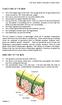 FUNCTIONS OF THE SKIN Skin is the largest organ of the body. The average adult has 18 square feet of skin which account for 16% of the total body weight. Skin acts as a physical barrier for you to the
Objectives. Fractures 2013-11-19. Identifying and interpreting fractures, burns and head injuries suspicious for abuse. Fractures Red Flags
 Identifying and interpreting fractures, burns and head injuries suspicious for abuse Hosanna Au, MD, FRCPC Paul Kadar, MD, FRCPC Sarah B. Schwartz, MD, MEd, FRCPC Objectives At the end of this session,
Calibrating Bimetallic Stemmed Thermometers
 L E S S O N 3 Calibrating Bimetallic Stemmed Thermometers Lesson Objectives Getting Ready 1. Explain the importance of thermometer calibration. 2. Demonstrate the ice water method for calibrating thermometers.
Safe Bathing, Hot Water and Surface Temperature Policy
 Safe Bathing, Hot Water and Surface Temperature Policy Version Number: V4 Name of originator/author: Health and Safety Advisor Name of responsible committee: Health and Safety Committee Name of executive
MISCONDUCT INCIDENT REPORT
 DEPARTMENT OF HEALTH SERVICES STATE OF WISCONSIN Division of Quality Assurance DHS 13.05(3)(a), Wis. Admin. Code F-62447 (Rev. 04/10) Page 1 of 8 MISCONDUCT INCIDENT REPORT GENERAL INSTRUCTIONS Use this
Union College Campus Safety Emergency Action Guide
 Union College Campus Safety Emergency Action Guide Emergency Telephone Numbers At Union College, for all campus emergencies dial Campus Safety at ext. 911. (If the line is busy on a second try, dial "6911".)
THERAPEUTIC USE OF HEAT AND COLD
 THERAPEUTIC USE OF HEAT AND COLD INTRODUCTION Heat and cold are simple and very effective therapeutic tools. They can be used locally or over the whole body, and the proper application of heat and cold
R432. Health, Health Systems Improvement, Licensing. R432-5. Nursing Facility Construction. R432-5-1. Legal Authority. R432-5-2. Purpose.
 R432. Health, Health Systems Improvement, Licensing. R432-5. Nursing Facility Construction. R432-5-1. Legal Authority. This rule is promulgated pursuant to Title 26, Chapter 21. R432-5-2. Purpose. The
How to Use Water Safely in Your Food Establishment During a Boil Water Advisory
 How to Use Water Safely in Your Food Establishment During a Boil Water Advisory Food service establishments are allowed to operate during the boil water advisory as long as the conditions outlined below
How does Diabetes Effect the Feet
 How does Diabetes Effect the Feet What Skin Changes May Occur? Diabetes can cause changes in the skin of your foot. At times your foot may become very dry. The skin may peel and crack. The problem is that
Illinois DCFS Flowchart How to Report Suspected Child Abuse or Neglect
 Illinois DCFS Flowchart How to Report Suspected Child Abuse or Neglect Organize the Information for your report. Gather ONLY the information you need to make the report of abuse/neglect to the Hotline.
Illinois Department of Public Health STATEMENT OF DEFICIENCIES AND PLAN OF CORRECTION C 04/26/2015. Statement of Licensure Violations:
 (X1) PROVER/SUPPLIER/LIA ENTIFIATION NUMBER: (X3) SURVEY D NAME OF PROVER OR SUPPLIER (X4) REGULATORY OR LS ENTIFYING INFORMATION) Final Observations Statement of Licensure Violations: 300.610a) 300.1210b)
8 plumbing. plumbing. 2010 PulteGroup, Inc. All Rights Reserved.
 8 90 2010 PulteGroup, Inc. All Rights Reserved. drains All the water you use leaves the home through a drain. Maintaining drains prevents clogging, overflows, water damage, and other problems. care and
OFFICE OF MENTAL HEALTH AND SUBSTANCE ABUSE SERVICES BULLETIN
 OFFICE OF MENTAL HEALTH AND SUBSTANCE ABUSE SERVICES BULLETIN ISSUE DATE April 15, 2015 EFFECTIVE DATE: April 1, 2015 NUMBER: OMHSAS-15-01 SUBJECT: BY: Community Incident Management & Reporting System
Base Cabinet with Self-storing Folding Doors and Floor
 Usable Kitchens When designing a kitchen for use by persons with mobility impairments, especially those who use wheelchairs, careful layout of the kitchen is crucial to maintaining accessibility. People
EMERGENCY PROCEDURES
 EMERGENCY PROCEDURES Introduction Being prepared is the first step towards preventing and/or handling emergency situations. Because your safety is of utmost importance, SOLEX College has created this document
Moving to a hospital or skilled nursing facility
 H Moving to a hospital or skilled nursing facility What to expect when you have MRSA (Methicillin-resistant Staphylococcus aureus) A booklet for patients, residents, family members, and caregivers About
Plumbing Identification and Damage Assessment Guide
 Plumbing Identification and Damage Assessment Guide *Please note that not all systems will be represented exactly by these diagrams and photos. As a vendor, it is required that you familiar yourself with
Research: Stem Cells. What are Stem Cells?
 What are Stem Cells? Have you ever thought about where you come from? How you were made? How did you grow from two tiny cells from your mother and father into a human mass of cells all performing independent
Emergency Showers and Eyewash Stations
 Emergency Showers and Eyewash Stations Here is a guide regarding what types and specifications are required when selecting an emergency Shower and/or eyewash station. Why are emergency showers or eyewash
Controlling Scalding Risks from Bathing and Showering
 UKHCA Guidance Controlling Scalding Risks from Bathing and Showering January 2010 (revised September 2012) Prepared for UKHCA member organisations by: Colin Angel, Policy and Campaigns Director United
WINTERIZING YOUR HOME PLUMBING AT BLUE RIDGE SHORES
 WINTERIZING YOUR HOME PLUMBING AT BLUE RIDGE SHORES The following are suggestions to help you winterize your home plumbing. They are for homes where the heat is not left on during the winter months. There
NOTICE OF PRIVACY PRACTICE
 Effective Date: September 23, 2013 NOTICE OF PRIVACY PRACTICE UNIVERSITY OF CALIFORNIA SAN FRANCISCO UCSF HEALTH SYSTEM THIS NOTICE DESCRIBES HOW HEALTH INFORMATION ABOUT YOU MAY BE USED AND DISCLOSED
Emergency Guideline for Food Facilities during Boil Water Advisory or Other Public Notices
 Emergency Guideline for Food Facilities during Boil Water Advisory or Other Public Notices Water supply warnings are generally required when water suppliers need to provide consumers with immediate and
Laboratory Exercise: Calibration of a Thermometer
 CHEM 109 Introduction themistry Revision 3.1 Laboratory Exercise: Calibration of a Thermometer In this exercise we will calibrate a stem-type thermometer and then use it to correctly measure the Air temperature
FAMILY ADULT DAY CARE CERTIFICATION STANDARDS CHECKLIST
 DEPARTMENT OF HEALTH SERVICES Division of Quality Assurance F-62611 (Rev. 07/08) STATE OF WISCONSIN FAMILY ADULT DAY CARE CERTIFICATION STANDARDS CHECKLIST NOTE: These standards apply when adult day care
FACT SHEET. Users That Must Take Particular Precautions During A Boil Advisory
 FACT SHEET Users That Must Take Particular Precautions During A Boil Advisory a) Commercial Establishments (Restaurants, Hotels, Convenience Stores, etc.) - All water that is to be provided directly to
REPORTING AND INVESTIGATING ABUSE AND NEGLECT IN ILLINOIS
 REPORTING AND INVESTIGATING ABUSE AND NEGLECT IN ILLINOIS This publication is made possible by funding support from the Centers of Medicare and Medicaid Services, the Illinois Department of Public Health
Home Home Safety Safety Community Action Kit: A Guide for Health Professionals CONTENTS
 Home Home Safety Safety Community Action Kit: A Guide for Health Professionals MAJOR TYPES BACKGROUND OF CHILD ON INJURIES KIDSAFE IN WA THE HOME CONTENTS Kidsafe WA (Kidsafe Western Australia Inc.) is
Play it Safe in the Heat Tips for Coaches and Parents
 Play it Safe in the Heat Tips for Coaches and Parents Heat is the number one weather related killer in the United States. Heat illness is the leading cause of preventable death in high school athletics
Question Specifications for the Cognitive Test Protocol
 Question Specifications for the Cognitive Test Protocol Core Questions These are the 6 disability questions to be tested in the interview. All of the other questions in the cognitive test protocol are
The ADL Spa. from Best Bath Systems. Providing superior safety, comfort and durability in bath design
 The ADL Spa from Best Bath Systems Providing superior safety, comfort and durability in bath design Designed in collaboration with universities and healthcare organizations The Activities of Daily Living
Management of Burns. The burns patient has the same priorities as all other trauma patients.
 Management of Burns The burns patient has the same priorities as all other trauma patients. Assess: - Airway - Breathing: beware of inhalation and rapid airway compromise - Circulation: fluid replacement
RHODE ISLAND. Downloaded 01.15.11
 Housekeeping/Laundry/Maintenance Section 35.0 Housekeeping RHODE ISLAND Downloaded 01.15.11 35.1 A full time employee of the facility shall be designated responsible for housekeeping services, supervision
Heat Stress Training
 Heat Stress Training Agenda 1. What is Heat Stress - The Physiology - Heat Exhaustion (Symptoms and First Aid) - Heat Stroke (Symptoms and First Aid) - Other Conditions associated with Heat Stress 2. Who
ph Measurements of Common Substances
 Chem 100 Section Experiment 10 Name Partner s Name Introduction ph Measurements of Common Substances The concentration of an acid or base is frequently expressed as ph. Historically, ph stands for the
Controlling Legionella in Plumbing Systems. Presented by: Julius Ballanco, P.E. President, JB Engineering and Code Consulting, P.C.
 Controlling Legionella in Plumbing Systems Presented by: Julius Ballanco, P.E. President, JB Engineering and Code Consulting, P.C. Legionnaires Disease Named after outbreak at Bellevue Stratford Hotel
Pressure Ulcers. Occupational Therapy. This leaflet is for both yourself and Carers
 Pressure Ulcers Occupational Therapy This leaflet is for both yourself and Carers Contents What is a pressure ulcer? 3 Who is at risk of developing a pressure ulcer? 4 How can I avoid developing a pressure
STANDARD OPERATING PROCEDURES Safe Autoclave Operations
 Department of Environmental Health & Safety Biosafety & Biosecurity STANDARD OPERATING PROCEDURES Safe Autoclave Operations The purpose of this document is to provide standard operating procedures for
No. Name of Legislation Applicable Issues and Requirements Demonstration of Compliance 1. Health and Safety at Work Act 1974
 The Police Treatment Centres Health and Safety Legal Compliance Register No. Name of Legislation Applicable Issues and Requirements Demonstration of Compliance 1. Health and Safety at Work Act 1974 2.
Ultrasonic support removal tank
 Ultrasonic support removal tank User guide and safety manual See inside for use and safety information. The Ultrasonic support removal tank automatically removes PLA support material from a printed ABS
X-Plain Foley Catheter Male Reference Summary
 X-Plain Foley Catheter Male Reference Summary Introduction A Foley catheter is a tube that is put through the urinary opening and into your bladder to drain urine. Your doctor may have placed or may ask
Individualized Care Plans Fully Developed
 Appendix Individualized Care Plans Fully Developed A Refer to Chapter 1 The Nursing Process: A Synopsis, p. 32: Two Individualized Care Plans Fully Developed; Care Plan 1 for Mr. John Walters, Care Plan
Home comfort: water heating
 Home comfort: water heating Water heating usage Hot water. It s one of those luxuries we give little thought to until we run out. This information is provided to help you get the most value and comfort
PAIN MANAGEMENT During Your Hospital Stay
 PAIN MANAGEMENT During Your Hospital Stay TABLE OF CONTENTS Understanding Pain...2 Pain Assessment...2 Describing Your Pain...5 Pain Treatment...5 Comfort Measures...6 Medication...7 Specialty Procedures...8
Inspection Report. Dream Home Inspections. www.timinspects.com. 415 Second Ave. Frisco CO 80443-1789 (970) 368-2668
 Inspection Report Property Address: 123 Dream Home Way Frisco, CO 80443 Prepared for: Inspector: Tim Nixon Tim Nixon Inspection date: 3/28/2014 1 of 9 General Information Property Information Address:
What to Expect From the Examination. How to Study the Plumbing Codes
 Texas State Board of Plumbing Examiners Plumbing Inspector Examination Review Course The following Examination Review Course is designed to assist an applicant in preparing for the Plumbing Inspector examination.
Occupational Health Program Safety Training Series. Lockout/Tagout Safety Awareness Training
 Occupational Health Program Safety Training Series Lockout/Tagout Safety Awareness Training 1 Lock out/tag out Lock out: the placement of a lockout device (lock) on an energy isolating device in accordance
All About Your Peripherally Inserted Central Catheter (PICC)
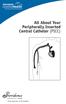 All About Your Peripherally Inserted Central Catheter (PICC) General Information Intravenous (IV) therapy is the delivery of fluid directly into a vein. An intravenous catheter is a hollow tube that is
X-Plain Varicose Veins Reference Summary
 X-Plain Varicose Veins Reference Summary Introduction Varicose veins are very common, in both women and men. Varicose veins can be painful and unattractive. Vein doctors use non-invasive ultrasound imaging
Pressure Ulcers Assessing and Staging. Anne Pirzadeh RN CWOCN University of Colorado Hospital June 2010
 Pressure Ulcers Assessing and Staging Anne Pirzadeh RN CWOCN University of Colorado Hospital June 2010 Never Events: Pressure Ulcers Pressure Ulcer Codes: MD documentation of pressure ulcers determines
A Do-It-Yourself Home Water Audit
 A Do-It-Yourself Home Water Audit This page is left blank intentionally. Please use the double-sided printer setting when printing. Your new Home Water Savings Kit can help you conduct a do-it-yourself
Fire Safety and Burn Prevention Knowledge and Practice Assessment
 Fire Safety and Burn Prevention Knowledge and Practice Assessment 1. Most home fires start in the A. Bedroom B. Chimney C. Kitchen D. Living room Answer C: Most home fires start in the kitchen. The National
Blepharoplasty - Eyelid Surgery
 Blepharoplasty - Eyelid Surgery Introduction Eyelid surgery repairs sagging or drooping eyelids. The surgery is also known as blepharoplasty, or an eyelid lift. Sagging or drooping eyelids happen naturally
My Voice. Advance Care Plan
 My Voice Advance Care Plan A message from the Prince Edward Family Health Team... Since its beginning in 2006 the Prince Edward Family Health Team (PEFHT) has been striving to provide comprehensive, accessible
I N S T ALLATION INSTRUCTIONS & HOME OWNERS MANUAL IMPORTANT SAFETY INFORMATION
 I N S T ALLATION INSTRUCTIONS & HOME OWNERS MANUAL MODELS: HA018240 HA024240 HA027240 HA036240 IMPORTANT SAFETY INFORMATION As when installing or using any high voltage electrical appliance, basic safety
How To Stage A Pressure Ulcer
 WOCN Society Position Statement: Pressure Ulcer Staging Originated By: Wound Committee Date Completed: 1996 Reviewed/Revised: July 2006 Revised: August 2007 Reviewed/Revised: April 2011 Definition of Pressure
Biliary Drain. What is a biliary drain?
 Biliary Drain What is a biliary drain? A biliary drain is a tube to drain bile from your liver. It is put in by a doctor called an Interventional Radiologist. The tube or catheter is placed through your
Corrosivity of Water Supplies
 WD-DWGB-3-4 2009 Corrosivity of Water Supplies What is meant by Corrosivity? Corrosive water can be defined as a condition of water quality which will dissolve metals from metallic plumbing at an excessive
Magellan Behavioral Health of Pennsylvania, Inc. Incident Reporting Form Provider Instructions and Definitions
 Member s County of Residence: Magellan Behavioral Health of Pennsylvania, Inc. Incident Reporting Form Provider Instructions and Definitions Bucks County Delaware County Lehigh County Montgomery County
Wound and Skin Assessment. Mary Carvalho RN, BSN, MBA Clinical Coordinator Johnson Creek Wound and Edema Center
 Wound and Skin Assessment Mary Carvalho RN, BSN, MBA Clinical Coordinator Johnson Creek Wound and Edema Center Skin The largest Organ Weighs between 6 and 8 pounds Covers over 20 square feet Thickness
Safety at Kaiser Permanente Los Angeles Medical Center Environmental Health & Safety Department
 Safety at Kaiser Permanente Los Angeles Medical Center Environmental Health & Safety Department Environmental Health and Safety (EHS) The Los Angeles Medical Center (LAMC) is committed to providing a safe
Installation and Troubleshooting Instructions for Electric Tankless Residential Water Heaters.
 Model Number: Serial Number: Information Manual Installation and Troubleshooting Instructions for Electric Tankless Residential Water Heaters. ATTENTION: IF YOU ARE NOT A LICENSED PLUMBER OR A LICENSED
Heat Illness Prevention Program
 I. Policy Heat Illness Prevention Program Responsible Executive: Vice President for Administration and Finance Responsible Office: Environmental Health and Instructional Safety Originally Issued: February
Sarasota Personal Medicine 1250 S. Tamiami Trail, Suite 202 Sarasota, FL 34239 Phone 941.954.9990 Fax 941.954.9995
 Sarasota Personal Medicine 1250 S. Tamiami Trail, Suite 202 Sarasota, FL 34239 Phone 941.954.9990 Fax 941.954.9995 NOTICE OF PRIVACY PRACTICES THIS NOTICE DESCRIBES HOW MEDICAL INFORMATION ABOUT YOU MAY
Working together to prevent pressure ulcers (prevention and pressure-relieving devices)
 Working together to prevent pressure ulcers (prevention and pressure-relieving devices) Understanding NICE guidance information for people at risk of pressure ulcers, their carers, and the public Draft
Plumbing Installations. A homeowner guide to the City of Winnipeg plumbing requirements for a single-family dwelling
 Plumbing Installations A homeowner guide to the City of Winnipeg plumbing requirements for a single-family dwelling February 2001 contents General Information 3 Inspection 4 New Drain and Vent Installations
FUTURE CALL PICTURE CARE PHONE MODEL: FC-1007 USER MANUAL
 FUTURE CALL PICTURE CARE PHONE MODEL: FC-1007 USER MANUAL Please follow instructions for repairing if any otherwise do not alter or repair any parts of device except specified. IMPORTANT SAFETY INSTRUCTIONS
Patient Information and Consent for Medical/Laser/Intense Pulsed Light Treatment. VASClinic PROCEDURES
 This consent form includes general descriptions of various dermatological treatments, including possible benefits and risks that may occur as a result of these treatments. Your doctor or nurse will describe
Chapter 4: Transfer of Thermal Energy
 Chapter 4: Transfer of Thermal Energy Goals of Period 4 Section 4.1: To define temperature and thermal energy Section 4.2: To discuss three methods of thermal energy transfer. Section 4.3: To describe
Anyone who has difficulty moving can get a pressure sore. But you are more likely to get one if you:
 Patient information from the BMJ Group Pressure sores Anyone can get a pressure sore if they sit or lie still for too long without moving. People who are old or very ill are most likely to get them. Careful
The ADL Spa. Making daily living safer and more comfortable
 The Making daily living safer and more comfortable Introducing the Independence meets safety, comfort and durability Designed in collaboration with universities and healthcare organizations, the ADL (Activities
1. The Determination of Boiling Point
 1. The Determination of Boiling Point Objective In this experiment, you will first check your thermometer for errors by determining the temperature of two stable equilibrium systems. You will then use
i n s e r v i c e Resident Rights
 i n s e r v i c e Resident Rights The term resident rights refers to legislation that protects nursing home residents and provides for certain freedoms. Resident rights are extremely important and are
May 7, 2012. Submitted Electronically
 May 7, 2012 Submitted Electronically Secretary Kathleen Sebelius Department of Health and Human Services Office of the National Coordinator for Health Information Technology Attention: 2014 edition EHR
Types of electrical injuries
 Types of electrical injuries Electrical injury is a term for all injuries caused by contact with electrical energy. Electrical contact can cause a wide variety of injuries involving most organ systems.
PRINTED: 07/09/2013 FORM APPROVED CENTERS FOR MEDICARE & MEDICAID SERVICES OMB NO. 0938-0391 (X2) MULTIPLE CONSTRUCTION A.
 CENTERS FOR MEDICARE & MEDICA SERVICES OMB NO. 0938-0391 (X1) PROVER/SUPPLIER/CLIA ENTIFICATION NUMBER: (X3) SURVEY NAME OF PROVER OR SUPPLIER (X4) FINAL OBSERVATIONS LICENSURE VIOLATIONS: 300.610)a) 300.1210)a)
Lower Back Pain www.spireperform.com 01283 576333
 Lower Back Pain www.spireperform.com 01283 576333 Low back pain can be caused through deficiencies in movement, posture and your lower limbs or pelvis. The advice in this booklet aims to help with relieving
HOW TO CARE FOR A PATIENT WITH DIABETES
 HOW TO CARE FOR A PATIENT WITH DIABETES INTRODUCTION Diabetes is one of the most common diseases in the United States, and diabetes is a disease that affects the way the body handles blood sugar. Approximately
How To Recover From A Surgical Wound From A Cast
 Care of Your Wounds After Amputation Surgery by Paddy Rossbach, RN Depending on the reason for your amputation and the state of your limb at the time of surgery, definitive closure of the wound may take
NURSE S ASSISTING ADDENDUM 4/06
 NURSE S ASSISTING ADDENDUM 4/06 To: Health Occupations Educators Date: April 11, 2006 From: Subject: Patricia Hodgins, Supervisor Career and Technical Education Nurse s Assisting Addendum This addendum
Heat Illness Prevention Program
 Heat Illness Prevention Program I. Policy Employees working in outdoor places of employment or in other areas at times when the environmental risk factors for heat illness are present, are at risk for
Internal and External Accident Incident Reporting
 Phoenix Community Care Ltd Policy & Procedure Internal and External Accident Incident Reporting Version Written Updated Scheduled Review Date Author 1 2008 2008 2009 Anne Spriggs 2 2010 2013 Angela Kelly
Understand nurse aide skills needed to promote skin integrity.
 Unit B Resident Care Skills Essential Standard NA5.00 Understand nurse aide s role in providing residents hygiene, grooming, and skin care. Indicator Understand nurse aide skills needed to promote skin
NOTICE OF PRIVACY PRACTICES. The University of North Carolina at Chapel Hill. UNC-CH School of Nursing Faculty Practice Carolina Nursing Associates
 NOTICE OF PRIVACY PRACTICES The University of North Carolina at Chapel Hill UNC-CH School of Nursing Faculty Practice Carolina Nursing Associates THIS NOTICE DESCRIBES HOW MEDICAL INFORMATION ABOUT YOU