
Sports Radiology : Making a diagnosis or solving a problem
|
|
|
- Anna Park
- 10 years ago
- Views:
Transcription
1 Sports Radiology : Making a diagnosis or solving a problem Professor Dr John George University of Malaya Research Imaging Centre University of Malaya Medical Centre Kuala Lumpur, Malaysia. Abstract: Aim: A Musculoskeletal Radiologist who images Sports Injuries has a major role of detecting the cause of the patients current symptoms which is their current problem which affects their performance and quality of life. Methodology : The skill needed to do the above must be acquired from basic training as a resident, speciality training in Musculoskeletal Radiology, attendance at Basic and Advanced Courses in MSK and then Clinical attachments. Radiology research should be directed at problem solving. Results: Basic Training should be by rotation to speciality rather than modality approach as the author has found accuracy of reporting significant abnormality in joints is only around 50% for those trained by modality approach. Subspecialty training should depend on a log of cases done rather than duration alone. Radiology research at UMMC has contributed to cartilage injury detection and mapping of injuries more accurately. Conclusion: With use of directed questions, limited physical examination, dedicated rotation under Musculoskeletal MRI and Ultrasound specialists and applying useful research findings and protocols it is possible to solve the patients current problem rather than just make a diagnosis. Text: Basic Training in Musculoskeletal Radiology during Residency In an International Musculoskeletal MRI and Ultrasound Course held in Malaysia with myself as Course Director, homework of actual MRI video cases is given for knee and shoulder examination reveals accuracy of only about 50% in reporting significant pathology including meniscal tears of the knee. When questioned the radiologists with such results all mention being trained in a modality approach where they are attached to the MRI unit doing all sorts of different scans and not attached under a musculoskeletal radiologist for a two or three months. A good example of specialty based training is in the Leicester Based Radiology system where the training is by rotations from first to third year in specialty based training. The summary of their training can be found at Speciality based training is also used in Dubai and website link is as follows: Program/Documents/Radiology.pdf

2 Additionally, it is useful to have some sessions where the trainee radiologists can join the orthopaedic clinic or rheumatology clinic to witness the physical examination being done will help in doing stress tests to joints while performing ultrasound and improving diagnostic accuracy. This is particularly important in the ankle examination as the stress tests will help delineate the ligaments such as the CFL much better and avoid erroneous reports Subspecialty training and Clinical attachments: This must be done today in a centre with both training in Musculoskeletal MRI and Ultrasound. Gone are the days when one can call themselves a Musculoskeletal Radiologist with just Musculoskeletal MRI training. Musculoskeletal Ultrasound is now widely accepted to be able to accurately diagnose much of the Musculoskeletal pathology especially of superficial ligaments and structures more accurately. For Musculoskeletal MRI - the use of the correct technology is also important to enable to get the necessary information. For instance the MRI machine should preferably be a 1.5 T or higher specification. It is important to note that not all 1.5 T magnets are of the same quality. One of the ways to assess a good quality MRI is that it is able to resolve the femoral weight bearing cartilage of the knee which is just 3 to 4mm and pick up 1-2mm loss of thickness. A centre where Orthopaedic Surgeons regularly do arthroscopic surgery is preferred and give feedback to the Musculoskeletal Radiologist helps to improve accuracy. The training period to learn MSK MRI and Ultrasound for a Clinical Attachment should not be less than 3 months for Clinical Attachment and one year for a proper fellowship. It is important that this time be divided into Observation, doing the provisional report or initial ultrasound of the patient under supervision which is then checked and finally doing ultrasound scans on your own in a second room and getting the Consultant to come and check the scans. Formal assessment should be performed before one is allowed to scan and interpret on their own. A Clinical Attachment or doing scans without a superviser or instructor is not beneficial as there is lack of feedback. Attending Basic and Advanced Course in Musculoskeletal MRI and Ultrasound. Continous Professional Education requires individuals to attend course preferably which don t just have lectures but also run actual cases of all common pathology which should not be missed. In the Penang MSK MRI and Ultrasound course of which I am Course Director ( MSK MRI videos and MSK Ultrasound Videos demonstrating the MRI and Ultrasound principles learned during the lectures are shown to bring home the salient points. The courses should not have more than 1 demonstrator to 6 pax at one ultrasound table and the ultrasound machines should be of high resolution. There should be at least 2 hours of hands on musculoskeletal ultrasound time per joint or forearm etc. If possible Video CD of the procedures showing how each region is done should be shown to the delegates before the ultrasound session and the common pathology after the practical session so the delegates can recognise the normal images and planes before being shown the videos.

3 Course materials will usually include some of the up to date articles references and E books and powerpoints which have been released by speaker for open usage. The emphasis in the lectures and practical sessions during the course will be on the types of questions that should be asked, how to select the right imaging modality, showing the simple stress tests and best positioning for detection of abnormalities. Musculoskeletal Ultrasound allows one to examine the exact point of point tenderness and to look at the underlying structure that is the source of the current symptoms of the patient and get this treated. Continous research and publications to add new insights, techniques and transfer knowledge. Scouring the internet for recent articles especially review articles and reading them after a solid course is to be encouraged. After a solid course many of the images that are in the articles and the text will come alive and make sense and will form the basis of covering areas that you may want further materials or explanation not possible to cover in a short course. New techniques can be studied and applied. Some examples of problem solving with original research at UMMC include a. Diagnosis of anterolateral menisco capsular tear which may explain joint line lateral joint line tenderness which is not associated with a meniscal tear. (1) b. Researching cartilage protocols which can detect 1mm cartilage defects and internal cartilage changes before loss of thickness. (Use of CISS 3D sequence Siemens or equivalent). Background research is quite adequate in the literature ( 2,3,4,5) b. Treatment of focal supraspinatus tendinosis with dextrose prolotherapy. to hasten improvement of clinical symptoms and function. C. Grading of Tendinosis - so that appropriate treatments can be instituted a. focal tendinosis b. Tendinosis complicated with calcification and or tear c. Partial tear or full thickness tears d. Bursitis e. Tenosynovitis Each of the above needs specific treatment whether it be conservative or with some intervention. Here are some examples of methodologies used at UMMC as part of original work to help solve problems. Problem: More accurate delineation of cartilage defect up to 1mm in weight bearing area of the knee and then classification of the region to make it easier for the arthroscopist to find the lesion.

4 A thesis project in UMMC was done addressing the above issue. The Methodology was as follows: Selection and preparation of tissue samples for MR imaging 3 types of tissue samples were selected from the osteochondral specimens to be included in the study: i) The first type of tissue samples consist of normal cartilage. They are white in appearance on gross pathology and there is no evidence of fibrillation or loss of height of cartilage. ii) The second type of tissue samples consist of abnormal cartilage which the thickness is preserved but the cartilage appears less white (discoloured) and soft on probing. iii) The last type of tissue samples consist of abnormal cartilage with loss of height compared to the adjacent sections of cartilage. The selected tissue samples were cut out with a band saw into wedge-shaped pieces (Figure 1). Figure 1: The selected area of an osteochondral specimen is being cut into wedge-shape. Subsequently, the wedge-shaped pieces are arranged in a plastic container submerged under normal saline solution. The specimen pieces are being anchored with rubber bands on to a cutting board submerged under the solution with rubber bands. The orientation of each specimen piece is as follows (Figure 2) i) cartilage surface facing anteriorly

5 ii) bone surface facing posteriorly iii) widest width is at the base iv) narrowest width is at the apex Figure 2. The wedge-shaped specimens are being arranged with the cartilage surface (arrow) facing anteriorly and bone surface facing posteriorly submerged under normal saline solution.

6 MR imaging of the specimens All examinations were performed on a 1.5 Tesla MR unit (Siemen Magnetic Resonance Imaging System, Magnetom Vision, VB21A, Uhrlagen, German, with the homogeneity of 5ppm over 50cm sphere and field stability <0.1 ppm/h). The whole plastic container with the specimens secured is carefully placed in a knee coil and is imaged in a coronal section using CISS-3D sequence thus obtaining a MR image that has the cartilage surface facing upwards (Figure 3). Figure 3: CISS 3D MR images in coronal section of the specimens depicting the cartilage surface (arrow) facing upwards.

7 Due to the configuration of the wedge shaped specimens, as the scan progresses from the base to the apex of the specimens, the width of the specimens on the MR images decreases (Figure 4); thus allowing the exact localization for the thickness measurements by correlating bone width on MR images and corresponding location on the actual specimens measured with electronic calipers. Both the cartilage thickness of the edges (left edge and right edge) at that location on the MR images and on the actual specimens was subsequently measured and compared (Figure 5). Figure 4: Illustration of how the bone width on the MR images decreases as the specimens are scanned in coronal section from the base to the apex of the specimens. Notice the different layers of the cartilage are visualised well. The low signal area above bone(arrow) is the compact chondrocyte layer and become high signal in earliest sign of degeneration.

8 TR (ms) TE Flip Angle (degree) Matrix (%) Pixel Size (mm) FOV (mm) No. of Slabs Effective Slice Thickness (mm) TA CISS- 3D x min 25 sec Table 1: Measurement parameters for CISS-3D used in MR imaging of the specimens. Figure 5. Illustration showing how the exact localization for measurement thickness is made on the MR images and on the actual specimens. Both the cartilage thickness of the edges (left edge and right edge) at that location on the MR images and on the actual specimens is subsequently measured and compared.

9 The results were as follows : The Pearson correlation between the first actual cartilage thickness measurement and the first MRI cartilage thickness measurement by the trainee radiologist was found to be which is significant at the 0.01 level (Table 2) First Actual Cartilage Thickness Measurement First MRI Cartilage Thickness Measurement by Trainee Radiologist First Actual Cartilage Thickness Measurement First MRI Cartilage Thickness Measurement by Trainee Radiologist Pearson Correlation 1.805(**) Sig. (2-tailed).000 N Pearson Correlation.805(**) 1 Sig. (2-tailed).000 N ** Correlation is significant at the 0.01 level (2-tailed). Table 2: Pearson correlation between the first actual cartilage thickness measurement and first MRI cartilage thickness measurement by trainee radiologist. Conclusion of the above study : CISS 3D was able to detect accurately the loss of cartilage to within 1 mm and also internal changes in the cartilage suggestive of earliest loss of the compact cartilage in deep layer causing a high signal in what should have been a low signal in the deep layer even without loss of thickness of the cartilage. This is now implemented in our standard protocol addressing the problem of detecting these weight bearing defects on standard MRI.

10 Problem 2 : Translating the correct location of a cartilage defect noted on weight bearing area of Femoral cartilage in a manner that can be understood to the arthroscopist so they understand where to look for the small defects of cartilage. UMMC Thesis. Solution : A mapping system was derived from studies at our institution to be able to tell the orthopaedic surgeon where the lesion is following the standard way we do our sagittal scans. The mapping system is as follows: The mapping system we use is easy as it follows the ICRS system and easily understood by orthopaedic surgeons. The system is based on the appearance of cartilage from the sagittal sequence of a cartilage specific sequence like 3D CISS (Siemens) or Balanced FFE (Philips). In this classification, the outermost sagittal image shows the weight bearing area of the femoral condyle, which is limited by the outer border of the anterior and posterior horns of the medial and lateral menisci. The posterior femoral condyle forms the non weight bearing area on this image. These two areas have been designated A2 and A3. A3 is usually correlated arthroscopically by the cartilage beyond 45 degrees of flexion (Figure 6). The sagittal image that first shows cartilage anterior to anterior horn of the menisci reflects the next section. The cartilage anterior to the meniscus is identified as B1 and B2 and B3 (Figure 7) reflects the corresponding areas as A2 and A3, except being more central in the femoral condyle. The next region of interest is the trochlea region of the femoral condyles. In this plane there is no central weight bearing area or posterior region of the cartilage and is identified as C1 (Figure 8). Therefore in this proposed simple classification, the area 1 refers to the cartilage anterior to the meniscus on the MRI in which the knee may normally have up to 5 degrees of flexion. Area 2 refers to the weight bearing areas of the femoral cartilage and area 3 the cartilage posterior to the meniscus which is usually the cartilage noted beyond 45 degrees of flexion on arthroscopy and posterior to the meniscus on the sagittal views. The patella cartilage can be described as being on the medial or lateral facet of the patella or the median ridge. The tibial plateau cartilage can be identified as being on the medial or lateral tibial plateau anterior or posterior region (T1 and T2 respectively). Thus, a lesion of the anterior half of the lateral tibial plateau would be graded as LT1 and a lesion on the posterior half of the medial tibial plateau identified as MT2. The orthopaedic surgeons used the ICRS mapping system to point out the location of the cartilage lesion (see appendix). Area 1, 2, 3 (as mentioned above) correspond with anterior, central and posterior region respectively, and area A, B, C correspond with medial, central and lateral region respectively of the ICRS system

11 A3 A2 Figure 6: The outer weight bearing area of the femoral condyle (A2), with no cartilage anterior to the meniscus on extension and cartilage more than 45 degrees on flexion (A3) B3 B1 B2

12 Figure 7: There is cartilage anterior to the anterior horn of the meniscus on extension. (B1), the weight bearing area which is normally up to 45degrees on flexion(arrow), (B2) and that beyond 45 degrees (B3). C1 Figure 8: Cartilage in the trochlear region (C1)(arrow) with no cartilage noted posterior on flexion. References : 1. Radiological classification of meniscocapsular tears of the anterolateral portion of the lateral meniscus of the knee. George J, Ramlan AA, Saw KY et al. Australas Radiol Feb;44(1): Cartilage T2 Assessment at 3-T MR Imaging: In Vivo Differentiation of Normal Hyaline Cartilage from Reparative Tissue after Two Cartilage Repair Procedures Initial Experience. Goetz HW, Tallal CM, Stephan EM, et al. April 2008 Radiology, 247, MRI Imaging of Cartilage and its repair in the knee a review. Trattnig S, Domayer S, Welch GW et al. Eur Radiol (2009)19: Arthroscopic Measurement of Cartilage Lesions of the Knee Condyle : Principles and Experimental Validation of a New Method. Robert H, Lambotte JC, Flicoteaux R. Cartilage 2011:2(3)

13 5. Recent advances in MR of articular cartilage. Gold GE, Chen CA, Koo S, Hargreaves BA, Bangerter NK. AJR Am J Roentgenol 2009 September : 193(3) :

www.ghadialisurgery.com
 P R E S E N T S Dr. Mufa T. Ghadiali is skilled in all aspects of General Surgery. His General Surgery Services include: General Surgery Advanced Laparoscopic Surgery Surgical Oncology Gastrointestinal
EFSUMB EUROPEAN FEDERATION OF SOCIETIES FOR ULTRASOUND IN MEDICINE AND BIOLOGY Building a European Ultrasound Community
 MINIMUM TRAINING REQUIREMENTS FOR THE PRACTICE OF MEDICAL ULTRASOUND IN EUROPE Appendix 12: Musculoskeletal Musculoskeletal ultrasound comprises a wide range of different examinations increasingly performed
Musculoskeletal MRI Technical Considerations
 Musculoskeletal MRI Technical Considerations Garry E. Gold, M.D. Professor of Radiology, Bioengineering and Orthopaedic Surgery Stanford University Outline Joint Structure Image Contrast Protocols: 3.0T
QUESTION I HAVE BEEN ASKED TO REHAB GRADE II AND III MCL INJURIES DIFFERENTLY BY DIFFERENT SURGEONS IN THE FIRST 6WEEKS FOLLOWING INJURY.
 QUESTION I HAVE BEEN ASKED TO REHAB GRADE II AND III MCL INJURIES DIFFERENTLY BY DIFFERENT SURGEONS IN THE FIRST 6WEEKS FOLLOWING INJURY. SOME ARE HINGE BRACED 0-90 DEGREES AND ASKED TO REHAB INCLUDING
Arthroscopic Shoulder Procedures. David C. Neuschwander MD. Shoulder Instability. Allegheny Health Network Orthopedic Associates of Pittsburgh
 Arthroscopic Shoulder Procedures David C. Neuschwander MD Allegheny Health Network Orthopedic Associates of Pittsburgh Shoulder Instability Anterior Instability Posterior Instability Glenohumeral Joint
Patellofemoral Chondrosis
 Patellofemoral Chondrosis What is PF chondrosis? PF chondrosis (cartilage deterioration) is the softening or loss of smooth cartilage, most frequently that which covers the back of the kneecap, but the
The Trial of a Soft Tissue Knee Injury Case. By Ben Rubinowitz and Evan Torgan
 The Trial of a Soft Tissue Knee Injury Case By Ben Rubinowitz and Evan Torgan Although often overlooked as commonplace or insignificant, an injury to the knee joint often results in a severe, permanent
The Dedicated MRI Factbook. Esaote MRI: A world of difference
 The Dedicated MRI Factbook Esaote MRI: A world of difference Esaote Dedicated MRI Measures of Excellence Creativity in Healthcare is Esaote s motto which represents the philosophy that has been adopted
Dr Dan Gill Department of Radiology Windsor Regional Hospital Oxford Medical Imaging Erie St Clair Radiology
 Dr Dan Gill Department of Radiology Windsor Regional Hospital Oxford Medical Imaging Erie St Clair Radiology -5000 Olympic athletes and team officials -1350 Paralympic athletes and team officials -82
Rehabilitation Guidelines for Autologous Chondrocyte Implantation. Ashley Conlin, PT, DPT, SCS, CSCS
 Rehabilitation Guidelines for Autologous Chondrocyte Implantation Ashley Conlin, PT, DPT, SCS, CSCS Objectives Review ideal patient population Review overall procedure for Autologous Chondrocyte Implantation
Ulnar sided Wrist Pain
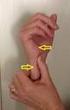 Ulnar sided Wrist Pain 1 Susan Cross, 1 Anshul Rastogi, 2 Brian Cohen, 1 Rosy Jalan 1 Dept of Radiology, Barts Health NHS Trust, London, UK 2 London Orthopaedic Centre Contact: [email protected]
Rehabilitation Guidelines for Meniscal Repair
 UW Health Sports Rehabilitation Rehabilitation Guidelines for Meniscal Repair There are two types of cartilage in the knee, articular cartilage and cartilage. Articular cartilage is made up of collagen,
Clinical guidance for MRI referral
 MRI for cervical radiculopathy Referral by a medical practitioner (excluding a specialist or consultant physician) for a scan of spine for a patient 16 years or older for suspected: cervical radiculopathy
Posttraumatic medial ankle instability
 Posttraumatic medial ankle instability Alexej Barg, Markus Knupp, Beat Hintermann Orthopaedic Department University Hospital of Basel, Switzerland Clinic of Orthopaedic Surgery, Kantonsspital Baselland
Abstract Objective: To review the mechanism, surgical procedures, and rehabilitation techniques used with an athlete suffering from chronic anterior
 Abstract Objective: To review the mechanism, surgical procedures, and rehabilitation techniques used with an athlete suffering from chronic anterior glenohumeral instability and glenoid labral tear. Background:
Configuration and Use of the MR Knee Dot Engine
 Configuration and Use of the MR Knee Dot Engine Kai Reiter (RT); Sebastian Auer (RT) Radiology Herne, Herne, Germany 1 42 MAGNETOM Flash 3/2011 www.siemens.com/magnetom-world We are a radiological joint
We present the first study in vivo of meniscal
 Meniscal movement AN IN-VIVO STUDY USING DYNAMIC MRI V. Vedi, A. Williams, S. J. Tennant, E. Spouse, D. M. Hunt, W. M. W. Gedroyc From St Mary s Hospital, London, England We present the first study in
Pre - Operative Rehabilitation Program for Anterior Cruciate Ligament Reconstruction
 Pre - Operative Rehabilitation Program for Anterior Cruciate Ligament Reconstruction This protocol is designed to assist you with your preparation for surgery and should be followed under the direction
Double Bone Plug Meniscus Reconstruction Surgical Technique
 Double Bone Plug Meniscus Reconstruction Surgical Technique Double Bone Plug Meniscus Low Profile Reamer 2-0 FiberWire Meniscus Repair Needles Collared Pin & Coring Reamer Set RetroConstruction Drill Guide
Anatomic Percutaneous Ankle Reconstruction of Lateral Ligaments (A Percutaneous Anti ROLL)
 Anatomic Percutaneous Ankle Reconstruction of Lateral Ligaments (A Percutaneous Anti ROLL) Mark Glazebrook James Stone Masato Takao Stephane Guillo Introduction Ankle stabilization is required when a patient
A patient s s guide to: Arthroscopy of the Hip
 A patient s s guide to: Arthroscopy of the Hip Brian J. White MD Assistant Team Physician Denver Nuggets Western Orthopaedics - Denver, Colorado Introduction This is designed to provide you with a better
Rehabilitation Guidelines for Knee Arthroscopy
 Rehabilitation Guidelines for Knee Arthroscopy Arthroscopy is a common surgical procedure in which a joint is viewed using a small camera. This technique allows the surgeon to have a clear view of the
WORKPLACE SAFETY AND INSURANCE APPEALS TRIBUNAL DECISION NO. 1047/14
 WORKPLACE SAFETY AND INSURANCE APPEALS TRIBUNAL DECISION NO. 1047/14 BEFORE: C. M. MacAdam: Vice-Chair HEARING: June 3, 2014 at Toronto Written DATE OF DECISION: June 18, 2014 NEUTRAL CITATION: 2014 ONWSIAT
Michael K. McAdam, M.D. Orthopedic Surgeon Specializing in Arthroscopy and Sports Medicine
 Michael K. McAdam, M.D. Orthopedic Surgeon Specializing in Arthroscopy and Sports Medicine Anterior Cruciate Ligament Injury Injury to the anterior cruciate ligament (ACL) is common, especially in athletic
.org. Ankle Fractures (Broken Ankle) Anatomy
 Ankle Fractures (Broken Ankle) Page ( 1 ) A broken ankle is also known as an ankle fracture. This means that one or more of the bones that make up the ankle joint are broken. A fractured ankle can range
Bankart Repair using the Smith & Nephew BIORAPTOR 2.9 Suture Anchor
 Shoulder Series Technique Guide *smith&nephew BIORAPTOR 2.9 Suture Anchor Bankart Repair using the Smith & Nephew BIORAPTOR 2.9 Suture Anchor Gary M. Gartsman, M.D. Introduction Arthroscopic studies of
Knee Kinematics and Kinetics
 Knee Kinematics and Kinetics Definitions: Kinematics is the study of movement without reference to forces http://www.cogsci.princeton.edu/cgi-bin/webwn2.0?stage=1&word=kinematics Kinetics is the study
Integrated Manual Therapy & Orthopedic Massage For Complicated Knee Conditions
 Integrated Manual Therapy & Orthopedic Massage For Complicated Knee Conditions Assessment Protocols Treatment Protocols Treatment Protocols Corrective Exercises Artwork and slides taken from the book Clinical
The Petrylaw Lawsuits Settlements and Injury Settlement Report
 The Petrylaw Lawsuits Settlements and Injury Settlement Report KNEE INJURIES How Minnesota Juries Decide the Value of Pain and Suffering in Knee Injury Cases The Petrylaw Lawsuits Settlements and Injury
Temporomandibular Joint Imaging Using CBCT: Technology Now Captures Reality!
 Temporomandibular Joint Imaging Using CBCT: Technology Now Captures Reality! Dale A. Miles BA, DDS, MS, FRCD (C) Diplomate, American Board of Oral and Maxillofacial Radiology Diplomate, American Board
Technique Guide. VersiTomic. Michael A. Rauh, MD. Anterior Cruciate Ligament Reconstruction
 Technique Guide VersiTomic Anterior Cruciate Ligament Reconstruction Michael A. Rauh, MD The opinions expressed are those of Dr. Rauh and are not necessarily those of Stryker VersiTomic Anterior Cruciate
Increased Incidence of Anterior Cruciate Ligament Tears in Adolescent Females Kristin M. Steinert 04
 Increased Incidence of Anterior Cruciate Ligament Tears in Adolescent Females Kristin M. Steinert 4 Abstract The potential role of gender and age in the incidence of tears of the anterior cruciate ligament
Shoulder Dyslexia: The Alphabet Soup. Alison Nguyen 4/13/06
 Shoulder Dyslexia: The Alphabet Soup Alison Nguyen 4/13/06 Mystery Cases Case 1 Case 2 Case 3 Case 4 Shoulder Dyslexia: The Alphabet Soup Shoulder dyslexia: addressing the endless alphabet soup Ant-inf
The Land of Os: Accessory Ossicles of the Foot
 The Land of Os: Accessory Ossicles of the Foot Susan Cross, Anshul Rastogi, Rosy Jalan; Dept of Radiology, Barts Health NHS Trust, London, UK Contact: [email protected] Pictorial review Abstract
INJURIES OF THE HAND AND WRIST By Derya Dincer, M.D.
 05/05/2007 INJURIES OF THE HAND AND WRIST By Derya Dincer, M.D. Hand injuries, especially the fractures of metacarpals and phalanges, are the most common fractures in the skeletal system. Hand injuries
.org. Shoulder Pain and Common Shoulder Problems. Anatomy. Cause
 Shoulder Pain and Common Shoulder Problems Page ( 1 ) What most people call the shoulder is really several joints that combine with tendons and muscles to allow a wide range of motion in the arm from scratching
Breast MRI Quality Control
 Donna M. Reeve, MS, DABR, DABMP Department of Imaging Physics Educational Objectives Discuss the importance of breast MRI quality control (QC). Provide an overview of the new ACR Breast MRI Accreditation
Shoulder Impingement/Rotator Cuff Tendinitis
 Copyright 2011 American Academy of Orthopaedic Surgeons Shoulder Impingement/Rotator Cuff Tendinitis One of the most common physical complaints is shoulder pain. Your shoulder is made up of several joints
Patellofemoral Joint: Superior Glide of the Patella
 Patellofemoral Joint: Superior Glide of the Patella Purpose: To increase knee extension. Precautions: Do not compress the patella against the femoral condyles. Do not force the knee into hyperextension
Musculoskeletal: Acute Lower Back Pain
 Musculoskeletal: Acute Lower Back Pain Acute Lower Back Pain Back Pain only Sciatica / Radiculopathy Possible Cord or Cauda Equina Compression Possible Spinal Canal Stenosis Red Flags Initial conservative
.org. Osteochondroma. Solitary Osteochondroma
 Osteochondroma Page ( 1 ) An osteochondroma is a benign (noncancerous) tumor that develops during childhood or adolescence. It is an abnormal growth that forms on the surface of a bone near the growth
When is Hip Arthroscopy recommended?
 HIP ARTHROSCOPY Hip arthroscopy is a minimally invasive surgical procedure that uses a camera inserted through very small incisions to examine and treat problems in the hip joint. The camera displays pictures
After Hip Arthroscopy
 After Hip Arthroscopy On your road to recovery... Rehabilitation is essential to help you return to an active life and reach your personal goals. This booklet provides goals, activities and milestones
.org. Lisfranc (Midfoot) Injury. Anatomy. Description
 Lisfranc (Midfoot) Injury Page ( 1 ) Lisfranc (midfoot) injuries result if bones in the midfoot are broken or ligaments that support the midfoot are torn. The severity of the injury can vary from simple
SITE IMAGING MANUAL ACRIN 6698
 SITE IMAGING MANUAL ACRIN 6698 Diffusion Weighted MR Imaging Biomarkers for Assessment of Breast Cancer Response to Neoadjuvant Treatment: A sub-study of the I-SPY 2 TRIAL Version: 1.0 Date: May 28, 2012
How To Know If You Can Recover From A Knee Injury
 David R. Cooper, M.D. www.thekneecenter.com Wilkes-Barre, Pa. Knee Joint- Anatomy Is not a pure hinge Ligaments are balanced Mechanism of injury determines what structures get damaged Medial meniscus tears
Articular Cartilage Injury to the Knee: Current Concepts in Surgical Techniques and Rehabilitation Management
 Articular Cartilage Injury to the Knee: Current Concepts in Surgical Techniques and Rehabilitation Management Combined Sections Meeting 2014 Las Vegas, Nevada, February 3 6, 2014 James L. Carey, MD, MPH
Sonography of Partial-Thickness Quadriceps Tendon Tears With Surgical Correlation
 Article Sonography of Partial-Thickness Quadriceps Tendon Tears With Surgical Correlation Samuel La, MD, David P. Fessell, MD, John E. Femino, MD, Jon A. Jacobson, MD, David Jamadar, MB, BS, Curtis Hayes,
Doctor of Science in Physical Therapy
 Doctor of Science in Physical Therapy The mission for the Doctor of Science (Sc.D.) Program in Physical Therapy is to provide advanced post-professional education to practicing physical therapists in Texas
SHOULDER INSTABILITY IN PATIENTS WITH EDS
 EDNF 2012 CONFERENCE LIVING WITH EDS SHOULDER INSTABILITY IN PATIENTS WITH EDS Keith Kenter, MD Associate Professor Sports Medicine & Shoulder Reconstruction Director, Orthopaedic Residency Program Department
Crescent-shaped rotator cuff tears are relatively
 Use of Preoperative Magnetic Resonance Imaging to Predict Rotator Cuff Tear Pattern and Method of Repair J. F. James Davidson, M.D., Stephen S. Burkhart, M.D., David P. Richards, M.D., and Scot E. Campbell,
Simplified surgery. Personalized performance.
 Simplified surgery. Personalized performance. VISIONAIRE Patient Matched Technology Accuracy Advanced surgical precision, resulting in reproducible outcomes Efficiency Simplifying surgery, reducing costs,
32-Channel Head Coil Imaging at 3T
 32-Channel Head Coil Imaging at 3T Thomas Benner Athinoula A. Martinos Center for Biomedical Imaging, Department of Radiology, Massachusetts General Hospital and Harvard Medical School, Boston, MA, USA
Thoracolumbar Spine Fractures. Outline. Outline. Holmes Criteria. Disclosure:
 Thoracolumbar Spine Fractures C. Craig Blackmore, MD, MPH Department of Radiology Virginia Mason Medical Center Affiliate Professor, University of Washington Disclosure: Book Royalties, Springer-Verlag
.org. Posterior Tibial Tendon Dysfunction. Anatomy. Cause. Symptoms
 Posterior Tibial Tendon Dysfunction Page ( 1 ) Posterior tibial tendon dysfunction is one of the most common problems of the foot and ankle. It occurs when the posterior tibial tendon becomes inflamed
Internal Impingement in the Overhead Athlete: A Correlation of Findings on MRI and Arthroscopic Evaluation
 Internal Impingement in the Overhead Athlete: A Correlation of Findings on MRI and Arthroscopic Evaluation Lee D Kaplan, MD J Towers, MD PJ McMahon, MD CH Harner,, MD RW Rodosky,, MD Thrower s shoulder
Evaluating Knee Pain
 Evaluating Knee Pain Matthew T. Boes, M.D. Raleigh Orthopaedic Clinic September 24, 2011 Introduction Approach to patient with knee pain / injury History Examination Radiographs Guidelines for additional
Posterior Referencing. Surgical Technique
 Posterior Referencing Surgical Technique Posterior Referencing Surgical Technique INTRO Introduction Instrumentation Successful total knee arthroplasty depends in part on re-establishment of normal lower
AAOS Articular Cartilage Restoration: The Modern Frontier
 AAOS Articular Cartilage Restoration: The Modern Frontier 18.75 CME Credits March 31 April 2, 2016 OLC Education & Conference Center Rosemont, IL Kevin D. Plancher, MD, and Nicholas A. Sgaglione, MD Course
Biomechanics of Joints, Ligaments and Tendons.
 Hippocrates (460-377 B.C.) Biomechanics of Joints, s and Tendons. Course Text: Hamill & Knutzen (some in chapter 2 and 3, but ligament and tendon mechanics is not well covered in the text) Nordin & Frankel
UCLA Musculoskeletal Ultrasound Course and Hands-on Workshop 2015
 UCLA Musculoskeletal Ultrasound Course and Hands-on Workshop 2015 Featuring Optional Full Day Interventional Training with Cadaver Lab January 24 & 25, 2015 COURSE AND HANDS-ON WORKSHOP Santa Monica UCLA
Integumentary System Individual Exercises
 Integumentary System Individual Exercises 1. A physician performs an incision and drainage of a subcutaneous abscess in his office for a particularly uncooperative established patient. How should this
A Patient s Guide to Shoulder Pain
 A Patient s Guide to Shoulder Pain Part 2 Evaluating the Patient James T. Mazzara, M.D. Shoulder and Elbow Surgery Sports Medicine Occupational Orthopedics Patient Education Disclaimer This presentation
Anatomy and Physiology 101 for Attorneys
 Knee Injuries Anatomy and Physiology 101 for Attorneys Phil Davidson, MD Heiden-Davidson Orthopedics Salt Lake City, UT May 2011 Introduction Dr. Phil Davidson Park City and SLC clinics Education: Harvard,
Head Position and Impact Direction in Whiplash Injuries: Associations with MRI-Verified Lesions of Ligaments and Membranes in the Upper Cervical Spine
 Head Position and Impact Direction in Whiplash Injuries: Associations with MRI-Verified Lesions of Ligaments and Membranes in the Upper Cervical Spine 1 Journal of Neurotrauma Volume 22, Number 11, November
.org. Arthritis of the Hand. Description
 Arthritis of the Hand Page ( 1 ) The hand and wrist have multiple small joints that work together to produce motion, including the fine motion needed to thread a needle or tie a shoelace. When the joints
Notice of Independent Review Decision DESCRIPTION OF THE SERVICE OR SERVICES IN DISPUTE:
 Notice of Independent Review Decision DATE OF REVIEW: 12/10/10 IRO CASE #: NAME: DESCRIPTION OF THE SERVICE OR SERVICES IN DISPUTE: Determine the appropriateness of the previously denied request for right
Rotator Cuff Pathophysiology. treatment program that will effectively treat it. The tricky part about the shoulder is that it is a ball and
 Rotator Cuff Pathophysiology Shoulder injuries occur to most people at least once in their life. This highly mobile and versatile joint is one of the most common reasons people visit their health care
AAOS Guideline of The Diagnosis and Treatment of Osteochondritis Dissecans
 AAOS Guideline of The Diagnosis and Treatment of Osteochondritis Dissecans Summary of Recommendations The following is a summary of the recommendations in the AAOS clinical practice guideline, The Diagnosis
.org. Knee Arthroscopy. Description. Preparing for Surgery. Surgery
 Knee Arthroscopy Page ( 1 ) Arthroscopy is a common surgical procedure in which a joint (arthro-) is viewed (-scopy) using a small camera. Arthroscopy gives doctors a clear view of the inside of the knee.
A Patient s Guide to Diffuse Idiopathic Skeletal Hyperostosis (DISH)
 A Patient s Guide to Diffuse Idiopathic Skeletal Hyperostosis (DISH) Introduction Diffuse Idiopathic Skeletal Hyperostosis (DISH) is a phenomenon that more commonly affects older males. It is associated
MRI diagnosis of Baker cyst and significance of associated medial compartment knee osteoarthritis
 Radiol Oncol 2008; 42(2): 51-8. doi:10.2478/v10019-008-0003-7 MRI diagnosis of Baker cyst and significance of associated medial compartment knee osteoarthritis Violeta Vasilevska 1, Urlike Szeimies 2,
Arthroscopy of the Hip
 Arthroscopy of the Hip Professor Ernest Schilders FRCS, FFSEM Consultant Orthopaedic Surgeon Specialist in Shoulder and Hip Arthroscopy, Groin and Sports Injuries Private consulting rooms The London Hip
Mini Medical School _ Focus on Orthopaedics
 from The Cleveland Clinic Mini Medical School _ Focus on Orthopaedics Arthritis of the Shoulder: Treatment Options Joseph P. Iannotti MD, PhD Professor and Chairman, Department of Orthopaedic Surgery The
MUSCULOSKELETAL ULTRASOUND EVALUATION OF THE PLANTAR PLATE FOR IDENTIFICATION OF PLANTAR PLATE TEARS
 MUSCULOSKELETAL ULTRASOUND EVALUATION OF THE PLANTAR PLATE FOR IDENTIFICATION OF PLANTAR PLATE TEARS Erin E. Klein, DPM, MS Lowell Weil, Jr., DPM, MBA Lowell Scott Weil, Sr., DPM Jessica Knight, DPM Weil
Your Practice Online
 P R E S E N T S Your Practice Online Disclaimer This information is an educational resource only and should not be used to make a decision on Knee replacement or arthritis management. All decisions about
Spinal Arthrodesis Group Exercises
 Spinal Arthrodesis Group Exercises 1. Two surgeons work together to perform an arthrodesis. Dr. Bonet, a general surgeon, makes the anterior incision to gain access to the spine for the arthrodesis procedure.
T2 Mapping And dgemric Of Patellar Cartilage In Young Adults With Recurrent Patellar Dislocation
 T2 Mapping And dgemric Of Patellar Cartilage In Young Adults With Recurrent Patellar Dislocation Eva Bengtsson Moström 1, Eveliina Lammentausta 2, Thröstur Finnbogason 3, Lars Weidenhielm 4, Per-Mats Janarv
Arthroscopy of the Hand and Wrist
 Arthroscopy of the Hand and Wrist Arthroscopy is a minimally invasive procedure whereby a small camera is inserted through small incisions of a few millimeters each around a joint to view the joint directly.
A STUDY OF ARTHROSCOPIC MANAGEMENT OF MENISCAL INJURIES G. Ramesh 1, J. Ashok Vardhan Reddy 2, Manne Vishnu Vardhan 3
 A STUDY OF ARTHROSCOPIC MANAGEMENT OF MENISCAL INJURIES G. Ramesh 1, J. Ashok Vardhan Reddy 2, Manne Vishnu Vardhan 3 HOW TO CITE THIS ARTICLE: G. Ramesh, J. Ashok Vardhan Reddy, Manne Vishnu Vardhan.
Knee injuries are a common concern resulting in
 F A N T A S T I C F I N D I N G S The Case for Utilizing Prolotherapy as First-Line Treatment for Meniscal Pathology: A Retrospective Study Shows Prolotherapy is Effective in the Treatment of MRI-Documented
Meniscal Lesions in the Anterior Cruciate Insufficient Knee: the Accuracy of Clinical Evaluation
 Meniscal Lesions in the Anterior Cruciate Insufficient Knee: the Accuracy of Clinical Evaluation Chathchai Pookarnjanamorakot MD*, Thongchai Korsantirat MD**, Patarawan Woratanarat MD* * Department of
The Knee Internal derangement of the knee (IDK) The Knee. The Knee Anatomy of the anteromedial aspect. The Knee
 Orthopedics and Neurology James J. Lehman, DC, MBA, FACO University of Bridgeport College of Chiropractic Internal derangement of the knee (IDK) This a common provisional diagnosis for any patient with
Ankle Sports injuries. Ben Yates
 Ankle Sports injuries Ben Yates Common Extra-articular Conditions Lateral collateral ligament sprains (grades 1,2,3) Functional instability Mechanical instability Achilles tendonopathy (Achillodynia) superficial
How To Fix A Radial Head Plate
 Mayo Clinic CoNGRUENT RADIAL HEAD PLATE Since 1988 Acumed has been designing solutions to the demanding situations facing orthopedic surgeons, hospitals and their patients. Our strategy has been to know
Patellofemoral/Chondromalacia Protocol
 Patellofemoral/Chondromalacia Protocol Anatomy and Biomechanics The knee is composed of two joints, the tibiofemoral and the patellofemoral. The patellofemoral joint is made up of the patella (knee cap)
The Two Banditos: SLAP Lesion Shoulder and Labral Tear Hip. Dr. Arno Smit - WROSC Hazelmere Golf and Country Club April 11, 2013
 The Two Banditos: SLAP Lesion Shoulder and Labral Tear Hip Dr. Arno Smit - WROSC Hazelmere Golf and Country Club April 11, 2013 Hip is the new shoulder Increasing interest in non-arthroplasty hip issues.
Femoral Acetabular Impingement And Labral Tears of the Hip James Genuario, MD MS
 Femoral Acetabular Impingement And Labral Tears of the Hip James Genuario, MD MS Steadman Hawkins Clinic Denver at Lone Tree 10103 RidgeGate Pkwy, Aspen Bldg#110 Lone Tree, CO 80124 Phone: 303-586-9500
Musculoskeletal Ultrasound Technical Guidelines. II. Elbow
 European Society of MusculoSkeletal Radiology Musculoskeletal Ultrasound Technical Guidelines II. Ian Beggs, UK Stefano Bianchi, Switzerland Angel Bueno, Spain Michel Cohen, France Michel Court-Payen,
Welcome to join a unique week at Karolinska University Hospital focussed on the current scene and the future of arthroscopic surgery.
 Welcome to join a unique week at Karolinska University Hospital focussed on the current scene and the future of arthroscopic surgery. The week involves three integrated parts (all included for course participants);
Orthopaedic Stem Cell Treatment
 Orthopaedic Stem Cell Treatment Stem Cell Injections Surgically Implanted Stem Cells Learn about the treatment option that is best for you. Emory Healthcare patients can benefit from surgical implantation
PRESENTATIONS/PAPERS INTERNATIONAL. RAISING STANDARDS IN JOINT ARTHROPLASTY Course Co-Chairman, The Great Debate - London, June 2013
 PRESENTATIONS/PAPERS INTERNATIONAL 1998 2013 RAISING STANDARDS IN JOINT ARTHROPLASTY Course Co-Chairman, The Great Debate - London, June 2013 HOW TO CHOOSE THE RIGHT STEM FOR THE RIGHT PATIENT Corin Symposium
MUSCULOSKELETAL ULTRASOUND COURSE - BASIC LEVEL- Graz, November 2 nd 4 th, 2016
 MUSCULOSKELETAL ULTRASOUND COURSE - BASIC LEVEL- Graz, November 2 nd 4 th, 2016 Dear colleague, musculoskeletal ultrasound is increasingly used by rheumatologist and other health professionals for diagnostic
OUTPATIENT PHYSICAL AND OCCUPATIONAL THERAPY PROTOCOL GUIDELINES
 OUTPATIENT PHYSICAL AND OCCUPATIONAL THERAPY PROTOCOL GUIDELINES General Therapy Guidelines 1. Therapy evaluations must be provided by licensed physical and/or occupational therapists. Therapy evaluations
Synopsis of Causation
 Ministry of Defence Synopsis of Causation Internal Derangement of the Knee Author: Dr Tony Fisher, Medical Author, Medical Text, Edinburgh Validator: Mr Malcolm Glasgow, Norfolk and Norwich University
Temple Physical Therapy
 Temple Physical Therapy A General Overview of Common Neck Injuries For current information on Temple Physical Therapy related news and for a healthy and safe return to work, sport and recreation Like Us
Rehabilitation Guidelines for Knee Multi-ligament Repair/Reconstruction
 UW Health Sports Rehabilitation Rehabilitation Guidelines for Knee Multi-ligament Repair/Reconstruction The knee joint is comprised of an articulation of three bones: the femur (thigh bone), tibia (shin