
The VA Transitions from Traditional Prosthetics to Personal Bionics
|
|
|
- Myra Norman
- 10 years ago
- Views:
Transcription
1 The VA Transitions from Traditional Prosthetics to Personal Bionics D. Ryan Hixenbaugh Throughout United States history, significant research has been invested during wartime to advance technologies designed to improve the function of impaired or amputated limbs. These expenditures, their rationale, and purpose should come as no surprise. Beginning with the more than 21,000 combat-related amputations suffered by the Union Army during the Civil War, traumatic limb loss has long plagued U.S. service men and women during wartime. (Sigford, 2010) As of 2011, the trend has persisted, with more than 1,100 combat-related major limb amputations reported during the recent conflicts in Iraq and Afghanistan. (Kirk, Jones et al., 2011) investments have resulted in the development and commercialization of personal bionics, a new class of technology that enables normal, natural, and more personalized movements for individuals with limb loss or impairments. The technology helps reduce the overall cost of care and enables people to return to daily activi ties faster and more easily than ever before. Ꮬ Nurse life care planners now have access to a number of these new solutions that normalize function, improve overall quality of life, and reduce the total lifetime cost of care. Personal bionics, originally funded by the U.S. Department of Veterans Affairs, is dramatically changing the life of amputees and reducing the complexity of their life care planning. The technology helps reduce the overall cost of care and enables people to return to work and other important daily activities faster and more easily than ever before. Since 2003, the U.S. government has committed tens of millions of research dollars to visionaries, universities, and manufacturers to ensure that our wounded soldiers receive the best technology available. These D. Ryan Hixenbaugh is the Senior Marketing Strategist for iwalk. He has been published and spoken on personal bionics to payers, case managers, physicians and prosthetists since before the technology was commercially launched. Hixenbaugh has worked with product development and launches for orthopedic and prosthetic medical devices since He can be contacted at iwalk, 4 Crosby Drive, Bedford MA 01730, AANLCP Journal of Nurse Life Care Planning ISSN

2 Winter 2012 peer-reviewed excellence in life care planning since 2006 Vol.XII No. 4 The following examination will describe personal bionics in more detail and explain how this emerging technology needs to be part of the healthcare roadmap for all amputees. History This innovation began in the halls of the Massachusetts Institute of Technology. Hugh Herr, Ph.D. and director of biomechatronics at MIT, is a double amputee who lost both of his legs following a disastrous mountain climbing expedition on Mt. Washington in Since then, Dr. Herr has been on a quest to help others with limb pathology and to transcend the concept of disability for amputees across the country. With funding provided by the U.S. Department of Veterans Affairs and the Army s Telemedicine and Advanced Technology Research Center (TATRC), Dr. Herr and his collaborators established the Powered Human Augmentation project and applied bionic technology to develop, in 2006, the first device that powers movement and enhances mobility. The culmination of Dr. Herr s research, engineering and clinical testing is the BiOM Ankle System, the first personal bionic intervention that enables natural movement for lower-limb amputees. Today the BiOM is the only bionic ankle system that has been clinically shown to reach human normalization, allowing amputees to walk with a normal gait. (Herr and Grabowski, 2011) Personal bionic fittings first began in 2010 at facilities such as The Center for the Intrepid (CFI) at Brooke Army Medical Center. Here, veterans were exposed to the BiOM for the first time and CFI officials released preliminary results from their fittings that indicated that the BiOM allows leg amputees to walk at normal metabolic cost thus allowing an amputee to walk normally. Dr. Jason Wilken, the Director of the Military Performance Laboratory at the CFI elaborated by stating that personal bionics offers promising results that indicate the bionic lower leg system is able to match the intact human limb, allowing for greater walking efficiency and reduced stress on the rest of the body. (Personal communication, 2011) AANLCP Journal of Nurse Life Care Planning ISSN

3 Currently, the technology has already been adopted by more than 40 VA Medical Centers and the major Department of Defense sites across the country to serve people with both below knee or above knee amputations. As of June 2012, several hundred people with below-the-knee amputations currently wear the BiOM Ankle System, including William Gadsby, a 34-year-old veteran who wears both the BiOM ankle and a microprocessor knee. Gadsby, a former Marine who was severely injured by an IED while on patrol in Al Anbar Province, Iraq, notes immediate and significant improvements to his quality of life. This device is literally a miracle, said Gadsby. A few months ago I was walking at nighttime and had my hands in my pockets. For the first time in four years I was able to look up at the stars without stopping to balance myself. I ve been able to walk up steep hills and stairs. I can walk down steep grades, and have been able to do some yoga stances. Just walking in and of itself is awesome. (Department of Veterans Affairs, 2012) Personal The BiOM performance and immediate improvement in function has similarly improved the health of many other veterans, both younger and older than Marine Gadsby. This includes Ed Lastowski, a Vietnam veteran who received 39 surgeries over the span of 30 years to try to preserve his natural leg following an accident overseas. Following elective surgery in 2010, Lastowski finally consented to amputation and struggled through an assortment of crutches, wheelchairs, and prosthetic devices. While these bionic fittings first began in 2010 at facilities such as The Center for the Intrepid (CFI) I at Brooke Army Medical Center. Ꮬ preserved his stability, they drastically limited his mobility, forcing extreme energy output and fatigue, and an altered gait cycle that led to persistent knee, hip, and back pain. Once fitted with personal bionics, Lastowski s life changed again, providing him with an experience unlike any conventional prosthesis. The BiOM Ankle System isn t just another prosthetic. It is personal bionics. You have more energy, mobility, stability and less pain. I can walk normally now, which is something I hadn t done in three decades, Lastowski said. The BiOM Ankle System is the first in a series of new personal bionics products that will emulate or augment physiological function through electromechanical replacement. AANLCP Journal of Nurse Life Care Planning ISSN

4 Winter 2012 peer-reviewed excellence in life care planning since 2006 Vol.XII No. 4 Figure 1.. Triceps surae muscle group. People lose the sense that their feet are feeling the earth. It is estimated that people on prosthetics fall down about once every 10,000 steps. Personal Bionics is Changing the Standard of Care Amputees using the previous standard of care personal energy storing and returning (ESR) and passive-elastic prosthetics face three clinical issues that challenge their return to work and daily activities: They walk with an altered gait. Traditional prosthetics are unresponsive. Without the triceps surae (Fig. 1), it is up to the user to figure out how to move the device through the swing phase of the gait cycle. Altering the gait cycle to swing the leg accelerates wear on the joints and causes chronic knee, hip, and back pain. This often leads to an extended reliance on pain medications, osteoarthritis, and eventually joint replacement or even joint fusion. They use more energy. Prosthetics are heavy. It takes significant energy and effort to walk with a prosthetic device. As a result, people who wear the devices tend to walk more slowly and get tired quickly. They feel unstable. Prosthetic feet are fixed at a 90 angle. The ankle is also fixed and provides little or no flexion to roll with or adapt to the ground. Personal Bionics Simplifies Process This new technology transcends the limitations of traditional prosthetics by delivering normalized function, which is defined as the ability to restore natural movement and personal mobility to individuals who wear prosthetics. True normalized function was impossible with previous prosthetic technologies. Every BiOM customer is fitted using Personal Bionic Tuning, which compares their gait to a performance curve for non-amputees. While the person walks on the BiOM Ankle System, the clinician uses Android operating system technology to adjust the device to fit within the curve of normative gait characteristics for non-amputees. Once the person s gait is tuned to a natural level of performance, it is further adjusted to fit personal preference. With traditional prosthetics, amputees experience persistent pain. The literature has well established the ongoing pain people with amputations experience in their knees, hips and backs on both the affected and sound side. (Table 1) Studies have also been conducted through Veterans Administration Patient Treatment and Outpatient Care files that specifically link knee pain and symptomatic knee osteoarthritis, a second disability, to the AANLCP Journal of Nurse Life Care Planning ISSN

5 veteran amputee population when compared to nonamputees. (Norvell, Czerniecki, et al. 2005) By normalizing function, personal bionics reduces aches and pains, relieves stress on the joints that is typically caused by deviations in the gait, increases stability, and enables people to return to work and other important daily activities faster and more easily than ever before. Personal Bionics Comparative Effectiveness Research The BiOM is already one of the most-studied prosthetic devices on the market. Several publications have compared the performance of this technology with capabilities of traditional ESR and passive elastic prostheses designs. These studies demonstrate the BiOM s ability to resolve major clinical issues affecting amputee mobility by enabling: Natural gait People wearing prosthetics voiced a preference for the higher power contribution of the BiOM powered plantar flexion. (Ferris and Aldridge et al., 2011) Normal metabolic energy exertion The metabolic energy required for ankle mechanics and pushoff work for an amputee wearing the BiOM is comparable to the energy expended by a non-amputee. (Herr and Grabowski, 2011) Ability to walk at a natural speed People wearing the BiOM settled on walking velocities that were 23% faster than the speeds they chose wearing traditional prosthetics, a walking velocity equivalent to the natural walking speed of participating nonamputees. (Herr and Grabowski, 2011) Table 1. Pain characteristics of people with amputations of at least five years. *Streuf, van Heugten et al., 2009; **Gailey et al., Pain Prevalence Transfemoral amputation knee pain 75% ** Transtibial amputation knee pain 46% ** OA knee pain 27% * OA hip pain 14% * Knee and hip OA pain 16.3% * Knee pain on intact side 41% * Hip pain on affected side 23% ** Hip pain on intact side 55% ** Moderate-severe back pain 63% ** Back pain due to scoliosis 43% ** Pain in stump 46% * Phantom limb pain 47% * Ability to easily change speeds The BiOM was able to decrease the leading (biological) leg effort by 10% across multiple walking velocities. (Herr and Grabowski, 2011) Ability to safely walk on different terrains and stairs In comparative stair-climb testing, participants wearing the BiOM experienced a 167% increase in involved side ankle push off power compared to ESR feet that rely on deformation of a carbon fiber keel. (Ferris and Aldridge et al., 2011) Reduced chronic or acute pain Restoring normal ankle motion and peak plantar flexion power may alleviate comorbidities associated with transtibial amputation, including lower back pain. (Herr and Grabowski, 2011) AANLCP Journal of Nurse Life Care Planning ISSN

6 As many as 80% of all amputees experience back pain. (National Limb Loss Information Center, 2006) According to survey comments from users, the BiOM reduces the pain and dependence on pain medications associated with traditional prosthetics. Additional studies will attempt to quantify these comments from people wearing the device. The BiOM Ankle System empowers amputees to do the things they want at their chosen speed. For Ed Lastowski, these benefits were critical: My pain medication has been cut by a third since wearing the BiOM system. I no longer have the pain and pressure in my knee, shoulders, and hips. Planning for a Veteran s Future The increase in numbers of amputees has resulted in a backlog of claims at the VA. In turn, nurse life care planners are increasingly being called upon to help these veterans. The right plan can lead to a healthier patient, one The metabolic energy required d for an amputee wearing the BiOM is comparable to the energy expended by a non-amputee. Ꮬ who faces a decreased risk of comorbidities, possesses confidence, suffers less from depression, and is better prepared to function in military or employed life again. While interpreting the VA coding system can be a confusing process, it is becoming easier to identify the scenarios that make the most sense for each patient. (See also Tips for Obtaining Information from a VAMC, page 708, Ed.) The following checklist allows Life Care Planners to make the most educated decision about care for veterans with lower-limb loss. (Some information provided by the National Limb Loss Information Center.) Simplifying the Nurse Life Care Planner Checklist Gather key information, including cause and time of onset of injury, employment history, family gross income, monthly expenses, health insurance information, and additional funding sources, if any. Determine eligibility for VA healthcare. To qualify, a veteran must have: AANLCP Journal of Nurse Life Care Planning ISSN

7 Been discharged from active military service under honorable conditions. Served a minimum of two years if discharged after September 7, 1980 (prior to this date, there is no time limit). Served as a National Guard member or reservist for the entire period for which he or she was called to active duty, other than for training purposes only. Prepare a justification statement. Some funding sources, particularly government programs, require the applicant to prepare a justification statement before funds are actually appropriated. Review function level criteria (Table 1) with the patient. Criteria considered for assessing the functional level include the patient's history, current condition, nature of other medical problems, and the patient's desire to ambulate. Personal bionics makes it easier for patients to ambulate. For example, the metabolic energy required for ankle mechanics and push-off work for a K3 amputee wearing the BiOM is comparable to the energy expended by a non-amputee. (Herr and Grabowski, 2011) Discuss pain management, levels of pain, and types of medications being used. Consider that the BiOM reduces aches and pains associated with a deviated or abnormal gait. Discuss the patient s current health, quality of life, and physical activities, as well as his or her longterm needs. Estimate treatment costs for potential future conditions such as obesity, diabetes, and joint Table 1. Functional levels pain for K0 (Level 0) No ability or potential to ambulate or transfer safely with or without assistance; prosthesis does not enhance the quality of life or mobility. K1 (Level 1) Ability or potential to use a prosthesis for transfers or ambulation on level surfaces at fixed cadence typical of the limited and unlimited household walker. K2 (Level 2) Ability or potential for ambulation with the ability to traverse low-level environmental barriers such as curbs, stairs, or uneven surfaces typical of the limited community walker. K3 (Level 3) Ability or potential for walking with variable cadence typical of the community walker able to traverse most environmental barriers and may have vocational, therapeutic, or exercise activity that demands prosthetic use beyond simple walking. K4 (Level 4) Ability or potential for prosthetic use that exceeds basic walking skills, exhibiting high impact, stress, or energy levels. patients predisposed to acquiring these conditions due to lack of mobility. Studies have shown the average lifetime healthcare costs for amputees surpasses $500,000. (Mackenzie, Jones, et al., 2007) Because of its ability to normalize function, the BiOM has been demonstrated to reduce comorbidities, such as obesity, diabetes, depression, back injuries, joint deterioration, and sleep issues. AANLCP Journal of Nurse Life Care Planning ISSN

8 Winter 2012 peer-reviewed excellence in life care planning since 2006 Vol.XII No. 4 Estimate the initial and lifetime cost of the BiOM system, and budget for the number of devices needed over the patient s lifetime. The BiOM may be replaced about every five years and costs between $50,000 and $70,000 for a single system depending upon the patient s fitting requirements. The BiOM also comes with a 2-year limited warranty. During the warranty period, maintenance costs are covered. The BiOM prevents typical future conditions and allows for normalized function, while other prosthetic devices cause escalating comorbidities, medication needs, and mental health issues. Life care planners will begin seeing more patients outside the military as the product becomes more popular for workers compensation and private insurers. Walking Tall with Personal Bionics For veterans returning home from the trauma of war, living an active, healthy life is sometimes more of a dream than reality. Unemployment is higher among veterans than the rest of the population. According to the Associated Press, 45% of the 1.6 million Operation Iraqi Freedom (OIF) and Operation Enduring Freedom (OEF) veterans are now filing for disability claims for service-related injuries, significantly more than for previous wars. Former Marine William Gadsby is one of a growing number of veterans with above-the-knee amputations who now walk naturally due to personal bionic technology. The personal bionic experience and powered plantar flexion capabilities makes walking feel more stable and secure on uneven terrain. I AANLCP Journal of Nurse Life Care Planning ISSN

9 recently took my family to the Outer Banks in North Carolina. I was able to walk up the sand dunes with no problem, Gadsby says, In fact, I kept shouting to my wife and my 3-year-old son to keep up with me! I also went hiking in the Shenandoah Valley area of Virginia with a 50-pound pack. I was going up some pretty steep trails, and I wasn t getting tired. Gadsby has recognized a huge change in his mindset as well. I am a cranky guy normally, he admits. But my wife has noticed a major psychological change in me. Before the BiOM, my body was more worn out with pain and I was always dead tired when going somewhere. Now I ve got zero back pain. I m active from the time I wake up until the time I fall asleep. My depression has largely receded. I m more confident and feel closer to how I felt before I was wounded. I feel like a normal person again. The promise and potential of personal bionics exceeds the expectations of even Dr. Hugh Herr. I predict a bionics revolution, says Herr. "We're entering a bionic era where we actually are beginning to see technology that's sophisticated enough to emulate key physiological functions." (Lee, 2012) While Herr continues to set his sights on continued advancement and long-term personal bionics innovation, the health benefits and cost savings are already palpable for current providers of the BiOM, includcontinued next page Nursing Diagnoses to Consider NANDA-I Nursing Diagnosis, Activity Intolerance: Insufficient physiological or psychological energy to endure complete required or desired daily activities (Domain 4 Activity/ Rest, Class 4: Cardiovascular/Pulmonary Responses) Impaired Physical Mobility Limitation in independent purposeful physical movement of one or more extremities (Domain 4, Activity/Rest; Class 2: Activity/Exercise) Impaired Walking: Limitation of independent movement within the environment on foot (Domain 4, Activity/Rest; Class 2: Activity/Exercise) Fatigue: An overwhelming sense of exhaustion and decreased capacity for physical and mental work at the usual level (Domain 4, Activity/rest; Class 3: Energy Balance) Chronic Pain: Unpleasant sensory or emotional experience arising from actual or potential tissue damage or described in terms of such damage (International Association for the Study of Pain); sudden or slow onset of any intensity from mild to severe without anticipated or predictable end and a duration of greater than 6 months (Domain 12: Comfort, Class 1: Physical comfort) AANLCP Journal of Nurse Life Care Planning ISSN

10 Winter 2012 peer-reviewed excellence in life care planning since 2006 Vol.XII No. 4 ing the Department of Veteran s Affairs. According to Cezette Leopold, a VA prosthetics representative based at the VA Medical Center in Richmond, Virginia, The real payoff is better health. Amputees outfitted with this technology will be healthier because they can lead much more active lives. Furthermore, Leopold adds, Healthier amputees equate to a significant reduction in health care costs. Amputees who have less exhaustion and less pain tend to move around a lot more. They lose weight. They reduce their reliance on pain medications. They even return to work. (Department of Veterans Affairs, 2012) For the veterans and amputees around the country who have already received access to the BiOM, the revolution began with just a few simple, normal steps. To learn more about transitioning from prosthetics to personal bionics, visit: and References All online references accessed November 4, Lee D. Bionic revolution: the tech getting disabled people into work. Business News, British Broadcasting Corporation. September 10, Department of Veterans Affairs. VA delivers cutting edge bionics to above-knee amputees. July 18, Ferris AE, Aldridge JE et al. Evaluation of the biomimetic properties of a new powered ankle-foot prosthetic system Gailey R, Allen K, Castles J, Kucharik J, Roeder M. Review of secondary physical conditions associated with lower-limb amputation and long-term prosthesis use. JRehabResDev 2008; 45:1;15-30 Herr HM and Kerr AM. Bionic ankle-foot prosthesis normalizes walking gait for persons with leg amputation. Proc R Soc B 2011 : rspb v1-rspb /rspb abstract?sid=cae6fa54-4c1b-46c4-891f-46d66 6aac9d7 Kirk KL, Jones EM et al. Partial foot amputations in the combat wounded. JSurgOrthop Adv 20(1):19-22 Spring MacKenzie EJ, Jones AS et al. Healthcare costs associated with amputation or reconstruction of limb-threatening injury. JBone- JointSurgAm Aug; 89(8): National Limb Loss Information Center. Fact sheet, pain management and the amputee Norvell DC, Czerniecki JM et al. The prevalence of knee pain and symptomatic knee osteoarthritis among veteran traumatic amputees and nonamputees. Arch Phys Med Rehabil Mar; 86(3): Sigford BJ. Paradigm shift for VA amputation care. JRRN 47(4): xv-xix Struyf PA, van Heugten CM, Hitters MW, Smeets RJ. The prevalence of osteoarthritis of the intact hip and knee among traumatic leg amputees. Arch Phys Med Rehabil 2009;90: Ꮬ AANLCP Journal of Nurse Life Care Planning ISSN

Introduction to Veteran Treatment Court
 Justice for Vets Veterans Treatment Court Planning Initiative Introduction to Veteran Treatment Court Developed by: Justice for Vets Justice for Vets, 10 February 2015 The following presentation may not
There are more than 50 models of prosthetic feet available today. Some are. designed for special tasks such as walking, dancing, cycling, golfing,
 Prosthetic Feet Translated into plain language by Helen Osborne of Health Literacy Consulting Original article by M. Jason Highsmith, DPT, CP(c) and Jason T. Kahle, CPO There are more than 50 models of
Gait with Assistive Devices
 Gait with Assistive Devices Review Last Lecture Weak dorsiflexors? Vaulting? Hip hiking? Weak hip abductors? Hip circumduction? Ataxic gait? Antalgic gait? Explain the line of gravity Ambulation with Assistive
Abita Springs, on November. left leg.
 Retired Abita Springs Army sergeant wounded in Afghanistan to march in NYC Veterans Day parade Retired Army sergeant Matthew King of Abita Springs, stands for a portrait at the veterans memorial at the
THE HONORABLE WILLIAM WINKENWERDER, JR. M.D., M.B.A. ASSISTANT SECRETARY OF DEFENSE FOR HEALTH AFFAIRS BEFORE THE SUBCOMMITTEE ON MILITARY PERSONNEL
 THE HONORABLE WILLIAM WINKENWERDER, JR. M.D., M.B.A. ASSISTANT SECRETARY OF DEFENSE FOR HEALTH AFFAIRS BEFORE THE SUBCOMMITTEE ON MILITARY PERSONNEL ARMED SERVICES COMMITTEE U.S. HOUSE OF REPRESENTATIVES
Physical & Occupational Therapy
 In this section you will find our recommendations for exercises and everyday activities around your home. We hope that by following our guidelines your healing process will go faster and there will be
From Hospital to Home:
 From Hospital to Home: For patients and providers, recovery at home means improved outcomes and reduced costs HOSPITAL TO HOME BY THE NUMBERS From July to December 2014, VNA Healthtrends enrolled 51 patients
MAJOR DYSFUNCTION OF JOINTS TREATING PHYSICIAN DATA SHEET
 MAJOR DYSFUNCTION OF JOINTS TREATING PHYSICIAN DATA SHEET Long form FOR REPRESENTATIVE USE ONLY REPRESENTATIVE S NAME AND ADDRESS REPRESENTATIVE S TELEPHONE REPRESENTATIVE S EMAIL PHYSICIAN S NAME AND
Employees Compensation Appeals Board
 U. S. DEPARTMENT OF LABOR Employees Compensation Appeals Board In the Matter of MICHAEL D. JONES and DEPARTMENT OF DEFENSE, FORT KNOX HIGH SCHOOL, Fort Knox, KY Docket No. 02-835; Submitted on the Record;
Off the shelf orthoses are commonly used to treat conditions such as foot and ankle sprains, minor shoulder injuries and to provide back support.
 Orthotic Bracing: Why and How Orthotic braces, or orthoses, are used to provide support to a weakened body part or joint. While many times they are worn for a short period of time, usually after an injury
How To Cover Occupational Therapy
 Guidelines for Medical Necessity Determination for Occupational Therapy These Guidelines for Medical Necessity Determination (Guidelines) identify the clinical information MassHealth needs to determine
WHAT IS PTSD? A HANDOUT FROM THE NATIONAL CENTER FOR PTSD BY JESSICA HAMBLEN, PHD
 WHAT IS PTSD? A HANDOUT FROM THE NATIONAL CENTER FOR PTSD BY JESSICA HAMBLEN, PHD Posttraumatic Stress Disorder (PTSD) is an anxiety disorder that can occur following the experience or witnessing of a
Clinical Care Program
 Clinical Care Program Therapy for the Cardiac Patient What s CHF? Not a kind of heart disease o Heart disease is called cardiomyopathy o Heart failure occurs when the heart can t pump enough blood to meet
Population Health: Veterans. Humble Beginnings
 Population Health: Veterans Randy Moore, MSN, RN VA Nursing Academy partnership with UAB SON; Clinical Instructor Humble Beginnings Colonial Period From the beginning, the English colonies in North America
GENERAL ADMISSION CRITERIA INPATIENT REHABILITATION PROGRAMS
 Originator: Case Management Original Date: 9/94 Review/Revision: 6/96, 2/98, 1/01, 4/02, 8/04, 3/06, 03/10, 3/11, 3/13 Stakeholders: Case Management, Medical Staff, Nursing, Inpatient Therapy GENERAL ADMISSION
12. Physical Therapy (PT)
 1 2. P H Y S I C A L T H E R A P Y ( P T ) 12. Physical Therapy (PT) Clinical presentation Interventions Precautions Activity guidelines Swimming Generally, physical therapy (PT) promotes health with a
Amputation Rehabilitation Center
 Amputation Rehabilitation Center AT MossRehab Since 1959, MossRehab has provided our patients with a breadth of clinical expertise unrivaled in the region. Within our extensive system you ll find: Experienced
Instructions & Forms for Submitting Claims to Medicare
 Instructions & Forms for Submitting Claims to Medicare The Centers for Medicare and Medicaid services have issued a national coverage policy for the WalkAide. CMS will cover patients who have a diagnosis
The WalkOn Range. Dynamic Lower Leg Orthoses. NeW. Information for physicians, orthotists and physiotherapists
 The WalkOn Range Dynamic Lower Leg Orthoses NeW Information for physicians, orthotists and physiotherapists One Range Many Different Applications The WalkOn product range allows you to address the specific
History Questionnaire
 History Questionnaire Today s Date Physician Patient Information Patient s Name Is this your legal name? Street Address Mr. Miss. Marital Status (circle one) Mrs. Ms. Single Mar Div Sep Wid If not, what
Introduction to Physical Therapy
 Introduction to Physical Therapy INTRODUCTION TO PHYSICAL THERAPY Welcome What sparked your interest in becoming a physical therapy aide? Perhaps you volunteered in a hospital or outpatient clinic after
Preferences for rehabilitation services among women with major limb amputations
 CURRENT ISSUES Preferences for rehabilitation services among women with major limb amputations Christine A. Elnitsky 1,2,3, PhD RN, Gail A. Latlief 2,4,5, DO, Erin E. Andrews 6,7, PsyD, Laurel B. Adams-Koss
Referral for Limb Fitting Information for your first visit to Queen Mary s Hospital, Douglas Bader Rehab Centre
 Referral for Limb Fitting Information for your first visit to Queen Mary s Hospital, Douglas Bader Rehab Centre Draft version 23/3/2011 Review date March 2014 This booklet is designed to provide you with
US Casualties: The Trends in Iraq and Afghanistan
 18 K Street, NW Suite 4 Washington, DC 26 Phone: 1.22.775.327 Fax: 1.22.775.3199 Web: www.csis.org/burke/reports US Casualties: The Trends in Iraq and Afghanistan Anthony H. Cordesman Arleigh A. Burke
Veterans Service-Connected Compensation What it is and How to Get it
 Veterans Service-Connected Compensation What it is and How to Get it May 22, 2012 Presenters David L. Houppert, Esq. National a Service Director VetsFirst, a program of United Spinal Association E-mail:
Introduction: Anatomy of the spine and lower back:
 Castleknock GAA club member and Chartered Physiotherapist, James Sherry MISCP, has prepared an informative article on the common causes of back pain and how best it can be treated. To book a physiotherapy
Injury Prevention for the Back and Neck
 Injury Prevention for the Back and Neck www.csmr.org We have created this brochure to provide you with information regarding: Common Causes of Back and Neck Injuries and Pain Tips for Avoiding Neck and
Healing the Invisible Wound. Recovery and Rehabilitation from a Post Traumatic. Stress Injury. By Dr. Amy Menna
 Healing the Invisible Wound Recovery and Rehabilitation from a Post Traumatic Stress Injury By Dr. Amy Menna Post Traumatic Stress Disorder can affect anyone. It is a term used to describe a reaction to
REHABILITATION MEDICINE by PROFESSOR ANTHONY WARD
 REHABILITATION MEDICINE by PROFESSOR ANTHONY WARD What is Rehabilitation Medicine? Rehabilitation Medicine (RM) is the medical specialty with rehabilitation as its primary strategy. It provides services
TOTAL HIP REPLACEMENT
 TOTAL HIP REPLACEMENT 2 Causes of Hip Pain Arthritis is the leading cause of disability in the United States, and the most frequent cause of discomfort and chronic hip pain. In fact, it s estimated that
How To Help Veterans In College
 Houston Community College Veteran Students On Campus Dr. Sabrina Y. Lewis- Jones Director, Veterans Affairs July 15, 2015 Preview Informa.on regarding Veterans Combat stressors From Civilian to Soldier
.org. Arthritis of the Hand. Description
 Arthritis of the Hand Page ( 1 ) The hand and wrist have multiple small joints that work together to produce motion, including the fine motion needed to thread a needle or tie a shoelace. When the joints
PRESENTED BY: Aaron Sorensen, MBA, CPO, LPO O and P Billing Solutions, Inc.
 PRESENTED BY: Aaron Sorensen, MBA, CPO, LPO O and P Billing Solutions, Inc. General Medicare Coverage Guideline General Lower Extremity Prosthetic Policy Coverage Indications and Limitations Section 1833(e)
Foot and Ankle Outcomes Questionnaire
 Foot and Ankle Outcomes Questionnaire Developed by: American Academy of Orthopaedic Surgeons American Association of Hip and Knee Surgeons American Orthopaedic Society for Sports Medicine Hip Society Knee
X-Plain Rheumatoid Arthritis Reference Summary
 X-Plain Rheumatoid Arthritis Reference Summary Introduction Rheumatoid arthritis is a fairly common joint disease that affects up to 2 million Americans. Rheumatoid arthritis is one of the most debilitating
world-class orthopedic care right in your own backyard.
 world-class orthopedic care right in your own backyard. Patient Promise: At Adventist Hinsdale Hospital, our Patient Promise means we strive for continued excellence in everything we do. This means you
NEW BIONIC LEG AT MARLTON REHAB HELPS STROKE PATIENTS & OTHERS WALK THEIR WAY TO GAIT RECOVERY
 NEW BIONIC LEG AT MARLTON REHAB HELPS STROKE PATIENTS & OTHERS WALK THEIR WAY TO GAIT RECOVERY Device offers hope of improved mobility to people disabled weeks or years ago Recovery results from Bionic
Rehabilitation. Rehabilitation. Walkers, Crutches, Canes
 Walkers, Crutches, Canes These devices provide support through your arms to limit the amount of weight on your operated hip. Initially, after a total hip replacement you will use a walker to get around.
What you need to know about...
 What you need to know about... May 2010 PharmaCare Prosthetic Benefits: Application for Financial Assistance (Health Form #5402) General Instructions Health care providers must apply for pre-approval for
CUSTOM ORTHOTICS/SHOES FAQ AND GLOSSARY
 CUSTOM ORTHOTICS/SHOES FAQ AND GLOSSARY What is GSC s new orthotics and orthopedic shoe policy? Only certain health professionals can prescribe and provide you with custom orthotics, orthopedic shoes,
Arthroscopic Ankle Fusion (Arthrodesis)
 Arthroscopic Ankle Fusion (Arthrodesis) Exceptional healthcare, personally delivered Following your consultation with a member of the Foot and Ankle team you have been diagnosed with ankle arthritis and
Serving our College Veterans in a Holistic Manner
 Serving our College Veterans in a Holistic Manner NANCY L. MONTGOMERY RN, MSN, DIRECTOR HEALTH, WELLNESS & VETERANS, IRVINE VALLEY COLLEGE ERIC GARCIA, MS, VETERAN ACADEMIC COUNSELOR, COASTLINE COLLEGE
ARTHRITIS INTRODUCTION
 ARTHRITIS INTRODUCTION Arthritis is the most common disease affecting the joints. There are various forms of arthritis but the two that are the most common are osteoarthritis (OA), and rheumatoid arthritis
Physical Therapy Sample Reports 2009
 Sample Reports 2009 Includes: Progress/ Treatment Note Plan of Care from Initial Evaluation Initial Evaluation/ Examination (full-length compliant) Ten (10) Visit Progress Report Discharge Summary Physician
Rehabilitation. Rehabilitation. Walking after Total Knee Replacement. Continuous Passive Motion Device
 Walking after Total Knee Replacement After your TKR, continue using your walker or crutches until your surgeons tells you it is okay to stop using them. When turning with a walker or crutches DO NOT PIVOT
ANKLE STRENGTHENING INTRODUCTION EXERCISES SAFETY
 ANKLE STRENGTHENING INTRODUCTION Welcome to your Ankle Strengthening exercise program. The exercises in the program are designed to improve your ankle strength, fitness, balance and dynamic control. The
Therapeutic Canine Massage
 Meet our Certified Canine Massage Therapist, Stevi Quick After years of competitive grooming and handling several breeds in conformation, I became interested in training and competing with my dogs in the
Admission to Inpatient Rehabilitation (Rehab) Services
 Family Caregiver Guide Admission to Inpatient Rehabilitation (Rehab) Services What Is Rehab? Your family member may have been referred to rehab after being in a hospital due to acute (current) illness,
Center for the Intrepid (CFI)
 Center for the Intrepid (CFI) VA San Antonio Polytrauma Rehabilitation Center National Intrepid Center of Excellence (NICoE) 2013 JETC hosted by the Society of American Military Engineers HQ and the San
Summary of VA Benefits
 Summary of VA Benefits You are here We are here to help you find your way text Bird & Flags stars & disk SUMMARY OF VA BENEFITS You have sacrificed to keep our country and everything it represents safe.
United States Military Casualty Statistics: Operation Iraqi Freedom and Operation Enduring Freedom
 : Operation Iraqi Freedom and Operation Enduring Freedom Hannah Fischer Information Research Specialist May 4, 2010 Congressional Research Service CRS Report for Congress Prepared for Members and Committees
A step forward. MyGait. The functional electrical stimulation system for drop foot. Information for users
 A step forward MyGait. The functional electrical stimulation system for drop foot. Information for users "We were skiing in 2008 when the accident happened. Friends had already skied down to the valley;
Some things are just better together...
 Client Guide Some things are just better together... like your major medical plan and Accident Expense Plus SM Insurance The intelligent, affordable way to complete your health insurance program Over 50%
Analysis of VA Health Care Utilization among Operation Enduring Freedom (OEF), Operation Iraqi Freedom (OIF), and Operation New Dawn (OND) Veterans
 Analysis of VA Health Care Utilization among Operation Enduring Freedom (OEF), Operation Iraqi Freedom (OIF), and Operation New Dawn (OND) Veterans Cumulative from 1 st Qtr FY 2002 through 4th Qtr FY 2011
Calcaneus (Heel Bone) Fractures
 Copyright 2010 American Academy of Orthopaedic Surgeons Calcaneus (Heel Bone) Fractures Fractures of the heel bone, or calcaneus, can be disabling injuries. They most often occur during high-energy collisions
Rehabilitation guidelines for patients undergoing knee arthroscopy
 Rehabilitation guidelines for patients undergoing knee arthroscopy At the RNOH, our emphasis is patient specific, which encourages recognition of those who may progress slower then others. We also want
Five Year Plan to End Homelessness Among Veterans in King County
 Five Year Plan to End Homelessness Among Veterans in King County May 2011 Acknowledgements In an effort to capitalize on the excellent work being done nationally and locally to support the reintegration
A compressive dressing that you apply around your ankle, and
 Ankle Injuries & Treatment The easiest way to remember this is: R.I.C.E. Each of these letters stands for: Rest. Rest your ankle. Do not place weight on it if it is very tender. Avoid walking long distances.
Material 1. Dolly, hand cart, wheel cart, large box, back belt
 29CFR 1926.20(b)-Accident Reduction, 29CFR 1926.21- Safety Training & Education Back and Lifting Safety Preparation 1. Read Applicable Background information and related Company Policy Chapter. 2. Make
GET A HANDLE ON YOUR HEEL PAIN GUIDE
 GET A HANDLE ON YOUR HEEL PAIN GUIDE American Podiatric Medical Association www.apma.org/heelpain Take a Moment to Focus in on Your Feet. Does one (or even both) of your heels hurt? If so, you aren t alone.
UTILIZING STRAPPING AND TAPING CODES FOR HEALTH CARE REIMBURSEMENT:
 UTILIZING STRAPPING AND TAPING CODES FOR HEALTH CARE REIMBURSEMENT: A GUIDE TO BILLING FOR SPIDERTECH PRE-CUT APPLICATIONS AND TAPE Billing and coding taping and strapping services can be a complex issue.
White Paper. Helping Veterans Return: Community, Family, and Job
 White Paper Helping Veterans Return: June 20, 2006 TABLE OF CONTENTS THE NEED...1 IRAQ AND AFGHANISTAN ARE DIFFERENT...1 RETURNING TO A CHANGED WORLD...2 STRATEGIES FOR ACTION...2 Strategy 1: Research
CNR S SHORT TERM REHABILITATION
 CNR S SHORT TERM REHABILITATION A Leader in Innovative Therapies A Member of the Beth Abraham Family of Health Services Center for Nursing and Rehabilitation Where Healing Hands Lead You Home CNR s innovative
Why Back Safety is Important
 Back Safety Why Back Safety is Important Back injuries are considered by OSHA (the Occupational Safety and Health Administration) as the nation's #1 workplace safety problem. Back Injuries are often: Very
Ankle Stabilisation Procedure
 Ankle Stabilisation Procedure Exceptional healthcare, personally delivered Following your consultation with a member of the Foot and Ankle team you have been diagnosed with an unstable ankle. This leaflet
Functional rehab after breast reconstruction surgery
 Functional rehab after breast reconstruction surgery UHN A guide for women who had DIEP, latissimus dorsi with a tissue expander or implant, or two-stage implant based breast reconstruction surgery Read
Musculoskeletal System
 CHAPTER 3 Impact of SCI on the Musculoskeletal System Voluntary movement of the body is dependent on a number of systems. These include: The brain initiates the movement and receives feedback to assess
StepWatch Step Activity Monitor US Patent # 5,485,402
 StepWatch A tool for accurately, objectively, and easily measuring long-term ambulatory activity The StepWatch step activity monitor is a patented, highly accurate, unobtrusive instrument worn on the ankle
Preventing Knee Injuries in Women s Soccer
 Preventing Knee Injuries in Women s Soccer By Wayne Nelson, DC, CCRS The United States has recently seen a rapid increase in participation of young athletes with organized youth soccer leagues. As parents
EMERGING TECHNOLOGIES IN THE BATTLE AGAINST KNEE OSTEOARTHRITIS: NEW ANSWERS TO OLD QUESTIONS
 EMERGING TECHNOLOGIES IN THE BATTLE AGAINST KNEE OSTEOARTHRITIS: NEW ANSWERS TO OLD QUESTIONS Dr. Jason Peeler PhD, CAT(C) Department of Human Anatomy & Cell Science, U of M Pan Am Clinic Research Foundation
he American Physical Therapy Association would like to share a secret with you. It can help you do more with less effort breathe easier feel great.
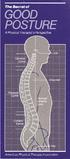 The Secret... T he American Physical Therapy Association would like to share a secret with you. It can help you do more with less effort breathe easier feel great. The secret is about good posture, which
Physical & Occupational Therapy
 In this section you will find our recommendations for exercises and everyday activities around your home. We hope that by following our guidelines your healing process will go faster and there will be
OCCUPATIONAL THERAPY
 OCCUPATIONAL THERAPY This document is subject to change. Please check our web site for updates. This provider manual outlines policy and claims submission guidelines for claims submitted to the North Dakota
Compensation Disability
 Transition Tools for a Brighter Future Compensation Disability April 2013 Zachary Johnson Compensation Service This document contains U.S. Department of Veterans Affairs proprietary business information
Compassionate Allowance Outreach Hearing on Brain Injuries. Social Security Administration. November 18, 2008. Statement of
 Compassionate Allowance Outreach Hearing on Brain Injuries Social Security Administration November 18, 2008 Statement of Jerome E. Herbers, Jr., M.D. Office of Healthcare Inspections Office of Inspector
The Use of the Lokomat System in Clinical Research
 International Neurorehabilitation Symposium February 12, 2009 The Use of the Lokomat System in Clinical Research Keith Tansey, MD, PhD Director, Spinal Cord Injury Research Crawford Research Institute,
Clinical rehabilitation of the amputee: a retrospective study
 Prosthetics and Orthotics International, 1996, 20, 72-78' Clinical rehabilitation of the amputee: a retrospective study G.M. ROMMERS,* L.D.W. VOS,** J.W. GROOTHOFF*** and W.H. EISMA* *Department of Rehabilitation,
Arthritis of the hip. Normal hip In an x-ray of a normal hip, the articular cartilage (the area labeled normal joint space ) is clearly visible.
 Arthritis of the hip Arthritis of the hip is a condition in which the smooth gliding surfaces of your hip joint (articular cartilage) have become damaged. This usually results in pain, stiffness, and reduced
Assisting Students Who Use Wheelchairs:
 Quick-Guide Extra Assisting Students Who Use Wheelchairs: Guidelines for School Personnel Michael F. Giangreco, Irene McEwen, Timothy Fox, and Deborah Lisi-Baker Quick-Guides to Inclusion 3: Ideas for
Audit on treatment and recovery of ankle sprain
 Hong Kong Journal of Emergency Medicine Audit on treatment and recovery of ankle sprain WY Lee Study Objectives: The object of this study is to audit the care of ankle sprain of different severity and
SB 114: IMPROVING PRE-TRIAL DIVERSION TO MEET THE UNIQUE NEEDS OF CONNECTICUT S VETERANS
 SB 114: IMPROVING PRE-TRIAL DIVERSION TO MEET THE UNIQUE NEEDS OF CONNECTICUT S VETERANS 1 Prepared for the Connecticut Veterans Legal Center by Kate Cahoy, Jon Fougner, Sofia Nelson, and Eric Parrie,
Hospitalizations and Medical Care Costs of Serious Traumatic Brain Injuries, Spinal Cord Injuries and Traumatic Amputations
 Hospitalizations and Medical Care Costs of Serious Traumatic Brain Injuries, Spinal Cord Injuries and Traumatic Amputations FINAL REPORT JUNE 2013 J. Mick Tilford, PhD Professor and Chair Department of
Heikki Uustal, MD Prosthetic/Orthotic Team JFK Johnson Rehab Institute Edison, NJ
 Heikki Uustal, MD Prosthetic/Orthotic Team JFK Johnson Rehab Institute Edison, NJ 1 2 Epidemiology incidence Approx. 130,000 amputations per year in US 80 100,000 major amputations (BK 2/3, AK 1/3) Diabetes
YOUR GUIDE TO TOTAL HIP REPLACEMENT
 A Partnership for Better Healthcare A Partnership for Better Healthcare YOUR GUIDE TO TOTAL HIP REPLACEMENT PEI Limited M50 Business Park Ballymount Road Upper Ballymount Dublin 12 Tel: 01-419 6900 Fax:
Veterans have been served by the various Collaborative Court programs which follow evidence based practices for 16 years
 Orange County Veterans Treatment Court Community Court Superior Court of California 909 N. Main Street Santa Ana, CA 92701 1 MISSION STATEMENT The mission of the Orange County Veterans Treatment Court
SCRIPT NUMBER 82 SPRAINED ANKLE (TWO SPEAKERS)
 SCRIPT NUMBER 82 SPRAINED ANKLE (TWO SPEAKERS) PROGRAM NAME: HEALTH NUGGETS PROGRAM TITLE: SPRAINED ANKLE PROGRAM NUMBER: 82 SUBJECT: PATHOLOGY, CAUSES, DIAGNOSIS, TREATMENT, PREVENTION OF SPRAINED ANKLES
A Leading UK Personal Injury Firm. Severe limb injuries leading to amputation
 A Leading UK Personal Injury Firm Severe limb injuries leading to amputation The Personal Injury Department at Fentons Solicitors LLP. AMPUTATION EXPERTISE It can take enormous courage and will power to
Neuromechanical Redundancy for Gait Compensation in Transtibial Amputees. Kinsey Herrin, B.S. Advisor: Young-Hui Chang, Ph.D.
 Neuromechanical Redundancy for Gait Compensation in Transtibial Amputees Kinsey Herrin, B.S. Advisor: Young-Hui Chang, Ph.D. 1 Transtibial Amputees Limb length Ankle Normal joint mobility Direct muscular