
Miocene Central Paratethys stratigraphy current status and future directions
|
|
|
- Chester Paul
- 10 years ago
- Views:
Transcription
1 Miocene Central Paratethys stratigraphy current status and future directions Werner E. Piller 1, Mathias Harzhauser 2 and Oleg Mandic 2 1 Institute for Earth Sciences (Geology and Paleontology), University of Graz, Heinrichstrasse 26, A-8010 Graz, Austria 2 Museum of Natural History Vienna, Geological-Paleontological Department, Burgring 7, A-1014 Vienna, Austria [email protected] ABSTRACT: The complex geodynamic history of the Paratethys periodically fostered the evolution of a highly endemic biota with only limited exchange between the neighboring Mediterranean and Indo-Pacific provinces. The resulting very peculiar fossil assemblages forced the introduction of a regional chronostratigraphic subdivision for the Western/Central and Eastern Paratethys respectively. For the Central Paratethys we present a summarized and updated database for the individual stages, and we review the current status for correlation with the Mediterranean stratigraphic framework. The Miocene Central Paratethys stages were defined on exclusively paleontological criteria in type sections (holostratotypes and faciostratotypes). They are all bounded by either sedimentary hiatuses or distinct facies changes, inferred to mark lowstands in sea level, and not a single boundary stratotype has been defined. Some correlating tie-points to the Mediterranean succession are based on calcareous nannoplankton and planktonic foraminifers; magnetostratigraphic correlation is very limited. All stages can be assigned to the putatively third-order sea level cycles, with the Eggenburgian, Badenian and Pannonian Stages each spanning three cycles and the Ottnangian, Karpatian, and Sarmatian one each. The Karpatian/Badenian boundary correlates with the Burdigalian/Langhian (Early/Middle Miocene) boundary, and the Sarmatian/Pannonian boundary correlates with the Serravallian/Tortonian (Middle/Late Miocene) boundary. The correlation to third-order cycles and the detection of astronomical signals suggest that not only a regional but also a strong global signal is present in the rock record of the Central Paratethys. Since the current definition of a stage includes its global spread, formally defined regional stages are redundant and therefore also notnecessary for the Central Paratethys. However, if stages are essentially regional, then a regional scale as for Central Paratethys would be much more appropriate. INTRODUCTION During the Cenozoic Era Africa moved towards Eurasia with a northwards shift and a generally counterclockwise rotation involving several microplates in the Mediterranean area (Kovác et al. 1998; Márton et al. 2003, 2006; Márton 2006; Seghedi et al. 2004). As a consequence, Eurasian paleogeography changed dramatically from vast marine areas interrupted by archipelagos into dry land. This increasing degree of continentalisation was accompanied by the rise of the Alpidic chains which intensively structured topography. Around the Eocene/Oligocene boundary Africa s northward movement and resulting European plate subduction caused the final disintegration of the ancient (Western) Tethys Ocean (Báldi 1980; Harzhauser et al. 2002; Harzhauser and Piller 2007). The Indo-Pacific Ocean came into existence in the east and various relic marine basins remained in the west. Along with the emerging early Mediterranean Sea, another heritage of the vanishing Tethys was the vast Eurasian Paratethys Sea. The recognition of the Paratethys as a biogeographic entity which differs from the Neogene Mediterranean goes back to Laskarev (1924). He proposed the existence of this lost sea on the ground of the peculiar character of the mollusc fauna after thoroughly investigating the Vienna, Styrian, Pannonian, Dacian, and Euxinian basins. During its maximum extent the Paratethys spread from the Rhône Basin in France towards Inner Asia. It was segregated into three paleogeographic and geotectonic units (not only two as sometimes reported, e.g., Nevesskaya 1999; Vasiliev et al. 2004, 2005) each recording a different environmental history. The smaller western part consists of the Western and the Central Paratethys being opposed by the larger Eastern Paratethys. The Western Paratethys comprises the Alpine Foreland Basins of France, Switzerland, S Germany and Upper Austria (Senes 1961). The Central Paratethys includes the Eastern Alpine - Carpathian Foreland basins, from Lower Austria to Moldavia, and the Pannonian Basin System. The Eastern Paratethys comprises the Euxinian (Black Sea), Caspian and Aral Sea basins (Nevesskaja et al. 1993). The eastern Carpathian Foreland transforms towards the end of the Middle Miocene, switching from the Central Paratethys into the Eastern Paratethys geo- and hydrodynamic regime. This event coincides with the disintegration of the Central Paratethys triggered by the installation of the Late Miocene Lake Pannon that became restricted to the Pannonian Basin System (Magyar et al. 1999b). Eurasian ecosystems and landscapes were impacted by a complex pattern of changing seaways and landbridges between the Paratethys, the North Sea and the Mediterranean as well as the western Indo-Pacific (e.g., Rögl and Steininger 1983; Rögl 1998a, 1999; Popov et al. 2004). Seneš and Marinescu (1974) and Rusu (1988) perceived four stages in the geodynamic history of the Paratethys. In succession they are Proto-Paratethys, formed in the Late Eocene to Early Oligocene by the initial isolation from the open oceans; Eo-Paratethys (Late Oligocene and Early Miocene); Meso-Paratethys (late Early Miocene to early Middle Miocene); and Neo-Paratethys (later Middle to Late Miocene). (See also Steininger and Wessely 2000.) stratigraphy, vol. 4, nos. 2/3, pp , figures 1-3,

2 Werner E. Piller et al.: Miocene Central Paratethys stratigraphy current status and future directions This geodynamically controlled paleogeographic and biogeographic differentiation caused major difficulties in the stratigraphic correlation between the Paratethys and the Mediterranean and global stratigraphy respectively. These problems led to the establishment of regional chronostratigraphic and geochronologic scales, which have been extensively documented for the Central Paratethys in the series Chronostratigraphie und Neostratotypen which distinctly improved the general knowledge on the Neogene Central Paratethys and its stratigraphy (Cicha et al. 1967; Steininger and Seneš 1971; Báldi and Seneš 1975; Papp et al. 1973, 1974, 1978, 1985; Stevanovic et al. 1990). The different geodynamic, paleogeographic and paleobiogeographic histories within the Paratethys itself, led to definition of chronostratigraphic/ geochronologic scales for the Western, and for the Eastern Paratethys, additional to that of the Central Paratethys (e.g., Steininger et al. 1976; Rögl 1996; Popov et al. 2004). In this overview we mainly focus on the Miocene stratigraphy of the Central Paratethys and its correlation to the Mediterranean area (fig. 1). REGIONAL CHRONOSTRATIGRAPHY AND CORRELATION The development of prolonged anoxic bottom conditions during the Early Kiscellian (Early Oligocene, cf. Baldi 1986) marks the birth of the Paratethys (e.g., Schulz et al. 2005). As a consequence, black shales ( Fischschiefer ) developed in the Alpine foreland basin, the bituminous, laminated Tard Clay was deposited in the Hungarian basin and menilites in the Carpathian Flysch trough (Báldi 1998). In response to this event, a first endemic mollusc fauna evolved whilst spreading from the Asian Eastern Paratethys towards the west (Popov et al. 1985). This peculiar Solenovian fauna characterizes the Eastern Paratethyan Solenovian Stage. Environmental chemistry probably brackish water conditions within the vast inland sea triggered a blooming and rapidly evolving, highly endemic bivalve fauna with genera such as Janschinella, Korobkoviella and Ergenica (Popov et al. 1985; Nevesskaja et al. 1987). The accompanying, monospecific, nannoplankton and diatom blooms also point to reduced salinities and cool-temperate surface waters extending from Bavaria to Transcaspia (Rögl 1998a). Late Oligocene Early Miocene Egerian stage The stage was first defined by Báldi (1969) and described in detail by Báldi and Seneš (1975). Its stratotype (holostratotype) was defined at Eger (Wind s brickyard) in northern Hungary (fig. 2, Báldi 1975; Baldi et al. 1999). At the type-locality the base of the stage is marked by an abrupt lithological change from Kiscell Clay to glauconitic sandstone. This level coincides with the first occurrence (FOD) of Costellamussiopecten pasini (Meneghini) (=Flabellipecten burdigalensis Baldi, non Lamarck). Generally, the base is defined with the first occurrences of the benthic foraminifer Miogypsina (Miogypsinoides) complanata Schlumberger and the planktonic foraminifer Globigerinoides. Several species of molluscs also occur for the first time (e.g., Palliolum incomparabile (Risso), Costellamussiopecten schreteri (Noszky), Laevicardium cyprium (Brocchi), and Turritella beyrichi Hoffman). The stratotype is truncated by an unconformity (Baldi 1975, pp. 100, ). In some of the faciostratotype-sections (Budafok-2, Hungary; Orlek, Slovenia), Egerian beds grade into Eggenburgian sediments. The boundary coincides with a lithological change which implies distinct shallowing. In other faciostratotype-sections (Máriahalom, Hungary; Kovácov, Slovakia) the top of the Egerian is missing due to an erosional unconformity. Facies: Sedimentologically and lithologically the Egerian is a continuation of the mainly siliciclastic depositional systems of the Oligocene Kiscellian with predominantly silty-clayey sediments. Carbonate formation is subordinate throughout but mixed carbonate-siliciclastic systems occurred. These are dominated by corallinaceans, bryozoans and larger benthic foraminifers such as miogypsinids and lepidocyclinids (Vanova 1975; Báldi 1986; Baldi et al. 1999; Kaiser et al. 2001). Correlation: This stage straddles the Oligocene/Miocene boundary (Baldi and Seneš 1975) in comprising the upper part of the Chattian and the lower part of the Aquitanian (fig. 1). As pointed out by Baldi et al. (1999) the distribution of larger benthic foraminifers implies a correlation of its lower boundary with the lower boundary of the Shallow Benthic Zone SBZ 22, that is calibrated in the Mediterranean and NE Atlantic with the base of the planktonic foraminiferal zone P22 (Cahuzac and Poignant 1997). Moreover, the recalibration of 3 rd order sea level sequences supported by the biostratigraphic results of Mandic and Steininger (2003), implies the position of the upper Egerian boundary in the mid-aquitanian, and not at its top (fig. 1). Although suggested already by Hungarian stratigraphers (e.g., Baldi et al. 1999), this interpretation contrasts substantially with the current stratigraphic concept (e.g., Rögl et al. 1979; Rögl and Steininger 1983; Steininger et al. 1985; Vakarcs et al. 1998; Rögl 1998b; Mandic and Steininger 2003). The Paleogene/Neogene boundary is difficult to detect in the Central Paratethys since the index fossil for the Aquitanian, Paragloborotalia kugleri, is absent. Correlations are usually based on calcareous nannofossils including uppermost NP 24 to NN 1/2 nannozones (Rögl 1998b). In addition, Miogypsina species are very useful for biostratigraphic correlation. Whereas the lower Egerian deposits belong to SBZ 23 the upper Egerian limestones with Miogypsina gunteri found at Bretka (E Slovakia) (Baldi and Senes 1975) belong to the lower part of SBZ 24 and thus correspond to the lower Aquitanian (Cahuzac and Poignant 1997). Consequently, in terms of sequence stratigraphy the Egerian/ Eggenburgian boundary corresponds with the Aq 2 sea level lowstand of Hardenbol et al. (1998). The following 3 rd order transgression-regression cycle already includes Eggenburgian deposits (see below). This interpretation is in accordance with the general regressive trend in the upper Egerian sediments and with erosional unconformities frequently forming their top. In continuous sections the sediments at the boundary were often deposited in very shallow water environments characterized by brackish water faunas. Continuous deep marine sections are only known from the strongly tectonised thrust sheets of the Outer West Carpathians and their equivalents (Krhovsky et al. 2001). Paleogeography: In the Late Oligocene the Paratethys was a huge, west-east oriented sea (fig. 3A). New gateways towards the Western Tethys opened and normal marine conditions were re-established after the anoxia during the Kiscellian (see above). The connection towards the North Sea Basin was open via the Rhine Graben and a connection to the Venetian Basin opened in the southwest (Rögl 1998a; Reichenbacher 2000). This trans-european connection of the Rhine Graben and Maince Basin with the Tethyan Rhône-Bresse Graben and the Paratethyan Alpine Foreland ceased during the late Egerian (Reichenbacher 2000). 152

3 Stratigraphy, vol. 4, nos. 2/3, 2007 FIGURE 1 Oligocene Miocene geochronology, geomagnetic polarity chrons, biozonations of planktonic foraminifers and calcareous nannoplankton (all after Lourens et al. 2004), sequence stratigraphy and sea level curve (after Hardenbol et al. 1998), and oxygen isotope stratigraphy (after Abreu and Haddad 1998) partly recalibrated and correlated to regional chronostratigraphy of the Central Paratethys. The black dots on the right column indicate the stratigraphic position of the holostratotypes of the regional stages. 153

4 Werner E. Piller et al.: Miocene Central Paratethys stratigraphy current status and future directions Paralic coal basins and freshwater environments developed in the westernmost reaches of the Paratethys (Barthelt 1989; Berger 1996), while the seaways on top of the still partly submerged Alpine nappes into the Western Tethys remained open (Wagner 1996; Steininger and Wessely 2000). Eggenburgian Stage The Eggenburgian Stage was defined by Steininger and Seneš (1971, p ). The stratotype Eggenburgian is located in NE Austria at Loibersdorf some 60 km NW from Vienna (fig. 2; Steininger 1971). Nowadays it outcrops poorly and a continuous section is not available. The base of the Eggenburgian in the area of the stratotype section is transgressive on Palaeogene terrestrial-fluvial-limnic sediments or on crystalline basement rocks. Due to a complex paleotopography in the Eggenburgian type region this transgressive development causes a heterochronous onset of Eggenburgian sediments. This complex evolution was more recently unravelled by a statistically based mollusc stratigraphy by Mandic and Steininger (2003). In the entire Central Paratethys an erosional gap is frequently developed at the base of the stage and in all examples the basal sediments reflect a transgressive pattern (Rögl and Steininger 1983). The biostratigraphic frame of the Eggenburgian is based largely in its characteristic mollusc fauna with large-sized taxa, in particular pectinids and cardiids (Steininger and Seneš 1971). The base is marked by the first occurrence of Oopecten gigas (Schlotheim), the top (base Ottnangian Stage) by the first occurrence of Pecten hermansenni (Dunker). A subdivision into lower, middle and upper Eggenburgian is based on mollusc biostratigraphy (Mandic and Steininger 2003). The lower Eggenburgian is defined biostratigraphically by the total range of Rudicardium grande (Hoelzl), the middle Eggenburgian by the total range of Laevicardium kuebecki (Hörnes). The total range of Oopecten gigas spans both biostratigraphic units. The upper Eggenburgian is defined by the FOD of Gigantopecten holgeri (Geinitz) and Flexopecten palmatus (Lamarck). Benthic foraminifers are of lesser biostratigraphic importance, e.g., the first occurrences of Elphidium ortenburgense Egger, E. felsense Papp, and Uvigerina posthantkeni Papp. Miogypsina intermedia Droger is reported from the Austrian Molasse Basin (Papp 1960). The ostracod genus Falunia Gerkoff and Moyes and calcareous nannoplankton taxon Helicosphaera ampliaperta occur for the first time. Facies: The majority of well studied Eggenburgian sediments come from shallow water depositional environments. The Eggenburgian is dominated by sandy and pelitic near-shore sedimentation. Carbonates are scarce, patchy and usually of hybrid character. A typical example are the shallow marine corallinacean rhodolite carpets associated with fine to medium sand, inhabited by the scutellid echinoid Parmulechinus hoebarthi (Kühn) in the Horn Basin of northern Austria ( Scutellensande ) (Steininger 1971; Kroh 2005). In deepneritic to bathyal settings typical grey calcareous clays with intercalations of sands the so-called Schlier developed. Only in the Outer Carpathians did a relic Flysch trough remain with prevailing turbiditic sequences (Báldi 1998; Popov et al. 2004). Correlation: Supraregional correlation is possible by a few tie points only: calcareous nannoplankton clearly indicates the presence of zones NN2 and NN3 (Steininger et al. 1976; Roetzel et al. 1999) and the mammal fauna places it into the European land mammal zone MN3 (Mein 1989; Steininger et al. 1996; Steininger 1999). The latter zone is detected in the upper Eggenburgian sediments of the type region bearing Gigantopecten holgeri. The lower part of the Eggenburgian is correlated with the upper MN2 zone. In terms of sequence stratigraphy and sea level changes the general stratigraphic development of the Eggenburgian coincides to three 3 rd order sea level changes. These can be correlated with the Aq 2 lowstand, marking the base of the Eggenburgian, Aq 3/Bur 1 and Bur 2, and end with the Bur 3 lowstand (top Eggenburgian/base Ottnangian) of Hardenbol et al. (1998). The mollusc fauna of the basal Eggenburgian (which is correlated herein with the upper Aquitanian), bears Oligocene relics of northern origin (e.g., Drepanocheilus speciosus) (Steininger 1963), whereas the tropical fauna of the middle Eggenburgian is correlated herein with the transgression of the Bur 1 sequence (fig. 1; Mandic et al. 2004). The Bur 2 lowstand (Hardenbol et al. 1998) at the base of the upper Eggenburgian is marked by a prominent erosional surface and reworking of basement rocks. The fossil assemblages in upper Eggenburgian deposits reflect a substantial faunal turnover marked by numerous first occurrences of species with proto-mediterranean origin (Mandic and Steininger 2003). This is interpreted as a consequence of a prominent flooding event allowing the faunal migration from the latter region. Finally, the next prominent erosional surface - topping the upper Eggenburgian siliciclastics - is correlated herein with the Bur 3 lowstand and the base of the Ottnangian. The lower Ottnangian sediments differ distinctly due to the onset of a warm-temperate carbonate factory, indicated by bryozoan-corallinacean limestones (Zogelsdorf Formation) (Nebelsick 1989). Larger benthic foraminifers (Amphistegina) and hermatypic corals are subordinate, the latter form only very small patches. Contrary to Vakarcs et al. (1998) we consider the major sea level lowstand at the base of the Eggenburgian to be equivalent not to Aq 3/Bur 1 but to Aq 2, which accords better with calcareous nannoplankton, mammal and mollusc data (Steininger et al. 1976; Mandic and Steininger 2003). Paleogeography: Broad connections into the Eastern Paratethys allowed the spreading of the middle Eggenburgian mollusc faunas with Laevicardium kuebecki as far east as the Crimean Peninsula and Georgia (Rögl 1998a). In addition, the western seaway via the Alpine Foreland, which was sealed during the late Egerian and maybe also during the earlier Eggenburgian, started to open. The sea invaded the foreland successively from the west and entered the Central Paratethys (Berger 1996) at last with the late Eggenburgian. This newly established marine pathway of the Paratethys via the Alpine Foredeep into the Rhône Basin probably coincided with a hypothetical second flow from the Eastern Mediterranean (Martel et al. 1994). These connections gave rise to a new hydrodynamic regime reflected in the meso- and macrotidally controlled deposits throughout the Alpine Foreland basins lasting from the late Eggenburgian to the middle Ottnangian (Allen et al. 1985; Faupl and Roetzel 1990). A second area of tidal deposits is described by Sztanó (1995) from the Eggenburgian of the North Hungarian Bay. Faunistically, the changes in paleogeography are reflected by the immigration of western Mediterranean taxa such as the echinoid Arbacina catenata (Desor) (Kroh and Harzhauser 1999) and several bryozoans (Vavra 1979). Among molluscs, the prominent faunistic overturn is marked by the introduction of Burdigalian Mediterranean pectinids such as Flexopecten 154

5 Stratigraphy, vol. 4, nos. 2/3, 2007 FIGURE 2 Geographic distribution of all Miocene stratotype localities of Central Paratethys stages. palmatus and Gigantopecten holgeri going along with the extinction of the Eggenburgian endemics such as Oopecten gigas and Laevicardium kuebecki (Mandic and Steininger 2003). Another important immigration is represented by the fossil sea cow Metaxytherium krahuletzi being conspicuously common in the upper Eggenburgian but absent in older horizons. All that happens distinctly prior to the onset of the warm-temperate carbonate production on top of upper Eggenburgian siliciclastics (Roetzel et al. 1999). The onset of the warm-temperate carbonate factory is probably coeval with the slight cooling indicated by Zachos et al. (2001) and by the MBi-2 isotope event of Abreu and Haddad (1998) (Fig. 1). The loss of tropical mollusc taxa between the middle and the upper Eggenburgian could coincide with the MBi-1 isotope event. Ottnangian Stage The stratotype is defined in a clay pit near the village of Ottnang in Upper Austria (Rögl et al. 1973, fig. 2). The type section is characterized by the onset of well-bedded, blue-grey, fine sandy, micaceous claymarls (locally called Ottnang Schlier ) which are underlain by fine to medium grained quartz sands ( Atzbach Sands ). The base of the Ottnangian is not defined in this section, the top is cut by erosion. In basinal sections of the Alpine foredeep, sedimentation is considered to be continuous from the Eggenburgian into the Ottnangian, whereas in more eastern locations (e.g., Hungary) the base is marked by a disconformity. In Slovakia and northern Hungary, seemingly continuous sedimentation from the Ottnangian into the Karpatian is reported. Generally, the Ottnangian is a strictly twofold stage with a normal marine development in its lower part and a predominance of restricted marine to fresh water environments in its upper part. The most characteristic and important biota are marine molluscs, partly of boreal affinity, but mainly of Paratethyan Eggenburgian origin. Some of the Ottnangian mollusc faunal elements are of biostratigraphic importance: the FOD of Pecten hermansenni (Dunker) mark the base of the stage. The foraminiferal fauna is very similar to that of the Eggenburgian (Harzhauser and Piller 2007). Among planktonic taxa Cassigerinella spinata Rögl occurs and Globigerina ottnangiensis Rögl is abundant. Among benthic foraminifers Sigmoilopsis ottnangensis, Bolivina matejkai, B. scitula, and Amphicoryna ottnangensis are characteristic, as also Pappina primiformis and Pappina breviformis (Steininger et al. 1976; Cicha et al. 1998). The late Ottnangian is characterized by the occurrence of a highly distinct endemic bivalve fauna, the so called Rzehakia fauna (=synonymous to Oncophora fauna ; cf. Senes 1973). This consists of endemic genera such as Rzehakia and Limnopagetia, which offer an excellent correlation tool within Paratethyan deposits (Ctyroky 1972; Mandic and Coric 2007). Facies: In the lower Ottnangian, sedimentation is dominated by siliciclastics with widespread tidally influenced deposits and the characteristic sandy/silty Schlier sediments (Faupl and Roetzel 1987, 1990). The warm-temperate bryozoan-corallinacean limestones are known only from the Eggenburgian region (Zogelsdorf Fm.), which have been considered up till now to be of late Eggenburgian age (see discussion above). The car- 155

6 Werner E. Piller et al.: Miocene Central Paratethys stratigraphy current status and future directions bonates previously correlated with the upper Ottnangian from the Hungarian Bántapuszta section (Kókay 1973) recently have been correlated with the Karpatian (Mandic 2003). The shift was due to reinterpreting biostratigraphic data from pectinid bivalves, foraminifers and calcareous nannoplankton, and to the reconsideration of the regional geologic history. On the evidence of silicoflagellate assemblages and the frequent occurrence of diatomites, Bachmann (1973) favoured temperate water conditions for the lower Ottnangian deposits. The upper part of the Ottnangian is represented by fluvial-lacustrine environments of the Upper Freshwater Molasse in the Western Alpine Foreland Basin (Berger 1996). With the exception of the Northern Alpine Foreland Basin and its continuation into the Polish foredeep, no fully marine environments are known from the Carpathian-Pannonian-Dinaride domain where brackish to freshwater sedimentary environments prevailed (Kovác et al. 2004; Kotlarczyk et al. 2006). Consequently, during the late Ottnangian and the synchronous Kotsakhurian in the Eastern Paratethys biogeographic relations between the Paratethys and the Mediterranean Sea ceased. This Ottnangian crisis is reflected in nearshore settings by brackish water conditions and a sudden evolutionary peak in bivalves, resulting in a large number of endemic genera of the so-called Rzehakia fauna (see above). This fauna expanded from the Eastern Paratethys into the Central and Western Paratethys Sea during the late Ottnangian (Steininger 1973). Correlation: The Ottnangian was differentiated because of a regressional phase at the end of the Eggenburgian (Senes 1973), inferred to be due to tectonic movements particularly effective in the Carpathian area. These tectonic activities, however, enhanced a global sea level fall at the beginning of the Ottnangian which can be correlated with the TB 2.1. cycle of Haq et al. (1988) and represents Bur 3 of Hardenbol et al. (1998). The Ottnangian therefore corresponds to only one 3 rd order sea level change (Kovác et al. 2004). Biostratigraphic correlation outside Paratethys is very limited. Within the Ottnangian the foraminiferal genus Catapsydrax occurs for the last time. Rögl (1998b) linked this event with the LAD of C. unicavus/c. dissimilis, which defines the boundary between M3 and M4 of Berggren et al. (1995). In terms of nannoplankton stratigraphy zones NN3 and NN4 are represented (Steininger et al. 1976; Rögl et al. 2003a). Magnetostratigraphic correlation points to a rough correspondence of the entire Ottnangian to Chron C5D. Paleogeography: During the early Ottnangian the paleogeographic configuration remains similar to that during the Eggenburgian, but in the late Ottnangian the uplift of the Alpine Foreland Basin terminated the western connection to the Mediterranean (Rögl 1998a). In addition, the sea level fall during the Early Miocene global sea level cycle TB 2.1. (Haq et al. 1988) accentuates the beginning isolation of the Paratethys from the Mediterranean Sea during the late Ottnangian. Geographic differences within the endemic Rzehakia fauna between Bavaria, Austria and Moravia might indicate a further disintegration of the Paratethys into several isolated brackish lakes (Mandic and Coric 2007). Karpatian Stage This stage was erected by Cicha and Tejkal (1959) and defined by Cicha et al. (1967) in the first volume of the series Chronostratigraphie und Neostratotypen based on the stratotype section Slup (fig. 2) in Moravia (Czech Republic). Brzobohatý et al. (2003) updated this volume with a wealth of new data. The stratotype section is characterized by bedded, fine-grained sands and lenses of coarse sands with a rich molluscan fauna. Its base is marked by an unconformity, forcing Cicha and Rögl (2003) to issue a Provisional definition of the Karpatian, in the updated volume. This discontinuity occurs in all shallow marine settings (Rögl et al. 2003a). Continuous sedimentation between the Ottnangian and the Karpatian is expected only in deeper parts of Central Paratethys basins particularly in the Pannonian realm (Cicha and Rögl 2003). Originally, the stage was established to document the surge of new faunal elements from the Mediterranean at its base. Some of the molluscs occur for the first time in the Karpatian (e.g., Conus steindachneri, Thais exilis, Gyrineum depressum, Acanthocardia paucicostata, Cerastoderma arcella, Ervilia pusilla, Paradonax intermedia), most, however, continue into the Badenian (Harzhauser 2002; Harzhauser et al. 2003). Due to this continuation, differentiating Karpatian and Badenian gastropod assemblages is sometimes difficult (Harzhauser et al. 2003). Restricted to the Karpatian are Modiolus excellens Csepreghy-Meznerics and Mactra (Barymactra) nogradensis Csepreghy-Meznerics (Mandic 2003). The stage is defined biostratigraphically with the FAD of Uvigerina graciliformis Papp and Turnowsky (Papp et al. 1971). Several other uvigerinids co-occur, such as Pappina primiformis, P. breviformis and Uvigerina acuminata. In general, foraminifers exhibit a relatively great number of FODs (Harzhauser and Piller 2007), with planktonic taxa less diverse. The most important planktonic foraminiferal event is the FOD of Globigerinoides bisphericus Todd in the upper Karpatian. Calcareous nannoplankton floras are characterized by Helicosphaera ampliaperta, H. carteri, H. mediterranea, Reticulofenestra pseudoumbilica, Sphenolithus heteromorphus, and Pontosphaera multipora (Steininger et al. 1976; Švábenická et al. 2003). Soliman and Piller (2007) described a low-diversity dinoflagellate association with dominant Operculodinium centrocarpum, Lingulodinium machaerophorum, Reticulatosphaera actinocoronata and Spiniferites spp. Facies: The base of the Karpatian sequences is represented mainly by terrestrial, alluvial, fluvial, and deltaic deposits which upsection pass rapidly into marine, neritic to shallow bathyal sediments. Sedimentation is dominated by green-blue and grey pelites and silty calcareous shales in offshore environments and clayey sand in marginal areas. The lower Karpatian has still similarities with the Ottnangian, pointing to cool-temperate water masses with high numbers of siliceous fossils (Rögl et al. 2003b). Suboxic bottom conditions in the basins, upwelling and temperate water are also suggested based on planktonic foraminifers (Cicha et al. 2003). Carbonates as known from the Hungarian Bántapuszta section (Kókay 1973) are scarce and correspond in composition to the lower Ottnangian corallinacean-bryozoan type. Warmer water indicators, such as Globigerinoides or Globorotalia, appear in the late Karpatian together with a thermophilic mollusc fauna (Harzhauser et al. 2003). Correlation: After a long history of misinterpretations and miscorrelations (for a more recent compilation see Harzhauser et al. 2003) the Karpatian Stage is nowadays consistently considered to be time-equivalent to the latest Burdigalian. Although the base of the stage cannot be biostratigraphically tightened, the calcareous nannoplankton flora with the co-occurrence of Helicosphaera ampliaperta and Sphenolithus heteromorphus 156

7 Stratigraphy, vol. 4, nos. 2/3, 2007 places the entire Karpatian record in calcareous nannoplankton zone NN4. The occurrence of Globigerinoides bisphericus in the upper part of the Karpatian allows a correlation with foraminiferal zone M4b of Berggren et al. (1995) and also places it in the latest Burdigalian. Within this biostratigraphic frame, the unconformity at the base of the Karpatian and the following transgression can be correlated with the sea level rise at the beginning of the global 3 rd order sea level cycle TB 2.2. of Haq et al. (1988) and Bur 4 of Hardenbol et al. (1998). The Karpatian/Badenian (Burdigalian/ Langhian) boundary is characterised by a significant sea level drop (Haq et al. 1988; Hardenbol et al. 1998), expressed as a hiatus traceable throughout the Central Paratethys (Rögl et al. 2002). Continuous sedimentation from Karpatian to Badenian has never been observed. The top of the Lower Miocene in the Paratethyan basins is marked by erosional surfaces or by an angular discordance between the Lower and Middle Miocene strata, frequently called the Styrian unconformity (Stille 1924; Latal and Piller 2003). As a consequence, the Karpatian matches only one 3 rd order sea level cycle (TB 2.2., Bur 4 as base). Paleogeography: The Karpatian starts with a transgression and a reorganisation of the paleogeographic pattern (Rögl et al. 2003b). The northward migration of a variety of biota was favoured by a general warming trend and by a new broad connection with the Mediterranean that established via the Slovenian Trans-Tethyan Trench Corridor (Bistricic and Jenko 1985). This seaway enabled a free faunal exchange between the Central Paratethys and the Mediterranean area. This change in environment is adjoined by a dramatic tectonic turnover in the Central Paratethys area leading to a change from W-E trending basins towards intra-mountain basins (Rögl and Steininger 1983; Rögl 1998a; Kovác et al. 2003). A typical example for the geodynamic impact is the abrupt, discordant progradation of upper Karpatian estuarine to shallow marine deposits over lower Karpatian offshore clays in the Alpine Foreland Basin and in the Carpathian Foredeep (Adámek et al. 2003). The widespread formation of evaporites in the Rumanian part of the Carpathian Foredeep and in the Transylvanian Basin points to a poor or even absent connection with the Eastern Paratethys during the latest Early Miocene. FIGURE 3 Paleogeographic sketch-maps of the Mediterranean Central Paratethys region (grey: land; white: water): A: During the Late Oligocene good marine connections with broad seaways between the Central Paratethys, Mediterranean and North Sea were present. The Central Paratethys was a predominantly west-east oriented sea. B: By the early Middle Miocene the connection to the North Sea had vanished, a connection to the Mediterranean was open only through the Trans-Tethyan-Trench-Corridor and the connection into the Eastern Paratethys was reduced to a few narrow gateways. C: During the early Late Miocene the Central Paratethys has changed into Lake Pannon with no marine connections, neither into the Mediterranean nor into the Eastern Paratethys. D: In the latest Miocene the Messinian Salinity Crisis heavily affected the Mediterranean basins by desiccation and the deposition of thick evaporites (grey hatching). The relict fresh water systems of the Central Paratethys contributed to the hydraulic regime of the Eastern Paratethys. Maps modified from Rögl (1998) and Popov et al. (2004). 157

8 Werner E. Piller et al.: Miocene Central Paratethys stratigraphy current status and future directions Middle Miocene Badenian Stage Papp and Steininger (1978) defined the Badenian Stage based on the stratotype locality Baden-Sooss, south of Vienna (fig. 2). The type-locality is a clay pit in which the characteristic grey-blue basinal clay (local name: Baden Tegel ) is exposed. The Baden Tegel is well known for its excellent fauna consisting of a highly diverse benthic foraminiferal assemblage and more than 400 of molluscan species besides other invertebrates and vertebrates. The base at the stratotype section was never exposed, the top is unconformably overlain by Sarmatian and Pannonian deposits respectively. The clay pit is not actively worked and the outcrop is now poor. The base of the Badenian was defined with the first occurrence of Praeorbulina (Papp and Cicha 1978) following a transgression above the unconformity due to the Styrian tectonic phase (Stille 1924) and the sea level lowstand at the Bur 4/Lan 1 sequence boundary (Latal and Piller 2003; Strauss et al. 2006). Biostratigraphic subdivision is based on planktonic foraminifers (Orbulina suturalis, Velapertina indigena, Globigerinoides quadrilobatus, Globorotalita druryi, Globorotalia peripheroronda, Globoquadrina altispira) as well as on smaller (Uvigerina grilli, U. macrocarinata, U. venusta, U. brunnensis, Pappina parkeri, P. neudorfensis) and larger benthics (Borelis haueri, B. melo melo, Planostegina group costata, P. giganteoformis, Amphistegina mammila) (cf. Cicha et al. 1998). Several fossil groups increase dramatically in diversity at the onset of the Badenian. This event, the Early Badenian Build-up Event (EBBE), has been explicitly worked out for gastropods, with 505 taxa having their FOs, and for foraminifers, with FOs of 82 taxa (Harzhauser and Piller 2007). These authors denominated this event as Early Badenian Build-up Event (EBBE). A threefold subdivision of the Badenian is generally carried out based on significant paleoecologic and paleogeographic changes reflected in the composition of the biota (Papp et al. 1978; Kovác et al. 2004). The lower Badenian is represented by the Lagenidae Zone, the middle Badenian by the Spiroplectammina Zone, and the upper Badenian by the Bulimina/Bolivina Zone (Grill 1943). This subdivision is particularly conspicuous in the eastern Central Paratethys and the Carpathian Foredeep and resulted in the establishment of three substages Moravian for the lower, Wielician for the middle, and Kosovian for the upper Badenian. Most characteristic are the widespread evaporites of the Wielician Substage (Papp et al. 1978), which occur in the Carpathian Foredeep (Peryt 2001) and in the Transylvanian Basin (Krézsek and Filipescu 2005). Facies: Besides the highly fossiliferous offshore clays, the Badenian is the climax of the Paratethyan carbonate production. Corallinacean limestones are ubiquitous, but the only noteworthy coral reef phase of the Central Paratethyan succession occurs during the Badenian. Early Badenian reefs in southern parts of the Paratethys are fairly diverse. Especially in the Styrian Basin several small coral reefs composed of Montastrea, Tarbellastraea, Leptoseris, Acropora, and Porites developed, which, however, had to keep pace with high terrigenous and volcanoclastic input (Friebe 1993; Riegl and Piller 2002; Erhart and Piller 2004). By Late Badenian times a variety of photozoan and heterozoan carbonate facies was still present (Dullo 1983), but a distinct change in coral constructions had occurred. Even in the southern Central Paratethyan basins (e.g., Vienna Basin, Styrian Basin) complex reefs are observed no more. They were replaced by coral carpets, developed along detached islands and dominated by Porites, Tarbellastraea, Caulastrea, Acanthastrea, and Stylocora (Piller and Kleemann 1991; Riegl and Piller 2000, 2002). This shift in reef structure and diversity seems to be linked to the climatic deterioration triggered by the global Mid-Miocene Climate Transition (Shevenell et al. 2004). In northern parts of the Paratethys this change is more severe, leading to a loss of algal-bryozoan-coral bioconstructions in favour of algal-serpulid-vermetid reefs (Pisera 1996; Studencki 1999). Correlation: Based on the FOD of Praeorbulina in the Styrian Basin, the Vienna Basin and the Alpine Foreland Basin the early Badenian can be correlated with the early Langhian of the Mediterranean (Rögl et al. 2002). In all known shallow water sites of the Central Paratethys the very base of the Middle Miocene, however, is missing. This is clearly related to the widespread and pronounced unconformity and reflected by the missing first evolutionary stages from Globigerinoides bisphericus to Praeorbulina in nearly all basins and sections (aside from one section in the Styrian Basin; Rögl, pers. comm. 2007). The latter is usually represented by co-occurring Po. glomerosa curva and Po. glomerosa glomerosa only (Rögl et al. 2002). In terms of nannoplankton stratigraphy the lowermost Badenian still correlates to NN4 due to the occurrence of Helicosphaera ampliaperta and Sphenolithus heteromorphus (Rögl et al. 2002; Spezzaferri et al. 2002, 2004). Higher up NN5 is clearly reflected by the presence of Helicosphaera waltrans together with S. heteromorphus (Rögl et al. 2002). With these biostratigraphic tie points the transgression at the base of the Badenian can clearly be correlated to the global sea level cycle TB 2.3. of Haq et al. (1988) and Bur 5/Lan 1 of Hardenbol et al. (1998) (Kovác et al. 2004; Strauss et al. 2006). The top of this lower Badenian cycle is marked by an unconformity in seismic surveys in the Vienna Basin, pointing to a sea level drop of more than 120 m (Kreutzer 1986; Weissenbäck 1996; Harzhauser and Piller 2007). Furthermore, in many marginal settings, e.g. the Alpine Foreland Basin and the Eisenstadt-Sopron Basin, the end of the marine sedimentation of the first Badenian cycle can be correlated to the same event (Mandic et al. 2002; Mandic 2004; Kroh et al. 2003). Based on the co-occurrence of Orbulina and Praeorbulina in the underlying deposits (e.g., Rögl et al. 2002), the basin-wide occurrence and the remarkable magnitude of the sea level drop a link with the global sea level drop at about 14.2 Ma is reasonable. This event was triggered by the expansion of the East Antarctic ice sheet (Flower and Kennett 1993; Shevenell et al. 2004) and corresponds to the Lan 2/Ser 1 sequence boundary of Hardenbol et al. (1998). The second Badenian cycle is interpreted to be an expression of the global sea level cycle TB 2.4. of Haq et al. (1988). A distinct lowstand wedge and a well-developed transgressive wedge are observed in seismic studies in the Vienna Basin (Kreutzer 1986; Strauss et al. 2006). In the Carpathian Foreland basins and in the Transylvanian Basin a pronounced evaporitic phase starts, known as the Wielician crisis (Steininger et al. 1978; Kasprzyk 1999; Chira 2000), which correlates to the Lan 2/Ser 1 lowstand of Hardenbol et al. (1998). While evaporite formation continued in the east throughout the middle Badenian, in the western parts of the Central Paratethys this cycle is characterised by corallinacean platforms with frequent caliche formation and vadose leaching (Dullo 1983; Schmid et al. 2001). The occurrence of Sphenolithus heteromorphus places this middle Badenian sediments in nannoplankton zone NN

9 Stratigraphy, vol. 4, nos. 2/3, 2007 The renewed flooding of the third Badenian cycle is biostratigraphically dated by the onset of nannoplankton zone NN6 (Hudáckova et al. 2000; Kovác et al. 2004). The base of this biozone is defined by the last occurrence of Sphenolithus heteromorphus and corresponds to the Langhian/Serravallian boundary in the Mediterranean, which was calibrated by Foresi et al. (2002a) at Ma (see also Gradstein and Ogg 2004; Gradstein et al. 2004; Lourens et al. 2004). Therefore, the Langhian/Serravallian boundary is located within the Badenian and correlates roughly to the middle/upper Badenian boundary. Considering the dating and the magnitude of this cycle a correlation with the global cycle TB 2.5. of Haq et al. (1988) can be expected. This late Badenian is characterised by a stratified water body indicated by the deposition of dysoxic pelites in basinal settings in the entire Central Paratethys area (e.g., Hudáckova et al. 2000). Even the platforms became affected by repeated hypoxic events as documented by Schmid et al. (2001). Paleogeography: The paleogeographic situation changed strongly during the Badenian. During the early Badenian the Trans-Tethyan Trench Corridor via Slovenia was still open and connected the Mediterranean Sea with the Pannonian basin system (fig. 3B). The connections into eastern directions, however, are still controversial. While Rögl (1998a) and Steininger and Wessely (2000) postulate an open connection into the Eastern Paratethys (fig. 3), Studencka et al. (1998) and Popov et al. (2004) indicate a land barrier between both seas. Rögl (1998a) discussed an already subducted marine pathway between the southern margin of the Black Sea plate and the Pontids, connecting the Eastern Mediterranean with the Central Paratethys. A repeated re-opening of the Tethyan gateway between the Mediterranean and the Indo-Pacific during the Langhian (early Badenian) (Rögl 1998a; Popov et al. 2004) and even into the Serravallian (Jones 1999) is highly probable. During the middle Badenian the eastern seaways were sealed. Water supply for the Central Paratethys was only warranted via the Trans-Tethyan Trench Corridor. This gateway was finally closed in the late Badenian. The entire Central Paratethys was therefore depending on a connection with the Eastern Paratethys via today s western Black Sea area. Faunistic differences between the diverse Central Paratethys and the impoverished Eastern Paratethys at that time, however, exclude the Eastern Paratethys as passage into the west (Studencka et al. 1998). Again, the enigmatic seaway between the Black Sea plate and the Pontids might have acted as gateway (Rögl 1998a). Such a connection would also be obligatory to explain the immigration of new radiolarian assemblages into the Central Paratethys as discussed by Dumitrica et al. (1975). The next dramatic change in marine biota occurs with the dawn of the Sarmatian. Of the Badenian fauna, 588 LOs of gastropods and 121 of foraminifers are recorded and designate this event as the strongest turnover event of the Paratethyan history. Harzhauser and Piller (2007) christen this event the Badenian-Sarmatian-Extinction-Event (BSEE). The faunal re-orientation was triggered by a strong restriction of the open ocean connections of the Central Paratethys (Rögl 1998a), corresponding to the Ser 3 sequence boundary of Hardenbol et al. (1998) and the begin of cycle TB 2.6. of Haq et al. (1988) (Kovác et al. 1999, 2004; Harzhauser and Piller 2004b; Strauss et al. 2006). The Badenian/Sarmatian boundary would thus be related with the glacio-eustatic isotope event MSi-3 at 12.7 Ma (Abreu and Haddad 1998). Correspondingly, a considerable hiatus at the Badenian/Sarmatian boundary is indicated by a strongly erosive discordance in seismic lines in Paratethyan basins (Harzhauser and Piller 2004a, b). Sarmatian Stage The Sarmatian as a regional stage was already defined in the Vienna Basin by Suess (1866). Its stratotype was designated in the northern Vienna Basin at the Nexing section (fig. 2) (Papp and Steininger 1974) which is characterized by biogenic sediments of molluscan shells. The type section is part of the upper Sarmatian and does not represent a boundary stratotype. Also at its top no boundary to the Pannonian is preserved. Lithology and depositional environment at the type-locality are very specific and not representative for the stage (Harzhauser and Piller accepted). At large, the Sarmatian is a strongly twofold stage. The lower Sarmatian, above a pronounced and widespread unconformity, is dominated by fine siliciclastic sediments. The highly variable carbonate facies, characteristic for the Badenian, vanished completely within the entire Paratethys Sea at the Badenian/Sarmatian boundary. The upper Sarmatian sediments reflect a mixed carbonate-siliciclastic regime all over the Central Paratethys (Harzhauser and Piller 2004a, b). The base of the Sarmatian was defined by the occurrence of a highly endemic fauna, particularly molluscs and to a lesser extent foraminifers. Both groups allow the establishment of an ecostratigraphic subdivision, which comprises for the lower Sarmatian the Mohrensternia Zone and lower Ervilia Zone among molluscs and the Anomalinoides dividens Zone, Elphidium reginum Zone and Elphidium hauerinum Zone among benthic foraminifers. The upper Sarmatian contains the Porosononion granosum Zone and is subdivided into the upper Ervilia Zone and Sarmatimactra vitaliana Zone by molluscs. Contemporaneous with the abrupt increase in endemics, a total loss in stenohaline biota occurs at the Badenian/Sarmatian boundary. Since radiolarians, planktonic foraminifers, corals and echinoderms are completely absent these sediments were also named brackish stage (Suess 1866). Although this denomination was rejected later (see Papp 1974a) the idea of an environment with reduced salinity for the Sarmatian in general was favoured until recently (e.g., Kovác et al. 1999). After a well-based opposition to this interpretation by Pisera (1996), Piller and Harzhauser (2005) presented a range of data pointing clearly to normal marine conditions for most of the Sarmatian environments. Geophysical correlation, based on many oil-exploration boreholes, works well and consistently with ecostratigraphy in the Central Paratethys basins (Harzhauser and Piller 2004b). Facies: The lower Sarmatian is characterized by siliciclastic sediments, often with conglomerates at the base overlain by fine-clastics, the latter frequently deposited on tidal flats or in estuaries and rich in low-diversity molluscan faunas (Harzhauser and Piller 2004b). Diatomites with marine diatoms and silicoflagellates are a more open-water facies (Rögl and Müller 1976; Harzhauser and Piller 2004a, b; Schütz et al. 2007). Offshore deposits are represented by marls and silty clays with an impoverished bivalve fauna (Kojumdgieva et al. 1989). Carbonate rocks are represented only rarely by autochthonous build-ups formed by the polychaete Hydroides and by bryozoans (Harzhauser and Piller 2004a, b; Piller and Harzhauser 2005). These bioconstructions are best developed in the Carpathian Foredeep, extending as a chain of patches from Poland via Moldavia and Rumania to Bulgaria (Pisera 1996). The lower Sarmatian is terminated by the basin-wide occurrence of con- 159

10 Werner E. Piller et al.: Miocene Central Paratethys stratigraphy current status and future directions glomerates (e.g., Vienna and Styrian basins; Harzhauser and Piller 2004b) At the onset of the late Sarmatian, sedimentation switched from a siliciclastic to a carbonate dominated system throughout the Central Paratethys. Oolites and coquina-dominated sands start to spread in nearshore settings and on shallow shoals giving rise to small carbonate platforms (Harzhauser and Piller 2004a, b, accepted). Mass occurrences of the larger foraminiferal species Spirolina austriaca d Orbigny characterize the latest Sarmatian. Coevally a drastic increase occurred in bivalve shell thickness (e.g., Venerupis, Sarmatimactra; Papp et al. 1974; Piller and Harzhauser 2005). The early Sarmatian polychaetebryozoan communities collapsed and were replaced by unique foraminiferan build-ups characterized by the sessile nubeculariid genus Sinzowella in association with calcareous algae and microbial carbonate. The Sarmatian oolites are the only Miocene oolites in the entire Central Paratethys area. Correlation: Correlating outside the Central Paratethys is problematical, due to the restricted connection of Paratethys to the Mediterranean and the lack of most stenohaline faunas. Planktonic foraminifers are almost entirely absent (Cicha et al. 1998; Harzhauser and Piller 2007). The only saviour is the calcareous nannoplankton, low in diversity and with endemic taxa (Steininger et al. 1976; Stradner and Fuchs 1979). The absence of Sphenolithus heteromorphus indicates a correlation with zone NN6 (e.g., Schütz et al. 2007), and the occurrence of Discoaster kugleri in the uppermost part indicates NN7. The very pronounced sea level lowstand at the Badenian/ Sarmatian boundary can be correlated with the Ser 3 sequence boundary of Hardenbol et al. (1998). The lowstand at the end of the Sarmatian, representing the Sarmatian/Pannonian boundary, accordingly can be correlated with the Ser 4/Tor 1 sequence boundary which coincides with the Serravallian/ Tortonian boundary (Lourens et al. 2004). The entire Sarmatian corresponds to only one 3 rd order sea level cycle TB 2.6. of Haq et al. (1988) (Harzhauser and Piller 2004b; Kovác et al. 2004). Biostratigraphic data combined with astronomically derived ages place the Serravallian/Tortonian boundary at Ma (Lirer et al. 2002; Foresi et al. 2002b) what is in accordance with the age (11.5 Ma) proposed by Rögl et al. (1993) and Kovác et al. (1998a, b) for the Sarmatian/Pannonian boundary. The sea level lowstand between the lower and upper Sarmatian can be interpreted as lowstand between two 4 th order cycles (Kosi et al. 2003; Harzhauser and Piller 2004b; Strauss et al. 2006). In the Eastern Paratethys the Sarmatian has an analogue in the regional stages Volhynian and (lower) Bessarabian (Rögl 1998a, b; Harzhauser and Piller 2004b, 2007). Although without any tie point, the sediments of the Sarmatian show a clear astronomical signal with a 400 ka eccentricity component which may have triggered the 4 th order cycles and, in addition, 100 ky and 2.35 Ma components (Harzhauser and Piller 2004b). Paleogeography: During the Sarmatian the Paratethys became almost completely sealed off from the Mediterranean. The Central Paratethys was, however, well connected to the Eastern Paratethys (Rögl 1998a). From there, a narrow marine connection into the Mediterranean Sea formed far in the east due to tectonic movements along the S-Anatolian fault system (Chepalyga 1995; Steininger and Wessely 2000). The fair connection between the two Paratethyan seas is reflected by a striking similar faunistic inventory characterised by a highly endemic and considerably impoverished fauna lacking most stenohaline taxa (Kolesnikov 1935; Papp et al. 1974). This peculiar character of the marine fauna was recognised already by Suess (1866) who then introduced the term Sarmatian. Late Miocene Pannonian Stage The stratotype of the Pannonian Stage is located in a clay pit in Vösendorf (Lower Austria) close to the southern border of the city of Vienna (Papp 1985). The type section contains highly fossiliferous clays with sandy interlayers; its base is not exposed. All surface outcrops show a discontinuous sedimentation between the Sarmatian and Pannonian, although several authors refer to transitional beds (e.g., Janoschek 1942; Papp 1951). This interpretation was evoked by reworked Sarmatian fossils at the base of the Pannonian deposits (Harzhauser et al. 2004). The turn from the Sarmatian to the Pannonian is marked by a major incision in faunal content with an extinction rate over 90% for gastropods and foraminifers. This is the Sarmatian- Pannonian-Extinction-Event (SPEE) (Harzhauser and Piller 2007). The Pannonian Stage was established on its very peculiar mollusc fauna with a high degree of endemism and rapid evolutionary radiations (Müller et al. 1999) reflecting the evolution of a long living lake system, called Lake Pannon (fig. 3C). Among bivalves the genera Mytilopsis, Congeria, and Lymnocardium and among gastropods the genus Melanopsis are the most important representatives mirroring this evolutionary history. The development of the fauna was controlled by the gradual freshening of the water body as well as by geodynamic processes, resulting in profound changes in lake geometry (Magyar et al. 1999b). The evolutionary lineages of molluscs allow a clear biostratigraphic subdivision within the lake sediments, as already realized by Fuchs (1875) and elaborated in a great detail by Papp (1951) who applied a letter zonation (Pannonian A-H) instead of eco-biozones. The type section is stratigraphically located in Zone E. After a first attempt by Rögl and Daxner-Höck (1996), the letter zonation has been traced back to biozones by Magyar et al. (1999a, b) and Harzhauser et al. (2004). This molluscan biozonation can be differentiated for littoral and sublittoral depositional environments. A biozonation based on dinoflagellates has been established (Magyar et al. 1999a). Facies: Deltaic gravels, sands, whitish marls and lignites accumulated along the coasts of Lake Pannon. Typical deposits in basinal settings are grey-blue clays and marls as exposed in the stratotype section (Papp 1985). During phases of high water tables the deep lake areas have been exposed to hostile dysoxic conditions resulting from a well developed hypolimnion (Harzhauser and Mandic 2004). Carbonate sediments are completely lacking in the Central Paratethys whilst oolites and bryozoan bioconstructions are still frequent in upper Bessarabian deposits of the Eastern Paratethys (Pisera 1996). During the late Pannonian, the northwestern part of the lake e.g. Vienna Basin turned into floodplain-environments as the coastline retreated (Magyar et al. 1999b; Harzhauser and Tempfer 2004). The central and southern part remained as a subbasin complex filled by prodelta turbidites and prograding deltaic deposits, several hundred meters deep (Popov et al. 2004). Despite its shrinking size, the southern coastline along the northern Dinarids was quite stable throughout the Pannonian (Magyar et al. 1999b; Popov et al. 2004) (fig. 3D). 160

11 Stratigraphy, vol. 4, nos. 2/3, 2007 Correlation: For Harzhauser et al. (2004) the lower to middle Pannonian lake deposits represent the single cycle TB 3.1. of Haq et al. (1988), starting at the Middle Miocene/Upper Miocene (=Serravallian/Tortonian) boundary due to the influence of the glacio-eustatic sea level lowstand Ser 4/Tor 1 of Hardenbol et al. (1998) (Strauss et al. 2006). The upper Pannonian sediments belong to the two 3 rd order cycles TB 3.2. and 3.3. (Haq et al.1988) starting with the Tor 2 lowstand of Hardenbol et al. (1998). As in the Sarmatian, a clear astronomical signal with a 100 ka, a 400 ka, and a 2.35 Ma component has been detected (Harzhauser et al. 2004). Although currently floating, this signal may enable a more precise correlation of the Pannonian with the global chronostratigraphic scale. Stevanovic et al. (1990), misled by similarities of the endemic mollusc faunas, erroneously correlated upper Pannonian deposits of Lake Pannon with deposits of the Eastern Paratethys Pontian Stage. This stratigraphic concept became formalised with the publication in an independent volume of the series Chronostratigraphie und Neostratotypen. The result is an erroneous usage of the Pontian Stage for Lake Pannon deposits, being now deeply rooted in the literature until recently (e.g., Saftic et al. 2003). A very detailed integrative stratigraphic evaluation of magnetostratigraphic, geochronologic and biostratigraphic data clearly demonstrated that the upper Pannonian deposits, starting with the regional Congeria praerhomboidea Zone, precede the Pontian of the Eastern Paratethys by at least 2 Ma (Magyar et al. 1999a). Even this very clear data did not result in the definite suppression of the name Pontian from Lake Pannon deposits. The introduction of a new regional stage ( Transdanubian ) representing the interval between the base of the upper Pannonian and the Eastern Paratethys stage Pontian (Sacchi and Horvath 2002) creates more problems than it solves. Thus, the base of the Pontian Stage, usually correlated with the base of the Messinian and with a 3 rd order sequence-stratigraphic surface in the topmost part of the Lake Pannon infill (= TB 3.3. of Haq et al. 1988) was currently shown to be at least 1 Ma younger than the base of the Messinian (Popov et al. 2004; Vasiliev et al. 2005). At that time, however, Lake Pannon probably has become already completely desiccated (fig. 3D). The Pontian is here dismissed from the regional chronostratigraphic scheme of the Pannonian Basin System. Paleogeography: Lake Pannon was an enclosed basin of highly variable extent (Magyar et al. 1999b) covering the Pannonian Basin system which was framed by the Alps, the Carpathians and the Dinarids (fig. 3C). The development of the lake illustrates the ongoing continentalisation in central and south-eastern Europe and progressive restriction of the aquatic realm in the Central Paratethys area. Lake Pannon formed at about 11.6 Ma in place of the relic Central Paratethys Sea. At that time, the Eastern Paratethys reached westward into the Dacian Basin. Its associated Bessarabian fauna is a direct descendent of the late Middle Miocene Sarmatian/Volhynian faunas (Kolesnikov 1935) and differs fundamentally from the Lake Pannon assemblages. DISCUSSION AND CONCLUSIONS The high degree of endemism existing in the Paratethys from time to time, caused by strong isolation from other oceanic realms (e.g., Mediterranean, Indo-Pacific, Atlantic), together with inadequate definitions of the Mediterranean stages until the second half of the 20 th century, induced the establishment of a regional chronostratigraphic/geochronologic classification for both the Western/Central and the Eastern Paratethys. The definition of these regional stages, however, is based solely on fossil contents. These biota and even some stages roughly represent Assemblage and Abundance zones (Acme zones) in terms of biozone definitions, supported by a few good marker taxa in some of the stages. For none of the Miocene Central Paratethyan stages is a boundary stratotype defined. Correlation with Mediterranean/global chronostratigraphy is based on scattered biostratigraphic tie points, particularly those of calcareous nannoplankton and planktonic foraminifers. The occurrence of nannoplankton taxa correlates much better with the zonation of Martini (1971) than with other zonal schemes. Among calcareous nannoplankton these are the FO of Helicosphaera ampliaperta in the Eggenburgian, the LO of Sphenolithus belemnos in the Ottnangian, the LO of H. ampliaperta at the end of the lower Badenian, the LO of Sphenolithus heteromorphus at the end of the middle Badenian, the total range of H. waltrans in the early Badenian, the FO of Discoaster kugleri in the Sarmatian, and the FO of D. hamatus in the Pannonian. Planktonic foraminiferal markers are represented by Catapsydrax in the Ottnangian, by Globigerinoides bisphericus in the upper Karpatian, and by the Praeorbulina lineage in the Badenian. With increasing isolation in the course of the Miocene such tie points become scarcer. Due to the poor outcrop situation and lack of long sections magnetostratigraphic correlation is only very limited. Some surface data for the Early, Middle and Late Miocene have been summarized by Daxner-Höck et al. (1998), Magyar et al. (1999a), Scholger and Stingl (2004), and Harzhauser et al. (2004), which concentrate mostly on mammal-bearing sequences. All these data are very punctiform, comprising usually only one or two chrons. Therefore, their interpretation is largely dependant from the a priori age model. All stages are bounded by sea level lowstands which coincide with 3 rd order sea level cycles and can be correlated with the sea level curve of Haq et al. (1988) and sequence stratigraphic cycles of Hardenbol et al. (1998). The Eggenburgian, Badenian and Pannonian Stages span three 3 rd order cycles, the Ottnangian, Karpatian, and Sarmatian correlate to only one cycle each. Taking all available data into account, the Karpatian/Badenian boundary is clearly correlated with the Burdigalian/Langhian (Early/Middle Miocene) boundary and the Sarmatian/Pannonian boundary with the Serravallian/Tortonian (Middle/Late Miocene) boundary. The base of the Neogene (Chattian/ Aquitanian boundary = Oligocene/Miocene boundary) falls within the Egerian and the Aquitanian/Burdigalian boundary within the Eggenburgian. Both boundaries can not be identified with more precision. The Ottnangian and Karpatian Stages correlate to the upper Burdigalian and within there to 3 rd order cycles TB 2.1. and TB 2.2. of Haq et al. (1988). The Langhian/ Serravallian boundary can be correlated with the middle/upper Badenian boundary based on the LO of Sphenolithus heteromorphus, the Sarmatian can be correlated with cycle TB 2.6., bounded by Ser 3 lowstand at its base and Ser 4/Tor 1 (Hardenbol et al. 1998) at its top. The lower Pannonian coincides with cycle TB 3.1., the upper Pannonian with cycles TB 3.2. and TB 3.3. The Pontian Stage belongs to a different geodynamic terrain and has to be excluded from the Pannonian Basin System. This correlation clearly shows that, regional geodynamic processes notwithstanding, the global sea level signal is still visible in these isolated basins. In concert with regional parameters this 161

12 Werner E. Piller et al.: Miocene Central Paratethys stratigraphy current status and future directions global signal is responsible for the general sedimentary and also biotic development of the Central Paratethys. For the middle and upper part of the Miocene Central Paratethyan successions also a distinct astronomical signal is evident. At the moment, this signal cannot be pin-pointed into the ATNTS 2004 (Lourens et al. 2004). Since the Central Paratethyan regional stages follow a clear global signal (sea level changes, astronomical forcing), and their definition in terms of chronostratigraphic rules is very poor or even missing, and their usage is merely biotically (or biostratigraphically) founded, the necessity of this regional chronostratigraphic subdivision has to be seriously questioned. The answer to this question is, however, linked to the general definition of stages. The current definition of a stage includes its global spread (see discussion in Aubry et al. 1999). In this case formally defined regional stages are redundant and not necessary for the Central Paratethys. However, if stages are essentially regional, then a regional scale as for Central Paratethys would be much more appropriate. ACKNOWLEDGMENTS This paper is part of the EEDEN (Environmental and Ecosystem Dynamics of the Eurasian Neogene) project of the ESF (European Science Foundation). The studies were supported by FWF-grants (Austrian Science Fund) P Bio and P Bio. Many thanks to Fred Rögl (Natural History Museum, Vienna), Fritz F. Steininger (Eggenburg), and Andreas Kroh (Natural History Museum, Vienna) for discussions and valuable information. F. Rögl and F. F. Steininger constructively reviewed the paper and B. McGowran (Adelaide) enhanced the English. REFERENCES ABREU, V.S. and HADDAD, G.A., Glacioeustatic fluctuations: the mechanism linking stable isotope events and sequence stratigraphy from the Early Oligocene to Middle Miocene. In: Graciansky C.-P., Hardenbol, J., Jacquin, T. and Vail, P.R., Eds., Mesozoic and Cenozoic sequence stratigraphy of European basins, Tulsa: Society for Sedimentary Geology Special Publication 60. ADÁMEK, J., BRZOBOHATÝ, R., PÁLENSKÝ, P. and ŠIKULA, J., The Karpatian in the Carpathian Foredeep (Moravia). In: Brzobohatý, R., Cicha, I., Kovác, M. and Rögl, F., Eds., The Karpatian - a Lower Miocene Stage of the Central Paratethys, Brno: Masaryk University. ALLEN, P.A., MANGE-RAJETZKY, M., MATTER, A. and HOME- WOOD, P., Dynamic palaeogeography of the open Burdigalian seaway, Swiss Molasse basin. Eclogae geologicae Helvetiae, 78: AUBRY, M.-P., BERGGREN, W.A., VAN COUVERING, J.A. and STEININGER, F., Problems in chronostratigraphy: stages, series, unit and boundary stratotypes, global stratotype section and point and tarnished golden spikes. Earth-Science Reviews, 46: BACHMANN, A., Die Silicoflagellaten aus dem Stratotypus des Ottnangien. In: Papp, A., Rögl, F. and Seneš, J., Eds., M2 Ottnangien. Die Innviertler, Salgótarjáner, Bántapusztaer Schichtengruppe und die Rzehakia Formation. Chronostratigraphie und Neostratotypen, Miozän der Zentralen Paratethys, 3: BÁLDI, T., On the Oligo/Miocene stages of the Middle Paratethys area and the Egerian formations in Hungary. Annales Universitatis Scientiarum Budapestiensis, Sectio Geologia, 12: , Holostratotypus: Eger. In: Báldi, T. and Senes, J., OM - Egerien. Die Egerer, Pouzdraner, Puchkirchener Schichtengruppe und die Bretkaer Formation. Chronostratigraphie und Neostratotypen, Miozän der Zentralen Paratethys, 5: , A korai Paratethys története. Födtani Köszlöny, 110: , Mid-Tertiary stratigraphy and Paleogeographic evolution of Hungary. Budapest: Akadémiai Kiadó, 201 pp., Paleogene and early Miocene in Hungary. In: Cicha, I., Rögl, F., Rupp, C. and Ctyroka, J., Oligocene Miocene foraminifera of the Central Paratethys. Abhandlungen der Senckenbergischen Naturforschenden Gesellschaft, 549: BÁLDI, T. and SENES, J., OM - Egerien. Die Egerer, Pouzdraner, Puchkirchener Schichtengruppe und die Bretkaer Formation. Chronostratigraphie und Neostratotypen, Miozän der Zentralen Paratethys, 5: BÁLDI, T., LESS, G. and MANDIC, O., Some new aspects of the lower boundary of the Egerian stage (Oligocene, chronostratigraphic scale of the Paratethyan area). Abhandlungen der Geologischen Bundesanstalt, 56: BARTHELT, D., Faziesanalyse und Untersuchung der Sedimentationsmechanismen in der Unteren Brackwasser-Molasse Oberbayerns. Münchner Geowissenschaftliche Abhandlungen, Reihe A: Geologie und Paläontologie, 17: BERGER, J.-P., Cartes paléogéographiques-palinspastiques du bassin molassique suisse (Oligocène inférieur Miocène moyen). Neues Jahrbuch für Geologie und Paläontologie, Abhandlungen, 202: BERGGREN, W.A., KENT, D.V., SWISHER, C.C. and AUBRY, M.-P., A revised Cenozoic geochronology and chronostratigraphy. In: Berggren, W.A., Kent, D.V., Aubry, M.-P. and Hardenbol, J., Eds., Geochronology, time scales and global stratigraphic Correlations Tulsa: Society for Sedimentary Geology Special Publication 54. BISTRICIC, A. and JENKO, K., Area No. 224 b1: Transtethyan Trench Corridor, YU. In: Steininger, F.F., Senes, J., Kleemann, K. and Rögl, F., Eds., Neogene of the Mediterranean Tethys and Paratethys. Stratigraphic correlation tables and sediment distribution maps. University of Vienna, Vienna, 1: BRZOBOHATÝ, R., CICHA, I., KOVÁC, M. and RÖGL, F., Eds., The Karpatian - a Lower Miocene stage of the Central Paratethys. Brno: Masaryk University, 360 pp. CAHUZAC, B. and POIGNANT, A., Essai de biozonation de l Oligo-Miocène dans les bassins européens à l aide des grands foraminifères néritiques. Bulletin Société Géologique de France, 168: CHEPALYGA, A.L., East Paratethys - Tethys marine connections along the Euphrat passage during Neogene. Romanian Journal of Stratigraphy, 76 (supplementum 7): CHIRA, C., Nannoplancton calcaros si molluste Miocene din Transylvania, Romanian. Editura Carpatica, Cluy-Napoca (Supergraph Tipo SRL), CICHA, I. and TEJKAL, J., Zum Problem des sogenannten Oberhelvets in dem Karpatischen Becken. Vestnik Ústredního ústavu geologického, 34: CICHA, I. and RÖGL, F., Definition of the Karpatian Stage. In: Brzobohatý, R., Cicha, I., Kovác, M. and Rögl, F., Eds., The Karpatian 162

13 Stratigraphy, vol. 4, nos. 2/3, a Lower Miocene stage of the Central Paratethys, Brno: Masaryk University. CICHA, I., SENEŠ, J. and TEJKAL, J., M3 (Karpatien). Die Karpatische Serie und ihr Stratotypus. Chronostratigraphie und Neostratotypen, Miozän der Zentralen Paratethys, 1: CICHA, I., RÖGL, F., RUPP, C. and CTYROKÁ, J., Oligocene Miocene foraminifera of the Central Paratethys. Abhandlungen der Senckenbergischen Naturforschenden Gesellschaft, 549: CICHA, I. RÖGL, F. and CTYROKÁ, J., Central Paratethys Karpatian Foraminifera. In: Brzobohatý, R., Cicha, I., Kovác, M. and Rögl, F., Eds., The Karpatian - a Lower Miocene stage of the Central Paratethys, Brno: Masaryk University. CTYROKY, P., Die Molluskenfauna der Rzehakia- (Oncophora)-Schichten Mährens. Annalen des Naturhistorischen Museums in Wien, 76: DAXNER-HÖCK, G., HAAS, M., MELLER, B. and STEININGER, F.F., Wirbeltiere aus dem Unter-Miozän des Lignit-Tagebaues Oberdorf (Weststeirisches Becken, Österreich). Annalen des Naturhistorischen Museums in Wien, 99A: DULLO, W.-C., Diagenesis of fossils of the Miocene Leitha Limestone of the Paratethys, Austria: An example for faunal modifications due to changing diagenetic environments. Facies, 8: DUMITRICA, P., GHETA, N. and POPESCU, G., New data on the biostratigraphy and correlation of the Middle Miocene in the Carpathian area. Dari Seama ale Sedintelor, Institut de Géologique et Géophysique Bucaresti, 61/4: ERHART, C.W. and PILLER, W.E., Fazies und Geometrie des Leithakalk-Steinbruches Retznei/Rosenberg bei Ehrenhausen (Stmk.). Berichte des Institutes für Erdwissenschaften, Karl- Franzens-Universität Graz, 9: 116. FAUPL, P. and ROETZEL, R., Gezeitenbeeinflußte Ablagerungen der Innviertler Gruppe (Ottnangien) in der oberösterreichischen Molassezone. Jahrbuch der Geologischen Bundesanstalt, 130/4: , Die Phosphoritsande und Fossilreichen Grobsande: Gezeitenbeeinflußte Ablagerungen der Innviertler Gruppe (Ottnangien) in der oberösterreichischen Molassezone. Jahrbuch der Geologischen Bundesanstalt, 133/2: FLOWER, B.P. and KENNETT, J.P., Middle Miocene ocean-climate transition: high-resolution oxygen and carbon isotopic records from Deep Sea Drilling Project Site 588A, southwest Pacific. Paleoceanography, 8(4): FORESI, L.M., BONOMO, S., CARUSO, A., DI STEFANO, E., SALVATORINI, G. and SPROVIERI, R., 2002a. Calcareous plankton high resolution biostratigraphy (foraminifera and nannofossils) of the uppermost Langhian - lower Serravallian Ras Il-Pellegrin Section (Malta). Rivista Italiana di Paleontologia e Stratigrafia, 108: FORESI, L.M., BONOMO, S., CARUSO, A., DI STEFANO, A., DI STEFANO, E., IACCARINO, S.M., LIRER, F., MAZZEI, R., SALVATORINI, G. and SPROVIERI, R., 2002b. High resolution calcareous plankton biostratigraphy of the Serravallian succession of the Tremiti Islands (Adriatic Sea, Italy). Rivista Italiana di Paleontologia e Stratigrafia, 108: FRIEBE, J.G., Sequence stratigraphy in a mixed carbonate-siliciclastic depositional system (Middle Miocene; Styrian Basin, Austria). Geologische Rundschau, 82: FUCHS, T., Neue Brunnengrabungen in Wien und Umgebung. Jahrbuch der kaiserlich-königlichen geologischen Reichsanstalt, 25: GRADSTEIN, F.M. and OGG, J.G., Geologic Time Scale why, how and where next! Lethaia, 37: GRADSTEIN, F.M., OGG, J.G., SMITH, A.G., BLEEKER, W. and LOURENS, L.J., A new geologic time scale with special reference to Precambrian and Neogene. Episodes, 27: GRILL, R., Über mikropaläontologische Gliederungsmöglichkeiten im Miozän des Wiener Becken. Mitteilungen der Reichsanstalt für Bodenforschung, 6: HAQ, B.U., HARDENBOL, J. and VAIL, P.R., Mesozoic and Cenozoic chronostratigraphy and cycles of sea level changes. In: Wilgus, C.K., Ed., Sea-level changes - an integrated approach, Society of Economic Paleontologists and Mineralogists, Special Publications, 42. HARDENBOL, J., THIERRY, J., FARLEY, M.B., JACQUIN, T., GRACIANSKY, P.-C. and VAIL, P.R., Mesozoic and Cenozoic Sequence Chronostratigraphic Framework of European Basins. In: Graciansky, C.-P., Hardenbol, J., Jacquin, T. and Vail, P.R., Eds., Mesozoic and Cenozoic sequence stratigraphy of European basins, Tulsa: Society for Sedimentary Geology Special Publication 60. HARZHAUSER, M., Marine und brachyhaline Gastropoden aus dem Karpatium des Korneuburger Beckens und der Kreuzstettener Bucht (Österreich, Untermiozän). Beiträge zur Paläontologie, 27: , Marine Gastropods, Scaphopods and Cephalopods of the Karpatian in the Central Paratethys. In: Brzobohatý, R., Cicha, I., Kovác, M. and Rögl, F., Eds., The Karpatian - a Lower Miocene stage of the Central Paratethys, Brno: Masaryk University. HARZHAUSER, M. and MANDIC, O., The muddy bottom of Lake Pannon - a challenge for dreissenid settlement (Late Miocene; Bivalvia). Palaeogeography, Palaeoclimatology, Palaeoecology, 204: HARZHAUSER, M. and PILLER, W.E., 2004a. The Early Sarmatian - hidden seesaw changes. Courier Forschungsinstitut Senckenberg, 246: , 2004b. Integrated stratigraphy of the Sarmatian (Upper Middle Miocene) in the western Central Paratethys. Stratigraphy, 1: , Benchmark data of a changing sea. Palaeogeography, palaeobiogeography and events in the Central Paratethys during the Miocene. Palaeogeography, Palaeoclimatology, Palaeoecology, doi:0.1016/j.palaeo , accepted. Molluscs as major part of subtropical shallow water carbonate production an example from a Middle Miocene oolite shoal (Upper Serrvallian, Austria). IAS Special Publication. HARZHAUSER, M. and TEMPFER, P.M., Late Pannonian wetland ecology of the Vienna Basin based on molluscs and lower vertebrate assemblages (Late Miocene, MN 9, Austria). Courier Forschungsinstitut Senckenberg, 246: HARZHAUSER, M., PILLER, W.E. and STEININGER, F.F. 2002: Circum-Mediterranean Oligo-Miocene biogeographic evolution - the gastropods point of view. Palaeogeography, Palaeoclimatology, Palaeoecology, 183: HARZHAUSER, M., MANDIC, O. and ZUSCHIN, M., Changes in Paratethyan marine molluscs at the Early/Middle Miocene transi- 163

14 Werner E. Piller et al.: Miocene Central Paratethys stratigraphy current status and future directions tion: diversity, palaeogeography and palaeoclimate. Acta Geologica Polonica, 53: HARZHAUSER, M., DAXNER-HÖCK, G. and PILLER, W.E., An integrated stratigraphy of the Pannonian (Late Miocene) in the Vienna Basin. Austrian Journal of Earth Sciences, 95/96: HUDÁCKOVA, N., HOLCOVÁ, K., ZLINSKÁ, A., KOVÁC, M. and NAGYMAROSY, A., Paleoecology and eustasy: Miocene 3 rd order cycles of relative sea-level changes in the Western Carpathian North Pannonian basins. Slovak Geological Magazine, 6: JANOSCHEK, R., Die bisherigen Ergebnisse der erdölgeologischen Untersuchungen im inneralpinen Wiener Becken. Oel und Kohle, 38: JONES, R.W., Marine invertebrate (chiefly foraminiferal) evidence for the palaeogeography of the Oligocene-Miocene of western Eurasia and consequences for terrestrial vertebrate migration. In: Agusti, J., Rook, L. and Andrews, P., Eds., Hominid evolution and environmental change in the Neogene of Europe , Cambridge: Cambridge Univ. Press. KAISER, D., RASSER, M.W., NEBELSICK, J.H. and PILLER, W.E., Late Oligocene Algal Limestones on a Mixed Carbonate-Siliciclastic Ramp at the Southern Margin of the Bohemian Massif (Upper Austria). In: Piller, W.E. and Rasser, M.W., Eds., Paleogene of the Eastern Alps, Österreichische Akademie der Wissenschaften, Schriftenreihe der Erdwissenschaftlichen Kommissionen, 14. KASPRZYK, G., Sedimentary evolution of the Badenian (Middle Miocene) gypsum deposits in the northern Carpathian Foredeep. Geological Quarterly, 43: KOJUMDGIEVA, E.I., PARAMONOVA, N.P., BELOKRYS, L.S. and MUSKHELISHVILI, L.V., Ecostratigraphic subdivision of the Sarmatian after molluscs. Geologica Carpathica, 40: KÓKAY, J., C. Faziostratotypen der Bántapusztaer Schichtengruppe. In: Papp, A., Rögl, F. and Seneš, J., Eds., M2 Ottnangien. Die Innviertler, Salgótarjáner, Bántapusztaer Schichtengruppe und die Rzehakia Formation. Chronostratigraphie und Neostratotypen, Miozän der Zentralen Paratethys, 3: KOLESNIKOV, V. P., Sarmatische Mollusken. Paläontologie der USSR, 10/2: (in Russian with German descriptions), Leningrad. KOSI, W., SACHSENHOFER, R.F. and SCHREILECHNER, M., High Resolution Sequence Stratigraphy of Upper Sarmatian and Pannonian Units in the Styrian Basin, Austria. In: Piller, W.E., Ed., Stratigraphia Austriaca, Österreichische Akademie der Wissenschaften, Schriftenreihe der Erdwissenschaftlichen Kommissionen, 16. KOTLARCZYK, J., JERMANSKA, A., SWIDNICKA, E. and WISZNIOWSKA, T., A framework of ichthyofaunal ecostratigraphy of the Oligocene - Early Miocene strata of the Polish Outer Carpathian Basin. Annales Societatis Geologorum Poloniae, 76: KOVÁC, M., BARÁTH, I., KOVÁCOVÁ-SLAMKOVÁ, M., PIPÍK, R., HLAVATÝ, I. and HUDÁCKOVÁ, N., 1998a. Late Miocene paleoenvironments and sequence stratigraphy: Northern Vienna Basin. Geologica Carpathica, 49: KOVÁC, M., NAGYMAROSY, A., OSZCZYPKO, N., CSONTOS, L., SLACZKA, A., MARUNTEANU, M., MATENCO, L. and MÁRTON, E., 1998b. Palinspastic reconstruction of the Carpathian Pannonian region during the Miocene. In: Rakús, M., Ed., Geodynamic development of the Western Carpathians, Bratislava: Mineralia slovaca Monograph. KOVÁC, M., HOLCOVÁ, K. and NAGYMAROSY, A., Paleogeography, paleobathymetry and relative sea-level changes in the Danube Basin and adjacent areas. Geologica Carpathica, 50: KOVÁC, M., ANDREYEVA-GRIGOROVICH, A.S., BRZOBOHATÝ, R., FODOR, L., HARZHAUSER, M., OSZCZYPKO, N., PAVELIC, D., RÖGL, F., SAFTIC, B., SLIVA, B. and STRÁNÍK, Z., Karpatian paleogeography, tectonics and eustatic changes. In: Brzobohatý, R., Cicha, I., Kovác, M. and Rögl, F., Eds., The Karpatian - a Lower Miocene Stage of the Central Paratethys, Brno: Masaryk University. KOVÁC, M., BARÁTH, I., HARZHAUSER, M., HLAVATÝ, I. and HUDÁCKOVÁ, N., Miocene depositional systems and sequence stratigraphy of the Vienna Basin. Courier Forschungsinstitut Senckenberg, 246: KREUTZER, N., Die Ablagerungssequenzen der miozänen Badener Serie im Feld Matzen und im zentralen Wiener Becken. Erdöl- Erdgas-Kohle, 102: KRÉZSEK, CS. and FILIPESCU, S., Middle to Late Miocene sequence stratigraphy of the Transylvanian Basin (Romania). Tectonophysics, 410: KRHOVSKY, J., RÖGL, F. and HAMRSMID, B., Stratigraphic correlation of the Late Eocene to Early Miocene of the Waschberg Unit (Lower Austria) with the Zdanice and Pouzdrany Units (South Moravia). In: Piller, W.E. and Rasser, M.W., Eds., Paleogene of the Eastern Alps, Österreichische Akademie der Wissenschaften, Schriftenreihe der Erdwissenschaftlichen Kommissionen, 14. KROH, A., Echinoidea neogenica. Catalogus Fossilium Austriae, 2: LVI+210 pp. Wien: Verlag der Österreichischen Akademie der Wissenschaften. KROH, A. and HARZHAUSER, M., An echinoderm fauna from the Lower Miocene of Austria: Paleoecology and implications for Central Paratethys paleobiogeography. Annalen des Naturhistorischen Museums in Wien, 101A: KROH, A., HARZHAUSER, M., PILLER, W.E. and RÖGL, F., The Lower Badenian (Middle Miocene) Hartl Formation (Eisenstadt-Sopron Basin, Austria). In: Piller, W.E., Ed., Stratigraphia Austriaca, Österreichische Akademie der Wissenschaften, Schriftenreihe der Erdwissenschaftlichen Kommissionen, 16. LASKAREV, V.N., Sur les equivalentes du Sarmatien supérieur en Serbie. Recueil de traveaux ofert a M. Jovan Cvijic par ses amis et collaborateurs, pp LATAL, C. and PILLER, W.E., Stable Isotope Signatures at the Karpatian/Badenian Boundary in the Styrian Basin. In: Brzobohatý, R., Cicha, I., Kovác, M. and Rögl, F., Eds. The Karpatian - a Lower Miocene stage of the Central Paratethys, Brno: Masaryk University. LIRER, F., CARUSO, A., FORESI, L.M., SPROVIERI, M., BONOMO, S., DI STEFANO, A., DI STEFANO, E., IACCARINO, S.M., SALVATORINI, G., SPROVIERI, R. and MAZZOLA, S., Astrochronological calibration of the Upper Serravallian/Lower Tortonian sedimentary sequence at Tremiti Islands (Adriatic Sea, Southern Italy). Rivista Italiana di Paleontologia e Stratigrafia, 108: LOURENS, L., HILGEN, F., SHACKLETON, N.J., LASKAR, J. and WILSON, D., The Neogene Period. In: Gradstein, F.M., Ogg, J.G. and Smith, A.G., Eds., A Geologic Time Scale 2004, Cambridge: Cambridge University Press. 164

15 Stratigraphy, vol. 4, nos. 2/3, 2007 MAGYAR, I., GEARY, D.H., SÜTO-SZENTAI, M. and MÜLLER, P. 1999a. Integrated biostratigraphic, magnetostratigraphic and chronostratigraphic correlations of the Late Miocene Lake Pannon deposits. Acta Geologica Hungarica, 42/1: MAGYAR, I., GEARY, D.H. and MÜLLER, P., 1999b. Paleogeographic evolution of the Late Miocene Lake Pannon in Central Europe. Palaeogeography, Palaeoclimatology, Palaeoecology, 147: MANDIC, O., Bivalves of the Karpatian in the Central Paratethys. In: Brzobohatý, R., Cicha, I., Kovác, M. and Rögl, F., Eds., The Karpatian - a Lower Miocene stage of the Central Paratethys, Brno: Masaryk University., Foraminiferal paleoecology of a submarine swell the Lower Badenian (Middle Miocene) of the Mailberg Formation at the Buchberg in the Eastern Alpine Foredeep: initial report. Annalen des Naturhistorischen Museums in Wien, 105A: MANDIC, O. and CORIC, S., Eine neue Molluskenfauna aus dem oberen Ottnangium von Rassing (NÖ) - taxonomische, biostratigraphische, paläoökologische und paläobiogeographische Auswertung. Jahrbuch der Geologischen Bundesanstalt, 147: MANDIC, O. and STEININGER, F.F., Computer-based mollusc stratigraphy a case study from the Eggenburgian (Lower Miocene) type region (NE Austria). Palaeogeography, Palaeoclimatology, Palaeoecology, 197: MANDIC, O., HARZHAUSER, M. and ROETZEL, R., Taphonomy of spectacular shell accumulations from the type stratum of the Central Paratethys stage Eggenburgian (Early Miocene, NE Austria). Courier Forschungsinstitut Senckenberg, 246: MANDIC, O., HARZHAUSER, M., SPEZZAFERRI, S. and ZUSCHIN, M., The paleoenvironment of an early Middle Miocene Paratethys sequence in NE Austria with special emphasis on paleoecology of mollusks and foraminifera. Geobios Mémoire spécial, 24: MARTEL, A.T., ALLEN, P.A. and SLINGERLAND, R., Use of tidal-circulation modeling in paleogeographical studies: An example from the Tertiary of the Alpine perimeter. Geology, 22: MARTINI, E., Standard Tertiary and Quaternary calcareous nannoplankton zonation. In: Farinacci, A., Ed., Proceedings of the I Planktonic Conference, Roma 1970, Roma: Tecnoscienza. MÁRTON, E., Paleomagnetic constraints for the reconstruction of the geodynamic evolution of the Middle Miocene-Pleistocene. In: Pinter, N., Grenerczy, G., Weber, J., Stein, S. and Medak, D., Eds., The Adria Microplate: GPS geodesy, tectonics and hazards, Amsterdam: Kluwer Academic publisher. MÁRTON, E., DROBNE, K., COSOVIC, V. and MORO, A., Palaeomagnetic evidence for Tertiary counterclockwise rotation of Adria. Tectonophysics, 377: MÁRTON, E., JELEN, B., TOMLJENOVIC, B., PAVELIC, D., POLJAK, M., MÁRTON, P., AVANIC, R. and PAMIC, J., Late Neogene counterclockwise rotation in the SW part of the Pannonian Basin. Geologica Carpathica, 57: MEIN, P., Die Kleinsäugerfauna des Untermiozäns (Eggenburgien) von Maigen, Niederösterreich. Annalen des Naturhistorischen Museum in Wien, 90/A: MÜLLER, P., GEARY, D.H. and MAGYAR, I., The endemic molluscs of the Late Miocene Lake Pannon: their origin, evolution and family-level taxonomy. Lethaia, 32: NEBELSICK, J.H., Temperate water carbonate facies of the Early Miocene Paratethys (Zogelsdorf Formation, Lower Austria). Facies, 21: NEVESSKAJA, L.A., GONCHAROVA, I.A., ILJINA, L.B., PARAMONOVA, N.P., POPOV, S.V., VORONINA, A.A., CHEPALYGA, A.L. and BABAK, E.V., History of Paratethys. Annales de l Institut Géologique de Hongrie, 70: NEVESSKAJA, L.A., GONCHAROVA, I.A., PARAMONOVA, N.P., POPOV, S.B., BABAK, E.B., BAGDASARJAN, K.G. and VORONINA, A.A., Opredelitelj miocenovj ih dvustvorchatjih molljuskov Jugo-Zapadnoi Evrazii. Moskow: Nauka, 412 pp. PAPP, A., Das Pannon des Wiener Beckens. Mitteilungen der Geologischen Gesellschaft in Wien, 39-41: , Das Vorkommen von Miogypsina in Mitteleuropa und dessen Bedeutung für die Tertiärstratigraphie. Mitteilungen der Geologischen Gesellschaft in Wien, 51: , 1974a. Diskussion des Begriffes Sarmatische Stufe bzw. Sarmatien. In: Papp, A., Marinescu, F. and Seneš, J., M5 Sarmatien (sensu E. SUESS, 1866). Die Sarmatische Schichtengruppe und ihr Stratotypus. Chronostratigraphie und Neostratotypen, Miozän der Zentralen Paratethys, 4: , 1974b. Definition der Zeiteinheit M5 Sarmatien s. str. (E. Suess, 1866). In: Papp, A., Marinescu, F. and Seneš, J., M5 Sarmatien (sensu E. Suess, 1866). Die Sarmatische Schichtengruppe und ihr Stratotypus. Chronostratigraphie und Neostratotypen, Miozän der Zentralen Paratethys, 4: , Holostratotypus: Vösendorf, Wiener Becken, Österreich. In: Papp, A., Jámbor, Á. and Steininger, F.F., M6 Pannonien (Slavonien und Serbien). Chronostratigraphie und Neostratotypen, Miozän der Zentralen Paratethys, 7: PAPP, A. and CICHA, I., Definition der Zeiteinheit M [4] Badenien. In: Papp, A., Cicha, I., Seneš, J. and Steininger, F., Eds., M4 Badenien (Moravien, Wielicien, Kosovien). Chronostratigraphie und Neostratotypen, Miozän der Zentralen Paratethys, 6: PAPP, A. and STEININGER, F., Holostratotypus: Nexing, N.Ö. In: Papp, A., Marinescu, F. and Seneš, J., M5 Sarmatien (sensu E. Suess 1866). Die Sarmatische Schichtengruppe und ihr Stratotypus. Chronostratigraphie und Neostratotypen, Miozän der Zentralen Paratethys, 4: , Holostratotypus des Badenien. Chronostratigraphie und Neostratotypen, Miozän der Zentralen Paratethys, 3: PAPP, A., MARINESCU, F. and SENEŠ, J., M5 Sarmatien (sensu E. SUESS, 1866). Die Sarmatische Schichtengruppe und ihr Stratotypus. Chronostratigraphie und Neostratotypen, Miozän der Zentralen Paratethys, 4: PAPP, A., RÖGL, F. and SENEŠ, J., M2 Ottnangien. Die Innviertler, Salgótarjáner, Bántapusztaer Schichtengruppe und die Rzehakia Formation. Chronostratigraphie und Neostratotypen, Miozän der Zentralen Paratethys, 3: PAPP, A., CICHA, I., SENEŠ, J. and STEININGER, F., M4 Badenien (Moravien, Wielicien, Kosovien). Chronostratigraphie und Neostratotypen, Miozän der Zentralen Paratethys, 6: PAPP, A., JÁMBOR, Á. and STEININGER, F.F., M6 Pannonien (Slavonien und Serbien). Chronostratigraphie und Neostratotypen, Miozän der Zentralen Paratethys, 7: PAPP, A., STEININGER, F.F. and RÖGL, F., Bericht über die Ergebnisse der 3. Sitzung der Arbeitsgruppe Paratethys des Committee 165

16 Werner E. Piller et al.: Miocene Central Paratethys stratigraphy current status and future directions Mediterranean Neogene Stratigraphy 1970 in Wien. Verhandlungen der Geologischen Bundesanstalt, 1971, 1: PERYT, T.M., Gypsum facies transitions in basin-marginal evaporites: middle Miocene (Badenian) of west Ukraine. Sedimentology, 48: PILLER, W.E. and HARZHAUSER, M., The myth of the brackish Sarmatian Sea. Terra Nova, 17: PILLER, W.E. and KLEEMANN, K., Middle Miocene Reefs and related facies in Eastern Austria. I) Vienna Basin. VI. International Symposium on Fossil Cnidaria including Archaeocyatha and Porifera, Excursion-Guidebook, Excursion B4, PISERA, A., Miocene Reefs of the Paratethys: a Review. In: Franseen, E.K., Esteban, M., Ward, W.C. and Rouchy, J.-M., Eds., Models for carbonate stratigraphy from Miocene reef complexes of Mediterranean regions, : Tulsa: Society for Sedimentary Geology, Concepts in Sedimentology and Paleontology, 5. POPOV, S.V., ILYINA, L.B. and NIKOLAEVA, I.A., Molluscs and Ostracods from the Solenovian Horizon of the Eastern Paratethys. Paleontological Journal, 1985/1: POPOV, S.V., RÖGL, F., ROZANOV, A.Y., STEININGER, F.F., SHCHERBA, I.G. and KOVÁC, M. Eds., Lithologicalpaleogeographic maps of Paratethys. 10 Maps Late Eocene to Pliocene. Courier Forschungsinstitut Senckenberg, 250: REICHENBACHER, B., Das brackisch-lakustrine Oligozän und Unter-Miozän im Mainzer Becken und Hanauer Becken: Fischfaunen, Paläoökologie, Biostratigraphie, Paläogeographie. Courier Forschungsinstitut Senckenberg, 222: RIEGL, B. and PILLER, W.E., Biostromal coral facies A Miocene example from the Leitha Limestone (Austria) and its actualistic interpretation. Palaios, 15: , Reefs and coral carpets in the Miocene Paratethys (Badenian, Leitha Limestone, Austria). Proceedings 9 th International Coral Reef Symposium, Bali, 1: RÖGL, F., Stratigraphic correlation of the Paratethys Oligocene and Miocene. Mitteilungen der Gesellschaft der Geologie- und Bergbaustudenten Österreichs, 41: , 1998a. Palaeogeographic considerations for Mediterranean and Paratethys seaways (Oligocene to Miocene). Annalen des Naturhistorischen Museums in Wien, 99A: , 1998b. Paratethys Oligocene-Miocene stratigraphic correlation. In: Cicha, I., Rögl, F., Rupp, C. and Ctyroka, J., Oligocene Miocene foraminifera of the Central Paratethys. Abhandlungen der Senckenbergischen Naturforschenden Gesellschaft, 549: 3-7., Mediterranean and Paratethys. Facts and hypotheses of an Oligocene to Miocene Paleogeography (short overview). Geologica Carpathica, 59: RÖGL, F. and DAXNER-HÖCK, G., Late Miocene Paratethys Correlations. In: Bernor, R.L., Fahlbusch, V. and Mittmann, H.-W., Eds., The Evolution of Western Eurasian Neogene Mammal Faunas, New York: Columbia University Press. RÖGL, F. and MÜLLER, C., Das Mittelmiozän und die Baden-Sarmat Grenze in Walbersdorf (Burgenland). Annalen des Naturhistorischen Museums in Wien, 80: RÖGL, F. and STEININGER, F.F., Vom Zerfall der Tethys zu Mediterran und Paratethys. Die neogene Paläogeographie und Palinspastik des zirkum-mediterranen Raumes. Annalen des Naturhistorischen Museums in Wien, 85/A: RÖGL, F., BRZOBOHATÝ, R., CICHA, I., CORIC, S., DAXNER- HÖCK, G., DOLÁKOVA, N., HARZHAUSER, M., HLADI- LOVÁ, Š., KROH, A., KVACEK, Z., MANDIC, O., OLSHTYN- SKA, A., PISERA, A., REICHENBACHER, B., SCHULTZ, O., ŠVÁBENICKÁ, L., TEMPFER, P.M., VÁVRA, N. and ZORN, I., 2003b. Paleobiological characterization and definition of the Karpatian Stage. In: Brzobohatý, R., Cicha, I., Kovác, M. and Rögl, F., Eds., The Karpatian - a Lower Miocene Stage of the Central Paratethys. Masaryk University, Brno, RÖGL, F., CORIC, S., DAXNER-HÖCK, G., HARZHAUSER, M., MANDIC, O., ŠVÁBENICKÁ, L., TEMPFER, P.M. and ZORN, I., 2003a. Correlation of the Karpatian Stage. In: Brzobohatý, R., Cicha, I., Kovác, M. and Rögl, F., Eds., The Karpatian - a Lower Miocene Stage of the Central Paratethys. Masaryk University, Brno, RÖGL, F., HOCHULI, P. and MÜLLER, C., Oligocene - Early Miocene stratigraphic correlations in the Molasse Basin of Austria. Annales Geologique Pays Helleniques, 1979: RÖGL, F., SCHULTZ, O. and HÖLZL, O., A. Holostratotypus und Faziostratotypen der Innviertler Schichtengruppe. In: Papp, A., Rögl, F. and Seneš, J., Eds., M2 Ottnangien. Die Innviertler, Salgótarjáner, Bántapusztaer Schichtengruppe und die Rzehakia Formation. Chronostratigraphie und Neostratotypen, Miozän der Zentralen Paratethys, 3: RÖGL, F., SPEZZAFERRI, S. and CORIC, S., Micropaleontology and biostratigraphy of the Karpatian-Badenian transition (Early-Middle Miocene boundary) in Austria (Central Paratethys). Courier Forschungsinstitut Senckenberg, 237: RÖGL, F., ZAPFE, H., BERNOR, R., BRZOBOHATY, R., DAXNER- HÖCK, G., DRAXLER, I., FEJFAR, O., GAUDANT, J., HERR- MANN, P., RABEDER, G., SCHULTZ, O. and ZETTER, R., Die Primatenfundstelle Götzendorf an der Leitha (Obermiozän des Wiener Beckens, Niederösterreich). Jahrbuch der Geologischen Bundesanstalt, 136/2: ROETZEL, R., MANDIC, O. and STEININGER, F.F., Lithostratigraphie und Chronostratigraphie der tertiären Sedimente im westlichen Weinviertel und angrenzenden Waldviertel. Arbeitstagung Geologische Bundesanstalt 1999, RUSU, A., Oligocene events in Transylvania (Romania) and the first separation of Paratethys. Dari Seama ale Sedintelor, Institut de Géologique et Géophysique Bucuresti, 72: SACCHI, M. and HORVATH, F., Towards a new time scale for the Upper Miocene continental series of the Pannonian basin (Central Paratethys). EGU Stephan Mueller Special Publication Series, 3: SAFTIC, B., VELIC, J., SZTANÓ, O., JUHÁSZ, G. and IVKOVIC, Tertiary subsurface facies, source rocks and hydrocarbon reservoirs in the SW Part of the Pannonian Basin (northern Croatia and south-western Hungary). Geologia Croatica, 56: SCHMID, H.P., HARZHAUSER, M. and KROH, A., Hypoxic events in a Middle Miocene carbonate platform of the Central Paratethys (Austria, Badenian, 14 Ma). Annalen des Naturhistorischen Museums Wien, 102A: SCHOLGER, R. and STINGL, K., New paleomagnetic results from the Middle Miocene (Karpatian and Badenian) in Northern Austria. Geologica Carpathica, 55: SCHÜTZ, K., HARZHAUSER, M., RÖGL, F., CORIC, S. and GALOVIC, I., Foraminiferen und Phytoplankton aus dem 166

17 Stratigraphy, vol. 4, nos. 2/3, 2007 unteren Sarmatium des südlichen Wiener Beckens (Petronell, Niederösterreich). Jahrbuch der Geologischen Bundesanstalt, 147: SCHULZ, H.-M., BECHTEL, A. and SACHSENHOFER, R.F., The birth of the Paratethys during the Early Oligocene: From Tethys to an ancient Black Sea analogue? Global and Planetary Change, 49: SEGHEDI, I., DOWNES, H., SZAKÁCS, A., MASON, P.R.D., THIRLWALL, M.F., ROSU, E., PÉCSKAY, Z., MÁRTON, E. and PANAIOTU, C., Neogene-Quaternary magmatism and geodynamics in the Carpathian-Pannonian region: a synthesis. Lithos, 72: SENES, J., Paläogeographie des Westkarpatischen Raumes in Beziehung zur übrigen Paratethys im Miozän. Geologické Práce, 60: Die Sedimentationsräume und die Schichtengruppen der zentralen Paratethys im Ottnangien. In: Papp, A., Rögl, F. and Seneš, J., Eds., M2 Ottnangien. Die Innviertler, Salgótarjáner, Bántapusztaer Schichtengruppe und die Rzehakia Formation. Chronostratigraphie und Neostratotypen, Miozän der Zentralen Paratethys, 3: SENES, J. and MARINESCU, F., Cartes paléogéographiques du Néogène de la Paratéthys centrale. Memoires Bureau Recherches Géologiques et Minières, 78: SHEVENELL, A.E., KENNETT, J.P. and LEA, D.W., Middle Miocene Southern Ocean Cooling and Antarctic Cryosphere Expansion. Science, 305: SOLIMAN, A. and PILLER, W.E., Dinoflagellate cysts at the Karpatian/Badenian boundary of Wagna (Styrian Basin, Austria). Jahrbuch der Geologischen Bundesanstalt, 147: SPEZZAFERRI, S., CORIC, S., HOHENEGGER, J. and RÖGL, F., Basin-scale paleobiogeography and paleoecology: an example from Karpatian (Latest Burdigalian) benthic and planktonic foraminifera and calcareous nannoplankton from the Central Paratethys. Geobios, Mémoir spécial, 24: SPEZZAFERRI, S., RÖGL, F., CORIC, S. and HOHENEGGER, J., Paleoenvironmental changes and agglutinated foraminifera across the Karpatian/Badenian (Early/Middle Miocene) boundary in the Styrian Basin (Austria, Central Paratethys). In: Buík, M. and Kaminski, M.A., Eds., Proceedings of the Sixth International Workshop on Agglutinated Foraminifera, Grzybowski Foundation Special publication, 8. STEININGER, F., Die Molluskenfauna aus dem Burdigal (Unter-Miozän) von Fels am Wagram in Niederösterreich. Wien: Denkschriften der Österreichischen Akademie der Wissenschaften, mathematisch-naturwissenschaftliche Klasse, 110: 88 pp., Beschreibung des Holostratotyps und der Faziostratotypen. A. Holostratotypus und Faziostratotypen der Eggenburger Schichtengruppe im Raume von Eggenburg in Niederösterreich (Österreich). In: Steininger, F. and Seneš, J., Eds., M1 - Eggenburgien. Die Eggenburger Schichtengruppe und ihr Stratotypus. Chronostratigraphie und Neostratotypen, Miozän der Zentralen Paratethys, 2: , Die Molluskenfaunen des Ottnangien. In: Papp, A., Rögl, F. and Senes, J., Eds., M2 - Ottnangien. Die Innviertler, Salgótarjáner, Bántapusztaer Schichtgruppe und die Rzehakia Formation. Chronostratigraphie und Neostratotypen, Miozän der zentralen Paratethys, 3: STEININGER, F., Chronostratigraphy, geochronology and biochronology of the Miocene European Land Mammal Mega-Zones (ELMMZ) and the Miocene Mammal-Zones (MN-Zones). In: Rössner, G. and Heissig, G., Eds., The Miocene Land Mammals of Europe, München: F. Pfeil. STEININGER, F. and SENEŠ, J., Eds., M1 - Eggenburgien. Die Eggenburger Schichtengruppe und ihr Stratotypus. Chronostratigraphie und Neostratotypen, Miozän der Zentralen Paratethys, 2: STEININGER, F.F. and WESSELY, G., From the Tethyan Ocean to the Paratethys Sea: Oligocene to Neogene stratigraphy, paleogeography and palaeobiogeography of the circum-mediterranean region and the Oligocene to Neogene Basin evolution in Austria. Mitteilungen der Österreichischen Geologischen Gesellschaft, 92: STEININGER, F.F., BERGGREN, W.A., KENT, D.V., BERNOR, R.L., SEN, S. and AGUSTI, J., Circum-Mediterranean Neogene (Miocene and Pliocene) marine continental chronologic correlations of European Mammal Units. In: Bernor, R.L., Fahlbusch, V. and Mittmann, H.-W., Eds., The Evolution of Western Eurasian Neogene Mammal Faunas, New York: Columbia University Press. STEININGER, F., RÖGL, F. and MARTINI, E., Current Oligocene/Miocene biostratigraphic concept of the Central Paratethys (Middle Europe). Newsletters on Stratigraphy, 4(3): STEININGER, F., RÖGL, F. and MÜLLER, C., Geodynamik und paläogeographische Entwicklung des Badenien. In: Papp, A., Cicha, I., Seneš, J. and Steininger, F., Eds., M4 Badenien (Moravien, Wielicien, Kosovien). Chronostratigraphie und Neostratotypen, Miozän der Zentralen Paratethys, 4: STEININGER, F.F., SENES, J., KLEEMANN, K. and RÖGL, F., Neogene of the Mediterranean Tethys and Paratethys. Stratigraphic correlation tables and sediment distribution maps. Wien: Institute of Paleontology, University of Vienna, 1: XIV+189pp., 2: XXVI+ 536pp. STEVANOVIC, P., NEVESSKAJA, L.A., MARINESCU, F., SOKAC, A. and JÁMBOR, A., Pl1 Pontien (sensu F. Le Play, N. P. Barbot De Marny, N. I. Andrusov). Chronostratigraphie und Neostratotypen, Neogen der Westlichen (»Zentrale«) Paratethys, 8: STILLE, H., Grundfragen der vergleichenden Tektonik. 443 pp., Berlin: Gebrüder Bornträger. STRADNER, H. and FUCHS, R., Über Nannoplanktonvorkommen im Sarmatien (Ober-Miozän) der Zentralen Paratethys in Niederösterreich und im Burgenland. Beiträge zur Paläontologie von Österreich, 7: STRAUSS, P., HARZHAUSER, M., HINSCH, R. and WAGREICH, M., Sequence stratigraphy in a classic pull-apart basin (Neogene, Vienna Basin). A 3D seismic based integrated approach. Geologica Carpathica, 57: STUDENCKA, B., GONTSHAROVA, I.A. and POPOV, S.V., The bivalve faunas as a basis for reconstruction of the Middle Miocene history of the Paratethys. Acta Geologica Polonica, 48: STUDENCKI, W., Red-algal limestone in the Middle Miocene of the Carpathian Foredeep in Poland: facies variability and palaeoclimatic implications. Geological Quarterly, 43: SUESS, E., Untersuchungen über den Charakter der österreichischen Tertiärablagerungen, II. Über die Bedeutung der sogenannten 167

18 Werner E. Piller et al.: Miocene Central Paratethys stratigraphy current status and future directions brackischen Stufe oder der Cerithienschichten. Sitzungsberichte der kaiserlichen Akademie der Wissenschaften, 54: ŠVÁBENICKÁ, L., CORIC, S., ANDREYEVA-GRIGOROVICH, A.S., HALÁSOVÁ, E., MARUNTEANU, M., NAGYMAROSY, A. and OSZCZYPKO-CLOWES, M., Central Paratethys Karpatian calcareous nannofossils. In: Brzobohatý, R., Cicha, I., Kovác, M. and Rögl, F., Eds., The Karpatian - a Lower Miocene stage of the Central Paratethys. Masaryk University, Brno, SZTANÓ, O., Palaeogeographic significance of tidal deposits: an example from an early Miocene Paratethys embayment, Northern Hungary. Palaeogeography, Palaeoclimatology, Palaeoecology, 113: VAKARCS, G., HARDENBOL. J., ABREU, V.S., VAIL, P.A., VÁRNAI, P. and TARI, G., Oligocene-Middle Miocene depositional sequences of the Central Paratethys and their correlation with regional stages. In: Graciansky, C.-P., Hardenbol, J., Jacquin, T. and Vail, P.R., Eds., Mesozoic and Cenozoic sequence stratigraphy of European Basins, Tulsa: Society for Sedimentary Geology Special Publication 60. VASILIEV, I., KRIJGSMAN, W., LANGEREIS, C.G., PANAIOTU, C.E., MATENCO, L. and BERTOTTI, G., Towards an astrochronological framework for the eastern Paratethys Mio Pliocene sedimentary sequences of the Focsani basin (Romania). Earth and Planetary Science Letters, 227: VASILIEV, I., KRIJGSMAN, W., STOICA, M. and LANGEREIS, C.G., Mio-Pliocene magnetostratigraphy in the southern Carpathian foredeep and Mediterranean-Paratethys correlations. Terra Nova, 17: VAVRA, N., Die Bryozoenfauna des österreichischen Tertiärs. Neues Jahrbuch für Geologie und Paläontologie Abhandlungen, 157: WAGNER, L.R., Stratigraphy and hydrocarbons in Upper Austrian Molasse Foredeep (Active margin). In: Wessely, G. and Liebl, W., Eds., Oil and Gas in Alpidic thrustbelts and basins of Central and Eastern Europe, European Association of Geoscientists and Engineers, Special Publications 5. WEISSENBÄCK, M., Lower to Middle Miocene sedimentation model of the central Vienna Basin. In: Wessely, G. and Liebl, W., Eds., Oil and Gas in Alpidic Thrustbelts and Basins of the Central and Eastern Europe, European Association of Geoscientists and Engineers, Special Publications, 5. ZACHOS, J., PAGANI, M., SLOAN, L., THOMAS, E. and BILLUPS, K., Trends, Rhythms and Aberrations in Global Climate 65 Ma to Present. Science, 292:

principles of stratigraphy: deposition, succession, continuity and correlation
 Relative Age Dating Comparative Records of Time Nature of the rock record principles of stratigraphy: deposition, succession, continuity and correlation Stratigraphic tools biological succession of life:
FROM SEDIMENT INTO SEDIMENTARY ROCK. Objectives. Sediments and Sedimentation
 FROM SEDIMENT INTO SEDIMENTARY ROCK Objectives Identify three types of sediments. Explain where and how chemical and biogenic sediments form. Explain three processes that lead to the lithification of sediments.
Great Barrier Reef Marine Park sedimentology revealed
 issue 84 Dec 2006 Great Barrier Reef Marine Park sedimentology revealed New research into inter-reefal environments will assist reef managers Emma Mathews and Andrew Heap Geoscience Australia has completed
How Did These Ocean Features and Continental Margins Form?
 298 10.14 INVESTIGATION How Did These Ocean Features and Continental Margins Form? The terrain below contains various features on the seafloor, as well as parts of three continents. Some general observations
Geologic History Review
 1. The climate that existed in an area during the early Paleozoic Era can best be determined by studying (1) the present climate of the area (2) recorded climate data of the area since 1700 (3) present
89.215 - FORENSIC GEOLOGY GEOLOGIC TIME AND GEOLOGIC MAPS
 NAME 89.215 - FORENSIC GEOLOGY GEOLOGIC TIME AND GEOLOGIC MAPS I. Introduction There are two types of geologic time, relative and absolute. In the case of relative time geologic events are arranged in
Final Project Report
 CURTIN UNIVERSITY OF TECHNOLOGY Department of Applied Geology Western Australia School of Mines Applied Sedimentology, Coastal and Marine Geoscience Group GERALDTON EMBAYMENTS COASTAL SEDIMENT BUDGET STUDY
Last Time. Sedimentary Facies. Facies Modeling. Walther s Law. Overall beach dynamics. MAS 603: Geological Oceanography
 UNIVERSITY OF SOUTH ALABAMA Last Time MAS 603: Geological Oceanography Lecture 13: Sedimentary Facies Facies versus depositional environments Walther s Law Beaches Sedimentary Facies Facies Modeling There
Sedimentary Rocks. What are they and where do they form?
 Sedimentary Rocks What are they and where do they form? 1 Guiding Questions What characteristics of sedimentary rocks can we use to identify the environment of deposition, i.e., where it was formed? How
1. The diagram below shows a cross section of sedimentary rock layers.
 1. The diagram below shows a cross section of sedimentary rock layers. Which statement about the deposition of the sediments best explains why these layers have the curved shape shown? 1) Sediments were
What are the controls for calcium carbonate distribution in marine sediments?
 Lecture 14 Marine Sediments (1) The CCD is: (a) the depth at which no carbonate secreting organisms can live (b) the depth at which seawater is supersaturated with respect to calcite (c) the depth at which
PALEOENVIRONMENTS OF THE LAKE BALATON AREA
 Eötvös Loránd University Department of Geophysics HUNGARY 1117 Budapest Pázmány Péter sétány 1/C Tel: +36-1-3812191 Fax: +36-1-3812192 E-mail: [email protected] PALEOENVIRONMENTS OF THE LAKE BALATON
Seismic stratigraphy and small 3D seismic surveys
 Seismic stratigraphy and small 3D seismic surveys BRUCE HART, SABRINA SARZALEJO, and TIM MCCULLAGH, McGill University, Montreal, Canada The establishment of seismic stratigraphic principles in the 1970s
WILLOCHRA BASIN GROUNDWATER STATUS REPORT 2009-10
 WILLOCHRA BASIN GROUNDWATER STATUS REPORT 2009-10 SUMMARY 2009-10 The Willochra Basin is situated in the southern Flinders Ranges in the Mid-North of South Australia, approximately 50 km east of Port Augusta
The Aegean: plate tectonic evolution in Mediterranean
 The Aegean: plate tectonic evolution in Mediterranean Written by: Martin Reith Field course Naxos in September 2014, Group B Abstract The Mediterranean Sea, as known today, resulted from various geological
45 mm A MULTIPROXY APPROACH OF THE LATE HOLOCENE EVOLUTION OF THE PARATI-MIRIM RIA, SOUTHERN COAST OF THE RIO DE JANEIRO STATE, BRAZIL
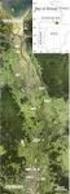 A MULTIPROXY APPROACH OF THE LATE HOLOCENE EVOLUTION OF THE PARATI-MIRIM RIA, SOUTHERN COAST OF THE RIO DE JANEIRO STATE, BRAZIL Sousa, S.H.M. 1 ; Nagai, R.H. 1 ; Yamashita, C. 1 ; Endo, C.A.K. 1 ; Salaroli,
OPPORTUNITIES IN THE UPSTREAM SECTOR OF MONTENEGRO. Vladan Dubljević Tamara Pavličić
 OPPORTUNITIES IN THE UPSTREAM SECTOR OF MONTENEGRO Vladan Dubljević Tamara Pavličić Discussion Topics Business Environment Legal and fiscal regime Petroleum policy and resource management Fiscal system
SEDIMENTARY ROCKS. Sedimentary rocks are formed near or at the surface of the earth.
 SEDIMENTARY ROCKS Sedimentary rocks are formed near or at the surface of the earth. They are derived from preexisting source rocks. They are composed by sediments, this is material that has been weathered,
Plate Tectonics: Big Ideas. Plate Tectonics. Plate Tectonics. The unifying concept of the Earth sciences.
 Plate Tectonics: Big Ideas Our understanding of Earth is continuously refined. Earth s systems are dynamic; they continually react to changing influences from geological, hydrological, physical, chemical,
Plate Tectonics. Introduction. Boundaries between crustal plates
 Plate Tectonics KEY WORDS: continental drift, seafloor spreading, plate tectonics, mid ocean ridge (MOR) system, spreading center, rise, divergent plate boundary, subduction zone, convergent plate boundary,
Chapter 9: Earth s Past
 Chapter 9: Earth s Past Vocabulary 1. Geologic column 2. Era 3. Period 4. Epoch 5. Evolution 6. Precambrian time 7. Paleozoic era 8. Shield 9. Stromatolite 10. Invertebrate 11. Trilobite 12. Index fossil
Plate Tectonics. Plate Tectonics The unifying concept of the Earth sciences. Continental Drift
 Plate Tectonics The unifying concept of the Earth sciences. The outer portion of the Earth is made up of about 20 distinct plates (~ 100 km thick), which move relative to each other This motion is what
The Ice Age By: Sue Peterson
 www.k5learning.com Objective sight words (pulses, intermittent, isotopes, chronicle, methane, tectonic plates, volcanism, configurations, land-locked, erratic); concepts (geological evidence and specific
7) A clastic sedimentary rock composed of rounded to subrounded gravel is called a A) coal. B) shale. C) breccia.
 Please read chapters 10 and 5 CHAPTER 5 Sedimentary Rocks 1) Sedimentary rocks A) form by compaction and cementation of loose sediment. B) are widespread on the continents and ocean floor. C) are common
All sediments have a source or provenance, a place or number of places of origin where they were produced.
 Sedimentary Rocks, Processes, and Environments Sediments are loose grains and chemical residues of earth materials, which include things such as rock fragments, mineral grains, part of plants or animals,
Transform Boundaries
 Lecture 7 Plates and Mantle Plumes Transform Boundaries Transform boundaries occur where one segment of rigid lithosphere slides horizontally past another in response to stresses in the lithosphere. The
CARBONATE VS SILICICLASTIC DEPOSITIONAL SYSTEMS: A FIELD TRIP GUIDE TO MODERN SEDIMENTARY ENVIRONMENTS AND THE GEOLOGY OF BOCAS DEL TORO, PANAMA
 CARBONATE VS SILICICLASTIC DEPOSITIONAL SYSTEMS: A FIELD TRIP GUIDE TO MODERN SEDIMENTARY ENVIRONMENTS AND THE GEOLOGY OF BOCAS DEL TORO, PANAMA Luis Ignacio Quiroz, Jaime Escobar, Cindy Gonzales, Edward
Unit 2 Lesson 4 The Geologic Time Scale. Copyright Houghton Mifflin Harcourt Publishing Company
 Once Upon a Time How have geologists described the rate of geologic change? Geology is the scientific study of the origin, history, and structure of Earth and the processes that shape it. Early geologists
Geologic Time Scale Notes
 Name: Date: Period: 1 2 3 4 5 6 7 Notes Essential Question: What is the geologic time scale? Vocabulary: Geology: the scientific study of the origin, history, and structure of Earth and the processes that
Sedimentary Rocks Practice Questions and Answers Revised September 2007
 Sedimentary Rocks Practice Questions and Answers Revised September 2007 1. Clastic sedimentary rocks are composed of and derived from pre-existing material. 2. What is physical weathering? 3. What is chemical
Deep geological disposal of radioactive waste in Switzerland - overview and outlook
 Deep geological disposal of radioactive waste in Switzerland - overview and outlook Michael Schnellmann (Section Head Geosciences) Annual Convention 2015 Baden 20 th June 2015 Nagra Mandate from the Swiss
EGAS. Ministry of Petroleum
 EGAS Ministry of Petroleum EGAS Ministry of Petroleum About The Block Location: Shorouk offshore block is a part of recent relinquished of NEMED concession previously operated by Shell. It is bounded from
Sedimentary Rocks, Depositional Environments and Stratigraphy
 Sedimentary Rocks, Depositional Environments and Stratigraphy The Nature of Sedimentary Rocks Sedimentary rocks are composed of: Fragments of other rocks (detrital or clastic) Chemical precipitates Organic
TEXAS A&M UNIVERSITY CORPUS CHRISTI COLLEGE OF SCIENCE AND TECHNOLOGY PROPOSAL FOR NEW COURSE/ELECTIVE. Credit Hours: 6 Semester: Summer Year: 2009
 TEXAS A&M UNIVERSITY CORPUS CHRISTI COLLEGE OF SCIENCE AND TECHNOLOGY PROPOSAL FOR NEW COURSE/ELECTIVE Course Number: GEOL 46xx Instructor: James R. Garrison, Jr. Credit Hours: 6 Semester: Summer Year:
California Standards Grades 9 12 Boardworks 2009 Science Contents Standards Mapping
 California Standards Grades 912 Boardworks 2009 Science Contents Standards Mapping Earth Sciences Earth s Place in the Universe 1. Astronomy and planetary exploration reveal the solar system s structure,
GEL 113 Historical Geology
 GEL 113 Historical Geology COURSE DESCRIPTION: Prerequisites: GEL 111 Corequisites: None This course covers the geological history of the earth and its life forms. Emphasis is placed on the study of rock
Rocks and Plate Tectonics
 Name: Class: _ Date: _ Rocks and Plate Tectonics Multiple Choice Identify the choice that best completes the statement or answers the question. 1. What is a naturally occurring, solid mass of mineral or
Geologic Time Scale Newcomer Academy Visualization Three
 Geologic Time Newcomer Academy Visualization Three Chapter Subtopic/Media Key Points of Discussion Notes/Vocabulary Introduction Title NA NA Various Pictures of Geologic Time It s About Time Personal Timeline
Earthquakes and Plate Boundaries Deborah Jordan and Samuel Spiegel
 Earthquakes and Plate Boundaries Deborah Jordan and Samuel Spiegel Jordan, Deborah and Spiegel, Samuel: Learning Research Development Center, University of Pittsburgh. Earthquakes and Plate Boundaries.
Communities, Biomes, and Ecosystems
 Communities, Biomes, and Ecosystems Before You Read Before you read the chapter, respond to these statements. 1. Write an A if you agree with the statement. 2. Write a D if you disagree with the statement.
CASE STUDY OF THE IPOLYTARNOC TRACK SITE, HUNGARY
 Lucas, Spielmann and Lockley, eds., 2007, Cenozoic Vertebrate Tracks and Traces. New Mexico Museum of Natural History and Science Bulletin 42. CASE STUDY OF THE IPOLYTARNOC TRACK SITE, HUNGARY 303 IMRE
Rocks & Minerals. 10. Which rock type is most likely to be monomineralic? 1) rock salt 3) basalt 2) rhyolite 4) conglomerate
 1. Of the Earth's more than 2,000 identified minerals, only a small number are commonly found in rocks. This fact indicates that most 1) minerals weather before they can be identified 2) minerals have
Chapter 3 Communities, Biomes, and Ecosystems
 Communities, Biomes, and Ecosystems Section 1: Community Ecology Section 2: Terrestrial Biomes Section 3: Aquatic Ecosystems Click on a lesson name to select. 3.1 Community Ecology Communities A biological
Broadband seismic to support hydrocarbon exploration on the UK Continental Shelf
 Broadband seismic to support hydrocarbon exploration on the UK Continental Shelf Gregor Duval 1 1 CGGVeritas Services UK Ltd, Crompton Way, Manor Royal Estate, Crawley, RH10 9QN, UK Variable-depth streamer
ROMANIAN PANNONIAN BASIN Outstanding Opportunity
 ROMANIAN PANNONIAN BASIN Outstanding Opportunity Introduction East West Petroleum Corporation (EWP) is a Vancouver-based, public E&P company, focused on investing in emerging international E&P projects
Chapter 5 - Sediments
 Chapter 5 - Sediments Distribution of sediments on the sea floor Seabed Resources Study of Sediments is important to oceanography because: 1. Sediments and volcanism are the most important agents of physical
TECTONICS ASSESSMENT
 Tectonics Assessment / 1 TECTONICS ASSESSMENT 1. Movement along plate boundaries produces A. tides. B. fronts. C. hurricanes. D. earthquakes. 2. Which of the following is TRUE about the movement of continents?
Petrophysical Well Log Analysis for Hydrocarbon exploration in parts of Assam Arakan Basin, India
 10 th Biennial International Conference & Exposition P 153 Petrophysical Well Log Analysis for Hydrocarbon exploration in parts of Assam Arakan Basin, India Summary Ishwar, N.B. 1 and Bhardwaj, A. 2 *
Search and Discovery Article #30121 (2010) Posted June 21, 2010. Abstract
 Role of Mass-Transport Deposit (MTD) Related Topography on Turbidite Deposition and Reservoir Architecture: A Comparative Study of the Tres Pasos Formation (Cretaceous), Southern Chile and Temburong Formation
Chapter Overview. Bathymetry. Measuring Bathymetry. Echo Sounding Record. Measuring Bathymetry. CHAPTER 3 Marine Provinces
 Chapter Overview CHAPTER 3 Marine Provinces The study of bathymetry charts ocean depths and ocean floor topography. Echo sounding and satellites are efficient bathymetric tools. Most ocean floor features
Ecological Roulette: The Global Transport of Nonindigenous Marine Organisms
 Ecological Roulette: The Global Transport of Nonindigenous Marine Organisms James T. Carlton 1 and Jonathan B. Geller 2 1 Maritime Studies Program, Williams College, Mystic Seaport, Mystic, CT 06355, and
Continental Drift. Alfred Wegener (1880-1930) Proposed that all of the continents were once part of a large supercontinent - Pangaea Based on:
 Plate Tectonics and Continental Drift Continental Drift Alfred Wegener (1880-1930) Proposed that all of the continents were once part of a large supercontinent - Pangaea Based on: Similarities in shorelines
New York Science Journal, 2009, 2(3), ISSN 1554-0200 http://www.sciencepub.net/newyork, [email protected]
 Electrical Method in Engineering and Environmental Studies: A Case Study of Gbagada Area, Lagos State, Nigeria. Oyedele, K.F and Ojo, A.O Dept of physics (Geophysics Programme) University of Lagos, Lagos
The concepts developed in this standard include the following: Oceans cover about 70% of the surface of the Earth.
 Name Date Grade 5 SOL 5.6 Review Oceans Made by SOLpass - www.solpass.org [email protected] Reproduction is permitted for SOLpass subscribers only. The concepts developed in this standard include
WEATHERING, EROSION, AND DEPOSITION PRACTICE TEST. Which graph best shows the relative stream velocities across the stream from A to B?
 NAME DATE WEATHERING, EROSION, AND DEPOSITION PRACTICE TEST 1. The diagram below shows a meandering stream. Measurements of stream velocity were taken along straight line AB. Which graph best shows the
The Next Generation Science Standards (NGSS) Correlation to. EarthComm, Second Edition. Project-Based Space and Earth System Science
 The Next Generation Science Standards (NGSS) Achieve, Inc. on behalf of the twenty-six states and partners that collaborated on the NGSS Copyright 2013 Achieve, Inc. All rights reserved. Correlation to,
6.E.2.2 Plate Tectonics, Earthquakes and Volcanoes
 Name: Date: 1. The road shown below was suddenly broken by a natural event. 3. The convergence of two continental plates would produce Which natural event most likely caused the crack in the road? island
Plate Tectonics Short Study Guide
 Name: Class: Date: Plate Tectonics Short Study Guide Multiple Choice Identify the letter of the choice that best completes the statement or answers the question. 1. The existence of coal beds in Antarctica
Lecture Outlines PowerPoint. Chapter 11 Earth Science, 12e Tarbuck/Lutgens
 Lecture Outlines PowerPoint Chapter 11 Earth Science, 12e Tarbuck/Lutgens 2009 Pearson Prentice Hall This work is protected by United States copyright laws and is provided solely for the use of instructors
The Geology of the Marginal Way, Ogunquit, Maine
 Geologic Site of the Month February, 2002 The Geology of the Marginal Way, Ogunquit, Maine 43 14 23.88 N, 70 35 18.36 W Text by Arthur M. Hussey II, Bowdoin College and Robert G. Marvinney,, Department
GEOL 104 Dinosaurs: A Natural History Geology Assignment. DUE: Mon. Sept. 18
 GEOL 104 Dinosaurs: A Natural History Geology Assignment DUE: Mon. Sept. 18 Part I: Environments of Deposition Geologists can use various clues in sedimentary rocks to interpret their environment of deposition:
Regents Questions: Plate Tectonics
 Earth Science Regents Questions: Plate Tectonics Name: Date: Period: August 2013 Due Date: 17 Compared to the oceanic crust, the continental crust is (1) less dense and more basaltic (3) more dense and
Evolution (18%) 11 Items Sample Test Prep Questions
 Evolution (18%) 11 Items Sample Test Prep Questions Grade 7 (Evolution) 3.a Students know both genetic variation and environmental factors are causes of evolution and diversity of organisms. (pg. 109 Science
Coastal lagoon systems and sedimentary constraints on Holocene relative sea-level: Samsø, Southern Kattegat Sea
 1 University of Copenhagen Faculty of Science Coastal lagoon systems and sedimentary constraints on Holocene relative sea-level: Samsø, Southern Kattegat Sea Lasse Sander, ph.d. student Department of Geosciences
Data Mining and Exploratory Statistics to Visualize Fractures and Migration Paths in the WCBS*
 Data Mining and Exploratory Statistics to Visualize Fractures and Migration Paths in the WCBS* Jean-Yves Chatellier 1 and Michael Chatellier 2 Search and Discovery Article #41582 (2015) Posted February
Marine and Petroleum Geology
 Marine and Petroleum Geology xxx (2012) 1e12 Contents lists available at SciVerse ScienceDirect Marine and Petroleum Geology journal homepage: www.elsevier.com/locate/marpetgeo The Iván Canyon, a large
Name Class Date WHAT I KNOW. about how organisms have changed. grown in complexity over time.
 History of Life Evolution Q: How do fossils help biologists understand the history of life on Earth? 19.1 How do scientists use fossils to study Earth s history? WHAT I KNOW SAMPLE ANSWER: Fossils give
Recent ostracods from the Azores archipelago
 Joannea Geol. Paläont. 11: 132-136 (2011) Recent ostracods from the Azores archipelago Ricardo P. MEIRELES, Antonio FRIAS MARTINS & Sérgio ÁVILA The Azores is an archipelago in the Atlantic Ocean between
THE AINSA BASIN: - A FIELD TRIP
 : - A FIELD TRIP Tom Erik Maast and Lars-Christian Røsberg Universitetet i Oslo, Institutt for geofag. Desember 2006 ABSTRACT The Ainsa Basin is a piggy-back basin part of the south Pyrenean Gavarine thrust
How To Know How Sea Level Changes
 SEA LEVEL VARIATIONS OVER GEOLOGIC TIME 265 SEA LEVEL VARIATIONS OVER GEOLOGIC TIME M. A. Kominz, Western Michigan University, Kalamazoo, MI, USA Copyright ^ 21 Academic Press doi:1.16/rwos.21.255 Introduction
Nautilus Global Schedule 2016
 Geophysics N004a The Essentials of Rock Physics and Seismic Amplitude Interpretation 18-21 Apr Houston, US N049a Seismic Attributes for Exploration and Reservoir Characterisation 25-29 Apr Houston, US
Chesapeake Bay Governor School for Marine and Environmental Science
 Choose the best answer and write on the answer sheet provided. 1. Which of the following is LEAST likely to be an effect of global warming? (a) Loss of fertile delta regions for agriculture (b) Change
Plate Tectonics Practice Questions and Answers Revised August 2007
 Plate Tectonics Practice Questions and Answers Revised August 2007 1. Please fill in the missing labels. 2. Please fill in the missing labels. 3. How many large plates form the outer shell of the earth?
ES Chapter 10 Review. Name: Class: Date: Multiple Choice Identify the choice that best completes the statement or answers the question.
 Name: Class: Date: ES Chapter 10 Review Multiple Choice Identify the choice that best completes the statement or answers the question. 1. Scientists used the pattern of alternating normal and reversed
Topics: The Petroleum System. Origin of Petroleum. Arguments for biogenic origin. Google search : Origin of Petroleum : Hugoton Gas Field (Kansas)
 The Petroleum System Topics: Origin of Petroleum Controversy Carbon Cycle Global Implications Petroleum System Gas Oil Water Origin of Petroleum Long standing debate: Where does rock oil come from? Organic
Securing the future of decom
 R E Q U I R E D R E A D I N G F O R T H E G L O B A L O I L & G A S I N D U S T R Y S I N C E 1 9 7 5 AUGUST 2011 Deep thinking on the Latin American beat Floating production tales of the unexpected OFFSHORE
MCLAREN VALE PWA GROUNDWATER LEVEL AND SALINITY STATUS REPORT 2009 10
 MCLAREN VALE PWA GROUNDWATER LEVEL AND SALINITY STATUS REPORT 2009 10 SUMMARY 2009 10 The McLaren Vale PWA is located approximately 35 km south of Adelaide. It is a regional-scale resource for which groundwater
Geologic Time. This page last updated on 08-Oct-2015
 Page 1 of 16 EENS 1110 Tulane University Physical Geology Prof. Stephen A. Nelson Geologic Time This page last updated on 08-Oct-2015 From the beginning of this course, we have stated that the Earth is
Teaching the Dynamic Earth Plate Tectonics Interactive Master sheets
 Teaching the Dynamic Earth Plate Tectonics Interactive Master sheets Contents Page Master Sheets for continental jigsaws Gondwanaland continents (blank outlines)...2 Four continents, showing gaps and overlap
Structural Origin of the Claremont Anticline, Nova Scotia: Has new seismic solved an old problem?
 Structural Origin of the Claremont Anticline, Nova Scotia: Has new seismic solved an old problem? J.P.(Paddy) Chesterman Devon Canada Corporation, 301 400-3rd Avenue SW, Calgary, AB, T2P 4H2 [email protected]
The Fossil Record and Geologic Time Scale
 Two Conceptions of Earth History: Catastrophism Assumption: Great Effects Require Great Causes Earth History Dominated by Violent Events Uniformitarianism Assumption: We Can Use Cause And Effect to Determine
New stratigraphic subdivision of the Tertiary in the Sokolov Basin in Northwestern Bohemia
 Journal of the Czech Geological Society 49/3 4(2004) 173 New stratigraphic subdivision of the Tertiary in the Sokolov Basin in Northwestern Bohemia Nové stratigrafické èlenìní terciéru sokolovské pánve
http://video.nationalgeographic.com/video/oceans narrated by sylvia earle/oceans overview 71% is covered by the Earth's Ocean
 Chapter 13 Exploring the Oceans Section 1 Earth's Ocean List the major divisions of the global ocean. Describe the history of Earth's oceans Identify the properties of ocean water. Describe the interactions
Approaches to biogeographic classification of the world s oceans. Marjo Vierros United Nations University Institute of Advanced Studies
 Approaches to biogeographic classification of the world s oceans Marjo Vierros United Nations University Institute of Advanced Studies This presentation will cover International policy developments of
RECALLING Paragraph b of Article 13 of the Convention on the Protection of the Marine Environment of the Baltic Sea Area, 1974 (Helsinki Convention),
 CONVENTION ON THE PROTECTION OF THE MARINE ENVIRONMENT OF THE BALTIC SEA AREA HELSINKI COMMISSION - Baltic Marine HELCOM 19/98 Environment Protection Commission 15/1 Annex 3 19th Meeting Helsinki, 23-27
Geologic time and dating. Geologic time refers to the ages relevant to Earth s history
 Geologic time and dating Most figures and tables contained here are from course text: Understanding Earth Fourth Edition by Frank Press, Raymond Siever, John Grotzinger, and Thomas H. Jordan Geologic time
Episodes. Conference Reports 208 The Third and Final Workshop of IGCP-524: Continent-Island Arc Collisions: How Anomalous is the Macquarie Arc?
 ontents Vol.32, No.3 Episodes Published by the International Union of Geological Sciences 149 Editorial 150 IUGS: 2008-2009 Status Report by Alberto Riccardi Articles 152 The Global Stratotype Section
Earth Science. River Systems and Landforms GEOGRAPHY 1710. The Hydrologic Cycle. Introduction. Running Water. Chapter 14.
 Earth Science GEOGRAPHY 1710 River Systems and Landforms DAVID R. SALLEE Robert W. Christopherson Charlie Thomsen Chapter 14 Introduction Rivers and streams are dynamic systems that continually adjust
EARTH SYSTEM: HISTORY AND NATURAL VARIABILITY - Vol. IV - Epeiric Seas: A Continental Extension of Shelf Biotas - Harries P.J.
 EPEIRIC SEAS: A CONTINENTAL EXTENSION OF SHELF BIOTAS Harries P.J. University of South Florida, Tampa, Florida USA Keywords: Epeiric seas, climate change, sea-level rise, biodiversity, endemism, sediments,
THE CURIOUS CASE OF THE PLIOCENE CLIMATE. Chris Brierley, Alexey Fedorov and Zhonghui Lui
 THE CURIOUS CASE OF THE PLIOCENE CLIMATE Chris Brierley, Alexey Fedorov and Zhonghui Lui Outline Introduce the warm early Pliocene Recent Discoveries in the Tropics Reconstructing the early Pliocene SSTs
sufilter was applied to the original data and the entire NB attribute volume was output to segy format and imported to SMT for further analysis.
 Channel and fracture indicators from narrow-band decomposition at Dickman field, Kansas Johnny Seales*, Tim Brown and Christopher Liner Department of Earth and Atmospheric Sciences, University of Houston,
Relationships of Floras (& Faunas)
 Relationships of Floras (& Faunas) Knowledge of earth and organism histories now permit closer examination of relationships of disjunct floras and faunas. Southern Hemisphere temperate Southern Hemisphere
The Oligocene rodent record of Anatolia: a review
 Engin Ünay 1, Hans de Bruijn 2 and Gerçek Saraç 3 1 Cumhuriyet Universitesi, Sivas 2 Utrecht University 3 MTA,Ankara The Oligocene rodent record of Anatolia: a review Ünay, E., De Bruijn, H. & Saraç, G,
Data Quality Working Group
 Data Quality Working Group In order to get an overview of the issues that have been discussed so far, I have summarized them a little and added some links and references. The interesting discussion is
Dip is the vertical angle perpendicular to strike between the imaginary horizontal plane and the inclined planar geological feature.
 Geological Visualization Tools and Structural Geology Geologists use several visualization tools to understand rock outcrop relationships, regional patterns and subsurface geology in 3D and 4D. Geological
Georgia Performance Standards Framework for Science Grade 6. Unit Organizer: Geology: Inside the Earth (Approximate Time: 7 Weeks)
 The following instructional plan is part of a GaDOE collection of Unit Frameworks, Performance Tasks, examples of Student Work, and Teacher Commentary. Many more GaDOE approved instructional plans are
Well-logging Correlation Analysis and correlation of well logs in Rio Grande do Norte basin wells
 Well-logging Correlation Analysis and correlation of well logs in Rio Grande do Norte basin wells Ricardo Afonso Salvador Pernes (March, 2013) [email protected] Master thesis Abstract During drilling