
WHAT IS AN APPROPRIATE WHEELCHAIR?
|
|
|
- Martin Gilmore
- 10 years ago
- Views:
Transcription
1 WHAT IS AN APPROPRIATE WHEELCHAIR? Proudly Sponsored by: The Department of Health

2 CONTENTS 1. INTRODUCTION 2. WHAT IS AN APPROPRIATE WHEELCHAIR? 3. ENVIRONMENT Frame type Overall length Wheelbase Rear wheel and front castor size Stability versus mobility 4. FUNCTION Overall length, type and size of wheelchair Weight of the Wheelchair Transportability Access to the rear wheel User skills and ability 5. POSTURAL SUPPORT The optimal posture Configuration of the seating system Seat angle Back support Aim of good postural support in a wheelchair Prevention of spinal deviations Prevention of pressure sores Enhanced functional abilities Aesthetics & Self Image 6. SAFETY AND DURABILITY (LIFE-SPAN) 7. ECONOMICAL FACTORS 8. THE BASIC FOLDING FRAME WHEELCHAIR 9. INTERNATIONAL GUIDING DOCUMENT ON WHEELCHAIR SERVICES 10. IMPLICATIONS FOR SERVICE PROVIDERS 11. MY RIGHTS AS A WHEELCHAIR USER 12. HOW DOES THE DEPARTMENT OF HEALTH MEET WHEELCHAIR USER NEEDS? 13. REFERENCES pg 3 pg 4 pg 4-7 pg 8-9 pg pg 14 pg 15 pg pg 17 pg 18 pg 18 pg 19 pg 19 Text: Elsje Scheffler (BSc Physio, BSc (Hons) Physio, MSc (Med Sci) Rehabilitation) Chief physiotherapist Western Cape Rehabilitation Centre, Cape Town Line drawings: Kim McDonald, Cape Town

3 1. INTRODUCTION Wheelchair users in South Africa are confronted with a multitude of wheelchair types and designs, varying from locally produced- to imported devices and varying in price from very cheap to really expensive. Selecting the most appropriate wheelchair may appear to be an easy process and is often based on appearance (look) and weight of the wheelchair and the size of your wallet. However, the user should consider several critical factors to ensure that the wheelchair contributes to their quality of life. Firgure 1: The basic folding frame wheelchair (or so-called standard- or orthopaedic style wheelchair) is seldom an appropriate choice for active wheelchair users. One-type-fits-all approach The most commonly used and prescribed wheelchair in South Africa is the basic folding frame wheelchair (or so-called standard- or orthopaedic style wheelchair). See Figure 1. This tendency is alarming, as the basic folding frame, by nature of its design, is a low active use wheelchair, and most suitable for an indoor environment. The chair is not suitable for active users, and is not designed for outdoor urban-, peri-urban- or rural terrain. The chair offers minimal postural support options. Despite these obvious drawbacks, the majority of wheelchair users, irrespective of functional and environmental needs and irrespective of their postural support needs, are most frequently prescribed / recommended this type of chair. This one-type-fits-all approach is probably the biggest single indicator of the poor quality of wheelchair services in South Africa. Aim This booklet will attempt to introduce the wheelchair user, clinicians and others working in the wheelchair industry and -services to the concept of an appropriate wheelchair as defined in the World Health Organisation (WHO) Guidelines on the provision of manual wheelchairs in less resourced settings (2008). Note: All examples referred to in the text are available on the Department of Health National Wheelchair Tender and adhere to local and/or international wheelchair durability standards. This booklet primarily refers to users with no, or minor, postural deviations. Management strategies and optimal supportive seating solutions for those who suffer from moderate to severe postural deviations may differ significantly from the solutions provided in this text. Please consult a wheelchair service provider trained in intermediate and advanced wheelchair seating skills for advice and optimal management. 3

4 2. WHAT IS AN APPROPRIATE WHEELCHAIR? The WHO Wheelchair Guidelines definition of an appropriate wheelchair states that: A wheelchair is appropriate when it: meets the user s needs and environmental conditions; provides proper fit and postural support; is safe and durable; is available in the country; and can be obtained, maintained and serviced in the country at an affordable cost. Based on the WHO definition, choosing an appropriate wheelchair should take the following into consideration: Environment Function Postural support Safety and durability (life-span) Economic factors 3. ENVIRONMENT You would never climb a mountain in ballet shoes! Similarly, wheelchairs should suit the environment of the user. When selecting an appropriate wheelchair for a specific environment one needs to look at: Frame type Overall length Wheelbase Rear wheel and front castor size Stability versus mobility at all times giving maximum traction and propulsion. They also track better than 4- wheelers on footpaths and single tracks. If you use your wheelchair mostly outdoors in rural and rough terrain, consider using a wheelchair with a 3-wheel design. FRAME TYPE Most people are familiar with 4-wheel rigid frame wheelchairs but are seldom aware of the 3-wheel design (see figure 2). Despite the many advantages over the 4-wheeler, this design is seldom prescribed or used. Generally 4-wheelers do not work well on uneven surfaces. They often get stuck as they need all four wheels to be in contact with the ground for stability and traction. 3-wheelers are specifically designed for uneven surfaces as all wheels are on the ground Figure 2: The stability of the 3-wheeler design demonstrated over rough ground 4

5 3. ENVIRONMENT (Cont.) OVERALL LENGTH The overall length, measured between the two most distal points of the wheelchair will specifically affect indoor accessibility. (See figure 3 for the difference between wheelbase (A) and overall length (B).) The shorter the overall length, the more compact the chair and the smaller the turning circle. Figure 4: THE CE ECONO RIGID offers a compact solution for urban and indoor wheelchair users Figure 3: The difference between wheelbase length (A) and overall length (B) This will enhance access to small spaces, tight corners and reach over tables, desks and into cupboards. For indoor and active urban use, a wheelchair like the ECONO RIGID (manufactured by CE Mobility) (see figure 4) offers a compact solution. WHEELBASE For better stability a longer wheelbase (see figure 3) is required. This makes the chair more If you use your wheelchair mostly outdoors in rural and rough terrain, a wheelchair with a long wheelbase will improve outdoor performance stable over uneven terrain and safer when going down on steep downhills as it is less likely to tip forward. See figures 5 and 6. A longer wheelbase reduces the weight placed on the front castor wheels enabling them to easily clear obstacles. This stops the front castors from getting stuck and pivoting the user out of the chair. User tip: If you use your chair both indoors and frequently outdoor over rough and/or rural terrain, consider using a hybrid (dual terrain) wheelchair Hybrid (dual terrain) wheelchairs combine the benefits of a long wheelbase without changing the overall length of the wheelchair. This ensures that the wheelchair is compact enough for indoor use, whilst at the same time, stable enough to allow for active use over fairly rough and uneven terrain. Examples of hybrid wheelchairs include the ATW (3-wheeler) (figure 15) and the ROUGHRIDER (4-wheeler) (figure 6), both manufactured by CE Mobility. 5

6 3. ENVIRONMENT (Cont.) Figure 5 Figure 6 Figure 5 & 6: The longer wheelbases of the rural WORLDMADE 3 (Shonaquip) and the dual purpose ROUGHRIDER (CE Mobility), allows the user to access very steep gradients with safety REAR WHEEL AND FRONT CASTOR SIZE REAR WHEELS: Diameter of the wheel: Large wheels will improve clearance over uneven ground, but may limit your ability to sit at tables and desks. Large rear wheels provide the user with a larger force lever, thereby making it easier to propel over the demands of rough and uneven terrain. Width of the wheel and tyre: Wider rear wheel tyres are essential if the user lives in an area with soft sand or muddy ground. Standard width rear wheels are fine for use on hardpacked soil. Another factor to consider is that standard wheelchair wheels are smaller in diameter than bicycle wheels and are not always readily obtainable outside main centres. Many dedicated rural wheelchairs therefore make use of bicycle wheels to enhance mobility and maintenance of the wheels. Bicycle shops are commonly found in developing and rural areas and wheelchair users can access these 6 shops for maintenance and support. An example of a dedicated rural wheelchair is the 3-wheeler design, WORLDMADE 3, distributed by Shonaquip. (Refer to figures 2 and 5) FRONT CASTORS: Smaller, narrow castors are better for indoor use as they improve responsiveness and mobility. Urban wheelchair users who do not need to often travel long distances over very rough / uneven terrain and who are skilled enough to ride their chairs whilst balancing on their rear wheels will prefer small, narrow castors to optimise general mobility. See figure 7. Those who do not have advanced wheelchair skills may find that wider and larger castors will improve their outdoor mobility, as they won t get stuck against obstacles and are less likely to sink into mud and sand. larger, wider castors will increase both weight and rolling resistance of the chair. However, User Tip: To optimise mobility, match the size and width of rear wheels and front castors with the demands of the terrain, your level of skill and the level of mobility required.

7 STABILITY VERSUS MOBILITY Stability is an essential factor for active rural users. For rough, uneven ground a wheelchair with a long wheelbase will improve front / back stability. Cambered rear wheels (rear wheels fitted at an angle to the frame) will add sideways stability. See figure 7. Figure 7: Urban users who seldom travel long distances on rough terrain and who have advanced wheelchair skills to ride on the back wheels over uneven terrain, will prefer small, narrow castors to optimize mobility. The closer the seat is to the level of the rear wheel axle the better as this will keep the centre of gravity low. Generally rural wheelchairs are also heavier which helps to make them more stable. Figure 8 demonstrates the distribution of the user weight on the basic folding frame (A) compared to that of active wheelchair designs (B+C). Both stability and mobility are improved by reducing the weight on the front castors. This is achieved by distributing the weight over the rear wheels. This however, can in turn negatively affect the backwards stability of the chair. With an adjustable chair you can match the user s ability and skills to optimise the balance stability and mobility. An adjustment of just one centimeter can make a big between difference in the stability and overall function of the user. Active wheelchair users should use an adjustable chair and have it set up to the meet the demands of the environment, their level of activity and their level of skill. Some suppliers will custom-build a chair to the individual requirements of the user. Figure 8: Comparing the distribution of the user weight: On the basic folding frame (A) the user weight is distributed high above and in front of the rear wheel axle, compared to that on the of active 4- wheeler (B) and 3-wheeler (C) wheelchairs. 7

8 4. FUNCTION The ability of a wheelchair user to function well in his/her chair depends on the users skill, the environment, the activity level of the user and, lastly, the wheelchair itself (including set-up, fit and postural support). When selecting a wheelchair to optimise functional ability you need to consider: Overall length, type and size of wheelchair Weight of the wheelchair Transportability Access to the rear wheel User skill and ability OVERALL LENGTH, TYPE AND SIZE OF WHEELCHAIR The overall length, type and size of a wheelchair are all closely related. To optimise function, the user should carefully consider the impact of the design, size and length of Your wheelchair should fit snugly around your pelvis or trunk (whichever is wider) without causing pressure. the chair on their specific daily functions e.g., a wheelchair with a long overall length may limit access to the inside of cupboards and have safety implications such as access to the back burner of a stove. WEIGHT OF THE WHEELCHAIR When made from similar materials, rigid frame wheelchairs (both 3 and 4-wheeler models) will be lighter than the equivalent folding frame chair. The cross-bars of the folding frame wheelchair add considerable weight to the wheelchair. Many ultra-lightweight folding frame wheelchairs have clever folding mechanisms to reduce the weight of crossbars. However, these wheelchairs are much more expensive than basic folding frame wheelchairs. Although the weight of a wheelchair is not critical to function and performance, it is an important consideration for children, users who travel long distances, those who have significant weakness and those who struggle with physical endurance. Not only does the folding mechanism make the chair heavier but it also reduces the stability of the frame and some movement will occur at this point during propulsion. This means that not all of the energy produced by the wheelchair user is used to move the chair forwards. Some of the energy is lost in the movement of the frame. This loss of energy will impact on users who do not have good upper limb s t r e n g t h, function or endurance. Rigid frame wheelchairs are often lighter and more stable than their folding frame counterparts. These features will improve mobility and function. In addition, rigid urban designs are often more compact and will enhance indoor function. TRANSPORTABILITY Wheelchair users who drive their own vehicles, might prefer a rigid frame design if they transfer the wheelchair over their lap to the passenger seat. Most roof-mounted wheelchair hoists can only accommodate folding frame designs. The weight and size of wheelchair components will concern care givers. Features such as quick- 8

9 If the wheelchair will be frequently transported, consider how the chair folds, how long it takes to fold the release rear wheels chair and how big and cut down the weight heavy the individual and bulk of the components are. chair. Users of both folding and rigid frame wheelchairs (3 and 4- wheelers) have successfully used a variety of public transport. ACCESS TO THE REAR WHEEL To optimise power when pushing, the user needs to be able to push on the wheel through the largest possible arc of movement. The body weight should be as close as possible to the rear wheel axle (vertical and horizontal, see figure 9). This will enable When propelling comfortably, your body should remain upright, the shoulders be relaxed and your hands should easily move from the 10 o clock to the 12 o clock position. Figure 9 maximum push on the rear wheel from the 10 o clock to the 2 o clock position. (See figure 10) The body will remain upright and the shoulders will not be forced excessively backward Figure 9 and 10: For optimal propulsion and access to the rear wheel, the user should be positioned directly over the rear wheel axle. This will allow easy access from the 10 o clock to 12 o clock position on the rear wheel without causing strain to the shoulder which can lead to long term shoulder injury. This position will also remove weight from the front castors giving greater mobility and preventing the castors from getting stuck and tipping the chair forwards. This is the most common cause of wheelchair accidents. USER SKILL AND ABILITY Not all wheelchair users are able to perform advanced wheelchair skills such as the ability to traverse over rough terrain by balancing on their rear wheels. Clearing the front castors over obstacles is an essential skill to independently travel over obstacles and rough terrain. Correctly setting up a wheelchair and unloading the front castors will significantly improve the ability of the user to clear the castors and thus enhance safety. A wheelchair with a long wheelbase will also compensate for the users inability to perform a d v a n c e d wheelchair skills. Sit upright, with shoulders and hands hanging relaxed next to the body and wheelchair. The palm of the hand should be more or less over the rear wheel axle. If you are not able to wheelie (back wheel balance), have your wheelchair set up to distribute the majority of your weight on your rear wheels (obviously within the parameters of balance and safety). Alternatively, consider getting a wheelchair with a longer wheelbase. Figure 10 9

10 5. POSTURAL SUPPORT Postural support is often disregarded. According to a survey done for WHO in the Western Cape, 80% of all wheelchair users require modifications or additional postural support systems in their wheelchairs. Studies show that almost all children who become wheelchair users in their pre-teen years will develop postural deformities later on. ischial tuberosities (the IT s or sitting bones). (Figure 14) With the spine supported in its normal S-curve all the small joints of the spine are in their most stable position, thereby passively locking the spine into a position of stability. If the wheelchair is properly set up, you should not require any muscle control or activity to maintain this alignment. Figure 11 Figure 12 Figure 13 Figure 11, 12 & 13: Shows typical postural deviations following poor postural support THE OPTIMAL POSTURE Figures 11 to 13 show typical postural deformities in three active wheelchair users following inadequate postural support of their wheelchairs. When viewed from the front, the correctly aligned posture is with the head centred over the shoulders and pelvis. The shoulders and pelvis should be in line with each other. (Figure 14) When viewed from the side, the ear, shoulder and hip should be lined up. The same line should also go through the front of the cervical and lumbar curves creating an upright pelvis and distributing the weight evenly on both Elements to consider when optimising postural support are: Seat: seat angle and footplate support Back: height and angle Cushion and back support system Arm-rest height and upper limb and trunk support Postural support systems Tilt of the seat unit These elements all contribute to the total postural support and are therefore dependent on each other and should be set up together. 10

11 If you slouch or sit skew and have no fixed deformities, your wheelchair may not be adequately set up to support you. Configuration of the seating system: The amount of postural support required vary from user to user. Trained wheelchair professionals can make the necessary adjustments in order to provide the correct postural support you require. Should you require more support than that provided by the Figure 15: A young active wheelchair user set-up in the CE ATW (3-wheeler hybrid / dual purpose) and a Jay II back support system Figure 14: The required postural alignment when seated in a wheelchair when viewed from the side (A) and the front (B) wheelchair itself, most wheelchairs can also be fitted with additional postural support devices. See figure 15 for an example of a Jay back system fitted to a young active user s hybrid wheelchair. For those with special needs there are dedicated postural support wheelchairs like the Shonaquip SAM and RONNY chairs (Fig. 16). Figure 16: A young active user using the Shonaquip RONNY wheelchair Seat angle: For optimal stability and safety in active users, the wheelchair seat needs to be tilted backwards, i.e. the back-seat angle will be less than 90 degrees (see Fig. 17). This will prevent the pelvis from sliding forward and provide increased stability to the user. Back support: The length of the back support should match the user s balance and the normal curvature of the spine. 11

12 5. POSTURAL SUPPORT (Cont.) In figure 17 you can see how the standard and tall back support follows the curvature of the thoracic spine. Medium backs (B) are straight and low back wheelchairs (C) have a straight back that is angled forward. These configurations ensure that the normal curves of the spine is followed to maximally support it in the correct alignment. This is essential to prevent any deviation of the spine and/or any shift of weight to one side, which again may lead to pressure sores. PREVENTION OF SPINAL DEVIATIONS When the spine is properly supported in it s normal curves, the joints are locked into position, increasing the If you tend to slouch or sit skew, have your seating set-up checked out by a trained wheelchair professional. Small adjustments can result in dramatic improvement in postural support. stability of the spine and preventing spinal deviations from occurring. Users who are at risk of developing spinal deviations include: pre-teen children, users with significant trunk weakness, users with unequal trunk muscle strength, people suffering from progressive diseases and those whose spasticity or movement abilities results in sustained, habitual postures when seated or lying down. Figure 17: Optimising postural support: The seat is angled backwards and the back support is contoured and angled to follow the normal spinal alignment. Configuration for wheelchair with: A: Standard and tall back support; B: Medium back support and C: Short back support If you slouch or tend to lean to one side, chances are good that your wheelchair is not set up properly. You are at risk of developing discomfort, and may develop stiffness and/ or, deviations of the spine and/or pressure sores. Aim of good postural support in a wheelchair Prevention of spinal deviations Prevention of pressure sores Enhanced functional ability Aesthetics and self image PREVENTION OF PRESSURE SORES Although a good pressure relief cushion plays an important role in the prevention of pressure sores, the role of the postural support properties of the cushion is usually ignored. Postural support is provided by stabilising the user between the back and cushion systems. This set-up will prevent the sliding forces normally created in sitting by locking the pelvis into place. This, together with equal weight-bearing on both IT s (sitting bones) will limit the risk of pressure areas developing. Uneven weightbearing following poor postural support in the wheelchair (figure 18) will increase pressure and sliding forces under one sitbone, resulting in pressure sores developing (figure 19). Pressure sores are the leading cause of death in users with spinal cord injury. 12

13 Figure 18 Figure 19 Figure 18 & 19: Uneven weight-bearing resulted in fixed postural deviations and pressure sores in this young boy. ENHANCED FUNCTIONAL ABILITIES The human body is a very efficient machine and like all machines, requires proper biomechanical alignment to optimise power generation and function. Poor posture results in compression of internal organs and poor alignment of the trunk and upper limbs. This will negatively affect upper limb function (usually a wheelchair user s most crucial function) and the ability to optimally propel the chair. Good alignment will also optimise the user s head in space for social interaction and prevent problems with swallowing. In addition, Poor posture will lead to a waste of energy, as the resultant poor biomechanics will lead to compensatory movement strategies and poor upper limb power or force generation. compression of the internal organs will be prevented and breathing and digestion will be optimised. AESTHETICS AND Your posture SELF IMAGE will contribute to Last, but not least, how other persons a poor posture contributes significantly disability. Ensure that perceive you and your to the negative your posture is as picture of disability and results in the as possible. upright and straight user looking different and more disabled. A wellaligned posture contributes to a sense of well being, positive personal presentation and will enhance the users self esteem. Uneven weightbearing and sliding of the pelvis following poor postural support are 2 of the most common contributing causes of pressure sores in wheelchair users. By optimizing your posture, sliding forces will be limited and weight evenly distributed, thus decreasing your risk to develop pressure sores. 13

14 6. SAFETY AND DURABILITY Standards Organisation (ISO) (international standards). Note that only ISO 7176 standards refer to wheelchair durability standards. ISO 9000 certification often published by suppliers does not refer to wheelchair durability standards at all, but only to business management standards. Figure 20: A wheelchair being tested on a rolled bed test bed Apart from the Department of Health, most private funders (medical aid / insurance, the Compensation Commissioner [Workman s Compensation] or the Road Accident Fund) do not require minimum durability standards for wheelchairs provided and/or funded by them. This has significant implications for users, as many of these funders impose a 5 year minimum replacement cycle on the wheelchair. A wheelchair which does not meet any durability standards can not be expected to last for the duration of a 5 year replacement cycle. The two most common wheelchair standards to which wheelchairs are manufactured and tested in South Africa, are those of the South African Bureau of Standards (local standards) and the International 14 Safety and durability testing involves different tests in which the strength and durability of the wheelchair is tested and often include tests such as static strength tests, impact tests, roller bed (Figure 20) and kerb-drop tests. The aim of these tests is to expose the wheelchair to similar rigours, forces and impacts as would be encountered by the wheelchair user in everyday use. The tests should also clearly specify at which user weight the chair was tested. The moving parts which allow the folding frame to fold will act as shock absorbing mechanism of the frame, but at the same time, because of the movement be subjected to subsequent wear. The cross-bars are typically the weakest point of a folding frame wheelchair. Always request a copy of the durability certificate. Certificates should not be older than 12 months and must clearly state the brand name and model tested. Check the user weight on the certificate and ensure that your own body weight does not exceed the certified tested weight. Active users should choose a wheelchair with more than a 1 year guarantee on the frame.

15 Uncontrolled importation of 7.ECONOMICAL FACTORS wheelchairs with no minimum durability standards has resulted in an over supply of cheap, basic folding frame wheelchairs, generally of poor quality. Funders and users alike will usually purchase the cheapest wheelchair without regard for durability standards. Several South African suppliers manufacture or import high quality wheelchairs, but cannot compete in terms of price. Buying a cheap, imported wheelchair also has a bad impact on the South African wheelchair industry which is one of the few industries in which persons with disabilities can be fully, and equally employed. 8. THE BASIC FOLDING FRAME WHEELCHAIR The basic folding frame wheelchair is seldom appropriate for active users. It is a dedicated low active indoor chair. It has serious limitations for use as an active in- or outdoor chair or use in a peri-urban or rural setting. The chair offers minimal postural support options, even for users who require only the basic minimum level of postural support. Environment: The 4-wheel design of the basic folding frame chair has a very short wheelbase which restricts use on rural or rough terrain. The user s weight is in front of the rear wheels, with the front castors carrying much of the weight. This causes the castors to get stuck easily and the chair to tip forwards. The seat is set high compared to the centre of the rear wheel making it unstable over rough ground. Despite the claims of some manufacturers / suppliers, the addition of mountain bike wheels and wide front castors will not turn this chair into an active, outdoor chair. Changing the wheel size may enhance some aspects of indoor and outdoor mobility but the inherent design severely limits the appropriateness of this wheelchair for most active users. It is not suitable for active rural outdoor use. Function: Although the wheelbase is short, the overall length is longer than that of most compact urban use chairs. This may affect function and safety when using it indoors. The biggest functional disadvantage relates to access to the rear wheel, weight distribution and safety. In Figure 21 it is clear that the user s weight is in front of the rear wheels. The front castors are loaded and safety may be at risk. Access to the rear wheel is from the 12 o clock position only and 15

16 8. THE BASIC FOLDING FRAME WHEELCHAIR (Cont.) results in extreme shoulder extension. This forces the upper trunk forwards, resulting in poor posture. The user is at risk of developing shoulder injury and postural deformities. The user can also reach down to the 4 o clock position on the rear wheel causing them to accidentally hit the brakes and sustain injury. sometimes be removed and the chair fitted with a range of postural support systems. Durability: Even if this chair met minimum durability standards it is still intended for low active, indoor use. Any other use will reduce the lifespan and any breakages won t be covered by the guarantee as the damage may be considered the result of misuse or abuse. See figure 22. Economy: As the design does not meet the demands of active use, the chair needs replacing more frequently. As a result, maintenance costs will be higher. An appropriate active design chair may initially cost more but the total cost will be less in the long term. Figure 21: Access to the rear wheel in basic folding frame wheelchairs is restricted from the 12 o clock position. Note the degree of shoulder extension and the resultant slumped posture of the upper trunk. Postural Support: This chair offers very little postural support. The typical 90 (or larger) back seat angle does not offer adequate postural stability to active users. Often the configuration of the back posts do not allow for adequate support of the normal postural alignment. Because the back height is not adjustable, it is not appropriate to all users. The sling back does not support the spine in its normal alignment. The sling upholstery can Figure 22: Cracked frame, torn upholstery and bent cross-bars after a short period of use by an active user 16

17 9. INTERNATIONAL GUIDING DOCUMENTS ON WHEELCHAIR SERVICES The World Health Organization (WHO), together with the United States Agency for International Development (US AID), International Society for Prosthetics and Orthotics (ISPO) and Disabled Peoples International (DPI) has long realised that wheelchairs and wheelchair related services were not providing wheelchair users with optimal management, information, products, support or services. During a ground-breaking consensus conference in Bangalore, India in 2006, experts from around the world debated all issues related to wheelchairs and wheelchair services and set up international guidelines on design, production, supply and service delivery. The resulting document is called Guidelines on the provision of manual wheelchairs in less resourced settings (WHO Wheelchair Guidelines). During August 2008, these guidelines were launched at the 21st World Congress of Rehabilitation International and the complete document is published on the WHO website. The document can be downloaded in PDF format from: technology/wheelchairguidelines/en/ The document is aimed at a large audience which includes government, policy-makers, designers, wheelchair suppliers, donors, wheelchair technicians, clinicians, persons involved in training of wheelchair services, disabled people s organizations, wheelchair users and their families. 17

18 10. IMPLICATIONS FOR SERVICE PROVIDERS When considering the WHO Wheelchair Guidelines in conjunction with other international documents such as the Standard Rules on the Equalisation of Opportunities for Persons with Disabilities (United Nations 1993) and the United Nations Convention on Rights of Persons with Disabilities (United Nations 2006) there are important directives for appropriate service delivery. Considering the fact that South Africa has ratified the UN Convention, all service providers must urgently review their current practice to ensure appropriate standards of care and outcomes. Practice standards and guidelines must not impede wheelchair user rights. See the following websites: UN Convention on the Rights of Persons with Disabilities h t t p : / / w w w. u n. o r g / d i s a b i l i t i e s / convention/conventionfull.shtml The Standard Rules on the Equalization of Opportunities for Persons with Disabilities dissre00.htm 11. MY RIGHTS AS WHEELCHAIR USER The rights of wheelchair users are summarised in Article 20 of the UN Convention. This article which deals with personal mobility states that: States shall take effective measures to ensure personal mobility with the greatest possible independence for persons with disabilities, including by: Facilitating personal mobility ; Facilitating access to quality mobility aids; Providing training in mobility skills ; Encouraging entities that produce mobility aids to take into account all aspects of mobility for persons with disabilities. When interpreted with other relevant articles (Article 4 and 26), the wheelchair user therefore has the following rights: Right to an appropriate wheelchair: The wheelchair should meet the users environmental, functional and postural support needs, as well as durability standards and safety and affordability. Right to appropriate services: The user require comprehensive rehabilitation services, as well as access to wheelchair maintenance services. Right to be managed by appropriately trained staff: All staff should have adequate and appropriate training in all aspects of wheelchair service delivery as outlined in the WHO guideline document. 18

19 12. HOW DOES THE DEPARTMENT OF HEALTH MEET WHEELCHAIR USERS NEEDS? The National Department of Health has specific guidelines, in line with the WHO Wheelchair Guideline document and the UN Convention, on the issuing of assistive devices. (Standardisation of provision of assistive devices in South Africa. April 2003) Right to an appropriate wheelchair: A complete range of wheelchairs is available on the National Wheelchair Tender. This includes both folding and rigid frames wheelchairs in the following categories: Urban active, dual purpose (indoor and rural use), rural, posture support wheelchairs, power chairs and buggies. The specifications of each type and category of chair meets the requirements in terms of environmental, functional and postural support needs. Specific durability standards and safety standards are specified Billing is done according to The Uniform Patient Fee System, a patient classification system based on income. Certain categories of clients receive free or subsidised health care, including assistive devices. Right to appropriate services: Different levels and types of care, including referral pathways exist to ensure access to appropriate curative and rehabilitative services. Department of Health-managed wheelchair maintenance service centres are available at certain centres. Right to be managed by appropriately trained staff: Staff should be trained in the appropriate level of wheelchair services and products to optimally manage your condition. The Western Cape Rehabilitation Centre in Cape Town offers training in all aspects of wheelchair service delivery as outlined in the WHO guideline training curriculum. Training is presently limited to professionals and persons involved in wheelchair services. Training packages are outcomes based and are being finalised in partnership with the Empowerment Through Partnership Trust (ETPT) and Motivation Charitable Trust, UK. Ten trainers are currently undergoing training. Training is presently only offered in the Western Cape, Eastern Cape and Gauteng. The Western Cape Rehabilitation Centre is listed in the WHO Guidelines as one of only 6 training centres worldwide. Although the guidelines are in place, all services may not yet be aligned accordingly. Users should initiate discussions with the various departments / services to explain their needs and to assist in the drive for the necessary changes. 13. REFERENCES AND RECOMMENDED READING: Standard Rules on the Equalisation of Opportunities for Persons with Disabilities (United Nations 1993) United Nations Convention on Rights of Persons with Disabilities (United nations 2006) Standardisation of provision of assistive devices in South Africa (Department of Health, April 2003) Guidelines on the provision of manual wheelchairs in less resourced settings (WHO Wheelchair Guidelines, 2008) Engström B. Ergonomics: Wheelchairs and positioning: A book of principles based on experience from the field. Posturalis, Hässelby, Sweden Tomlinson JD. Managing manoeuvrability and rear stability of adjustable manual wheelchairs: An update. Physical Therapy 80(9):

20 The Department of Health

Physiotherapy Database Exercises for people with Spinal Cord Injury
 Physiotherapy Database Exercises for people with Spinal Cord Injury Compiled by the physiotherapists associated with the following Sydney (Australian) spinal units : Last Generated on Mon Mar 29 16:57:20
Wheelchair Back Supports
 Wheelchair Back Supports Mark R. Schmeler, MS, OTR/L, ATP Mary Ellen Buning, MS, OTR, ATP Center for Assistive Technology, UPMC Health System Department of Rehabilitation Science & Technology University
Rehabilitation after shoulder dislocation
 Physiotherapy Department Rehabilitation after shoulder dislocation Information for patients This information leaflet gives you advice on rehabilitation after your shoulder dislocation. It is not a substitute
Range of Motion. A guide for you after spinal cord injury. Spinal Cord Injury Rehabilitation Program
 Range of Motion A guide for you after spinal cord injury Spinal Cord Injury Rehabilitation Program This booklet has been written by the health care providers who provide care to people who have a spinal
he American Physical Therapy Association would like to share a secret with you. It can help you do more with less effort breathe easier feel great.
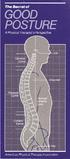 The Secret... T he American Physical Therapy Association would like to share a secret with you. It can help you do more with less effort breathe easier feel great. The secret is about good posture, which
INTRODUCTION TO POSITIONING. MODULE 3: Positioning and Carrying
 MODULE 3: Positioning and Carrying Blankets, pillows and towels, sandbags, carpet on the floor, a doll with floppy limbs that can be positioned i.e. not a hard plastic doll, display materials. Icebreaker
KNEE EXERCISE PROGRAM
 KNEE PROGRAM INTRODUCT ION Welcome to your knee exercise program. The exercises in the program are designed to improve your knee stability and strength of the muscles around your knee and hip. The strength
Computer Workstation Ergonomic Self Evaluation
 Computer Workstation Ergonomic Self Evaluation Use this guidance to perform a preliminary evaluation of your workstation, and make any adjustments that are necessary to achieve a correct neutral posture.
Indications for a PMD as Reasonable and Necessary and Types of PMD Categories Available
 Appendix K The face-to-face examination provides the clinical information needed to determine if a patient needs a Power Mobility Device (PMD) and what type of PMD may be needed. This information needs
OCE. A guide to using an electric wheelchair safely. Information for patients and their families. www.noc.nhs.uk/oce. page 1
 www.noc.nhs.uk/oce A guide to using an electric wheelchair safely Information for patients and their families OCE Oxford Centre for Enablement Neurological Rehabilitation Service page 1 page 2 Contents
Mike s Top Ten Tips for Reducing Back Pain
 Mike s Top Ten Tips for Reducing Back Pain The following article explains ways of preventing, reducing or eliminating back pain. I have found them to be very useful to myself, my clients and my patients.
Lower Back Pain An Educational Guide
 Lower Back Pain An Educational Guide A publication from the Center of Pain Medicine and Physiatric Rehabilitation 2002 Medical Parkway Ste 150 1630 Main St Ste 215 Annapolis, MD 21401 Chester, MD 21619
HUR Rehab Line H E A L T H & F I T N E S S E Q U I P M E N T
 H E A L T H & F I T N E S S E Q U I P M E N T HUR Rehab Line HUR naturally different Contents HUR naturally different HUR SmartCard 1 HUR Rehab Line key to rehabilitation 2 SmartCard FCM Rehab Line computerized
ROTATOR CUFF HOME EXERCISE PROGRAM
 ROTATOR CUFF HOME EXERCISE PROGRAM Contact us! Vanderbilt Sports Medicine Medical Center East, South Tower, Suite 3200 1215 21st Avenue South Nashville, TN 37232-8828 For more information on this and other
ACTIVE SEATING FOR PEOPLE WITH A KYPHOTIC SPINE. - backrest cushion for the kyphotic spine
 ACTIVE SEATING FOR PEOPLE WITH A KYPHOTIC SPINE - backrest cushion for the kyphotic spine Netti Kyphotic is designed for users who require optimum stabilization of their spinal curvature. The upholstery
The height of the backrest can be adjusted with a simple push of a button.
 RH Activ The RH Activ is our entry level chair. However, it is still packed with features and functions. The RH Activ is ergonomically designed through and through, is exceptionally flexible and easy to
Manual Wheelchairs: Set-Up & Propulsion Biomechanics
 Manual Wheelchairs: Set-Up & Propulsion Biomechanics Mark Schmeler, MS, OTR/L, ATP Mary Ellen Buning, MS, OTR, ATP Center for Assistive Technology, UPMC Health System Department of Rehabilitation Science
MOON SHOULDER GROUP. Rotator Cuff Home Exercise Program. MOON Shoulder Group
 MOON Shoulder Group For information regarding the MOON Shoulder Group, talk to your doctor or contact: Rosemary Sanders 1215 21 st Avenue South 6100 Medical Center East Vanderbilt University Medical Center
ACL Reconstruction Rehabilitation Program
 ACL Reconstruction Rehabilitation Program 1. Introduction to Rehabilitation 2. The Keys to Successful Rehabilitation 3. Stage 1 (to the end of week 1) 4. Stage 2 (to the end of week 2) 5. Stage 3 (to the
Rotator Cuff Home Exercise Program MOON SHOULDER GROUP
 Rotator Cuff Home Exercise Program MOON SHOULDER GROUP Introduction The MOON Shoulder group is a Multi-center Orthopaedic Outcomes Network. In other words, it is a group of doctors from around the country
COMMON OVERUSE INJURIES ATTRIBUTED TO CYCLING, AND WAYS TO MINIMIZE THESE INJURIES
 COMMON OVERUSE INJURIES ATTRIBUTED TO CYCLING, AND WAYS TO MINIMIZE THESE INJURIES Listed are a few of the most common overuse injuries associated with cycling long distances. 1. Cervical and upper back
APPENDIX A. Sets = the completion of one consecutive grouping of repetitions of an exercise.
 Exercise Instruction Sheet Instructions: APPENDIX A Exercises are to be performed 3 times per week. Allow one rest day between each exercise day. You may divide the exercises into groups and perform them
Biomechanics of cycling - Improving performance and reducing injury through biomechanics
 Biomechanics of cycling - Improving performance and reducing injury through biomechanics Biomechanics is the science concerned with the forces that act on the human body and the effects these forces produce.
Assisting Students Who Use Wheelchairs:
 Quick-Guide Extra Assisting Students Who Use Wheelchairs: Guidelines for School Personnel Michael F. Giangreco, Irene McEwen, Timothy Fox, and Deborah Lisi-Baker Quick-Guides to Inclusion 3: Ideas for
What muscles do cyclists primarily use?
 Stress & Injury The following information has been taken from freely available articles from British Cycling and other Cycling organisations. Sources are noted at the end of this document. Please note
Atigra T2 Seat System Notes for the Therapist
 The Atigra comes with the T2 seat system. The T2 seat system has many advantages for the therapist who is looking for a seat and backrest system that will provide good postural support and a high level
Operating Instructions
 Operating Instructions Table of Contents IMPORTANT INFORMATION 1-2 1 The backrack TM 3-6 Introduction 3 What does it do? 4 How do I use it? 5 How often should I use it? 6 2 Getting On 7-10 3 Basic Exercises
Sue Schuerman, PT, GCS, PhD UNLVPT
 Sue Schuerman, PT, GCS, PhD UNLVPT Exercise & Physical Activity (Your Everyday Guide from the National Institute on Aging) Go4Life Retain our physical and mental health Continue to do the things we enjoy
Best Practice Guide 2007. Vehicle Ergonomics Best Practice Guide
 Best Practice Guide 2007 Vehicle Ergonomics Best Practice Guide Introduction About 80% of us will experience back pain at some stage in our lives. A number of work and leisure activities can contribute
X-Plain Neck Exercises Reference Summary
 X-Plain Neck Exercises Reference Summary Introduction Exercising your neck can make it stronger, more flexible and reduce neck pain that is caused by stress and fatigue. This reference summary describes
total hip replacement
 total hip replacement EXCERCISE BOOKLET patient s name: date of surgery: physical therapist: www.jointpain.md Get Up and Go Joint Program Philosophy: With the development of newer and more sophisticated
A guide for employees
 A guide for employees This booklet has been developed as a guide to assist in the prevention of muscular discomfort and strain that can sometimes be associated with computer use. The information provided
Avoid The Dreaded Back Injury by Proper Lifting Techniques
 Avoid The Dreaded Back Injury by Proper Lifting Techniques If you ve ever strained your back while lifting something, you ll know the importance of lifting safely. Agenda Introduction About the Back The
by Ellen Saltonstall and Dr. Loren Fishman
 10 Yoga Poses for Low Back Pain Prevention by Ellen Saltonstall and Dr. Loren Fishman Introduction This series of poses is designed to prevent future back pain and also to relieve back pain that you may
Physical & Occupational Therapy
 In this section you will find our recommendations for exercises and everyday activities around your home. We hope that by following our guidelines your healing process will go faster and there will be
Neck Exercises for Car Accident Victims 3 Steps to a Healthier Neck
 Neck Exercises for Car Accident Victims 3 Steps to a Healthier Neck DR BARRY L. MARKS CHIROPRACTOR AUTHOR LECTURER Neck Exercises for Car Accident Victims 3 Steps to a Healthier Neck 2012 Dr. Barry L.
These notes are designed to be used in conjunction with the Moving and Handling PowerPoint slides.
 CORE SKILLS FRAMEWORK MOVING AND HANDLING PRINCIPLES FOR STAFF: LESSON NOTES & TIPS FOR A SUGGESTED APPROACH These notes are designed to be used in conjunction with the Moving and Handling PowerPoint slides.
This booklet can also be provided in large print on request. Please call 01865 738126. Spinal Stenosis. The Oxford Spine Unit
 This booklet can also be provided in large print on request. Please call 01865 738126 Nuffield Orthopaedic Centre NHS Trust NHS Spinal Team Nuffield Orthopaedic Centre Windmill Road Headington Oxford OX3
SymmetriKit TM chairs. for rest, work and play
 SymmetriKit TM chairs for rest, work and play 1 Index 4 6 8 10 12 14 16 18 Introduction The Right Chair It s a chair, a bed and a wedge! Supported Sitting Living With Your Chair Pressure Care & Temperature
CHAPTER 3: BACK & ABDOMINAL STRETCHES. Standing Quad Stretch Athletic Edge - www.athleticedge.biz - (650) 815-6552
 CHAPTER : BACK & ABDOMINAL STRETCHES Standing Quad Stretch ) Stand and grasp right ankle with same hand, use a wall or chair to Lower maintain Back balance with left hand. Maintain an upright Stretches
McMaster Spikeyball Therapy Drills
 BODY BLOCKS In sequencing Breathing and Tempo Flexibility / Mobility and Proprioception (feel) Upper body segment Middle body segment Lower body segment Extension / Static Posture Office / Computer Travel
Injury Prevention for the Back and Neck
 Injury Prevention for the Back and Neck www.csmr.org We have created this brochure to provide you with information regarding: Common Causes of Back and Neck Injuries and Pain Tips for Avoiding Neck and
The Process of Strength and Conditioning for Golfers
 The Process of Strength and Conditioning for Golfers The use of different sporting activities and resistance work to develop a strength and conditioning program specific to golf. Many club golfers are
Proper Workstation Setup
 Proper Workstation Setup A Step by Step Guide to help you organize your workstation and reduce the risk of injury Step 1 Review Work Habits Working in a stationary position for long periods will increase
Musculoskeletal System
 CHAPTER 3 Impact of SCI on the Musculoskeletal System Voluntary movement of the body is dependent on a number of systems. These include: The brain initiates the movement and receives feedback to assess
We ve got your back. Physical Therapy After Lumbar Fusion Surgery
 We ve got your back Physical Therapy After Lumbar Fusion Surgery Physical therapy is an extremely important part of you recovery after spinal surgery. This booklet, prepared by the therapists who specialize
NARROW AISLE FLEXI. The next generation in space saving efficiency
 G4 The next generation in space saving efficiency G4 Europe s most popular articulated truck - now with industry leading features for enhanced and improved productivity. The Flexi G4 electric powered articulated
Workplace Job Accommodations Solutions for Effective Return to Work
 Workplace Job Accommodations Solutions for Effective Return to Work Workplace Job Accommodations Solutions for Effective Return to Work Published by 102 275 Broadway Winnipeg, MB R3C 4M6 www.mflohc.mb.ca
Wheelchairs. Strollers vs. Manual. Clinical Indicators
 Written By Michelle L. Lange, OTR, ABDA, ATP/SMS Strollers vs. Manual Wheelchairs Clinical Indicators When evaluating a client for a non-powered mobility base, either a stroller or a manual wheelchair
Moving and Handling Techniques
 Moving and Handling Techniques Introduction Manual handling involves any activity that requires the use of force exerted by a person to lift, lower, push, pull, carry or otherwise move or hold an object.
Info. from the nurses of the Medical Service. LOWER BACK PAIN Exercise guide
 Info. from the nurses of the Medical Service LOWER BACK PAIN Exercise guide GS/ME 03/2009 EXERCISE GUIDE One of the core messages for people suffering with lower back pain is to REMAIN ACTIVE. This leaflet
Rotator Cuff and Shoulder Conditioning Program. Purpose of Program
 Prepared for: Prepared by: OrthoInfo Purpose of Program After an injury or surgery, an exercise conditioning program will help you return to daily activities and enjoy a more active, healthy lifestyle.
CAPTURE Collaboration and Proactive Teamwork Used to Reduce. Best Practices in Safe Transfers and Mobility to Decrease Fall Risk
 CAPTURE Collaboration and Proactive Teamwork Used to Reduce Falls Best Practices in Safe Transfers and Mobility to Decrease Fall Risk August 20, 2013 10 a.m. CST Dawn M. Venema, PT, PhD Jill Hassel, DPT
How To Stretch Your Body
 Exercise Module A New Leaf Choices for Healthy Living University of North Carolina at Chapel Hill 2007 Center for Health Promotion and Disease Prevention Physical Activity Exercises for Keeping Active
Back Care. For families and carers of children with disabilities
 Back Care For families and carers of children with disabilities Introduction Caring for another person can be a challenging job emotionally and physically. For those who care for a child with a disability,
Lifting and Handling, a Risk Assessor s Guide
 Lifting and Handling, a Risk Assessor s Guide 1 Introduction Unfortunately manual handling accidents are all too common, and can lead to life-long problems with bad backs. While they do not have the same
Biomechanical Analysis of the Deadlift (aka Spinal Mechanics for Lifters) Tony Leyland
 Biomechanical Analysis of the Deadlift (aka Spinal Mechanics for Lifters) Tony Leyland Mechanical terminology The three directions in which forces are applied to human tissues are compression, tension,
ERGONOMICS. University at Albany Office of Environmental Health and Safety 2010
 ERGONOMICS University at Albany Office of Environmental Health and Safety 2010 WHAT IS ERGONOMICS? From the Greek: ergon work and nomoi natural laws Defined by Webster as: Biotechnology WHAT IS ERGONOMICS?
Otago Exercise Program
 Otago Exercise Program Edited Version Exercise Booklet Created by: Genesee County Coalition Supported by a grant from the Health Foundation for Western and Central New York Otago Exercise Program to Prevent
ANKLE STRENGTHENING INTRODUCTION EXERCISES SAFETY
 ANKLE STRENGTHENING INTRODUCTION Welcome to your Ankle Strengthening exercise program. The exercises in the program are designed to improve your ankle strength, fitness, balance and dynamic control. The
ADVICE FOR PATIENTS WITH NECK PAIN
 ADVICE FOR PATIENTS WITH NECK PAIN Patient Information Leaflet Physiotherapy Department (Information sheet code SHOT/SHOA) A SMOKING FREE ENVIRONMENT WAHT-TH-007-1 - Version 1.2 Dear Patient This advice
The height of the backrest can be adjusted with a simple push of a button.
 rh activ RH Activ is our entry level chair. That said, it is still packed with ergonomic features and functions. RH Activ is ergonomically designed through and through, as well as being exceptionally flexible
Hoist and sling assessment guidelines. www.safepatienthandling.co.uk. Hoist and sling assessment guidelines
 Hoist and sling assessment guidelines www.safepatienthandling.co.uk 21 Contents 1.0 Introduction 4 2.0 Key risk assessment principles 5 3.0 Functional Independence Measurement 6 4.0 Stand assist and mobile
HELPFUL HINTS FOR A HEALTHY BACK
 HELPFUL HINTS FOR A HEALTHY BACK 1. Standing and Walking For correct posture, balance your head above your shoulders, eyes straight ahead, everything else falls into place. Try to point toes straight ahead
Early Intervention Seating in Pediatric Rehab Strollers
 Early Intervention Seating in Pediatric Rehab Strollers Eli Anselmi Product and Education Specialist Convaid University, May 15, 2014 NuMotion Clinical Education Objectives Attendee will be able to describe
Exercises for older people
 Exercise for older people Exercises for older people Sitting Getting started If you ve not done much physical activity for a while, you may want to get the all-clear from a GP before starting. For the
Why Back Safety is Important
 Back Safety Why Back Safety is Important Back injuries are considered by OSHA (the Occupational Safety and Health Administration) as the nation's #1 workplace safety problem. Back Injuries are often: Very
Welcome to your LOW BACK PAIN treatment guide
 Welcome to your LOW BACK PAIN treatment guide You are receiving this guide because you have recently experienced low back pain. Back pain is one of the most common musculoskeletal problems treated in medicine
Secure Them for Life. Child safety seats. From infant seats to seat belts, everything you need to know to ensure your child s safety.
 Secure Them for Life Child safety seats From infant seats to seat belts, everything you need to know to ensure your child s safety. It s the law In a vehicle, children whose sitting height is less than
Rehabilitation after lumbar discectomy, microdiscectomy and decompressive laminectomy. Information for patients
 Rehabilitation after lumbar discectomy, microdiscectomy and decompressive laminectomy Information for patients You have just had surgery on your lumbar spine. Below are some common questions with answers,
SHOULDER PULL DOWNS. To learn efficient use of the shoulder blades and arms while maintaining a neutral spine position.
 SHOULDER INTRODUCT ION Welcome to your shoulder exercise program The exercises in the program are designed to improve your shoulder mobility, posture and the control of the muscles in your neck and shoulder
SECTION 9. Mobility, positioning, and transfers. Moving after a stroke 9.1. Fatigue. Loss of sensation. Loss of motor function.
 SECTION 9 Mobility, positioning, and transfers Section overview This section looks at: Moving after a stroke Assisting with mobility Positioning Managing the affected limb Transfers Wheelchair use Walking
Anatomy of a Manual Wheelchair
 Anatomy of a Manual Wheelchair D. Michael McKeough, PT, EdD Associate Professor Division of Physical Therapy 1 Abstract This presentation illustrates the components of a manual wheelchair. Note pages contain
[Project name] Standard Operating Procedures. Body Mechanics
![[Project name] Standard Operating Procedures. Body Mechanics](/thumbs/27/11986346.jpg "[Project name] Standard Operating Procedures. Body Mechanics") [Project name] Standard Operating Procedures Body Mechanics PURPOSE. The purpose of this SOP is to provide information to minimize staff injuries with the focus on back injuries resulting from improper
[Project name] Standard Operating Procedures Body Mechanics PURPOSE. The purpose of this SOP is to provide information to minimize staff injuries with the focus on back injuries resulting from improper
APP LOVE WORK DESIGNED WITH LONGEVITY AND DURABILITY IN MIND.
 APP APP LOVE WORK DESIGNED WITH LONGEVITY AND DURABILITY IN MIND. The fully upholstered collection delivers an aesthetically satisfying chair that provides a superior level of comfort owing to its ergonomic
Do you sit at a desk all day? Does your 9 to 5 leave no time for structured exercise..?
 Do you sit at a desk all day? Does your 9 to 5 leave no time for structured exercise..? Staying healthy at work is easier than you might think: Try building the following desk based exercises into your
Fact sheet Exercises for older adults undergoing rehabilitation
 Fact sheet Exercises for older adults undergoing rehabilitation Flexibility refers to the amount of movement possible around a joint and is necessary for normal activities of daily living such as stretching,
INSTRUCTIONAL MATERIALS: REFERENCES: a. PAEC School Safety Manual b. Any locally produced Back Injury pamphlet TRAINING AIDS:
 LESSON TOPIC: AVERAGE TIME: BACK INJURY PREVENTION 30 Minutes INSTRUCTIONAL MATERIALS: REFERENCES: a. PAEC School Safety Manual b. Any locally produced Back Injury pamphlet TRAINING AIDS: a. Handout #1
Preventing Falls. Strength and balance exercises for healthy ageing
 Preventing Falls Strength and balance exercises for healthy ageing Exercise should be comfortable and fun. To get the most out of your home exercise book, join a class for older people to check your exercises
Safe Lifting and Carrying
 PART 1 Basic Lifts Proper lifting and handling will help protect against injury and make your job easier. It takes training and practice to do it right. The following are basic steps in safe lifting and
pacific rehab Designs for Fun and Function Introducing the New HeadpodTM
 pacific rehab Designs for Fun and Function Introducing the New HeadpodTM Basic Kit Basic Kit Mini Kit for smaller heads Optional Chin Strap Various mounting options available to mount to solid surfaces
The ergonomics of tablet use in business applications
 The ergonomics of tablet use in business applications An Ergonomic Solutions white paper by Melanie Swann MSc(Hons), Grad IOSH For more information and contact details, please go to ergonomic-solutions.net
The Powered Wheelchair Training Guide
 The Powered Wheelchair Training Guide Written by Peter Axelson, Jean Minkel, Anita Perr and Denise Yamada Illustrations by Clay Butler PAX Press Minden, NV This training guide was completed with a grant
The Ideal Solution for Hospice Care
 The Ideal Solution for Hospice Care Comfort and Pain Management Quality of Life Safety Durability www.brodaseating.com 1-800-668-0637 1 Why BRODA chairs are the ideal choice for hospice care: Comfort and
MANAGING BREATHLESSNESS
 12 Leaflet issued by: Pulmonary Rehabilitation Service Anglian Community Enterprise (CIC) Kennedy House Kennedy Way, Clacton-on-sea Essex CO15 4AB Tel: 01255 206263 MANAGING BREATHLESSNESS On request,
BINGO Evolution. BINGO Evolution by HOGGI. BINGO was good - we just made it better. Made in Germany
 de www.. Made in Germany BINGO Evolution by HOGGI BINGO Evolution BINGO was good - we just made it better Innovative folding mechanism & ASS Adaptive Suspension System Partnering together to mobilise kids
AND DESIGN FROM CONCEPT. Why did we develop Xenon? Experienced team. Christopher Schmidt
 Designed by Engineered by & Christopher Schmidt FROM CONCEPT Why did we develop Xenon?...during the entire product development process, we had at our disposal the most up-to-date prototyping and production
Exercise 1: Knee to Chest. Exercise 2: Pelvic Tilt. Exercise 3: Hip Rolling. Starting Position: Lie on your back on a table or firm surface.
 Exercise 1: Knee to Chest Starting Position: Lie on your back on a table or firm surface. Action: Clasp your hands behind the thigh and pull it towards your chest. Keep the opposite leg flat on the surface
Back Safety and Lifting
 Back Safety and Lifting Structure of the Back: Spine The spine is the part of the back that supports the trunk and head. It protects the spinal cord as well as giving flexibility to the body. Vertebrae
Designed for comfort and built to last.
 Designed for comfort and built to last. Inter IKEA Systems B.V. 2015 Whether we work in an office or at home, many of us spend the majority of the day at a desk. A comfortable workspace is therefore essential
Prepared by Graham from SuperPro August 2011
 Understanding di Steering and Wheel Alignment Angles Prepared by Graham from SuperPro August 2011 Remember:- Tyre Wear Patterns Tell The Technician A Story Provide Vital Information For Determining Final
HOME-BASED EXERCISE PROGRAMME FOR PEOPLE WITH SPINAL CORD INJURY
 HOME-BASED EXERCISE PROGRAMME FOR PEOPLE WITH SPINAL CORD INJURY By Lisa Hodge, Physiotherapy student at Otago University Summer Studentship 2003/2004 Produced by the Spinal Trust 1 Introduction Spinal
Tips for Eliminating and Controlling MSD Hazards
 Tips for Eliminating and Controlling MSD Hazards Force Gripping tools/equipment Provide tools that allow workers to grip the tool using a power grip Eliminate the use of pinch or key grips as much as possible
Safe Lifting/Back Safety Training. Presented by Rita Gagnon Occupational Health Outreach Coordinator Benefis Health Systems 406-731-8328
 Safe Lifting/Back Safety Training Presented by Rita Gagnon Occupational Health Outreach Coordinator Benefis Health Systems 406-731-8328 Risk Factors Involved with Manual Handling Tasks: Bending at Trunk
Australian Centre for Agricultural Health and Safety. Farming with Back Pain
 Australian Centre for Agricultural Health and Safety Farming with Back Pain 2008 Australian Centre for Agricultural Health and Safety All rights reserved Title: Farming with Back Pain Authors: Boughton
Strength Training HEALTHY BONES, HEALTHY HEART
 Strength Training HEALTHY BONES, HEALTHY HEART No matter what your age, strength training can improve your bone health and your balance. As we age, our bones lose both tissue and strength. This condition
Texas Department of Insurance. Office Ergonomics. Provided by. Division of Workers Compensation HS03-003C (03-09)
 Texas Department of Insurance Office Ergonomics Provided by Division of Workers Compensation HS03-003C (03-09) Contents Introduction 1 The Ergonomic Checklist 1 Sharp Edge Hazards 1 Equipment Adjustability
How to Get and Keep a Healthy Back. Amy Eisenson, B.S. Exercise Physiologist
 How to Get and Keep a Healthy Back Amy Eisenson, B.S. Exercise Physiologist Lesson Objectives Statistics of Back Pain Anatomy of the Spine Causes of Back Pain Four Work Factors Core Muscles Connection
Stretching in the Office
 Stretching in the Office Legs: Quads, Hamstrings, IT band, Hip flexors, Gluts, Calves Quads: Standing @ desk maintaining upright posture, grab one leg @ a time by foot or ankle and bring it towards backside