
Fish migration... from sea to source
|
|
|
- Sybil Phelps
- 10 years ago
- Views:
Transcription
1 Fish migration... from sea to source The 15 Living North Sea partners have been working together for over two years now to improve fish habitats and migration in the North Sea region. In addition to the local efforts they are making, this project allows the partners to tackle problems on a larger scale. This will always remain necessary, as fish do not observe national borders. The partners jointly survey fish populations and their migration routes, identify problem areas and implement solutions. Information is documented using a web-based Geographical Information System (GIS). Numerous projects have been launched. This newsletter describes some of these initiatives. You can find more information at Newsletter Living North Sea #2 October
2 Sweden s acified lakes The lakes of southwest Sweden are acidified to such an extent that the ecosystem has been damaged and sensitive fish species like salmon, trout and lamprey are barely able to survive in them. This upsets many Swedes, and not only conservationists. Tourists who like to fish on holidays are restricted to limed lakes in the area, so local residents are also feeling it in their pockets. Toxic banana Ash particles and acid rain are the villains of the piece. Humans are the root cause. Airborne soot, carbon and oil particles from all over Europe are deposited in Scandinavia. The bedrock in southwest Sweden contains little calcium and magnesium, which act as a natural buffer against acid rain. The damage in this area has been particularly bad. The Swedes call the affected area the toxic banana. Liming acified lakes in Sweden Sweden before and after liming 1990 (source: Sveriges National Atlas) The 256 lakes of Falkenburg Ingemar Alenäs has devoted his entire working life to acidified lakes. As a researcher at the Environmental Research Institute, he explored the effects of adding lime to the water. Now, as project manager at Falkenburg municipality, he actually applies the technique. We have 256 lakes in our district, he says. Almost all of them are acidified. We ve added lime to about 130. We can neutralise the acidification by adding lime with boats, helicopters and lime dosers into the lakes and running waters. Ingemar explains that emissions have been reduced and the effects of acid rain is no longer as bad as it used to be. But the damage has been done. It will take decades to fully recover. Until then we will have to continue adding lime to the water. Support from Living North Sea The Swedish government has given Falkenburg funding to add lime to 130 lakes. Thanks to our participation in Living North Sea, we also get money from the EU, so we can tackle more lakes not dealt with in the Swedish liming programme. This autumn we will be adding lime to a further ten lakes to achieve good ecological status, Ingemar proudly tells us. Project Living North Sea has been helping in other ways too. We are now able to research the possibility of using another type of lime to make the technique more effective, Ingemar adds. You ll see, our lakes will soon be full of fish again. Newsletter Living North Sea #2 October
3 European trout under the microscope Sea trout are not all the same, as proved by a study led by Dorte Bekkevold, senior scientific researcher at the Technical University of Denmark s DTU Aqua institute. She puts trout under the metaphorical microscope. The genetic profile of a trout can even differ from one stream to another, she explains. Trout are highly adapted to their environment. Best match Earlier studies of the genetic profile of trout typically mapped the fish on the basis of eight to ten genetic properties. In her research, Dorte used no fewer than 4200 properties. That allowed us to identify the conditions in which each trout strain thrives, she explains. This helps us understand trout better and for example achieve a much better match if we need to release trout to rebuild a population. If the water in the river is very cold, for example, it is important to release a strain that is adapted to cold conditions. A lot of farmed strains have been released in the past. These fish were lacking certain genetic properties that they needed to survive in the wild. So what happened? They didn t make it. Or they spawned with wild trout, creating weaker offspring that makes the strain much more vulnerable. Billion euro industry Trout play a key role in the ecosystem and in the food chain. But it is also important for the economy that the trout population remains healthy. The tourist industry benefits if fishing is good. It s a billion euro industry, says Dorte. The research will allow us to keep trout stocks up in a good, sustainable way. It is providing a very reliable, solid dataset that will enable us to answer complex questions about trout, like how they migrate, and what they do. Dorte is currently analysing the adult samples from major rivers in the North Sea region. The analysis is being funded by Living North Sea. But the partner network is just as important, she says. We exchange knowledge, and I also get samples and important information about different populations for my statistical analyses. Danish hospitality at full partner meeting All project partners meet twice a year to talk about the status of the project, exchange knowledge and visit sites where solutions have been put into practice. In spring 2011 the partners went to Odense in Denmark. Host Jan Hald Kjeldsen, Seatrout Fyn project manager at Odense local authority, looks back with pleasure on a successful meeting. It s very useful to get together now and again, he says. Some things are just easier to discuss face to face than on the telephone. Plus, if you know people, it s much easier to pick up the phone and call them. For Jan, the highlight of the meeting was the excursion. A lot of knowledge and experiences get shared during an excursion. We showed our visitors a number of demo sites. Some where a solution has already been put into practice, and also one place where we are planning to remove a dam. That was an inspiring visit, judging by the partners reactions. The meeting in Odense was attended by the director of the Interreg IVb programme, which includes Living North Sea. He seemed very pleased with our progress and was definitely interested in our activities. It was really nice to have him there, concludes Jan. Electric fishing demonstration during excursion full partner meeting Newsletter Living North Sea #2 October
4 Small change, big difference Peter Paul Schollema, who works as an ecologist at Hunze en Aa s water board, is involved in the Living North Sea tidal barriers working group. He explains that barriers differ from one country to another. In Britain, for example, there are lots of tidal flap gates in rivers. The Netherlands mainly has locks with vertical lift gates. But we can still learn from each other, he points out. Operating locks He adds not without pride that the Netherlands is a model for solutions to promote freshwater-saltwater migration in polder areas. A large part of our country lies below sea level, so we cannot often use gravity flow to help fish on their way to the hinterland, he explains. Northern Germany, Belgium and eastern England have the same problem, and they are now looking to us to some extent. We have had good results from changing the way we operate locks. Smelt and threespined stickleback have been spotted up to 30 km inland again! operated by lockkeepers. They also often had fishing rights and they frequently left the gates open a little longer so fish could pass through. It was all in their own interests, of course, but the fish benefited too. Locks also tended to be made of wood. Lots of young fish managed to slip through the gaps, sometimes helped by a small plank placed between the lock gates. With modern technology and materials, watercourses are hermetically sealed these days. So changing the way we operate locks is a necessity, not a luxury. That s why it s nice to see it happening in a number of places, Peter Paul concludes. In the past, lock gates were fully opened when the water level in the sea was lower, to drain as much water as possible as quickly as possible. This produced very strong currents and the doors were closed when the sea level was still much lower than the freshwater level. The fish hadn t a hope of getting past the locks. But you can do things differently, says Peter Paul. At the sluice at Nieuwe Statenzijl we only open one of the four gates. The fish collect in front of the gates and when the water level in the sea and the inland water is the same, they can continue happily on their way. Good balance When the water levels are the same the gates are only left open for minutes, he continues. Of course you don t want to let too much brackish water in. Our water quality monitoring indicates that, thanks partly to a generous line of inclination, the water mixes so well that the salt content is negligible. Things are actually no different than they were in the past, when the gates were continually Newsletter Living North Sea #2 October
5 INBO (Belgium): catching fish for public display Fish Migration Day The first ever international Fish Migration Day a Living North Sea initiative took place on 14 May The day was marked with public events at 26 locations in Europe where visitors could explore the world of fish. What prompts fish to move to another area? What problems do they encounter during their journey? And, above all, how can we help them reach their spawning and nursery grounds? Noorderzijlvest (Holland): colouring fish Angling association Sportvisserij Nederland coordinated the day and helped the partners by developing a website, as well as promotional and educational material. I think we can really say it was a success, says Niels Brevé, project manager at Sportvisserij Nederland. Some 5000 people visited an event, though numbers varied widely between locations. But it s not only the number of visitors that determines the success of an event. In Britain the BBC broadcast an item about the day. Millions of British viewers that really is a lot of publicity! Details left to participants The details of the day were left to the participants. We spread our fyke nets behind the IJzerspuien in Nieuwpoort and put the fish we caught on display in aquariums so that we could tell the public about them, says Ans Mouton of the Research Institute for Nature and Forest (INBO) in Belgium. The 150 participants were all positive, as were the national newspaper and national radio. Johan Heinrich von Thunen Institute (Germany): introduction of workshop about migratory fish in Northern Germany We got together with Hunze en Aas regional water authority and the regional angling association and organised an open day at fish ladders in two locations, says Silvia Mosterd of Noorderzijlvest regional water authority in the Netherlands. We had activities for both young and old. Thanks to the enthusiasm of my colleagues and over 600 visitors, we had a fun, relaxed and educational day. We organised a workshop: Migratory Fish in Northern Germany Status, Problems, Projects, says Klaus Wysujack of the Institute for Fisheries Ecology (Johann Heinrich von Thünen- Institute) in Germany. The participants listened to 7 interesting presentations about different aspects of six migratory fish species in northern Germany. There were fruitful discussions and a very positive feedback. It is intended to publish a special issue of the journal Informationen aus der Fischereiforschung with articles from the presentations. Newsletter Living North Sea #2 October
6 Exchanging knowledge on the spot In March this year ecologists, water managers and pumping station designers spent three days visiting some 16 pumping stations and locks in the Netherlands and Belgium. Together, they inspected fish ladders and discussed problem cases: engineering works where there is no fish-friendly solution as yet, or where what has been put in place has failed to help. Experts from various disciplines had interesting and useful discussions. Waternet was one of the hosts. It was simply inspiring, ecologist Jacques van Alphen tells us. And much more educational than a book. It also led to some tangible results. We visited a number of engineering works in our district where specific ideas were put forward on location for ways of improving the situation for fish. The pros and cons were discussed, everyone contributed, and we have now adapted the eel ladder, which did not work before. We will shortly be testing a bypass at one of our pumping stations, too. That was another solution the experts came up with during the excursion. Ely the Eel Hunze en Aas water board has developed Ali.P, a computer game in which a courageous eel travels from the Sargasso Sea to the Netherlands and back. It s a tense, difficult journey full of danger and obstacles. An English-language version of the game was launched to mark Fish Migration Day on 14 May. The game teaches players about the dangers Ely faces, the pumps and locks which she and her fellow eels have to pass, water pollution, silver eel fishing, their search for food. At the same time she has to ensure that she does not get eaten. Click on the link below, play the game and discover how we can make life a little easier for eels. Newsletter Living North Sea #2 October
7 Scallops reveal trout migration route How does a study of scallop tissue tie in with a project about fish migration? Barry Bendall, a scientist at the Centre for Environment, Fisheries & Aquaculture Science (Cefas) in the UK explains: Carbon ( 13 C) and nitrogen ( 15 N) are abundant in plant and animal tissue. The same is true of scallops. Perhaps nothing too exciting about that, but the quantity of these substances they absorb differs from one habitat to another. The isotopic composition of these shellfish tells us about the isotopic landscape of the North Sea. And that can help reveal where trout migrate to once they leave our inland waters and enter the sea. Analysis Cefas and colleagues at the Institute for Marine Resources and Ecosystems Studies (IMARES) in the Netherlands, have been collecting scallop samples and analysis is underway. The next step will be to study scale tissue from the trout themselves. That will allow us to identify where they have been feeding, Barry explains. And that may well produce some surprising results. We know very little about the behaviour of trout at sea, so we also know very little about how best to manage the populations. Once we have a better idea of their migratory routes and marine feeding grounds we can for instance incorporate this into decisions relating to maritime and coastal planning. Several studies produce one picture. Results from various LNS projects can be compared, says Barry. In addition to the isotope analysis we are also collecting and analysing data from historical and current mark/recapture studies in the North Sea region, but we can also compare our results with those obtained from the genetic analysis being done by DTU Aqua in Denmark. What makes this project unique is that the researchers have deliberately sought close collaboration at various levels. We are working with LNS partners, the Celtic Sea Trout project and the AARC project, says Barry. And that s precisely the strong point of transnational projects: pooling knowledge, resources and experience, that s what really gets results. Contact For more information about the Living North Sea project visit or get in contact with: Gaby Krikke [email protected] Noorderzijlvest Regional Water Authority, The Netherlands Alistair Maltby [email protected] Rivers Trust, United Kingdom Colophon Text Regional Water Authority Noorderzijlvest Translation Sue McDonell Design en vorm, Mensingeweer Photography Ingemar Alenäs, Herman Wanningen, INBO Belgium, Sportvisserij Nederland, Charles Crundwell, water board Noorderzijlvest, Cefas Waterboard Hunze & Aa s Newsletter Living North Sea #2 October
9.3.7 Advice December 2014
 9.3.7 Advice December 2014 ECOREGION STOCK Widely distributed and migratory stocks European eel Advice for 2015 The status of eel remains critical and ICES advises that all anthropogenic mortality (e.g.
WHAT IS WORLD FISH MIGRATION DAY (WFMD)?
 WHAT IS WORLD FISH MIGRATION DAY (WFMD)? WFMD 2016 is a one day event to create worldwide awareness of the importance of freshwater migratory fish and open rivers for the general public, especially students
Generating Current Electricity: Complete the following summary table for each way that electrical energy is generated. Pros:
 P a g e 1 Generating Current Electricity: Complete the following summary table for each way that electrical energy is generated. Generating Electrical Energy Using Moving Water: Hydro-Electric Generation
DEPARTMENT OF ENVIRONMENT, FOOD AND AGRICULTURE. Rheynn Chymmyltaght, Bee as Eirinys
 DEPARTMENT OF ENVIRONMENT, FOOD AND AGRICULTURE Rheynn Chymmyltaght, Bee as Eirinys COARSE FISH POLICY APRIL 2015 Introduction Aside from European eel, brook lamprey, river lamprey, three-spined stickleback,
Howsham fish passage Consultation document
 Howsham fish passage Consultation document Report ENVIMNE000903 Final version 30 June 2016 We are the Environment Agency. We protect and improve the environment. Acting to reduce the impacts of a changing
Water Management in the Netherlands
 Water Management in the Netherlands Eric Boessenkool Senior Advisor to the Management Board of RIjkswaterstaat Ministry of Infrastructure and the Environment New ministry since end of 2010 Merger of Ministry
Translating ecological research results into wind farm practice The Danish experience. Niels-Erik Clausen. 2 Risø DTU
 Translating ecological research results into wind farm practice The Danish experience Niels-Erik Clausen We@Sea Conference, Den Helder Holland 12-13 February 2009 Outline The Danish offshore monitoring
Basin Management to Protect Ecosystem Health - Lessons from Estonia- Russian Cooperation
 Basin Management to Protect Ecosystem Health - Lessons from Estonia- Russian Cooperation Harry Liiv, Member of the Estonian-Russian Transboundary Water Commission General overview Estonia borders with
NEW YORK SEASCAPE PROGRAM A COMMITMENT TO OCEAN CONSERVATION
 NEW YORK SEASCAPE PROGRAM A COMMITMENT TO OCEAN CONSERVATION JULY 2012 1 Wildlife Conservation Society The Wildlife Conservation Society (WCS) saves wildlife and wild places worldwide. We do so through
Controlling Invasive Plants and Animals in our Community
 Controlling Invasive Plants and Animals in our Community PROVIDED BY THE WILDLIFE COMMITTEE What makes a plant or animal invasive? When a plant or animal from another region of the world (usually Europe
ph Value of Common Household Items and the Environmental Effects ph on Water; http://www.epa.gov/acidrain/education/site_students/phscale.
 ACID RAIN What is acid rain? Acid rain is a broad term that is often used to describe several forms of acid deposition. Wet deposition is when rain, snow, fog, or mist contains high amounts of sulfuric
Establishing large-scale trans-boundaries MPA networks: the OSPAR example in North-East Atlantic
 Establishing large-scale trans-boundaries MPA networks: the OSPAR example in North-East Atlantic Introduction A pledge to establish a representative network of marine and coastal protected areas by 2012
Urban Waters and River Restoration. Pinja Kasvio, Finnish Environment Institute, SYKE RESTORE North Region Closing Seminar 14.8.
 Urban Waters and River Restoration Pinja Kasvio, Finnish Environment Institute, SYKE RESTORE North Region Closing Seminar 14.8.2013 Urban Waters Hålland, Gässlösa (Sweden) Characteristics of urban areas:
Impacts of air pollution on human health, ecosystems and cultural heritage
 Impacts of air pollution on human health, ecosystems and cultural heritage Air pollution causes damage to human health, crops, ecosystems and cultural heritage The scientific data presented in this brochure
WHAT TO DO IN THE EVENT OF AN ESCAPE OF FISH FROM A FISH FARM
 WHAT TO DO IN THE EVENT OF AN ESCAPE OF FISH FROM A FISH FARM Guidance on reporting an escape or suspected escape under Part 4A of the Aquatic Animal Health (Scotland) Regulations 2009 GUIDANCE September
Watershed Program: A Little Known but Powerful Solution for Integrated Estuarine Restoration
 Watershed Program: A Little Known but Powerful Solution for Integrated Estuarine Restoration Cape Cod Water Resources Restoration Project (CCWRRP) Initial farmer, landowner, and municipal official discussions
World Oceans Day at ZSL Whipsnade Zoo
 World Oceans Day at ZSL Whipsnade Zoo Teachers notes KS 1 & KS 2 This booklet will help you to focus your self guided trail on ocean animals, looking at the adaptations of the species and focusing in on
Economic and Social Council
 United Nations Economic and Social Council ECE/EB.AIR/WG.1/2013/10 Distr.: General 30 July 2013 English only Economic Commission for Europe Executive Body for the Convention on Long-range Transboundary
PROCEDURE. See: Great Lakes Coastal Wetlands (http:// www.miseagrant.umich.edu/wetlands/index.html)
 Activity: Students review a selection of career profiles and play a lively classroom game to find out more about marine and aquatic science professionals. Grade Level: 4-8 Subjects: Science, social studies
Sustainable Food. Public Summary of Policy Document
 Sustainable Food Public Summary of Policy Document Core policy statement Minister of Agriculture, Nature and Food Quality If consumers are to choose sustainable food, these products must be available in
Science of Life Explorations
 Science of Life Explorations Student Scientists: What do Plants Need for Growth? Introduction Do you ever wonder why grass grows, flowers bloom, and fruits blossom and ripen? It is because they are getting
Lesson Overview. Biodiversity. Lesson Overview. 6.3 Biodiversity
 Lesson Overview 6.3 6.3 Objectives Define biodiversity and explain its value. Identify current threats to biodiversity. Describe how biodiversity can be preserved. THINK ABOUT IT From multicolored coral
12.5: Generating Current Electricity pg. 518
 12.5: Generating Current Electricity pg. 518 Key Concepts: 1. Electrical energy is produced by energy transformations. 2. Electrical energy is produced from renewable and non-renewable resources. 4. Electrical
Human Impacts on the World Ocean
 This website would like to remind you: Your browser (Safari 7) is out of date. Update your browser for more security, comfort and the best experience on this site. lesson Human Impacts on the World Ocean
New environmental liabilities for EU companies
 New environmental liabilities for EU companies The ELD applies to all businesses that operate within the EU, even if the parent company is located outside of the EU. The ELD applies to all businesses,
Revealing the costs of air pollution from industrial facilities in Europe a summary for policymakers
 Revealing the costs of air pollution from industrial facilities in Europe a summary for policymakers A new European Environment Agency (EEA report, Revealing the costs of air pollution from industrial
Marine Stewardship Council
 Marine Stewardship Council MSC Fishery Standard Principles and Criteria for Sustainable Fishing Version 1.1 1 st May 2010 Committees responsible for this Standard This standard is intended to be used on
What is Acid Rain and What Causes It?
 What is Acid Rain and What Causes It? Acid rain is a broad term used to describe several ways that acids fall out of the atmosphere. A more precise term is acid deposition, which has two parts: wet and
An Irish Strategy for River Restoration: How it works on the ground. Karen Delanty
 An Irish Strategy for River Restoration: How it works on the ground Karen Delanty River Restoration and EU Directives River Restoration in Ireland to-date; TAM (Tourism Angling Measure) Local small scale
Delivering multiple benefits through effective river restoration UK & EU
 Martin Janes Managing Director The River Restoration Centre Delivering multiple benefits through effective river restoration UK & EU CIEEM Annual Conference Southampton 2013 [email protected] 01234 752979
Green Infrastructure Case Study Template
 Green Infrastructure Case Study Template The aim of the exercise is to provide information on how the elements of the Green Infrastructure Strategy are implemented at national level and to provide case
The River Ribble is one of the longest rivers in the North West of England
 River Ribble The River Ribble is one of the longest rivers in the North West of England Did you know? The tidal limit of the Ribble is 11 miles inland (above Preston); The River Ribble is home to a variety
Ecology 1 Star. 1. Missing from the diagram of this ecosystem are the
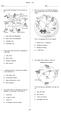 Name: ate: 1. Missing from the diagram of this ecosystem are the 5. ase your answer(s) to the following question(s) on the diagram below and on your knowledge of biology.. biotic factors and decomposers.
Lesson 4: What Makes Water Healthy?
 Lesson 4: What Makes Water Healthy? Activity: Students make observations and measurements of several water samples. This activity helps students think about different ways to determine water quality. Grade
Inventarisatie toepassing EU btw-regelgeving op hoveniersdiensten
 Inventarisatie toepassing EU btw-regelgeving op hoveniersdiensten Governments can stimulate citizens to contribute to ecological, social and economic goals. By using a reduced VAT-rate for private gardening
Costs of air pollution from European industrial facilities 2008 2012 an updated assessment
 Costs of air pollution from European industrial facilities 2008 2012 an updated assessment Summary In 2012, air pollution from European industrial facilities cost at least EUR 59 billion (and up to EUR
THE FUTURE OF THE OCEAN ECONOMY: AN OECD/IFP FORESIGHT PROJECT
 THE FUTURE OF THE OCEAN ECONOMY: EXPLORING THE PROSPECTS FOR EMERGING OCEAN INDUSTRIES TO 2030 AN OECD/IFP FORESIGHT PROJECT BARRIE STEVENS OECD/DSTI Verftskonferansen 2013 Alesund, Norway, 5 th November
To download Labour s Business Manifesto: A Better Plan for Business, please click here
 To download Labour s Business Manifesto: A Better Plan for Business, please click here Ed Miliband, Leader of the Labour Party, in a speech launching Labour s Business Manifesto, said: Thank you, Margaret,
Quality. Quality Status report 2010 Ospar Commission. [email protected] www.ospar.org. New Court 48 Carey Street London WC2A 2JQ
 Quality Status report 2010 Ospar Commission OSPAR Commission New Court 48 Carey Street London WC2A 2JQ T +44 (0) 20 7430 5200 F +44 (0) 20 7430 5225 [email protected] www.ospar.org Quality StaTus Report
ENDANGERED AND THREATENED
 ENDANGERED AND THREATENED Understand how species in the Sonoran Desert Region may become endangered or threatened and what is being done to protect them. ARIZONA SCIENCE STANDARDS SC03-S4C3-03&04, SC08-S1C3-07,
Nipigon Bay. Area of Concern Status of Beneficial Use Impairments September 2010
 Nipigon Bay Area of Concern Status of Beneficial Use Impairments September 2010 Nipigon Bay is in the most northerly area of Lake Superior. The Area of Concern takes in a large portion of Nipigon Bay and
ARIMNet 2 Call 2014-15
 Coordination of the Agricultural Research In the Mediterranean Area Call i text ARIMNet 2 Call 2014-15 SUBMISSION Pre-proposal by December 1 st, 2014 Full Proposal by May 11 th 2015 on http://arimnet-call.eu/
SECTION 3.2 CLIMATE AND PRECIPITATION
 SECTION 3.2 CLIMATE AND PRECIPITATION Ulster County Climate Data A preliminary analysis of the Preserve s weather data shows that the average temperature has risen about two degrees over the past 114 years.
MY EXCHANGE SEMESTER IN GÄVLE, SWEDEN
 FINAL REPORT MY EXCHANGE SEMESTER IN GÄVLE, SWEDEN (27 TH AUGUST 2014 18 TH JANUARY 2015) UNIVERSITY OF APPLIED SCIENCES BIBERACH MORITZ REIBER Table of content Preparation... 2 Sweden & Gävle... 3 University...
Ecosystems and Food Webs
 Ecosystems and Food Webs How do AIS affect our lakes? Background Information All things on the planet both living and nonliving interact. An Ecosystem is defined as the set of elements, living and nonliving,
GLOBAL CIRCULATION OF WATER
 Global Circulation of Water MODULE - 8A 27 GLOBAL CIRCULATION OF WATER More than three-fourths of the earth s surface is covered by water. Water is an odorless, tasteless, substance than can naturally
The Economic Impact of Long Distance Cycle Routes North Sea Cycle Route (NSCR)
 The Economic Impact of Long Distance Cycle Routes North Sea Cycle Route (NSCR) Les Lumsdon and Paul Downward CAST, Staffordshire University Stoke-on-Trent SK10 1LT, UK [email protected] Summary
Natural Resources. Air and Water Resources
 Natural Resources Key Concepts Why is it important to manage air and water resources wisely? How can individuals help manage air and water resources wisely? Air and Water Resources What do you think? Read
Principles of Ecology
 2 Principles of Ecology section 1 Organisms and Their Relationships Before You Read On the lines below, list the organisms that you have encountered today. You share the same environment with these organisms.
SUSTAINABLE AQUACULTURE
 SUSTAINABLE AQUACULTURE Dr. Elena Mente Assistant Professor School of Agricultural Sciences, Department of Ichthyology and Aquatic Environment, University of Thessaly, Volos, Greece Overview of my presentation
Appendix A. The Marine Life Protection Act (MLPA)
 Appendix A. The Marine Life Protection Act (MLPA) THE PEOPLE OF THE STATE OF CALIFORNIA DO ENACT AS FOLLOWS: SECTION 1. Chapter 10.5 (commencing with Section 2850) is added to Division 3 of the Fish and
Policy & Management Applications of Blue Carbon. fact SHEET
 Policy & Management Applications of Blue Carbon fact SHEET Policy & Management Applications of Blue Carbon Coastal Blue Carbon - An Important Wetland Ecosystem Service Coastal Blue Carbon refers to the
Norwegian Foreign Visitor Survey 2010
 Summary: TØI Report 1135/2011 Author(s): Eivind Farstad, Arne Rideng, and Iratxe Landa Mata Oslo 2010, 66 pages Norwegian Foreign Visitor Survey 2010 In 2010 a total of 4.8 million foreign guests stayed
Observatory monitoring framework indicator data sheet
 Observatory monitoring framework indicator data sheet Environmental impact: Water Indicator DA3: Nitrate and phosphate levels in rivers The EU Water Framework Directive has resulted in the need to change
1st International Congress July 26-31, 2015 Bozeman, Montana
 1st International Congress July 26-31, 2015 Bozeman, Montana The World of Trout is a seminal event celebrating trout and the passion they inspire around the world. Arguably no other freshwater species
GREAT BARRIER REEF. Climate Change Action Plan
 GREAT BARRIER REEF Climate Change Action Plan 2007 2011 Climate change is now recognised as the greatest long-term threat to the Great Barrier Reef. The Great Barrier Reef is internationally renowned as
Introduction to protection goals, ecosystem services and roles of risk management and risk assessment. Lorraine Maltby
 Introduction to protection goals, ecosystem services and roles of risk management and risk assessment. Lorraine Maltby Problem formulation Risk assessment Risk management Robust and efficient environmental
Aiding the Hydro-scheme development process. Web-links to useful information sources
 Aiding the Hydro-scheme development process. Web-links to useful information sources Web-pages are in bold. These pages aim at providing developers, land-owners, decision makers and advisors with a collation
Chapter 3 Communities, Biomes, and Ecosystems
 Communities, Biomes, and Ecosystems Section 1: Community Ecology Section 2: Terrestrial Biomes Section 3: Aquatic Ecosystems Click on a lesson name to select. 3.1 Community Ecology Communities A biological
How To Help Oceans
 The World Bank & the Ocean A Healthy & Productive Ocean to Help Reduce Poverty Why oceans matter to the World Bank NUTRITION Seafood provides 16% of the world s animal protein 1 billion people in developing
Birmingham City University / Students Union Aspects and Impacts Register. Waste. Impacts description
 Birmingham City University / Students Union and Impacts Register Waste Production of non - hazardous waste Production of hazardous waste Storage of non - hazardous waste Potential for waste to be disposed
EUROPEAN WATER RESOURCES AND POLICY
 EUROPEAN WATER RESOURCES AND POLICY What is the current water situation? The current water situation in Europe, according to a European Commission brochure, is described as: 20% of all surface water in
Northamptonshire County Scouts Newsletter January 2014 IN THIS ISSUE
 Northamptonshire County Scouts Newsletter January 2014 IN THIS ISSUE Help us share articles Name our newsletter We really need your help in sharing and distributing news from around the county! As you
This rain is known as acid rain.
 Rain is very important for life. All living things need water to live, even people. Rain brings us the water we need. But in many places in the world even where you live, rain has become a menace. Because
How many kilos of feed fish does it take to produce one kilo of farmed fish, via fishmeal and fish oil in feed?
 How many kilos of feed fish does it take to produce one kilo of farmed fish, via fishmeal and fish oil in feed? Key Points 1. The correct FIFO (Fish in: Fish out) for the conversion of wild feed fish to
Mediterranean-Mare Nostrum Nature and Culture Common Destiny
 Mediterranean-Mare Nostrum Nature and Culture Common Destiny Marine conservation Protection and Management Alain Jeudy de Grissac Marine Conservation Programme Manager June 2010 Toulon La Garde France
Advice note. Linking River and Floodplain Management
 Advice note Linking River and Floodplain Management Advice note Linking River and Floodplain Management Demonstrating STrategic REstoration And Management (STREAM) is a 1 million four-year conservation
Taking the Classroom Outside By Ashley Schopieray
 Taking the Classroom Outside By Ashley Schopieray Background Introduction If you had the choice to spend the day outside or go to school and sit inside all day, which would you choose? Spending time outdoors
Northern Territory Fisheries Resource Sharing Framework
 Northern Territory Fisheries Resource Sharing Framework Page 1 of 11 Introduction Fishing is important in the Northern Territory (Territory). Coastal Aboriginal people recognise sea country out to the
COUNTRY REPORT ON FISHERIES AND AQUACULTURE
 COUNTRY REPORT ON FISHERIES AND AQUACULTURE Hayri DENİZ National Coordinator Ministry of Food Agriculture and Livestock FAO and EUROFISH Regional Workshop on WTO and Fisheries: An update on WTO and Market
EIGHTH SESSION OF THE OPEN WORKING GROUP ON SUSTAINABLE DEVELOPMENT GOALS
 EIGHTH SESSION OF THE OPEN WORKING GROUP ON SUSTAINABLE DEVELOPMENT GOALS New Zealand intervention in segment on Oceans and Seas Stephanie Lee, Chargé d'affaires a.i. 4 February 2014 Check against delivery
A beautiful sunny day in July; I m walking on a street in the middle of a city, being surrounded by
 A Trip to Cambridge By Iina Lahti A beautiful sunny day in July; I m walking on a street in the middle of a city, being surrounded by stunning old buildings. Colleges and churches seem to be in every corner,
Offshore Renewable Energy in Virginia
 Offshore Renewable Energy in Virginia Presented to the Renewable Natural Resources Foundation December, 8 2009 Neil Rondorf Vice President, Maritime Operations Science Applications International Corporation
Long Term Challenges for Tidal Estuaries
 A view from a former tidal river manager expert with experience from 6 decades living at, with and from the Tidal River Elbe chairman of the European Interreg Project TIDE (Tidal River Development) Land
The city s green areas represent about 25% of the city s overall area and on
 3. Green urban areas incorporating sustainable land use Provide the percentage of green and water areas (public and private) and soil sealing in relation to the overall city area, including trends over
ROADMAP ON MARINE RENEWABLE ENERGY
 FAME PROJECT - INTERNATIONAL WORKSHOP TERESA SIMAS 1 20 TH NOVEMBER, 2012 OBJECTIVES Overview of marine renewable energy development and prospects CONTENTS Green House Gas emissions targets Renewable energy
Google Lead Generation For Attorneys - Leverage The Power Of Adwords To Grow Your Law Business FAST. The Foundation of Google AdWords
 Google Lead Generation For Attorneys - Leverage The Power Of Adwords To Grow Your Law Business FAST You re about to discover the secrets of fast legal practice success with Google AdWords. Google AdWords
Marine Programme Evidence Plan
 www.defra.gov.uk Marine Programme Evidence Plan Policy portfolio: Marine and Fisheries Policy area within portfolio: Marine environment, marine biodiversity, marine and freshwater fisheries Timeframe covered
Leisure and Tourism. Madame Tussauds brings you
 Madame Tussauds brings you Leisure and Tourism An exciting resource to support the learning and teaching of Travel and Tourism and Applied Leisure and Tourism for Key Stages 4 and 5, Levels 1, 2, 3 Welcome
Fisheries and Aquaculture in our Changing Climate
 Fisheries and Aquaculture in our Changing Climate Coastal communities, fishers and fish farmers are already profoundly affected by climate change. Rising sea levels, acid oceans, droughts and floods are
Traditional Advertising, Please Meet the Digital World
 Traditional Advertising, Please Meet the Digital World How Traditional Advertising is Aligning with Digital, Not Fighting Against It Traditional Advertising, Please Meet the Digital World How Traditional
NGO Self-assessment through a SWOT exercise
 NGO Self-assessment through a SWOT exercise Step 1: Analyse your NGO s Capacity > page 2 Step 2: Do the SWOT Exercise > page 5 Step 3: Make a Strategic Plan > page 8 Step 4: Implement, Monitor, Evaluate
Stork Technical Services
 Stork Technical Services Corporate presentation Chemical Power Oil & Gas 2 More information about REACH 3 We are Stork Technical Services 13 Vision To be the leading global provider of knowledge based
We hear you - putting our customers at the heart of everything we do
 We hear you - putting our customers at the heart of everything we do Virgin Media is the largest Virgin company in the world The second largest residential broadband provider in the UK The UK s largest
Introducing SEA LIFE centre Children s Activity Packs
 Introducing SEA LIFE centre Children s Activity Packs Great news, you re visiting a SEA LIFE centre and we ll do everything possible to make sure you have a wonderful day out. Whether you are a Scout,
Partnership in Environmental Governance. Swedish Environmental Protection Agency
 Partnership in Environmental Governance Swedish Environmental Protection Agency ISBN 978-91-620-8495-0. PRINT: CM Gruppen, Stockholm, 10-11. PRODUCTION: Swedish EPA. DESIGN: Peter Hönig. PHOTO: SXC if
Coastal Monitoring Program for Salmon and Steelhead
 California California Department of Fish and Wildlife NOAA Fisheries Coastal Monitoring Program for Salmon and Steelhead California Department of Fish and Wildlife Fisheries Branch 830 S Street Sacramento,
San Juan County / WRIA2 Lead Entity Program for Salmon Recovery
 San Juan County / WRIA2 Lead Entity Program for Salmon Recovery Photo: Rick Gould Barbara Rosenkotter Lead Entity Coordinator 360-370-7593 [email protected] www.sjcmrc.org/projects/salmon-recovery.aspx