
Essence of geothermal resource management
|
|
|
- Lindsay Todd
- 10 years ago
- Views:
Transcription
1 GEOTHERMAL TRAINING PROGRAMME IGC Short Course Orkustofnun, Grensásvegur 9, September 2003 IS-108 Reykjavík, Iceland Essence of geothermal resource management Gudni Axelsson Iceland GeoSurvey (Íslenskar orkurannsóknir) 1 Grensasvegur 9, IS-108 Reykjavik, Iceland [email protected] Abstract Comprehensive and efficient management is an essential part of successful geothermal utilisation. This implies controlling the energy extraction so as to maximise the resulting benefits, without over-exploiting the resource. Geothermal resource management relies on proper understanding of the geothermal system involved. The most important data on a geothermal system s nature and properties are obtained through careful monitoring of its response to long-term production. Modelling is one of the most powerful tools available for geothermal resource management. Through modelling, the nature and behaviour of a geothermal system can be understood and predicted. Reservoir models are also helpful in estimating the outcome of different management actions. Reinjection should be considered an integral part of any modern, sustainable and environmentally friendly geothermal utilisation, both as a method of waste-water disposal and to counteract pressure draw-down by providing artificial water recharge. Reinjection is essential for sustainable utilisation of geothermal systems, which are virtually closed and with limited recharge. Keywords: Management, monitoring, modelling, reinjection. 1 Introduction Geothermal resources are most often associated with volcanic activity, hot crust at depth in tectonically active areas or permeable sedimentary layers at great depth. They have been used on a small scale for thousands of years through the utilisation of thermal springs for bathing, washing and cooking. Yet modern, large-scale utilisation only started recently. Geothermal electricity production started in 1904 in Larderello, Italy, while operation of the world s largest geothermal district heating system in Reykjavik, Iceland, and extensive greenhouse heating in Hungary, started in the 1930s. Geothermal energy is now utilised in more than 50 countries, with electricity production in about 20 countries. Geothermal electricity production is highly important in The Philippines, Indonesia, Mexico, Costa Rica and El Salvador (Huttrer, 2001). Direct use is most significant in the P.R. of China, Japan, Iceland and the U.S.A. (Lund and Freeston, 2001). Geothermal exploitation involves energy extraction from highly complex underground systems, and geothermal resource management implies controlling this energy extraction so as to maximise the resulting benefits, without over-exploiting the resource. The generating capacity of geothermal systems is often poorly known and they often respond unexpectedly to long-term energy extraction. This is because their internal structure, nature and properties are poorly known and can only be observed indirectly. Therefore, the management of geothermal resources can be highly complicated. It involves deciding between different courses of action aimed at improving operating conditions, addressing unfavourable reservoir conditions, which may have evolved, or incorporating improvements in production strategy (Stefansson et al., 1 Formerly Orkustofnun - GeoScience 129

2 Axelsson 130 IGC2003 Short Course 1995, Axelsson and Gunnlaugsson, 2000). The operators of a geothermal resource must have some idea of the possible results of different courses of action, to be able to make these decisions. Thus, successful management relies on proper understanding of the geothermal system involved. In this paper, geothermal resource management will be discussed from the viewpoint of reservoir physics, or reservoir engineering. Particular emphasis will be placed on monitoring, modelling, and reinjection, which may be looked upon as the main ingredients in efficient, modern geothermal resource management. Several relevant field examples will be presented, some from low-temperature geothermal fields in Iceland and others from different geothermal fields worldwide. The paper is concluded by a brief discussion of sustainable geothermal resource management. 2 Geothermal management Comprehensive and efficient management is an essential part of any successful geothermal resource utilisation endeavour. Such management can be highly complicated, however, as the energy production potential of geothermal systems is highly variable. The generating capacity of many geothermal systems is, furthermore, poorly known and they often respond unexpectedly to long-term energy extraction. This is because the internal structure, nature and properties of these complex underground systems are poorly known and can only be observed indirectly. Successful management relies on proper understanding of the geothermal system involved, which in turn relies on adequate information on the system being available. An important element of geothermal resource management involves controlling energy extraction from a geothermal system so as to avoid over-exploitation of the underlying resource. When geothermal systems are over-exploited, production from the systems has to be reduced, often drastically. Overexploitation mostly occurs for two reasons. Firstly, because of inadequate monitoring and data collection, understanding of systems is poor, and reliable modelling is also not possible. Therefore, the systems respond unexpectedly to longterm production. Secondly, when many users utilise the same resource/system without common management or control. Examples of the latter are The Geysers in California, and large sedimentary basins in Europe and the P.R. of China. Management of a geothermal resource involves deciding between different courses of action in the exploitation of the resource (Grant et al., 1982). Most often, management decisions are made to improve the operating conditions of a geothermal reservoir. In some cases, unfavourable conditions may have evolved in a reservoir, while in others improvements in production technology may justify changes in production strategy. The operators of a geothermal resource must have some idea of the possible results of the different courses of action available to be able to make these decisions. This is why careful monitoring is an essential ingredient of any management program. Geothermal resource management may have different objectives, such as (Stefansson et al., 1995): To minimise the operation cost of a given geothermal reservoir. To maximise the energy extraction from a given resource. To ensure the security of continuous energy delivery. To minimise environmental effects. To avoid operational difficulties like scaling and corrosion. To adhere to the energy policy of the respective country. Real management objectives are quite often a mixture of several of the objectives listed above. In such cases, the objectives must be placed in an order of importance, since they may

3 IGC2003 Short Course 131 Axelsson in fact be counteractive. One of the more difficult aspects of reservoir management is to determine the most appropriate time span for a given option. There are cases, for example, where depleting a given reservoir in a few years time is most advantageous from a purely financial point of view. This is usually unacceptable from a political or sociological point of view, where a reliable supply of energy for a long time is considered more valuable. The management time span is commonly matched with the expected lifetime of surface equipment, often some years. A number of geothermal reservoirs have been utilised successfully for longer time periods. Some of the management options, which are commonly applied in geothermal resource management, are: Changed production strategy (increased/reduced production). Application of injection or changes in injection strategy. Drilling of additional wells, such as in-fill wells. Changes in well-completion programs (casings etc.). Lowering of down-hole pumps. Search for new production areas or drilling targets. Search for new geothermal systems. Management of a geothermal reservoir relies on adequate information on the geothermal system in question (Stefansson et al., 1995). In general, the information required for a successful management program involves: Knowledge on the volume, geometry and boundary conditions of a reservoir. Knowledge on the properties of the reservoir rock, i.e. permeability, porosity, density, heat capacity and heat conductivity. Knowledge on the physical conditions in a reservoir, which are determined by the temperature and pressure distribution. This knowledge is continuously gathered throughout the exploration and exploitation history of a geothermal reservoir. The initial data comes from surface exploration, i.e. geological, chemical and geophysical data. Consequently, exploratory drilling, in particular through logging and well testing, provides additional information. The most important data on a geothermal system s nature and properties, however, are obtained through monitoring of its response to long-term production. Careful monitoring of a geothermal reservoir during exploitation is, therefore, an indispensable part of any successful management program. If the understanding of a geothermal system is adequate, monitoring will enable changes in the reservoir to be seen in advance. These can be undesirable changes such as decreasing generating capacity or possible operational problems such as scaling in wells and surface equipment or corrosion. Thus, the importance of a proper monitoring program for any geothermal reservoir being utilised can never be stressed too much. Modelling, using different modelling approaches, constitutes the most powerful tool available to the reservoir engineer, which is applied for various management purposes. Mathematical models are developed on the basis of the data mentioned above (data analysis and interpretation). Through modelling, the nature and properties of a geothermal system can be estimated and its behaviour understood. The models are consequently used to predict the response of the reservoir to future production, estimate the production potential of the system, and estimate the outcome of different management actions. Reinjection should be considered an integral part of any modern, sustainable, environmentally friendly geothermal utilisation. It started out as a method of waste-water disposal, for environmental reasons, and is successfully used as such in numerous geothermal systems worldwide (Stefansson, 1997). The management role of reinjection has now been

4 Axelsson 132 IGC2003 Short Course expanded, since it is also being used to counteract pressure draw-down in reservoirs, i.e. as artificial water recharge, and to extract more of the thermal energy embedded in the reservoir rock. If correctly planned and executed, reinjection will increase the production potential of geothermal reservoirs considerably in most cases. Reinjection is, in fact, essential for sustainable utilisation of geothermal systems, which are virtually closed and, therefore, with limited recharge. 3 Effect of large-scale geothermal production Utilisation of a geothermal resource involves extracting mass and heat from the geothermal reservoir involved. The processes dominating this are, of course, mass and heat transport in the geothermal system and through the boreholes. Mass and heat transfer are also the dominating processes during the undisturbed natural state of a geothermal system. In the natural state, this transport is driven by global pressure variations in the geothermal system. During production, the mass and heat transport forced upon the system causes spatial as well as transient changes in the pressure state of a reservoir. Therefore, it may be stated that pressure is one of the most important parameters involved in geothermal exploitation. Energy content, either represented as internal energy or enthalpy, is the other crucial parameter of geothermal exploitation. In single-phase situations, this depends on temperature only, and pressure and temperature define the state of the reservoir. In two-phase situations pressure and temperature are related and an additional parameter is needed, such as water saturation or enthalpy. The energy production potential of a geothermal system is predominantly determined by pressure decline due to production, but also by the available energy content. The pressure decline is determined by the rate of production, on one hand, and the size of a system, permeability of the rock and water recharge (i.e. boundary conditions), on the other hand. The nature of the geothermal systems is such that the effect of small production is so limited that it can be maintained for a very long time (hundreds of years). The effect of large production is so great, however, that it can t be maintained for long. Pressure declines continuously with time, particularly in systems that are closed or with small recharge. Production potential is, therefore, often limited by lack of water rather than lack of thermal energy. Water or steam extraction from a geothermal reservoir causes, in all cases, some decline in reservoir pressure. The only exception is when production from a reservoir is less than its natural recharge. Consequently, the pressure decline manifests itself in further changes, which may be summarised in a somewhat simplified manner as follows: A. Direct changes caused by lowered reservoir pressure, such as: changes in surface activity, decreasing well discharge, lowered water level in wells, and increased boiling in high-enthalpy reservoirs. B. Indirect changes caused by increased recharge to the reservoir, such as: changes in chemical composition of the reservoir fluid, changes in reservoir temperature conditions (observed through temperature profiles of wells), and changes in temperature/enthalpy of reservoir fluid. C. Surface subsidence, which may result in damage to surface piping and equipment. Table 1 below presents examples of the effect of long-term, large-scale production in eleven geothermal systems in Iceland. These are both high- and low-enthalpy systems, of

5 IGC2003 Short Course 133 Axelsson quite contrasting nature. Some exhibit quite a drastic pressure draw-down for limited production while others experience very limited draw-down for substantial mass extraction. The table also shows examples of reservoir cooling due to long-term production. Table 1: The effect of large-scale production on selected geothermal systems in Iceland (numbers for the year 2000). System (location) Production initiated Number of prod. wells Average production (kg/s) Reservoir temp. (ºC) Drawdown Temp. decline (ºC) Svartsengi (SW) Laugarnes (SW) Reykir (SW) Nesjavellir (SW) Saudarkrokur (North) Thelamork (North) Hamar (North) Laugaland (North) Krafla (North) Urridavatn (East) Gata (South) m 110 m 100 m 7 bar 35 m 180 m 30 m 370 m bar 40 m 250 m * ** 1-2 *) Only 3 of the 34 production wells have experienced some cooling. **) Two older production wells, not used after 1983, experienced up to 15ºC cooling. 4 Monitoring Successful management relies on proper understanding of the geothermal system involved, as already discussed. This understanding relies on adequate information and knowledge, which is continuously gathered throughout the exploration and exploitation history of a geothermal reservoir. The most important data on the nature and properties of a geothermal system are, however, obtained through careful monitoring of its response to long-term production. Monitoring is, therefore, an indispensable part of any successful management program. Monitoring the physical changes in a geothermal reservoir during exploitation is in principle simple and only involves measuring the (1) mass and heat transport; (2) pressure; and (3) energy content (temperature in most situations). However, in practise this is highly complicated (Axelsson and Gunnlaugsson, 2000). The measurements must be done at high temperatures and pressures and access into the geothermal reservoir, for measurement purposes, is generally limited to a few boreholes. Measuring these parameters throughout the remaining reservoir volume cannot be done directly. The measurements are the responsibility of reservoir physicists or engineers, both the development of measuring techniques and their management. Analysis of the data collected, modelling and predictions are also the responsibility of these scientists. The parameters that need to be monitored to quantify a reservoir s response to production differ, of course, somewhat from one geothermal system to another (Kristmannsdottir et al., 1995). In addition, the methods of monitoring as well as monitoring frequency may differ. Monitoring may also be classified as either direct or indirect, depending on whether the parameters involved are observed directly or indirectly. Below is a list of the basic aspects that should be included in conventional geothermal monitoring programs, which can be observed directly: 1. Mass discharge histories of production wells. 2. Enthalpy or temperature (if liquid or dry steam) of fluid produced. 3. Wellhead pressure (water level) of production wells.

6 Axelsson 134 IGC2003 Short Course 4. Chemical content of water and steam produced. 5. Injection rate histories of injection wells. 6. Temperature of injected water. 7. Wellhead pressure (water-level) for injection wells. 8. Reservoir pressure (water level) in observation wells. 9. Reservoir temperature through temperature logs in observation wells. 10. Well status through caliper logs, injectivity tests and other methods. Monitoring programs have to be specifically designed for each geothermal reservoir, because of their individual characteristics. Even though monitoring of physical changes in low- and high-enthalpy reservoirs involves in principle the same measurements, there are some distinct differences between the methods employed. Monitoring programs may also have to be revised as time progresses, and more experience is gained. This applies, for example, to the monitoring frequency of different parameters. There are practical limits to the frequency in cases of manual monitoring while computerised monitoring is becoming increasingly more common. In cases of computerised monitoring, there is actually no upper limit to monitoring frequency, except for the memory-space available in the computer system used in the monitoring. Figures 1 through 4 present a few examples of monitoring data from geothermal systems in Iceland and the P.R. of China. Figure 1 presents two decades of production and water level monitoring data from the Laugland low-temperature geothermal systems in Central N-Iceland (Axelsson et al., 2001b). The figure shows how the field was overexploited early on in its production history, a trend which was reversed by reducing the production drastically. Figure 1: Two decades of the production and water level history of the Laugaland lowtemperature geothermal system in Central N-Iceland (Axelsson et al., 2001b). Figure 2 shows 10 years of the water level history of the Tanggu geothermal system in Tianjin, the P.R. of China (Axelsson and Dong, 1998). This example shows a continuously increasing water-level draw-down, which has been attributed to rapidly increasing production, rather than overexploitation. Figure 3 shows an example of computerized monitoring of production rate and outdoor temperature, from the Urridavatn low-temperature geothermal

7 IGC2003 Short Course 135 Axelsson system in E-Iceland (Axelsson, 1991). This resource is used for space heating in the nearby town of Egilsstadir. The figure shows clearly the great details that can be observed through such monitoring, from daily to seasonal variations in production, all reflecting variations in outdoor temperature. Figure 2: The water-level history of the Tanggu geothermal system in Tianjin, P.R. of China, during (Axelsson and Dong, 1998). Figure 4 shows an example of chemical monitoring data from the Thelamork lowtemperature geothermal system in Central N-Iceland (Bjornsson et al., 1994). These data show a drastic drop in silica-content, which has been attributed to inflow of colder water into the geothermal system. In addition to conventional, or direct monitoring discussed above, indirect monitoring involves monitoring the changes occurring at depth in geothermal systems through various surface observations and measurements. Such indirect monitoring methods are very seldom applied in low-temperature geothermal fields, but are more commonly used in hightemperature fields. Various indirect monitoring methods have been used to try to detect the changes occurring underground in geothermal systems during long-term exploitation. These are mostly geophysical measurements carried out at the surface, while airborne and even satellite measurements have been attempted. All these methods have in common that a careful baseline survey must be carried out before utilisation is started, and that they must be repeated at regular intervals. Some of the indirect monitoring methods are well established by now, while others are still in the experimental stage or have met limited success. A review of the geothermal literature reveals that the following methods have been used: 1. Topographic measurements. 2. Micro-gravity surveys. 3. Electrical resistivity surveys. 4. Ground temperature and heat-flow measurements. 5. Micro-seismic monitoring. 6. Water level monitoring in groundwater systems. 7. Self-potential surveys.

8 Axelsson 136 IGC2003 Short Course Figure 3: An example of data (production and outdoor temperature) collected through computerized monitoring at the Urridavatn low-temperature geothermal system near Egilsstadir, E-Iceland (Axelsson, 1991). Figure 4: Changes in silica content of water produced from the Thelamork low-temperature geothermal system in Central N-Iceland during (Bjornsson et al., 1994). These methods are very seldom used in low-enthalpy fields, as already mentioned. This is partly because the physical changes in low-enthalpy systems are in most cases not as great as in high-enthalpy systems, and partly because the surveys involved tend to be rather costly. Indirect monitoring is used in a number of high-enthalpy fields, however. A few of the methods are widely used, such as (1), (2) and (5), while others have only been used in isolated instances. It may be mentioned that great emphasis has been placed on indirect monitoring methods in some geothermal fields in New Zealand, and Hunt (1989) provides good examples of the use of several of the methods in the Broadlands field. Their use appears to have spread to other geothermal countries near-by, such as The Philippines and Japan. Some of these methods have also been applied in geothermal fields in the U.S.A., but relevant information is

9 IGC2003 Short Course 137 Axelsson not as easily accessible in the international geothermal literature. Axelsson and Gunnlaugsson (2000) review several examples of indirect monitoring surveys that have been presented in the geothermal literature. Topographic measurements (1) are carried out to enable detection of ground elevation changes, mostly subsidence. This may occur in all geothermal systems during exploitation because of compaction of the reservoir rocks, following fluid withdrawal. Reinjection may also cause topographic changes (uplift). Levelling is the most common method of subsidence monitoring. New methods such as radar interferometry have come into use recently. Micro-gravity monitoring (2) has been used successfully in a number of geothermal fields. Changes in gravity can provide information on the net mass balance of a geothermal reservoir during exploitation, i.e. the difference between the mass withdrawal from a field and the recharge to the reservoir. The mass-balance effects of enlarging steam-zones may also be seen through gravity monitoring. In addition, the mass-balance effects of reinjection may be detected by gravity monitoring. Methods for analysing gravity changes in geothermal fields are presented by Allis and Hunt (1986). Figure 5 presents an example of gravity monitoring in the Svartsengi high-temperature geothermal field in SW-Iceland. Figure 5: Micro-gravity monitoring data from the centre of the Svartsengi high-temperature geothermal field in SW-Iceland. Based on Eysteinsson (2000). Repeated electrical resistivity surveys (3) have not been conducted in many geothermal fields, but might help delineate cold, fresh-water inflow into geothermal reservoirs, induced by production. Such surveys may also be helpful in locating reservoir volumes affected by reinjection. Surface activity and heat flow (4) may either decrease or increase during production from a geothermal field. Monitoring of these changes is, however, more often associated with monitoring of the environmental effects of geothermal exploitation. These may be monitored through repeated (a) ground temperature measurements; (b) airborne infrared measurements; and (c) observations of thermal features (hot springs, fumaroles, mud pools, etc.). The purpose of monitoring seismic activity (5) may be two-fold. Firstly, to monitor changes in seismic activity in an area already seismically active. This may be considered environmental rather than reservoir monitoring. Secondly, to delineate the regions in a geothermal reservoir affected by exploitation or reinjection, because in some cases the pressure and thermal changes associated with geothermal exploitation and reinjection may be sufficient to generate some micro-seismic activity.

10 Axelsson 138 IGC2003 Short Course Water level changes in shallow ground water systems (6) are monitored in some geothermal fields. These should, in principle, reflect corresponding pressure changes at depth in the geothermal reservoirs. Self-potential monitoring (7), in conjunction with numerical modelling, has been proposed as a tool to study the changes in geothermal reservoirs due to mass extraction and reinjection. Finally, it may be pointed out that a combination of indirect monitoring with numerical reservoir simulation should enhance the reliability of such models, as well as aiding in the correct understanding of the nature of the geothermal system involved. 5 Modelling Modelling plays an essential role in geothermal resource management. This ranges from simple analytical modelling of the results of a short well test to detailed numerical modelling of a complex geothermal system, simulating an intricate pattern of changes resulting from long-term production. The purpose of geothermal modelling is firstly to obtain information on the conditions in a geothermal system as well as on the nature and properties of the system. This leads to proper understanding of its nature and successful management of the resource. Secondly, the purpose of modelling is to predict the response of the reservoir to future production and estimate the production potential of the system, as well as to estimate the outcome of different management actions. The diverse information, which is the foundation for all reservoir modelling, should be continuously gathered throughout the exploration and exploitation history of a geothermal reservoir. Information on reservoir properties is obtained by disturbing the state of the reservoir (fluid-flow, pressure) and by observing the resulting response. This is done through well and reservoir testing and data collection. Different methods of testing geothermal reservoirs are available, but these will not be discussed here (Grant et al., 1982; Bodvarsson and Witherspoon, 1989). But it should be emphasised that the data collected does not give the reservoir properties directly. Instead, the data are interpreted, or analysed, on the basis of appropriate models, which yield estimates of the reservoir properties. It is important to keep in mind that the resulting values are model-dependent, i.e. different models give different estimates. It is also very important to keep in mind that the longer, and more extensive the tests are, the more information is obtained on the system in question. Therefore, the most important data on a geothermal reservoir is obtained through careful monitoring during longterm exploitation, which can be looked upon as prolonged and extensive reservoir testing. Various modelling approaches are currently in use by geothermal reservoir specialists. In a few words, modelling involves a mathematical model being developed that simulates some, or most, of the data available on the geothermal system involved. These can be (1) simple analytical models, (2) lumped parameter models; and (3) detailed numerical models. The model will provide information on the conditions in, and the properties of the actual geothermal system. But again this information is not unique, but model-dependent. Consequently, the model is used to predict the future changes in the reservoir involved and estimate its production potential. The initial step in model development should be the development of a good conceptual model (Bodvarsson et al., 1986). This is a qualitative, or descriptive model, which incorporates all the essential features of a geothermal system that have been revealed by analysis of all available data. Consequently, a quantitative natural state model is developed, which should simulate the physical state of a geothermal system prior to production. Finally, an exploitation model is developed, which is used to simulate changes in the physical state of a geothermal system during long-term production, and used for calculating predictions as well as for other management purposes.

11 IGC2003 Short Course 139 Axelsson Numerous examples are available on the successful role of modelling in geothermal resource management (Axelsson and Gunnlaugsson, 2000; O Sullivan et al., 2001). These involve the use of simple analytical models as well as complex numerical models. In simple models, the real structure and spatially variable properties of a geothermal system are greatly simplified, such that analytical mathematical equations, describing the response of the model to hot water production may be derived. These models, in fact, often only simulate one aspect of a geothermal system s response. Detailed and complex numerical models, on the other hand, can accurately simulate most aspects of a geothermal system s structure, conditions and response to production. Simple modelling takes relatively little time and only requires limited data on a geothermal system and its response, whereas numerical modelling takes a long time and requires powerful computers as well as comprehensive and detailed data on the system in question. The complexity of a model should be determined by the purpose of a study as well as the data available. Numerical modelling, which is increasingly being used to simulate geothermal systems in different parts of the world, will not be discussed here. Instead the reader is referred to a comprehensive review by O Sullivan et al. (2001). Simple modelling, on the other hand, has been used extensively to study and manage the low-temperature geothermal systems utilised in Iceland, in particular to model their long-term response to production. Lumped parameter modelling, which is used to simulate data on water level and pressure changes, has been the principal tool for this purpose (Axelsson and Gunnlaugsson, 2000). Lumped models can simulate such data very accurately, even very long data sets (several decades). Today, lumped models have been developed by this method for about 20 low-temperature and 3 hightemperature geothermal systems in Iceland, as well as geothermal systems in China, Turkey, Eastern Europe, Central America and The Philippines, as examples. This method will be presented here as an example of the use of modelling in geothermal resource management. Axelsson (1989) presents the theoretical basis of an automatic method of lumped parameter modelling, and the computer code LUMPFIT has been used since 1986 in most lumped modelling studies carried out (Axelsson and Arason, 1992). The method tackles the simulation as an inverse problem and automatically fits the analytical response functions of the lumped models to observed data by using a non-linear iterative least-squares technique for estimating the model parameters. Being automatic, it requires very little time compared to other forward modelling approaches, in particular detailed numerical modelling. A general lumped model consists of a few tanks and flow resistors. The water level or pressure in the tanks simulates the water level or pressure in different parts of the geothermal system. The resistors simulate the flow resistance in the reservoir, controlled by the permeability of its rocks. Lumped models can either be open or closed, corresponding to constant-pressure, or no-flow, boundary conditions. An open model may be considered optimistic, since an equilibrium between production and recharge is eventually reached during long-term production, causing the water level draw-down to stabilise. In contrast, a closed model may be considered pessimistic, since no recharge is allowed for such a model and the water level declines steadily with time, during long-term production. In most cases, models composed of two or three tanks are sufficient for accurate simulations. The next four figures (6 through 9) show examples of the use of lumped models in simulating pressure changes in three geothermal systems. Figure 6 shows the observed and simulated water level changes in the Hamar low-temperature field in Central N-Iceland, along with the fields production history (Axelsson, 1991). This field has been utilised by the hitaveita (district heating service) serving the town of Dalvik (pop. 1,500) since The reservoir temperature at Hamar is about 65ºC. Figure 7 shows the observed and simulated pressure history of the Ahuachapan high-temperature system in El Salvador, which has been utilized for electricity production since the late 1960s (Montalvo et al., 1997). Both these figures show a very good agreement between the observed and simulated data, in spite of long

12 Axelsson 140 IGC2003 Short Course data sets, reflecting the flexibility of this method of lumped parameter modelling. Comparable results have been obtained for most other geothermal fields, simulated by this method. Figure 6: Water-level changes in the Hamar low-temperature system in Central N-Iceland simulated by a lumped parameter model (Axelsson, 1991). Boxes = measured data; solid line = simulated response. Figure 7: Pressure changes in the Ahuachapan high-temperature system in El Salvador simulated by a lumped parameter model (Montalvo et al., 1997). Boxes = measured data; solid line = simulated response).

13 IGC2003 Short Course 141 Axelsson Figure 8 shows water level predictions for the Laugaland system discussed above (see Figure 1) calculated by a lumped parameter model, while Figure 9 shows comparable pressure predictions for the Ahuachapan system. These figures are examples of how modelling is used for management purposes. Figure 8: Water level predictions for the Laugaland low-temperature geothermal system in Central N-Iceland, for three different production scenarios, calculated by a lumped parameter model (Axelsson et al., 2001b). Figure 9: Pressure predictions for the Ahuachapan geothermal system in El Salvador, for three different production scenarios, calculated by a lumped parameter model (see Figure 7).

14 Axelsson 142 IGC2003 Short Course 6 Reinjection Geothermal reinjection should be considered an essential part of any modern, sustainable, environmentally friendly geothermal utilisation, and an important part of the management of geothermal resources. It started out as a method of waste-water disposal for environmental reasons, but is now also being used to counteract pressure draw-down, i.e. as artificial water recharge, and to extract more thermal energy in reservoir rock (Stefansson, 1997; Axelsson and Gunnlaugsson, 2000; Pruess and Bodvarsson, 1984). Reinjection will increase production potential considerably in most cases, as has been learned through experience and theoretical studies. Geothermal reinjection started in Ahuachapan, El Salvador in 1969; The Geysers, California in 1970; and in Larderello, Italy in It is now an integral part of the operation of at least 50 geothermal fields in 20 countries. Without reinjection, the mass extraction, and hence electricity production, would only be a small part of what it is now in many of these fields. The water injected into geothermal reservoirs includes waste-water and condenser-water from power plants, return-water from direct use (space heating, etc.), groundwater and surface water or even sewage water. Some operational problems are associated with reinjection, such as an increase in investment and operation costs, cooling of production wells and scaling in surface equipment and injection wells (Stefansson, 1997). Injection into sandstone reservoirs has, furthermore, turned out to be problematic. Figure 10 shows the production history of the Miravalles high-temperature geothermal field in Costa Rica as an example where almost all (85% in fact) of the extracted mass is reinjected back into the geothermal reservoir right from the beginning of utilization (Mainieri, 2000). Another example is shown in Figure 11, demonstrating the possible benefit of using reinjection for reservoir management. This latter example is from the Shahe low-temperature sedimentary geothermal field in Beijing, the P.R. of China, where modelling has demonstrated that without reinjection, the production potential of the geothermal system will be quite limited (Axelsson et al., 2002). The geothermal resources under the city of Beijing will be discussed in more depth later in this paper. Figure 10: Extraction and reinjection history of the Miravalles high-temperature field in Costa Rica (Mainieri, 2000).

15 IGC2003 Short Course 143 Axelsson Figure 11: Results of modelling calculations for well ShaRe-6 in the Shahe low-temperature geothermal field in Beijing (Axelsson et al., 2002). Predictions for utilisation scenarios with 80-90% reinjection and without reinjection are shown. Another example of successful management of a geothermal resource through reinjection is the Paris basin in France (Boisdet et al., 1990; Axelsson and Gunnlaugsson, 2000) (Figure 12). This is a vast geothermal resource associated with the Dogger limestone formation, which stretches over 15,000 km 2. Energy from the Dogger reservoir is mainly used for space heating and the exploitation is, in most cases, on the basis of a doublet scheme, including a heat-exchanger plant due to the high mineral content, where all the water is reinjected. Utilisation of the Dogger geothermal reservoir started in 1969 and following the two oil crises, fifty-three additional geothermal plants were constructed in the Paris basin. During the late eighties, a remote monitoring system was set up covering most of the doublets in which the data are collected through the telephone network to a central location. The production and reinjection wells of the Paris doublets are usually separated by a distance of about 1,000 m to minimise the danger of cooling due to the reinjection. Experience, lasting between 12 and 30 years, has indicated that no significant cooling has yet taken place in any of the Paris production wells. Figure 12: Diagram showing the principle of the geothermal doublets utilized in the Paris-basin, and the measuring points for the remote data acquisition (from Boisdet et al., 1990).

16 Axelsson 144 IGC2003 Short Course The possible cooling of production wells, or thermal breakthrough, has discouraged the use of injection in some geothermal operations although actual thermal breakthroughs, caused by cold water injection, have been observed in relatively few geothermal fields. In cases where the spacing between injection and production wells is small, and direct flow-paths between the two wells exist, the fear of thermal breakthrough has been justified. Stefansson (1997) reports that actual cooling, attributable to injection, has been observed in Ahuachapan (El Salvador), Palinpinon (Philippines) and Svartsengi (Iceland). The temperature of well AH-5 in Ahuachapan declined by about 30ºC due to an injection well located only 150 m away, while the temperature of well SG-6 in Svartsengi declined by about 8ºC during 4 years of injection. The temperature decline of well PN-26 in Palinpinon was reviewed by Malate and O Sullivan (1991). The thermal breakthrough occurred about 18 months after reinjection started. Subsequently, the temperature declined rapidly, dropping by about 50ºC in 4 years (see Figure 13). Figure 13: Measured and simulated temperature decline in well PN-26 in the Palinpinon field, Philippines. From Malate and O Sullivan (1991). Cooling due to reinjection is minimised by locating injection wells far away from production wells, while the benefit from reinjection is maximised by locating injection wells close to production wells. A proper balance between these two contradicting requirements must be found. Therefore, careful testing and research are essential parts of planning injection. Tracer testing is probably the most important tool for this purpose. Tracer tests are used extensively in surface and groundwater hydrology as well as pollution and nuclear-waste storage studies. Tracer tests involve injecting a chemical tracer into a hydrological system and monitoring its recovery, through time, at various observation points. The results are, consequently, used to study flow-paths and quantify fluid-flow. Tracer tests are, furthermore, applied in petroleum reservoir engineering. The methods employed in geothermal applications have mostly been adopted from these fields. The main purpose in employing tracer tests in geothermal studies, and resource management, is to predict possible cooling of production wells due to long-term reinjection of colder fluid through studying connections between injection and production wells. Their power lies in the fact that the thermal breakthrough time is usually some orders of magnitude (2-3) greater than the tracer breakthrough time, bestowing tracer tests with predictive powers.

17 IGC2003 Short Course 145 Axelsson Comprehensive interpretation of geothermal tracer test data, and consequent modelling for management purposes (production well cooling predictions), have been rather limited, even though tracer tests have been used extensively. Their interpretation has mostly been qualitative rather than quantitative. It must be pointed out, however, that while tracer tests provide information on the volume of flow paths connecting injection and production wells, thermal decline is determined by the surface area involved in heat transfer from reservoir rock to the flow paths, which most often are fractures. With some additional information, and/or assumptions, this information can be used to predict the cooling of production wells during long-term (years to decades) reinjection. The theoretical basis of tracer interpretation models is the theory of solute transport in porous/permeable media, which incorporates transport by advection, mechanical dispersion and molecular diffusion. Axelsson et al. (1995) and Axelsson (2002) present a method of tracer test analysis/interpretation, which is conveniently based on the assumption of specific flow channels connecting injection and production wells. This method has been used to analyse tracer test data from several geothermal systems in Iceland, El Salvador and P.R. of China, for example, and to calculate cooling predictions. It has proven to be very effective. This method is based on simple models, which are able to simulate the relevant data quite accurately. The utilisation of detailed and complex numerical models is seldom warranted, at least as first stage analysis. Figure 14 shows an example of how the results of tracer test analysis, and consequent cooling predictions, may be used for management purposes. The example is from the Laugaland low-temperature system in Central N-Iceland, already discussed (Figure 1). Based on the results of reinjection research, the increase in energy production, enabled through longterm reinjection, was estimated by combining the possible increase in mass extraction estimated and the predicted temperature changes. The figure shows the final result, or the estimated cumulative additional energy production for one of the production wells during a 30-year period. These results also provide the basis for an analysis of the economics of future reinjection at Laugaland. Figure 14: Estimated cumulative increase in energy production for 30 years of reinjection into well LJ-08 at Laugaland in Central N-Iceland (Axelsson et al., 2001b). Calculated for three cases of average injection and assuming production from well LN-12.

18 Axelsson 146 IGC2003 Short Course Some other operational problems plague reinjection operations, in addition to production well cooling. Silica scaling in surface equipment and injection wells is one of the problems, which may be difficult to solve, in particular in high-temperature fields. Geothermal fluids are in equilibrium with the rocks at reservoir conditions. After flashing in a separator/power plant, the separated fluid becomes supersaturated in SiO 2 and silica will precipitate from the fluid. This is a complex process partly controlled by temperature, ph of the fluid, and the concentration of SiO 2. The problem of silica scaling may be avoided, in most cases, by proper system design. One design involves applying hot injection where the separated water is injected directly from a separator, at a temperature of C, i.e. above the saturation temperature for silica scaling. Other designs use cold injection where the return water temperature is below the saturation temperature for silica scaling, because of cooling to C. This calls for preventive measures such as deposition of silica in ponds/lagoons or by special treatment such as with scaling inhibitors. Dilution of the silica by steam condensate is also used. Stefansson (1997) discusses this issue in more detail with particular reference to the experience in Japan, New Zealand and The Philippines. Another problem is associated with reinjection into sandstone reservoirs, which has been attempted at several locations, but with limited success (Stefansson, 1997; Axelsson and Gunnlaugsson, 2000). During many sandstone reinjection tests/operations, the injectivity of injection wells decreases very rapidly, even in hours or days, rendering further reinjection impossible. The reasons for this are not fully understood, but most likely the aquifers next to the injection wells clog up (fine sand and precipitation particles). Axelsson and Gunnlaugsson (2000) discuss attempts at solving this problem. Some successful attempts have involved flow-reversal, by installing down-hole pumps in injection wells, which are used to produce from the wells for periods of a few hours once their injectivity has dropped after a period of reinjection. The second solution to the sandstone injection problem was developed in Thisted, Denmark, where 45ºC water from a sandstone reservoir is utilised in a district heating plant and hence reinjected (Mahler, 1998). This solution involves a sophisticated closed loop system wherein the reinjected water is kept completely oxygen free as well as passed through very fine filters (one micron). The solution also involves not allowing injection after plant construction work, and other breaks in operation, until the water is checked clean and oxygen free. In addition, pressures are kept up by nitrogen bottles when the plant is stopped. This system has been in operation since Sustainable geothermal resource management We conclude this paper with a brief discussion of sustainable geothermal resource management. The term sustainable development has been defined as development that meets the needs of the present without compromising the ability of future generations to meet their own needs (World Commission on Environment and Development, 1987). This definition is inherently rather vague and sustainability of geothermal energy production is a topic that has received limited attention. This discussion is based on Axelsson and Stefansson (2003) and Axelsson et al. (2002), and the reader is referred to those papers for more details. In many cases, several decades of experience have shown that by maintaining production below a certain limit, a geothermal system reaches a kind of balance, which may be maintained for a long time. Good examples are the Laugarnes system in SW-Iceland and the Matsukawa geothermal system in Japan (Axelsson et al., 2002). Other examples are available where production has been so great that equilibrium was not attained. An example of this is the Geysers geothermal field in California. Axelsson et al. (2001a) attempt to define the term sustainable production of geothermal energy, based on the assumption that for each geothermal system, and for each mode of production, there exists a certain level of maximum energy production, E 0, below which it

19 IGC2003 Short Course 147 Axelsson will be possible to maintain constant energy production from the system for a very long time. This definition assumes a production period of years. It applies to the total extractable energy, and depends, in principle, on the nature of the system in question, but not on load-factors or utilization efficiency. It also depends on the mode of production. It neither considers economical aspects, environmental issues, nor technological advances, all of which may be expected to fluctuate over time. The value of E 0 is not known a priori, but it may be estimated on the basis of available data (by modelling). Axelsson and Stefansson (2003) present two case studies linked to sustainable management. One of these is the Hamar low-temperature geothermal system in Central N- Iceland, where modelling based on long-term monitoring has been employed to estimate the sustainable potential of the system. The Hamar geothermal system, which has already been presented as an example (Figure 6), has been utilized for space heating in the nearby town of Dalvik since Two production wells, with feed-zones between depths of 500 and 800 m, in the basaltic lava-pile, are currently in use and the reservoir temperature is about 65 C. The average yearly production from the Hamar system has varied between 23 and 42 l/s, which has, in fact, caused a very modest pressure decline of about 3 bar (30 m). The Hamar system appears to have been utilised in a sustainable manner during the last three decades. The production history is too short, however, to establish whether the current level of utilisation is sustainable according to the definition of Axelsson et al. (2001a). Therefore, the sustainable production capacity of the system (E 0 in the definition) has been estimated through modelling. A simple method of modelling was used in which pressure and temperature changes were treated separately. The lumped parameter model, already mentioned (Figure 6), was used to simulate (predict) the pressure changes (water level) in the Hamar geothermal system for a 200-year production history. The results are presented in Figure 15 for a 40 kg/s long-term average production. The model used is actually a semi-open model where the response is in-between the responses of the extreme cases of a closed system and an open one. It may be mentioned that the two extremes indicate that the uncertainty in the prediction is only about ±30 m at the end of the prediction period. The results also show that the system should be able to sustain more than 40 kg/s, with down-hole pumps at depths of m. Figure 15: Predicted water-level (pressure) changes in the Hamar geothermal system for a 200- year production history (see Figure 6).

20 Axelsson 148 IGC2003 Short Course The eventual temperature draw-down in the Hamar system, due to colder water inflow, is estimated through using a very simple model of a hot cylindrical (or elliptical) system surrounded by colder fluid (Bodvarsson, 1972). This model is used to estimate the time of the cold-front breakthrough. The size of the system, which is highly uncertain, has been estimated to be at least 0.5 km 3, on the basis of geophysical data. The results indicate that if we again assume a production history of the order of 200 years that it should be possible to maintain production of at least 40 kg/s for this period (Axelsson and Stefansson, 2003). The above results clearly indicate that the long-term production potential of the Hamar geothermal reservoir is limited by energy-content rather than pressure decline (lack of water). Axelsson and Stefansson (2003) also conclude that the sustainable rate of production is > 40 kg/s and that E 0 > 11 MW th (assuming a reference temperature of 0 C). The other case study presented by Axelsson and Stefansson (2003) involves the geothermal resources, which are known to exist in the deep sedimentary basin below the city of Beijing, in the P.R. of China. This latter resource is of an entirely different nature. Beijing is situated on top of a large and deep sedimentary basin where geothermal resources have been found at depth. The basin has been divided into ten geothermal areas on the basis of geological and geothermal conditions. The best known are the Urban and Xiaotangshan areas, which have been utilised since the 70s and 80s, respectively. The reservoir rocks in the Urban and Xiaotangshan systems are mostly limestone and dolomite and the yearly production from the Urban and Xiaotangshan fields corresponds to an average production of about 110 and 120 kg/s, respectively. This has resulted in a water level draw-down of the order of 1.5 m/year in the two fields. The water level has declined at an apparently constant rate in spite of the average production remaining relatively constant. This clearly indicates that the underlying reservoirs have limited recharge and, in fact, act as nearly closed hydrological systems. Plans to increase geothermal utilisation in Beijing are in effect, in particular for space heating, in order to help battle the serious pollution facing the city. Some successful wells have recently been drilled in the so-called Shahe field, which is located in the northern part of the city. Three years of monitoring data have been simulated by a lumped parameter model (Axelsson et al., 2002). The modelling results show clearly that the Shahe reservoir is an almost closed system (with limited recharge). It is clear from water-level predictions that a considerable, constantly increasing, water-level draw-down may be expected in the reservoir. The modelling results show, however, that reinjection will be essential for sustainable utilisation of this reservoir. Without reinjection, its potential appears to be quite limited. The Shahe reservoir suffers, in fact, from a lack of water. More than sufficient thermal energy is in place in the geothermal reservoir, however, because of the great volume of resource, and reinjection will provide a kind of artificial recharge. The results of Axelsson and Stefansson (2003) and Axelsson et al. (2002) clearly indicate that reinjection will be essential if plans for increased use of the geothermal resources in Beijing are to materialise in a sustainable manner. Reinjection has not been part of the management of the Beijing resources so far; therefore, careful testing is essential for planning of future reinjection. Such testing has been limited in Beijing up to now, and not enough information is thus available to estimate the sustainable potential (E 0 ) of the Beijing resources. Another important aspect is essential for sustainable management of the geothermal resources in Beijing, and to avoid over-exploitation and over-investment in deep wells and surface equipment. This is efficient common management of the geothermal resources, because many different users may be utilising the same reservoir. The production possible from a specific well will most certainly be limited (reduced) by interference from other nearby production wells. Because the resources are limited, utilisation of different wells, in different areas, needs to be carefully harmonised.

21 IGC2003 Short Course 149 Axelsson 8 Concluding remarks To conclude, the following should be emphasised: Comprehensive and efficient management is an essential part of successful geothermal resource utilisation. Such management implies controlling the energy extraction from a geothermal system so as to maximise the resulting benefits, without over-exploiting the resource. Geothermal resource management involves deciding between different courses of action and the operators must have some idea of the possible outcome of the different actions. Therefore, geothermal management relies on proper understanding of the geothermal system involved. Yet, the internal structure, nature and properties of geothermal systems are generally poorly known, and can only be observed indirectly. Knowledge on a geothermal system should be continuously gathered throughout its exploration and exploitation history. The most important data are obtained through careful monitoring of its response to long-term production. This monitoring involves direct monitoring of mass extraction and various physical parameters, chemical monitoring and indirect monitoring through different geophysical methods. Modelling is one of the most powerful tools available for geothermal resource management. Through modelling, the nature and behaviour of a geothermal system can be understood and predicted. Reservoir models are also helpful in estimating the outcome of different management actions. Geothermal models range from simple analytical models to highly complex numerical models. Even though numerical modelling is extremely powerful, when based on comprehensive and detailed data, simple modelling is often a cost-effective and timesaving alternative. Lumped parameter modelling is an example of simple modelling, which has been successfully used in numerous geothermal systems worldwide. Reinjection should be considered an integral part of any modern, sustainable and environmentally friendly geothermal utilisation, both as a method of waste-water disposal and to counteract pressure draw-down by providing artificial water recharge. Reinjection is essential for sustainable utilisation of geothermal systems, which are virtually closed and with limited recharge. Cooling of production wells is one of the dangers associated with reinjection. This can be minimised through careful testing and research. Tracer testing, combined with comprehensive interpretation, is probably the most important tool for this purpose. Sustainable geothermal utilisation involves energy production at a rate, which may be maintained for a very long time ( years). This requires efficient management in order to avoid overexploitation, which mostly occurs because of lack of knowledge and poor understanding, as well as in situations when many users utilise the same resource, without common management. Two case studies were presented, involving geothermal resources of highly contrasting nature. It is proposed that both may be managed in a sustainable manner. On one hand, the sustainable potential of the Hamar low-temperature geothermal system in Iceland has been estimated through modelling with the results indicating that the long-term production potential of the system is limited by energy-content rather than pressure decline (lack of water). On the other hand, the vast geothermal resources in the sedimentary basin below the city of Beijing, P.R. of China, appear to be limited by lack of fluid recharge rather than lack of thermal energy. Therefore, reinjection, is a prerequisite for their sustainable utilisation. 9 References Allis, G., and Hunt, T. (1986). Analysis of exploitation-induced gravity changes at Wairakei geothermal field. Geophysics, 51,
22 Axelsson 150 IGC2003 Short Course Axelsson, G., and Stefansson, V. (2003). Sustainable management of geothermal resources. Proceedings of the International Conference on Multiple Integrated Use of Geothermal Resources, Reykjavik, September 14-17, 8pp. Axelsson, G. (2002). Tracer tests in geothermal resource management. Analysis and cooling predictions. Orkustofnun report, GAx-2002/02, 28pp. Axelsson, G., Stefansson, V., and Xu, Y. (2002). Sustainable management of geothermal resources. Proceedings of the International Symposium on Geothermal and the 2008 Olympics in Beijing, Beijing, October 2002, Axelsson, G., Gudmundsson, A., Steingrimsson, B., Palmason, G., Armannsson, H., Tulinius, H., Flovenz, O.G., Bjornsson S., and Stefansson V. (2001a). Sustainable production of geothermal energy: suggested definition. IGA-News, Quarterly No. 43, January-March 2001, 1-2. Axelsson, G., Flovenz, O.G., Hauksdottir, S., Hjartarson, A., Liu, J. (2001b). Analysis of tracer test data, and injection-induced cooling, in the Laugaland geothermal field, N-Iceland. Geothermics, 30, Axelsson, G. and Gunnlaugsson E. (convenors) (2000). Long-term Monitoring of high- and low-enthalpy fields under exploitation. International Geothermal Association, World Geothermal Congress 2000 Short Course, Kokonoe, Kyushu District, Japan, May 2000, 226pp. Axelsson, G. and Dong, Z. (1998). The Tanggu Geothermal Reservoir (Tianjin, China), Geothermics, 27, Axelsson, G., Bjornsson, G., Flovenz, O.G., Kristmannsdottir H., and Sverrisdottir, G. (1995). Injection experiments in low-temperature geothermal areas in Iceland. Proceedings of the World Geothermal Congress 1995, Florence, Italy, May 1995, Axelsson, G. and Arason T. (1992). LUMPFIT. Automated simulation of pressure changes in hydrological reservoirs. User's Guide, version 3.1, September 1992, 32pp. Axelsson, G. (1991). Reservoir engineering studies of small low-temperature hydrothermal systems in Iceland. Proceedings 16 th Workshop on Geothermal Reservoir Engineering, Stanford University, USA, Axelsson, G. (1989). Simulation of pressure response data from geothermal reservoirs by lumped parameter models. Proceedings 14th Workshop on Geothermal Reservoir Engineering, Stanford University, USA, Bjornsson, G., Axelsson G., and Flovenz, O.G. (1994). Feasibility study for the Thelamörk low-temperature system in N-Iceland. Proceeding 19 th Workshop on Geothermal Reservoir Engineering, Stanford University, USA, Bodvarsson, G. (1972). Thermal problems in the siting of reinjection wells. Geothermics, 1, Bodvarsson, G.S. and Witherspoon, P. (1989). Geothermal reservoir engineering. Part I. Geothermal Science and Technology, 2, Bodvarsson, G.S., Pruess, K., and Lippmann, M.J. (1986). Modeling of geothermal systems. J. Pet. Tech., 38, Boisdet, A., Ferrandes, R., Fouillac, C., Jaudin, F., Lemale, J., Menjoz, A., and Rojas, J. (1990). Current state of exploitation of low-enthalpy geothermal energy in France. Geothermal Resources Council, Transactions, 14(1), Eysteinsson, H. (2000). Elevation and gravity changes at geothermal fields on the Reykjanes peninsula, SW-Iceland. Proceedings of the World Geothermal Congress 2000, Kyushu- Tohoku, Japan, May-June 2000,
23 IGC2003 Short Course 151 Axelsson Grant, M.A., Donaldson, I.G., and Bixley, P.F. (1982). Geothermal Reservoir Engineering. Academic Press, New York, 369pp. Hunt, T.M. (1989). Geophysical monitoring the exploitation of the Broadlands (Ohaaki) geothermal field. Proceedings 11th New Zealand Geothermal Workshop, Huttrer, G.W. (2001). The status of world geothermal power generation Geothermics, 30, Kristmannsdottir, H., Armannsson, H., Axelsson, G., Olafsson, M., Hakonarson S., and Thorhallsson, S. (1995). Monitoring of Icelandic geothermal fields during production. Proceedings of the World Geothermal Congress 1995, Florence, Italy, May 1995, Lund, J.W., and Freeston, D.H. (2001). World-wide direct uses of geothermal energy. Geothermics, 30, Mainieri, A. (2000). Costa Rica country update. Proceedings of the World Geothermal Congress 2000, Kyushu-Tohoku, Japan, May-June 2000, Malate, R.C.M. and O Sullivan, M.J. (1991). Modelling of chemical and thermal changes in well PN-26 Palinpinon geothermal field, Philippines. Geothermics, 20, Mahler, A. (1998). Geothermal energy in Denmark and Klaipeda, Lithuania. Paper presented at a Seminar on Transfer of Geothermal Technology and Knowledge, Reykjavik, November 1998, 13pp. Montalvo, F., D'Amore, D., Tenorio, J., and Martinez, M. (1997). Twenty years of exploitation at Ahuachapan geothermal field. An assesment of the chemical and physical reservoir parameters. Proceedings 22 nd Workshop on Geothermal Reservoir Engineering, Stanford University, USA, Pruess, K., and Bodvarsson, G. (1984). Thermal effects of reinjection in geothermal reservoirs with major vertical fractures. Journal of Petroleum Technology, 36, Stefansson, V. (1997). Geothermal reinjection experience. Geothermics, 26, Stefansson, V., Axelsson, G., Sigurdsson, O., and Kjaran, S.P. (1995). Geothermal reservoir management in Iceland. Proceedings of the World Geothermal Congress 1995, Florence, Italy, May 1995, O Sullivan, M.J., Pruess, K., and Lippmann, M.J. (2001). State of the art of geothermal reservoir simulation. Geothermics, 30, World Commission on Environment and Development (1987). Our Common Future. Oxford University Press, Oxford, 400pp.
Hot Rocks Geothermal Drilling, Operations and Insurance Implications
 Hot Rocks Geothermal Drilling, Operations and Insurance Implications Gary Mawditt MatthewsDaniel London September 28, 2012 Geothermal Drilling, Operations & Insurance Implications What is it / Where is
Geothermal Reservoir Modelling: Uses and Limitations. John O Sullivan, Engineering Science University of Auckland, New Zealand
 Geothermal Reservoir Modelling: Uses and Limitations John O Sullivan, Engineering Science University of Auckland, New Zealand Outline Introduction to modelling Geothermal modelling process Modelling uses
Three main techniques are used to exploit the heat available: geothermal aquifers, hot dry rocks and ground-source heat pumps.
 GEOTHERMAL ENERGY TECHNOLOGY DESCRIPTION Geothermal energy is the natural heat that exists within the earth and that can be absorbed by fluids occurring within, or introduced into, the crustal rocks. Although,
Geothermal. . To reduce the CO 2 emissions a lot of effort is put in the development of large scale application of sustainable energy.
 Geothermal Energy With increasing fossil fuel prices, geothermal energy is an attractive alternative energy source for district heating and industrial heating. In recent years the use of geothermal energy
GEOTHERMAL POWER GENERATION A PRIMER ON LOW-TEMPERATURE, SMALL-SCALE APPLICATIONS
 GEOTHERMAL POWER GENERATION A PRIMER ON LOW-TEMPERATURE, SMALL-SCALE APPLICATIONS by Kevin Rafferty Geo-Heat Center January 2000 REALITY CHECK Owners of low-temperature geothermal resources are often interested
Deep Geothermal energy and groundwater in
 Deep Geothermal energy and groundwater in the UK Jon Busby Deep Geothermal energy and groundwater in the UK Outline 1. UK geothermal 2. Deep saline aquifers 3. Engineered geothermal systems 4. Fractured
Deep geothermal FAQ s
 What is geothermal energy? Deep geothermal FAQ s What is the deep geothermal resource in Cornwall? What are the benefits for Cornwall? What are Engineered/Enhanced Geothermal Systems (EGS) or Hot Dry Rocks?
HITAVEITA REYKJAVIKUR AND THE NESJAVELLIR GEOTHERMAL CO-GENERATION POWER PLANT
 HITAVEITA REYKJAVIKUR AND THE NESJAVELLIR GEOTHERMAL CO-GENERATION POWER PLANT Edited by John W. Lund Geo-Heat Center BACKGROUND When Ingólfur Arnarson sighted land on the voyage which would make him the
Our Deep Geothermal Energy Potential: A Case Study in Saskatchewan with Application Throughout the Western Canadian Sedimentary Basin
 Our Deep Geothermal Energy Potential: A Case Study in Saskatchewan with Application Throughout the Western Canadian Sedimentary Basin Introduction Deep geothermal energy relates to the heat-energy stored
RESERVOIR GEOSCIENCE AND ENGINEERING
 RESERVOIR GEOSCIENCE AND ENGINEERING APPLIED GRADUATE STUDIES at IFP School from September to December RGE01 Fundamentals of Geoscience I Introduction to Petroleum Geosciences, Sedimentology RGE02 Fundamentals
GEOTHERMAL WELL LOGGING: TEMPERATURE AND PRESSURE LOGS
 Presented at Short Course V on Conceptual Modelling of Geothermal Systems, organized by UNU-GTP and LaGeo, in Santa Tecla, El Salvador, February 24 - March 2, 2013. GEOTHERMAL TRAINING PROGRAMME LaGeo
Benefits of Geothermal Energy By Dr. Silas Simiyu
 Benefits of Geothermal Energy By Dr. Silas Simiyu Introduction Geo means Thermal means Intoduction The Earth Crust Mantle Outer core Inner core Is renewable and sustainable Reservoir managed well (Re-injection)
ENGINE- Geothermal lighthouse projects in Europe
 ENGINE- Geothermal lighthouse projects in Europe Information gathered during the ENGINE co-ordination action (ENhanced Geothermal Innovative Network for Europe) http://engine.brgm.fr/ Last update April
ENEL research activities on low enthalpy geothermal resources
 ENEL research activities on low enthalpy geothermal resources GeoThermExpo 2009 Nicola Rossi Enel Engineering & Innovation Research Technical Area Ferrara, September 23 th 2009 Geothermal energy: a big
Advanced systems for power production from geothermal low-enthalpy resources
 Advanced systems for power production from geothermal low-enthalpy resources Improving ORC power generation systems performance and cost-effectiveness Marco Paci Enel Engineering & Innovation Research
Certificate Programs in. Program Requirements
 IHRDC Online Certificate Programs in OIL AND GAS MANAGEMENT Program Requirements IHRDC 535 Boylston Street Boston, MA 02116 Tel: 1-617-536-0202 Email: [email protected] Copyright International Human
Geothermal resources. Grado-1 borehole Future plans. Dep. of Civil and Environmental Engineering University of Trieste
 VII FIST - GEOITALIA Rimini 9-11 Settembre 2009 Geothermal potential of the carbonatic platform buried beneath the Veneto and Friuli coastal areas: results from the Grado-1 Borehole Geothermal resources
Chapter 1 Introduction
 Chapter 1 Section 1421 of SDWA tasks EPA with protecting USDWs for all current and future drinking water supplies across the country (see section 1.3 for the complete definition of a USDW). EPA s UIC Program
GAS WELL/WATER WELL SUBSURFACE CONTAMINATION
 GAS WELL/WATER WELL SUBSURFACE CONTAMINATION Rick Railsback Professional Geoscientist CURA Environmental & Emergency Services [email protected] And ye shall know the truth and the truth shall make you free.
APPLICATION OF TRANSIENT WELLBORE SIMULATOR TO EVALUATE DELIVERABILITY CURVE ON HYPOTHETICAL WELL-X
 PROCEEDINGS, Thirty-Third Workshop on Geothermal Reservoir Engineering Stanford University, Stanford, California, January 8-30, 008 SGP-TR-185 APPLICATION OF TRANSIENT WELLBORE SIMULATOR TO EVALUATE DELIVERABILITY
Causes of Bacteria in Water Samples 1
 The Center at Keene: 149 Emerald Street, Keene NH 03431 Phone: (603) 357-2577 / Toll Free: (800) 760-4246 Fax: (603) 352-3899 Email: [email protected] Causes of Bacteria in Water Samples 1 The purpose
Review of Groundwater Vulnerability Assessment Methods Unsaturated Zone. Dept. of Earth Sciences University of the Western Cape
 Review of Groundwater Vulnerability Assessment Methods Unsaturated Zone Dept. of Earth Sciences University of the Western Cape Background Sililo et al. (2001) Groundwater contamination depends on: Intrinsic
Utilization of geothermal energy in Iceland
 Utilization of geothermal energy in Iceland Árni Ragnarsson Head of Division, Orkustofnun, Iceland Email: [email protected] Abstract Geothermal energy provides over half of the primary energy supply of Iceland.
How To Explore A Hot Spring
 Exploration Techniques The Geothermal Institute University of Auckland Bridget Lynne Santiago de Chile, 26-29 May 2014 Exploration Techniques Bridget Y. Lynne New techniques in geothermal exploration NZ
BS PROGRAM IN PETROLEUM ENGINEERING (VERSION 2010) Course Descriptions
 BS PROGRAM IN PETROLEUM ENGINEERING (VERSION 2010) Course Descriptions PETE201 Introduction to Petroleum Engineering (Core) (1-0-1) The course's main goal is to provide the student with an overview of
The material of which a petroleum reservoir. Effects of the Workover Fluid on Wellbore Permeability. t e c h n o l o g y
 Effects of the Workover Fluid on Wellbore Permeability Workover fluids used to kill oil wells for many subsurface production operations can cause many damaging problems to the formation near the wellbore.
Investigations of a Long-Distance 1000 MW Heat Transport System with APROS Simulation Software
 th International Conference on Structural Mechanics in Reactor Technology (SMiRT ) Espoo, Finland, August 9-4, 9 SMiRT -Division 3, Paper 56 Investigations of a Long-Distance MW Heat Transport System with
L'ATTIVITÀ DI ENEL NEL CAMPO DELLE RISORSE
 L'ATTIVITÀ DI ENEL NEL CAMPO DELLE RISORSE GEOTERMICHE A BASSA ENTALPIA Marco Paci ENEL Engineering & Innovation Research Technical Area Giovanni Pasqui ENEL Green Power Engineering & Construction Ferrara,
Graduate Courses in Petroleum Engineering
 Graduate Courses in Petroleum Engineering PEEG 510 ADVANCED WELL TEST ANALYSIS This course will review the fundamentals of fluid flow through porous media and then cover flow and build up test analysis
The ever increasing importance of reservoir geomechanics
 SPE special Interest Reservoir Group, Calgary March 26, 2014 The ever increasing importance of reservoir geomechanics Antonin (Tony) Settari TAURUS Reservoir Solutions Ltd., Calgary Professor Emeritus,
FUTURE OF GEOTHERMAL ENERGY
 PROCEEDINGS, Thirty-Fifth Workshop on Geothermal Reservoir Engineering Stanford University, Stanford, California, February 1-3, 2010 SGP-TR-188 FUTURE OF GEOTHERMAL ENERGY Subir K. Sanyal GeothermEx, Inc.
On the Impact of Oil Extraction in North Orange County: Overview of Hydraulic Fracturing
 On the Impact of Oil Extraction in North Orange County: Overview of Hydraulic Fracturing California State University Fullerton, September 23, 2014 Steve Bohlen, Senior Scientist, Lawrence Berkeley National
How Ground/Water Source Heat Pumps Work
 How Ground/Water Source s Work Steve Kavanaugh, Professor Emeritus of Mechanical Engineering, University of Alabama Ground Source s (a.k.a. Geothermal s) are becoming more common as the costs of energy
ENGR 670: Geology of Geothermal Energy Resources
 ENGR 670: Geology of Geothermal Energy Resources Instructor: Dave R. Boden, Ph.D. Truckee Meadows Community College Email: Please use the WebCampus Messages tool for the course. If WebCampus system is
Laboratory scale electrical resistivity measurements to monitor the heat propagation within porous media for low enthalpy geothermal applications
 32 CONVEGNO NAZIONALE 19-21 Novembre 2013 TRIESTE Laboratory scale electrical resistivity measurements to monitor the heat propagation within porous media for low enthalpy geothermal applications N. Giordano
Oil and Gas Terms. Anticline: An arch of stratified rock layers that may form a trap for hydrocarbons.
 Oil and Gas Terms American Petroleum Institute (API): The API is the trade organization for the oil and gas industry, which establishes standards governing industry operations, safety and the manufacturing
Groundwater flow systems theory: an unexpected outcome of
 Groundwater flow systems theory: an unexpected outcome of early cable tool drilling in the Turner Valley oil field K. Udo Weyer WDA Consultants Inc. [email protected] Introduction The Theory of
DEPARTMENT OF PETROLEUM ENGINEERING Graduate Program (Version 2002)
 DEPARTMENT OF PETROLEUM ENGINEERING Graduate Program (Version 2002) COURSE DESCRIPTION PETE 512 Advanced Drilling Engineering I (3-0-3) This course provides the student with a thorough understanding of
CHAPTER 6 THE TERRESTRIAL PLANETS
 CHAPTER 6 THE TERRESTRIAL PLANETS MULTIPLE CHOICE 1. Which of the following is NOT one of the four stages in the development of a terrestrial planet? 2. That Earth, evidence that Earth differentiated.
Summary of Basalt-Seawater Interaction
 Summary of Basalt-Seawater Interaction Mg 2+ is taken up from seawater into clay minerals, chlorite, and amphiboles, in exchange for Ca 2+, which is leached from silicates into solution. K + is taken up
Geothermal: The Clean Energy Secret May 7, 2008
 Geothermal: The Clean Energy Secret May 7, 2008 Published by Dr. Patrick Moore in conjunction with the New York Affordable Reliable Electricity Alliance (New York AREA) Geothermal: The Clean Energy Secret
OFFSHORE FIELD DEVELOPMENT
 OFFSHORE FIELD DEVELOPMENT OPTIONS & STRATEGY By: Nguyen Ngoc Hoan M.Sc of Petroleum Engineering [email protected] PRESENTATION CONTENT Field Development Consideration Field Development Options & Strategy
Objectives. Describing Waterflooding. Infill Drilling. Reservoir Life Cycle
 Objectives Describing Waterflooding Definition Objectives Candidates Patterns Oil, water, and gas saturations Fractional flow Performance measures Practices and problems Reservoir monitoring 1 2 Reservoir
Water Recycles poster
 Water Recycles poster The "Water ReCycles" poster is designed for students of all ages. It shows the natural water cycle and humans influence on water resources. Raincloud illustration The raincloud in
U. S. Army Corps of Engineers Ground Water Extraction System Subsurface Performance Checklist
 U. S. Army Corps of Engineers Ground Water Extraction System Subsurface Performance Checklist Installation Name Site Name / I.D. Evaluation Team Site Visit Date This checklist is meant to aid in evaluating
WILLOCHRA BASIN GROUNDWATER STATUS REPORT 2009-10
 WILLOCHRA BASIN GROUNDWATER STATUS REPORT 2009-10 SUMMARY 2009-10 The Willochra Basin is situated in the southern Flinders Ranges in the Mid-North of South Australia, approximately 50 km east of Port Augusta
In Development. Shale Liquids Production Analysis. Value. Key Deliverables. Principal Investigator: Investment per Sponsor $52K (USD)
 In Development Principal Investigator: Ian Walton, Ph.D. Senior Research Scientist Email: [email protected] Shale Liquids Production Analysis Value Ø Provide a sound method of analyzing and interpreting
Florinel ªuþoiu*, Argentina Tãtaru*, Bogdan Simescu* RIGLESS JOBS IN GAS WELLS
 AGH DRILLING, OIL, GAS Vol. 30 No. 1 2013 http://dx.doi.org/10.7494/drill.2013.30.1.221 Florinel ªuþoiu*, Argentina Tãtaru*, Bogdan Simescu* RIGLESS JOBS IN GAS WELLS 1. INTRODUCTION At the same time with
The ATES Project at Stockholm Arlanda Airport - Technical Design and Environmental Assessment
 The ATES Project at Stockholm Arlanda Airport - Technical Design and Environmental Assessment O. Andersson SWECO Environment AB Box 286, 201 22 Malmö, Sweden Tel: +46 40 167214 [email protected]
HEAT PUMP FOR DISTRICT COOLING AND HEATING AT OSLO AIRPORT, GARDERMOEN
 HEAT PUMP FOR DISTRICT COOLING AND HEATING AT OSLO AIRPORT, GARDERMOEN Geir Eggen 1 and Geir Vangsnes² 1) COWI AS. PB 254 Sentrum, N-7414 Trondheim. 2) Oslo Lufthavn AS, Edvard Munchsvei, 2 Gardermoen.
Operations in the Arctic areas? New challenges: Exploration Development Production
 Operations in the Arctic areas? New challenges: Exploration Development Production The oil and gas cycle Life cycle of oil and gas (time) 1) 2) 3) 4) 5) 6) Activity In-house study and get licenses: Find
Ground Water Surveys and Investigation
 Ground Water Surveys and Investigation By Gautam Mahajan ASHISH PUBLISHING HOUSE 8/81, PUNJABI BAGH, NEW DELHI-110 026 - Contents Preface List of Abbrivations (v) (vii) 1.1 1.2 1.3 1.4 1.5 1.6 1.7 1.7.1
The Earth System. The geosphere is the solid Earth that includes the continental and oceanic crust as well as the various layers of Earth s interior.
 The Earth System The atmosphere is the gaseous envelope that surrounds Earth. It consists of a mixture of gases composed primarily of nitrogen, oxygen, carbon dioxide, and water vapor. The atmosphere and
GEOTHERMAL ENERGY UTILISATION
 Presented at Short Course VII on Exploration for Geothermal Resources, organized by UNU-GTP, GDC and KenGen, at Lake Bogoria and Lake Naivasha, Kenya, Oct. 27 Nov. 18, 2012. GEOTHERMAL TRAINING PROGRAMME
PRESENT STATUS. Figure 1: Traditional Bathing with Geothermal Hot Water in Darajat Geothermal Field. Figure 2: Hot Water Swimming Pool in Cipanas
 DEVELOPMENT OF GEOTHERMAL ENERGY DIRECT USE IN INDONESIA Taufan Surana, Jatmiko P Atmojo, Suyanto, Andri Subandriya, Agency for the Assessment & Application of Technology (BPPT), Indonesia ABSTRACT As
REFRIGERATION (& HEAT PUMPS)
 REFRIGERATION (& HEAT PUMPS) Refrigeration is the 'artificial' extraction of heat from a substance in order to lower its temperature to below that of its surroundings Primarily, heat is extracted from
Evaluation Of Hybrid Air- Cooled Flash/Binary Power Cycle
 INL/CON-05-00740 PREPRINT Evaluation Of Hybrid Air- Cooled Flash/Binary Power Cycle Geothermal Resources Council Annual Meeting Greg Mines October 2005 This is a preprint of a paper intended for publication
STIMULATION AND DAMAGE REMOVAL OF CALCIUM CARBONATE SCALING IN GEOTHERMAL WELLS: A CASE STUDY
 Evanoff et al. STIMULATION AND DAMAGE REMOVAL OF CALCIUM CARBONATE SCALING IN GEOTHERMAL WELLS: A CASE STUDY Jerry Evanoff, Valerie Yeager (Halliburton Energy Services - 2600 S. 2nd Duncan, OK and Paul
UNDERGROUND THERMAL ENERGY STORAGE IN THE NETHERLANDS. Loeki Vos, Fugro Ingenieursbureau B.V., Leidschendam, The Netherlands ABSTRACT
 UNDERGROUND THERMAL ENERGY STORAGE IN THE NETHERLANDS Loeki Vos, Fugro Ingenieursbureau B.V., Leidschendam, The Netherlands ABSTRACT In order to reduce the emission of greenhouse gases and the use of fossil
The Central Solar Heating Plant with Aquifer Thermal Energy Store in Rostock - Results after four years of operation
 The Central Solar Heating Plant with Aquifer Thermal Energy Store in Rostock - Results after four years of operation Thomas Schmidt 1), Hans Müller-Steinhagen 1)2)3) 1) Solar- und Wärmetechnik Stuttgart
EVALUATION OF GEOTHERMAL ENERGY AS HEAT SOURCE OF DISTRICT HEATING SYSTEMS IN TIANJIN, CHINA
 EVALUATION OF GEOTHERMAL ENERGY AS HEAT SOURCE OF DISTRICT HEATING SYSTEMS IN TIANJIN, CHINA Jingyu Zhang, Xiaoti Jiang, Jun Zhou, and Jiangxiong Song Tianjin University, North China Municipal Engineering
Development of Thermal Recovery Simulator for Hot Water Flooding
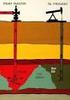 Paper ID 119 ABSTRACT Development of Thermal Recovery Simulator for Hot Water Flooding Shotaro Nihei, Masanori Kurihara Department of Resources and Environmental Engneering, Waseda University, Japan Author
AFREPREN/FWD. Success Story Geothermal Power Generation in Kenya
 Success Story Geothermal Power Generation in Kenya EXECUTIVE SUMMARY Using technology available today, Africa has the potential to provide 9,000 MW of power generation capacity from hot water and steam
Analysis and Calculation Method for Automatic Water Flooding Technology
 ISSN (Online): 2319-764 Impact Factor (212): 3.38 Analysis and Calculation Method for Automatic Water Flooding Technology Yangfan Li, Guohua Zhang CNOOC Ltd-Shanghai, 91 Room, Offshore Tower, NO. 83 Lingling
Oil and Gas Exploration and Production Oil and gas exploration and production... 22a-472-1
 Department of Environmental Protection Sec. 22a-472 page 1 (4-97) TABLE OF CONTENTS Oil and Gas Exploration and Production Oil and gas exploration and production... 22a-472-1 Department of Environmental
Renewable Energy from Depleted Oil Fields using Geothermal Energy. Ramsey Kweik Southern Methodist University Geothermal Lab
 Renewable Energy from Depleted Oil Fields using Geothermal Energy Ramsey Kweik Southern Methodist University Geothermal Lab Outline What is Geothermal Energy? Why geothermal in Texas? Types of Power Plants
INTERACTIONS: ENERGY/ENVIRONMENT Environmental Effects of Geothermal Power - S. J. Goff, P. Brophy, F. Goff ENVIRONMENTAL EFFECTS OF GEOTHERMAL POWER
 ENVIRONMENTAL EFFECTS OF GEOTHERMAL POWER S. J. Goff Los Alamos National Laboratory, Los Alamos, New Mexico, USA P. Brophy EGS Inc., Santa Rosa, California, USA F. Goff Los Alamos National Laboratory,
The Problem. Enhanced Oil Recovery Research. Research Details. www.equilibar.com. For immediate release: June, 2015
 For immediate release: June, 2015 Equilibar Plays Key Role in Research of Enhanced Oil Recovery Using Carbonated Water Flooding Dome loaded regulator holds pressure under extreme testing conditions at
Zhao et al. 2.2 Experimental Results in Winter Season The analysis given below was based on the data collected from Nov. 2003 to Mar. 15, 2004.
 Proceedings World Geothermal Congress 2005 Antalya, Turkey, 24-29 April 2005 A Case Study of Ground Source Heat Pump System in China Jun Zhao, Chuanshan Dai, Xinguo Li, Qiang Zhu and Lixin Li College of
How To Map A Lake In The North Of The Holland (Fiji)
 1. Hydrogelogical mapping Jiri Sima Aim of HG map Groundwater and rocks qualitative permeability and quantitative potential of rock units aquifers / aquitards / aquiclides Water points (spatial distribution
International Energy Agency (IEA) Geothermal Implementing Agreement (GIA)
 International Energy Agency (IEA) Geothermal Implementing Agreement (GIA) ~ International Cooperation for Promotion and Sustainable Development of Geothermal Energy M.A. Mongillo Secretary IEA-GIA & GNS
Geothermal Technologies Program
 Geothermal Technologies Program Enel Salt Wells - Courtesy of Enel Green Power North America IEA-GIA ExCo National Geothermal Data System & Online Tools September 30, 2011 Jay Nathwani Energy Program Efficiency
Module No. # 02. Impact of oil and gas industry on marine environment
 Health, Safety and Environmental Management in Petroleum and offshore Engineering Dr. Srinivasan Chandrasekaran Department of Ocean Engineering Indian Institute of Technology, Madras Module No. # 02 Lecture
Optimization of Reinjection Allocation in Geothermal Fields Using Capacitance-Resistance Models
 PROCEEDINGS, Thirty-Ninth Workshop on Geothermal Reservoir Engineering Stanford University, Stanford, California, February 24-26, 214 SGP-TR-22 Optimization of Reinjection Allocation in Geothermal s Using
Exploration for natural gas
 FACT SHEET NO. 42 Exploration for natural gas Quick facts QGC holds licences from the Queensland Government called Authorities to Prospect that allow us to explore in areas known as tenements We work with
DIRECT POTABLE REUSE: A PATH FORWARD:
 DIRECT POTABLE REUSE: A PATH FORWARD: 2012 WATER REUSE CONFERENCE Boise, ID April 17, 2012 George Tchobanoglous Professor Emeritus of Civil and Environmental Engineering Department of Civil and Environmental
English version. Manual for Determination of Combined Heat and Power (CHP)
 CEN/CENELEC WORKSHOP CWA 45547 September 2004 AGREEMENT ICS 27.100 English version Manual for Determination of Combined Heat and Power (CHP) This CEN/CENELEC Workshop Agreement has been drafted and approved
RESERVOIR EVALUATION. The volume of hydrocarbons in a reservoir can be calculated:
 RESERVOIR EVALUATION The volume of hydrocarbons in a reservoir can be calculated: 1. directly by volumetric methods 2. indirectly by material balance methods Volumetrics provide a static measure of oil
Irresponsible of Statoil
 Irresponsible of Statoil Having reviewed all the available information, Bellona feels it is irresponsible of Statoil to resume production at Gullfaks C. All production from the Gullfaks C platform was
Remediation Services & Technology
 Remediation Services & Technology Miranda Cruttenden- Well Remediation Engineer Todd Studer- Business Development Manager September 2011 Agenda Near wellbore remediation Causes of formations damage Field
Generating Current Electricity: Complete the following summary table for each way that electrical energy is generated. Pros:
 P a g e 1 Generating Current Electricity: Complete the following summary table for each way that electrical energy is generated. Generating Electrical Energy Using Moving Water: Hydro-Electric Generation
Geothermal Power Plant Potential Rico, Colorado
 Geothermal Power Plant Potential Rico, Colorado Christopher Tipple, Amy Richards, Micah Jakulewicz Table of Contents 1.0 Introduction 2 2.0 Geology...2 3.0 Power Demand...2 4.0 Motivation..3 5.0 Geothermal
AMEC 6007: Linear Velocity and Acceleration Learning Outcome. CHEM 6012: Oil and Gas Compositions and Sales Specifications Learning Outcome
 s/objectives Level F ADMN 6044: Post Job Management It is important to know the proper procedures for closing out a job so that rigging and equipment is maintained for future use and personnel are adequately
Introduction to the Ideal Gas Law
 Course PHYSICS260 Assignment 5 Consider ten grams of nitrogen gas at an initial pressure of 6.0 atm and at room temperature. It undergoes an isobaric expansion resulting in a quadrupling of its volume.
Perspective on Geothermal Energy in Japan: Beyond Great East Japan Earthquake & Beyond Brittle Project
 Asia Pacific Economic Cooperation 2013 Perspective on Geothermal Energy in Japan: Beyond Great East Japan Earthquake & Beyond Brittle Project Noriyoshi TSUCHIYA Graduate School of Environmental Studies
4D reservoir simulation workflow for optimizing inflow control device design a case study from a carbonate reservoir in Saudi Arabia
 4D reservoir simulation workflow for optimizing inflow control device design a case study from a carbonate reservoir in Saudi Arabia O. Ogunsanwo, 1* B. Lee, 2 H. Wahyu, 2 E. Leung, 1 V. Gottumukkala 1
Nutrient Reduction by Use of Industrial Deep Injection Wells, Miami-Dade County, Florida
 GWPC September 27, 2015 Nutrient Reduction by Use of Industrial Deep Injection Wells, Miami-Dade County, Florida Virginia Walsh, PhD, P.G. Miami-Dade Water and Sewer Department Ed Rectenwald, P.G. MWH
Introduction. The following is an outline of the contents of this paper: Definition of Artificial Lift Page 2. How an Oil Well is Produced Page 2
 Introduction Canadian Oilwell Systems Company and it s subsidiaries are suppliers of oil well Electric Submersible Pumping systems (ESPs). Such pumps are used to lift oil from oil wells so that the oil
Petrophysical Well Log Analysis for Hydrocarbon exploration in parts of Assam Arakan Basin, India
 10 th Biennial International Conference & Exposition P 153 Petrophysical Well Log Analysis for Hydrocarbon exploration in parts of Assam Arakan Basin, India Summary Ishwar, N.B. 1 and Bhardwaj, A. 2 *
Review of Deliverability Models Used in Geothermal Reservoir Simulations
 Proceedings World Geothermal Congress 2015 Melbourne, Australia, 19-25 April 2015 Review of Deliverability Models Used in Geothermal Reservoir Simulations Angus Yeh, Jake Boyce-Bacon, Mike O Sullivan Department
ME6130 An introduction to CFD 1-1
 ME6130 An introduction to CFD 1-1 What is CFD? Computational fluid dynamics (CFD) is the science of predicting fluid flow, heat and mass transfer, chemical reactions, and related phenomena by solving numerically
Loviisa 3 unique possibility for large scale CHP generation and CO 2 reductions. Nici Bergroth, Fortum Oyj FORS-seminar 26.11.
 Loviisa 3 unique possibility for large scale CHP generation and CO 2 reductions Nici Bergroth, Fortum Oyj FORS-seminar 26.11.2009, Otaniemi Loviisa 3 CHP Basis for the Loviisa 3 CHP alternative Replacement
PRELIMINARY REPORT ON THE NORTHSTAR #1 CLASS II INJECTION WELL AND THE SEISMIC EVENTS IN THE YOUNGSTOWN, OHIO AREA
 PRELIMINARY REPORT ON THE NORTHSTAR #1 CLASS II INJECTION WELL AND THE SEISMIC EVENTS IN THE YOUNGSTOWN, OHIO AREA Tom Tomastik, Geologist, ODNR, Division of Oil and Gas Resources Management PURPOSE AND
How To Use A Water Source Heat Pump
 Geothermal Energy Using Water-Source Heat Pumps By VIRSTAR Corporation Geothermal Expertise Since 1978 All information contained herein is the exclusive property of VIRSTAR Corporation, all rights reserved.
Albert Złotkowski*, Patrycja Szczesiul** AN ANALYSIS OF A TEMPERATURE CHANGE IN A CROSS SECTION OF BOREHOLE HEAT EXCHANGER***
 AGH DRILLING, OIL, GAS Vol. 30 No. 4 2013 http://dx.doi.org/10.7494/drill.2013.30.4.459 Albert Złotkowski*, Patrycja Szczesiul** AN ANALYSIS OF A TEMPERATURE CHANGE IN A CROSS SECTION OF BOREHOLE HEAT