
Restorative Nursing Teleconference Script
|
|
|
- Jewel Francis
- 10 years ago
- Views:
Transcription
1 Slide 1 Slide 2 Slide 3 Maintaining independence in ADLs and mobility is very important to most of us. In fact, functional decline can lead to depression, withdrawal, social isolation, and complications of immobility, such as incontinence and pressure ulcers. Slide 4 Restorative nursing programs refer to nursing interventions that promote the resident s ability to adapt and adjust to living as independently and safely as possible. This concept actively focuses on achieving and maintaining optimal physical, mental, and psychosocial functioning. Slide 5 A resident may be started on a restorative nursing program when he or she is admitted to the facility with restorative needs, but is not a candidate for formalized rehab therapy, or when restorative needs arise during the course of a longer-term stay, or in conjunction with formalized rehab therapy. Generally, restorative nursing programs are initiated when a resident is discharged from formalized physical, occupational, or speech therapy. This is more than just normal nursing care! Page 1 of 14

2 Slide 6 In order to code a restorative nursing program under this item, the technique, training or skill practice must take place at least 15 minutes during the 24 hour period. You should total the minutes for the entire day for each program, but you cannot combine time across item categories. This is the time your staff spends with the resident. Code each type of restorative care separately. (For instance, the times from a transfer program and a bed mobility program may not be combined.) This time must be documented somewhere. Slide 7 To code this item, you cannot have groups with more than four residents per supervising helper or caregiver. Slide 8 The following criteria for restorative care must be met to code it on the MDS: Measureable objective and interventions must be documented in the care plan and in the medical record. If a restorative nursing program is in place when a care plan is being revised, it is appropriate to reassess progress, goals, and duration/frequency as part of the care planning process. Good clinical practice would indicate that the results of this reassessment should be documented in the record. If the goal(s) are not measurable, Case Mix will take the item away. The goal should be related to the restorative function you are working on. A goal of resident will maintain her weight would not be appropriate for eating. It addresses the resident s weight, NOT the ADL function of eating, and could be achieved by totally feeding the resident or even with tube feedings. Slide 9 Please note that these goals can be measured. They are objective. They are specific to the program and what you re trying to achieve. These are not INTERVENTIONS, they are goals. Page 2 of 14

3 Slide 10 What is this a goal for? If it is for eating, remember that restorative nursing addresses the function of eating. You can maintain someone s weight with tube feedings. This is an intervention, not a goal. What are trying to achieve with these arm flexes? What? What is the current strength and flexibility? What joints? What are you trying to achieve to maintain the resident s independence and functional status? Staff could keep a resident clean, dry and odor free. Slide 11 Evidence of periodic evaluation by the registered nurse must be present in the medical record. Assessment of the objectives and interventions of a restorative nursing program should be an ongoing process, not just during the care planning process in order to achieve the best outcomes possible. The better your goal is, the easier it will be to evaluate whether or not the resident is meeting the goal. The evaluation should contain information that will help in the decision as to whether or not a program should be DC d because the goal is met, revised because the resident is not making progress, revised because the resident can achieve more, etc. It is not uncommon for the eval to be missing entirely. It just hasn t been done. Slide 12 It is possible that if a resident has met his/her goals that you will still want to continue the program in order for the resident to maintain his/her abilities, however, does this evaluation say that? This evaluation addresses the goal, indicates what the resident is capable of doing and indicates why the program is being revised (staff think she has the potential to improve even more). Page 3 of 14

4 Slide 13 Nursing assistants/aides must be trained in the techniques that promote resident involvement in the activity. A registered nurse or a licensed practical (vocational) nurse must supervise the activities in a nursing restorative program. Sometimes, under nurse supervision, other staff and volunteers will be assigned to work with specific residents. Restorative nursing does not require a physician s order. Nursing homes may elect to have licensed rehabilitation professionals perform repetitive exercises and other maintenance treatments or to supervise aides performing these maintenance services. In these situations, the services may not be coded as therapy in item O0400, Therapies, because the specific interventions are considered restorative nursing services. The therapist s time actually providing the maintenance service can be included when counting restorative nursing minutes. Although therapists may participate, members of the nursing staff are still responsible for overall coordination and supervision of restorative nursing programs. Slide 14 In the past, reviewers have found that sometimes aides document that programs are being completed but when observed, the aides are not completing the programs as written. The aides, when interviewed, deny knowledge of the program (even though they have been documenting that they are doing the program.) This has been noticed with things like eating programs, transfer programs, ROM. Alert and oriented residents will tell the reviewers that the programs aren t being implemented as written. Slide 15 How do your nurses supervise the programs? Do they actually observe from time to time to assure the aides are implementing the programs as written? Do they talk to the residents? Do they interview the aides or do they just look at documentation. The problems that reviewers have noted (such as aides not aware of the programs, or not really implementing) shouldn t happen if nurses are supervising the activities. Page 4 of 14

5 Slide 16 Prior to coding the MDS, review the resident s medical record looking carefully at any restorative nursing program notes and flow sheets. Restorative nursing documentation needs to have the minutes of each treatment recorded. Check the record to determine the number of days the technique, training, or skill practice was received and/or practiced and for how long. If the restorative nursing is provided in a group, rather than individualized training, make sure your documentation shows the ratio of residents to caregiver. Slide 17 Slide 18 The RAI User s Manual is your reference for coding the MDS. Information related to Restorative Nursing Programs is found on pages O-31 through O-38 in the RAI User s Manual. You can purchase the manual through several private vendors, or you can download it for free from the website listed on this slide. CMS periodically updates/revises the RAI User s Manual. You should check this website on at least a quarterly basis to make sure you have the most up-to-date version. Page 5 of 14

6 Slide 19 The follow activities are provided by restorative nursing staff. O0500A, Range of Motion (Passive) Code provision of passive movements in order to maintain flexibility and useful motion in the joints of the body. These exercises must be individualized to the resident s needs, planned, monitored, evaluated, and documented in the medical record. For range of motion (passive): the caregiver moves the body part around a fixed point or joint through the resident s available range of motion. The resident provides no assistance. The use of continuous passive motion (CPM) devices as nursing restorative care is coded when the following criteria are met: (1) ordered by a physician, (2) nursing staff have been trained in technique (for example, properly aligning resident s limb in device, adjusting available range of motion), and (3) monitoring of the device. Nursing staff should document the application of the device and the effects on the resident. Do not include the time the resident is receiving treatment in the device. Include only the actual time staff were engaged in applying and monitoring the device. O0500B, Range of Motion (Active) Code exercises performed by the resident, with cueing, supervision, or physical assist by staff that are individualized to the resident s needs, planned, monitored, evaluated, and documented in the medical record. Include active ROM and active-assisted ROM. For range of motion (active): any participation by the resident in the ROM activity should be coded here. For both active and passive range of motion: movement by a resident that is incidental to dressing, bathing, etc., does not count as part of a formal restorative care program. For inclusion in this section, active or passive range of motion must be a component of an individualized program that is planned, monitored, evaluated, and documented in the resident s medical record. Range of motion should be delivered by staff who are trained in the procedures. O0500C, Splint or Brace Assistance Code provision of (1) verbal and physical guidance and direction that teaches the resident how to apply, manipulate, and care for a brace or splint; or (2) a scheduled program of applying and removing a splint or brace. These sessions are individualized to the resident s needs, planned, monitored, evaluated, and documented in the resident s medical record. For splint or brace assistance: assess the resident s skin and circulation under the device, and reposition the limb in correct alignment. When you write the goals for these programs, ask yourself what you are trying to achieve. Page 6 of 14

7 Slide 20 The following activities include repetition, physical or verbal cueing, and/or task segmentation provided by any staff member under the supervision of a licensed nurse. Remember that persons with dementia learn skills best through repetition that occurs multiple times per day. O0500D, Bed Mobility Code activities provided to improve or maintain the resident s selfperformance in moving to and from a lying position, turning side to side and positioning himself or herself in bed. These activities are individualized to the resident s needs, planned, monitored, evaluated, and documented in the resident s medical record. Slide 21 The following activities include repetition, physical or verbal cueing, and/or task segmentation provided by any staff member under the supervision of a licensed nurse. Remember that persons with dementia learn skills best through repetition that occurs multiple times per day. O0500E, Transfer Code activities provided to improve or maintain the resident s selfperformance in moving between surfaces or planes either with or without assistive devices. These activities are individualized to the resident s needs, planned, monitored, evaluated, and documented in the resident s medical record. Slide 22 The following activities include repetition, physical or verbal cueing, and/or task segmentation provided by any staff member under the supervision of a licensed nurse. Remember that persons with dementia learn skills best through repetition that occurs multiple times per day. O0500F, Walking Code activities provided to improve or maintain the resident s selfperformance in walking, with or without assistive devices. These activities are individualized to the resident s needs, planned, monitored, evaluated, and documented in the resident s medical record. Page 7 of 14

8 Slide 23 O0500G, Dressing and/or Grooming Code activities provided to improve or maintain the resident s selfperformance in dressing and undressing, bathing and washing, and performing other personal hygiene tasks. These activities are individualized to the resident s needs, planned, monitored, evaluated, and documented in the resident s medical record. Grooming programs, including programs to help residents learn to apply makeup, may be considered restorative nursing programs when conducted by a member of the activity staff. These grooming programs would need to be individualized to the resident s needs, planned, monitored, evaluated, and documented in the resident s medical record. Remember, this a restorative NURSING program and nursing needs to supervise to assure it is being implemented as written. Slide 24 O0500H, Eating and/or Swallowing Code activities provided to improve or maintain the resident s selfperformance in feeding oneself food and fluids, or activities used to improve or maintain the resident s ability to ingest nutrition and hydration by mouth. These activities are individualized to the resident s needs, planned, monitored, evaluated, and documented in the resident s medical record. Note that the purpose is to improve or maintain the resident s ability in feeding him or herself and the resident s ability to ingest nutrition and hydration BY MOUTH. That means your goals and interventions for this program should address that purpose. How are you going to assist the resident to improve or maintain his or her ability to feed themselves? What are you trying to achieve? Slide 25 O0500I, Amputation/ Prosthesis Care Code activities provided to improve or maintain the resident s selfperformance in putting on and removing a prosthesis, caring for the prosthesis, and providing appropriate hygiene at the site where the prosthesis attaches to the body (e.g., leg stump or eye socket). Dentures are not considered to be prostheses for coding this item. These activities are individualized to the resident s needs, planned, monitored, evaluated, and documented in the resident s medical record. Page 8 of 14

9 Slide 26 O0500J, Communication Code activities provided to improve or maintain the resident s selfperformance in functional communication skills or assisting the resident in using residual communication skills and adaptive devices. These activities are individualized to the resident s needs, planned, monitored, evaluated, and documented in the resident s medical record. Slide 27 This item does not include procedures or techniques carried out by or under the direction of qualified therapists. The time provided for items O0500A-J must be coded separately, in time blocks of 15 minutes or more. For example, to check Technique Range of Motion [Passive] item O0500A, 15 or more minutes of passive range of motion (PROM) must have been provided during a 24-hour period in the last 7 days. The 15 minutes of time in a day may be totaled across 24 hours (e.g., 10 minutes on the day shift plus 5 minutes on the evening shift). However, 15-minute time increments cannot be obtained by combining 5 minutes of Technique Range of Motion [Passive] item O0500A, 5 minutes of Technique Range of Motion [Active] item O0500B, and 5 minutes of Splint or Brace Assistance item O0500C, over 2 days in the last 7 days. Review for each activity throughout the 24-hour period. Enter 0, if none. Page 9 of 14

10 Slide 28 Mr. V. has lost range of motion in his right arm, wrist, and hand due to a cerebrovascular accident (CVA) experienced several years ago. He has moderate to severe loss of cognitive decision-making skills and memory. To avoid further ROM loss and contractures to his right arm, the occupational therapist fabricated a right resting hand splint and instructions for its application and removal. The nursing coordinator developed instructions for providing passive range of motion exercises to his right arm, wrist, and hand three times per day. The nursing assistants and Mr. V. s wife have been instructed in how and when to apply and remove the hand splint and how to do the passive ROM exercises. These plans are documented in Mr. V. s care plan. The total amount of time involved each day in removing and applying the hand splint and completing the ROM exercises is 30 minutes (15 minutes to perform ROM exercises and 15 minutes to apply/remove the splint). This time is documented in the resident s record every day for the last 7 days. The nursing assistants report that there is less resistance in Mr. V. s affected extremity when bathing and dressing him. Is this enough information to know whether or not you can code this as restorative nursing on the MDS? Slide 29 Remember, in order to code a program as Restorative Nursing on the MDS, you must do all of the following: There must be Measureable objective and interventions documented in the care plan and in the medical record. If a restorative nursing program is in place when a care plan is being revised, it is appropriate to reassess progress, goals, and duration/frequency as part of the care planning process and the results of this reassessment should be documented in the resident s medical record. Evidence of periodic evaluation by the RN must be present in the resident s medical record. Nursing assistants/aides must be trained in the techniques that promote resident involvement in the activity. A nurse must supervise the activities in a restorative nursing program. Page 10 of 14

11 Slide 30 Now do you have enough information to code Restorative Nursing on the MDS? Slide 31 Both Passive Range of Motion (O0500A) and Splint or Brace Assistance (O0500C) would be coded 7. This was the number of days these nursing restorative techniques were provided. Slide 32 Mrs. E. has Amyotrophic Lateral Sclerosis. She no longer has the ability to speak or even to nod her head yes or no. Her cognitive skills remain intact, she can spell, and she can move her eyes in all directions. The speech-language pathologist taught both Mrs. E. and the nursing staff to use a communication board so that Mrs. E. could communicate with staff. The communication board has been in use over the past 2 weeks and has proven very successful. The nursing staff, volunteers, and family members are reminded by a sign over Mrs. E. s bed that they are to provide her with the board to enable her to communicate with them. This is also documented in Mrs. E. s care plan. Because the teaching and practice using the communication board had been completed 2 weeks ago and Mrs. E. is able to use the board to communicate successfully, she no longer receives skill and practice training in communication. Slide 33 Because Mrs. E has mastered the skill of communication, nursing skill and practice training for communication was no longer needed or provided over the last 7 days. Code Communication (O0500J) as a zero. Page 11 of 14

12 Slide 34 A resident is capable of walking independently, however, has experienced several falls due to poor balance. Physical Therapy worked with the resident, teaching her multiple balance exercises which she can do independently but she needs reminders to do the exercises. Sometimes the nursing assistants are in the room completing other tasks such as making the resident s bed, but they don t cue the resident or assist her with the exercises. A reminder to complete the balance exercises has been added to her care plan with a goal, Resident will maintain her ability to walk independently. Resident will not experience falls related to poor balance when she is walking. The Care Plan interventions indicate the resident is to be reminded and encouraged two times a day to complete her balance exercises. NA s are documenting these reminders. At the time of the quarterly review, the RN notes that the resident is walking independently with no evidence of balance problems. The RN indicates the staff will continue to remind the resident to complete her balance exercises two times a day. Slide 35 The staff are only reminding the resident to complete the exercises. The exercises are important and should continue, however, this is not coded on the MDS as the resident completes the exercises independently without participation or cueing from staff. Reminding a resident to complete exercises is not the same as working with the resident for 15 minutes a day. Slide 36 A resident is capable of walking independently, however, has experienced several falls due to poor balance. Physical Therapy worked with the resident, teaching her multiple balance and strengthening exercises. Due to the resident s poor cognitive status, she cannot remember how to do the exercises, but is cooperative and willing to do them when cued by staff. Staff need to stay with her throughout the exercises to give her step-by-step verbal cues and occasionally demonstrate the exercises for her. Therapy taught both day and evening shift aides and the nurse manager how to cue the resident through the exercise routine. It takes 10 minutes of staff time in the morning and again in the afternoon to complete the exercises with the resident. NA s are documenting this time 5 days a week. Page 12 of 14

13 Slide 37 The resident s Care Plan contains the following goals. Resident will continue to ambulate independently throughout the day. Resident will be free of falls related to poor balance when walking for the next three months. The BID exercises are also in the care plan. The RN supervises the program weekly by watching the aides complete the program and documents this supervision. The RN evaluates the program at the time of the resident s quarterly assessment. The resident has been free of falls for the past three months and continues to ambulate independently without assistive devices in her room and on the unit. The resident completes balance exercises two times a day. When asked to complete the balance exercises independently, she becomes confused and sits down after one or two repetitions of the first exercise. She continues to need constant cueing by staff in order to complete the exercises. Due to her history of falls and poor balance and the effectiveness of the exercise program, we will continue with the balance exercises 5 days a week in order to maintain the resident s ability to walk independently in a safe manner. Slide 38 This program does meet all of the criteria for a restorative nursing program. It is being used to maintain the resident s ability to walk independently. It is requiring staff time to stay with the resident and cue her in order to complete the program. Page 13 of 14

14 Slide 39 Scenarios 3 and 4 were included here to demonstrate how similar programs may or may not meet the criteria to be considered a Restorative Nursing Program. The exercises for the resident in Scenario #3 might have been the exact same exercises as the ones used in Scenario #4. The big difference was that staff interventions to complete the exercises were not necessary for the resident in Scenario #3. The resident, once taught, could complete the exercises independently. Just because staff reminded the resident to do the exercises, this didn t qualify as verbal or physical cueing. The resident in Scenario #4 required the exercises in order to maintain her ability to walk safely independently. She could not do the exercises independently, staff needed to stay with her in order to assure that she completed them correctly. The exercise programs were important for both residents and the facilities determined the programs should be continued in order for the residents to maintain their ability to walk independently. The difference was in the resident s individualized needs related to the exercise program. The needs were clearly expressed in the evaluations. Slide 40 When considering whether or not a program should be coded on the MDS as Restorative Nursing, remember that you need to consider the needs of the individual resident. The goals need to be measurable and need to reflect what functional task you are working on. Remember also, that all criteria, as outlined in the RAI manual, need to be met Page 14 of 14

See the Long Term Care Facility Resident Assessment Instrument User s Manual for complete instructions and guidelines.
 Presented by: Nadine Olness, RN Marci Martinson, RN February 212 Participants will be able to: State where the requirements for coding Restorative Nursing Programs can be found in the RAI Manual. Write
RESTORATIVE. Yvonne Russell RN Long Term Care Nursing Coalition of Mississippi-1 st Teleconference Restorative Nursing
 RESTORATIVE Yvonne Russell RN Long Term Care Nursing Coalition of Mississippi-1 st Teleconference Restorative Nursing OVERVIEW Restorative Nursing is not a new concept Techniques have been taught in nursing
Objectives. Objectives 4/5/2014
 Session: T32 A True Person Centered Restorative Nursing Program- Individualized Care at it s Best! Presented By: Sue LaGrange, RN, BSN, NHA Director of Education Pathway Health (651) 964-4946 Objectives
REV UP Your Restorative Program for Quality! Susan LaGrange, RN, BSN, NHA Director of Education Pathway Health Services, Inc.
 REV UP Your Restorative Program for Quality! Susan LaGrange, RN, BSN, NHA Director of Education Pathway Health Services, Inc. 1 Objectives After attending this presentation, the attendees will be able
Restorative Nursing Program Exercise Worksheet. Restorative Nursing Program Exercise #1a Pepper Mint Observation Period 9/9 9/15/14 (ARD)
 Restorative Nursing Program Exercise Worksheet Restorative Nursing Program Exercise #1a Pepper Mint Transmitted Value Reviewed Value Answer O0500A Passive Range of Motion 6 days O0500A Passive Range of
Clinical Groups and Services. EXTENSIVE SERVICES (3 Categories)
 Department of Health and Hospitals RUG-III Classification Model Version 5.20, 34-Group Extensive Services Category I Effective For Assessments With an ARD on or After 10/1/2013 Extensive Services Clinical
Objectives. Maintenance Myths. Maintenance Therapy in Home Health. Cindy Krafft PT, MS. Define the medical necessity of maintenance therapy
 Maintenance Therapy in Home Health Cindy Krafft PT, MS Director of Rehabilitation Consulting Services President Home Health Section APTA Objectives Define the medical necessity of maintenance therapy Understand
ADL DOCUMENTATION OBJECTIVES ADL DEFINITION 6/15/2015 AND MDS SCORING
 ADL DOCUMENTATION AND MDS SCORING Katy Nguyen, M.S.N., R.N Sharon Thomas, BSN, RN, RAC-CT University of MO-Sinclair School of Nursing QIPMO program OBJECTIVES Understand the importance of accurate ADL
8/12/2015. Restorative Nursing Programs: Capitalizing on Mobility to Improve Quality of Life
 Restorative Nursing Programs: Capitalizing on Mobility to Improve Quality of Life Presented By: Jeri Lundgren, RN, BSN, PHN, CWS, CWCN President Senior Providers Resource, LLC Coordination of the Program:
FIM ITEM SCORING EXERCISE SHEETS 2015
 FIM EXERCISE - EATING The helper applies the universal cuff on to the patient s hand before she eats. The patient then brings food to her mouth, chews & swallows by herself. The helper scoops all food
Multiple Sclerosis (MS)
 Multiple Sclerosis (MS) Purpose/Goal: Care partners will have an understanding of Multiple Sclerosis and will demonstrate safety and promote independence while providing care to the client with MS. Introduction
NORTH DAKOTA NURSING FACILITY PAYMENT SYSTEM
 NORTH DAKOTA NURSING FACILITY PAYMENT SYSTEM North Dakota Department of Human Services Medical Services 600 E Boulevard Ave Dept 325 Bismarck ND 58505 BACKGROUND State law requires all nursing facilities
Illinois Department of Public Health STATEMENT OF DEFICIENCIES AND PLAN OF CORRECTION C 04/26/2015. Statement of Licensure Violations:
 (X1) PROVER/SUPPLIER/LIA ENTIFIATION NUMBER: (X3) SURVEY D NAME OF PROVER OR SUPPLIER (X4) REGULATORY OR LS ENTIFYING INFORMATION) Final Observations Statement of Licensure Violations: 300.610a) 300.1210b)
Restorative Care. Policy, Procedures and Training Package
 Restorative Care Policy, Procedures and Training Package Release Date: December 17, 2010 Disclaimer The Ontario Association of Non-Profit Homes and Services for Seniors (OANHSS) Long-Term Care Homes Act
Adult Foster Home Screening and Assessment and General Information
 Office of Licensing and Regulatory Oversight Resident information Resident s name: Resident s current address: Resident s current living situation: Resident s current primary caregiver: Adult Foster Home
Is It Time for In-Home Care?
 STEP-BY-STEP GUIDE Is It Time for In-Home Care? Helping Your Loved Ones Maintain Their Independence and Quality of Life 2015 CK Franchising, Inc. Welcome to the Comfort Keepers Guide to In-Home Care Introduction
National Stroke Association s Guide to Choosing Stroke Rehabilitation Services
 National Stroke Association s Guide to Choosing Stroke Rehabilitation Services Rehabilitation, often referred to as rehab, is an important part of stroke recovery. Through rehab, you: Re-learn basic skills
Rehab and Restorative Critical Element Pathway
 Use this pathway for a sampled resident who has had a lack of improvement in any areas of functional ability to determine if the resident received necessary rehabilitative services. Review the following
OKLAHOMA. Downloaded January 2011
 OKLAHOMA Downloaded January 2011 310:675 7 9.1. Written administrative policies and procedures (f) Emergency care shall be provided to residents in case of sudden illness or accident, including persons
Patient s Handbook. Provincial Rehabilitation Unit ONE ISLAND HEALTH SYSTEM ONE ISLAND FUTURE 11HPE41-30364
 Patient s Handbook Provincial Rehabilitation Unit ONE ISLAND FUTURE ONE ISLAND HEALTH SYSTEM 11HPE41-30364 REHABILITATION EQUIPMENT USED ON UNIT 7 During a patient s stay on Unit 7, various pieces of
Question Specifications for the Cognitive Test Protocol
 Question Specifications for the Cognitive Test Protocol Core Questions These are the 6 disability questions to be tested in the interview. All of the other questions in the cognitive test protocol are
COLLABORATIVE NURSING DOCUMENTATION
 COLLABORATIVE NURSING DOCUMENTATION The following section is designed to assist the clinician in providing information to the nursing staff in effort to facilitate collaborative nursing documentation regarding
CAREGIVER GUIDE. A doctor. He or she authorizes (approves) the rehab discharge.
 Guide for Discharge to Home From Inpatient Rehab Who Is on the Discharge Team? Many people help plan a rehab discharge, and they are often referred to as a team. The team members include: A doctor. He
Admission to Inpatient Rehabilitation (Rehab) Services
 Family Caregiver Guide Admission to Inpatient Rehabilitation (Rehab) Services What Is Rehab? Your family member may have been referred to rehab after being in a hospital due to acute (current) illness,
Restorative Nursing Programs: Now More Than Ever. A Care2LearnEnterprise White Paper Authored by: Barbara Acello, MS, RN
 Restorative Nursing Programs: Now More Than Ever A Care2LearnEnterprise White Paper Authored by: Barbara Acello, MS, RN Restorative Nursing Programs: Now More Than Ever Overview Restorative Nursing Programs:
Going Home after Rehab: A Family Caregiver s Guide
 Family Caregiver Guide Going Home after Rehab: A Family Caregiver s Guide Discharge from a rehabilitation (rehab) facility to home can be hard for all involved. Your family member may still need a lot
What to know if Medicare denies coverage
 What to know if Medicare denies coverage What Medicare covers Necessary post-hospital extended care for up to 100 days Extended care: nursing care and rehab provided to a Medicare beneficiary who is an
Corporate Medical Policy
 Corporate Medical Policy File Name: Origination: Last CAP Review: Next CAP Review: Last Review: skilled_nursing_facility_care 02/2008 2/2015 2/2016 2/2015 Description of Procedure or Service A skilled
ArlingtonHaus Assisted Living. Assisted Living Application
 ArlingtonHaus Assisted Living Assisted Living Application NAME: APPLICATION DATE:, 20 INTERVIEW DATE:, 20 DATE OF BIRTH: PHIN: PART A: GENERAL DATA INFORMANT FOR INTERVIEW: Self Spouse Child Home Care
Activities of Daily Living F 311 Minnesota Department of Health Nursing Home Surveyor Training Resource
 2/2006 1 Objectives Activities of Daily Living F 311 Minnesota Department of Health Use To determine if the facility is providing maintenance and restorative programs that will not only maintain, but improve,
NEW YORK CASE MIX. Jan White, RN Senior Clinical Reimbursement Consultant
 NEW YORK CASE MIX Jan White, RN Senior Clinical Reimbursement Consultant 1 Objectives Explain the basic elements of the Case Mix system Review the Case Mix RUG levels Define ADLs and understand their effect
Medical Rehabilitation. Rehabilitation Unit
 Medical Rehabilitation Rehabilitation Unit Medical Rehabilitation The purpose of this handout is to give you information about University Hospital s Rehabilitation Unit (2 North or 2N). It will explain:
How To Plan For A Hospital Discharge
 Family Caregiver Guide Rehab-to-Home Discharge Guide In Rehab: Planning for Discharge The best time to start planning for discharge is just after your family member is admitted. While it may seem too soon
Career Options for Direct Service Workers in Maine
 Career Options for Direct Service Workers in Maine Maine s Career Options in the field of Direct Service Work (Specialized Content) Homemaker Homemakers assist individuals with household or personal care
Where Should Rehabilitation Take Place?!
 Where Should Rehabilitation Take Place?! Three Basic Questions! 1. Is rehabilitation effective in improving a patient s functional abilities?!yes" yes" 2. Is rehabilitation cost effective?!yes" where"
Easing the Transition: Moving Your Relative to a Nursing Home
 Easing the Transition: Moving Your Relative to a Nursing Home Alzheimer s Association, New York City Chapter 360 Lexington Avenue, 4th Floor New York, NY 10017 24-hour Helpline 1-800-272-3900 www.alz.org/nyc
RESIDENT ASSESSMENT TOOL
 RESIDENT ASSESSMENT TOOL To be completed by a physician, certified nurse practitioner, registered nurse, or physician assistant within 30 days prior to admission, at least annually, & within 48 hours after
Job Ready Assessment Blueprint. Nursing Assisting. Test Code: 4058 / Version: 01
 Job Ready Assessment Blueprint Nursing Assisting Test Code: 4058 / Version: 01 Measuring What Matters Specific Competencies and Skills Tested in this Assessment: Basic Nursing Assisting Skills Measure
Key Terms. Chapter 38. Disability, p. 640. Rehabilitation, p. 640. Rehab (cont) p. 640. Rehab. (cont), p. 640
 Key Terms Chapter 38 Rehabilitation & Restorative Care Activities of daily living (ADL s) Disability Rehabilitation Restorative aide Restorative nursing care Disability, p. 640 Is any loss, absent, or
MEDICAL POLICY No. 91332-R3 NON-ACUTE INPATIENT SERVICES
 NON-ACUTE INPATIENT SERVICES Effective Date: November 16, 2007 Review Dates: 1/93, 12/99, 12/01, 12/02, 11/03, 11/04, 10/05, 10/06, 10/07, 10/08, 10/09, 10/10, 10/11, 10/12, 10/13, 11/14 Date of Origin:
Provincial Rehabilitation Unit. Patient Handbook
 Provincial Rehabilitation Unit Patient Handbook ONE ISLAND FUTURE ONE ISLAND HEALTH SYSTEM Welcome to Unit 7, the Provincial Rehabilitation Unit. This specialized 20 bed unit is staffed by an interdisciplinary
October 29, 2014. Dear Administrator:
 October 29, 2014 DAL: DAL 14-01 SUBJECT: Individualized Service Plan (ISP) with an EHP addendum to meet the requirements for the EHP functional assessment Dear Administrator: The purpose of this letter
An Evidence Based Occupational Therapy Toolkit for Assessment and Treatment of the Upper Extremity Post Stroke
 An Evidence Based Occupational Therapy Toolkit for Assessment and Treatment of the Upper Extremity Post Stroke Brenda Semenko, Leyda Thalman, Emily Ewert, Renee Delorme, Suzanne Hui, Heather Flett, Nicole
Pathology and Audiology Services and Occupational and Physical Therapies
 3 O0100 O-1 Do not code services that were provided solely in conjunction with a surgical procedure or diagnostic procedure, such as IV medications or ventilators. Surgical procedures include routine pre-
Brain Injury: Stages of Recovery
 Brain Injury: Stages of Recovery Recovery after brain injury is a process that occurs in stages. Some people move quickly through the stages, while others make slow, but steady gains. The Rancho Los Amigos'
Restorative Nursing and the MDS from I can t to I think I can OBJECTIVES. Restorative Nursing Pre-Test OBJECTIVES. Definition continued.
 Restorative Nursing and the MDS from I can t to I think I can Spring 2008 Marjorie Ray RN WA State RAI Coordinator OBJECTIVES At the completion of this session, participants should be able to: Define Restorative/Rehabilitative
Certified Nursing Assistant Essential curriculum- Maryland Board of Nursing
 Certified Nursing Assistant Essential curriculum- Maryland Board of Nursing Module I Orientation/Introduction A. Identify general information pertaining to the nursing assistant course B. List requirements
Acute Care to Rehab and Complex Continuing Care (CCC) Referral
 (Identify Referral Destination) Rehabilitation Program Requested: CCC Program Requested: Restorative Medically Complex Medically Complex Ventilator Behavioural Health End of Life Medically Complex - Bariatric
Understanding MDS 3.0 and RUG IV Reimbursement for Nursing Homes
 Understanding MDS 3.0 and RUG IV Reimbursement for Nursing Homes Prepared by: Joseph J. Tomaino Director Health Care Consulting RSM McGladrey, Inc. 212.376.1640 [email protected] Introduction
Choosing a Memory Care Provider Checklist (Part One: Comparing Communities)
 Choosing a Memory Care Provider Checklist (Part One: Comparing Communities) Before you choose a memory care community, it is helpful to have a tool to compare your options. We have created the chart below,
How To Care For A Patient With A Heart Condition
 Acute Care to Rehab & Complex Identify Referral Destination: Referral to Rehab Referral to Complex Continuing Care (CCC) If Faxed Include Number of Pages (Including Cover): Pages Estimated Date of Rehab/CCC
Frequently Asked Questions about Fee-for-Service Medicare For People with Alzheimer s Disease
 Frequently Asked Questions about Fee-for-Service Medicare For People with Alzheimer s Disease This brochure answers questions Medicare beneficiaries with Alzheimer s disease, and their families, may have
Examples for Consumers Total Run Time: 22:13
 Examples for Consumers Total Run Time: 22:13 Dr. Susan Mosier As Secretary Sullivan said, I m Susan Mosier and I work with the Kansas Department of Health and Environment. And I m going to go through a
When Short-Term Rehab Turns into a Long-Term Stay
 When Short-Term Rehab Turns into a Long-Term Stay Even if your family member moves to a longstay unit, he or she may be able to return home later -- if there is more progress, the home is prepared, and
Long Term Care in British Columbia
 Long Term Care insurance Long Term Care in British Columbia Residential Facilities Government Subsidized Nursing Homes How Nursing Homes Are Organized and Administered Nursing homes/residential facilities
Spinal Cord Injury Rehabilitation Program
 Workbook Spinal Cord Injury Rehabilitation Program Table of Contents Page Before coming to Rehab... 1 Tests before starting your Rehabilitation Program... 2 SCI Personal Goal Tracking Tool... 3 To do
Acute Care for Elders (ACE)
 Acute Care for Elders (ACE) Providing Excellence in Care for Older Patients/Families Vancouver General Hospital 899 West 12th Avenue Vancouver BC V5Z 1M9 Tel: 604-875-4111 Our Purpose The Phyllis Howard
How To Care For A Disabled Person
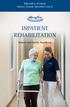 Henry Ford Macomb Hospitals Inpatient Rehabilitation Patient and Family Handbook Welcome At Henry Ford Macomb Hospitals, our goal is to help you become as independent as possible while achieving your
CONSUMER INFORMATION GUIDE: ASSISTED LIVING RESIDENCE
 CONSUMER INFORMATION GUIDE: ASSISTED LIVING RESIDENCE 1 TABLE OF CONTENTS Introduction 3 What is an Assisted Living Residence? 3 Who Operates ALRs? 4 Paying for an ALR 4 Types of ALRs and Resident Qualifications
How To Help Someone With Dementia
 Occupational therapy and Dementia Occupational therapy helping people to live with dementia Occupational therapy Helping people to live life their way Occupational therapy helping people to live with dementia
A Guide for Transitioning to Home After a Rehab Stay
 A Guide for Transitioning to Home After a Rehab Stay Transitioning home after a rehab stay can present unique challenges for patients and/or their caregivers. Patients who have had a debilitating illness
2013/2014 Alberta Long-Term Care Resident Profile. June 2015
 2013/2014 Alberta Long-Term Care Resident Profile June 2015 Table of Contents Introduction 3 Methodology 4 Demographic Profile 7 Health Profile 10 Care and Intervention 23 For Further Information 30 List
Caregiving Issues for those with dementia and other cognitive challenges.
 Caregiving Issues for those with dementia and other cognitive challenges. Sue Maxwell, MSW Director of Gerontology Lee Memorial Health System Fort Myers, Florida August 2009 Goals & Objectives Understand
APPENDIX D GLOSSARY OF COMMON LONG-TERM CARE TERMINOLOGY
 APPENDIX D GLOSSARY OF COMMON LONG-TERM CARE TERMINOLOGY Activities of Daily Living (ADLs) Everyday functions and activities individuals usually do without help. ADL functions include bathing, continence,
NHS Continuing Healthcare
 NHS Continuing Healthcare Questionnaire In association with Questionnaire 1. Full name of patient 2. Home address (prior to transfer into care home if applicable) 3. Patient s Date of Birth 4. Patient
UW MEDICINE PATIENT EDUCATION. Your Care Team. Helpful information
 UW MEDICINE PATIENT EDUCATION Your Care Team Helpful information In this section: You: The Patient Medical Staff Nursing Staff Allied Health Professionals Support Staff Peer Mentors for People with Spinal
Patient Care Delivery System
 Patient Care Delivery System One important function of the professional nurse at the first-line management position of nursing service department is organizing the activities of the staff into a workable
MASSACHUSETTS. Downloaded January 2011
 MASSACHUSETTS Downloaded January 2011 150.006: OTHER PROFESSIONAL SERVICES AND DIAGNOSTIC SERVICES (C) Podiatric. (1) All patients and residents shall have proper foot care and foot wear. (2) When the
Emergency Room (ER) Visits: A Family Caregiver s Guide
 Family Caregiver Guide Emergency Room (ER) Visits: A Family Caregiver s Guide Your family member may someday have a medical emergency and need to go to a hospital Emergency Room (ER), which is also called
Pressure Ulcers. Occupational Therapy. This leaflet is for both yourself and Carers
 Pressure Ulcers Occupational Therapy This leaflet is for both yourself and Carers Contents What is a pressure ulcer? 3 Who is at risk of developing a pressure ulcer? 4 How can I avoid developing a pressure
CHAPTER 6 SECTION G PERCENT OF LOW-RISK RESIDENTS WHO LOSE CONTROL OF THEIR BOWELS OR BLADDER. QM Description. Rationale for Incontinence QM
 CHAPTER 6 SECTION G PERCENT OF LOW-RISK RESIDENTS WHO LOSE CONTROL OF THEIR BOWELS OR BLADDER NOTE: This measure is reported on Nursing Home Compare as a paired measure, in conjunction with the chronic
Long Term Care Insurance Claims Processes
 Long Term Care Insurance Claims Processes Presented by Randy Moses South Dakota Division of Insurance Long Term Care Insurance Benefit Standards Tax Qualified/Partnership ADL triggers Plan of Care Chronically
HOW YOU CAN HELP YOUR CHILD WITH CEREBRAL PALSY
 HOW YOU CAN HELP YOUR CHILD WITH CEREBRAL PALSY CBM is one of the world s largest international disability and development organisations, committed to improving the quality of life of persons with disabilities
INPATIENT REHABILITATION SERVICES
 MOVE. GROW. LIVE. INPATIENT REHABILITATION SERVICES THE IMPORTANCE OF CHOOSING THE RIGHT RECOVERY PARTNER. You do have a choice when it comes to inpatient rehabilitation, and the decision you make can
Rehabilitation Integrated Transition Tracking System (RITTS)
 Rehab Criteria The patient must have a physical impairment requiring rehabilitation OR have a known cognitive impairment requiring ongoing rehabilitation support or services. The patient is medically stable:
PRINTED: 07/09/2013 FORM APPROVED CENTERS FOR MEDICARE & MEDICAID SERVICES OMB NO. 0938-0391 (X2) MULTIPLE CONSTRUCTION A.
 CENTERS FOR MEDICARE & MEDICA SERVICES OMB NO. 0938-0391 (X1) PROVER/SUPPLIER/CLIA ENTIFICATION NUMBER: (X3) SURVEY NAME OF PROVER OR SUPPLIER (X4) FINAL OBSERVATIONS LICENSURE VIOLATIONS: 300.610)a) 300.1210)a)
Behaviour Management: Partnering To Bridge The Continuum. Presented by: Nancy Boaro, MN, CNN(C), CRN(C) Karey-Anne Fannon, BA, BST, RRP.
 Behaviour Management: Partnering To Bridge The Continuum Presented by: Nancy Boaro, MN, CNN(C), CRN(C) Karey-Anne Fannon, BA, BST, RRP Objectives Review some of the behaviours exhibited by patients with
Coverage Basics. Your Guide to Understanding Medicare and Medicaid
 Coverage Basics Your Guide to Understanding Medicare and Medicaid Understanding your Medicare or Medicaid coverage can be one of the most challenging and sometimes confusing aspects of planning your stay
How To Buy A Rifton Tram
 Rifton TRAM Sample LMN for the Rifton TRAM School-based Therapy with Adolescents EVERY REASONABLE EFFORT HAS BEEN MADE TO VERIFY THE ACCURACY OF THE INFORMATION. HOWEVER, THE SAMPLE LETTERS OF MEDICAL
Quality Measures for Long-stay Residents Percent of residents whose need for help with daily activities has increased.
 Quality Measures for Long-stay Residents Percent of residents whose need for help with daily activities has increased. This graph shows the percent of residents whose need for help doing basic daily tasks
Transmittal 55 Date: MAY 5, 2006. SUBJECT: Changes Conforming to CR3648 for Therapy Services
 CMS Manual System Pub 100-03 Medicare National Coverage Determinations Department of Health & Human Services (DHHS) Centers for Medicare & Medicaid Services (CMS) Transmittal 55 Date: MAY 5, 2006 Change
RESOURCE UTILIZATION GROUP, VERSION IV 48-GROUP USER GUIDE
 RESOURCE UTILIZATION GROUP, VERSION IV 48-GROUP USER GUIDE Mississippi Division of Medicaid Myers and Stauffer LC CONTENTS 1 OVERVIEW 3 INTRODUCTION... 3 PURPOSE... 3 SCOPE... 3 Hierarchical Classification:...
Individualized Care Plans Fully Developed
 Appendix Individualized Care Plans Fully Developed A Refer to Chapter 1 The Nursing Process: A Synopsis, p. 32: Two Individualized Care Plans Fully Developed; Care Plan 1 for Mr. John Walters, Care Plan
Patient and Family Information Guide for Rehab Inpatient Unit
 Rehab Nusing Station: 701.780.2390 Patient Care Navigator: Patient Room #: Patient and Family Information Guide for Rehab Inpatient Unit Patient s Room Phone #: Altru HEALTH SYSTEM 6152-0021 NOV 14 Improving
SAM KARAS ACUTE REHABILITATION CENTER
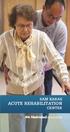 SAM KARAS ACUTE REHABILITATION CENTER 1 MEDICAL CARE Sam Karas Acute Rehabilitation The Sam Karas Acute Rehabilitation Center is a comprehensive and interdisciplinary inpatient unit. Medical care is directed
40P. Rehabilitation and Sub-Acute Care YEARS OF CARING FOR SENIORS! Centre Avenue Health & Rehab Facility. 970-494-2140 Locally Owned!
 Centre Avenue Health & Rehab Facility A Skilled Nursing Facility Specializing in: Rehabilitation and Sub-Acute Care 815 Centre Avenue Fort Collins, Colorado 80526 970-494-2140 Locally Owned! 40P L U S
Implementing a Fall Alarm Program to Reduce Fall Risk Rein Tideiksaar, PhD FallPrevent, LLC
 Implementing a Fall Alarm Program to Reduce Fall Risk Rein Tideiksaar, PhD FallPrevent, LLC This program was supported by a grant from Implementing a Fall Alarm Program to Reduce Fall Risk Rein Tideiksaar,
Falls Management: Assessment & Intervention Approval Signature: September, 2012
 Level: Policy ame: Falls Management: Assessment & Intervention Approval Signature: WRHA Policy #: Section: 1 of 7 Date: Original Signed by Sylvia Ptashnik, DORS September, 01 Safety & Comfort Supercedes:
Nunez Community College Course Curriculum
 Nunez Community College Course Curriculum DHH Program Code: 0112 Course: NURS1000 Certified Nursing Assistant Class Hours: Fall and Spring Semesters: 4.25 hours each class day Two days a week for 16 weeks