
Child development and trauma guide
|
|
|
- Frederica Johnston
- 10 years ago
- Views:
Transcription
1 Child development and trauma guide Some important points about this guide This guide has been prepared because of the importance of professionals in the Family Services, Child Protection and Placement and Support areas understanding the typical developmental pathways of children and the typical indicators of trauma at differing ages and stages. It is intended to inform good practice and assist with the task of an overall assessment, and of itself is not a developmental or risk assessment framework. Rather, it is a prompt for busy workers to integrate knowledge from child development, child abuse and trauma and importantly to offer practical, age appropriate advice as to the needs of children and their parents and carers when trauma has occurred. Engaging families, carers, significant people and other professionals who know the child well as a source of information about the child, will result in a more complete picture. It is essential to have accurate information about the values and child rearing practices of the cultural group to which a child belongs, in order to appreciate that child s development. The following points give an essential perspective for using the information in the child development and trauma resource sheets about specific age groups: Children, even at birth, are not blank slates ; they are born with a certain neurological make-up and temperament. As children get older, these individual differences become greater as they are affected by their experiences and environment. This is particularly the case where the child is born either drug dependent or with foetal alcohol syndrome. Even very young babies differ in temperament eg. activity level, amount and intensity of crying, ability to adapt to changes, general mood, etc. From birth on, children play an active role in their own development and impact on others around them. Culture, family, home and community play an important role in children s development, as they impact on a child s experiences and opportunities. Cultural groups are likely to have particular values, priorities and practices in child rearing that will influence children s development and learning of particular skills and behaviours. The development of children from some cultural backgrounds will vary from traditional developmental norms, which usually reflect an Anglo-Western perspective. As children get older, it becomes increasingly difficult to list specific developmental milestones, as the achievement of many of these depends very much on the opportunities that the child has to practice them, and also, on the experiences available to the child. A child will not be able to ride a bicycle unless they have access to a bicycle. Development does not occur in a straight line or evenly. Development progresses in a sequential manner, although it is essential to note that while the path of development is somewhat predictable, there is variation in what is considered normal development. That is to say no two children develop in exactly the same way. The pace of development is more rapid in the very early years than at any other time in life. Every area of development impacts on other areas. Developmental delays in one area will impact on the child s ability to consolidate skills and progress through to the next developmental stage. Most experts now agree that both nature and nurture interact to influence almost every significant aspect of a child s development. General health affects development and behaviour. Minor illnesses will have short to medium term effects, while chronic health conditions can have long-term effects. Nutritional deficiencies will also have negative impacts on developmental progression. Specific characteristics and behaviours are indicative only. Many specific developmental characteristics should be seen as flags of a child s behaviour, which may need to be looked at more closely, if a child is not meeting them. Workers should refer to the Best Interests Case Practice Model and relevant specialist assessment guides in undertaking further assessments of child and family.

2 Some important points about development The information in this resource provides a brief overview of typically developing children. Except where there are obvious signs, you would need to see a child a number of times to establish that there is something wrong. Keep in mind that if children are in a new or artificial situation, unwell, stressed, interacting with someone they do not know, or if they need to be fed or changed, then their behaviour will be affected and is not likely to be typical for that child. Premature babies, or those with low birth weights, or a chemical dependency, will generally take longer to reach developmental milestones. The indicators of trauma listed in this guide should not become judgements about the particular child or family made in isolation from others who know the child and family well, or from other sources of information. However, they are a useful alert that a more thorough contextual assessment may be required. There has been an explosion of knowledge in regard to the detrimental impact of neglect and child abuse trauma on the developing child, and particularly on the neurological development of infants. It is critical to have a good working knowledge of this growing evidence base so that we can be more helpful to families and child focused. For a more thorough exploration of the relevant theoretical, research and evidence base, it is recommended that you read the papers on the Best Interests principles, cumulative harm and stability, which are available on the every child every chance website: The following basic points are useful to keep in mind and to discuss with parents and young people: Children need stable, sensitive, loving, stimulating relationships and environments in order to reach their potential. They are particularly vulnerable to witnessing and experiencing violence, abuse and neglectful circumstances. Abuse and neglect at the hands of those who are meant to care is particularly distressing and harmful for infants, children and adolescents. Given that the infant s primary drive is towards attachment, not safety, they will accommodate to the parenting style they experience. Obviously they have no choice given their age and vulnerability, and in more chronic and extreme circumstances, they will show a complex trauma response. They can eventually make meaning of their circumstances by believing that the abuse is their fault and that they are inherently bad. Infants, children and adults will adapt to frightening and overwhelming circumstances by the body s survival response, where the autonomic nervous system will become activated and switch on to the freeze/fight/flight response. Immediately the body is flooded with a biochemical response which includes adrenalin and cortisol, and the child feels agitated and hypervigilant. Infants may show a frozen watchfulness and children and young people can dissociate and appear to be zoned out. Prolonged exposure to these circumstances can lead to toxic stress for a child which changes the child s brain development, sensitises the child to further 0-12 months 12 months - 3 years 3-5 years 5-7 years 7-9 years 9-12 years years

3 stress, leads to heightened activity levels and affects future learning and concentration. Most importantly, it impairs the child s ability to trust and relate to others. When children are traumatised, they find it very hard to regulate behaviour and soothe or calm themselves. They often attract the description of being hyperactive. Babies are particularly attuned to their primary carer and will sense their fear and traumatic stress; this is particularly the case where family violence is present. They will become unsettled and therefore more demanding of an already overwhelmed parent. The first task of any service is to support the nonoffending parent and to engage the family in safety. Traumatic memories are stored differently in the brain compared to everyday memories. They are encoded in vivid images and sensations and lack a verbal narrative and context. As they are unprocessed and more primitive, they are likely to flood the child or adult when triggers like smells, sights, sounds or internal or external reminders present at a later stage. These flashbacks can be affective, i.e. intense feelings, that are often unspeakable; or cognitive, i.e. vivid memories or parts of memories, which seem to be actually occurring. Alcohol and drug abuse are the classic and usually most destructive attempts to numb out the pain and avoid these distressing and intrusive experiences. Children are particularly vulnerable to flashbacks at quiet times or at bedtimes and will often avoid both, by acting out at school and bedtimes. They can experience severe sleep disruption, intrusive nightmares which add to their dysregulated behaviour, and limits their capacity at school the next day. Adolescents will often stay up all night to avoid the nightmares and sleep in the safety of the daylight. Self harming behaviours release endorphins which can become an habitual response. Cumulative harm can overwhelm the most resilient child and particular attention needs to be given to understanding the complexity of the child s experience. These children require calm, patient, safe and nurturing parenting in order to recover, and may well require a multi-systemic response to engage the required services to assist. The recovery process for children and young people is enhanced by the belief and support of non-offending family members and significant others. They need to be made safe and given opportunities to integrate and make sense of their experiences. It is important to acknowledge that parents can have the same post-traumatic responses and may need ongoing support. Workers need to engage parents in managing their responses to their children s trauma. It is normal for parents to feel overwhelmed and suffer shock, anger, severe grief, sleep disturbances and other trauma related responses. Case practice needs to be child centred and family sensitive months 12 months - 3 years 3-5 years 5-7 years 7-9 years 9-12 years years

4 Factors which pose risks to healthy child development The presence of one or more risk factors, alongside a cluster of trauma indicators, may greatly increase the risk to the child s wellbeing and should flag the need for further child and family assessment, using the Best Interests Case Practice Model. The following risk factors can impact on children and families and the caregiving environment: Child and family risk factors family violence, current or past mental health issue or disorder, current or past (including self-harm and suicide attempts) alcohol/substance abuse, current or past, addictive behaviours disability or complex medical needs eg. intellectual or physical disability, acquired brain injury newborn, prematurity, low birth weight, chemically dependent, foetal alcohol syndrome, feeding/sleeping/settling difficulties, prolonged and frequent crying unsafe sleeping practices for infants eg. side or tummy sleeping, ill-fitting mattress, cot cluttered with pillows, bedding, or soft toys which can cover infant s face, co-sleeping with sibling or with parent who is on medication, drugs/alcohol or smokes, using other unsafe sleeping place such as a couch, or exposure to cigarette smoke disorganised or insecure attachment relationship (child does not seek comfort or affection from caregivers when in need) developmental delay history of neglect or abuse, state care, child death or placement of child or siblings separations from parents or caregivers parent, partner, close relative or sibling with a history of assault, prostitution or sexual offences experience of intergenerational abuse/trauma compounded or unresolved experiences of loss and grief chaotic household/lifestyle/problem gambling poverty, financial hardship, unemployment social isolation (family, extended family, community and cultural isolation) inadequate housing/transience/homelessness lack of stimulation and learning opportunities, disengagement from school, truanting inattention to developmental health needs/poor diet disadvantaged community racism recent refugee experience Parent risk factors parent/carer under 20 years or under 20 years at birth of first child lack of willingness or ability to prioritise child s needs above own rejection or scapegoating of child harsh, inconsistent discipline, neglect or abuse inadequate supervision of child or emotional enmeshment single parenting/multiple partners inadequate antenatal care or alcohol/substance abuse during pregnancy Wider factors that influence positive outcomes sense of belonging to home, family, community and a strong cultural identity pro-social peer group positive parental expectations, home learning environment and opportunities at major life transitions access to child and adult focused services eg. health, mental health, maternal and child health, early intervention, disability, drug and alcohol, family support, family preservation, parenting education, recreational facilities and other child and family support and therapeutic services accessible and affordable child care and high quality preschool programs inclusive community neighbourhoods/settings service system s understanding of neglect and abuse months 12 months - 3 years 3-5 years 5-7 years 7-9 years 9-12 years years

5 Resources Other useful websites The Raising Children Network raisingchildren.net.au An essential part of this resource is the references to the Raising Children Network. This is an Australian website, launched in 2006, on the basics of raising children aged 0-8 years. Talaris Developmental Timeline A research based timeline about how children develop in the first 5 years. Infant Mental Health Zero to Three website has a relational and mental health focus. Royal Children s Hospital (RCH) Phone (03) Royal Children s Hospital Centre for Community Child Health Parenting Research Centre Victorian Government Health Channel Health and medical information for consumers, quality assured by the Victorian Government. Child Protection and Family Services (Victorian Government) every child every chance and Looking After Children websites Child and Adolescent Mental Health Services child/index Department of Education and Training Student Support Services Victorian Aboriginal Child Care Agency (VACCA) Trauma websites Child Trauma Academy International Society for Traumatic Stress Studies Traumatology Traumatic Stress Institute/Center for Adult & Adolescent Psychotherapy Telephone services Parentline Maternal and Child Health line (up to 6 years of age) Nurse on Call hour health advice and information from a Registered Nurse.

6 Acknowledgements The Office for Children would like to acknowledge the following in the production of this resource: The Raising Children Network Take Two Program Parenting Research Centre City of Yarra MCH and Family Services Bibliography Raising Children Network raisingchildren.net.au Zero to Three website Levy, T.M and Orlans, M. 1998, Attachment, Trauma and Healing. CWLA Press, Washington Department of Human Services, May 2001, Child Health and Development: Birth to 18 Years for Professionals (Chart), Melbourne, Victoria. Frederico, M., Jackson, A. and Jones, S. July 2006, Child Death Group Analysis: Effective Responses to Chronic Neglect. Victorian Child Death Review Committee. Office of the Child Safety Commissioner, Melbourne, Victoria. Monaghan, C. 1993, Children and Trauma: A Guide for Parents and Professionals. Jossey-Bass, San Francisco Paxton, G and Munro, J and Marks, M. (Editors), 2003, Paediatric Handbook, Seventh Edition by the staff of the Royal Children s Hospital. Blackwell Publishing Pty Ltd, Melbourne, Victoria Jim Greenman and Anne Stonehouse, 1996, Prime Times: a Handbook for Excellence in Infant and Toddler Care (1st edition), Redleaf Press, St Paul Minnesota. Sheridan, M. Revised and updated by Frost, M and Dr Sharma, A. 1988, From Birth to Five Years: Children s Developmental Progress. ACER press Shonkoff, Jack. P. and Phillips, Deborah. A. 2000, From Neurons to Neighbourhoods: the Science of Early Childhood Development, National Research Council Institute of Medicine, National Academy Press, Washington DC Authorised by the Victorian Government, 50 Lonsdale Street, Melbourne. Printed on sustainable paper by Print Bound, 8 Apollo Court, Blackburn March 2007

Social and Emotional Wellbeing
 Social and Emotional Wellbeing A Guide for Children s Services Educators Social and emotional wellbeing may also be called mental health, which is different from mental illness. Mental health is our capacity
Handout: Risk. Predisposing factors in children include: Genetic Influences
 Handout: Risk The more risk factors to which a child is exposed the greater their vulnerability to mental health problems. Risk does not cause mental health problems but it is cumulative and does predispose
Managing trauma and ways to recover
 Managing trauma and ways to recover Contents f Describing trauma f Different types of trauma f Children and trauma f What makes an event traumatic? f A traumatic stress response: What happens when an event
2) Recurrent emotional abuse. 3) Contact sexual abuse. 4) An alcohol and/or drug abuser in the household. 5) An incarcerated household member
 Co Occurring Disorders and the on Children: Effectively Working with Families Affected by Substance Abuse and Mental Illness Definition (Co-Occurring also called Dual Dx) A professional diagnosis of addictive/substance
3.5 Guidelines, Monitoring and Surveillance of At Risk Groups
 3.5 Guidelines, Monitoring and Surveillance of At Risk Groups 3.5.6 Children of Parents who are Affected by Drug and Alcohol Misuse Background There is overwhelming evidence that the misuse of drugs and
caring CHILD substance abuse FOR A who has been impacted by
 caring FOR A CHILD who has been impacted by substance abuse WHERE CAN CAREGIVERS FIND HELP? Caregivers may need guidance and support as they respond to the attachment needs of vulnerable children. Help
Assessing families and treating trauma in substance abusing families
 Children, Trauma and the impact of Substance abuse Day One Outpatient (874-1045) Amy Stevenson LCPC CCS ([email protected]) Don Burke LCPC CCS ([email protected]) Assessing families and treating trauma in
The Amazing Brain: Trauma and the Potential for Healing. By Linda Burgess Chamberlain, PhD, MPH
 The Amazing Brain: Trauma and the Potential for Healing By Linda Burgess Chamberlain, PhD, MPH A baby s brain is like a flower ready to bloom. From the first moments of life, a baby s brain is absorbing
THE EFFECTS OF FAMILY VIOLENCE ON CHILDREN. Where Does It Hurt?
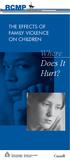 THE EFFECTS OF FAMILY VIOLENCE ON CHILDREN Where Does It Hurt? Child Abuse Hurts Us All Every child has the right to be nurtured and to be safe. According to: Family Violence in Canada: A Statistical Profile
Essential Trauma Informed Practices in Schools. Shannon Cronn, N.C.S.P. Barb Iversen, M.C.
 Essential Trauma Informed Practices in Schools Shannon Cronn, N.C.S.P. Barb Iversen, M.C. Objectives: Participants attending this session will be able to: Define trauma Explain how trauma may impact child/teen
Outline Chapter 1 Child Psychology 211 Dr. Robert Frank. 1 What is child development, and how has its study evolved?
 Outline Chapter 1 Chapter 1: GUIDEPOSTS FOR STUDY 1 What is child development, and how has its study evolved? 2 What are six fundamental points about child development on which consensus has emerged? 3
Post-traumatic stress disorder overview
 Post-traumatic stress disorder overview A NICE pathway brings together all NICE guidance, quality standards and materials to support implementation on a specific topic area. The pathways are interactive
CORE-INFO: Emotional neglect and emotional abuse in pre-school children
 CORE-INFO: Emotional neglect and emotional abuse in pre-school children Introduction This leaflet summarises what is currently known about children aged less than six years who have been emotionally neglected
FACT SHEET. What is Trauma? TRAUMA-INFORMED CARE FOR WORKING WITH HOMELESS VETERANS
 FACT SHEET TRAUMA-INFORMED CARE FOR WORKING WITH HOMELESS VETERANS According to SAMHSA 1, trauma-informed care includes having a basic understanding of how trauma affects the life of individuals seeking
Working together to improve outcomes for children and families. Needs, thresholds and pathways Guidance for Camden s children s workforce
 Working together to improve outcomes for children and families Needs, thresholds and pathways Guidance for Camden s children s workforce Universal, and Specialist Services: responding to the needs of Camden
From Neurons to Neighborhoods: The Science of Early Childhood Development
 From Neurons to Neighborhoods: The Science of Early Childhood Development By Jack P. Shonkoff, MD This chapter explains the work of the Committee on Integrating the Science of Early Childhood Development
Adversity, Toxic Stress & Resiliency. Baystate Medical Center:Family Advocacy Center Jessica Wozniak, Psy.D., Clinical Grants Coordinator
 Adversity, Toxic Stress & Resiliency Baystate Medical Center:Family Advocacy Center Jessica Wozniak, Psy.D., Clinical Grants Coordinator Adverse Childhood Experiences ACE Study (www.acestudy.org) 18,000
Traumatic Stress. and Substance Use Problems
 Traumatic Stress and Substance Use Problems The relation between substance use and trauma Research demonstrates a strong link between exposure to traumatic events and substance use problems. Many people
1of 5. Parental Resilience. Protective & Promotive Factors
 Parental Resilience 1of 5 Being a parent can be a very rewarding and joyful experience. But being a parent can also have its share of stress. Parenting stress is caused by the pressures (stressors) that
Looking After Children framework for children and young people living in out-of-home care arrangements. A guide for disability service providers
 Looking After Children framework for children and young people living in out-of-home care arrangements A guide for disability service providers If you would like to receive this publication in an accessible
Tier 3/4 Social Work Services
 Children s Services key guidelines 2010 Information from Southampton City Council The threshold criteria for accessing Tier 3/4 Social Work Services Introduction Information sharing is as important as
Providing support to vulnerable children and families. An information sharing guide for registered school teachers and principals in Victoria
 Providing support to vulnerable children and families An information sharing guide for registered school teachers and principals in Victoria Service Coordination Tool Templates 2006 reference guide Providing
Child Development. Caseworker Core Training Module VII: Child Development: Implications for Family-Centered Child Protective Services
 Child Development P R E - T R A I N I N G A S S I G N M E N T Caseworker Core Training Module VII: Child Development: Implications for Family-Centered Child Protective Services Developed by the Institute
Attachment Theory: Understanding and Applying Attachment Style in Addiction Counseling. Denise Kagan, PhD Pavillon Psychologist
 Attachment Theory: Understanding and Applying Attachment Style in Addiction Counseling Denise Kagan, PhD Pavillon Psychologist Attachment Theory Mentalization and Attachment Studies Neurobiology of Attachment
EARLY INTERVENTION AND PREVENTION STRATEGY 2012-15 Summary
 EARLY INTERVENTION AND PREVENTION STRATEGY 2012-15 Summary Plymouth Children, Young People and Families Partnership INTRODUCTION Why do we need early intervention in Plymouth? We know that effective early
CHAPTER 6 Diagnosing and Identifying the Need for Trauma Treatment
 CHAPTER 6 Diagnosing and Identifying the Need for Trauma Treatment This chapter offers mental health professionals: information on diagnosing and identifying the need for trauma treatment guidance in determining
Management Information. Chief Social Work Officer
 Management Information Lead Officer Name: Paul Woolrich Designation: Service Improvement Manager Tel: 58462 (0131 553 8462) Lead Service Area Support to Children & Young People Last Review Date December
Warrington Safeguarding Children Board Neglect Strategy
 Warrington Safeguarding Children Board Neglect Strategy Every child and young person in Warrington should be able to grow up safe from maltreatment, neglect, bullying, discrimination and crime -receiving
Protection of the Rights of Children and Women Suffering from Drug Addiction in the Family and Society - Shelter Don Bosco, Mumbai, India -
 Protection of the Rights of Children and Women Suffering from Drug Addiction in the Family and Society - Shelter Don Bosco, Mumbai, India - Article 24 of the Convention on the Rights of the Child recognizes
WHAT IS PTSD? A HANDOUT FROM THE NATIONAL CENTER FOR PTSD BY JESSICA HAMBLEN, PHD
 WHAT IS PTSD? A HANDOUT FROM THE NATIONAL CENTER FOR PTSD BY JESSICA HAMBLEN, PHD Posttraumatic Stress Disorder (PTSD) is an anxiety disorder that can occur following the experience or witnessing of a
Infant/Early Childhood Mental Health 101
 Infant/Early Childhood Mental Health 101 PRESENTATION TO CHILDREN S BEHAVIORAL HEALTH INITIATIVE (CBHI) PROVIDERS BY THE MASSACHUSETTS DEPARTMENT OF MENTAL HEALTH & THE MASSACHUSETTS DEPARTMENT OF EARLY
Table of Contents. Preface...xv. Part I: Introduction to Mental Health Disorders and Depression
 Table of Contents Visit www.healthreferenceseries.com to view A Contents Guide to the Health Reference Series, a listing of more than 16,000 topics and the volumes in which they are covered. Preface...xv
Triple-A Model of Therapeutic Care ( Colby Pearce 2015)
 A back-to-basics, step-by-step model of care promoting children s recovery from abuse and neglect through the promotion of therapeutic care environments Colby Pearce 2015 Key Features: 1.Back-to-basics:
Insecure Attachment and Reactive Attachment Disorder
 Attachment Disorders Insecure Attachment and Reactive Attachment Disorder When infants and young children have a loving caregiver consistently responding to their needs, they build a secure attachment.
Post Traumatic Stress Disorder & Substance Misuse
 Post Traumatic Stress Disorder & Substance Misuse Produced and Presented by Dr Derek Lee Consultant Chartered Clinical Psychologist Famous Sufferers. Samuel Pepys following the Great Fire of London:..much
Social inclusion. What are the roots of social exclusion? Children s development. The neuroscience of brain development
 Engaging all families and children: the role of early childhood education and care in supporting vulnerable children and their families Professor Frank berklaid Director, Royal Children s Hospital Melbourne
What is Narrative Exposure Therapy (NET)?
 What is Narrative Exposure Therapy (NET)? Overview NET is a culturally universal short-term intervention used for the reduction of traumatic stress symptoms in survivors of organised violence, torture,
The Best Interests framework for vulnerable children and youth
 The Best Interests framework for vulnerable children and youth Best interests series Stability Safety Development Age & stage, culture & gender Stability Age & stage, culture & gender Safety Development
CHILDREN, FAMILIES & ALCOHOL USE
 CHILDREN, FAMILIES & ALCOHOL USE Essential Information for Social Workers A BASW Pocket Guide Supported by: Bedford and Luton Purpose of the guide This guide aims to support Social Workers in their practice
Children s Health and Nursing:
 Children s Health and Nursing: A Summary of the Issues What s the issue? The foundation for healthy growth and development in later years is established to a large degree in the first six years of life.
How To Treat A Mental Illness At Riveredge Hospital
 ABOUT US n Riveredge Hospital maintains the treatment philosophy of Trauma Informed Care. n Our commitment to providing the highest quality of care includes offering Animal Assisted Therapy, and Expressive
Workforce Development Online Workshop Descriptions
 Workforce Development Online Workshop Descriptions Behavioral Health Service Delivery Workshops: The Effects of Violence Exposure on Children (1.5 hours) Regretfully, violence against children and youth
Children First Labor s plan to give our children the best start in life
 Children First Labor s plan to give our children the best start in life Authorised and printed by R Lindell, 360 King St, West Melbourne 3003. PUTTING VICTORIA S CHILDREN FIRST Children are our future.
For Mental Health and Human Services Workers in Major Disasters
 Page 1 of 5 Home Programs Mental Health Topics Newsroom Publications Resources This Site Search For Mental Health and Human Services Workers in Major Disasters POTENTIAL RISK GROUPS Online Publications
Critical Incidents. Information for schools from Derbyshire Educational Psychology Service
 Critical Incidents Information for schools from Derbyshire Educational Psychology Service Introduction to Critical Incidents A critical incident (CI) is any event that is unexpected, acute, stressful and
Guidance. Wigan s Threshold of Need. www.wiganlscb.com. Wigan Safeguarding Children Board
 Wigan Safeguarding Children Board Wigan s Threshold of Need Guidance Working to keep children and young people happy, healthy and safe. www.wiganlscb.com Contents Welcome.........................................................................Page
Do you help people recover from trauma? training programs
 Do you help people recover from trauma? 2015 training programs Do you or your staff help people who have experienced trauma? Phoenix Australia s training programs teach the skills required by a range of
Maternal and Child Health Service. Program Standards
 Maternal and Child Health Service Maternal and Child Health Service Program Standards Contents Terms and definitions 3 1 Introduction 6 1.1 Maternal and Child Health Service: Vision, mission, goals and
Psychiatric Issues and Defense Base Act Claims. Dr. Michael Hilton
 Psychiatric Issues and Defense Base Act Claims Dr. Michael Hilton Criteria for DSM-IVRPosttraumatic Stress Disorder with changes now in effect with DSM5 a. The person has been exposed to a traumatic event
POST-TRAUMATIC STRESS DISORDER PTSD Diagnostic Criteria PTSD Detection and Diagnosis PC-PTSD Screen PCL-C Screen PTSD Treatment Treatment Algorithm
 E-Resource March, 2014 POST-TRAUMATIC STRESS DISORDER PTSD Diagnostic Criteria PTSD Detection and Diagnosis PC-PTSD Screen PCL-C Screen PTSD Treatment Treatment Algorithm Post-traumatic Stress Disorder
Child Abuse and Neglect AAP Policy Recommendations
 Child Abuse and Neglect AAP Policy Recommendations When Inflicted Skin Injuries Constitute Child Abuse Committee on Child Abuse and Neglect PEDIATRICS Vol. 110 No. 3 September 2002, pp. 644-645 Recommendations
Trauma FAQs. Content. 1. What is trauma? 2. What events are traumatic?
 Trauma FAQs Content 1. What is trauma? 2. What events are traumatic? 3. Who experiences trauma? 4. What are symptoms of trauma? 5. How can I help someone who may be experiencing trauma? 6. Where can people
Promoting the Well-Being of Children, Youth and Families in Child Welfare
 Promoting the Well-Being of Children, Youth and Families in Child Welfare There is a growing body of evidence indicating that while ensuring safety and achieving permanency are necessary to the well-being
Brenda Jones Harden, MSW, PhD. University of Maryland College Park
 Brenda Jones Harden, MSW, PhD University of Maryland College Park Infants/toddlers are the most vulnerable group in the child welfare system in both their child welfare and developmental trajectories.
Definitions of Child Abuse in the State of Oregon
 Definitions of Child Abuse in the State of Oregon Oregon law defines physical abuse as an injury to a child that is not accidental. Most parents do not intend to hurt their children, but abuse is defined
Conduct Disorder: Treatment Recommendations. For Vermont Youth. From the. State Interagency Team
 Conduct Disorder: Treatment Recommendations For Vermont Youth From the State Interagency Team By Bill McMains, Medical Director, Vermont DDMHS Alice Maynard, Mental Health Quality Management Chief, Vermont
Promoting Family Stability in a Down Economy Rae Jean Proeschold-Bell, Ph.D.
 Promoting Family Stability in a Down Economy Rae Jean Proeschold-Bell, Ph.D. Intuitively we know that families matter greatly. Families impact the well-being of their children and are the back-bone of
HELPING YOUNG CHILDREN COPE WITH TRAUMA
 HELPING YOUNG CHILDREN COPE WITH TRAUMA Disasters are upsetting to everyone involved. Children, older people, and/or people with disabilities are especially at risk. For a child, his or her view of the
Health and wellbeing 1 Experiences and outcomes
 Health and wellbeing 1 Experiences and outcomes Learning in health and wellbeing ensures that children and young people develop the knowledge and understanding, skills, capabilities and attributes which
Best Interests Case Practice Model for Family Services, Child Protection and Placement Services
 Best Interests Case Practice Model for Family Services, Child Protection and Placement Services Introduction The Children, Youth and Families Act 2005 (CYFA) provides the authorising environment for practice
CHILD NEGLECT. Types of Neglect
 CHILD NEGLECT At 64%, child neglect is the most frequently identified type of child maltreatment in the United States. It is estimated at 917,200 cases or an estimated incidence rate of 14.6 per 1,000
Bradford s Threshold of Need
 Bradford s Threshold of Need THRESHOLDS OF NEED AND SERVICE RESPONSES: GUIDANCE FOR STAFF This is a guide for people who work with or are involved with children, young people and their families. Its aim
Specialist mental health service components
 Specialist mental health service components The specialist public mental health system consists of clinical services and psychiatric disability rehabilitation and support services (PDRSS). Clinical mental
Presented to Compassionate Care Conference By Bill Cross PhD LMFT
 Presented to Compassionate Care Conference By Bill Cross PhD LMFT This is the Perfect Time This is the Perfect Place This is the Perfect Teaching This is the Perfect Teacher This is the Perfect Student
Contents. Overview Treatments Inpatient Services Day Programs The Clinic What are the Costs? How to Get Started How to Find Us
 Lakeside Clinic Contents Overview Treatments Inpatient Services Day Programs The Clinic What are the Costs? How to Get Started How to Find Us Overview At some point in their lives, as many as one-in-five
Healing the Invisible Wound. Recovery and Rehabilitation from a Post Traumatic. Stress Injury. By Dr. Amy Menna
 Healing the Invisible Wound Recovery and Rehabilitation from a Post Traumatic Stress Injury By Dr. Amy Menna Post Traumatic Stress Disorder can affect anyone. It is a term used to describe a reaction to
Epilepsy 101: Getting Started
 American Epilepsy Society 1 Epilepsy 101 for nurses has been developed by the American Epilepsy Society to prepare professional nurses to understand the general issues, concerns and needs of people with
Management Assistance Program
 Management Assistance Program COMMUNICATING WITH EMPLOYEES DURING A CRISIS: How to prepare and help employees cope with a workplace related crisis GOALS: The goal of this module is to provide organizations,
Alcohol harm and Aboriginal and Torres Strait Islander People
 Alcohol harm and Aboriginal and Torres Strait Islander People Pat Anderson AO Chairperson, the Lowitja Institute Paper presented to the Australian Medical Association National Summit on Alcohol Canberra,
Understanding. Depression. The Road to Feeling Better Helping Yourself. Your Treatment Options A Note for Family Members
 TM Understanding Depression The Road to Feeling Better Helping Yourself Your Treatment Options A Note for Family Members Understanding Depression Depression is a biological illness. It affects more than
Original Article: http://www.mayoclinic.com/health/post-traumatic-stress-disorder
 1 of 11 6/29/2012 12:17 PM MayoClinic.com reprints This single copy is for your personal, noncommercial use only. For permission to reprint multiple copies or to order presentation-ready copies for distribution,
Community and Social Services
 Developing a path to employment for New Yorkers with disabilities Community and Social Services Mental Health and Substance Abuse Social Workers... 1 Health Educators... 4 Substance Abuse and Behavioral
Traumatic Stress with Alcohol and/or Drug Addiction
 Traumatic Stress with Alcohol and/or Drug Addiction information for individuals and families Eastern Trauma Advisory Panel What is Post Traumatic Stress Disorder (PTSD)? How people react to a traumatic
Supporting your child after a burn injury
 Royal Manchester Children s Hospital Supporting your child after a burn injury Information for Parents and Carers of Young Children 2 Contents Page Introduction 4 Trauma and children 4 Normal reactions
Personality disorder. Caring for a person who has a. Case study. What is a personality disorder?
 Caring for a person who has a Personality disorder Case study Kiara is a 23 year old woman who has been brought to the emergency department by her sister after taking an overdose of her antidepressant
Non-epileptic seizures
 Non-epileptic seizures a short guide for patients and families Information for patients Department of Neurology Royal Hallamshire Hospital What are non-epileptic seizures? In a seizure people lose control
Could you care for a baby withdrawing from drugs and/or alcohol? Family Futures Practice Paper Series
 Could you care for a baby withdrawing from drugs and/or alcohol? Family Futures Practice Paper Series To promote the attachment that is vital for their healthy development a drug or alcohol addicted baby
Needs of Children in Foster Care
 Needs of Children in Foster Care Meeting the Complex Needs of Children in Foster Care Karen Rogers PhD, Suzanne Roberts MD, Jennifer Rafeedie PsyD, Cristina Dawes LMFT Karen Rogers PhD, Suzanne Roberts
Psychological First Aid Red Cross Preparedness Academy 2014
 Caring for Survivors of Trauma and Disaster: An Introduction to Psychological First Aid Biographical Information Rev. William F. Engfehr III LutheranChurch MissouriSynod DisasterResponseChaplain Senior
Family Violence. Understanding the Issue. Equay-wuk (Women s Group) 16 Fourth Avenue P.O. Box 1781 Sioux Lookout ON P8T 1C4
 Equay-wuk (Women s Group) Family Violence Understanding the Issue 16 Fourth Avenue P.O. Box 1781 Sioux Lookout ON P8T 1C4 Phone: (807) 737-2214 Toll Free: 1-800-261-8294 Fax: (807) 737-2699 E-Mail: [email protected]
IMPROVING YOUR EXPERIENCE
 Comments trom the Aberdeen City Joint Futures Brain Injury Group The Aberdeen City Joint Futures Brain Injury Group is made up of representatives from health (acute services, rehabilitation and community),
The New York Society for the Prevention of Cruelty to Children. Kathy Lotsos, LCSW & Helen Woodbury, LCSW www.nyspcc.org
 The New York Society for the Prevention of Cruelty to Children Kathy Lotsos, LCSW & Helen Woodbury, LCSW www.nyspcc.org Overview Trauma a definition The neurobiology of trauma; Trauma memory storage; Trauma
Government of Western Australia Department for Child Protection and Family Support. How do I recognise when a child is at risk of abuse or neglect?
 Government of Western Australia Department for Child Protection and Family Support How do I recognise when a child is at risk of abuse or neglect? Physical abuse Physical abuse is when someone is deliberately
Scope of Social Work Practice Social Work in Child Protection
 Scope of Social Work Practice Social Work in Child Protection 1 December 2015 Australian Association of Social Workers National Office - Melbourne Level 7, 14-20 Blackwood St, North Melbourne, VIC 3051
The Core Story of Human Development 2.0
 The Core Story of Human Development 2.0 Megan R. Gunnar, Ph.D. Regents Professor and Distinguished McKnight University Professor Director, Institute of Child Development Institute of Child Development
THE CAUSES OF DRUG ADDICTION
 1 Statistical facts associated with addiction and substance abuse are concerning, but many men and women choose to ignore the dangers. By understanding the main causes of addiction to drugs, it is possible
Delirium. The signs of delirium are managed by treating the underlying cause of the medical condition causing the delirium.
 Delirium Introduction Delirium is a complex symptom where a person becomes confused and shows significant changes in behavior and mental state. Signs of delirium include problems with attention and awareness,
There are several types of trauma that can occur when people experience difficult life changing
 Trauma Informed Services Part 1 The Hidden Aspect of Addiction Many individuals struggling with addiction have personal and family histories of trauma including sexual, emotional, and/or physical abuse
Post Traumatic Stress Disorder and Substance Abuse. Impacts ALL LEVELS of Leadership
 Post Traumatic Stress Disorder and Substance Abuse Impacts ALL LEVELS of Leadership What IS Post Traumatic Stress Disorder (PTSD) PTSD is an illness which sometimes occurs after a traumatic event such
Scottish Parliament Health and Sport Committee s Inquiry into Teenage Pregnancy in Scotland Evidence from CHILDREN 1 ST
 Scottish Parliament Health and Sport Committee s Inquiry into Teenage Pregnancy in Scotland Evidence from CHILDREN 1 ST February 2013 For over 125 years CHILDREN 1 ST has been working to build a better
CLASS OBJECTIVE: What factors influence prenatal development? Test Your Knowledge! True or False? Is the prenatal environment that important??
 Life Span Development I Chapter 9 CLASS OBJECTIVE: What factors influence prenatal development? 1 Test Your Knowledge! True or False? Most babies are born healthy and most hazards can be avoided. TRUE!
ADVANCED DIPLOMA IN COUNSELLING AND PSYCHOLOGY
 ACC School of Counselling & Psychology Pte Ltd www.acc.edu.sg Tel: (65) 6339-5411 9 Penang Road #13-22 Park Mall SC Singapore 238459 1) Introduction to the programme ADVANCED DIPLOMA IN COUNSELLING AND
Arkansas Strategic Plan for Early Childhood Mental Health
 Summary of Arkansas Strategic Plan for Early Childhood Mental Health Arkansas Early Childhood Comprehensive Systems Social-Emotional Workgroup 2014-2015 Early Childhood Mental Health Early childhood professionals
Practice guide: Assessing harm and risk of harm
 Practice guide: Assessing harm and risk of harm Purpose Undertaking risk assessments is a significant element of any Child Safety Officer s (CSO) role, beginning at intake and continuing until any intervention
Antisocial personality disorder
 Page 1 of 7 Diseases and Conditions Antisocial personality disorder By Mayo Clinic Staff Antisocial personality disorder is a type of chronic mental condition in which a person's ways of thinking, perceiving