
Pathways to Postsecondary Completion: Technical Appendix
|
|
|
- Joshua Johnston
- 10 years ago
- Views:
Transcription
1 Pathways to Postsecondary Completion: Technical Appendix October 2011 I

2 Table of Contents A. Data Collection... I B. Data Requested from Colleges and Universities... II Figure A: The data template... II C. The Framework for Data Analysis... III Figure B: The indicators organized along the Loss-Momentum Framework... III D. Colleges that Provided Complete Data for Each Set of Indicators... IV E. The Loss-Momentum Framework from the Completion by Design Initiative, Bill and Melinda Gates Foundation... V F. More about the Indicators... VI G. The Colleges and Universities... VII Figure C: Characteristics of the 20 colleges in this analysis... VII Figure D: Colleges classified by academic selectivity... VIII Figure E: Colleges classified by type... VIII Figure F: Top 15 colleges where Philadelphia public high school graduates initially enrolled... VIII H. The Students... X Figure G: Total enrolled college students from Philadelphia high schools represented in the data by college selectivity, entering cohorts... X Figure H: Total enrolled college students from Philadelphia high schools represented in the data by high school type, entering cohorts... XI I. Philadelphia High Schools... XII Private and Archdiocese... XII Charter and Neighborhood... XIII Special Admissions and Citywide... XIV Designation Unknown, Alternative, or Other Schools... XV II

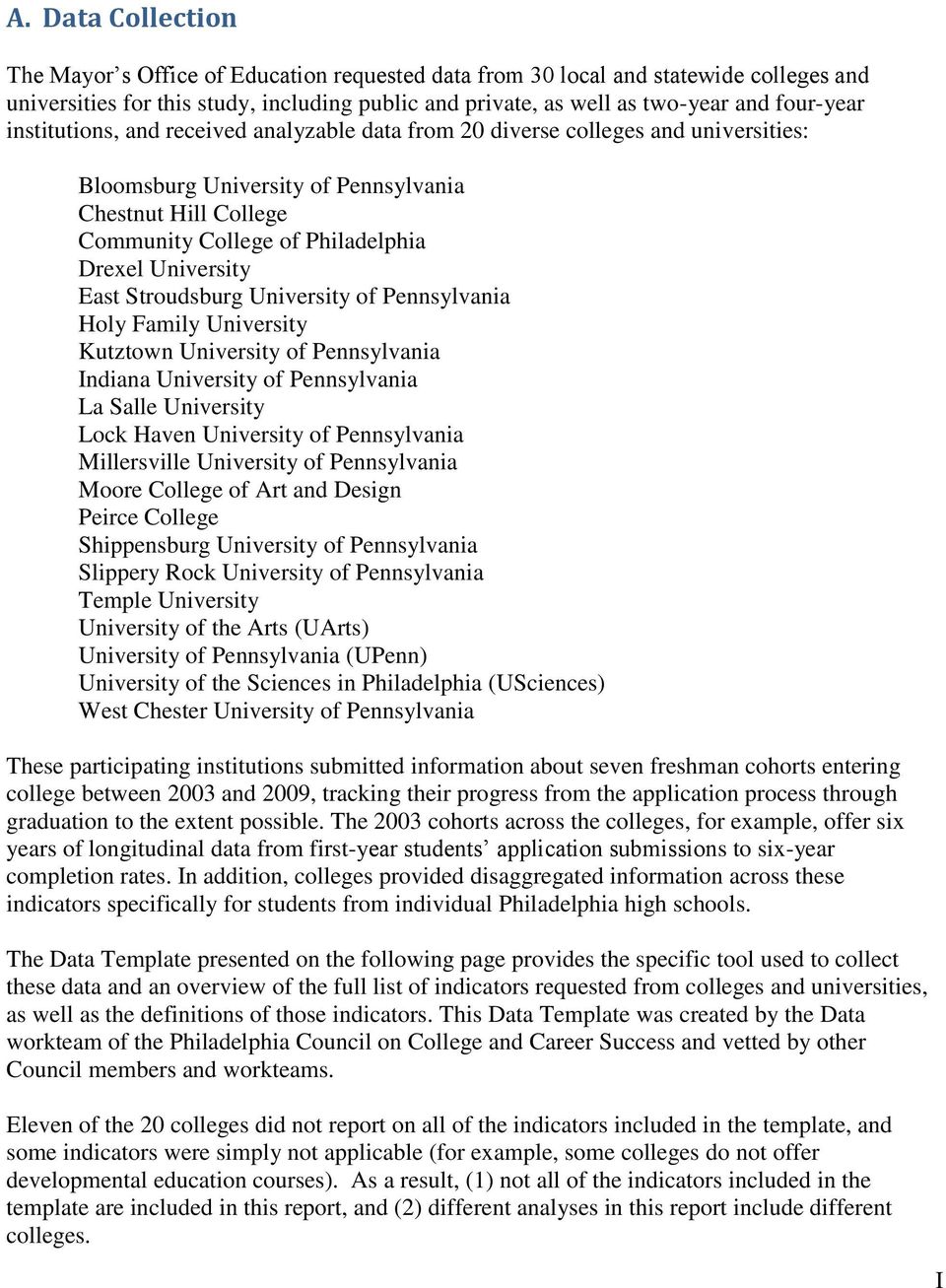
3 A. Data Collection The Mayor s Office of Education requested data from 30 local and statewide colleges and universities for this study, including public and private, as well as two-year and four-year institutions, and received analyzable data from 20 diverse colleges and universities: Bloomsburg University of Pennsylvania Chestnut Hill College Community College of Philadelphia Drexel University East Stroudsburg University of Pennsylvania Holy Family University Kutztown University of Pennsylvania Indiana University of Pennsylvania La Salle University Lock Haven University of Pennsylvania Millersville University of Pennsylvania Moore College of Art and Design Peirce College Shippensburg University of Pennsylvania Slippery Rock University of Pennsylvania University University of the Arts (UArts) University of Pennsylvania (UPenn) University of the Sciences in Philadelphia (USciences) West Chester University of Pennsylvania These participating institutions submitted information about seven freshman cohorts entering college between 2003 and 2009, tracking their progress from the application process through graduation to the extent possible. The 2003 cohorts across the colleges, for example, offer six years of longitudinal data from first-year students application submissions to six-year completion rates. In addition, colleges provided disaggregated information across these indicators specifically for students from individual Philadelphia high schools. The Data Template presented on the following page provides the specific tool used to collect these data and an overview of the full list of indicators requested from colleges and universities, as well as the definitions of those indicators. This Data Template was created by the Data workteam of the Philadelphia Council on College and Career Success and vetted by other Council members and workteams. Eleven of the 20 colleges did not report on all of the indicators included in the template, and some indicators were simply not applicable (for example, some colleges do not offer developmental education courses). As a result, (1) not all of the indicators included in the template are included in this report, and (2) different analyses in this report include different colleges. I
4 B. Data Requested from Colleges and Universities Figure A: The data template College and University Data Request Template Cohort: Entering First Time Fall First Year Students Who Graduated From High Schools Located Within Philadelphia County Applications and Enrollments All Enrolled First Time Fall First Year Students from Philadelphia High Schools Total Pass Total First Time Fall First Year Students Special Mean Total Total Total Math Math and Total Total Total Completed Total in Good Total on Track to Total Total from All High Schools (Including Phila. Fall Total Total Total Admits SATV+ Total Pass Math Total Pass and English Completed First Retained Fall Fall 1 through Standing Fall 1 Graduation Fall 1 Graduated Graduated and Non-Phila. Schools)** Cohort Applied Accepted Enrolled Enrolled SATQ Math Crs. English Engl. Crs English Crs. First Semester GPA 1 to Fall 2 Spring 2 Through Spring 2 Through Spring 2 in 4 years in Six Years Separate Reports for Each Philadelphia High School CEEB Code High School Name Applications and Enrollments All Enrolled First Time Fall First Year Students from Philadelphia High Schools Total Pass Special Mean Total Total Total Math Math and Total Total Total Completed Total in Good Total on Track to Total Total Fall Total Total Total Admits SATV+ Total Pass Math Total Pass and English Completed First Retained Fall Fall 1 through Standing Fall 1 Graduation Fall 1 Graduated Graduated Cohort Applied Accepted Enrolled Enrolled SATQ Math Crs. English Engl. Crs English Crs. First Semester GPA 1 to Fall 2 Spring 2 Through Spring 2 Through Spring 2 in 4 years in Six Years Legend: Total Applied Total Accepted Total Enrolled Special Admits Enrolled Mean SATV+SATQ Total Math Total Pass Math Crs. Total English Total Passed Engl. Crs. Total Math and English Total Pass Math and English Crs. Total Completed First Semester First GPA Total Retained Fall 1 to Fall 2 Total Completed Fall 1 through Spring 2 Total in Good Standing Fall 1 through Spring 2 Total on Track to Graduation Fall 1 Through Spring 2 Total Graduated in Four Years Total Graduated in Six Years Number of students who graduated from Philadelphia high schools and within one year of graduation applied to your institution for each fall semester Number of students from above group who were accepted Number of students who enrolled for first time in the fall semester Number of students enrolled through Special Admissions Programs (e.g., students admitted conditionally, required to take a summer "bridge" program, etc.) Average combined Verbal and Quantitative SAT score for fall enrolled first year students. If possible convert ACT scores to SAT equivalent scores prior to computing the average SATV+SATQ score. Number of enrolled fall freshmen who were required to take a course of study to overcome deficiencies in Mathematics (e.g., failed a placement test, needed a remedial/developmental course prior to taking a first year college math course, etc.)* Number of enrolled fall first year students who completed and passed Math course required to overcome deficiencies Number of enrolled fall first year students who were required to take a course of study to overcome deficiencies in either/both writing and reading (e.g., failed a placement test, needed a remedial/developmental course prior to taking a first year writing/reading college course)** Number of enrolled fall first year students who completed and passed English course required to overcome deficiencies in either/both writing and reading Number of enrolled fall first year students who were required to take courses of study to overcome deficiencies in both English and Math Number of enrolled fall first year students who completed and passed English and Math courses required to overcome deficiencies in both English and Math Number from cohort who completed their first semester (i.e., completed at least 1 course credit in the first fall semester) Average (mean) first semester GPA Number from cohort who returned for their second fall semester Number from cohort who completed their first four consecutive semesters Number from cohort who completed their first four consecutive semesters and having earned minimum CGPA to be considered in good academic standing at your institution Number from cohort who complete their first four consecutive semesters and earned enough credits to enter their third fall as a junior. Number from cohort who graduated within 4 years Number from cohort who graduated within 6 years ** You may use IPEDS definition to identify first time first year students Sample Applications and Enrollments All Enrolled First Time Fall Freshman from Philadelphia High Schools Who Were Philadelphia Residents Special Mean Total Pass Total Completed Total in Good Total on Track to Total Total Total Total Total Admits SATV+ Total Total Pass Total Total Pass Total Math Math and Total Completed Total Retained Fall 1 through Standing Fall 1 Graduation Fall 1 Graduated Graduated in CEEB Code High School Name Fall Applied Accepted Enrolled Enrolled SATQ Math Math Crs. English Engl. Crs and English English Crs. First Semester First GPA Fall 1 to Fall 2 Spring 2 Through Spring 2 Through Spring 2 in 4 years Six Years High School A High School A High School A High School A High School A High School A High School A High School B High School B High School B High School B High School B High School B High School B II

5 C. The Framework for Data Analysis The analyses and findings in this report are organized around the Loss-Momentum Framework, designed by the Completion by Design Assistance Team at the Bill and Melinda Gates Foundation. 1 The full framework is presented on page V of this technical appendix (Section E) and focuses on four juncture points in a student s journey through college: 1. Connection, or the application process 2. Entry, or student placement and outcomes in developmental education coursework 3. Progress, or movement through credit-bearing coursework 4. Completion, or graduation Figure B shows the indicators as they correspond to these four elements: Figure B: The indicators organized along the Loss-Momentum Framework Connection Entry Progress Completion students who students who students who applications took developmental math courses completed first semester graduated in four years acceptances passed developmental math courses completed first year graduated in six years students who enrolled took developmental English courses completed first two years passed developmental English courses were in good standing after two years were on track to graduation after two years As noted earlier, given that not all colleges provided data for all indicators, this report does not always present data for the same cohort from connection through completion. In order to maximize the data, we made decisions about what colleges to include in our analysis on the basis of which schools had complete data in any one of the four Loss-Momentum areas: connection, entry, progress, or completion. In other words, the groups of colleges and universities included in the analyses may be different across each phase. Figure D on the next page provides an overview of which colleges were included in which analyses. 1 The Completion by Design initiative is a five year investment by the Bill and Melinda Gates Foundation to enable groups of community college campuses in several different states to collaborate on the design and implementation of a model pathway to completion. III
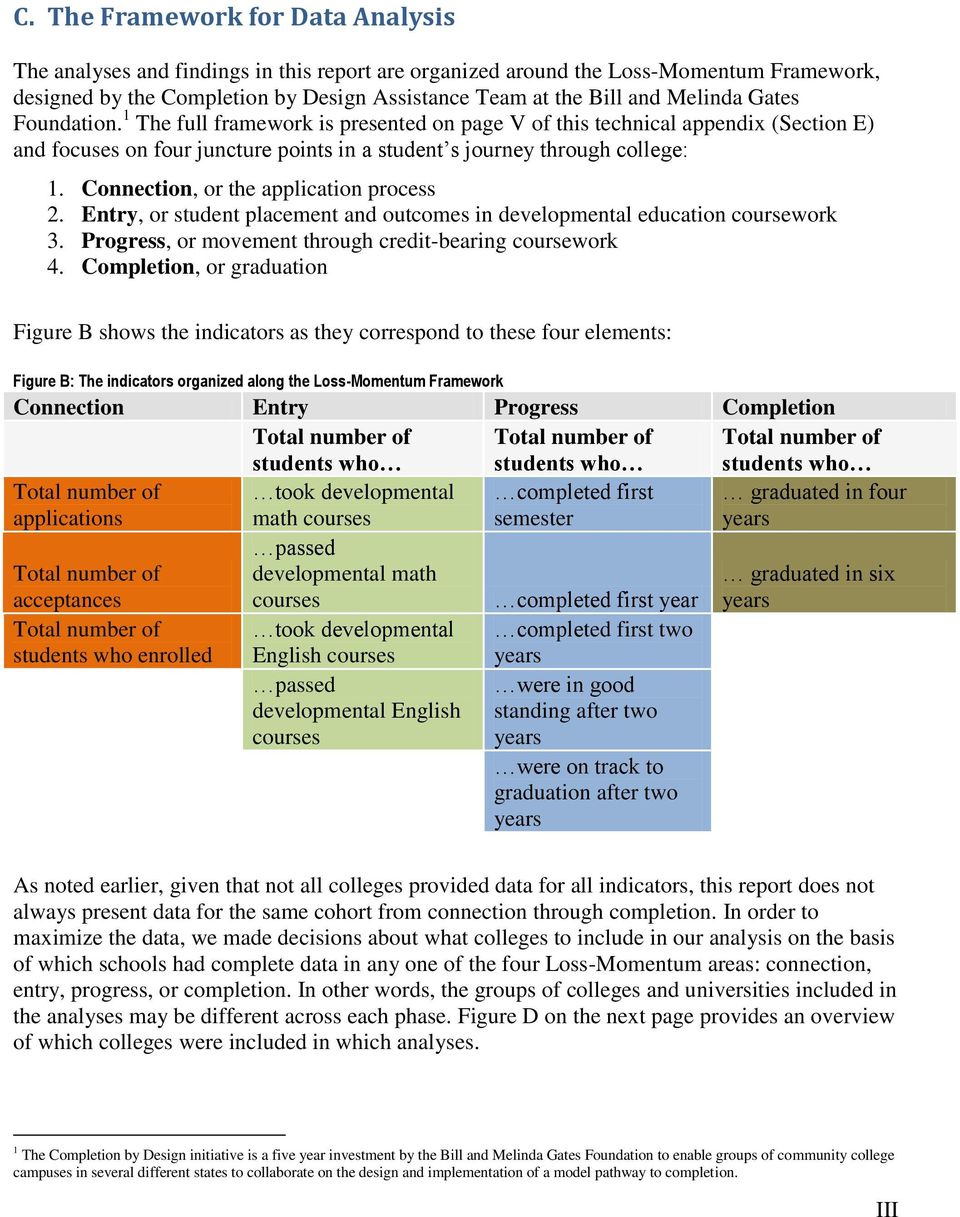
6 D. Colleges that Provided Complete Data for Each Set of Indicators Admissions Remediation Persistence Completion Philadelphia Students Non- Philadelphia Students Bloomsburg Chestnut Hill CCP (enrollment only) Drexel East Stroudsburg Holy Family Indiana Kutztown La Salle Lock Haven Millersville Moore Peirce (enrollment only) Shippensburg Slippery Rock UArts UPenn USciences West Chester (20) Bloomsburg Drexel East Stroudsburg Holy Family Indiana La Salle Lock Haven Millersville Shippensburg Slippery Rock (enrollment only) UArts (enrollment only) UPenn USciences (14) Bloomsburg Chestnut Hill CCP East Stroudsburg Holy Family Indiana (Math only) Lock Haven Millersville Moore (English only) Shippensburg Slippery Rock UArts (English only) USciences (English only) West Chester (12 Math, 14 English) Bloomsburg CCP Indiana (M) Lock Haven Indiana Millersville Shippensburg USciences (E) (8 Math, 8 English) Bloomsburg East Stroudsburg Indiana La Salle Lock Haven Millersville Moore Peirce Shippensburg UArts West Chester (12) Bloomsburg Indiana La Salle Lock Haven Millersville Shippensburg USciences (8) Bloomsburg Chestnut Hill Drexel East Stroudsburg Holy Family Indiana Kutztown La Salle Lock Haven Millersville Moore Peirce Shippensburg UArts UPenn USciences West Chester (13) Bloomsburg Drexel East Stroudsburg Indiana La Salle Lock Haven Millersville Shippensburg UPenn USciences (11) IV
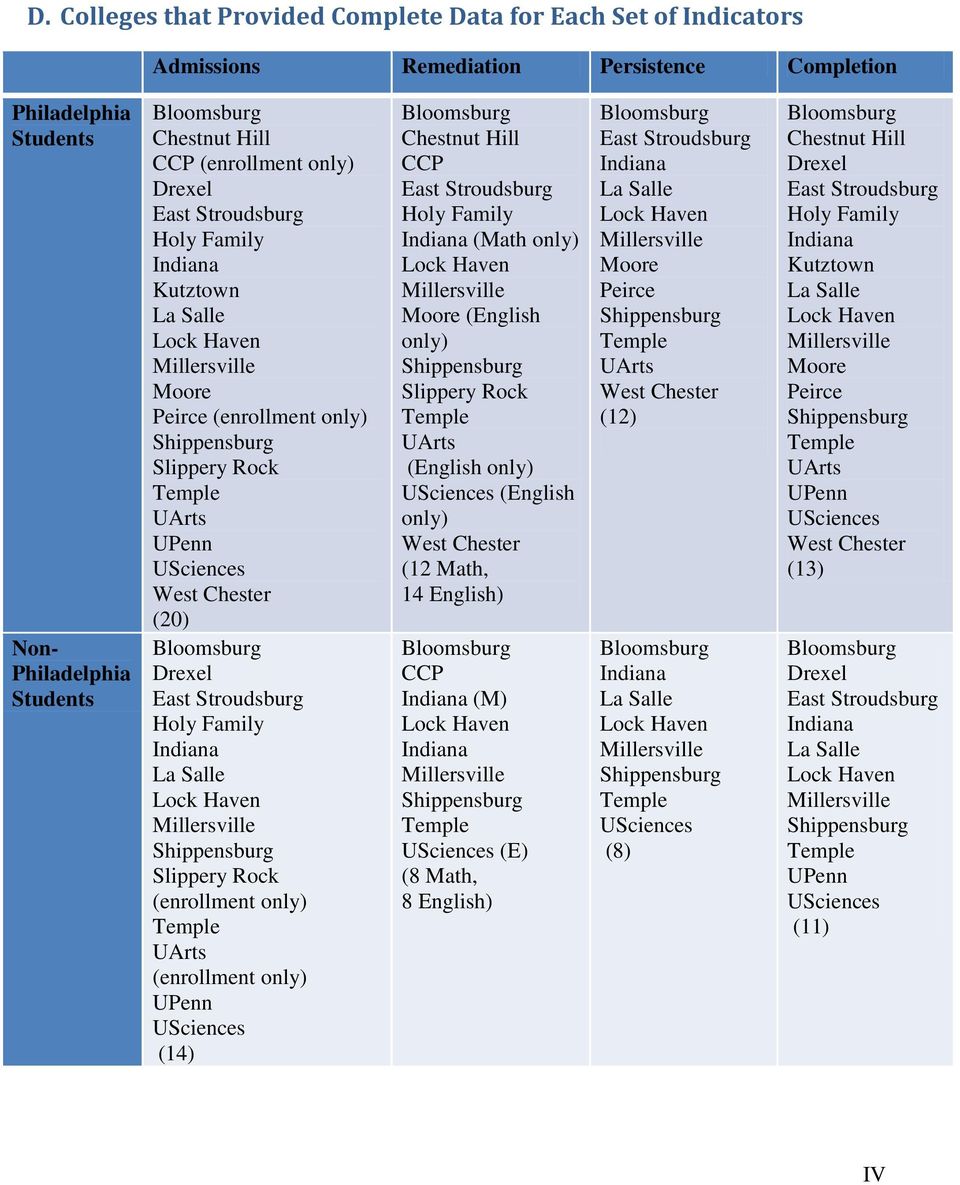

7 E. The Loss-Momentum Framework from the Completion by Design Initiative, Bill and Melinda Gates Foundation V
8 F. More about the Indicators The following provides a summary description of the indicators in the Loss-Momentum Framework: Connection applications acceptances students who enrolled The initial point of connection to a college for prospective students is the college admissions process applying, being accepted, and enrolling in an institution. Decisions about where students apply are often based on academic and financial considerations; factors of fit, such as special interests, religious affiliation, campus setting, school and class sizes; and the quality of college guidance received related to applying to colleges and securing the necessary financial resources. Entry Number of students who took developmental math courses Number of students who passed developmental math courses Number of students who took developmental English courses Number of students who passed developmental English courses These indicators assess the placement and success of students in developmental math and English courses. Students who are placed into developmental education (remedial) courses must successfully complete these courses prior to enrolling in many credit-bearing college-level courses. Developmental education courses cover concepts that are considered to be pre-collegelevel material. Progress Number of students who completed first semester Number of students who completed first year Number of students who completed first two years Number of students Number of students who were in good who were on track standing after two to graduation after years two years Several indicators were used to evaluate success through completion of the second year and the likelihood of an on-time graduation. A student who is in good standing has attained a grade point average of 2.0 or greater; but while considered a measure of academic success, being in good standing does not point to how many or what type of credits a student has accumulated. On track to graduation after the first two years is an indicator of credit accumulation sufficient to enter the third year as a junior. Students who are in good academic standing and on track to graduate presumably are the most likely to graduate within four years. Completion Number of students who graduated in four years Number of students who graduated in six years VI

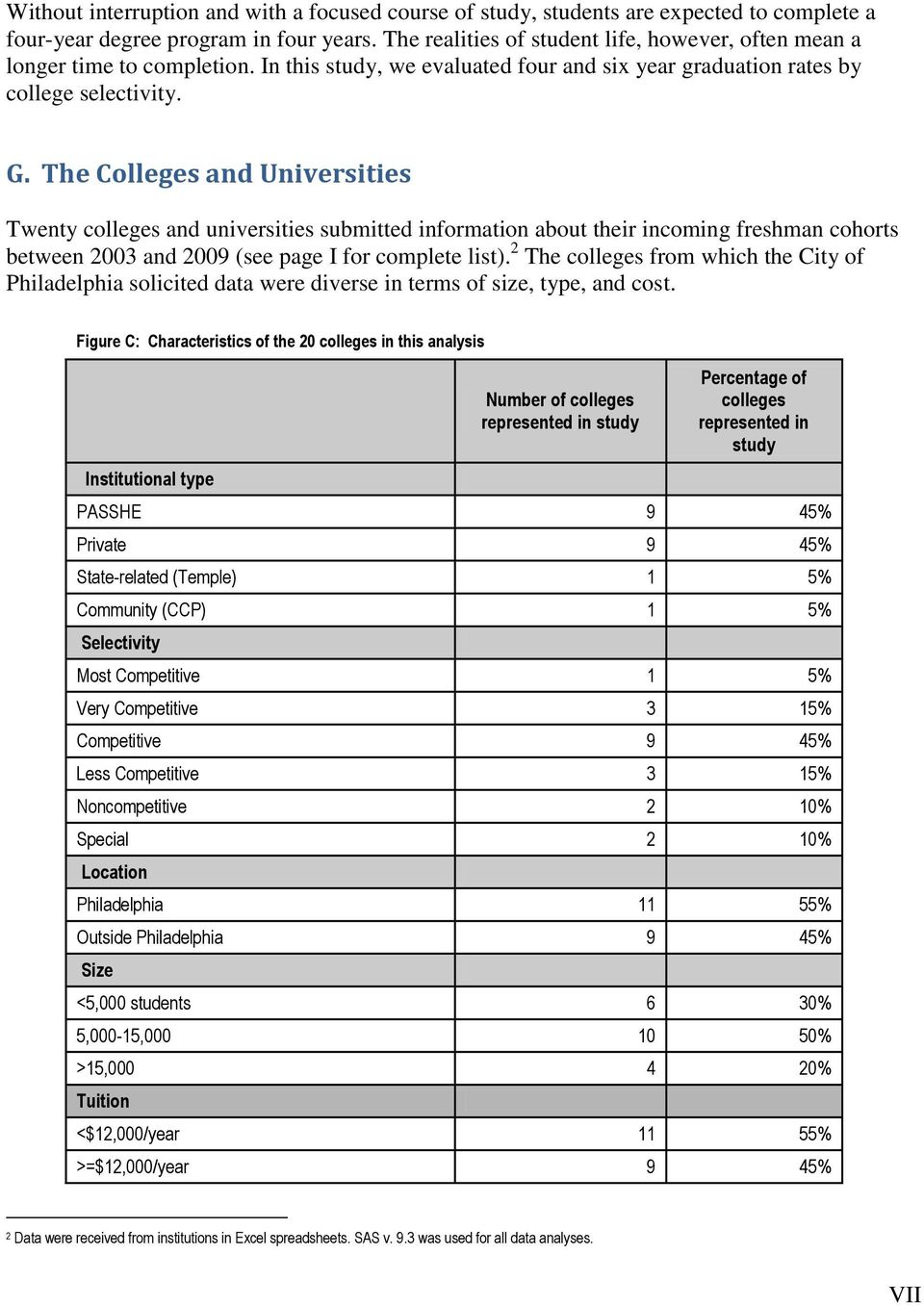
9 Without interruption and with a focused course of study, students are expected to complete a four-year degree program in four years. The realities of student life, however, often mean a longer time to completion. In this study, we evaluated four and six year graduation rates by college selectivity. G. The Colleges and Universities Twenty colleges and universities submitted information about their incoming freshman cohorts between 2003 and 2009 (see page I for complete list). 2 The colleges from which the City of Philadelphia solicited data were diverse in terms of size, type, and cost. Figure C: Characteristics of the 20 colleges in this analysis Institutional type Number of colleges represented in study Percentage of colleges represented in study PASSHE 9 45% Private 9 45% State-related () 1 5% Community (CCP) 1 5% Selectivity Most Competitive 1 5% Very Competitive 3 15% Competitive 9 45% Less Competitive 3 15% Noncompetitive 2 10% Special 2 10% Location Philadelphia 11 55% Outside Philadelphia 9 45% Size <5,000 students 6 30% 5,000-15, % >15, % Tuition <$12,000/year 11 55% >=$12,000/year 9 45% 2 Data were received from institutions in Excel spreadsheets. SAS v. 9.3 was used for all data analyses. VII
10 One of the key college characteristics used in our analysis is college selectivity, based on Barron s Profiles of American Colleges. 3 In particular, we highlight some of the differences between the college trajectories of students in very competitive and competitive institutions and enrollment patterns of graduates from different high school types in colleges of different selectivity categories. We also separate out specific analyses related to the Community College of Philadelphia, a noncompetitive institution that accepts all applicants. Figure D: Colleges classified by academic selectivity Most competitive Very competitive Competitive Less competitive Not competitive Special UPenn Drexel,, USciences Bloomsburg, East Stroudsburg, Holy Family, Indiana, Kutztown, La Salle, Millersville, Shippensburg, West Chester Chestnut Hill, Lock Haven, Slippery Rock Community College of Philadelphia (CCP), Peirce Moore College of Art, UArts Figure E: Colleges classified by type PASSHE Private State-related Community Bloomsburg, East Stroudsburg, Indiana, Kutztown, Lock Haven, Millersville, Shippensburg, Slippery Rock, West Chester Chestnut Hill, Drexel, Holy Family, La Salle, Moore, Peirce, UArts, UPenn, USciences Community College of Philadelphia Many of the colleges represented in this report are among the top 15 institutions attended by Philadelphia public high school graduates, accounting for over 51% of college placements among public high school graduates, according to a 2010 analysis performed by the School District of Philadelphia. Although the data in our study also include students from parochial and private high schools, this analysis suggests that the colleges in our study represent a large proportion of Philadelphia high school students who went to college from all high school types. Figure F below provides an overview of these top 15 colleges. Those highlighted in grey are included in our study. Figure F: Top 15 colleges where Philadelphia public high school graduates initially enrolled Top 15 Colleges Percent of Total Initial College Enrollment Community College of Philadelphia (CCP) 31.5% Pennsylvania State University (multiple campuses) 10.9% University 7.5% Indiana University of Pennsylvania 3.2% Cheyney University of Pennsylvania 2.3% 3 Barron s Profile of American Colleges, 29 th Edition, Compiled and edited by the College Division of Barron s Educational Series. VIII

11 Lincoln University 2.0% Drexel University 1.8% Bloomsburg University of Pennsylvania 1.8% West Chester University 1.7% La Salle University 1.5% University of Phoenix 1.5% DeVry Fort Washington 1.3% Kutztown University 1.5% Millersville University of Pennsylvania 1.1% University of Pennsylvania 1.0% (Source: School District of Philadelphia) IX

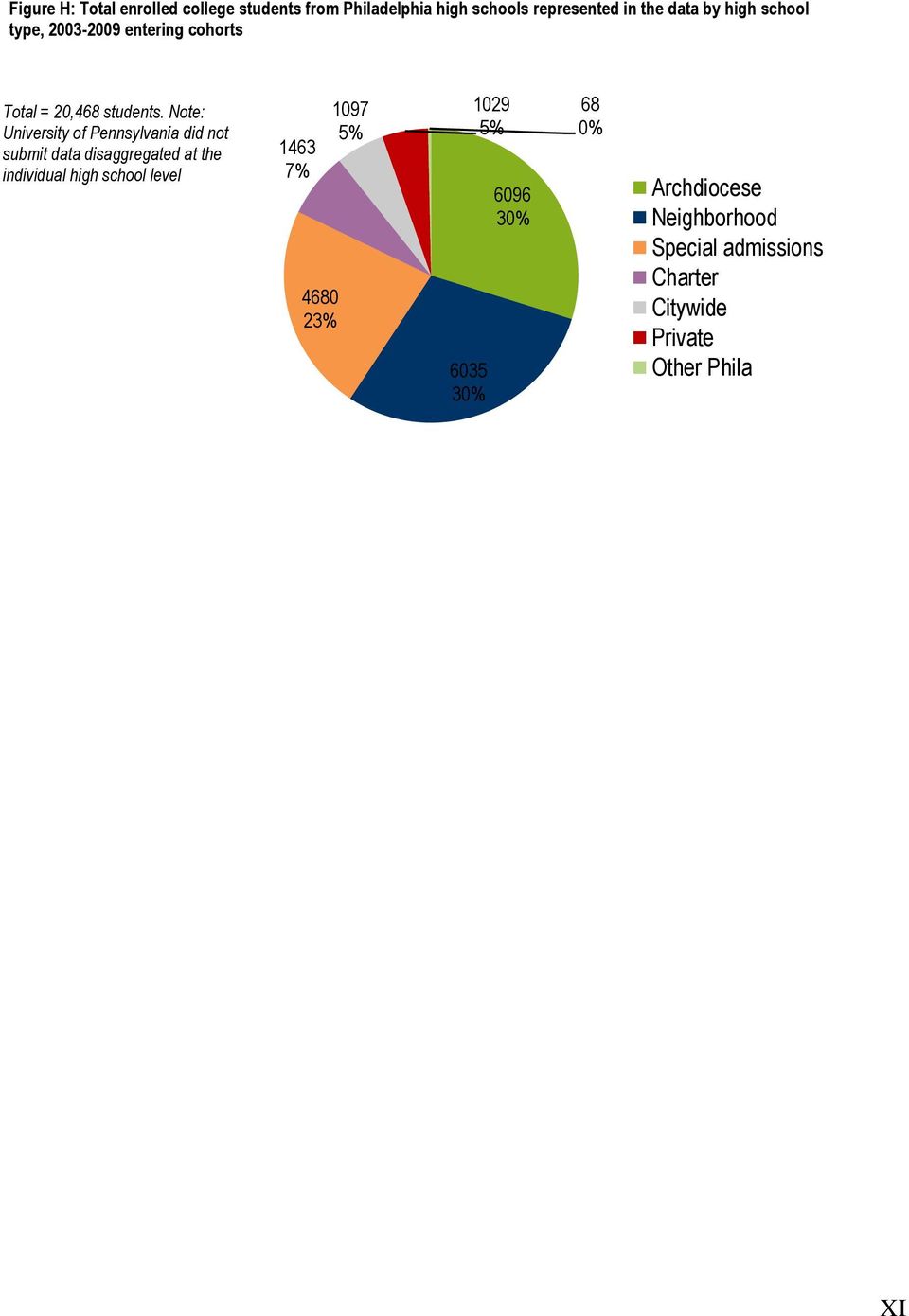
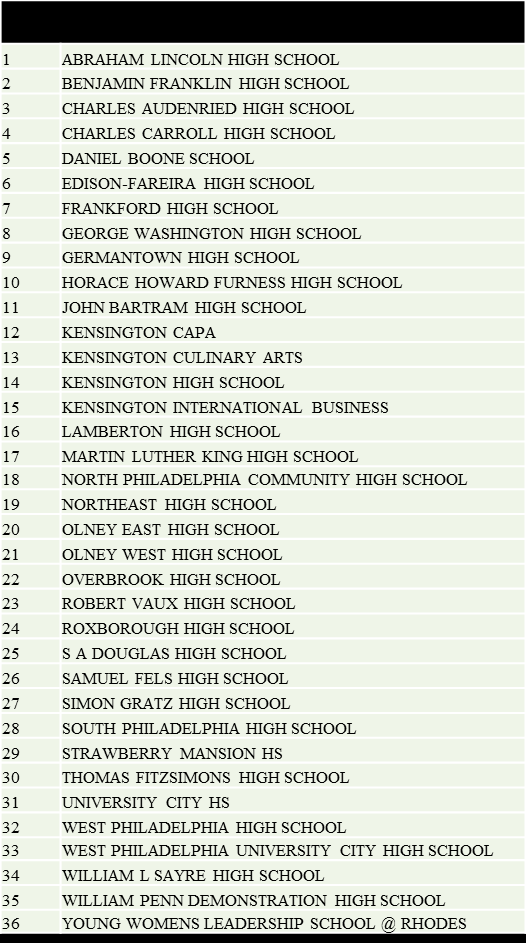
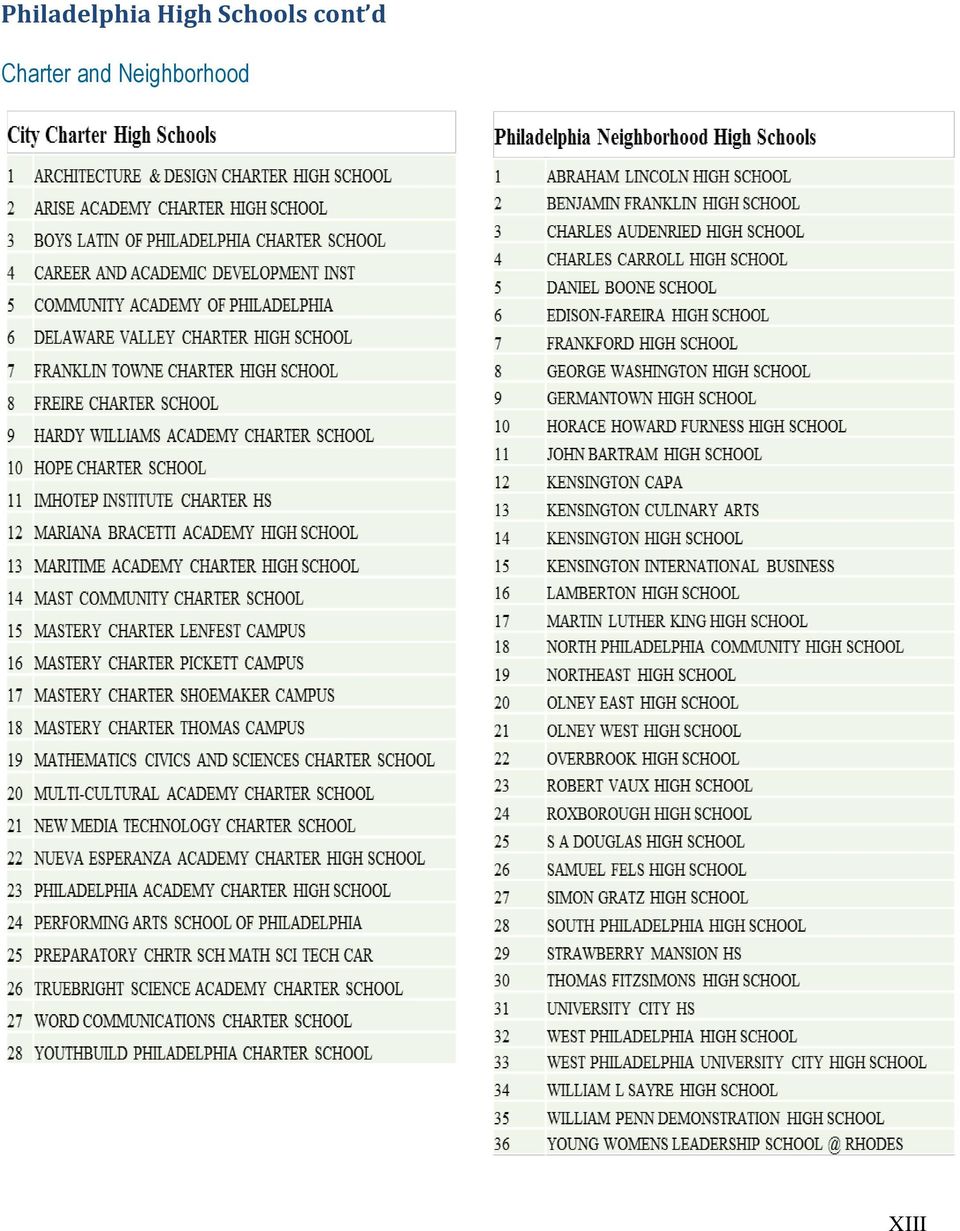
12 H. The Students This study includes over 21,000 first-year full-time students from Philadelphia who enrolled in one of the 20 colleges that submitted data between 2003 and Figure G provides an overview of the number and percentage of students enrolling in colleges by selectivity. Over one-third (35%) attended the nine PASSHE institutions (categorized as competitive colleges) represented. A little over a quarter attended very competitive universities institutions such as and Drexel (27%). Nearly 30% of the students attended non-competitive colleges, almost all of those Community College of Philadelphia enrollees. Figure G: Total enrolled college students from Philadelphia high schools represented in the data by college selectivity, entering cohorts Total = 21,344 students from all 20 colleges 282 1% 876 4% most competitive % % very competitive competitive less competitive 786 4% % not competitve special Prior to this report, Philadelphia analyses of college progress and completion patterns included only information from public high schools, including neighborhood, special admissions, charter, and citywide schools; the inclusion of parochial and private institutions in this data collection effort provides opportunities for identifying a citywide profile of Philadelphia students success in college. Figure H provides a breakdown of the high schools types from which students enrolling in the colleges in our study graduated. Nearly a third of first-year college students in this analysis graduated from neighborhood schools. Another third graduated from Archdiocese high schools. The next largest group, nearly one-quarter of students, came from special admissions high schools (such as Central or Masterman). The remainder graduated from charter, citywide, and private high schools. See pages XI-XIV for a list of how individual Philadelphia high schools were categorized. 4 4 School District of Philadelphia designations were used to classify public schools. X

13 Figure H: Total enrolled college students from Philadelphia high schools represented in the data by high school type, entering cohorts Total = 20,468 students. Note: University of Pennsylvania did not submit data disaggregated at the individual high school level % % % % % % 68 0% Archdiocese Neighborhood Special admissions Charter Citywide Private Other Phila XI

14 I. Philadelphia High Schools Private and Archdiocese XII

15 Philadelphia High Schools cont d Charter and Neighborhood XIII

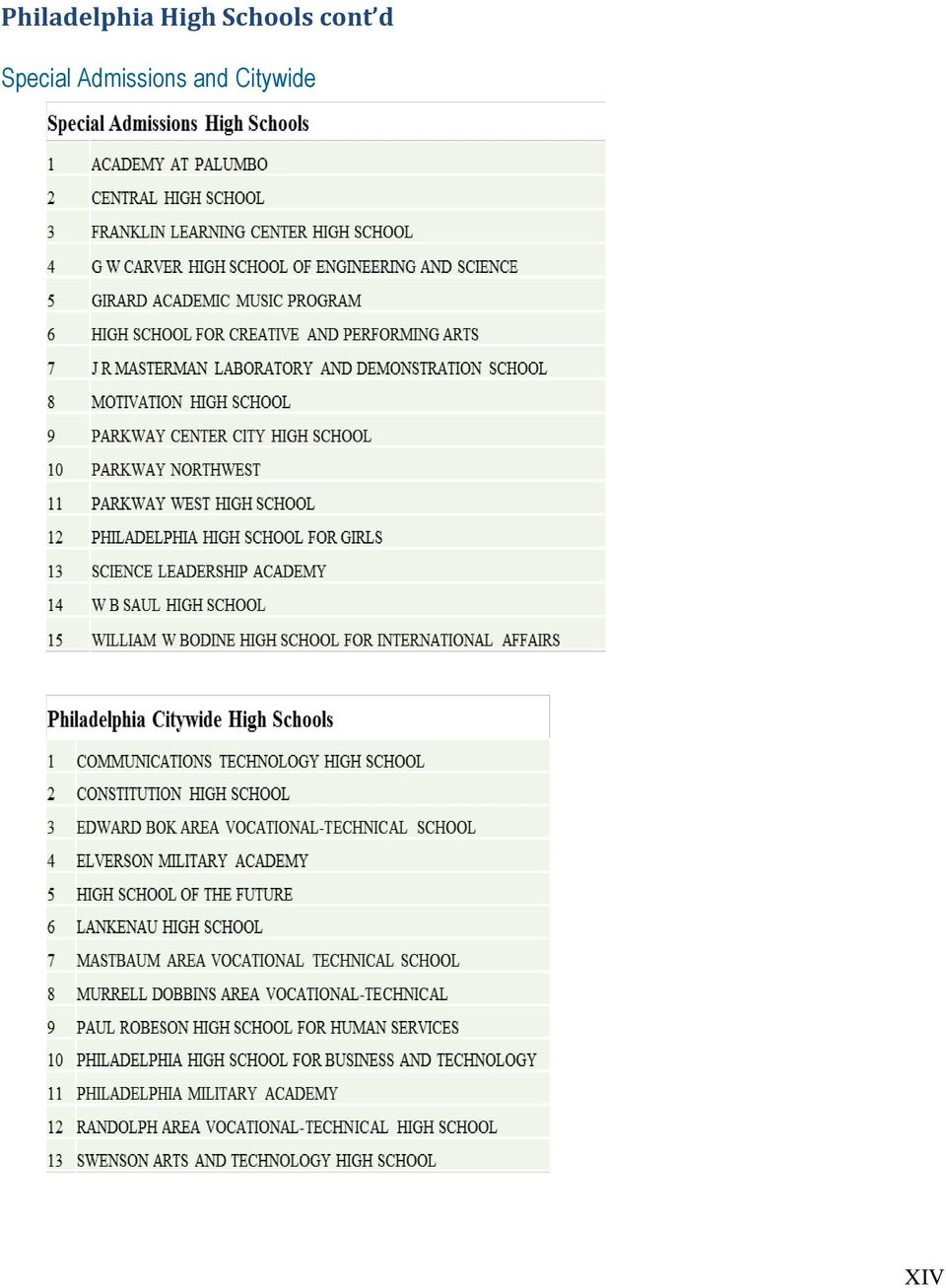
16 Philadelphia High Schools cont d Special Admissions and Citywide XIV
17 Philadelphia High Schools cont d Designation Unknown, Alternative, or Other Schools XV
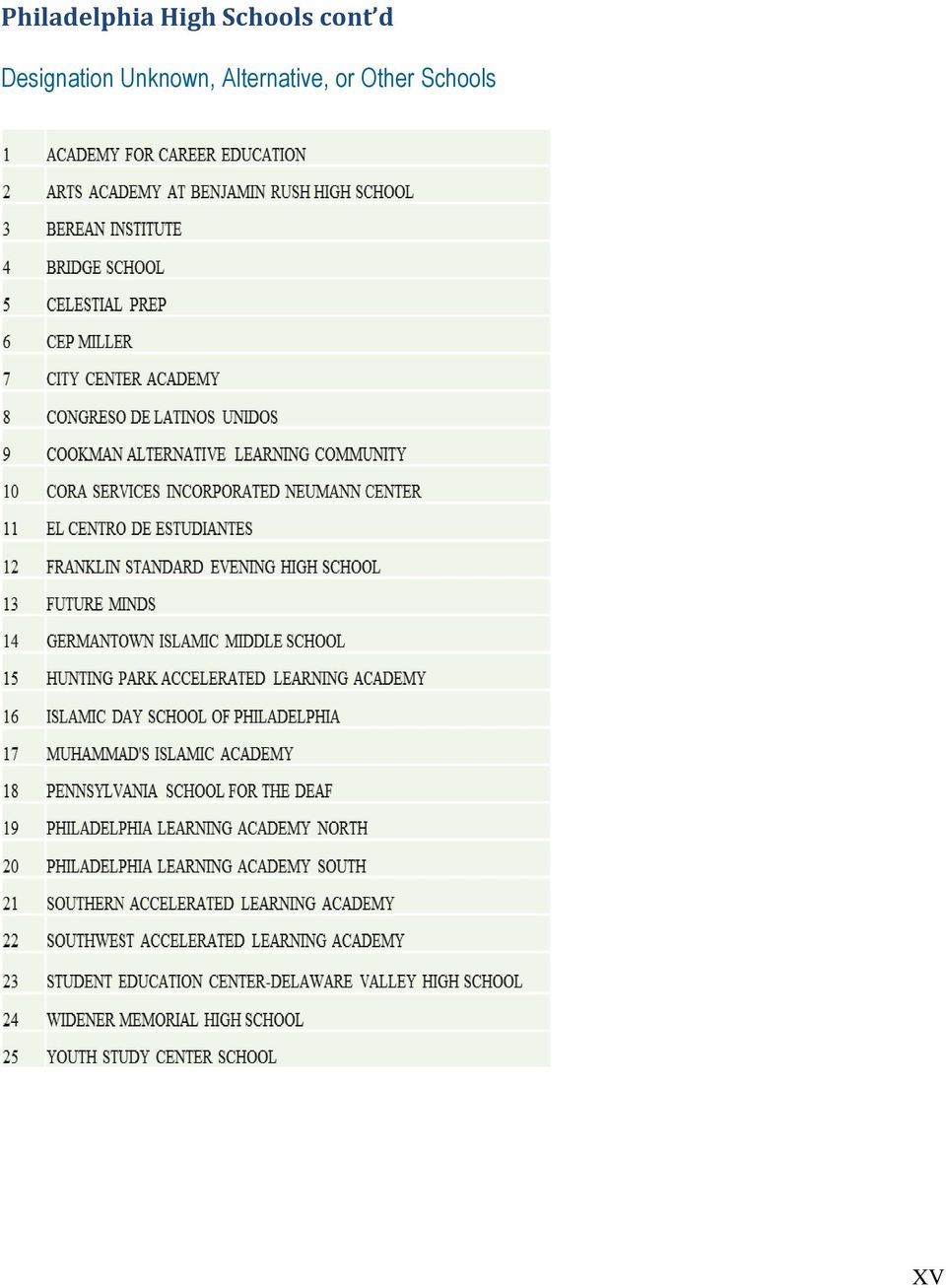
EXHIBIT 11. Bloomsburg University Report on 2007 2008 System Accountability Plan Measures
 EXHIBIT 11 Bloomsburg University Report on 2007 2008 System Accountability Plan Measures Bloomsburg University Forum Meeting 2007-2008 Accountability Measures Wednesday, September 17, 2008 Bloomsburg University
COMMUNITY COLLEGE OF PHILADELPHIA. The Impact of Community College of Philadelphia Transfer Programs on the Philadelphia Region
 COMMUNITY COLLEGE OF PHILADELPHIA The Impact of Community College of Philadelphia Transfer Programs on the Philadelphia Region O FFICE OF I NSTITUTIONAL R ESEARCH Report #142 January 2005 Introduction
2013-2014 PENNSYLVANIA 529 GUARANTEED SAVINGS PLAN CREDIT RATE SCHEDULE
 2013-2014 PENNSYLVANIA 529 GUARANTEED SAVINGS PLAN CREDIT RATE SCHEDULE (See the GSP Disclosure Statement for the methodology used to determine Credit Rates) Rates are effective from September 1, 2013
Transform Remediation: The Co-Requisite Course Model
 Transform Remediation: The Co-Requisite Course Model For far too many students, postsecondary remedial education is a dead end. About 40 percent of all students entering postsecondary education in recent
Delaware County Community College Transfer Agreement Summary
 Delaware County Community College Transfer Agreement Summary Delaware County Community College has written transfer agreements with many colleges and universities in the Greater Philadelphia area as well
AGENDA ITEM V A. Statewide Minimum Standards for Admission BACKGROUND INFORMATION
 AGENDA ITEM V A Statewide Minimum Standards for Admission BACKGROUND INFMATION The Master Plan for Public Postsecondary Education: 2001 defined a comprehensive, statewide system of postsecondary education
THE UNIVERSITY OF NORTH CAROLINA REMEDIAL/DEVELOPMENTAL ACTIVITIES REPORT 2011-12. The University of North Carolina General Administration
 THE UNIVERSITY OF NORTH CAROLINA REMEDIAL/DEVELOPMENTAL ACTIVITIES REPORT 2011-12 The University of North Carolina General Administration February 2013 1 Remedial/Developmental Activities in UNC Institutions:
Admission Standards 2011-2012 FIRST-TIME ENTERING STUDENTS
 FIRST-TIME ENTERING STUDENTS Minimum High School Performance Criteria for Admission of First-Time-Entering Students Option 2 Option 3 Option 1 Minimum GPA and Minimum GPA 1 in the Minimum ACT/ SAT Class
Admission Standards 2015-2016 FIRST-TIME ENTERING STUDENTS
 Oklahoma State University Oklahoma State Regents for Higher Education FIRST-TIME ENTERING STUDENTS Minimum High School Performance Criteria for Admission of First-Time-Entering Students Minimum ACT/ SAT
California Schools and Transfer
 Updated 8/2012 California Schools and Transfer Over the past few years it has increasingly become more difficult to transfer to schools in California. Even some students at California community colleges
Admissions Standards for the Massachusetts State University System and the University of Massachusetts. Guidance Document. Updated April 2015
 Admissions Standards for the Massachusetts State University System and the University of Massachusetts Guidance Document Updated April 2015 Massachusetts Department of Higher Education One Ashburton Place,
Special Report on the Transfer Admission Process National Association for College Admission Counseling April 2010
 Special Report on the Transfer Admission Process National Association for College Admission Counseling April 2010 Each Spring, much media attention is focused on the college admission process for first-year
Transferring from Community College of Allegheny County to a Four-year Institution. A General Guide to a Successful Transfer
 Transferring from Community College of Allegheny County to a Four-year Institution A General Guide to a Successful Transfer Revised March 2013 TABLE OF CONTENTS CONGRATULATIONS!... 2 WHY BEGIN AT A COMMUNITY
Program Grant Application Guidelines
 Pennsylvania Department of Education Dual Enrollment Grant Program Program Grant Application Guidelines In accordance with Article XVI-B of the Public School Code, 24 P.S. 1601-B-1615-B, the Pennsylvania
TITLE 133 PROCEDURAL RULE WEST VIRGINIA HIGHER EDUCATION POLICY COMMISSION
 TITLE 133 PROCEDURAL RULE WEST VIRGINIA HIGHER EDUCATION POLICY COMMISSION SERIES 23 STANDARDS AND PROCEDURES FOR UNDERGRADUATE ADMISSIONS AT FOUR-YEAR COLLEGES AND UNIVERSITIES 133-23-1. General. 1.1.
TITLE 135 PROCEDURAL RULE WEST VIRGINIA COUNCIL FOR COMMUNITY AND TECHNICAL COLLEGE EDUCATION SERIES 21 FRESHMAN ASSESSMENT AND PLACEMENT STANDARDS
 TITLE 135 PROCEDURAL RULE WEST VIRGINIA COUNCIL FOR COMMUNITY AND TECHNICAL COLLEGE EDUCATION SERIES 21 FRESHMAN ASSESSMENT AND PLACEMENT STANDARDS 135-21-1. General. 1.1. Scope. This policy establishes
*Intern Program Approval **Alternative Provider Updated 11/16/2015
 AGRICULTURE (PK-12) * * ART (PK-12) * * Keystone College * * Moore College of Art & Design* /Theo Seminary Shippensburg University * University of the Arts (The) AUTISM ENDORSEMENT (PK-12) Chestnut Hill
February 24- February 28, 2014
 February 24- February 28, 2014 Welcome! Saving for College Isn t Impossible... All You Need is a Plan. Presenter: Kelly Dunkle, PA 529 Program Specialist Pennsylvania 529 College Savings Program [email protected]
Transfer Students - Frequently Asked Questions 2014
 Transfer Students - Frequently Asked Questions 2014 The colleges and universities of Washington have long recognized the importance of facilitating travel for students moving from one institution to another
Requirements for Admission
 Requirements for Admission 25 Requirements for Admission Admissions Office Cope Administration Building 208 Application Filing Deadlines The deadline for Fall Semester applications is July 1. The deadline
Undergraduate Admissions Policy
 Undergraduate Admissions Policy STATEMENT OF POLICY: Winston-Salem State University (WSSU) is committed to equality of educational opportunity. Admission to the university is based on merit and there is
2015 GSK Opportunity Scholarship
 2015 GSK Opportunity Scholarship Background The GlaxoSmithKline Opportunity Scholarship Fund was established to offer residents of Philadelphia County who have overcome significant adversity the opportunity
What We Know About Online Course Outcomes
 RESEARCH OVERVIEW / APRIL 2013 What We Know About Course Outcomes Higher Education Is Expanding Rapidly Since 2010, online college course enrollment has increased by 29 percent. Currently, 6.7 million
I. Introduction and Purpose
 Kentucky Council on Postsecondary Education and Kentucky Department of Education Dual Credit Policy for Kentucky Public and Participating Postsecondary Institutions and Secondary Schools I. Introduction
Professor Susan Hendricks, Associate Professor of Learning Support, Gordon State College [email protected]
 Building a Bridge to College English Project Lead: Dr. Stephen Raynie Professor of English, Gordon State College [email protected] Other Team Members: Dr. Wesley Venus Assistant Professor of English,
MCPS Graduates Earning College Degrees in STEM-Related Fields
 Graduates Earning College Degrees in -Related Fields September 2012 Natalie Wolanin & Julie Wade OFFICE OF SHARED ACCOUNTABILITY Adrian B. Talley, Associate Superintendent 850 Hungerford Drive Rockville,
Four-Year College Price Estimates for Pennsylvania
 Four-Year Estimates for Pennsylvania This table lists the estimated four-year average (net) price paid by students who start college in 2013. This is the average estimated price across all students starting
Transfer Credit Update. Tryphena Miska, assistant registrar, enrollment services Office of the Registrar
 Transfer Credit Update Tryphena Miska, assistant registrar, enrollment services Office of the Registrar An Opportunity To improve and simplify the transfer credit articulation process To provide consistency
Virginia s College and Career Readiness Initiative
 Virginia s College and Career Readiness Initiative In 1995, Virginia began a broad educational reform program that resulted in revised, rigorous content standards, the Virginia Standards of Learning (SOL),
The Role of Transfer in the Attainment of Bachelor s Degrees at Washington Public Baccalaureate Institutions, Class of 2006
 The Role of Transfer in the Attainment of Bachelor s Degrees at Washington Public Baccalaureate Institutions, Class of 2006 By: SESRC Puget Sound Division Paul Stern, Kirby Pitman, and Dave Pavelchek June
How NCTQ scores the Selection Criteria Standard
 How NCTQ scores the Selection Criteria Standard Standard and indicators Data used to score this standard Evaluation of elementary, secondary and special education preparation programs on Standard 1: Selection
ACT Code: 047492 EAST POINSETT CO SD 14 502 MCCLELLAN ST LEPANTO, AR 72354
 High School-to-College Success Report Arkansas 2012-2013 Freshmen - Public Institutions ACT Code: 047492 EAST POINSETT CO SD 14 502 MCCLELLAN ST LEPANTO, AR 72354 How well is your district preparing students
EARNING COLLEGE CREDIT WHILE IN HIGH SCHOOL
 EARNING COLLEGE CREDIT WHILE IN HIGH SCHOOL Overview of CC+ WHAT IS COLLEGE CREDIT PLUS? College Credit Plus (CC+) is an opportunity for qualified high school students to take college classes before graduation
Operating Procedures (Approved by State Board of Community Colleges on 10/21/11; revised 03/16/12; revised 07/19/13; revised 11/15/13)
 Operating Procedures (Approved by State Board of Community Colleges on 10/21/11; revised 03/16/12; revised 07/19/13; revised 11/15/13) Session Law 2011-145, the Appropriations Act of 2011, authorized the
A Brief Research Summary on Access to College Level Coursework for High School Students. Provided to the Oregon Education Investment Board August 2014
 A Brief Research Summary on Access to College Level Coursework for High School Students Provided to the Oregon Education Investment Board August 2014 Prepared by Hilda Rosselli, OEIB College and Career
1.00 Introduction 2.00 Statutory Authority 3.00 Policy Goals 4.00 Higher Education Admission Requirements (HEAR)
 SECTION I PART F ADMISSIONS STANDARDS POLICY 1.00 Introduction Admissions standards are established, pursuant to statute, for undergraduate applicants for admission at each public institution of higher
Glossary for ASPIRE Advisors, Students and Families
 Glossary for ASPIRE Advisors, Students and Families Academic Records Academic information kept on file by the school. This record includes a transcript of grades, test scores, and related academic materials.
Are ALL children receiving a high-quality education in Ardmore, Oklahoma? Not yet.
 Are ALL children receiving a high-quality education in Ardmore, Oklahoma? Not yet. Despite a relatively high graduation rate, too many students are not graduating from Ardmore Public Schools ready for
Coastal Carolina University Catalog 2004/2005 ADMISSIONS
 ADMISSIONS 25 ADMISSION INFORMATION The Office of Admissions is committed to marketing the University and attracting students who seek to attend a comprehensive liberal arts institution. As a team, we
Building Blocks to a Baccalaureate Degree
 Building Blocks to a Baccalaureate Degree Smart Start The University of Delaware s Associate in Arts Program offers Delawareans all the strengths of a traditional Liberal Arts education and the prestige
NCES 2008-033 U.S. DEPARTMENT OF EDUCATION
 Special Supplement to The Condition of Education 2008 NCES 2008-033 U.S. DEPARTMENT OF EDUCATION THIS PAGE INTENTIONALLY LEFT BLANK Special Supplement to The Condition of Education 2008 Statistical Analysis
IDAHO 2011 For a strong economy, the skills gap must be closed.
 For a strong economy, the skills gap must be closed. 63% 34% 29% By 2020, jobs requiring a career certificate or college degree Skills gap Too few students make it through college. MEMBER Idaho adults
Review test prep resources for educators, students and families.
 Goals: Discuss findings of the 2013 SAT Report on College and Career Readiness and the ACT 2013 Condition of College and Career Readiness; examine performance data to see how Arizona students are testing.
Getting prepared: A. 2010 report. on recent high school. graduates who took. developmental/remedial. courses
 Getting prepared: A 2010 report on recent high school graduates who took developmental/remedial courses Minnesota State Colleges & Universities University of Minnesota State-Level Summary and High School
ENON SCHOLARSHIP MINISTRY SPRING 2015
 ENON SCHOLARSHIP MINISTRY SPRING 2015 College/Post-High Information on the Web Website Information (Usage) Purpose www.naviance.com College & Career Readiness Connect academic achievement with post-secondary
Department of History University of New Orleans MASTER OF ARTS IN HISTORY Personal Information Sheet/Departmental Application
 Department of History University of New Orleans MASTER OF ARTS IN HISTORY Personal Information Sheet/Departmental Application Dear Applicant, Please remember that admission to our program is a two-stage
INDIANA UNIVERSITY EAST-EARLHAM COLLEGE COOPERATIVE AGREEMENT FOR THE BACHELORS DEGREE IN ELEMENTARY OR SECONDARY EDUCATION (Under Review)
 INDIANA UNIVERSITY EAST-EARLHAM COLLEGE COOPERATIVE AGREEMENT FOR THE BACHELORS DEGREE IN ELEMENTARY OR SECONDARY EDUCATION (Under Review) ADMISSION TO TEACHER EDUCATION AT EITHER INSTITUTION: 1. Cumulative
Dual Enrollment. Frequently Asked Questions. General. 1. What is dual enrollment?
 Dual Enrollment Dual enrollment is an acceleration mechanism that allows students to pursue an advanced curriculum relevant to their individual postsecondary interests. Each year, more than 50,000 students
COLLEGE TRANSFER Reference Guide
 COLLEGE TRANSFER Reference Guide SAVE THE DATE! Ivy Tech Community College Transfer Fair October 8th, 2014 11AM 2PM PURDUE TRANSFER ADVISOR ON CAMPUS 1 st Wednesday of each month during Spring/Fall semesters
Dual Enrollment. Frequently Asked Questions. General
 Dual Enrollment Dual enrollment is an acceleration mechanism that allows students to pursue an advanced curriculum relevant to their individual postsecondary interests. Each year, over 50,000 students
Admission to Keystone College
 Admission to Keystone College Keystone College accepts applicants on a rolling admissions basis; however, priority is given to applications received by May 1 for fall semester applications and December
What Works in Student Retention? Community Colleges Report* ACT 2010. Fourth National Survey
 What Works in Student Retention? Fourth National Survey Community Colleges Report* ACT 2010 *Minor revisions were made to selected data in Sections I and II as of July 1, 2010. Table of Contents Community
Accountability System Reports for Selected Success Measures Very Large Community College Districts Spring 2008
 1 Accountability System Reports for Selected Success Measures Very Large Community College Districts Spring 2008 Membership in Group: The group of very large community colleges in Texas includes the following
Strategies for Promoting Gatekeeper Course Success Among Students Needing Remediation: Research Report for the Virginia Community College System
 Strategies for Promoting Gatekeeper Course Success Among Students Needing Remediation: Research Report for the Virginia Community College System Josipa Roksa Davis Jenkins Shanna Smith Jaggars Matthew
Dr. Bill Comey College of Southern Maryland October 15, 2013
 Dr. Bill Comey College of Southern Maryland October 15, 2013 I m from the Government and I m here to help. Ronald Reagan, August 12, 1986 This bill establishes a number of requirements aimed at increasing
2009-10 Tuition and Mandatory Fee Recommendation Eastern Kentucky University
 Council on Postsecondary Education May 22, 2009 2009-10 Tuition and Mandatory Fee Recommendation Eastern Kentucky University On May 7, 2009, Eastern Kentucky University submitted its tuition and mandatory
General Curriculum Information
 General Curriculum Information Page 64 Catalog-in-Force 64 Choosing a Technical Career Field 64 Awards of Study 64 General Application Procedures for Degree and Certificate Programs 64 Semester Course
GUARANTEED ADMISSION AGREEMENT BETWEEN GEORGE MASON UNIVERSITY AND THE VIRGINIA COMMUNITY COLLEGE SYSTEM
 GUARANTEED ADMISSION AGREEMENT BETWEEN GEORGE MASON UNIVERSITY AND THE VIRGINIA COMMUNITY COLLEGE SYSTEM SECTION I: PURPOSE George Mason University (Mason) will guarantee admission to Virginia Community
Committee on Educational Planning, Policies, and Programs October 29, 2015. 6. Transfer Student Report 2014... Kate Henz
 Committee on Educational Planning, Policies, and Programs October 29, 2015 6. Transfer Student Report 2014... Kate Henz Situation: Presentation of the Transfer Student Report Background: Information is
Requirements: Admitted freshmen with an ACT 23. Award Amount: Up to $12,000 over four years
 Name of Scholarship Description Where To Apply SOUTHERN ILLINOIS UNIVERSITY of EDWARDSVILLE Meridian Scholarship Requirements: Admitted Freshmen with an ACT 27 Award Amount: Full Tuition, Fees, Room and
TABLE OF CONTENTS DEPARTMENT COURSES:
 TABLE OF CONTENTS Mission Statement of Educational Apostolate 02 Beckman System Exit Standards 03 Semester Hour Credit 04 Graduation Requirements 04 Graduation Ceremony Participation 04 Postsecondary Requirements
PENNSYLVANIA TUITION ACCOUNT PLAN (TAP 529) (A SECTION 529 QUALIFIED TUITION PROGRAM) GUARANTEED SAVINGS PLAN DISCLOSURE STATEMENT
 PENNSYLVANIA TUITION ACCOUNT PLAN (TAP 529) (A SECTION 529 QUALIFIED TUITION PROGRAM) GUARANTEED SAVINGS PLAN DISCLOSURE STATEMENT For Account Owners who are, or whose Beneficiaries are, Residents of the
15 to Finish. The Benefits to Students and Institutions. Leading the Way: Access, Success, Impact
 15 to Finish The Benefits to Students and Institutions Leading the Way: Access, Success, Impact March 31, 2014 Access Impact Success Less than half of the students who enroll in West Virginia s four-year
INSTRUCTIONAL AFFAIRS
 62 63 COURSE LOAD The minimum course load for full-time students is 15 semester hours, and the maximum course load is 19 semester hours. Students wishing to enroll in more than 19 semester hours must receive
California Community Colleges Admission & Transfer Policy
 California Community Colleges Admission & Transfer Policy What are the admission requirements to get into a California community college? Admission to a California community college is open to any California
Student Success Courses and Educational Outcomes at Virginia Community Colleges
 Student Success Courses and Educational Outcomes at Virginia Community Colleges Sung-Woo Cho and Melinda Mechur Karp February 2012 CCRC Working Paper No. 40 Address correspondence to: Sung-Woo Cho Quantitative